 Image 1 of 4
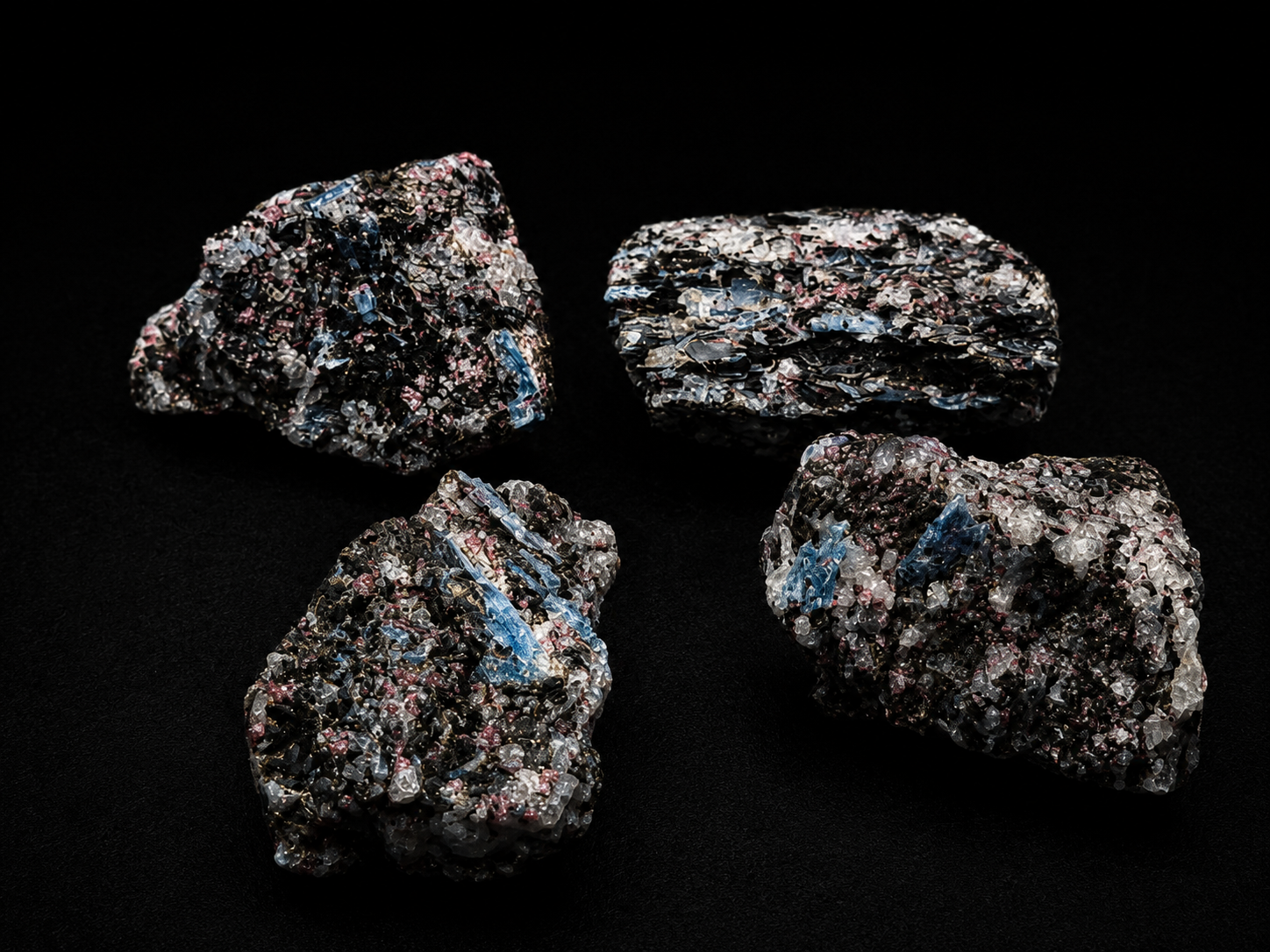 Image 2 of 4
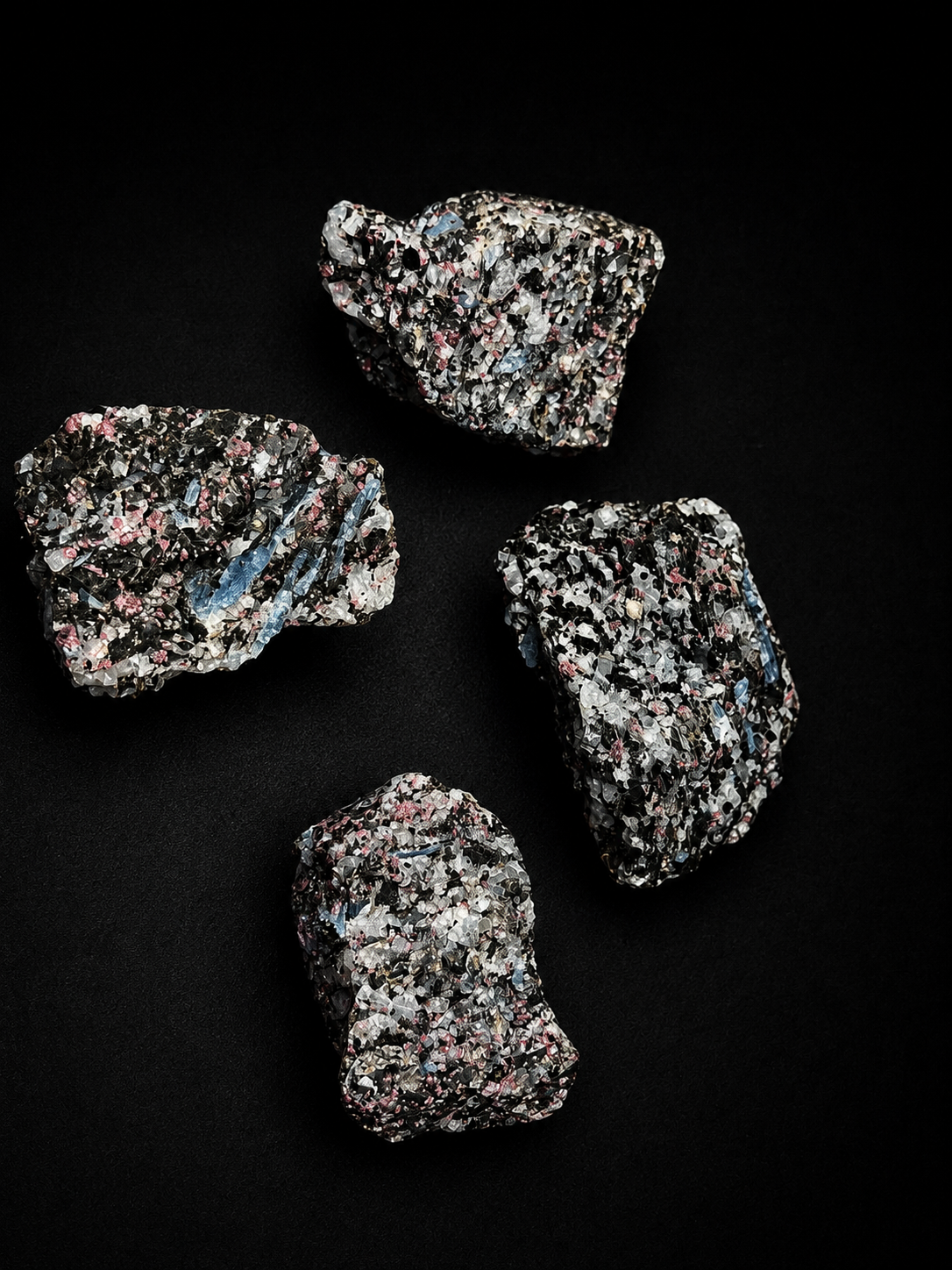 Image 3 of 4
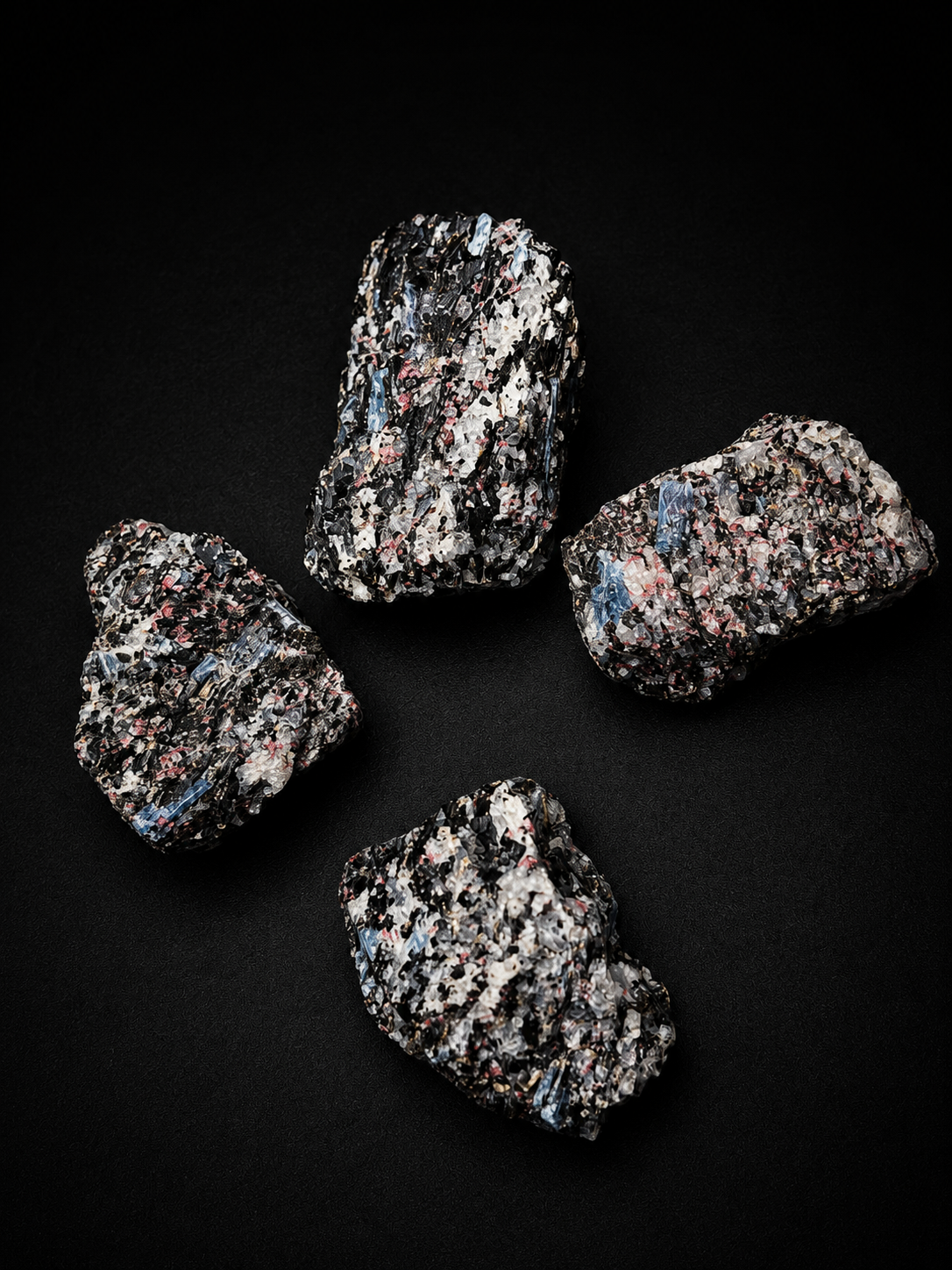 Image 4 of 4
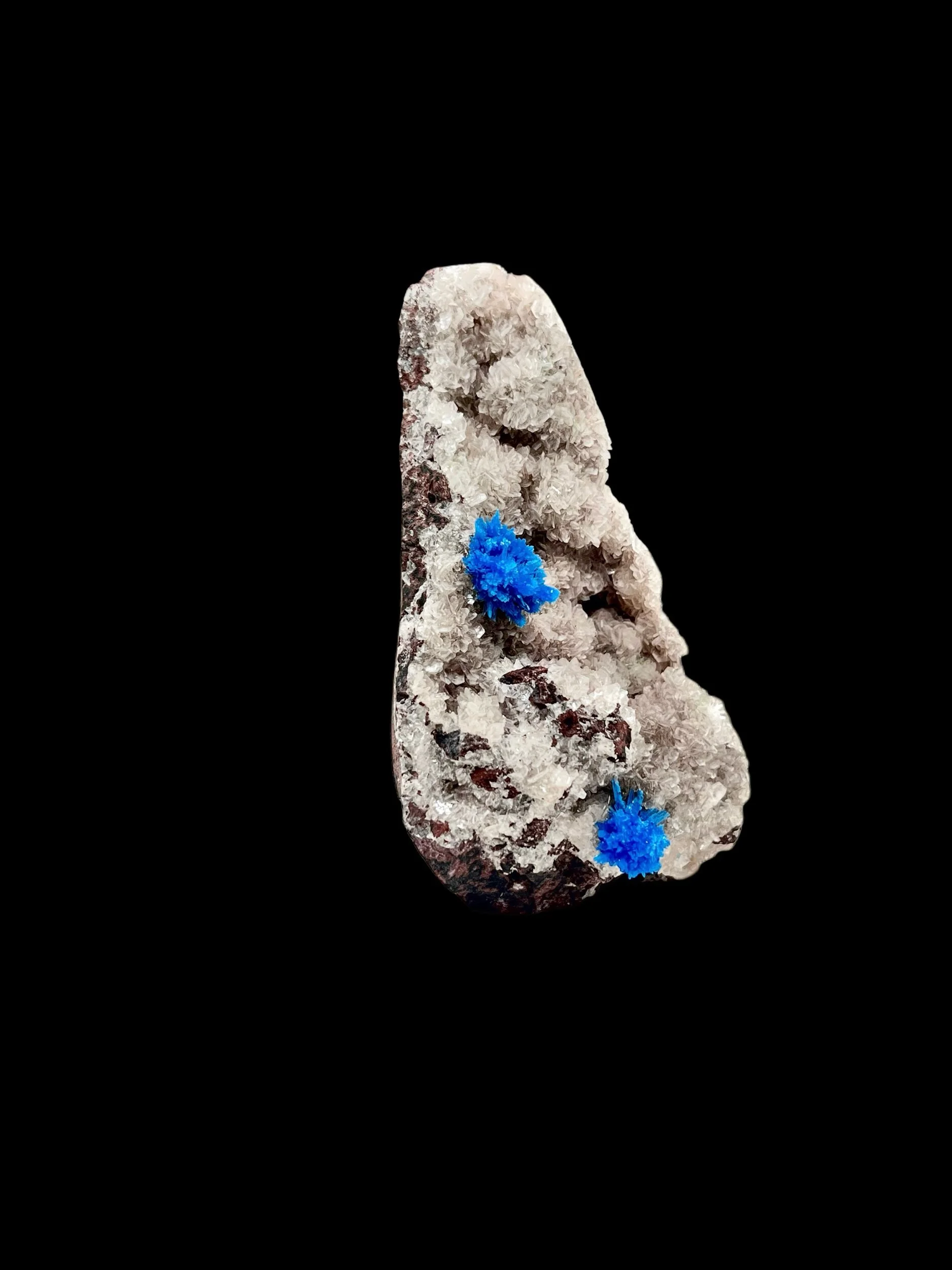
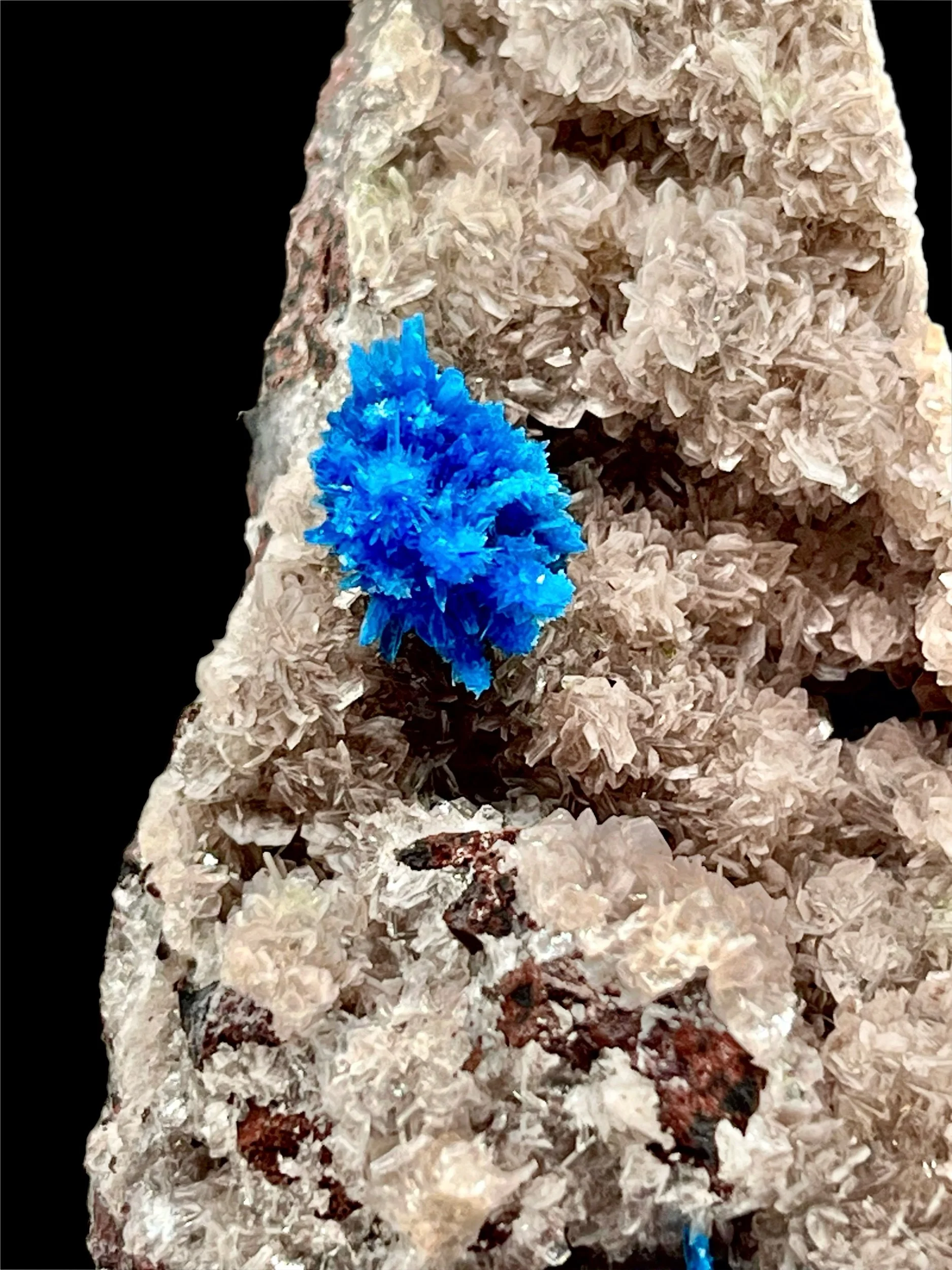
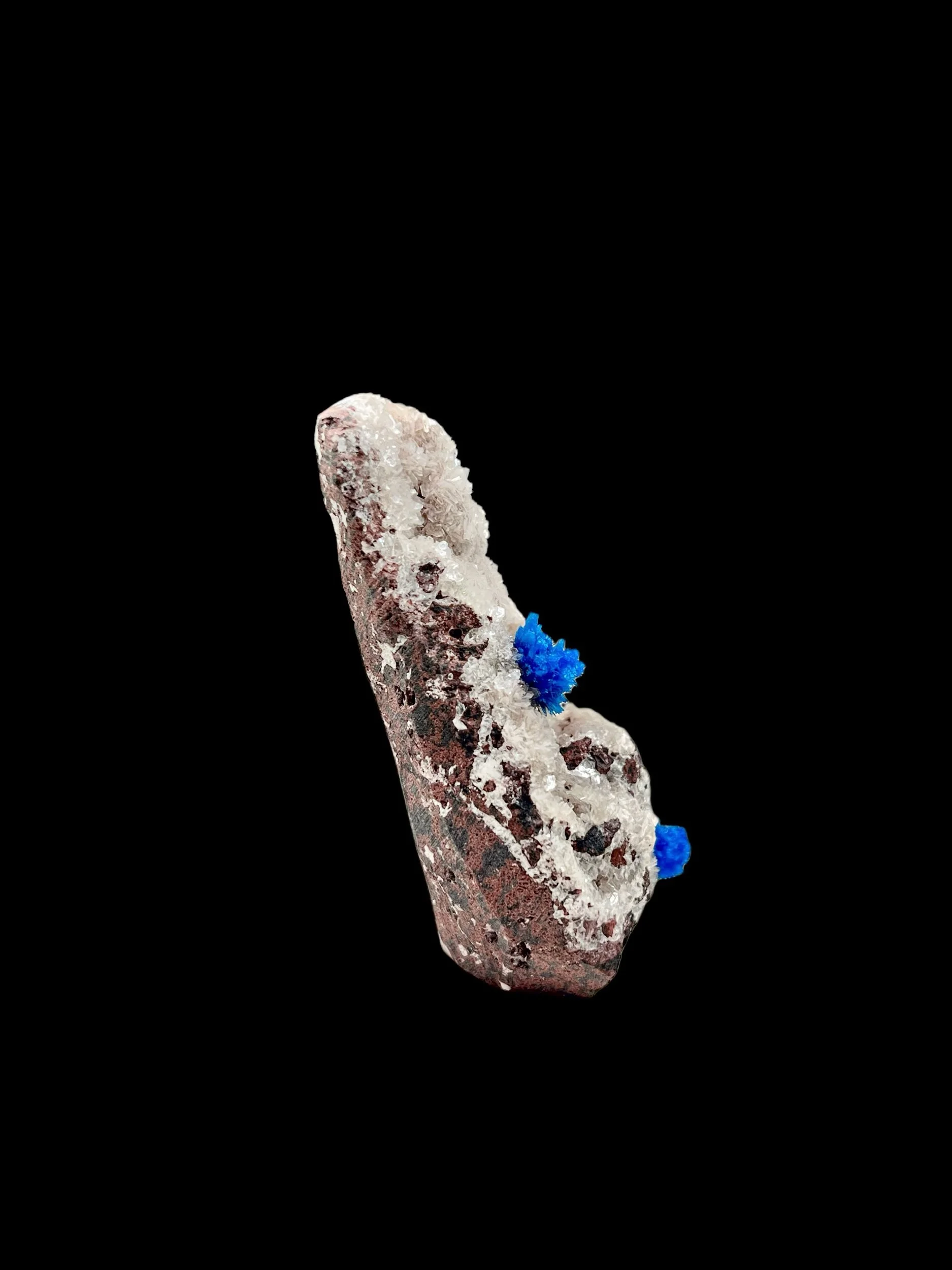
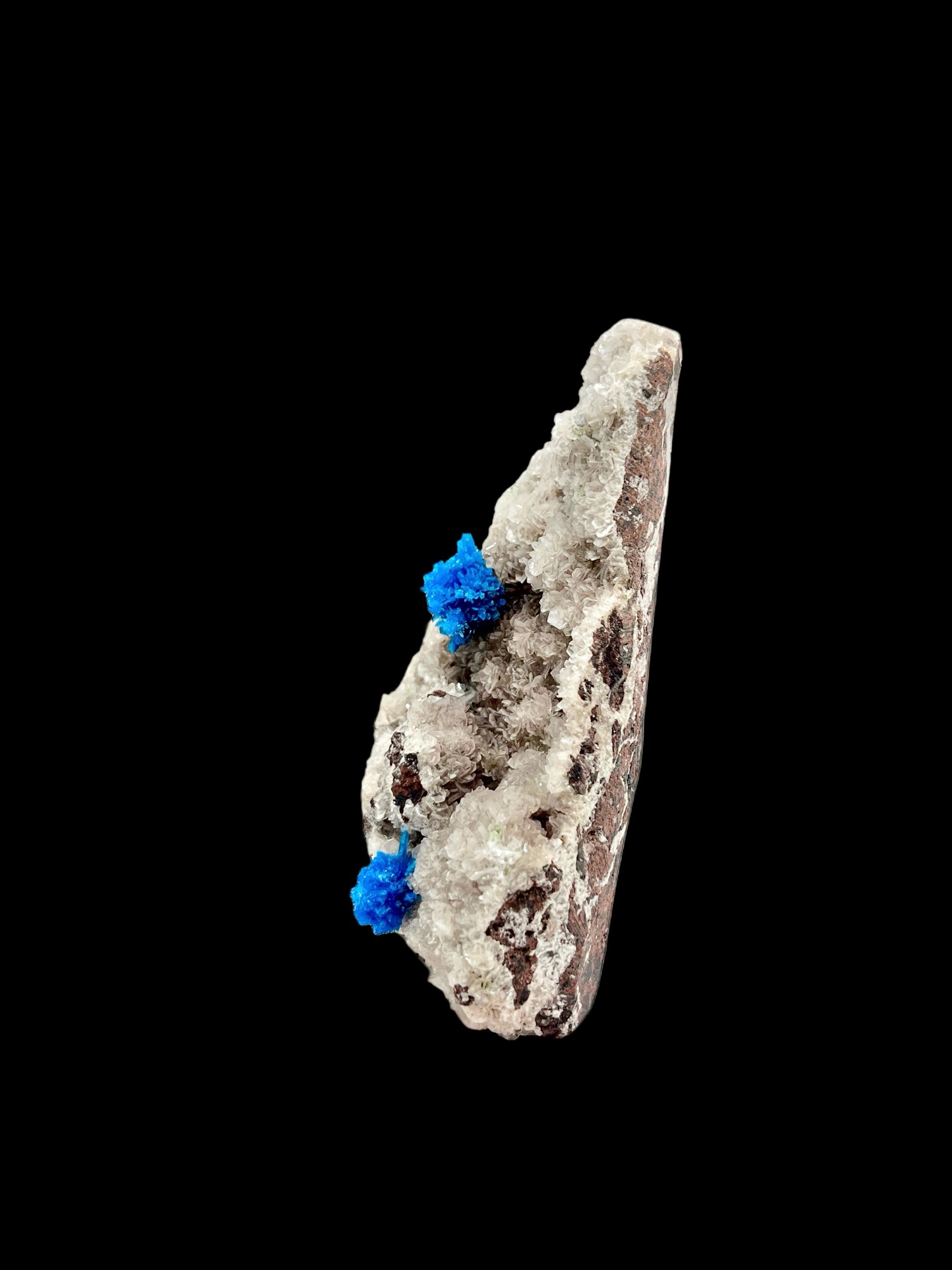
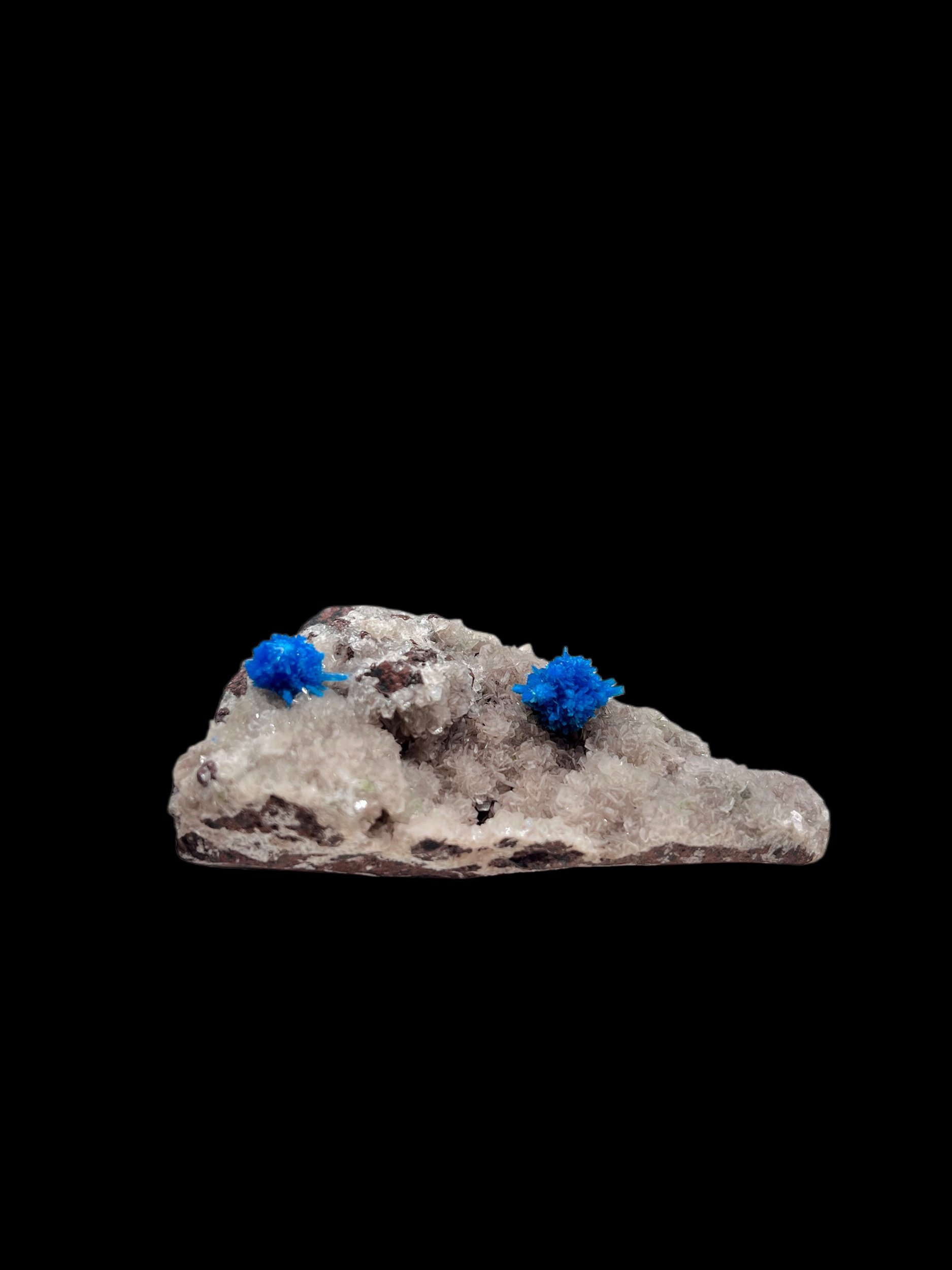
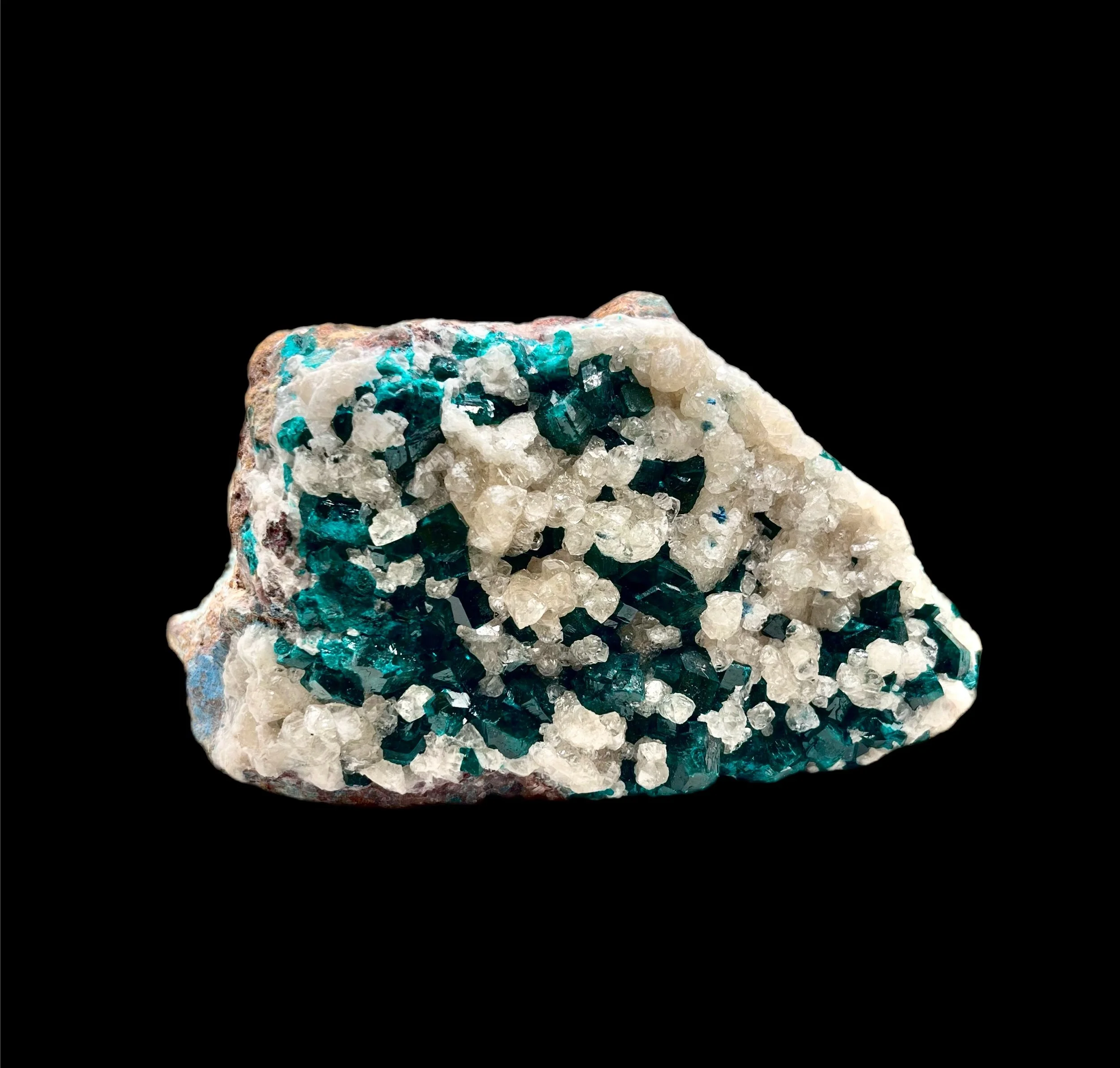
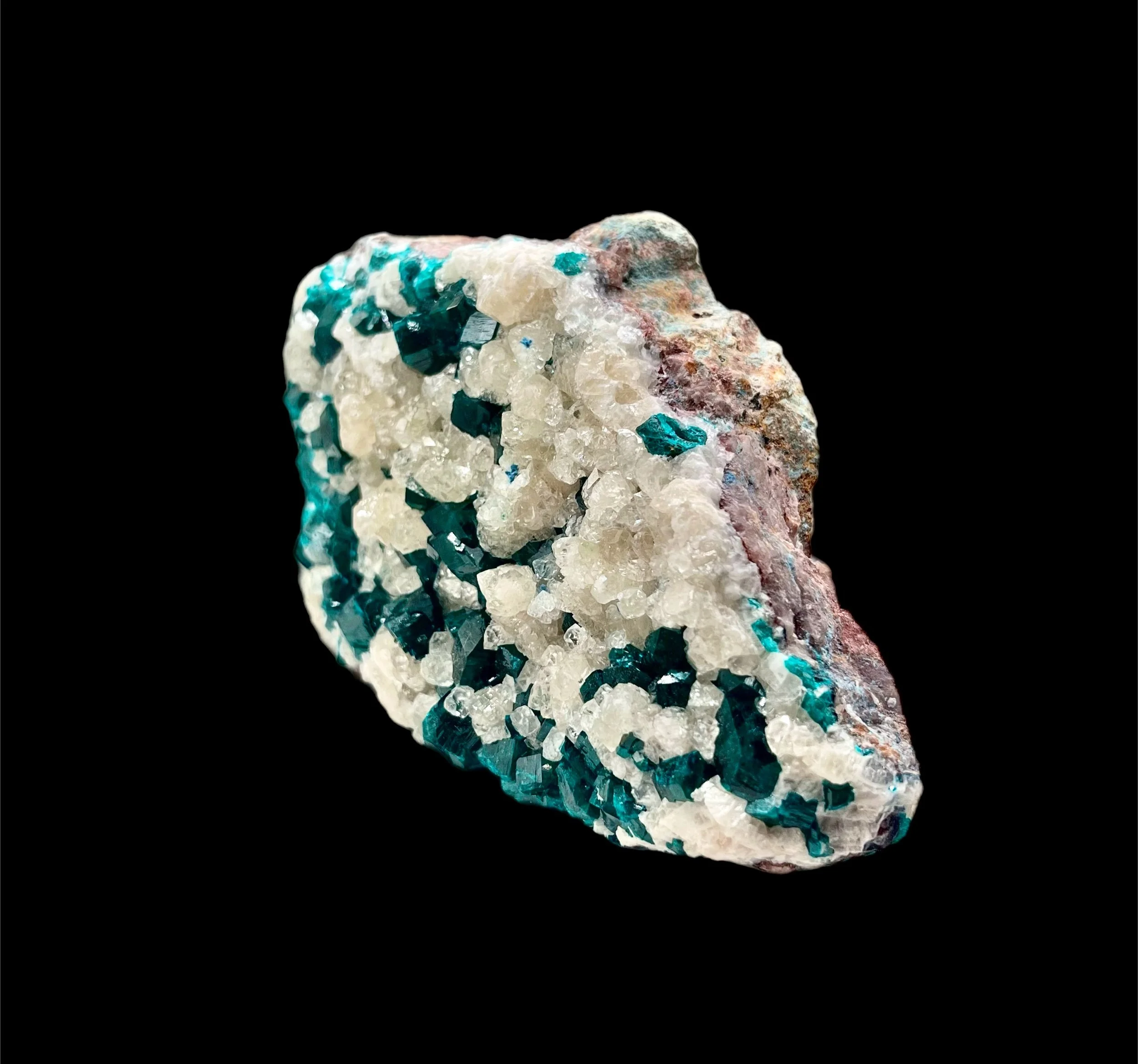
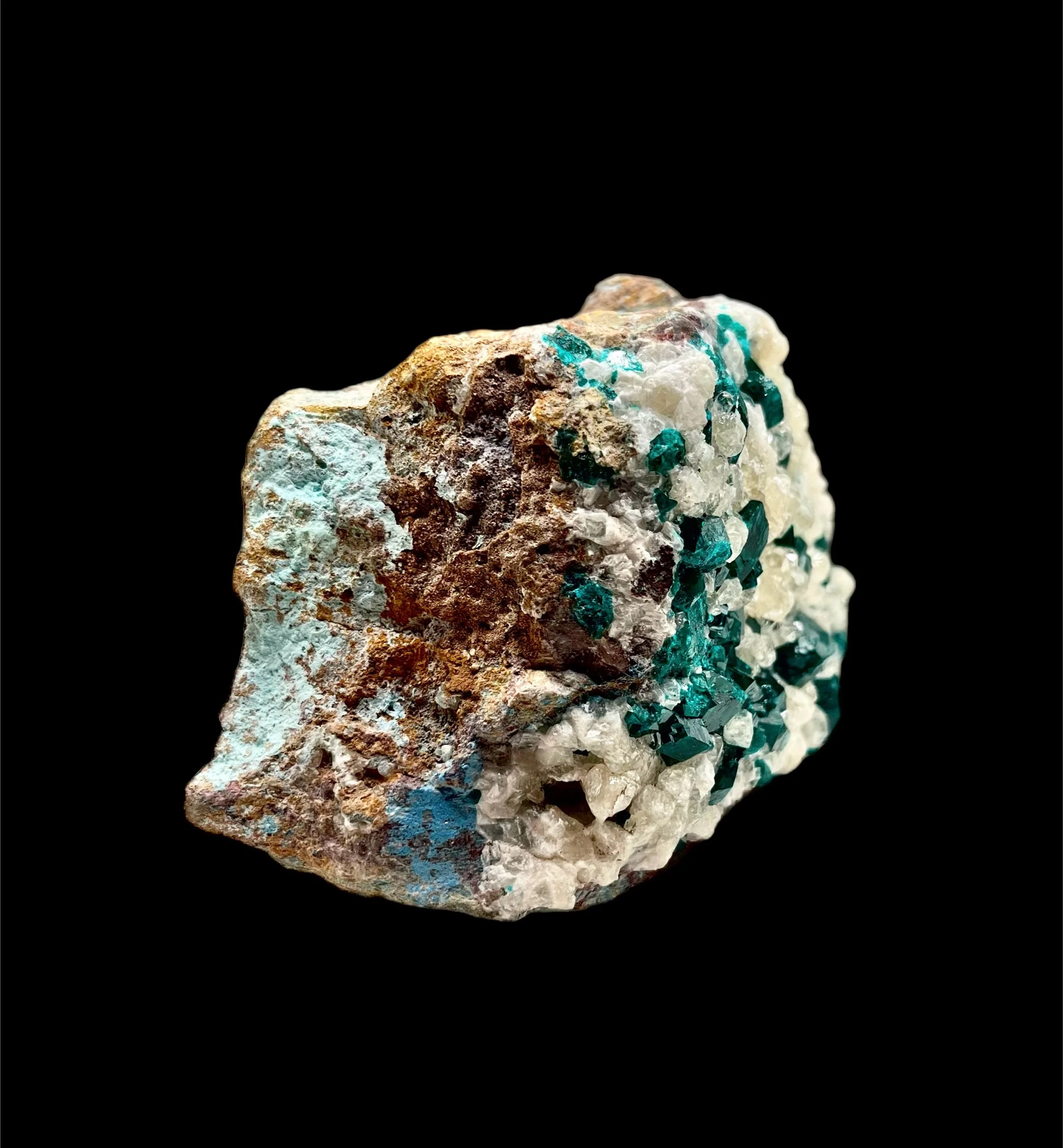
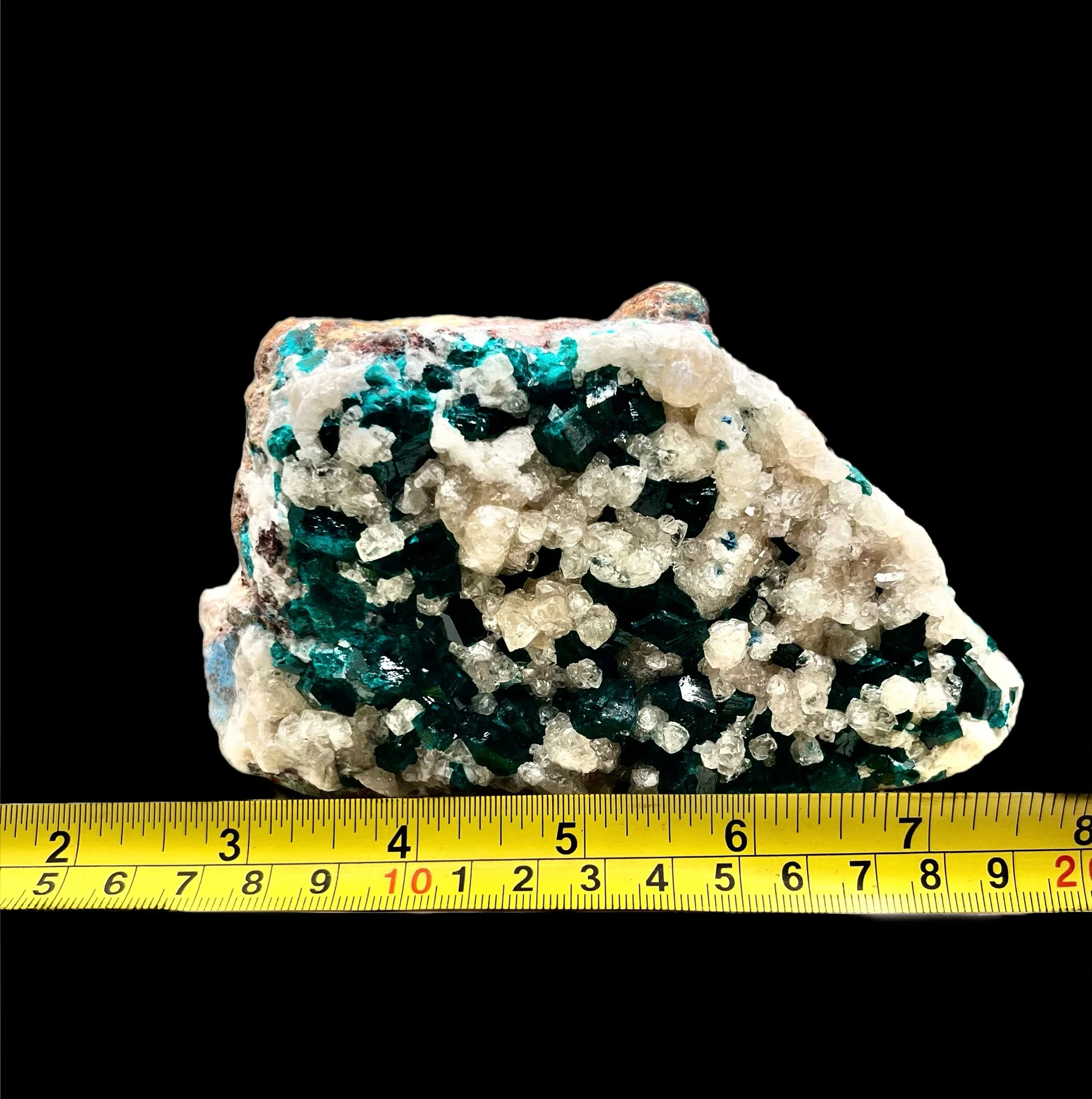
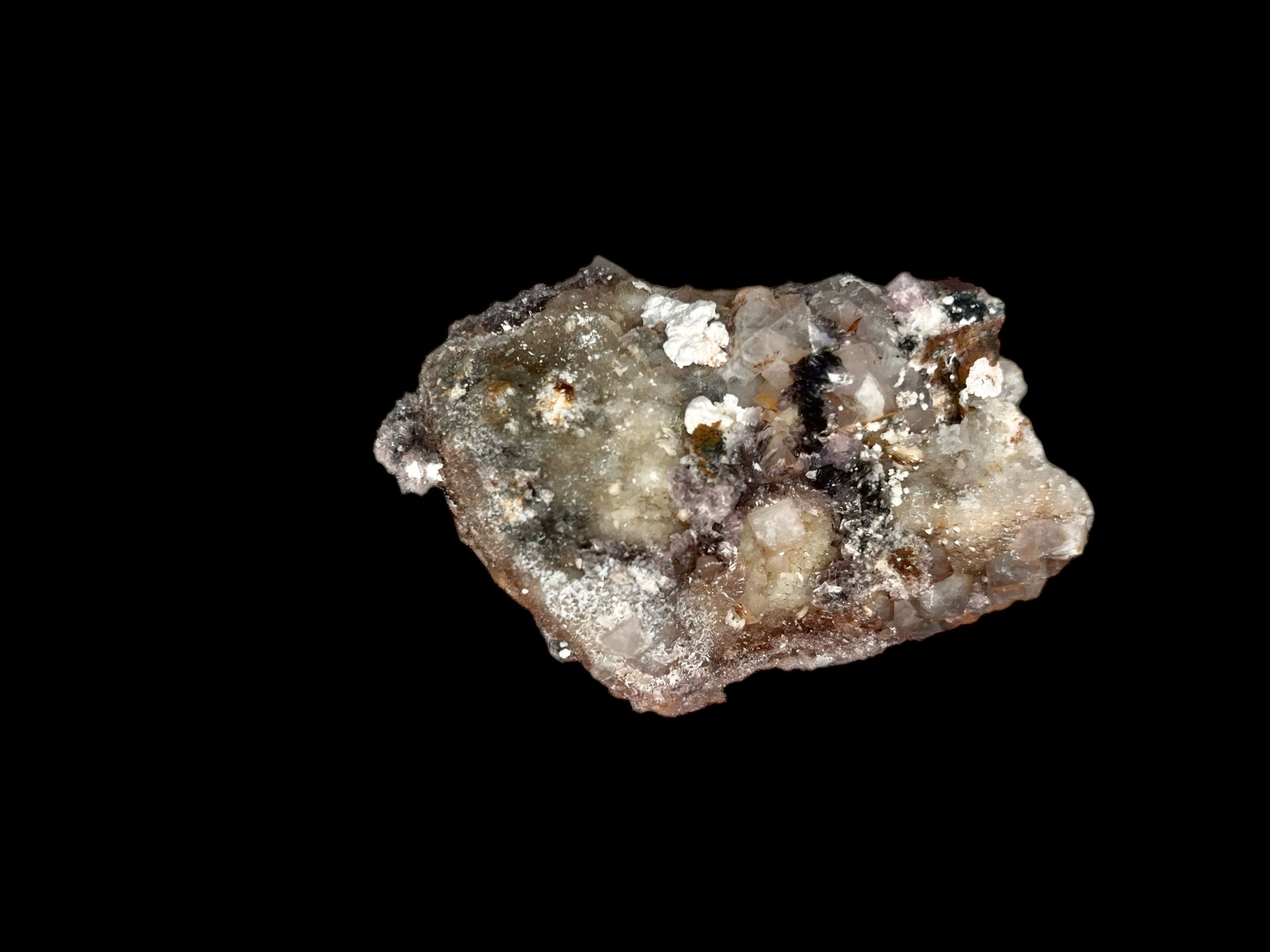
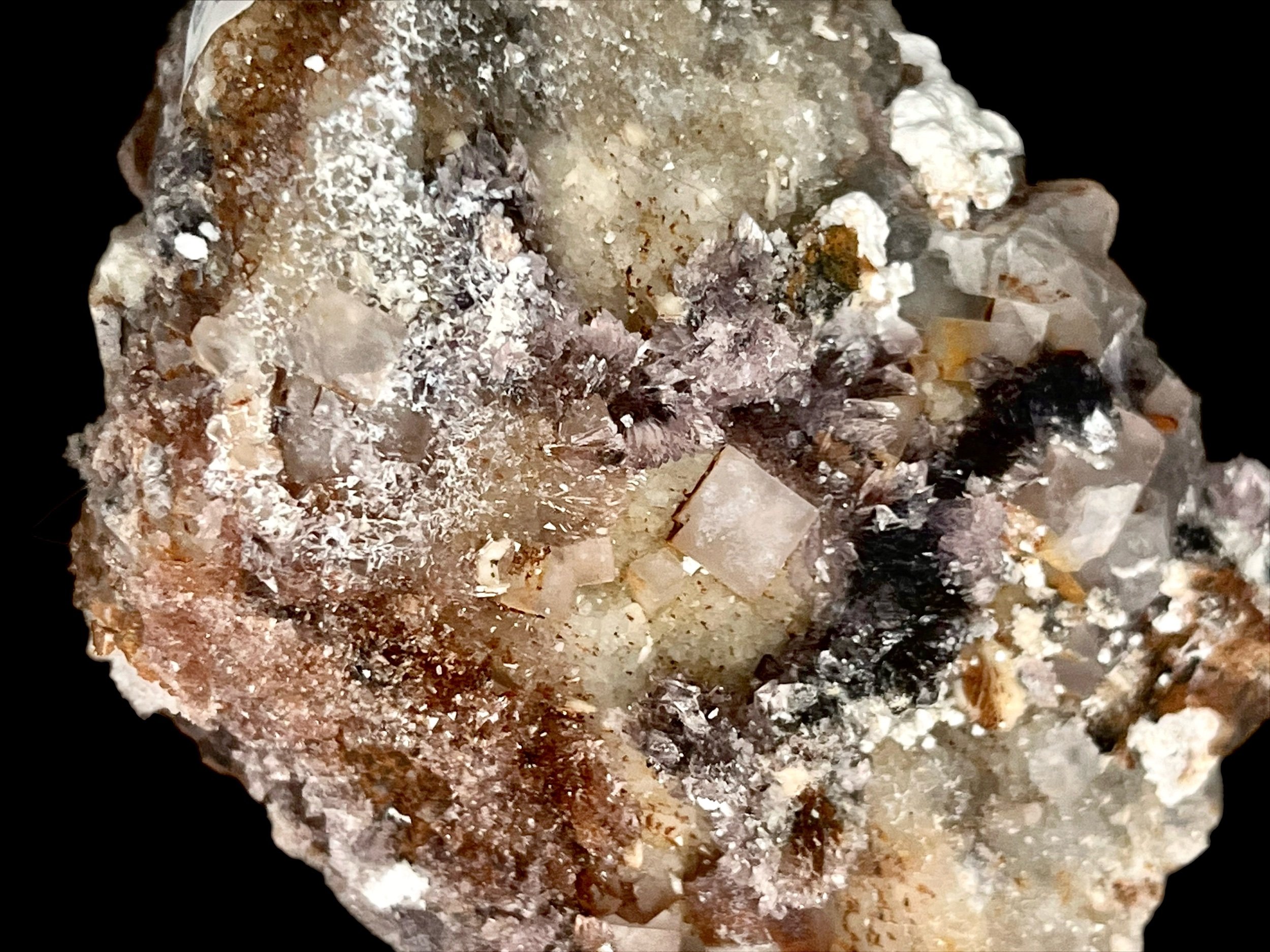
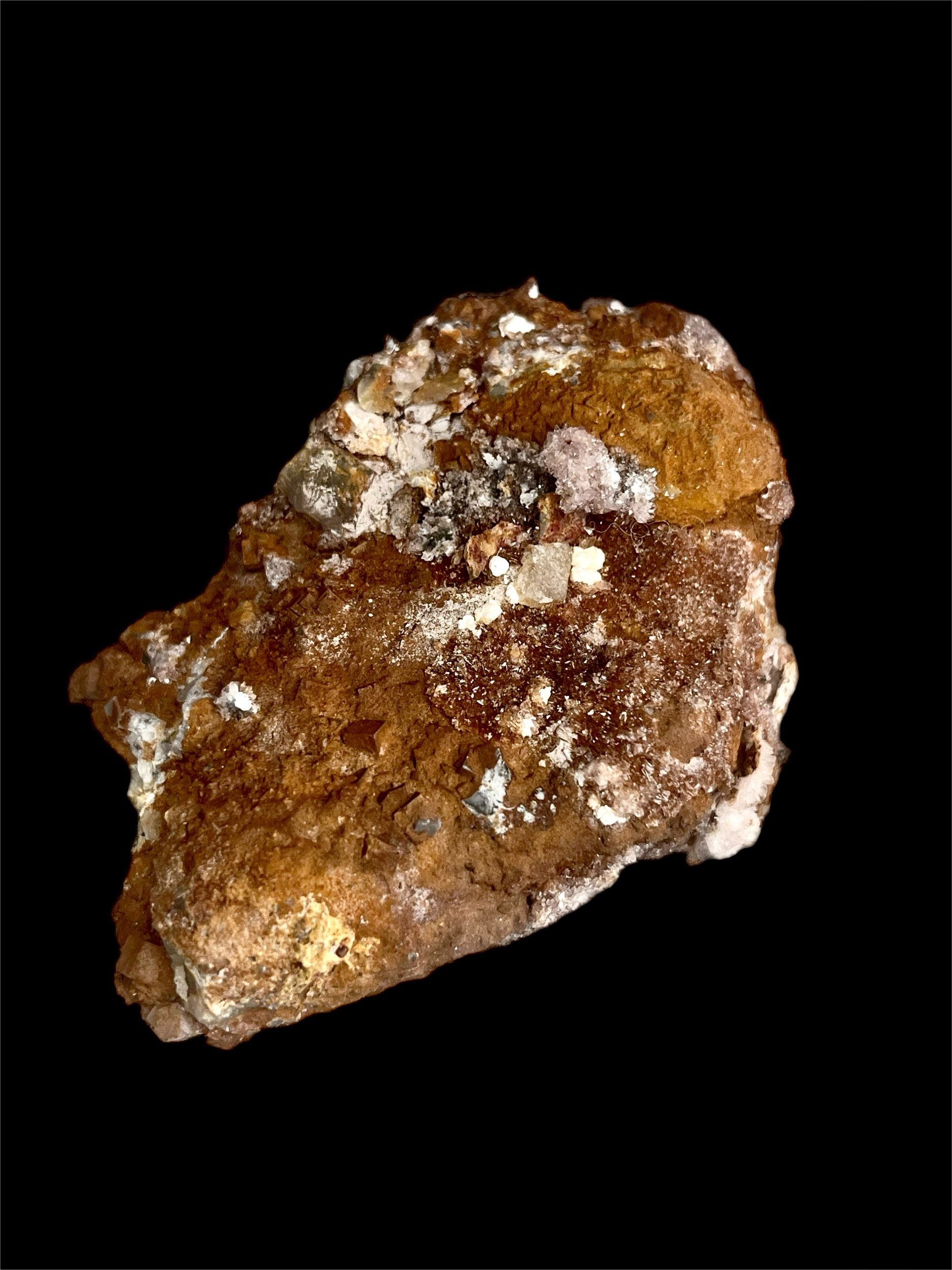
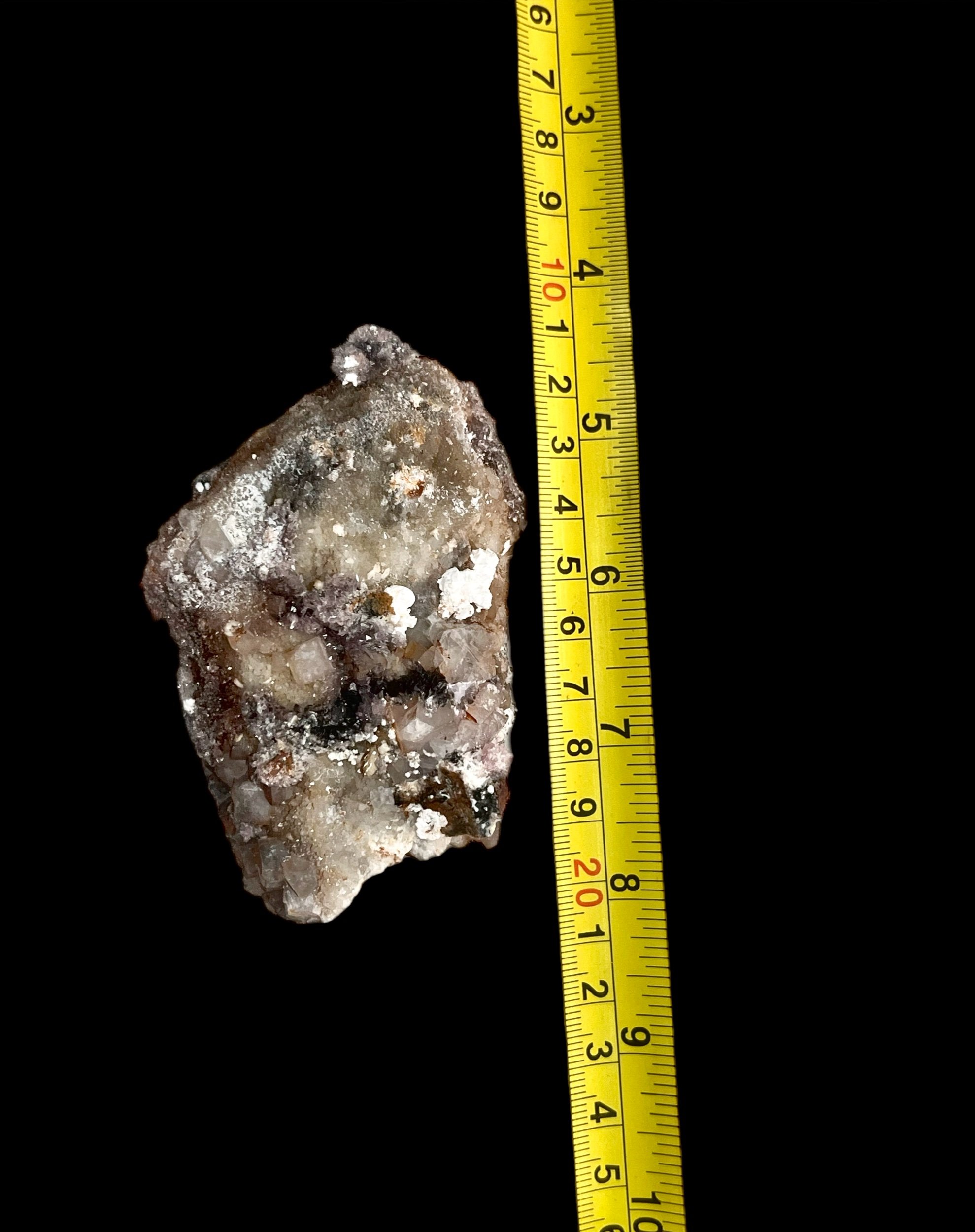
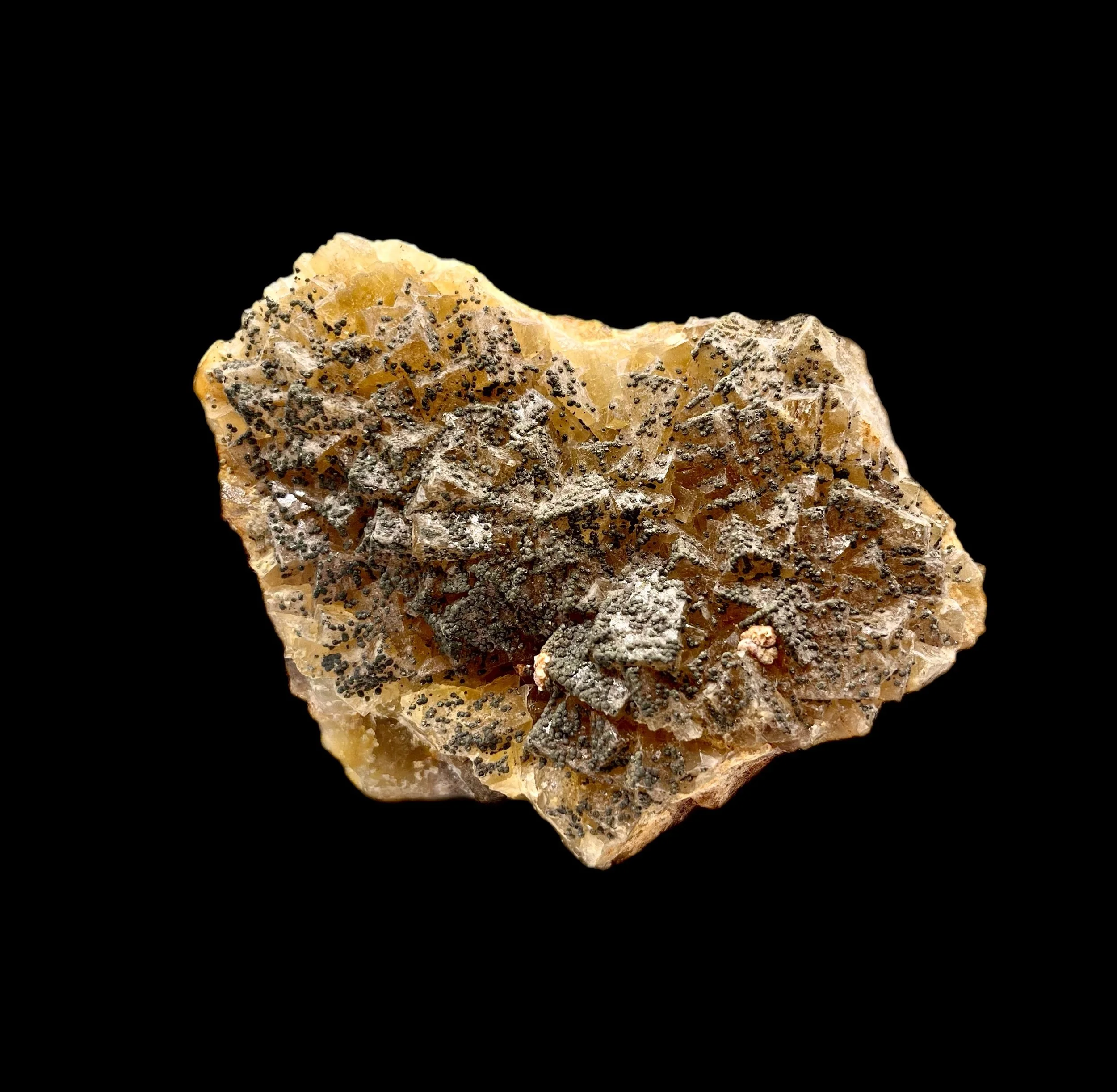
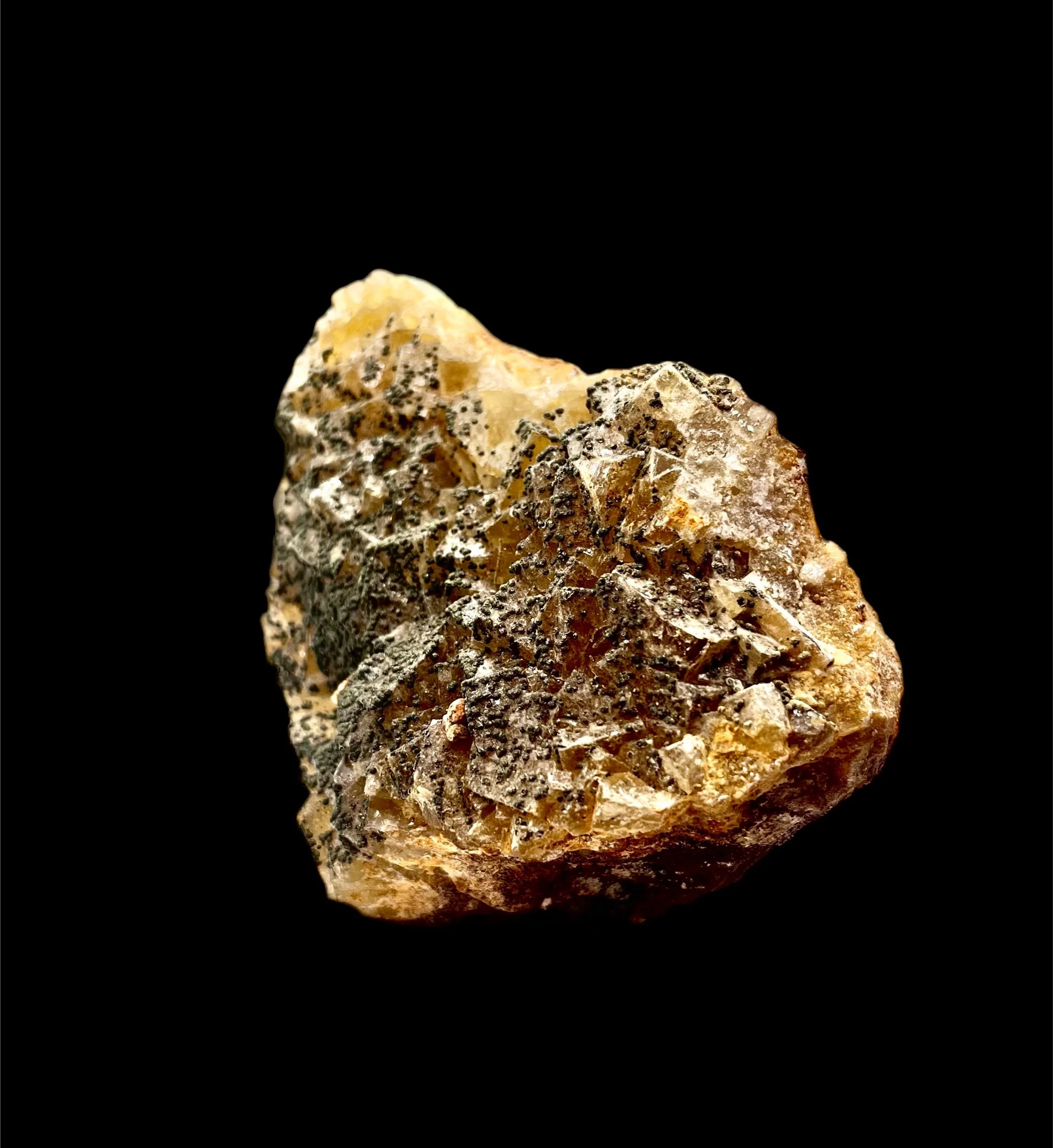
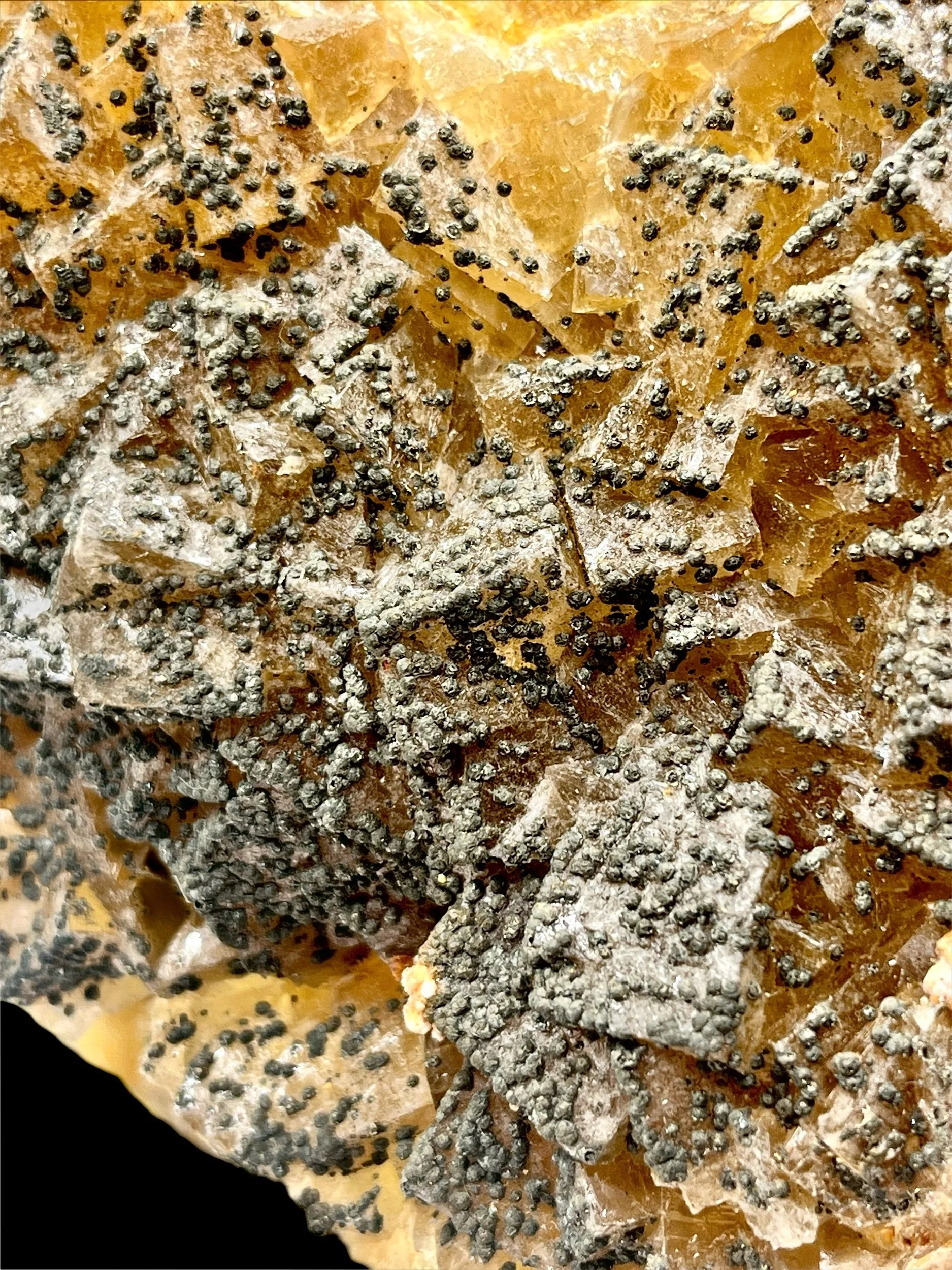
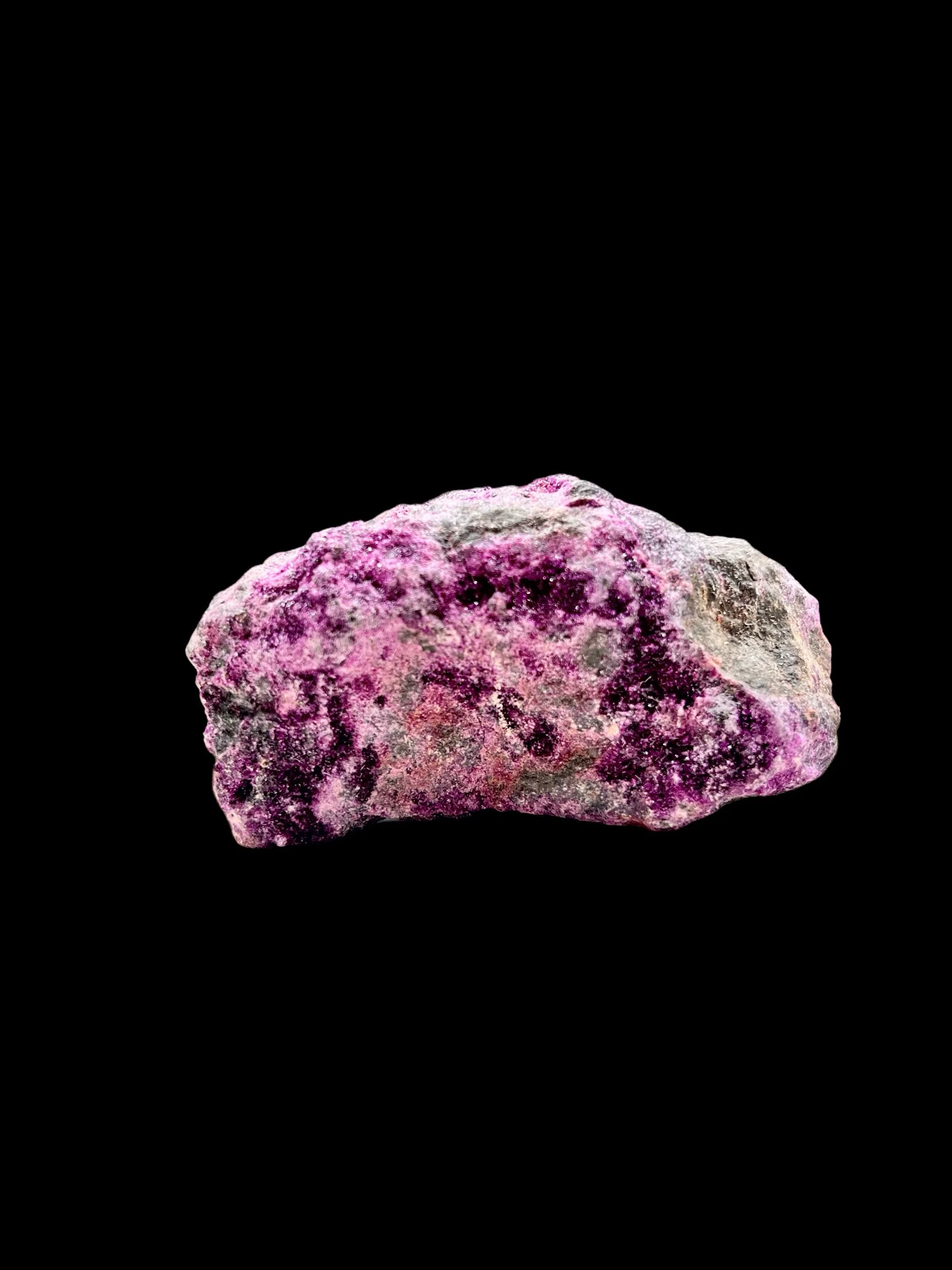
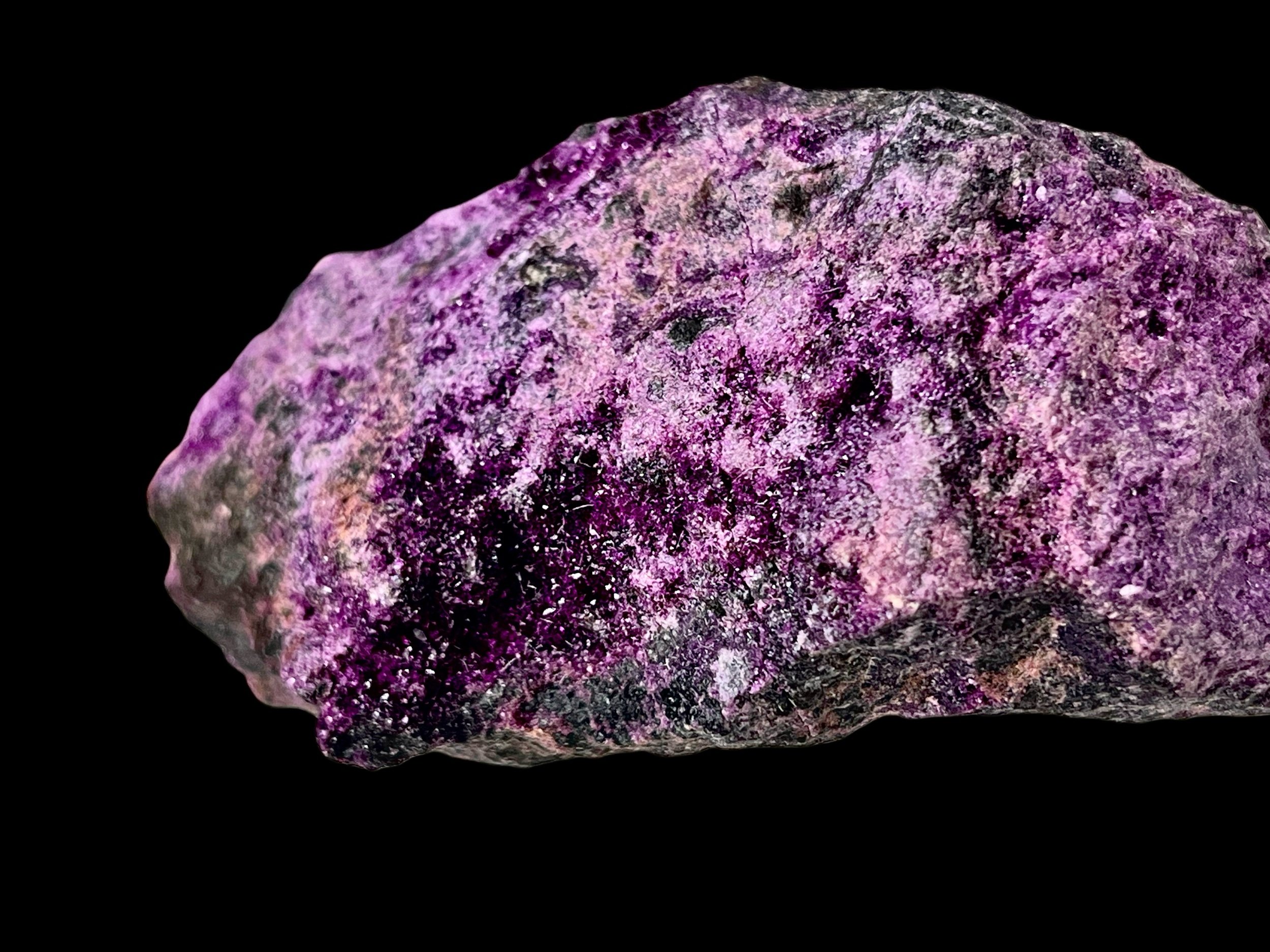
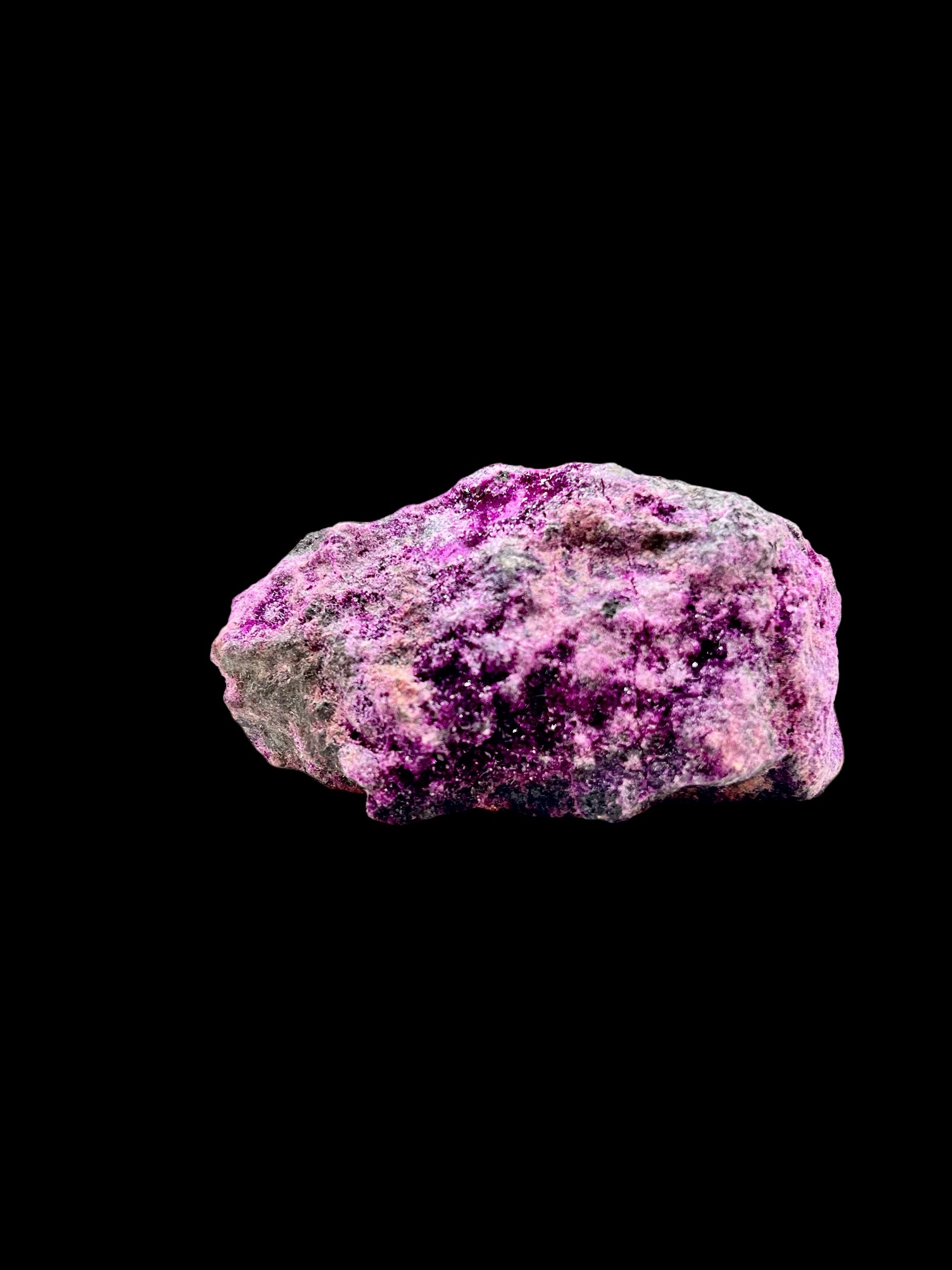
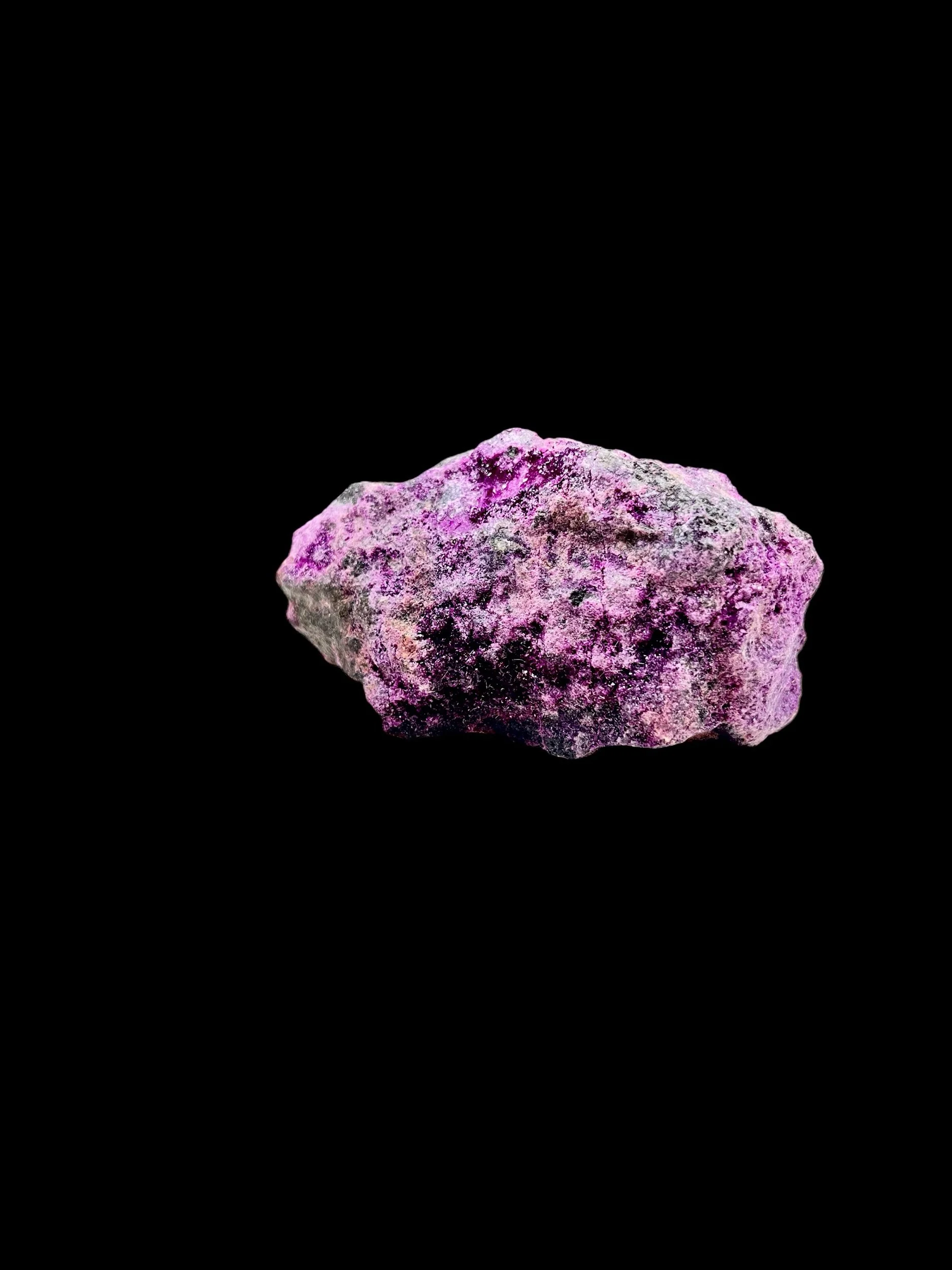
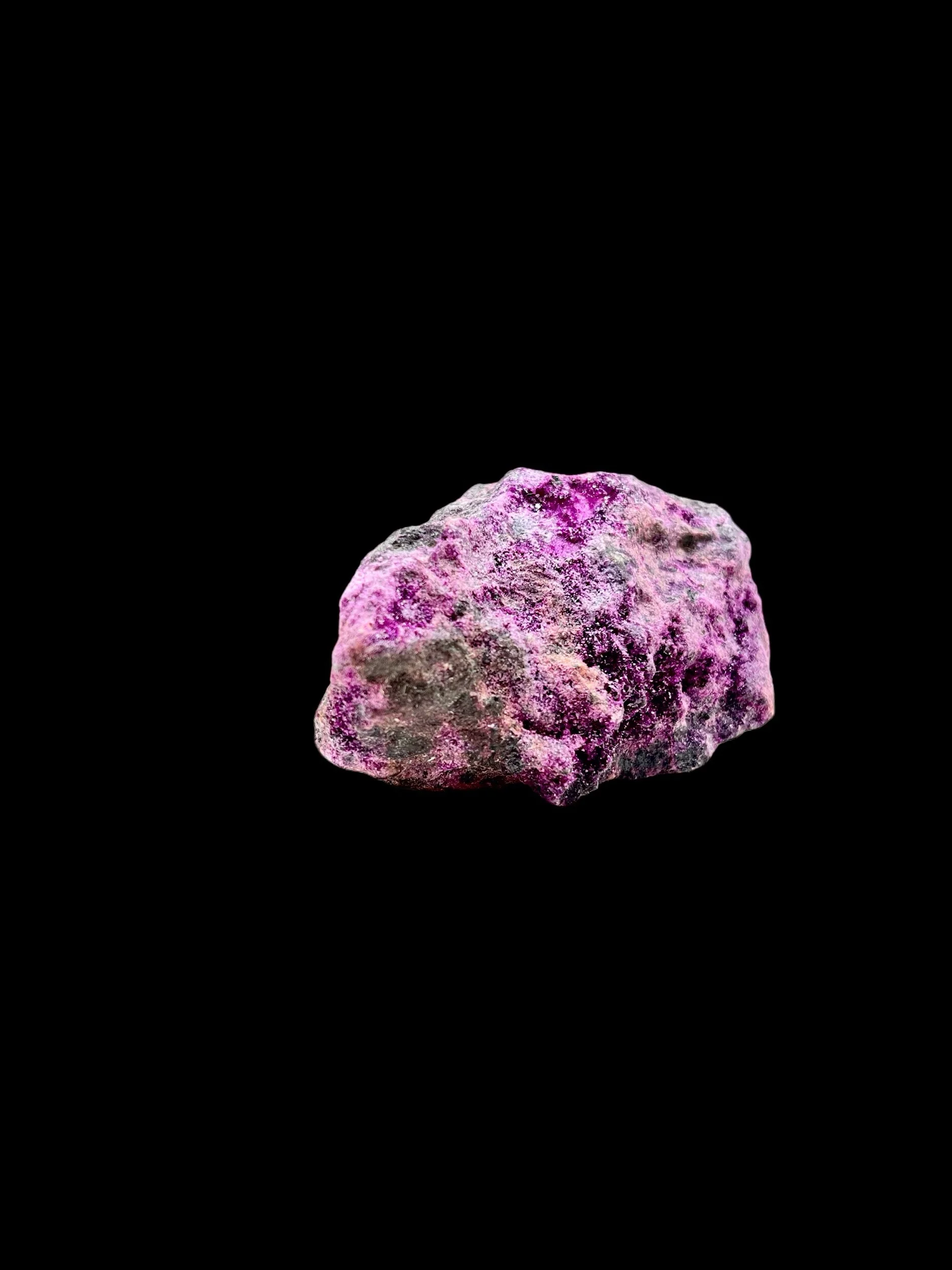
A beautifully complex multi-mineral specimen from Khit Ostrov, Northern Karelia, Russia, featuring striking blue kyanite blades nestled within a richly textured matrix of almandine garnet, biotite, albite, and quartz.
These small specimens pack an extraordinary amount of mineralogical wonder into their compact size. Vibrant blue kyanite presents as elongated blades and crystalline sections cutting through the darker matrix, immediately standing out against the metallic black luster of abundant biotite.
Scattered throughout are numerous tiny pink to red almandine garnets, creating an almost confetti-like distribution of color across the surface. White to colorless albite and quartz provide additional contrast and sparkle, giving the specimens an exceptionally intricate appearance under magnification.
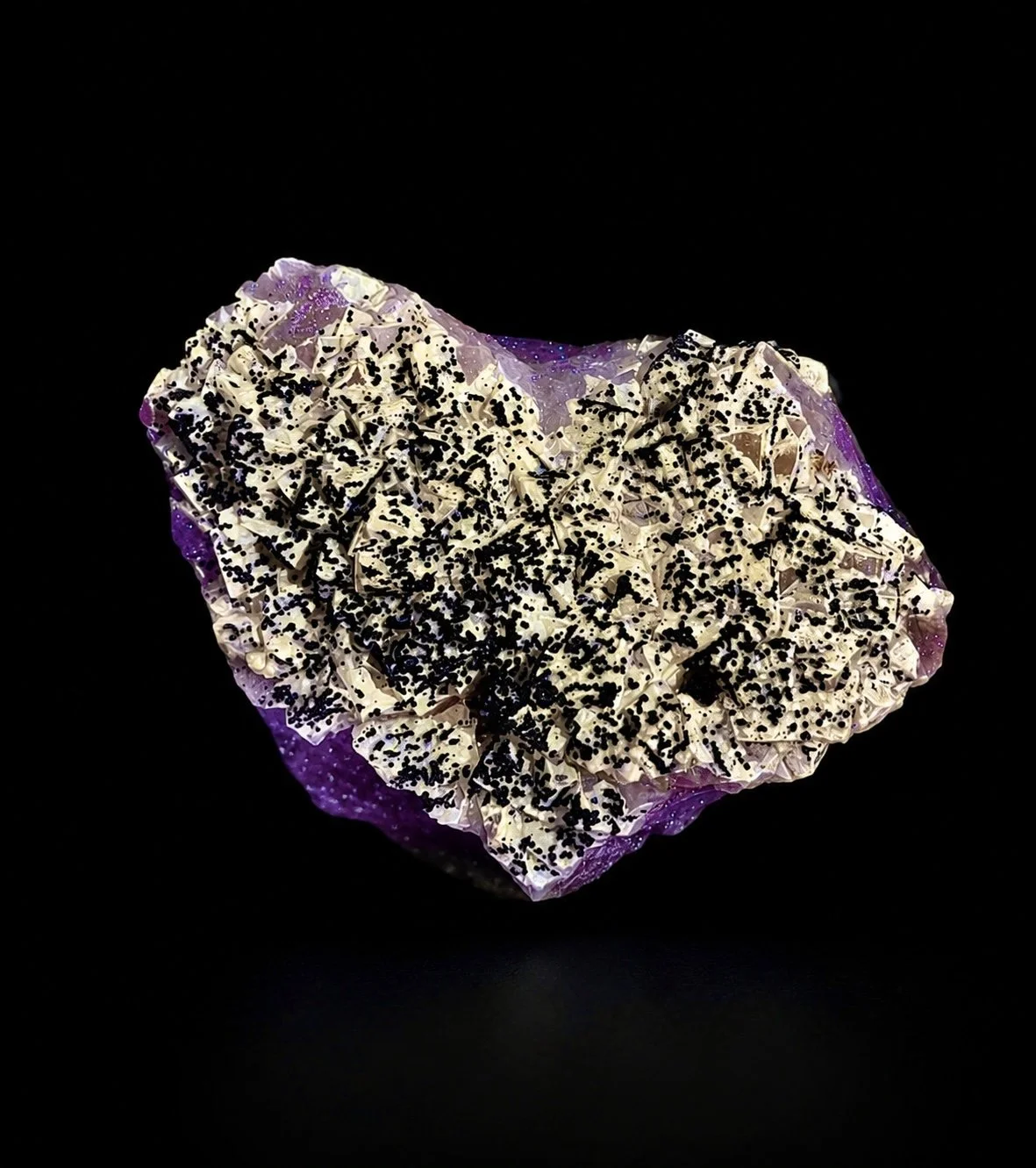
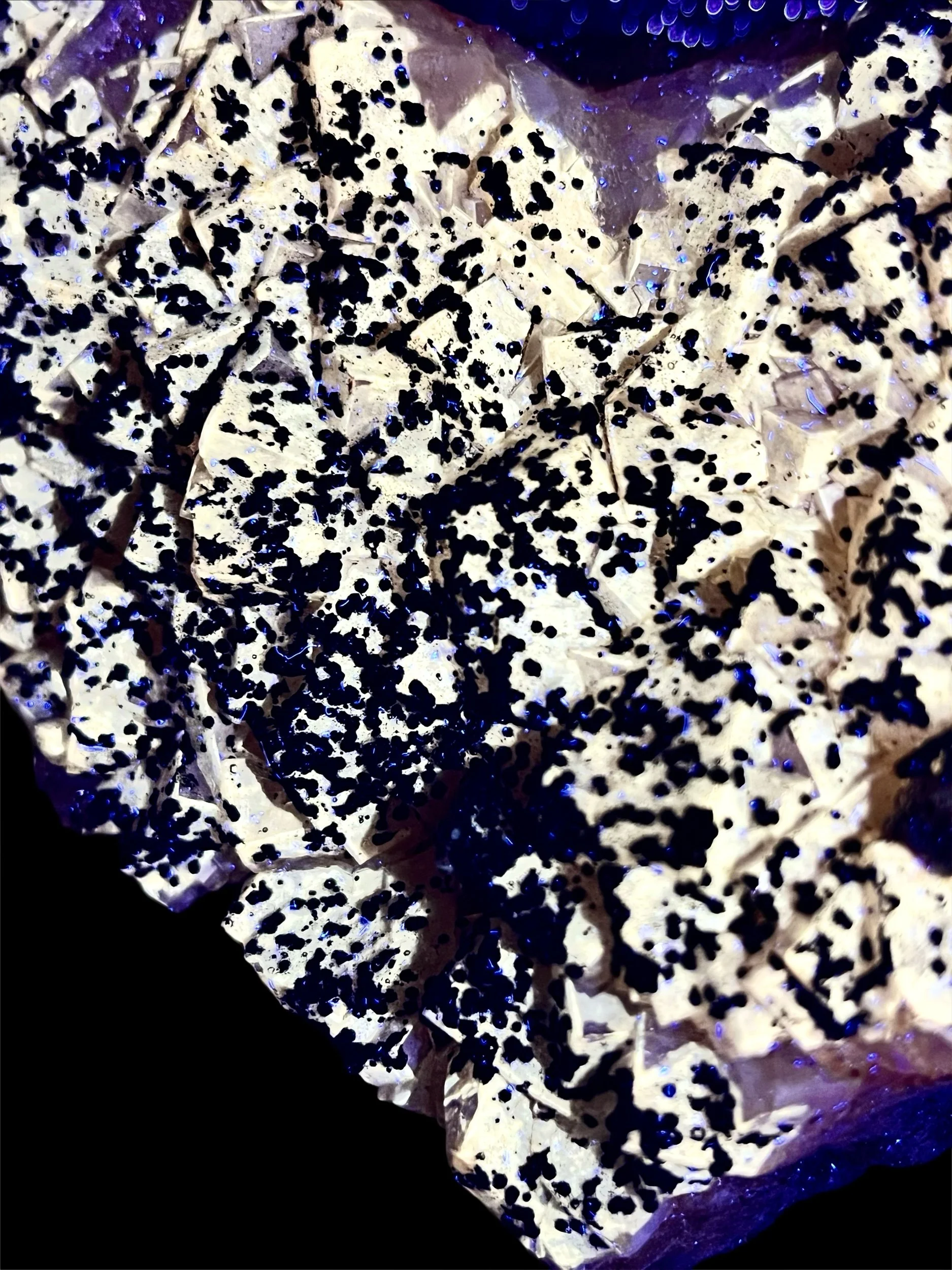
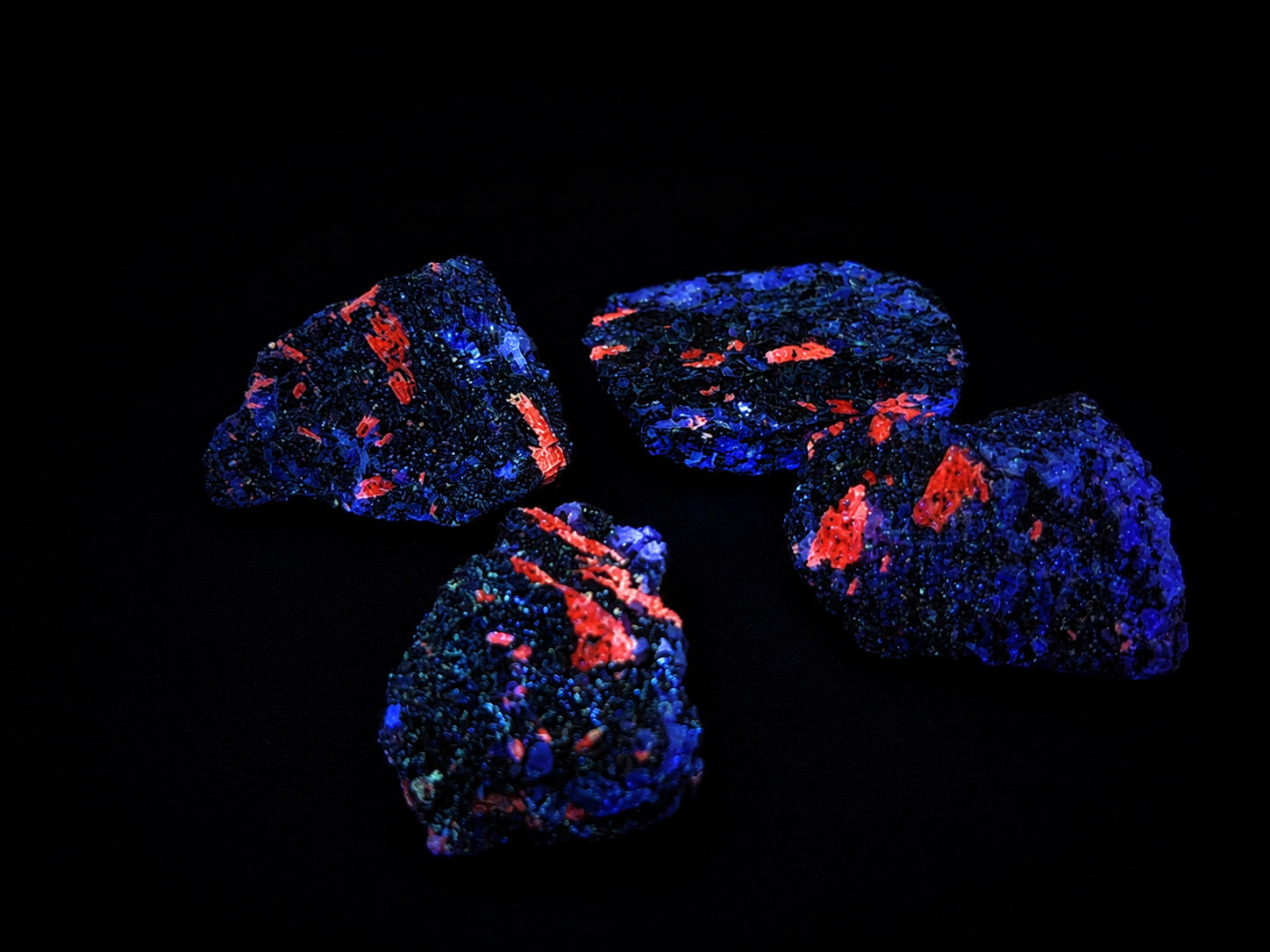
These specimens become even more impressive under UV/blacklight, where the kyanite displays a vivid fluorescence. Bright red-pink fluorescent blades erupt against the otherwise dark matrix, producing a dramatically different appearance from the specimen under ordinary lighting.
Listing is for one specimen.
Because these are natural specimens, each piece is completely unique. The amount and placement of blue kyanite, garnet, biotite, albite, quartz, and fluorescent material will vary from piece to piece.
Locality: Khit Ostrov, Northern Karelia, Russia
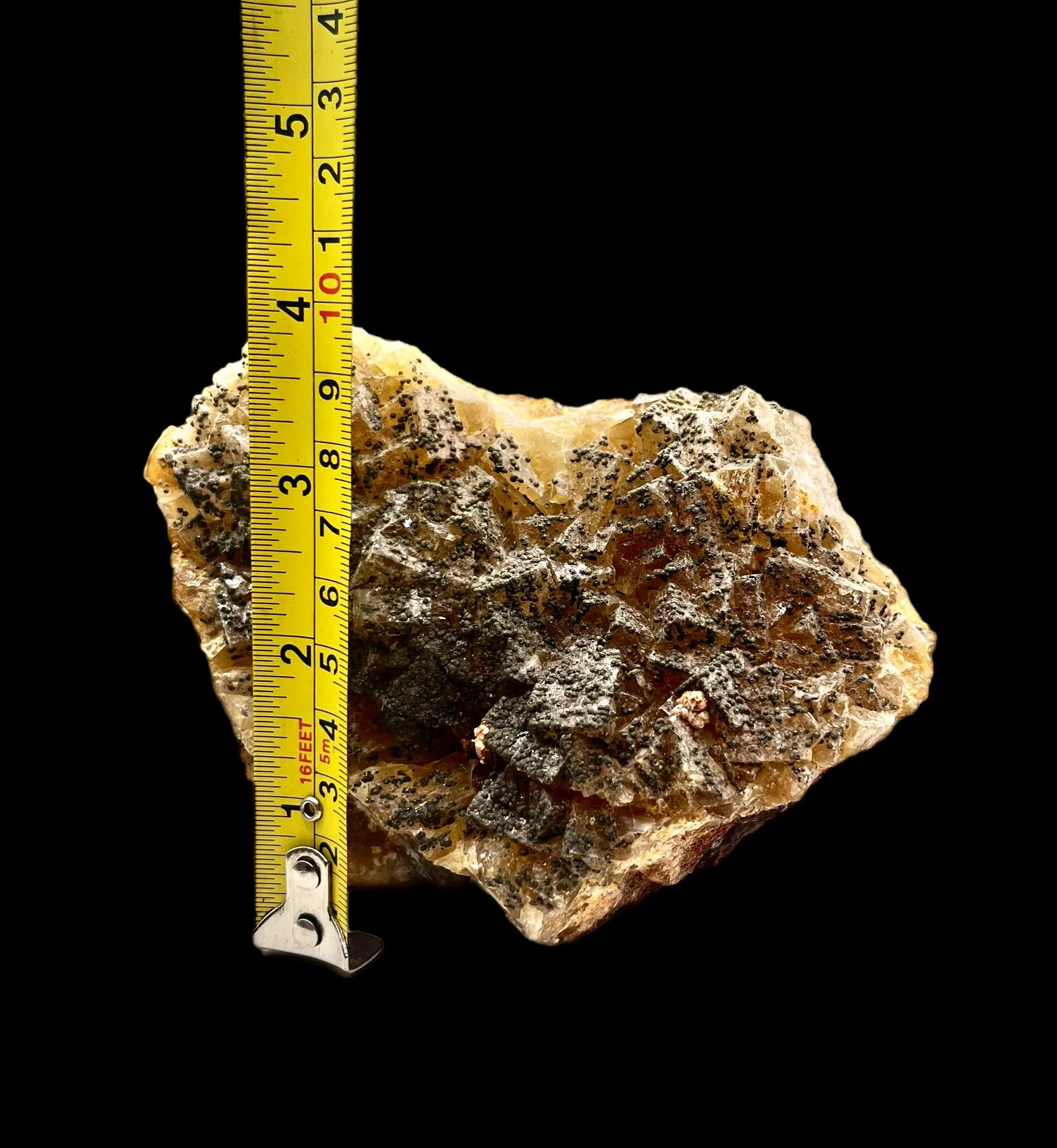
Weight: Approximately 20–25 g
Dimensions: Approximately 1–2" × 0.5–1"
Khit Ostrov is a particularly famous locality for collectors because its kyanite occurs alongside an unusually attractive suite of associated minerals. Documented specimens feature blue kyanite with purplish-red garnet, nearly black biotite and contrasting albite; commercial specimens from the locality are additionally described with quartz.
What makes these specimens particularly special is their dramatic dual appearance.
In ordinary light, they present as classic blue kyanite crystals against a dark garnet- and biotite-rich metamorphic matrix. Under UV illumination, kyanite blades erupt into brilliant scarlet-pink fluorescence, revealing trace chemistry hidden within crystals that otherwise appear blue.
Not all kyanite fluoresces, making this chromium-activated material an especially fascinating addition to both traditional mineral and fluorescent-mineral collections.
The dramatic red fluorescence of this kyanite is associated with trace chromium incorporated into the kyanite crystal structure.
During crystal growth, very small amounts of chromium can substitute for aluminum within the lattice. These chromium ions act as fluorescent activators.
When exposed to ultraviolet light, the ions absorb UV energy and temporarily enter an excited electronic state. As they return to a lower-energy state, some of that absorbed energy is released as visible light—producing the spectacular scarlet pink fluorescence seen across the kyanite blades.
This is closely related to the mechanism responsible for the famous red fluorescence of chromium-bearing corundum (ruby).
Fluorescence is not an inherent property of every kyanite crystal.
Chemically pure kyanite does not necessarily produce strong visible fluorescence. Its UV response depends on the trace-element chemistry established while the crystal was growing.
Kyanite containing suitable concentrations of activators such as Cr³⁺ can fluoresce strongly, while kyanite lacking those activators may show little or no response.
Other trace elements can have the opposite effect. Iron is an important fluorescence quencher and can interfere with luminescence by dissipating the absorbed energy before it can be emitted as visible light.
As a result, two blue kyanite crystals can look similar under ordinary lighting while behaving completely differently beneath UV:
This chemical variability is one reason fluorescent kyanite is especially desirable amongst collectors. UV light can reveal differences in trace-element chemistry and even growth zoning that are completely invisible in daylight.
Kyanite is associated with communication, mental clarity, energetic alignment, and self-expression. It is traditionally considered a stone that encourages clear thinking while helping its keeper communicate with greater confidence and authenticity.
Garnet is associated with vitality, courage, passion, grounding, and perseverance.
Biotite is often connected with reflection, adaptability, grounding, and releasing patterns that no longer serve us.
Together, this assemblage represents a beautiful balance of clarity, strength, grounding, and transformation.
Excellent quality natural blue kyanite with garnet and biotite
High luster
Strong UV fluorescence
Famous locality
Rare mineral combination
Primary Mineral: Kyanite
Formula: Al₂SiO₅
Crystal System: Triclinic
Associated Minerals: Almandine Garnet, Biotite, Albite & Quartz
Kyanite Luster: Vitreous to pearly
Kyanite Color: Blue to blue-gray
Matrix: Biotite-rich metamorphic material with albite and quartz
Locality: Khit Ostrov, Northern Karelia, Russia
A beautifully complex multi-mineral specimen from Khit Ostrov, Northern Karelia, Russia, featuring striking blue kyanite blades nestled within a richly textured matrix of almandine garnet, biotite, albite, and quartz.
These small specimens pack an extraordinary amount of mineralogical wonder into their compact size. Vibrant blue kyanite presents as elongated blades and crystalline sections cutting through the darker matrix, immediately standing out against the metallic black luster of abundant biotite.
Scattered throughout are numerous tiny pink to red almandine garnets, creating an almost confetti-like distribution of color across the surface. White to colorless albite and quartz provide additional contrast and sparkle, giving the specimens an exceptionally intricate appearance under magnification.
These specimens become even more impressive under UV/blacklight, where the kyanite displays a vivid fluorescence. Bright red-pink fluorescent blades erupt against the otherwise dark matrix, producing a dramatically different appearance from the specimen under ordinary lighting.
Listing is for one specimen.
Because these are natural specimens, each piece is completely unique. The amount and placement of blue kyanite, garnet, biotite, albite, quartz, and fluorescent material will vary from piece to piece.
Locality: Khit Ostrov, Northern Karelia, Russia
Weight: Approximately 20–25 g
Dimensions: Approximately 1–2" × 0.5–1"
Khit Ostrov is a particularly famous locality for collectors because its kyanite occurs alongside an unusually attractive suite of associated minerals. Documented specimens feature blue kyanite with purplish-red garnet, nearly black biotite and contrasting albite; commercial specimens from the locality are additionally described with quartz.
What makes these specimens particularly special is their dramatic dual appearance.
In ordinary light, they present as classic blue kyanite crystals against a dark garnet- and biotite-rich metamorphic matrix. Under UV illumination, kyanite blades erupt into brilliant scarlet-pink fluorescence, revealing trace chemistry hidden within crystals that otherwise appear blue.
Not all kyanite fluoresces, making this chromium-activated material an especially fascinating addition to both traditional mineral and fluorescent-mineral collections.
The dramatic red fluorescence of this kyanite is associated with trace chromium incorporated into the kyanite crystal structure.
During crystal growth, very small amounts of chromium can substitute for aluminum within the lattice. These chromium ions act as fluorescent activators.
When exposed to ultraviolet light, the ions absorb UV energy and temporarily enter an excited electronic state. As they return to a lower-energy state, some of that absorbed energy is released as visible light—producing the spectacular scarlet pink fluorescence seen across the kyanite blades.
This is closely related to the mechanism responsible for the famous red fluorescence of chromium-bearing corundum (ruby).
Fluorescence is not an inherent property of every kyanite crystal.
Chemically pure kyanite does not necessarily produce strong visible fluorescence. Its UV response depends on the trace-element chemistry established while the crystal was growing.
Kyanite containing suitable concentrations of activators such as Cr³⁺ can fluoresce strongly, while kyanite lacking those activators may show little or no response.
Other trace elements can have the opposite effect. Iron is an important fluorescence quencher and can interfere with luminescence by dissipating the absorbed energy before it can be emitted as visible light.
As a result, two blue kyanite crystals can look similar under ordinary lighting while behaving completely differently beneath UV:
This chemical variability is one reason fluorescent kyanite is especially desirable amongst collectors. UV light can reveal differences in trace-element chemistry and even growth zoning that are completely invisible in daylight.
Kyanite is associated with communication, mental clarity, energetic alignment, and self-expression. It is traditionally considered a stone that encourages clear thinking while helping its keeper communicate with greater confidence and authenticity.
Garnet is associated with vitality, courage, passion, grounding, and perseverance.
Biotite is often connected with reflection, adaptability, grounding, and releasing patterns that no longer serve us.
Together, this assemblage represents a beautiful balance of clarity, strength, grounding, and transformation.
Excellent quality natural blue kyanite with garnet and biotite
High luster
Strong UV fluorescence
Famous locality
Rare mineral combination
Primary Mineral: Kyanite
Formula: Al₂SiO₅
Crystal System: Triclinic
Associated Minerals: Almandine Garnet, Biotite, Albite & Quartz
Kyanite Luster: Vitreous to pearly
Kyanite Color: Blue to blue-gray
Matrix: Biotite-rich metamorphic material with albite and quartz
Locality: Khit Ostrov, Northern Karelia, Russia