Description
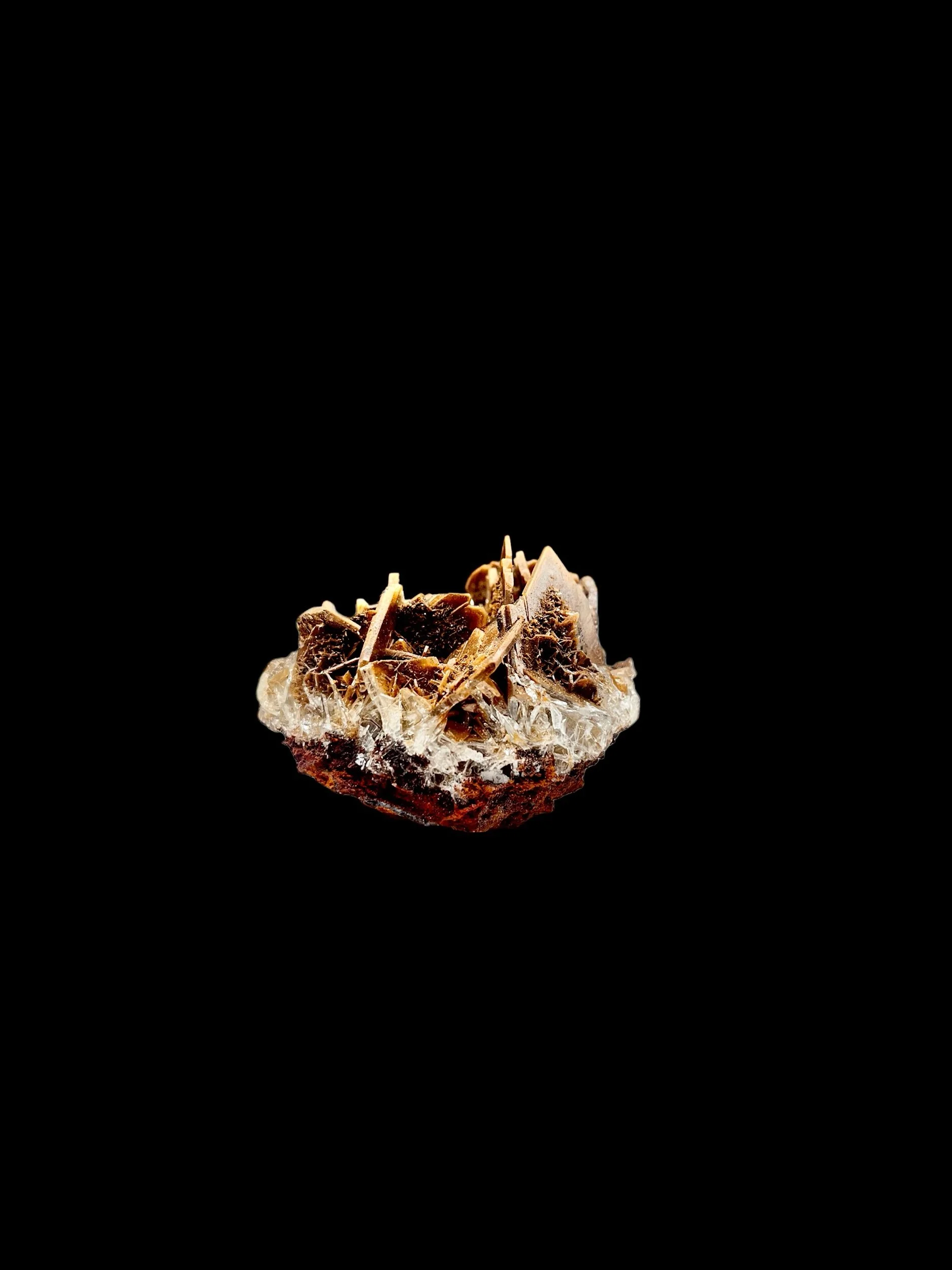
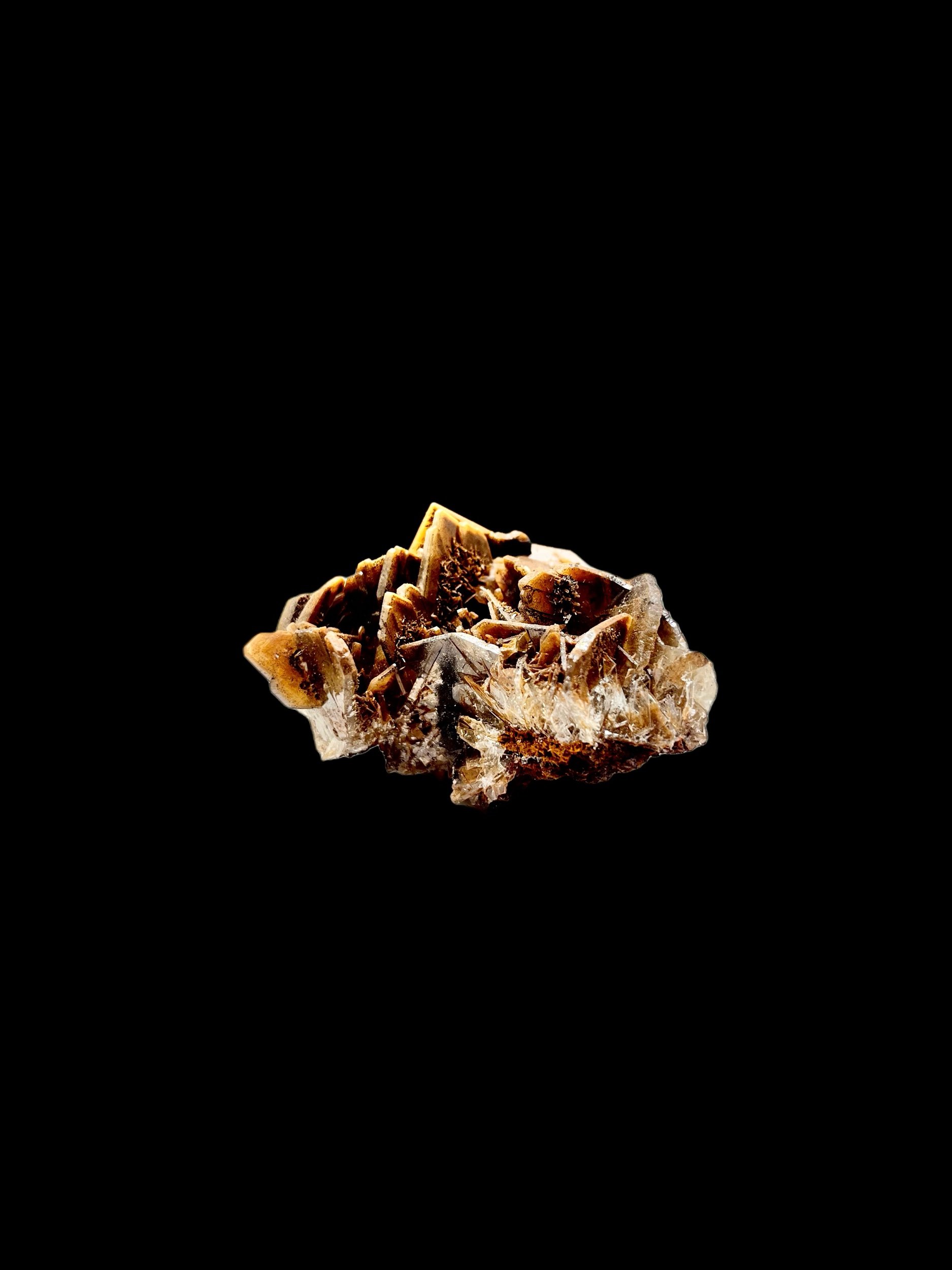
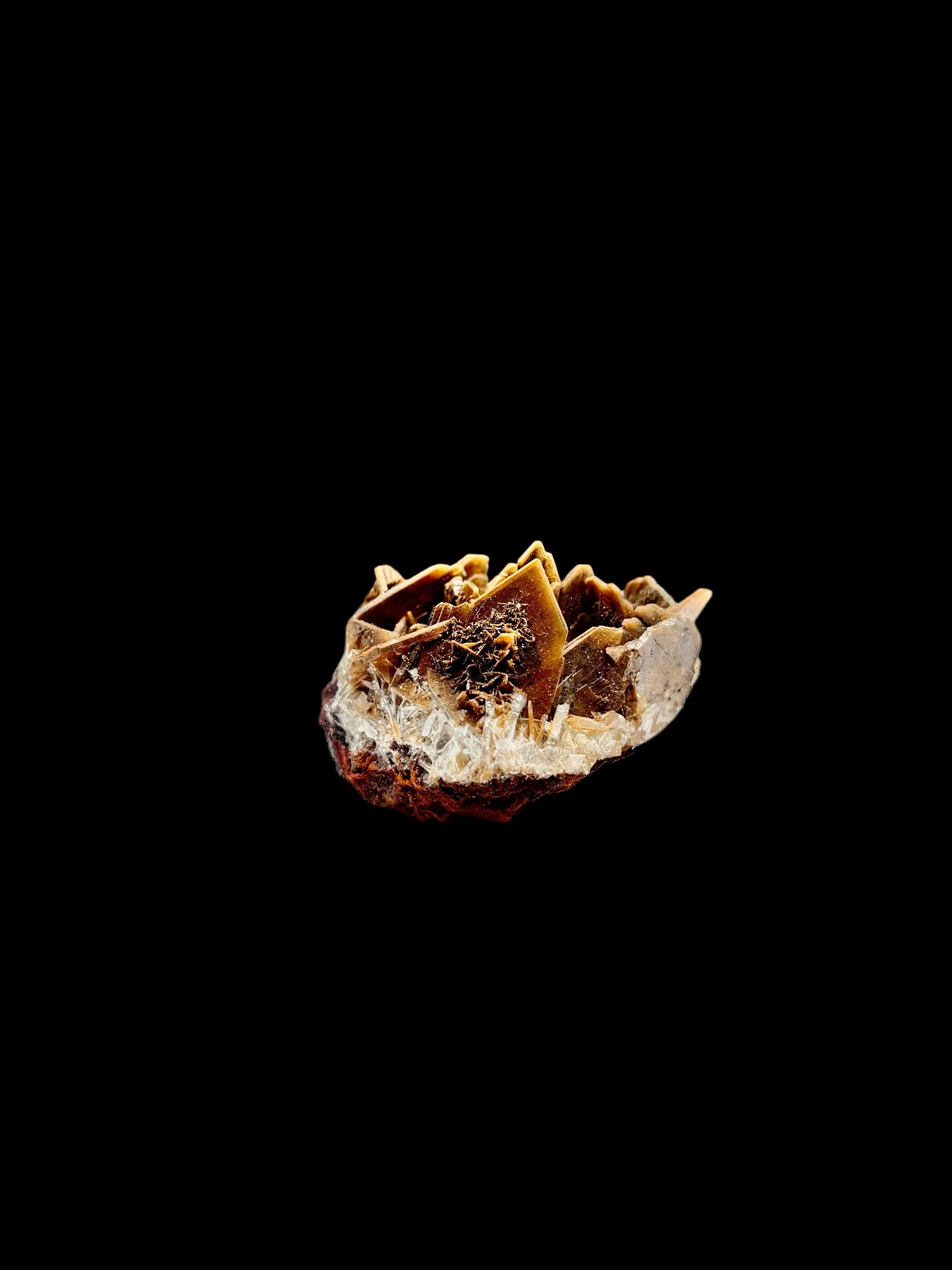
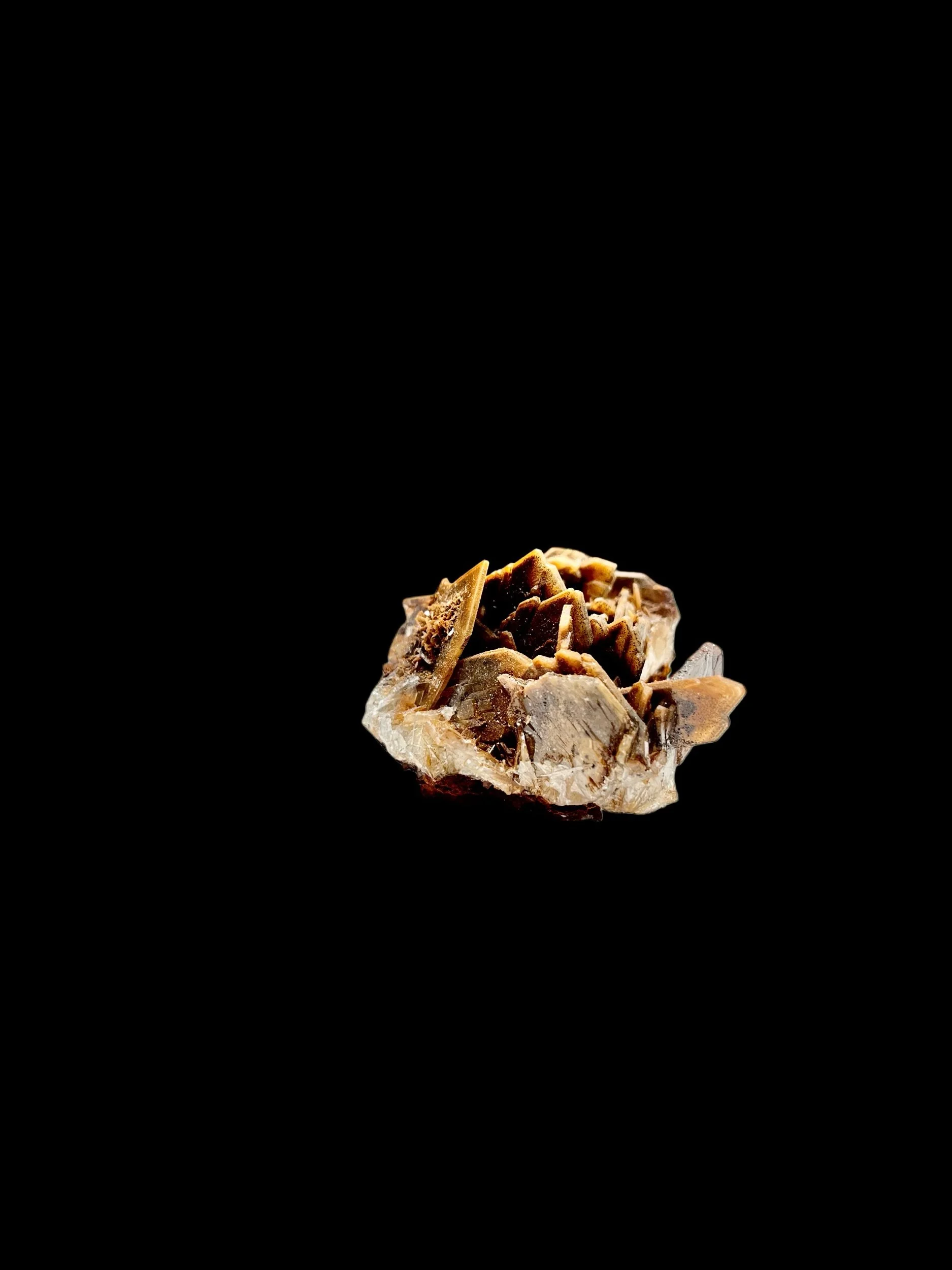
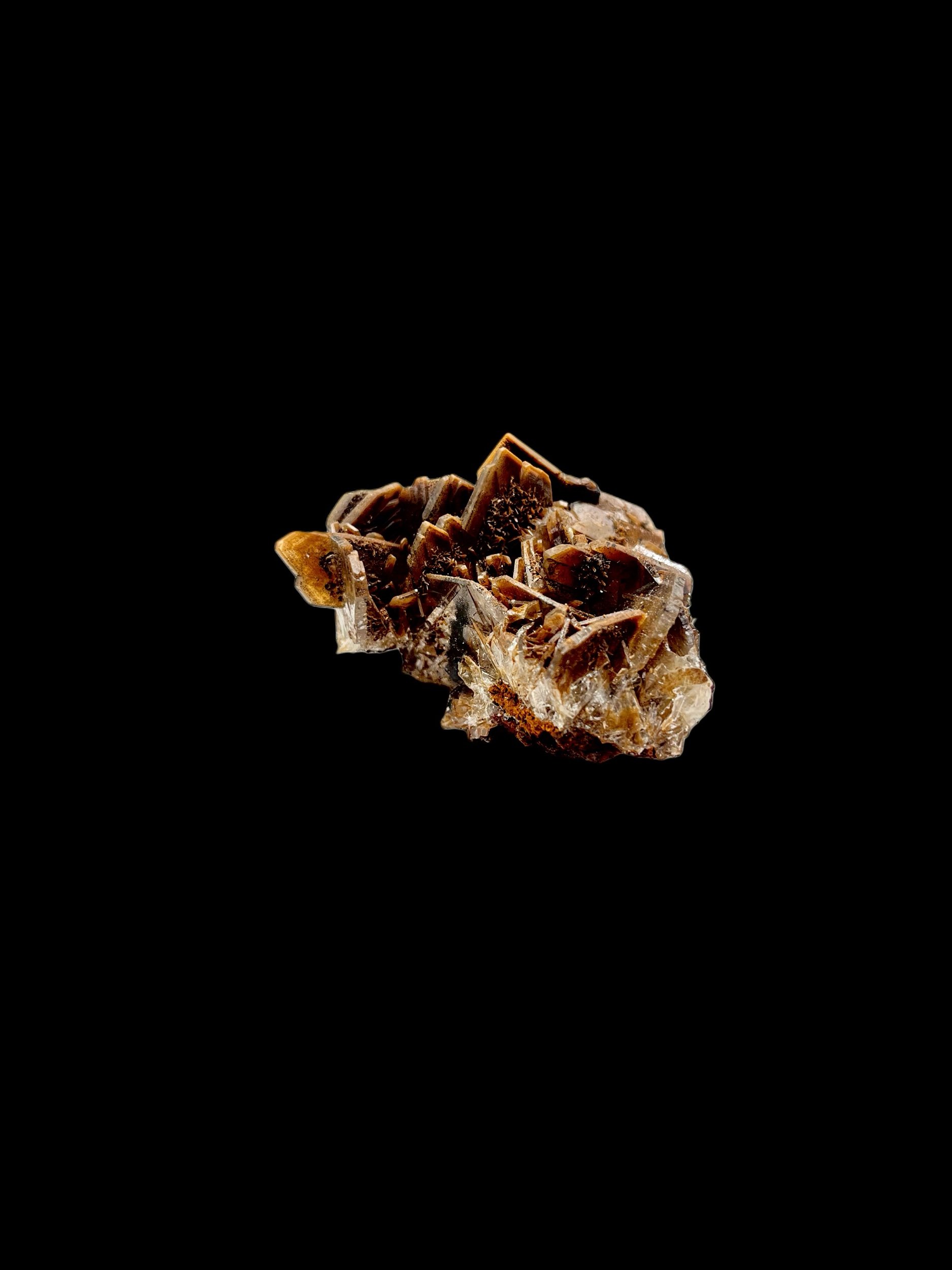
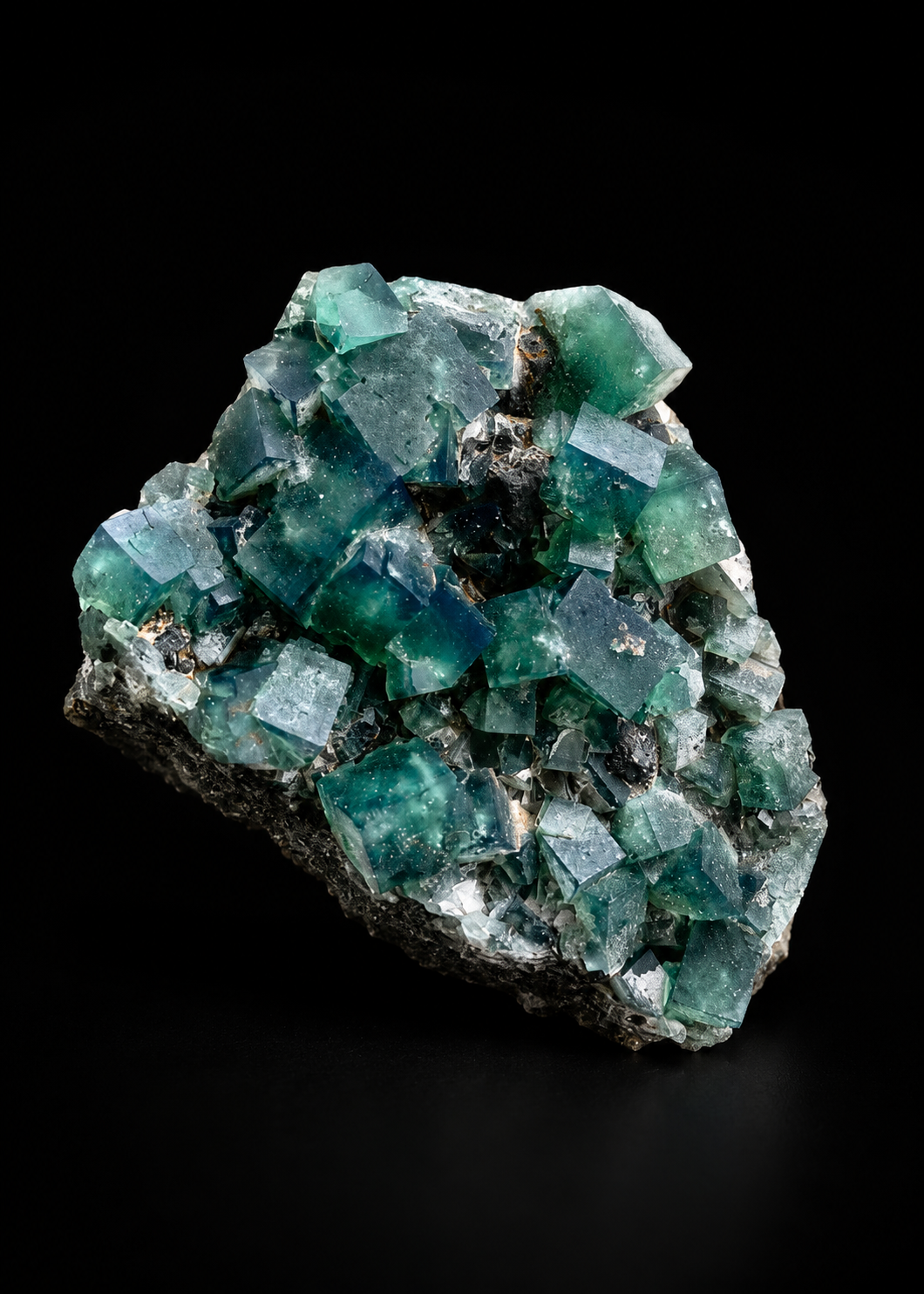
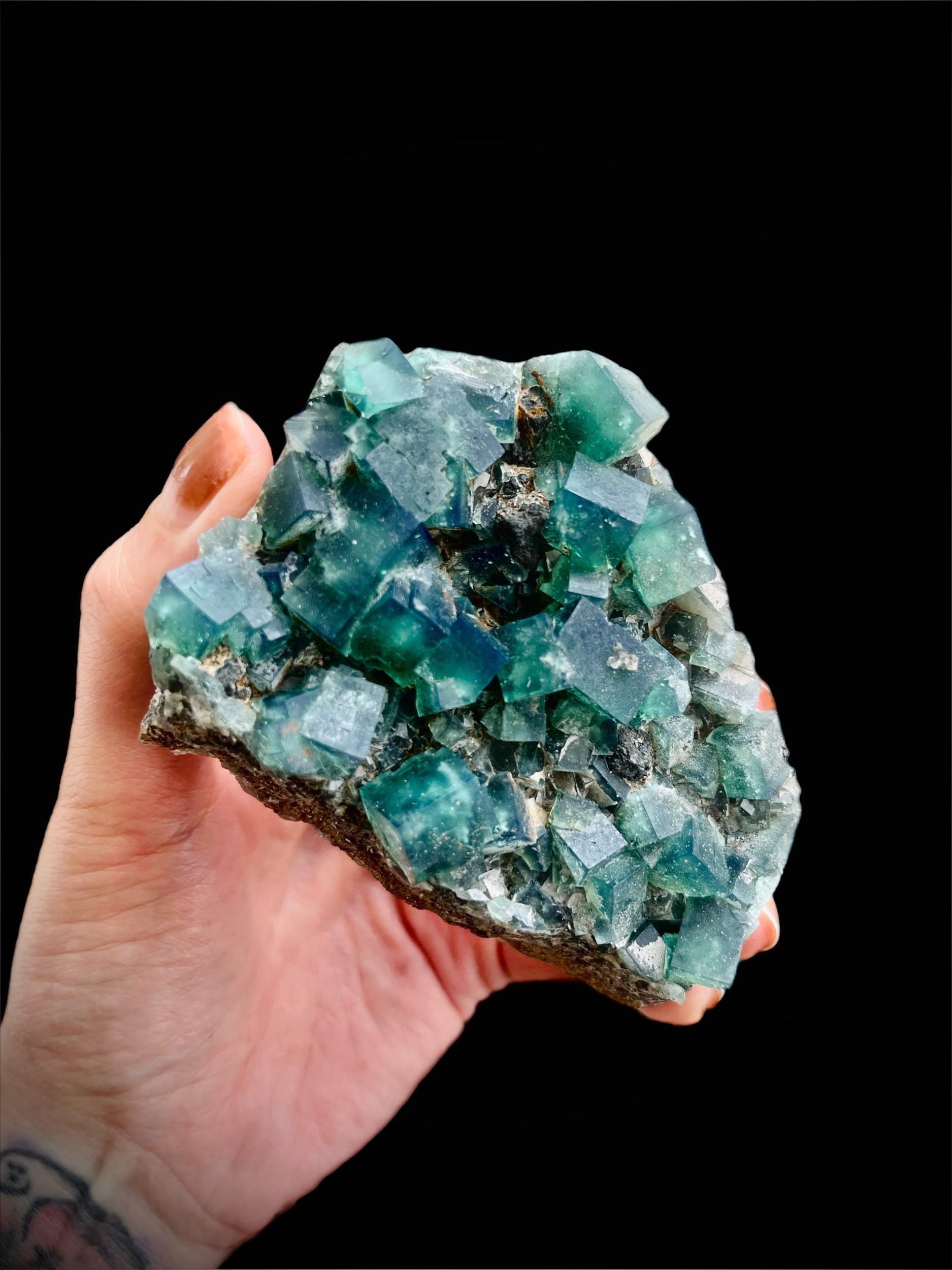
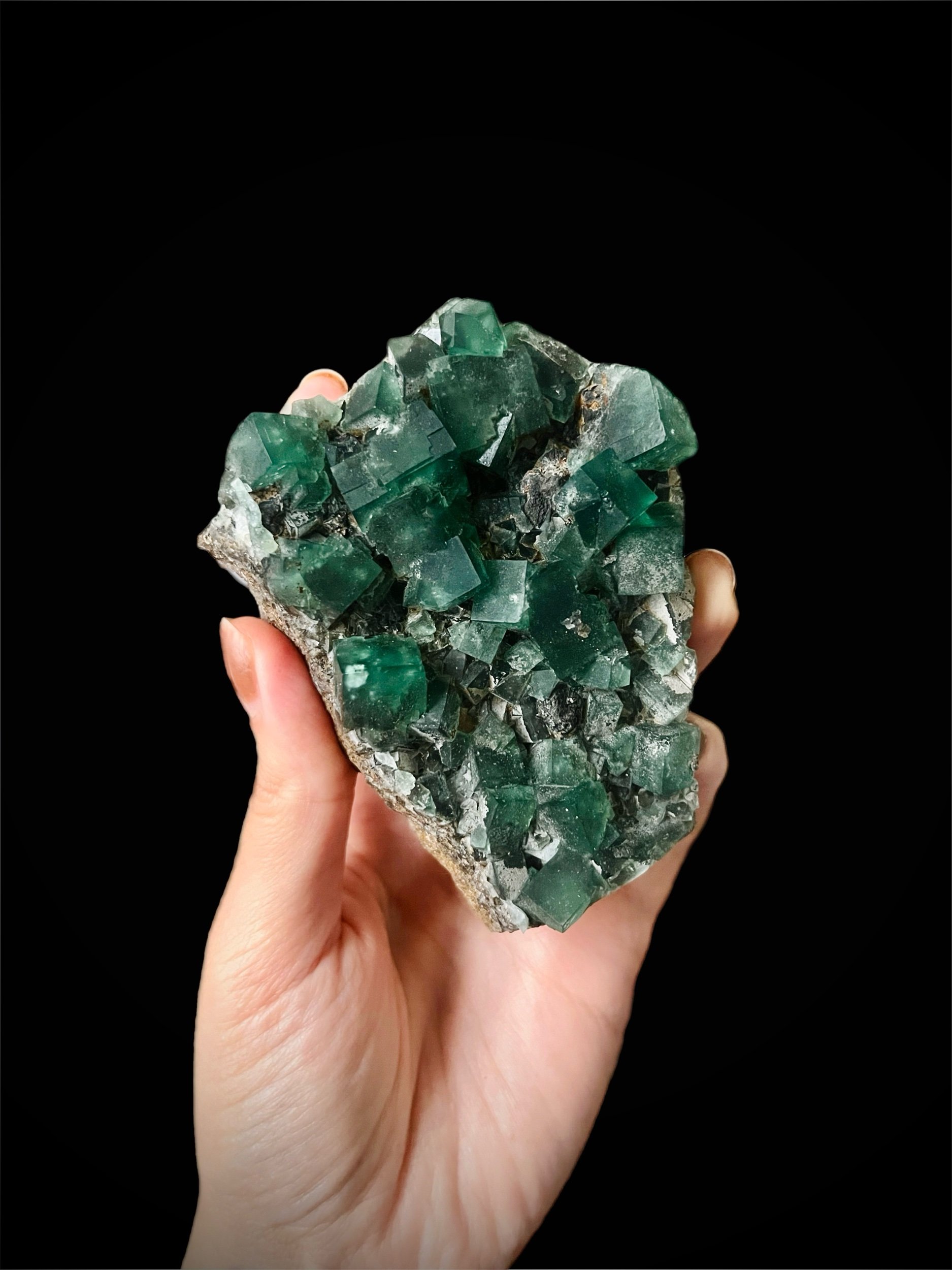
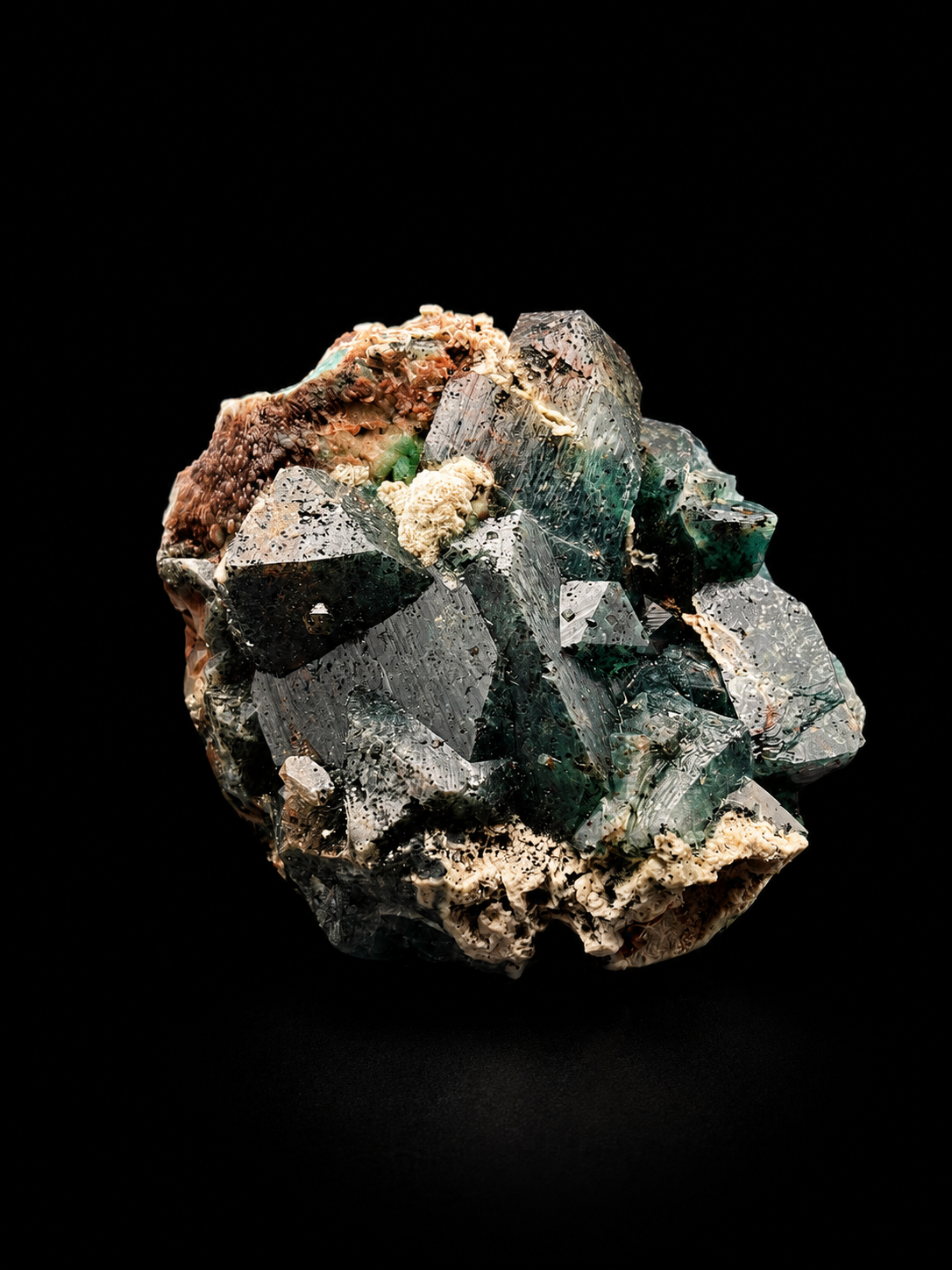
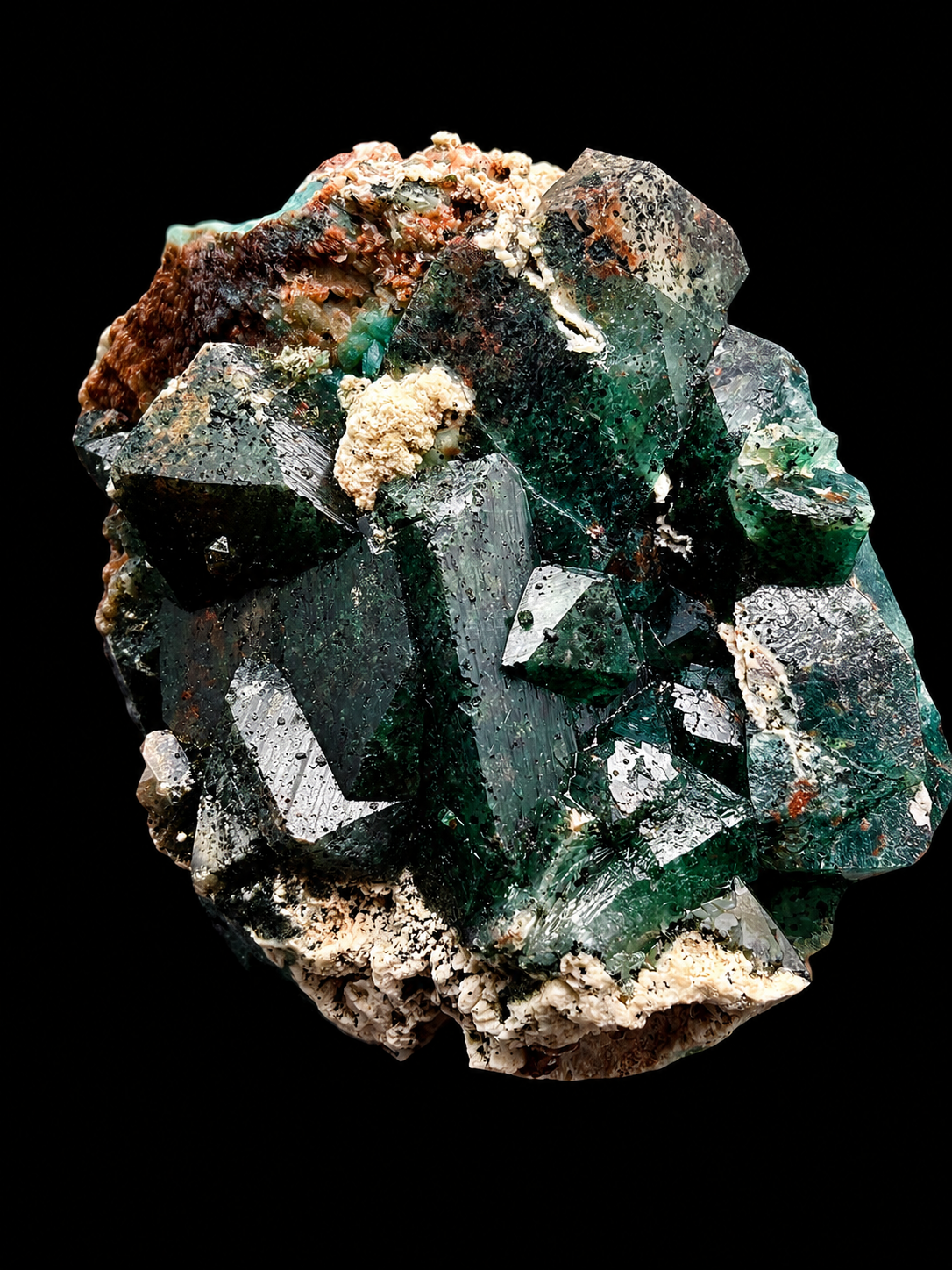
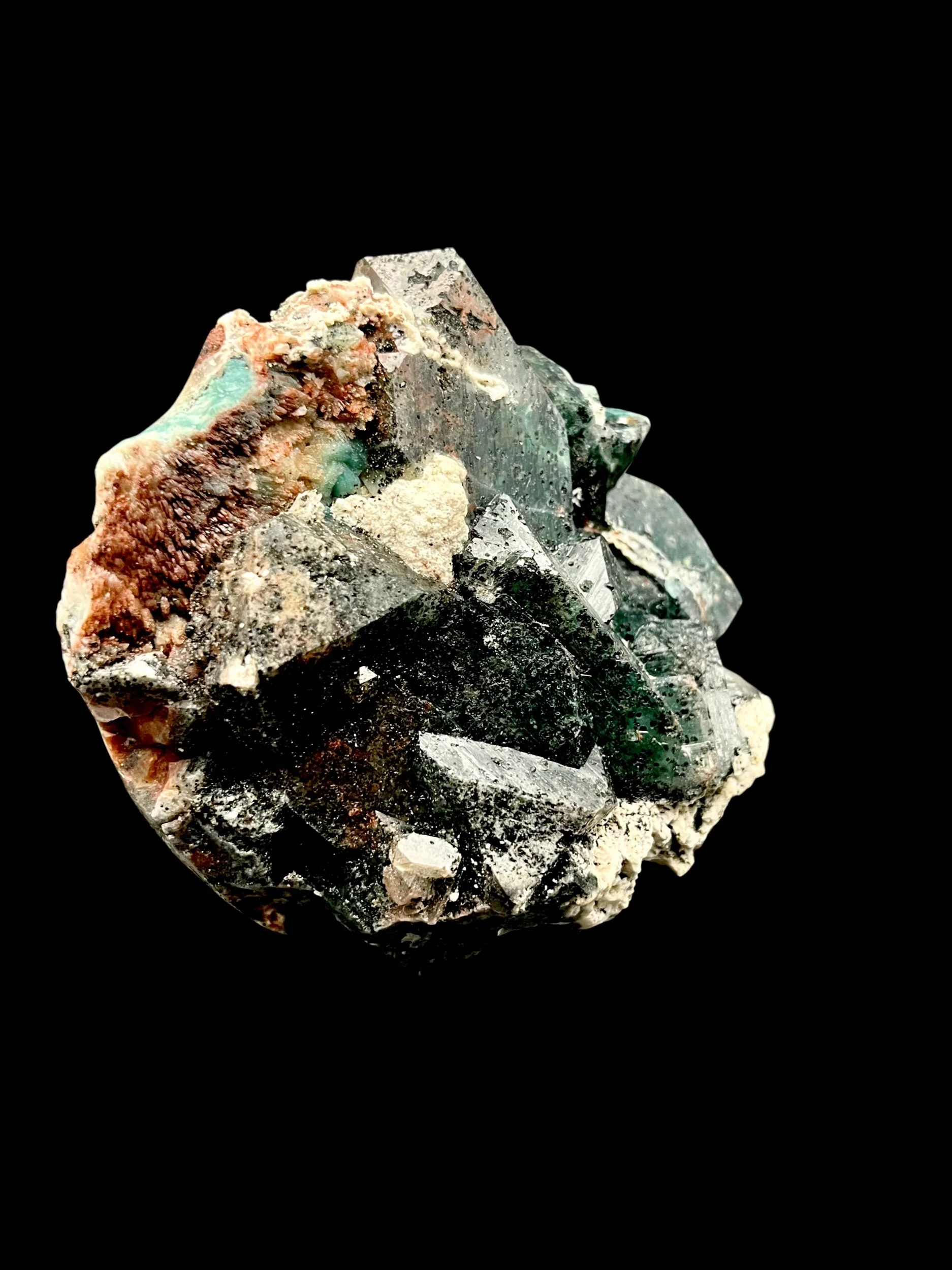
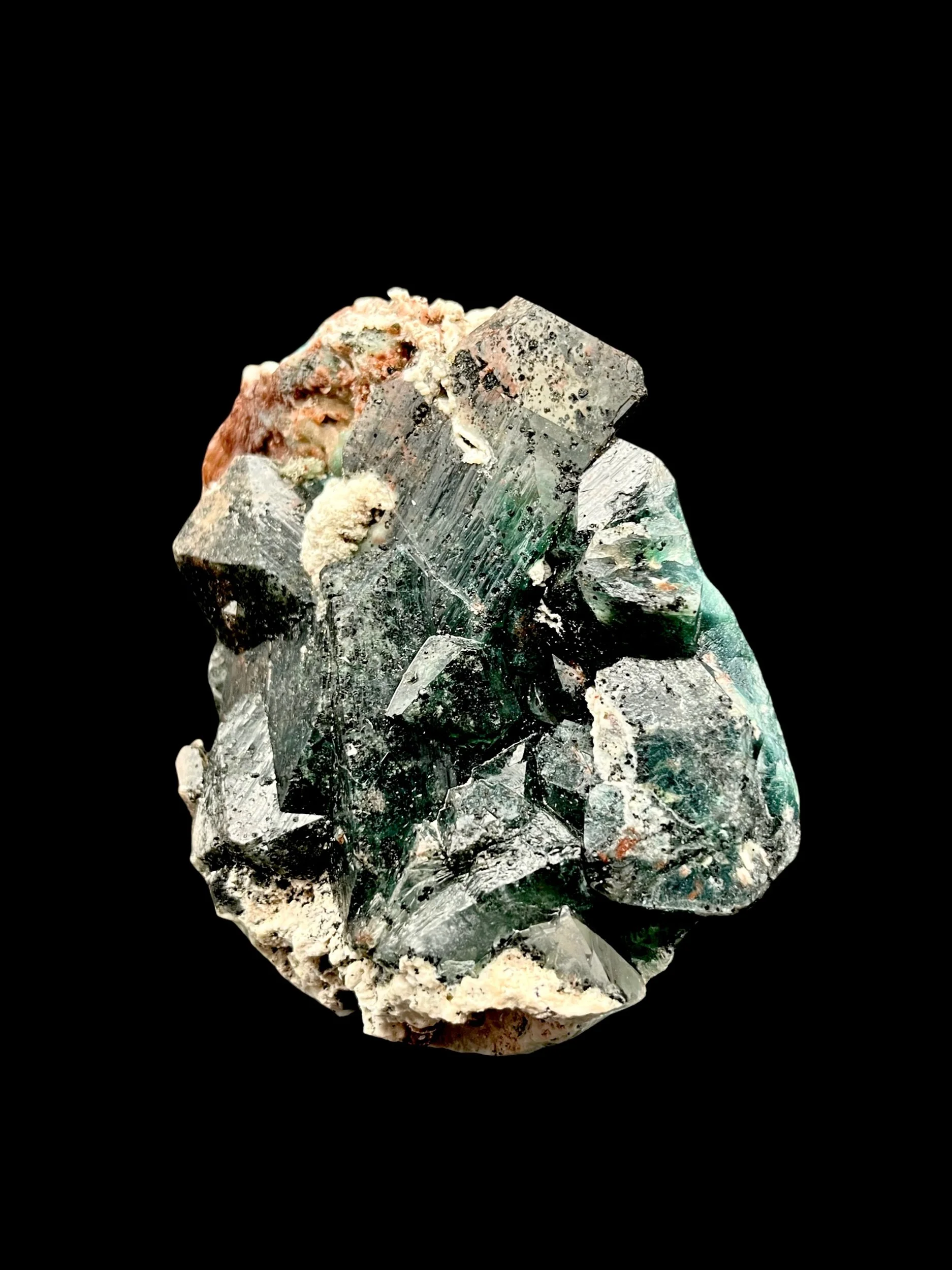
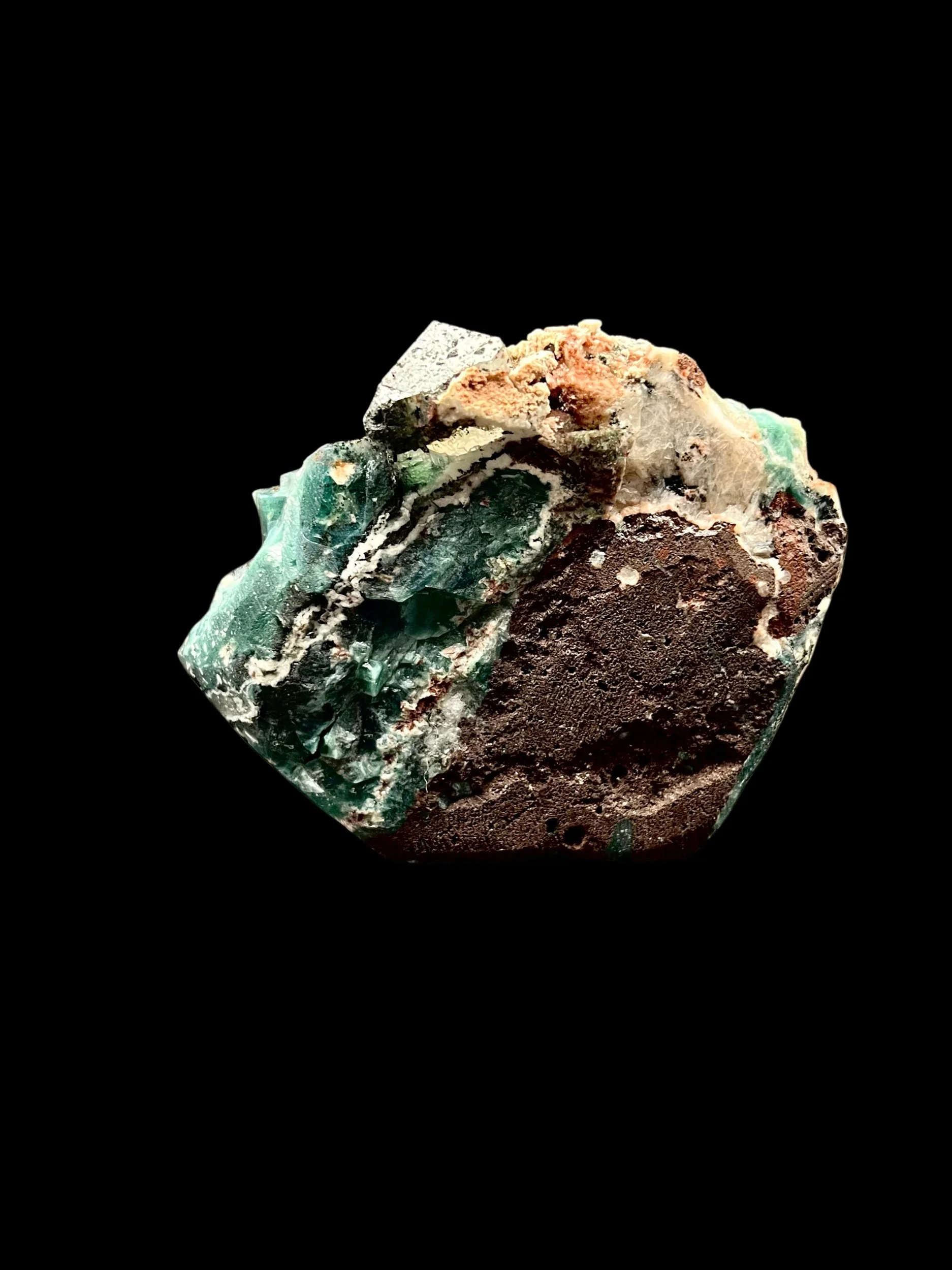
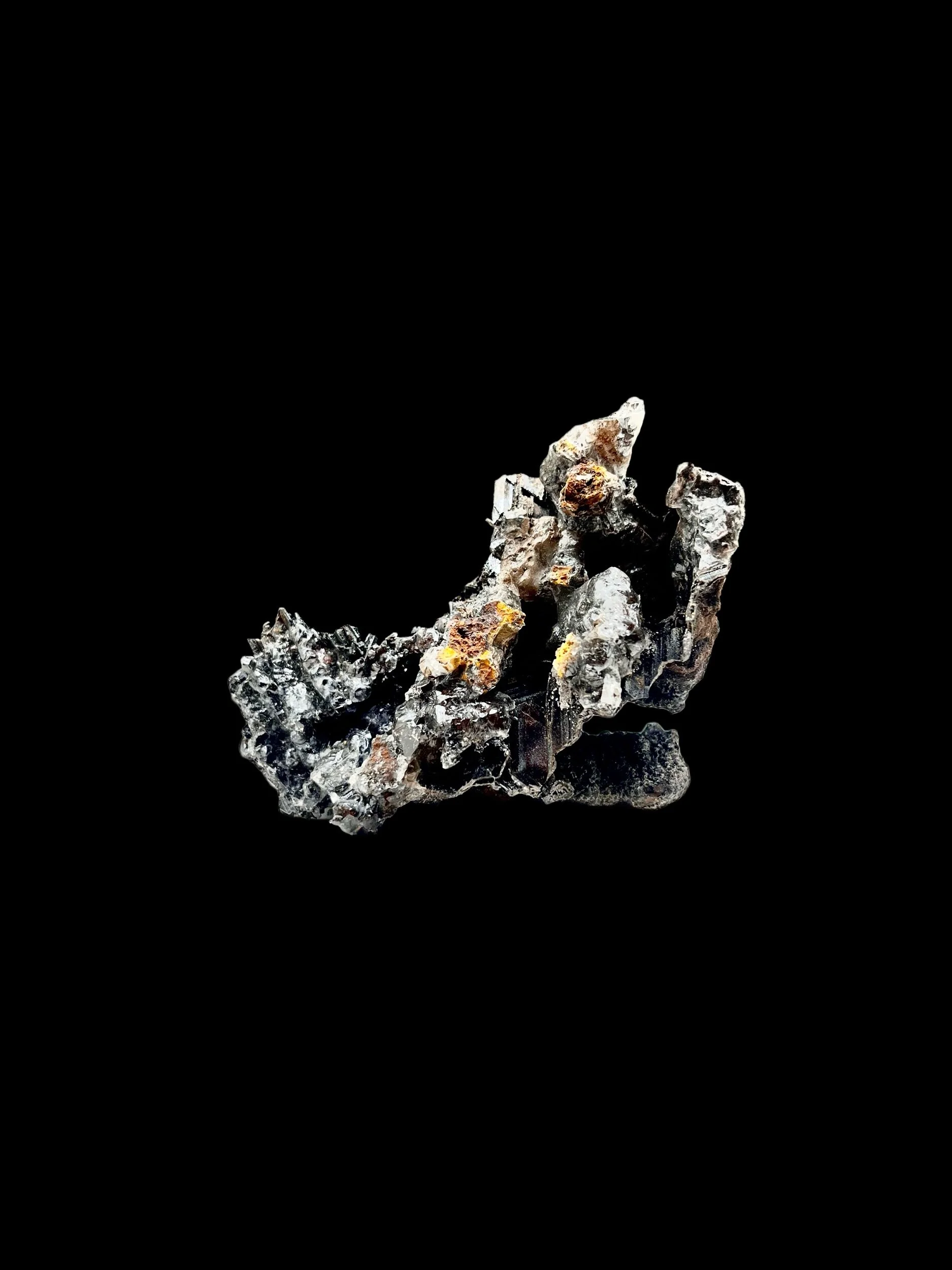
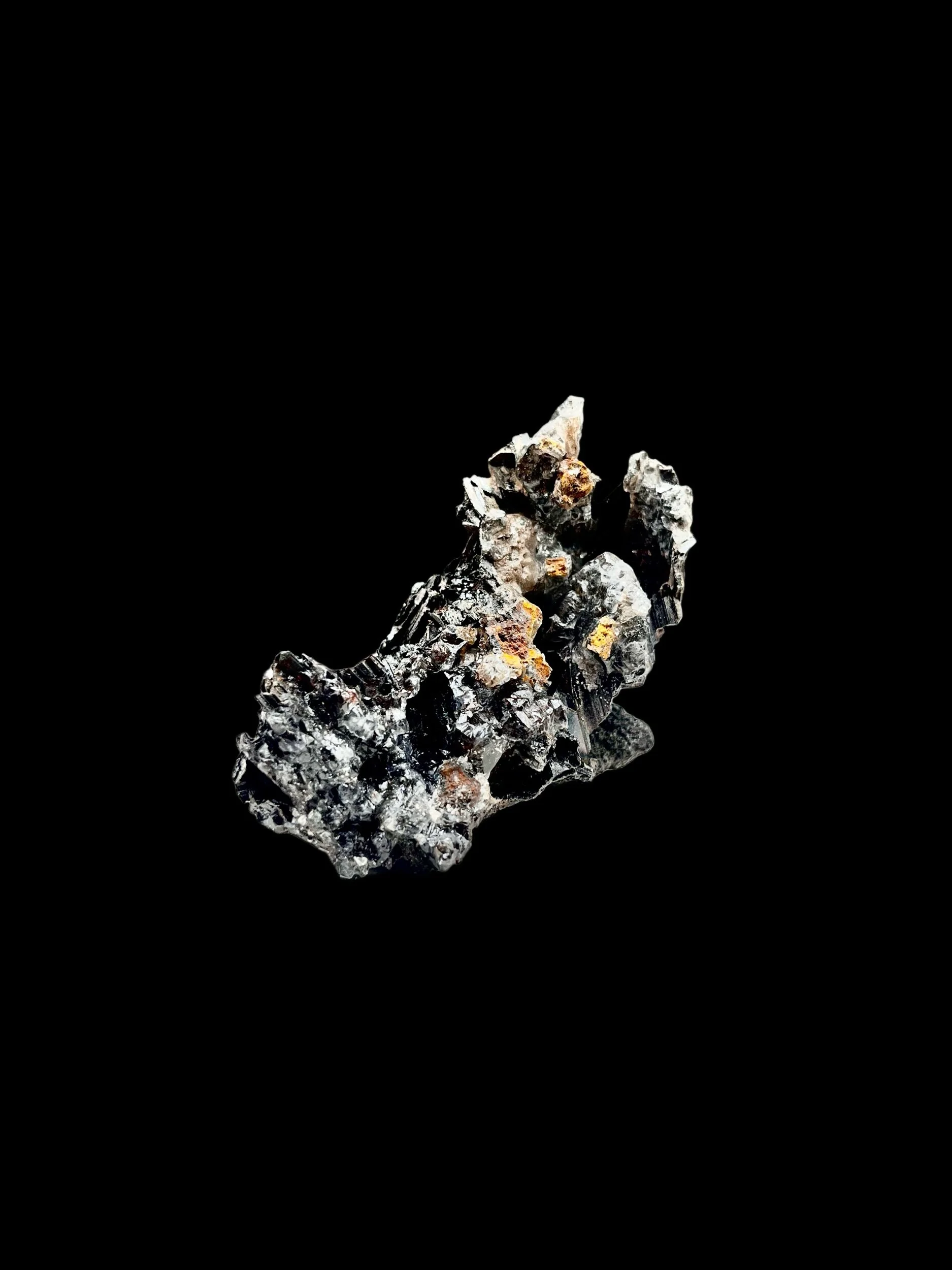
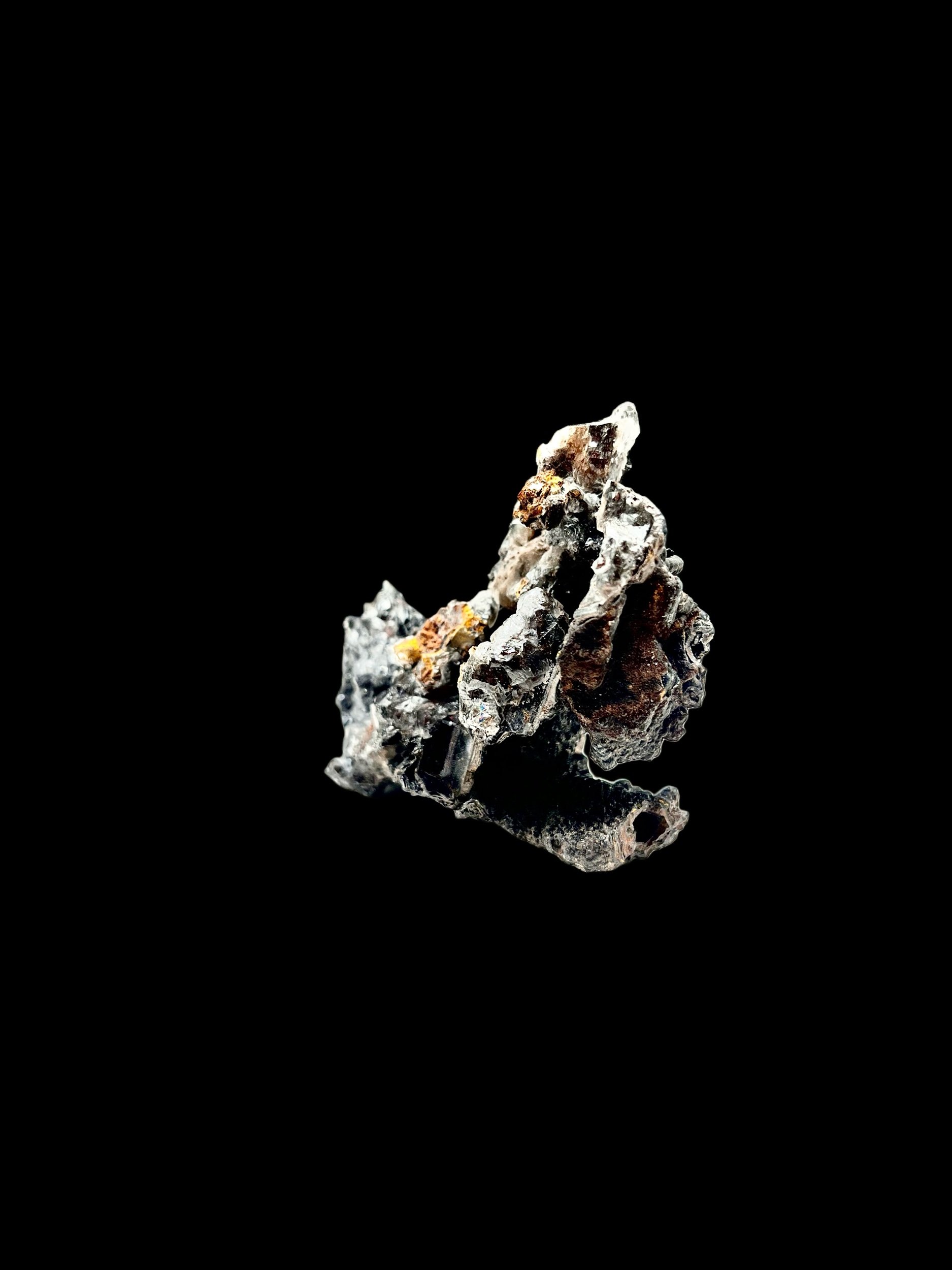
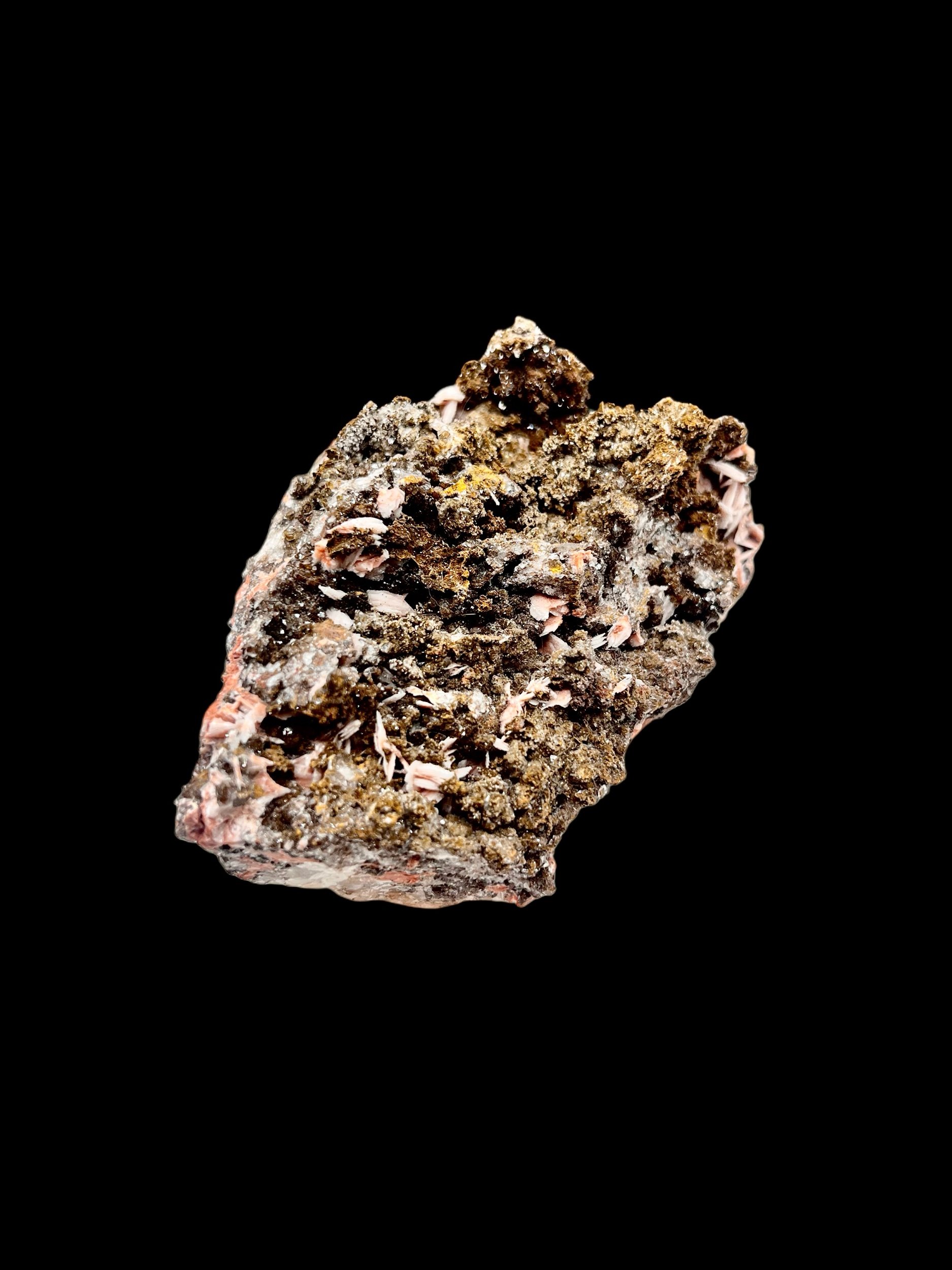
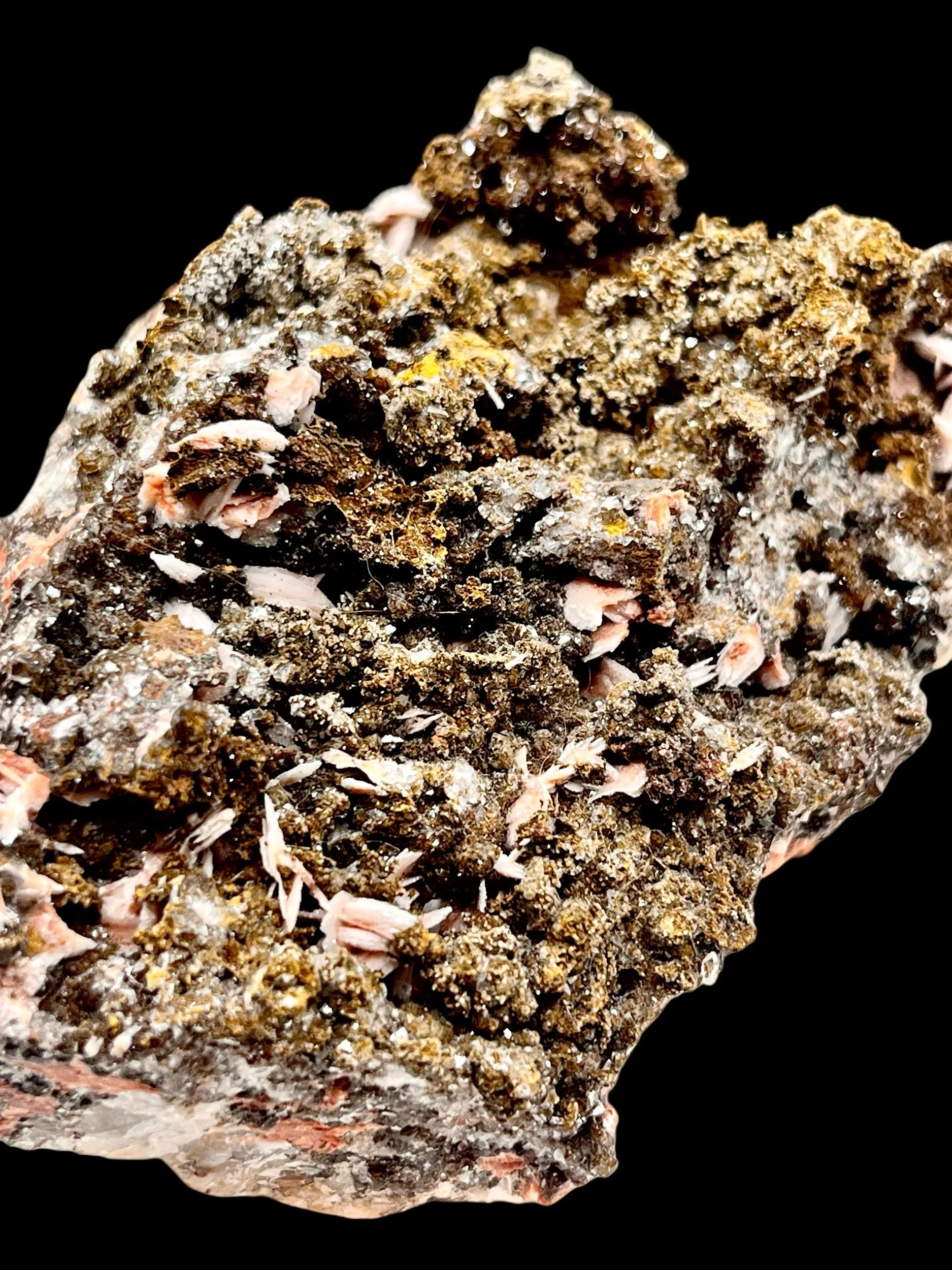
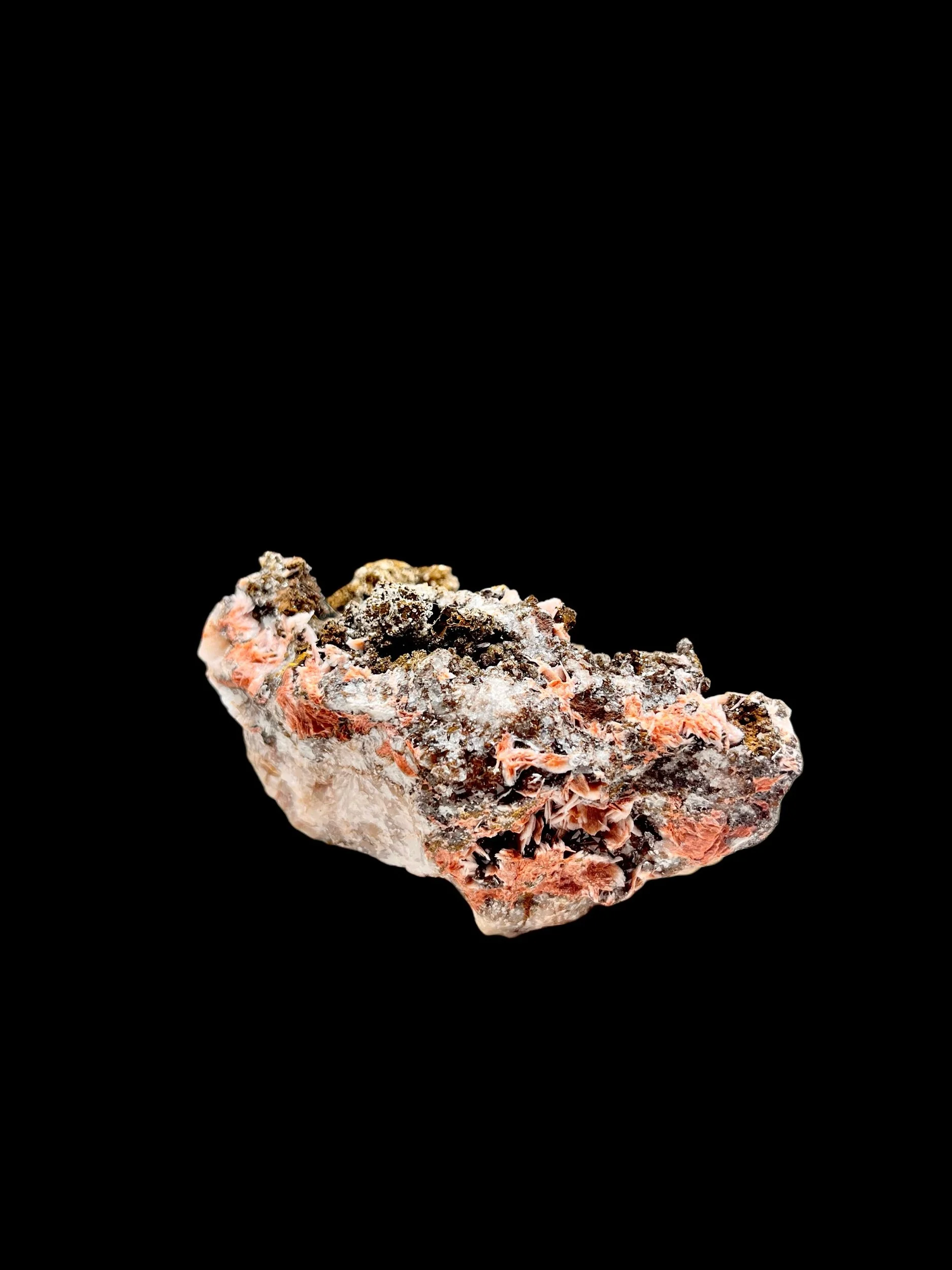
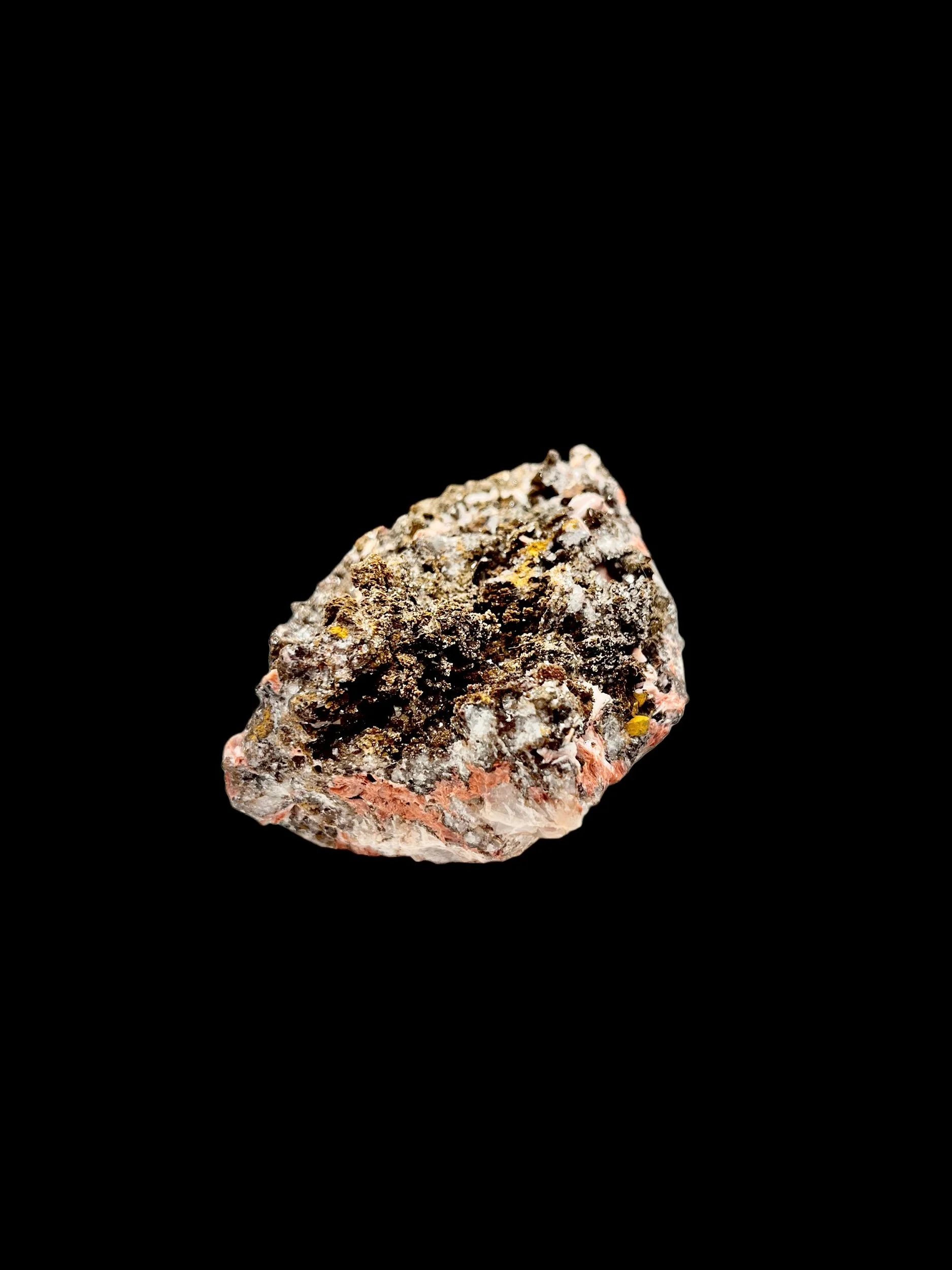
A substantial and remarkably complex cabinet specimen, this marshy apophyllite displays an extraordinary landscape of sea-green stilbite, lustrous apophyllite, cream-colored mineral formations, and scattered iron-rich inclusions.
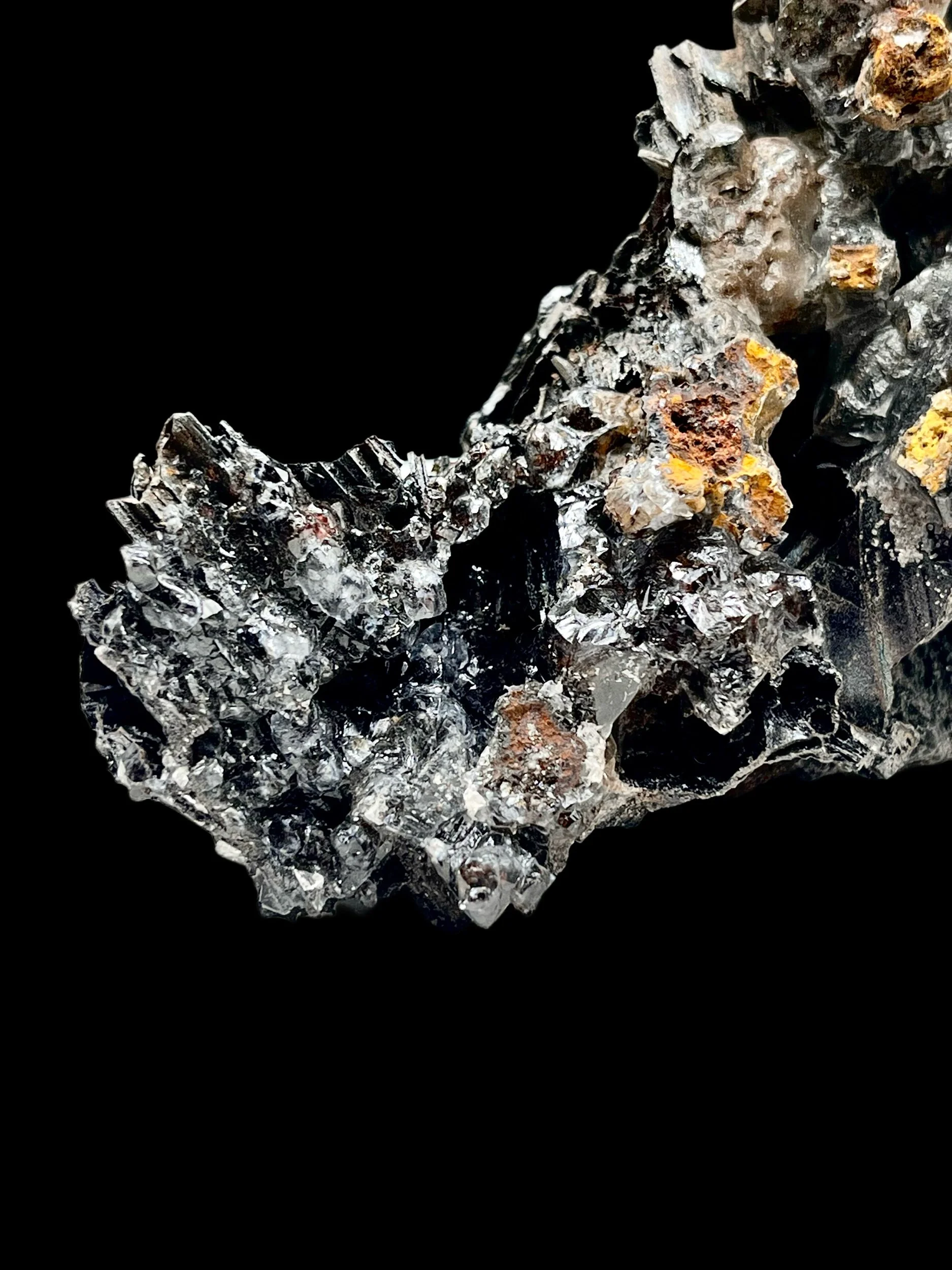
The stilbite forms dense sprays, rounded clusters, layered fans, and highly textured ridges across the specimen. Clear to smoky apophyllite crystals emerge between the softer formations, adding sharp geometric contrast and reflective glasslike faces. Black mineral speckling, warm rust-colored accents, and pale cream growth create additional depth and mystique throughout the piece.
The striking blue-green color is a reflection of a distinct sequence of mineral growth. The stilbite formed first, followed by celadonite. The celadonite entered the stilbite along growth seams, spaces between blades, and porous surface areas, coloring the originally pale mineral from within and across its surface. Areas with heavier celadonite concentration display stronger turquoise and green tones, while less affected sections retain their cream, tan, and translucent coloration.
Celadonite-included stilbite and apophyllite are both documented from Sakur Quarry, where this association is particularly sought after for its saturated sea-green color and complex pocket mineralogy.
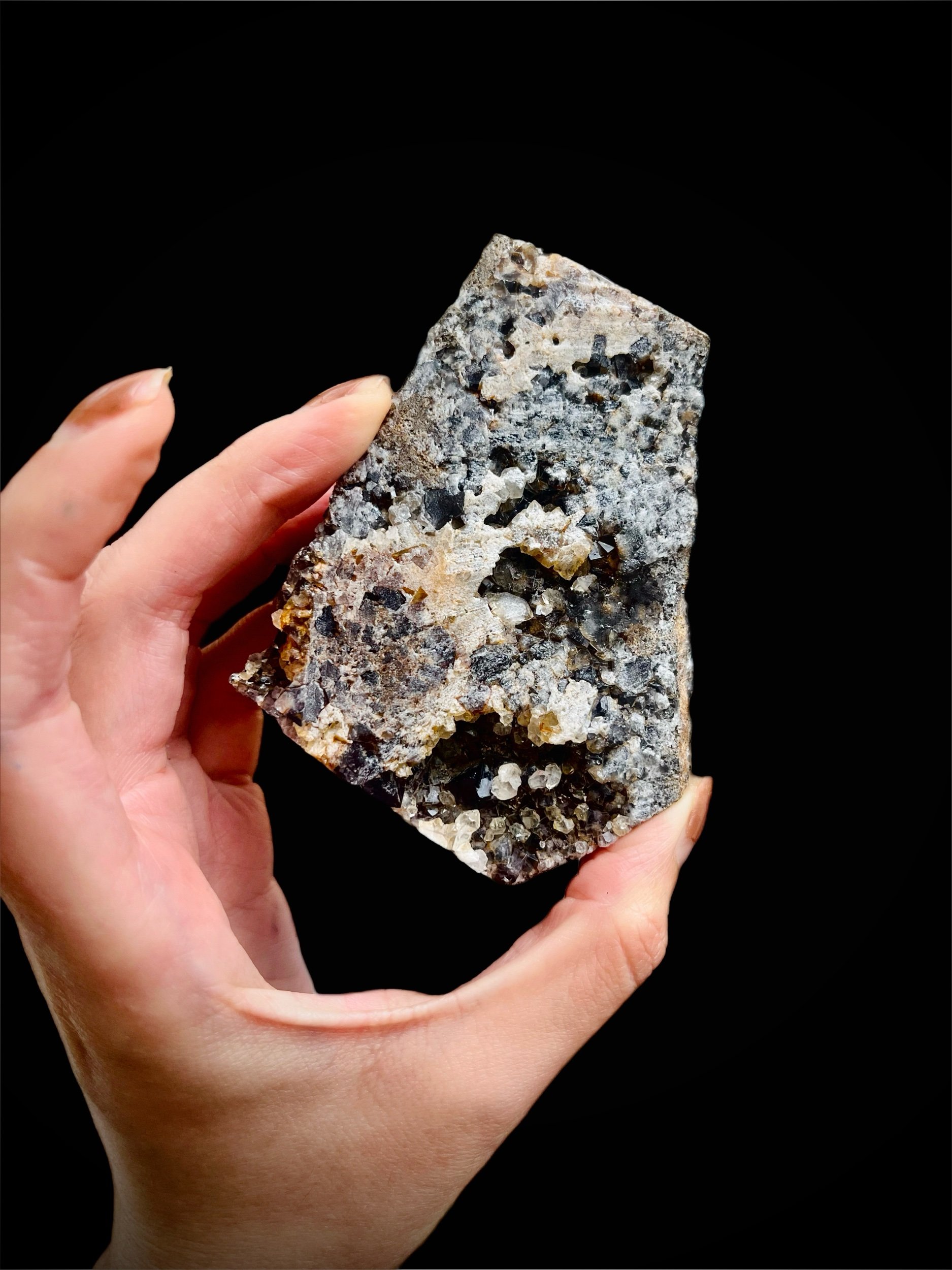
At just over one kilogram, this is a substantial display specimen with numerous distinct viewing areas. One side emphasizes the rich celadonite-colored stilbite, while another reveals large apophyllite crystals, cream mineral growth, dark inclusions, and the specimen’s natural basaltic base.
Dimensions & Weight
Dimensions: 5.25 × 4 × 2.5 inches
Weight: 1,054 grams
Locality: Sakur Quarry, Sakur, Sangamner, Ahilyanagar District, Nashik Division, Maharashtra, India
Metaphysical Properties
Apophyllite is associated with clarity, intuition, self-reflection, and energetic purification. Its bright reflective surfaces are traditionally connected with illumination and the release of mental or emotional heaviness.
Stilbite is associated with gentleness, emotional openness, creativity, and peaceful communication. Celadonite contributes a grounded, restorative quality and is often connected with renewal, balance, and connection to the natural world.
Together, the three minerals create a pairing traditionally valued for:
Clearer perspective and self-awareness
Emotional calm and gentle release
Grounding during spiritual or intuitive work
Renewed creativity and openness
Balance between elevated and earth-centered energy
Metaphysical properties are based on spiritual traditions and are not scientific or medical claims.
Collector’s Notes
This specimen is an excellent example of paragenesis—the sequence in which minerals formed inside a pocket. Rather than crystallizing all at once, the minerals record several separate stages. Stilbite established the earlier formations, celadonite followed and transformed its color, and the contrasting apophyllite crystals preserve another chapter in the pocket’s mineral history.
That sequence is responsible for the specimen’s unusual appearance. The green is not simply a uniform surface stain. Celadonite occupies irregular zones throughout the stilbite, producing variations from soft mint and pale seafoam to saturated turquoise. Untouched cream-colored sections remain visible beside the colored areas, making the order of formation especially easy to appreciate.
Sakur Quarry lies within Maharashtra’s mineral-rich Deccan volcanic province. Scientific study of cavities in the Deccan basalts shows that their secondary minerals developed through several distinct stages, including zeolites such as stilbite and later hydrothermal apophyllite. These repeated mineralizing events are why a single Indian basalt pocket can contain such an intricate combination of crystal forms, colors, and textures.
The names themselves also reflect the minerals’ appearance. Celadonite takes its name from the French word céladon, referring to its characteristic sea-green color. Stilbite comes from a Greek root meaning “to glitter” or “to shine,” inspired by the mineral’s pearly to vitreous luster.
Sakur is especially recognized among collectors for green celadonite-included stilbite, heulandite, and apophyllite. The locality’s specimens range from dark forest green to bright aquatic blue-green, depending on the concentration and distribution of celadonite.
Highlights
Large cabinet-sized marshy apophyllite specimen
Vibrant color
Celadonite after Stilbite
Unique formation. Dense stilbite sprays, fans, and rounded aggregates
Large, defined clear-to-smoky apophyllite crystals
Highly sought after specimen
Strong evidence of multiple mineral-growth stages
High luster
Distinct display views on several sides
Classic collector material from Sakur Quarry, India
Mineralogy
Minerals: Apophyllite Group, Stilbite Group, Celadonite
Locality: Sakur Quarry, Maharashtra, India
Apophyllite Group formula: AB₄[Si₈O₂₀]X · 8H₂O
Crystal system: Tetragonal
Luster: Vitreous to pearly
Transparency: Transparent to translucent
Stilbite-Ca formula: NaCa₄(Si₂₇Al₉)O₇₂ · 28H₂O
Crystal system: Monoclinic
Luster: Vitreous to pearly
Transparency: Transparent to translucent
Celadonite formula: K(MgFe³⁺□)(Si₄O₁₀)(OH)₂
Crystal system: Monoclinic
Luster: Waxy, dull, or earthy
Color: Blue-green to olive or apple green
The apophyllite is listed at the group level because species-level identification requires laboratory analysis. Sakur Quarry records include apophyllite associated with both celadonite and stilbite.
Description
A substantial and remarkably complex cabinet specimen, this marshy apophyllite displays an extraordinary landscape of sea-green stilbite, lustrous apophyllite, cream-colored mineral formations, and scattered iron-rich inclusions.
The stilbite forms dense sprays, rounded clusters, layered fans, and highly textured ridges across the specimen. Clear to smoky apophyllite crystals emerge between the softer formations, adding sharp geometric contrast and reflective glasslike faces. Black mineral speckling, warm rust-colored accents, and pale cream growth create additional depth and mystique throughout the piece.
The striking blue-green color is a reflection of a distinct sequence of mineral growth. The stilbite formed first, followed by celadonite. The celadonite entered the stilbite along growth seams, spaces between blades, and porous surface areas, coloring the originally pale mineral from within and across its surface. Areas with heavier celadonite concentration display stronger turquoise and green tones, while less affected sections retain their cream, tan, and translucent coloration.
Celadonite-included stilbite and apophyllite are both documented from Sakur Quarry, where this association is particularly sought after for its saturated sea-green color and complex pocket mineralogy.
At just over one kilogram, this is a substantial display specimen with numerous distinct viewing areas. One side emphasizes the rich celadonite-colored stilbite, while another reveals large apophyllite crystals, cream mineral growth, dark inclusions, and the specimen’s natural basaltic base.
Dimensions & Weight
Dimensions: 5.25 × 4 × 2.5 inches
Weight: 1,054 grams
Locality: Sakur Quarry, Sakur, Sangamner, Ahilyanagar District, Nashik Division, Maharashtra, India
Metaphysical Properties
Apophyllite is associated with clarity, intuition, self-reflection, and energetic purification. Its bright reflective surfaces are traditionally connected with illumination and the release of mental or emotional heaviness.
Stilbite is associated with gentleness, emotional openness, creativity, and peaceful communication. Celadonite contributes a grounded, restorative quality and is often connected with renewal, balance, and connection to the natural world.
Together, the three minerals create a pairing traditionally valued for:
Clearer perspective and self-awareness
Emotional calm and gentle release
Grounding during spiritual or intuitive work
Renewed creativity and openness
Balance between elevated and earth-centered energy
Metaphysical properties are based on spiritual traditions and are not scientific or medical claims.
Collector’s Notes
This specimen is an excellent example of paragenesis—the sequence in which minerals formed inside a pocket. Rather than crystallizing all at once, the minerals record several separate stages. Stilbite established the earlier formations, celadonite followed and transformed its color, and the contrasting apophyllite crystals preserve another chapter in the pocket’s mineral history.
That sequence is responsible for the specimen’s unusual appearance. The green is not simply a uniform surface stain. Celadonite occupies irregular zones throughout the stilbite, producing variations from soft mint and pale seafoam to saturated turquoise. Untouched cream-colored sections remain visible beside the colored areas, making the order of formation especially easy to appreciate.
Sakur Quarry lies within Maharashtra’s mineral-rich Deccan volcanic province. Scientific study of cavities in the Deccan basalts shows that their secondary minerals developed through several distinct stages, including zeolites such as stilbite and later hydrothermal apophyllite. These repeated mineralizing events are why a single Indian basalt pocket can contain such an intricate combination of crystal forms, colors, and textures.
The names themselves also reflect the minerals’ appearance. Celadonite takes its name from the French word céladon, referring to its characteristic sea-green color. Stilbite comes from a Greek root meaning “to glitter” or “to shine,” inspired by the mineral’s pearly to vitreous luster.
Sakur is especially recognized among collectors for green celadonite-included stilbite, heulandite, and apophyllite. The locality’s specimens range from dark forest green to bright aquatic blue-green, depending on the concentration and distribution of celadonite.
Highlights
Large cabinet-sized marshy apophyllite specimen
Vibrant color
Celadonite after Stilbite
Unique formation. Dense stilbite sprays, fans, and rounded aggregates
Large, defined clear-to-smoky apophyllite crystals
Highly sought after specimen
Strong evidence of multiple mineral-growth stages
High luster
Distinct display views on several sides
Classic collector material from Sakur Quarry, India
Mineralogy
Minerals: Apophyllite Group, Stilbite Group, Celadonite
Locality: Sakur Quarry, Maharashtra, India
Apophyllite Group formula: AB₄[Si₈O₂₀]X · 8H₂O
Crystal system: Tetragonal
Luster: Vitreous to pearly
Transparency: Transparent to translucent
Stilbite-Ca formula: NaCa₄(Si₂₇Al₉)O₇₂ · 28H₂O
Crystal system: Monoclinic
Luster: Vitreous to pearly
Transparency: Transparent to translucent
Celadonite formula: K(MgFe³⁺□)(Si₄O₁₀)(OH)₂
Crystal system: Monoclinic
Luster: Waxy, dull, or earthy
Color: Blue-green to olive or apple green
The apophyllite is listed at the group level because species-level identification requires laboratory analysis. Sakur Quarry records include apophyllite associated with both celadonite and stilbite.


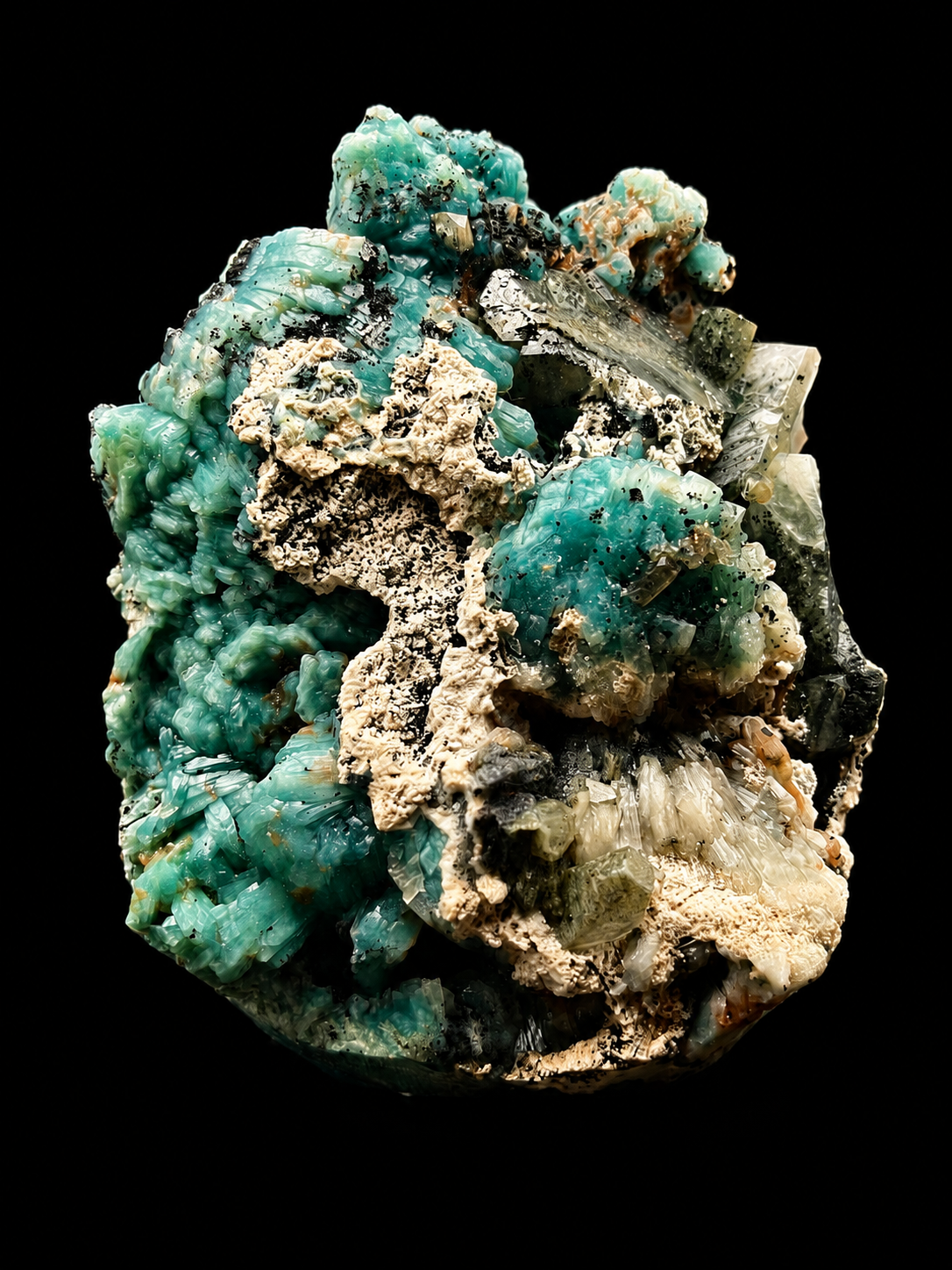 Image 1 of 7
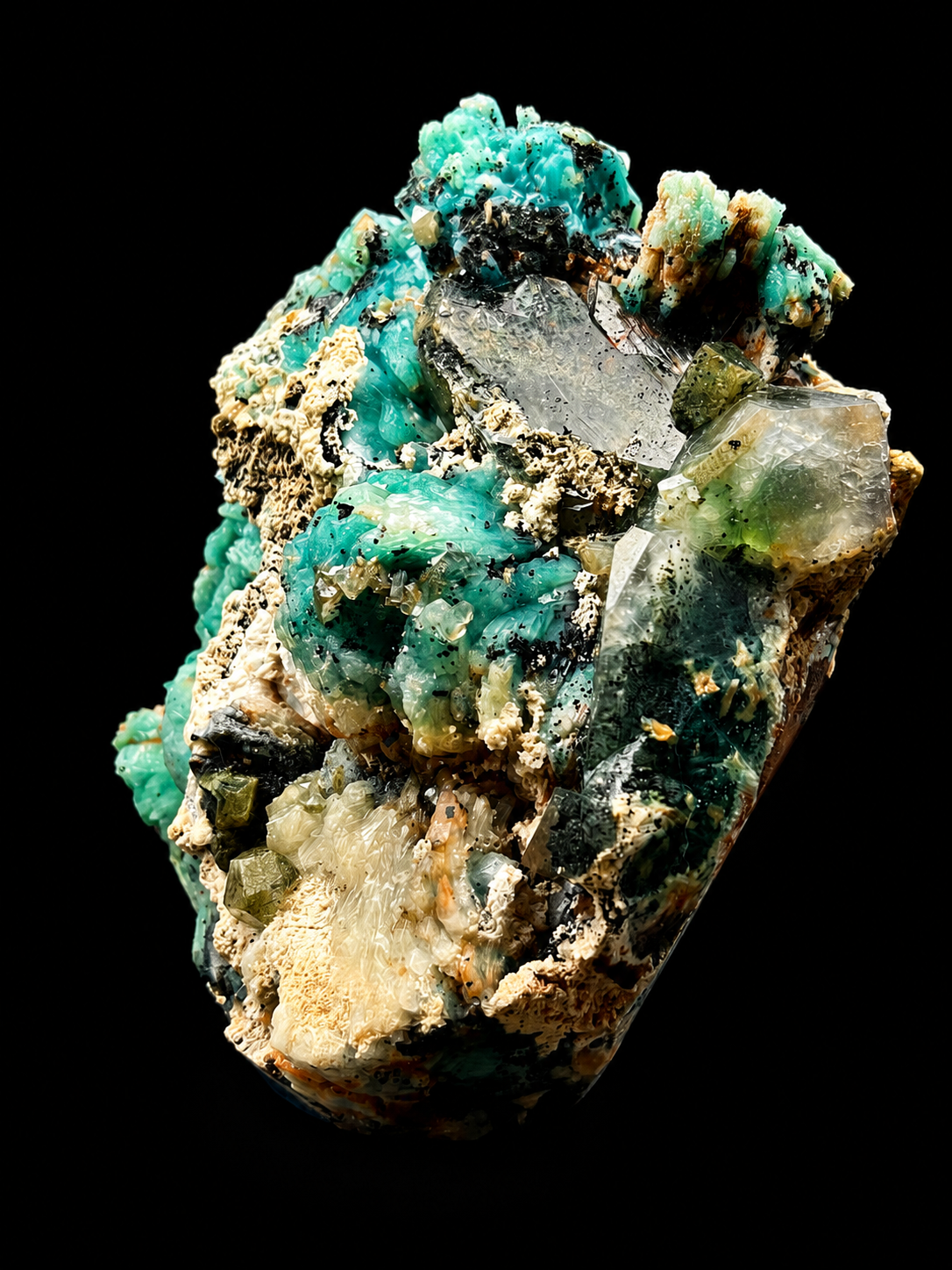 Image 2 of 7
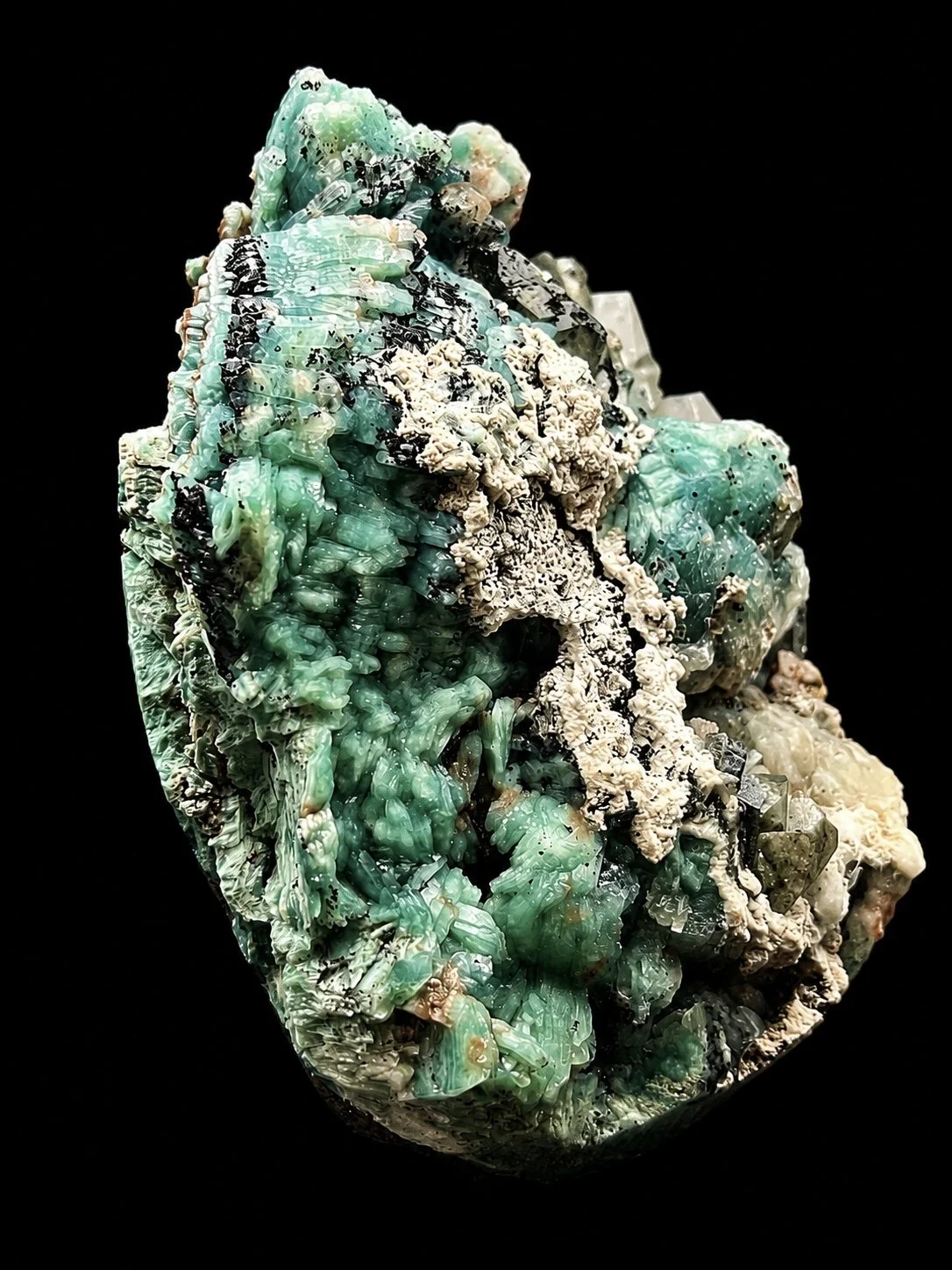 Image 3 of 7
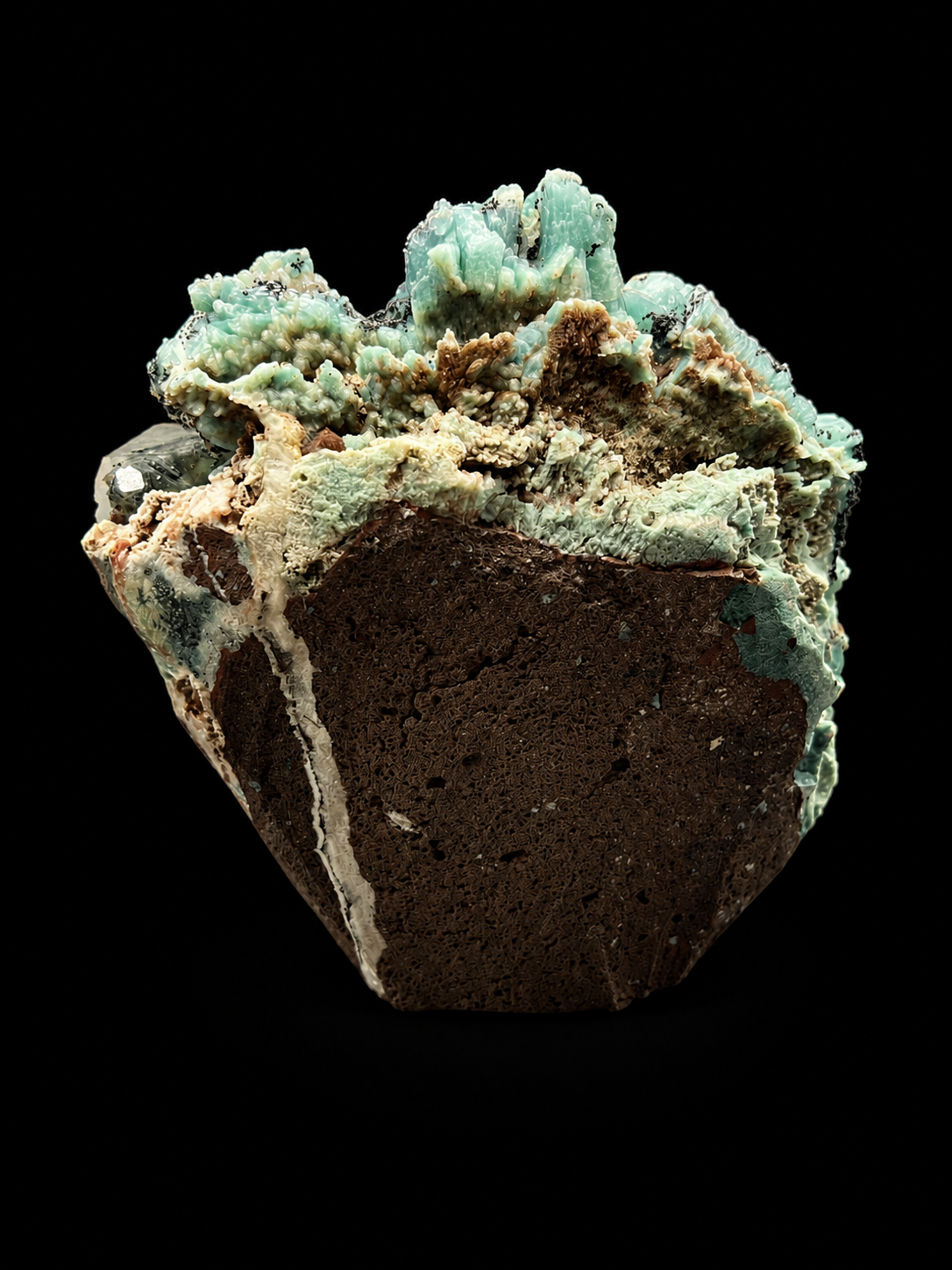 Image 4 of 7
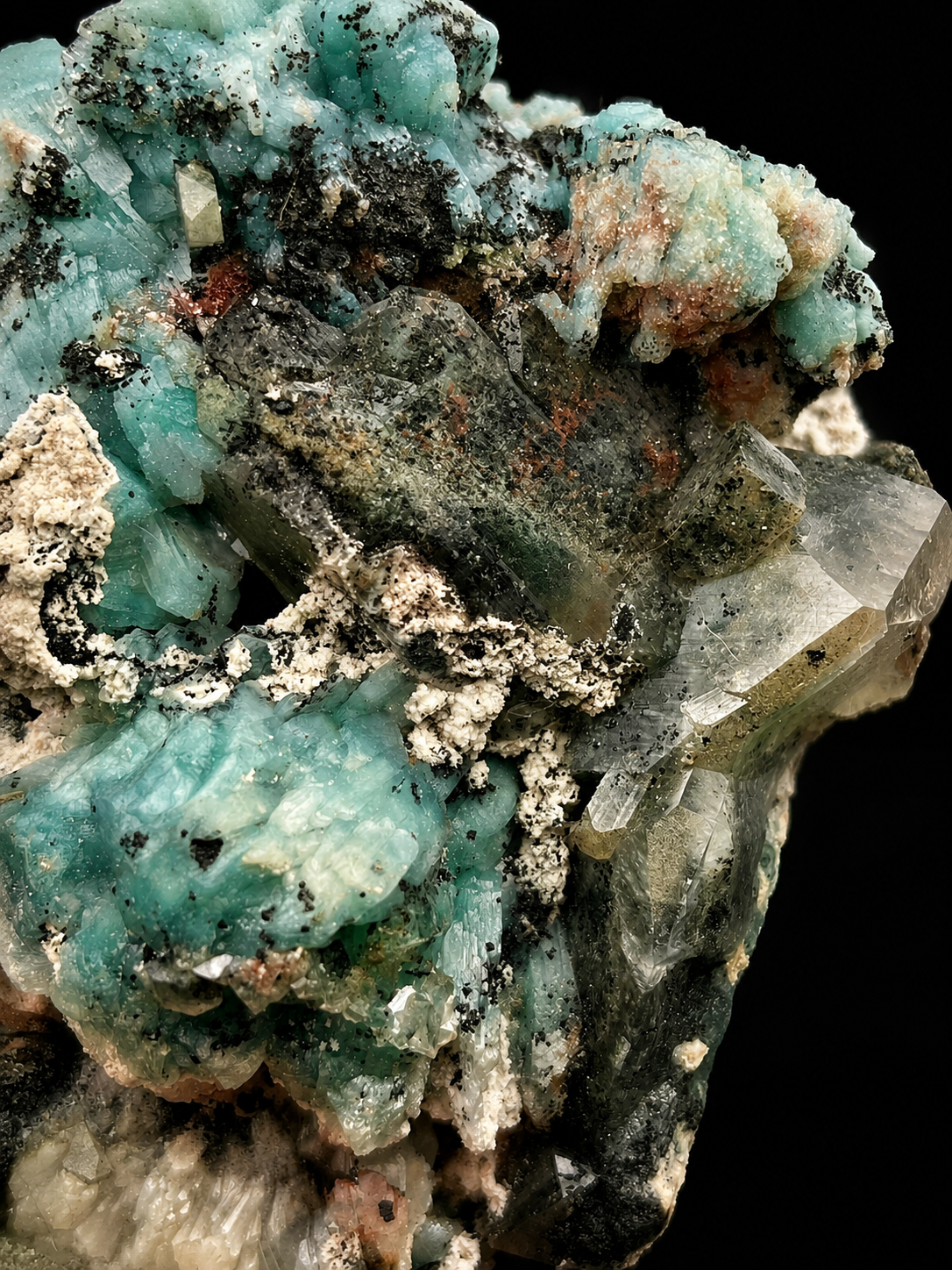 Image 5 of 7
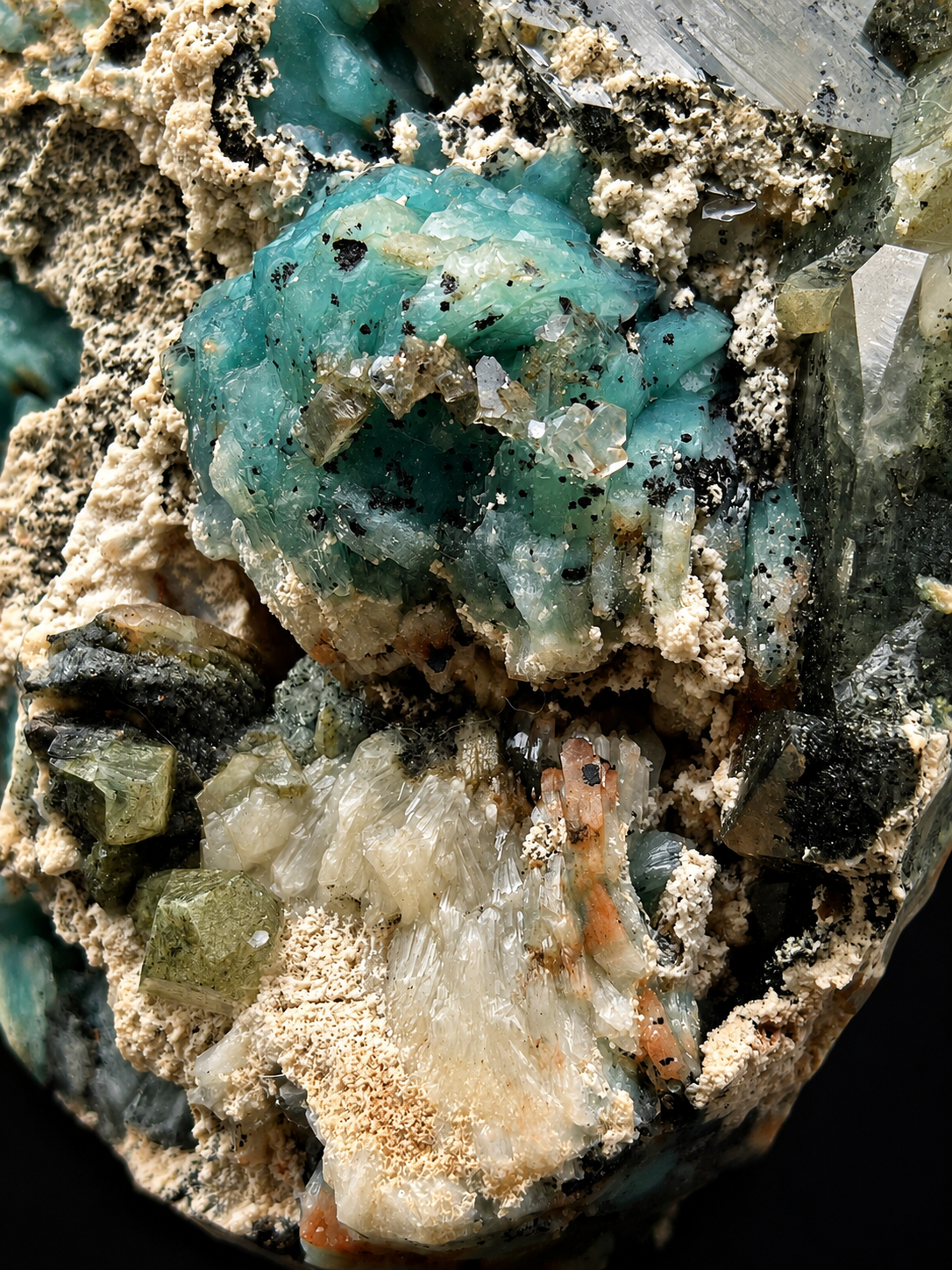 Image 6 of 7
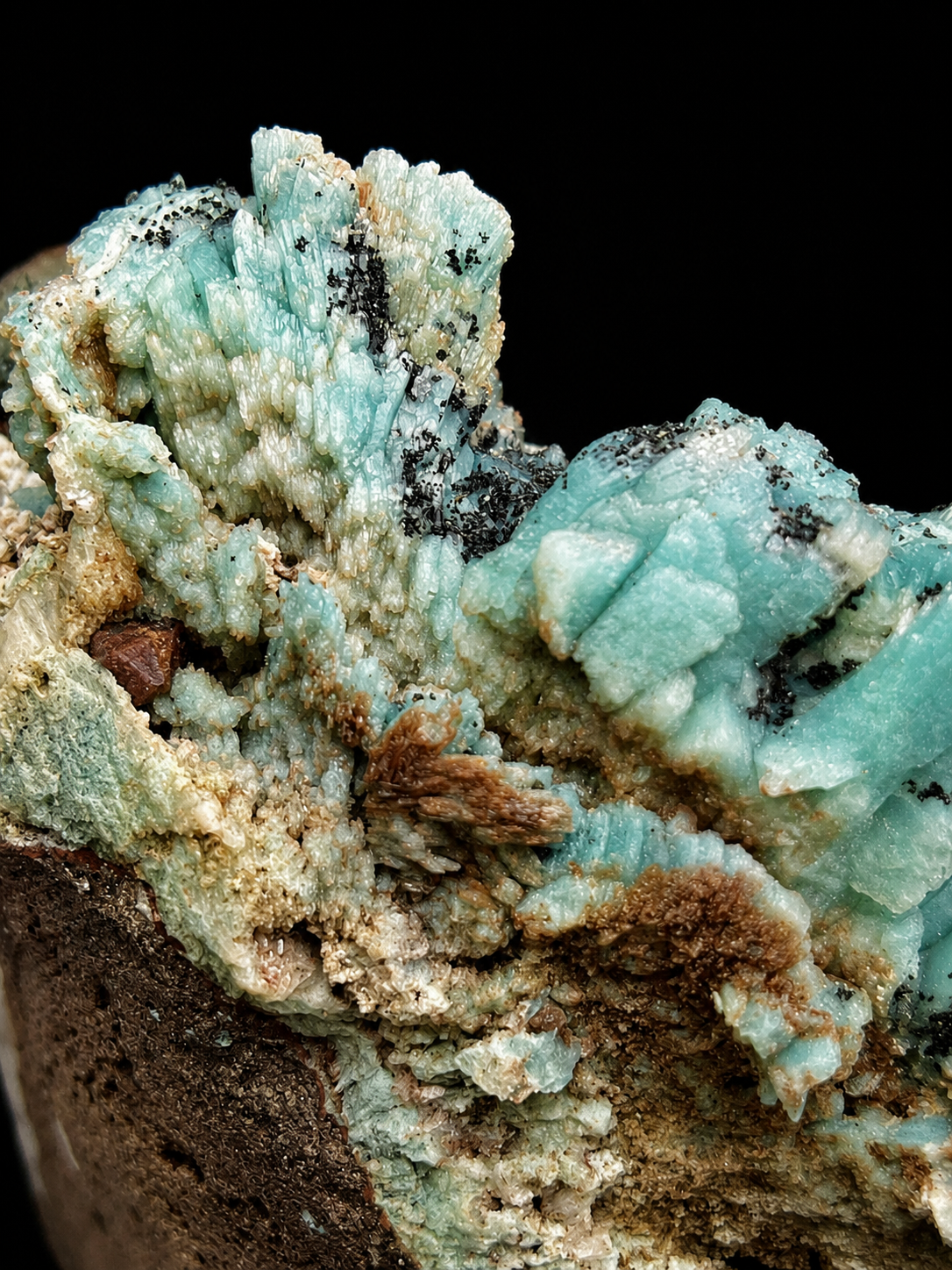 Image 7 of 7