Description
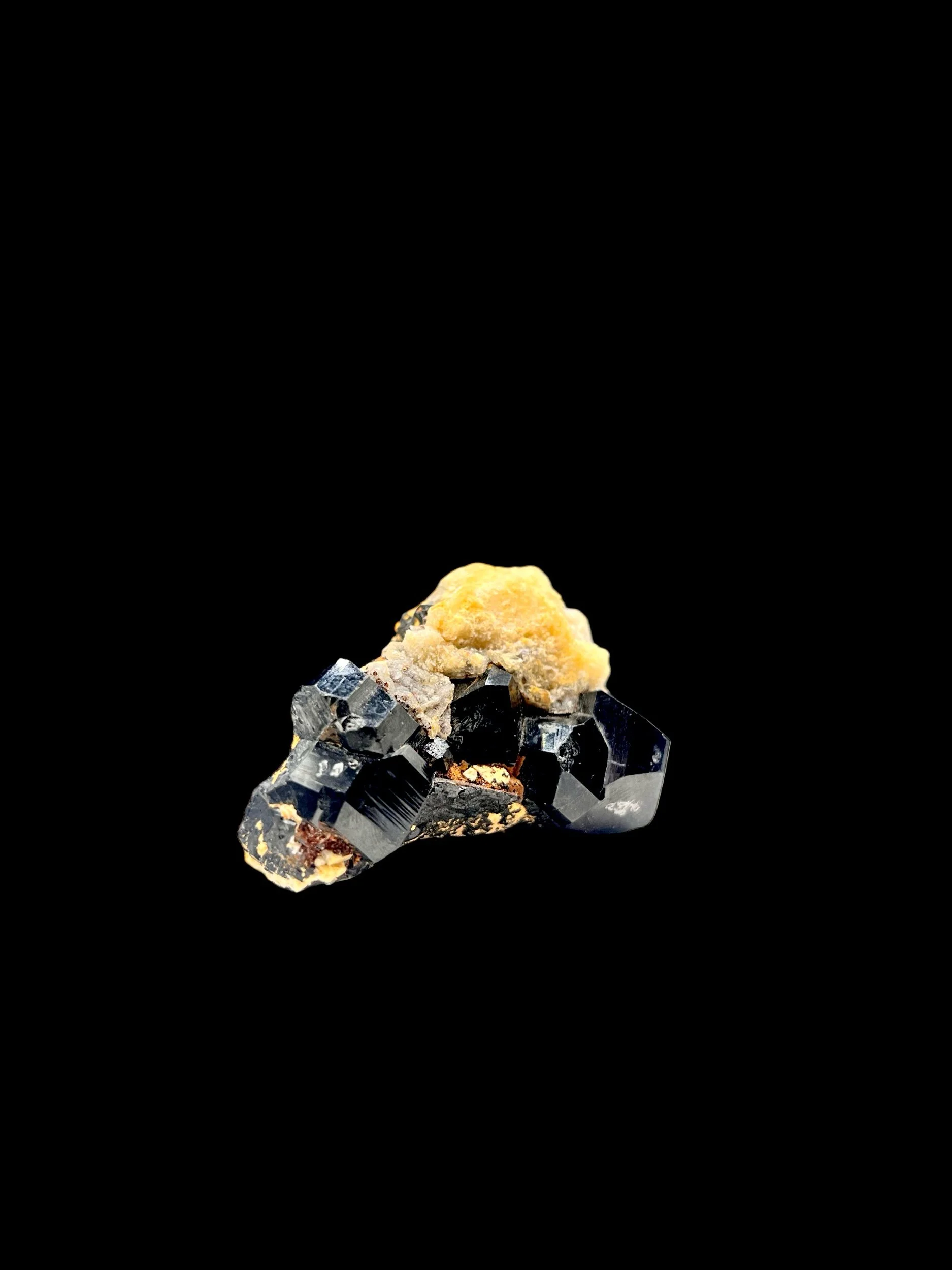
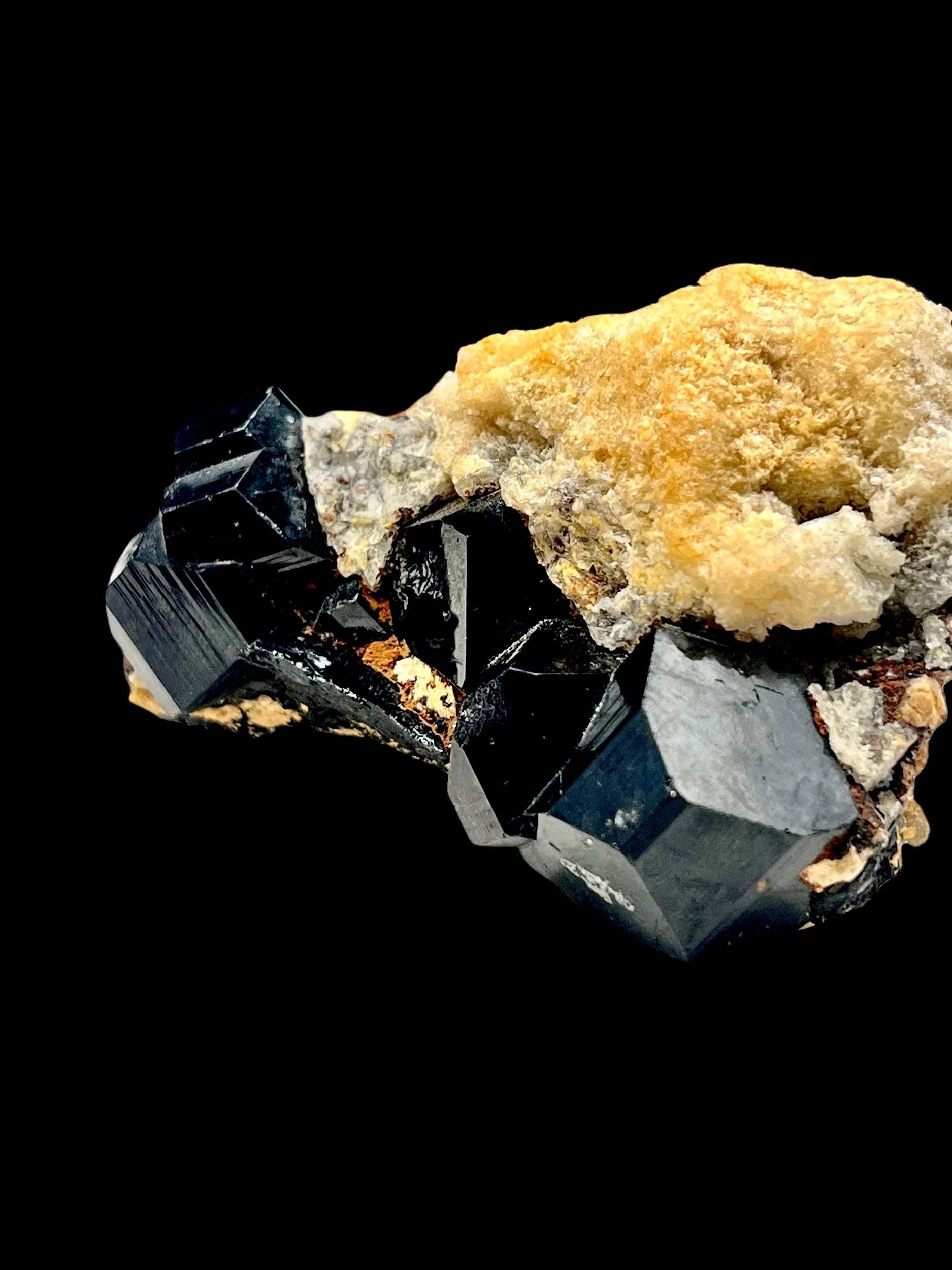
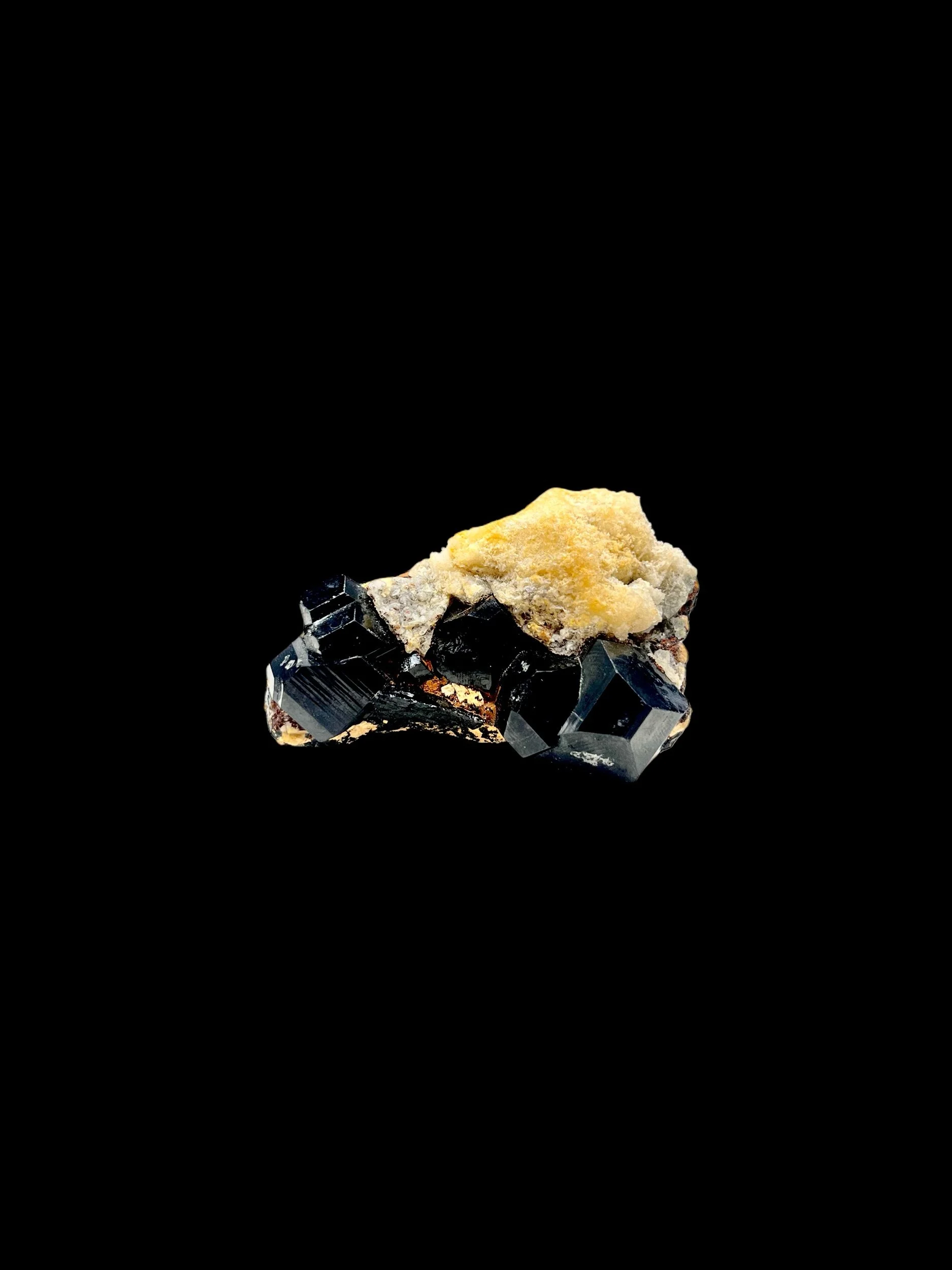
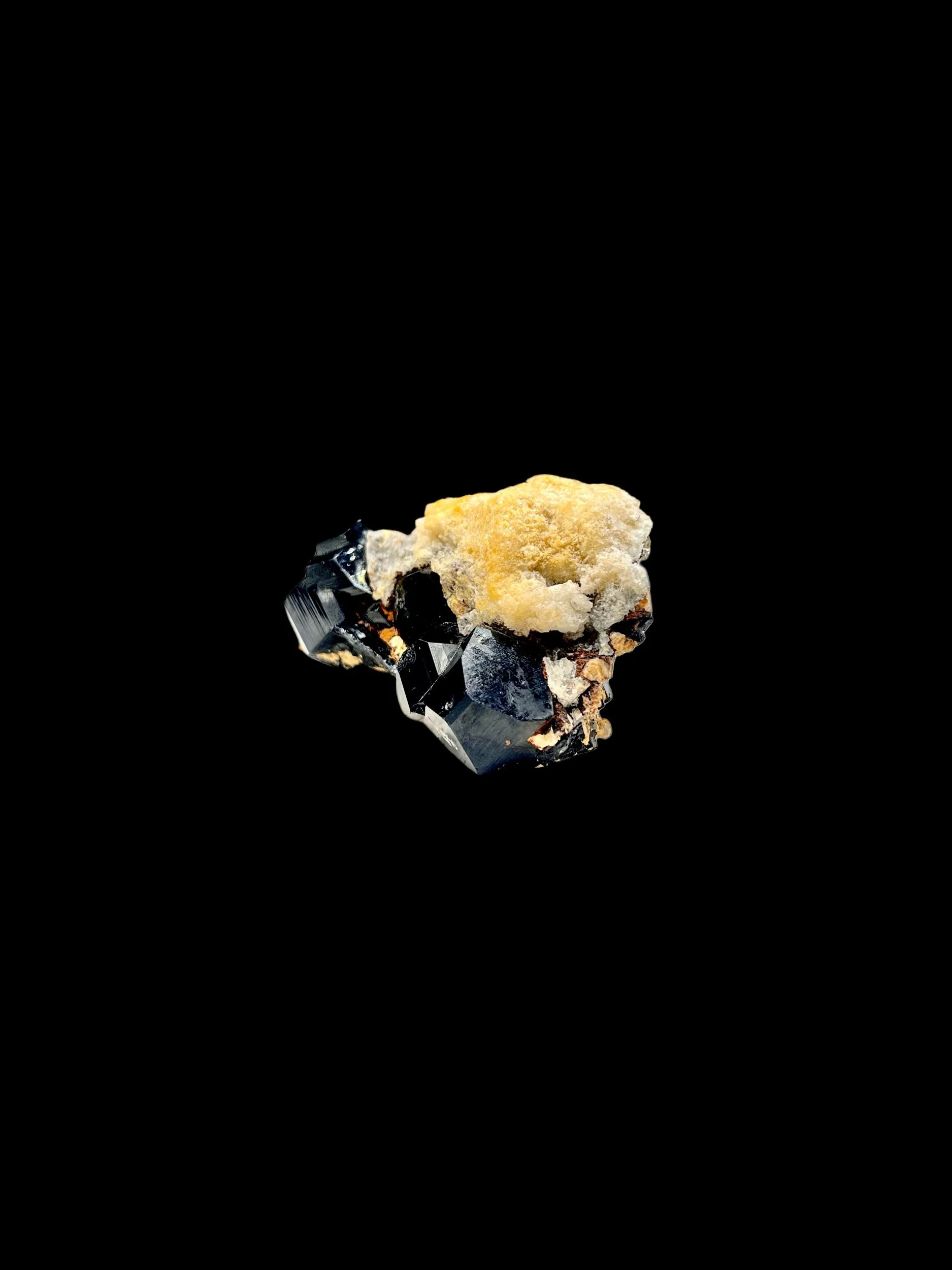
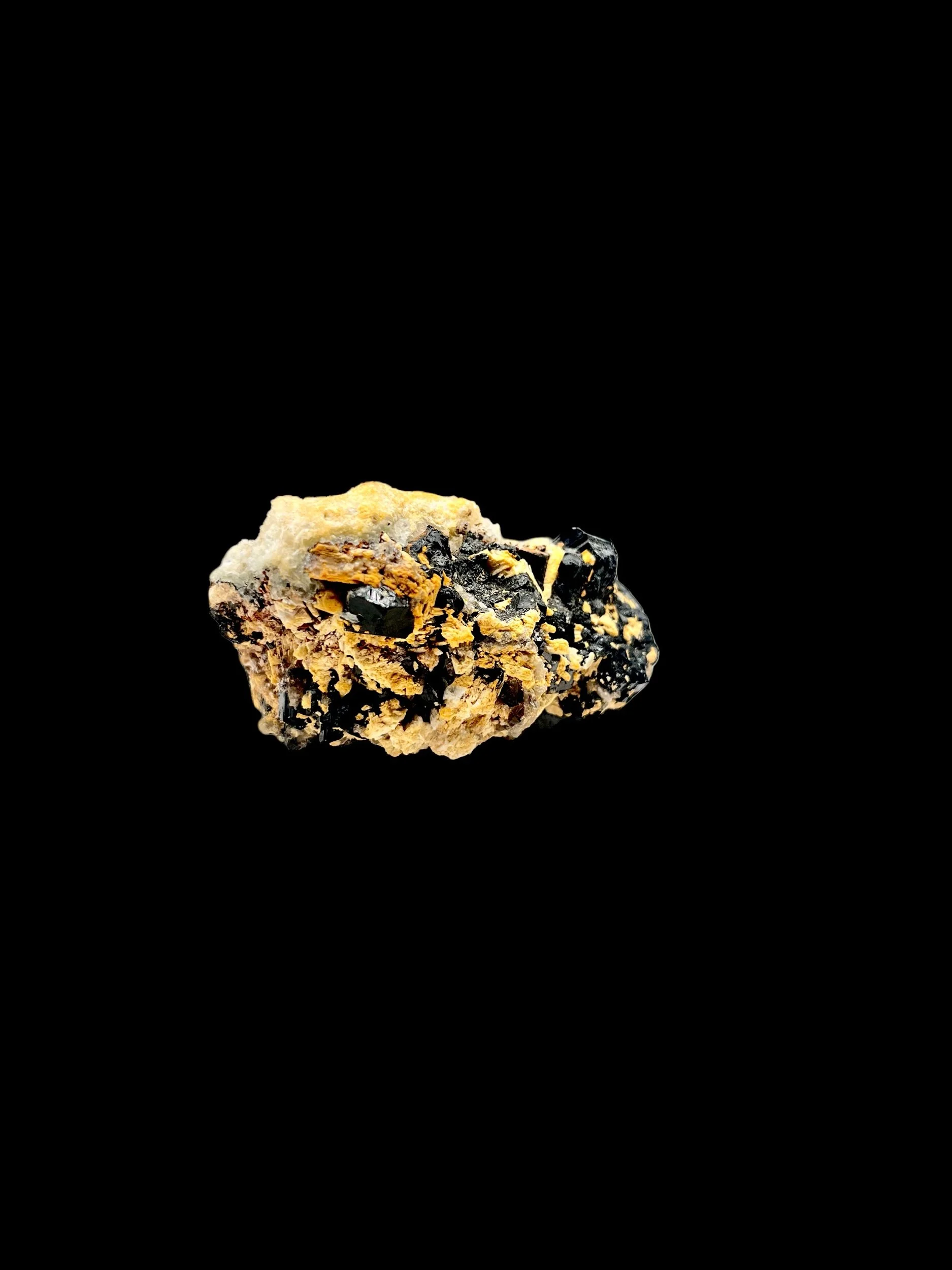
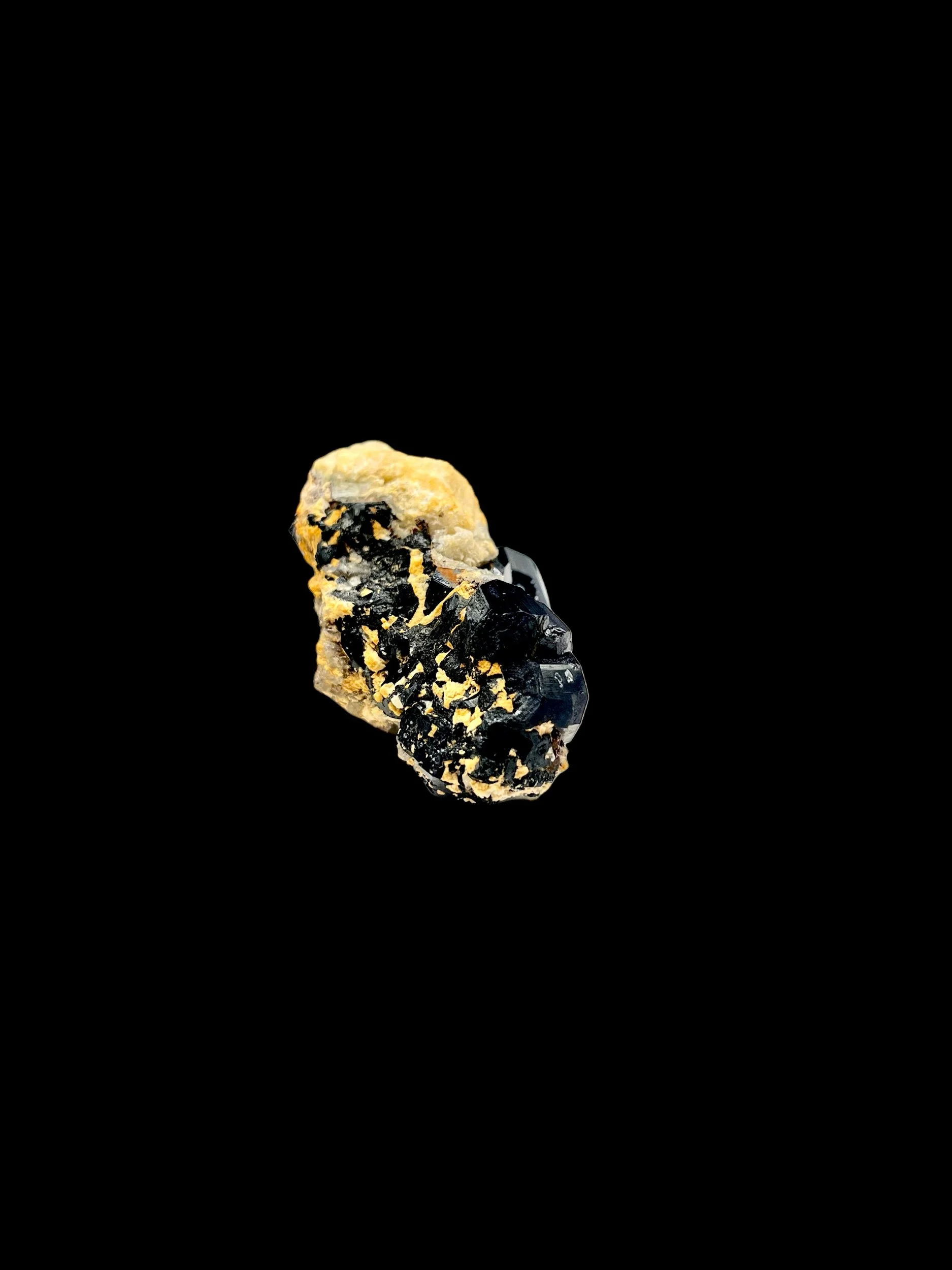
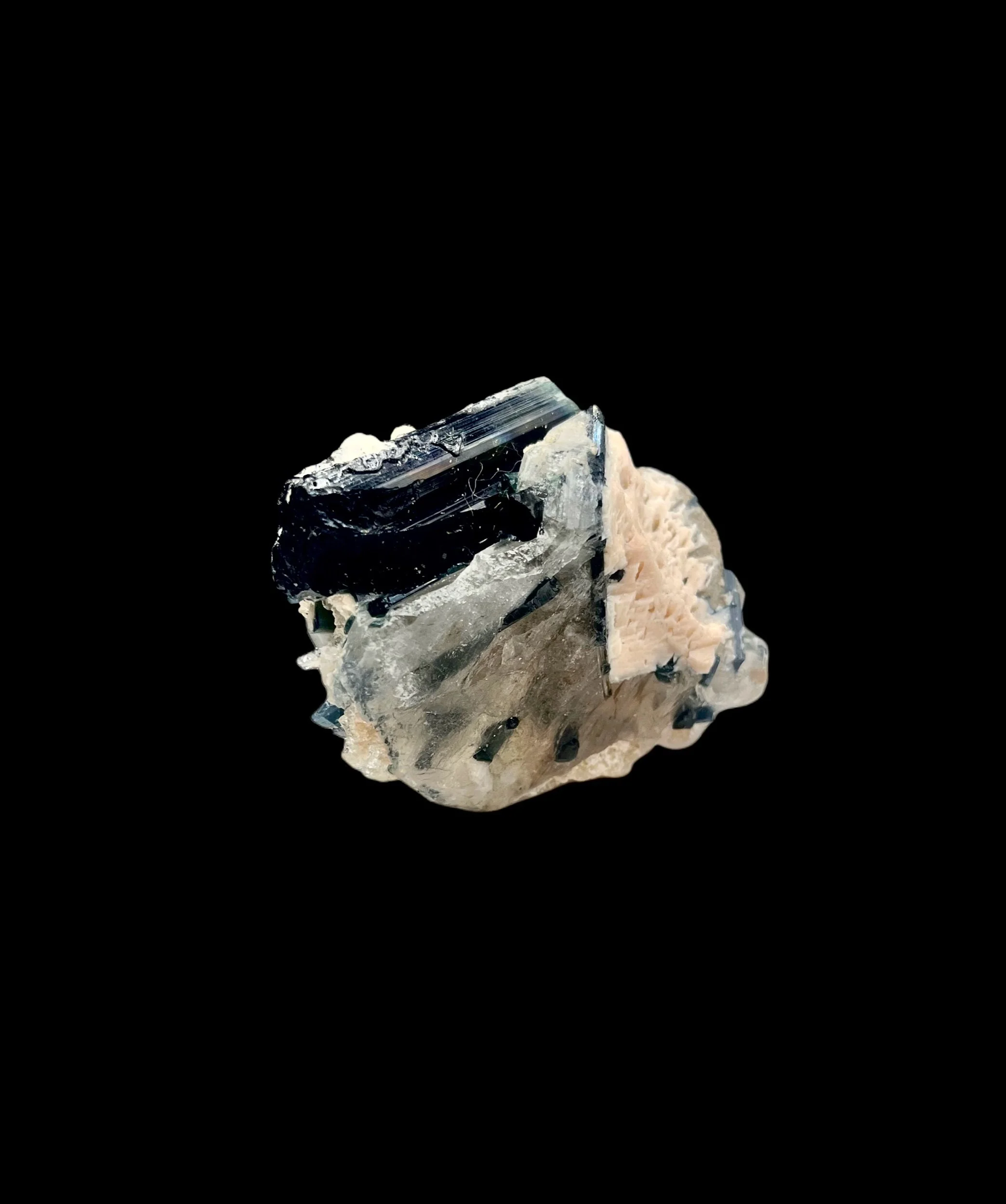
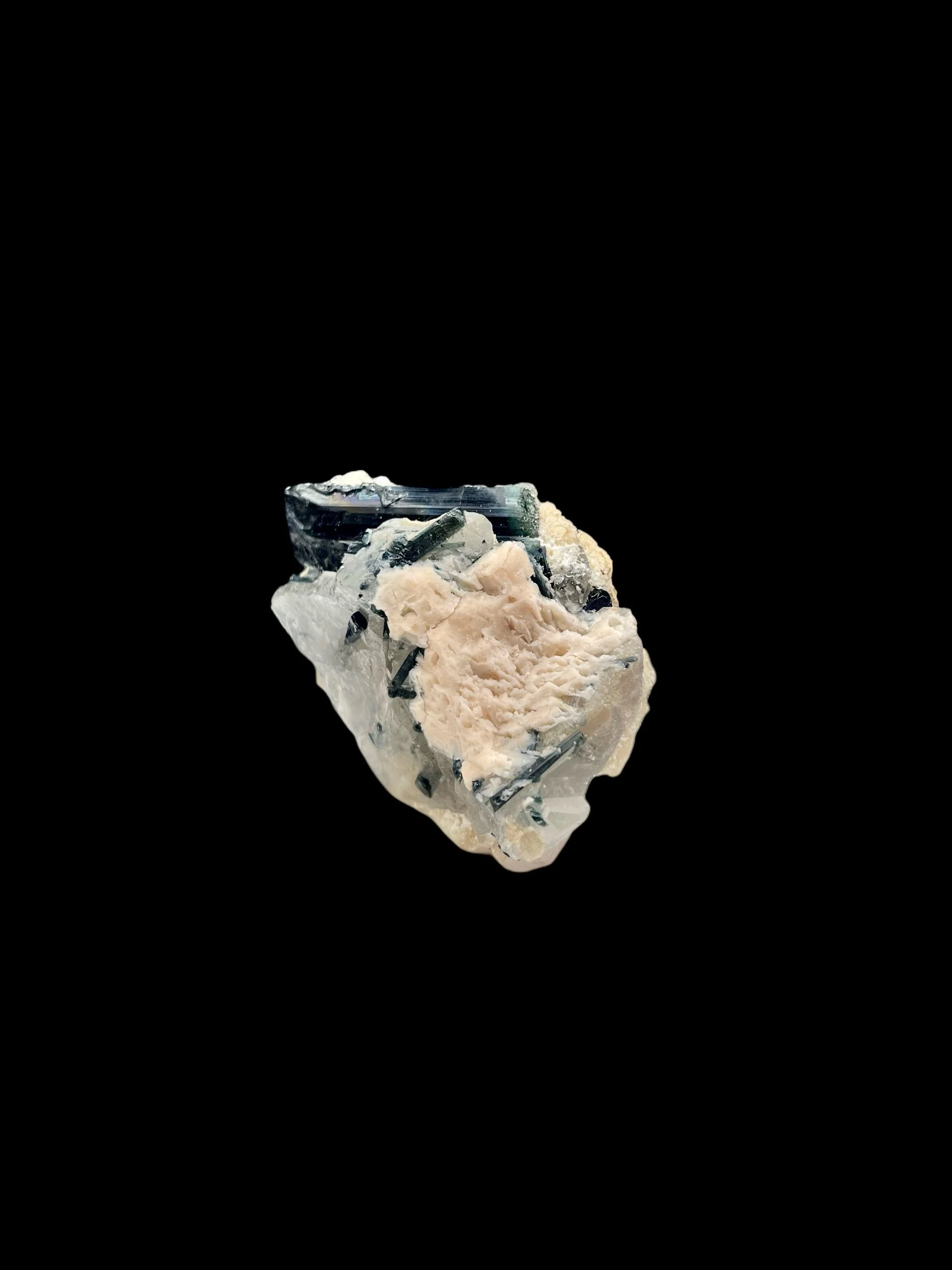
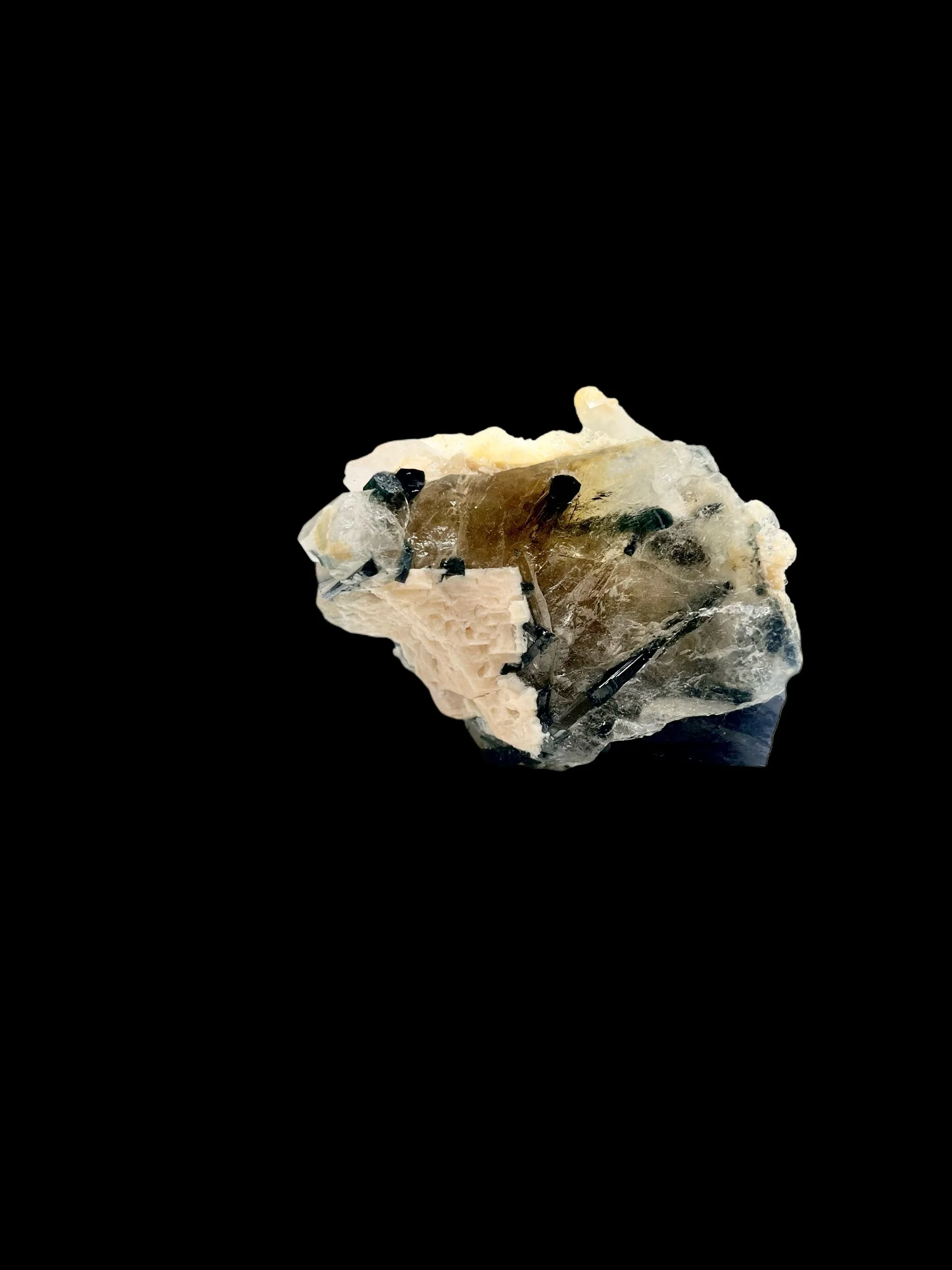
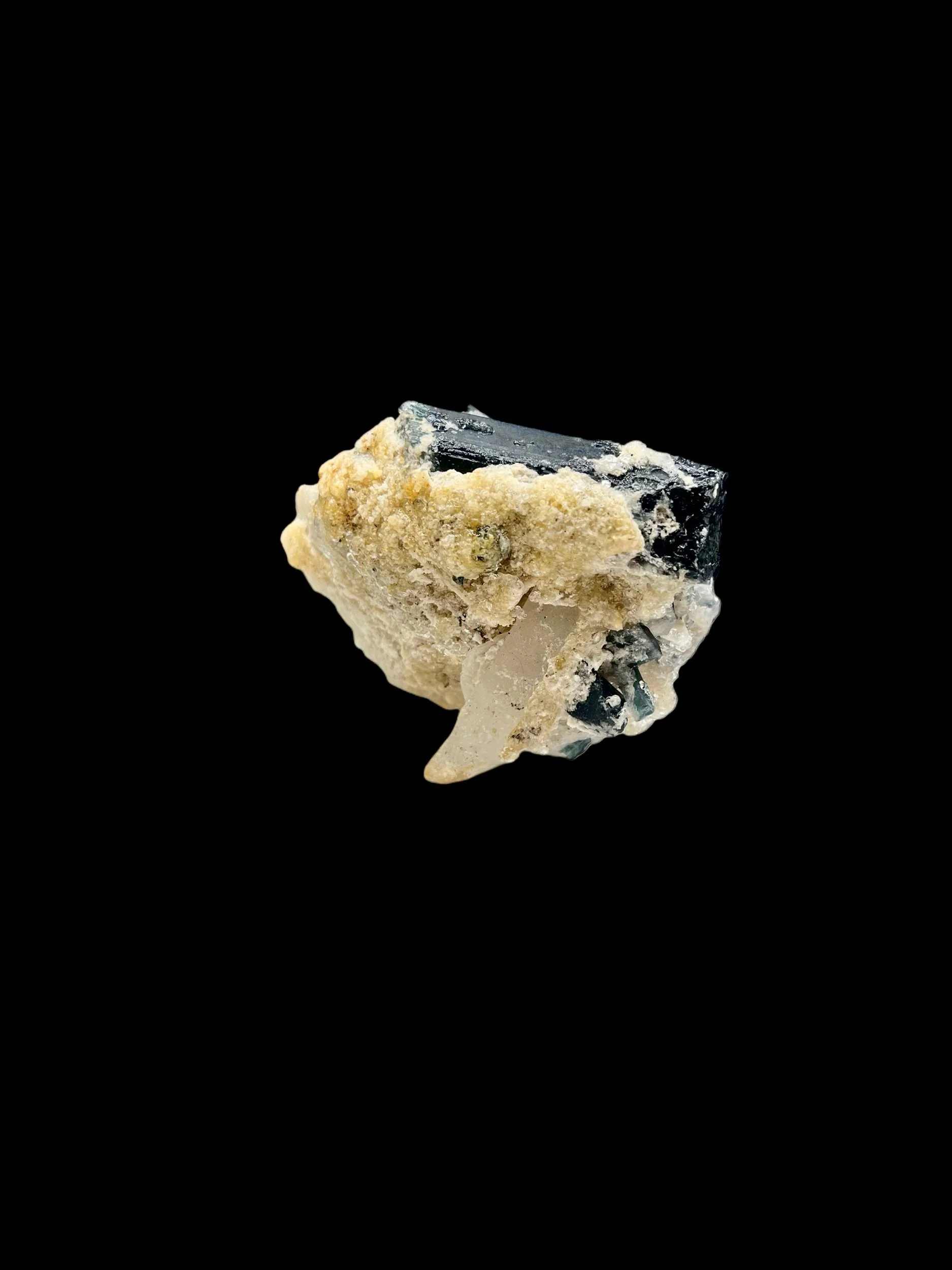
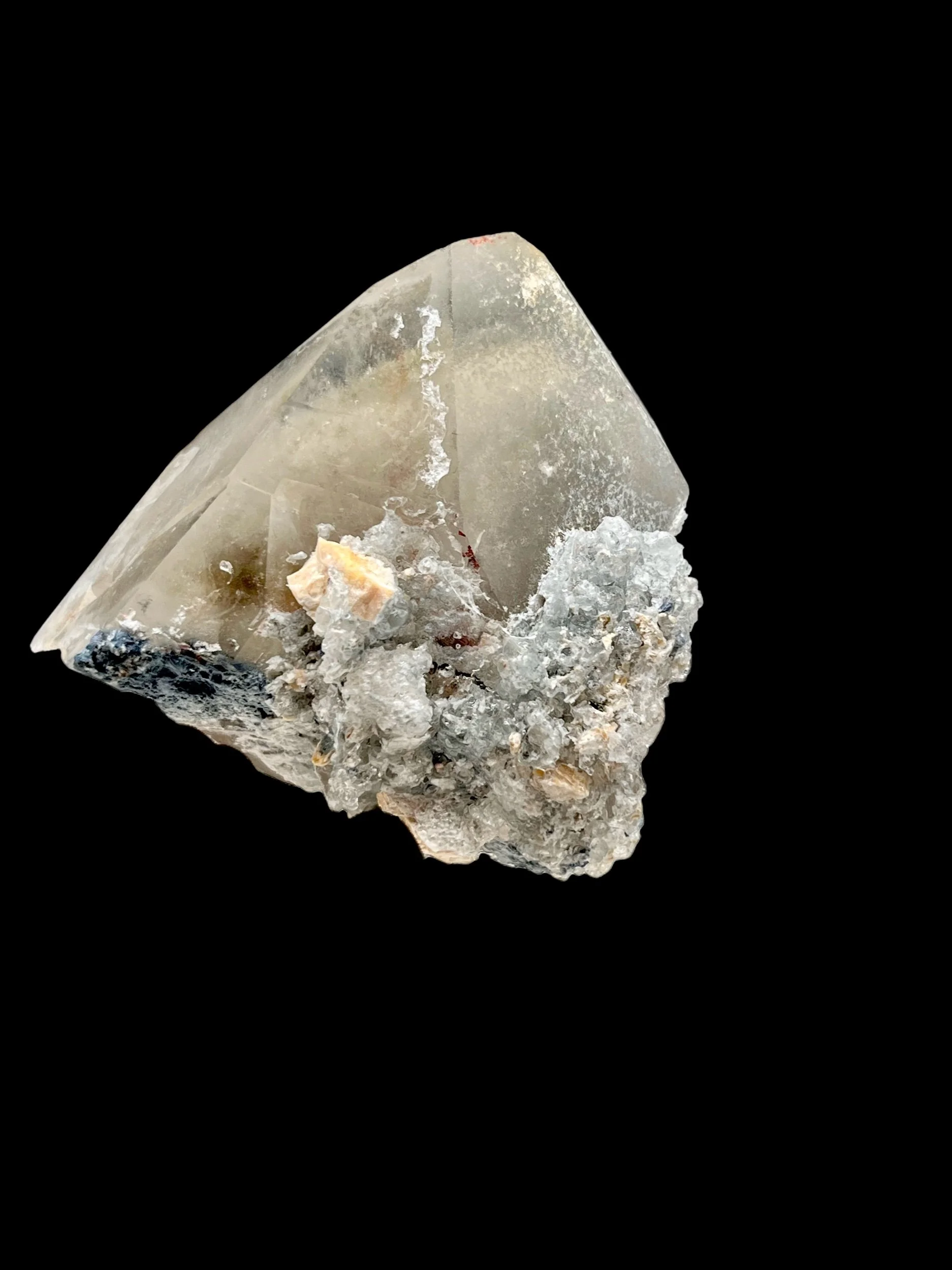
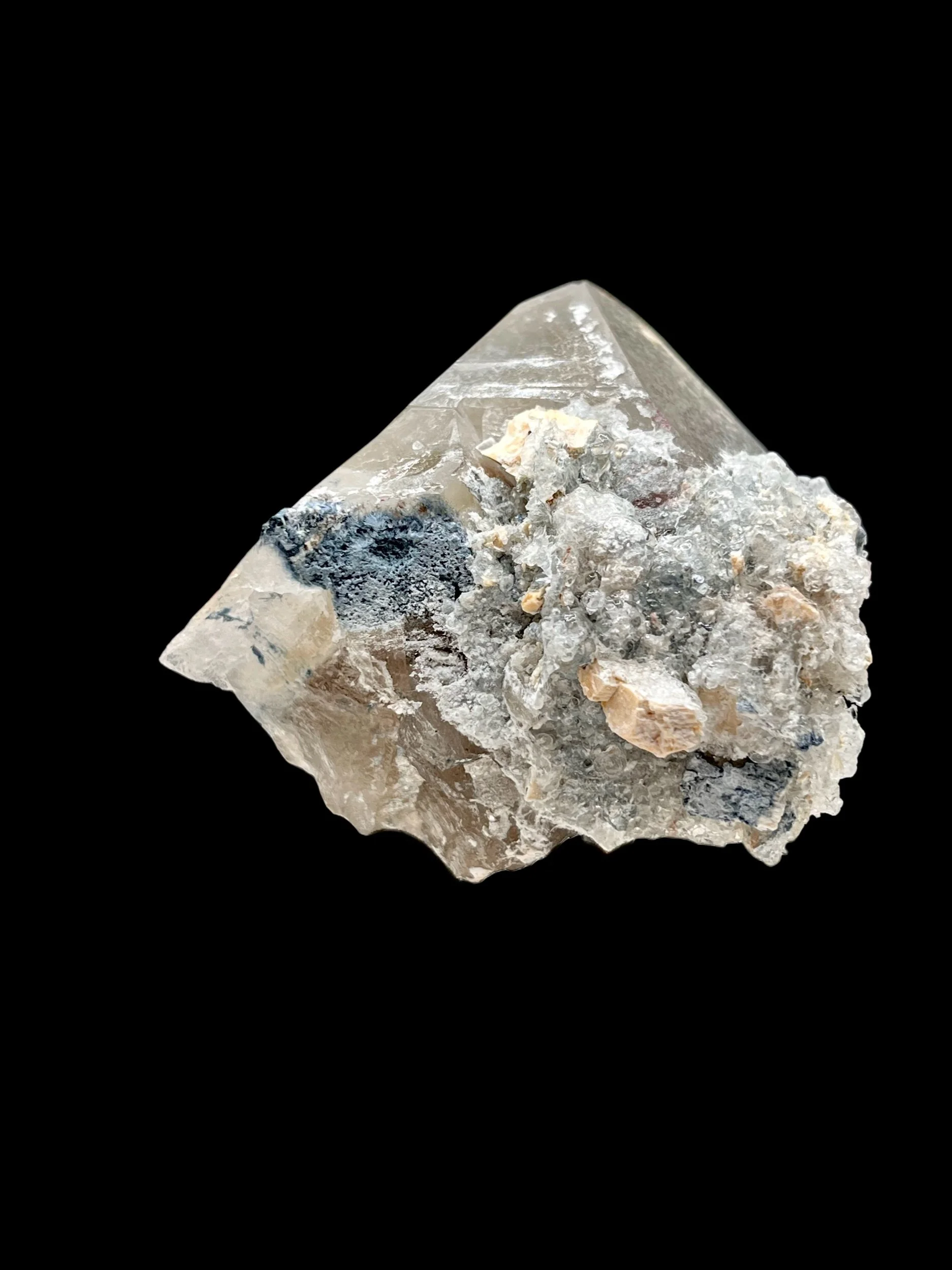
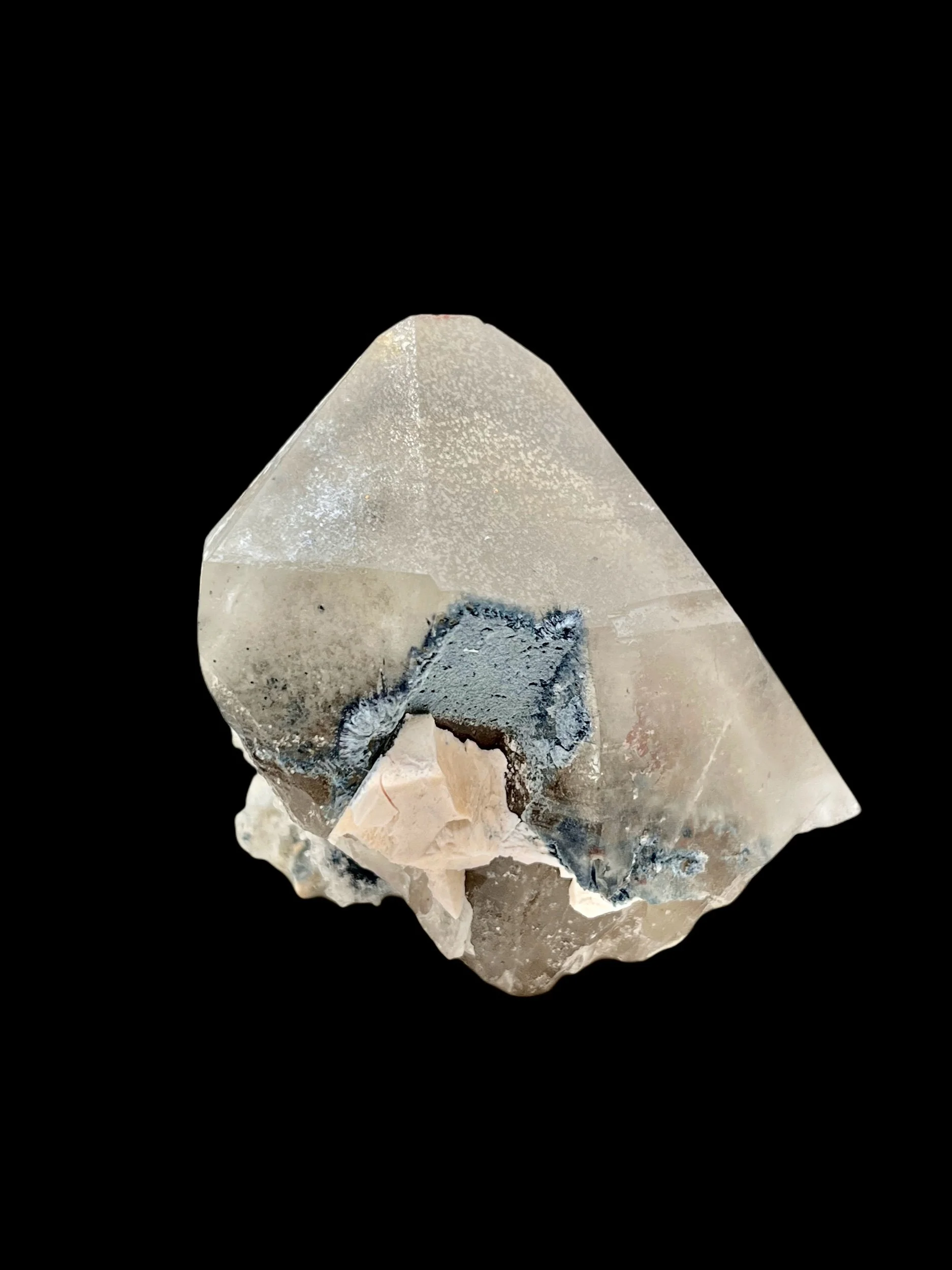
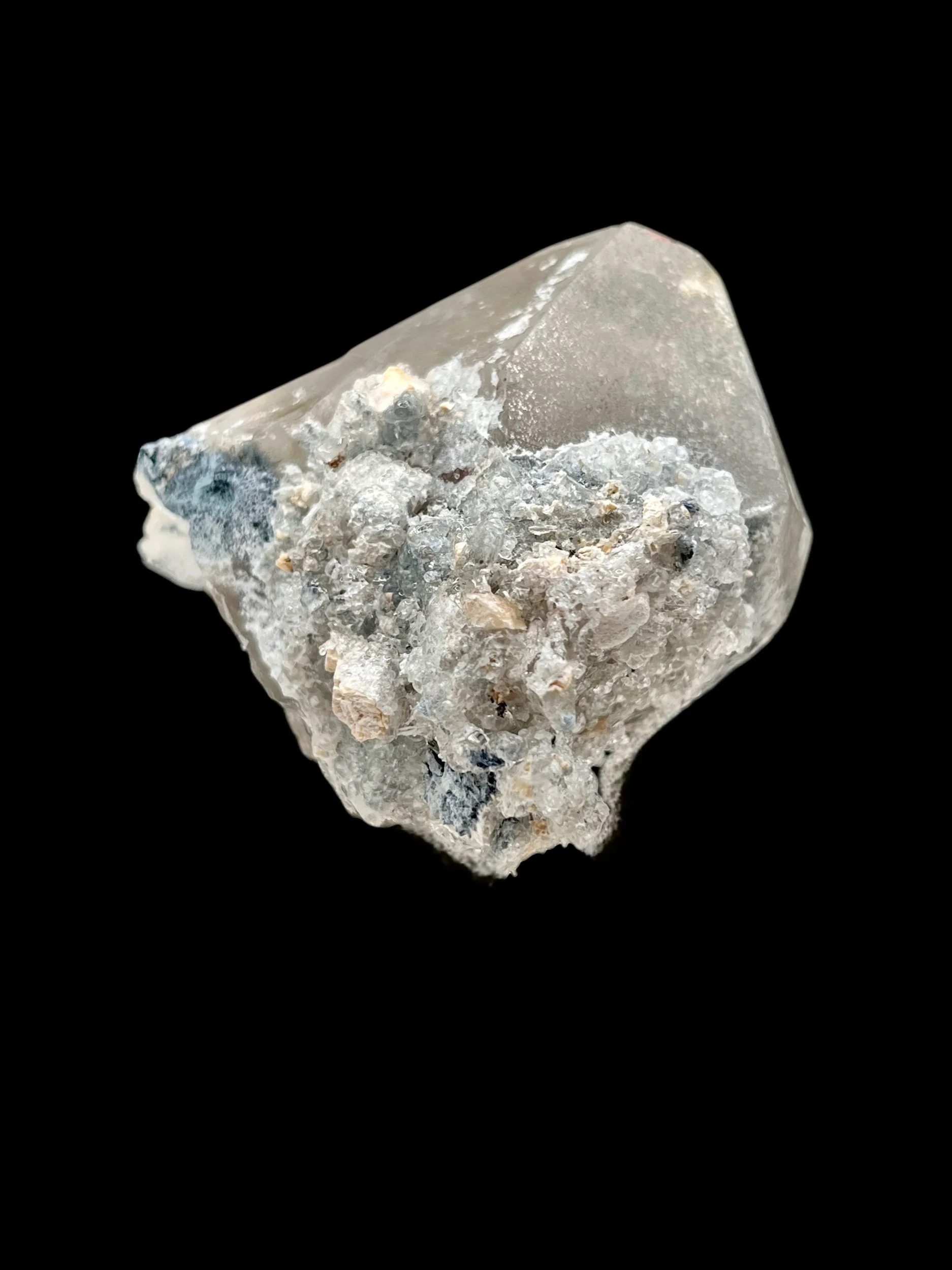
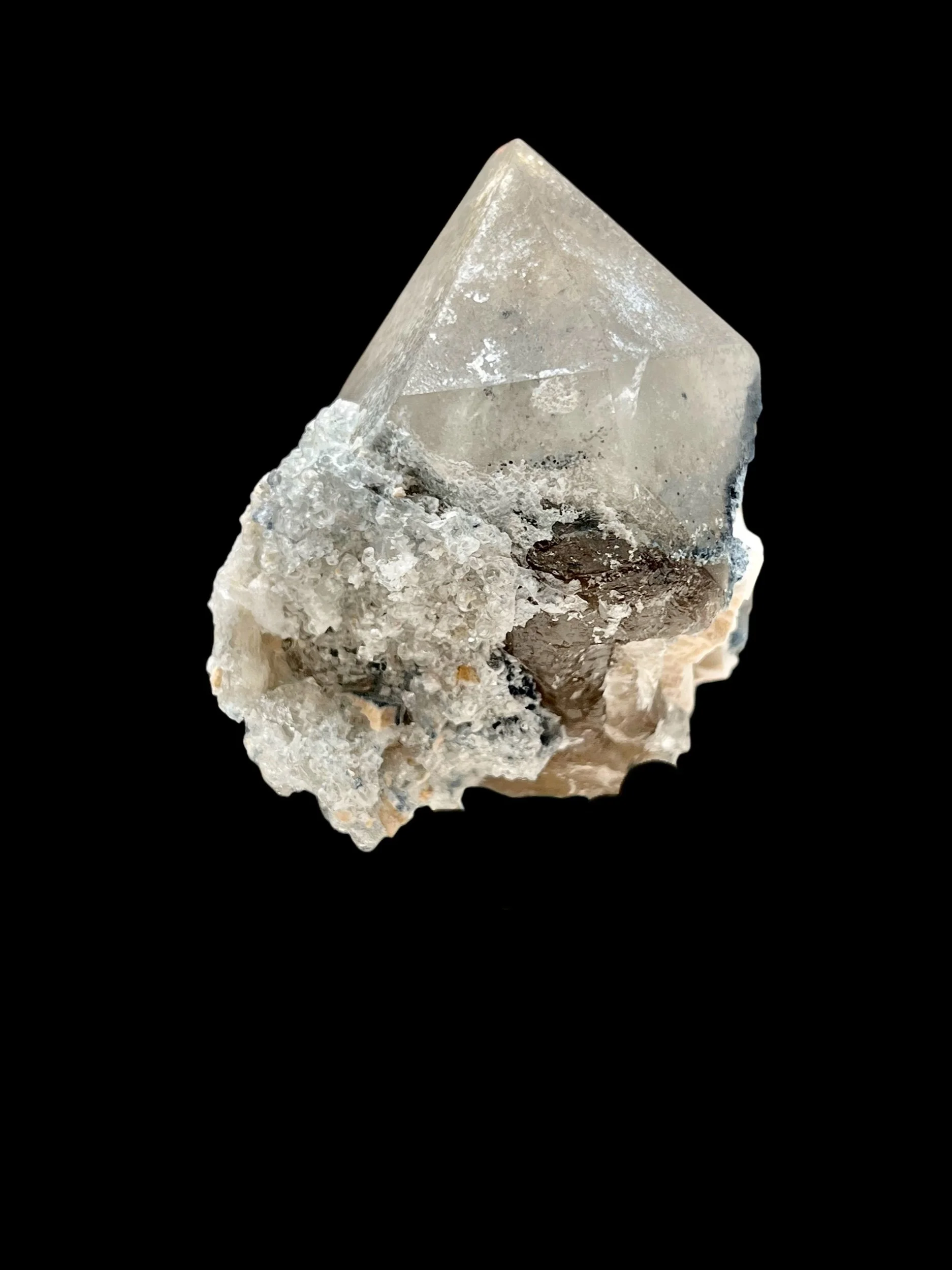
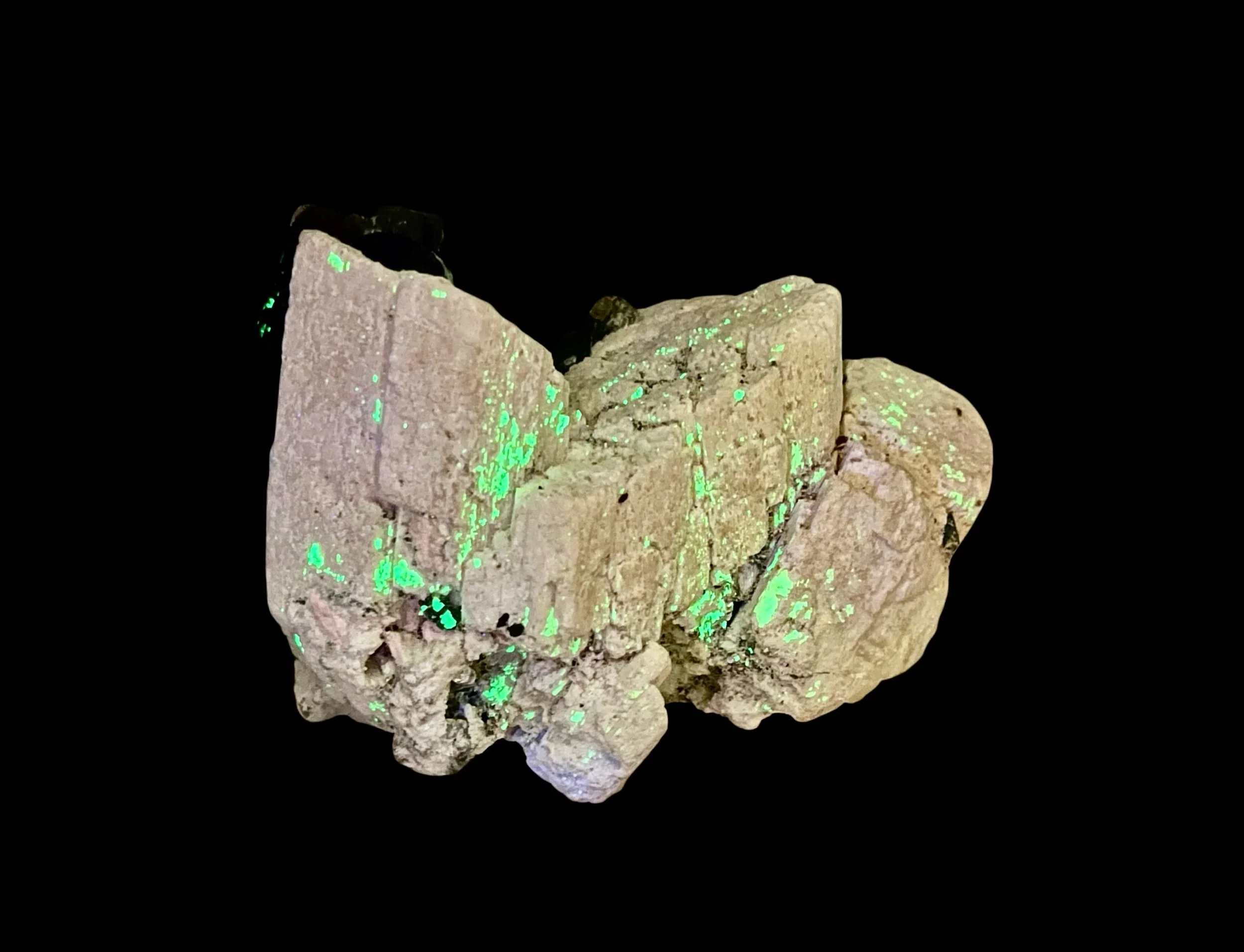
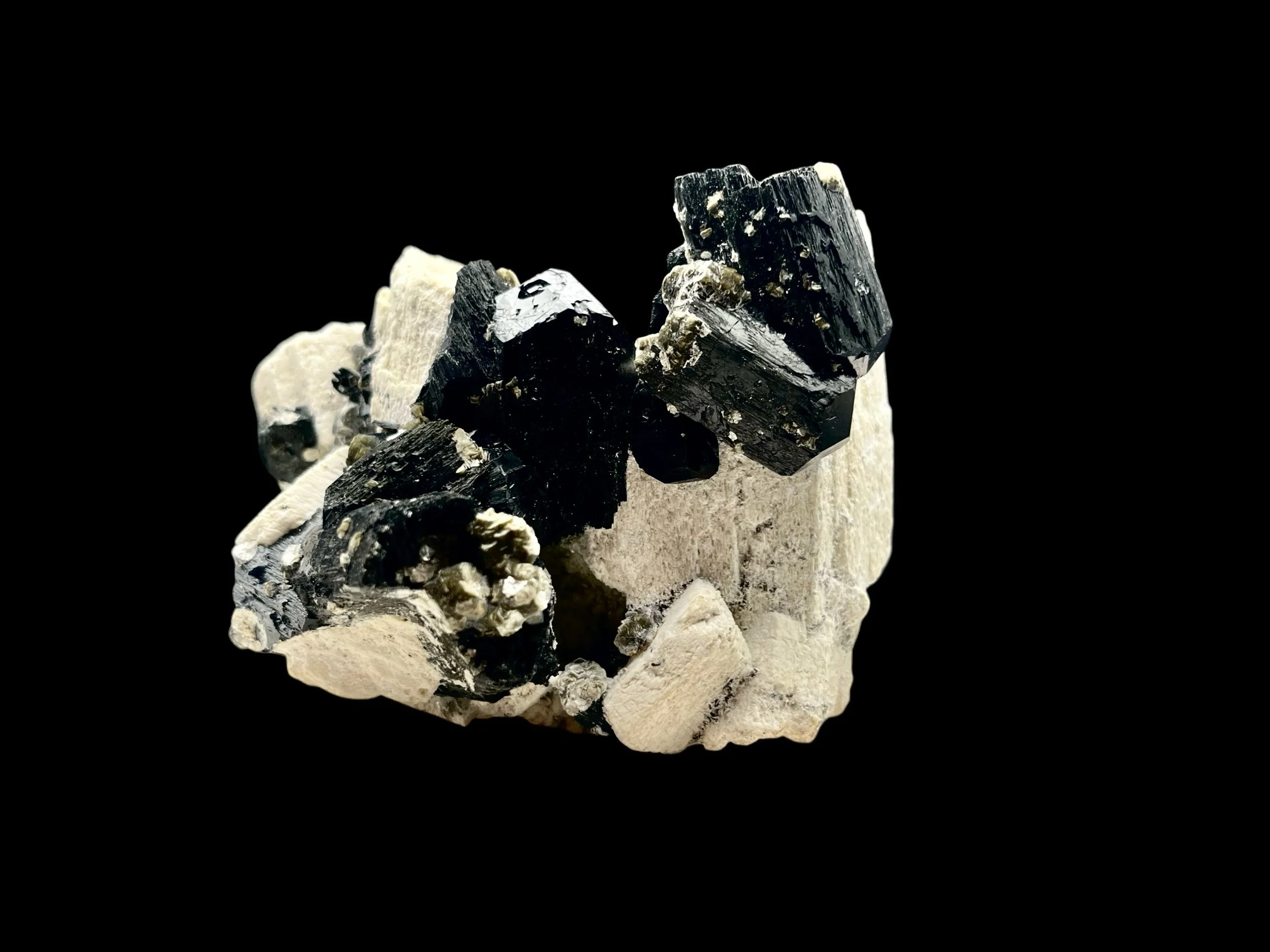
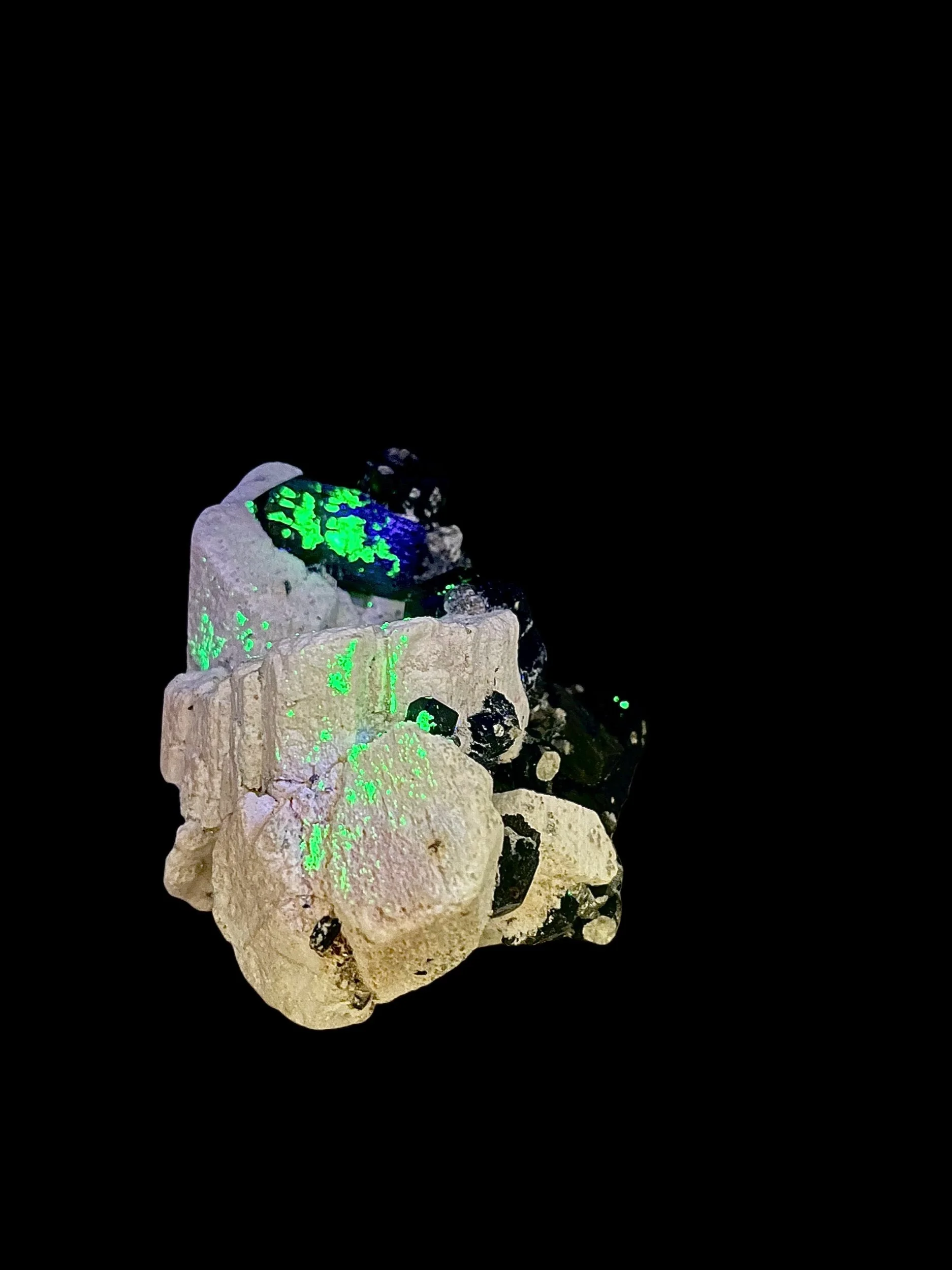
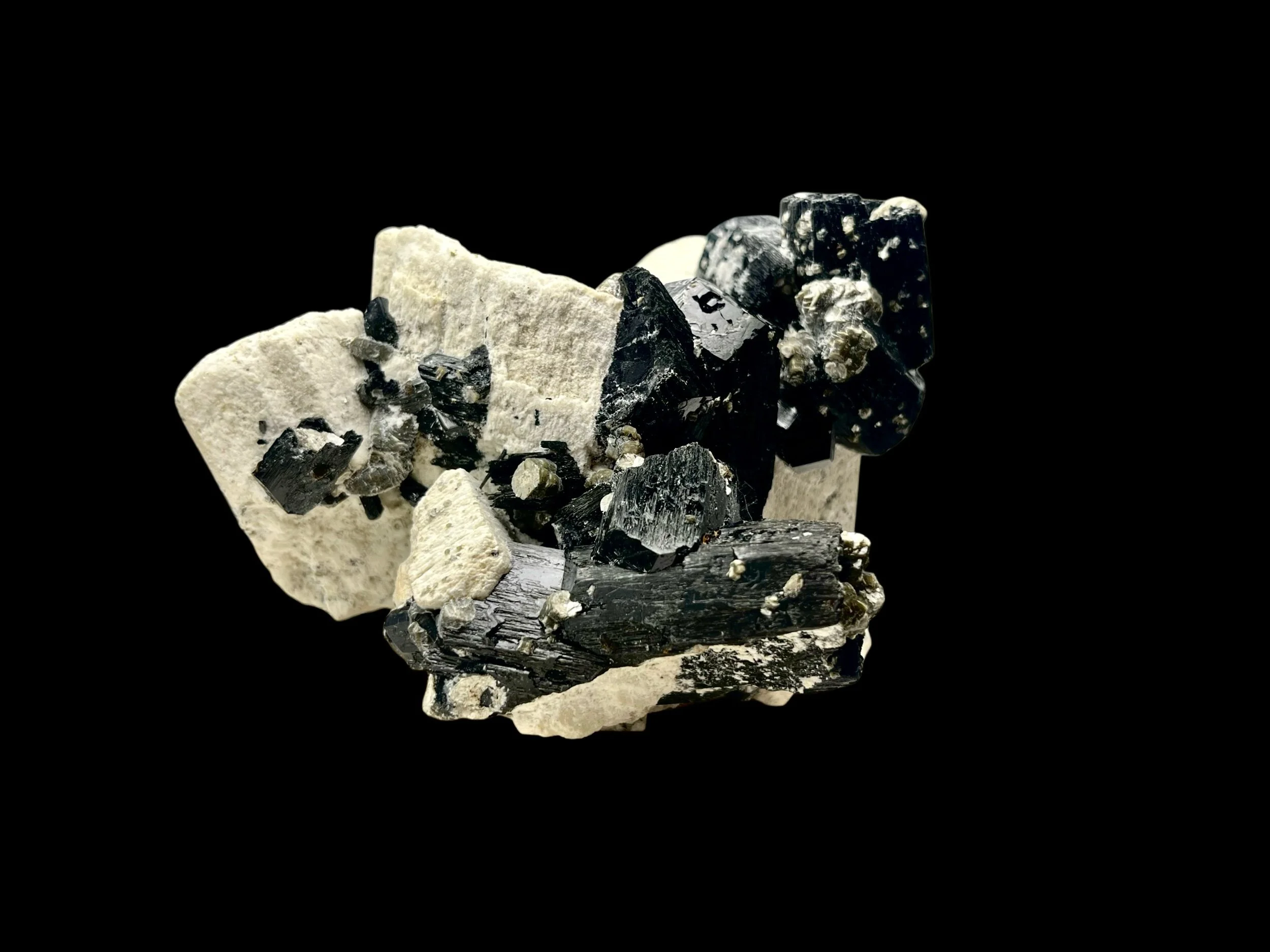
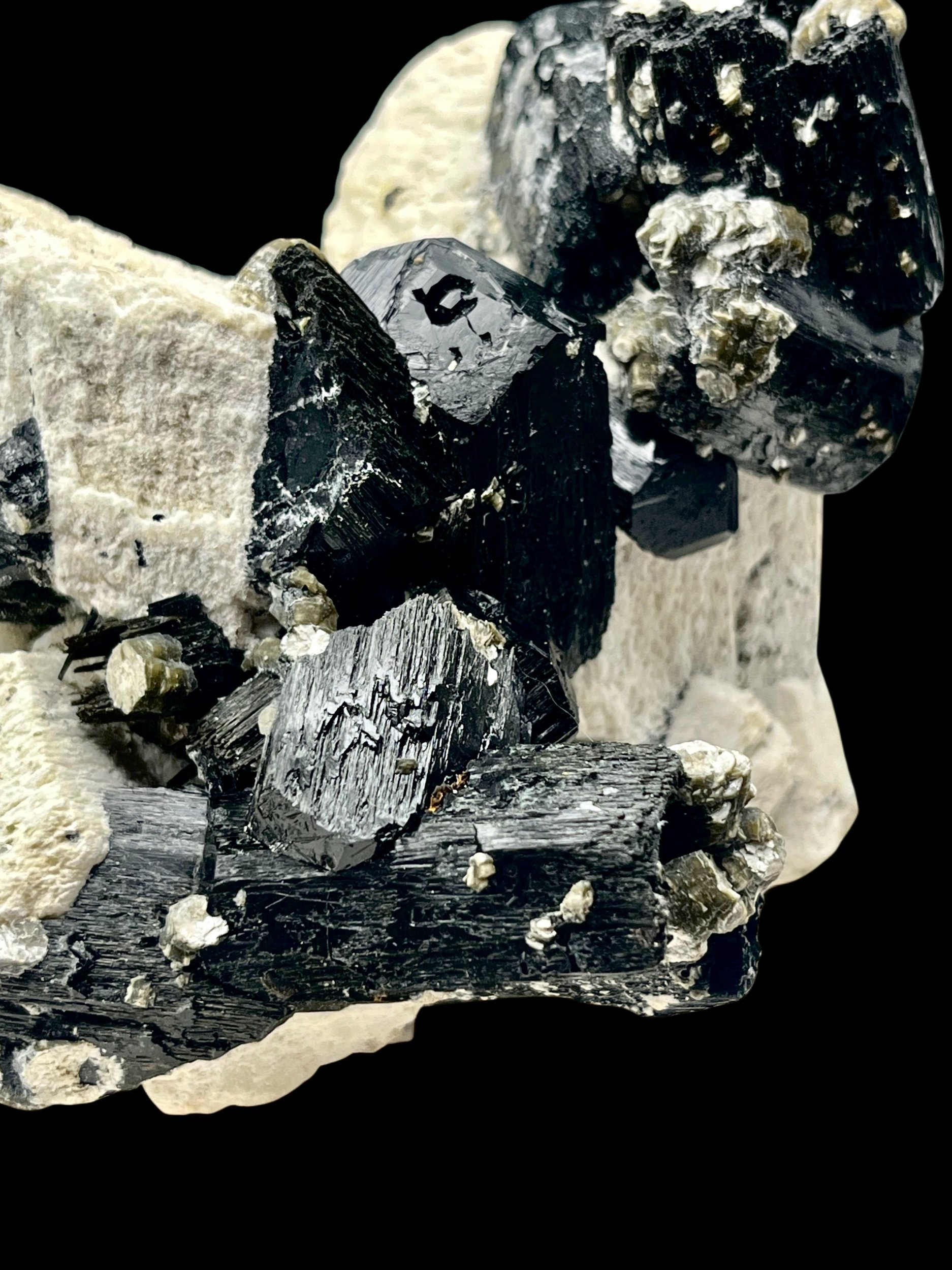
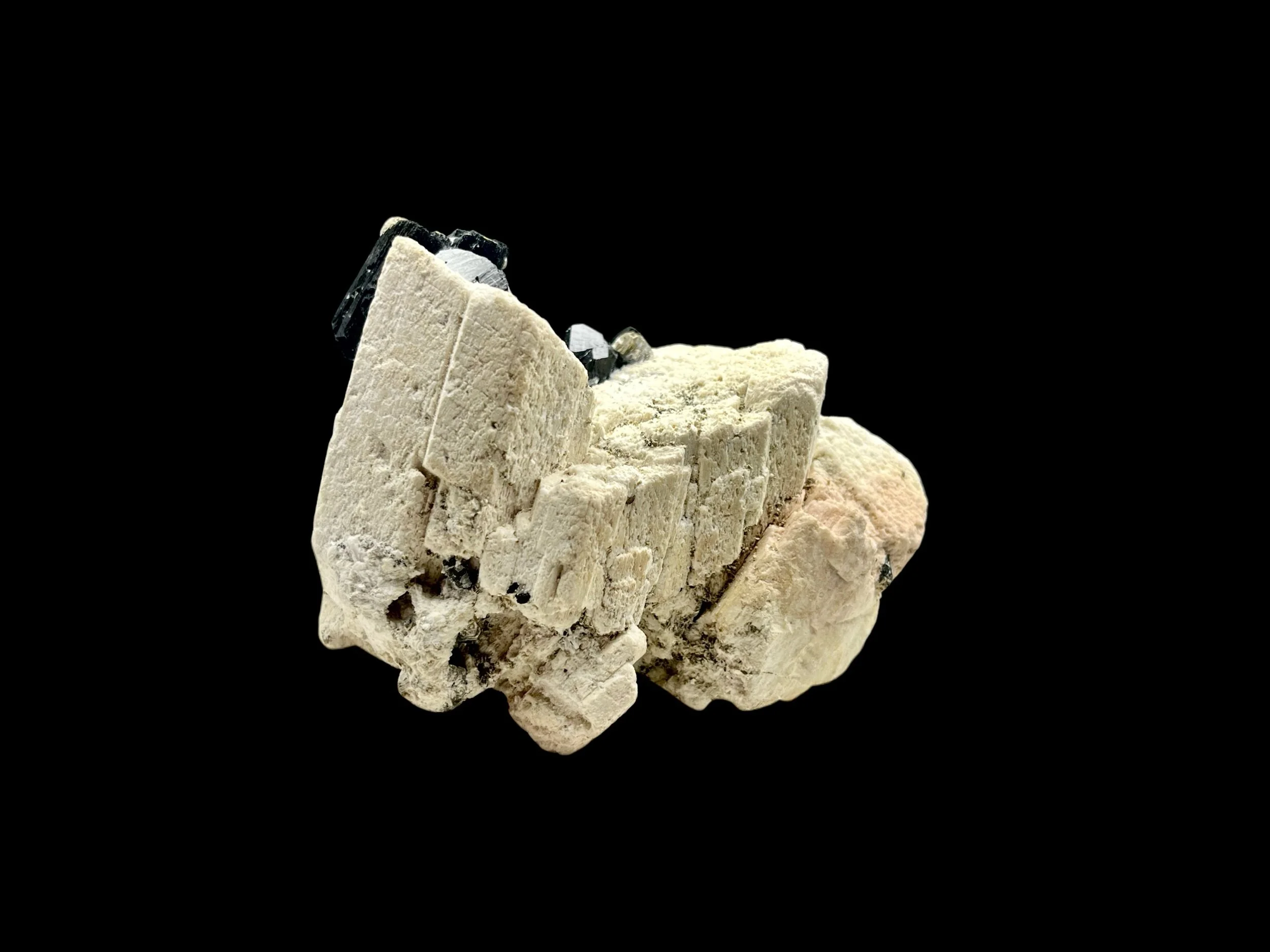
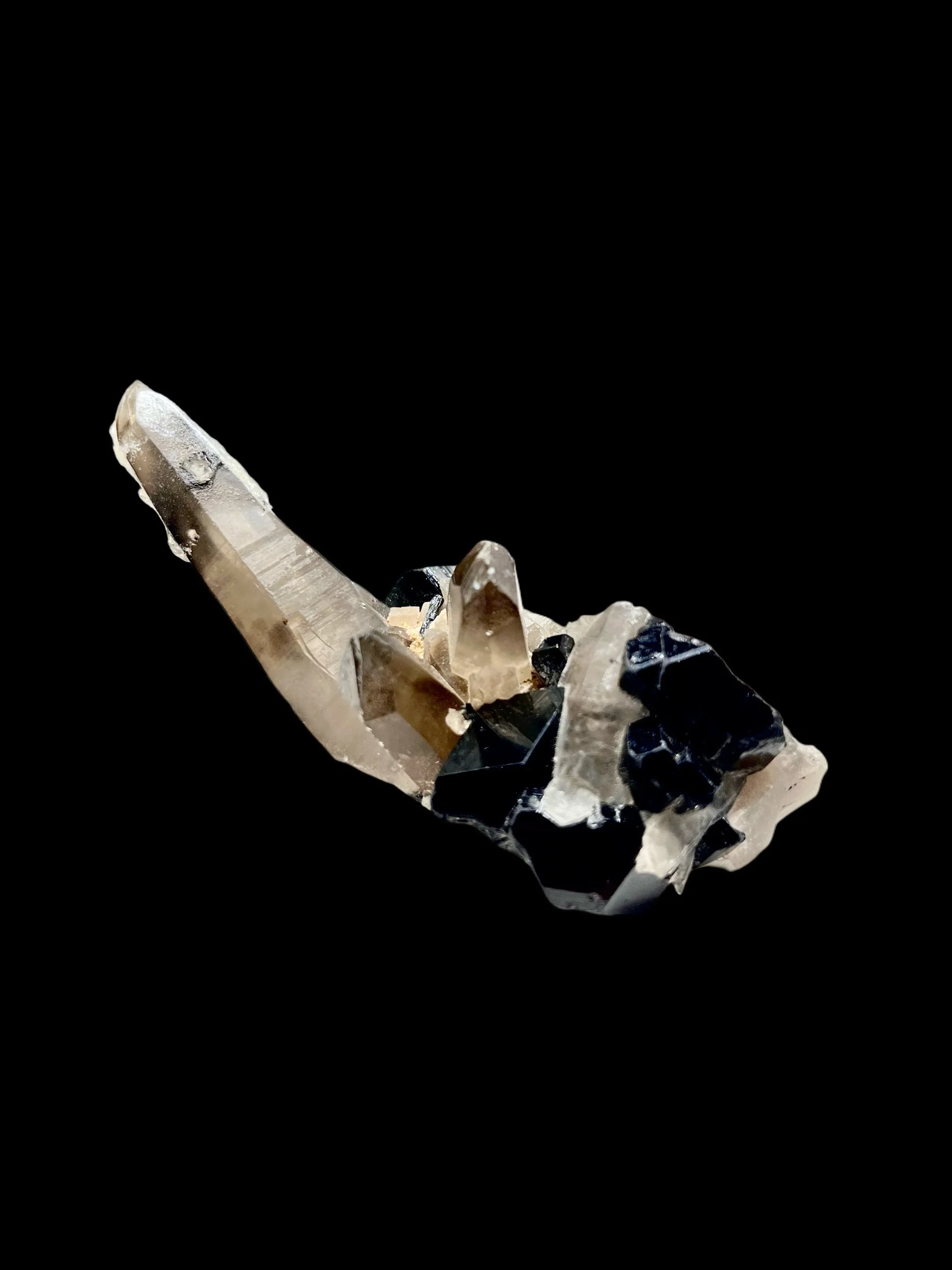
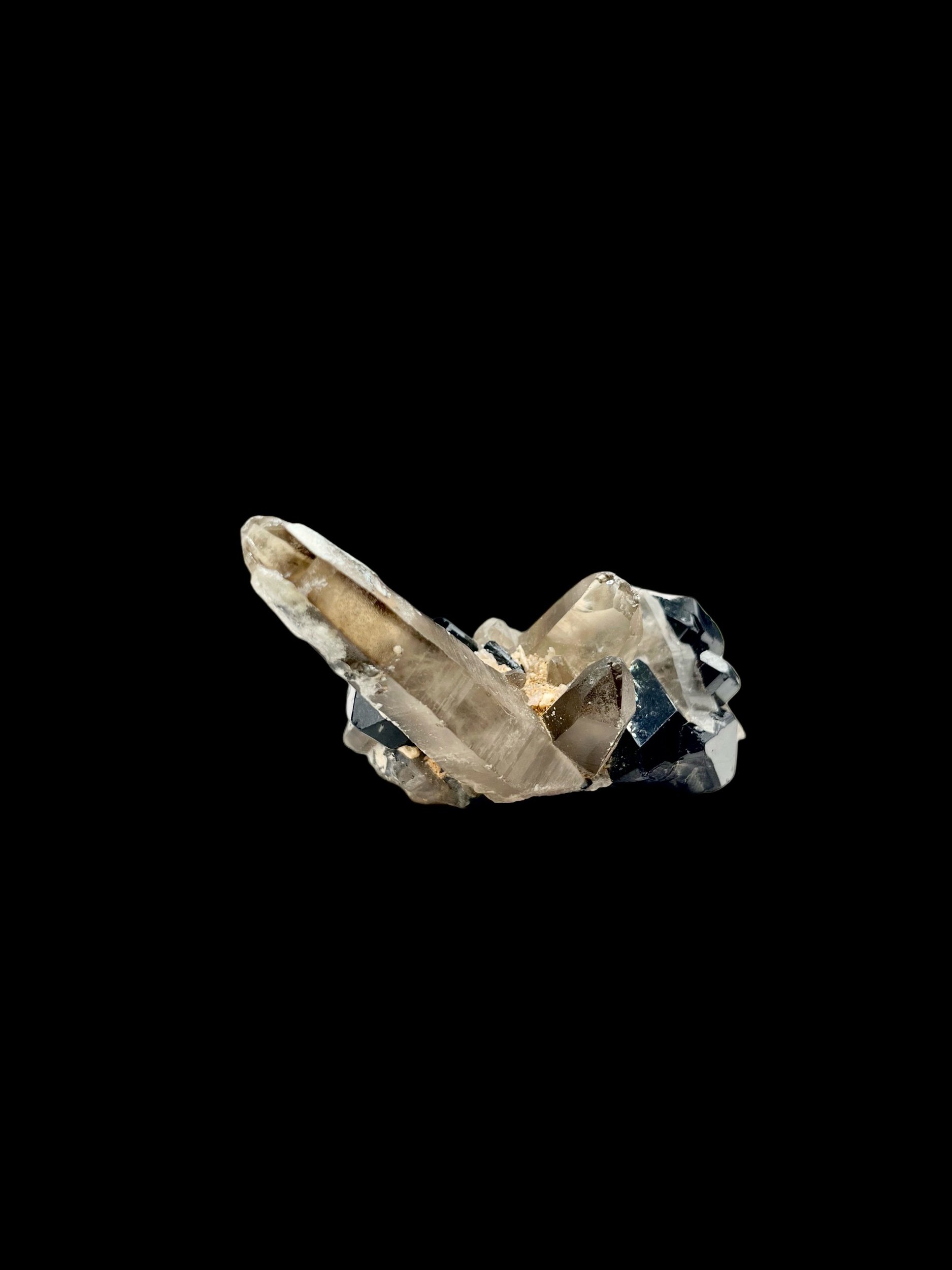
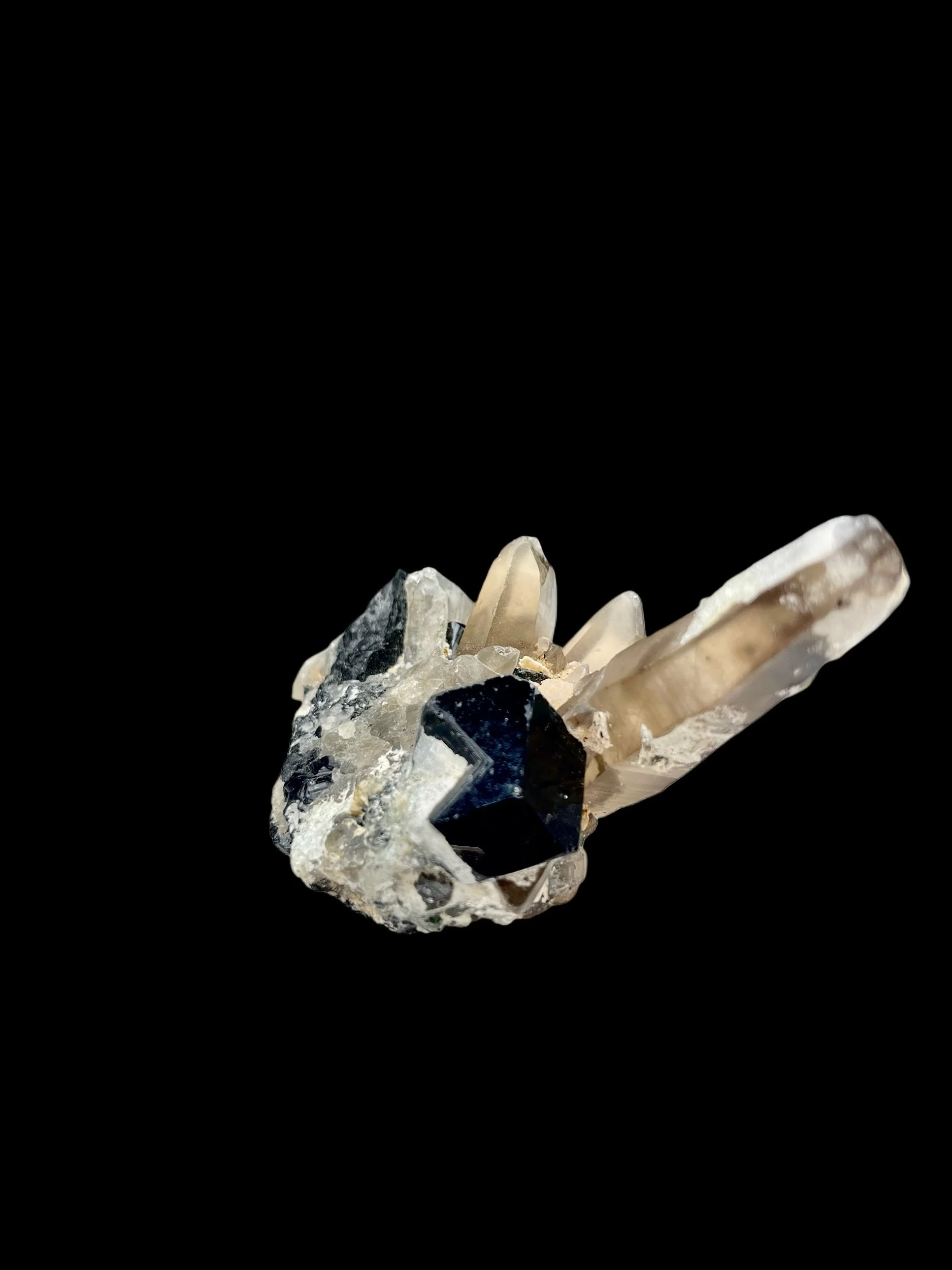
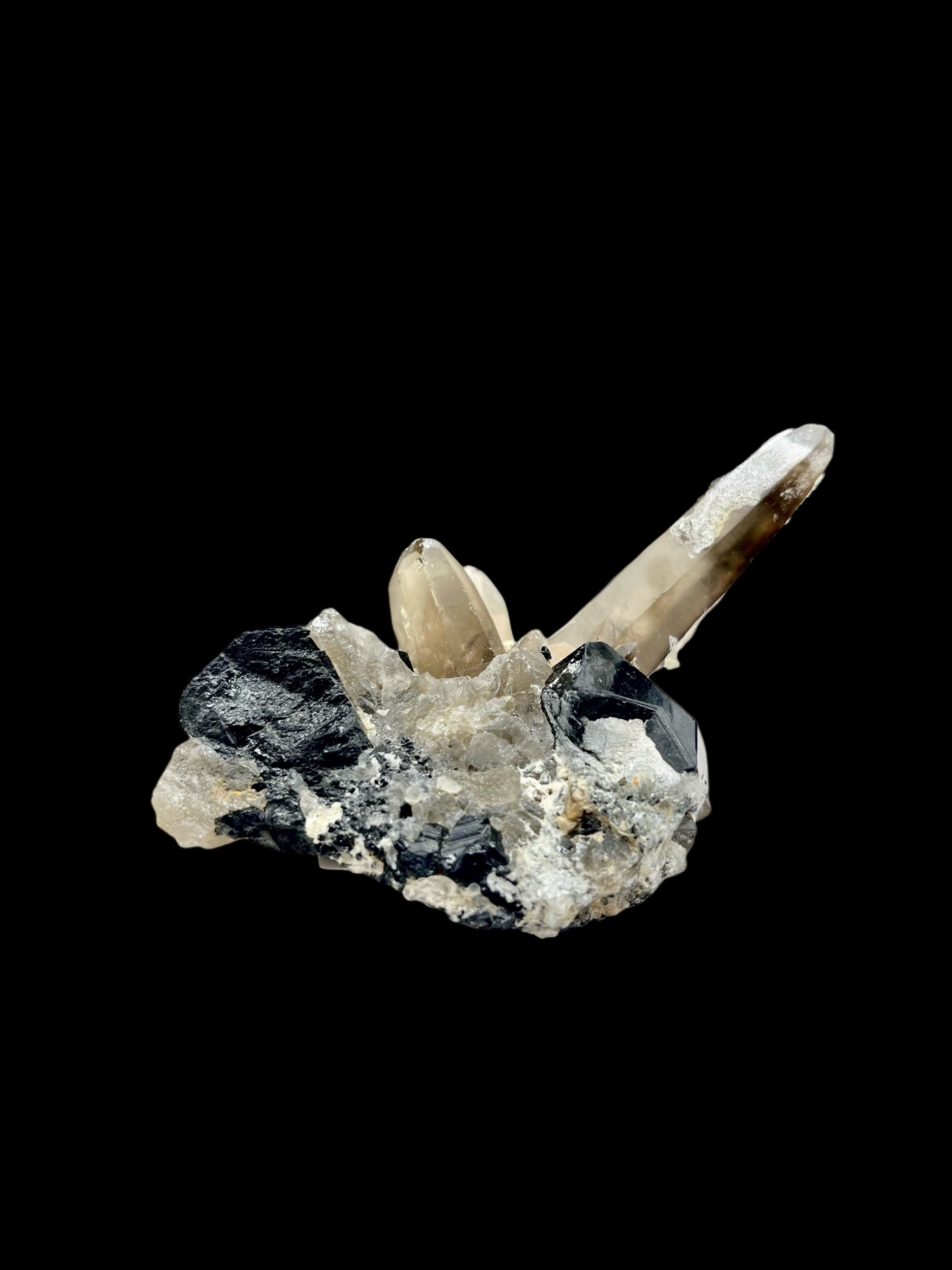
This compact yet visually striking specimen features a remarkable combination of black tourmaline, hyalite opal, and calcite from the famed Erongo Mountains of Namibia—one of the world’s most celebrated localities for complex pegmatite mineralization.
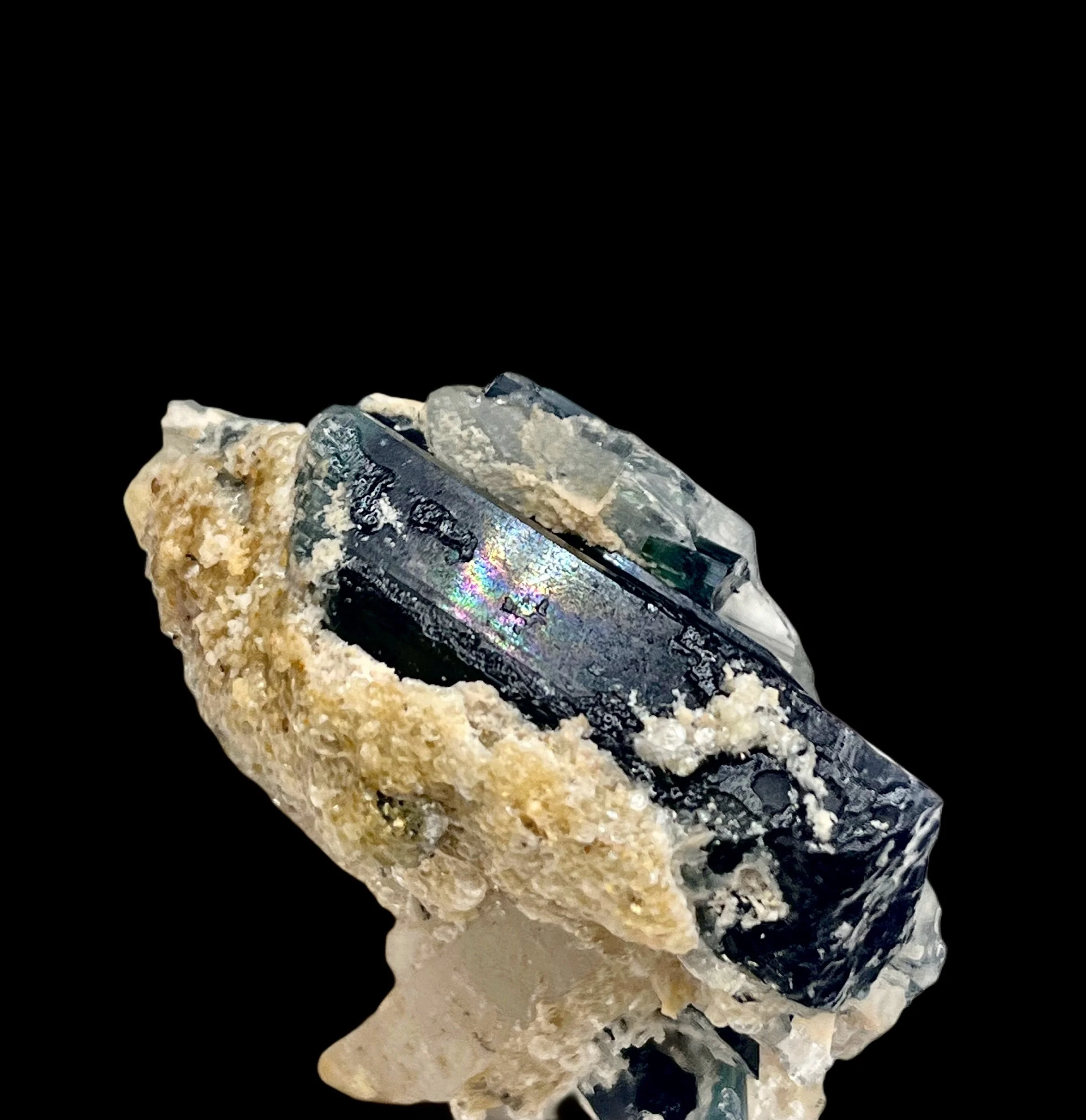
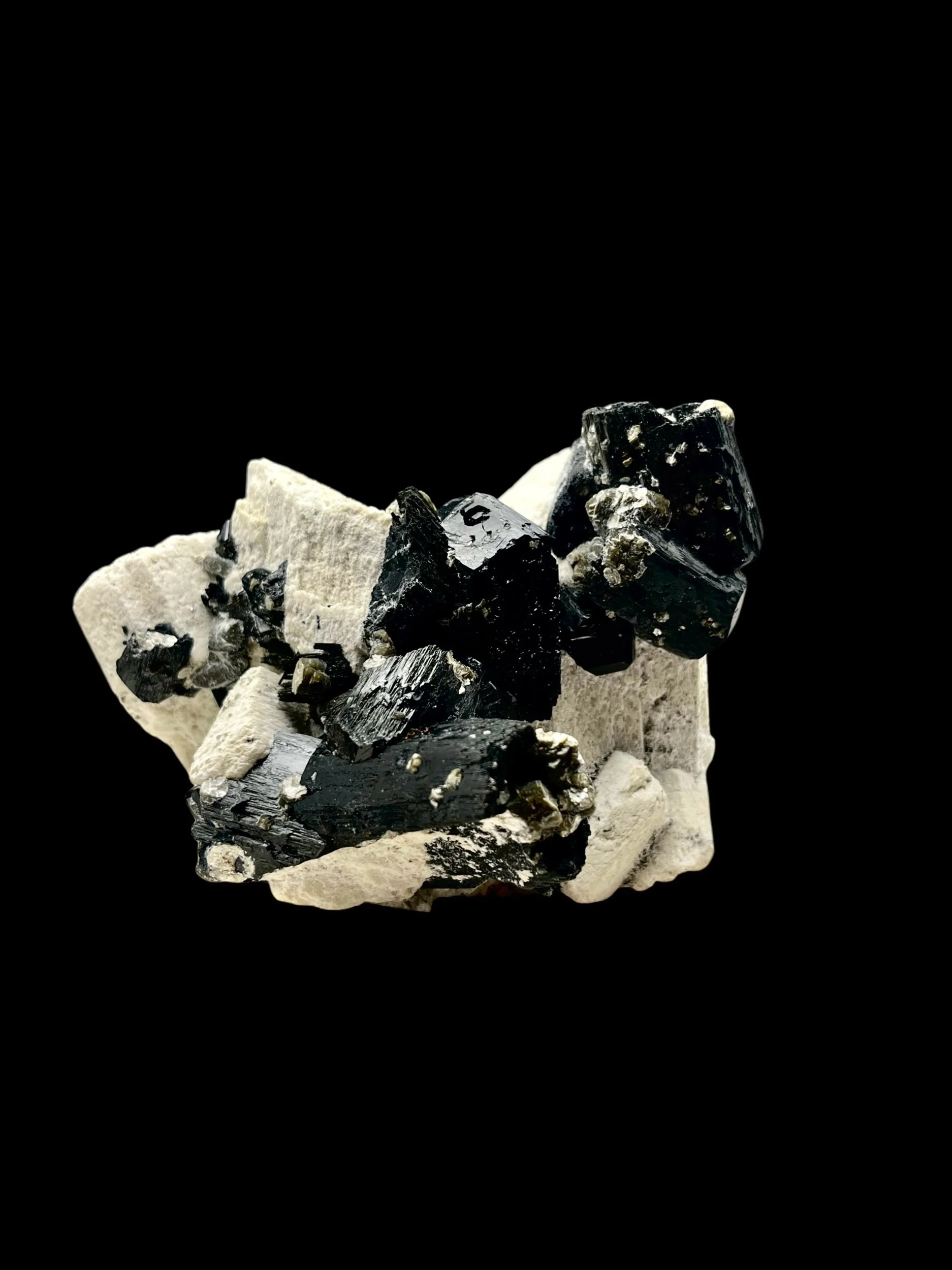
Clusters of sharply formed black tourmaline (schorl) emerge dramatically from a crystalline matrix of pale calcite, creating a bold contrast between dark, prismatic crystals and lighter, sparkling surfaces. The tourmaline displays a classic elongated habit, with a slightly radiating arrangement.
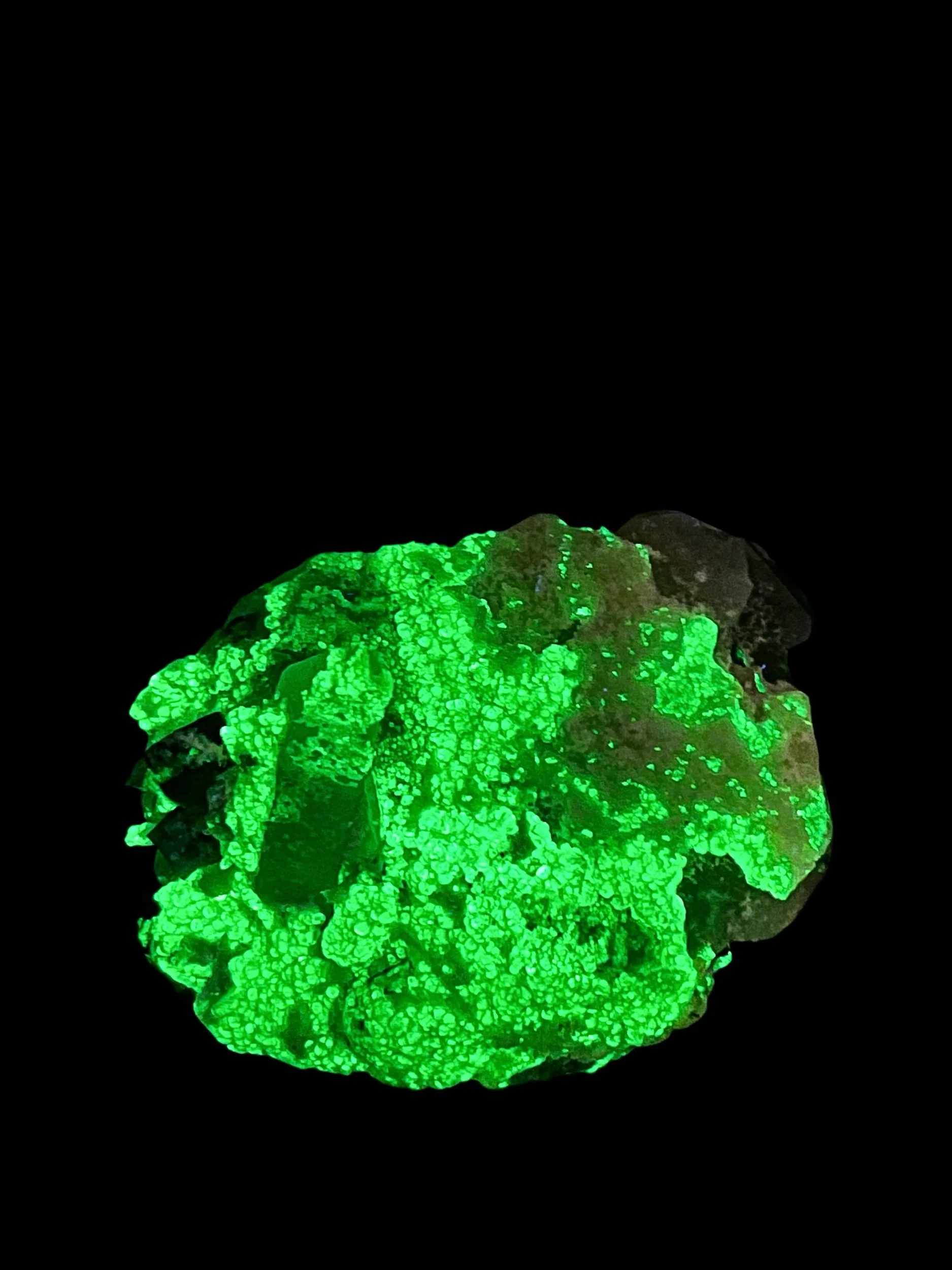
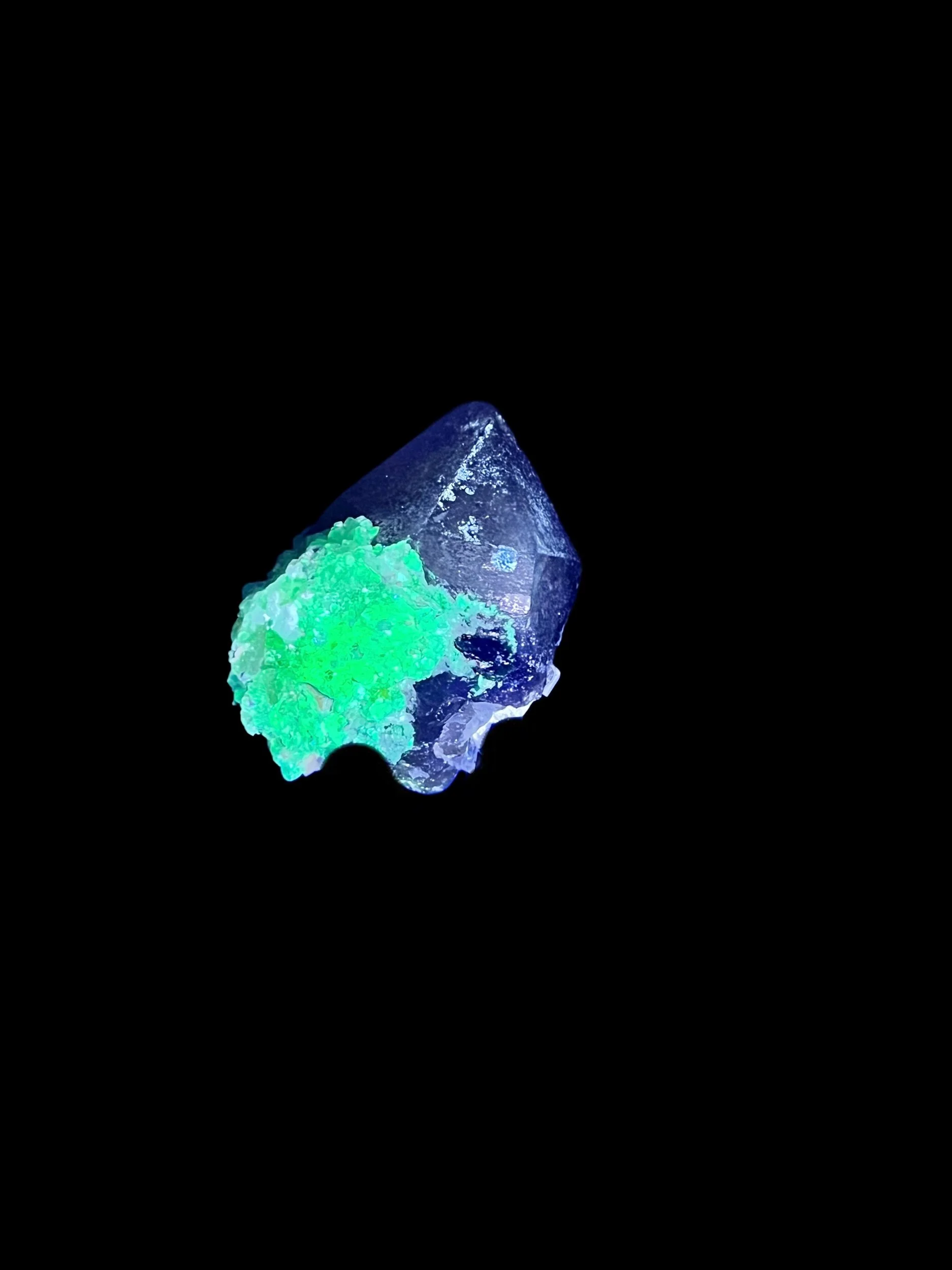
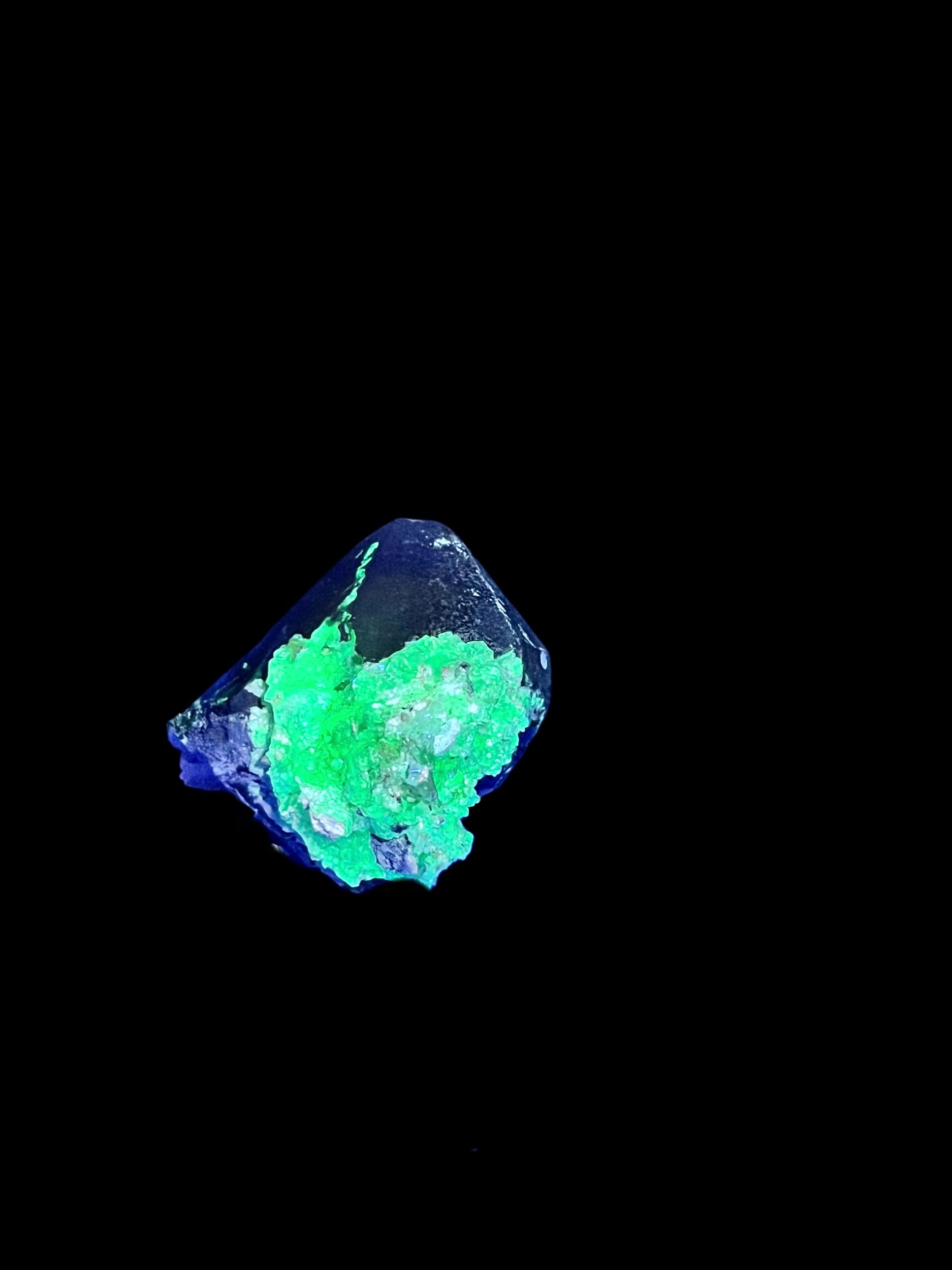
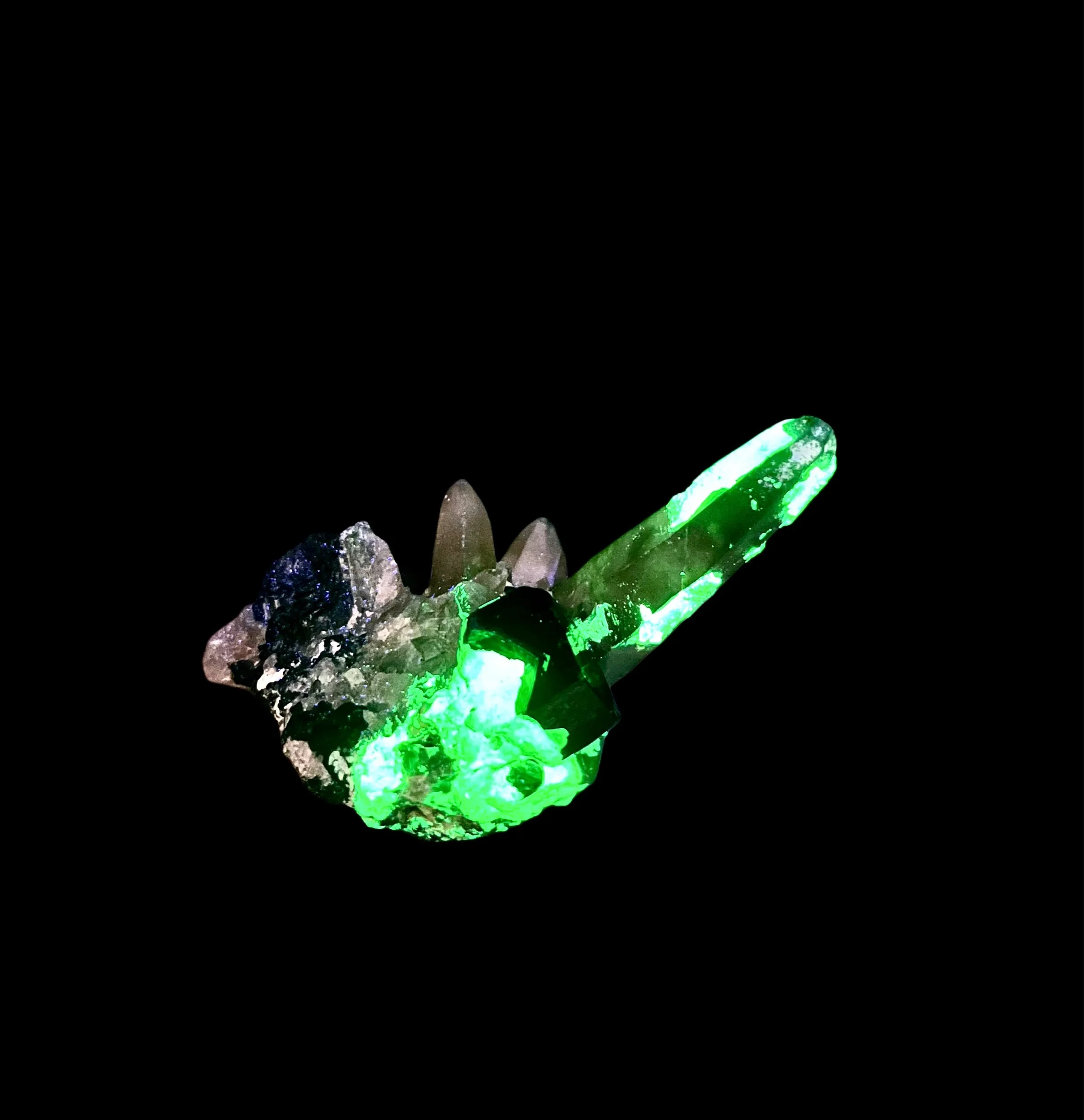
Delicately coating portions of the specimen are glassy formations of hyalite opal. Under normal lighting these appear nearly invisible, but under long wave UV light, the specimen transforms dramatically. Both the hyalite opal and calcite exhibit vivid fluorescence, producing an electric display of glowing greens and bright orange tones that highlight the specimen’s intricate structure.
This piece offers an exceptional balance of mineralogical interest, aesthetic contrast, and interactive fluorescence—making it a standout cabinet specimen.
Locality - Erongo Mountains
Dimensions & Weight
Size: 1.5” x 1.25” x 1”
Weight: 40 grams
Metaphysical Properties
Black tourmaline is often associated with grounding and energetic protection, while opal is traditionally linked to amplification and emotional clarity. Calcite is believed to enhance energy flow and mental clarity. Together, this combination is often viewed as balancing protection with illumination and transformation.
Collector’s Notes
Specimens from the Erongo Mountains are renowned for their formation within in granitic pegmatites, where late-stage fluids allow for the development of complex and often unusual mineral associations.
The presence of both hyalite opal and calcite—each exhibiting fluorescence—adds a dynamic, interactive quality to this piece that is especially appealing to collectors. Fluorescent hyalite from Erongo is known for its bright green response under UV light due to trace elements within the silica structure.
Highlights
Classic Erongo Mountains pegmatite specimen
Combination of tourmaline, hyalite opal, and calcite
Dual fluorescence (opal + calcite under UV)
Strong contrast between dark tourmaline and light matrix
Compact, high-quality collector piece
Mineralogy
This specimen formed within a miarolitic cavity in a granitic pegmatite—an environment known for producing well-formed crystals due to slow cooling and volatile-rich conditions.
Tourmaline (schorl) crystallized early as a boron-rich silicate mineral, forming elongated prismatic crystals. Calcite developed later as a carbonate mineral, often filling void spaces within the cavity.
Hyalite opal, a hydrated amorphous silica, represents one of the final stages of mineralization. Its characteristic fluorescence is caused by trace activators—commonly uranium—within its structure, resulting in its vivid green glow under UV light.
Description
This compact yet visually striking specimen features a remarkable combination of black tourmaline, hyalite opal, and calcite from the famed Erongo Mountains of Namibia—one of the world’s most celebrated localities for complex pegmatite mineralization.
Clusters of sharply formed black tourmaline (schorl) emerge dramatically from a crystalline matrix of pale calcite, creating a bold contrast between dark, prismatic crystals and lighter, sparkling surfaces. The tourmaline displays a classic elongated habit, with a slightly radiating arrangement.
Delicately coating portions of the specimen are glassy formations of hyalite opal. Under normal lighting these appear nearly invisible, but under long wave UV light, the specimen transforms dramatically. Both the hyalite opal and calcite exhibit vivid fluorescence, producing an electric display of glowing greens and bright orange tones that highlight the specimen’s intricate structure.
This piece offers an exceptional balance of mineralogical interest, aesthetic contrast, and interactive fluorescence—making it a standout cabinet specimen.
Locality - Erongo Mountains
Dimensions & Weight
Size: 1.5” x 1.25” x 1”
Weight: 40 grams
Metaphysical Properties
Black tourmaline is often associated with grounding and energetic protection, while opal is traditionally linked to amplification and emotional clarity. Calcite is believed to enhance energy flow and mental clarity. Together, this combination is often viewed as balancing protection with illumination and transformation.
Collector’s Notes
Specimens from the Erongo Mountains are renowned for their formation within in granitic pegmatites, where late-stage fluids allow for the development of complex and often unusual mineral associations.
The presence of both hyalite opal and calcite—each exhibiting fluorescence—adds a dynamic, interactive quality to this piece that is especially appealing to collectors. Fluorescent hyalite from Erongo is known for its bright green response under UV light due to trace elements within the silica structure.
Highlights
Classic Erongo Mountains pegmatite specimen
Combination of tourmaline, hyalite opal, and calcite
Dual fluorescence (opal + calcite under UV)
Strong contrast between dark tourmaline and light matrix
Compact, high-quality collector piece
Mineralogy
This specimen formed within a miarolitic cavity in a granitic pegmatite—an environment known for producing well-formed crystals due to slow cooling and volatile-rich conditions.
Tourmaline (schorl) crystallized early as a boron-rich silicate mineral, forming elongated prismatic crystals. Calcite developed later as a carbonate mineral, often filling void spaces within the cavity.
Hyalite opal, a hydrated amorphous silica, represents one of the final stages of mineralization. Its characteristic fluorescence is caused by trace activators—commonly uranium—within its structure, resulting in its vivid green glow under UV light.


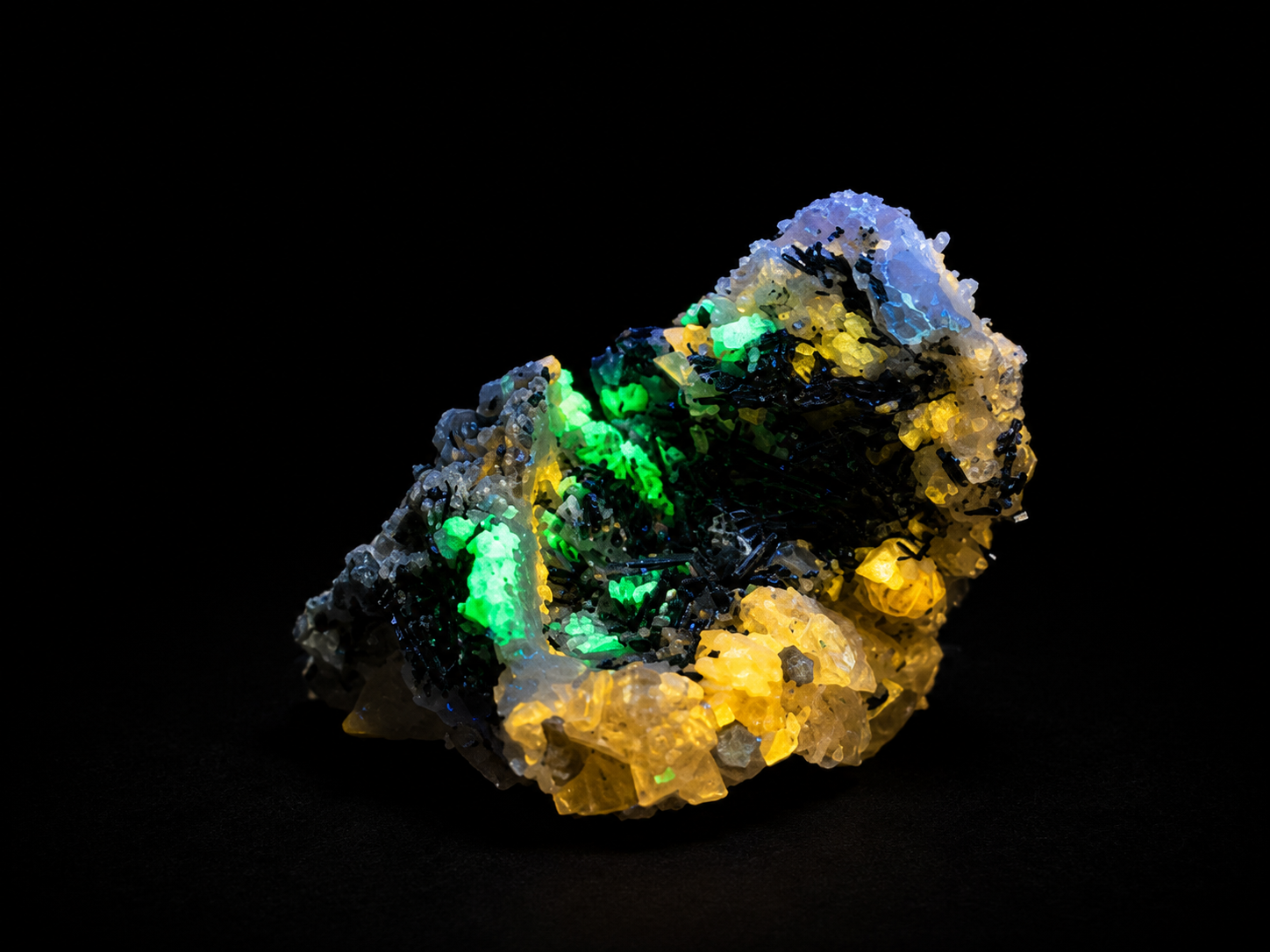 Image 1 of 7
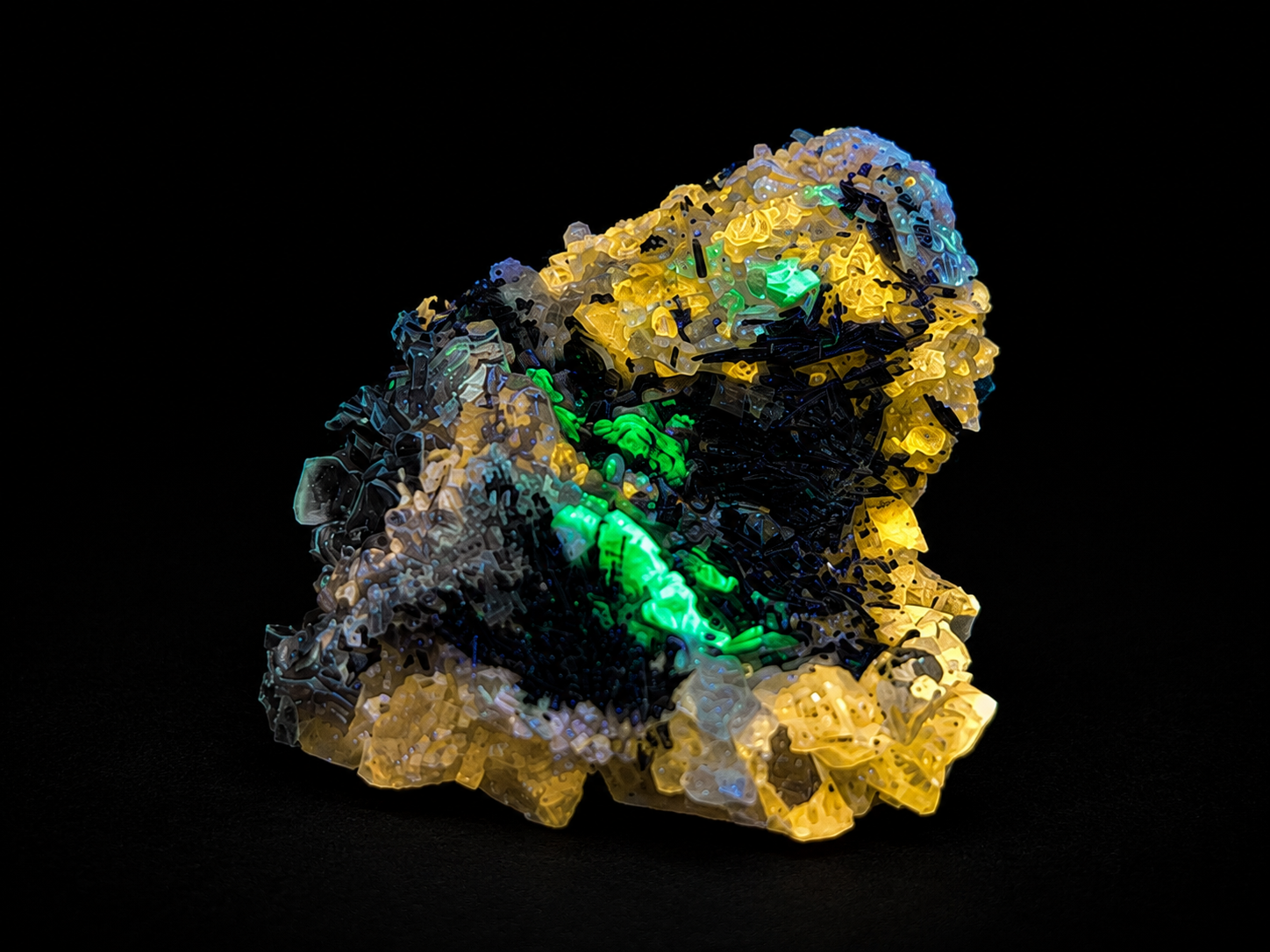 Image 2 of 7
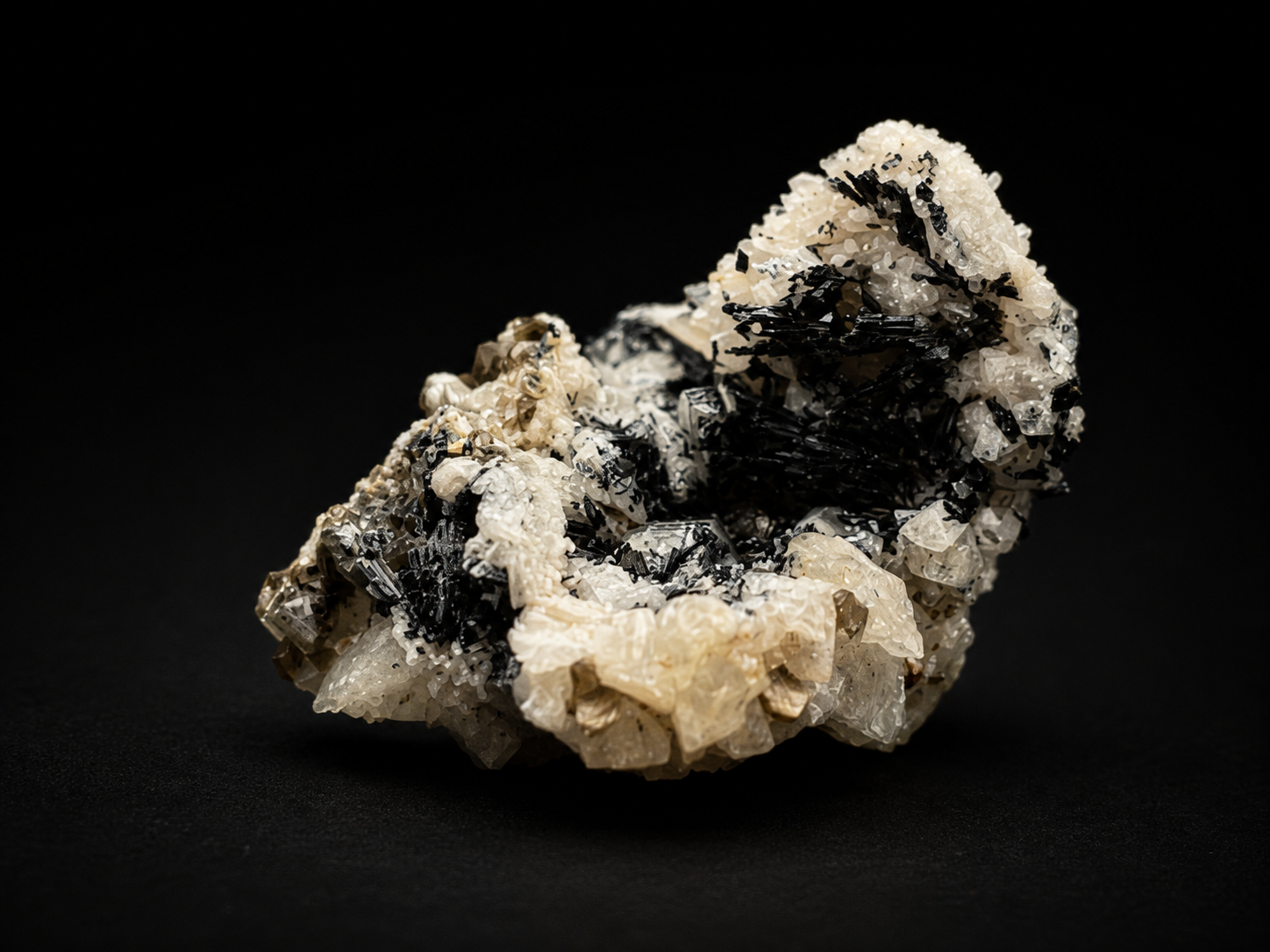 Image 3 of 7
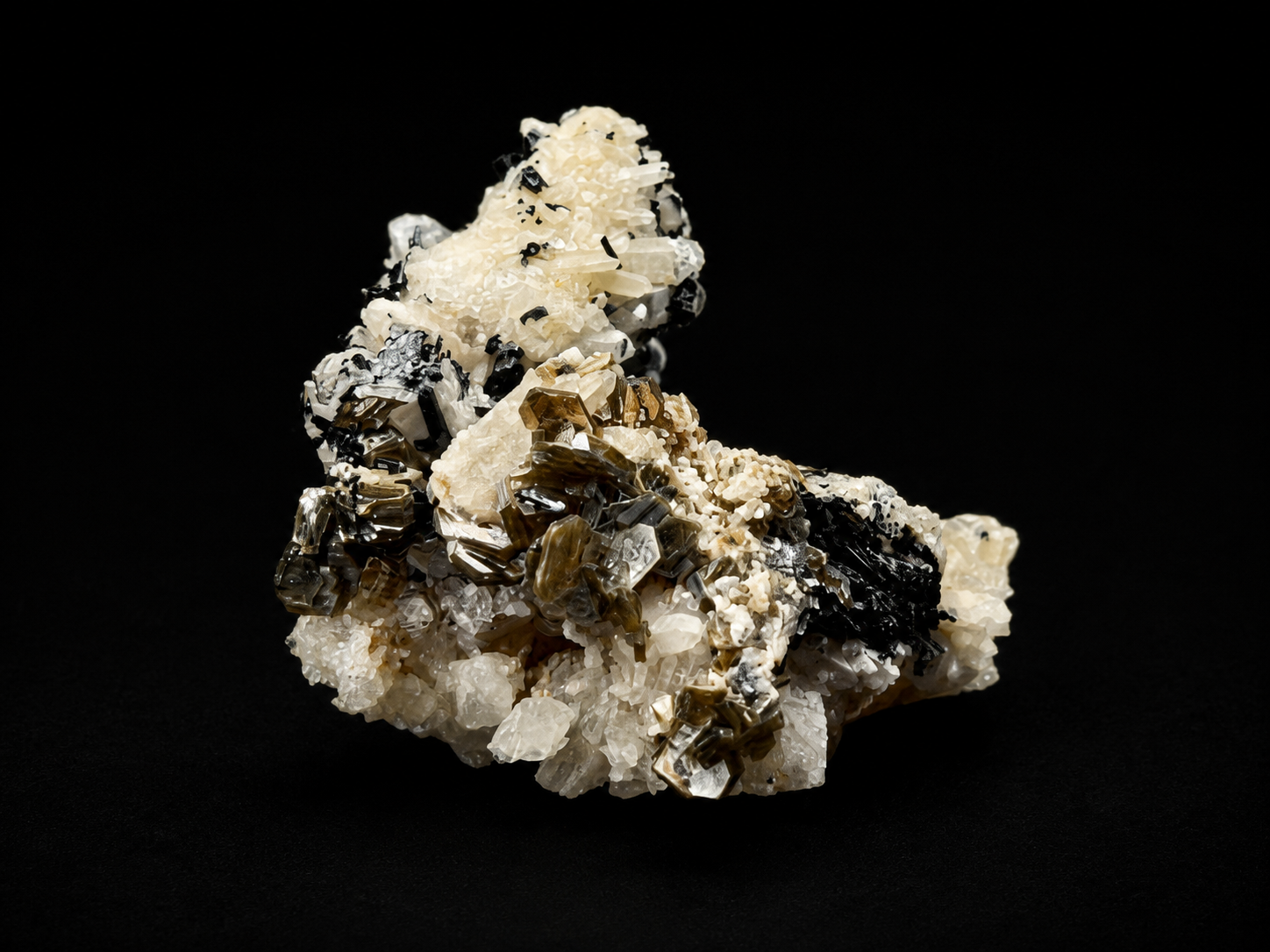 Image 4 of 7
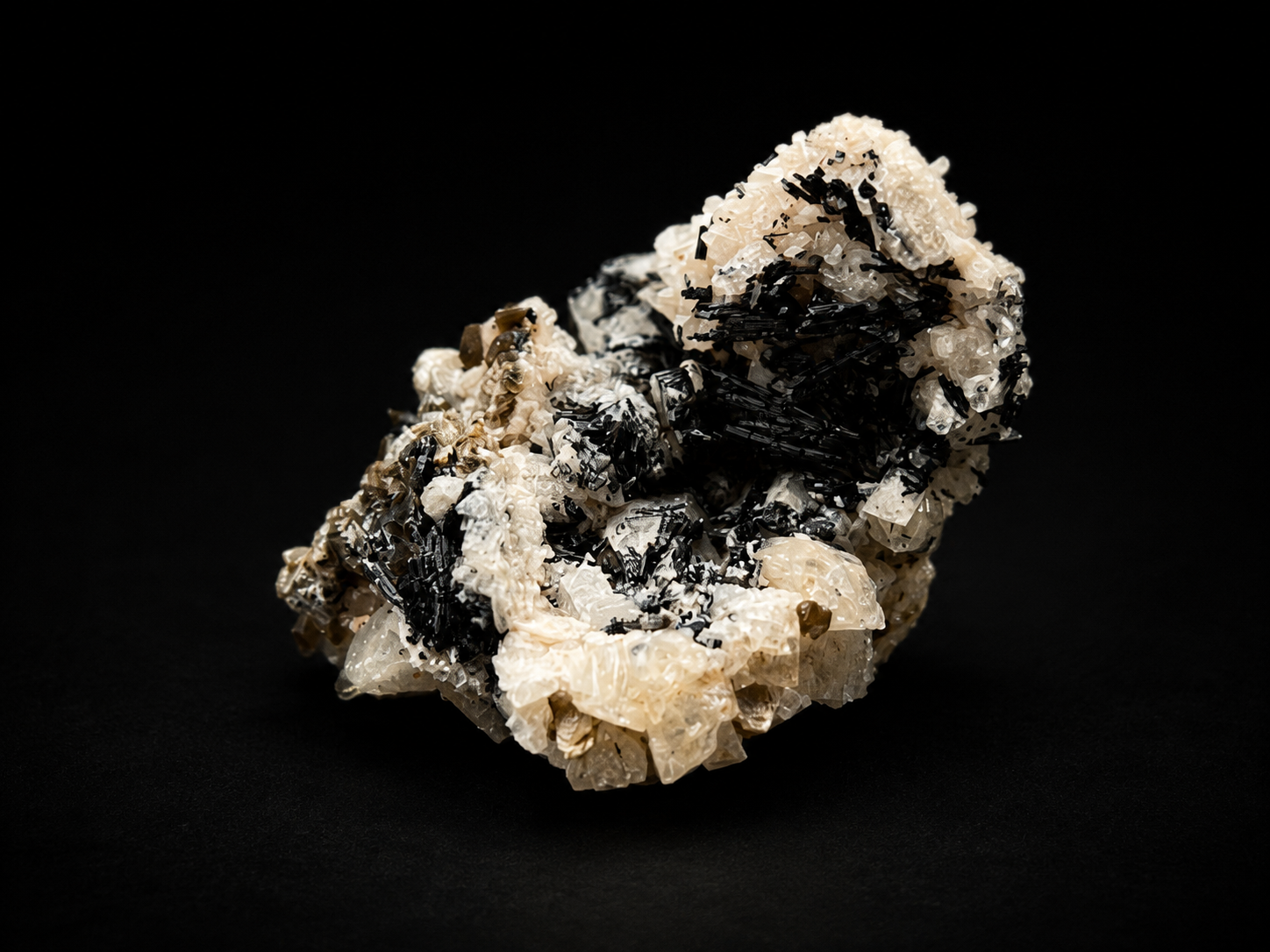 Image 5 of 7
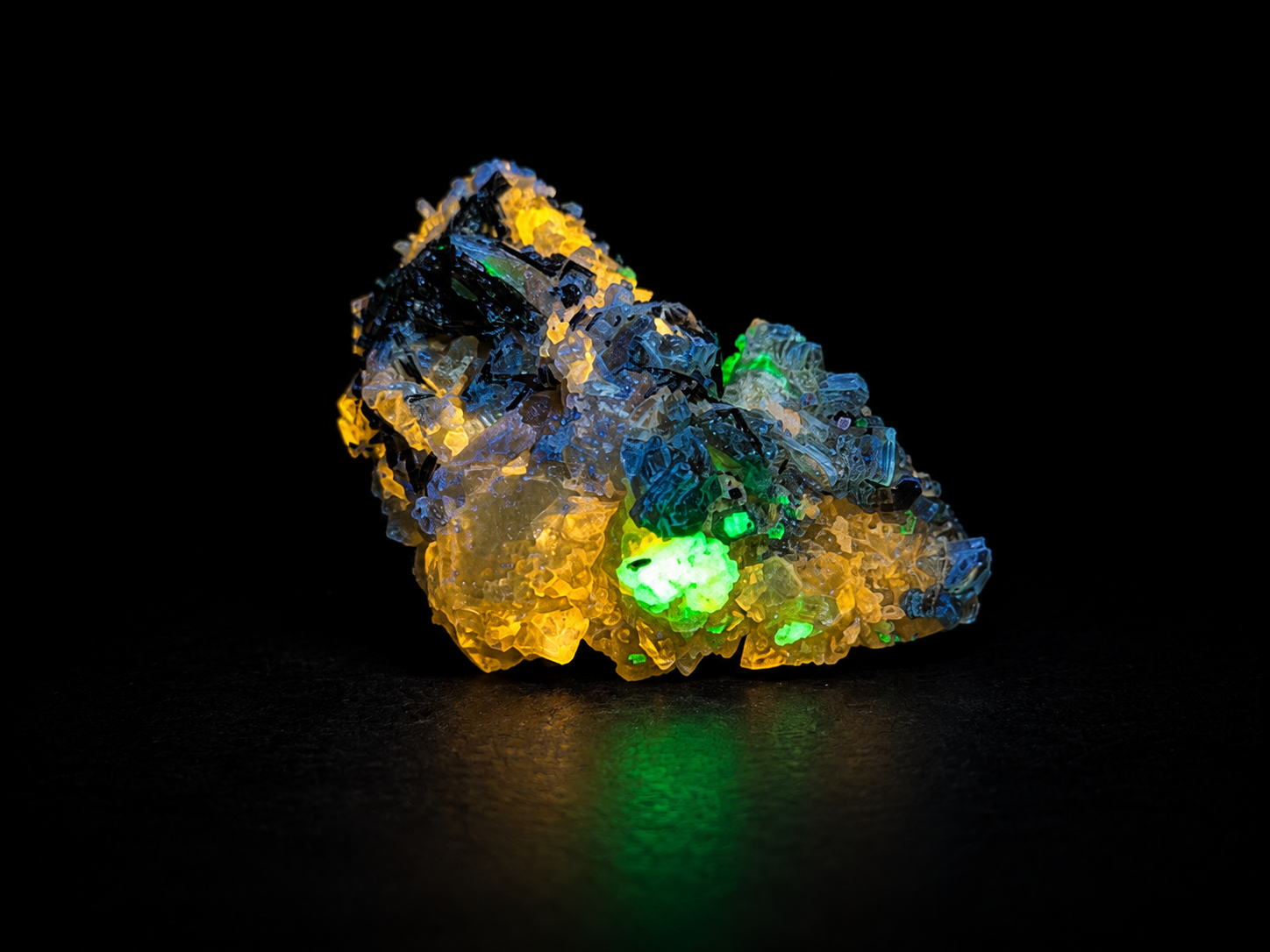 Image 6 of 7
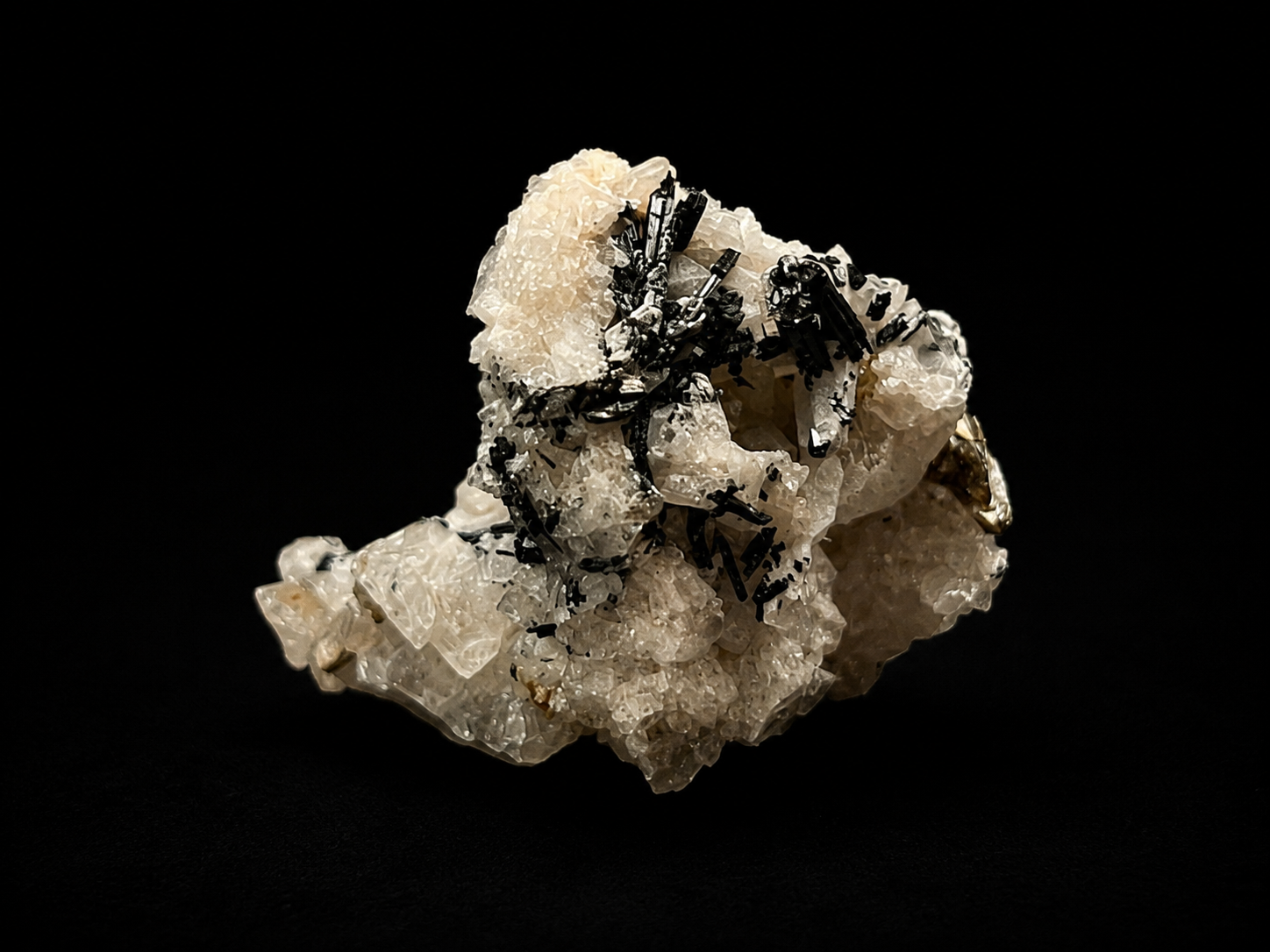 Image 7 of 7