Description
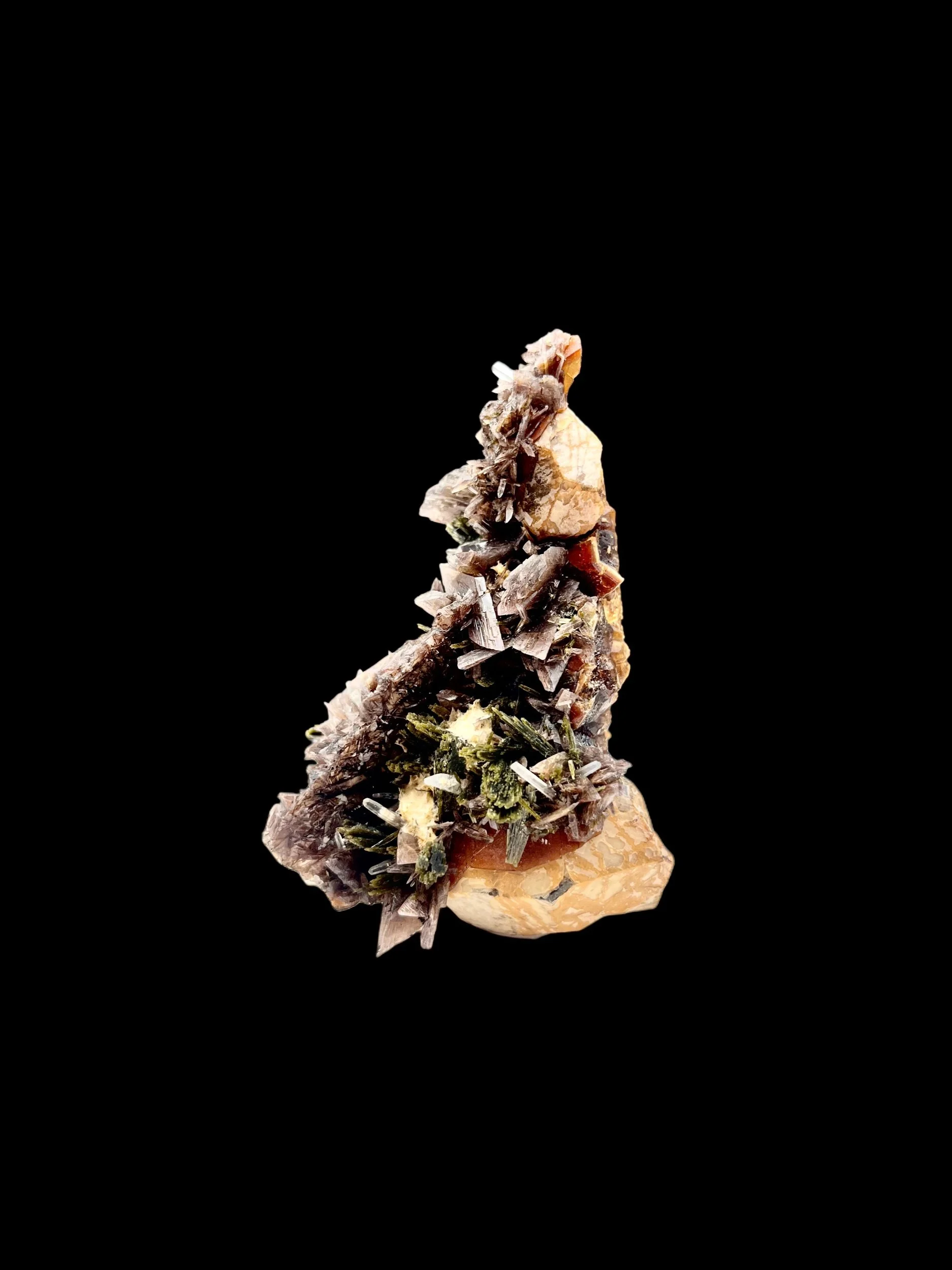
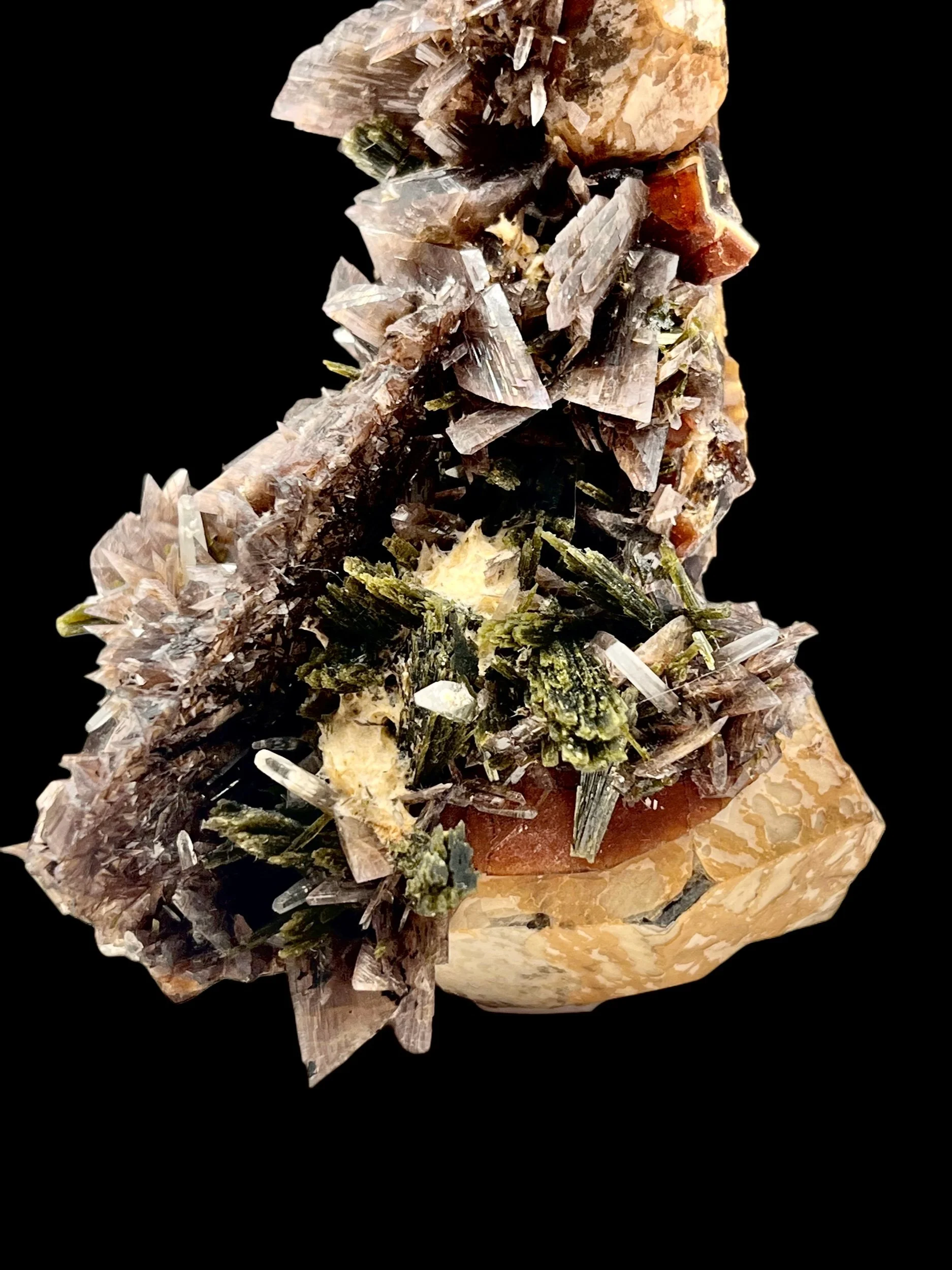
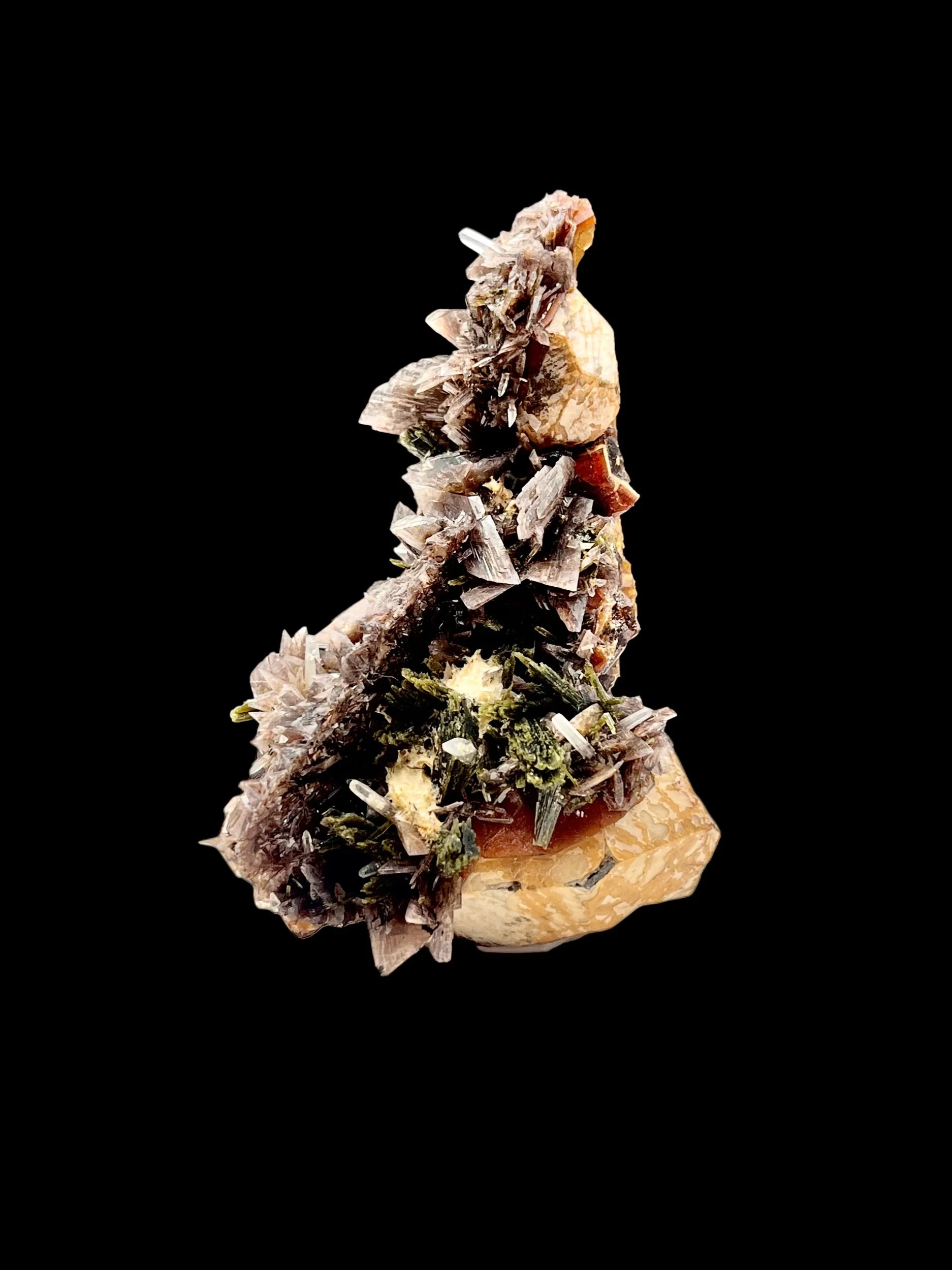
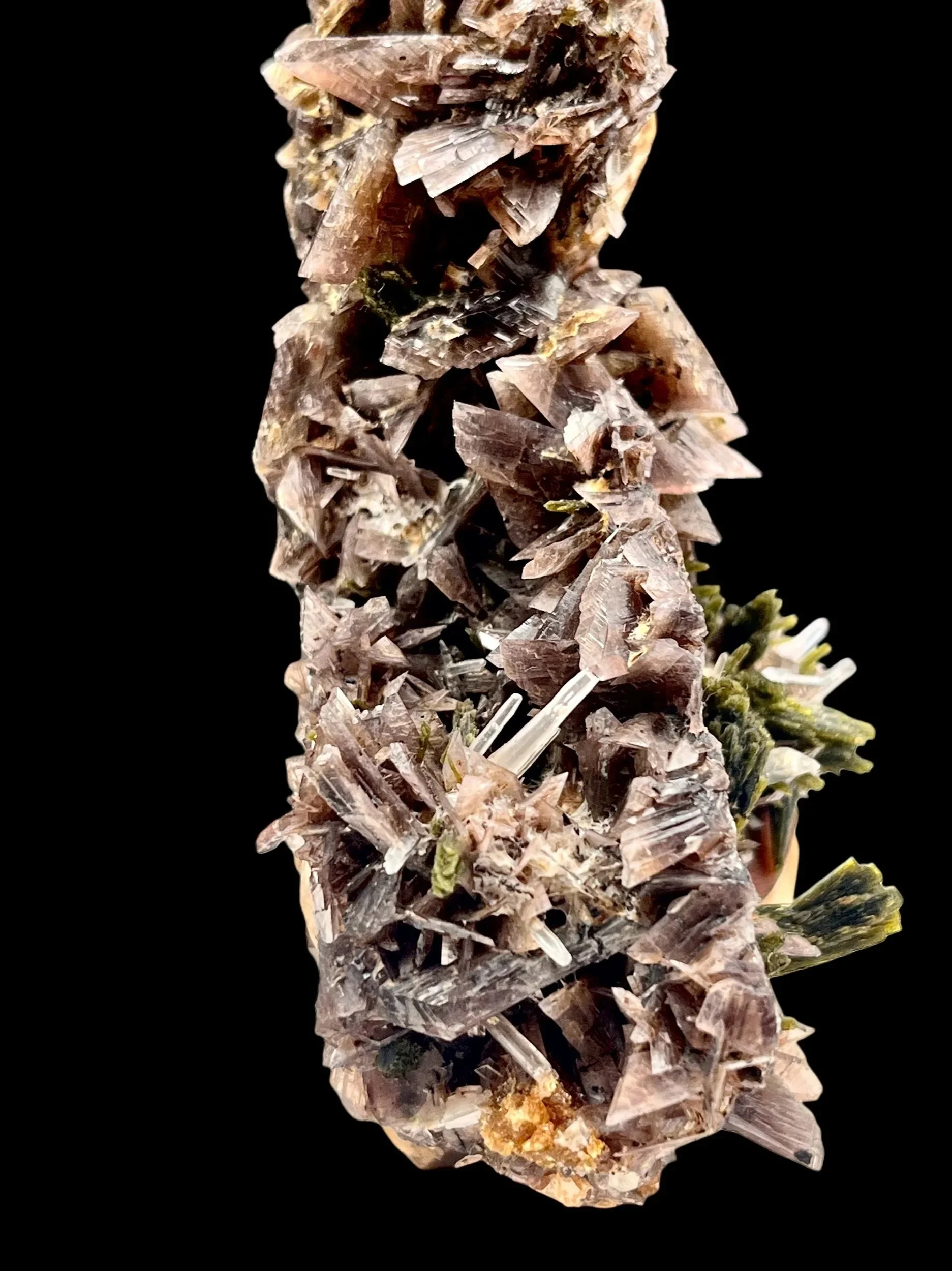
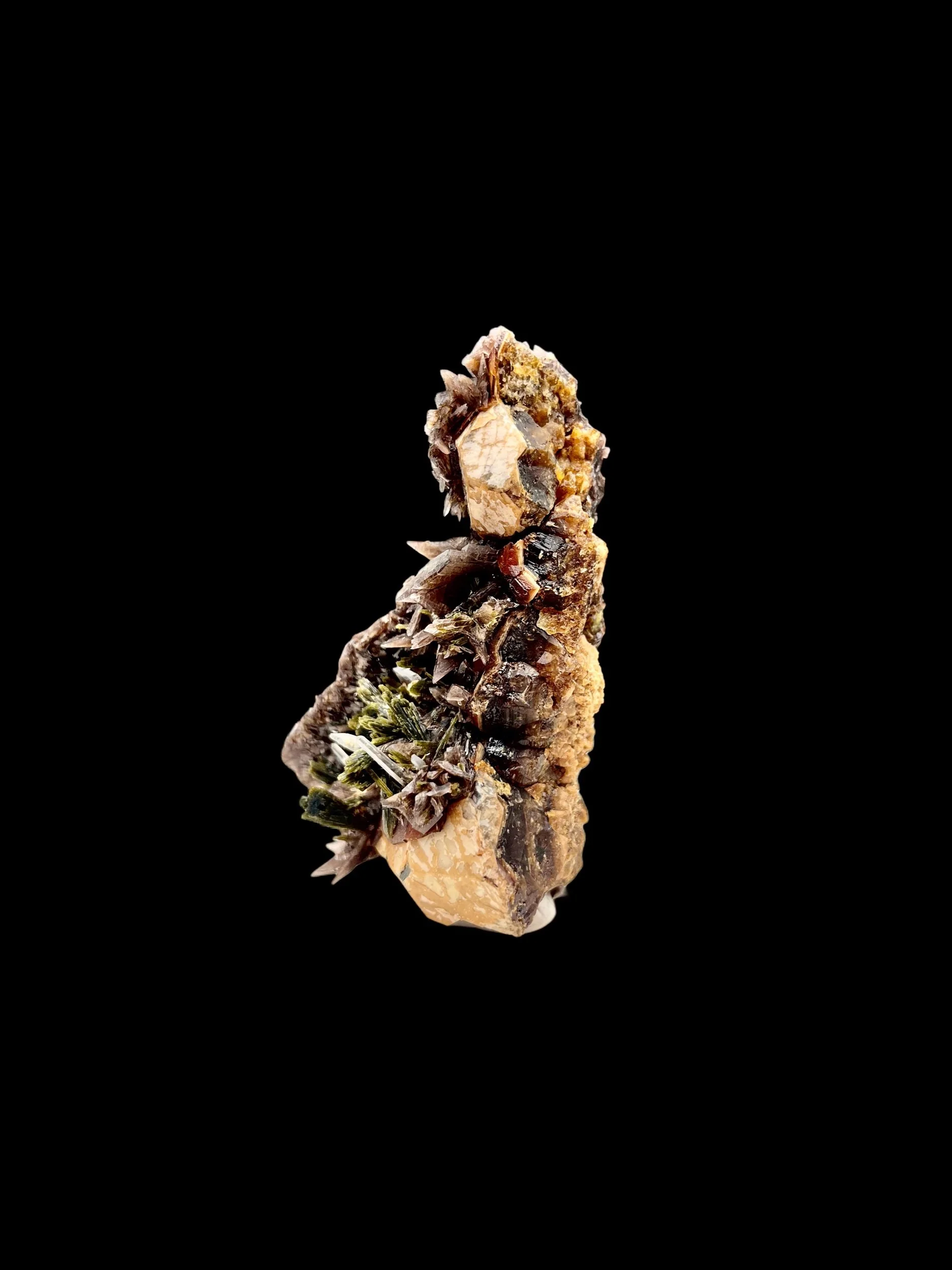
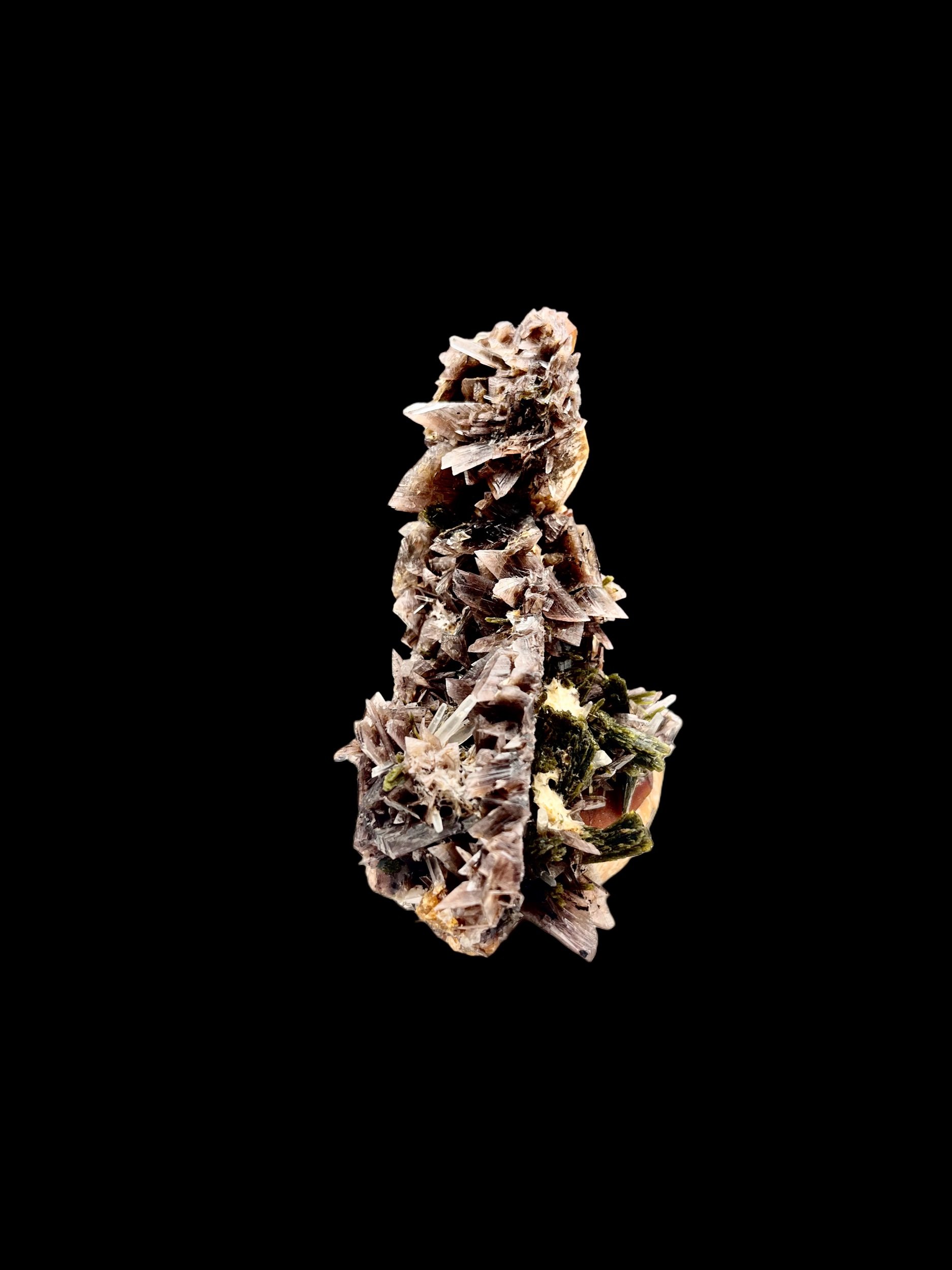
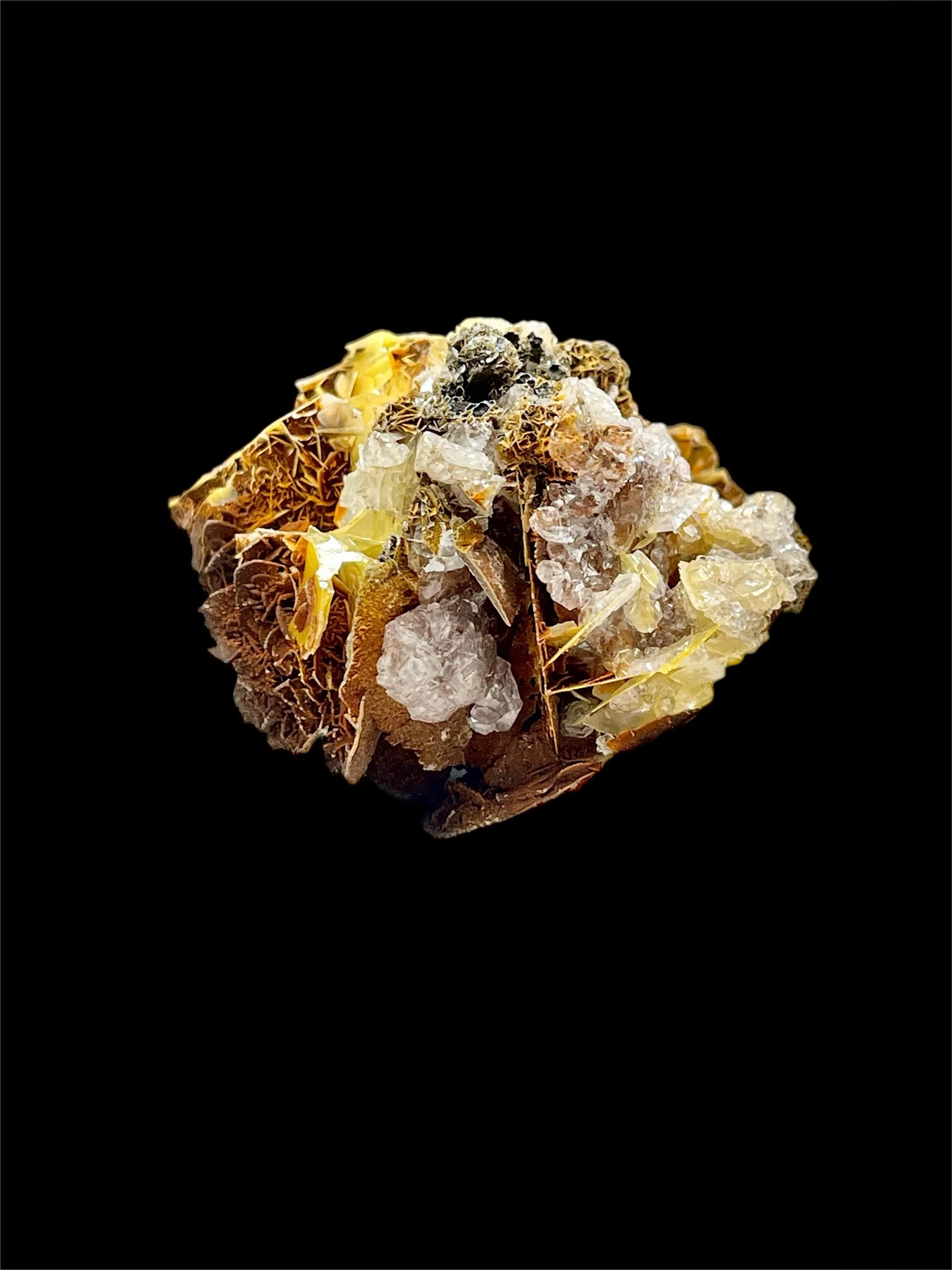
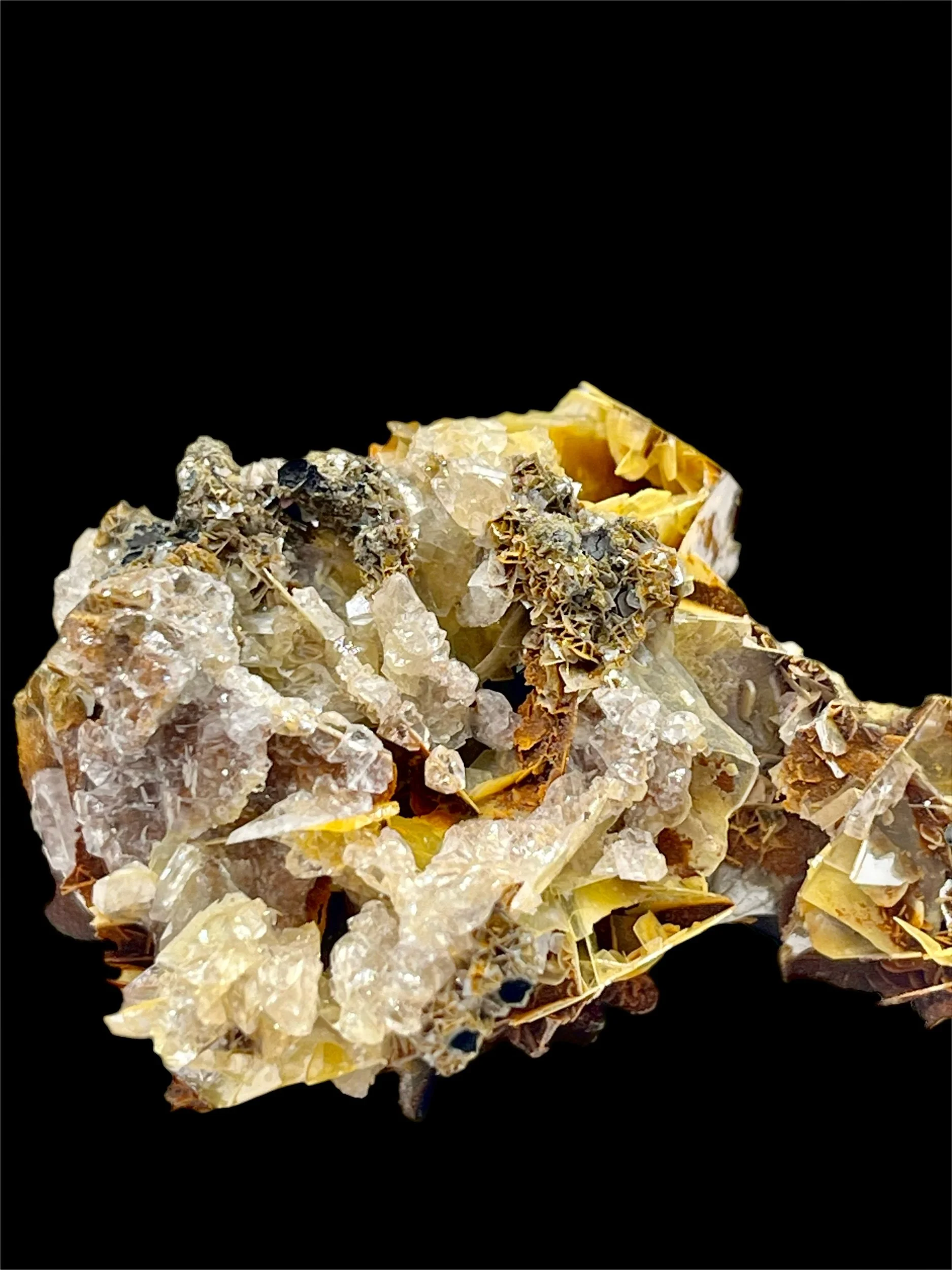
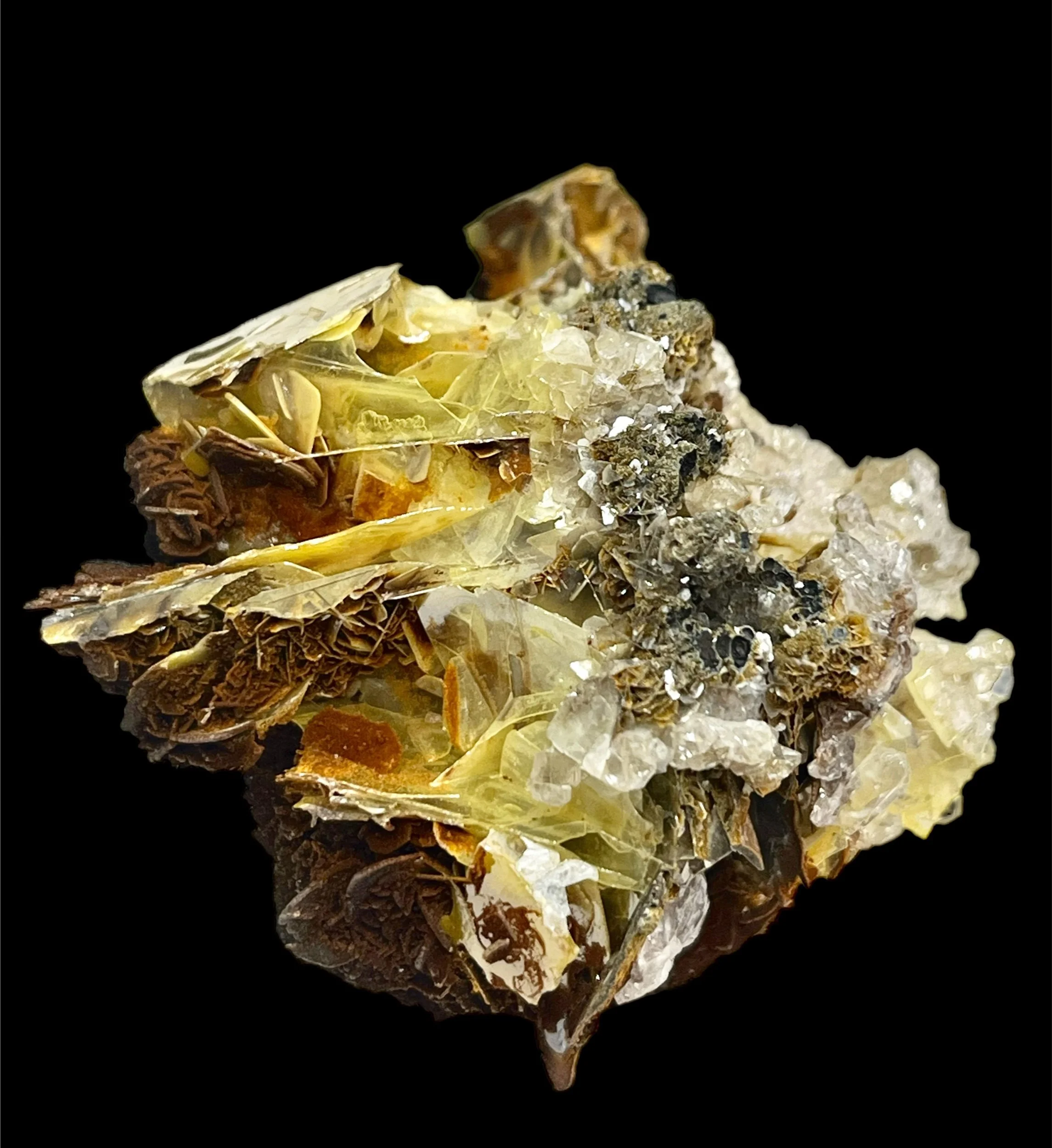
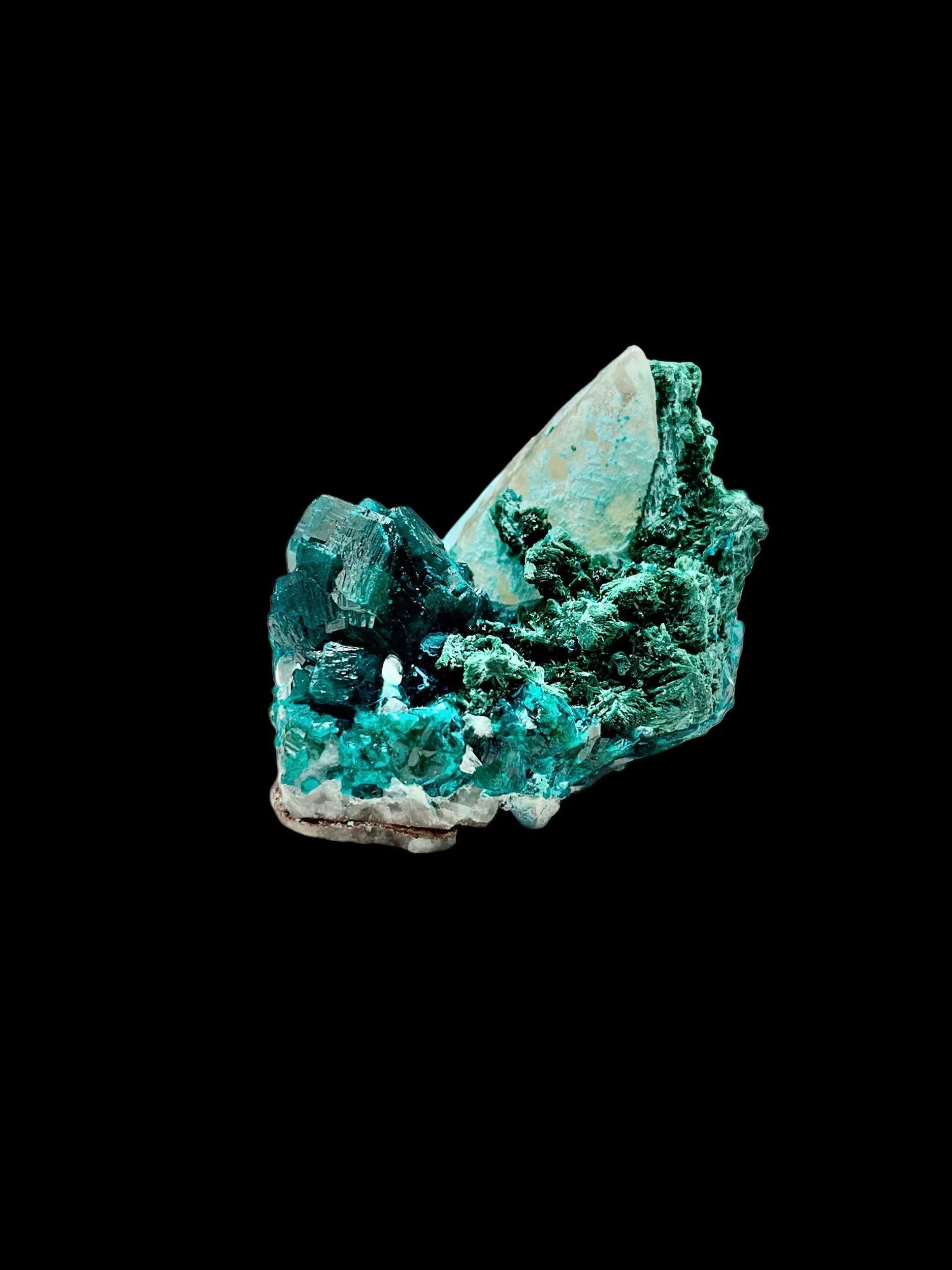
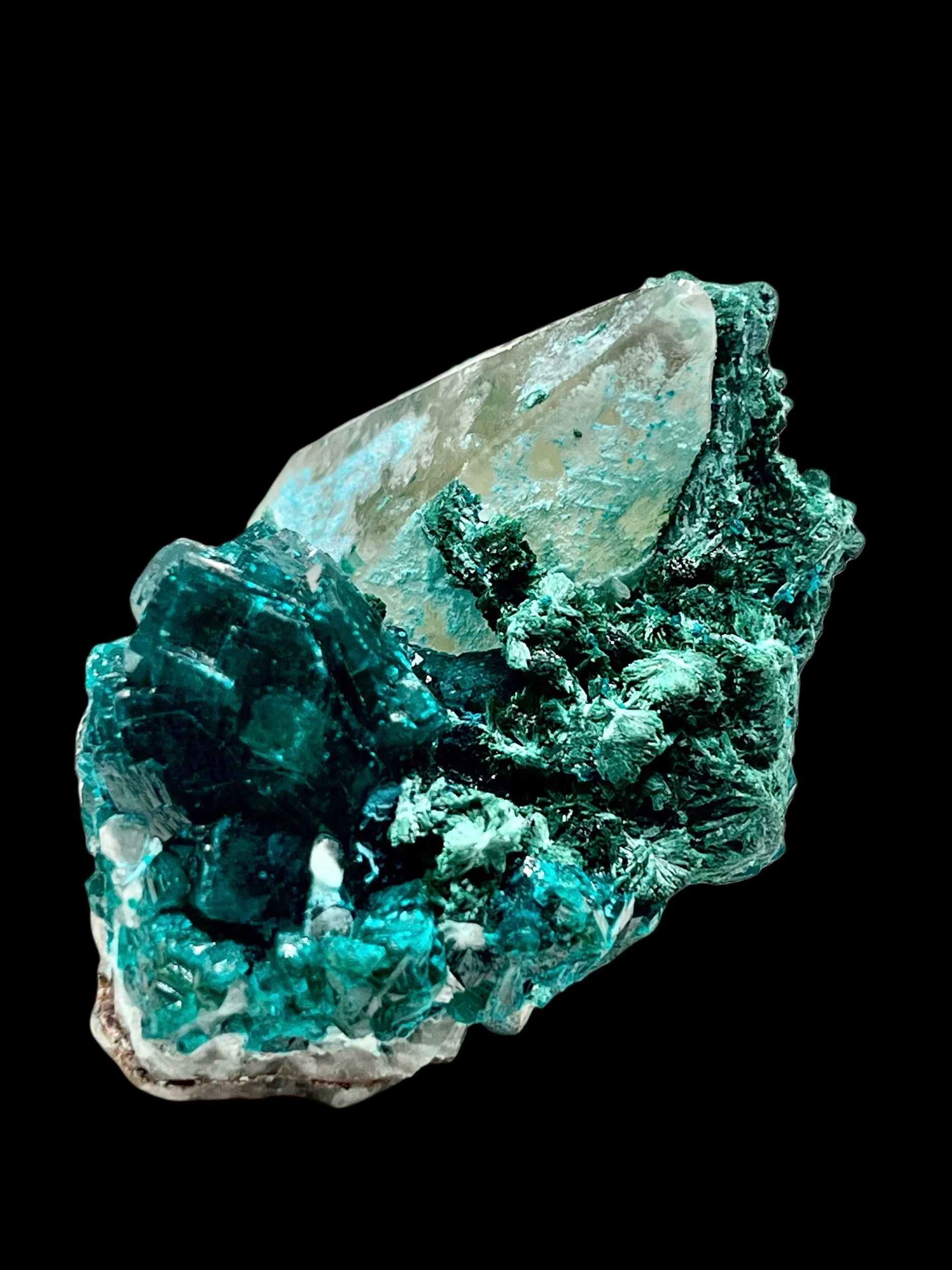
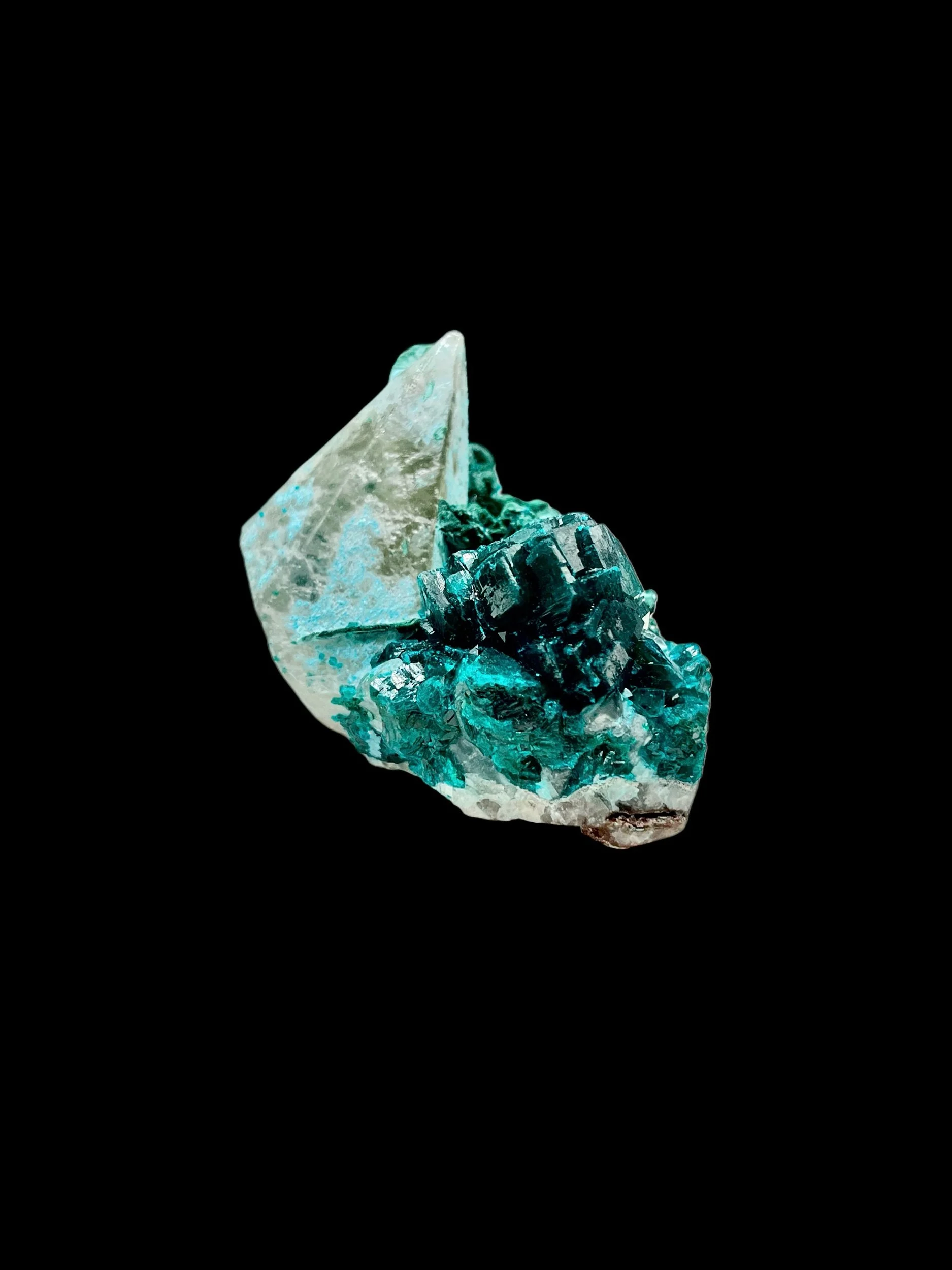
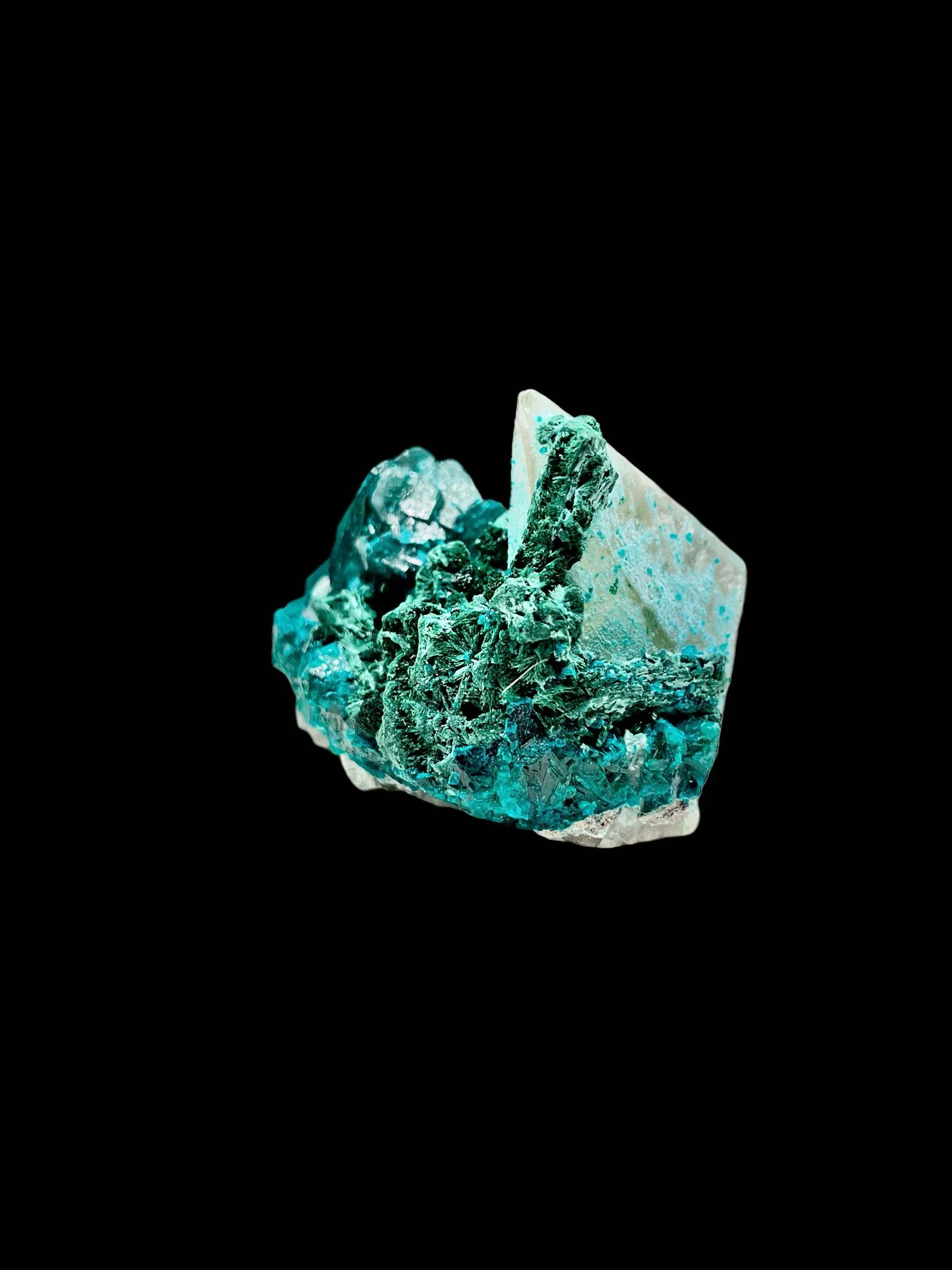
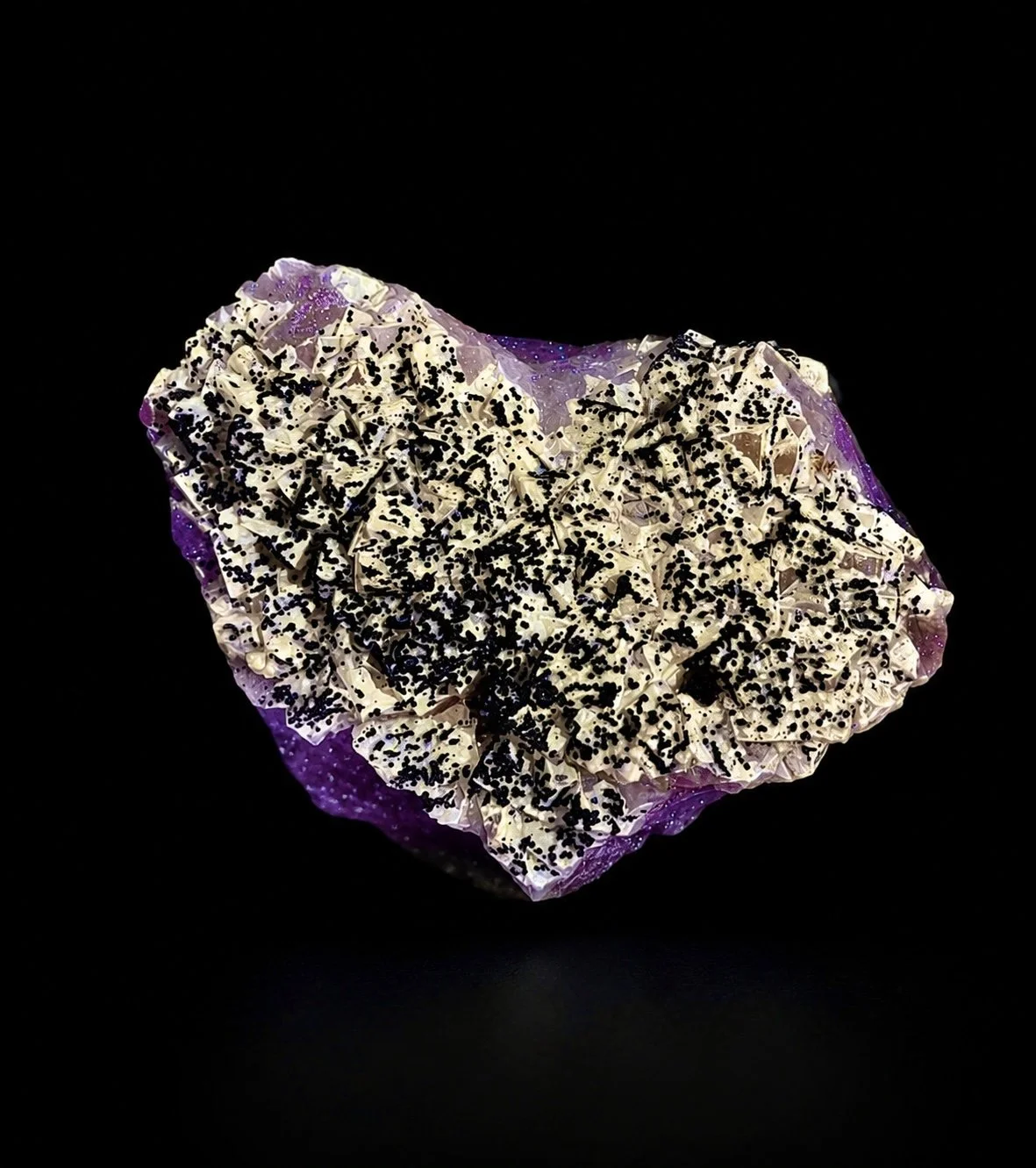
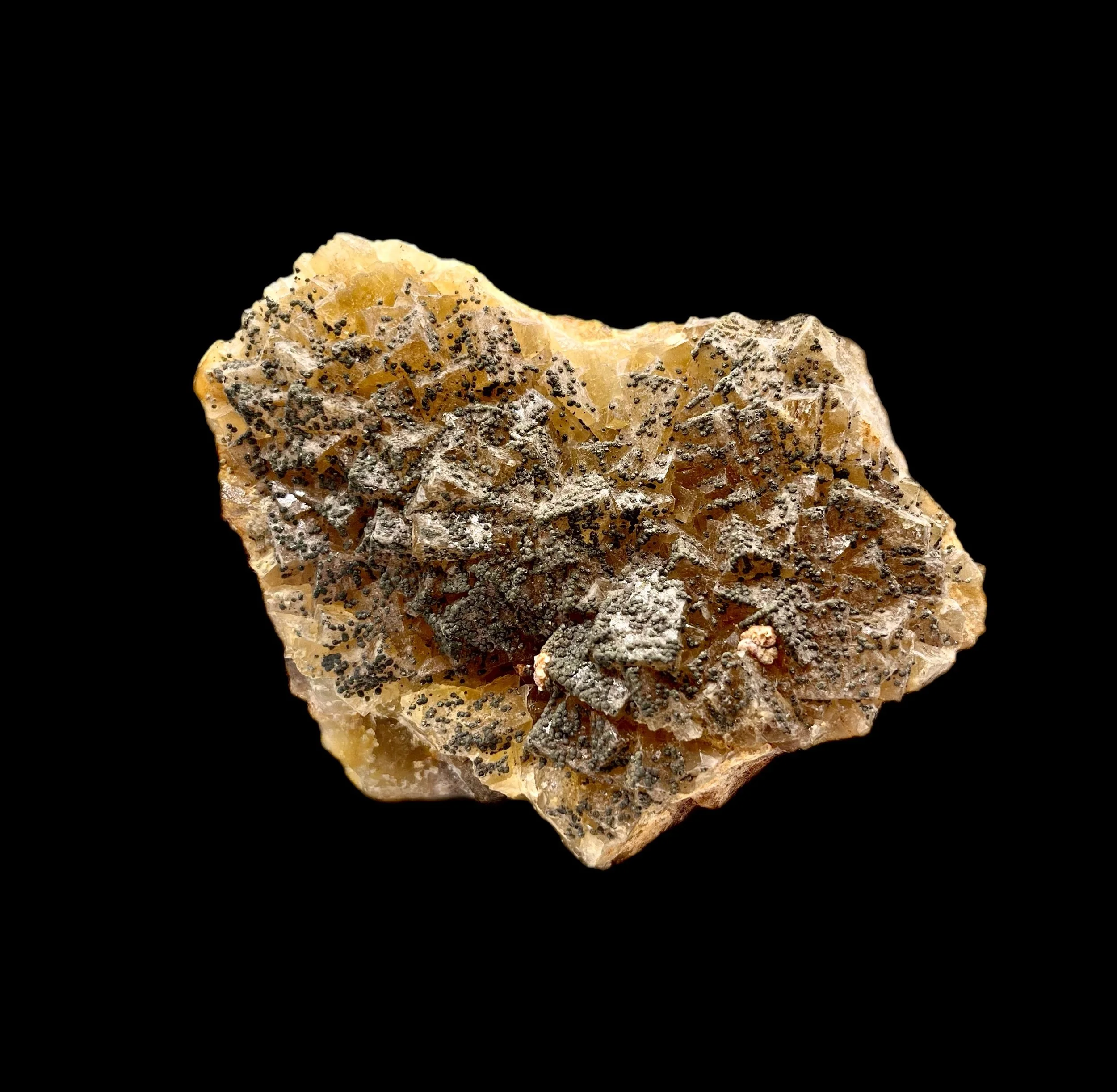
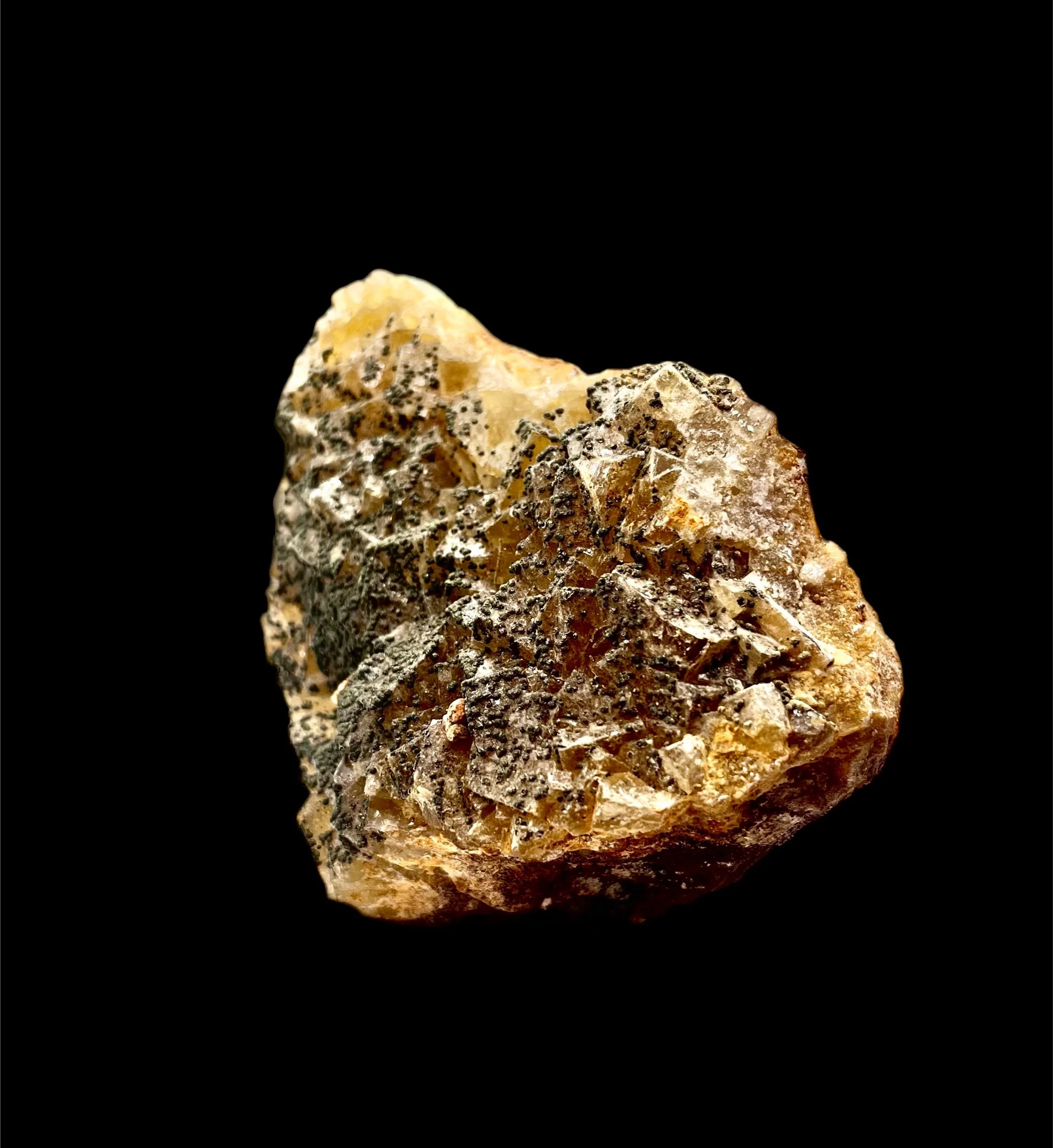
This dramatic marshy apophyllite specimen brings together exceptional crystal geometry, layered color, and an unusually complex surface landscape. Large intergrown apophyllite crystals dominate the piece, displaying broad glassy faces, stepped terminations, and intricate growth patterns.
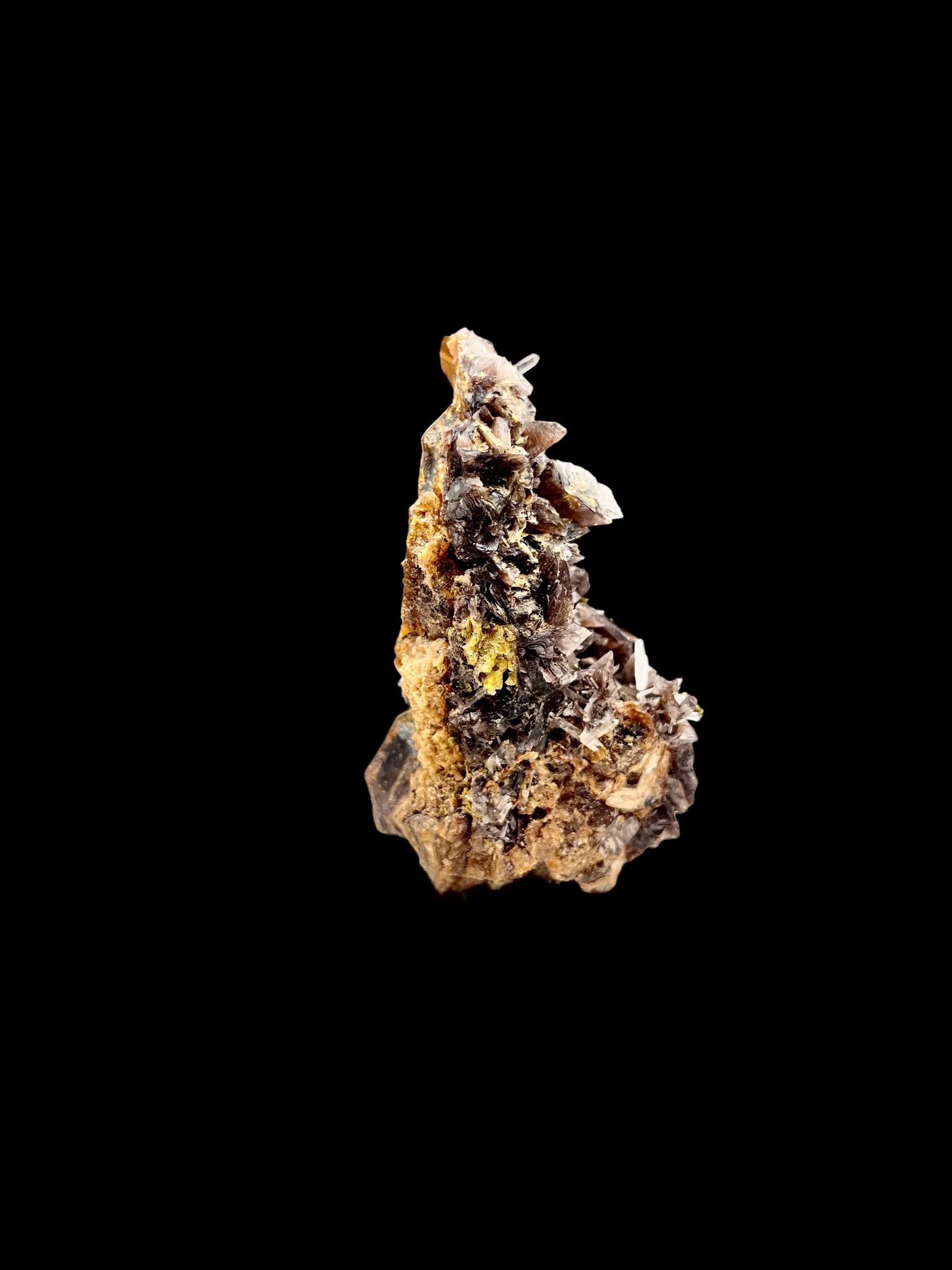
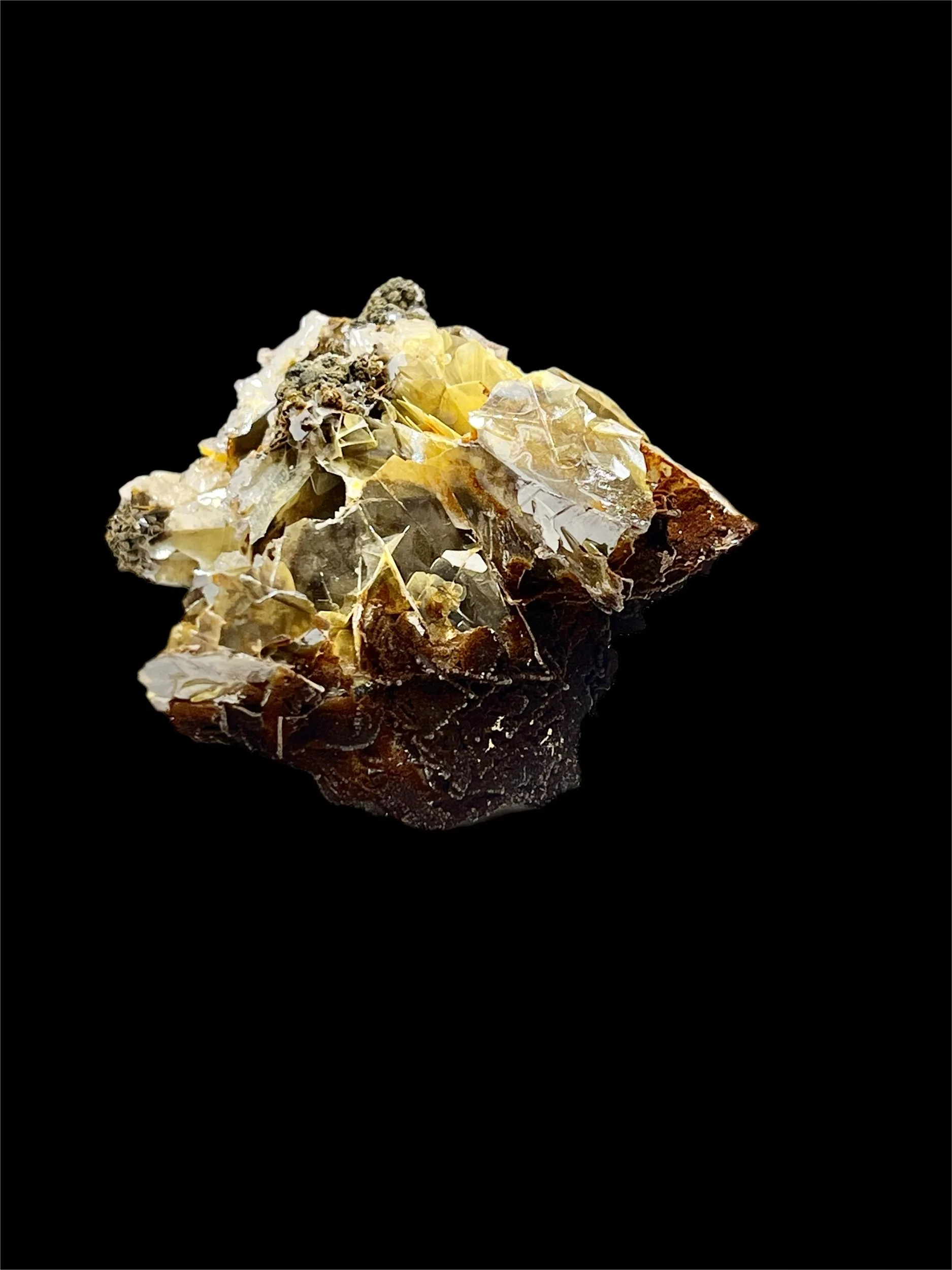
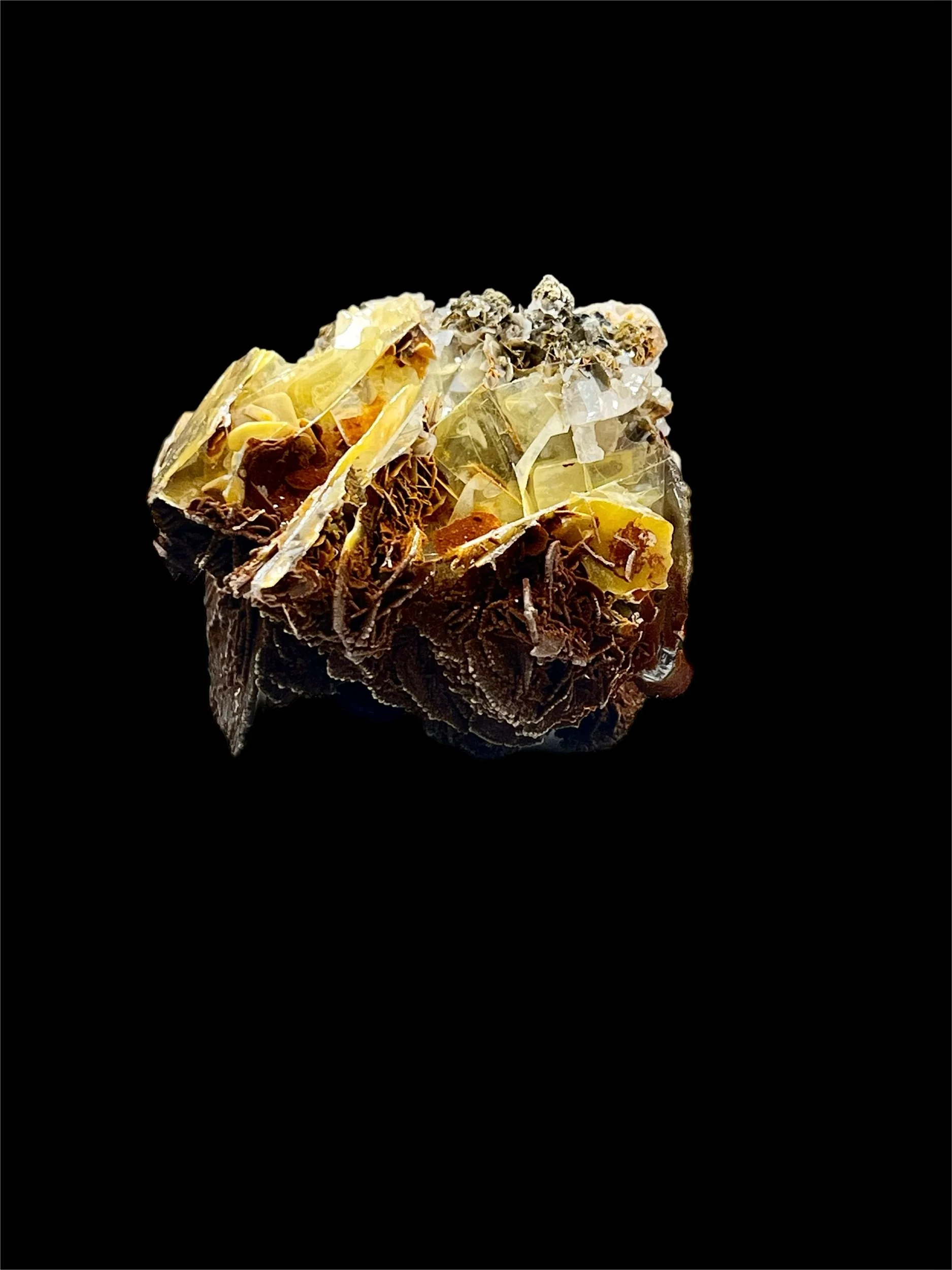
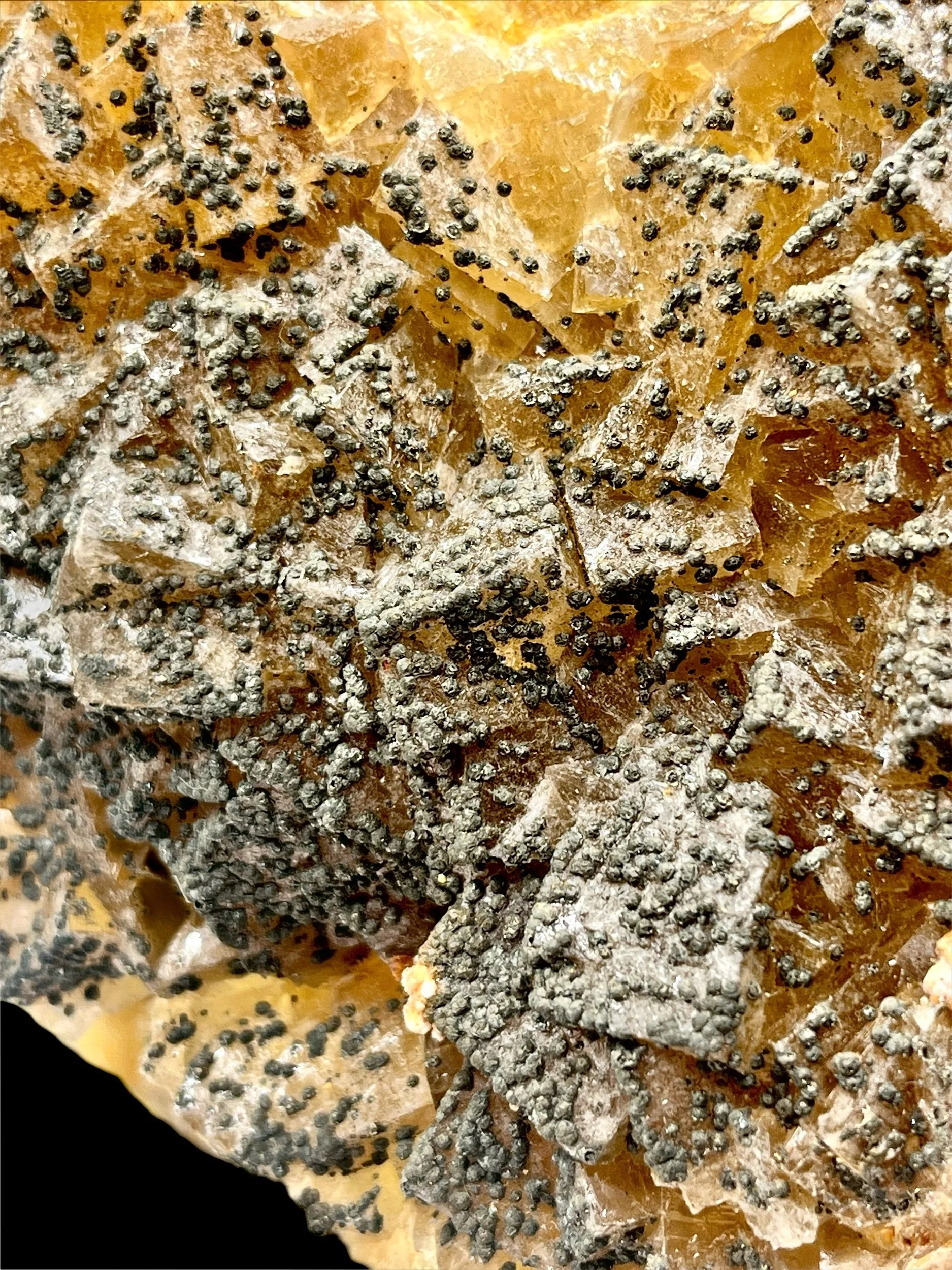
One side glows in translucent, glassy and lustrous, while the reverse reveals a deeper palette of brown, charcoal, forest green, and blue-green. Fine celadonite inclusions are concentrated through the lower and internal portions of the crystals, creating the distinct green zones associated with marshy apophyllite.
Where the celadonite is densest, the apophyllite becomes dark and nearly opaque; where it is more dispersed, the crystal remains translucent and takes on a soft aquatic tint.
Cream-colored secondary mineral growth traces the edges and recesses of the crystals, while scattered, warm iron-rich areas give the piece additional contrast. Every viewing angle reveals a different balance of light, color, and texture, making this a particularly engaging collector specimen.
Dimensions & Weight
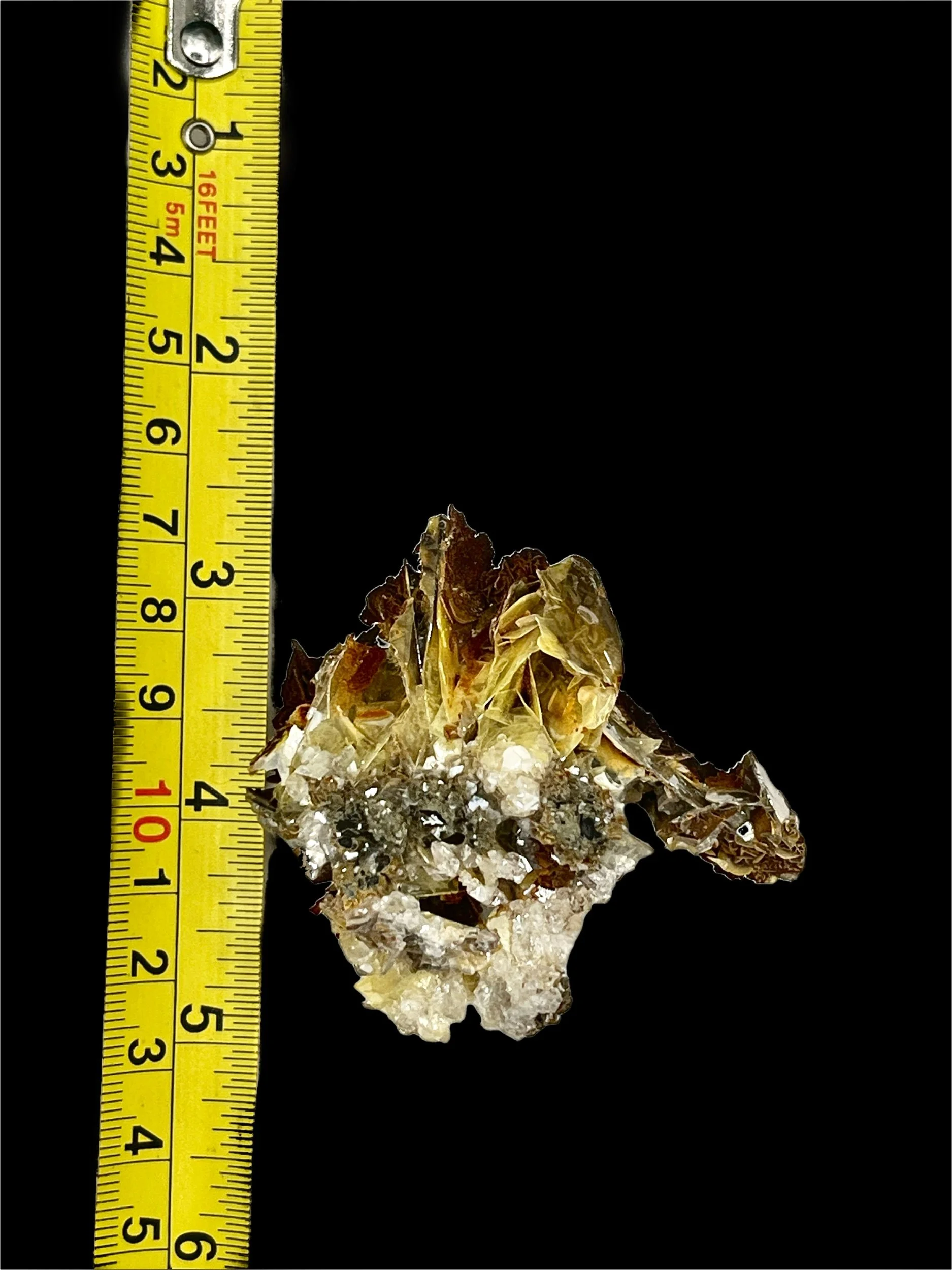
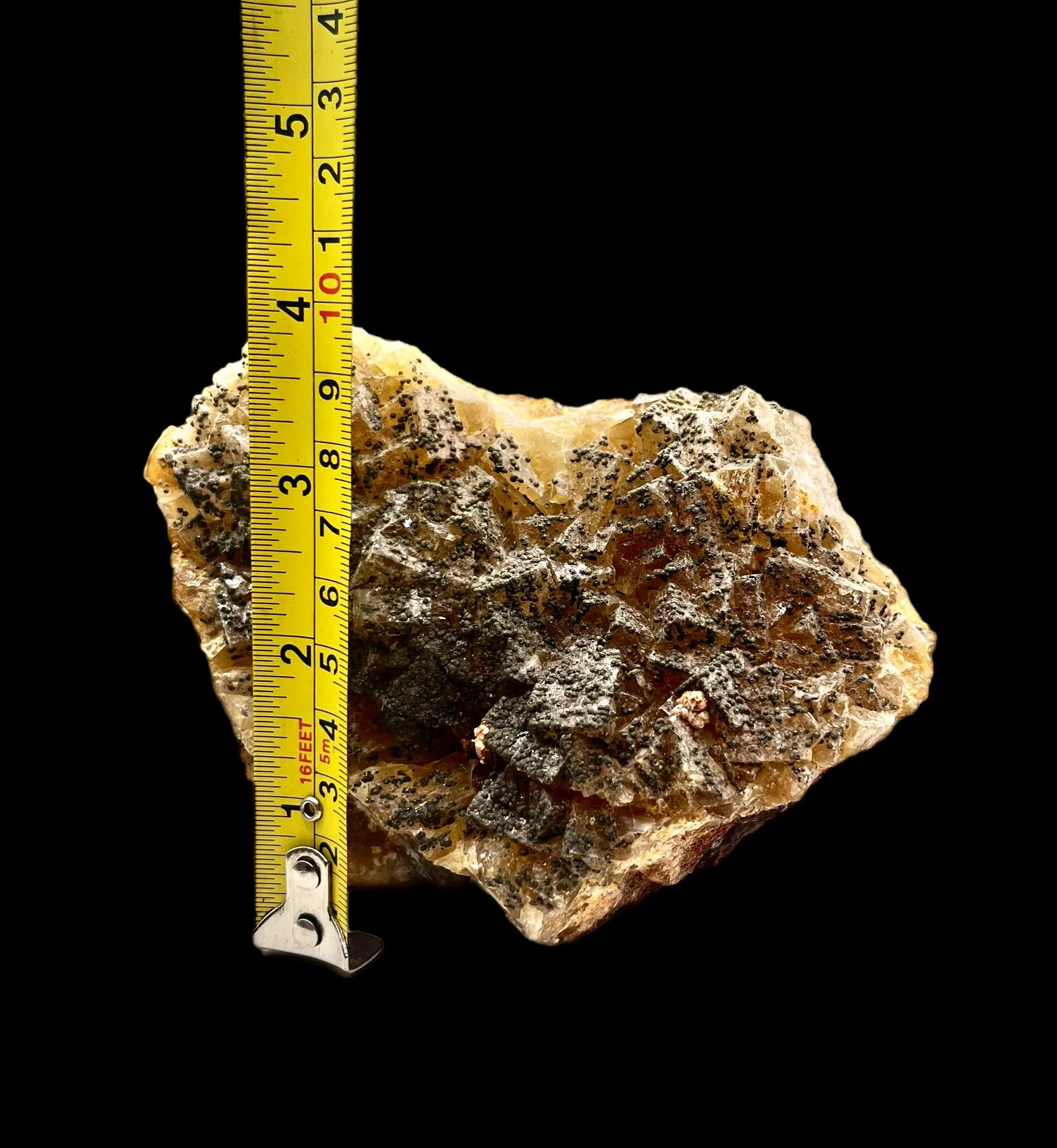
Dimensions: 3 × 2.75 × 2.5 inches
Weight: 437 grams
Locality: Sakur Quarry, Sakur, Sangamner, Ahilyanagar District, Nashik Division, Maharashtra, India
Metaphysical Properties
Apophyllite is traditionally associated with clarity, insight, emotional release, and spiritual awareness. Its reflective surfaces are often used as symbols of honest self-examination and illumination.
Celadonite adds a grounding, restorative character and is associated with renewal, emotional balance, and a stronger connection to the natural world. Together, marshy apophyllite is often chosen for work involving:
Clearing mental and emotional heaviness
Encouraging calm, focused reflection
Balancing spiritual awareness with grounding
Supporting renewal and personal growth
Creating a peaceful atmosphere in a collection or meditation space
Metaphysical properties are based on spiritual traditions and are not scientific or medical claims.
Collector’s Notes
Apophyllite commonly forms tabular to prismatic tetragonal crystals and occurs as a secondary mineral in cavities within basalt.
“Marshy apophyllite” is a collector and trade name for apophyllite whose crystals contain enough green mineral material to create mossy, swamp-like, or aquatic coloration. The name perfectly suits this specimen: luminous clear and pale crystal transitions into deep green, rusty reds, earthy browns, and near-black zones as the concentration of inclusions changes.
The specimen also provides an excellent visual lesson in how inclusions affect mineral color. Pure apophyllite is commonly colorless or pale, but celadonite trapped during crystal growth creates the green sections seen here. The inclusions are naturally distributed, so the color changes dramatically across individual crystals rather than remaining uniform.
These minerals formed inside open cavities in the ancient basalts of the Deccan Volcanic Province. Mineral-rich fluids moved through the cavities in several stages, depositing zeolites, apophyllite, carbonates, silica minerals, and other secondary growths. This multistage process explains why Indian specimens can preserve so many contrasting forms and textures within a single pocket.
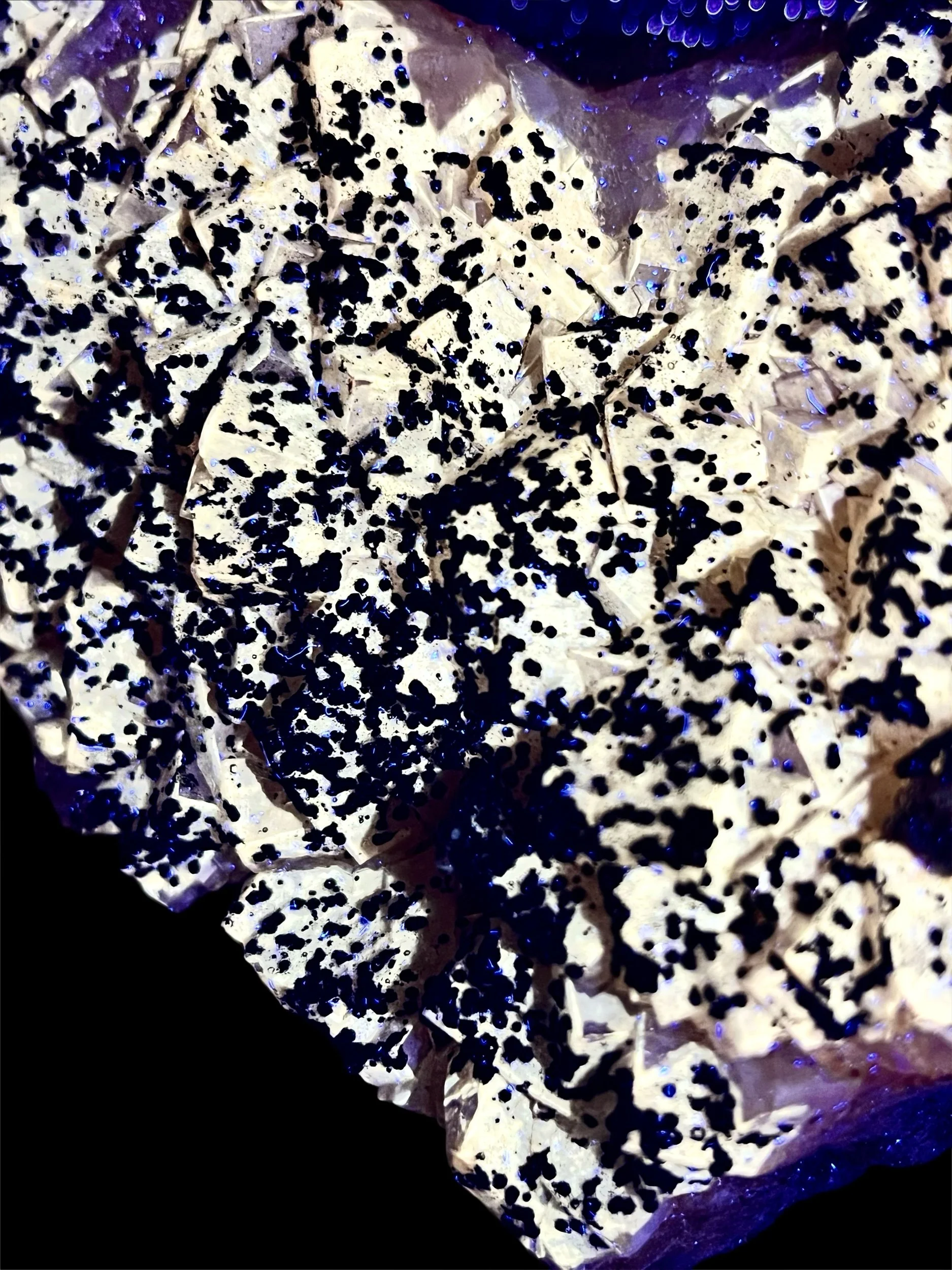
The terraced, geometric faces on this specimen make it especially attractive under directional lighting. One orientation emphasizes the pale, luminous crystal architecture, while another showcases the darker celadonite and iron-rich interior.
Highlights
Large intergrown marshy apophyllite crystals
Strong contrast between clear, smoky, green, and brown zones
Gorgeous color
Broad glassy faces with stepped geometric growth
High luster
Multiple distinctive display orientations
Substantial 437-gram collector specimen
Classic material from Sakur Quarry, Maharashtra
Mineralogy
Mineral: Apophyllite Group
Coloring inclusion: Celadonite
Additional features: Iron-rich inclusions, dark mineral speckling, and pale secondary mineral growth
Representative formula: KCa₄(Si₈O₂₀)(F,OH) · 8H₂O
Crystal system: Tetragonal
Luster: Vitreous to pearly
Transparency: Transparent to translucent, becoming opaque where inclusions are concentrated
Description
This dramatic marshy apophyllite specimen brings together exceptional crystal geometry, layered color, and an unusually complex surface landscape. Large intergrown apophyllite crystals dominate the piece, displaying broad glassy faces, stepped terminations, and intricate growth patterns.
One side glows in translucent, glassy and lustrous, while the reverse reveals a deeper palette of brown, charcoal, forest green, and blue-green. Fine celadonite inclusions are concentrated through the lower and internal portions of the crystals, creating the distinct green zones associated with marshy apophyllite.
Where the celadonite is densest, the apophyllite becomes dark and nearly opaque; where it is more dispersed, the crystal remains translucent and takes on a soft aquatic tint.
Cream-colored secondary mineral growth traces the edges and recesses of the crystals, while scattered, warm iron-rich areas give the piece additional contrast. Every viewing angle reveals a different balance of light, color, and texture, making this a particularly engaging collector specimen.
Dimensions & Weight
Dimensions: 3 × 2.75 × 2.5 inches
Weight: 437 grams
Locality: Sakur Quarry, Sakur, Sangamner, Ahilyanagar District, Nashik Division, Maharashtra, India
Metaphysical Properties
Apophyllite is traditionally associated with clarity, insight, emotional release, and spiritual awareness. Its reflective surfaces are often used as symbols of honest self-examination and illumination.
Celadonite adds a grounding, restorative character and is associated with renewal, emotional balance, and a stronger connection to the natural world. Together, marshy apophyllite is often chosen for work involving:
Clearing mental and emotional heaviness
Encouraging calm, focused reflection
Balancing spiritual awareness with grounding
Supporting renewal and personal growth
Creating a peaceful atmosphere in a collection or meditation space
Metaphysical properties are based on spiritual traditions and are not scientific or medical claims.
Collector’s Notes
Apophyllite commonly forms tabular to prismatic tetragonal crystals and occurs as a secondary mineral in cavities within basalt.
“Marshy apophyllite” is a collector and trade name for apophyllite whose crystals contain enough green mineral material to create mossy, swamp-like, or aquatic coloration. The name perfectly suits this specimen: luminous clear and pale crystal transitions into deep green, rusty reds, earthy browns, and near-black zones as the concentration of inclusions changes.
The specimen also provides an excellent visual lesson in how inclusions affect mineral color. Pure apophyllite is commonly colorless or pale, but celadonite trapped during crystal growth creates the green sections seen here. The inclusions are naturally distributed, so the color changes dramatically across individual crystals rather than remaining uniform.
These minerals formed inside open cavities in the ancient basalts of the Deccan Volcanic Province. Mineral-rich fluids moved through the cavities in several stages, depositing zeolites, apophyllite, carbonates, silica minerals, and other secondary growths. This multistage process explains why Indian specimens can preserve so many contrasting forms and textures within a single pocket.
The terraced, geometric faces on this specimen make it especially attractive under directional lighting. One orientation emphasizes the pale, luminous crystal architecture, while another showcases the darker celadonite and iron-rich interior.
Highlights
Large intergrown marshy apophyllite crystals
Strong contrast between clear, smoky, green, and brown zones
Gorgeous color
Broad glassy faces with stepped geometric growth
High luster
Multiple distinctive display orientations
Substantial 437-gram collector specimen
Classic material from Sakur Quarry, Maharashtra
Mineralogy
Mineral: Apophyllite Group
Coloring inclusion: Celadonite
Additional features: Iron-rich inclusions, dark mineral speckling, and pale secondary mineral growth
Representative formula: KCa₄(Si₈O₂₀)(F,OH) · 8H₂O
Crystal system: Tetragonal
Luster: Vitreous to pearly
Transparency: Transparent to translucent, becoming opaque where inclusions are concentrated


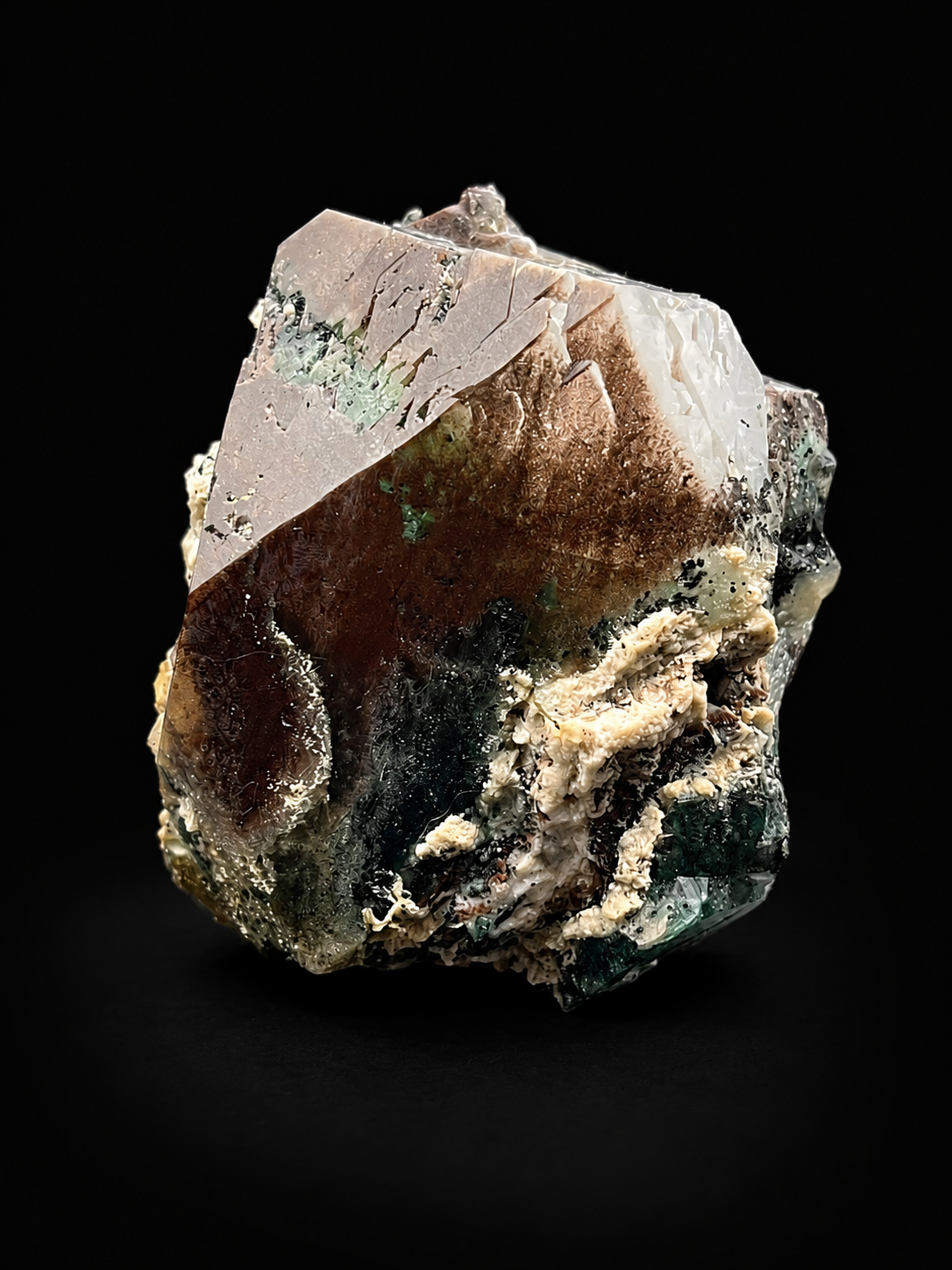 Image 1 of 7
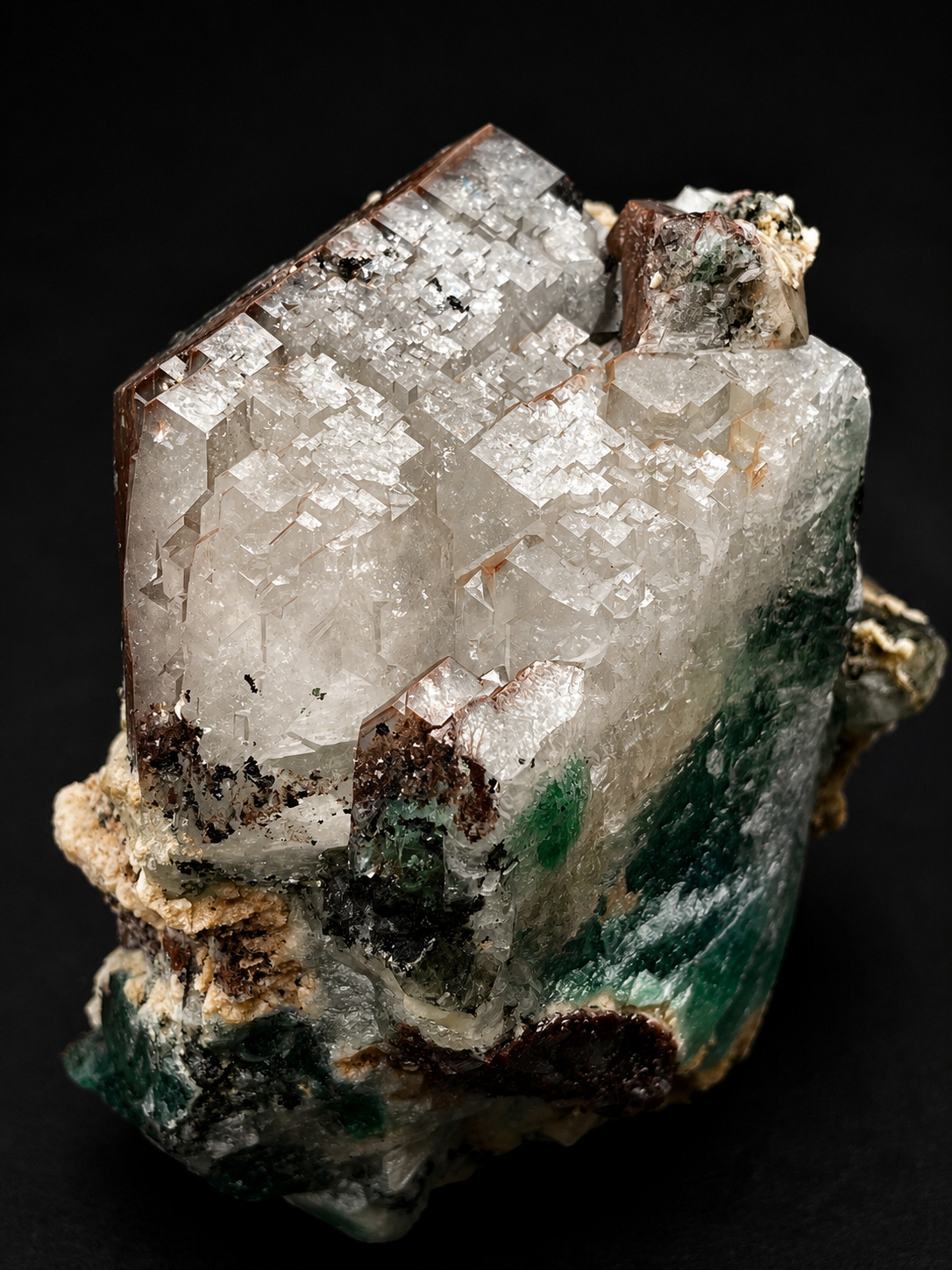 Image 2 of 7
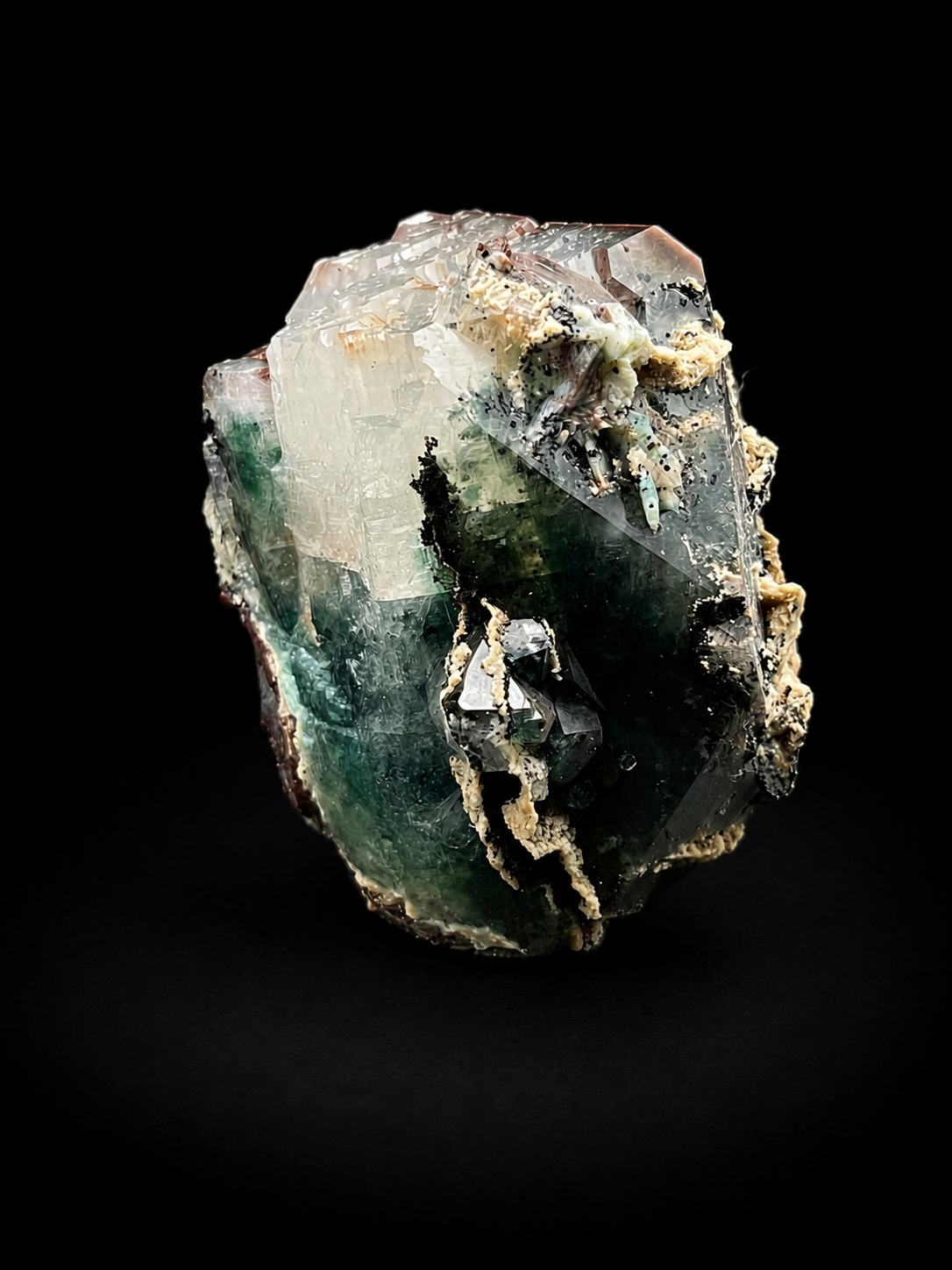 Image 3 of 7
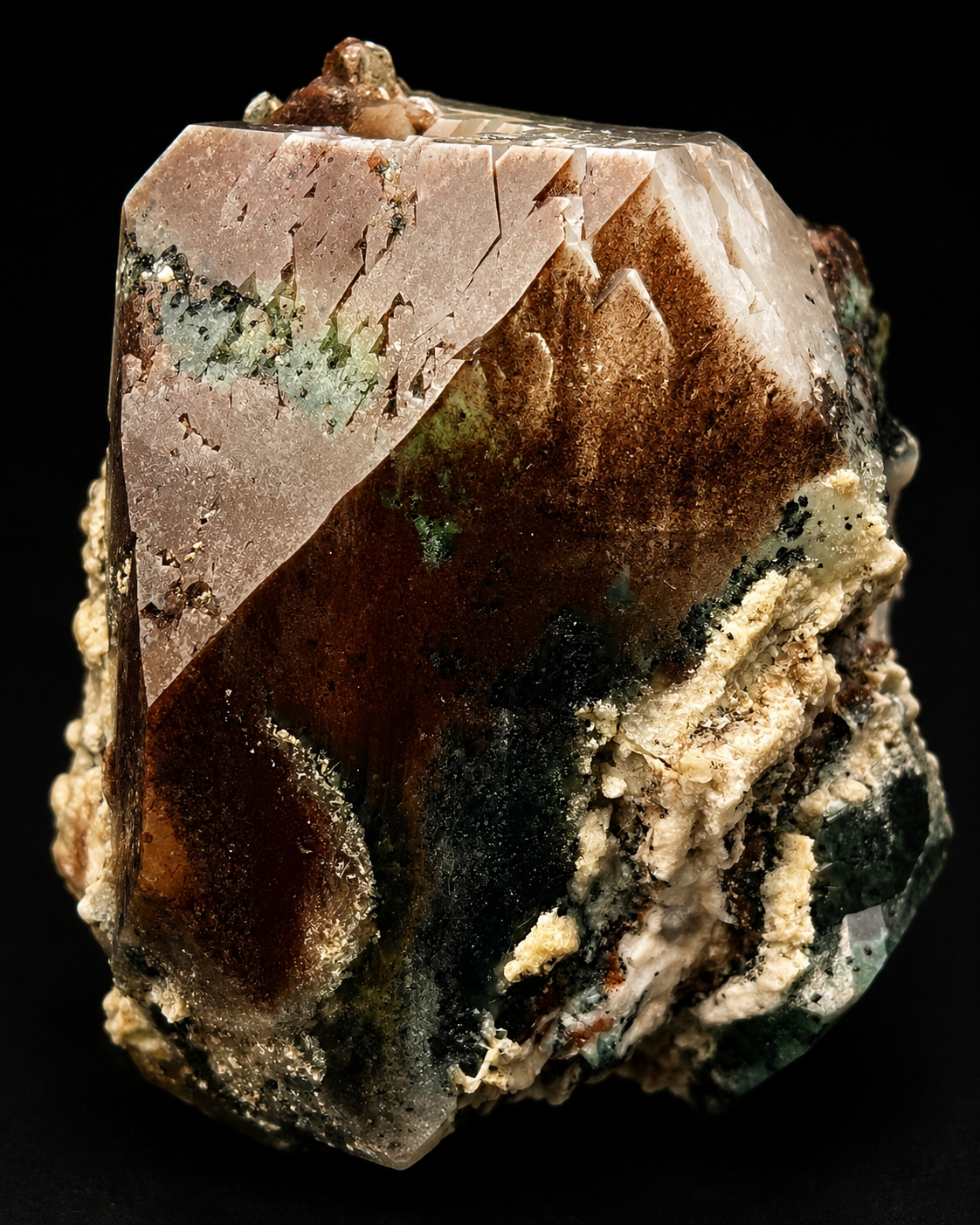 Image 4 of 7
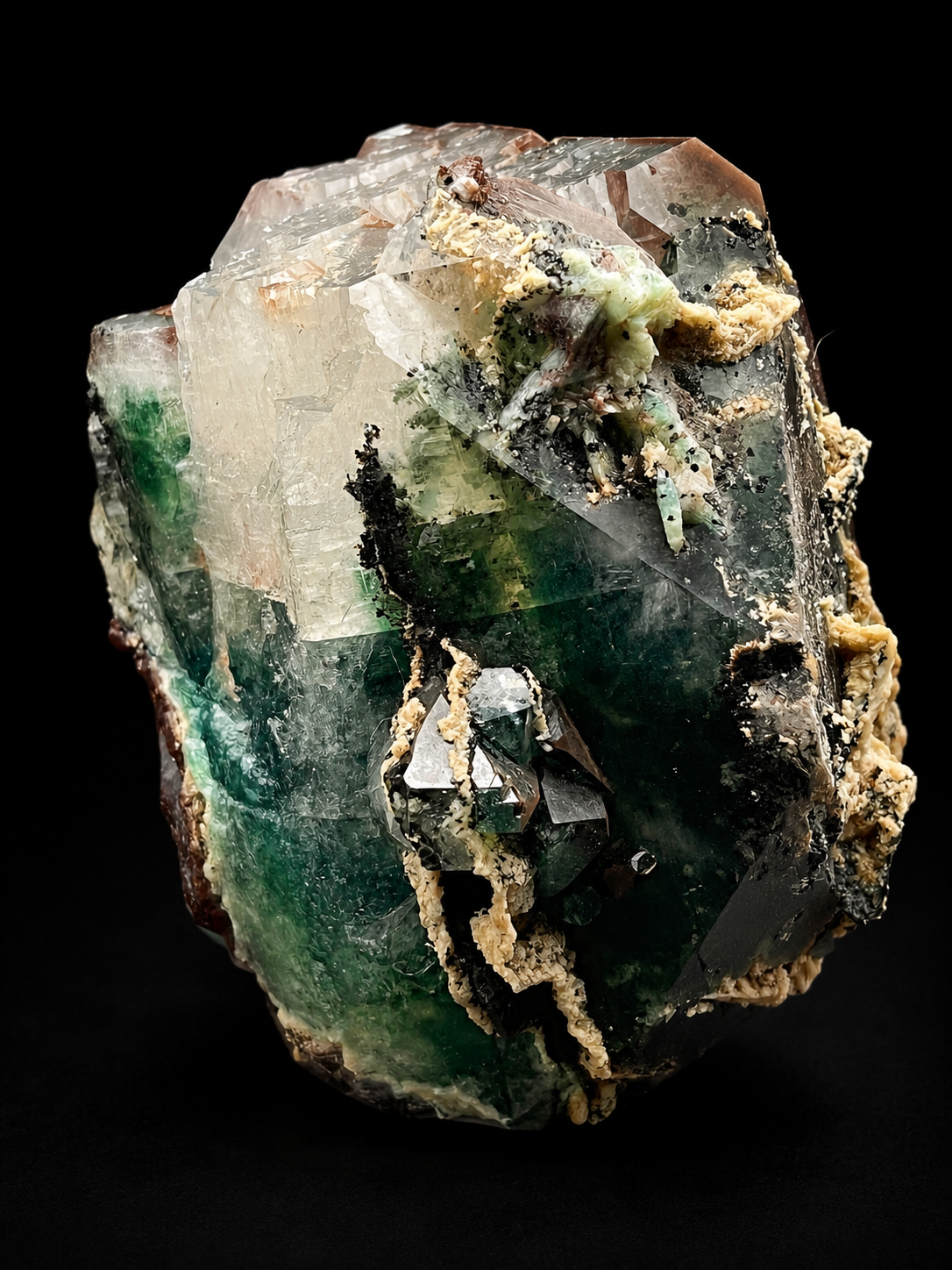 Image 5 of 7
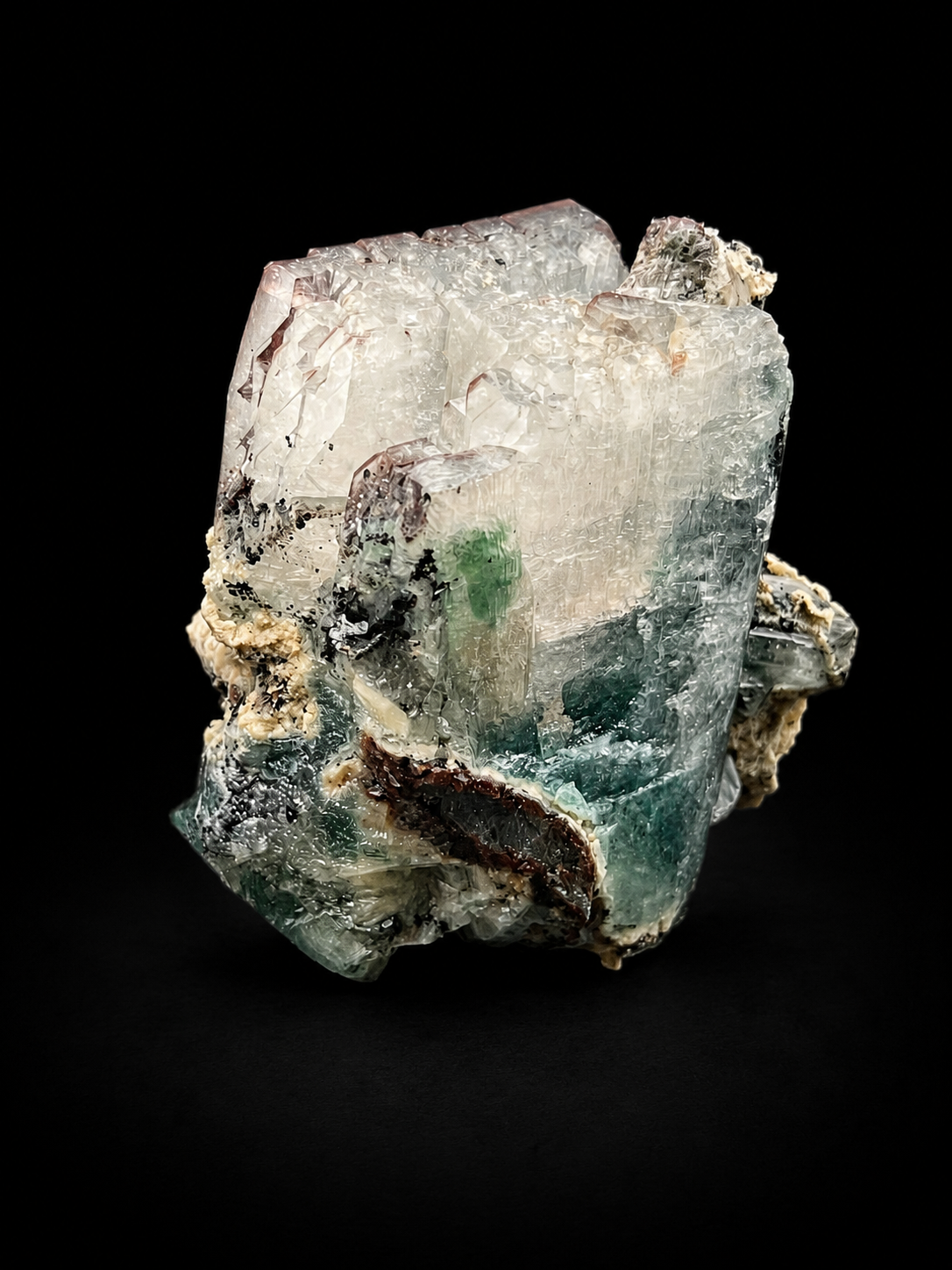 Image 6 of 7
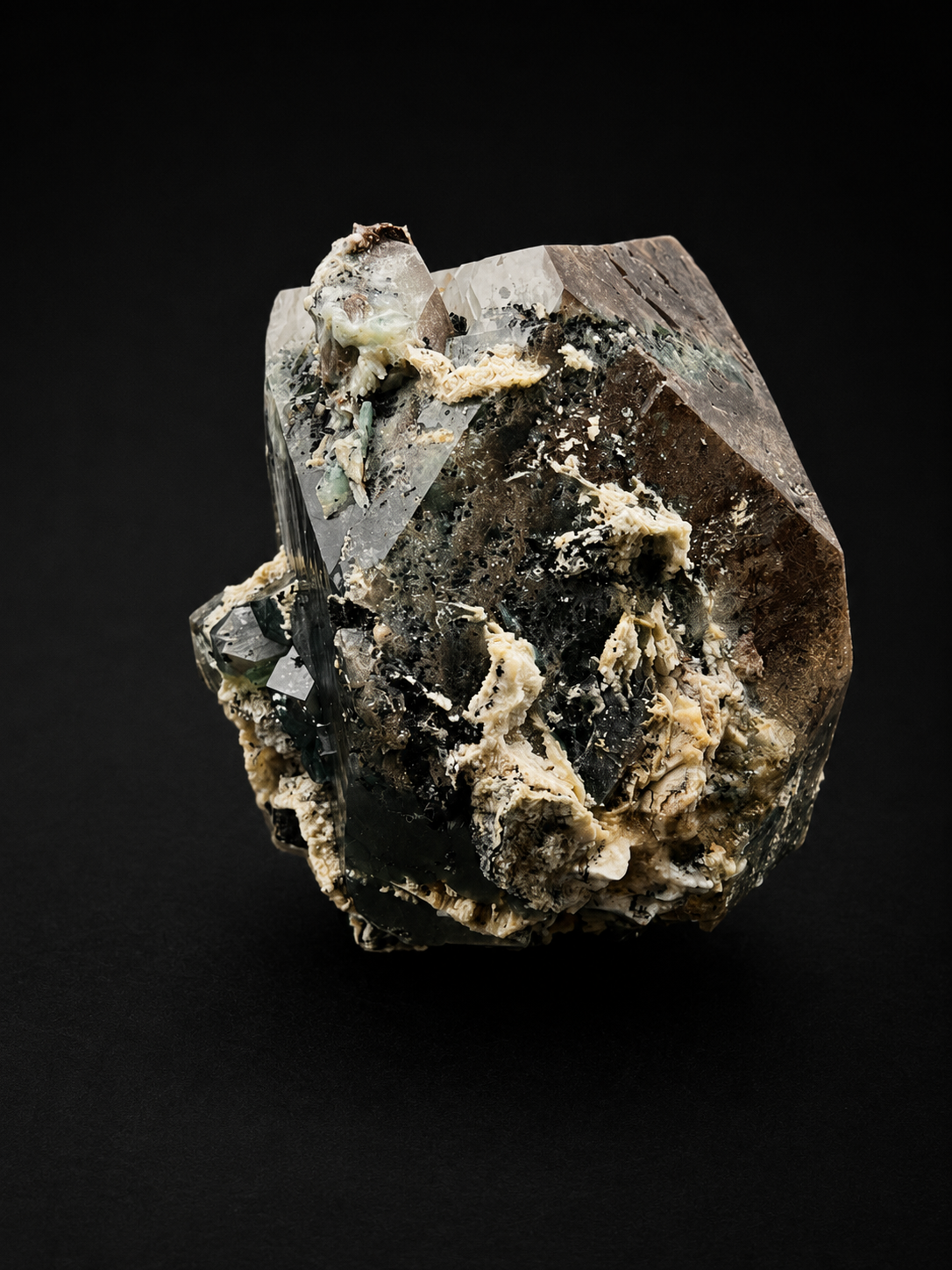 Image 7 of 7