Description
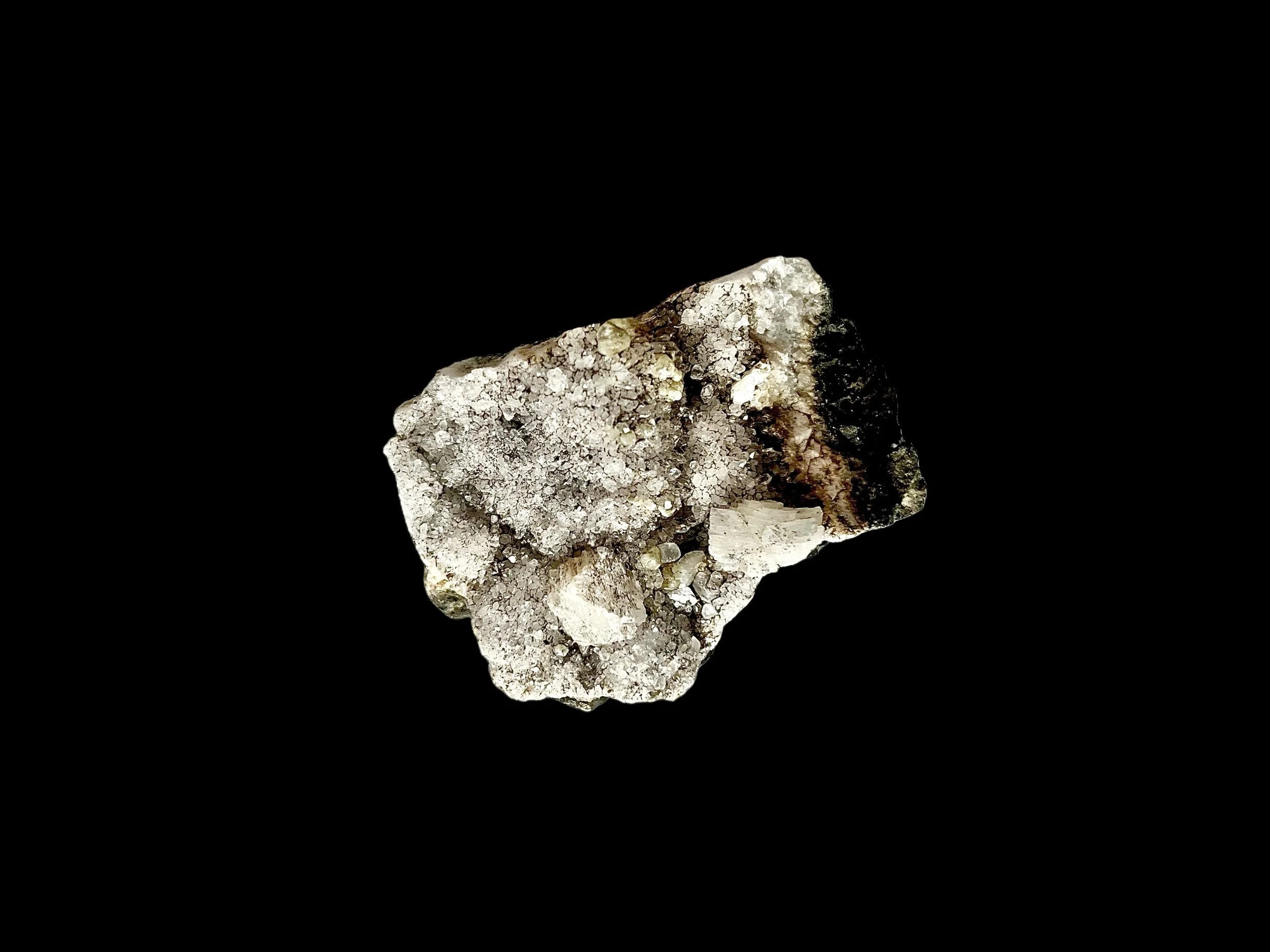
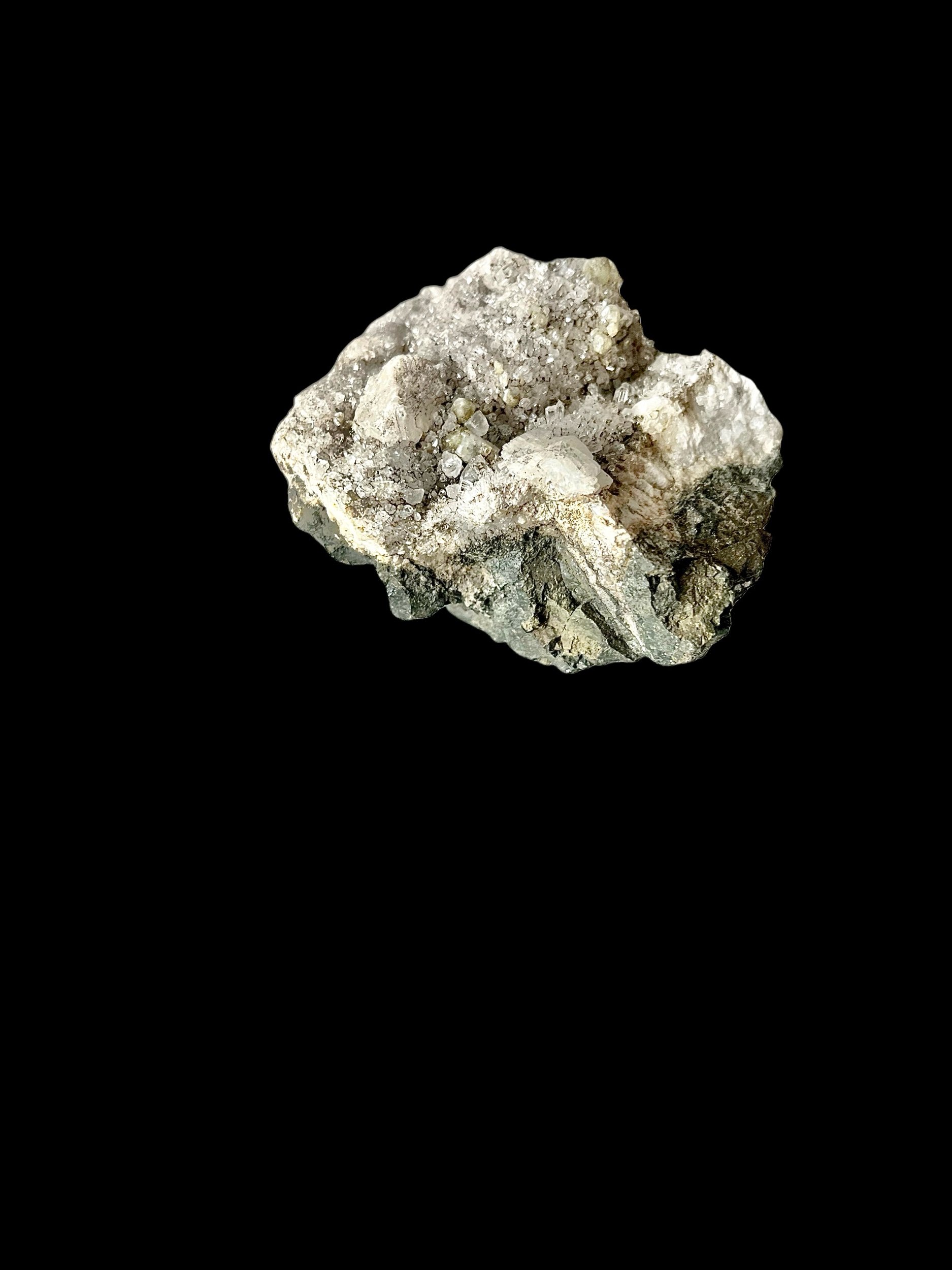
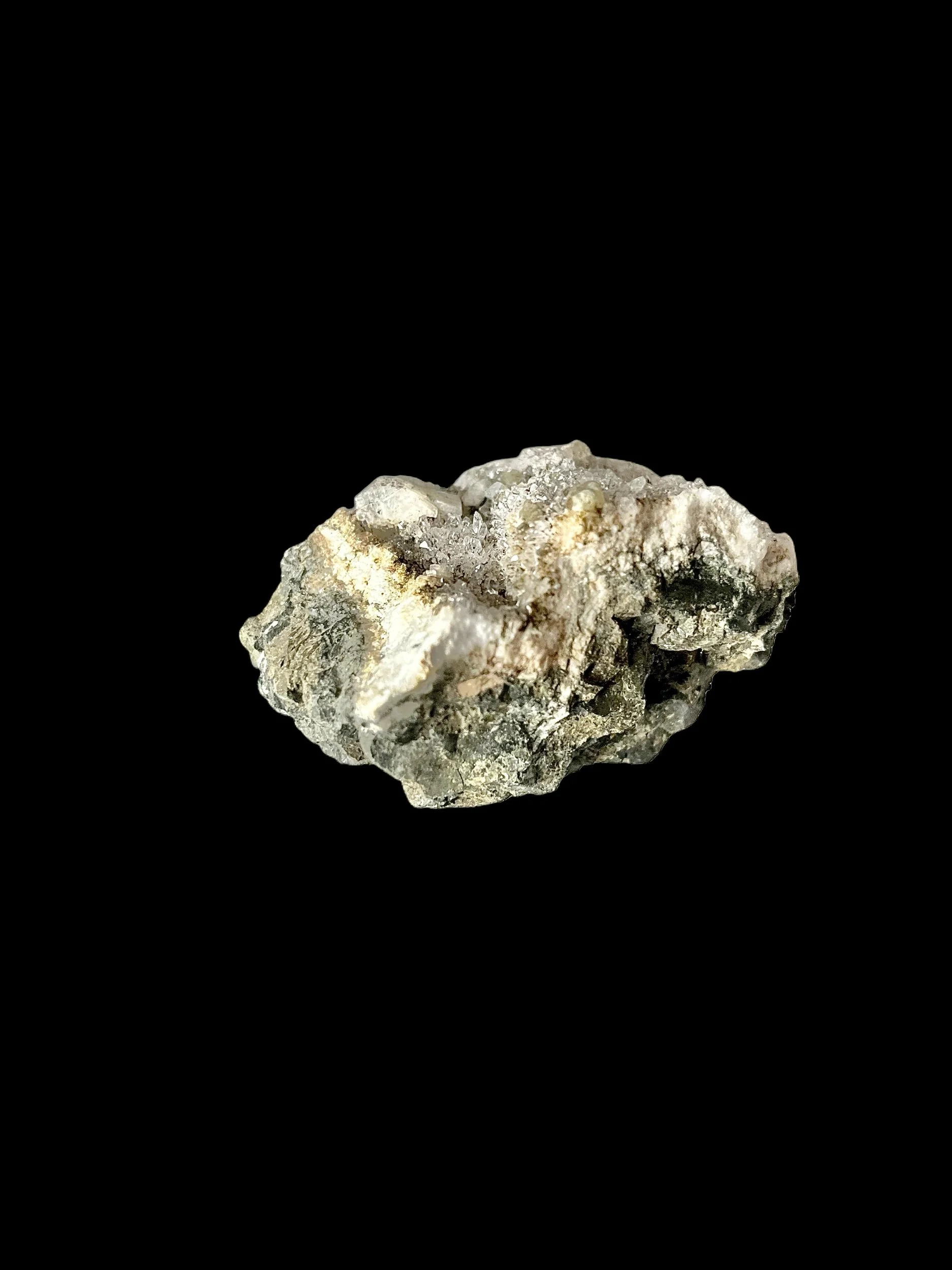
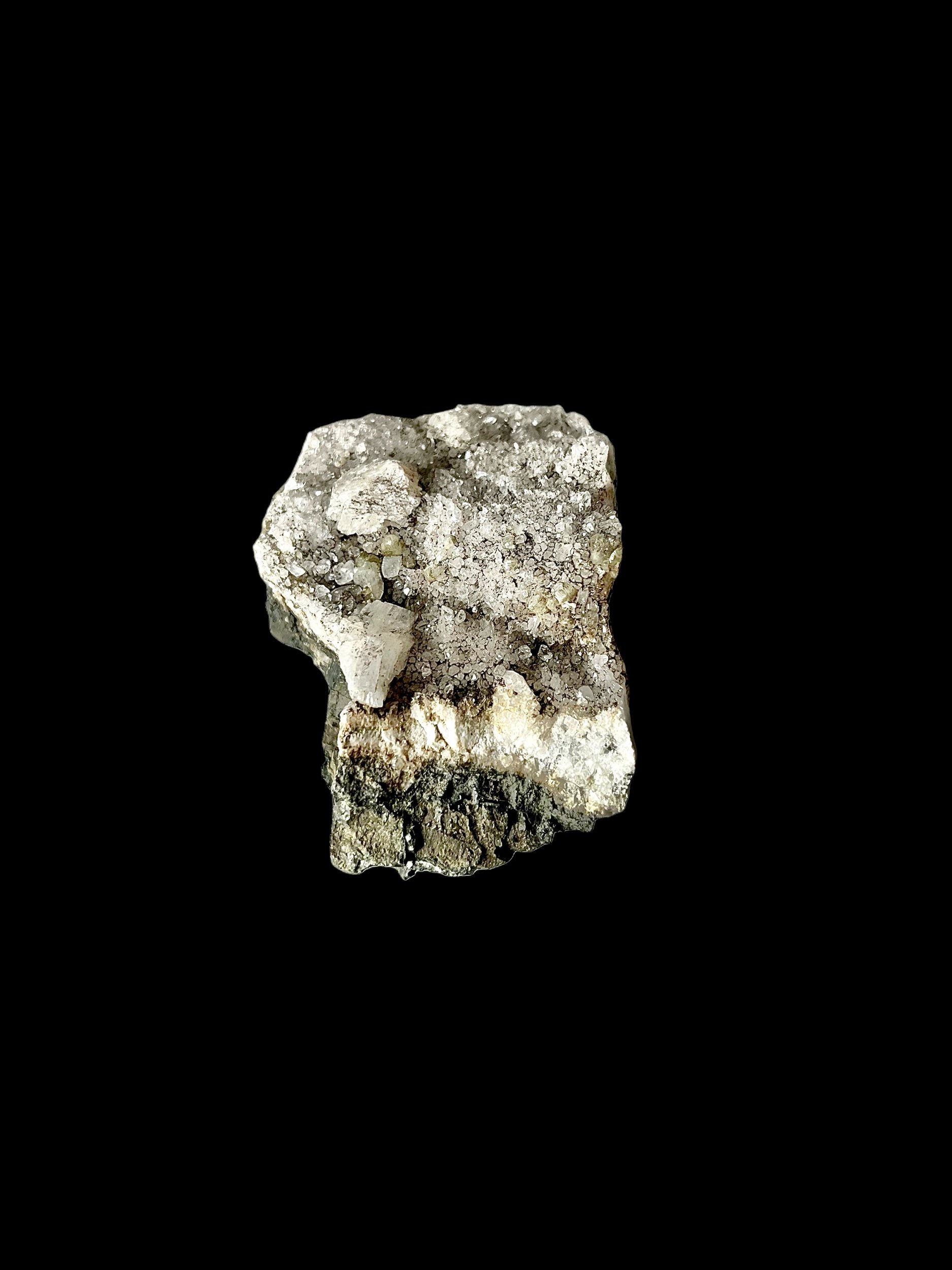
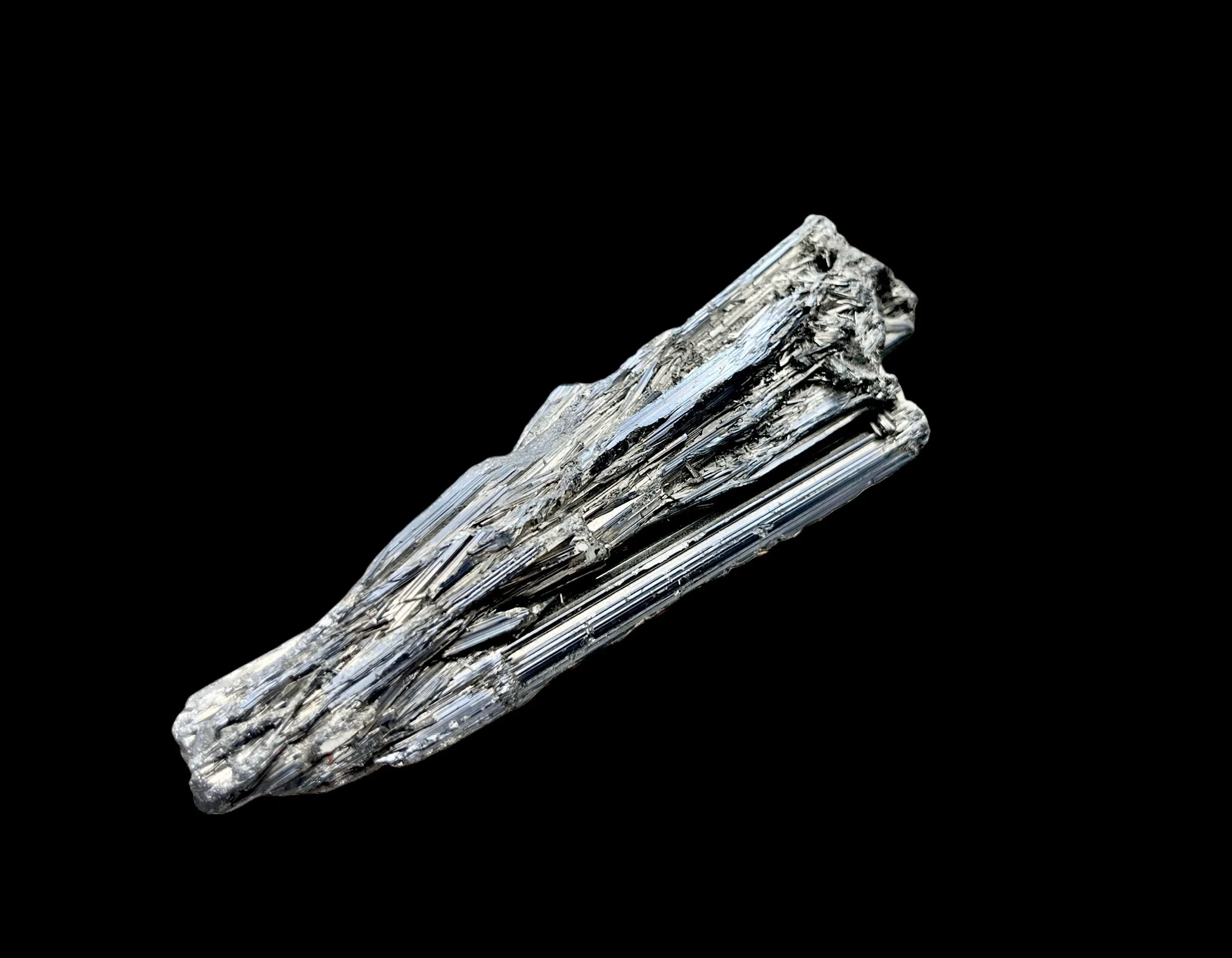
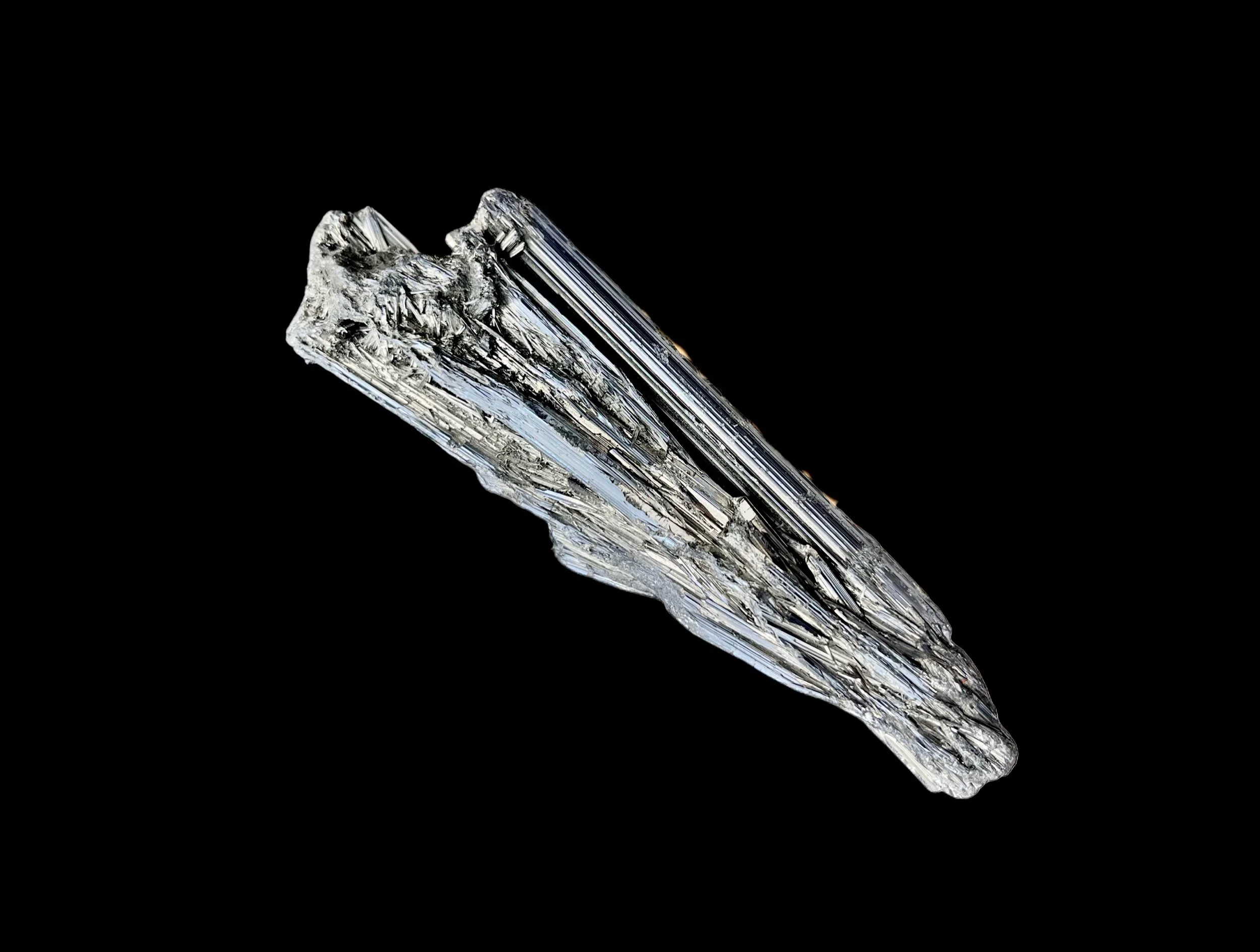
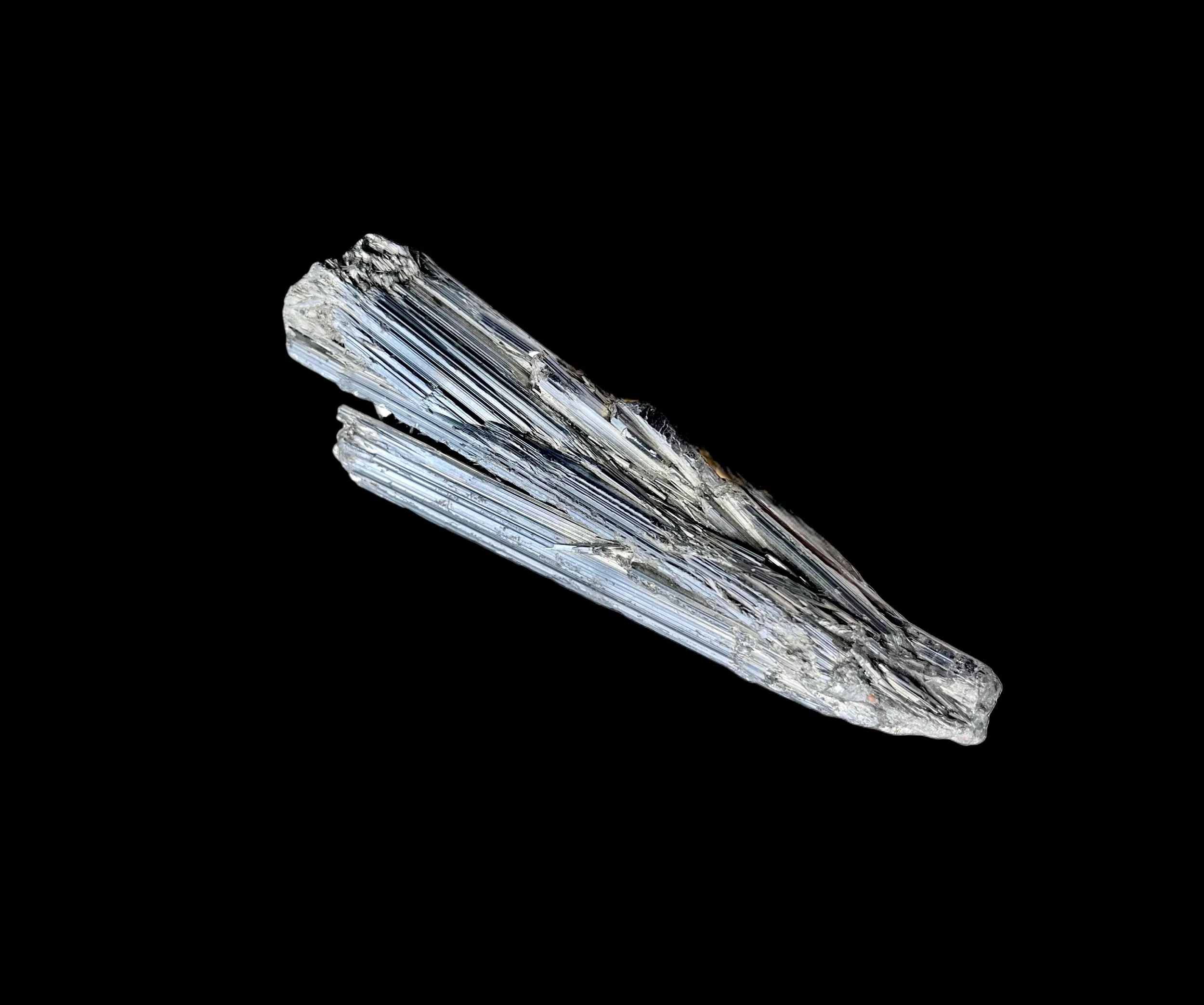
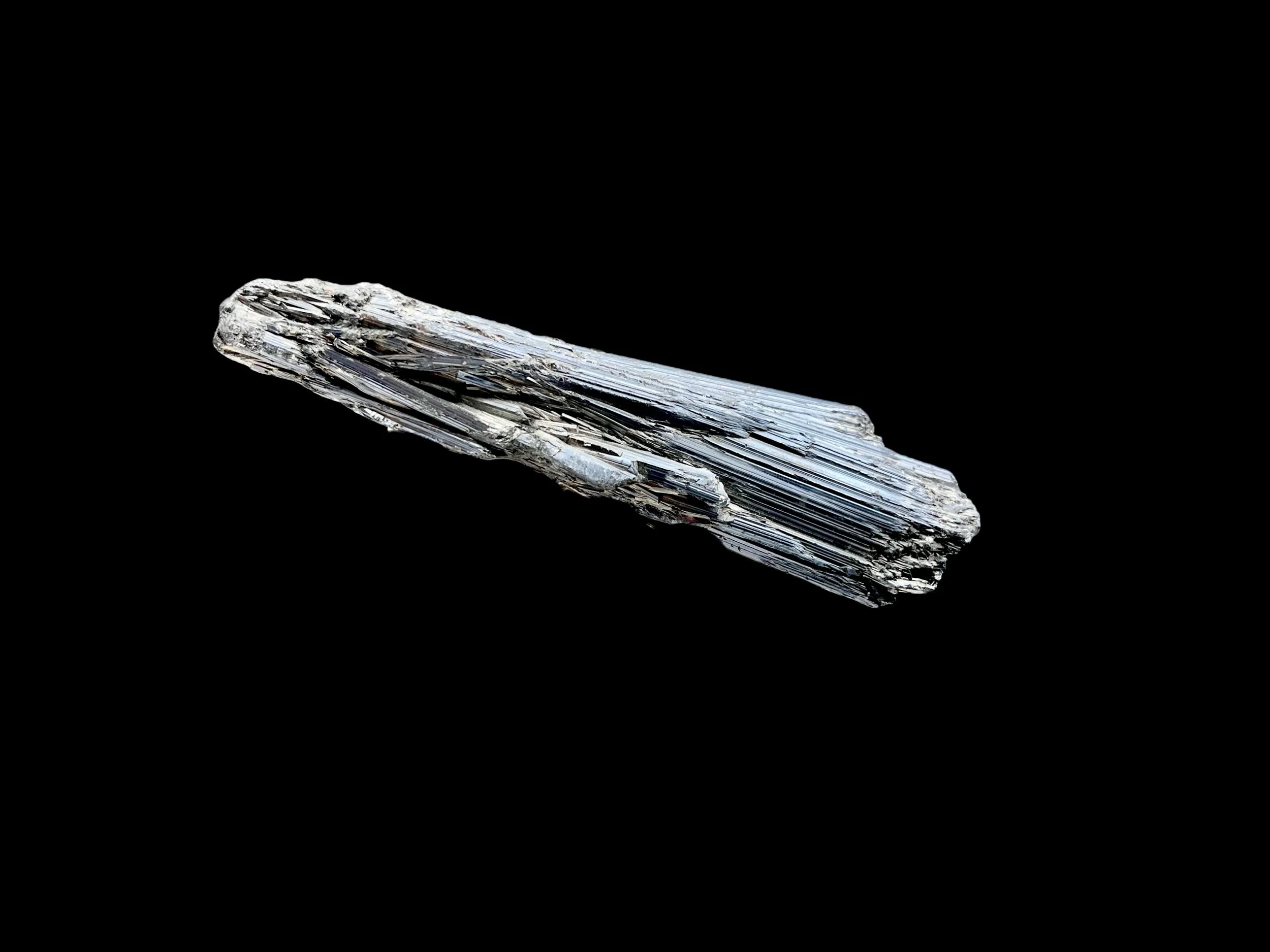
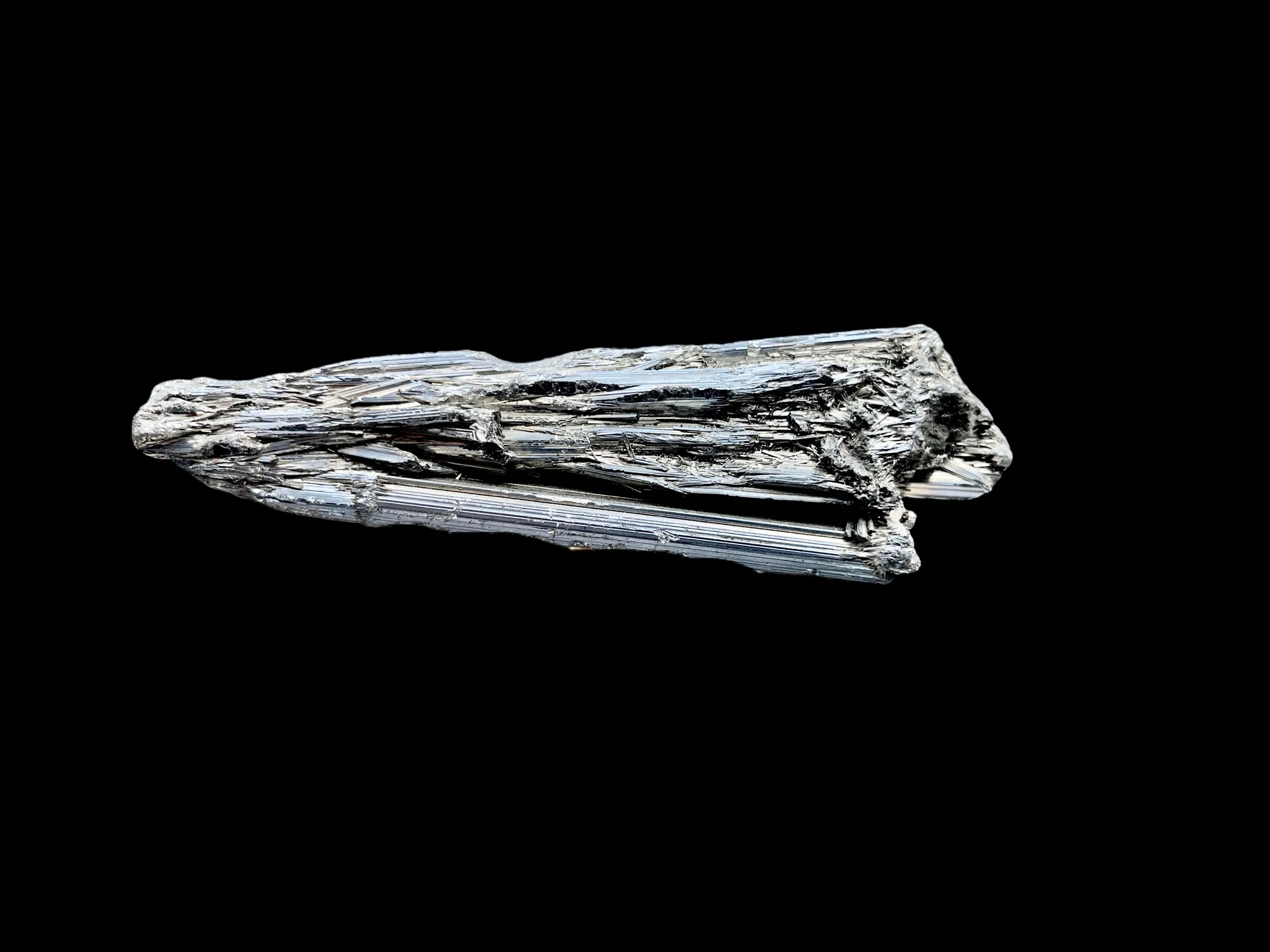
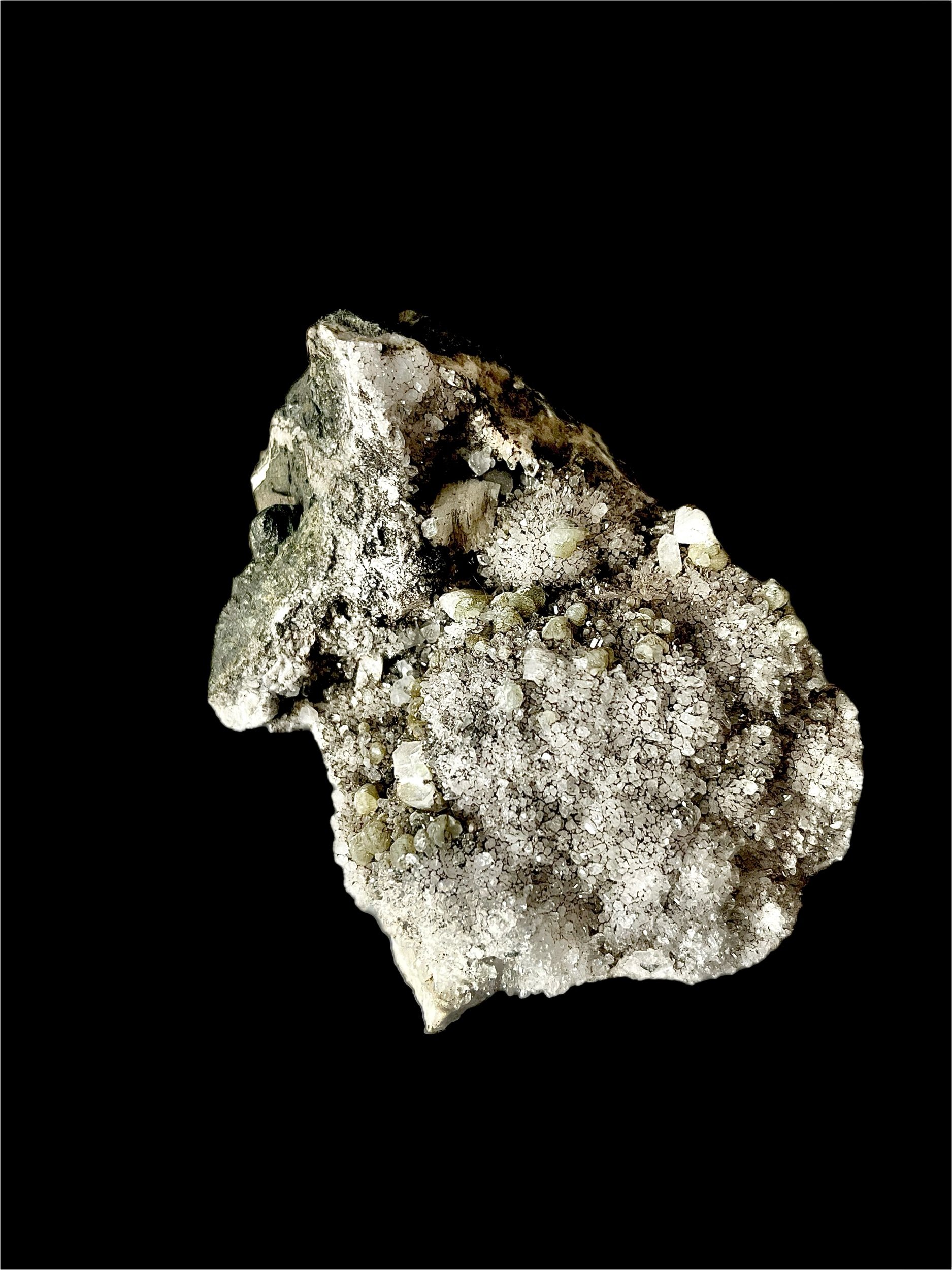
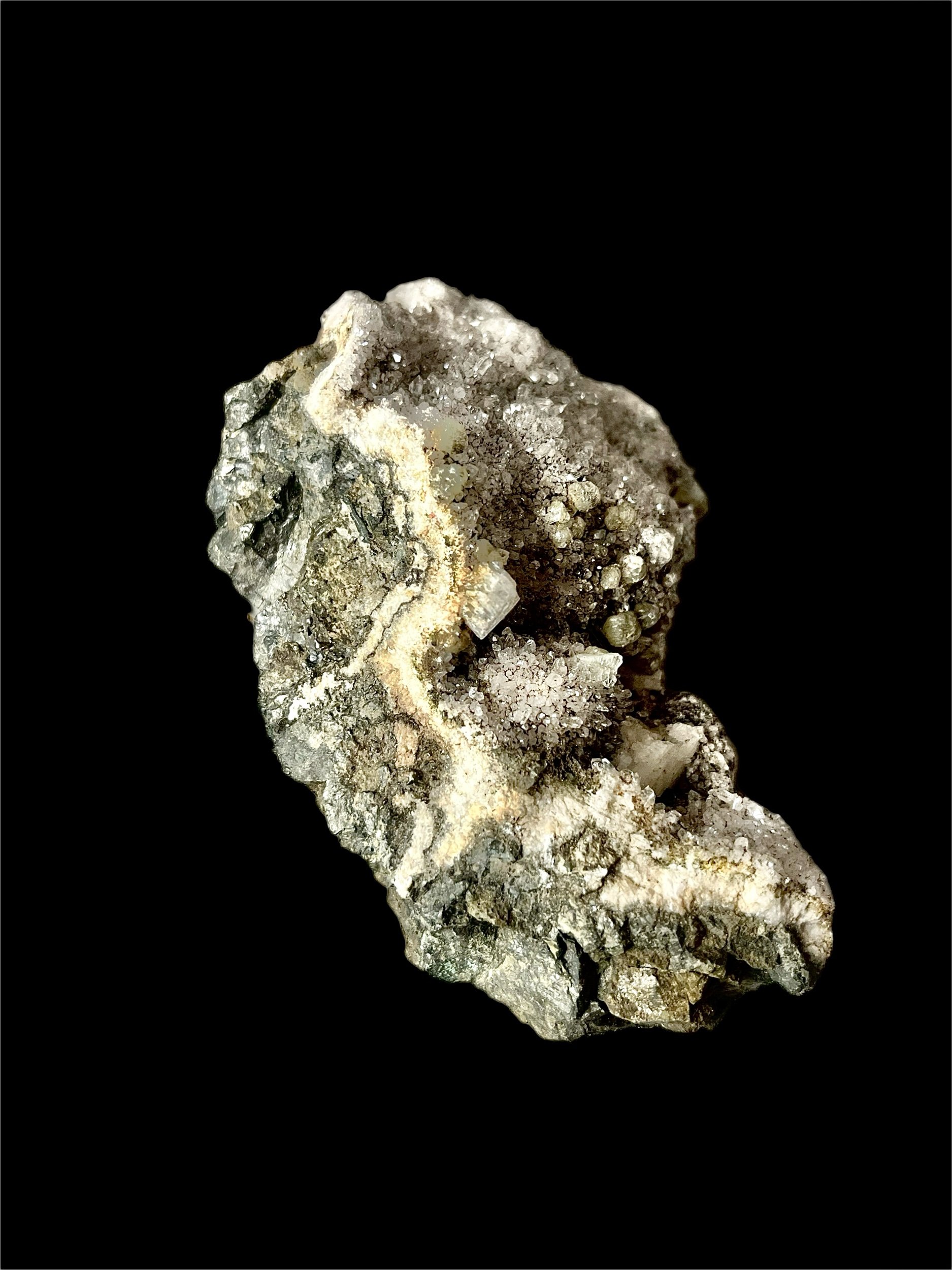
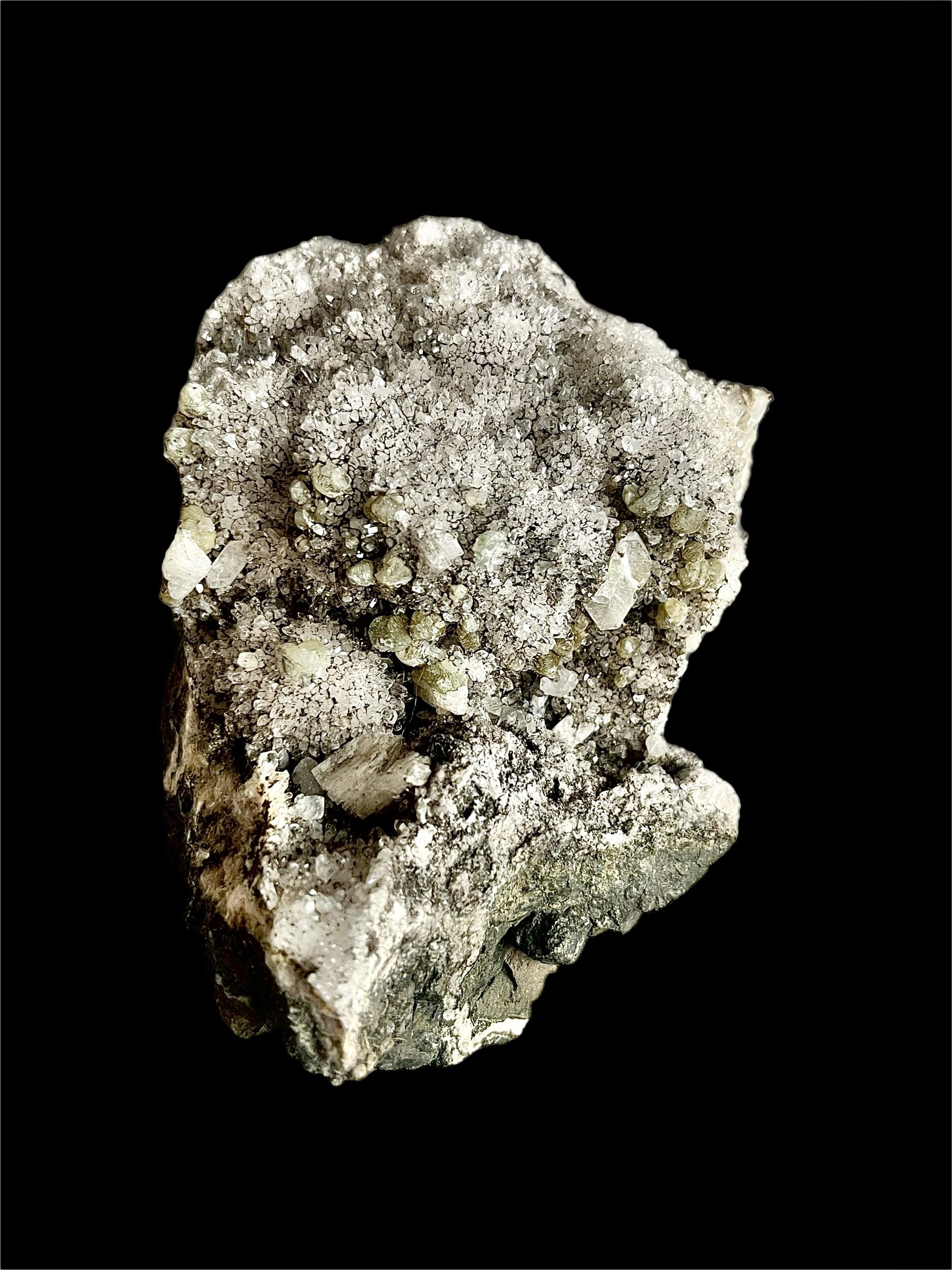
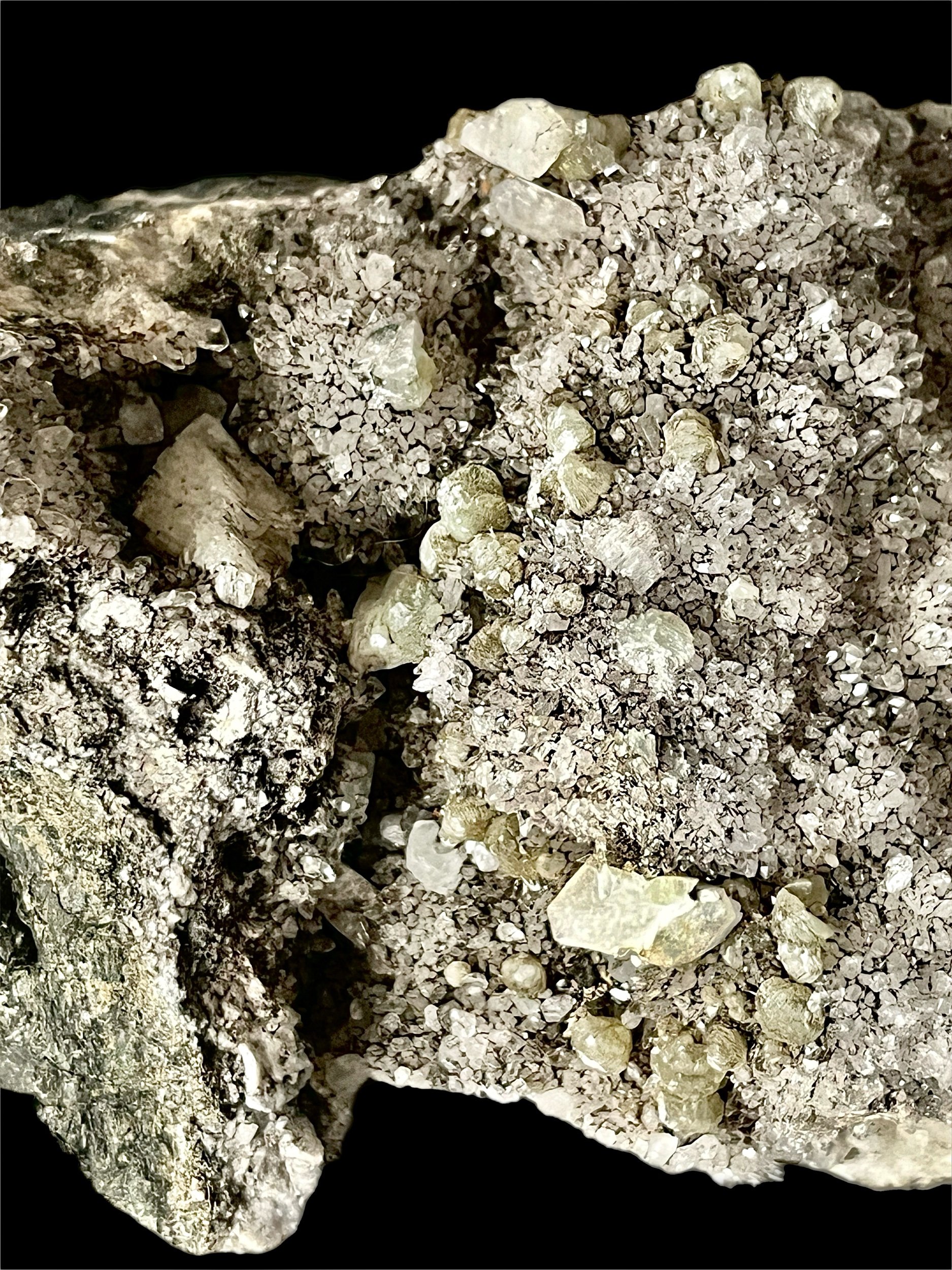
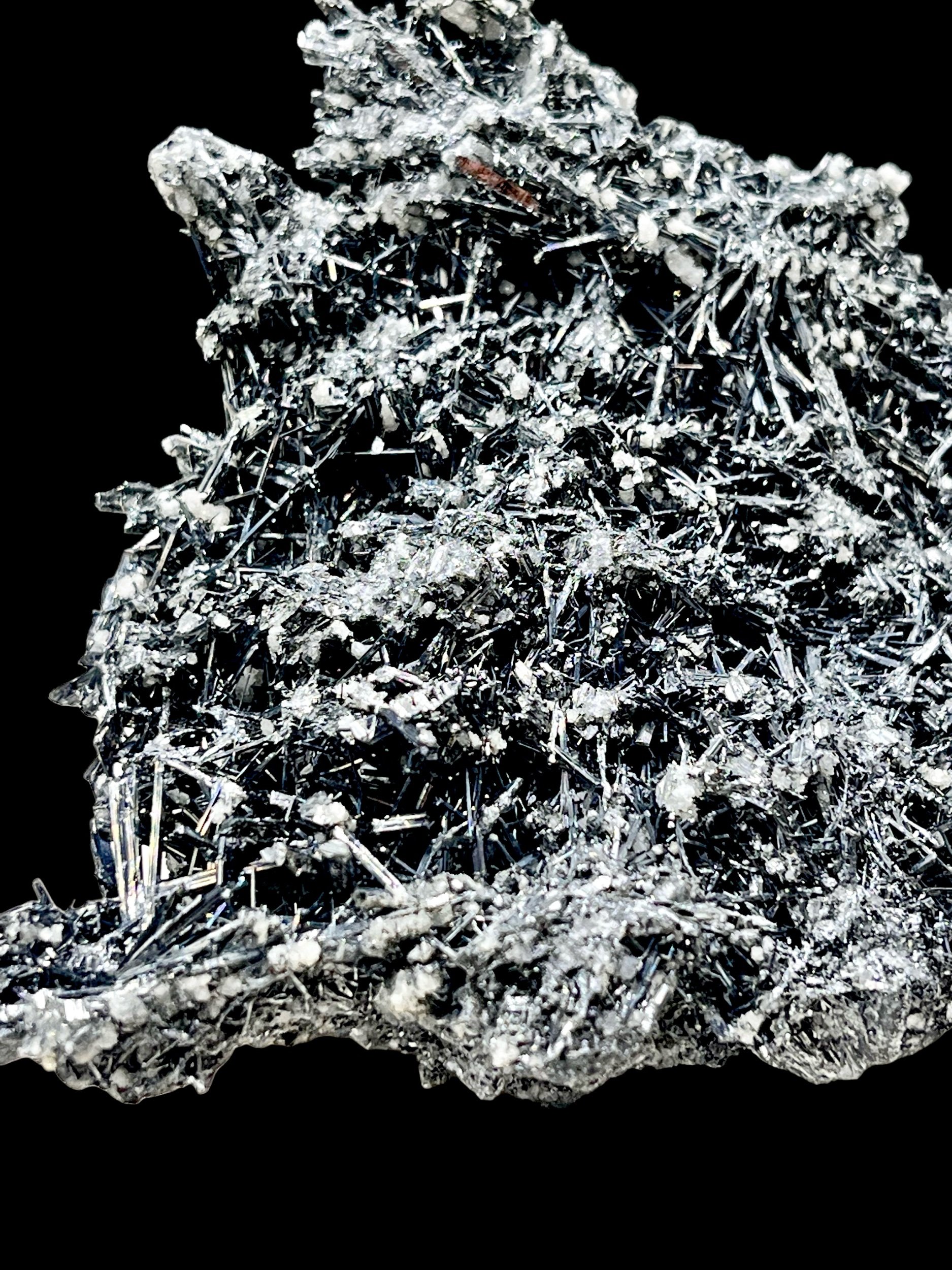
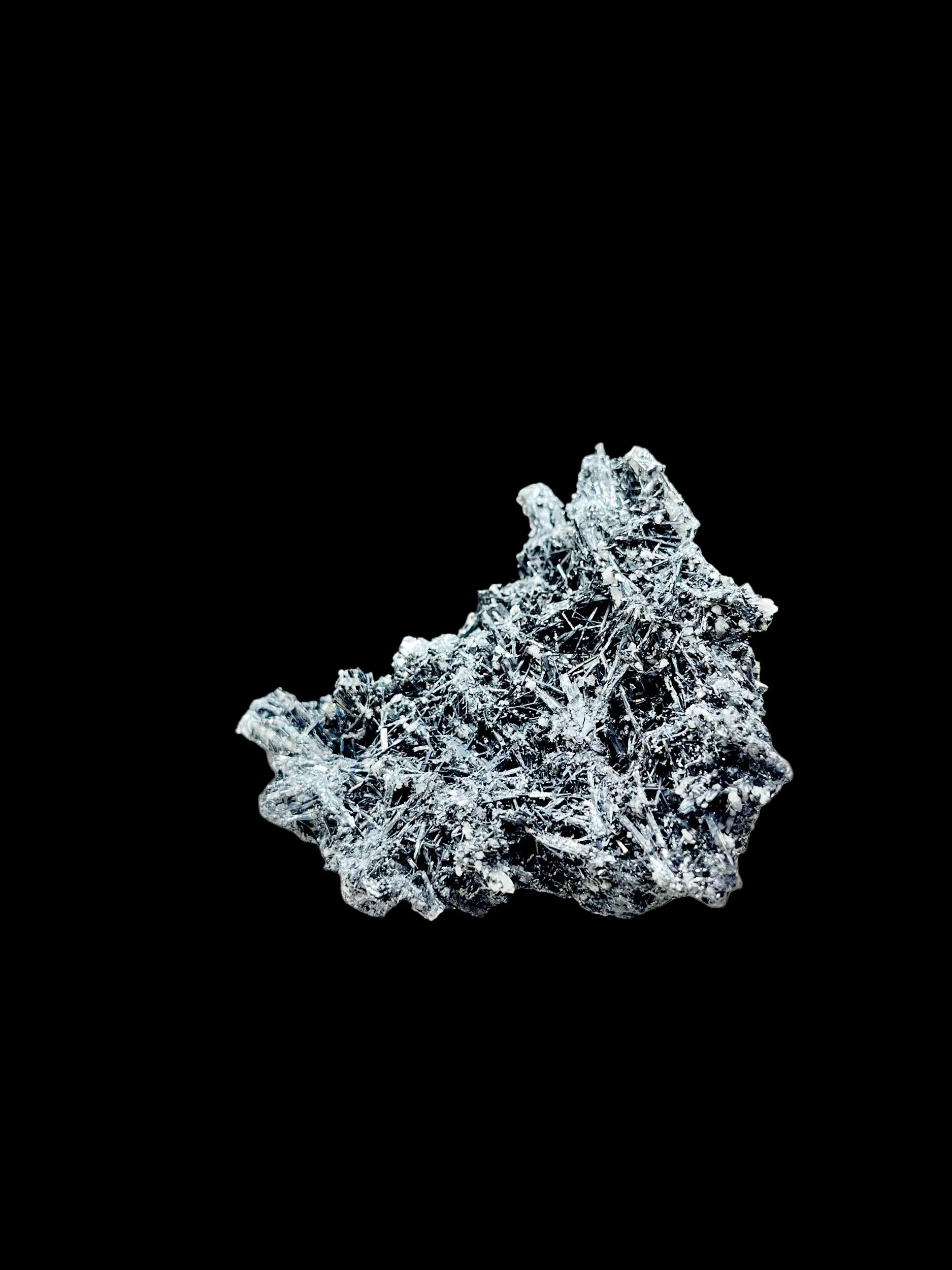
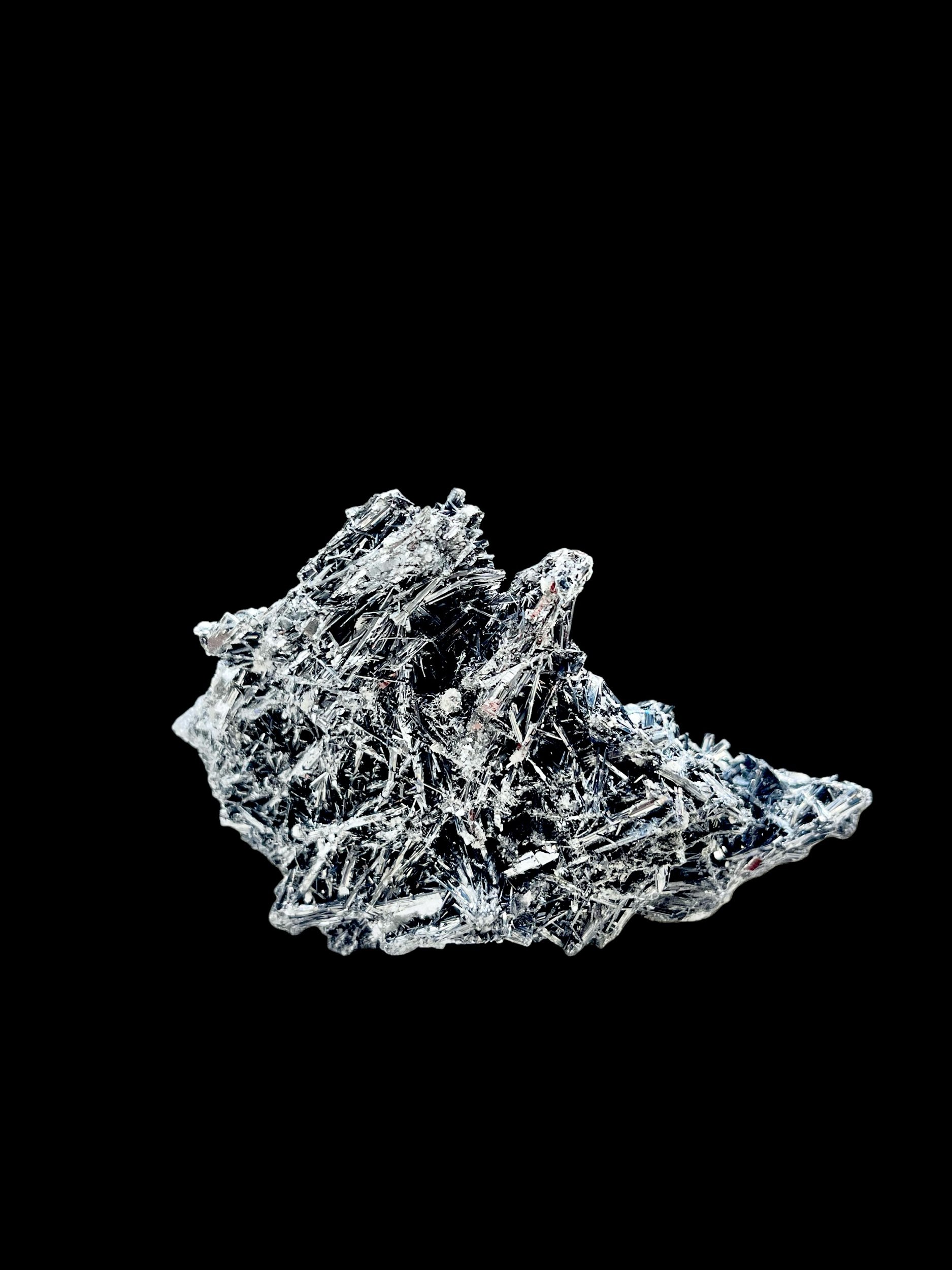
A striking and sculptural specimen featuring radiating sprays of metallic iridescent stibnite rising dramatically from a contrasting white calcite matrix. The stibnite crystals form sharp, elongated blades with defined striations and a bright silver luster, accented by iridescent tones that show rainbows in the light.
Multiple “firework” sprays emerge across the surface, creating depth and movement against the softer, crystalline calcite backdrop. Under UV light, the matrix responds with a vivid pink and yellow fluorescence, adding a second layer of visual interest and display versatility.
Pieces with this combination of structure, contrast, and UV activity are highly sought after, particularly from classic Chinese localities known for producing the world’s finest stibnite.
Locality- Xikuangshan, Hunan, China
Dimensions & Weight
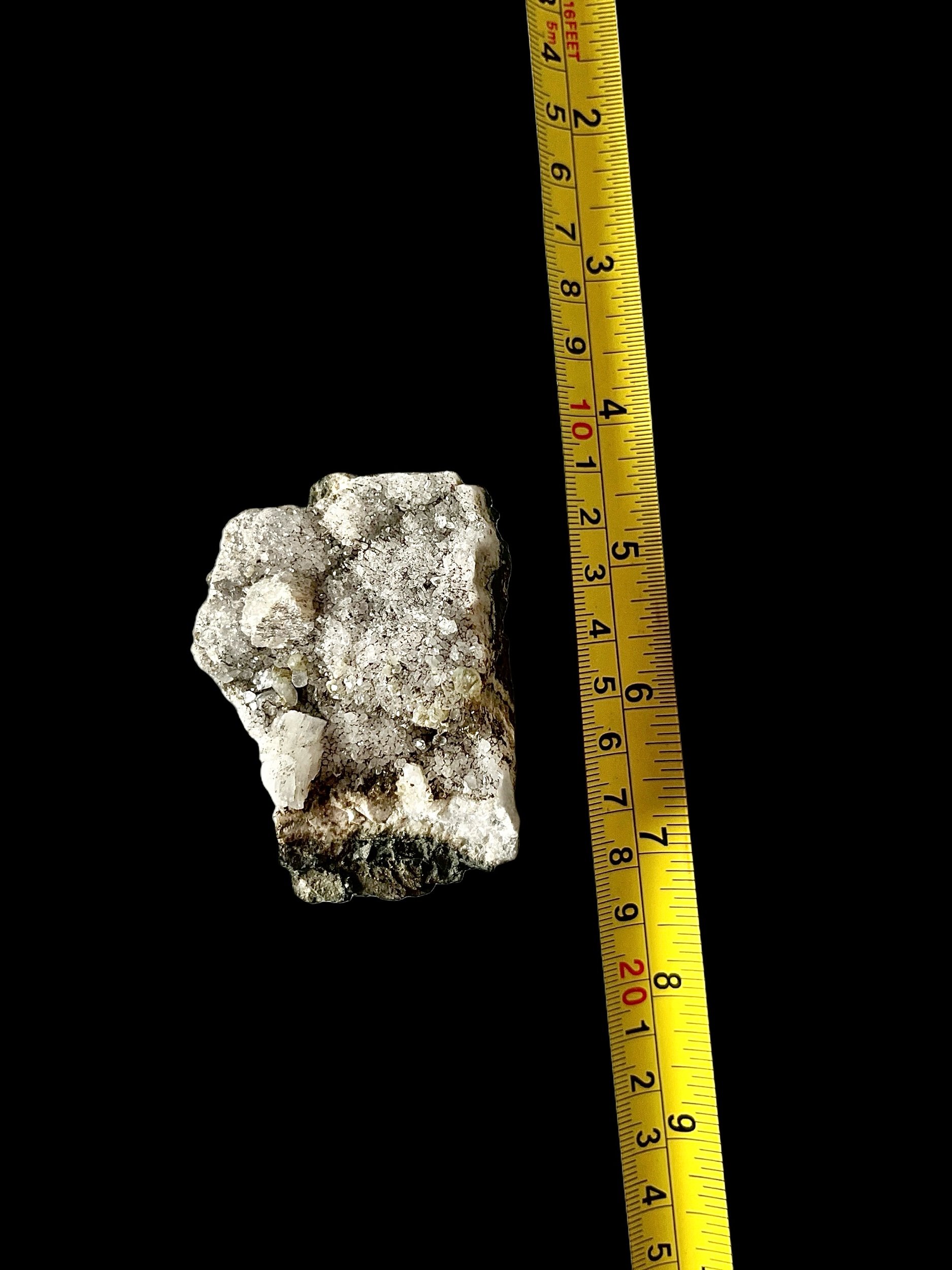
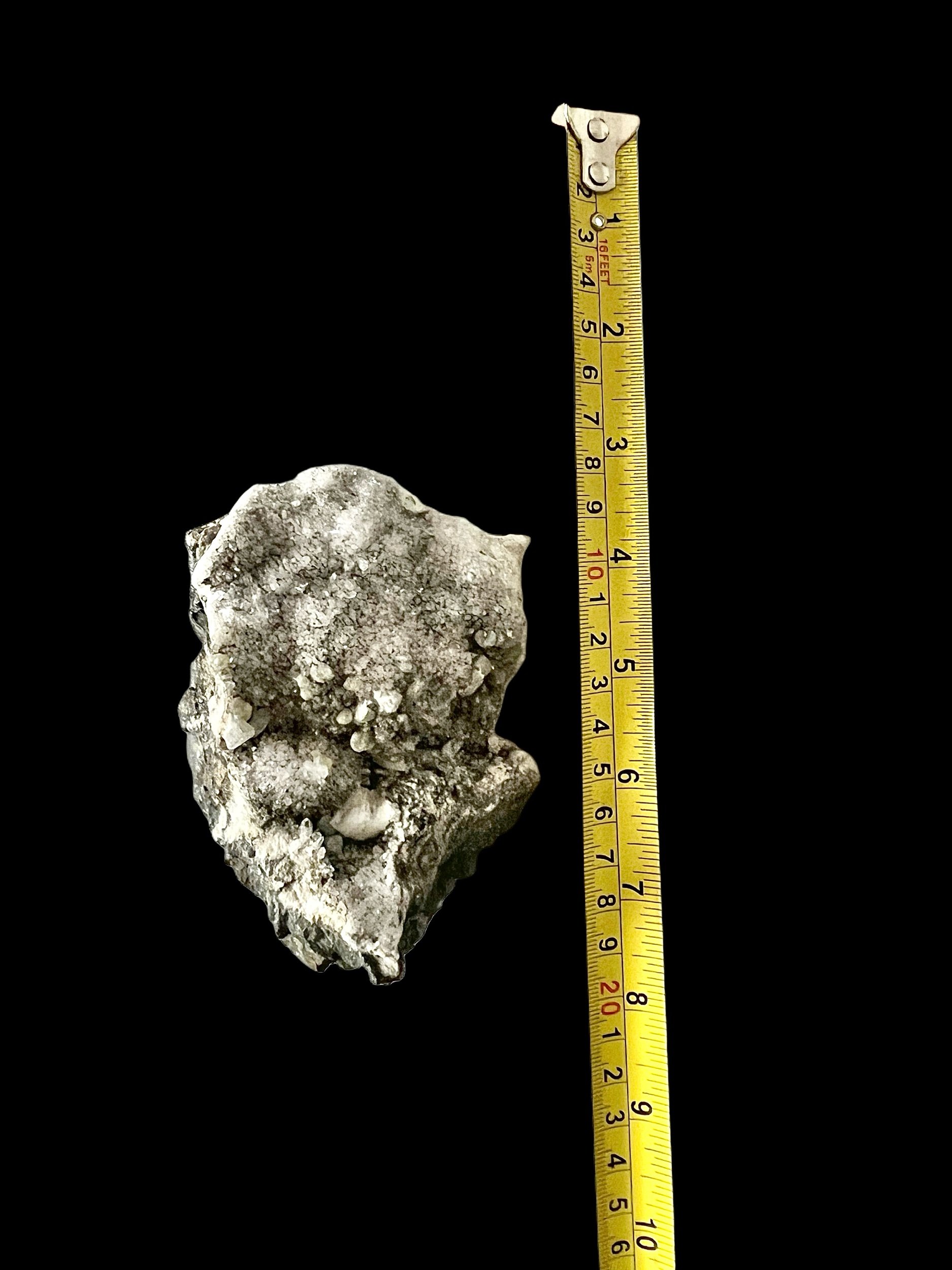
3” x 1.5” x 0.5”
79 grams
Investment Consideration
Well-formed stibnite sprays on clean, contrasting matrix—especially with added features like fluorescence—remain consistently desirable among collectors.
Stibnite is used to produce antimony, making it difficult for mineral collectors to source, as larger companies absorb most of the supply. Because of this, stibnite is thought to appreciate greatly in the next few years, making this acquisition a wise investment.
Collector’s Notes
The association of stibnite with calcite is especially well known from Hunan Province, China, where world-class specimens have been produced for decades.
Smaller cabinet pieces with strong aesthetics offer an accessible entry point into a mineral that is otherwise dominated by larger, high-value specimens, making pieces like this both display-worthy and strategically collectible.
Highlights
Well-formed radiating stibnite sprays with strong visual symmetry
Brilliant silver metallic luster
Multi-Fluorescent calcite matrix adds dual-display capability
Excellent contrast between dark metallic crystals and light matrix
Fanous Xikuangshan Mine locality
Excellent stibnite spray formation
UV-reactive matrix (fluorescent calcite)
Rare Mineral
Natural iridescence
Collector-favorite locality style
Metaphysical Properties
Stibnite is often associated with transformation and forward momentum, said to assist in releasing stagnant energy and encouraging decisive action. It is considered a powerful mineral for those navigating periods of change, helping to align intention with movement.
Calcite is known for amplifying and cleansing energy, with fluorescent varieties symbolically linked to illumination—bringing hidden aspects into awareness. Together, they form a pairing that is often interpreted as both grounding and energizing.
Mineralogy
Stibnite (Sb₂S₃) is a lead-gray to silver metallic sulfide mineral known for forming elongated, bladed crystals often arranged in radiating clusters. Its highly reflective surfaces and distinctive crystal habit make it one of the most recognizable metallic minerals in fine mineral collections.
Calcite (CaCO₃), a common carbonate mineral, frequently serves as a host matrix for stibnite. In certain specimens, trace activators such as manganese cause calcite to fluoresce under ultraviolet light, producing vivid pink, red, or blue tones.
Description
A striking and sculptural specimen featuring radiating sprays of metallic iridescent stibnite rising dramatically from a contrasting white calcite matrix. The stibnite crystals form sharp, elongated blades with defined striations and a bright silver luster, accented by iridescent tones that show rainbows in the light.
Multiple “firework” sprays emerge across the surface, creating depth and movement against the softer, crystalline calcite backdrop. Under UV light, the matrix responds with a vivid pink and yellow fluorescence, adding a second layer of visual interest and display versatility.
Pieces with this combination of structure, contrast, and UV activity are highly sought after, particularly from classic Chinese localities known for producing the world’s finest stibnite.
Locality- Xikuangshan, Hunan, China
Dimensions & Weight
3” x 1.5” x 0.5”
79 grams
Investment Consideration
Well-formed stibnite sprays on clean, contrasting matrix—especially with added features like fluorescence—remain consistently desirable among collectors.
Stibnite is used to produce antimony, making it difficult for mineral collectors to source, as larger companies absorb most of the supply. Because of this, stibnite is thought to appreciate greatly in the next few years, making this acquisition a wise investment.
Collector’s Notes
The association of stibnite with calcite is especially well known from Hunan Province, China, where world-class specimens have been produced for decades.
Smaller cabinet pieces with strong aesthetics offer an accessible entry point into a mineral that is otherwise dominated by larger, high-value specimens, making pieces like this both display-worthy and strategically collectible.
Highlights
Well-formed radiating stibnite sprays with strong visual symmetry
Brilliant silver metallic luster
Multi-Fluorescent calcite matrix adds dual-display capability
Excellent contrast between dark metallic crystals and light matrix
Fanous Xikuangshan Mine locality
Excellent stibnite spray formation
UV-reactive matrix (fluorescent calcite)
Rare Mineral
Natural iridescence
Collector-favorite locality style
Metaphysical Properties
Stibnite is often associated with transformation and forward momentum, said to assist in releasing stagnant energy and encouraging decisive action. It is considered a powerful mineral for those navigating periods of change, helping to align intention with movement.
Calcite is known for amplifying and cleansing energy, with fluorescent varieties symbolically linked to illumination—bringing hidden aspects into awareness. Together, they form a pairing that is often interpreted as both grounding and energizing.
Mineralogy
Stibnite (Sb₂S₃) is a lead-gray to silver metallic sulfide mineral known for forming elongated, bladed crystals often arranged in radiating clusters. Its highly reflective surfaces and distinctive crystal habit make it one of the most recognizable metallic minerals in fine mineral collections.
Calcite (CaCO₃), a common carbonate mineral, frequently serves as a host matrix for stibnite. In certain specimens, trace activators such as manganese cause calcite to fluoresce under ultraviolet light, producing vivid pink, red, or blue tones.


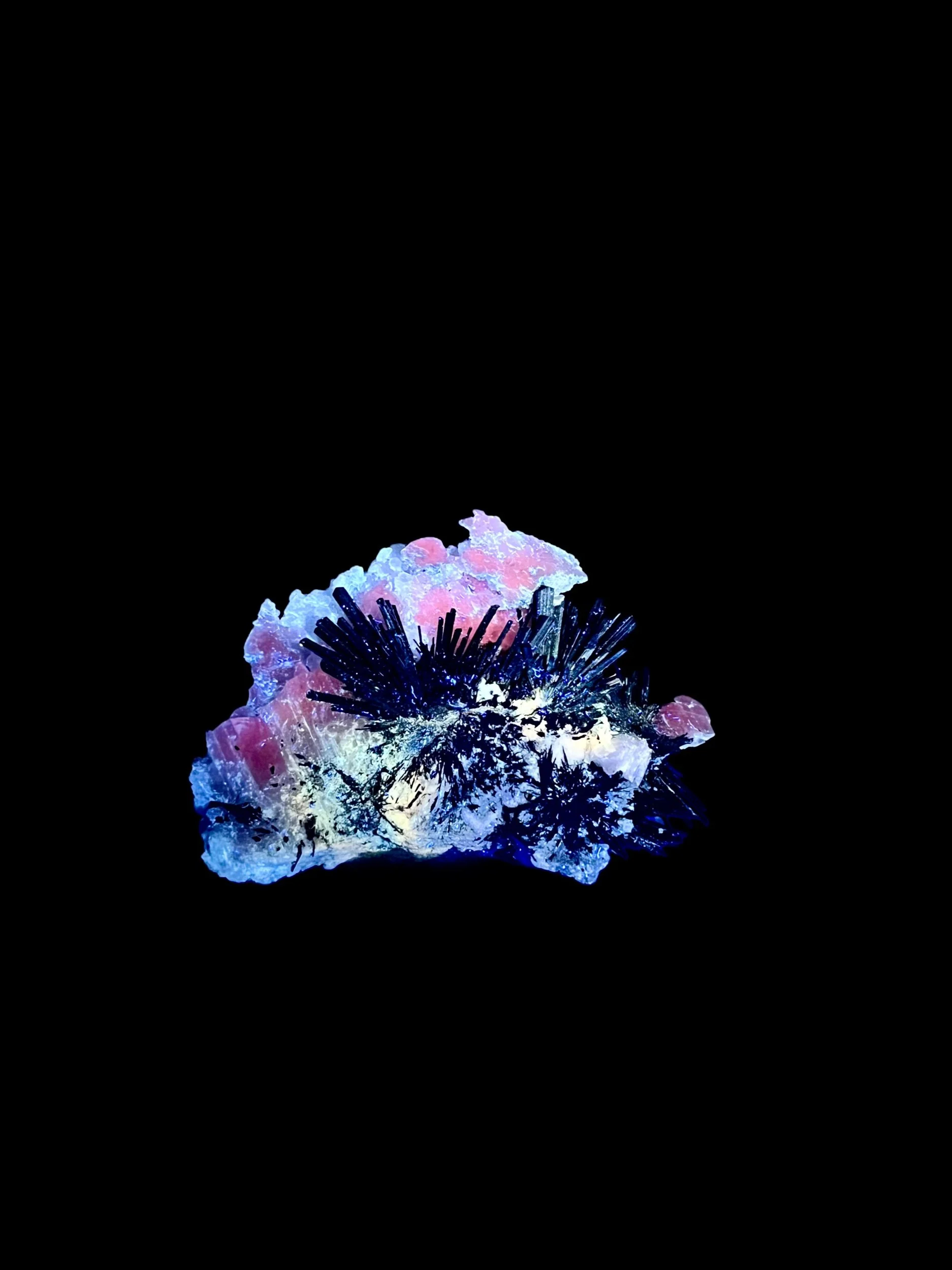 Image 1 of 7
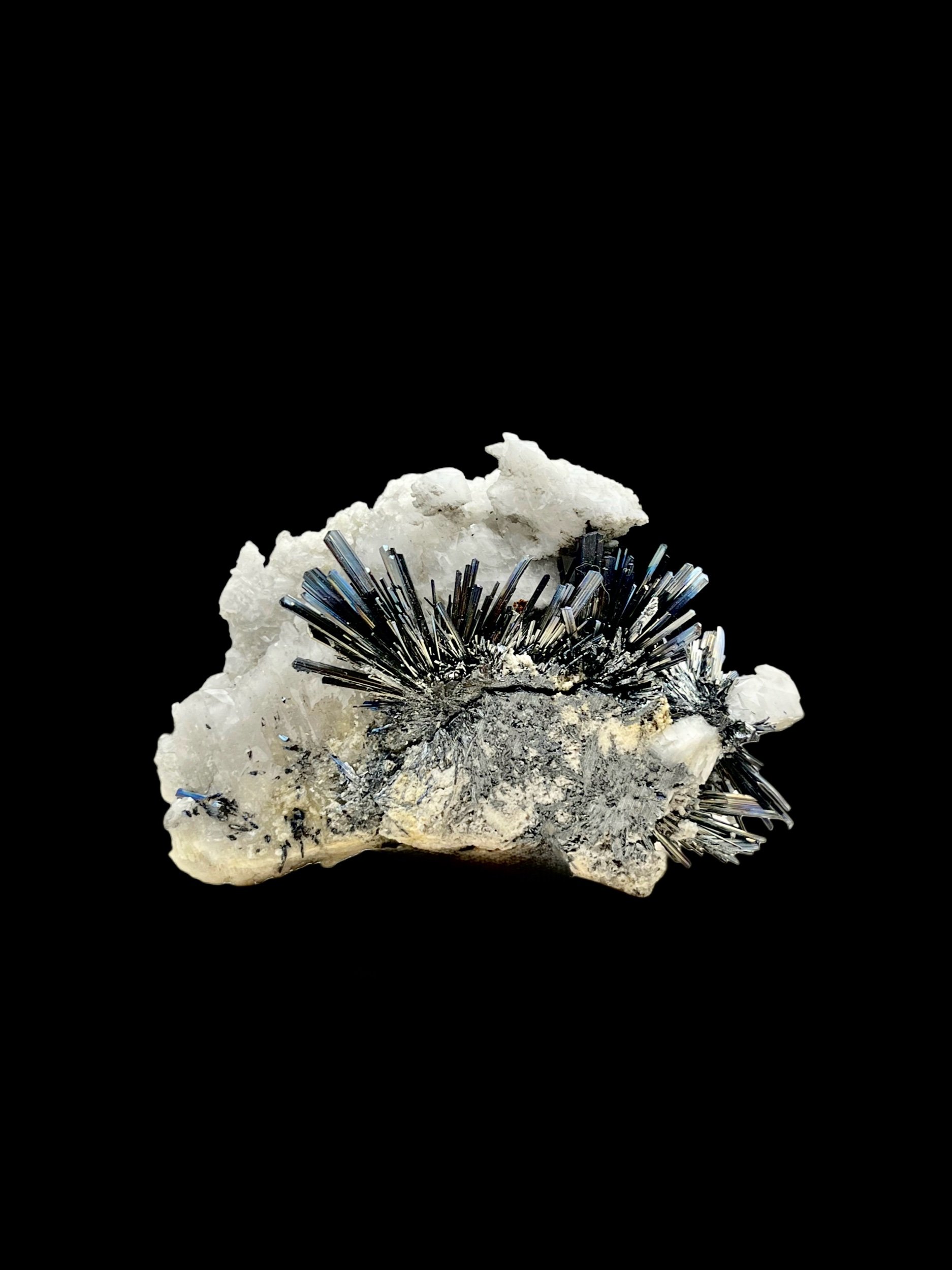 Image 2 of 7
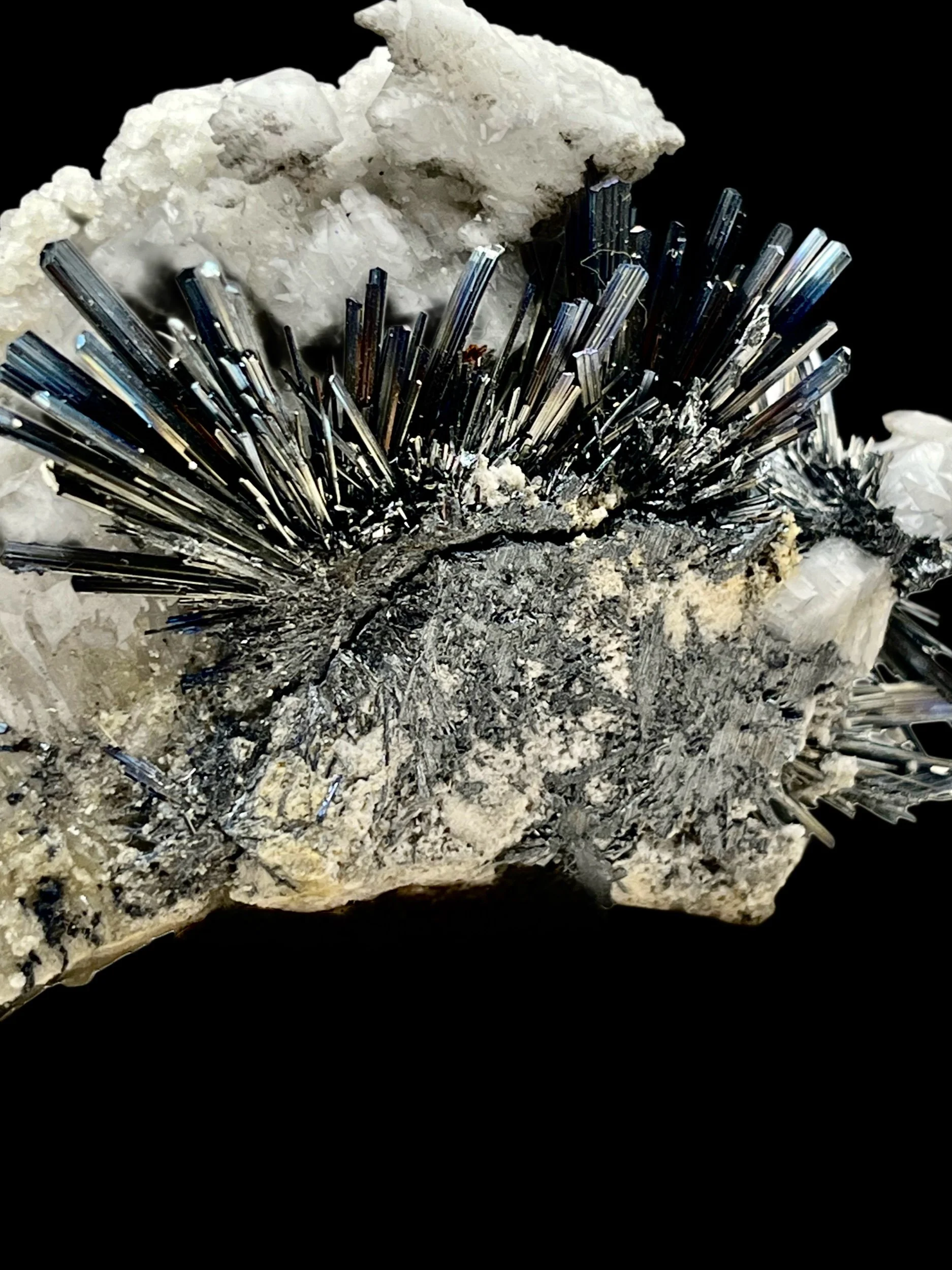 Image 3 of 7
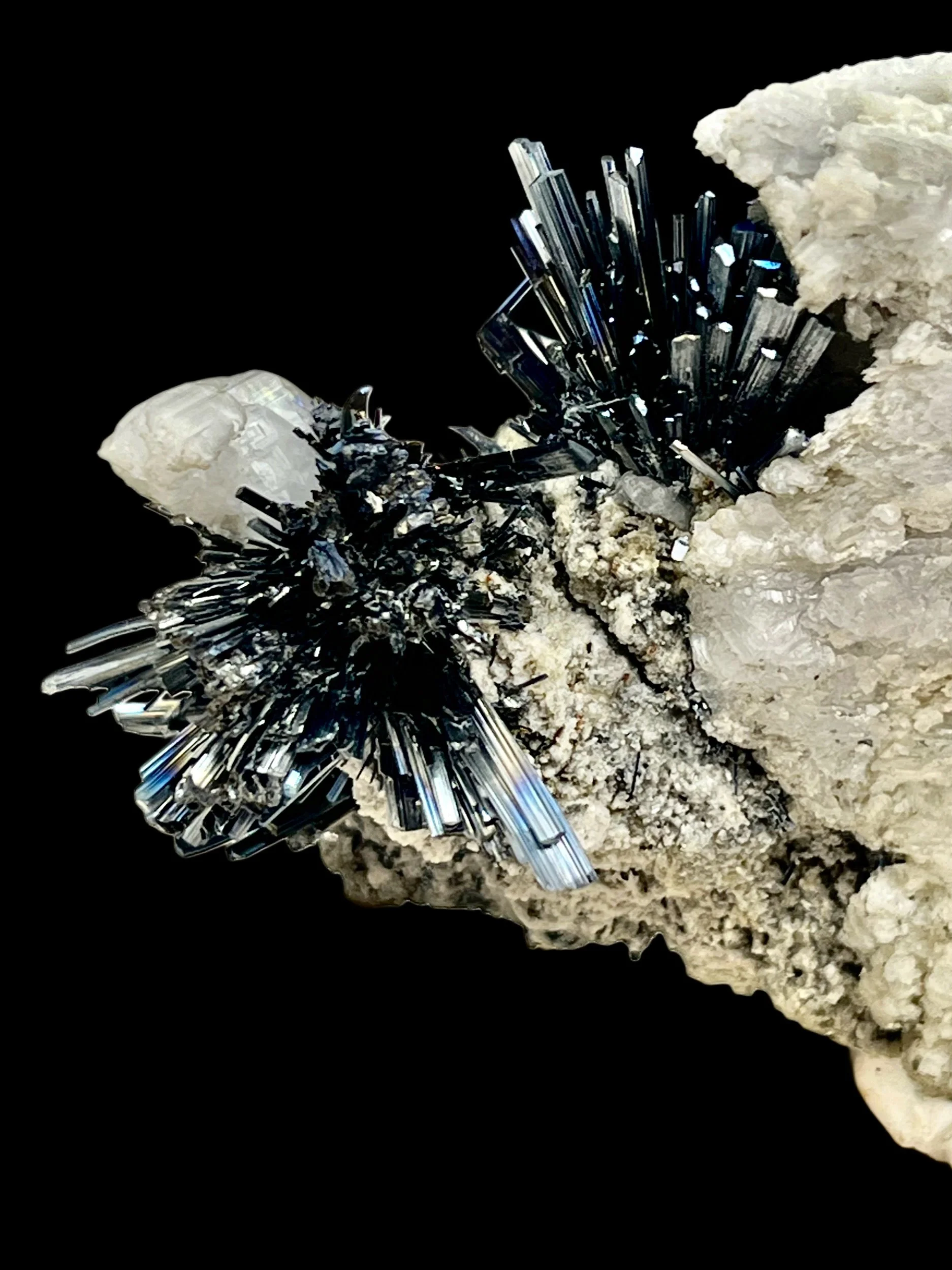 Image 4 of 7
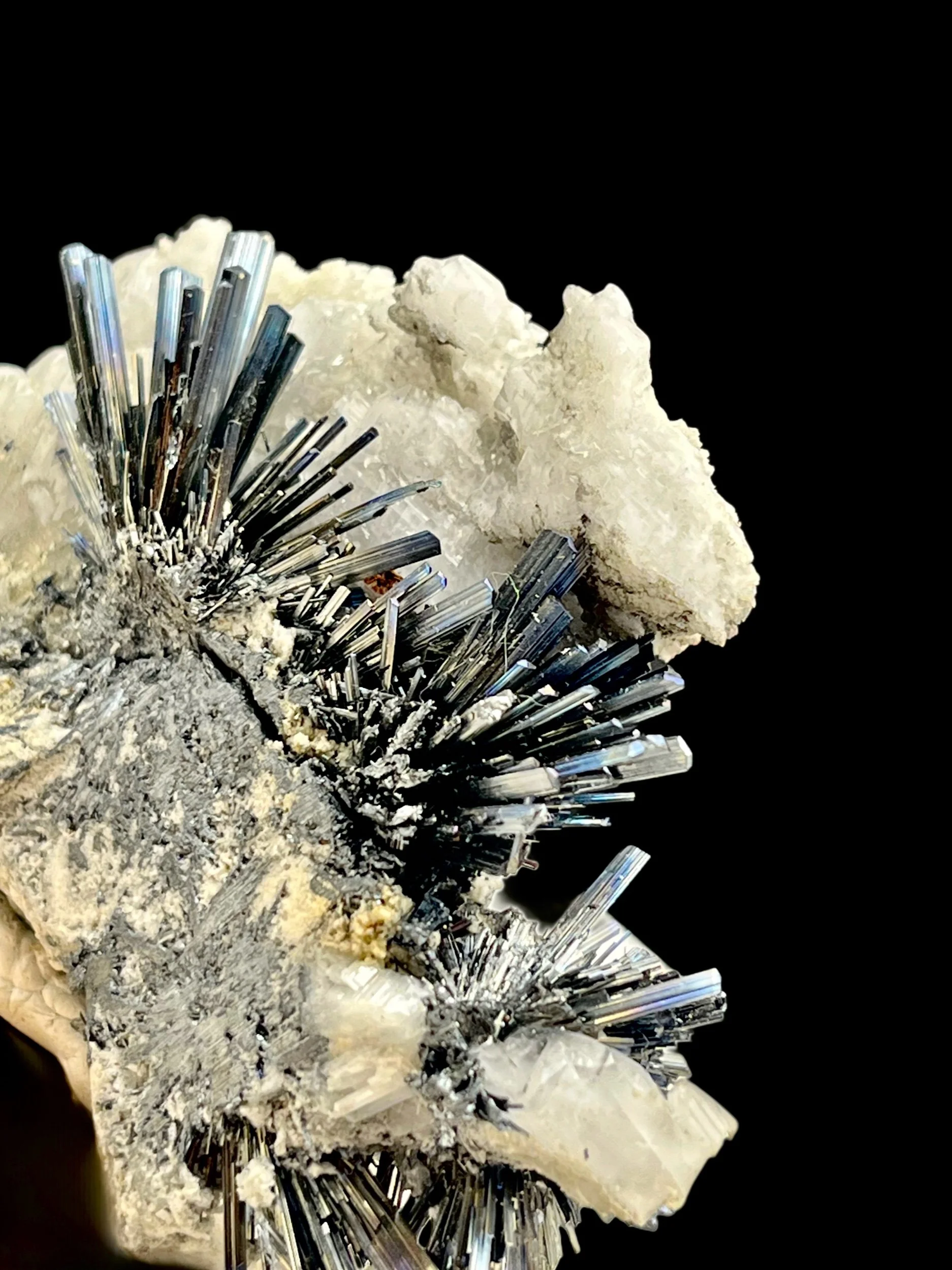 Image 5 of 7
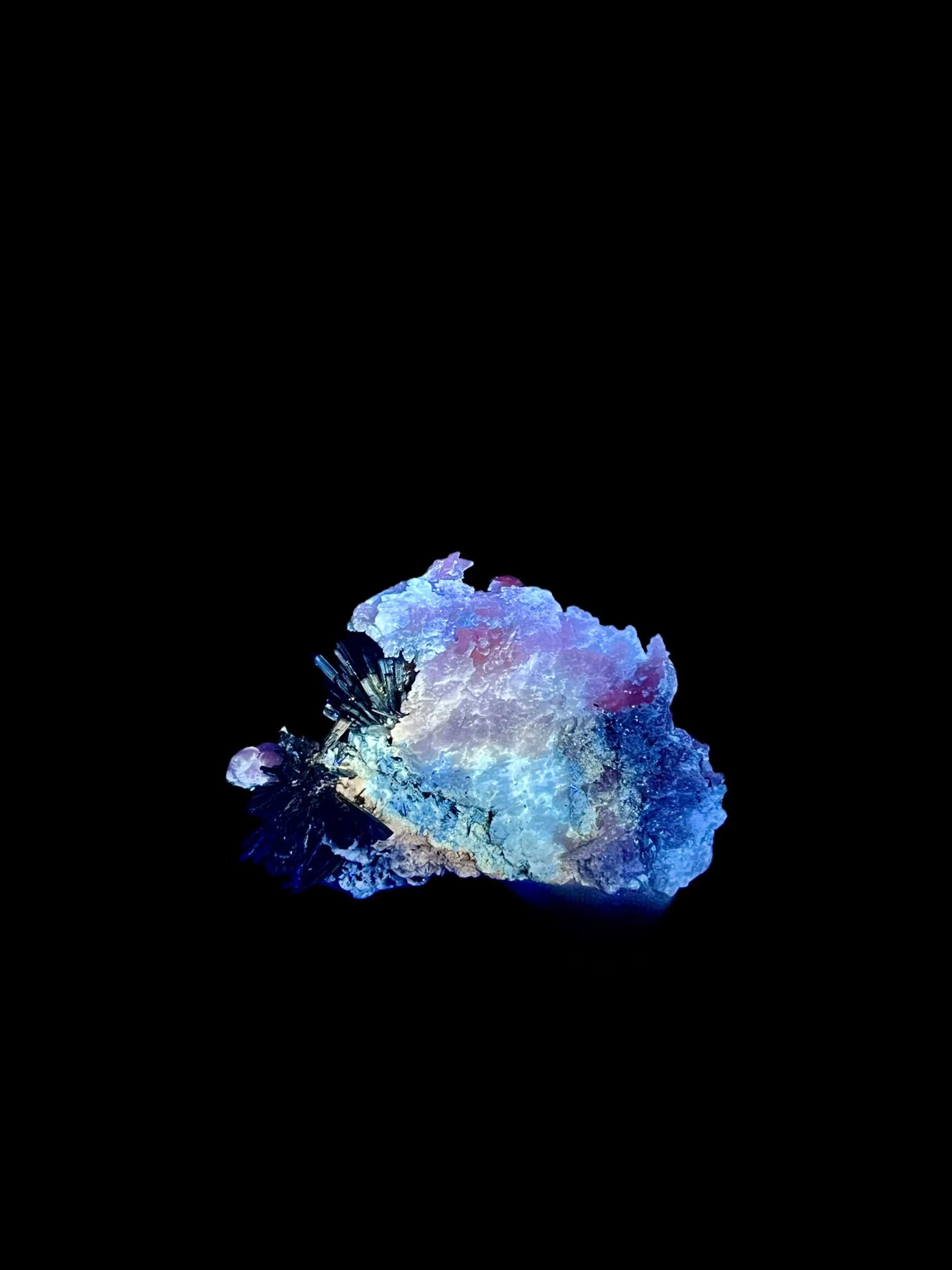 Image 6 of 7
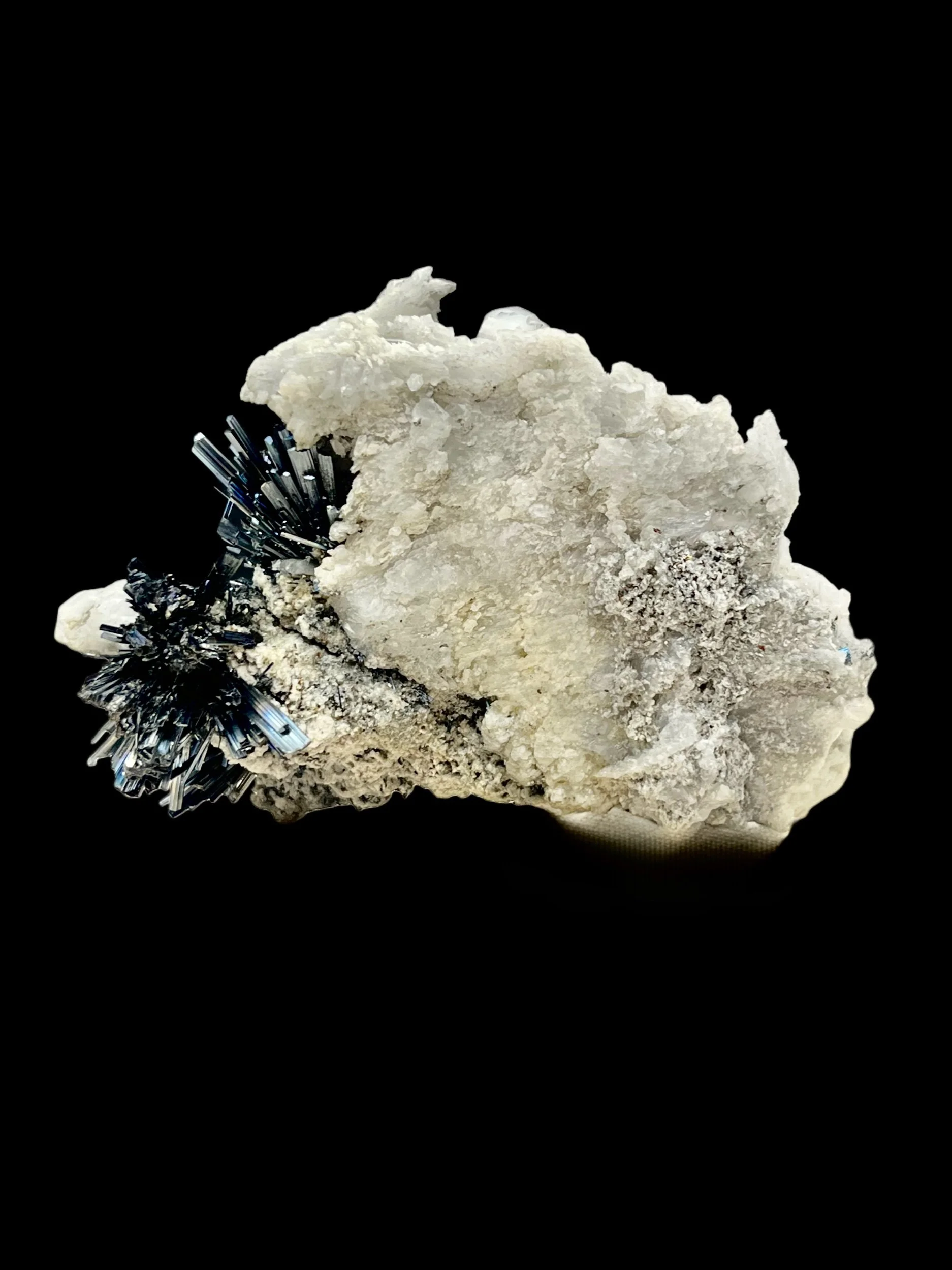 Image 7 of 7