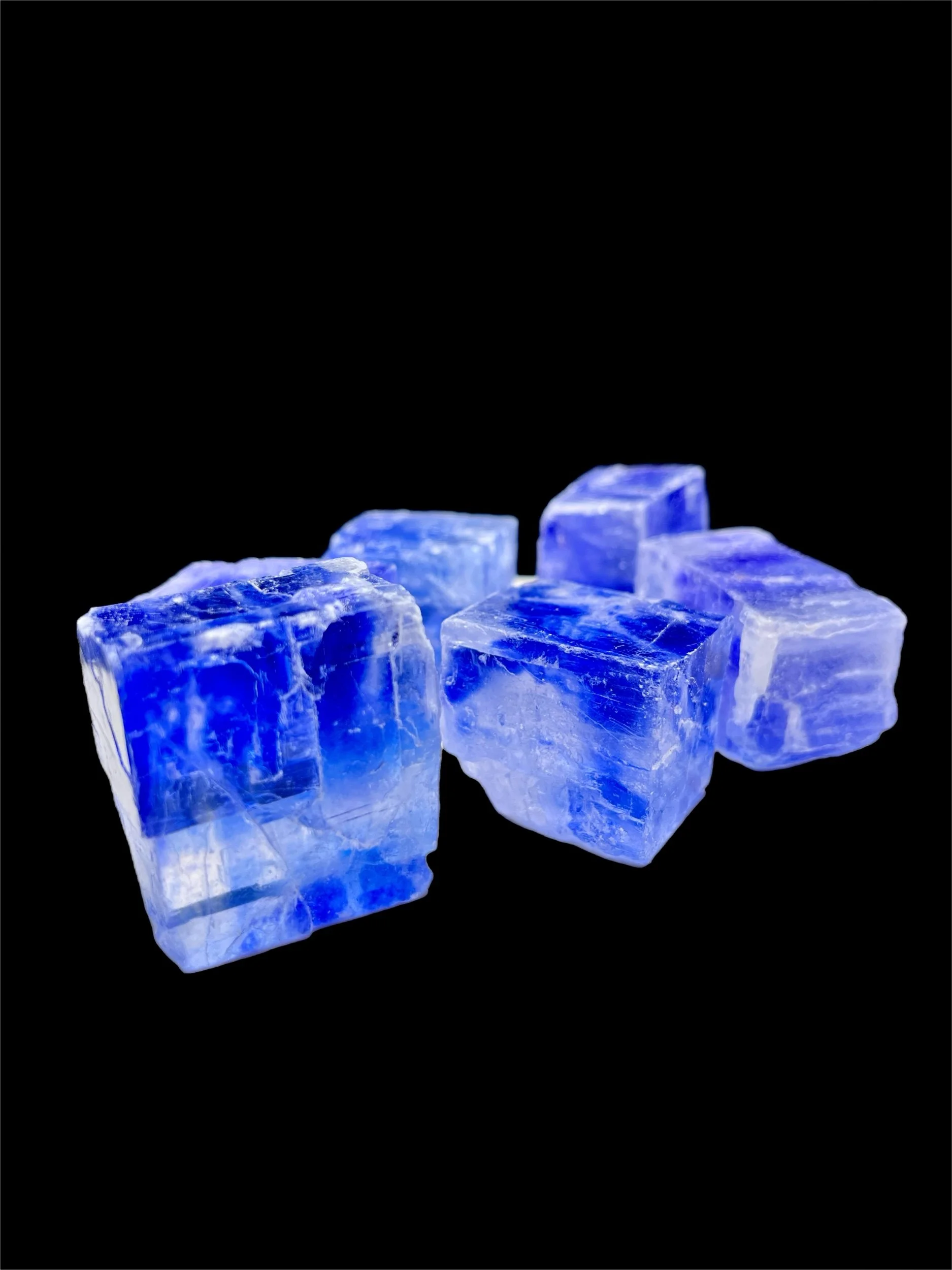
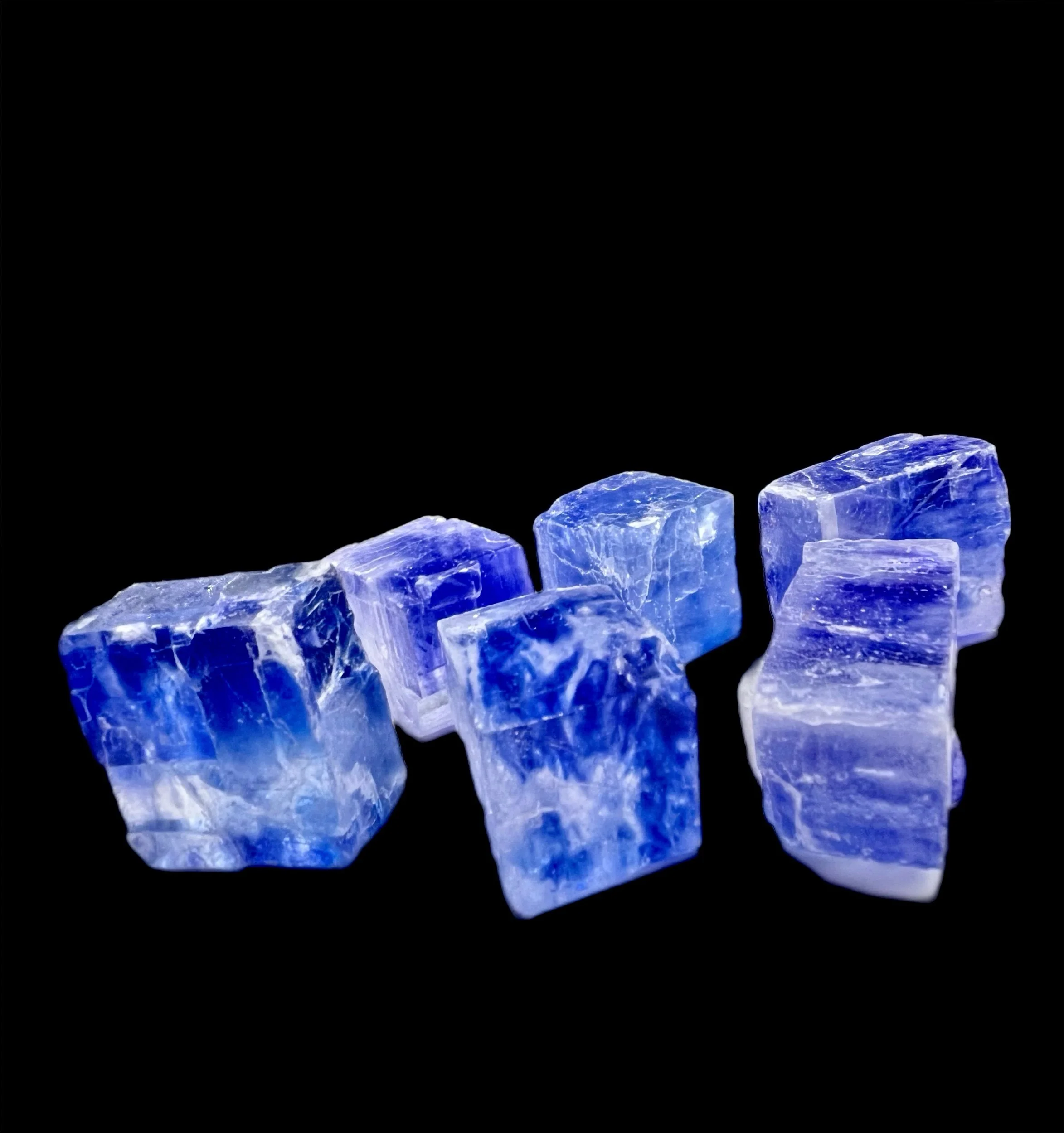
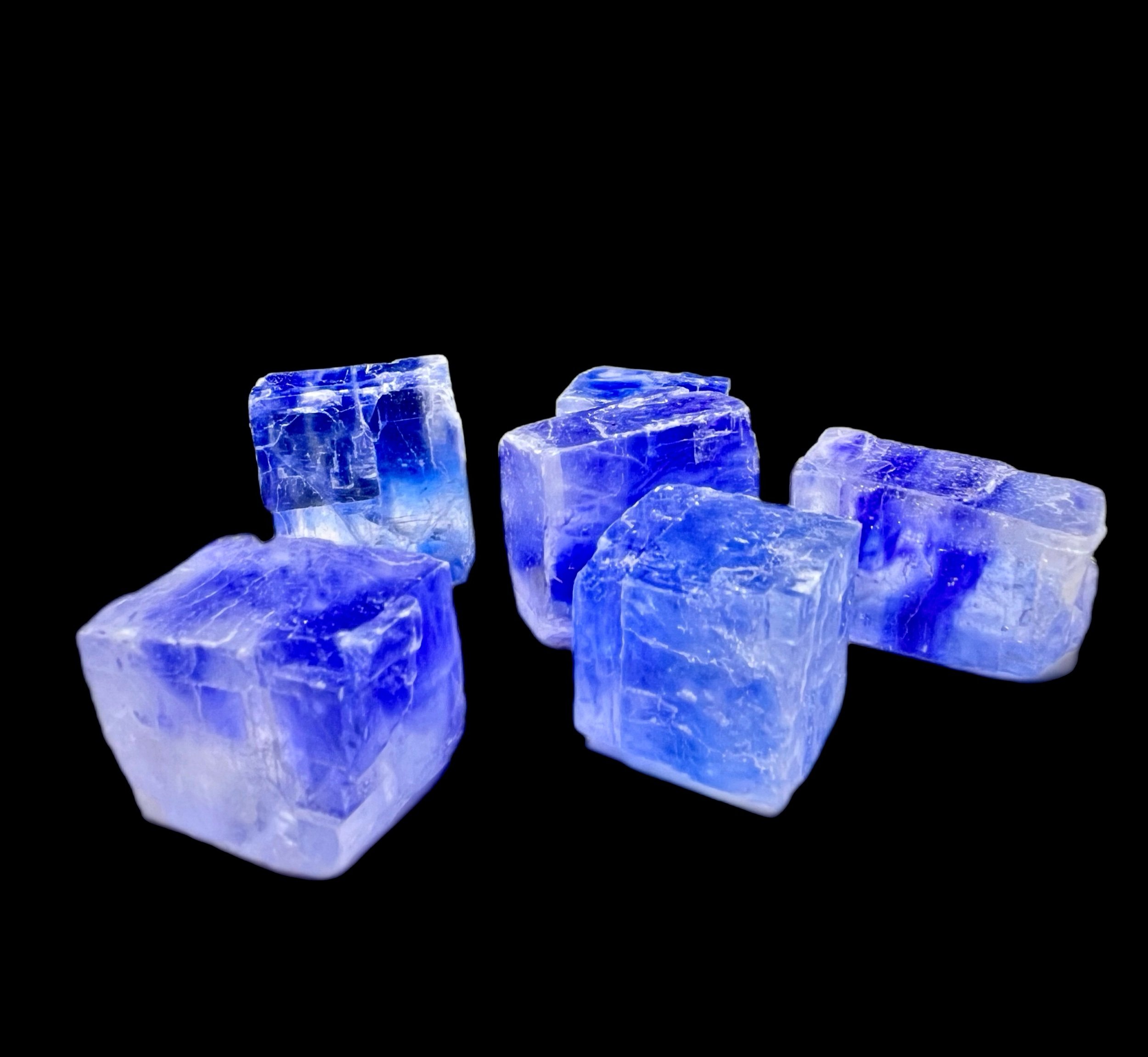
 Image 1 of 5
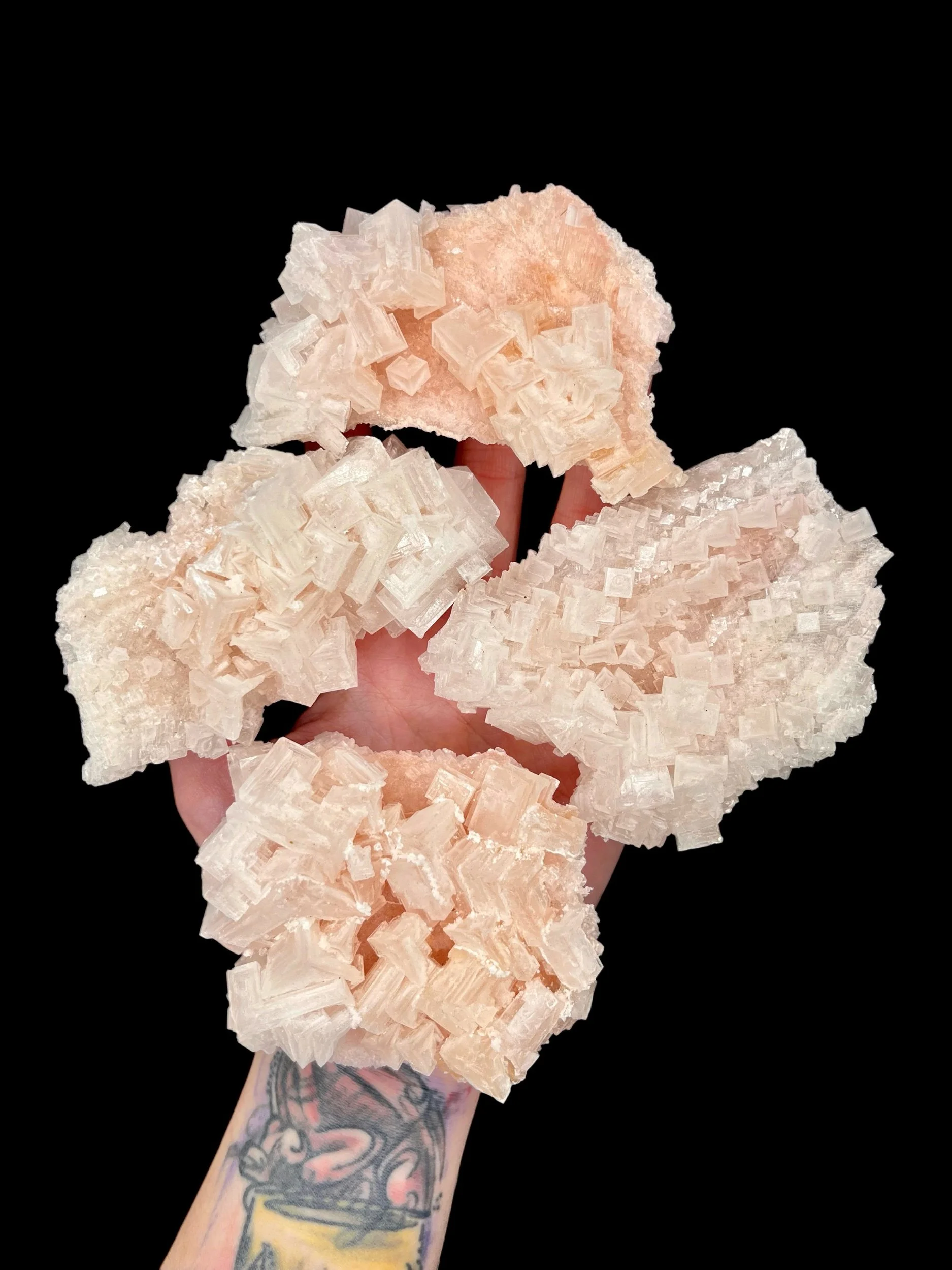 Image 2 of 5
 Image 3 of 5
 Image 4 of 5
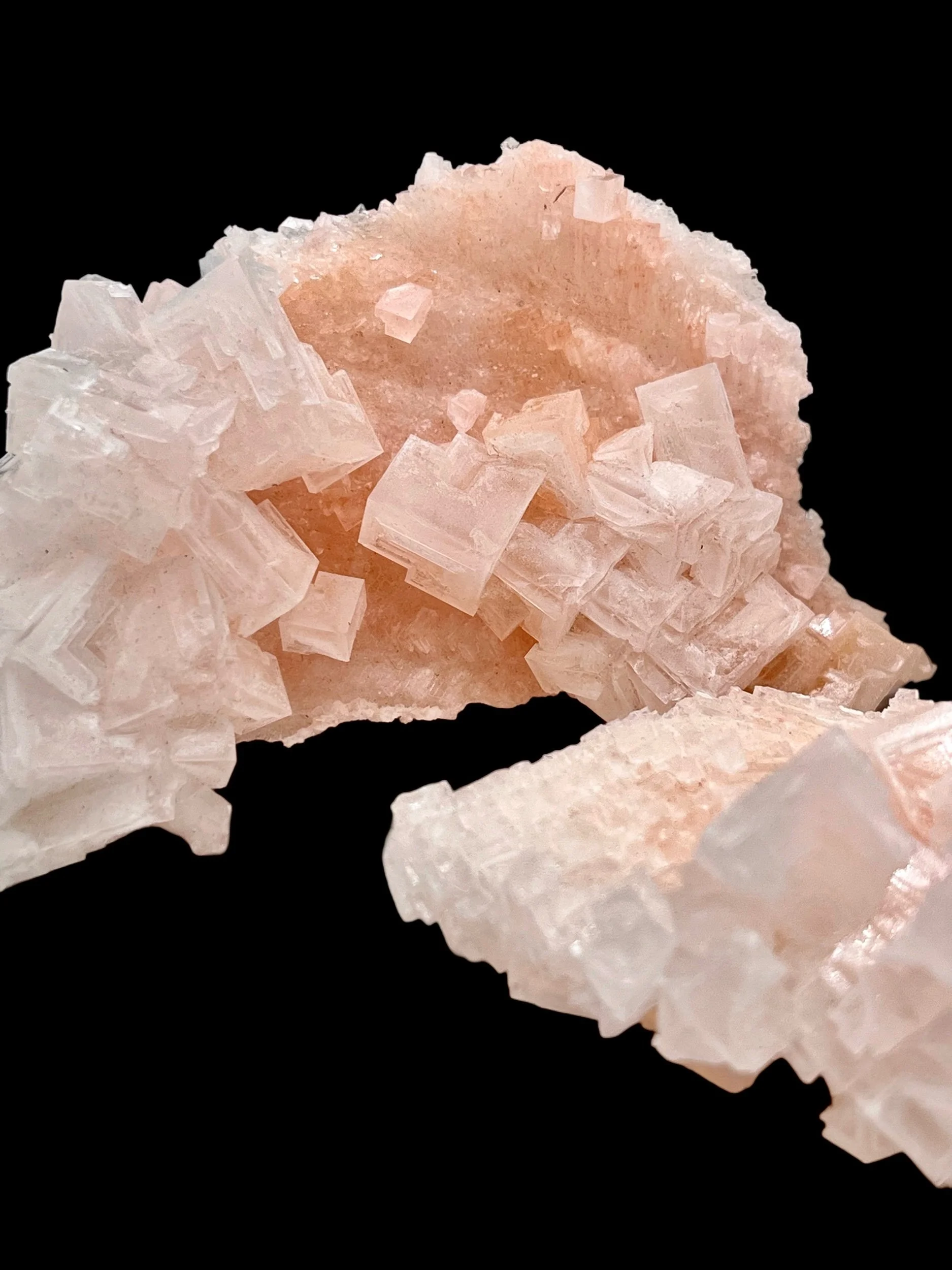 Image 5 of 5
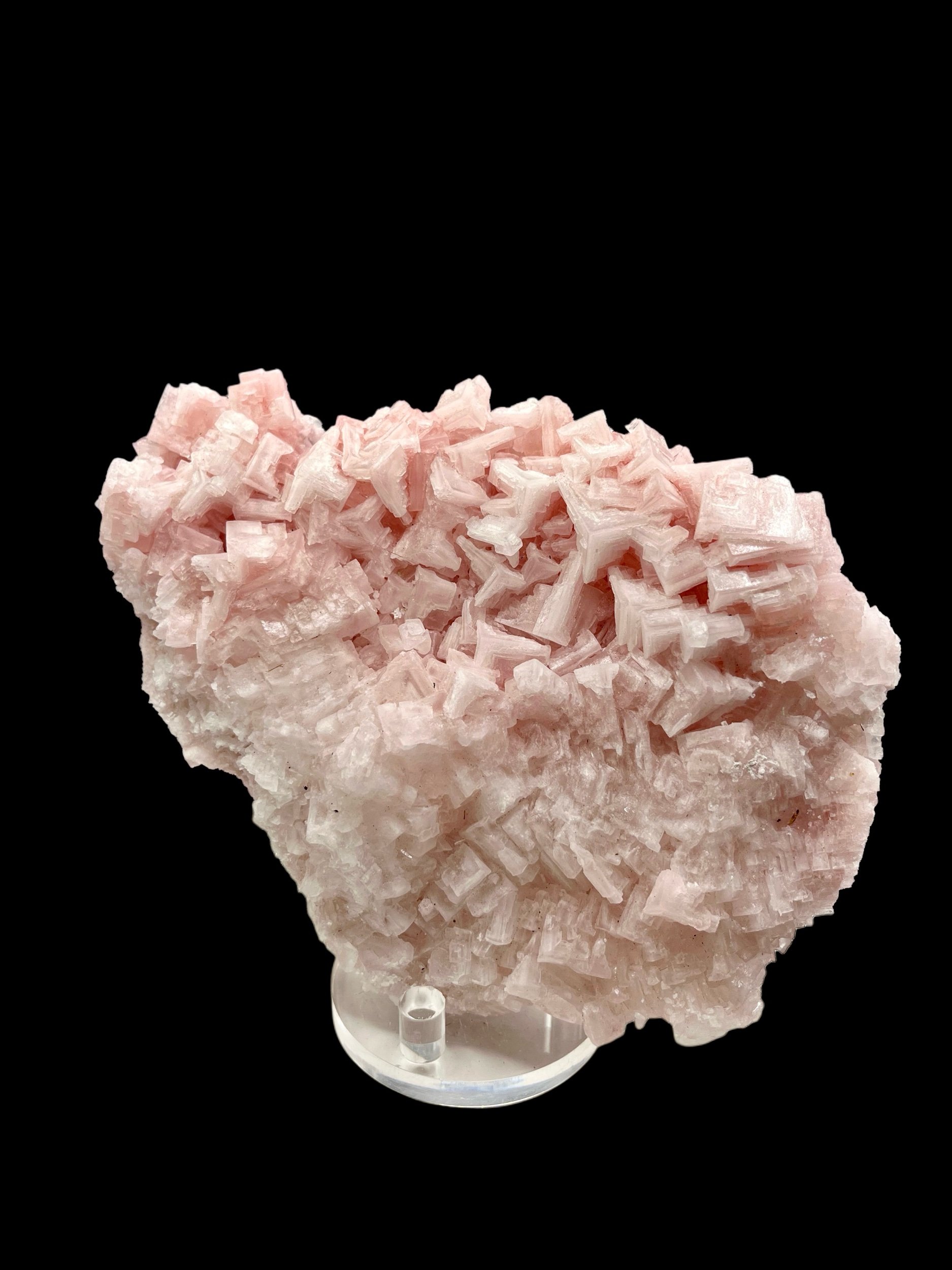
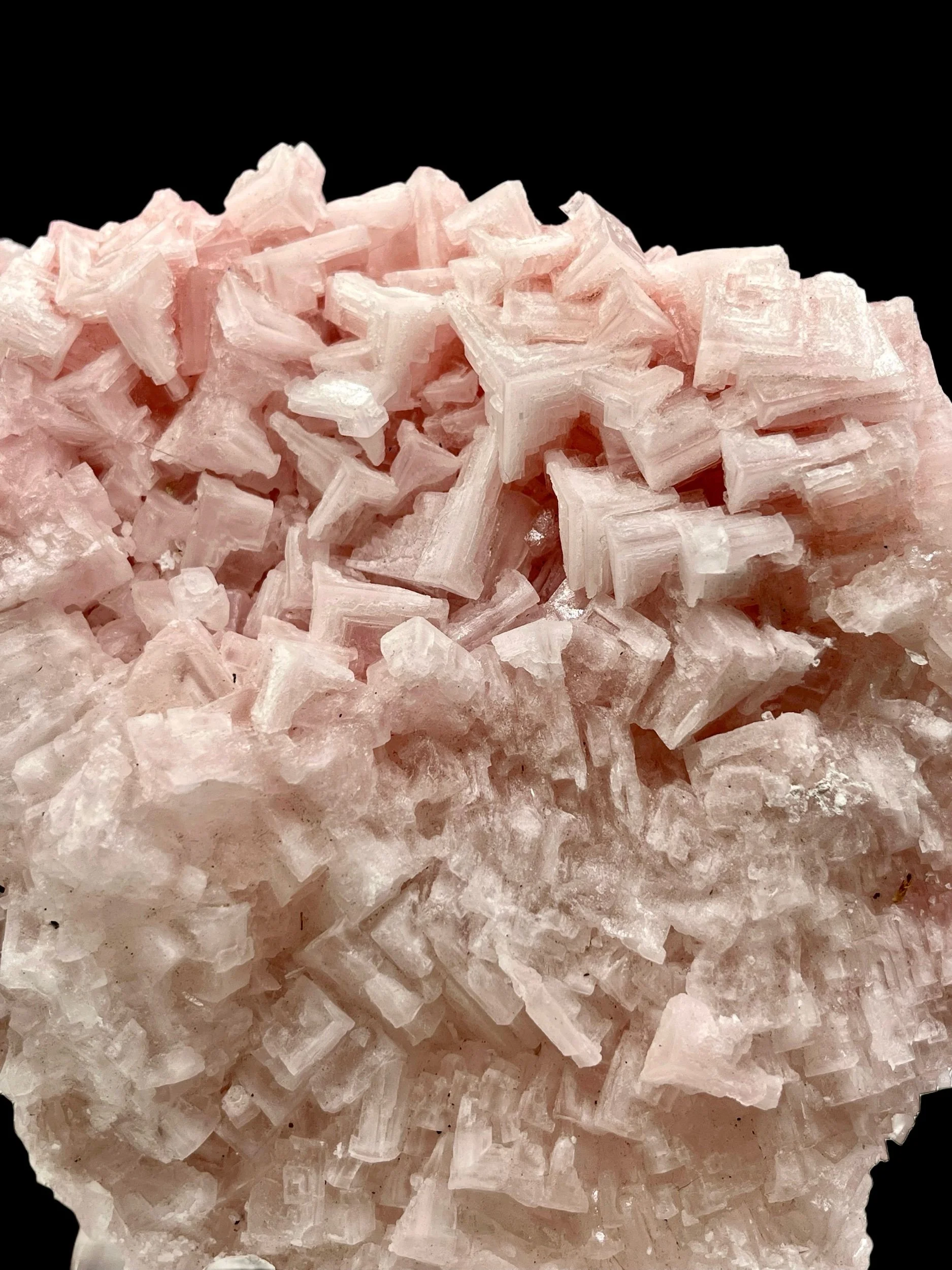
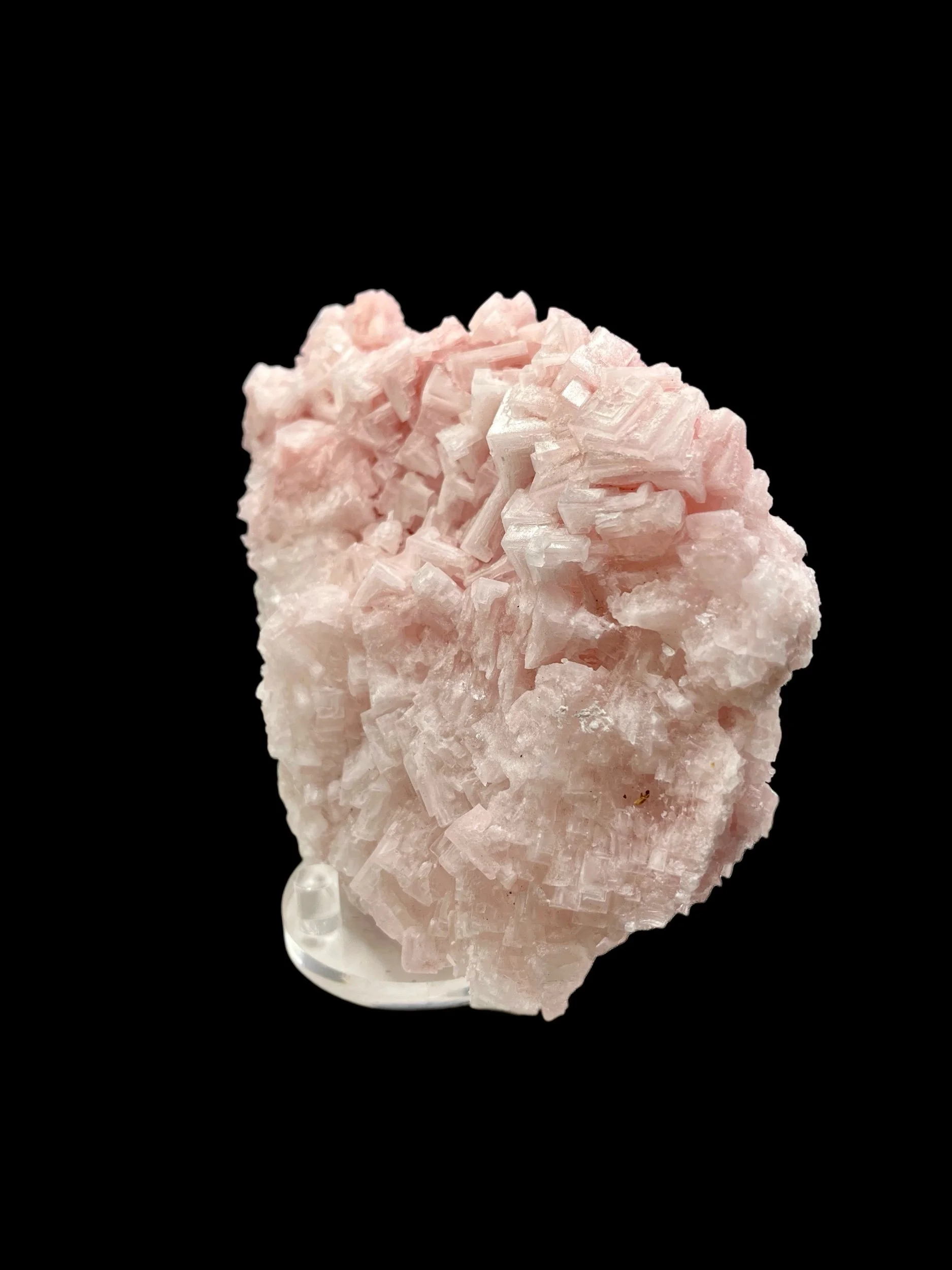
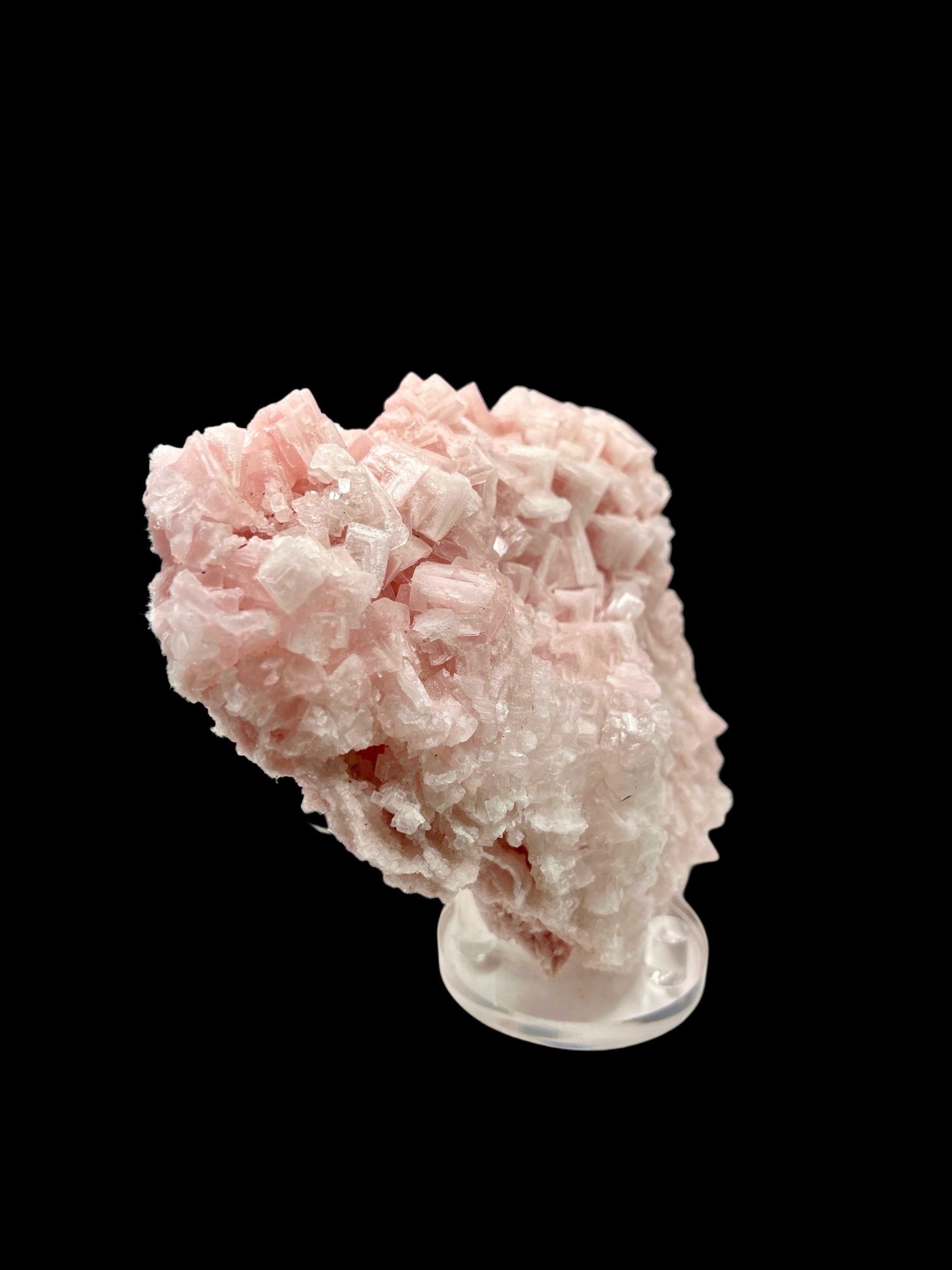
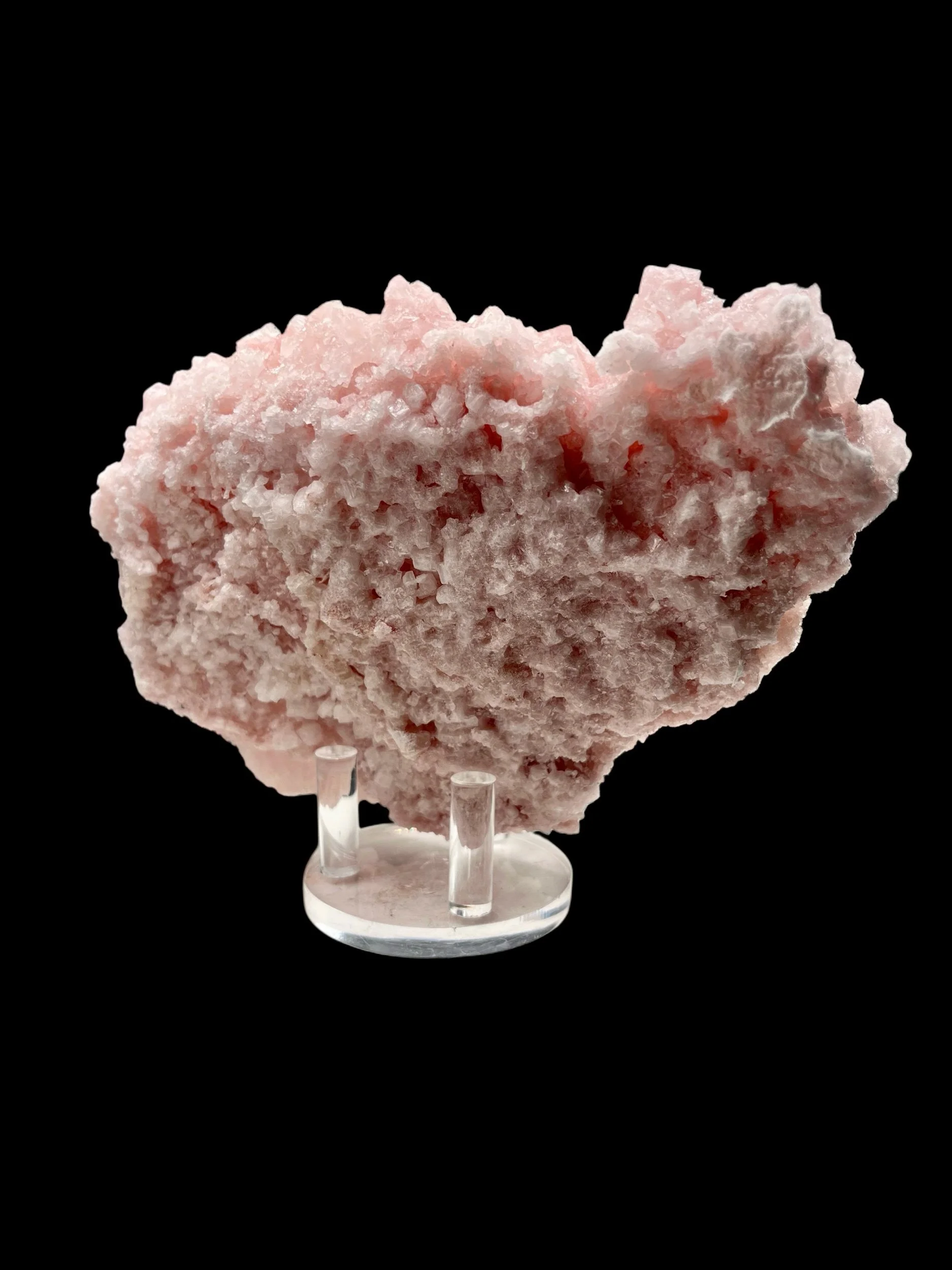
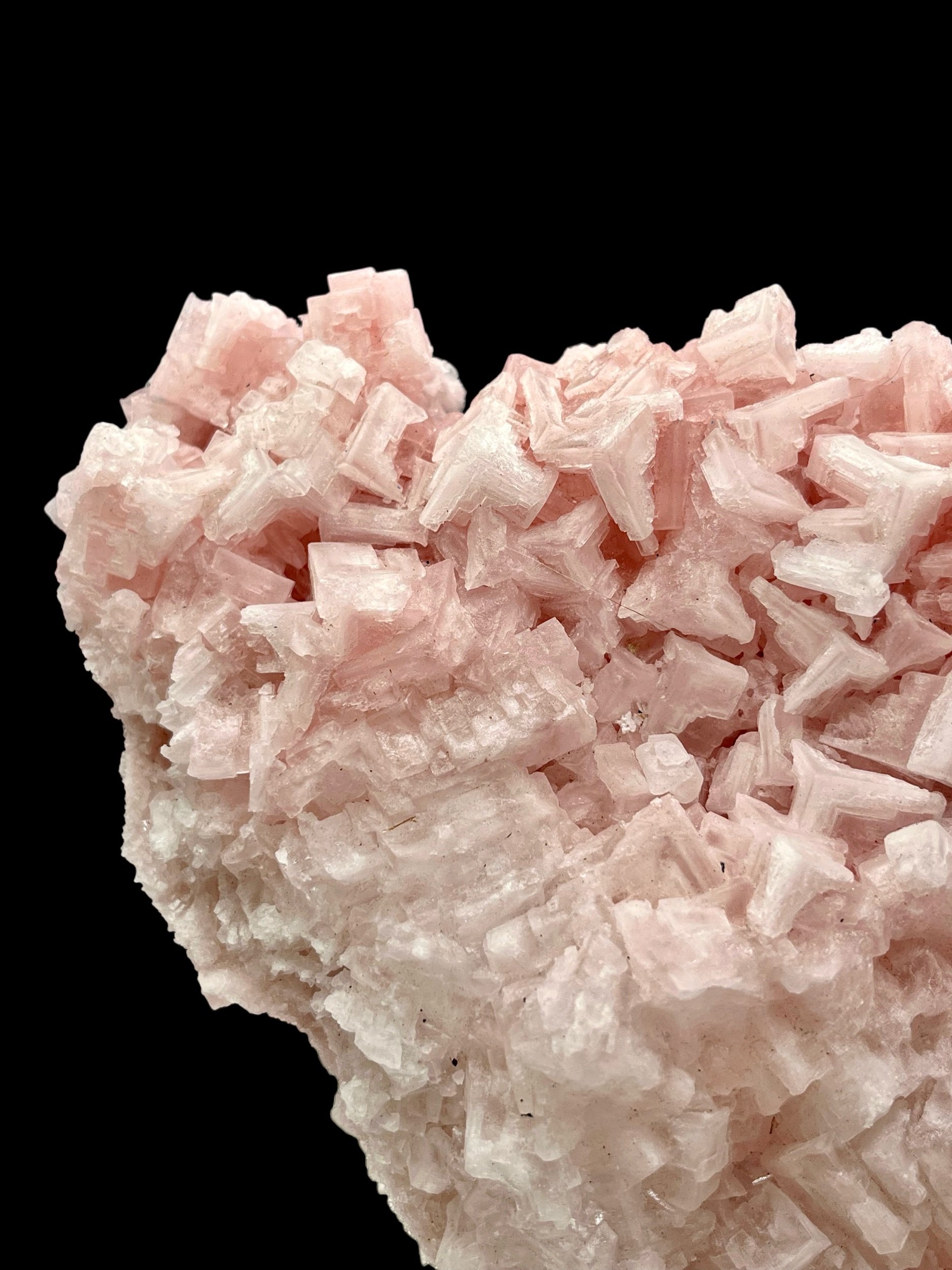
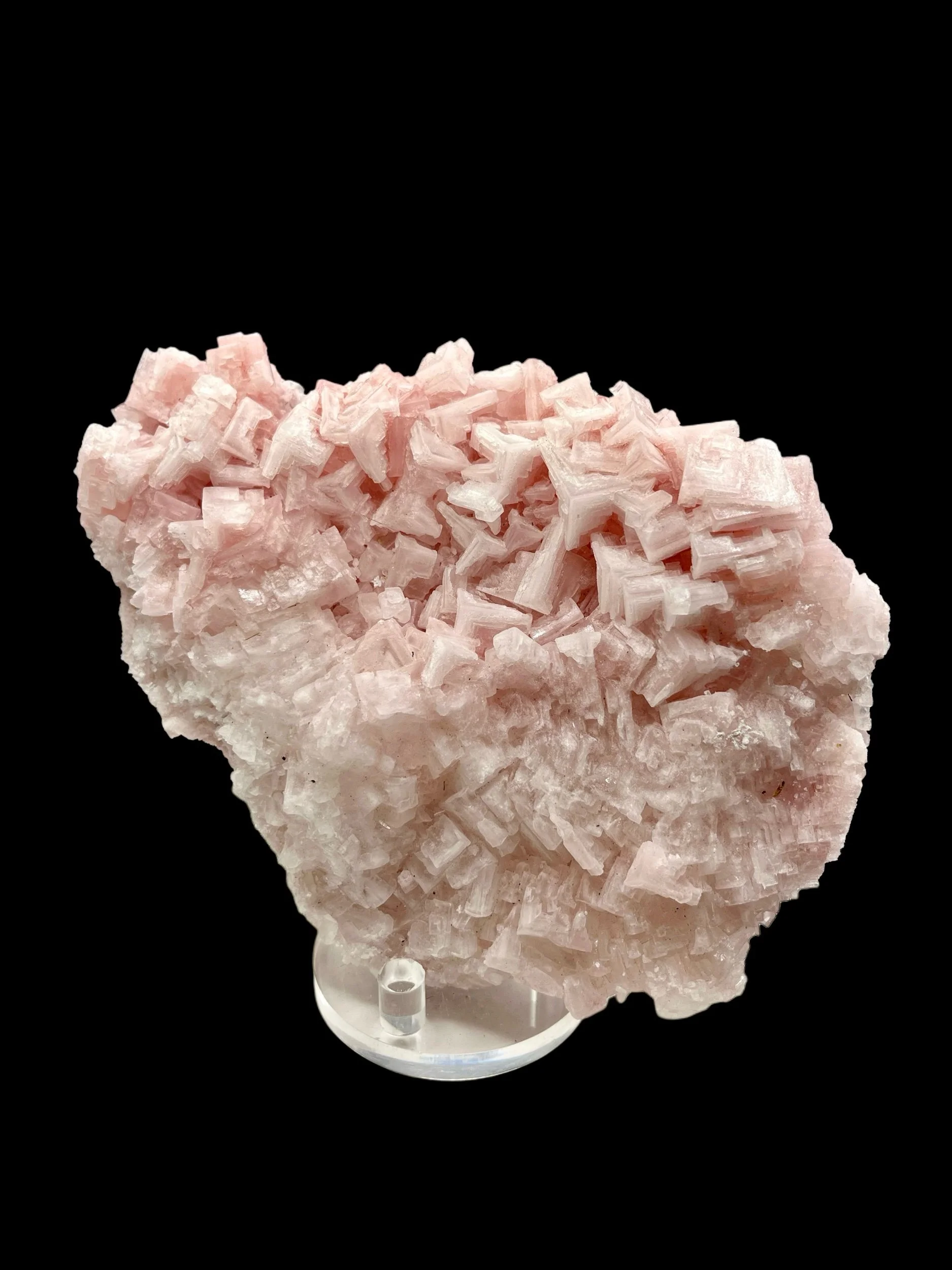
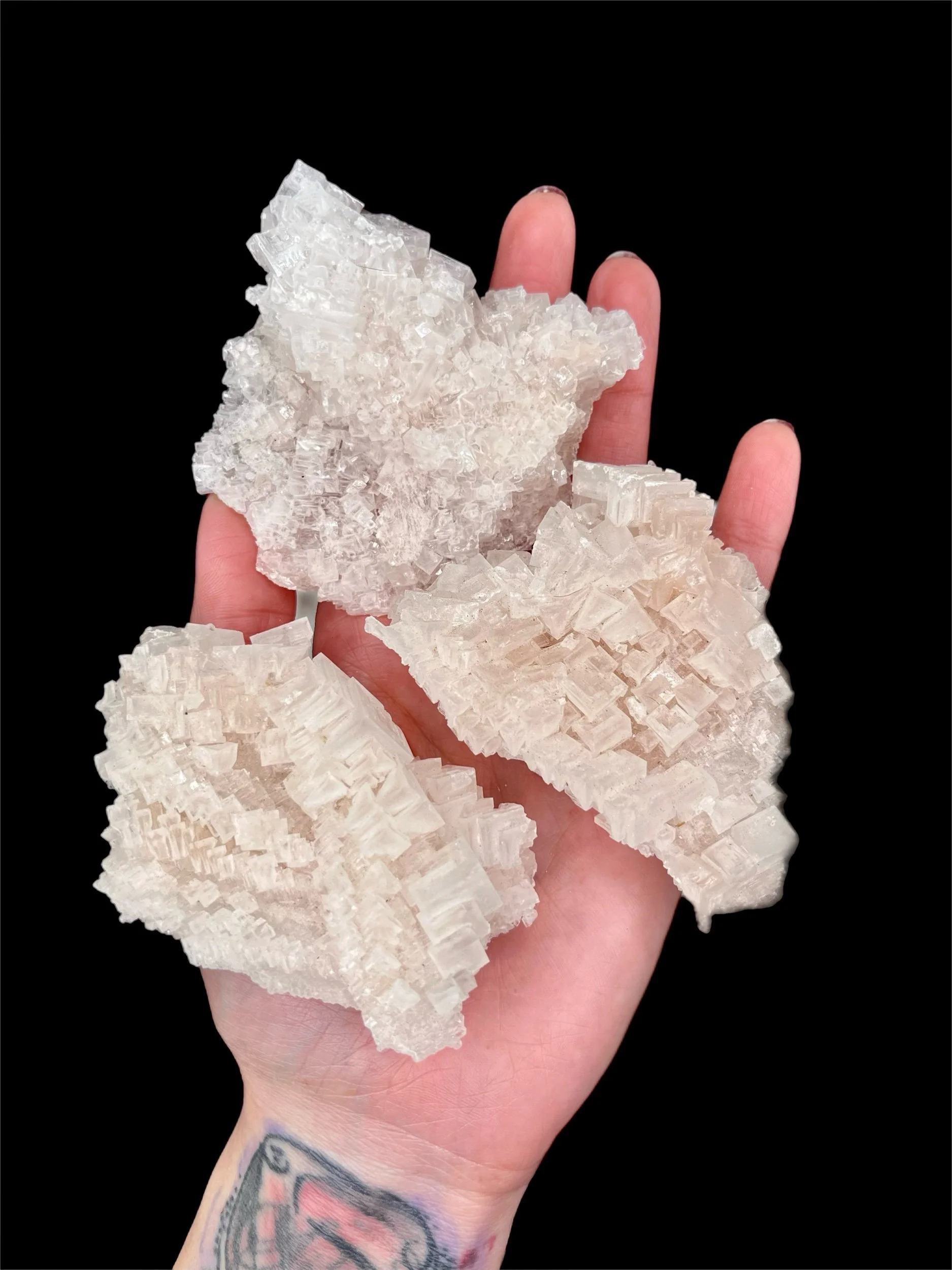
These exceptional pink halite specimens feature densely packed, naturally formed cubic crystals arranged in an architectural, almost sculptural cluster. The crystals display soft blush to peach-pink tones, caused by trace mineral inclusions within the sodium chloride lattice. (That’s a fancy way to say salty plant water makes pretty pink crystals) The sharply stepped cube growth and layered crystal stacking give the piece a striking geometric presence.
The form is unmistakably natural—no polishing or enhancement—allowing the halite’s fragile crystal habit to speak for itself. Light passes through the cubes unevenly, highlighting internal zoning and subtle variations in color that reward close inspection.
You will receive one pink halite mineral specimen. Pictures are examples. Size, form, and color will vary slightly.
Dimensions: all pieces regardless of weight will measure approximately 2.5”-3.5” in length
Weight: small 60g-80g, medium 90g-110g, large 120g-150g
Pink halite is often associated with energetic cleansing and emotional clarity. Many collectors appreciate its gentle, calming visual presence rather than its physical durability.
Halite is notoriously sensitive to moisture, making well-preserved specimens with crisp crystal edges increasingly difficult to source. Pink halite, in particular, is sought after for its color and visual softness compared to colorless halite. This specimen is best suited for dry cabinet display.
Halite is water-soluble and hygroscopic. Display in a dry environment and avoid exposure to moisture or high humidity. Do not clean with water.
Natural pink halite crystal cluster
Well-defined cubic crystal habit
Soft blush to peach coloration
Untreated, unpolished specimen
Excellent example of evaporite mineralization
Mineral: Halite (NaCl)
Crystal system: Cubic (Isometric)
Luster: Vitreous
Formation: Evaporite deposits formed by the evaporation of saline waters
These exceptional pink halite specimens feature densely packed, naturally formed cubic crystals arranged in an architectural, almost sculptural cluster. The crystals display soft blush to peach-pink tones, caused by trace mineral inclusions within the sodium chloride lattice. (That’s a fancy way to say salty plant water makes pretty pink crystals) The sharply stepped cube growth and layered crystal stacking give the piece a striking geometric presence.
The form is unmistakably natural—no polishing or enhancement—allowing the halite’s fragile crystal habit to speak for itself. Light passes through the cubes unevenly, highlighting internal zoning and subtle variations in color that reward close inspection.
You will receive one pink halite mineral specimen. Pictures are examples. Size, form, and color will vary slightly.
Dimensions: all pieces regardless of weight will measure approximately 2.5”-3.5” in length
Weight: small 60g-80g, medium 90g-110g, large 120g-150g
Pink halite is often associated with energetic cleansing and emotional clarity. Many collectors appreciate its gentle, calming visual presence rather than its physical durability.
Halite is notoriously sensitive to moisture, making well-preserved specimens with crisp crystal edges increasingly difficult to source. Pink halite, in particular, is sought after for its color and visual softness compared to colorless halite. This specimen is best suited for dry cabinet display.
Halite is water-soluble and hygroscopic. Display in a dry environment and avoid exposure to moisture or high humidity. Do not clean with water.
Natural pink halite crystal cluster
Well-defined cubic crystal habit
Soft blush to peach coloration
Untreated, unpolished specimen
Excellent example of evaporite mineralization
Mineral: Halite (NaCl)
Crystal system: Cubic (Isometric)
Luster: Vitreous
Formation: Evaporite deposits formed by the evaporation of saline waters