Description
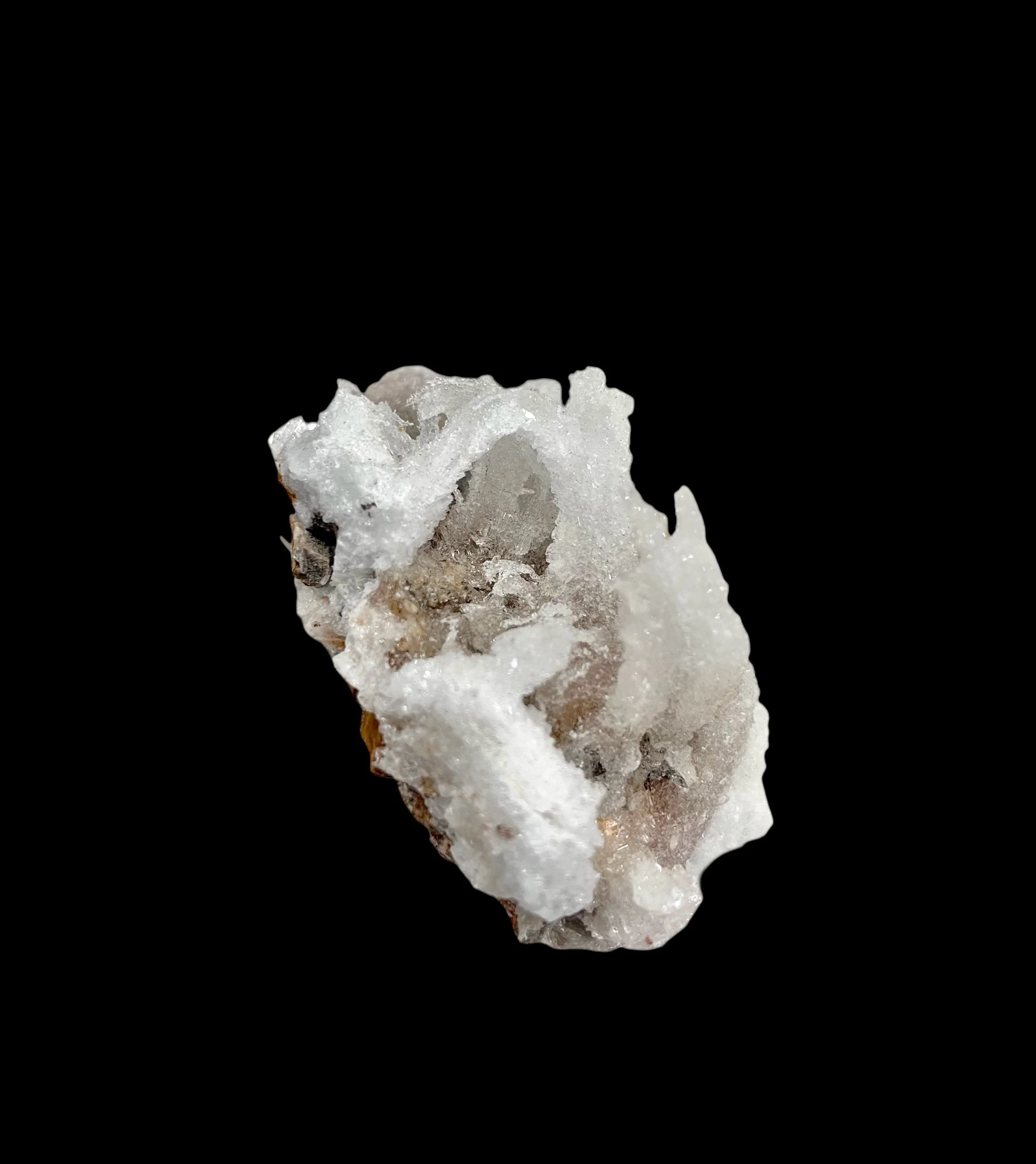
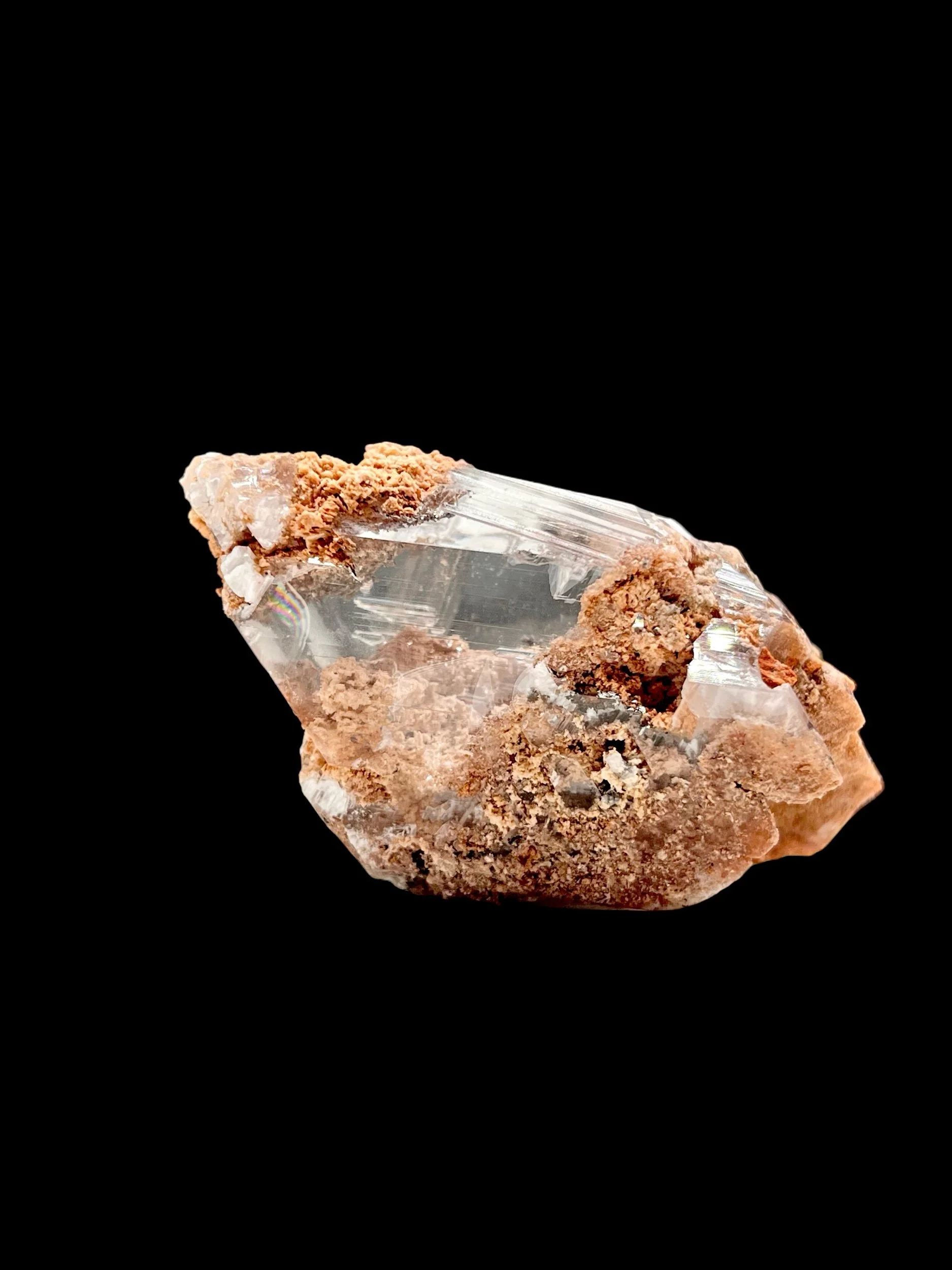
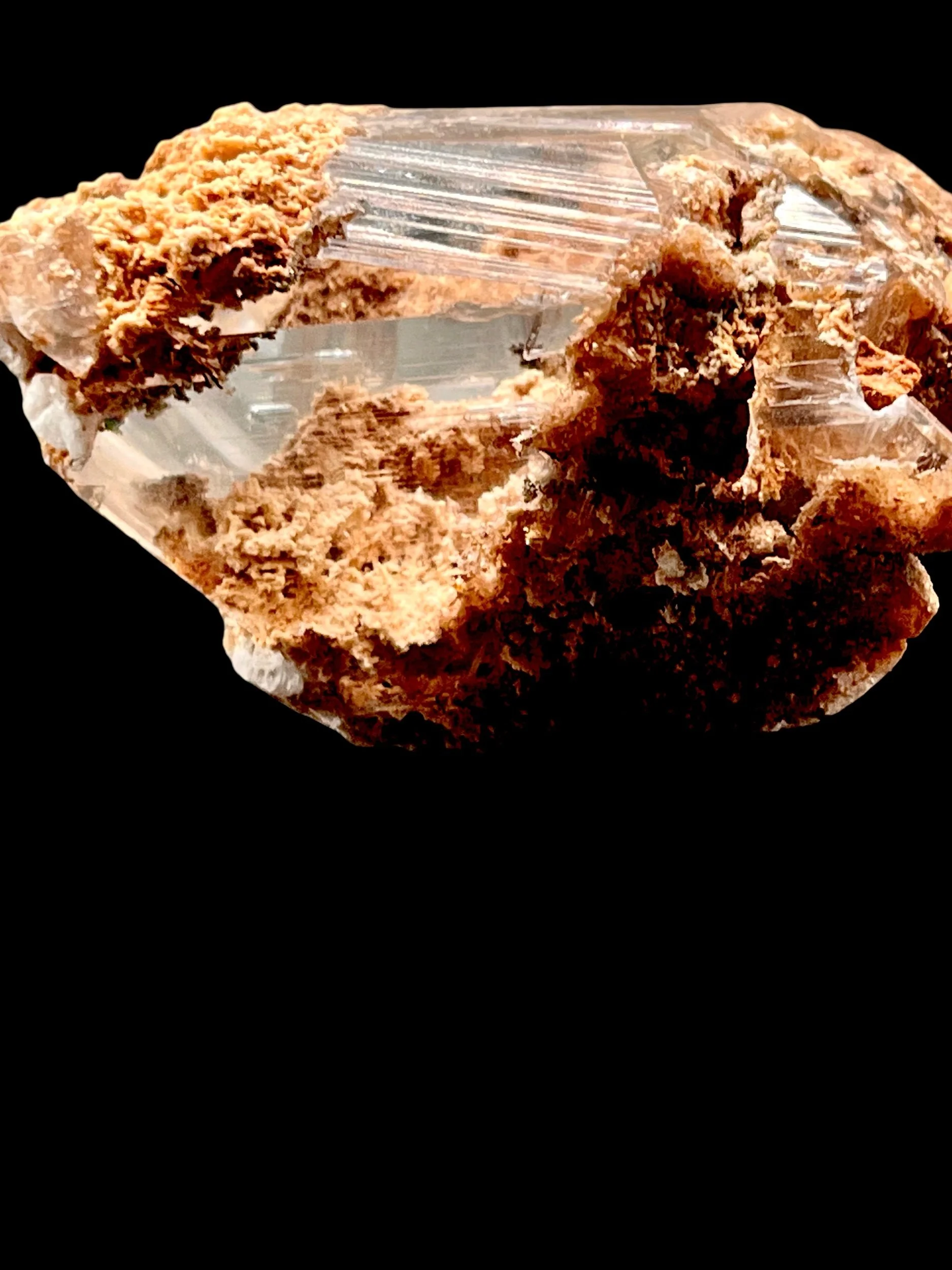
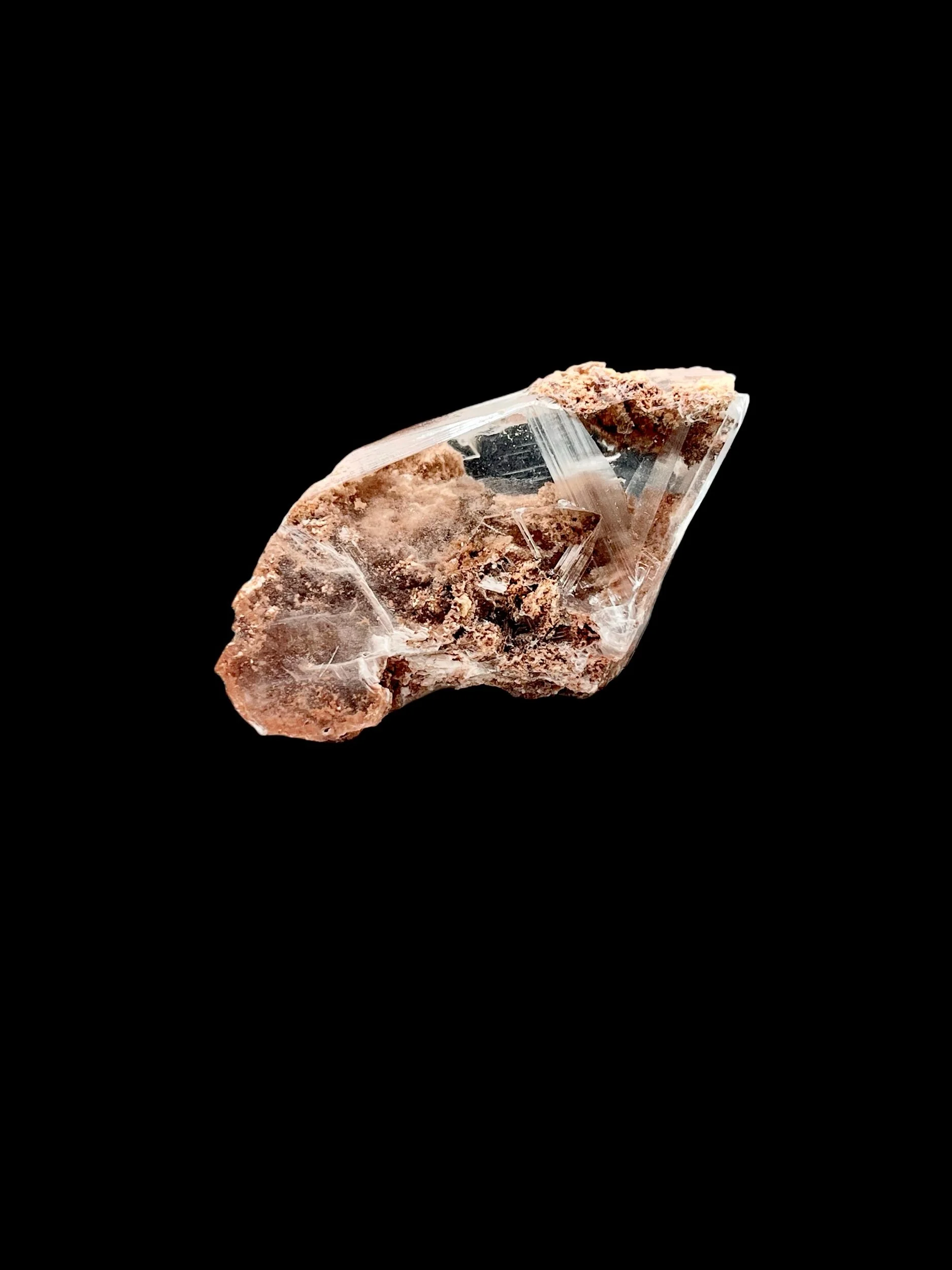
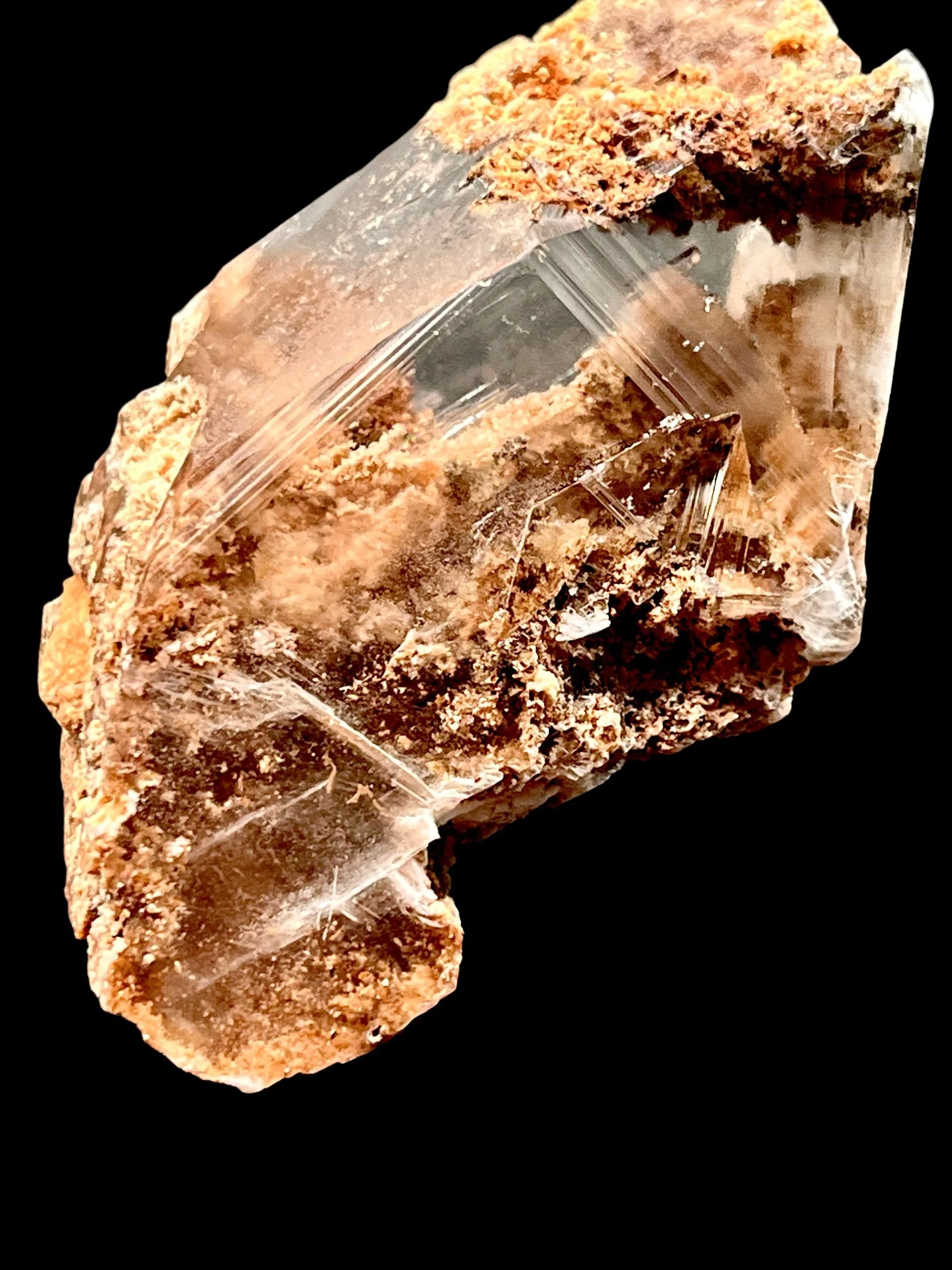
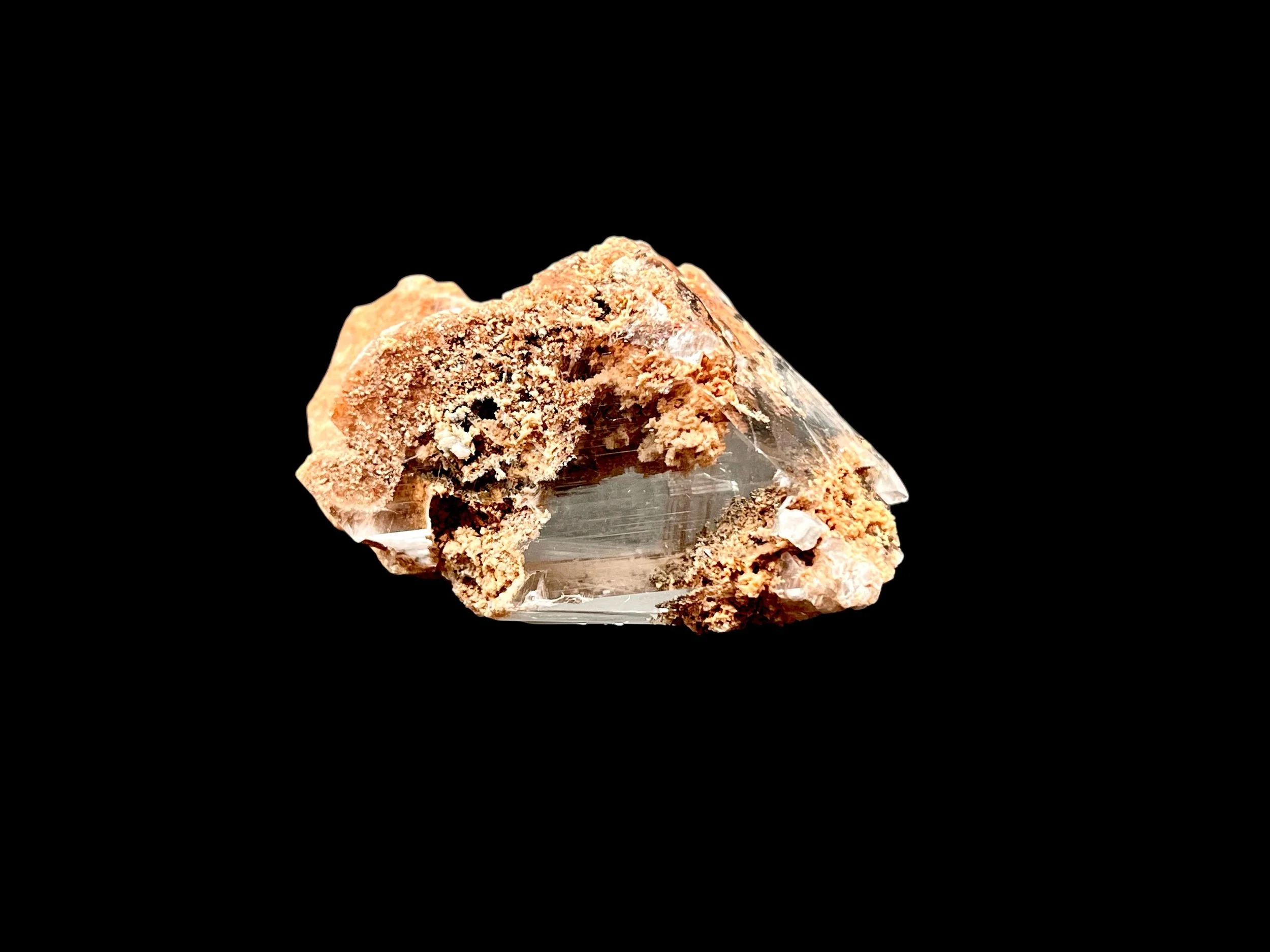
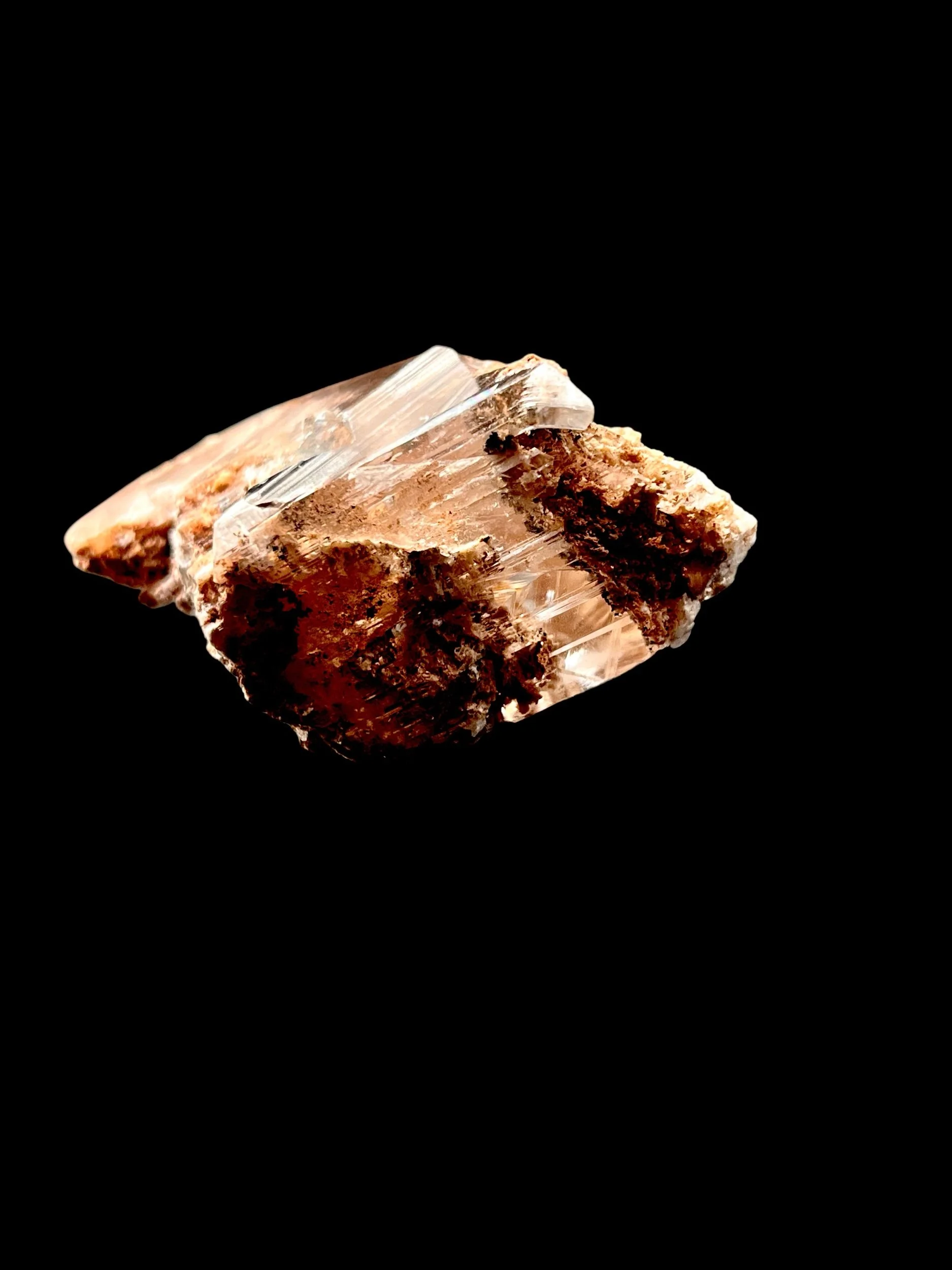
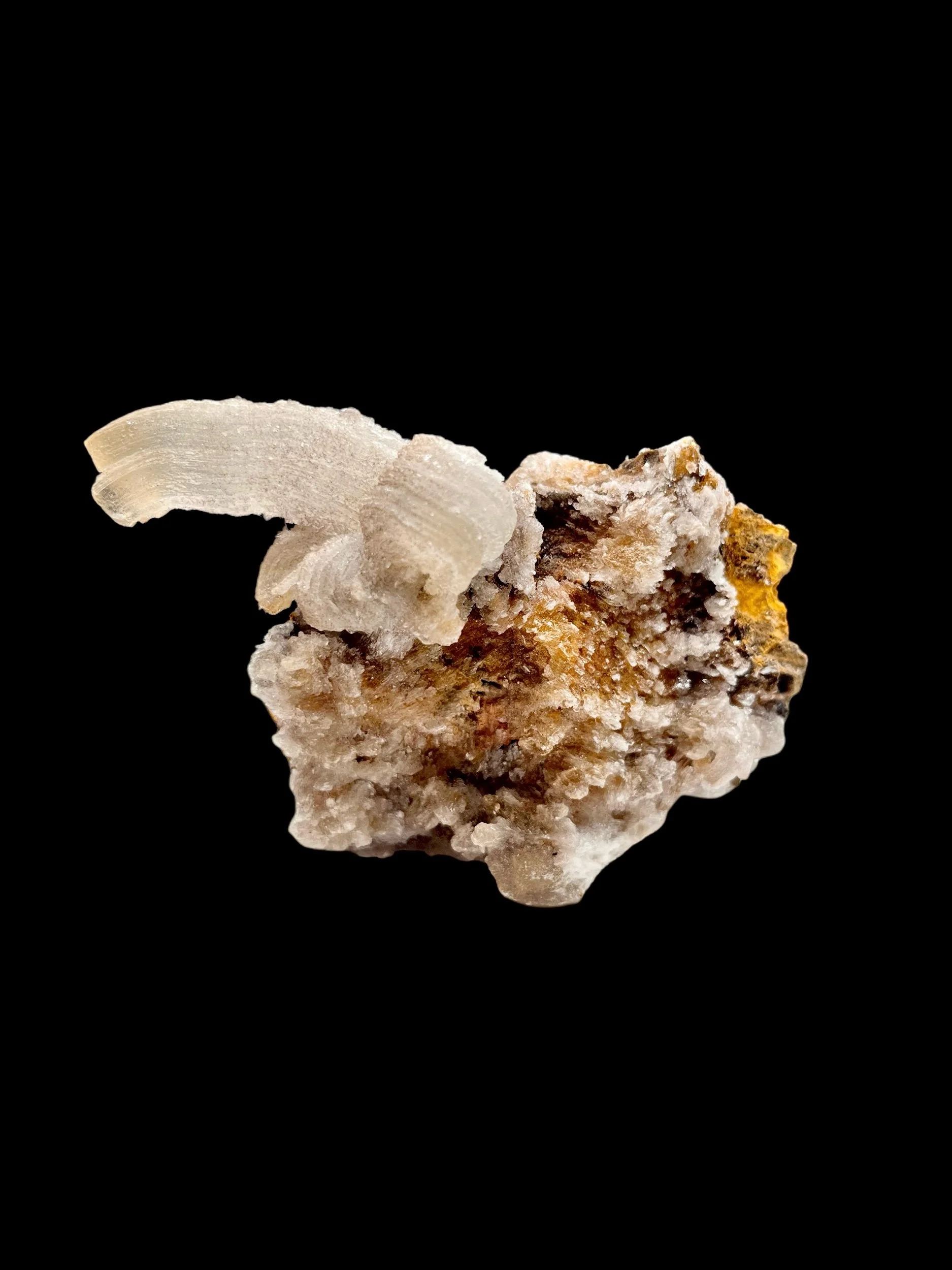
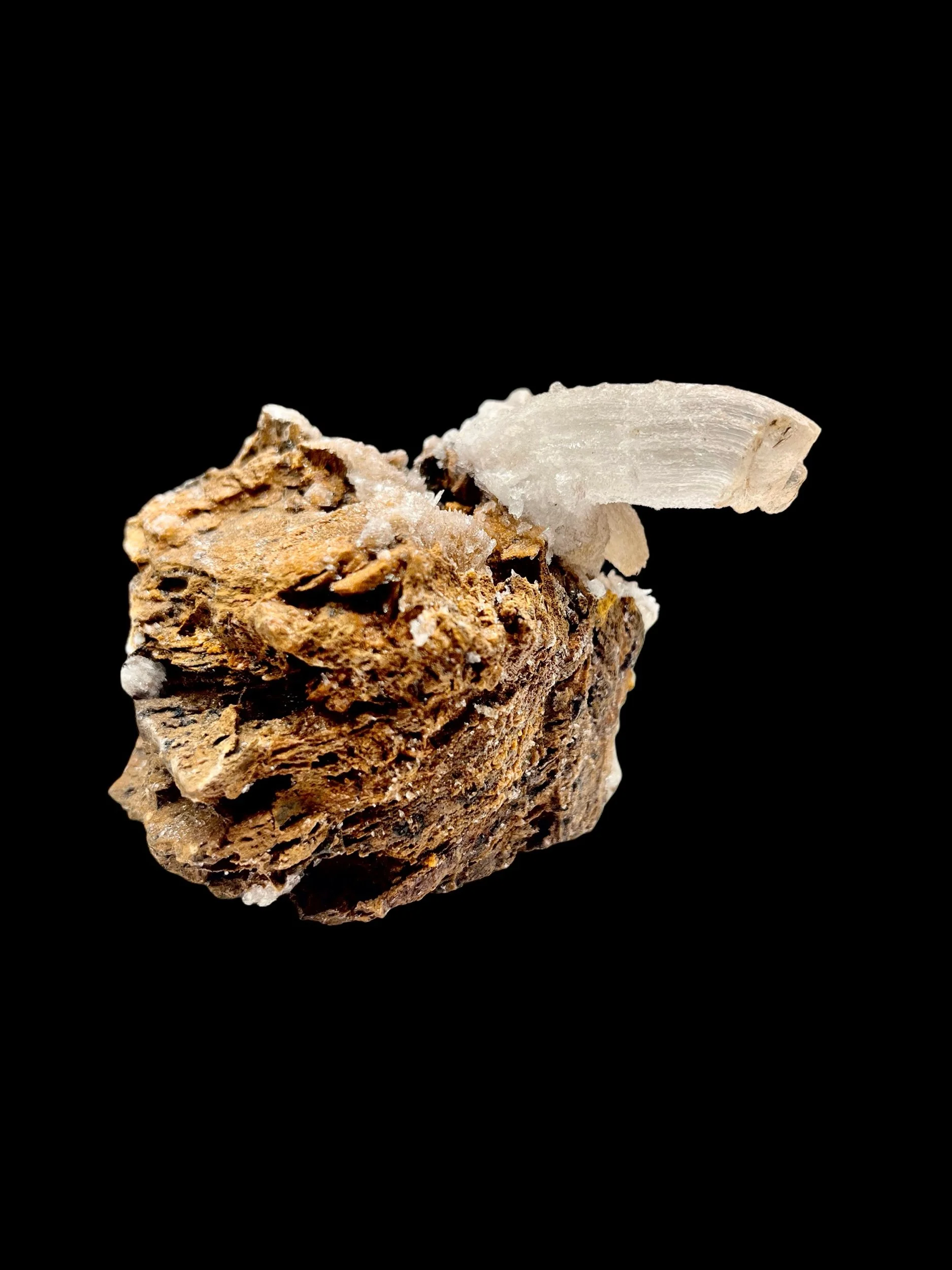
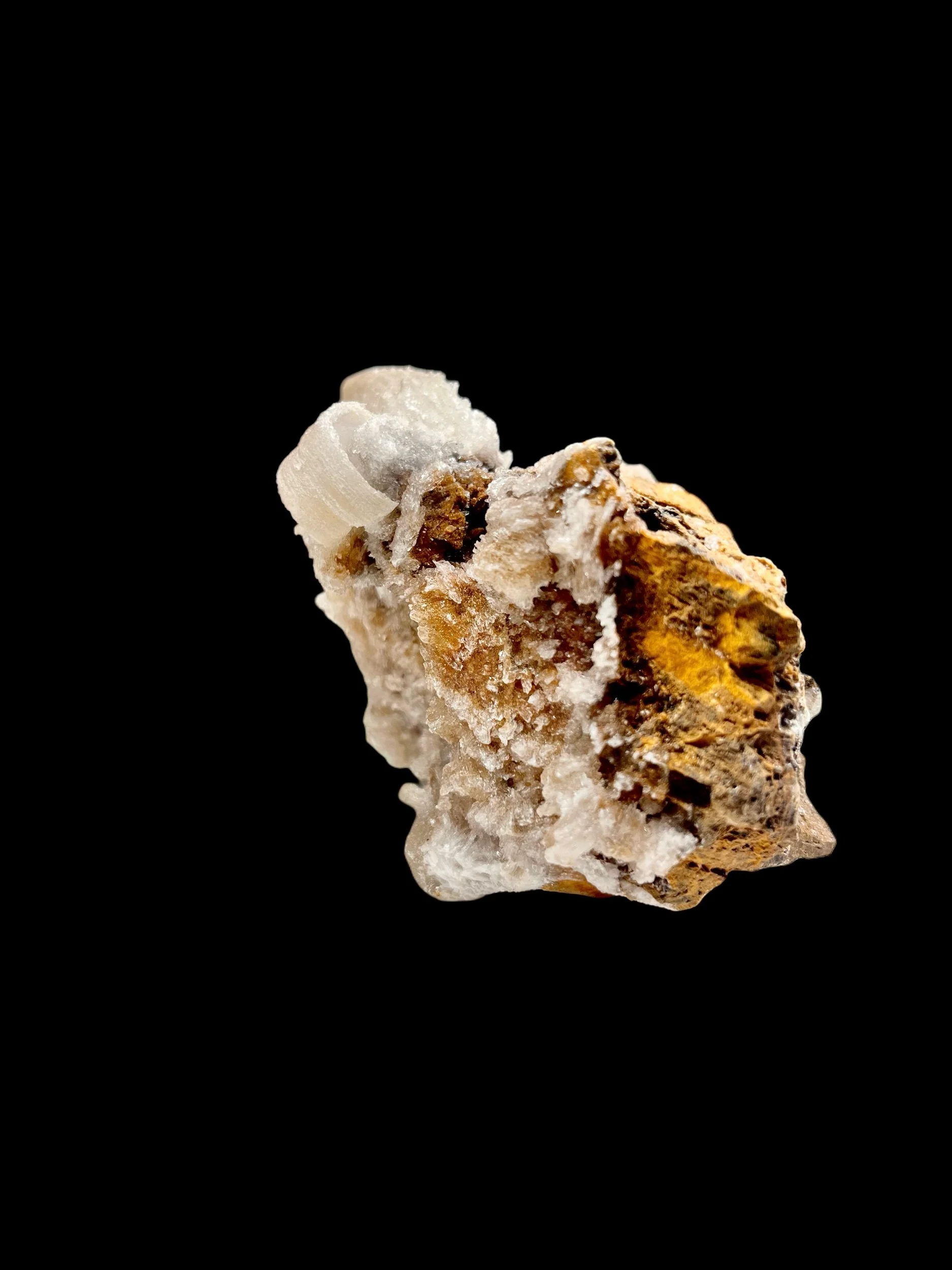
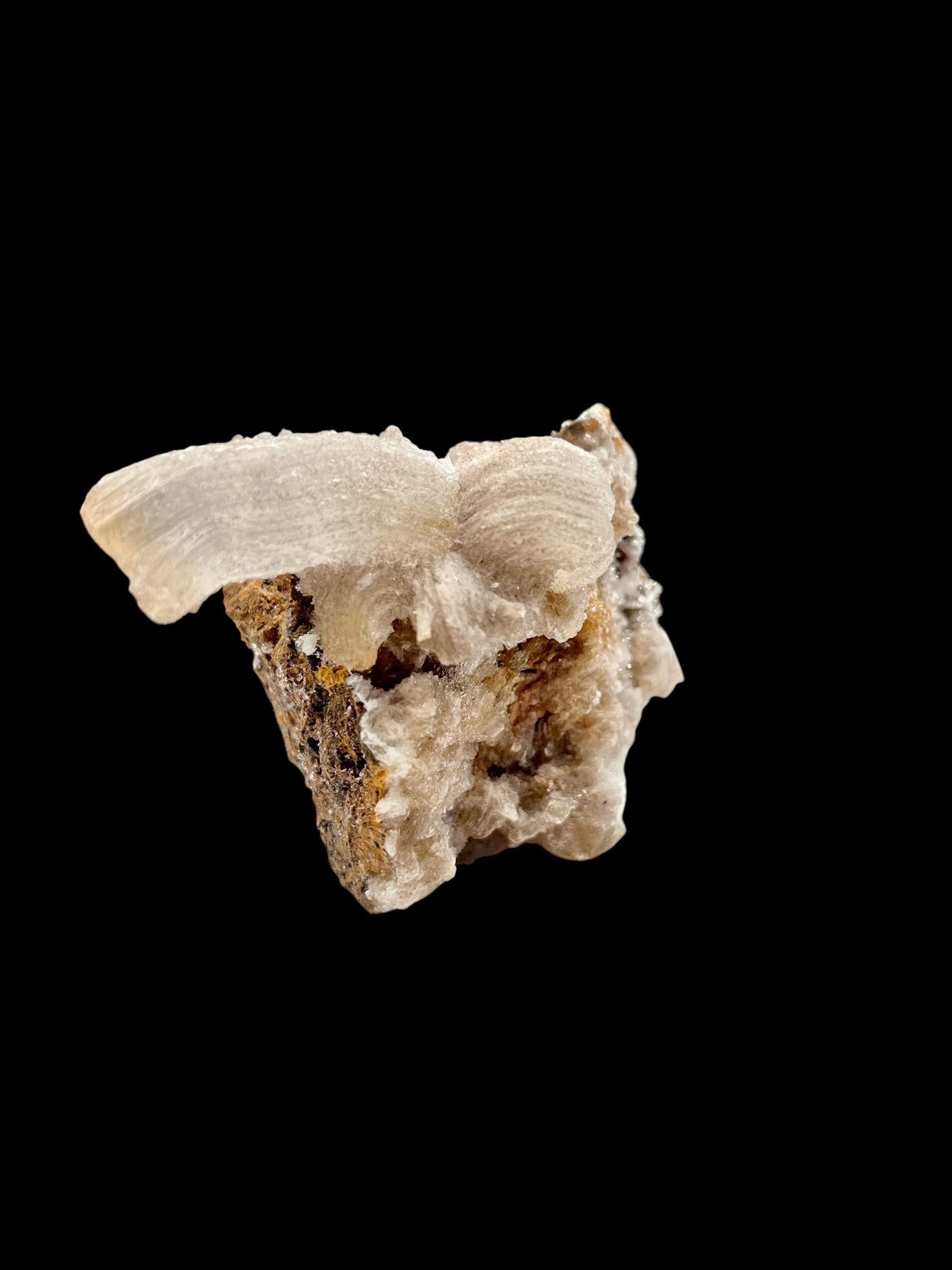
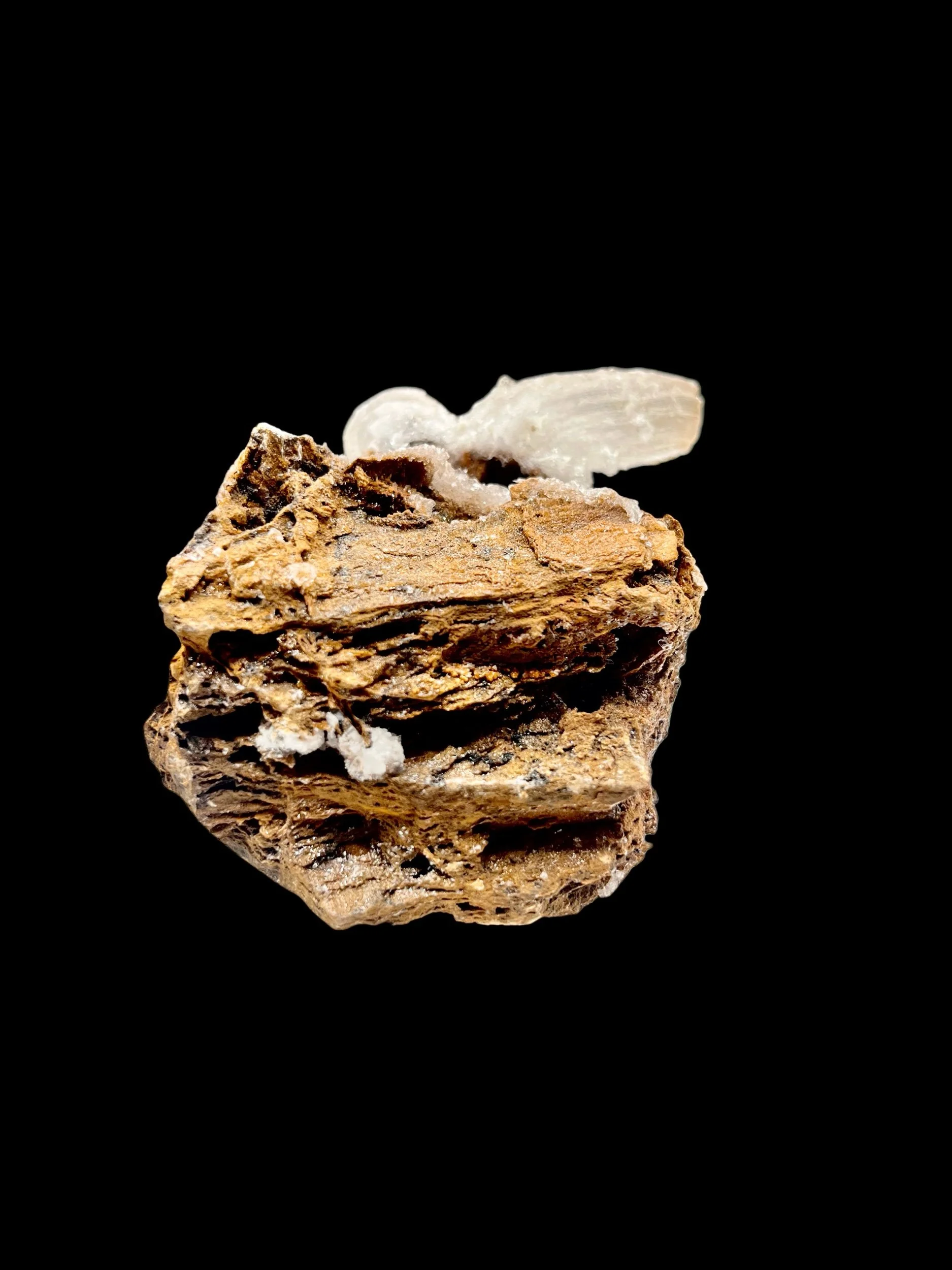
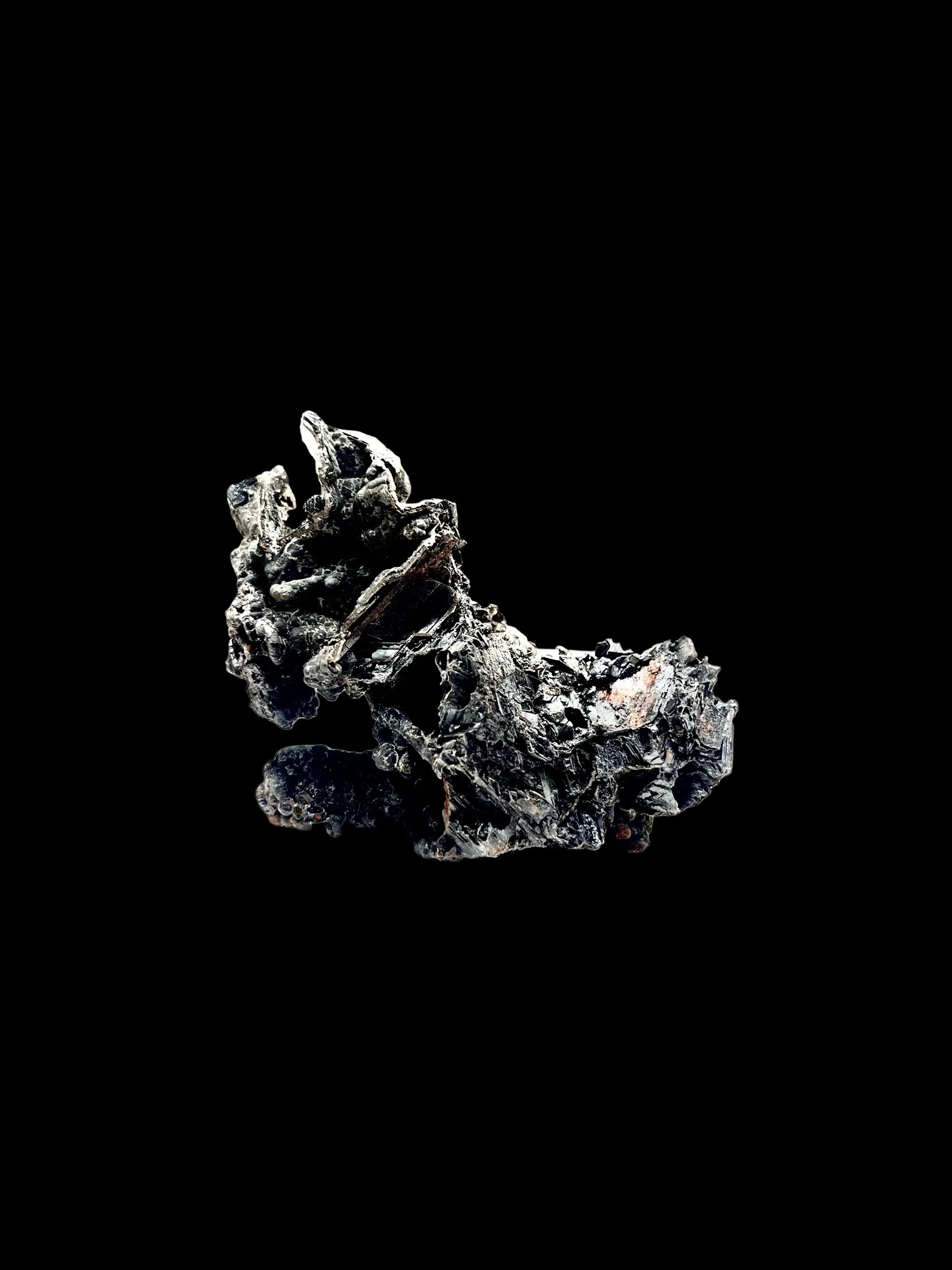
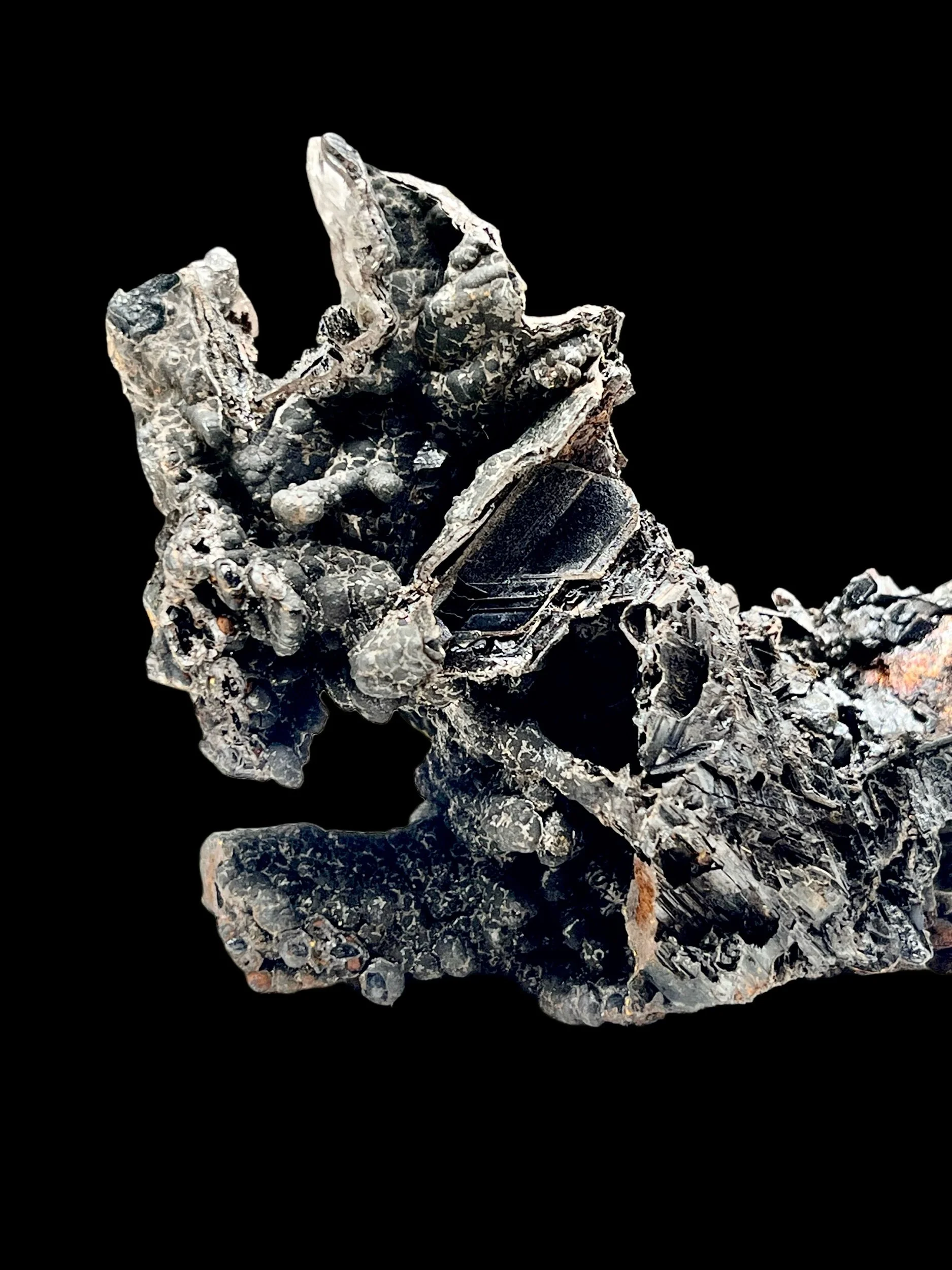
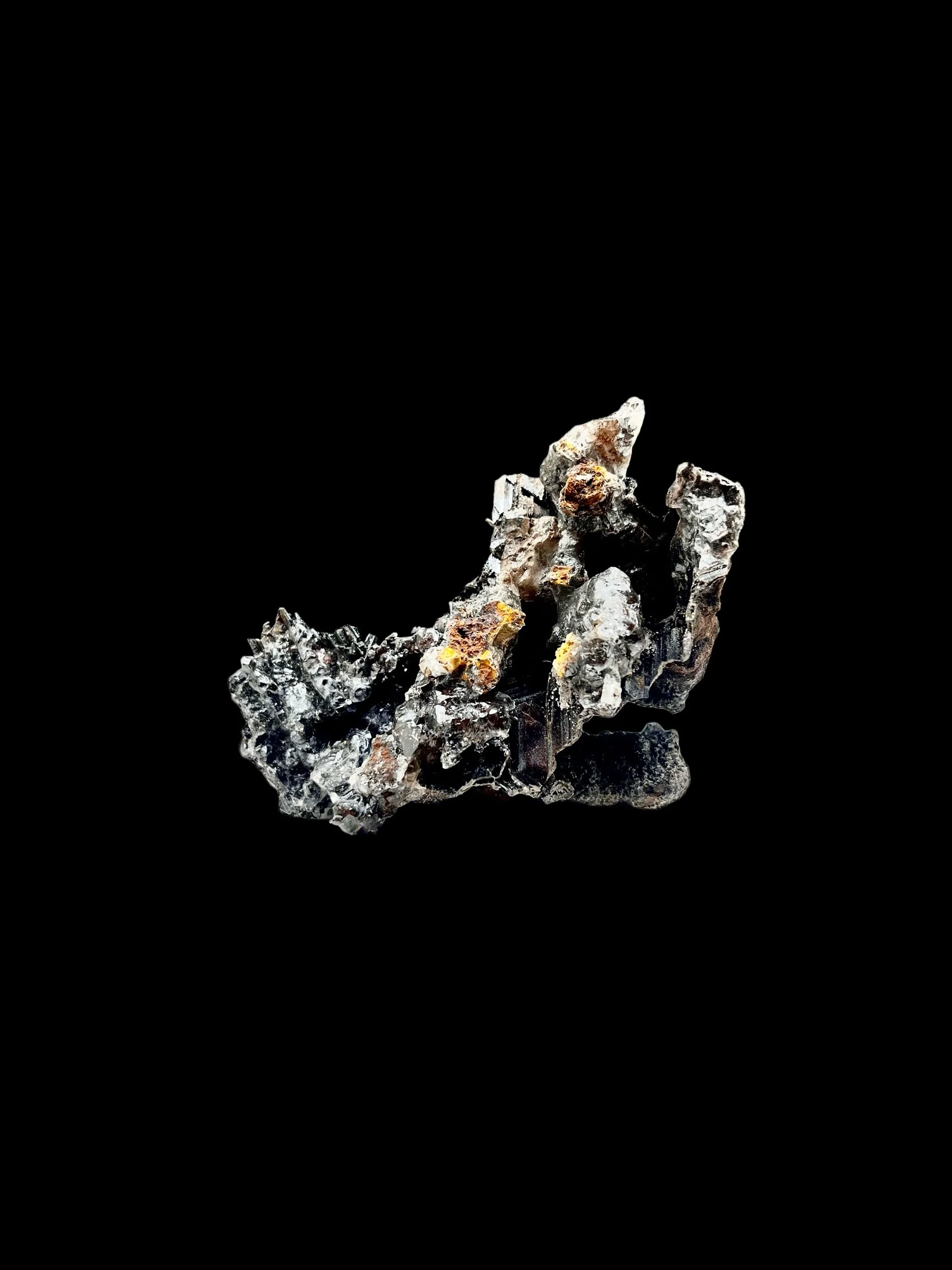
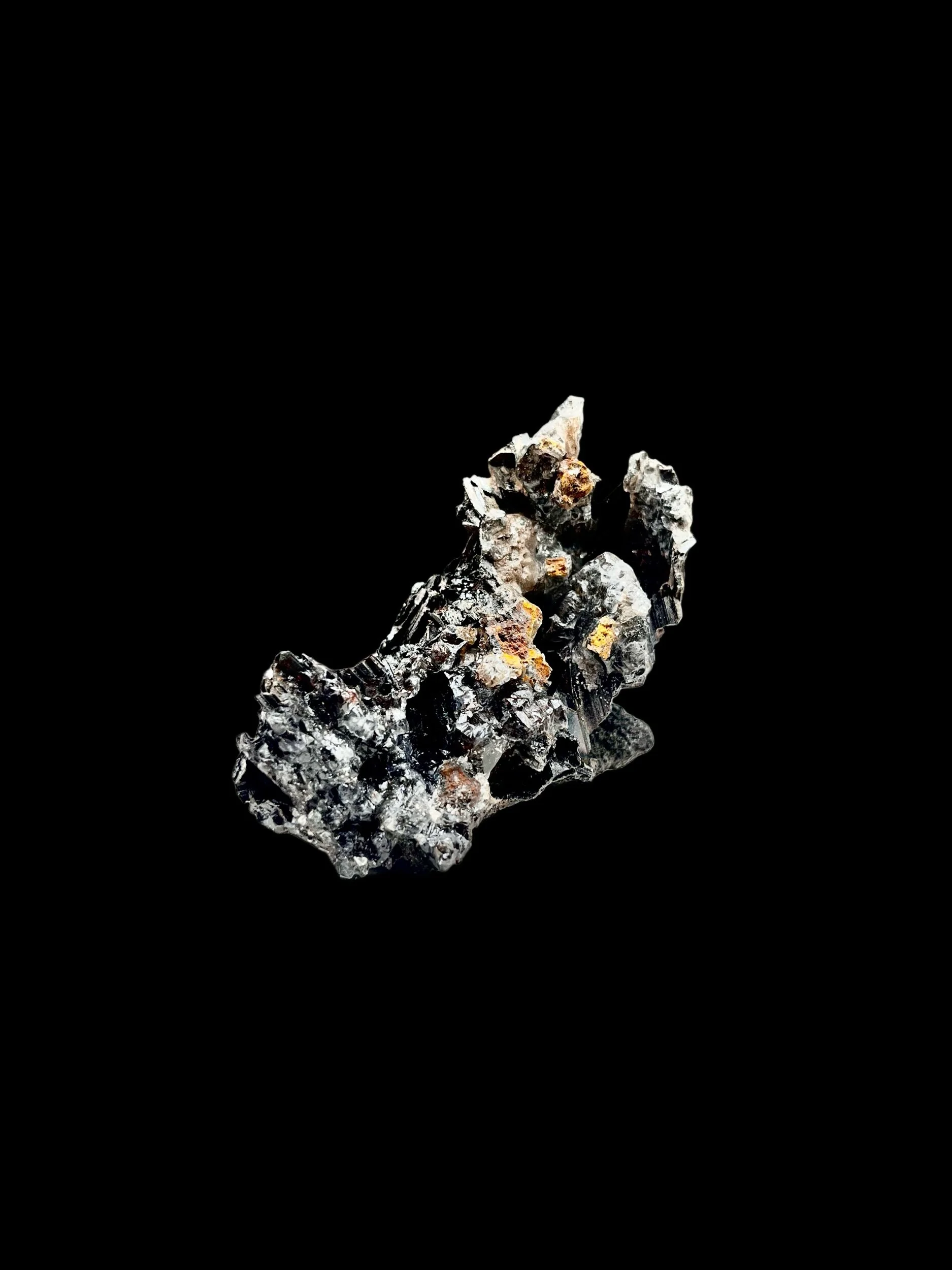
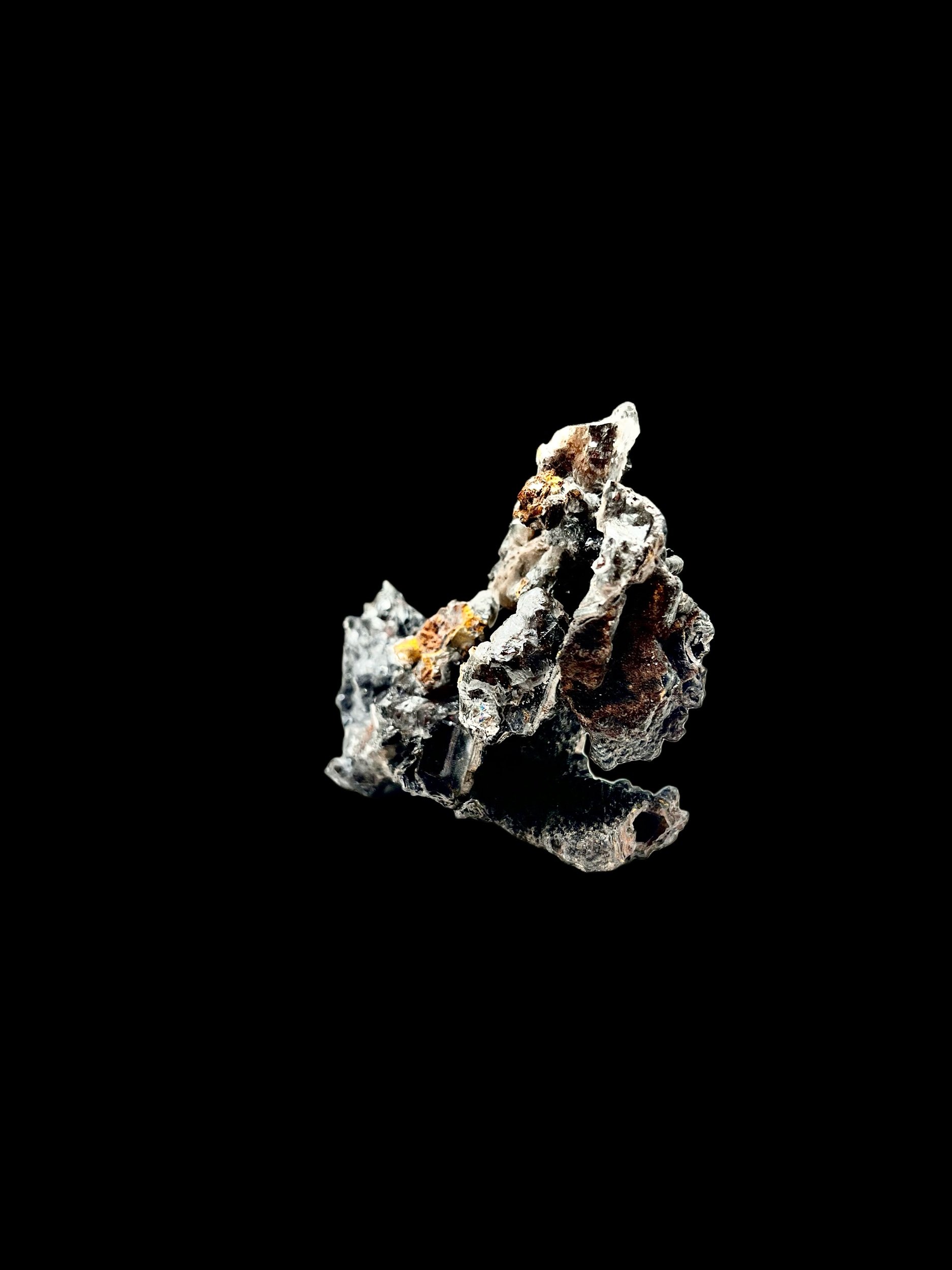
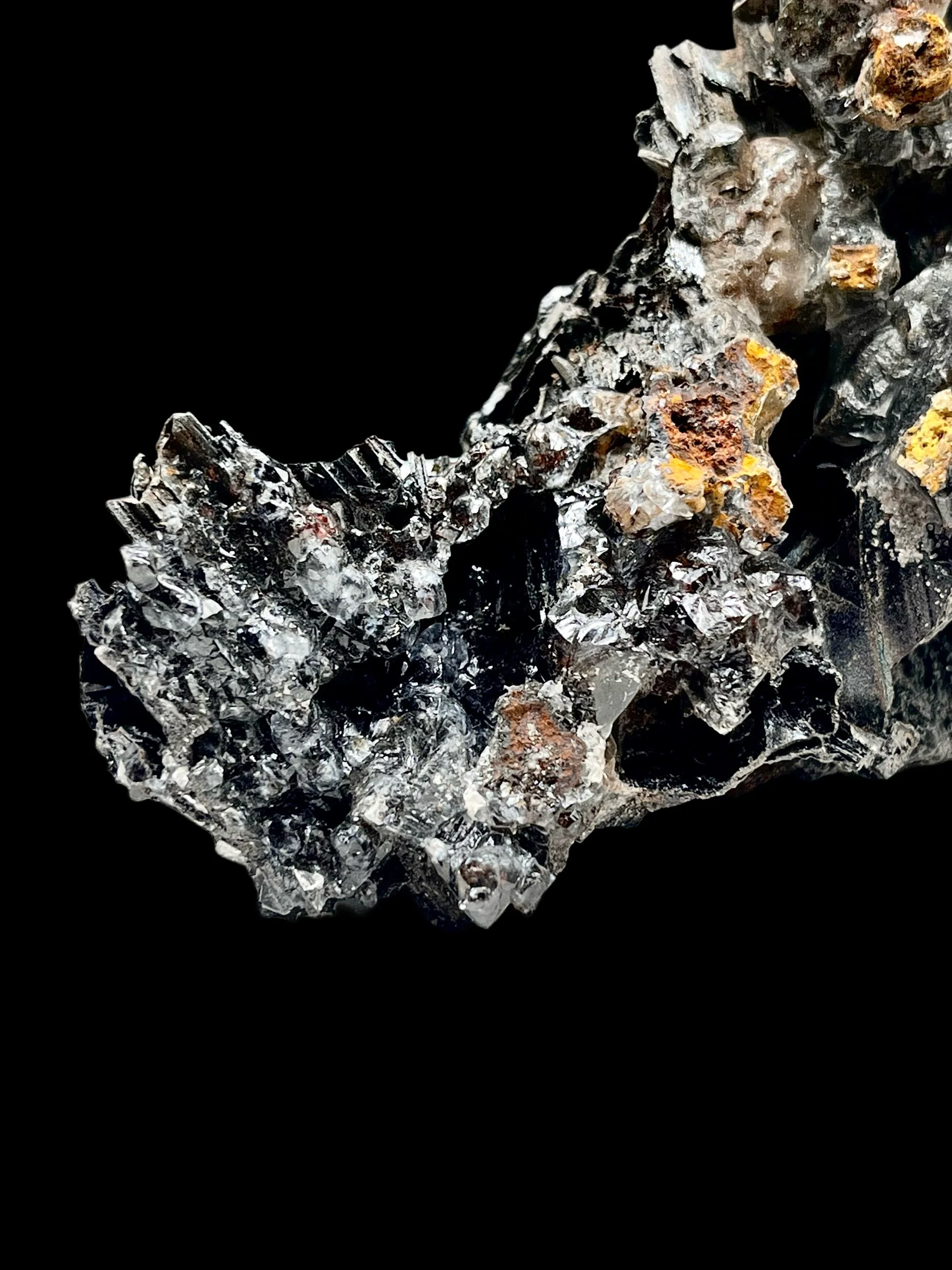
A beautiful little mineral treasure with an extraordinary combination of color and texture! This Selenite on Shattuckite specimen from Mexico's historic Ojuela Mine features a dramatic sweep of brilliant turquoise-blue mineralization surrounded by delicate, translucent crystal formations.
Its most striking feature is a richly textured blue-green crest, where fine crystalline formations cascade across the specimen like a miniature frozen waterfall. Vibrant aqua, mint green, and icy crystals create a stark contrast against the rugged charcoal-colored matrix, while golden marcasite adds an unexpected touch of sparkle.
This specimen packs remarkable visual interest into a small, beautifully dimensional display piece.
Dimensions, Weight & Locality
Dimensions: 2.75 × 2 × 0.75 inches
Weight: 97 grams
Locality: Ojuela Mine, Mapimí, Durango, Mexico
Metaphysical Properties
Traditionally associated with:
Selenite: Energy cleansing, peacefulness, mental clarity, and spiritual awareness.
Shattuckite: Honest communication, intuition, emotional understanding, and personal insight.
Marcasite: Grounding, focus, confidence, and personal transformation.
Together, these minerals are believed to encourage thoughtful communication, emotional balance, and a harmonious connection between intuition and clarity.
Collector's Notes
A mine with a bridge in the sky! Ojuela Mine is famous not only for its extraordinary minerals but also for its historic suspension bridge, which once carried mining materials across a dramatic canyon. Today, the bridge remains one of the area's most recognizable landmarks.
A mineral named after the moon! Selenite takes its name from Selene, the Greek goddess of the moon, inspired by its luminous, appearance. Despite its name, selenite contains no significant selenium; it is a crystalline variety of gypsum.
The secret behind the blue: Shattuckite is a copper-bearing mineral that develops its striking coloration through its chemical composition. It typically forms during the alteration of copper deposits, when mineral-rich fluids interact with existing copper minerals.
Marcasite's surprising twin: Marcasite and pyrite have exactly the same chemical formula, FeS₂, but their atoms are arranged differently. This makes them polymorphs, proving that the same ingredients can create two distinctly different minerals!
Care: This specimen contains delicate crystal formations. Keep it dry, avoid prolonged humidity, and handle gently. Marcasite is especially vulnerable to oxidation in humid conditions.
Highlights
Vibrant turquoise-blue and seafoam green coloration
Dramatic cascading, sharply defined mineral formations
Beautiful translucent crystals with high glassy luster
High contrasting dark charcoal-colored matrix
Golden sparkling marcasite
Multiple attractive display angles
From the historic Ojuela Mine in Durango, Mexico
Mineralogy
Selenite (Gypsum)
Chemical Formula: CaSO₄·2H₂O
Mineral Class: Sulfates
Crystal System: Monoclinic
Mohs Hardness: 2
Luster: Vitreous to pearly or silky
Streak: White
Cleavage: Perfect in one direction; distinct in two others
Specific Gravity: Approximately 2.3
Crystal Habit: Transparent to translucent tabular, prismatic, and bladed crystals, sometimes forming layered aggregates and crystal twins.
Shattuckite
Chemical Formula: Cu₅(SiO₃)₄(OH)₂
Mineral Class: Silicates (Inosilicates)
Crystal System: Orthorhombic
Mohs Hardness: 3.5
Luster: Silky
Streak: Pale blue
Cleavage: Perfect in two directions
Specific Gravity: Approximately 4.11
Crystal Habit: Typically forms elongated prismatic, fibrous, needle-like, and radiating aggregates. Its characteristic blue color results from copper within its structure.
Marcasite
Chemical Formula: FeS₂
Mineral Class: Sulfides
Crystal System: Orthorhombic
Mohs Hardness: 6–6.5
Luster: Metallic
Streak: Dark gray to black
Cleavage: Distinct in one direction
Specific Gravity: Approximately 4.9
Crystal Habit: Tabular, spear-shaped, radiating, and cockscomb formations. Chemically identical to pyrite but structurally different.


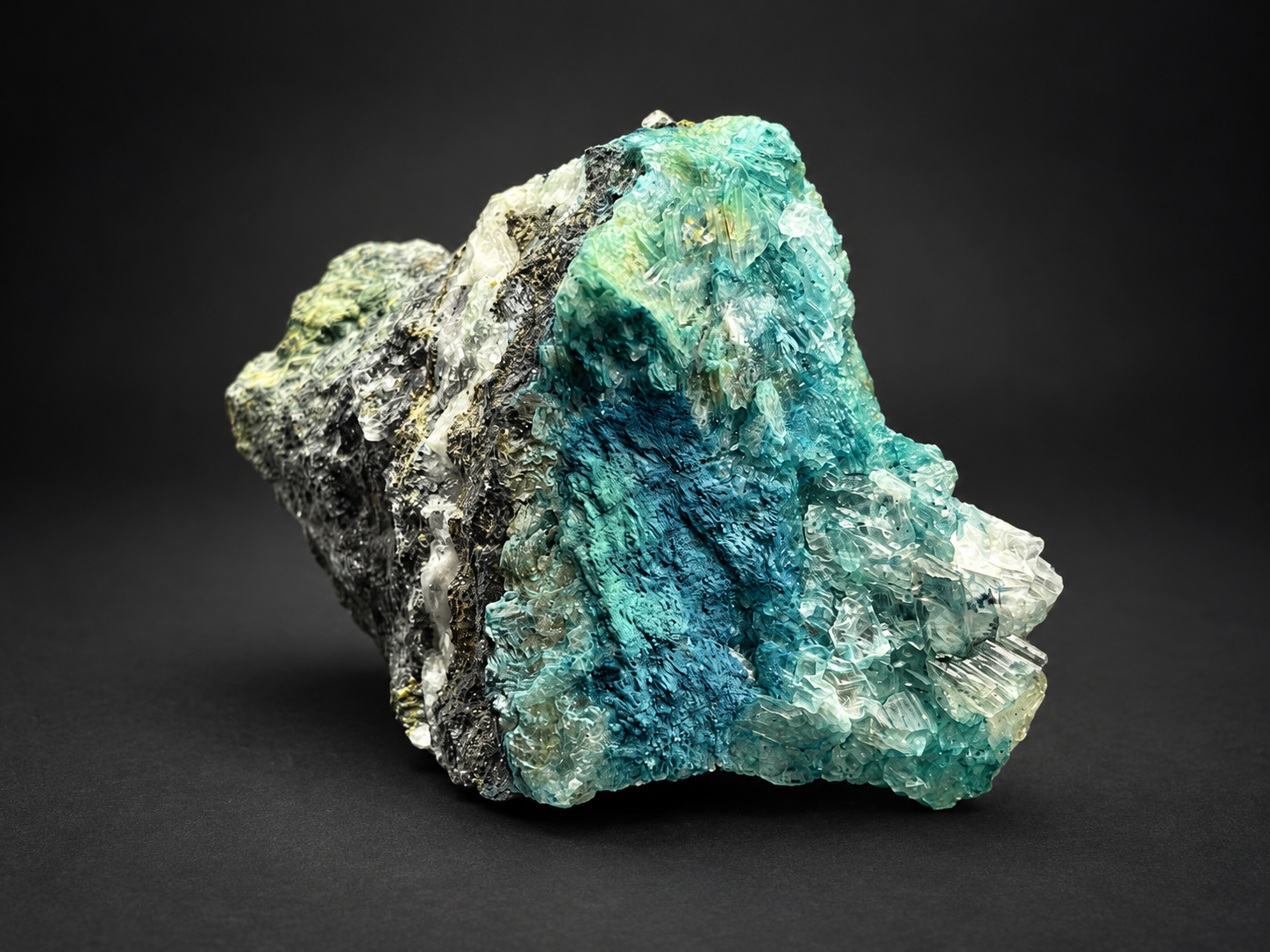 Image 1 of 7
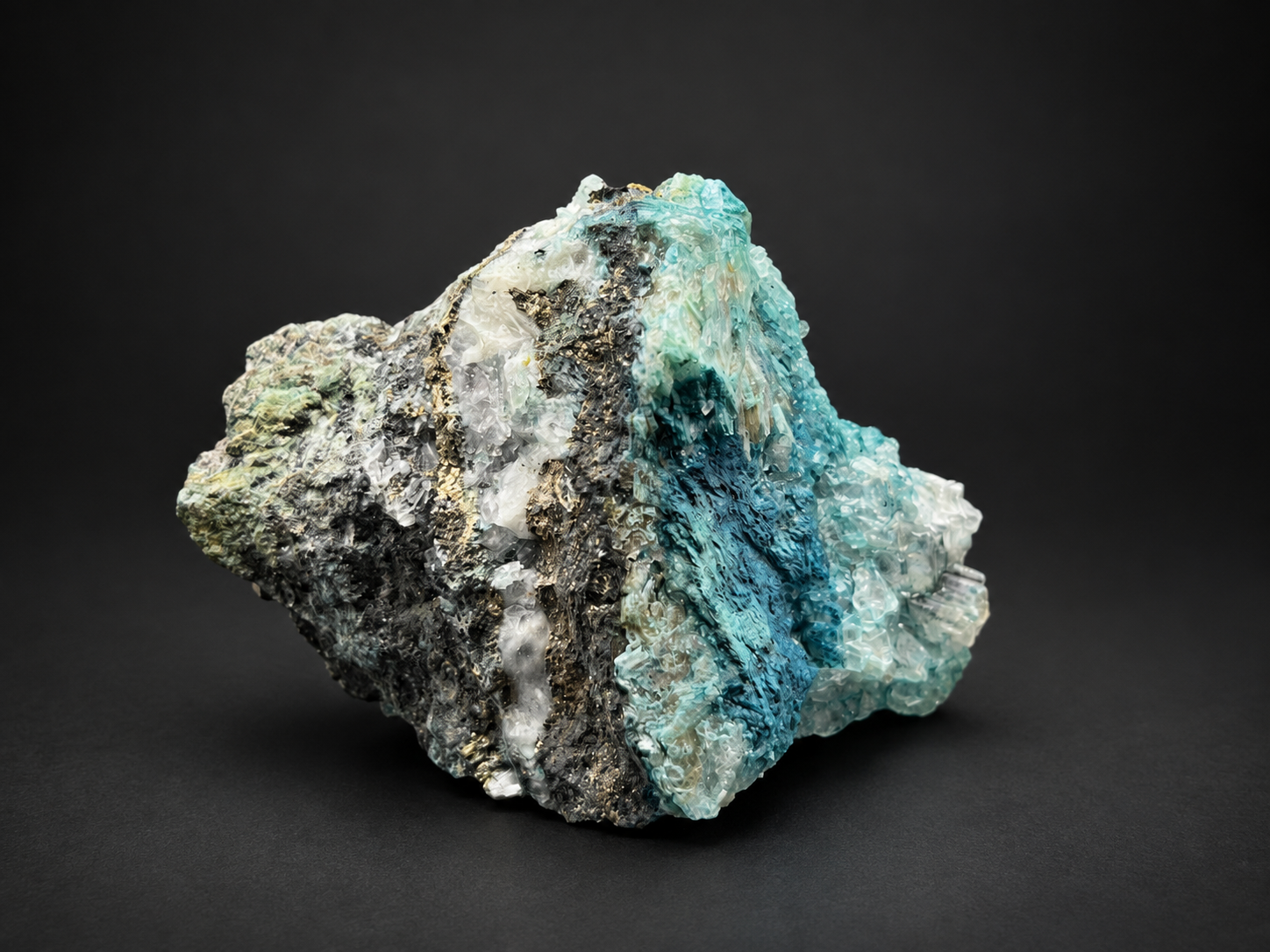 Image 2 of 7
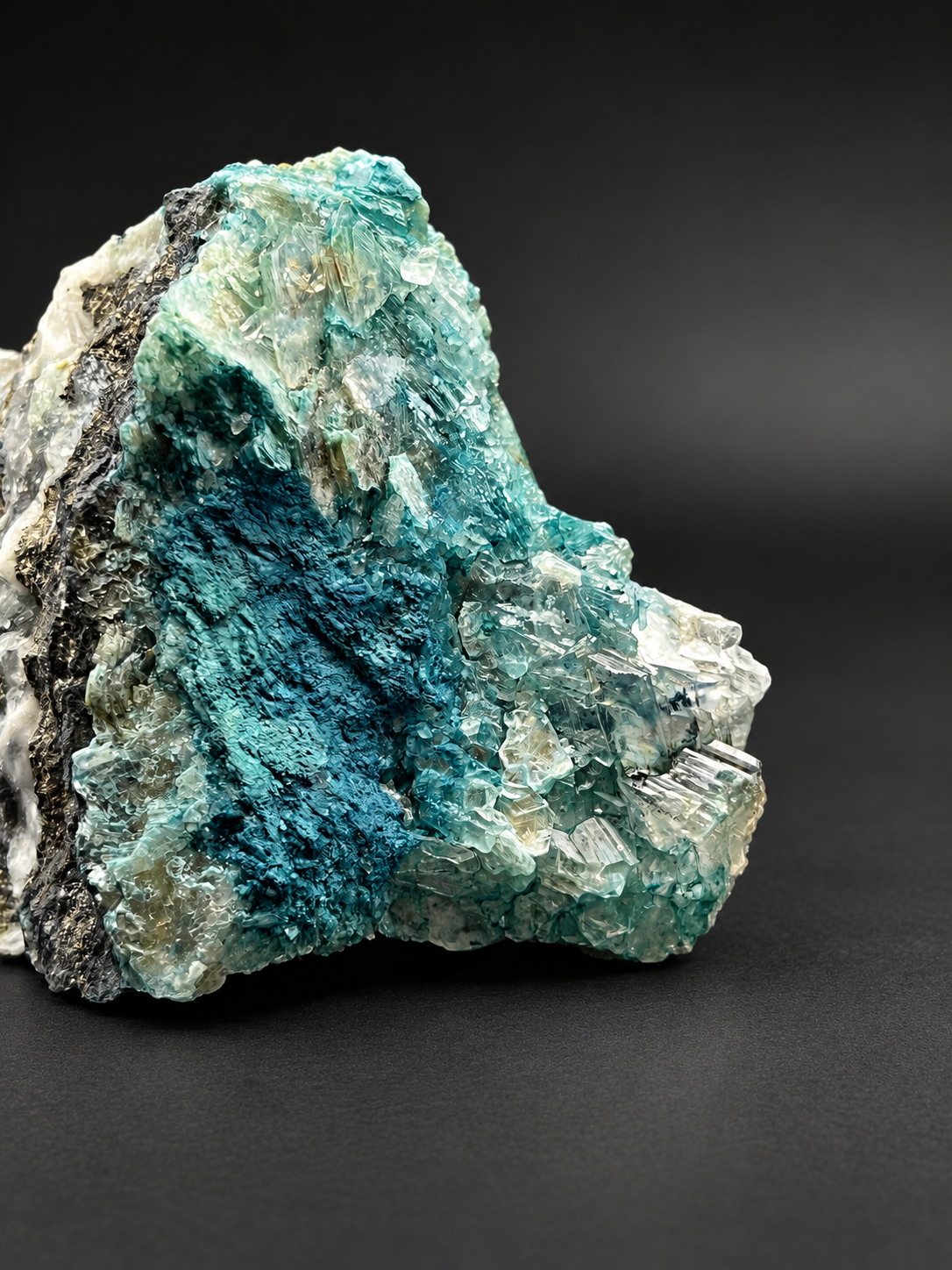 Image 3 of 7
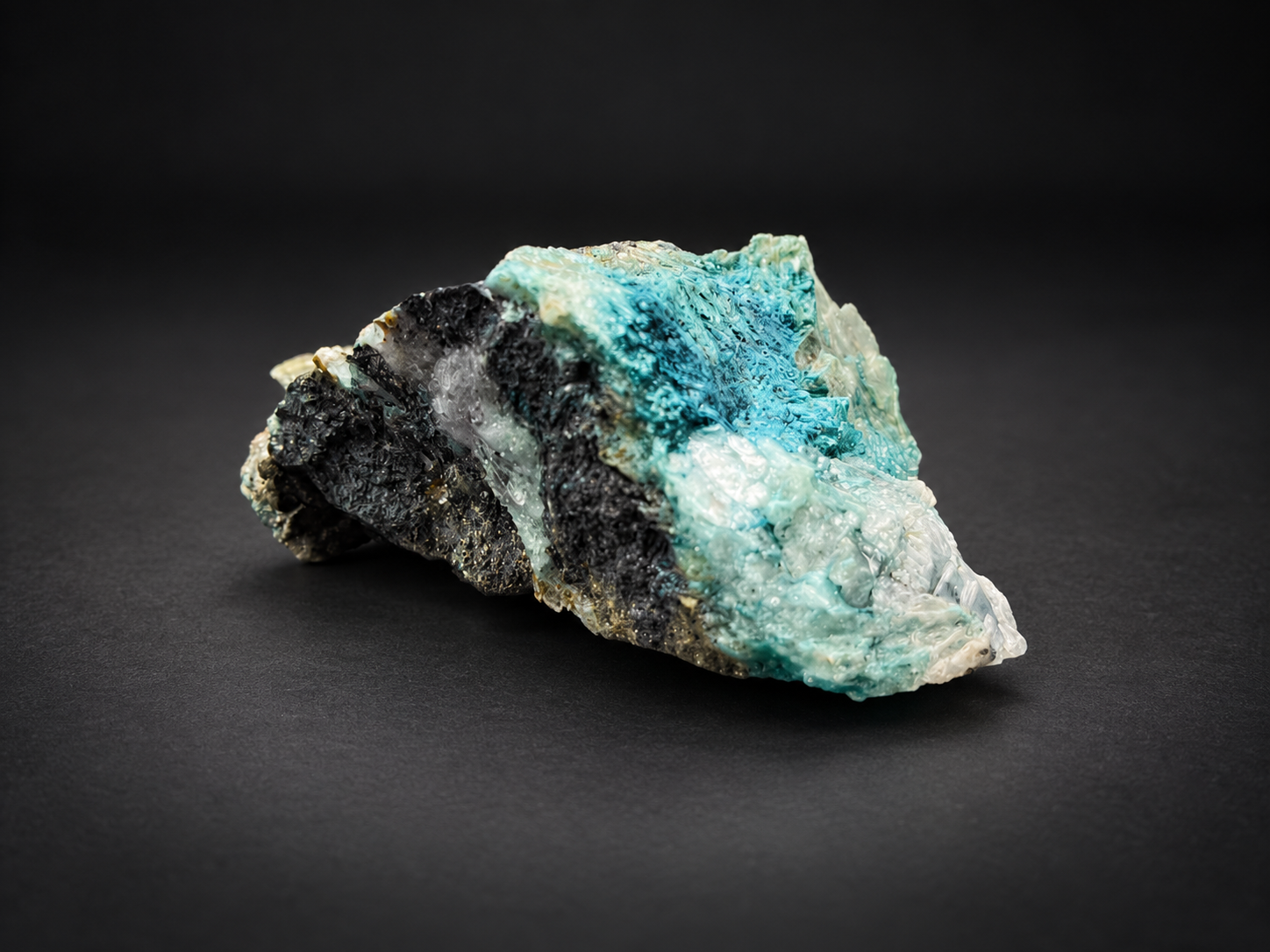 Image 4 of 7
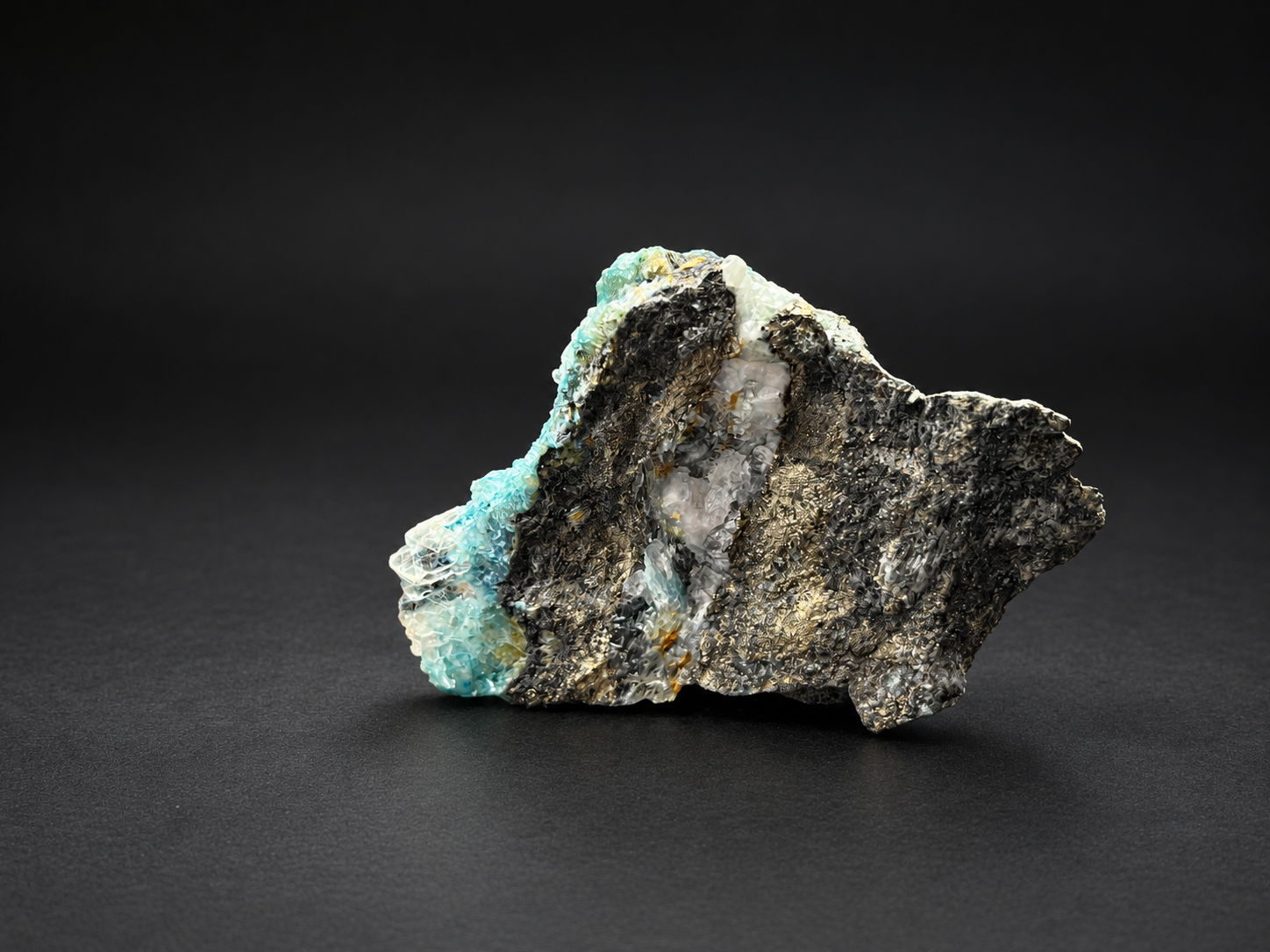 Image 5 of 7
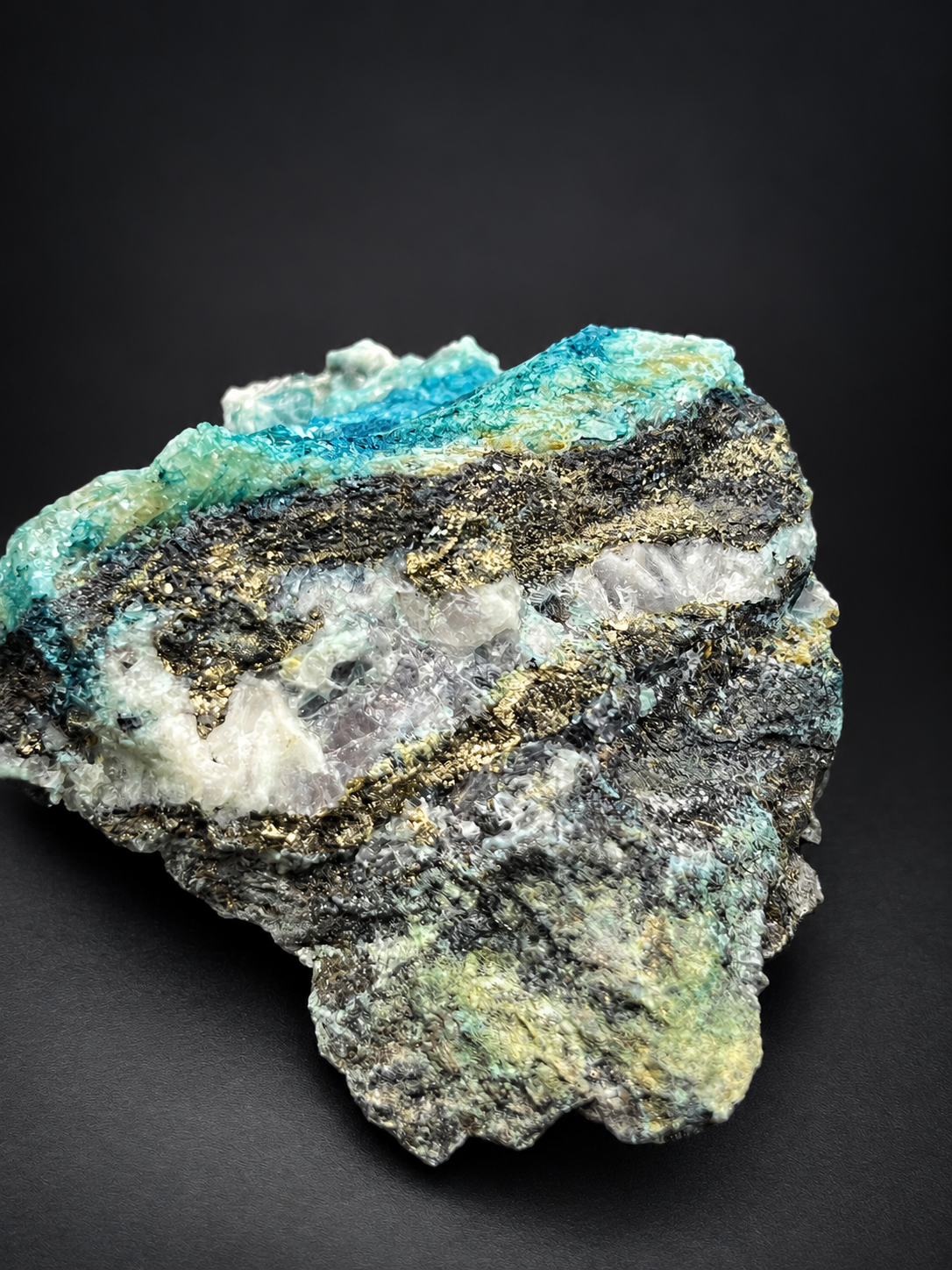 Image 6 of 7
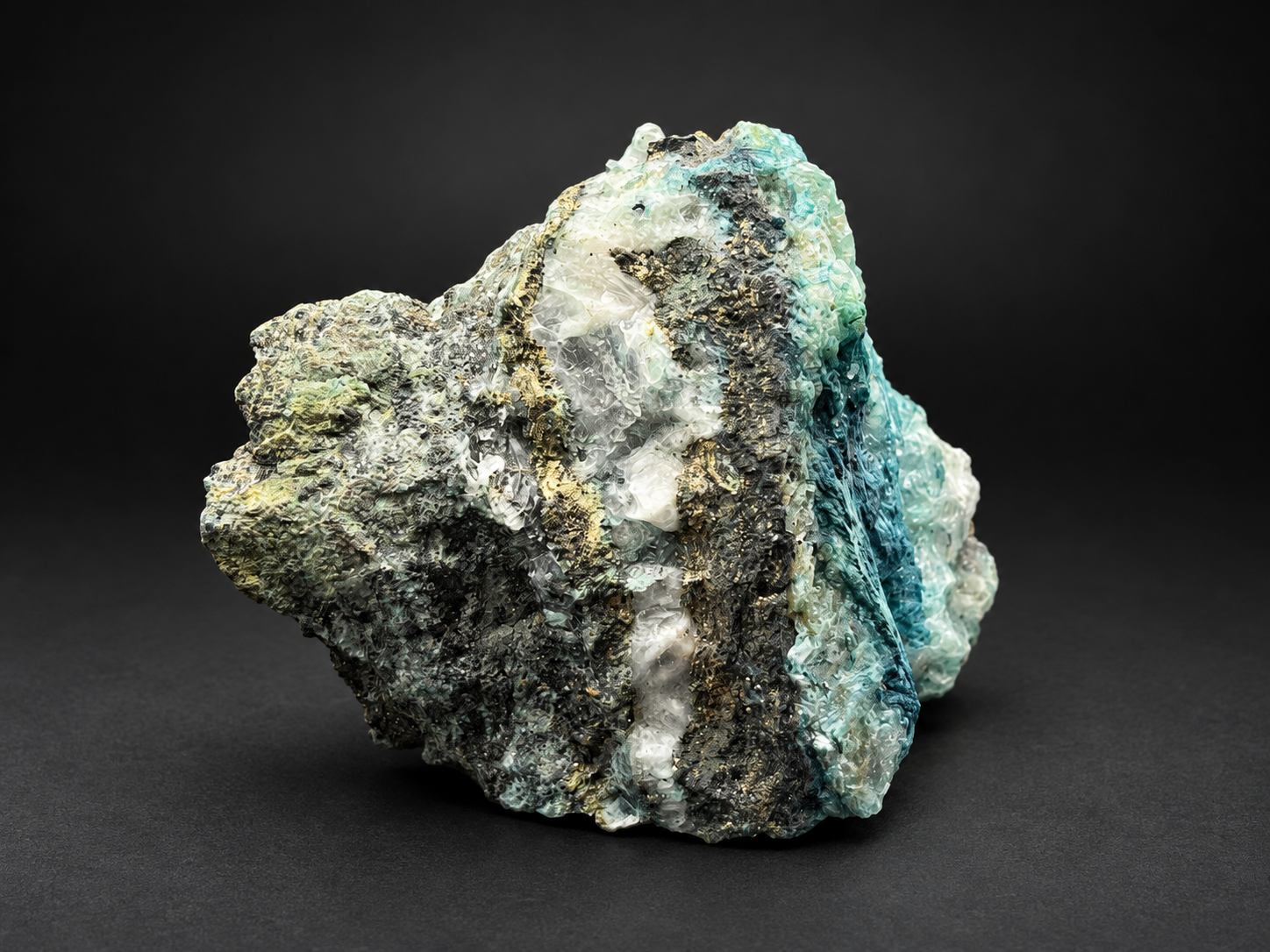 Image 7 of 7