Description
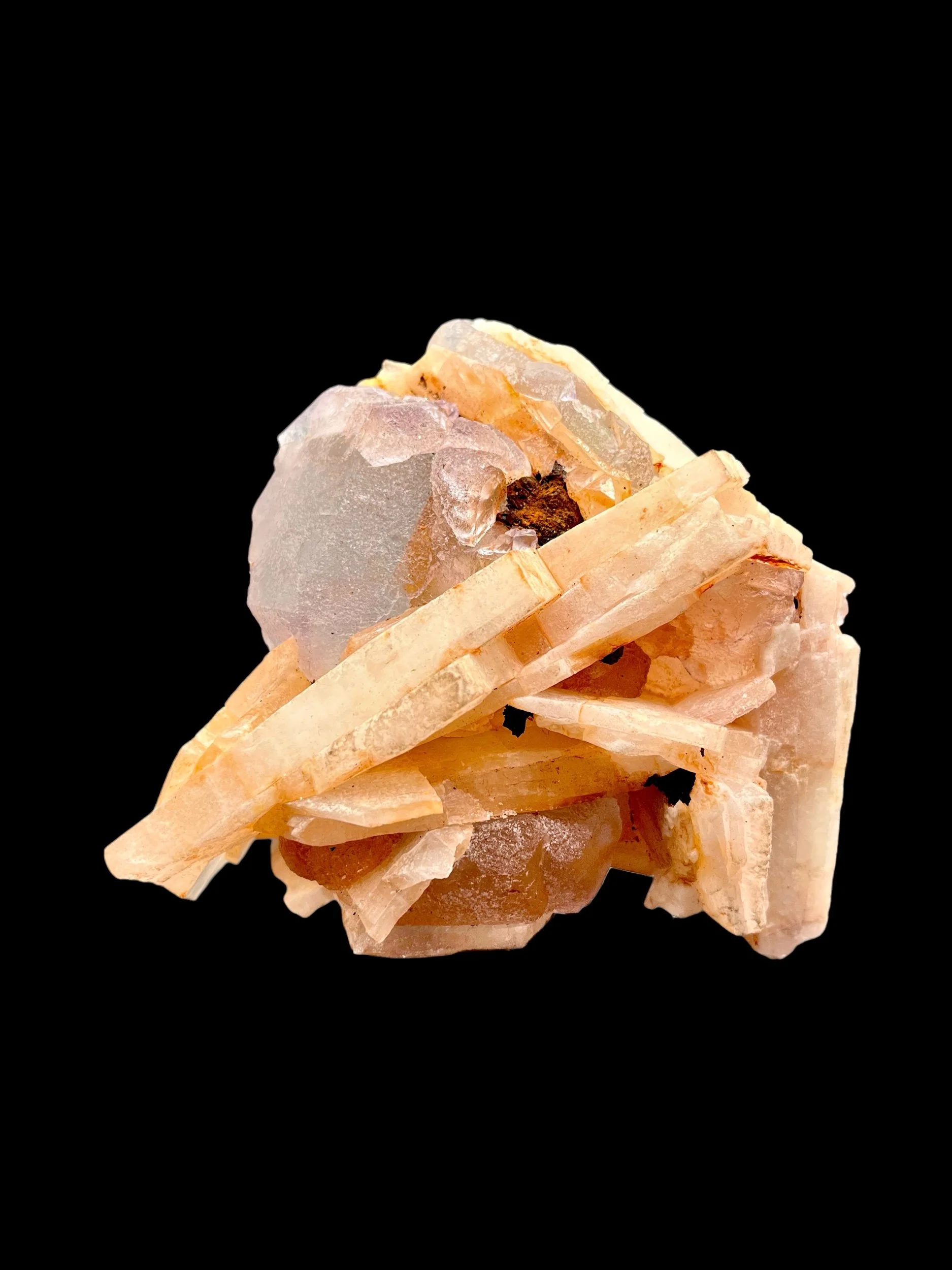
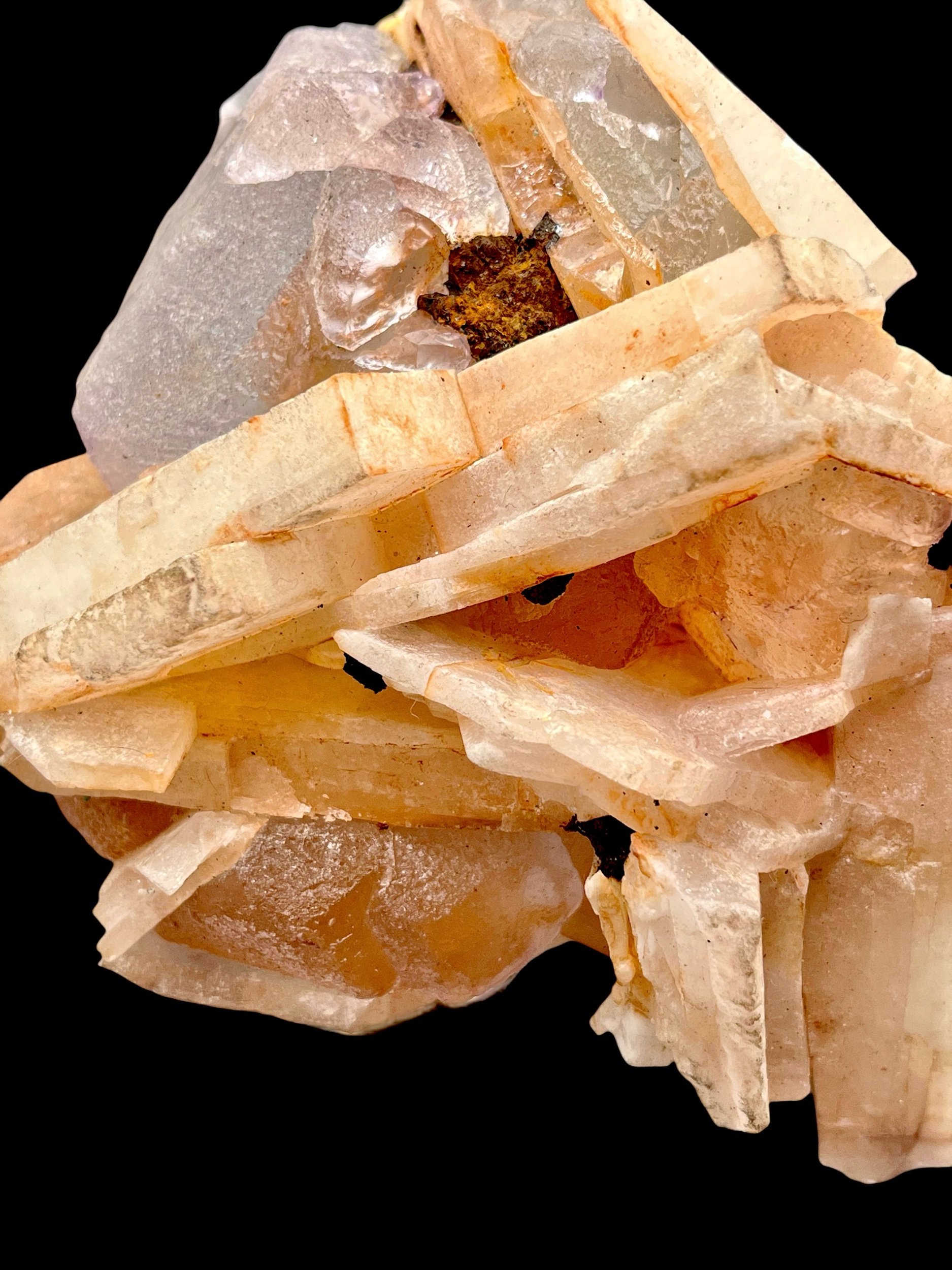
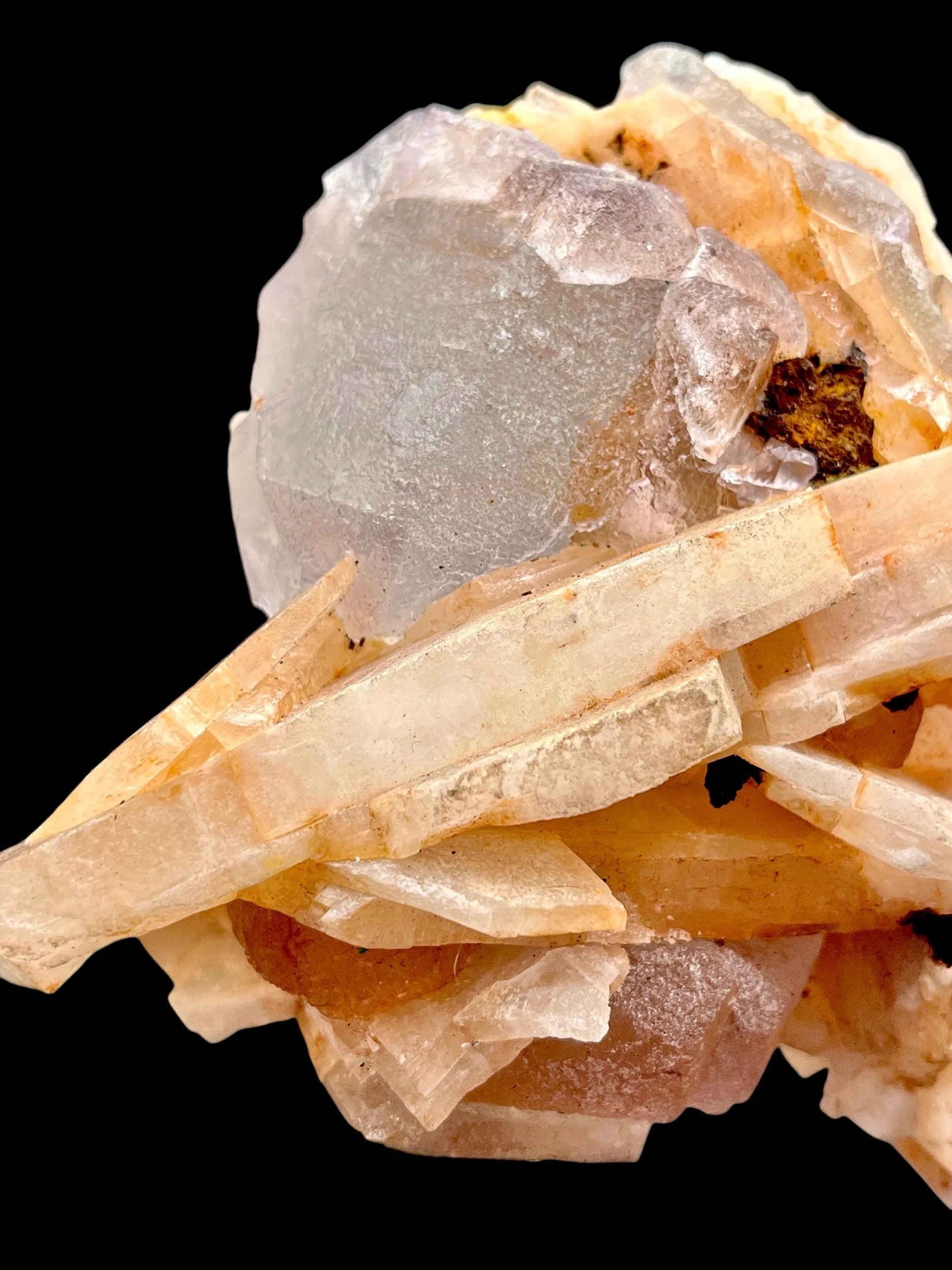
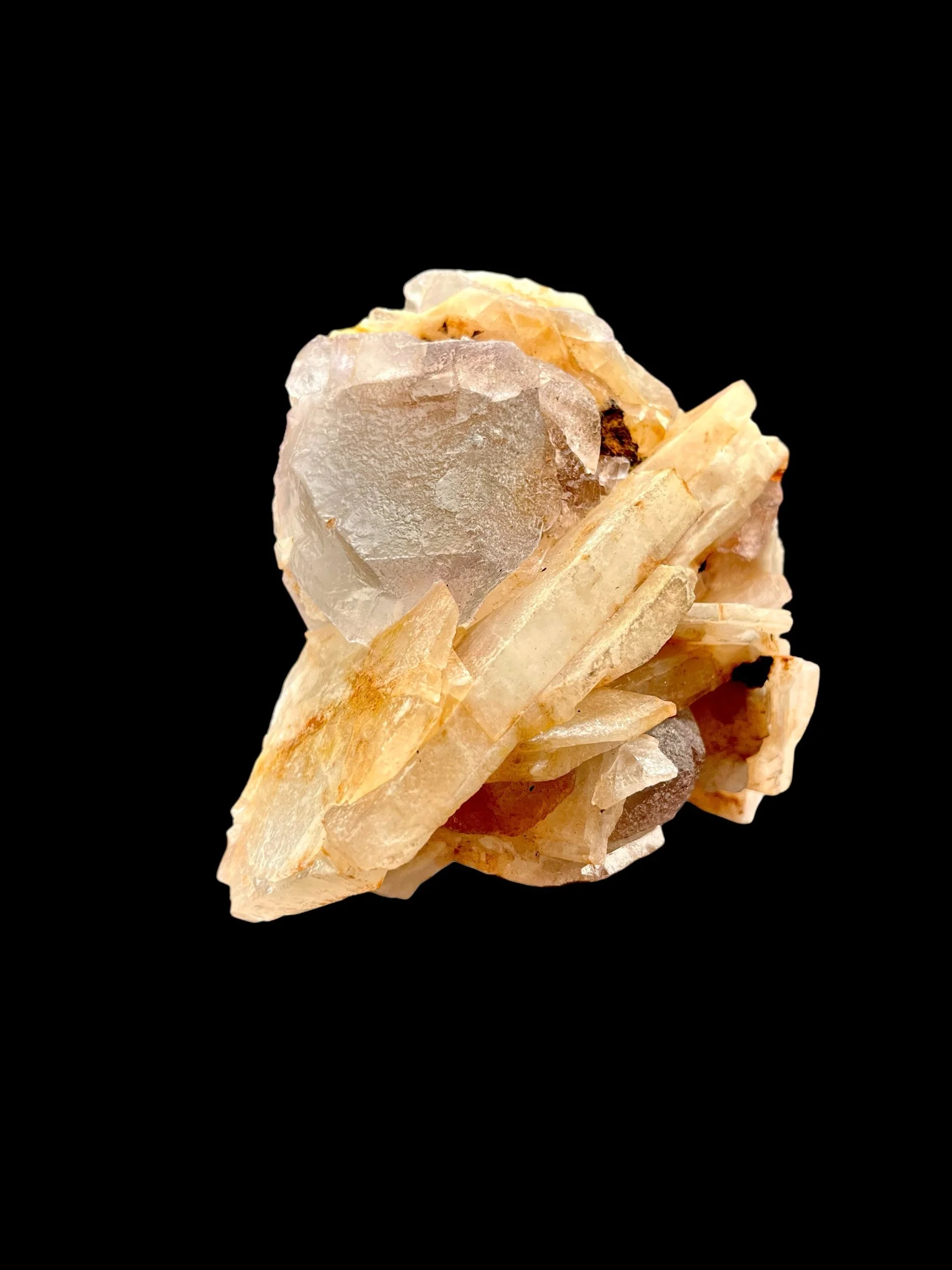
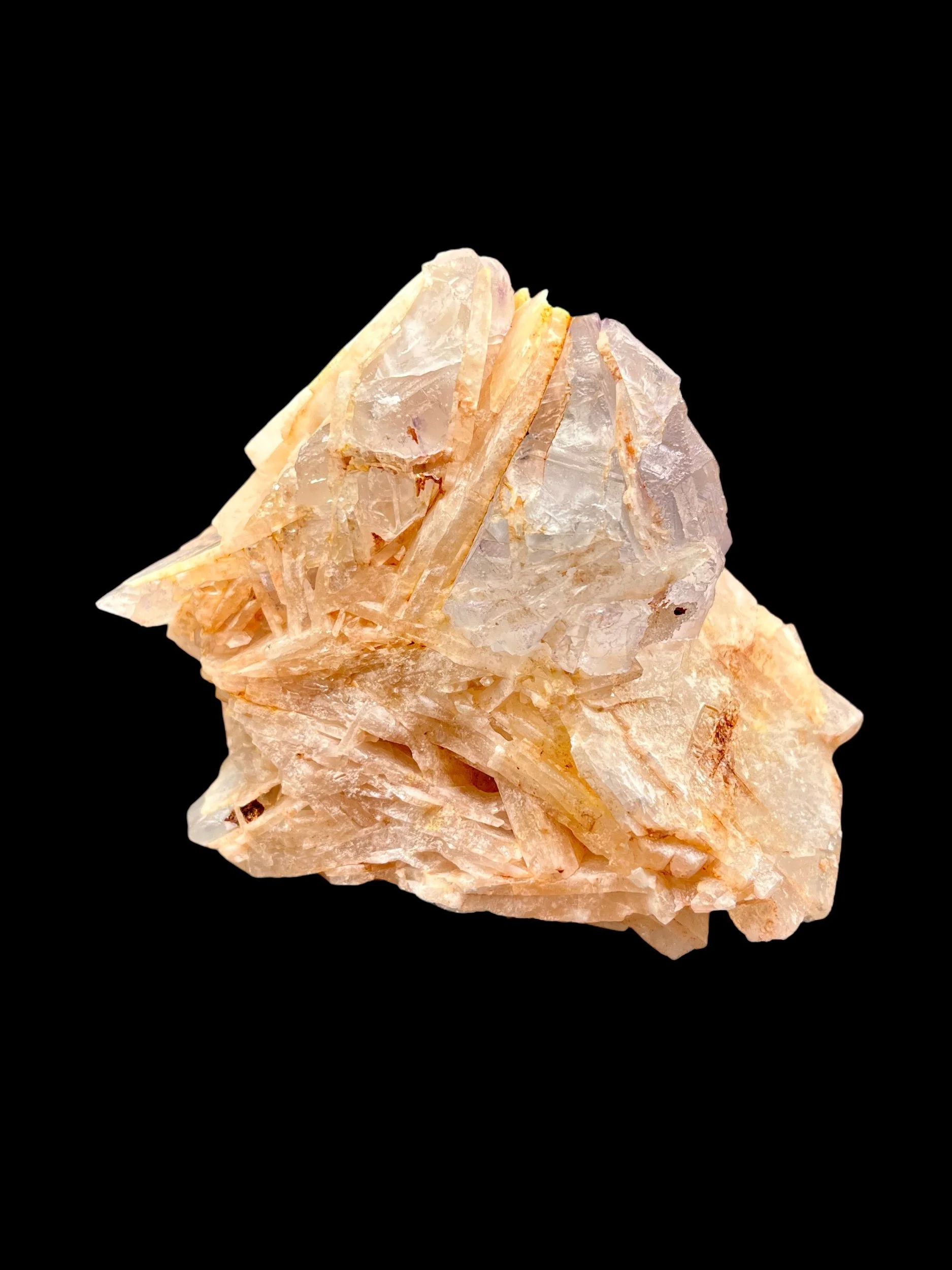
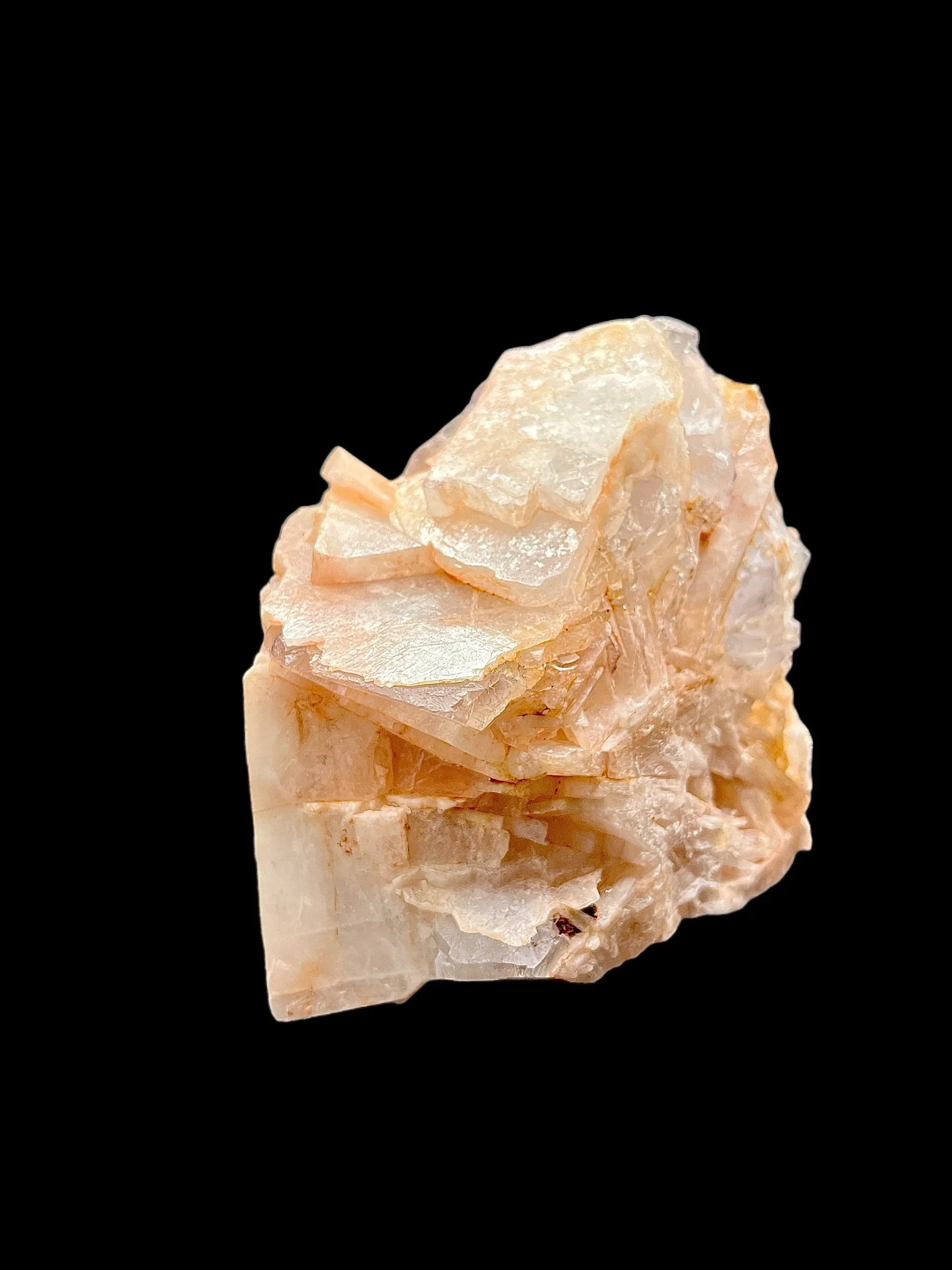
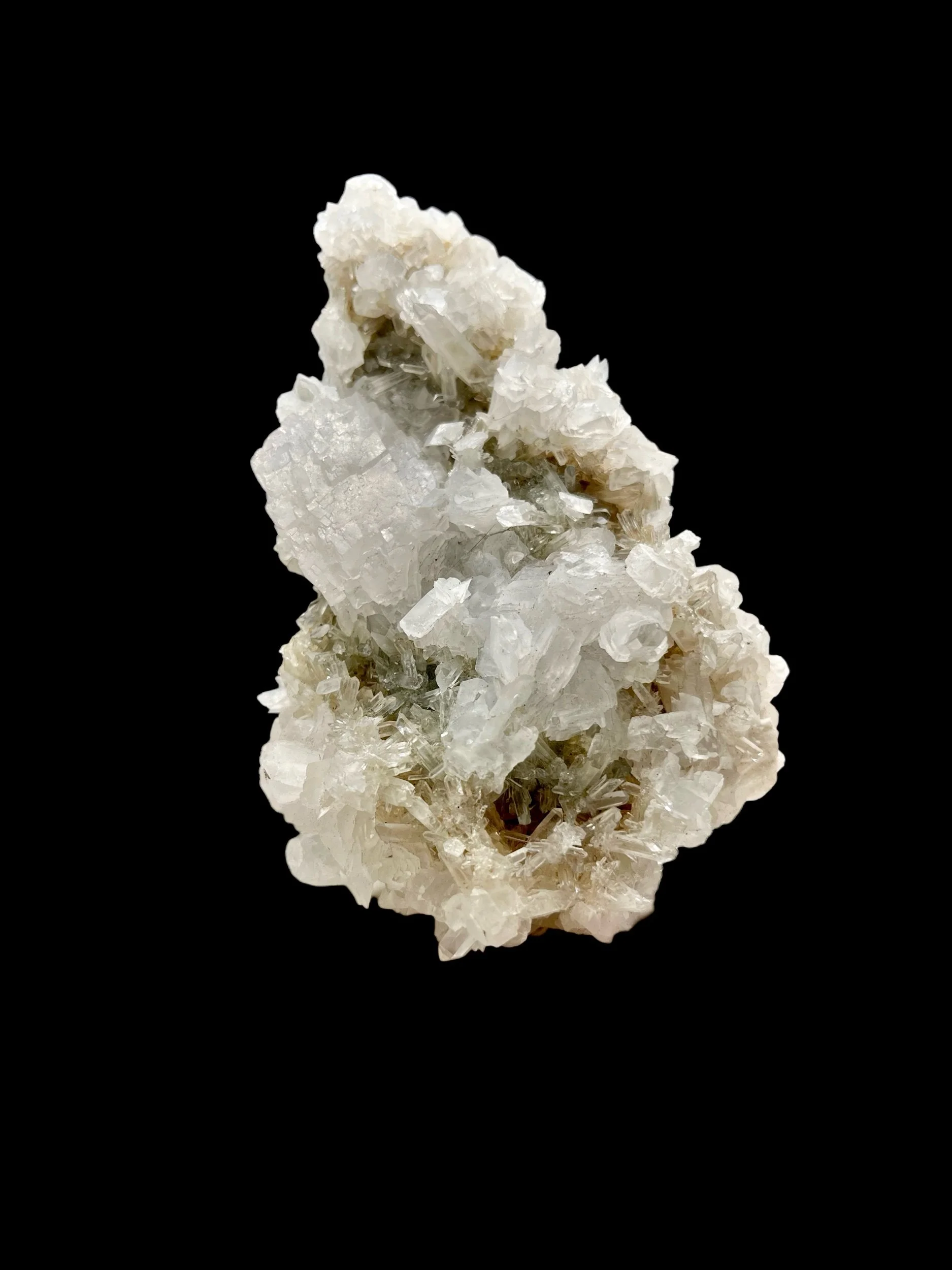
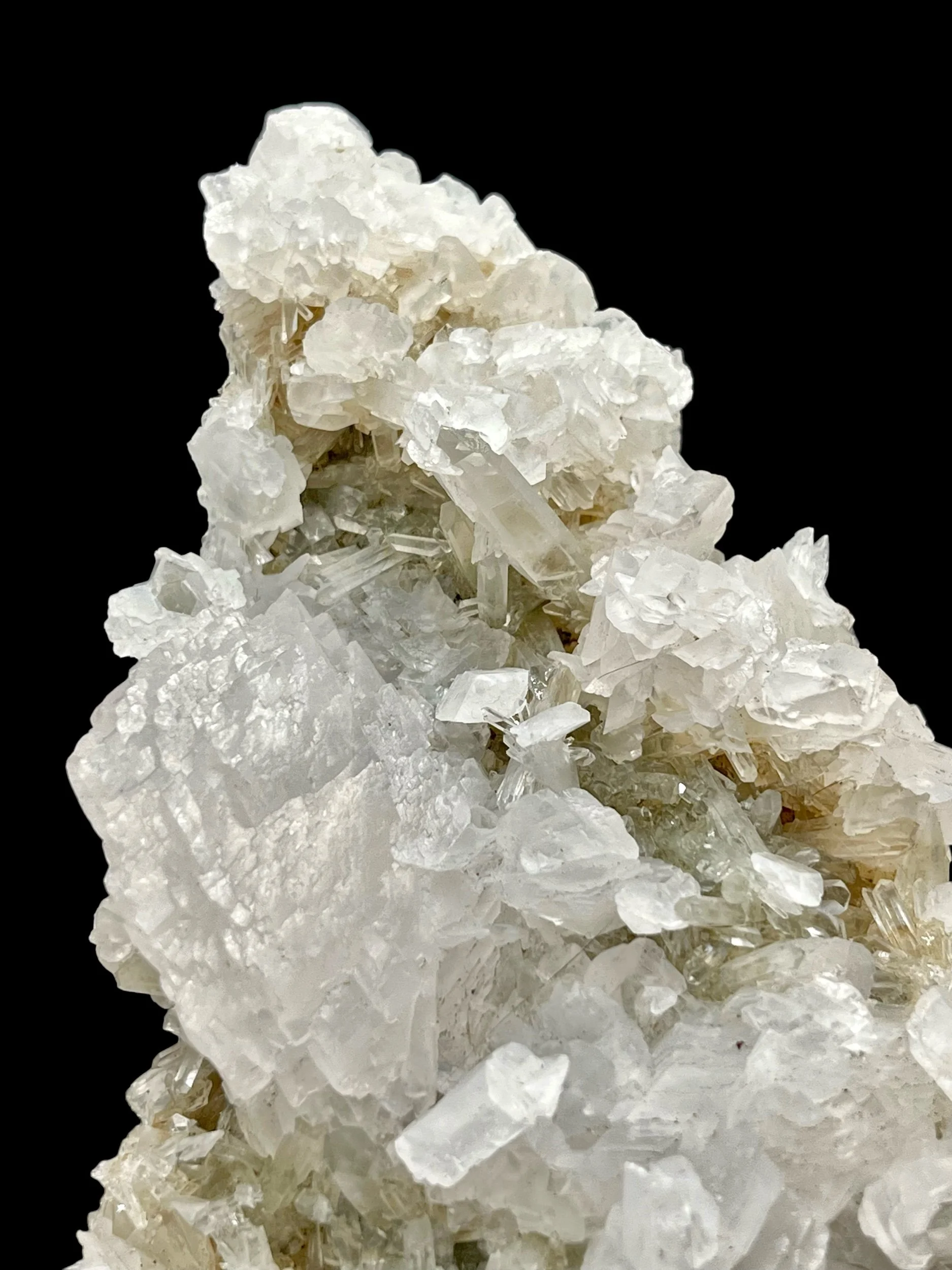
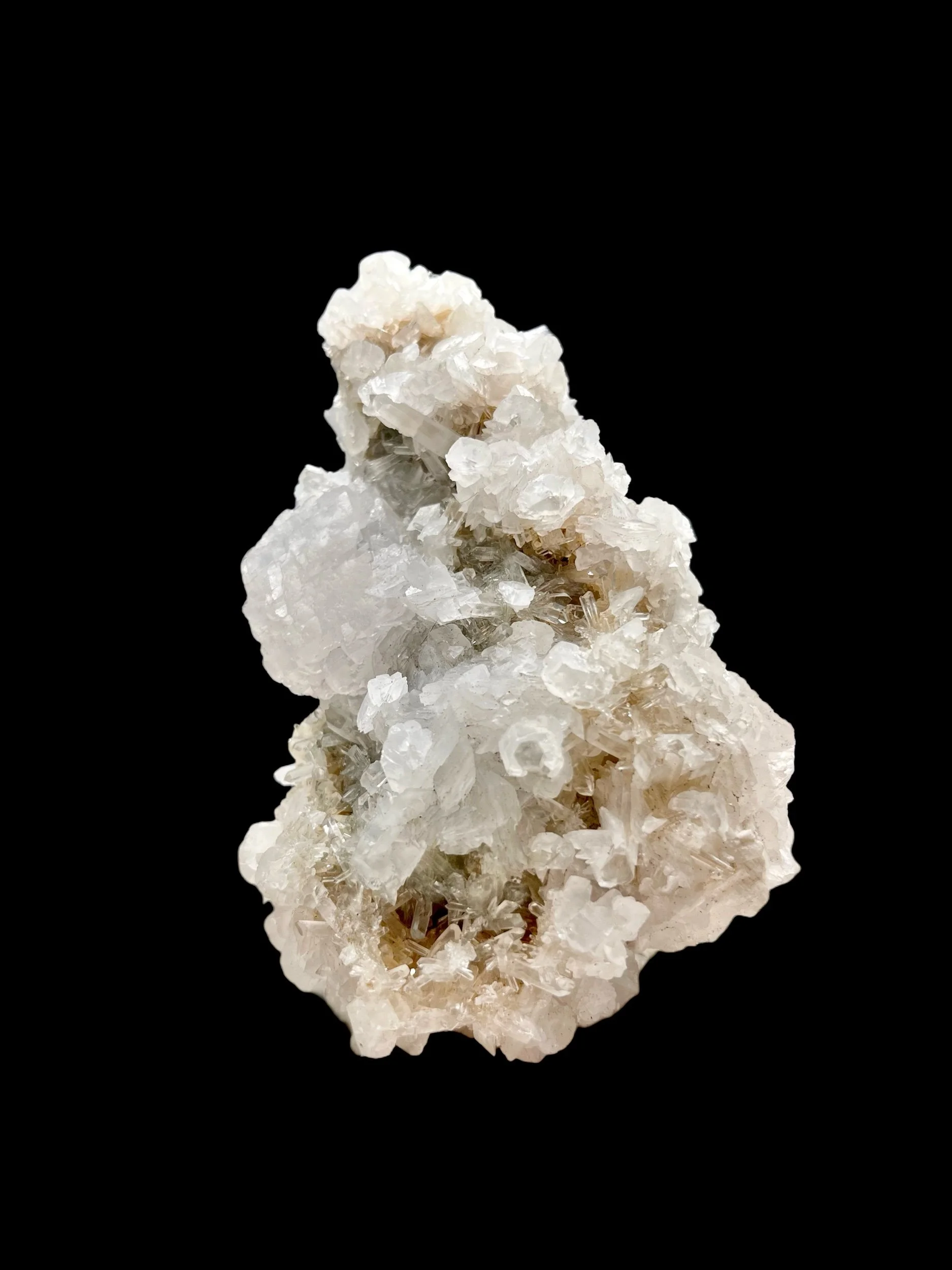
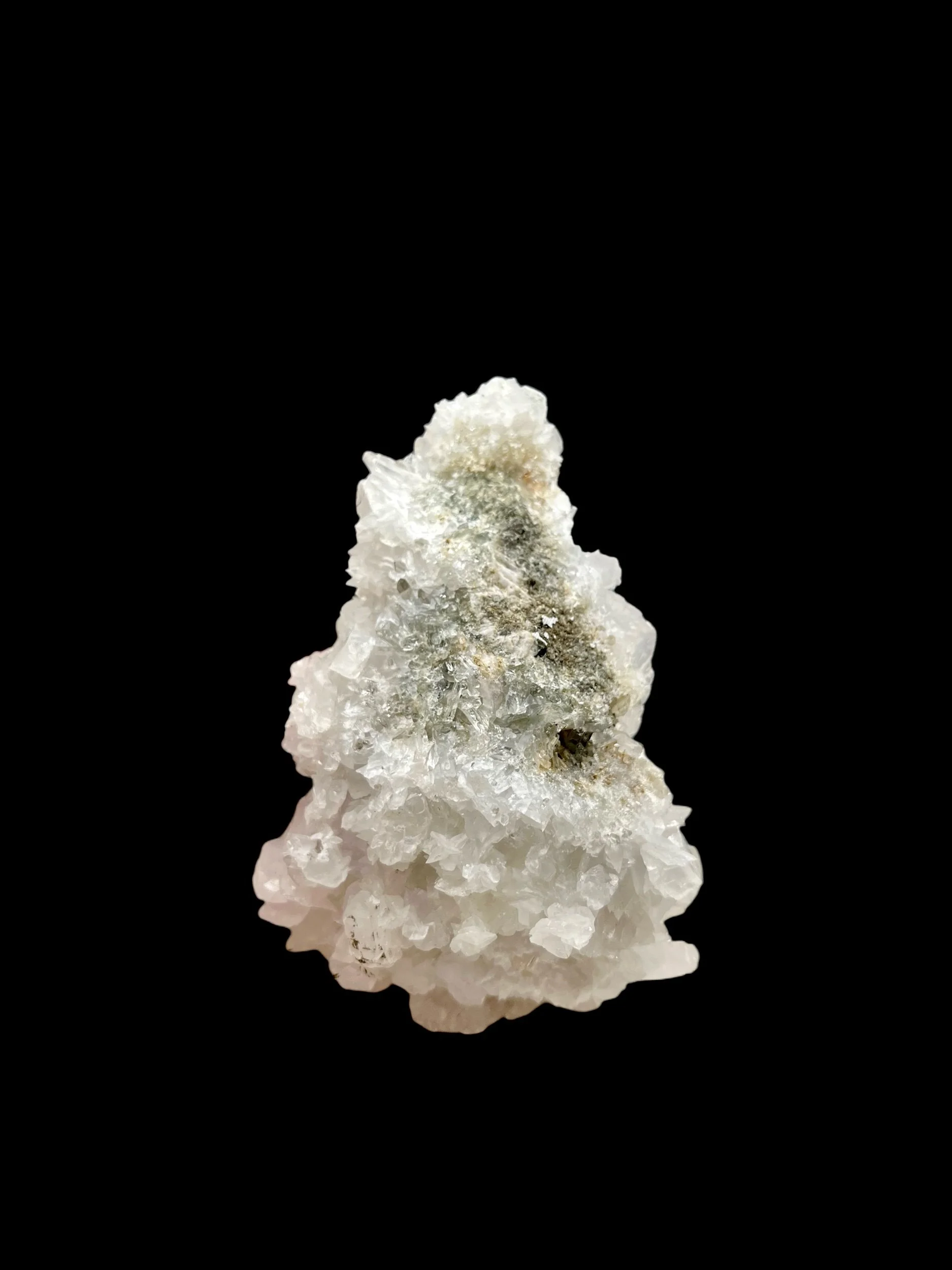
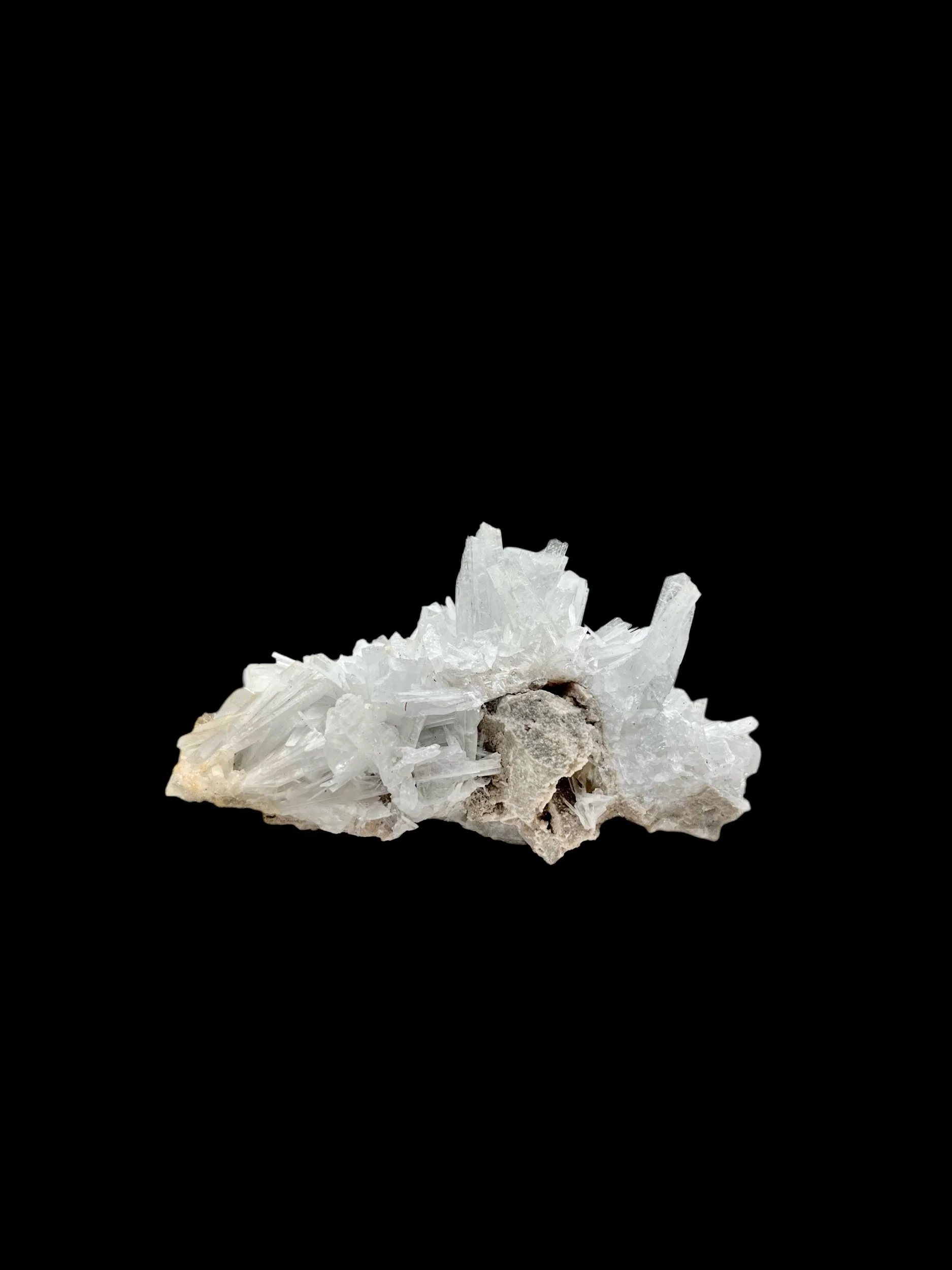
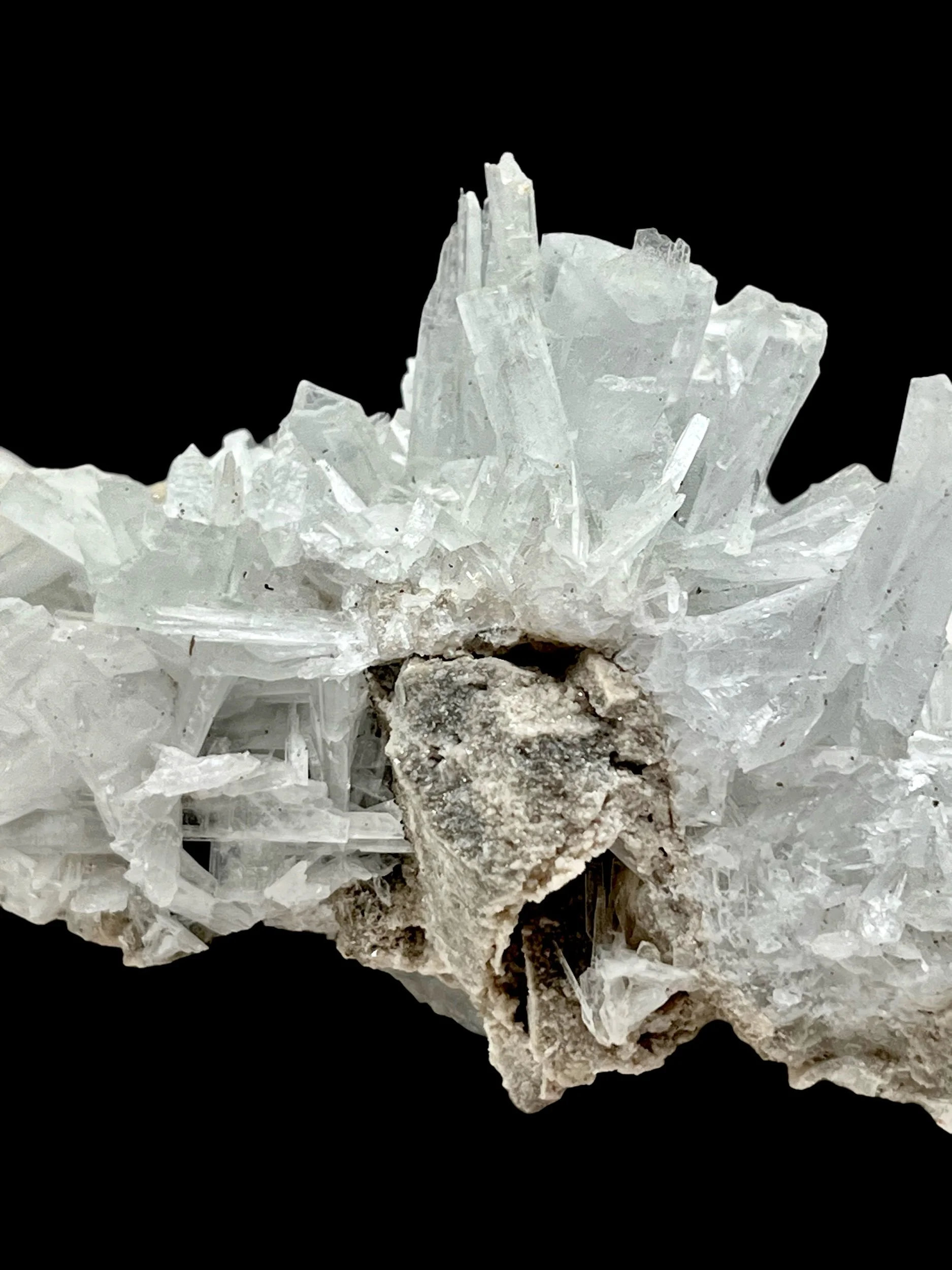
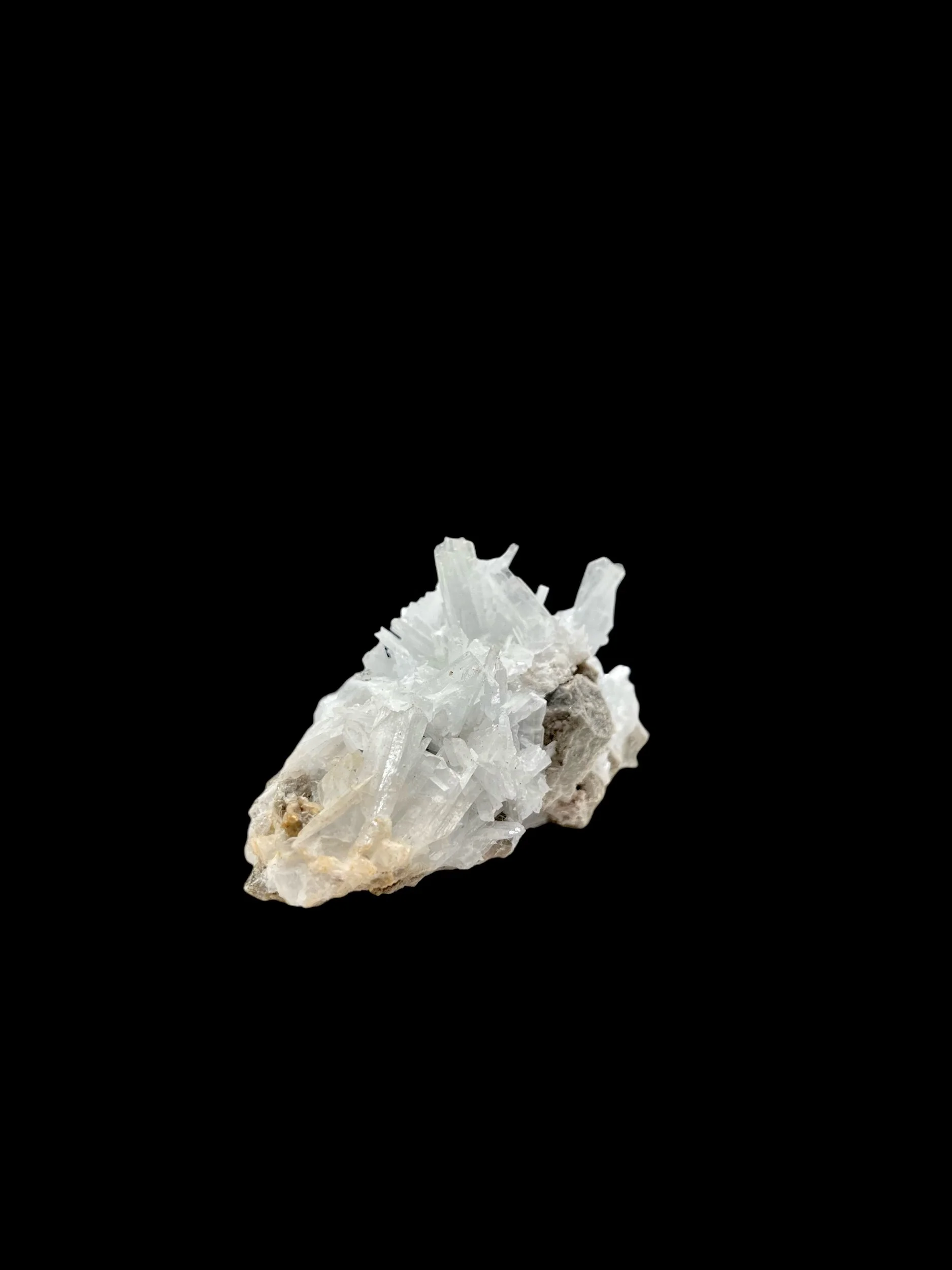
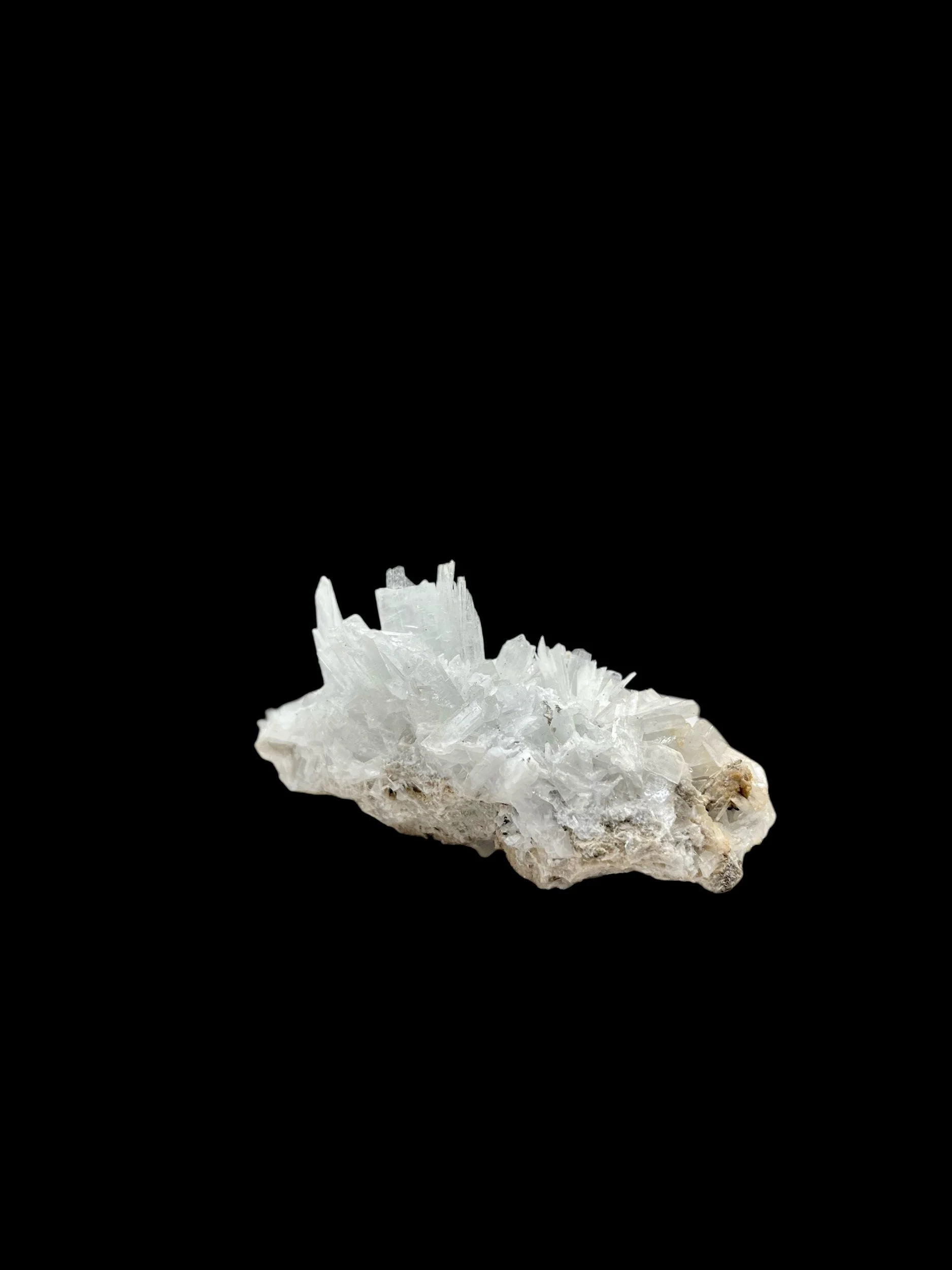
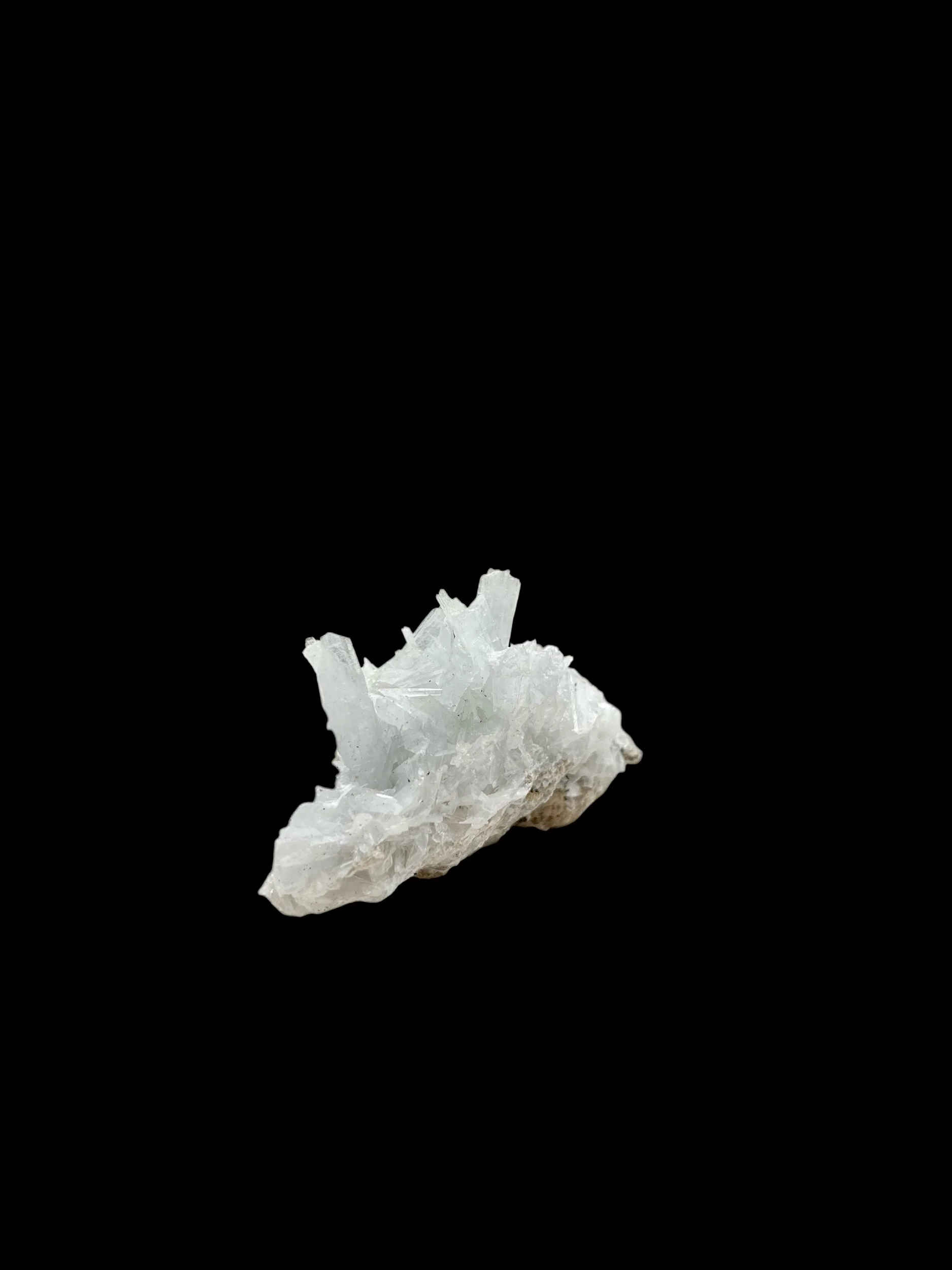
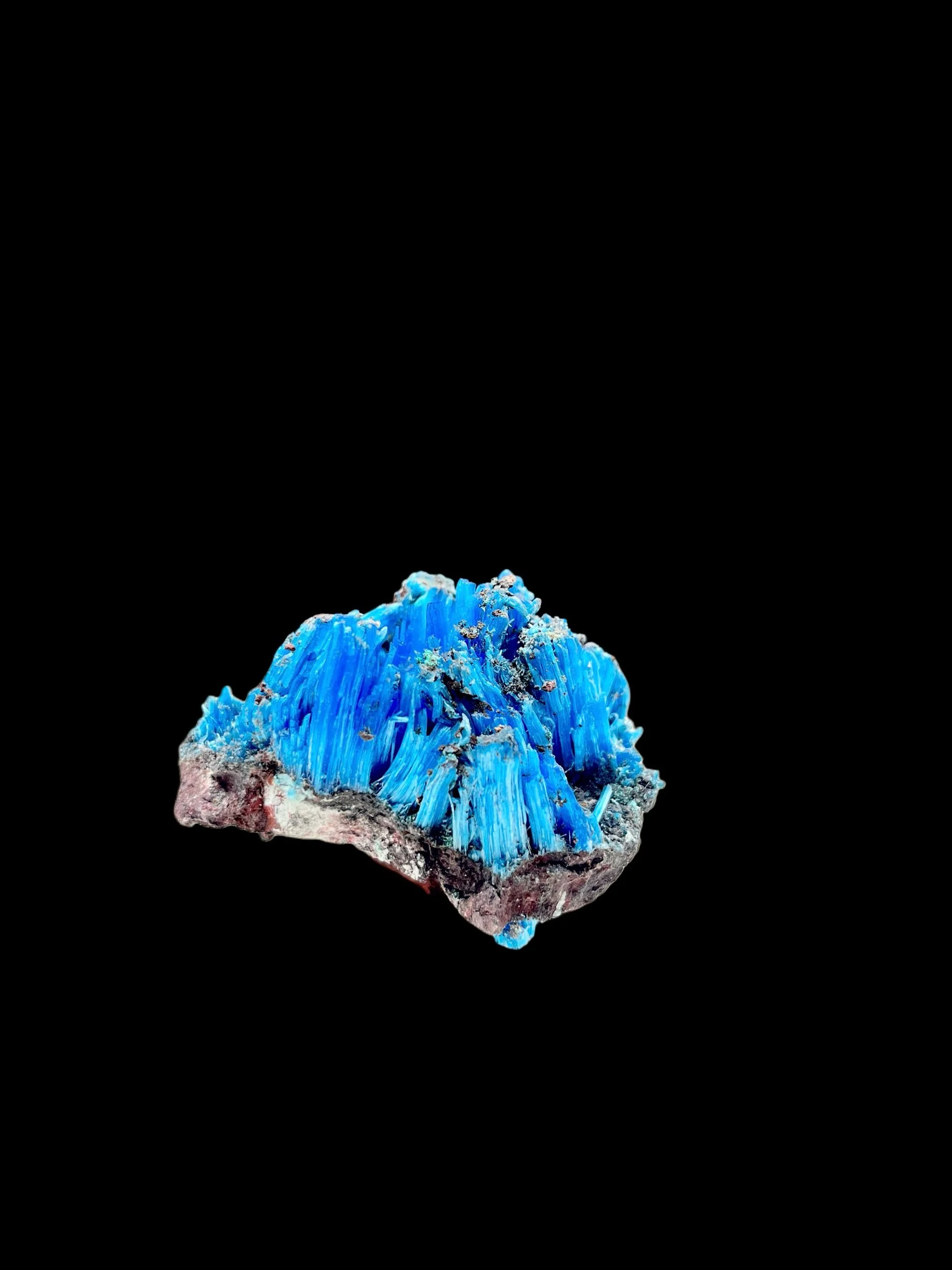
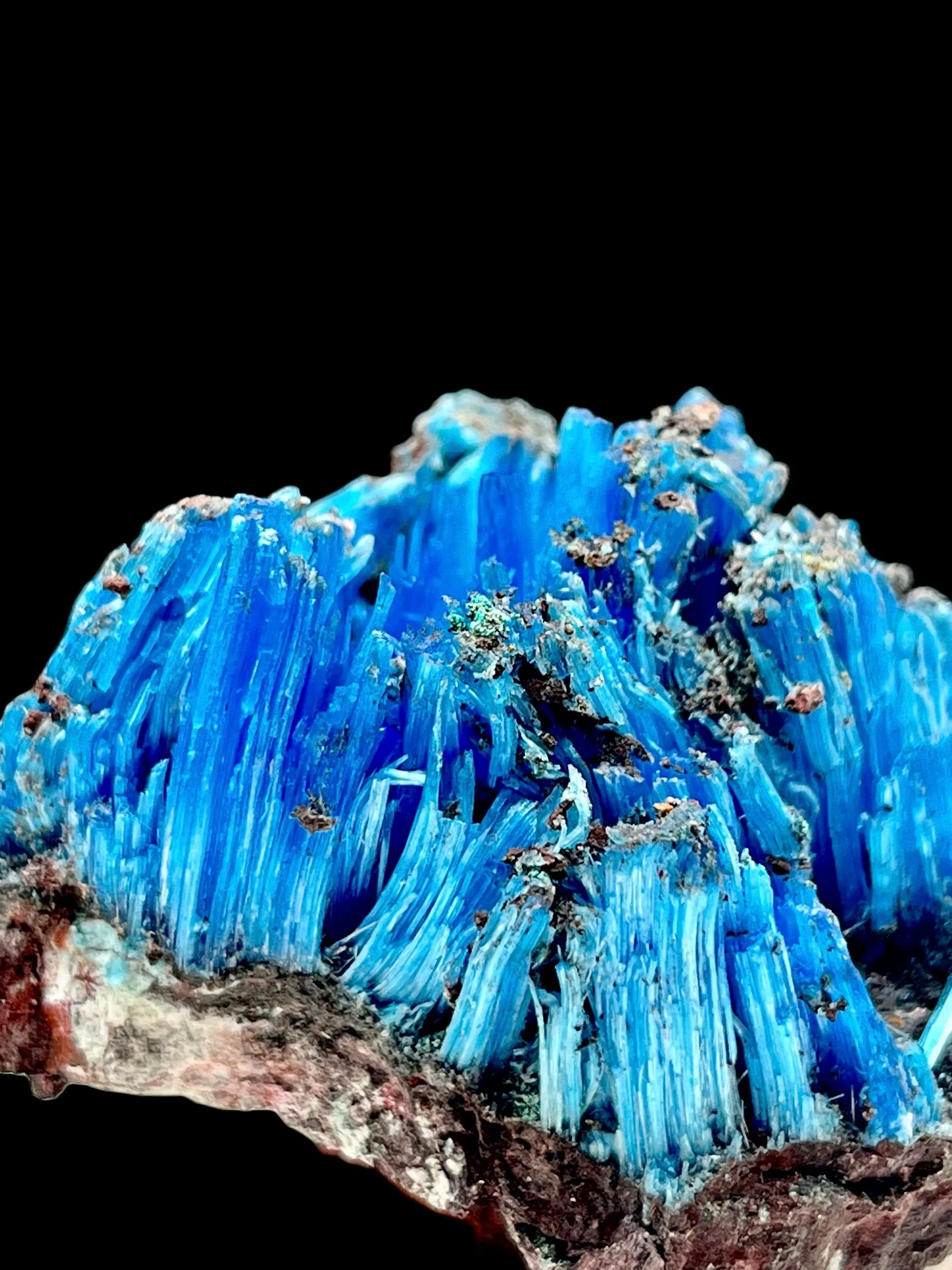
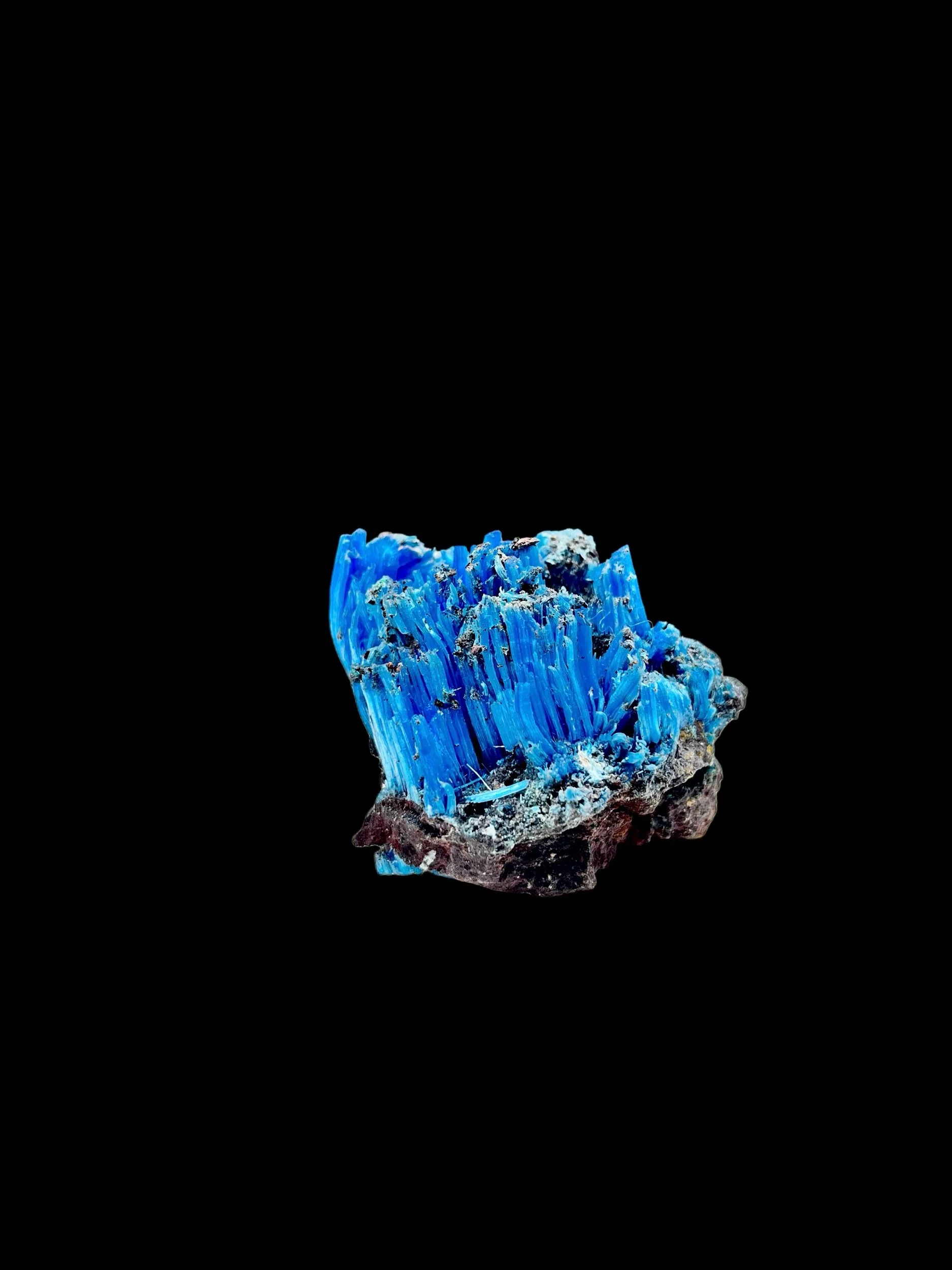
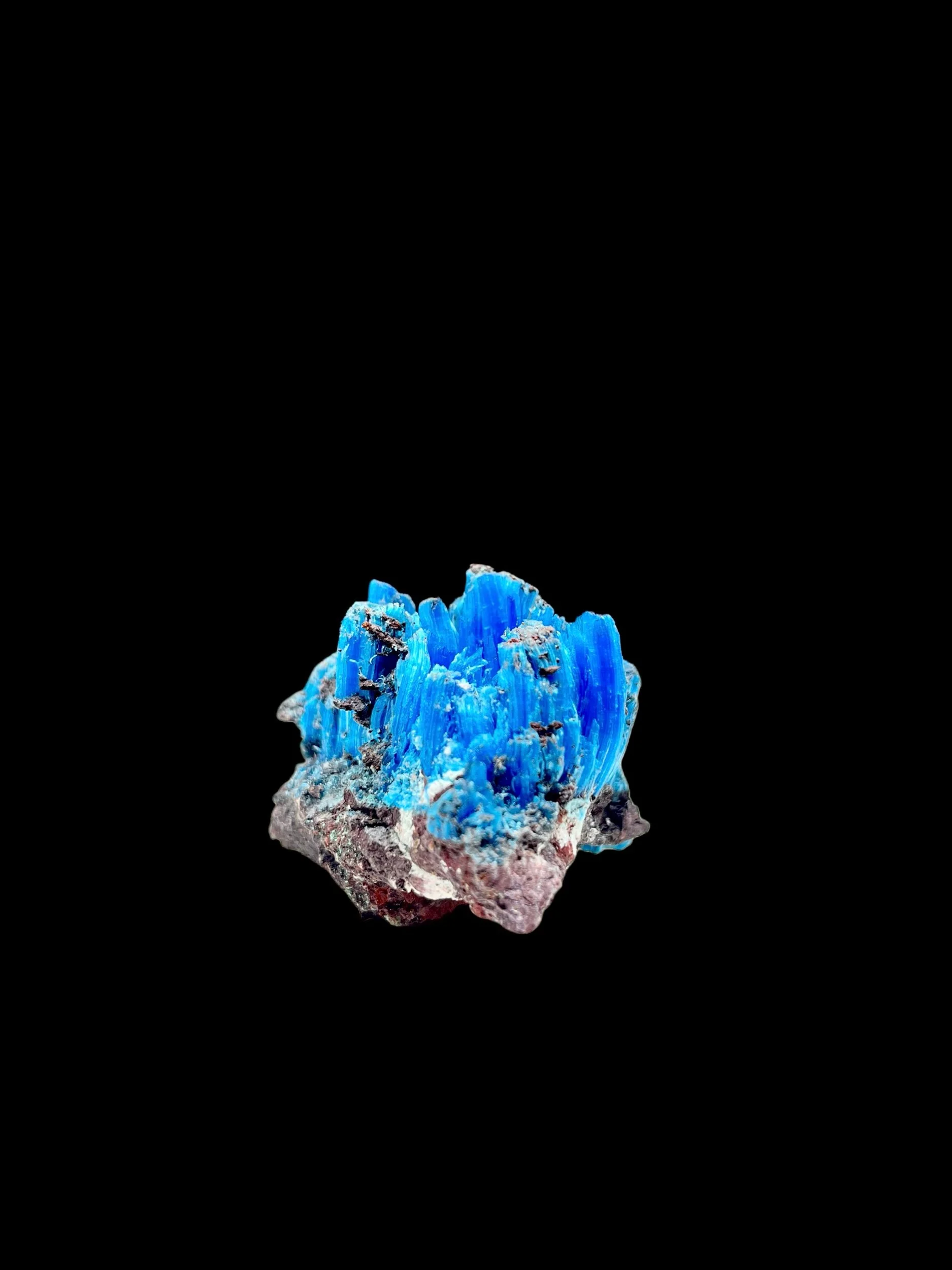
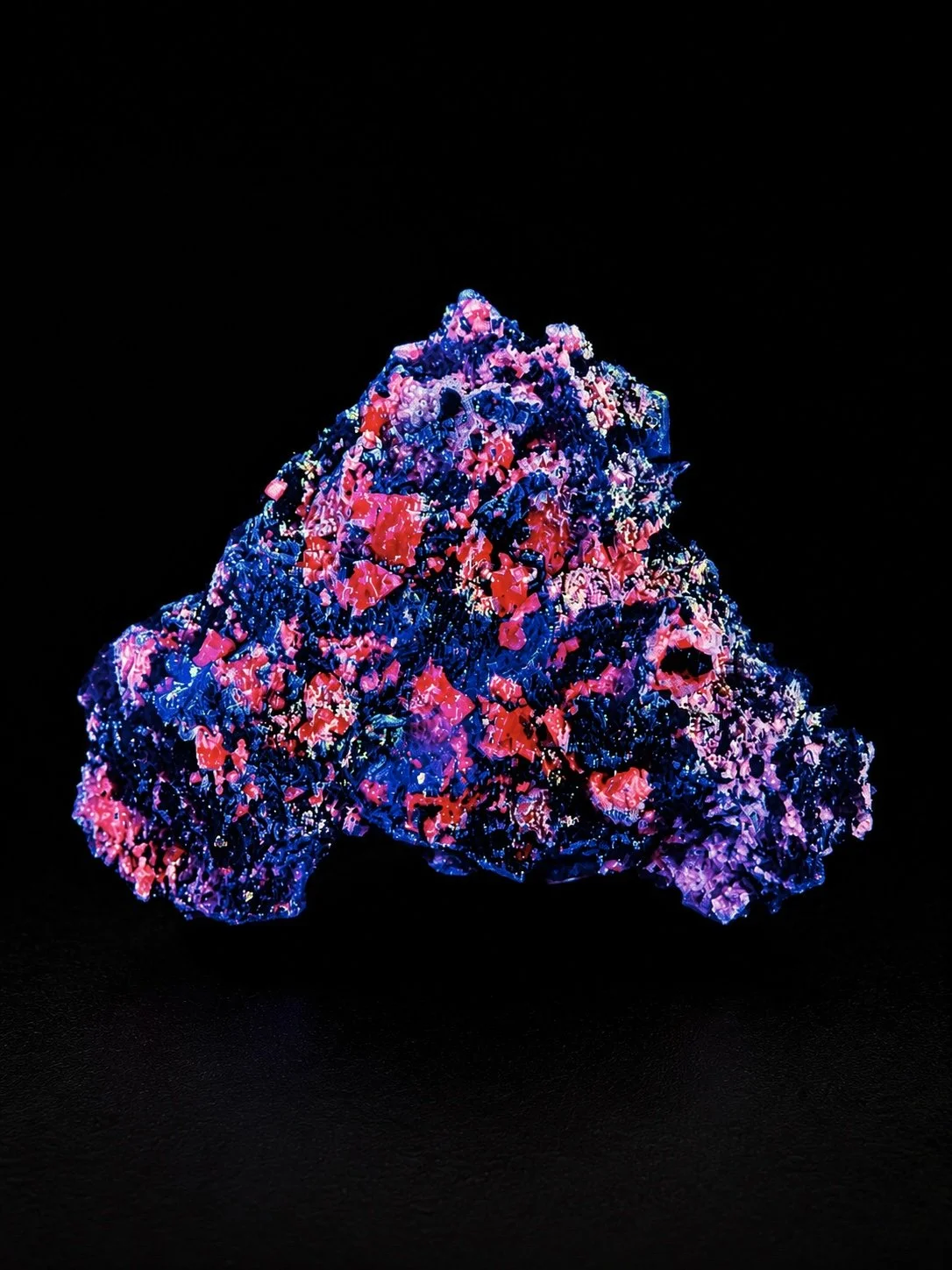
An exquisite natural combination of apophyllite and vibrant green heulandite from Maharashtra, India, featuring beautifully contrasting crystal formations, remarkable texture, and striking translucency.
This specimen showcases prominent, glass-like apophyllite crystals rising above a richly colored green heulandite matrix. The larger apophyllite crystals display graceful geometric forms, translucent interiors, and surfaces covered in an intricate layer of icy, sparkling crystalline growths.
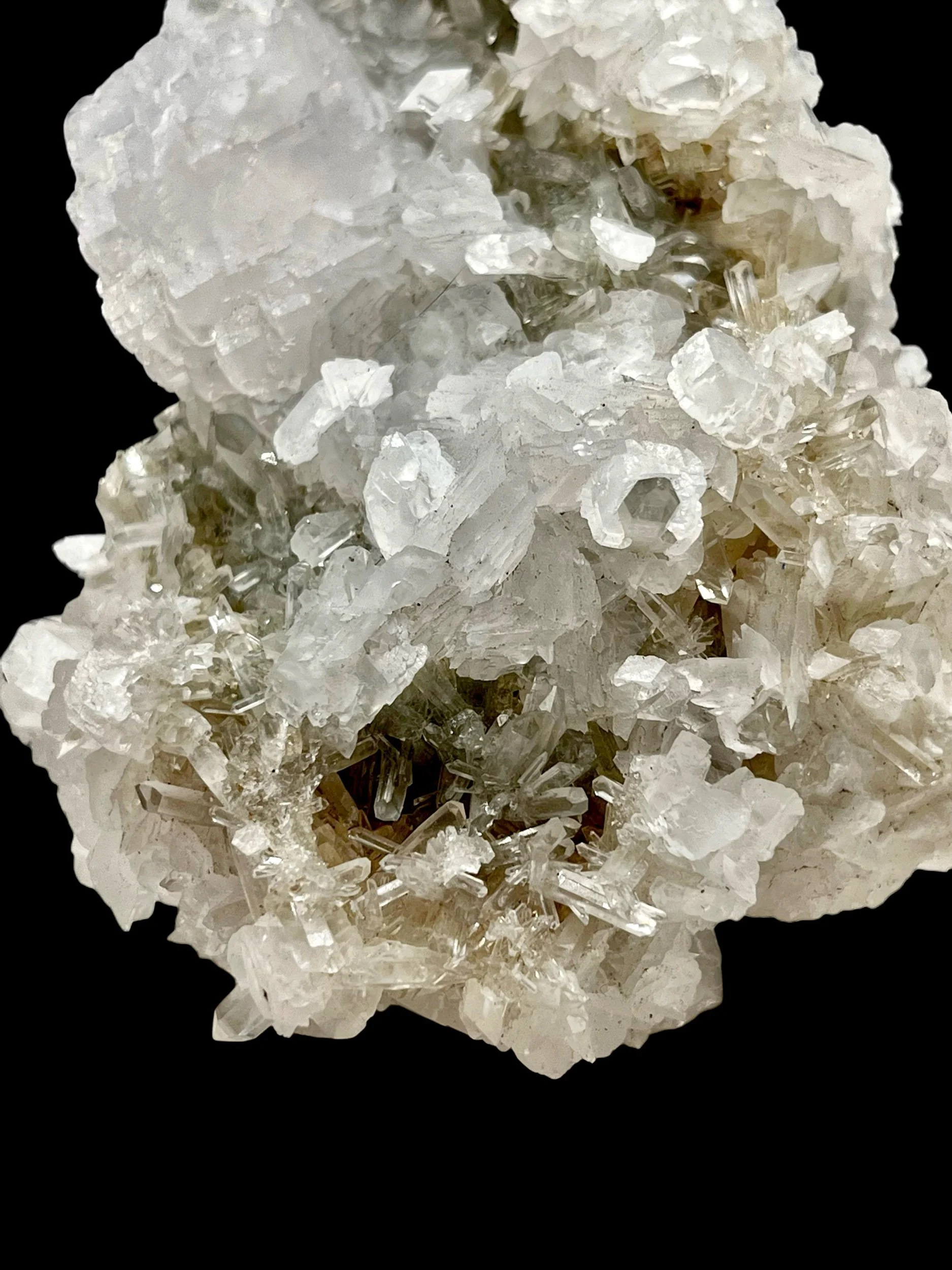
Beneath the apophyllite, the heulandite creates a dramatic contrast with its saturated sage-green coloration. Dense clusters of small, well-defined crystals give the underside a lush, textured appearance, resembling a miniature crystalline landscape.
A wonderful addition to any collection, particularly for enthusiasts of zeolites, apophyllite, unusual crystal habits, and complex geological formations.
Dimensions, Weight & Locality
Locality: Sakur (Shakur) Quarry, Sangamner, Ahilyanagar District, Maharashtra, India
Weight: 135 grams
Dimensions: 3 × 2.75 × 1 inches
Metaphysical Properties
In traditional crystal healing practices, these minerals are associated with:
Apophyllite
Mental Clarity: Believed to encourage clear thinking and heightened awareness.
Intuition: Traditionally associated with spiritual insight and personal reflection.
Calming Energy: Thought to promote peaceful surroundings and emotional tranquility.
Green Heulandite
Emotional Renewal: Associated with personal growth and releasing emotional burdens.
Grounding: Believed to encourage balance and a greater connection with nature.
Positive Transformation: Traditionally connected with embracing change and new beginnings.
These associations are based on metaphysical traditions rather than scientifically demonstrated effects.
Collector's Notes
How Does Apophyllite Form?
Apophyllite is a secondary mineral that commonly develops within cavities and fractures in volcanic rocks, particularly basalt.
Millions of years ago, enormous volcanic eruptions created the Deccan Traps of western India. As the lava cooled, gas bubbles became trapped within the rock, leaving behind hollow spaces known as vesicles.
Over time, mineral-rich groundwater and low-temperature hydrothermal fluids circulated through these openings. As the fluids interacted with the surrounding basalt, they transported dissolved elements including calcium, potassium, and silica.
These elements crystallized into minerals such as apophyllite, heulandite, stilbite, and other species.
Apophyllite commonly develops well-defined tetragonal crystals, often featuring square faces, glassy surfaces, and distinctive pyramidal terminations.
These crystals may grow directly from cavity walls or on top of minerals that formed during earlier stages of mineralization.
The result can be elaborate, layered mineral specimens such as this one, in which contrasting crystals preserve evidence of multiple stages of geological activity.
Is Apophyllite a Zeolite?
Although apophyllite is frequently sold alongside zeolites and commonly develops in the same geological environments, apophyllite is not actually a zeolite.
Apophyllite belongs to a separate group of hydrated silicate minerals with a layered crystal structure.
Zeolites, by comparison, are a family of minerals characterized by an open, three-dimensional framework of linked tetrahedra. This framework contains microscopic channels and cavities that can accommodate water molecules and exchangeable ions.
This unusual internal structure allows many zeolites to absorb and release water and exchange certain ions without permanently destroying their crystal framework.
These properties make zeolites scientifically fascinating, with applications in water purification, filtration, and industrial processes.
(Do not submerge this specimen in water. Do not ingest any part of the specimen)
Why Are They Found Together?
Apophyllite and zeolites often crystallize under similar geological conditions, particularly in cavities within ancient volcanic rocks.
However, they have different internal crystal structures and chemical characteristics.
This specimen offers an excellent example of that distinction:
Apophyllite: A hydrated silicate mineral from the apophyllite group, displaying prominent, translucent crystals.
Heulandite: A true zeolite mineral, forming the beautiful green crystalline association.
Despite belonging to different mineral groups, the two can grow together within the same volcanic cavity, producing visually striking mineral specimens.
What Makes Green Heulandite Special?
Heulandite is commonly found in white, colorless, peach, pink, and reddish varieties. Rich green examples are particularly distinctive.
The green coloration in many Indian heulandite specimens is associated with inclusions of celadonite, a green, iron-bearing clay mineral.
Rather than simply coloring the outside of the crystal, microscopic inclusions can become incorporated during crystal growth, producing beautiful green coloration within the mineral.
The Sakur Quarry is particularly noted for green heulandite specimens containing celadonite inclusions, making it a strong possible source for this example.
Interesting Fact: The Deccan Traps are one of Earth's largest volcanic provinces. Although their immense basalt flows formed approximately 66 million years ago, some of the beautiful secondary minerals within their cavities crystallized millions of years later.
This means the apophyllite and heulandite associations admired by mineral collectors today preserve a geological history extending well beyond the original volcanic eruptions.
Highlights
Distinctive Mineral Association: Natural apophyllite accompanied by vivid green heulandite.
Contrasting Colors: Glass clear and translucent crystals against richly colored green mineral growth.
Intricate Crystalline Surfaces: Numerous tiny, sparkling crystals create extraordinary texture.
Beautiful Crystal Structure: Prominent apophyllite formations with attractive geometric shapes and translucent areas.
Vibrant Green Heulandite: Dense crystalline growth in varying shades of emerald and pale green.
Multiple Viewing Angles: The front emphasizes the apophyllite, while the underside reveals a spectacular display of green crystallization.
Geological Interest: An excellent example of minerals from different structural groups forming together in volcanic cavities.
Collector Appeal: A beautiful representation of India's renowned Deccan Trap mineral associations.
Mineralogy
Apophyllite Group
Representative Species: Fluorapophyllite-(K), common in Indian basalt cavities
Chemical Formula: KCa₄(Si₈O₂₀)(F,OH)·8H₂O
Mineral Class: Silicates (layered silicate structure)
Crystal System: Tetragonal
Mohs Hardness: 4.5–5
Luster: Vitreous (glassy), sometimes pearly
Streak: White
Cleavage: Perfect basal cleavage
Specific Gravity: Approximately 2.33–2.37
Crystal Habit: Tabular, prismatic, and pyramidal crystals; sometimes pseudo-cubic
Transparency: Transparent to translucent
Heulandite Group
Representative Species: Heulandite-Ca
Chemical Formula: (Ca,Na)₅(Si₂₇Al₉)O₇₂·26H₂O
Mineral Class: Silicates (tectosilicates)
Mineral Group: Zeolites
Crystal System: Monoclinic
Mohs Hardness: 3.5–4
Luster: Vitreous to pearly
Streak: White
Cleavage: Perfect in one direction
Specific Gravity: Approximately 2.1–2.2
Crystal Habit: Tabular, flattened, and coffin-shaped crystals; may form crystalline aggregates
Color: Colorless, white, peach, reddish, brown, and green
Care: Both minerals feature delicate crystalline structures and prominent cleavage. Handle carefully, avoid soaking and harsh cleaning chemicals, and gently remove dust with a soft brush.
Description
An exquisite natural combination of apophyllite and vibrant green heulandite from Maharashtra, India, featuring beautifully contrasting crystal formations, remarkable texture, and striking translucency.
This specimen showcases prominent, glass-like apophyllite crystals rising above a richly colored green heulandite matrix. The larger apophyllite crystals display graceful geometric forms, translucent interiors, and surfaces covered in an intricate layer of icy, sparkling crystalline growths.
Beneath the apophyllite, the heulandite creates a dramatic contrast with its saturated sage-green coloration. Dense clusters of small, well-defined crystals give the underside a lush, textured appearance, resembling a miniature crystalline landscape.
A wonderful addition to any collection, particularly for enthusiasts of zeolites, apophyllite, unusual crystal habits, and complex geological formations.
Dimensions, Weight & Locality
Locality: Sakur (Shakur) Quarry, Sangamner, Ahilyanagar District, Maharashtra, India
Weight: 135 grams
Dimensions: 3 × 2.75 × 1 inches
Metaphysical Properties
In traditional crystal healing practices, these minerals are associated with:
Apophyllite
Mental Clarity: Believed to encourage clear thinking and heightened awareness.
Intuition: Traditionally associated with spiritual insight and personal reflection.
Calming Energy: Thought to promote peaceful surroundings and emotional tranquility.
Green Heulandite
Emotional Renewal: Associated with personal growth and releasing emotional burdens.
Grounding: Believed to encourage balance and a greater connection with nature.
Positive Transformation: Traditionally connected with embracing change and new beginnings.
These associations are based on metaphysical traditions rather than scientifically demonstrated effects.
Collector's Notes
How Does Apophyllite Form?
Apophyllite is a secondary mineral that commonly develops within cavities and fractures in volcanic rocks, particularly basalt.
Millions of years ago, enormous volcanic eruptions created the Deccan Traps of western India. As the lava cooled, gas bubbles became trapped within the rock, leaving behind hollow spaces known as vesicles.
Over time, mineral-rich groundwater and low-temperature hydrothermal fluids circulated through these openings. As the fluids interacted with the surrounding basalt, they transported dissolved elements including calcium, potassium, and silica.
These elements crystallized into minerals such as apophyllite, heulandite, stilbite, and other species.
Apophyllite commonly develops well-defined tetragonal crystals, often featuring square faces, glassy surfaces, and distinctive pyramidal terminations.
These crystals may grow directly from cavity walls or on top of minerals that formed during earlier stages of mineralization.
The result can be elaborate, layered mineral specimens such as this one, in which contrasting crystals preserve evidence of multiple stages of geological activity.
Is Apophyllite a Zeolite?
Although apophyllite is frequently sold alongside zeolites and commonly develops in the same geological environments, apophyllite is not actually a zeolite.
Apophyllite belongs to a separate group of hydrated silicate minerals with a layered crystal structure.
Zeolites, by comparison, are a family of minerals characterized by an open, three-dimensional framework of linked tetrahedra. This framework contains microscopic channels and cavities that can accommodate water molecules and exchangeable ions.
This unusual internal structure allows many zeolites to absorb and release water and exchange certain ions without permanently destroying their crystal framework.
These properties make zeolites scientifically fascinating, with applications in water purification, filtration, and industrial processes.
(Do not submerge this specimen in water. Do not ingest any part of the specimen)
Why Are They Found Together?
Apophyllite and zeolites often crystallize under similar geological conditions, particularly in cavities within ancient volcanic rocks.
However, they have different internal crystal structures and chemical characteristics.
This specimen offers an excellent example of that distinction:
Apophyllite: A hydrated silicate mineral from the apophyllite group, displaying prominent, translucent crystals.
Heulandite: A true zeolite mineral, forming the beautiful green crystalline association.
Despite belonging to different mineral groups, the two can grow together within the same volcanic cavity, producing visually striking mineral specimens.
What Makes Green Heulandite Special?
Heulandite is commonly found in white, colorless, peach, pink, and reddish varieties. Rich green examples are particularly distinctive.
The green coloration in many Indian heulandite specimens is associated with inclusions of celadonite, a green, iron-bearing clay mineral.
Rather than simply coloring the outside of the crystal, microscopic inclusions can become incorporated during crystal growth, producing beautiful green coloration within the mineral.
The Sakur Quarry is particularly noted for green heulandite specimens containing celadonite inclusions, making it a strong possible source for this example.
Interesting Fact: The Deccan Traps are one of Earth's largest volcanic provinces. Although their immense basalt flows formed approximately 66 million years ago, some of the beautiful secondary minerals within their cavities crystallized millions of years later.
This means the apophyllite and heulandite associations admired by mineral collectors today preserve a geological history extending well beyond the original volcanic eruptions.
Highlights
Distinctive Mineral Association: Natural apophyllite accompanied by vivid green heulandite.
Contrasting Colors: Glass clear and translucent crystals against richly colored green mineral growth.
Intricate Crystalline Surfaces: Numerous tiny, sparkling crystals create extraordinary texture.
Beautiful Crystal Structure: Prominent apophyllite formations with attractive geometric shapes and translucent areas.
Vibrant Green Heulandite: Dense crystalline growth in varying shades of emerald and pale green.
Multiple Viewing Angles: The front emphasizes the apophyllite, while the underside reveals a spectacular display of green crystallization.
Geological Interest: An excellent example of minerals from different structural groups forming together in volcanic cavities.
Collector Appeal: A beautiful representation of India's renowned Deccan Trap mineral associations.
Mineralogy
Apophyllite Group
Representative Species: Fluorapophyllite-(K), common in Indian basalt cavities
Chemical Formula: KCa₄(Si₈O₂₀)(F,OH)·8H₂O
Mineral Class: Silicates (layered silicate structure)
Crystal System: Tetragonal
Mohs Hardness: 4.5–5
Luster: Vitreous (glassy), sometimes pearly
Streak: White
Cleavage: Perfect basal cleavage
Specific Gravity: Approximately 2.33–2.37
Crystal Habit: Tabular, prismatic, and pyramidal crystals; sometimes pseudo-cubic
Transparency: Transparent to translucent
Heulandite Group
Representative Species: Heulandite-Ca
Chemical Formula: (Ca,Na)₅(Si₂₇Al₉)O₇₂·26H₂O
Mineral Class: Silicates (tectosilicates)
Mineral Group: Zeolites
Crystal System: Monoclinic
Mohs Hardness: 3.5–4
Luster: Vitreous to pearly
Streak: White
Cleavage: Perfect in one direction
Specific Gravity: Approximately 2.1–2.2
Crystal Habit: Tabular, flattened, and coffin-shaped crystals; may form crystalline aggregates
Color: Colorless, white, peach, reddish, brown, and green
Care: Both minerals feature delicate crystalline structures and prominent cleavage. Handle carefully, avoid soaking and harsh cleaning chemicals, and gently remove dust with a soft brush.


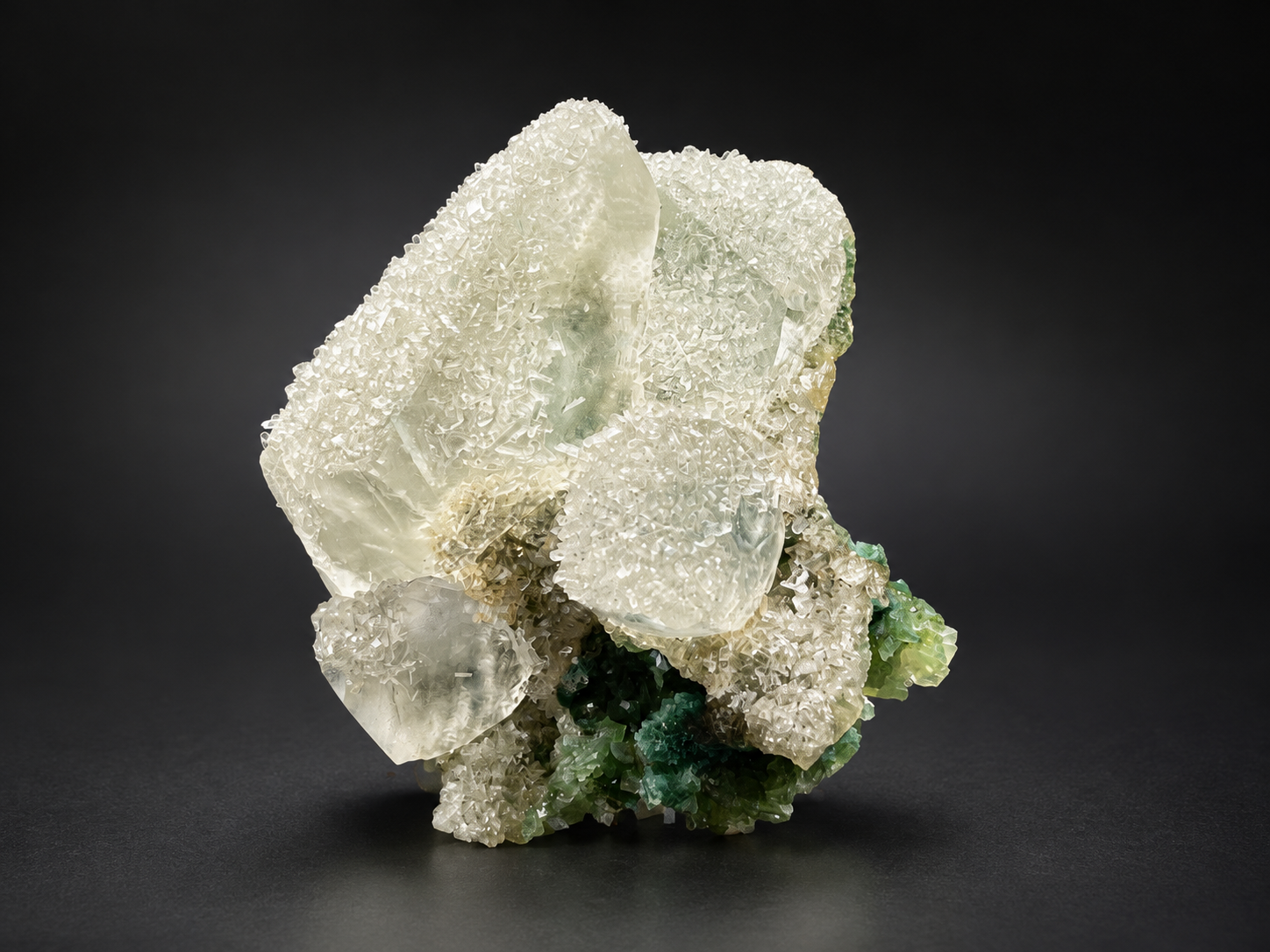 Image 1 of 8
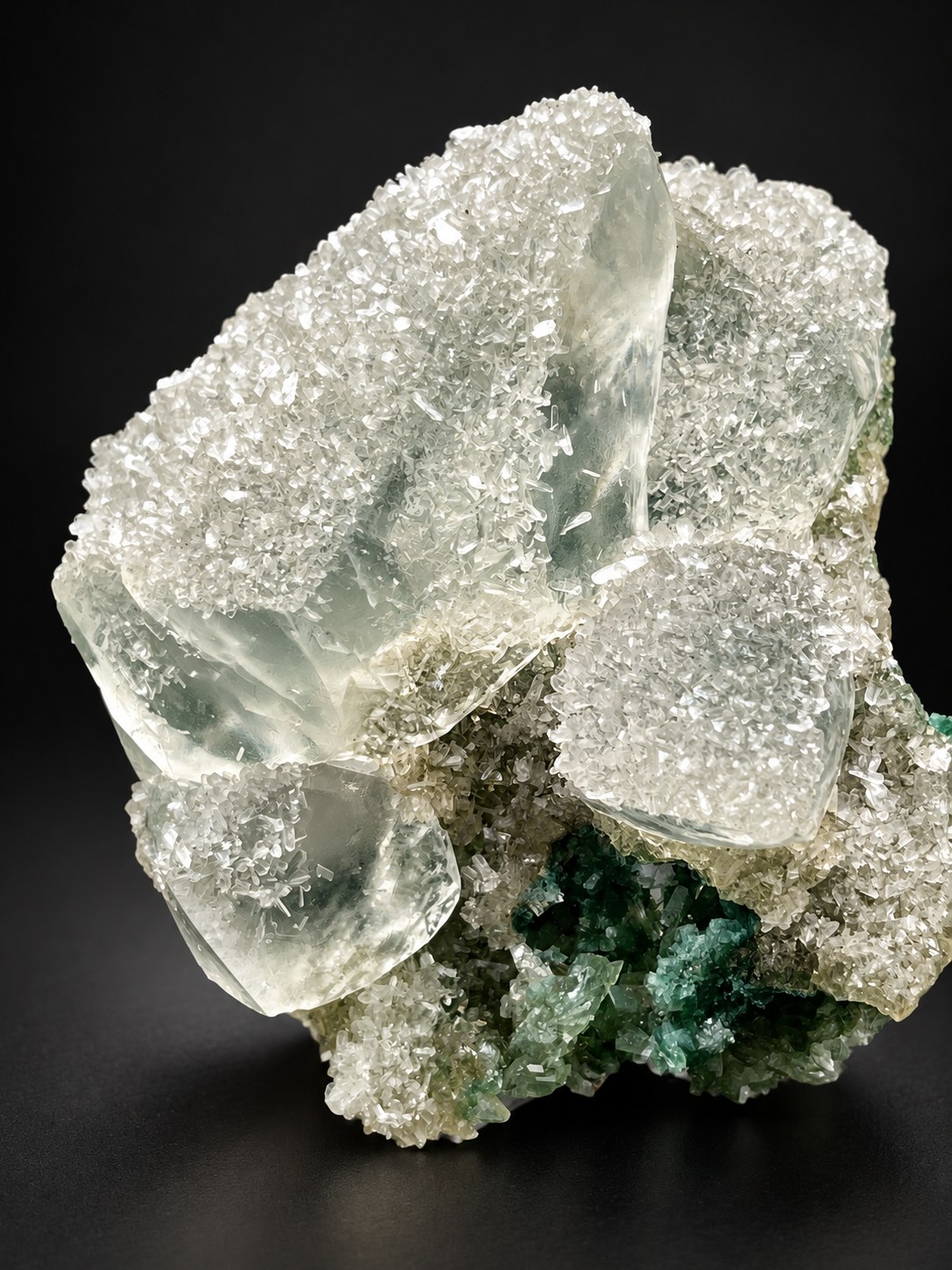 Image 2 of 8
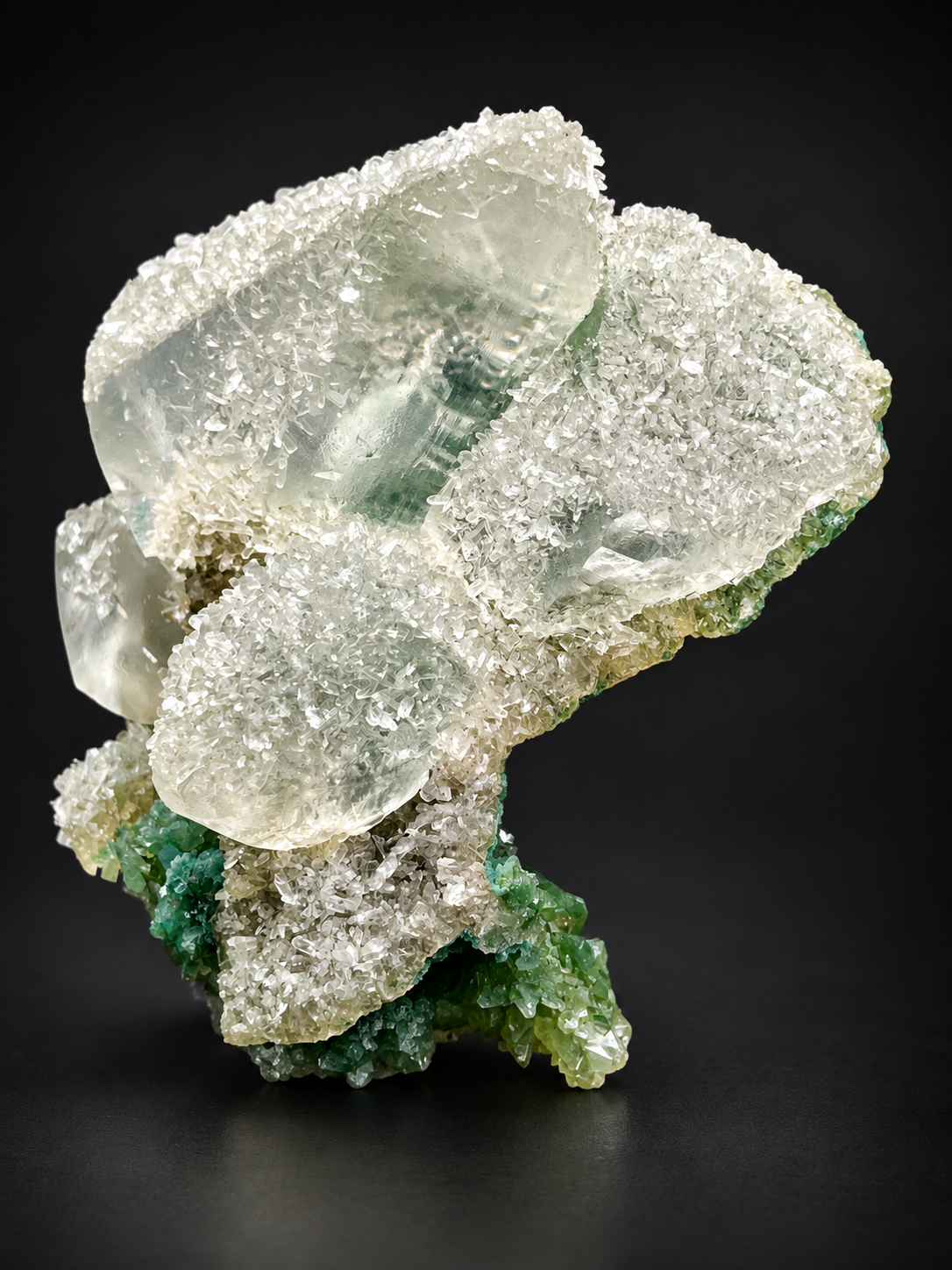 Image 3 of 8
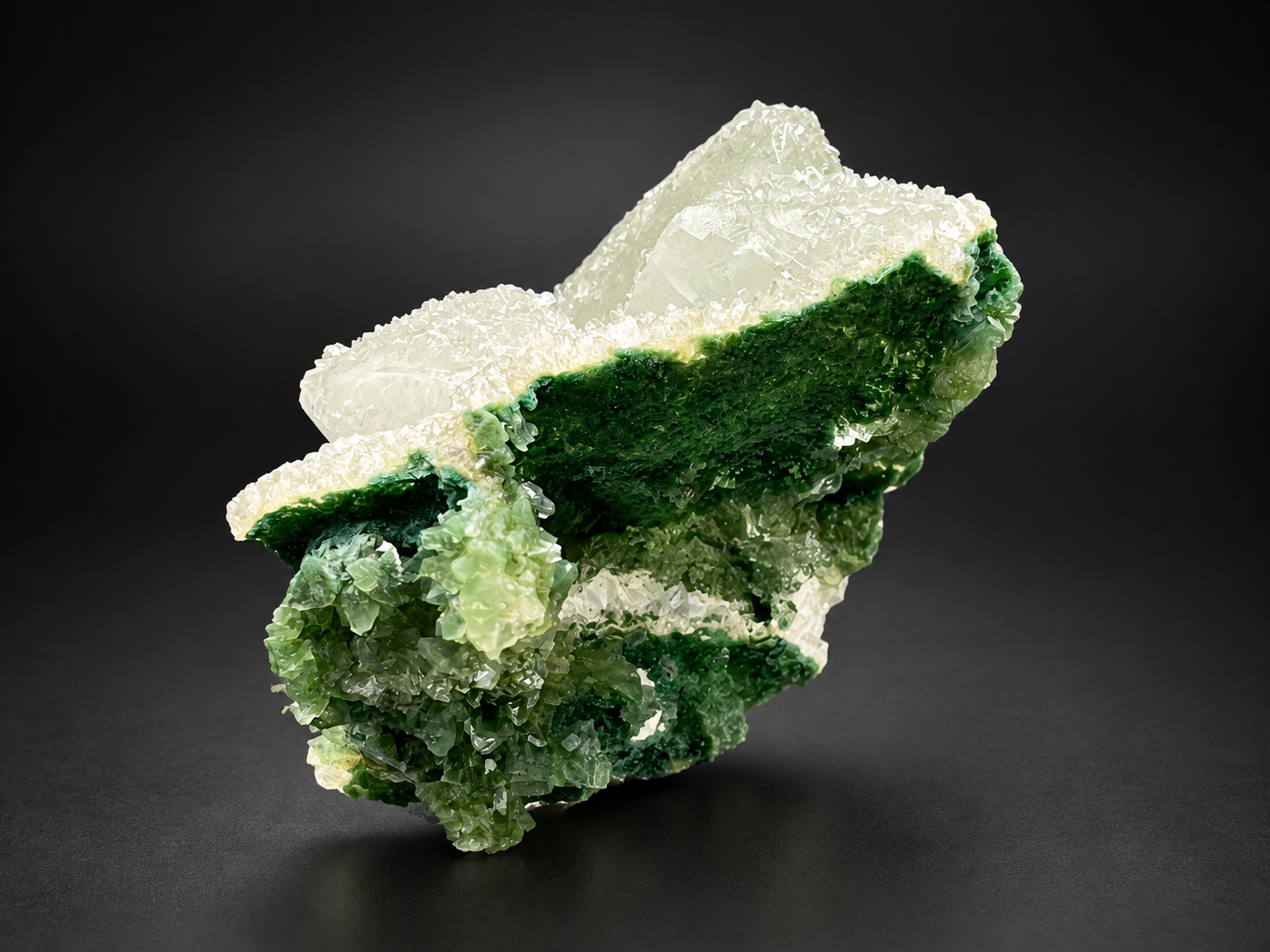 Image 4 of 8
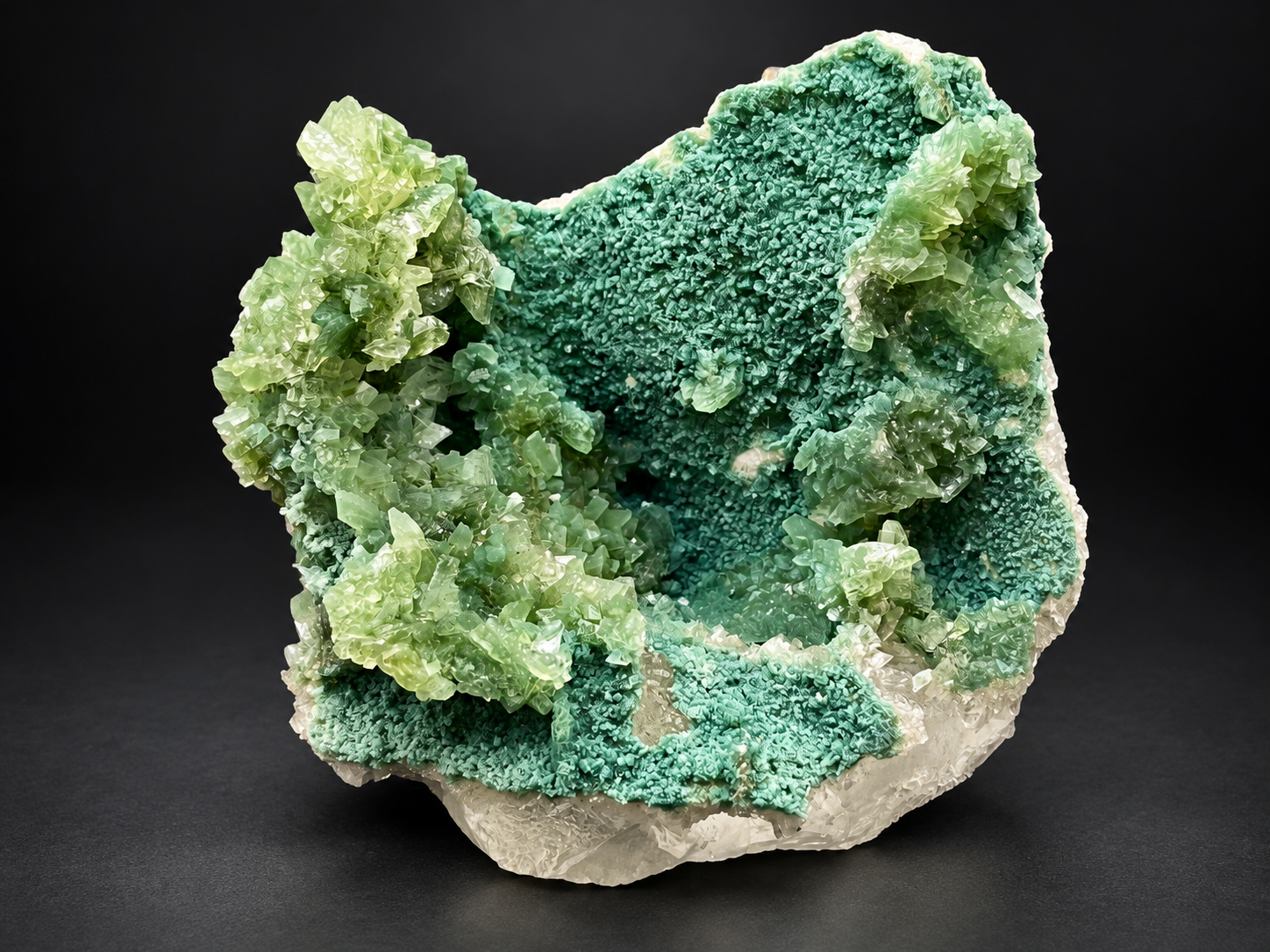 Image 5 of 8
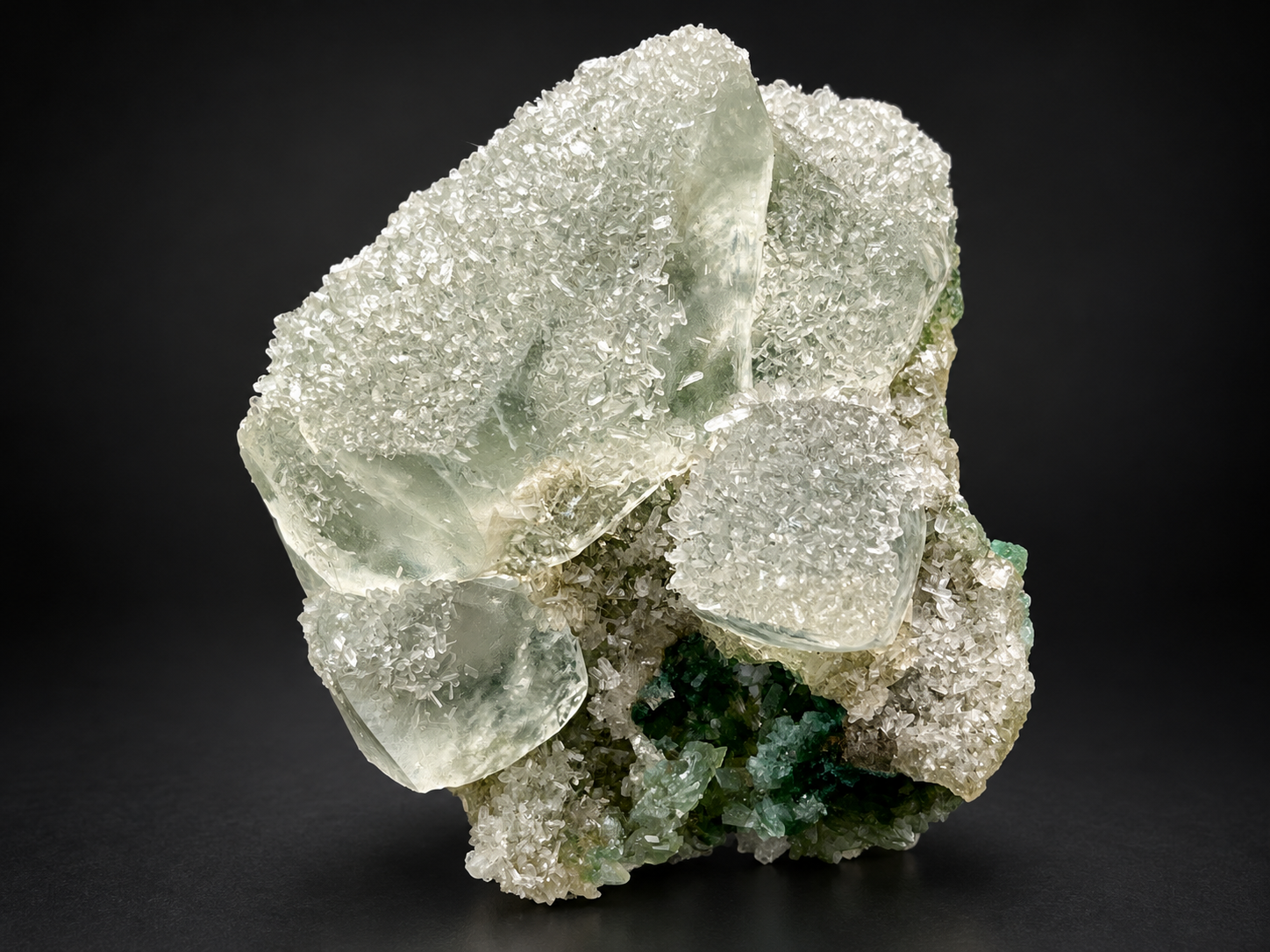 Image 6 of 8
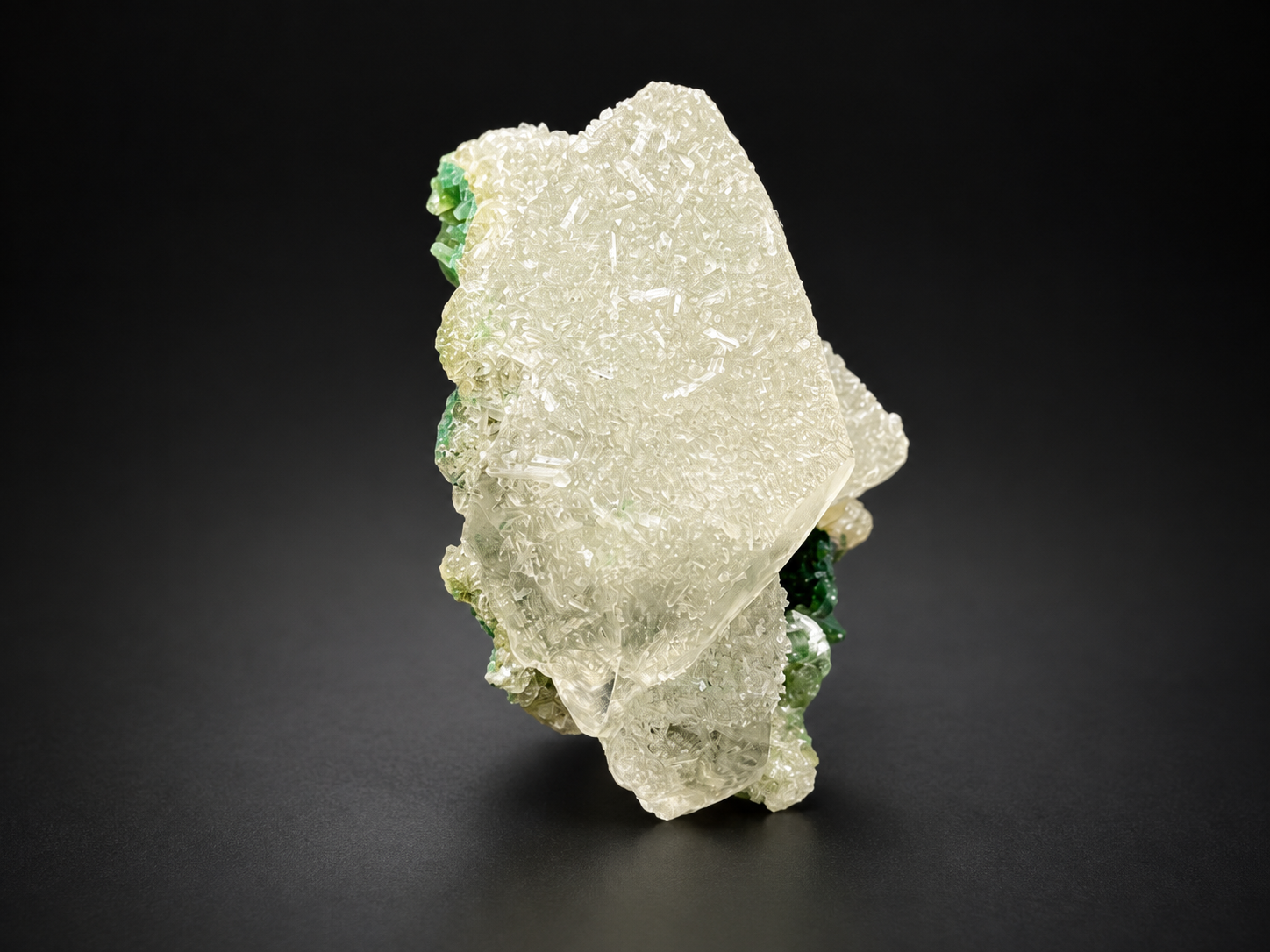 Image 7 of 8
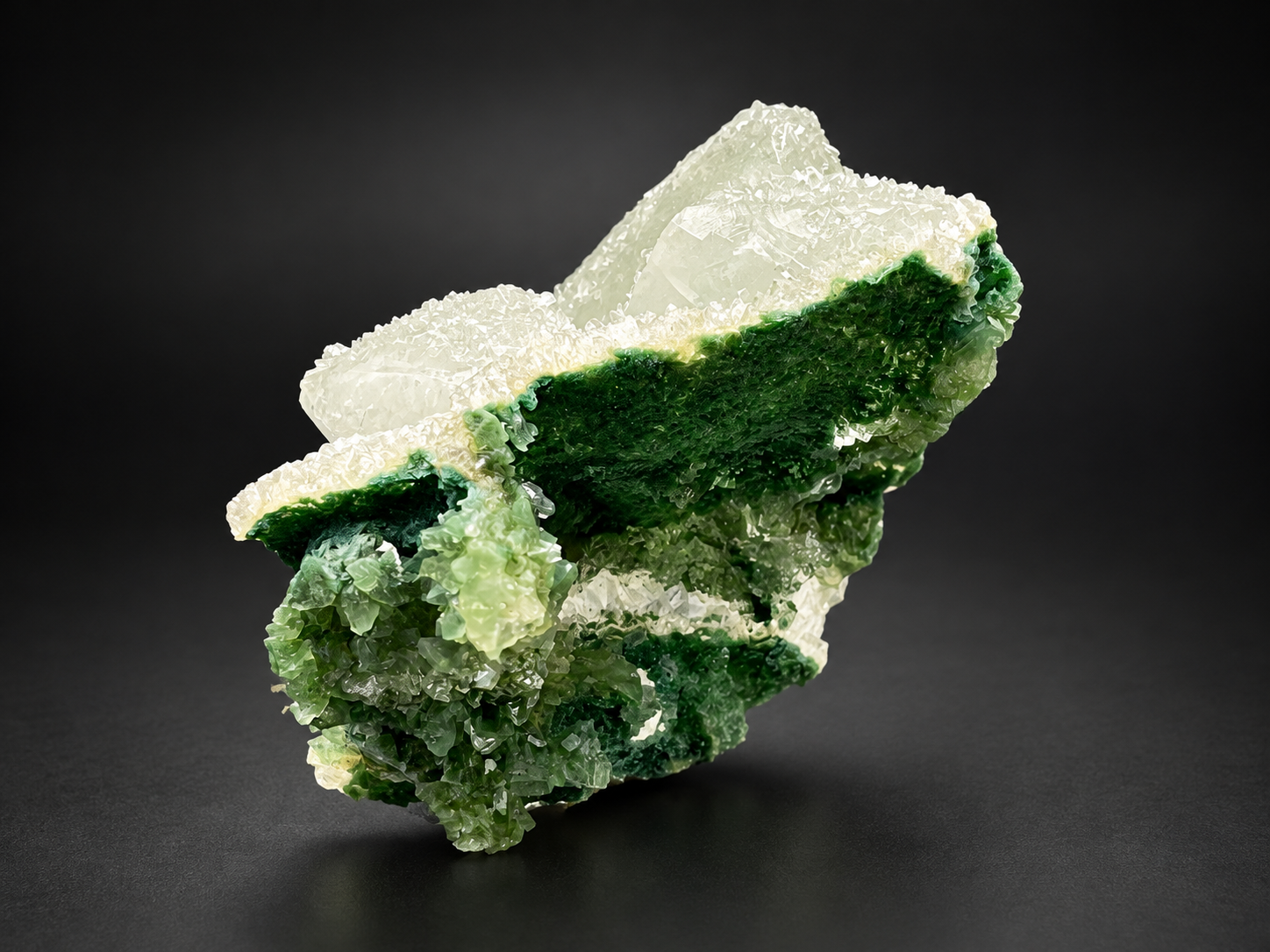 Image 8 of 8