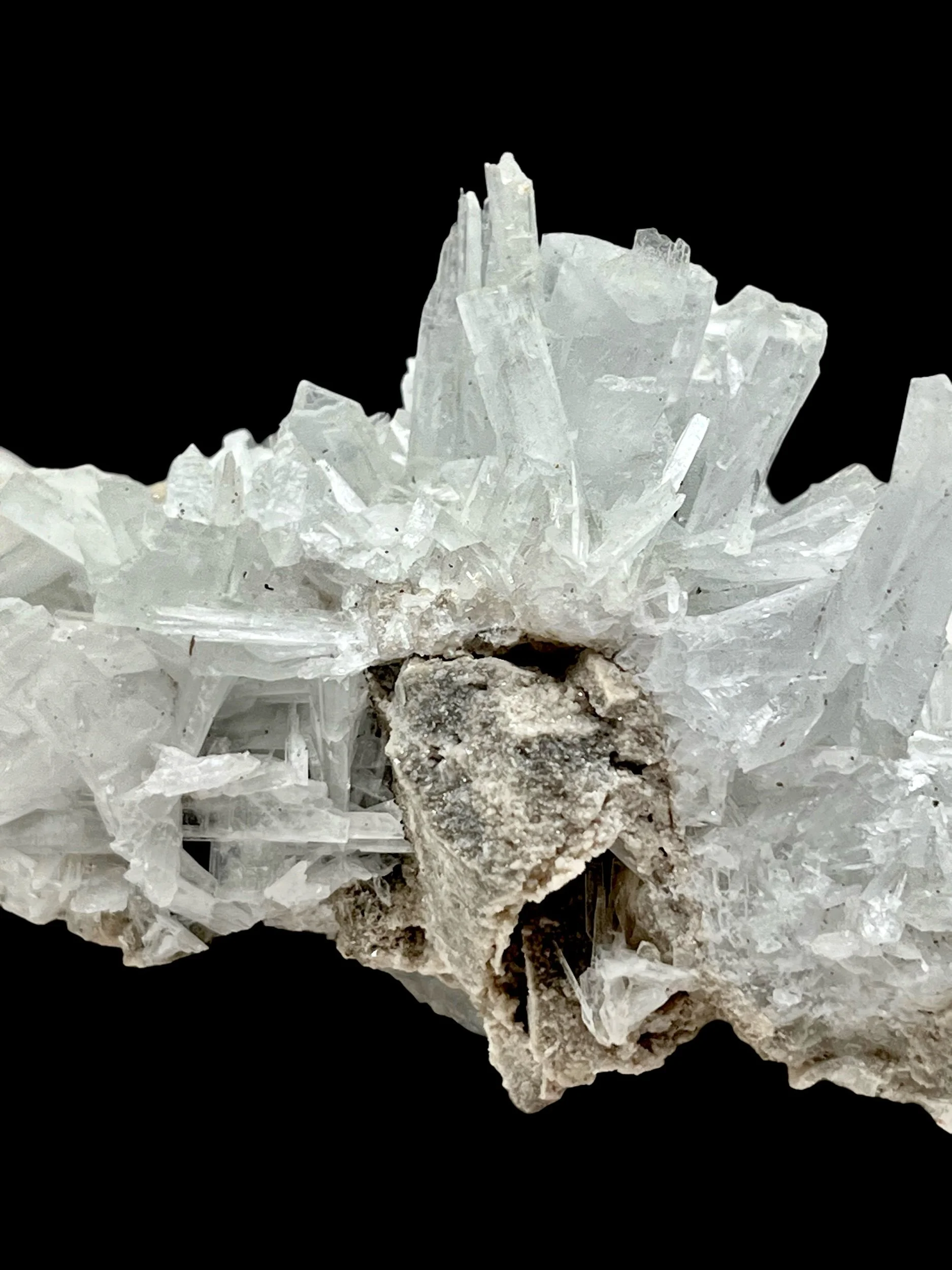
Description
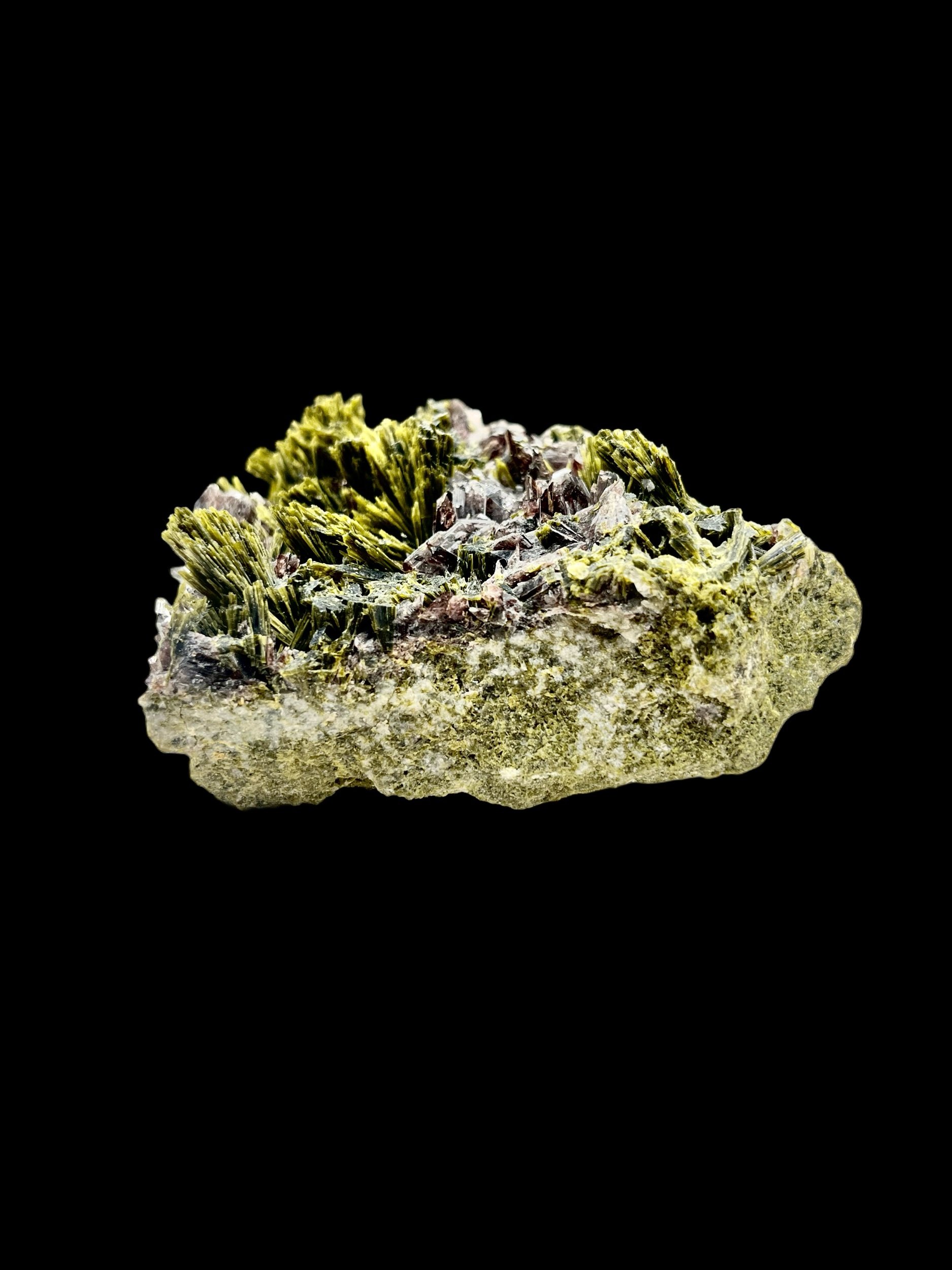
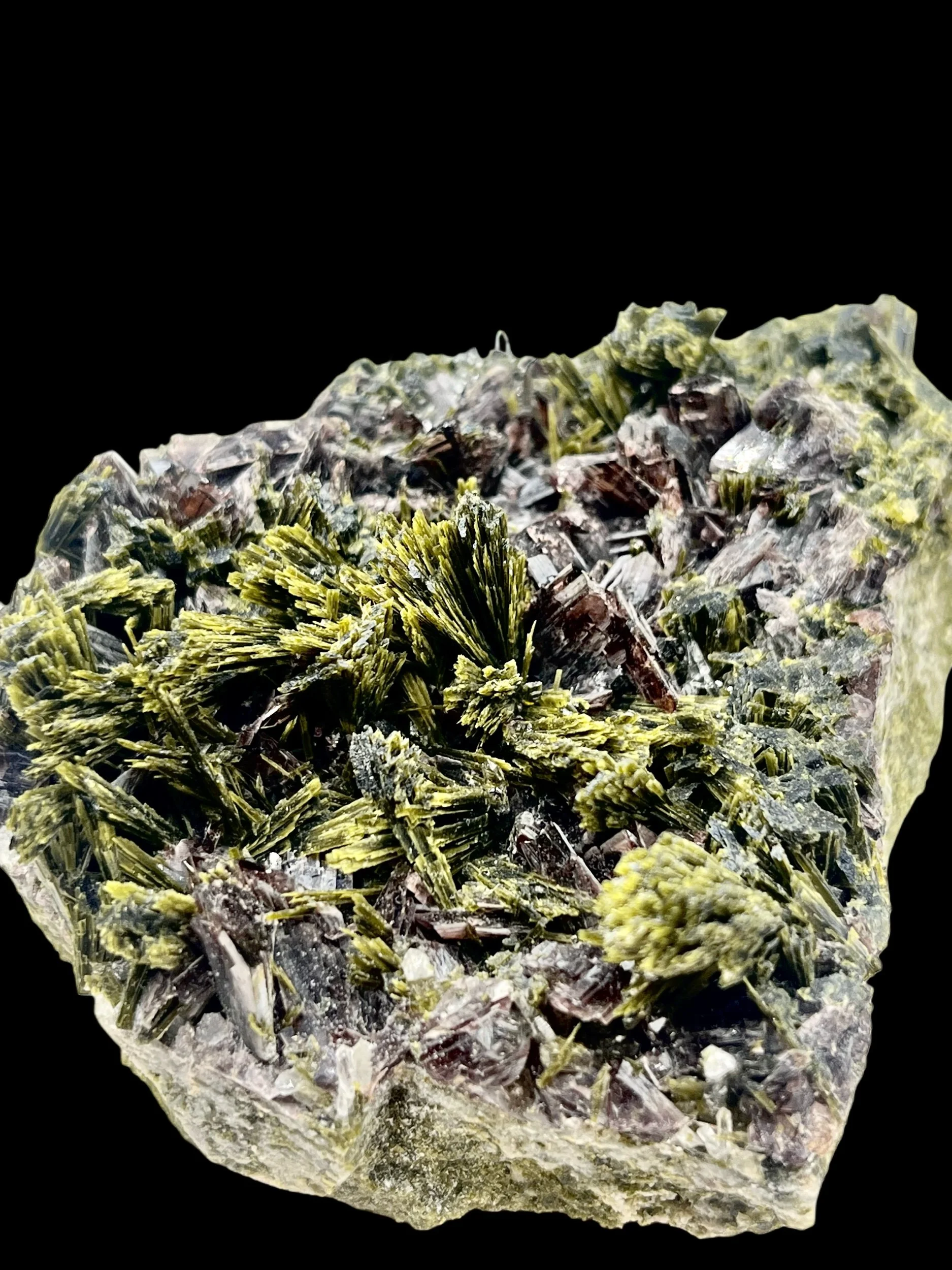
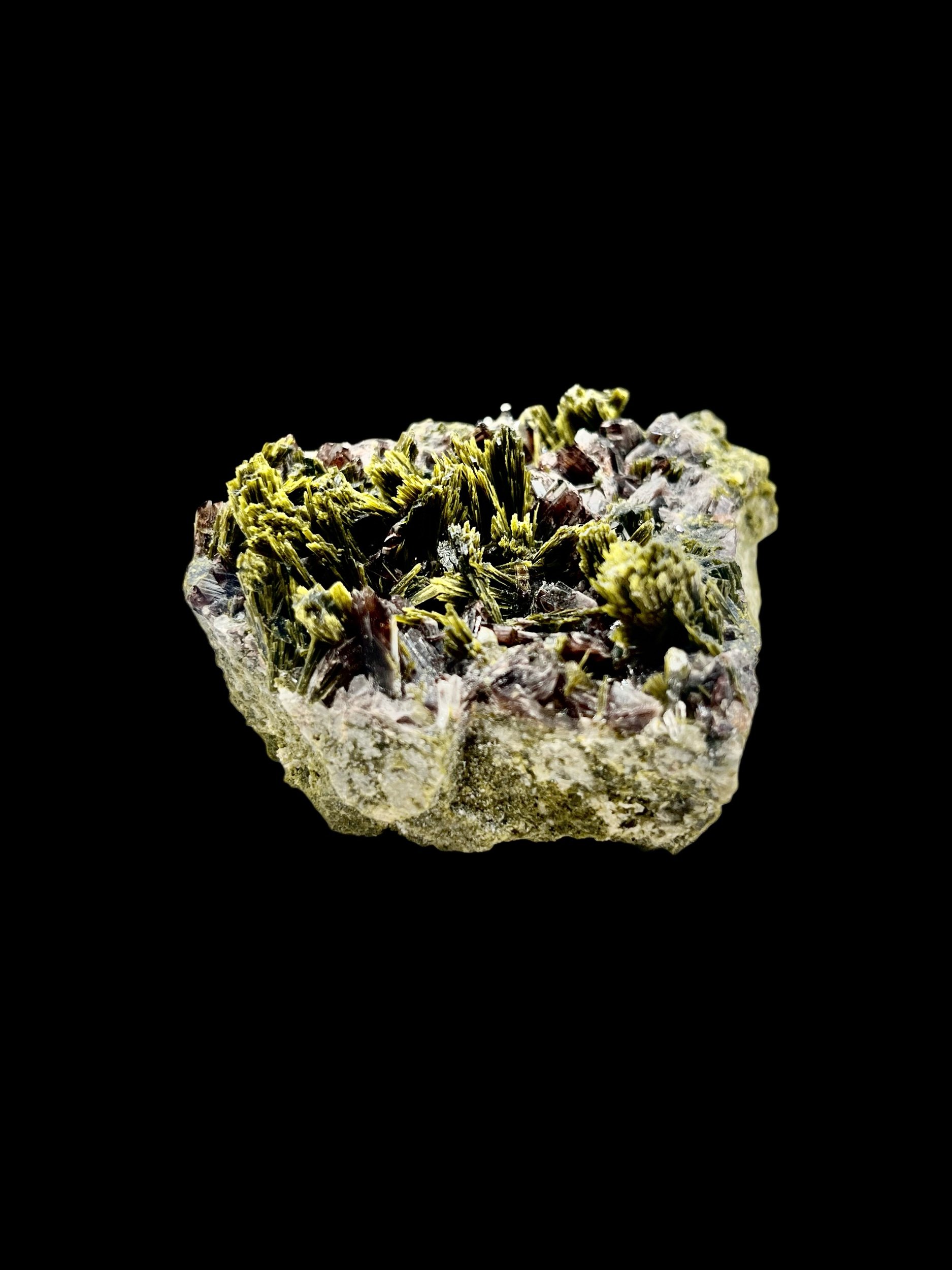
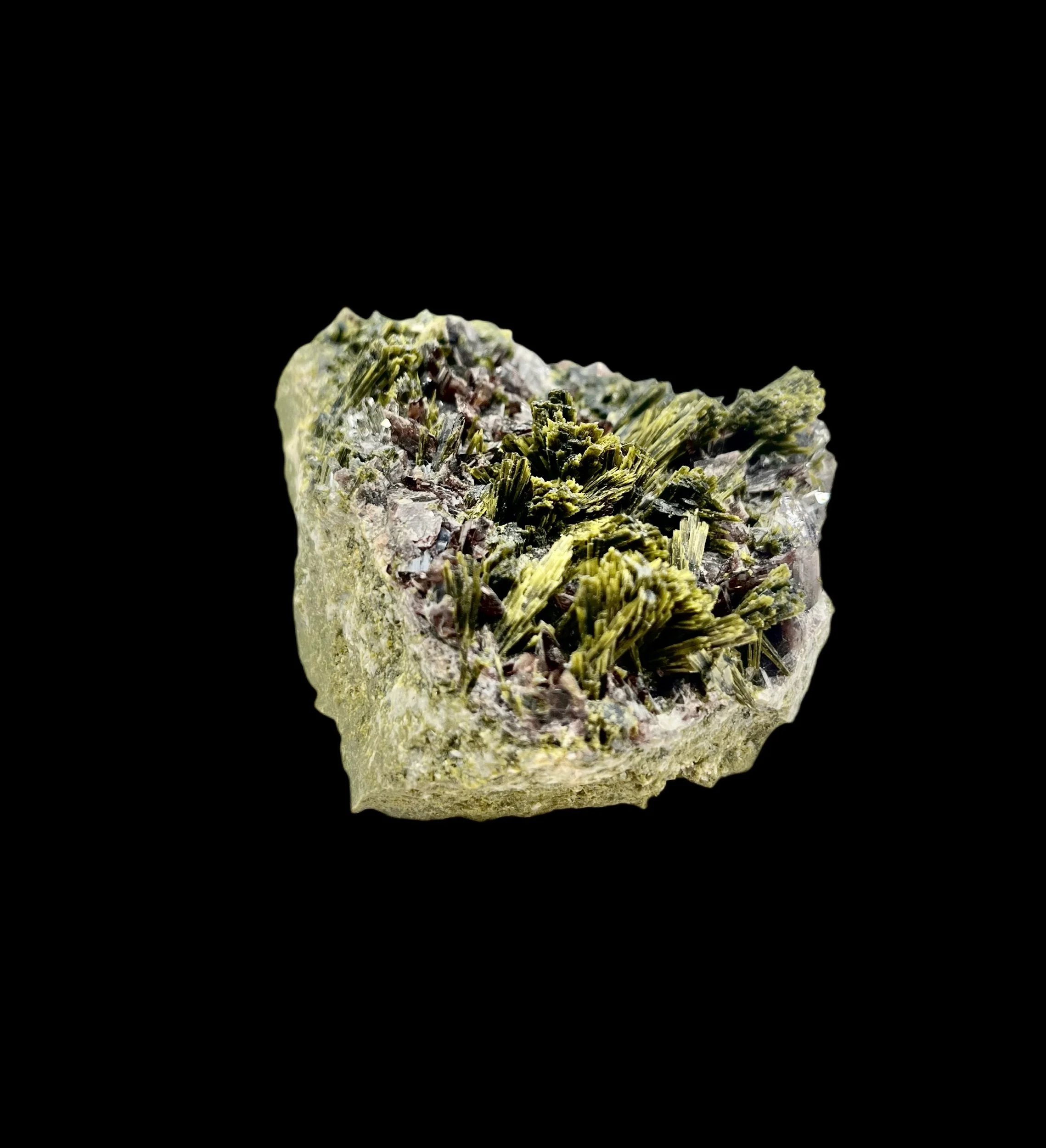
A stunning display of natural metallic brilliance! This beautiful bladed hematite specimen from Nador, Morocco, features an impressive collection of thin, mirrorlike crystals with exceptional reflective surfaces.
Also known as hymatite or specularite, this distinctive form of hematite develops into flattened metallic plates that resemble tiny polished mirrors. Larger, sharply defined crystal faces rise among delicate, overlapping blades, creating a fascinating arrangement of silver-gray reflections and deep gunmetal tones.
What makes this specimen especially captivating is the variation in its crystal formations. Broad, reflective plates mingle with smaller, intricately layered blades, catching the light at different angles and producing an almost liquid-metal appearance.
Its naturally contrasting surroundings beautifully frame the dark metallic crystals, making this an eye-catching addition to any fine mineral collection.
Dimensions, Weight & Locality
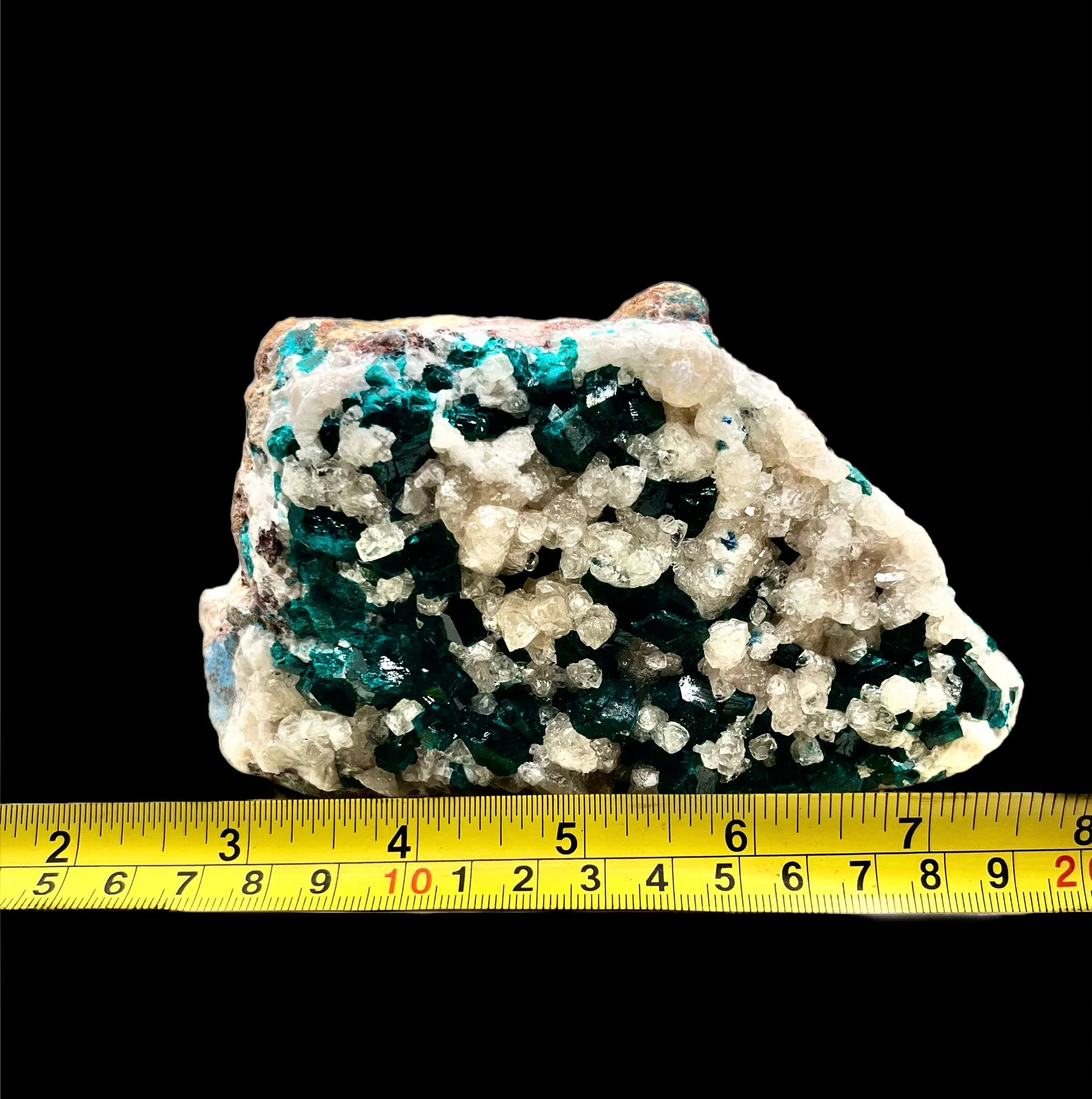
Dimensions: 4 × 3 × 2 inches
Weight: 496 grams
Locality: Nador, Nador Province, Oriental Region, Morocco
Metaphysical Properties
Hematite has long been associated with grounding, protection, emotional balance, and inner strength.
Grounding: Believed to promote stability and a connection to the present moment.
Protection: Traditionally associated with shielding against unwanted energies.
Focus: Thought to encourage concentration, organization, and mental clarity.
Confidence: Associated with courage, determination, and personal strength.
Emotional Balance: Believed to promote calmness during stressful situations.
These properties are based on traditional metaphysical beliefs and are not scientifically established.
Collector's Notes
How Does Bladed Hematite Form?
Hematite is an iron oxide mineral that can crystallize in several fascinating shapes. In certain geological environments, iron-rich mineralizing fluids move through openings in rock, allowing hematite crystals to develop as the mineral is deposited.
Under suitable growth conditions, hematite expands more readily across its broad crystal faces than in thickness, producing the extremely thin, flattened plates characteristic of specularite.
These naturally smooth surfaces reflect light so efficiently that they can resemble polished metal, despite receiving no polishing!
What Makes Nador Hematite Special?
The Nador region of Morocco is well known among mineral collectors for its exceptionally lustrous hematite crystals. Unlike the rounded or massive hematite commonly encountered, these specimens feature distinct flattened crystals, often growing in overlapping clusters.
The most desirable examples combine strong metallic reflections, well-defined crystal faces, interesting formations, and attractive overall presentation.
What Makes This Specimen Special?
Nador, Morocco, is a recognized locality for lustrous hematite crystals. This specimen showcases a particularly attractive combination of broad reflective plates and smaller overlapping blades.
The different crystal sizes and orientations create wonderful depth, with some surfaces flashing brilliant silver while others appear nearly black.
Interesting Fact: Hematite Has a Colorful Secret!
Despite its silver-black metallic appearance, hematite produces a red to reddish-brown streak when powdered. In fact, its name comes from the Greek word for blood!
Hematite has been used as a natural red pigment since prehistoric times, making it a mineral with an extraordinary connection to human history.
Care & Display
Although hematite is relatively hard, its thin crystal blades can be fragile. Handle carefully, avoid rubbing or brushing the crystal faces, and display away from areas where the specimen might be bumped.
Highlights
Natural bladed hematite from Nador, Morocco
Brilliant, highly reflective silver-black metallic crystals
Prominent broad crystal plates surrounded by finer blades
Beautiful overlapping, three-dimensional formations
Exceptional contrast between polished-looking metallic faces and natural matrix
High Luster
Mineralogy
Hematite (Specularite Variety)
Chemical Formula: Fe₂O₃ — Iron(III) oxide
Mineral Class: Oxides
Crystal System: Trigonal
Mohs Hardness: 5.5–6.5
Color: Steel gray, metallic black, silver-gray, or reddish-brown
Luster: Metallic to highly reflective
Streak: Red to reddish-brown
Cleavage: None; may exhibit crystallographic parting
Specific Gravity: Approximately 5.26
Transparency: Opaque
Crystal Habit: Tabular, platy, bladed, micaceous, and occasionally rosette-like
Distinctive Properties: Brilliant metallic crystal faces, characteristic red streak, high density, and naturally flattened crystal growth


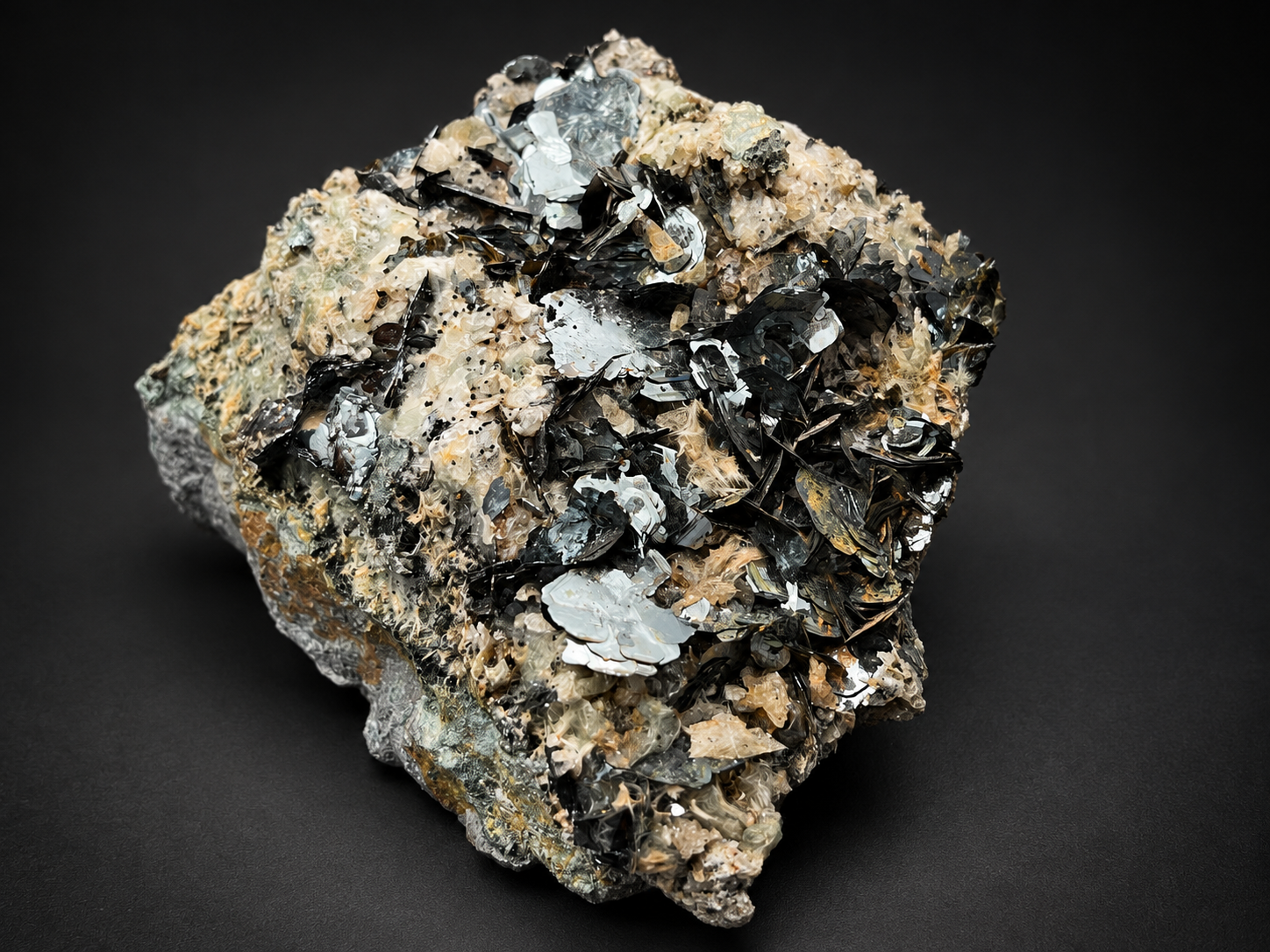 Image 1 of 6
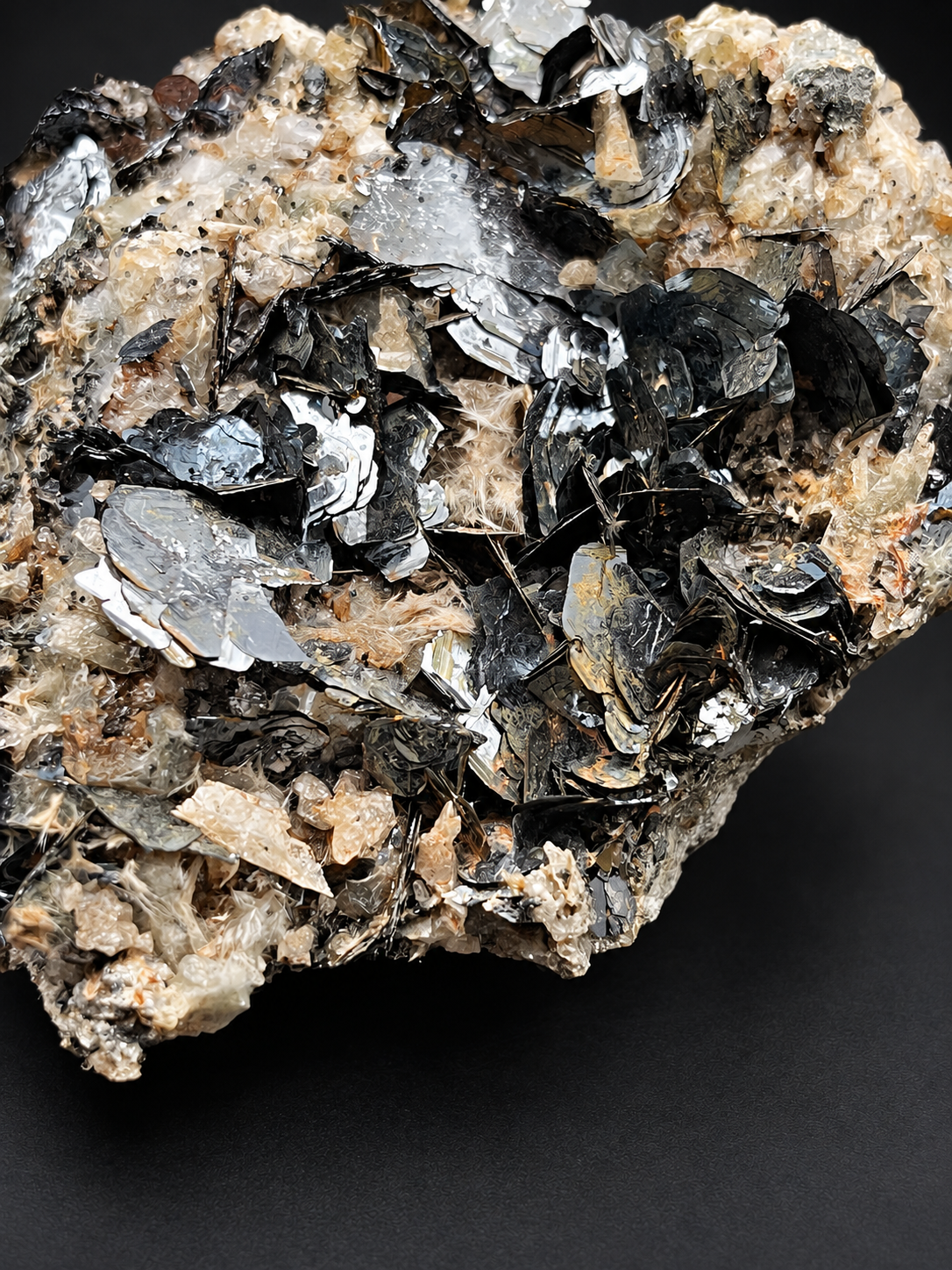 Image 2 of 6
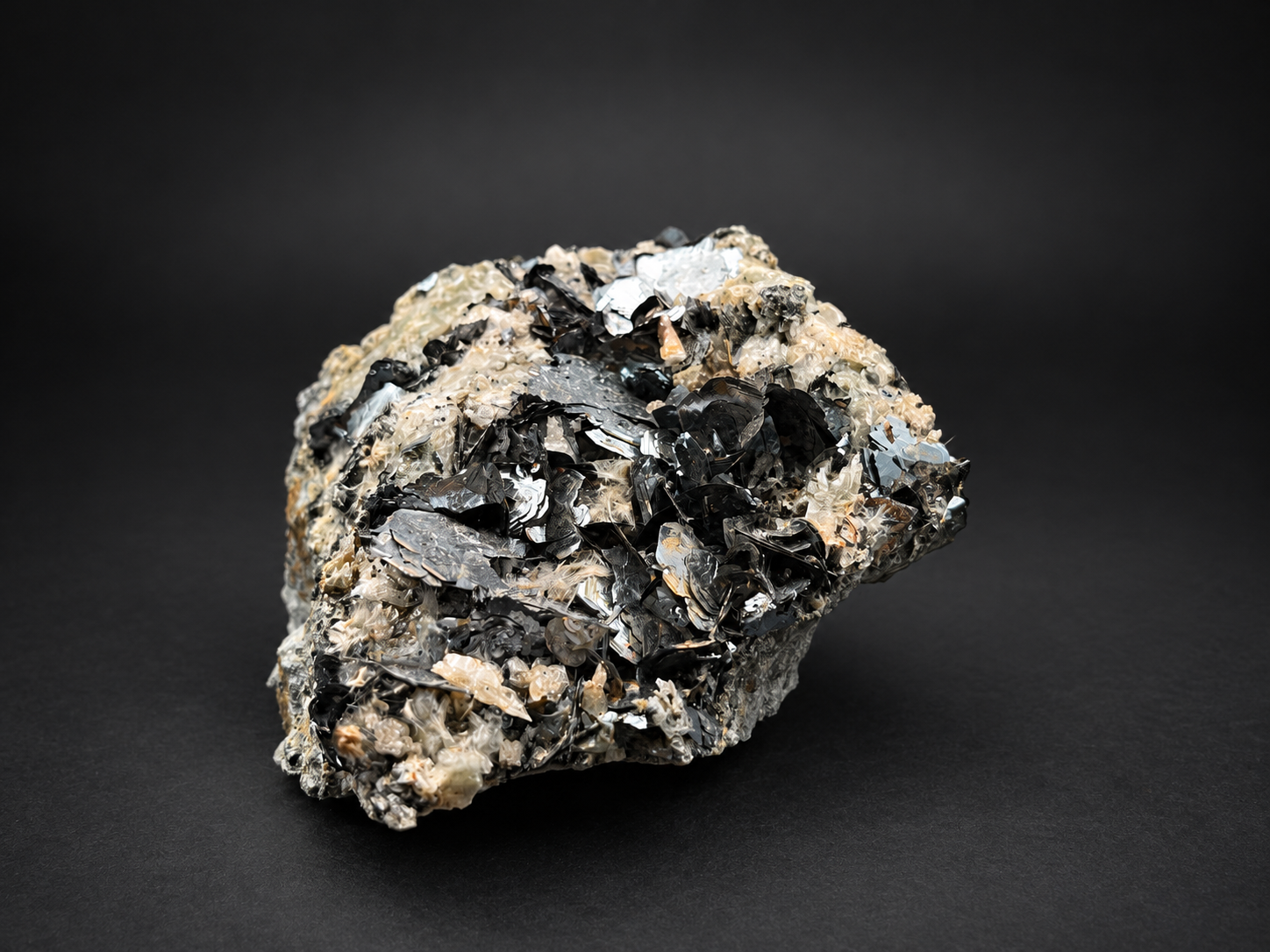 Image 3 of 6
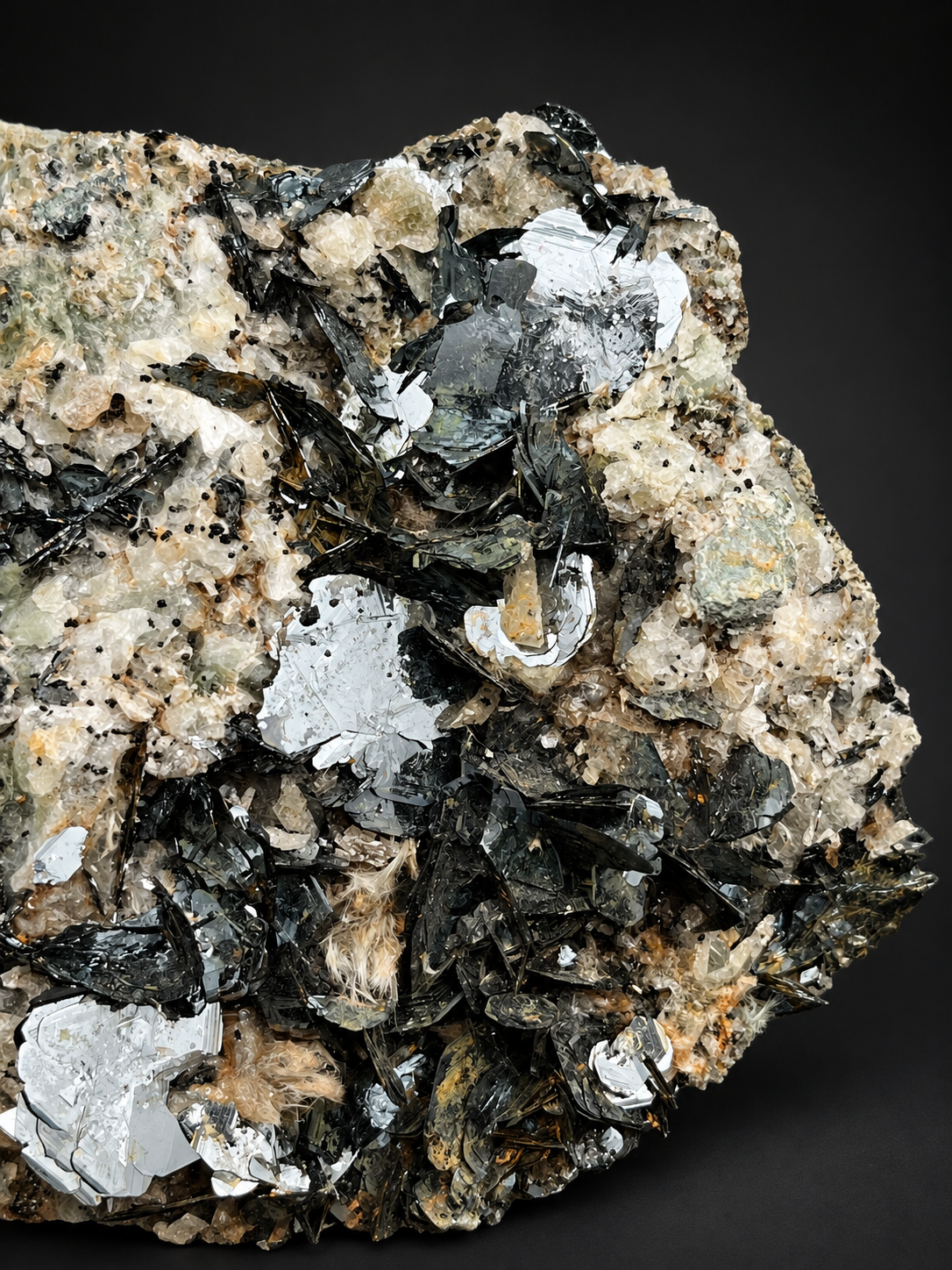 Image 4 of 6
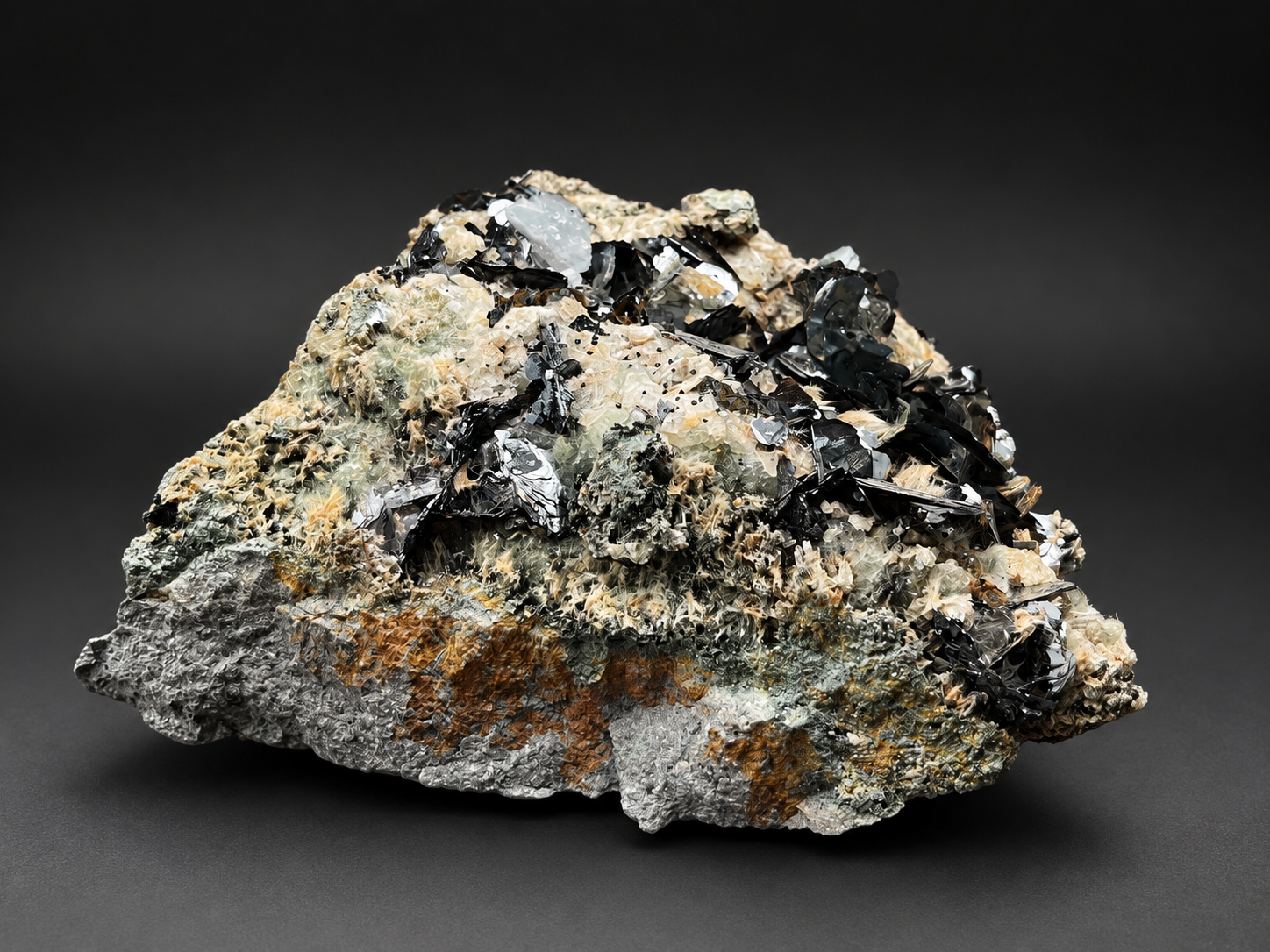 Image 5 of 6
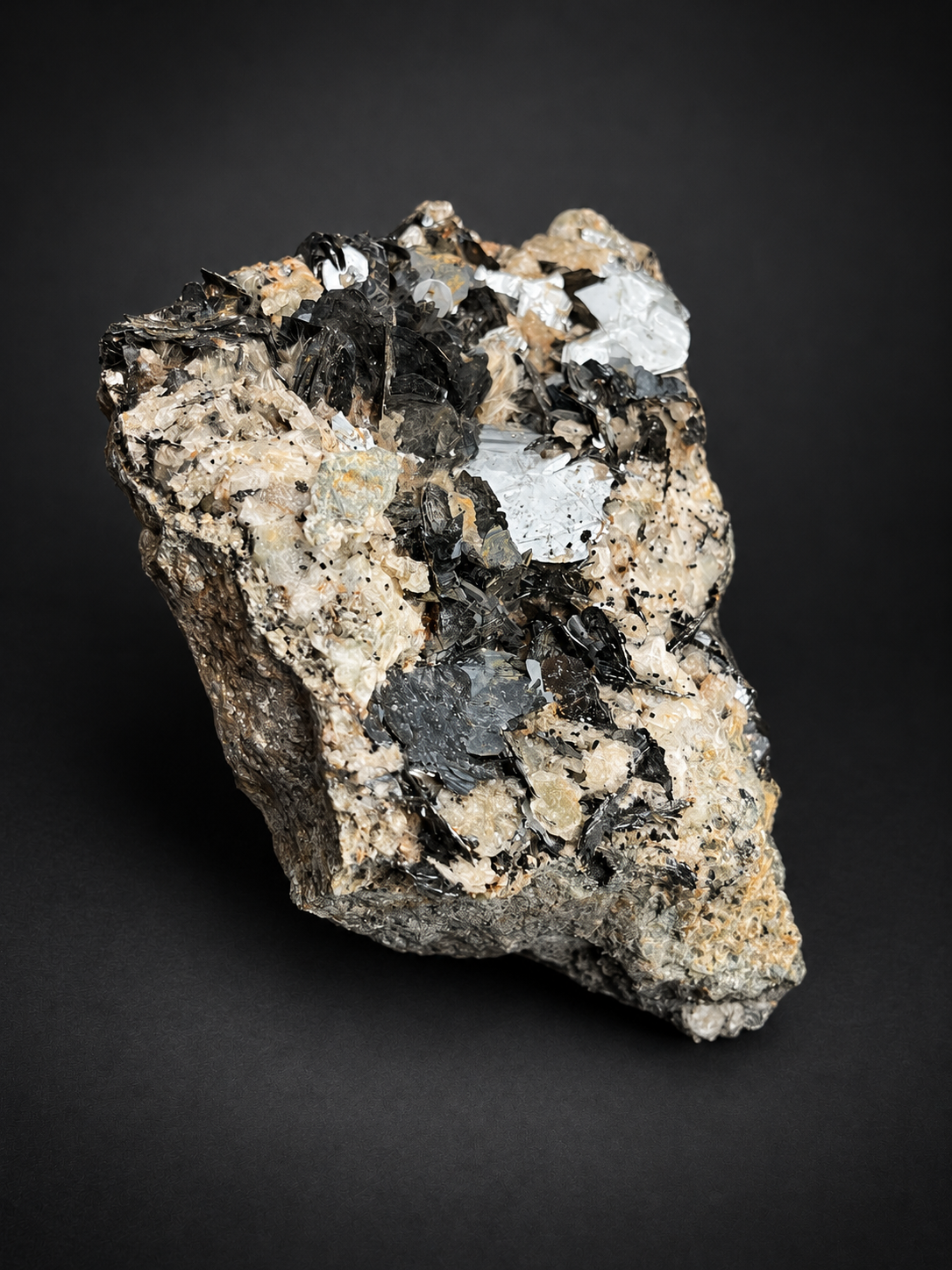 Image 6 of 6