 Image 1 of 5
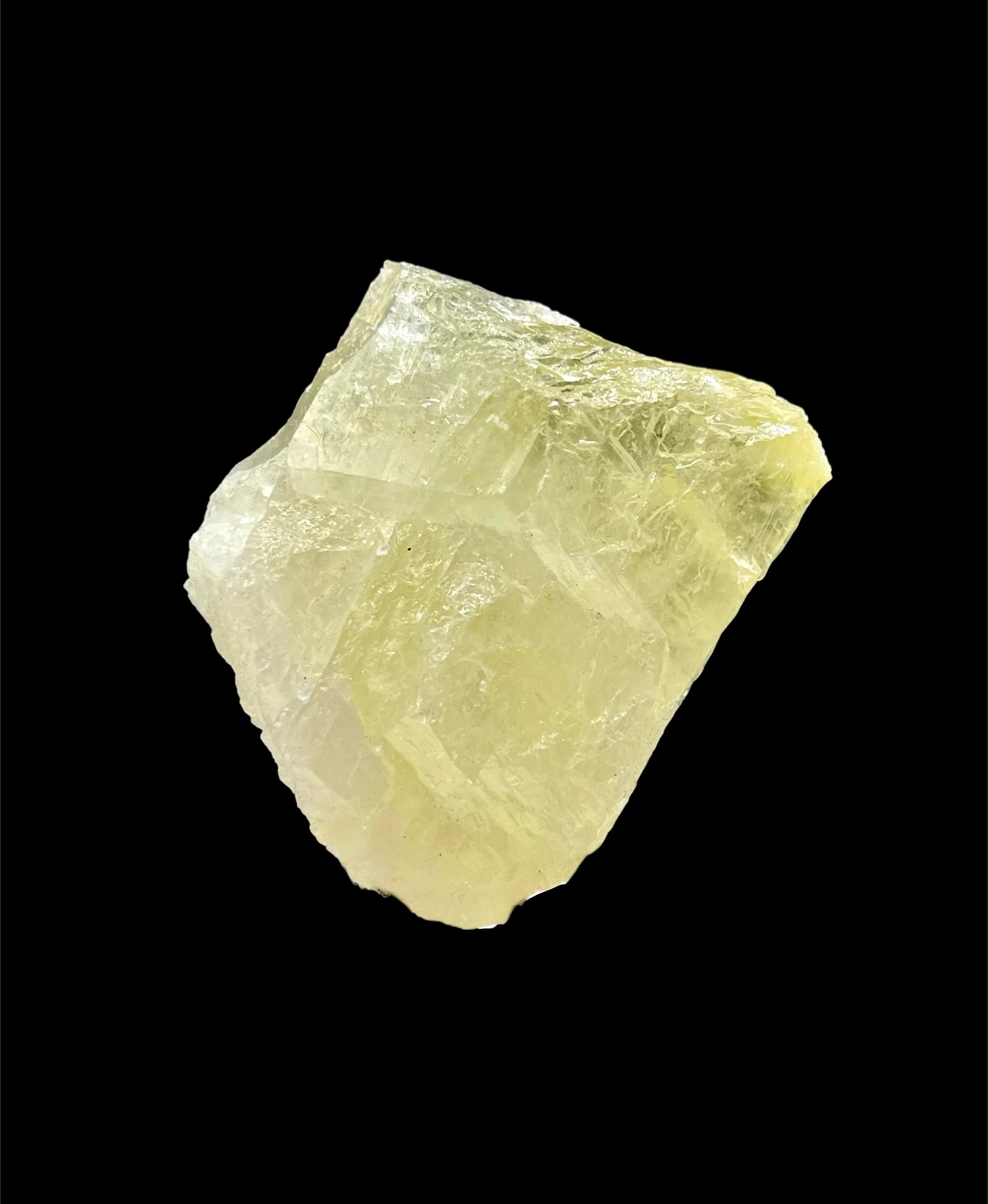 Image 2 of 5
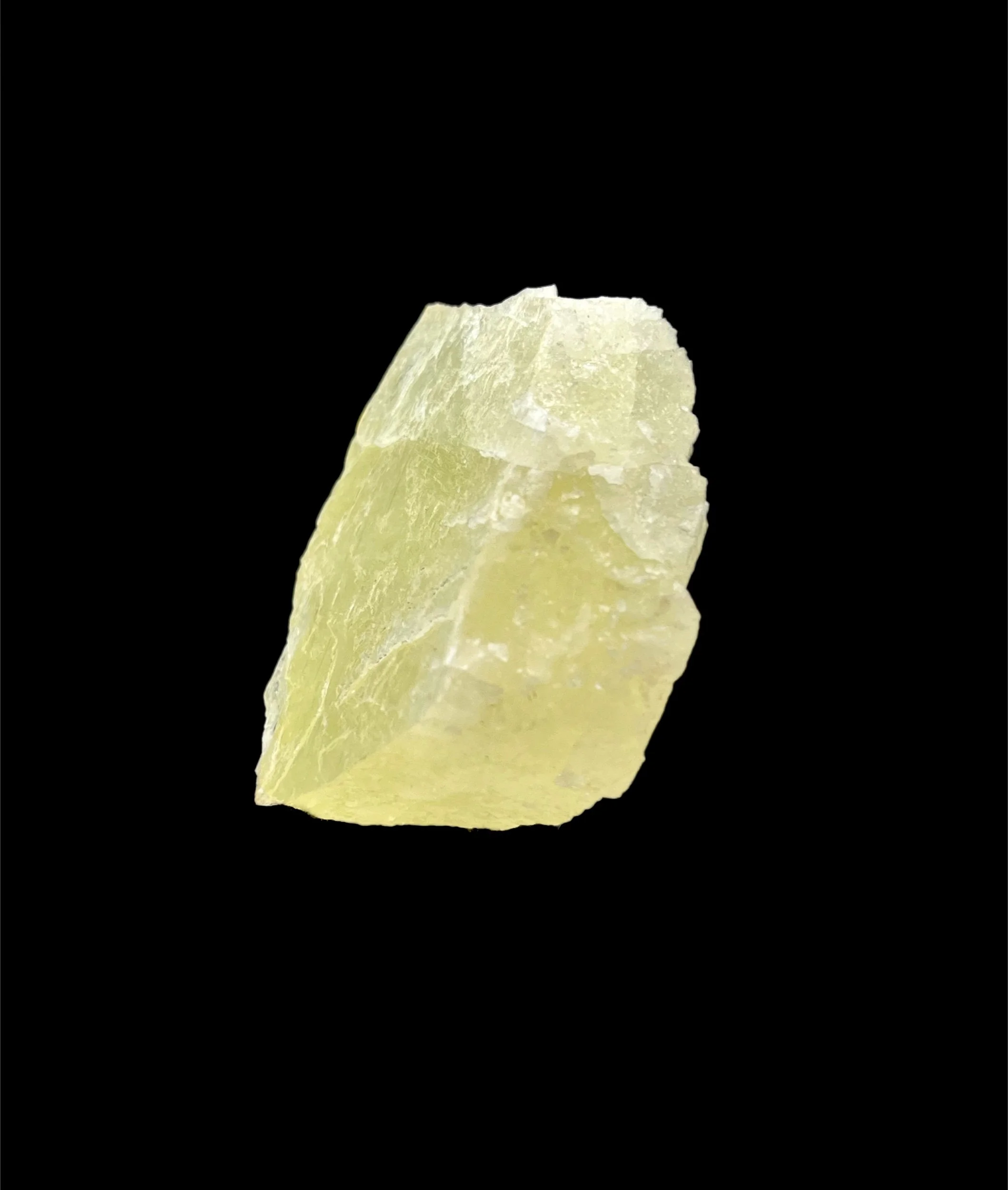 Image 3 of 5
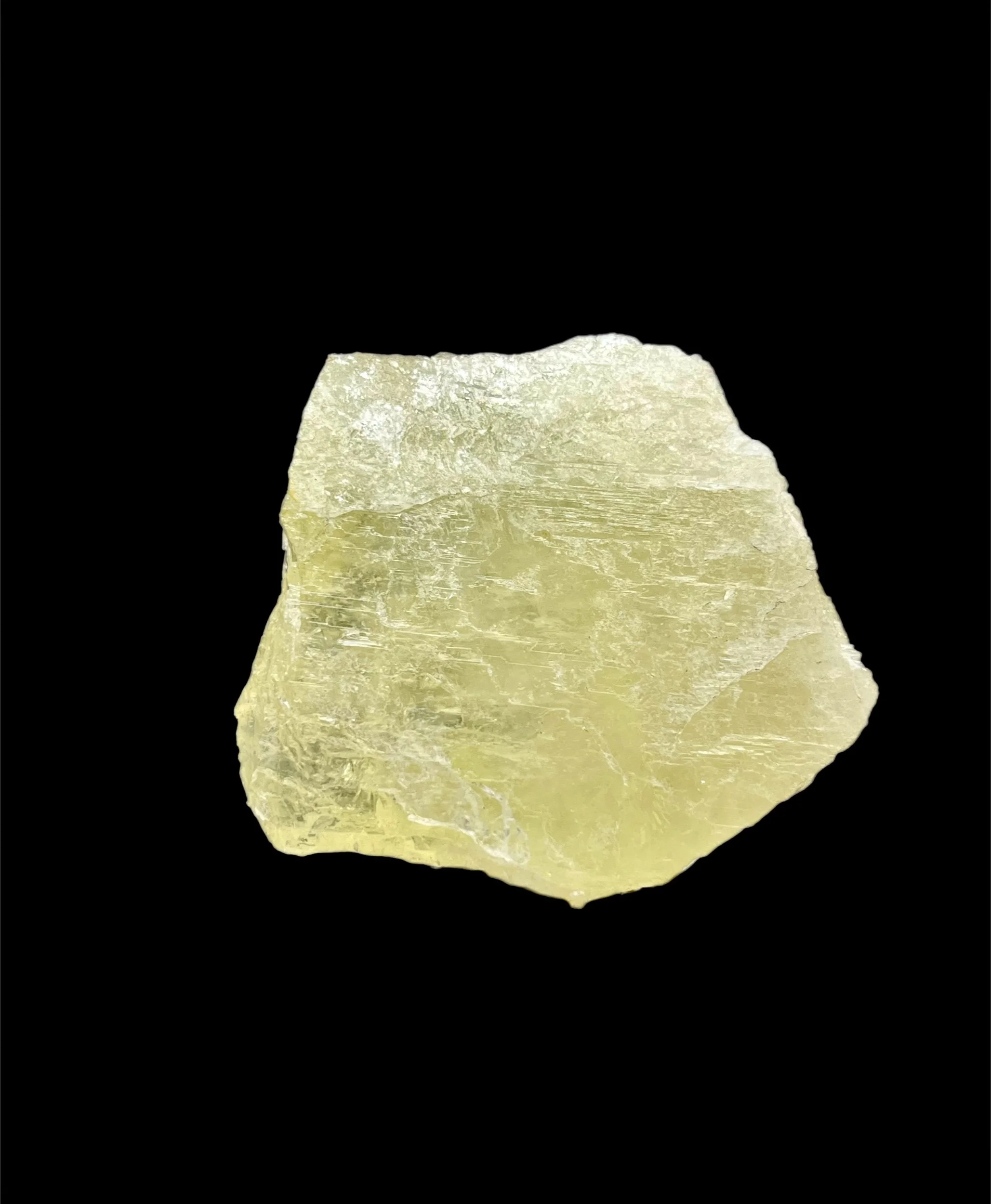 Image 4 of 5
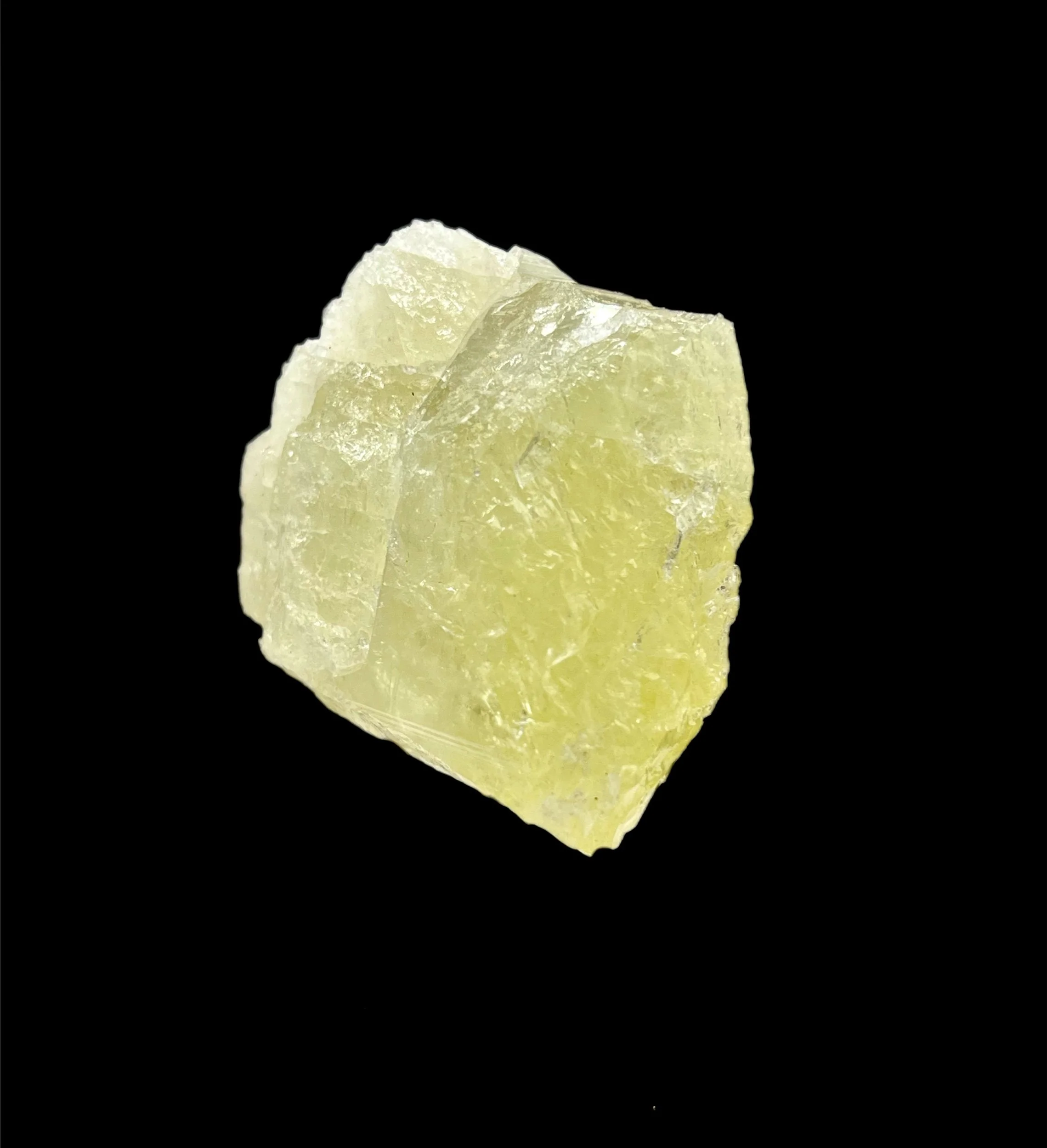 Image 5 of 5
Minas Gerais, Brazil
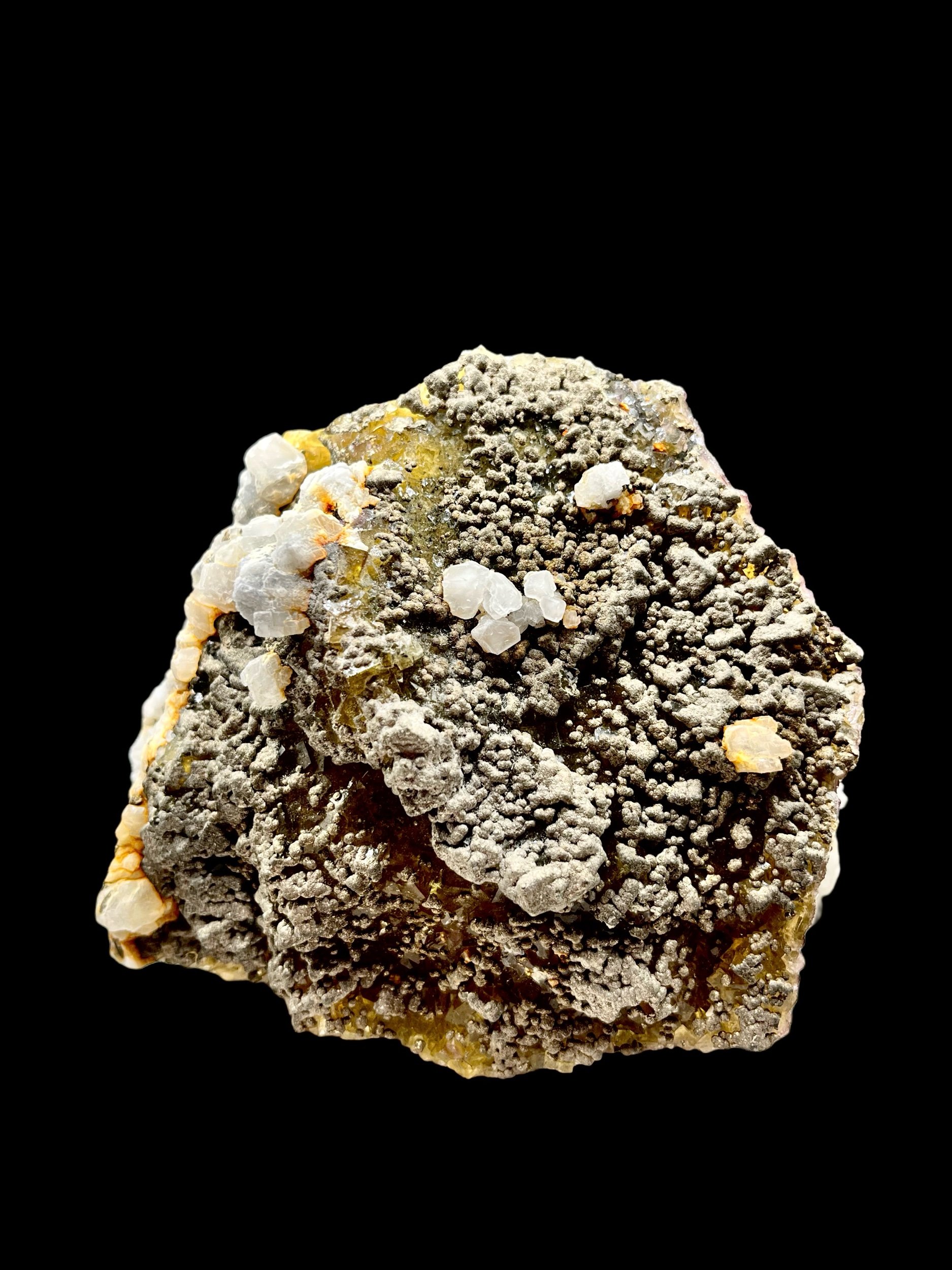
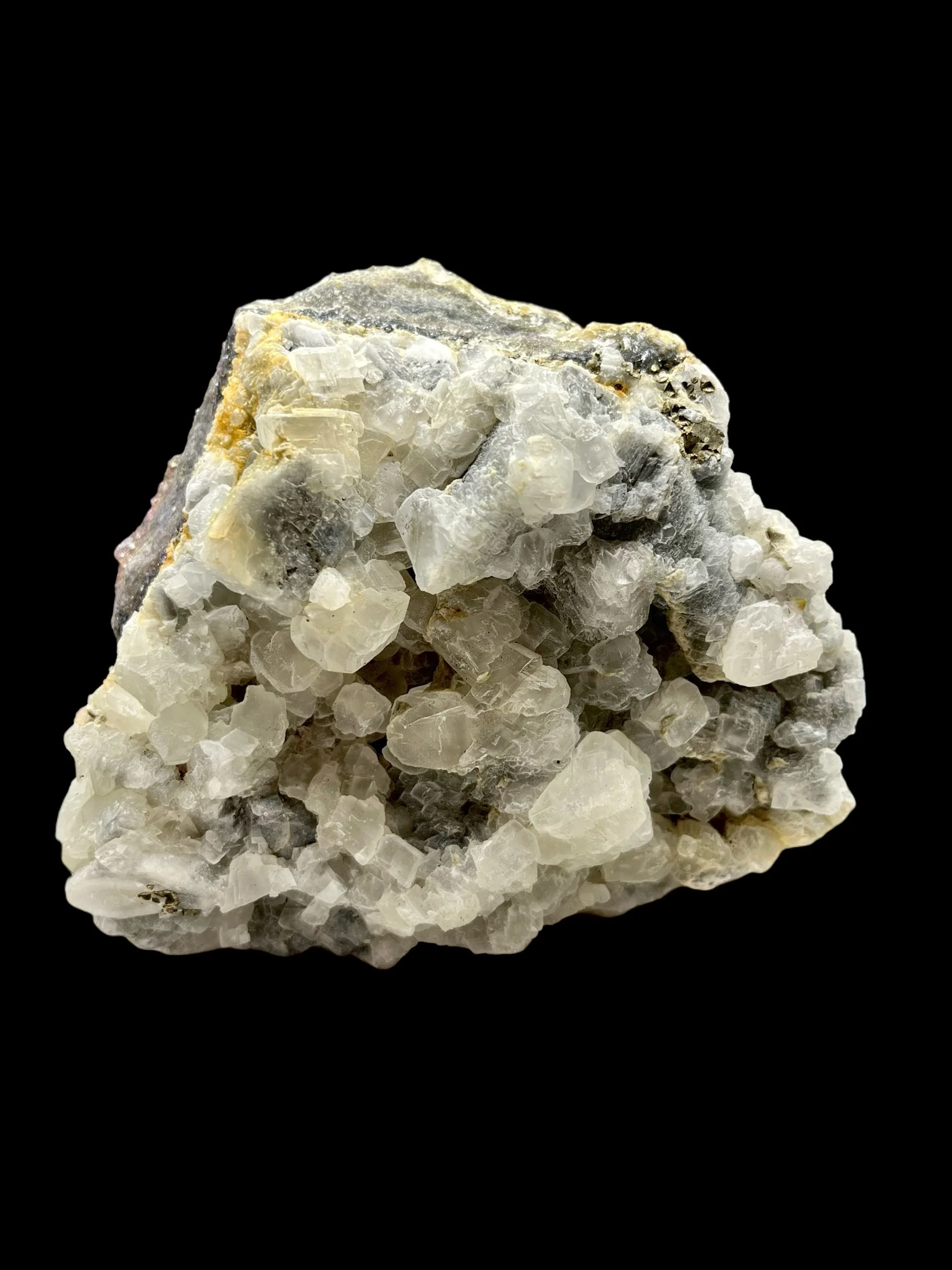
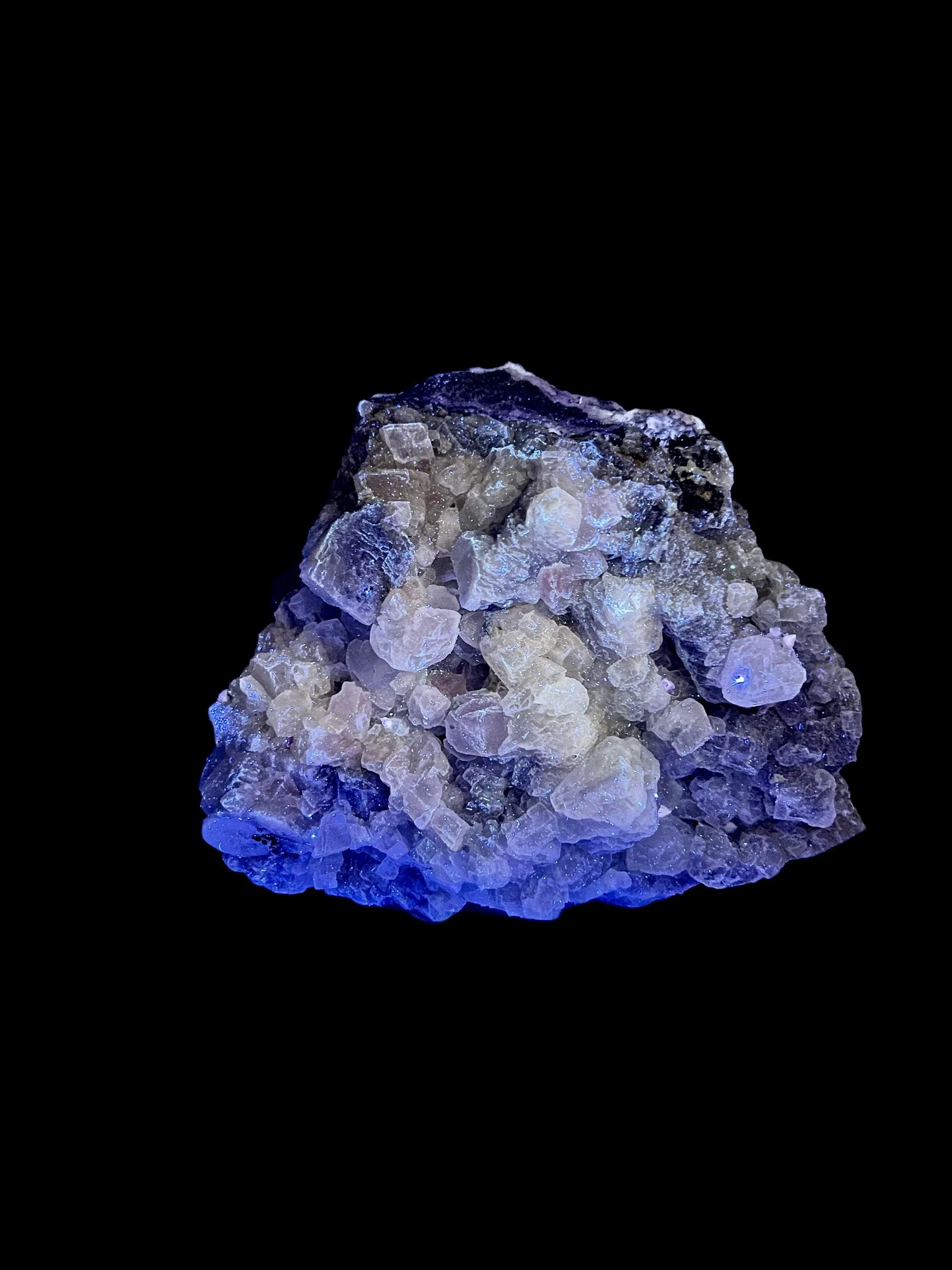
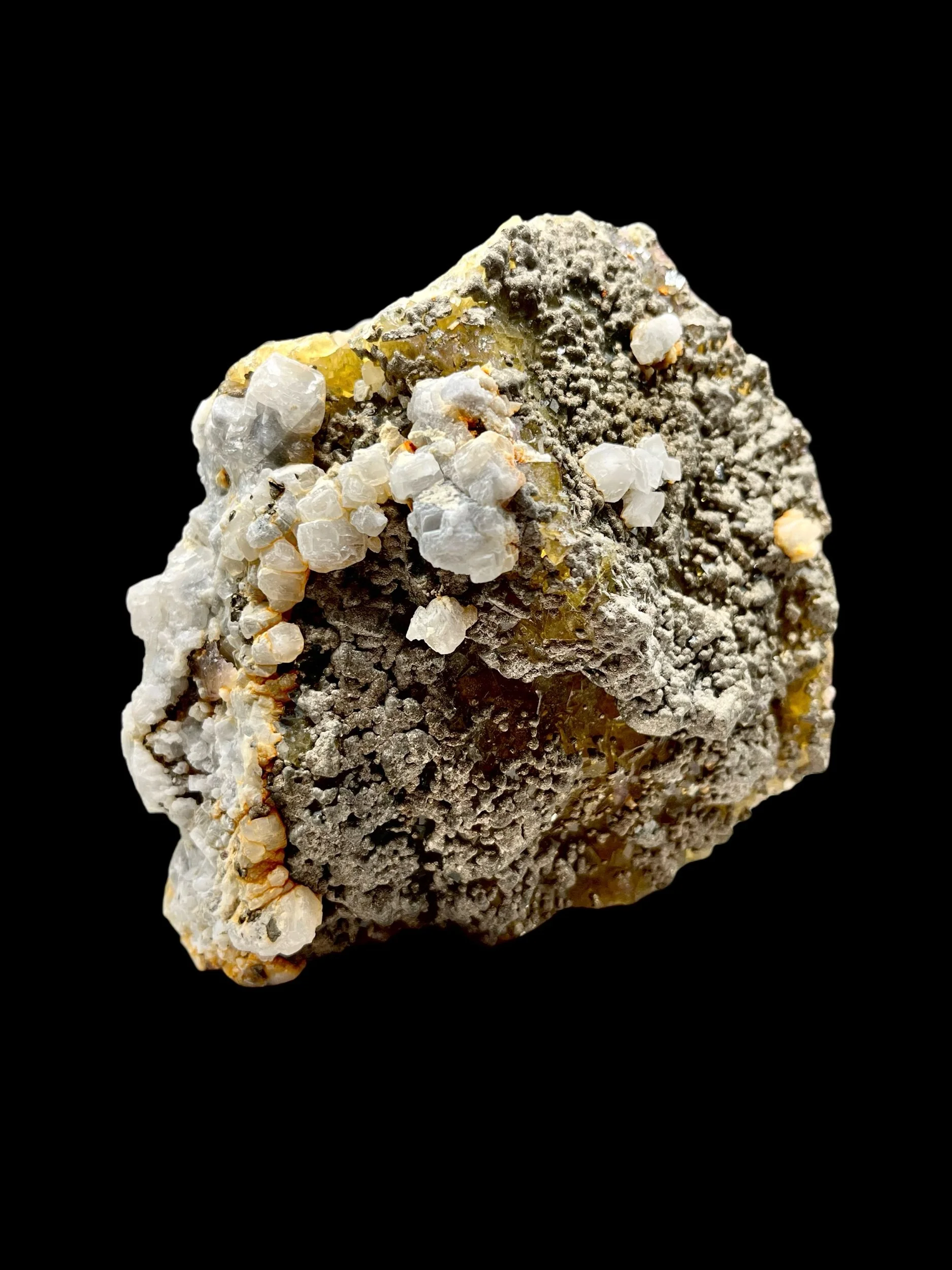
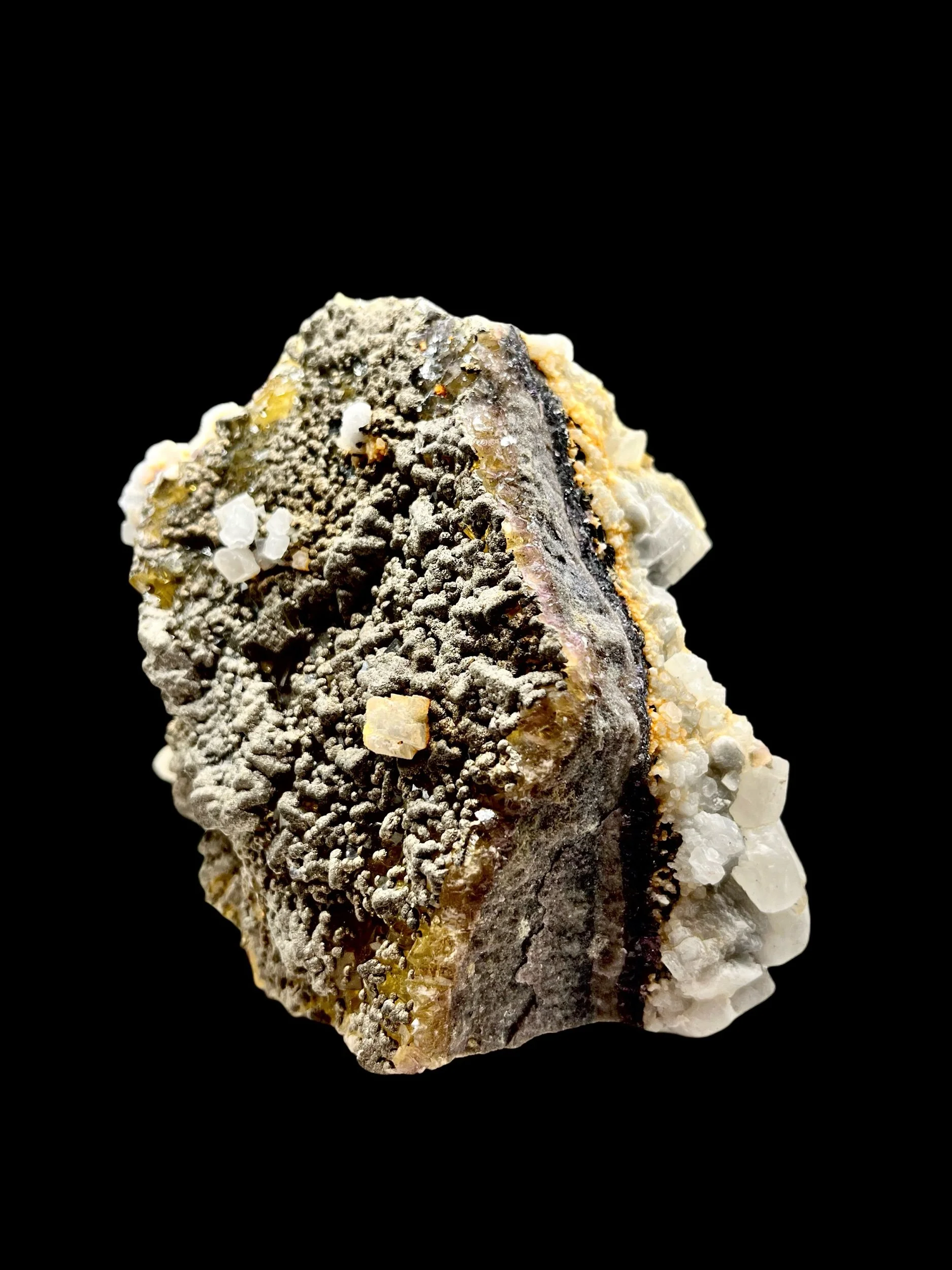
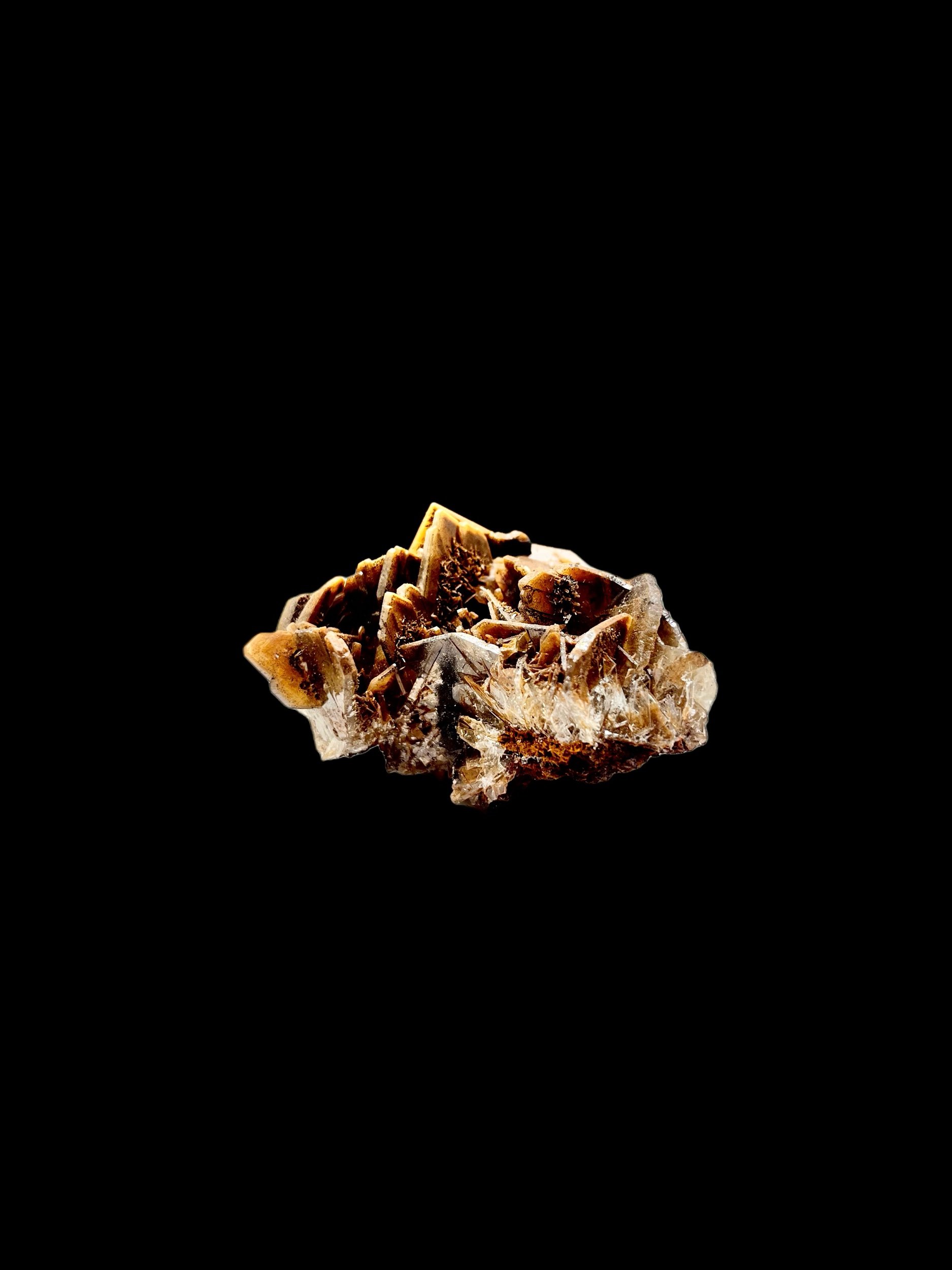
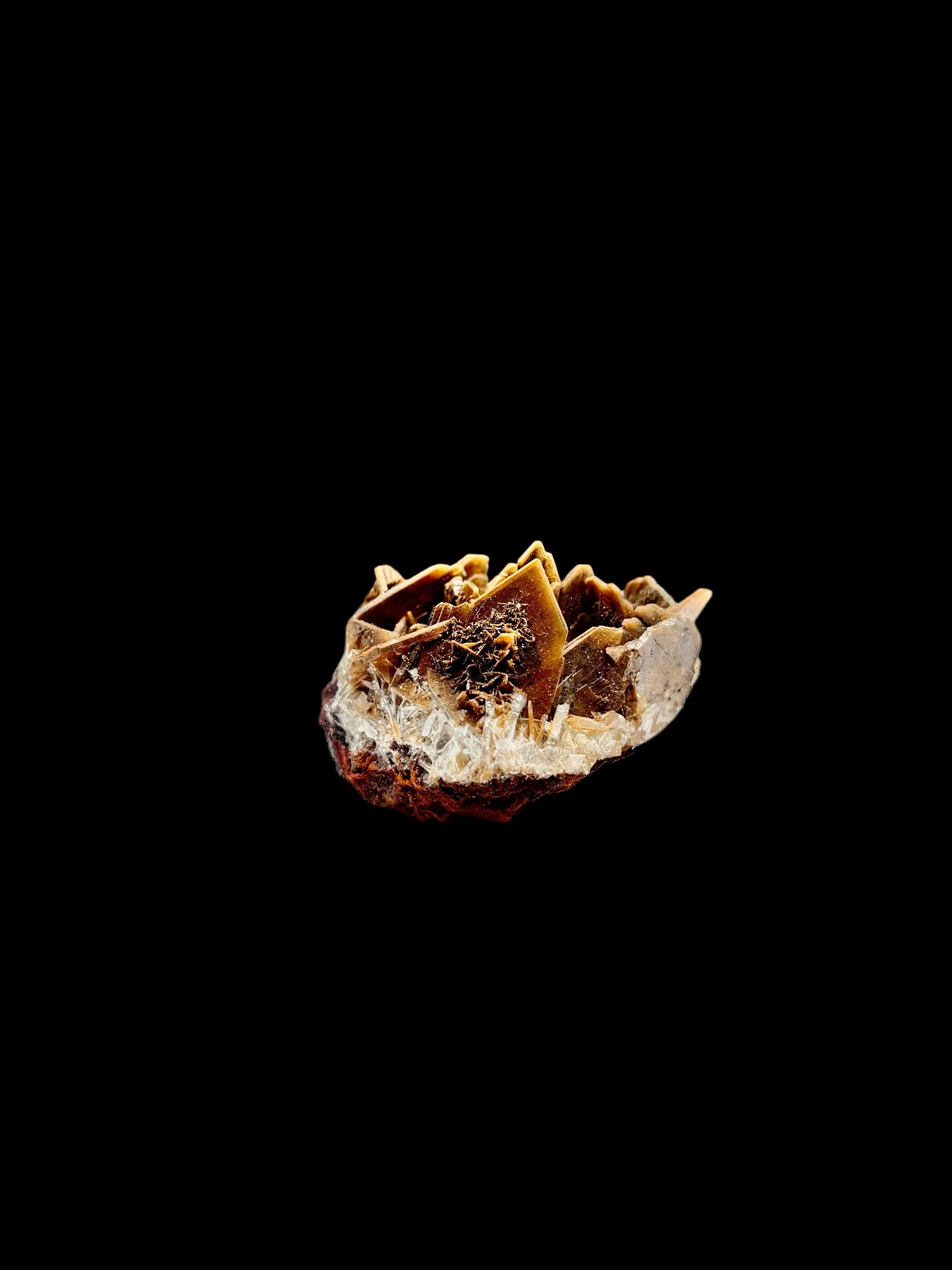
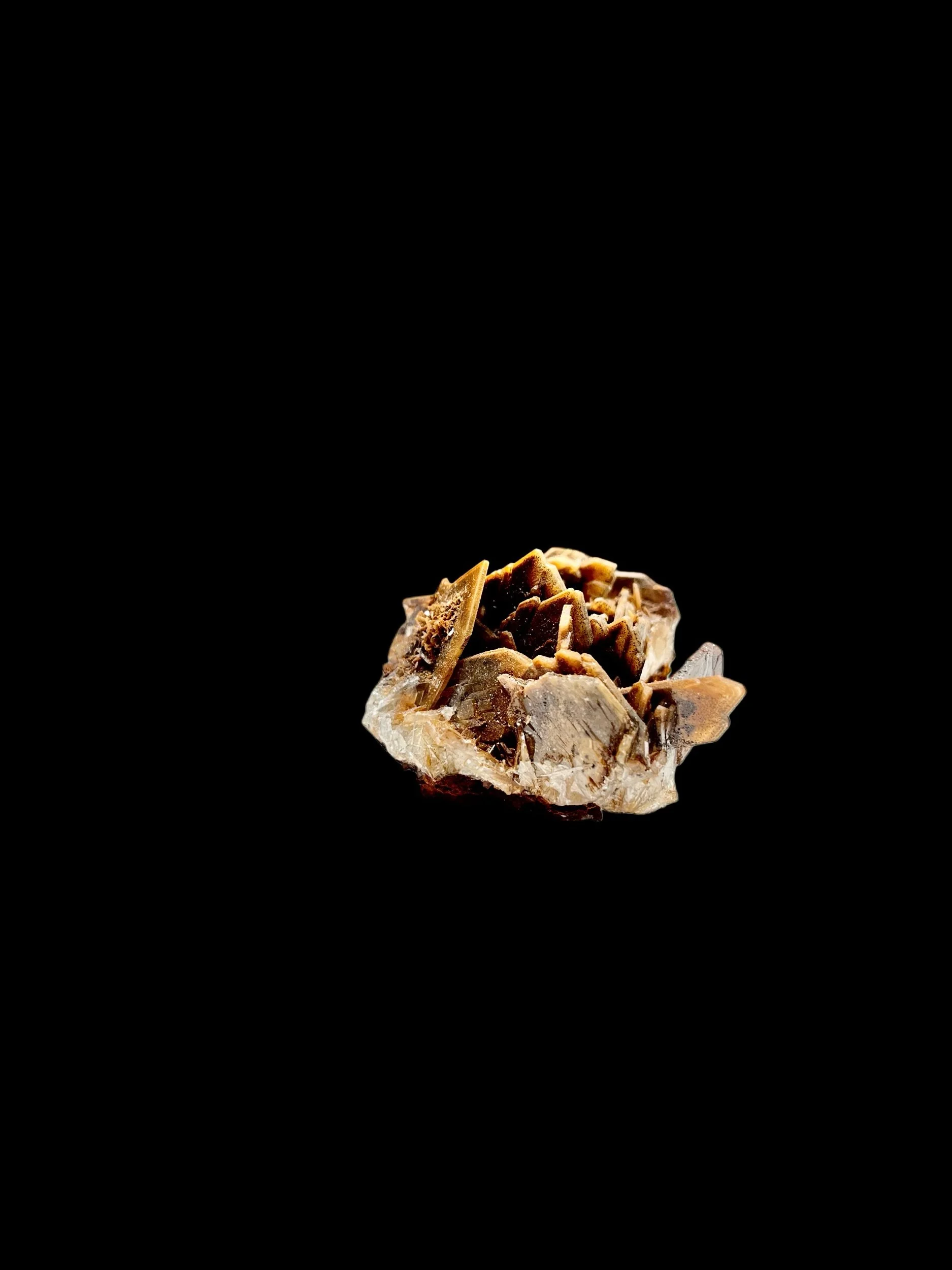
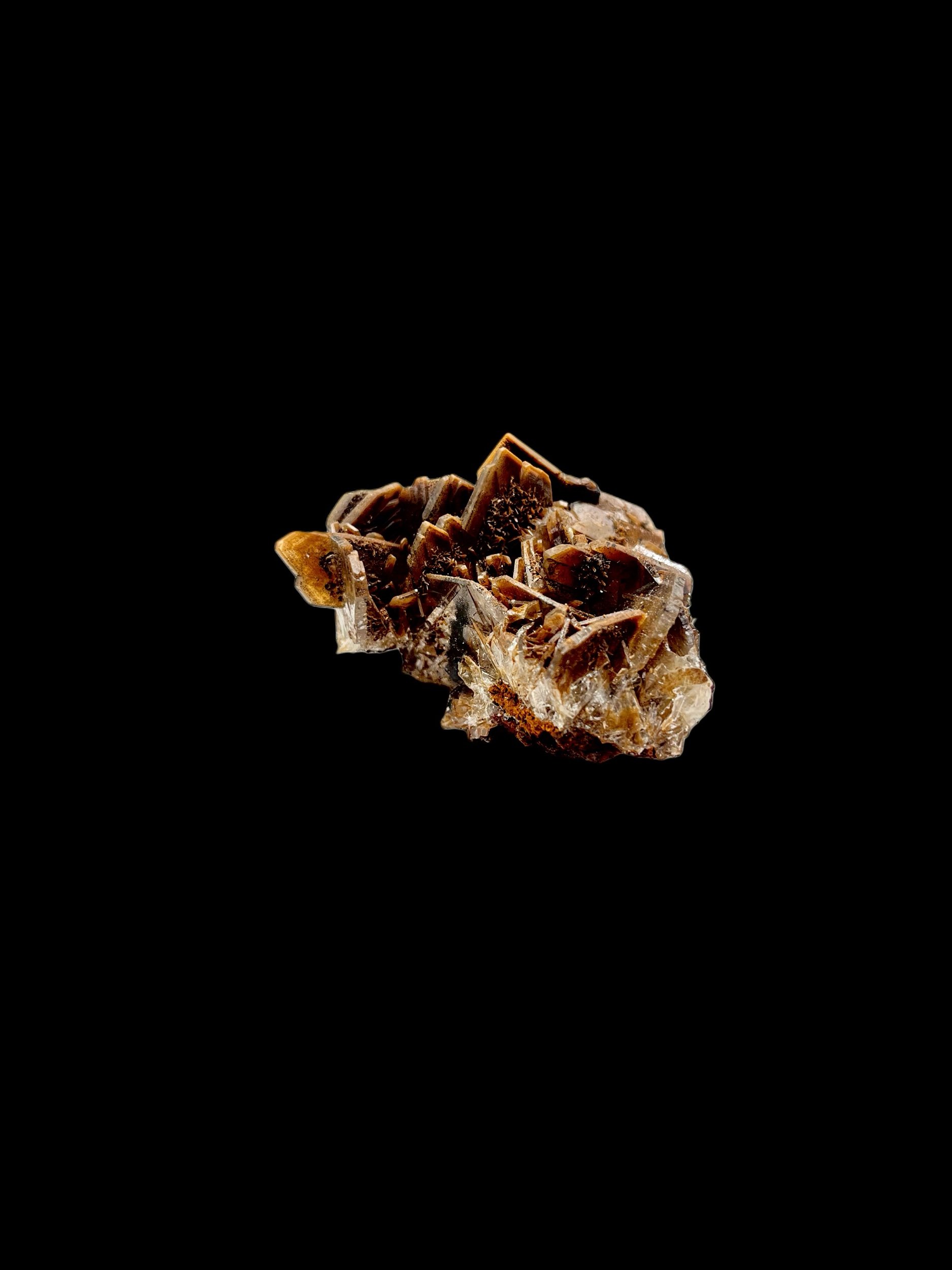
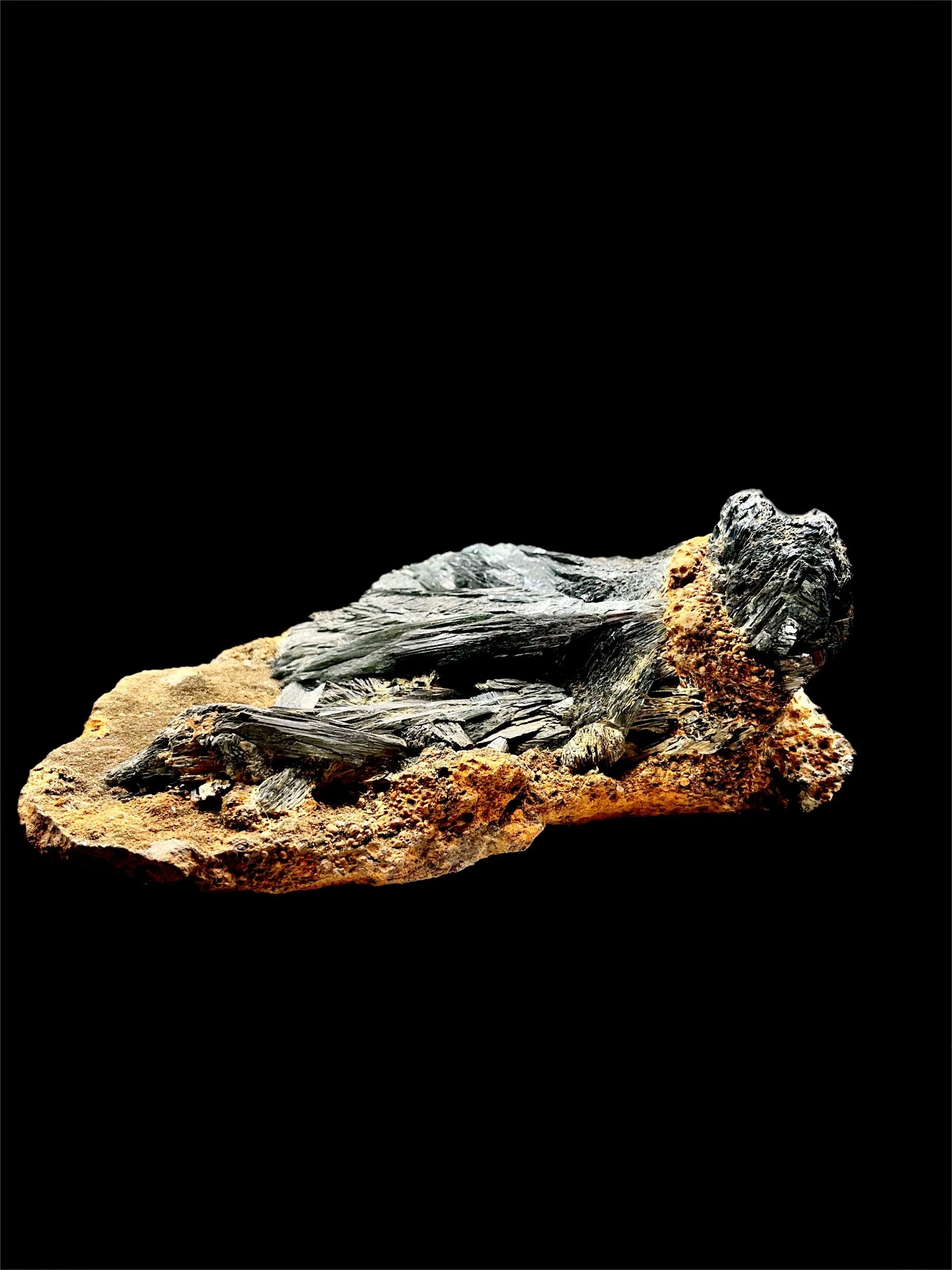
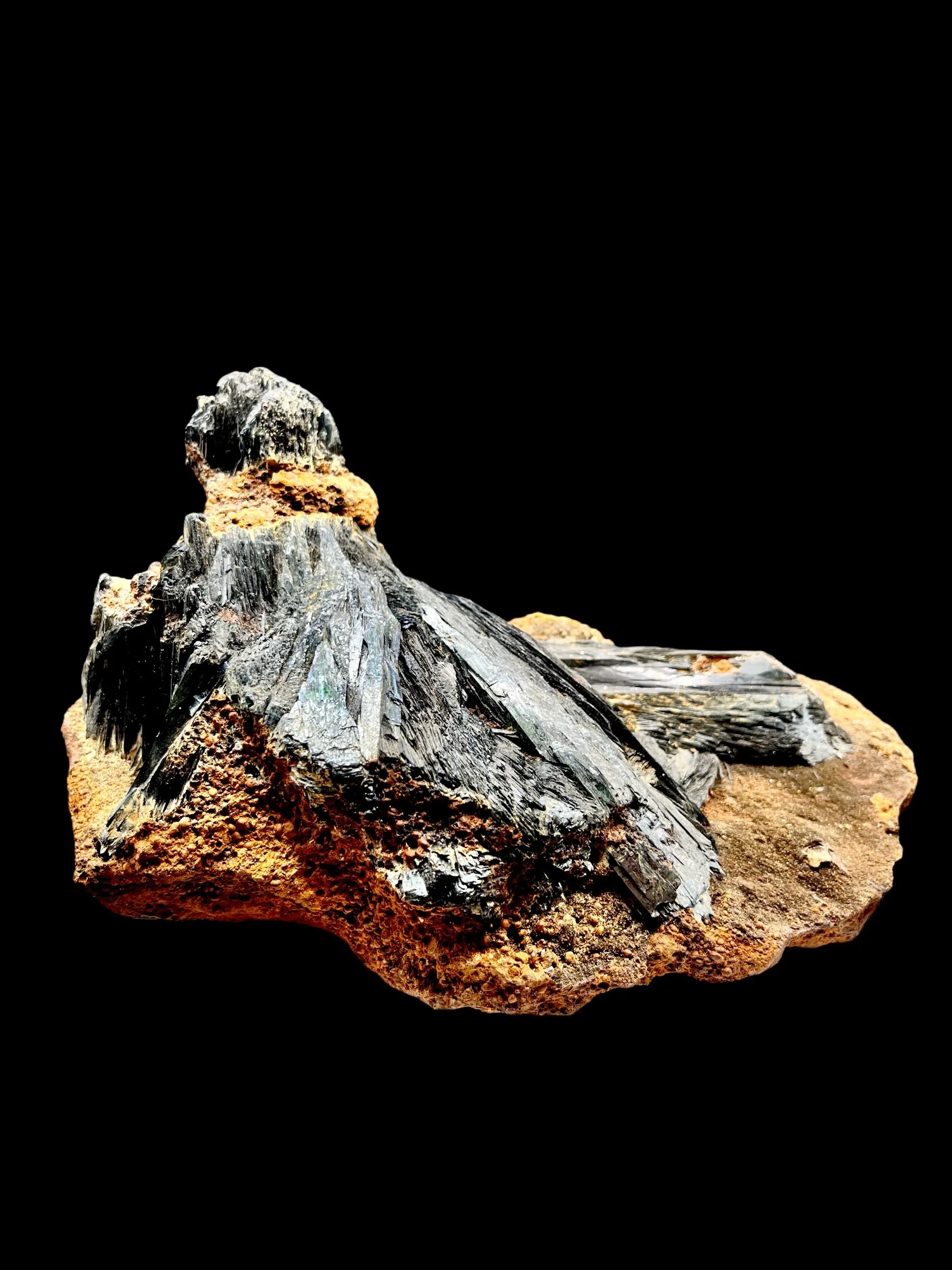
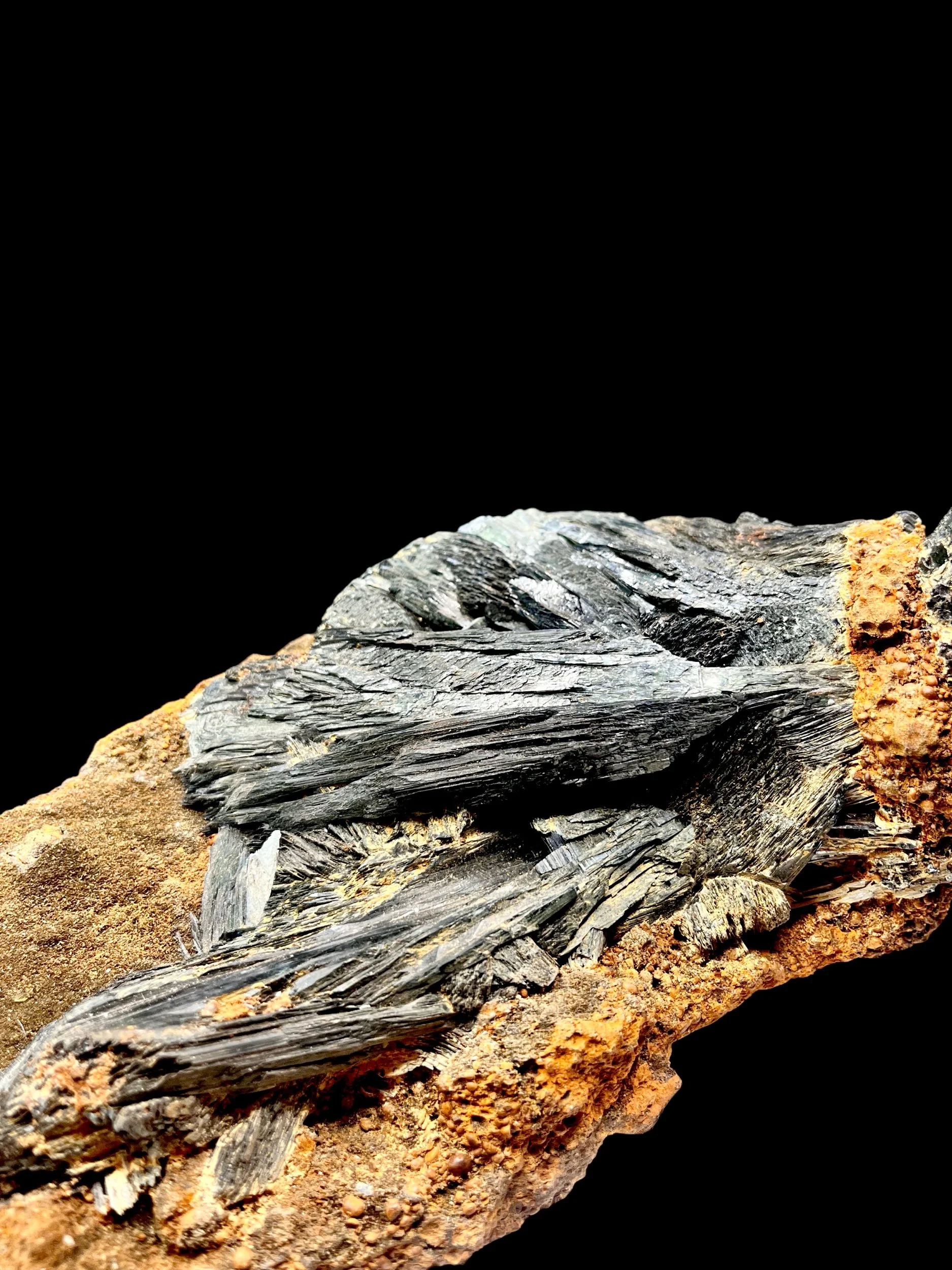
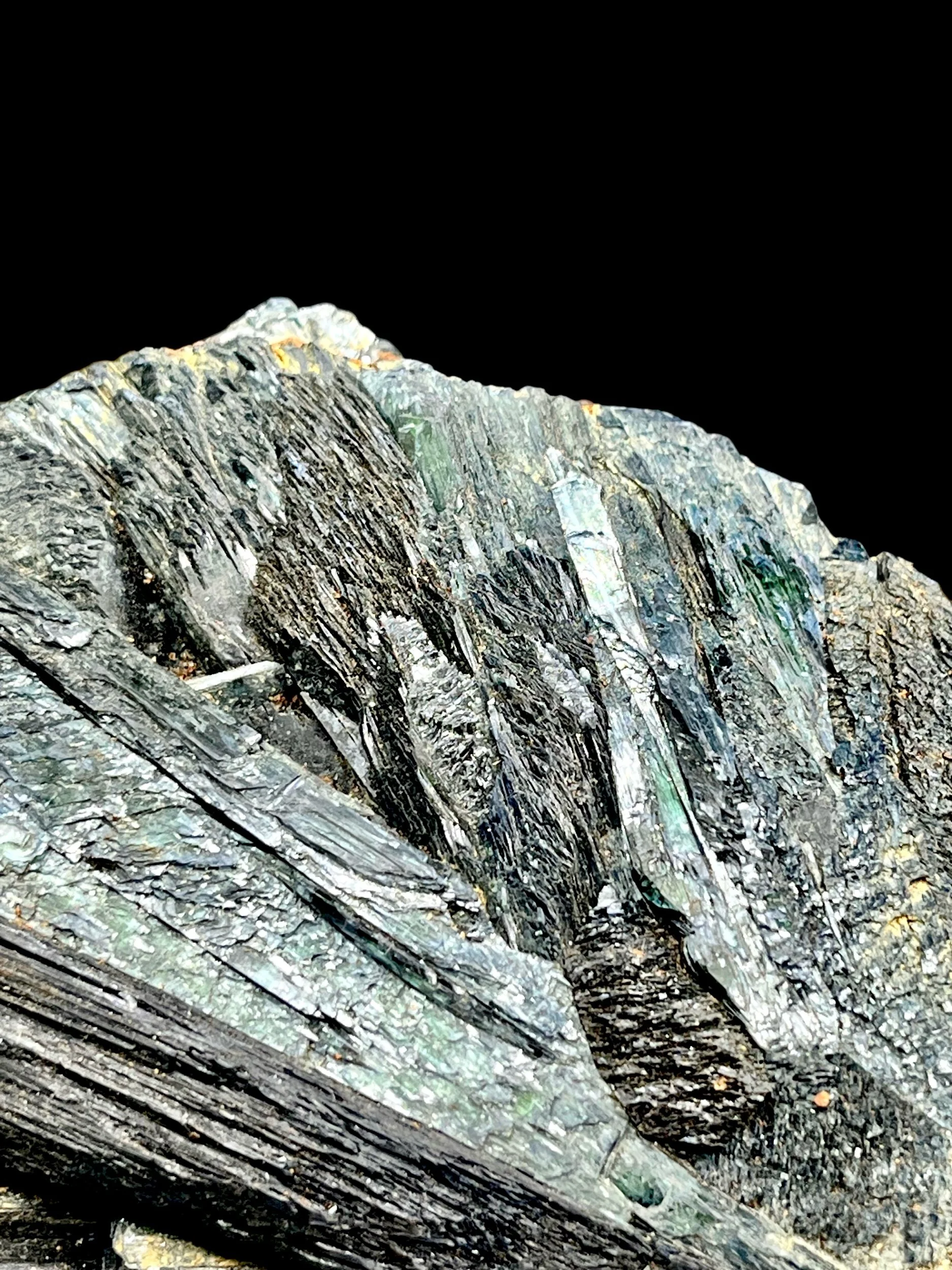
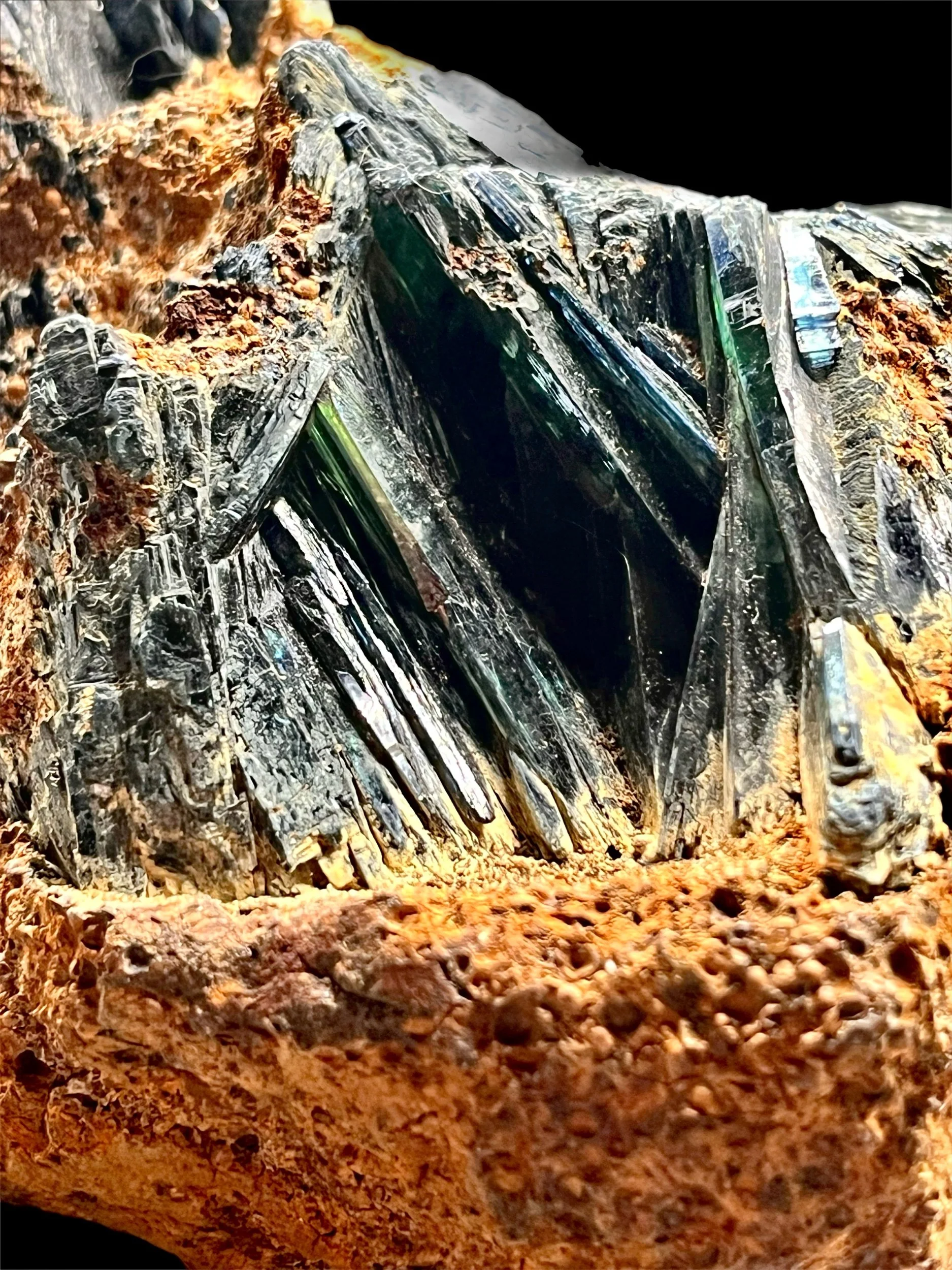
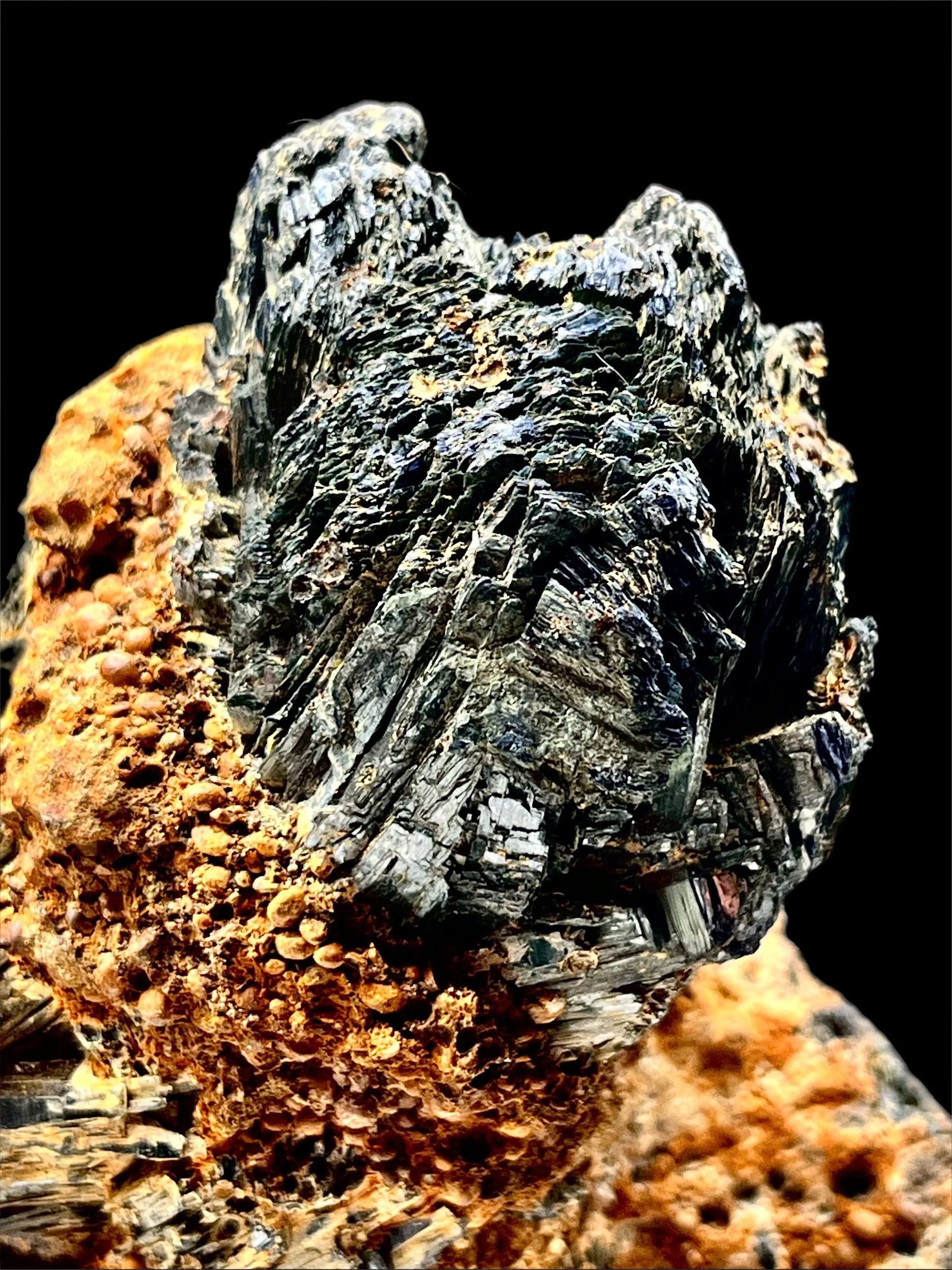
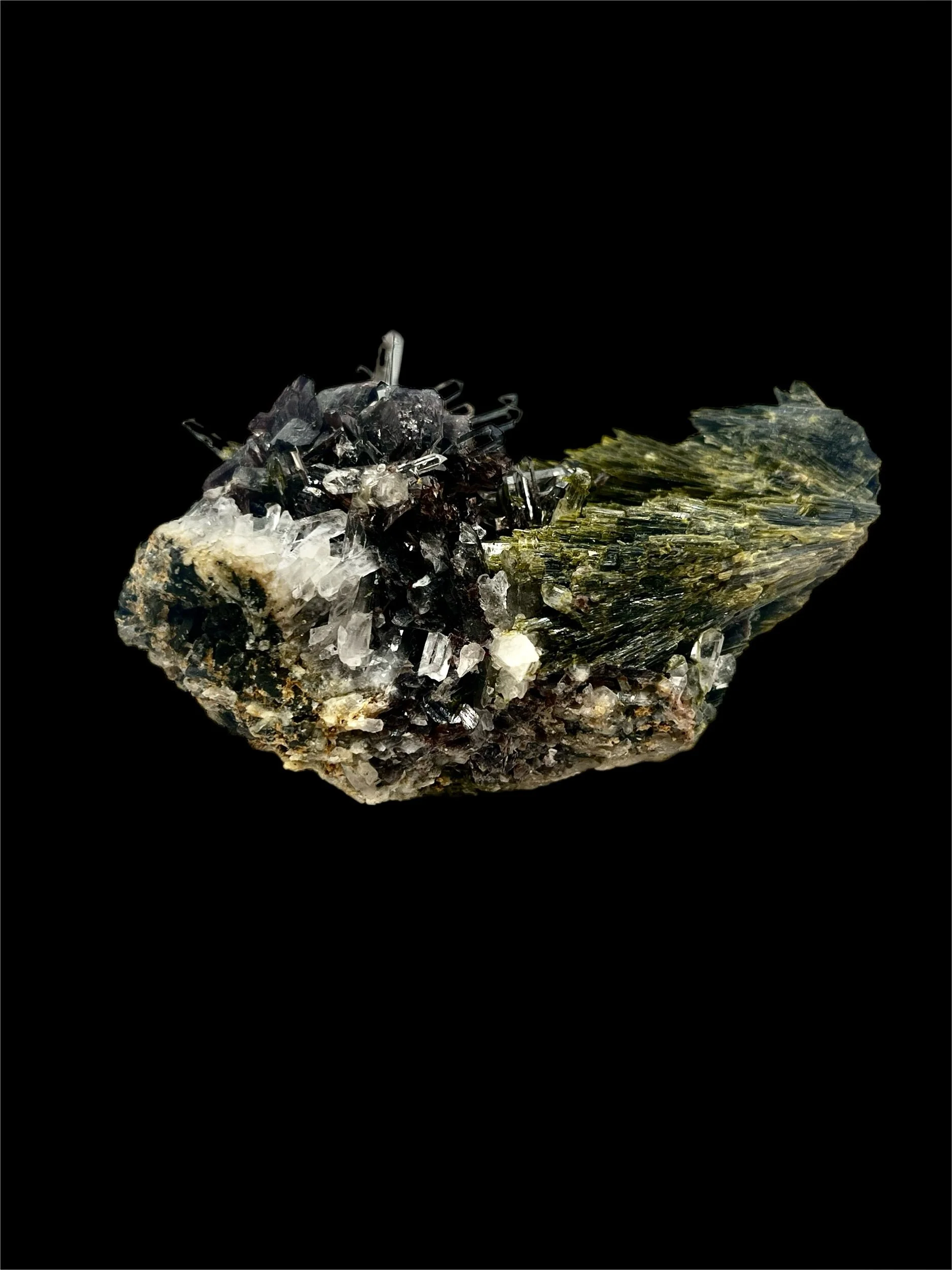
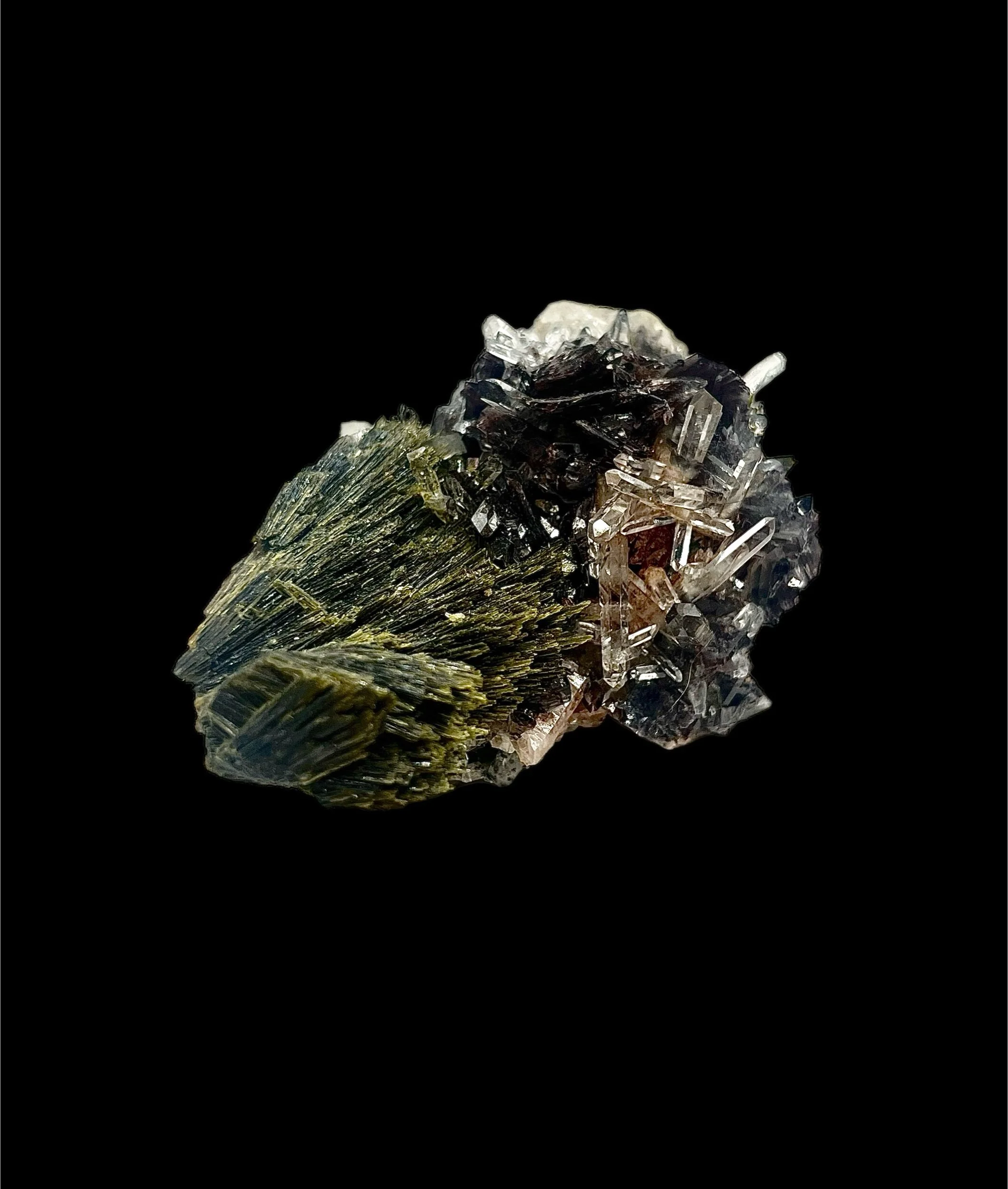
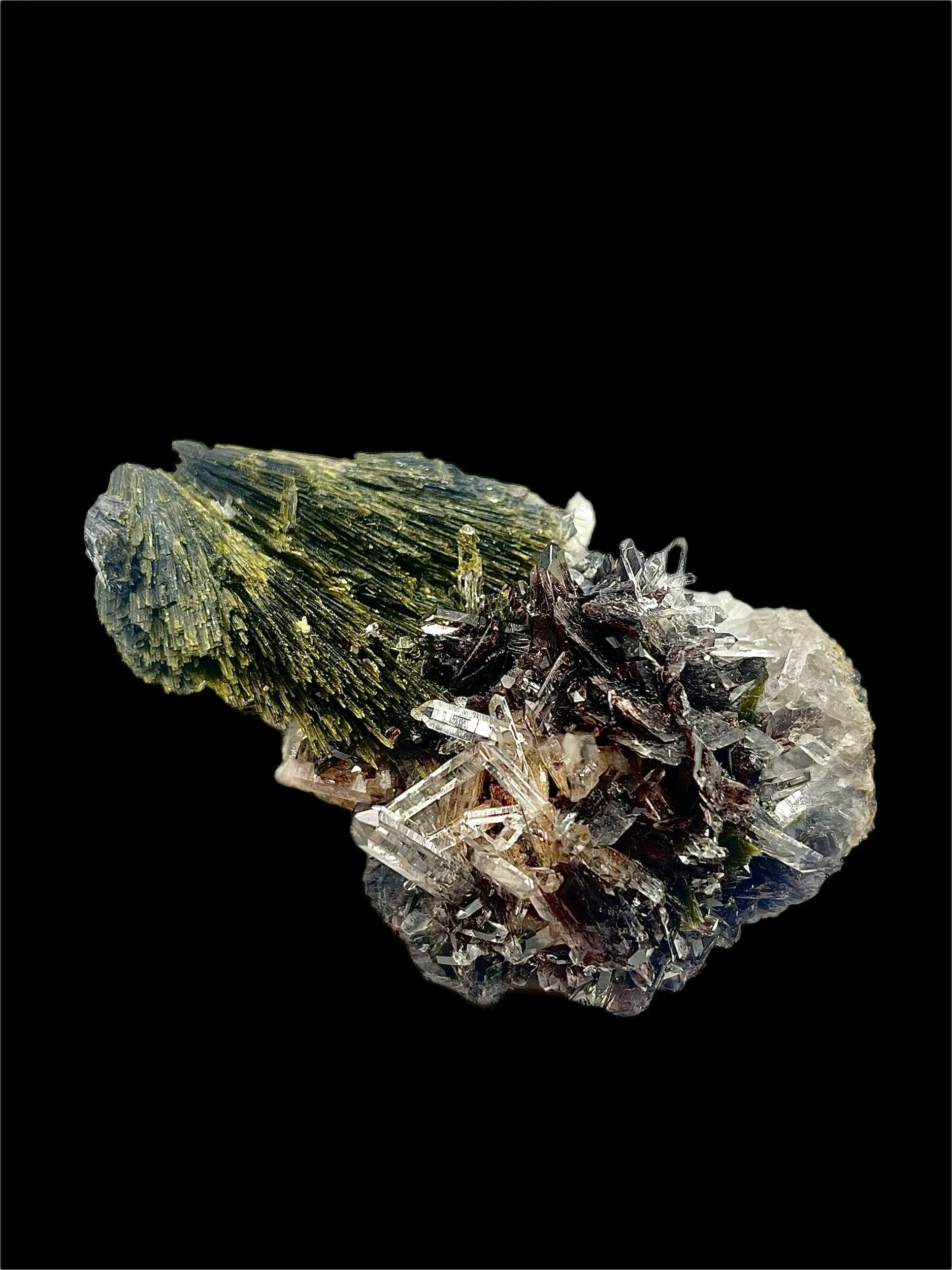
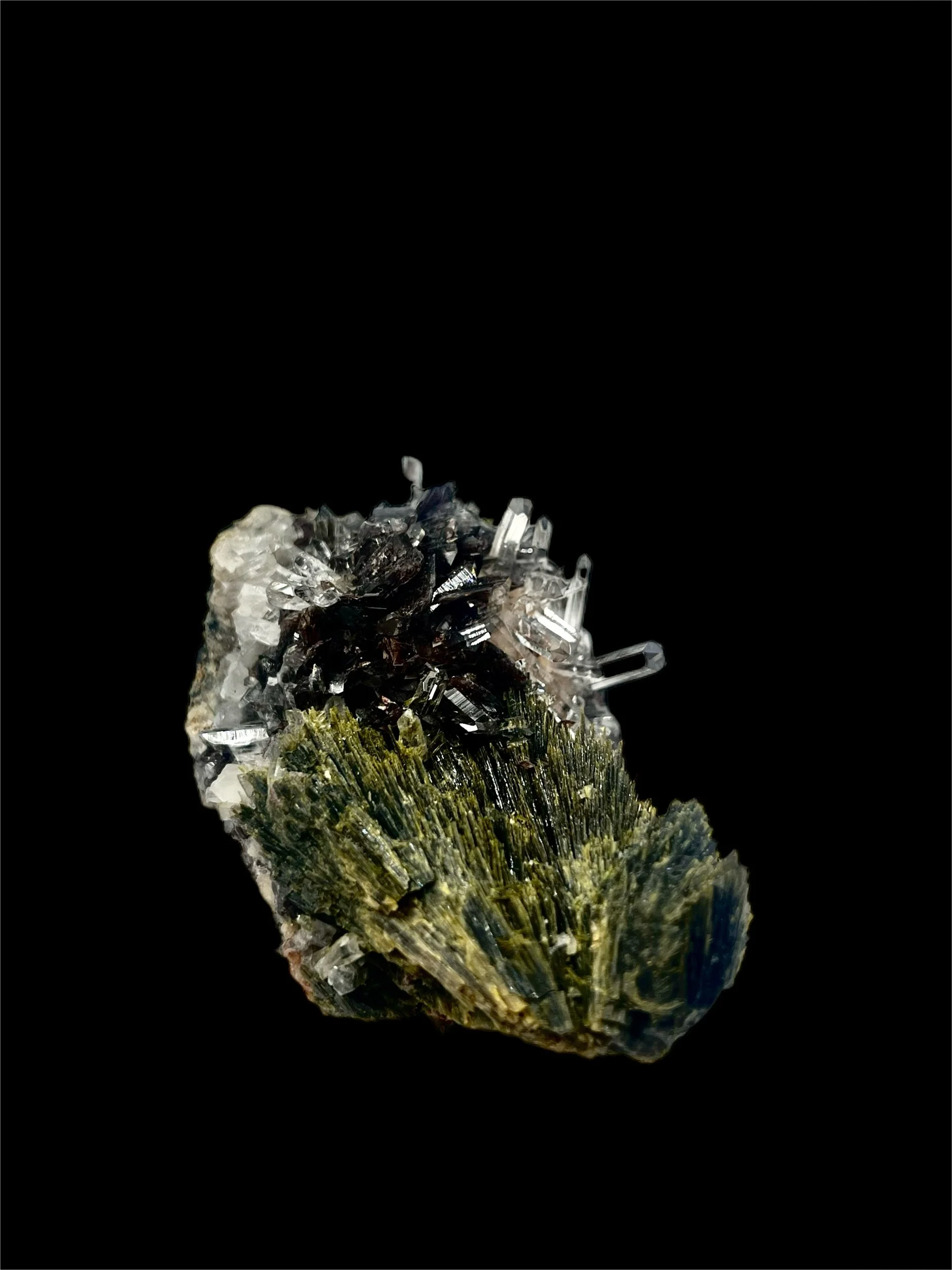
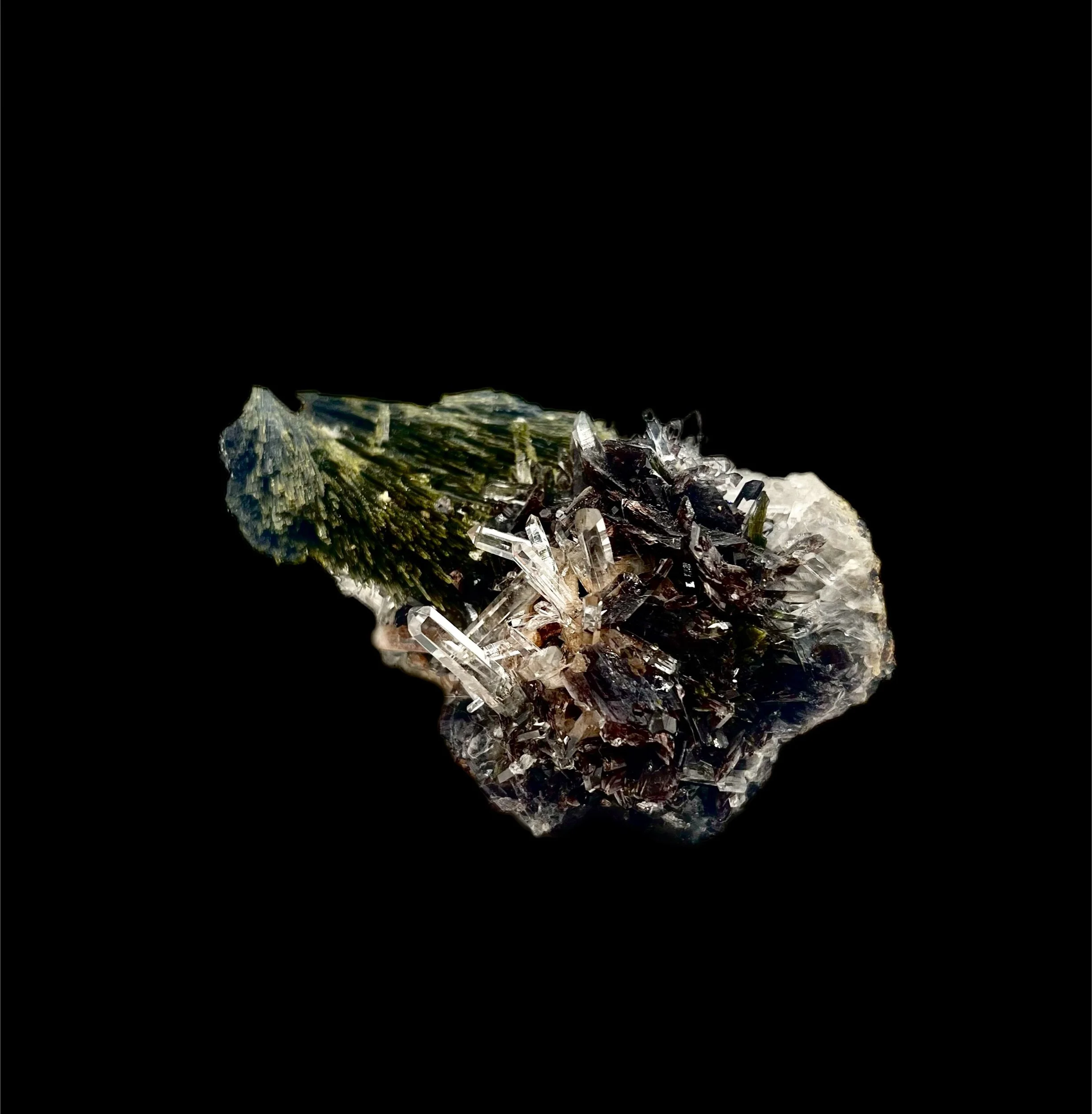
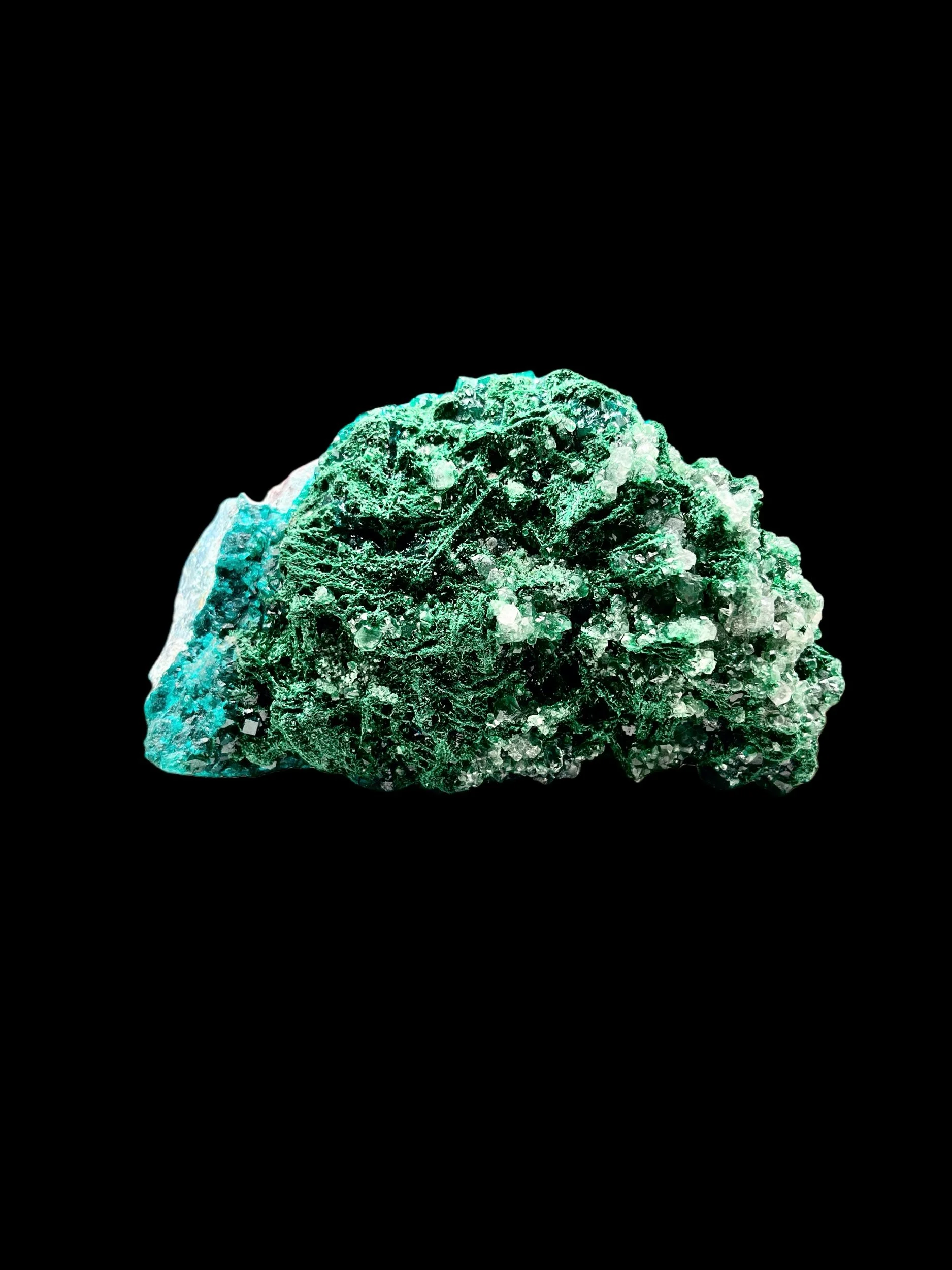
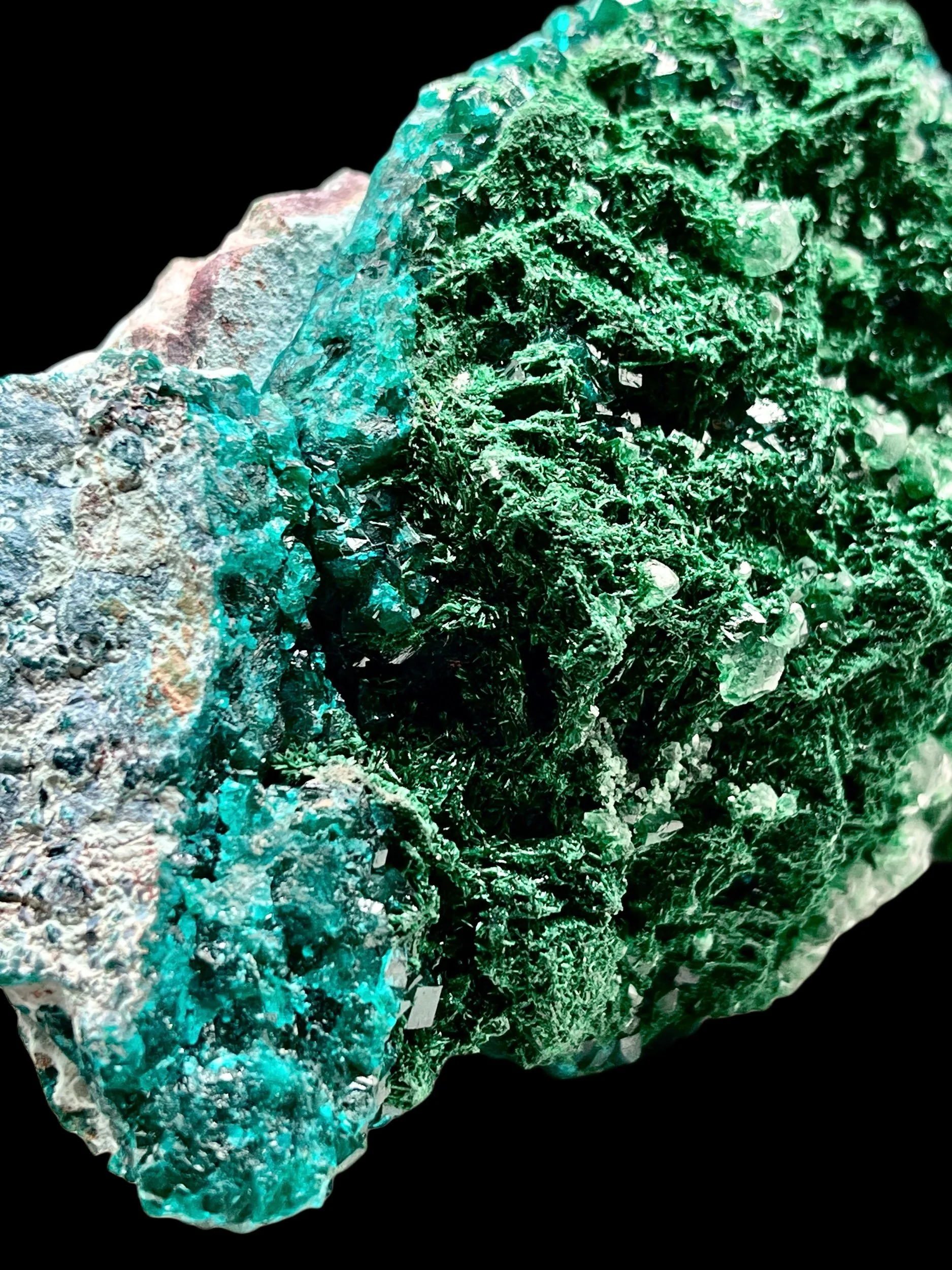
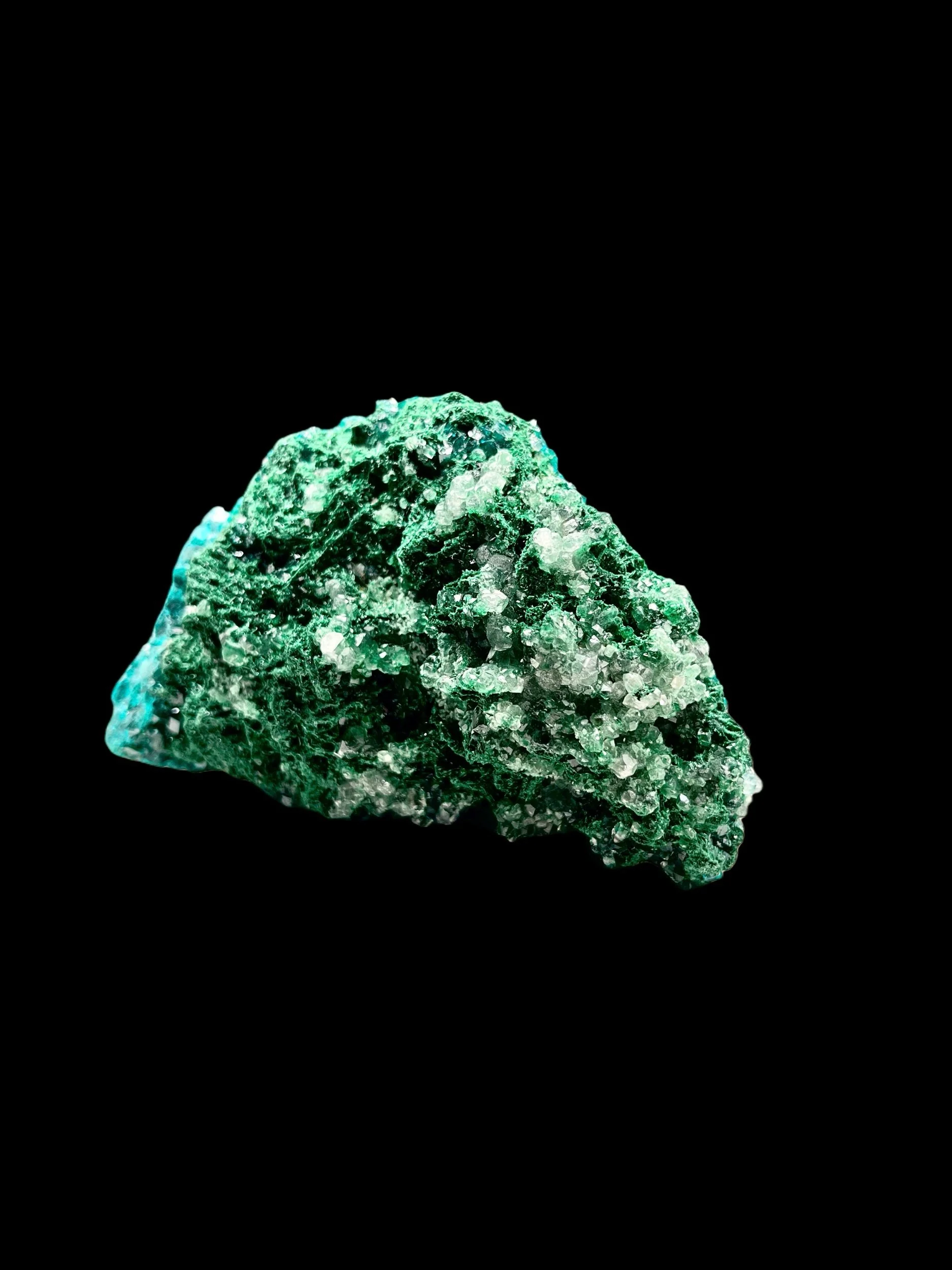
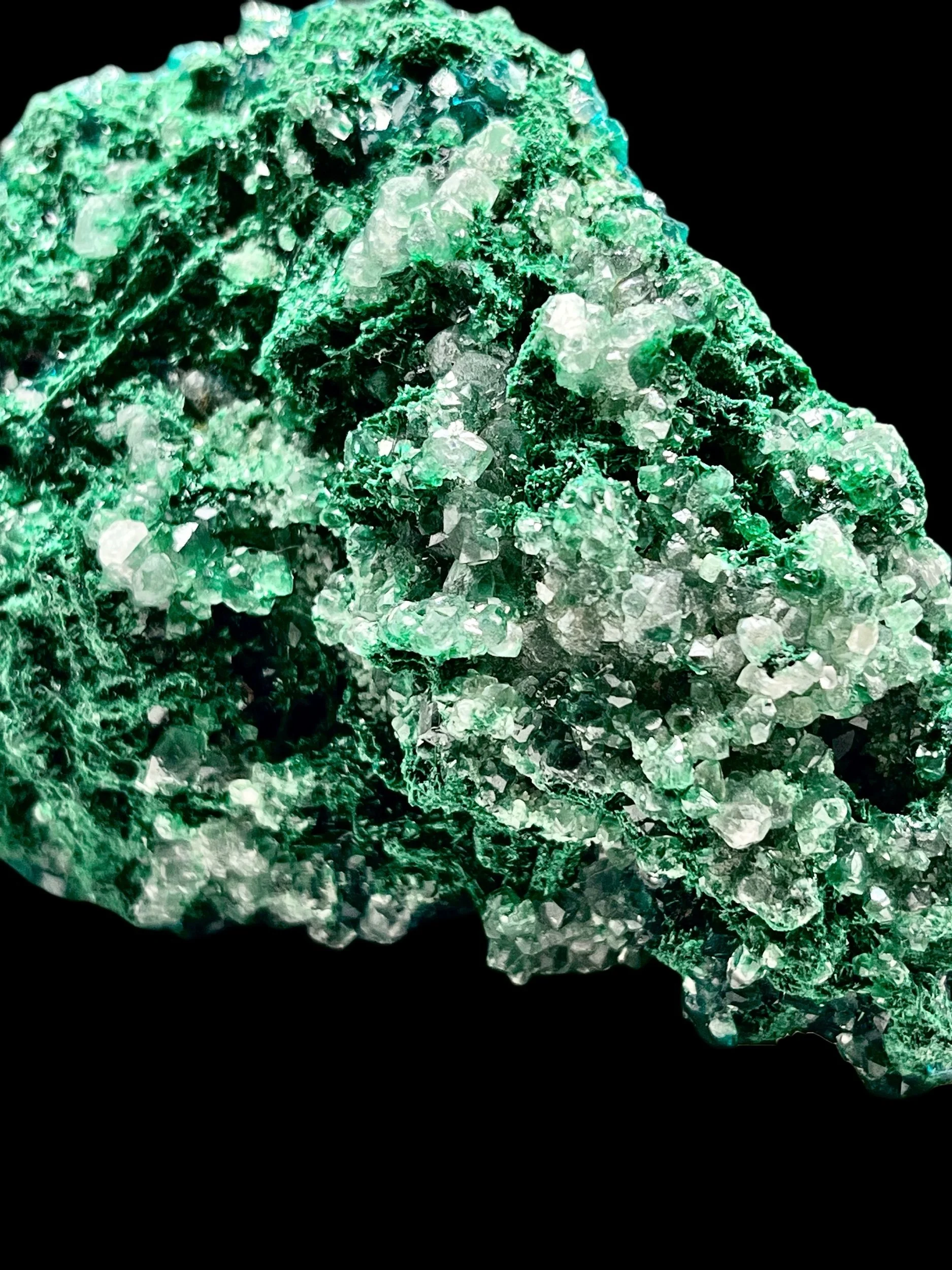
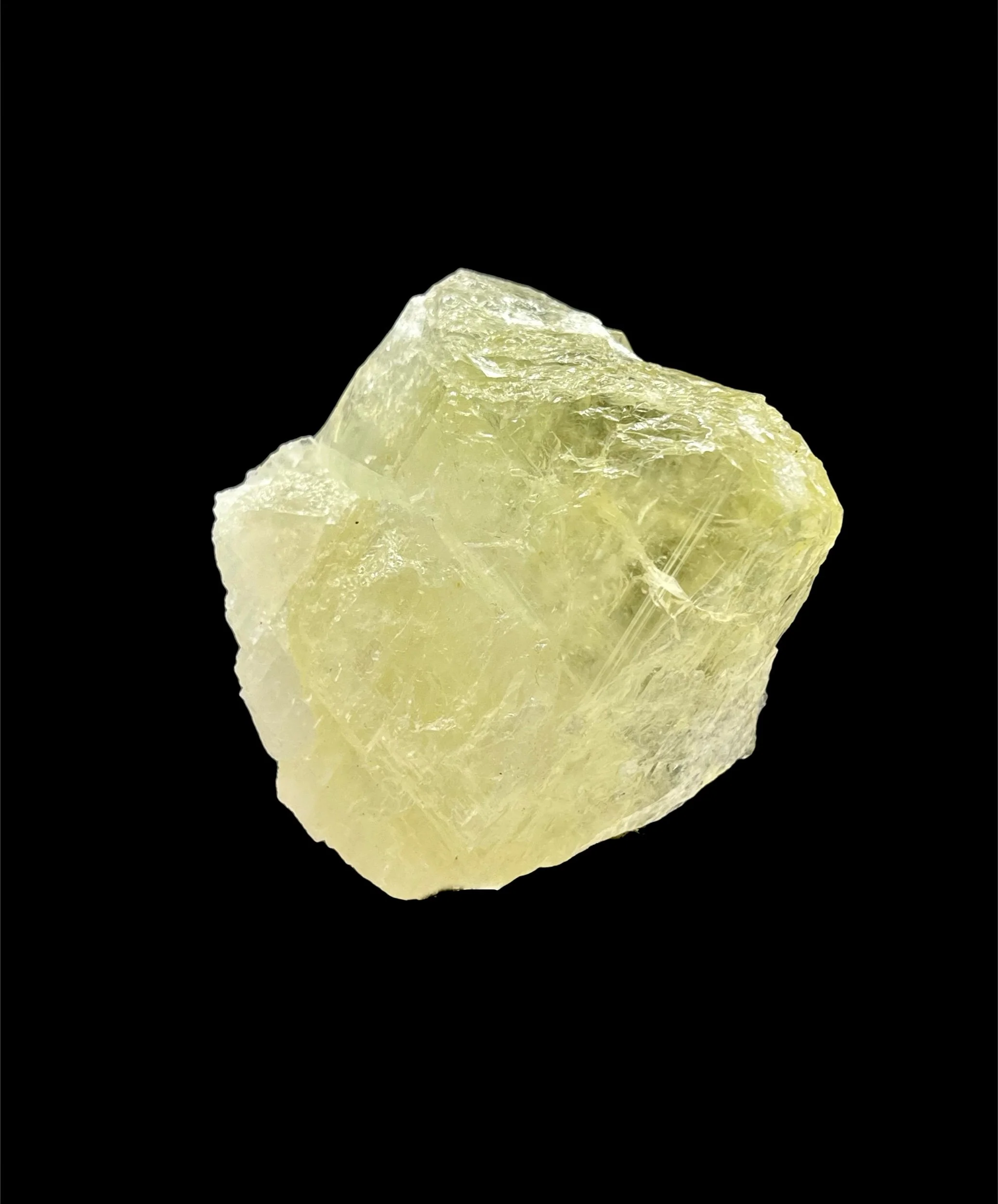
A luminous gemmy Brazilianite crystal with strong internal structure and beautiful translucency.
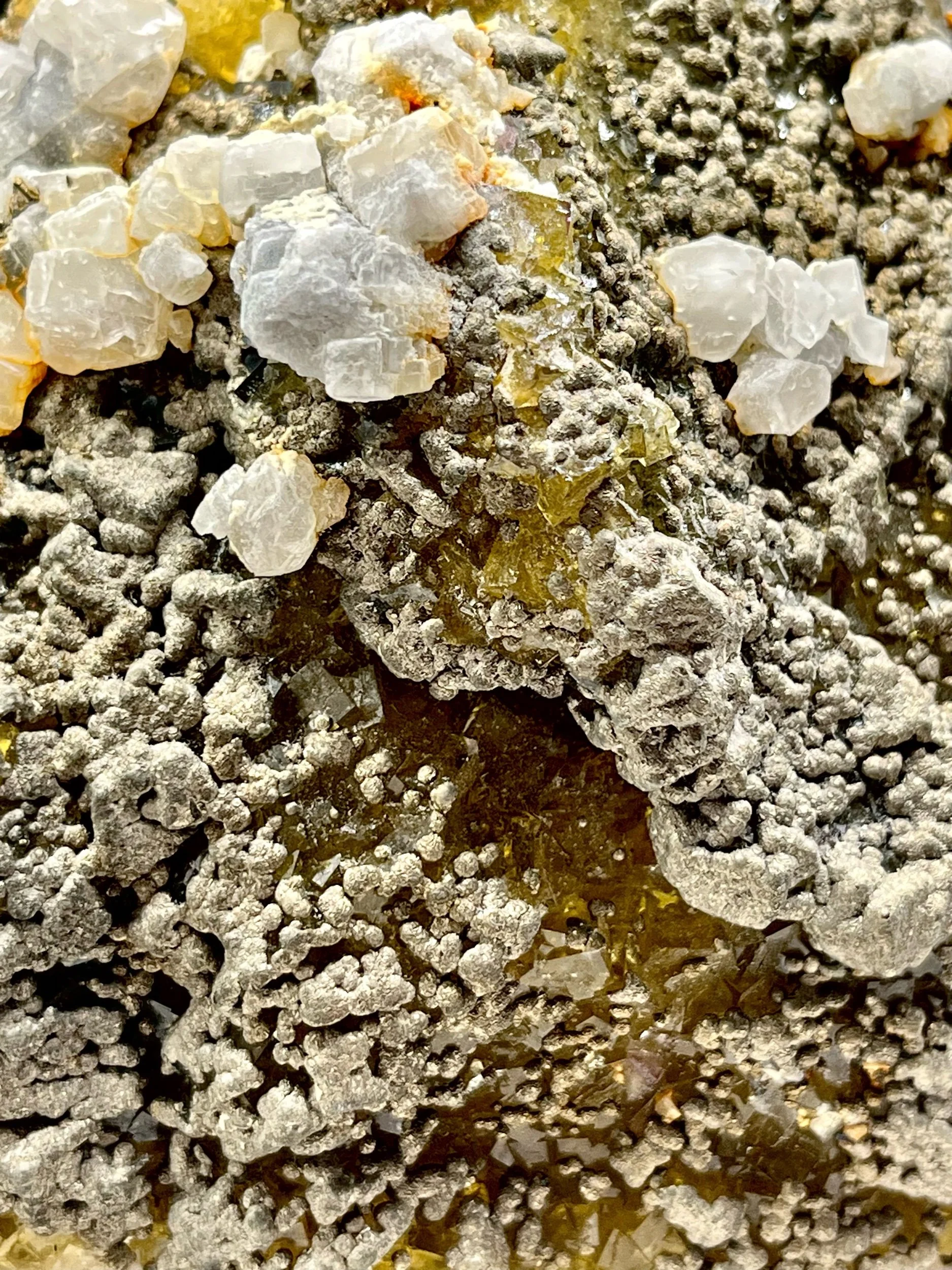
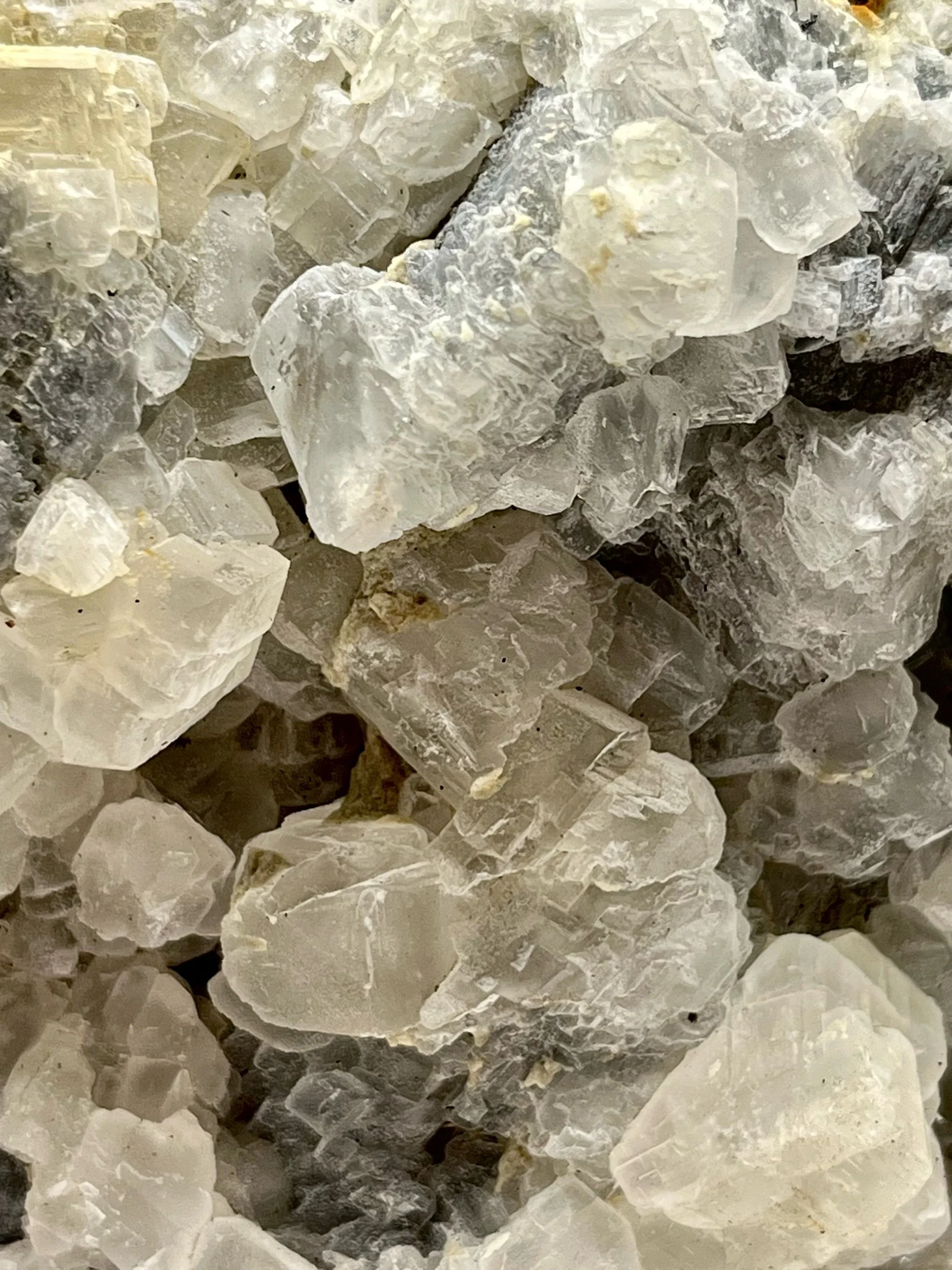
This specimen displays the vibrant, almost glowing chartreuse tone that has made Minas Gerais Brazilianite so sought after among collectors. Light moves beautifully through the crystal, revealing internal growth patterns and natural structural lines without damage or dullness.
The crystal presents as a substantial, well-formed mass with defined edges and visible internal texture. The overall balance of color saturation and clarity gives this piece quiet an authoritative presence.
Brazilianite of this size and weight, especially with this level of quality, remains highly collectible.
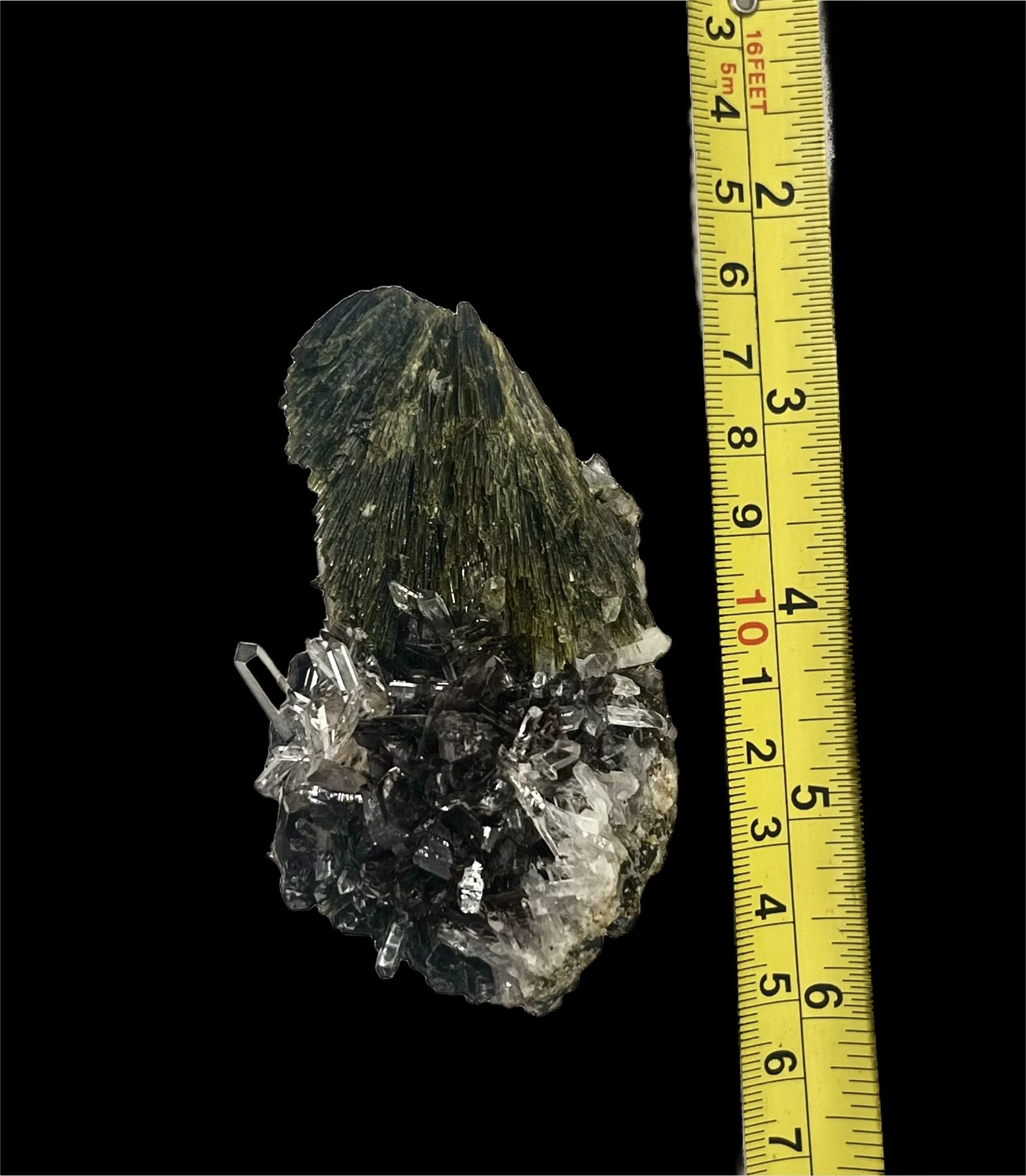
2.25” x 2” x 0.75”
183 grams
Brazilianite is often associated with personal clarity, confidence, and emotional renewal. Its gentle yellow-green tone is said to support optimism and focused intention. Many view it as a stone of refined growth — steady, grounded, and quietly strengthening.
Brazilianite from Minas Gerais has maintained consistent collector demand for decades, particularly specimens that show strong color saturation and good translucency without excessive matrix interference.
As many of the historically productive pegmatites in Minas Gerais become increasingly worked out, fine standalone crystals with size and visual presence are appearing less frequently in the market. Larger, clean masses such as this — with both weight and internal clarity — tend to be absorbed quickly into private collections rather than recirculated.
Unlike trend-driven material, Brazilianite occupies a stable position within fine mineral collecting. Its status as a type-locality species from Brazil, combined with limited availability, supports long-term value.
This piece represents substance and rarity over novelty — a classic mineral with enduring appeal among serious collectors.
Minas Gerais remains the premier locality for fine Brazilianite specimens. Material from this region is known for its rich coloration and superior transparency compared to lesser deposits.
This specimen offers strong visual presence without damage or excessive matrix interference. The internal structure is clearly visible, and the color is evenly distributed — both desirable qualities in Brazilianite.
This is a once in a lifetime collector opportunity.
Extremely Rare Crystal
Exceptional coloration
Gemmy luster
Good translucency
Minas Gerais, Brazil locality
Visible internal growth structure
Brazilianite is a sodium aluminum phosphate mineral (NaAl₃(PO₄)₂(OH)₄) typically forming in phosphate-rich pegmatites. It crystallizes in the monoclinic system and is prized for its distinctive yellow to green coloration and glassy luster.
It is most commonly associated with other phosphate minerals in granitic pegmatite environments, particularly in Minas Gerais, Brazil — the type locality and world standard for fine specimens.
Minas Gerais, Brazil
A luminous gemmy Brazilianite crystal with strong internal structure and beautiful translucency.
This specimen displays the vibrant, almost glowing chartreuse tone that has made Minas Gerais Brazilianite so sought after among collectors. Light moves beautifully through the crystal, revealing internal growth patterns and natural structural lines without damage or dullness.
The crystal presents as a substantial, well-formed mass with defined edges and visible internal texture. The overall balance of color saturation and clarity gives this piece quiet an authoritative presence.
Brazilianite of this size and weight, especially with this level of quality, remains highly collectible.
2.25” x 2” x 0.75”
183 grams
Brazilianite is often associated with personal clarity, confidence, and emotional renewal. Its gentle yellow-green tone is said to support optimism and focused intention. Many view it as a stone of refined growth — steady, grounded, and quietly strengthening.
Brazilianite from Minas Gerais has maintained consistent collector demand for decades, particularly specimens that show strong color saturation and good translucency without excessive matrix interference.
As many of the historically productive pegmatites in Minas Gerais become increasingly worked out, fine standalone crystals with size and visual presence are appearing less frequently in the market. Larger, clean masses such as this — with both weight and internal clarity — tend to be absorbed quickly into private collections rather than recirculated.
Unlike trend-driven material, Brazilianite occupies a stable position within fine mineral collecting. Its status as a type-locality species from Brazil, combined with limited availability, supports long-term value.
This piece represents substance and rarity over novelty — a classic mineral with enduring appeal among serious collectors.
Minas Gerais remains the premier locality for fine Brazilianite specimens. Material from this region is known for its rich coloration and superior transparency compared to lesser deposits.
This specimen offers strong visual presence without damage or excessive matrix interference. The internal structure is clearly visible, and the color is evenly distributed — both desirable qualities in Brazilianite.
This is a once in a lifetime collector opportunity.
Extremely Rare Crystal
Exceptional coloration
Gemmy luster
Good translucency
Minas Gerais, Brazil locality
Visible internal growth structure
Brazilianite is a sodium aluminum phosphate mineral (NaAl₃(PO₄)₂(OH)₄) typically forming in phosphate-rich pegmatites. It crystallizes in the monoclinic system and is prized for its distinctive yellow to green coloration and glassy luster.
It is most commonly associated with other phosphate minerals in granitic pegmatite environments, particularly in Minas Gerais, Brazil — the type locality and world standard for fine specimens.