Description
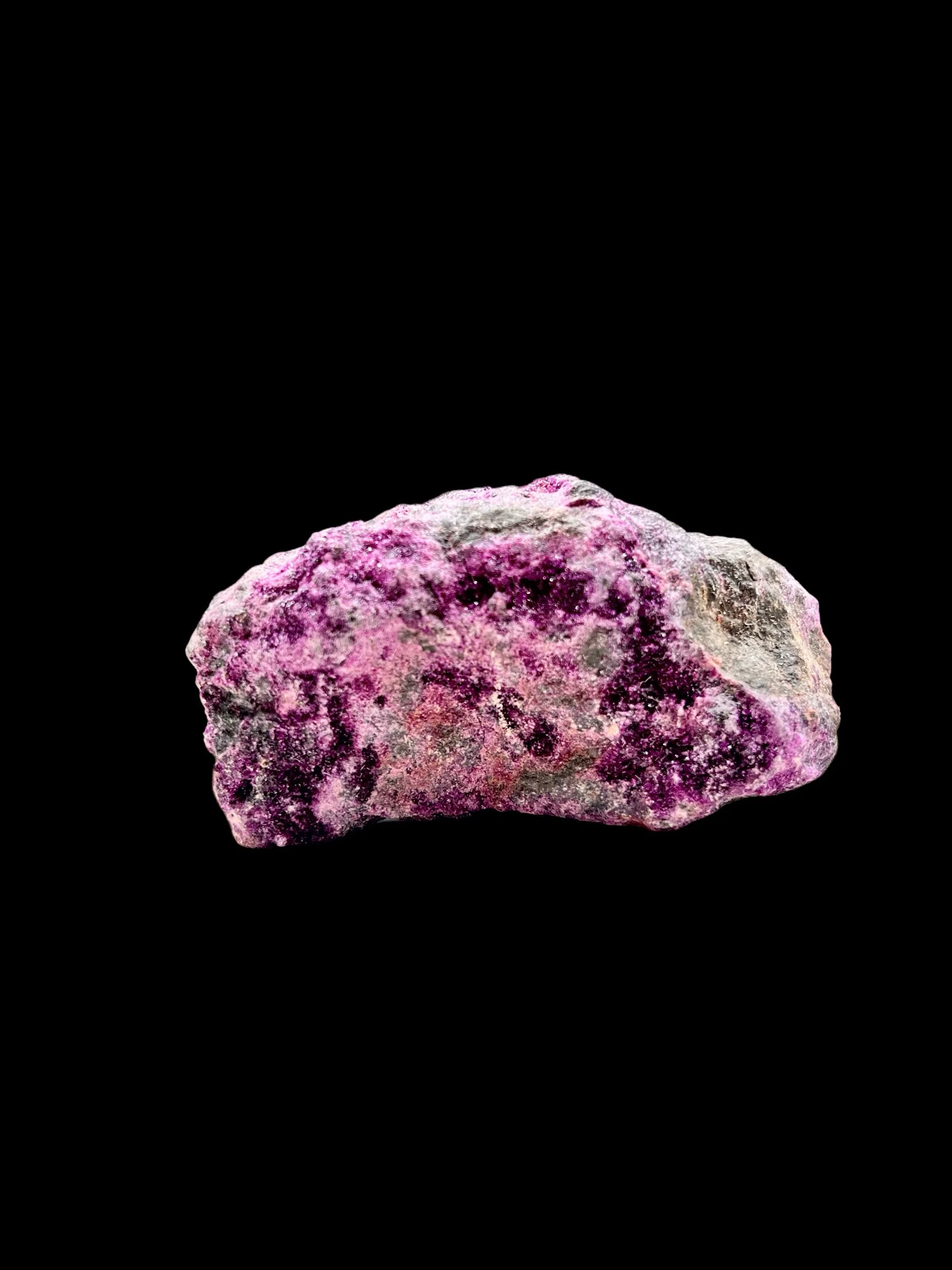
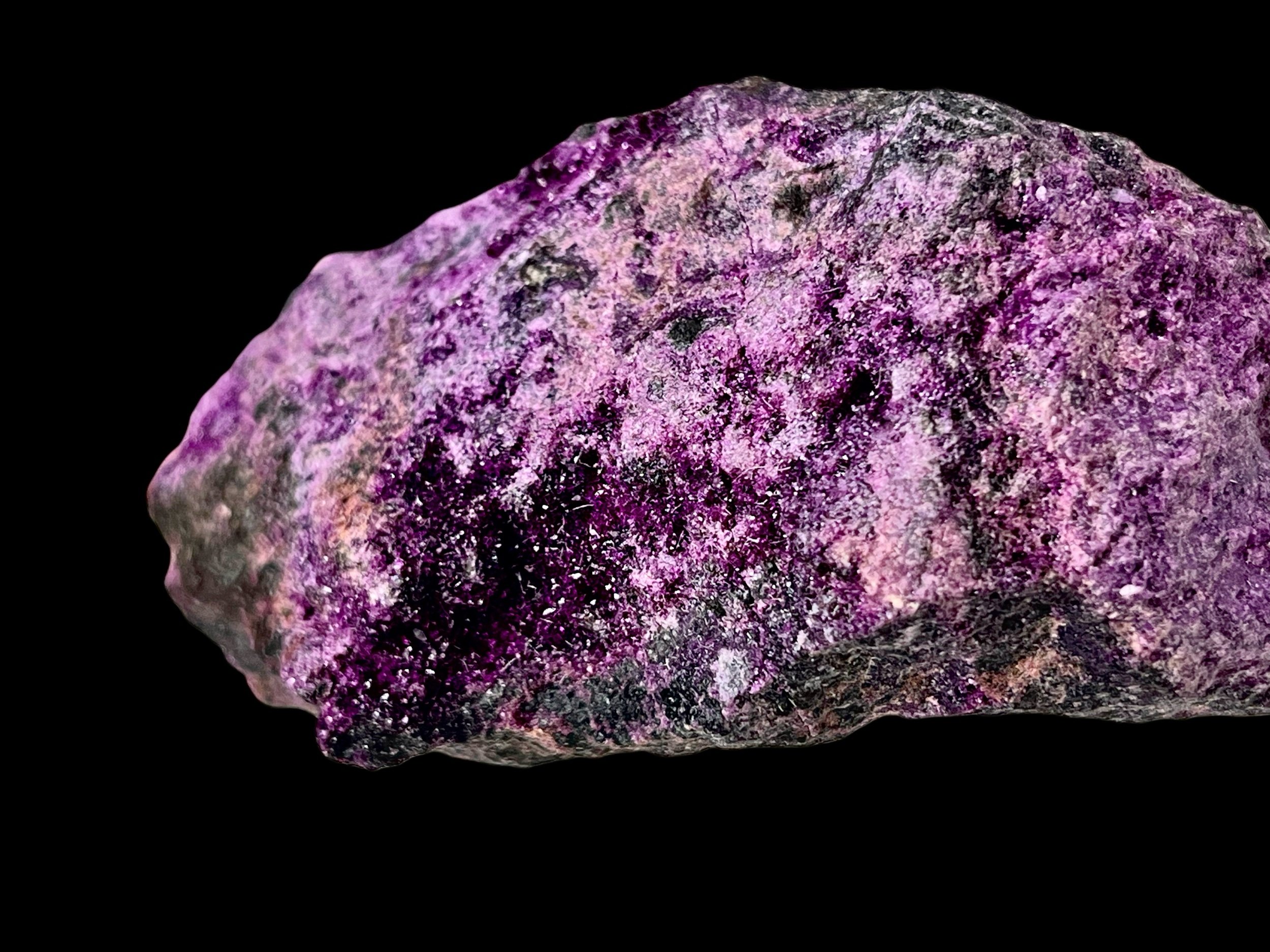
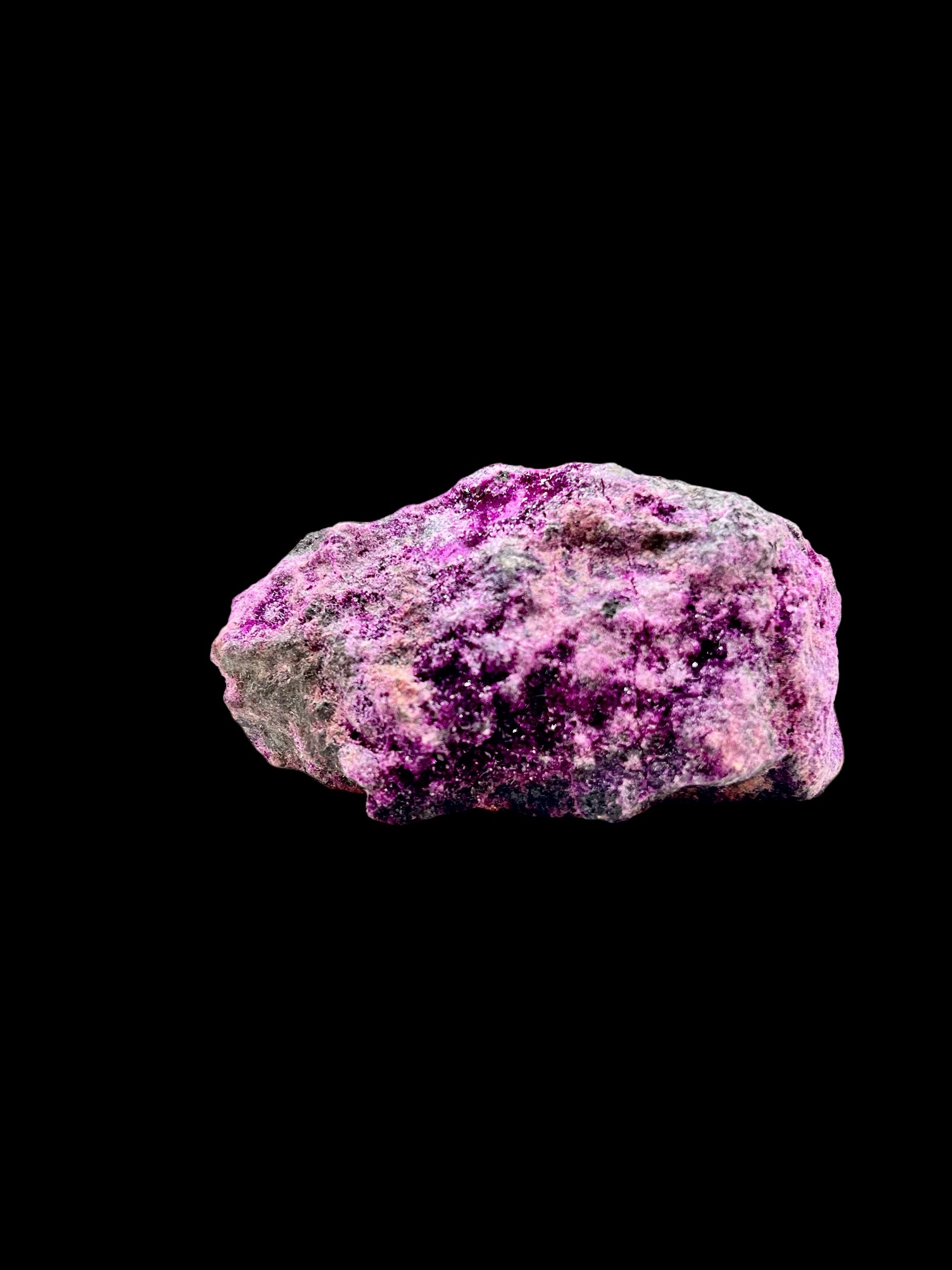
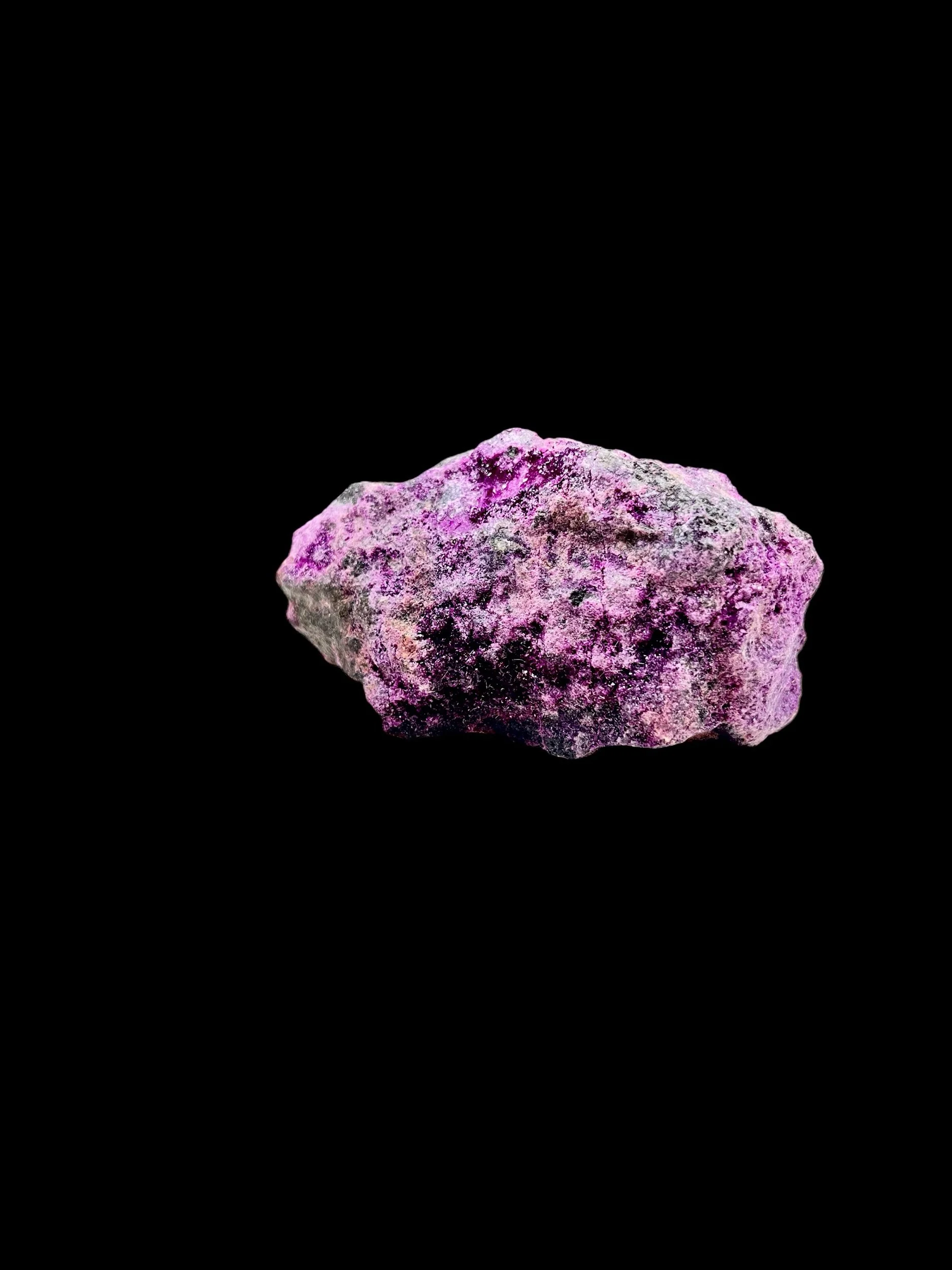
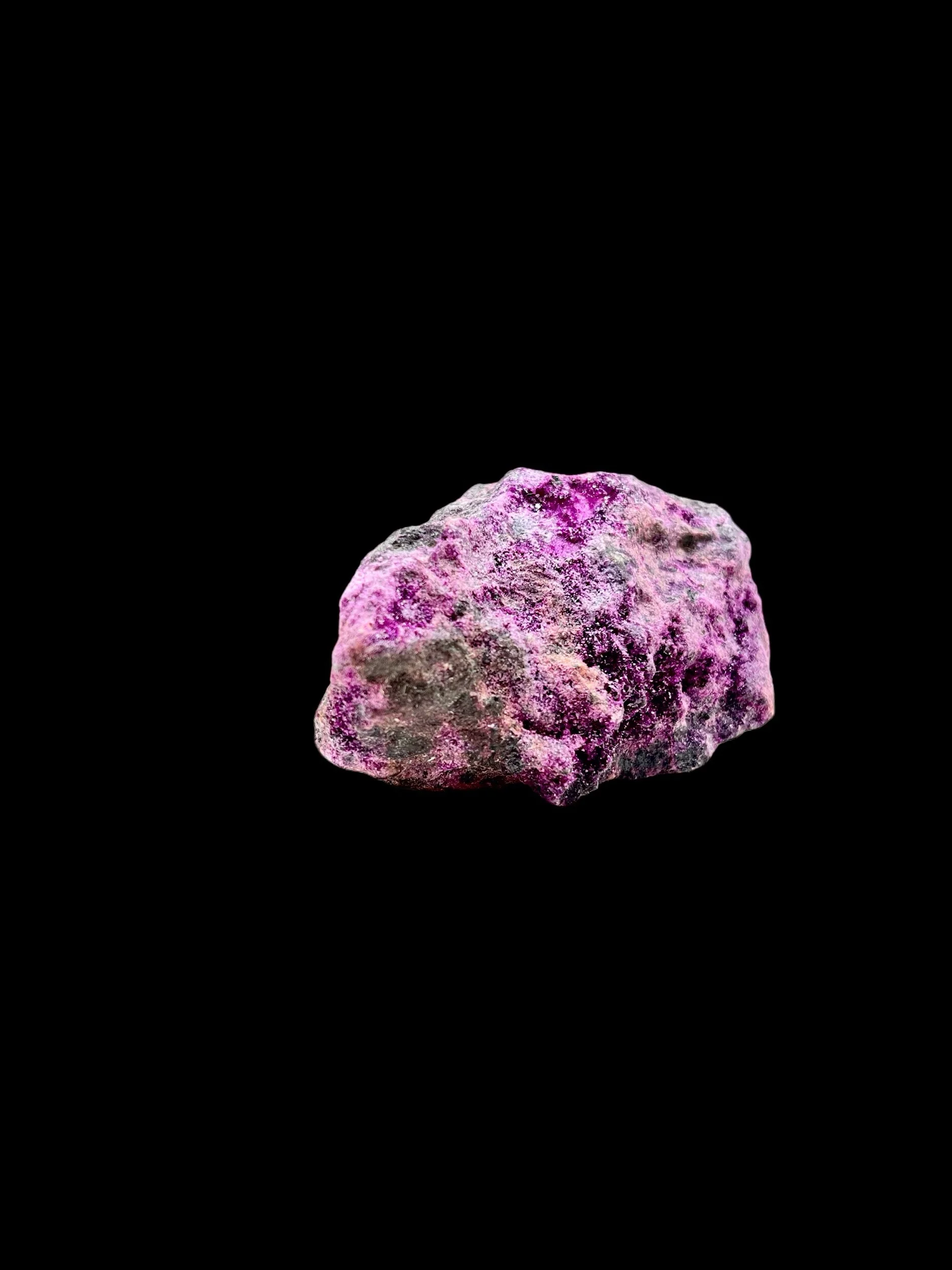
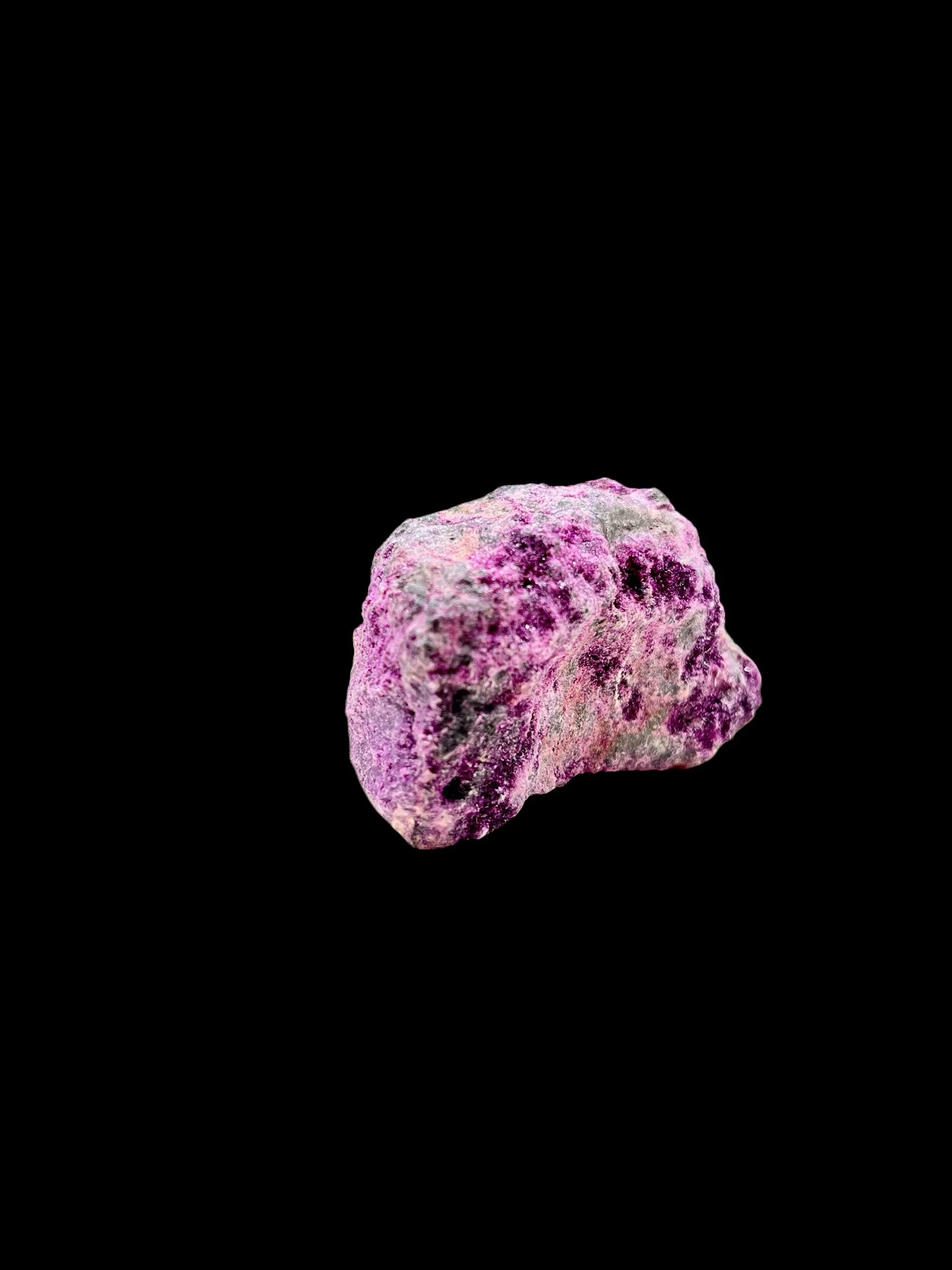
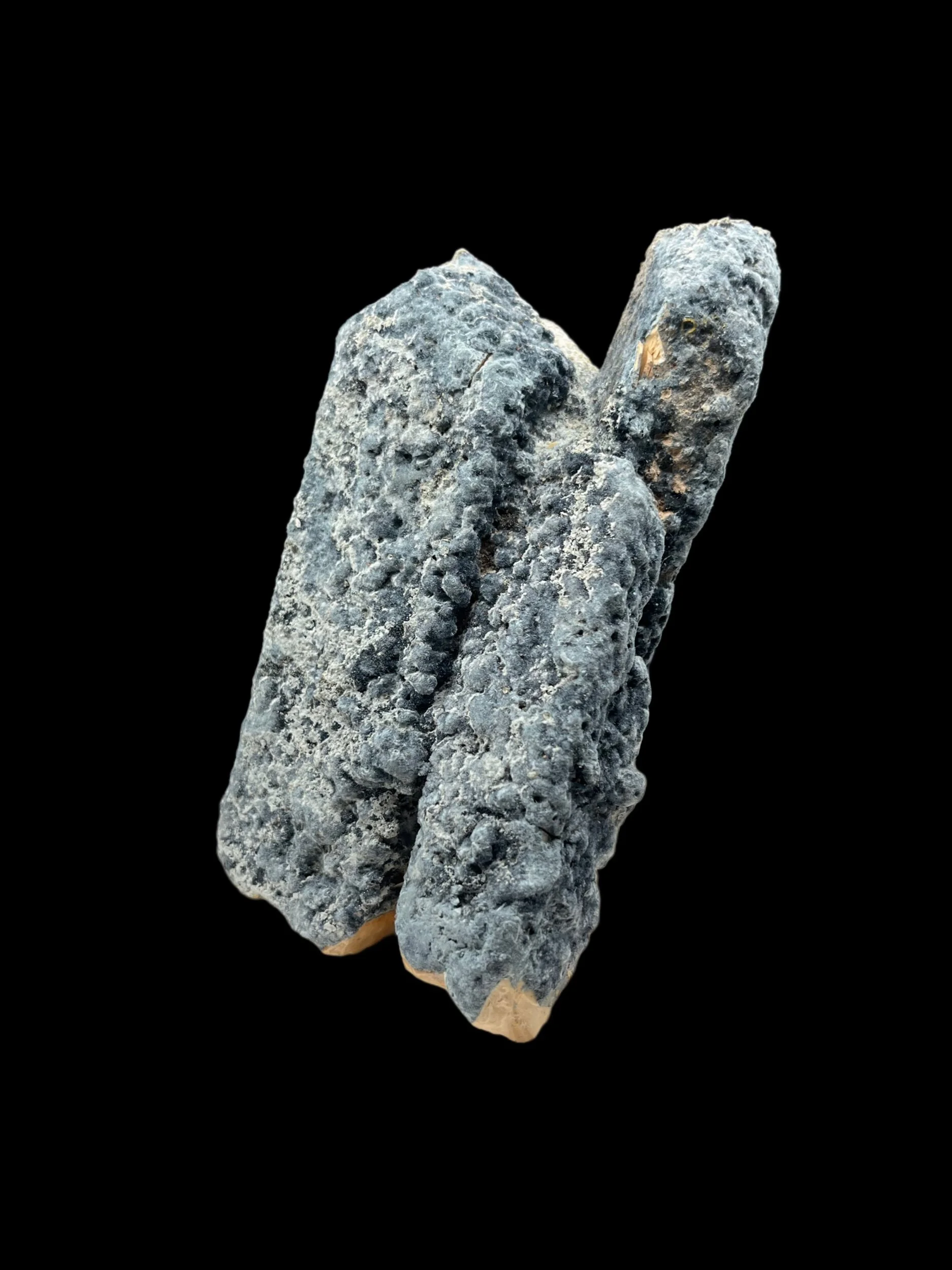
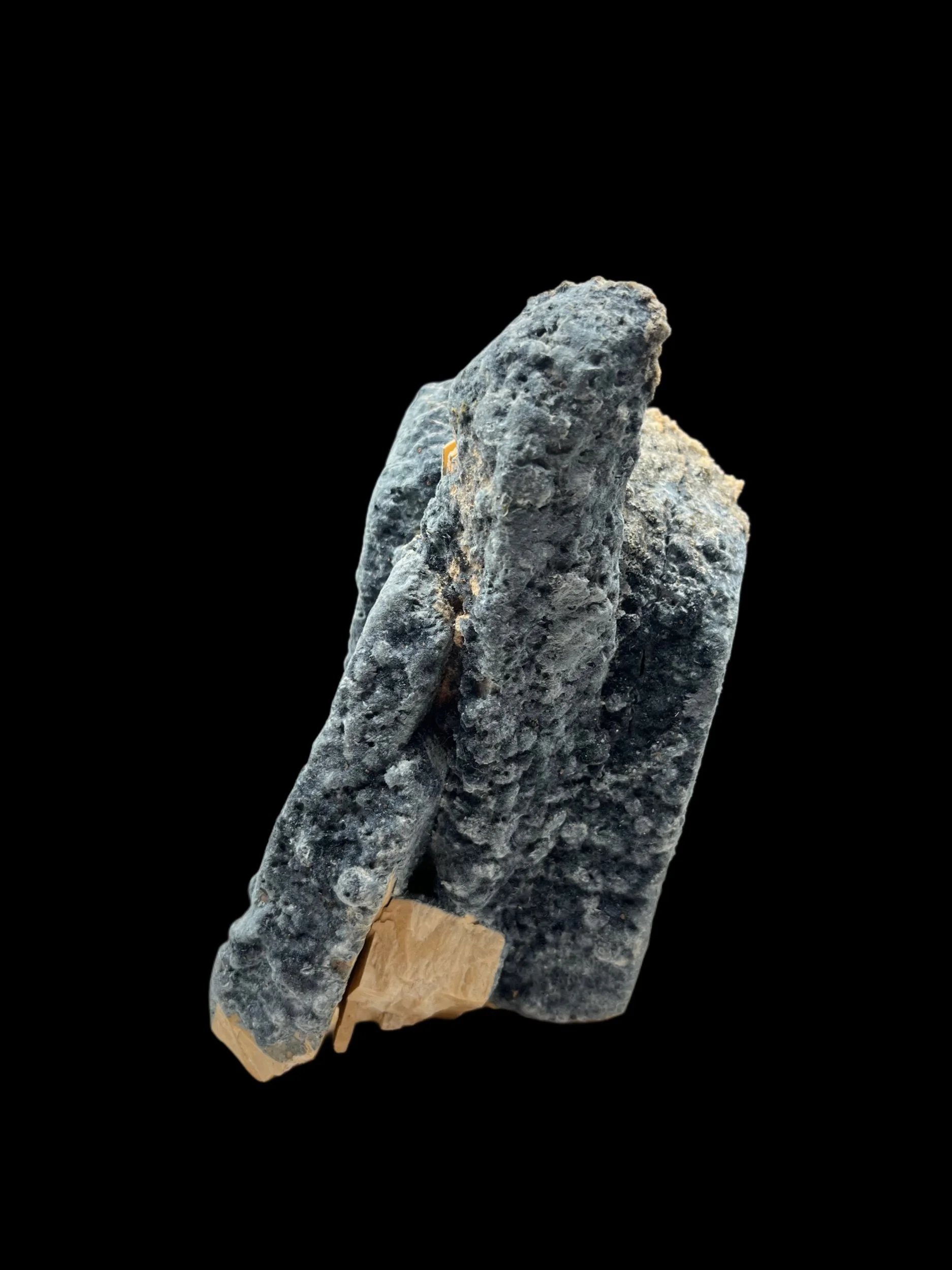
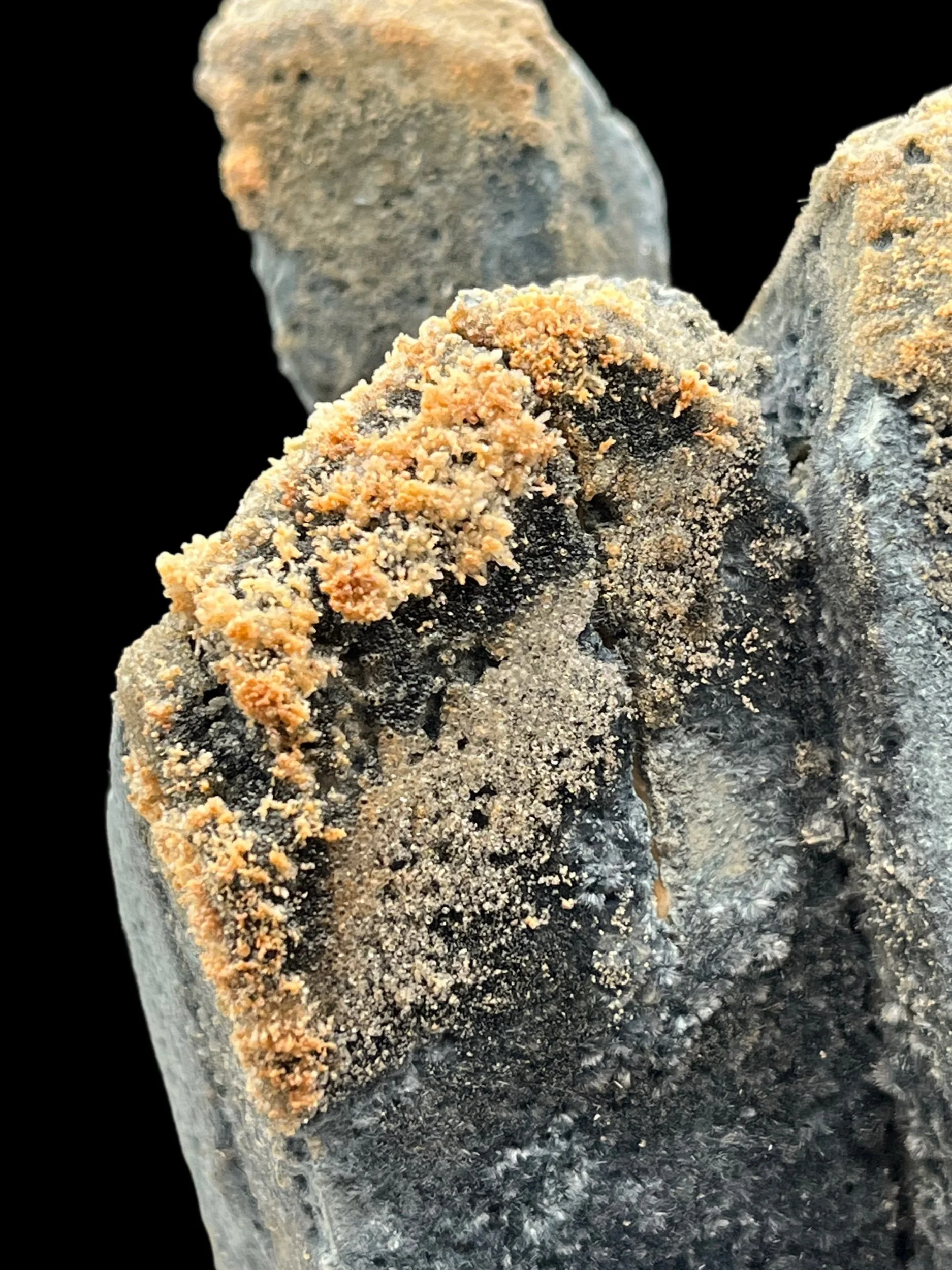
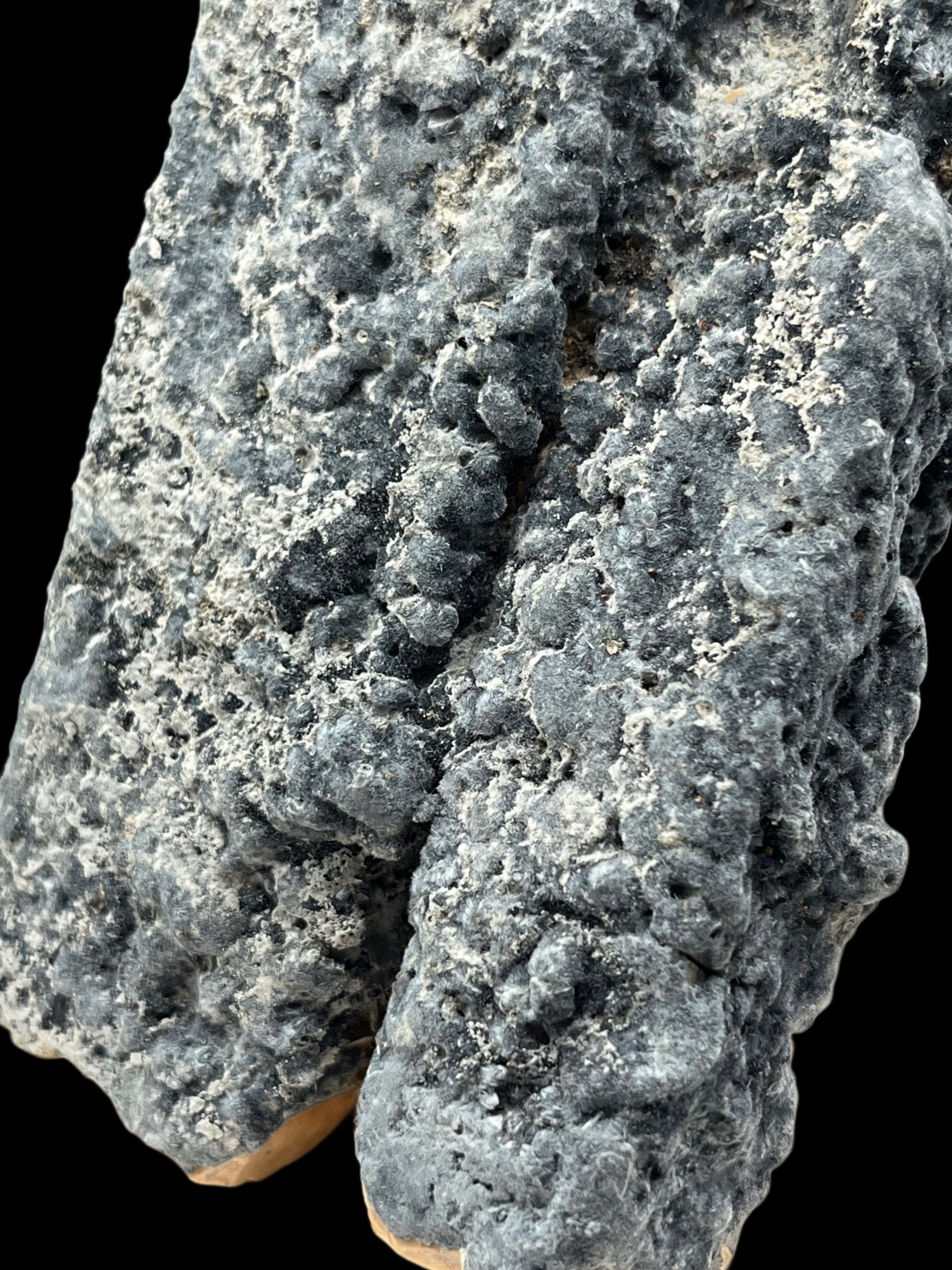
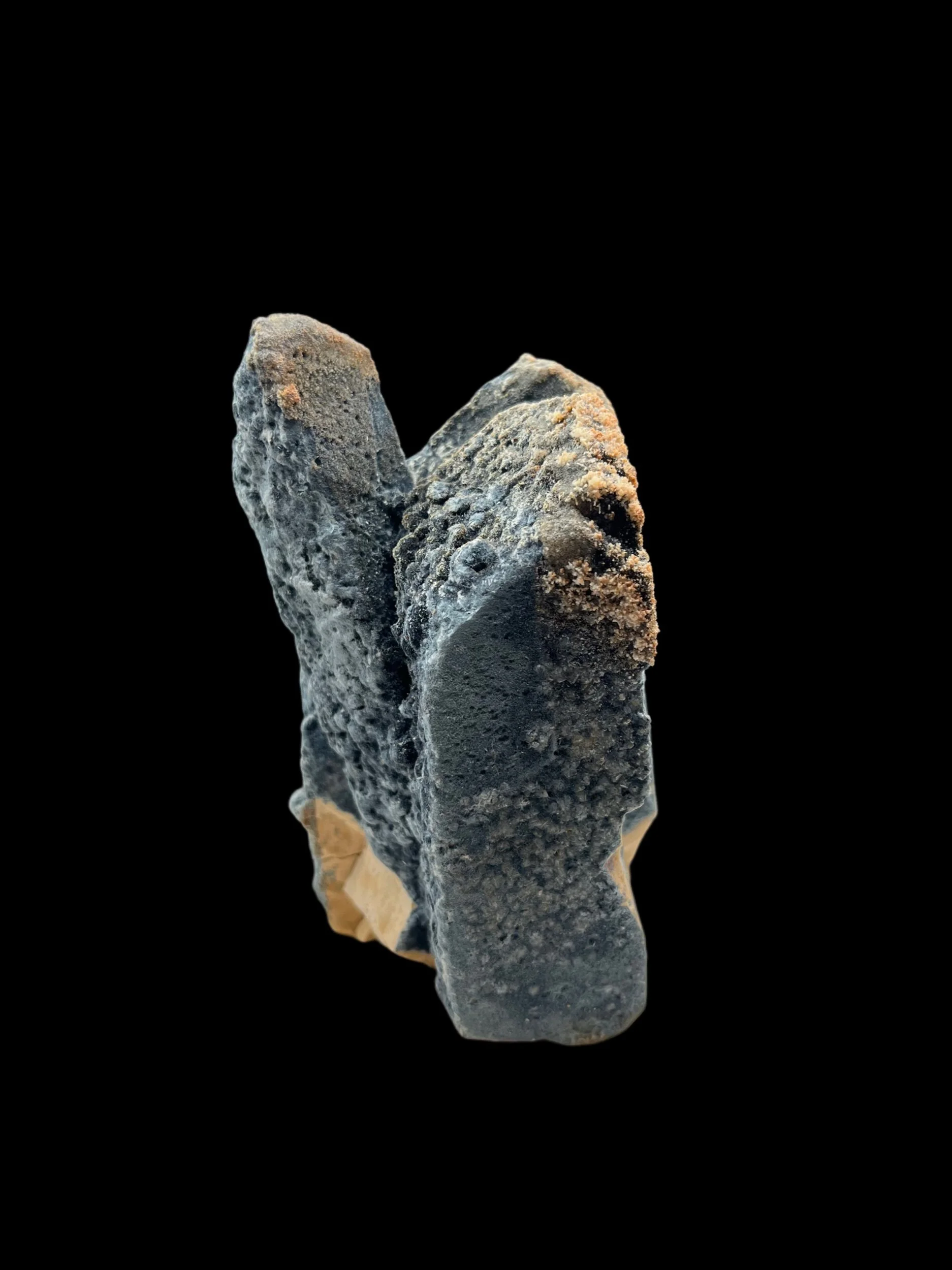
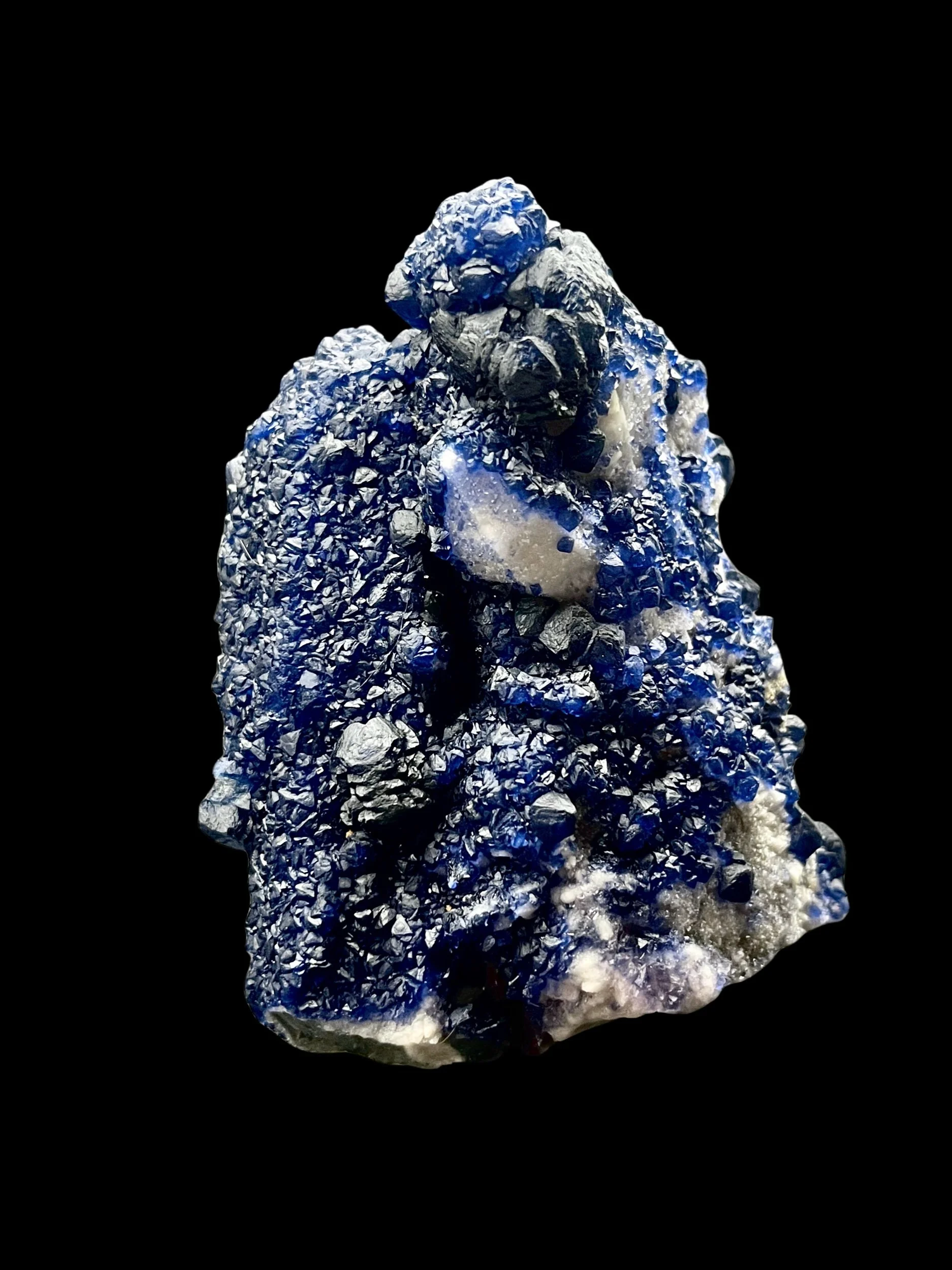
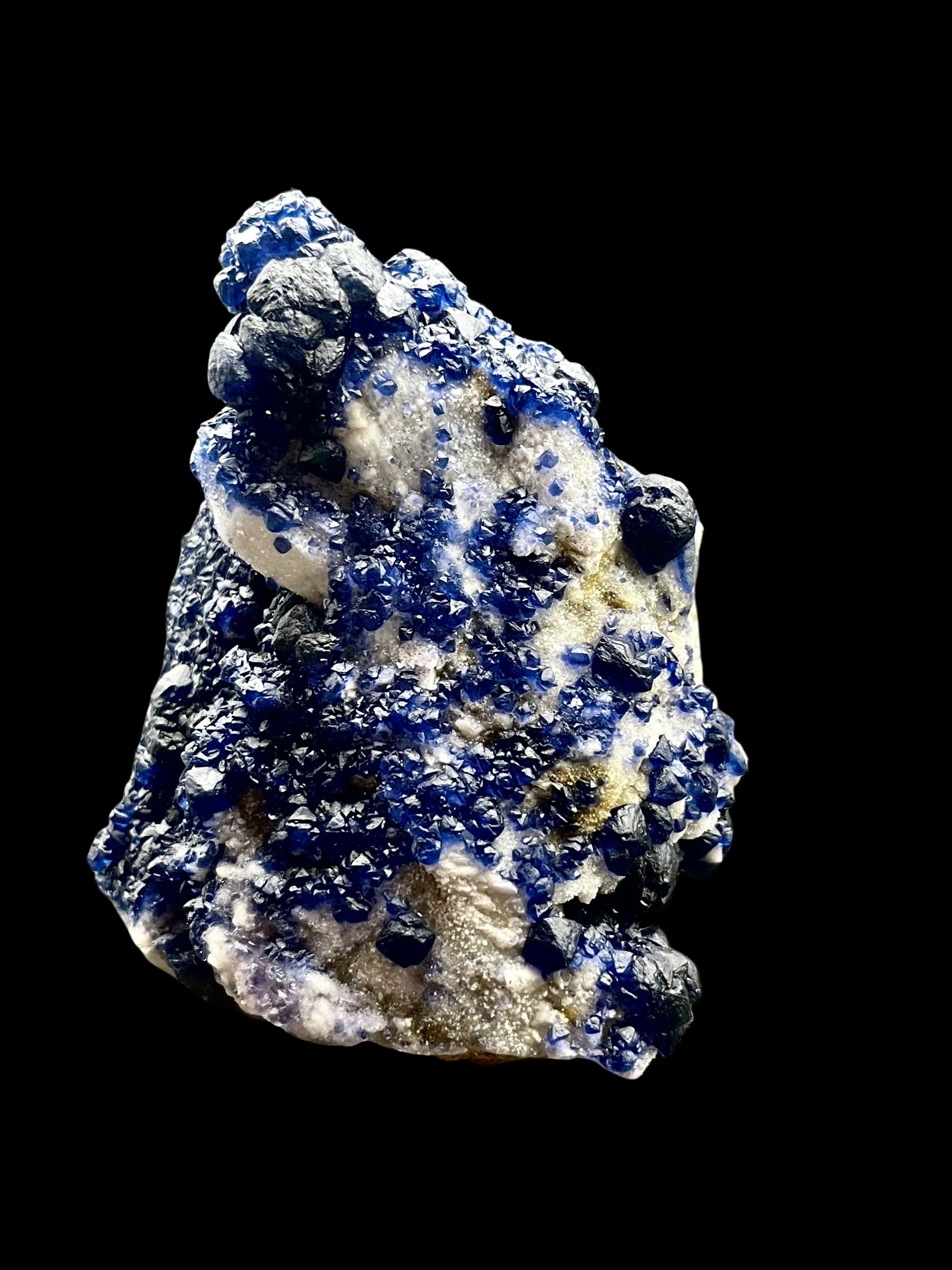
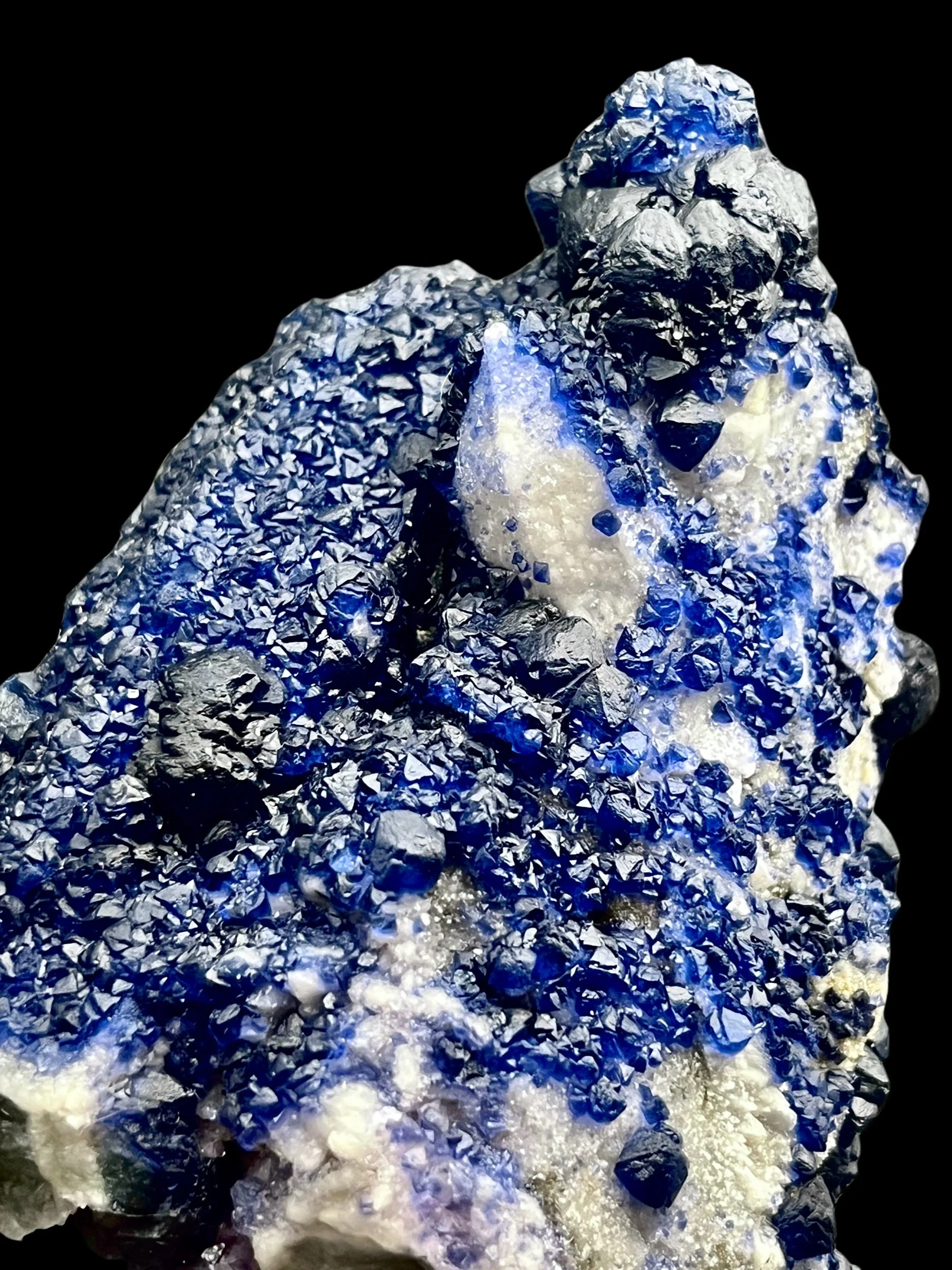
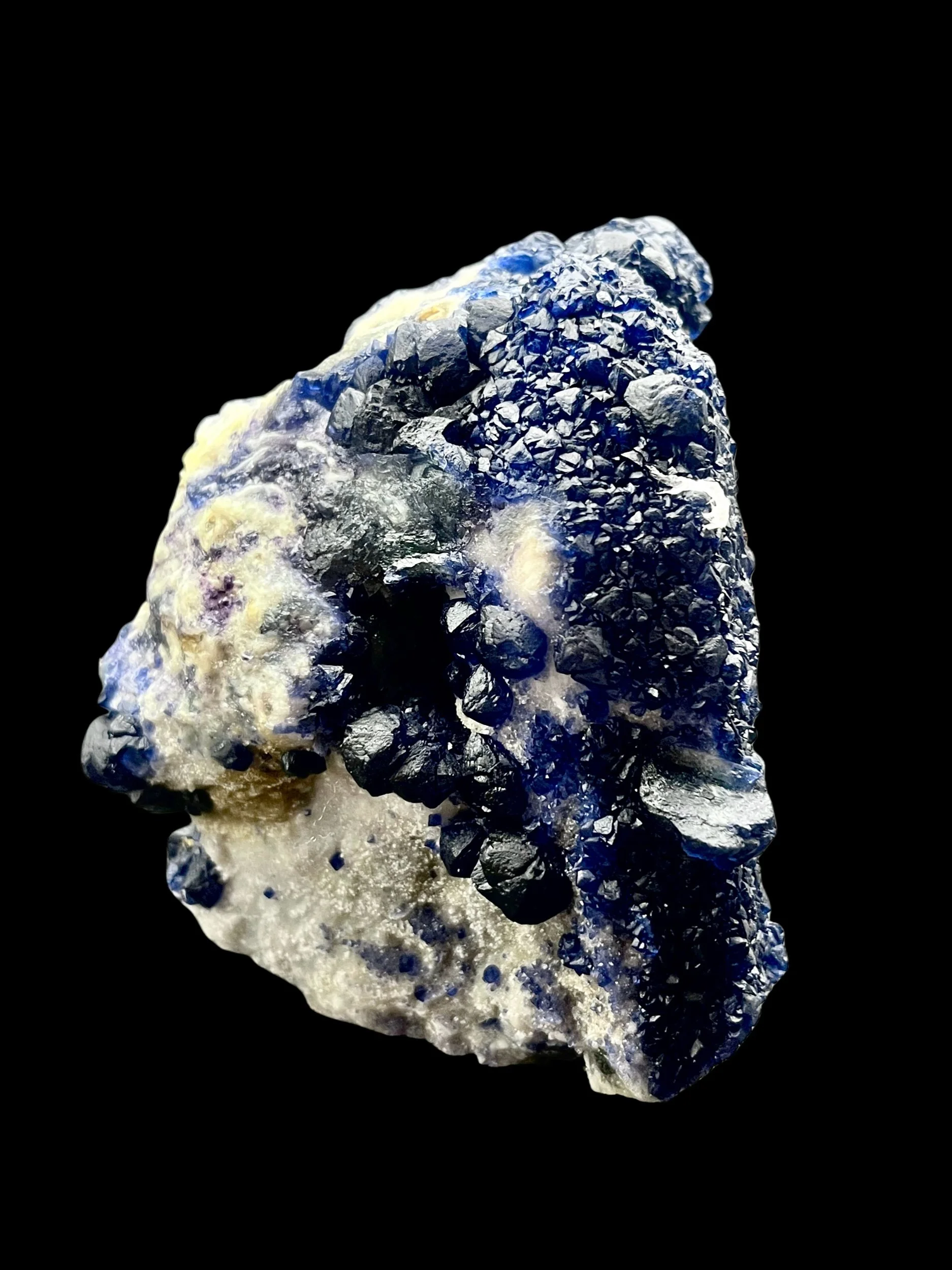
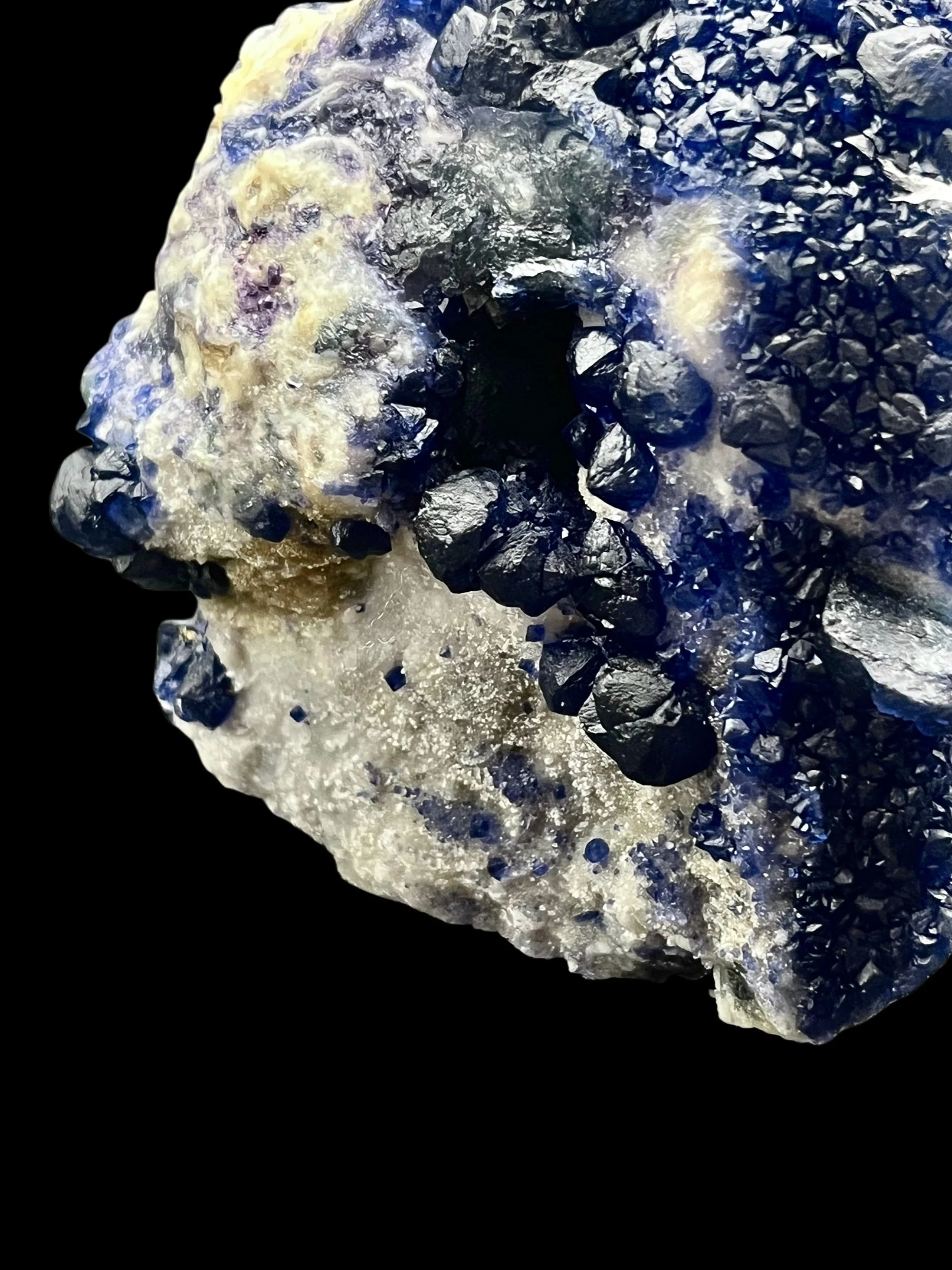
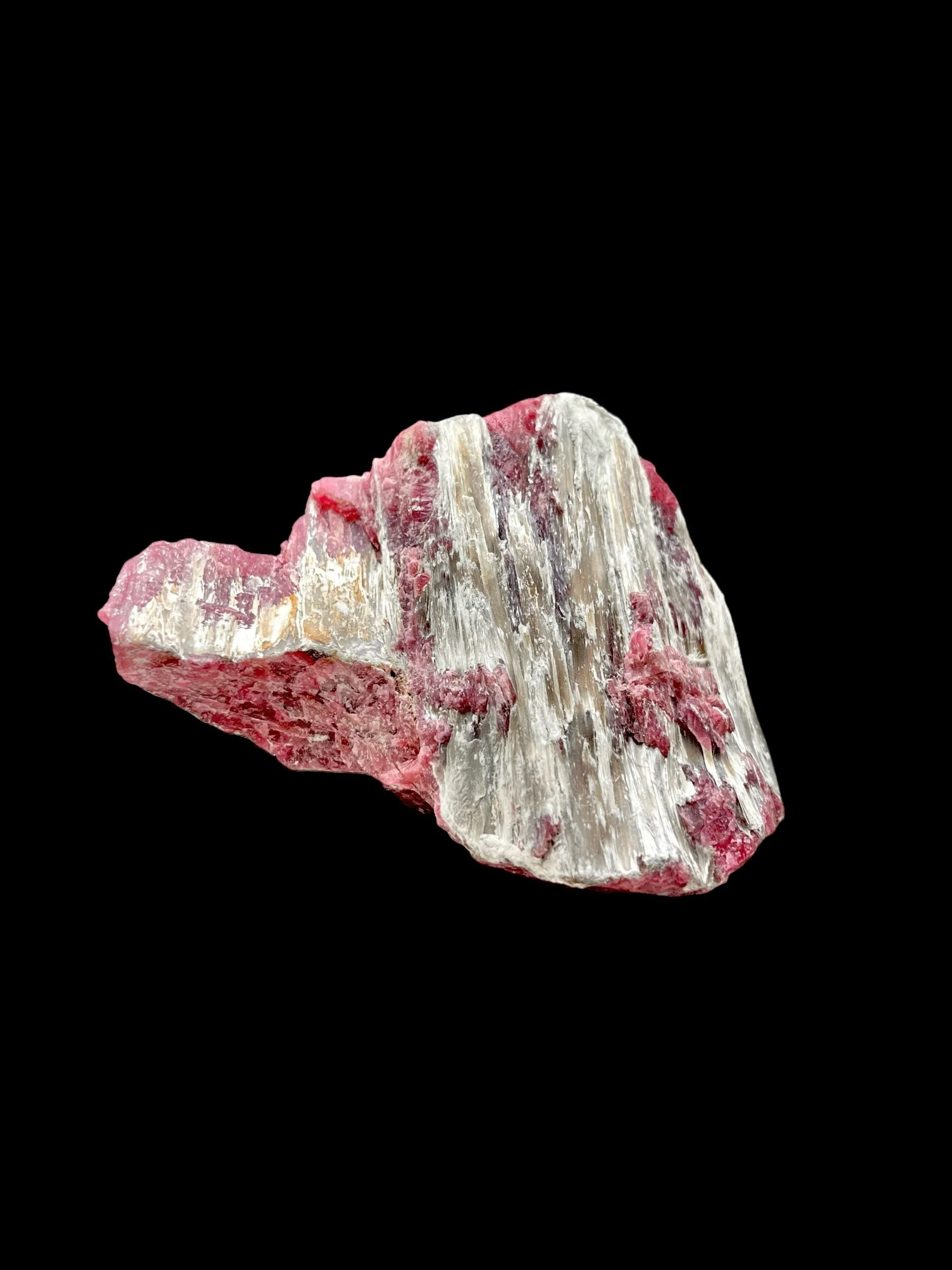
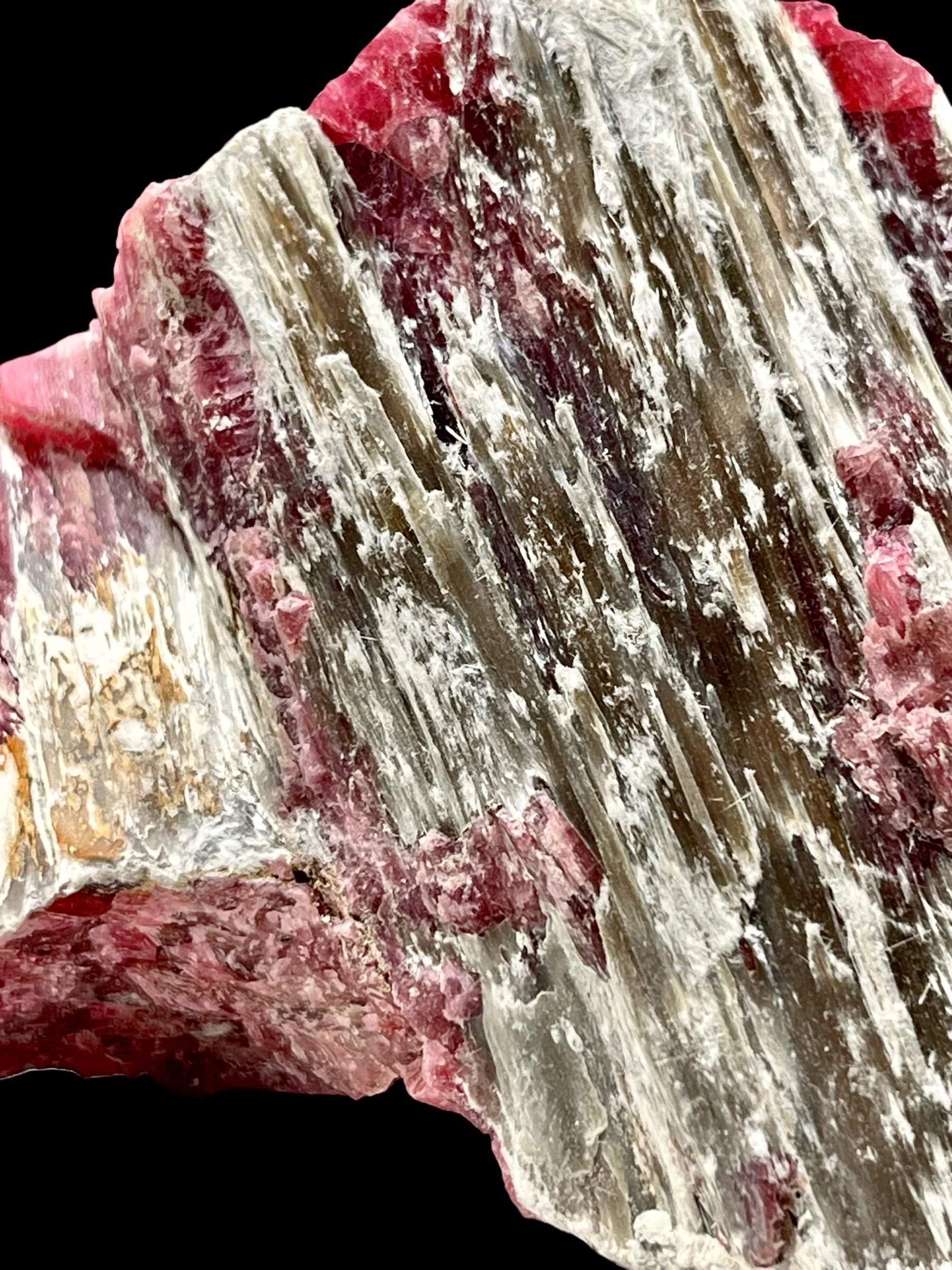
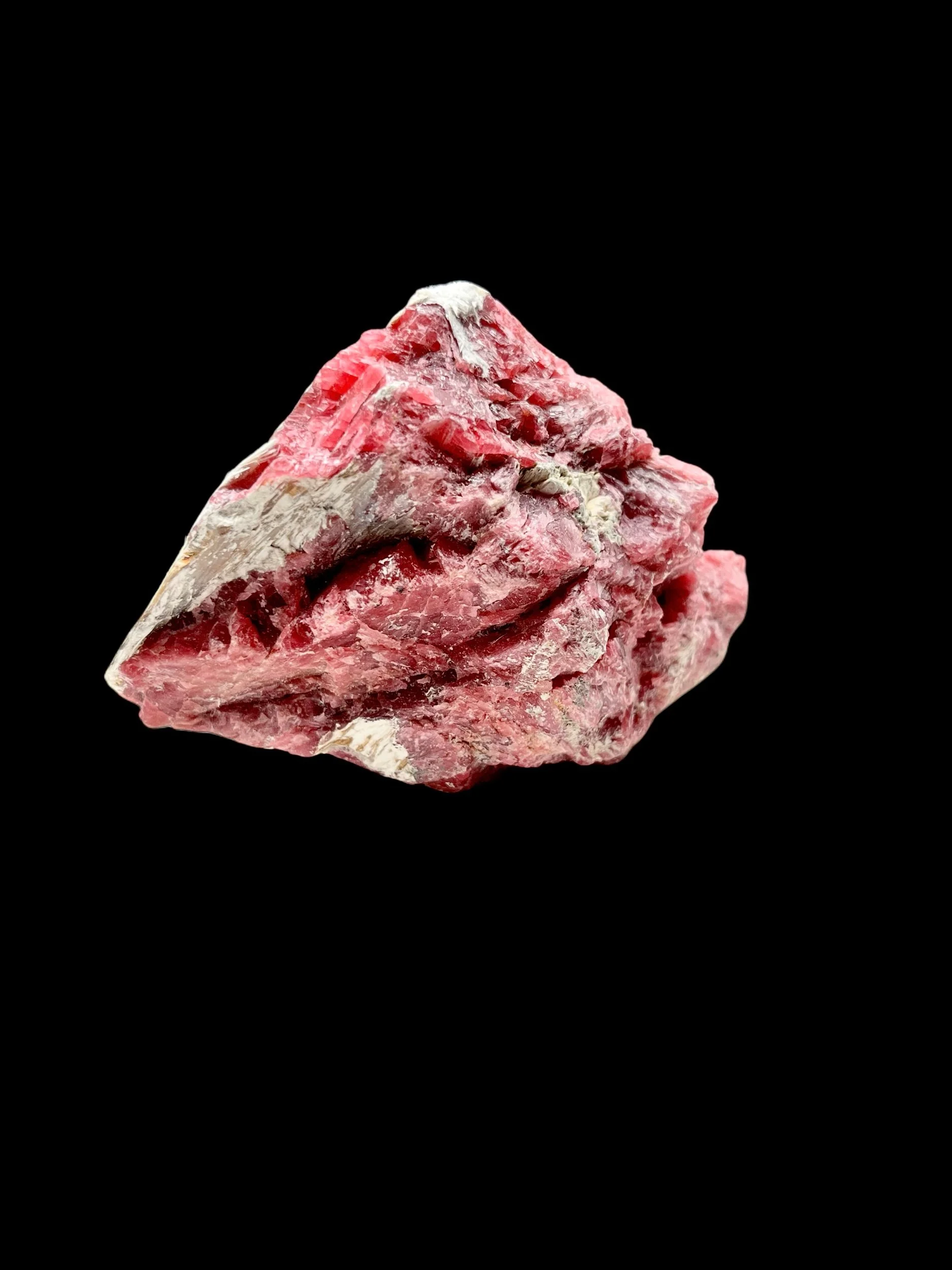
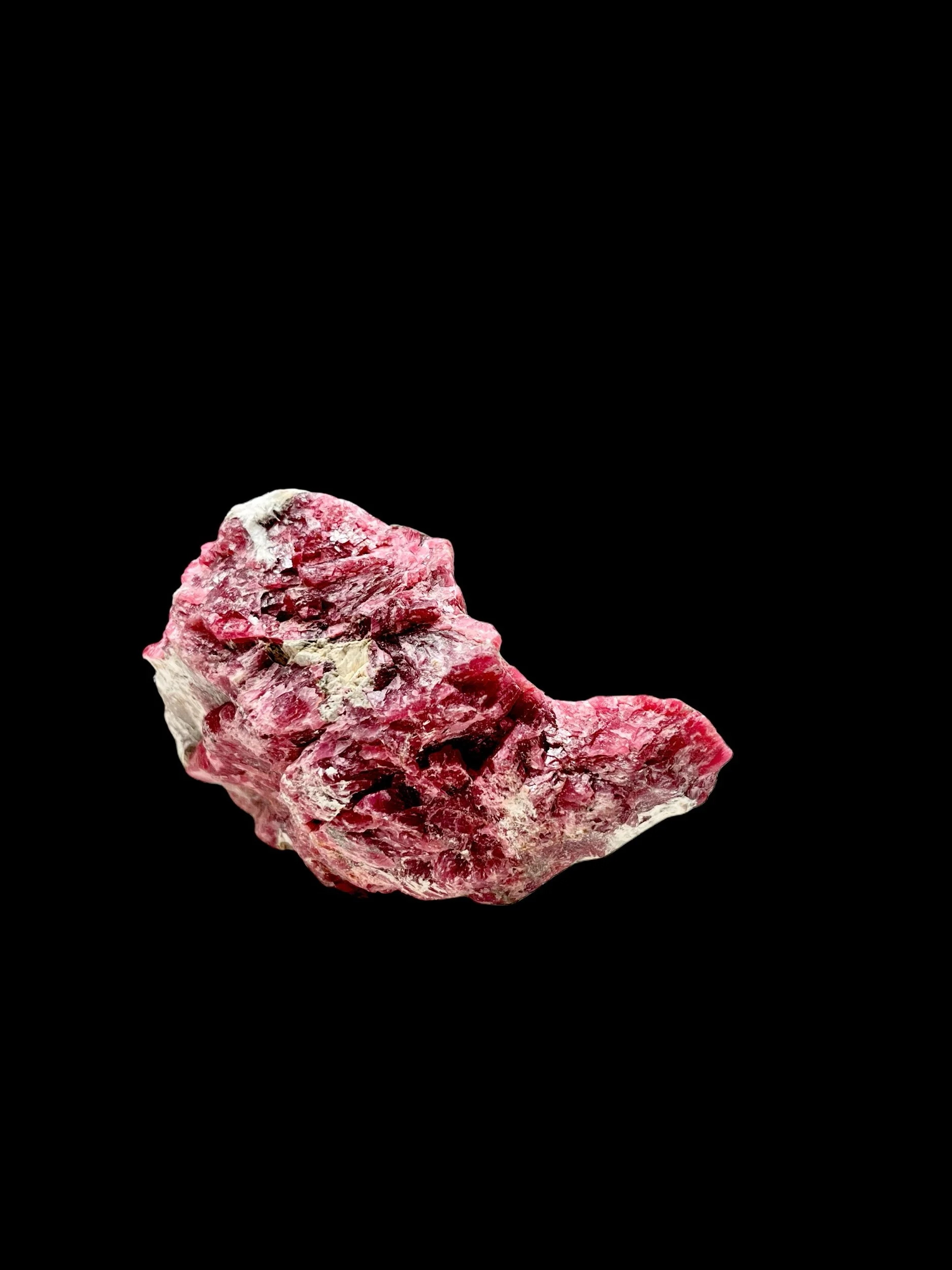
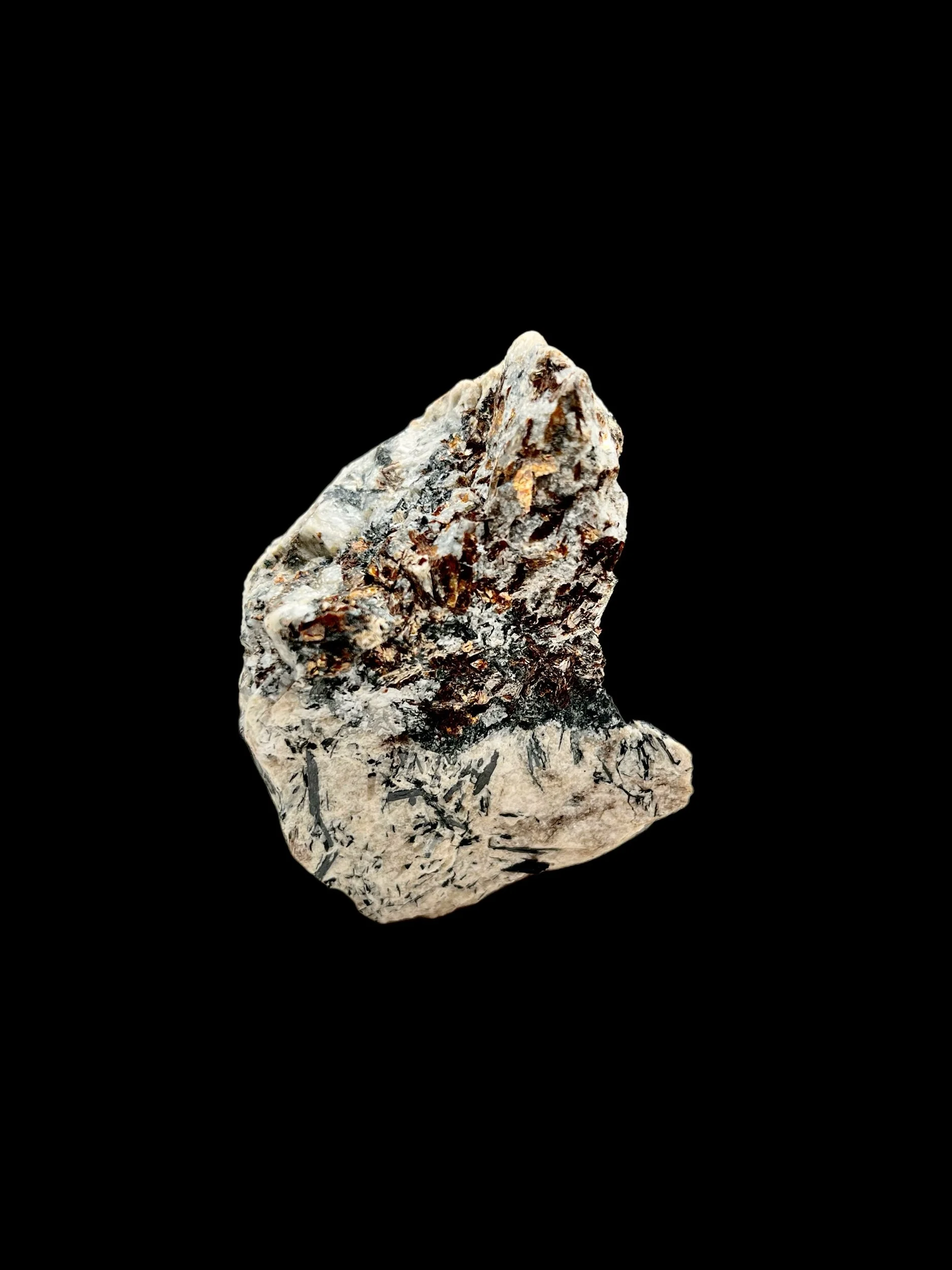
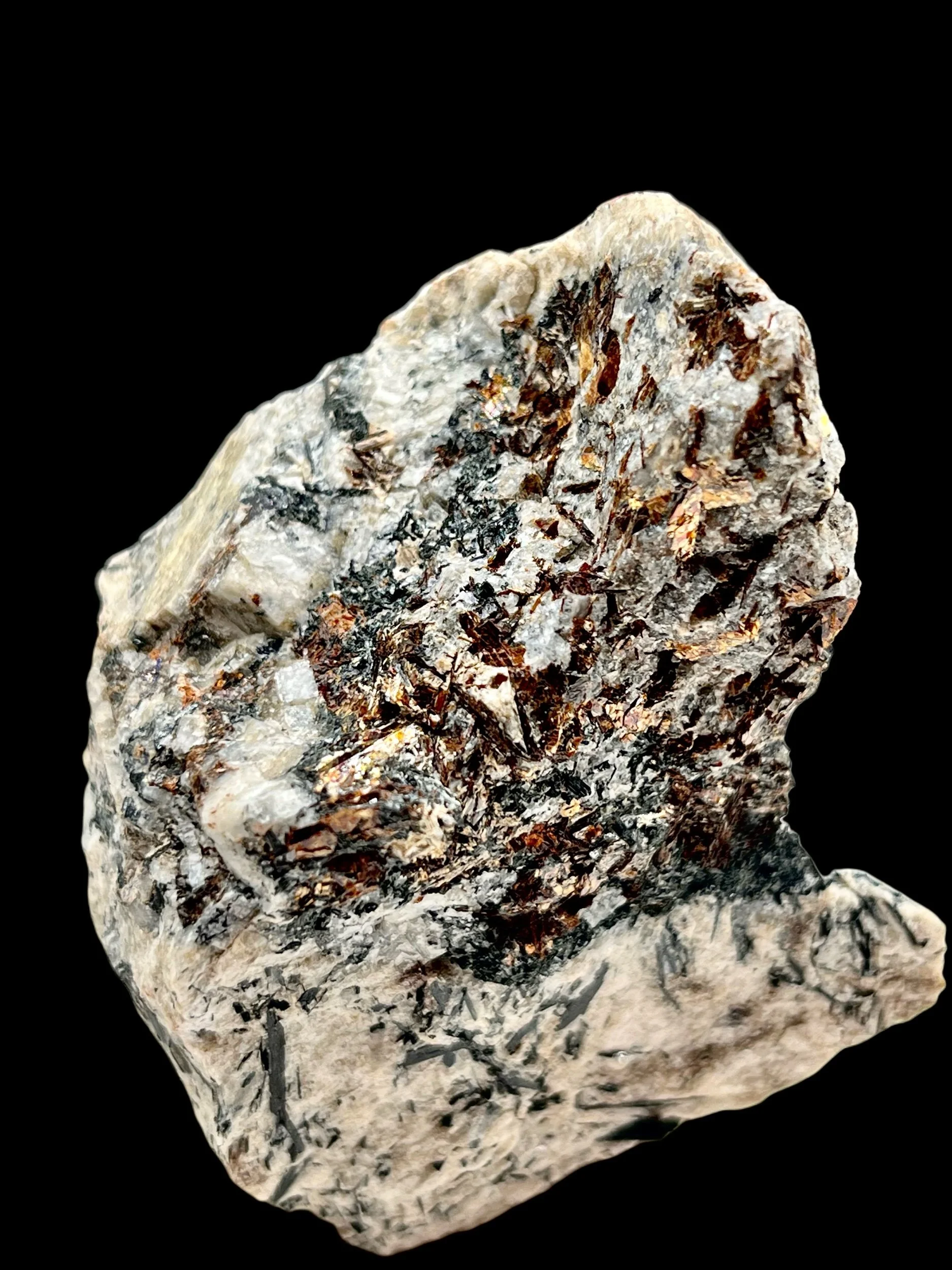
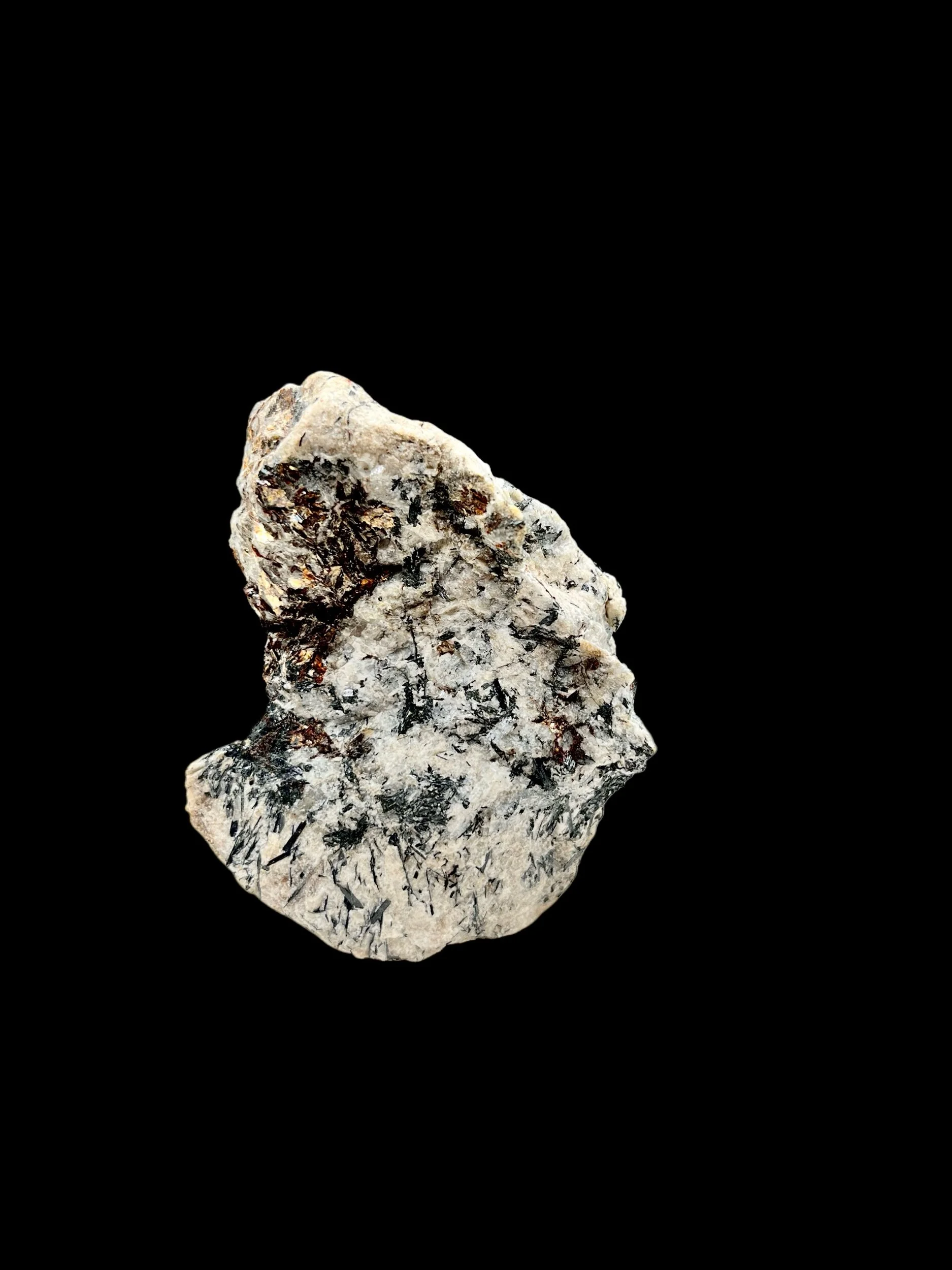
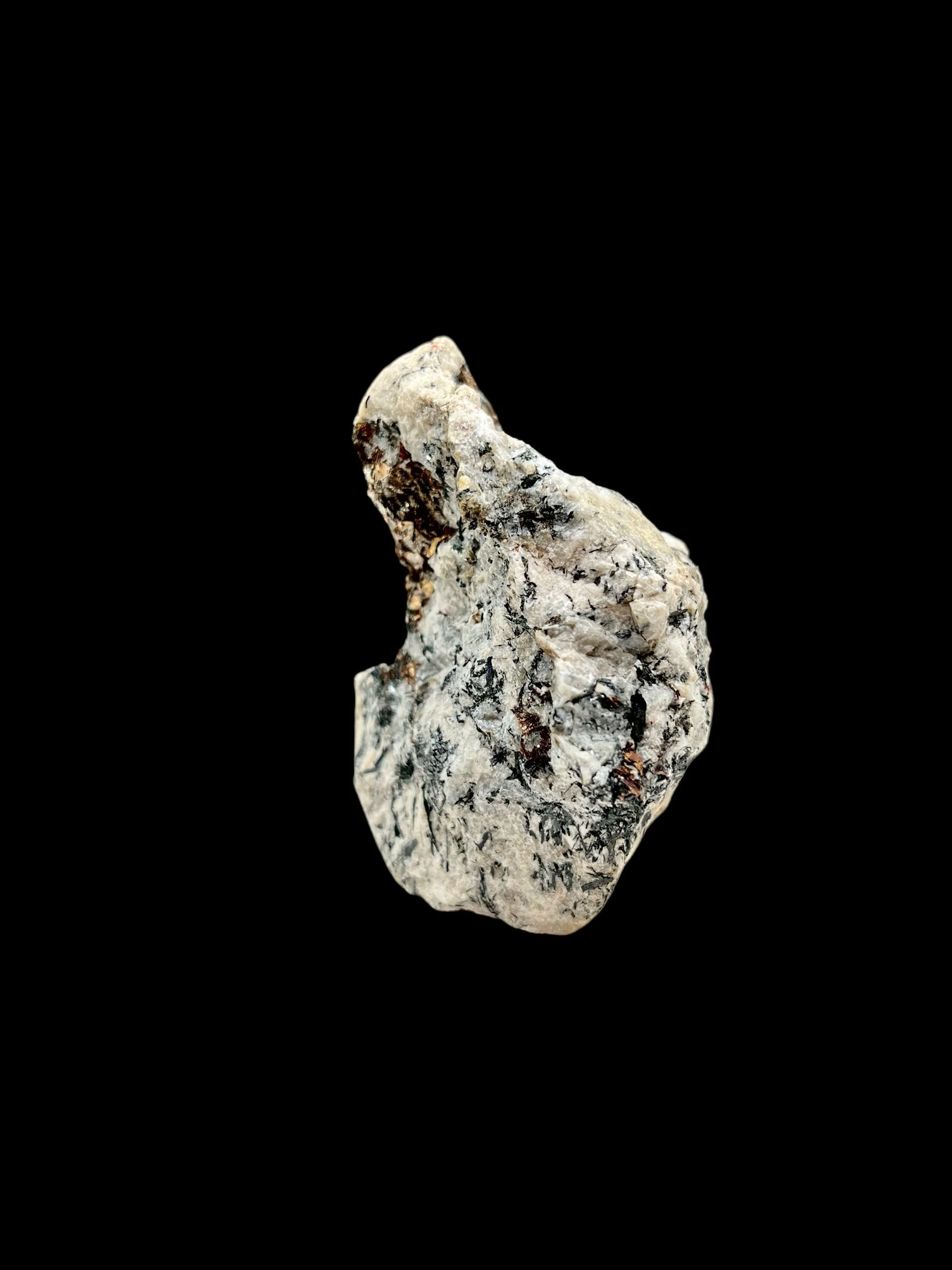
An exceptional Rainbow Halite with Trona specimen featuring a naturally occurring enhydro inclusion from the remarkable evaporite deposits of Owens Lake, California.
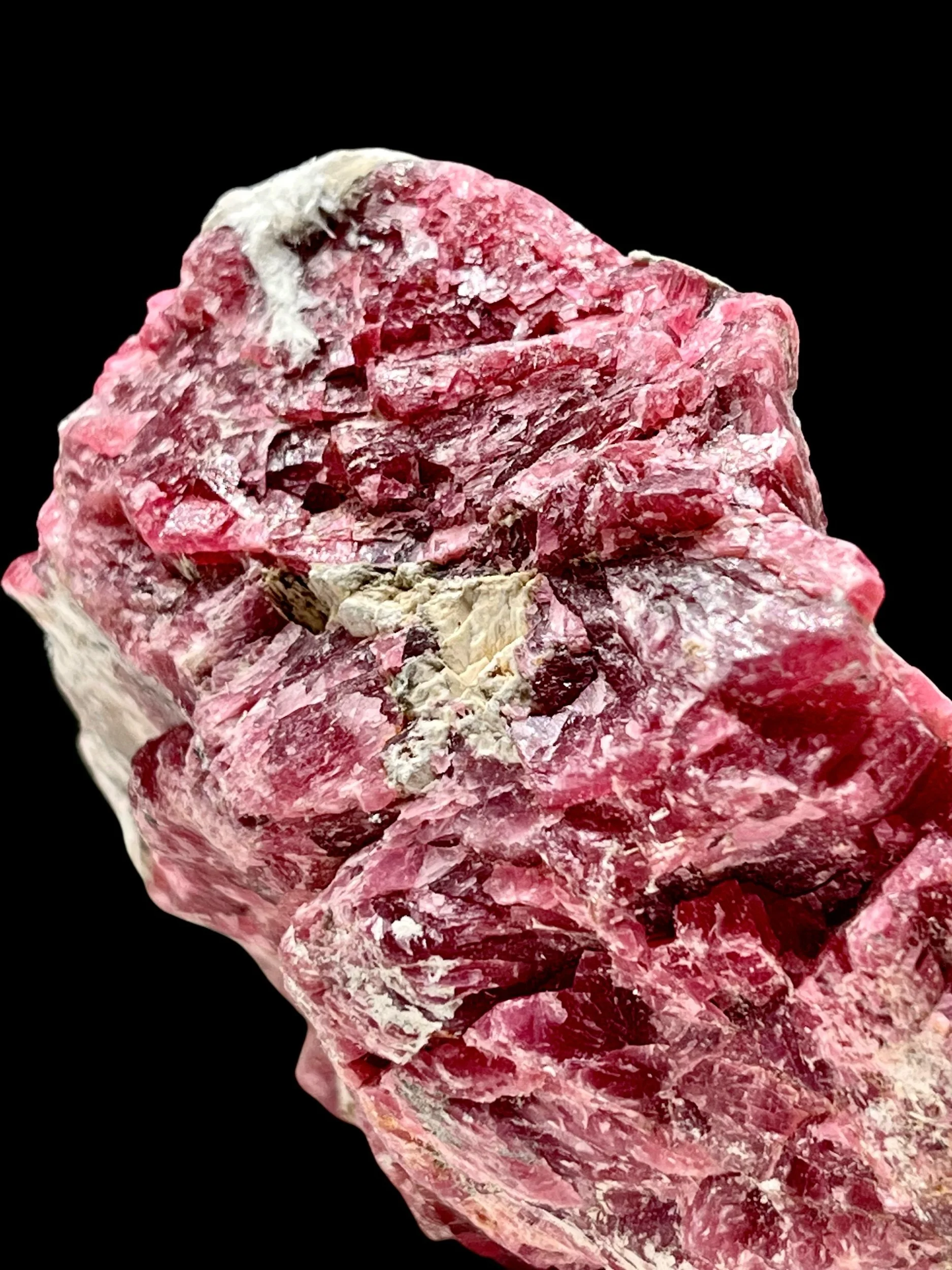
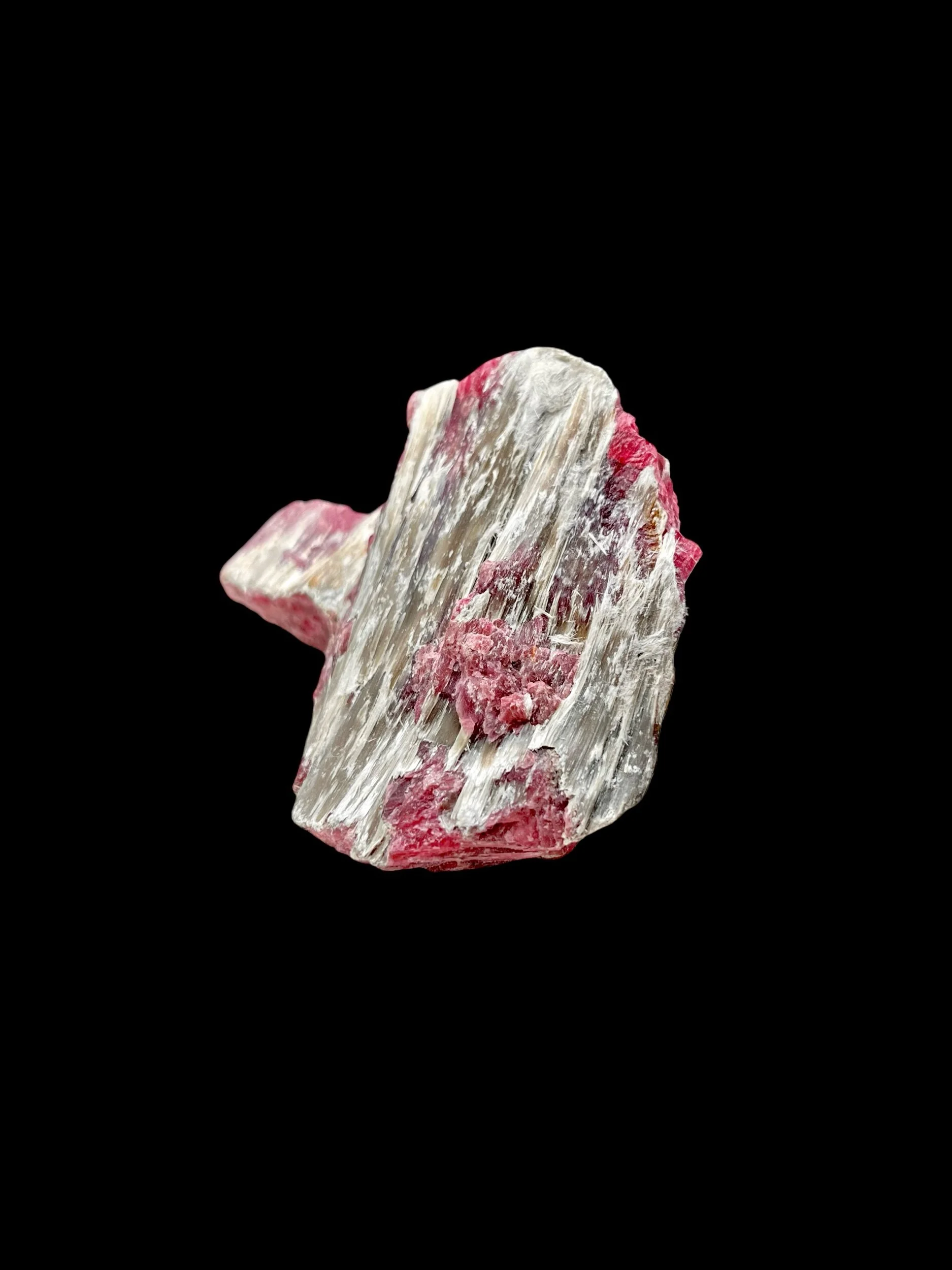
This captivating formation showcases an impressive concentration of translucent, blush-pink halite crystals arranged in beautiful overlapping clusters across a richly textured matrix of golden yellow, pale peach, cream, and subtle green tones.
The specimen's most striking feature is its abundance of beautifully defined cubic crystals, many exhibiting intricate stepped growth patterns, delicate internal structures, and remarkable glasslike transparency. The crystals appear to cascade across the matrix, creating a stunning contrast between their precise geometric forms and the irregular, sculptural formations beneath them.
Adding to its mineralogical significance, this specimen contains naturally enclosed enhydro inclusions, a tiny pocket of highly saline liquid preserved within the halite. This fascinating feature provides a glimpse into the mineral-rich environment in which the crystals formed.
Together, these characteristics create an exceptionally appealing specimen that rewards close examination from multiple angles.
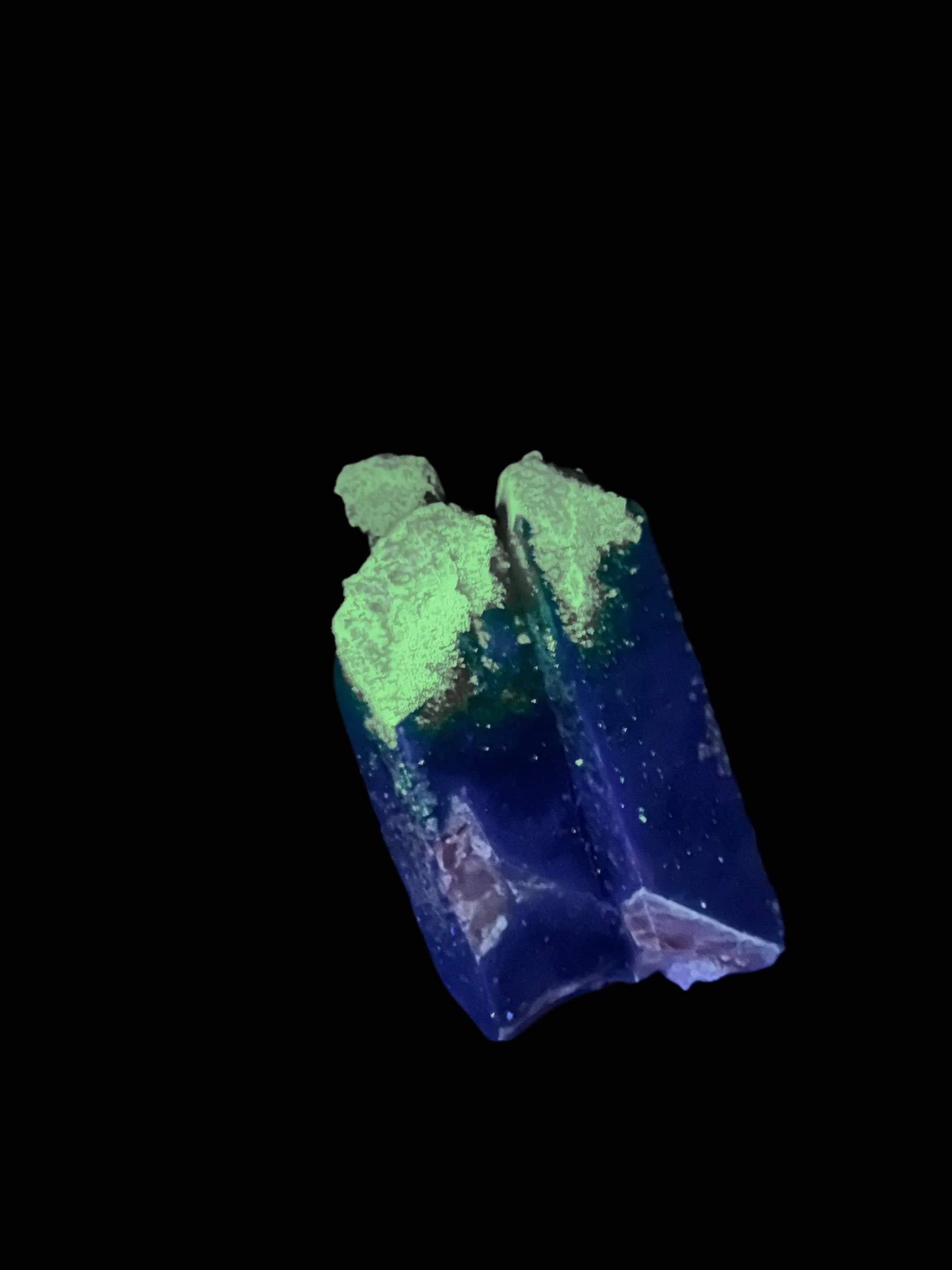
Beyond its extraordinary appearance in natural light, this specimen exhibits both fluorescence and phosphorescence. Under ultraviolet light, its delicate pink crystals contrast dramatically against the bright neon yellow-green trona. When the UV source is removed, its phosphorescent properties allow it to continue emitting a visible afterglow.
A remarkable combination of intricate crystal development, beautiful natural coloration, fluid inclusions, and unusual optical properties, this specimen is an outstanding example of California evaporite mineralogy.
Dimensions, Weight & Locality
Dimensions: 3.25" × 3.25" × 1.5"
Weight: 277 grams
Locality: Owens Lake, Inyo County, California, USA
Metaphysical Properties
In metaphysical traditions, halite is associated with energetic purification, emotional clarity, and spiritual cleansing. Its connection to natural salt has made it a longstanding symbol of protection, renewal, and the release of stagnant energy.
Trona is symbolically associated with transformation, adaptability, and resilience. Its formation through changing environmental conditions and the concentration of mineral-rich waters represents the beauty that can emerge through patience and change.
Enhydro inclusions are traditionally associated with emotional awareness, intuition, and the preservation of ancient wisdom. The presence of liquid naturally enclosed within a crystal symbolizes the balance between transformation and permanence.
Together, these features are believed to encourage:
Energetic Cleansing: Helping release stagnant or unwanted energy and promoting a refreshed, harmonious environment.
Emotional Balance: Encouraging tranquility, emotional clarity, and inner peace.
Transformation & Renewal: Supporting personal growth, resilience, and positive change.
Intuition & Reflection: Encouraging mindfulness, self-discovery, and a deeper understanding of personal experiences.
Grounding & Stability: Promoting balance and emotional steadiness during times of transition.
Metaphysical properties are based on traditional beliefs and are not scientifically established.
Collector's Notes
The Geological History of Owens Lake
Situated in California's Owens Valley, between the Sierra Nevada and Inyo Mountains, Owens Lake is a fascinating example of an evaporite-rich geological environment.
Historically a substantial inland lake, Owens Lake underwent dramatic environmental changes following the diversion of Owens River water to Los Angeles beginning in 1913.
As the lake largely dried, concentrated brines and mineral-rich sediments remained, creating conditions favorable for the development of evaporite minerals, including halite and trona.
These deposits offer a remarkable record of the chemical processes that occur as saline and alkaline waters evaporate, allowing dissolved minerals to become increasingly concentrated and eventually crystallize.
Enhydro Formation: Liquid Preserved Within Salt
One of this specimen's most fascinating features is its naturally occurring enhydro inclusion.
An enhydro is a pocket of liquid enclosed within a mineral crystal. Scientifically, these pockets are known as fluid inclusions.
Fluid inclusions can form when tiny amounts of liquid become trapped during crystal growth. As additional mineral material develops around the trapped liquid, the pocket becomes completely enclosed within the crystal.
They may also form during later stages of mineral development, including recrystallization or the healing of fractures.
In halite, these inclusions are particularly fascinating because the surrounding mineral is itself water-soluble.
How Can Liquid Exist Inside a Crystal Made of Salt?
The answer lies in the remarkable chemistry of saline solutions.
Halite is composed of sodium chloride (NaCl), the same chemical compound found in ordinary table salt. When exposed to freshwater, halite readily dissolves.
However, the liquid trapped inside halite is generally not freshwater. Instead, it is highly concentrated saline brine.
As water evaporates from a saline lake, the concentration of dissolved salts increases until the solution reaches saturation. At this point, sodium chloride can begin crystallizing from the solution.
During crystal growth, tiny quantities of this concentrated brine may become trapped within the developing halite.
Because the enclosed liquid is already saturated or nearly saturated with sodium chloride, it has little additional capacity to dissolve the surrounding crystal under stable conditions.
Essentially, the high salinity of the trapped liquid helps preserve it within a mineral that would otherwise dissolve in ordinary water.
This delicate chemical balance allows fluid inclusions to remain sealed within halite crystals, sometimes for remarkably long periods.
From a scientific perspective, these inclusions can be particularly valuable because they preserve information about the chemical composition of the mineral-forming fluids and the environmental conditions present during crystallization.
The presence of an enhydro adds a fascinating dimension to this specimen, connecting its beautiful external crystal structures with the chemistry of its internal formation.
Fluorescence & Phosphorescence
In addition to its remarkable crystal development and enhydro inclusion, this specimen exhibits two distinct forms of mineral luminescence.
Fluorescence occurs when certain impurities or structural defects within a mineral absorb ultraviolet energy and immediately release part of that energy as visible light.
Phosphorescence occurs when absorbed energy is released more gradually, allowing the specimen to continue emitting visible light after the ultraviolet source has been removed.
Unlike fluorescence, which typically ceases almost immediately when the light is switched off, phosphorescence produces a lingering afterglow.
A Hint of the Ocean
One of the more unexpected characteristics of Owens Lake halite is its occasional ocean-like aroma. Although halite itself is odorless, because the pink color is often derived from algae, traces of naturally occurring organic matter and other materials associated with its saline environment can produce a distinctive briny scent reminiscent of the ocean.
Specimen Care
Halite is naturally water-soluble and sensitive to moisture. Store in a dry, climate-controlled environment away from water, high humidity, and condensation. Avoid washing or soaking. Handle gently to protect the delicate crystal formations.
A case is recommended.
Highlights
Natural Enhydro Inclusion: Contains a naturally enclosed pocket of mineral-rich liquid preserved within the halite, offering a fascinating glimpse into its formation.
Fluorescent & Phosphorescent: Displays beautiful fluorescence under ultraviolet illumination, followed by a lingering phosphorescent afterglow.
Beautiful Crystal Arrangement: Densely clustered, overlapping halite crystals create an extraordinary geometric formation across the specimen. Features rounded mineral formations, natural cavities, and contrasting textures that enhance its visual appeal.
Remarkable Natural Coloration: Features an impressive concentration of translucent pink cubic crystals against delicate blush pink, warm peach, golden yellow, cream, and subtle olive-green toned matrix.
Fascinating Salinity Chemistry: Demonstrates how highly concentrated brine can remain enclosed within a naturally water-soluble mineral.
Historic California Locality: Originates from Owens Lake, a significant locality for evaporite mineralogy and saline lake deposits.
Exceptional Collector Appeal: Combines an enhydro inclusion, remarkable crystal development, fluorescence, phosphorescence, and distinctive mineral associations in one captivating specimen.
Mineralogy
Halite
Chemical Formula: NaCl
Mineral Class: Halides
Crystal System: Isometric (Cubic)
Mohs Hardness: 2–2.5
Luster: Vitreous
Transparency: Transparent to translucent
Typical Colors: Colorless, white, pink, orange, yellow, blue, and other colors depending on impurities and structural defects
Crystal Habit: Commonly forms cubic crystals, occasionally exhibiting stepped or hopper growth patterns
Formation: Precipitates from concentrated saline solutions during evaporation
Notable Properties: Water-soluble, perfect cubic cleavage, may exhibit fluorescence and phosphorescence, and can preserve highly saline fluid inclusions
Trona
Chemical Formula: Na₃(HCO₃)(CO₃)·2H₂O
Mineral Class: Carbonates
Crystal System: Monoclinic
Mohs Hardness: Approximately 2.5–3
Luster: Vitreous to silky
Transparency: Transparent to translucent
Typical Colors: Colorless, white, grayish, or pale yellow
Crystal Habit: Commonly forms prismatic, fibrous, or bladed crystals and crystalline aggregates
Formation: Develops through evaporation and chemical concentration in highly alkaline, sodium-rich lake environments
Notable Properties: Water-soluble, associated with alkaline evaporite deposits, and an important natural source of sodium carbonate, commonly known as soda ash
Enhydro / Fluid Inclusion
Classification: Fluid inclusion rather than a separate mineral species
Composition: Mineral-rich liquid, typically concentrated saline brine within halite
Formation: Enclosure of liquid during crystal growth, recrystallization, or fracture healing
Appearance: A small internal cavity containing liquid, sometimes accompanied by a gas bubble
Scientific Significance: Can preserve information about the chemical composition and physical conditions of mineral-forming fluids
Preservation: Requires an intact host crystal and stable environmental conditions
Description
An exceptional Rainbow Halite with Trona specimen featuring a naturally occurring enhydro inclusion from the remarkable evaporite deposits of Owens Lake, California.
This captivating formation showcases an impressive concentration of translucent, blush-pink halite crystals arranged in beautiful overlapping clusters across a richly textured matrix of golden yellow, pale peach, cream, and subtle green tones.
The specimen's most striking feature is its abundance of beautifully defined cubic crystals, many exhibiting intricate stepped growth patterns, delicate internal structures, and remarkable glasslike transparency. The crystals appear to cascade across the matrix, creating a stunning contrast between their precise geometric forms and the irregular, sculptural formations beneath them.
Adding to its mineralogical significance, this specimen contains naturally enclosed enhydro inclusions, a tiny pocket of highly saline liquid preserved within the halite. This fascinating feature provides a glimpse into the mineral-rich environment in which the crystals formed.
Together, these characteristics create an exceptionally appealing specimen that rewards close examination from multiple angles.
Beyond its extraordinary appearance in natural light, this specimen exhibits both fluorescence and phosphorescence. Under ultraviolet light, its delicate pink crystals contrast dramatically against the bright neon yellow-green trona. When the UV source is removed, its phosphorescent properties allow it to continue emitting a visible afterglow.
A remarkable combination of intricate crystal development, beautiful natural coloration, fluid inclusions, and unusual optical properties, this specimen is an outstanding example of California evaporite mineralogy.
Dimensions, Weight & Locality
Dimensions: 3.25" × 3.25" × 1.5"
Weight: 277 grams
Locality: Owens Lake, Inyo County, California, USA
Metaphysical Properties
In metaphysical traditions, halite is associated with energetic purification, emotional clarity, and spiritual cleansing. Its connection to natural salt has made it a longstanding symbol of protection, renewal, and the release of stagnant energy.
Trona is symbolically associated with transformation, adaptability, and resilience. Its formation through changing environmental conditions and the concentration of mineral-rich waters represents the beauty that can emerge through patience and change.
Enhydro inclusions are traditionally associated with emotional awareness, intuition, and the preservation of ancient wisdom. The presence of liquid naturally enclosed within a crystal symbolizes the balance between transformation and permanence.
Together, these features are believed to encourage:
Energetic Cleansing: Helping release stagnant or unwanted energy and promoting a refreshed, harmonious environment.
Emotional Balance: Encouraging tranquility, emotional clarity, and inner peace.
Transformation & Renewal: Supporting personal growth, resilience, and positive change.
Intuition & Reflection: Encouraging mindfulness, self-discovery, and a deeper understanding of personal experiences.
Grounding & Stability: Promoting balance and emotional steadiness during times of transition.
Metaphysical properties are based on traditional beliefs and are not scientifically established.
Collector's Notes
The Geological History of Owens Lake
Situated in California's Owens Valley, between the Sierra Nevada and Inyo Mountains, Owens Lake is a fascinating example of an evaporite-rich geological environment.
Historically a substantial inland lake, Owens Lake underwent dramatic environmental changes following the diversion of Owens River water to Los Angeles beginning in 1913.
As the lake largely dried, concentrated brines and mineral-rich sediments remained, creating conditions favorable for the development of evaporite minerals, including halite and trona.
These deposits offer a remarkable record of the chemical processes that occur as saline and alkaline waters evaporate, allowing dissolved minerals to become increasingly concentrated and eventually crystallize.
Enhydro Formation: Liquid Preserved Within Salt
One of this specimen's most fascinating features is its naturally occurring enhydro inclusion.
An enhydro is a pocket of liquid enclosed within a mineral crystal. Scientifically, these pockets are known as fluid inclusions.
Fluid inclusions can form when tiny amounts of liquid become trapped during crystal growth. As additional mineral material develops around the trapped liquid, the pocket becomes completely enclosed within the crystal.
They may also form during later stages of mineral development, including recrystallization or the healing of fractures.
In halite, these inclusions are particularly fascinating because the surrounding mineral is itself water-soluble.
How Can Liquid Exist Inside a Crystal Made of Salt?
The answer lies in the remarkable chemistry of saline solutions.
Halite is composed of sodium chloride (NaCl), the same chemical compound found in ordinary table salt. When exposed to freshwater, halite readily dissolves.
However, the liquid trapped inside halite is generally not freshwater. Instead, it is highly concentrated saline brine.
As water evaporates from a saline lake, the concentration of dissolved salts increases until the solution reaches saturation. At this point, sodium chloride can begin crystallizing from the solution.
During crystal growth, tiny quantities of this concentrated brine may become trapped within the developing halite.
Because the enclosed liquid is already saturated or nearly saturated with sodium chloride, it has little additional capacity to dissolve the surrounding crystal under stable conditions.
Essentially, the high salinity of the trapped liquid helps preserve it within a mineral that would otherwise dissolve in ordinary water.
This delicate chemical balance allows fluid inclusions to remain sealed within halite crystals, sometimes for remarkably long periods.
From a scientific perspective, these inclusions can be particularly valuable because they preserve information about the chemical composition of the mineral-forming fluids and the environmental conditions present during crystallization.
The presence of an enhydro adds a fascinating dimension to this specimen, connecting its beautiful external crystal structures with the chemistry of its internal formation.
Fluorescence & Phosphorescence
In addition to its remarkable crystal development and enhydro inclusion, this specimen exhibits two distinct forms of mineral luminescence.
Fluorescence occurs when certain impurities or structural defects within a mineral absorb ultraviolet energy and immediately release part of that energy as visible light.
Phosphorescence occurs when absorbed energy is released more gradually, allowing the specimen to continue emitting visible light after the ultraviolet source has been removed.
Unlike fluorescence, which typically ceases almost immediately when the light is switched off, phosphorescence produces a lingering afterglow.
A Hint of the Ocean
One of the more unexpected characteristics of Owens Lake halite is its occasional ocean-like aroma. Although halite itself is odorless, because the pink color is often derived from algae, traces of naturally occurring organic matter and other materials associated with its saline environment can produce a distinctive briny scent reminiscent of the ocean.
Specimen Care
Halite is naturally water-soluble and sensitive to moisture. Store in a dry, climate-controlled environment away from water, high humidity, and condensation. Avoid washing or soaking. Handle gently to protect the delicate crystal formations.
A case is recommended.
Highlights
Natural Enhydro Inclusion: Contains a naturally enclosed pocket of mineral-rich liquid preserved within the halite, offering a fascinating glimpse into its formation.
Fluorescent & Phosphorescent: Displays beautiful fluorescence under ultraviolet illumination, followed by a lingering phosphorescent afterglow.
Beautiful Crystal Arrangement: Densely clustered, overlapping halite crystals create an extraordinary geometric formation across the specimen. Features rounded mineral formations, natural cavities, and contrasting textures that enhance its visual appeal.
Remarkable Natural Coloration: Features an impressive concentration of translucent pink cubic crystals against delicate blush pink, warm peach, golden yellow, cream, and subtle olive-green toned matrix.
Fascinating Salinity Chemistry: Demonstrates how highly concentrated brine can remain enclosed within a naturally water-soluble mineral.
Historic California Locality: Originates from Owens Lake, a significant locality for evaporite mineralogy and saline lake deposits.
Exceptional Collector Appeal: Combines an enhydro inclusion, remarkable crystal development, fluorescence, phosphorescence, and distinctive mineral associations in one captivating specimen.
Mineralogy
Halite
Chemical Formula: NaCl
Mineral Class: Halides
Crystal System: Isometric (Cubic)
Mohs Hardness: 2–2.5
Luster: Vitreous
Transparency: Transparent to translucent
Typical Colors: Colorless, white, pink, orange, yellow, blue, and other colors depending on impurities and structural defects
Crystal Habit: Commonly forms cubic crystals, occasionally exhibiting stepped or hopper growth patterns
Formation: Precipitates from concentrated saline solutions during evaporation
Notable Properties: Water-soluble, perfect cubic cleavage, may exhibit fluorescence and phosphorescence, and can preserve highly saline fluid inclusions
Trona
Chemical Formula: Na₃(HCO₃)(CO₃)·2H₂O
Mineral Class: Carbonates
Crystal System: Monoclinic
Mohs Hardness: Approximately 2.5–3
Luster: Vitreous to silky
Transparency: Transparent to translucent
Typical Colors: Colorless, white, grayish, or pale yellow
Crystal Habit: Commonly forms prismatic, fibrous, or bladed crystals and crystalline aggregates
Formation: Develops through evaporation and chemical concentration in highly alkaline, sodium-rich lake environments
Notable Properties: Water-soluble, associated with alkaline evaporite deposits, and an important natural source of sodium carbonate, commonly known as soda ash
Enhydro / Fluid Inclusion
Classification: Fluid inclusion rather than a separate mineral species
Composition: Mineral-rich liquid, typically concentrated saline brine within halite
Formation: Enclosure of liquid during crystal growth, recrystallization, or fracture healing
Appearance: A small internal cavity containing liquid, sometimes accompanied by a gas bubble
Scientific Significance: Can preserve information about the chemical composition and physical conditions of mineral-forming fluids
Preservation: Requires an intact host crystal and stable environmental conditions


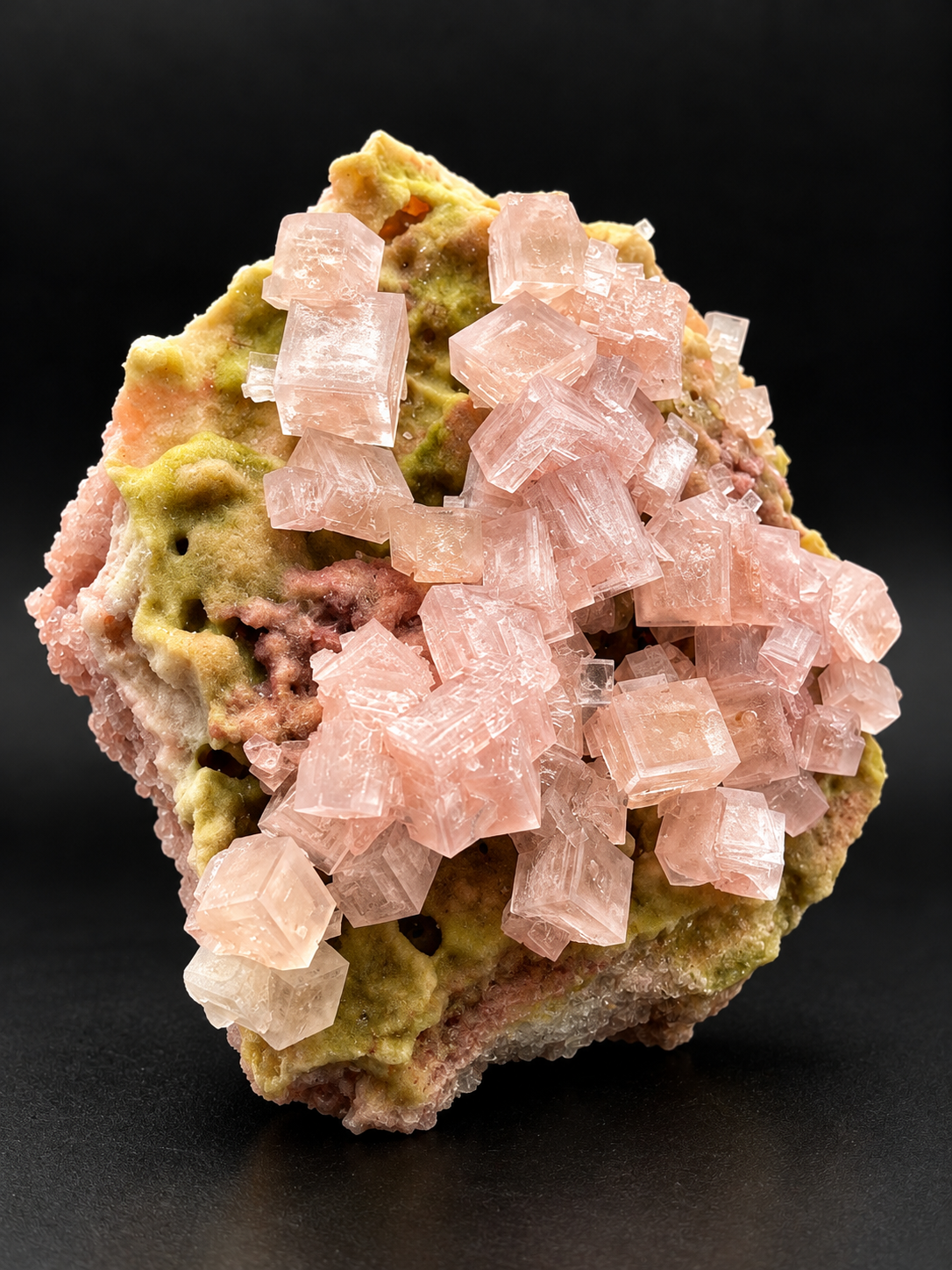 Image 1 of 6
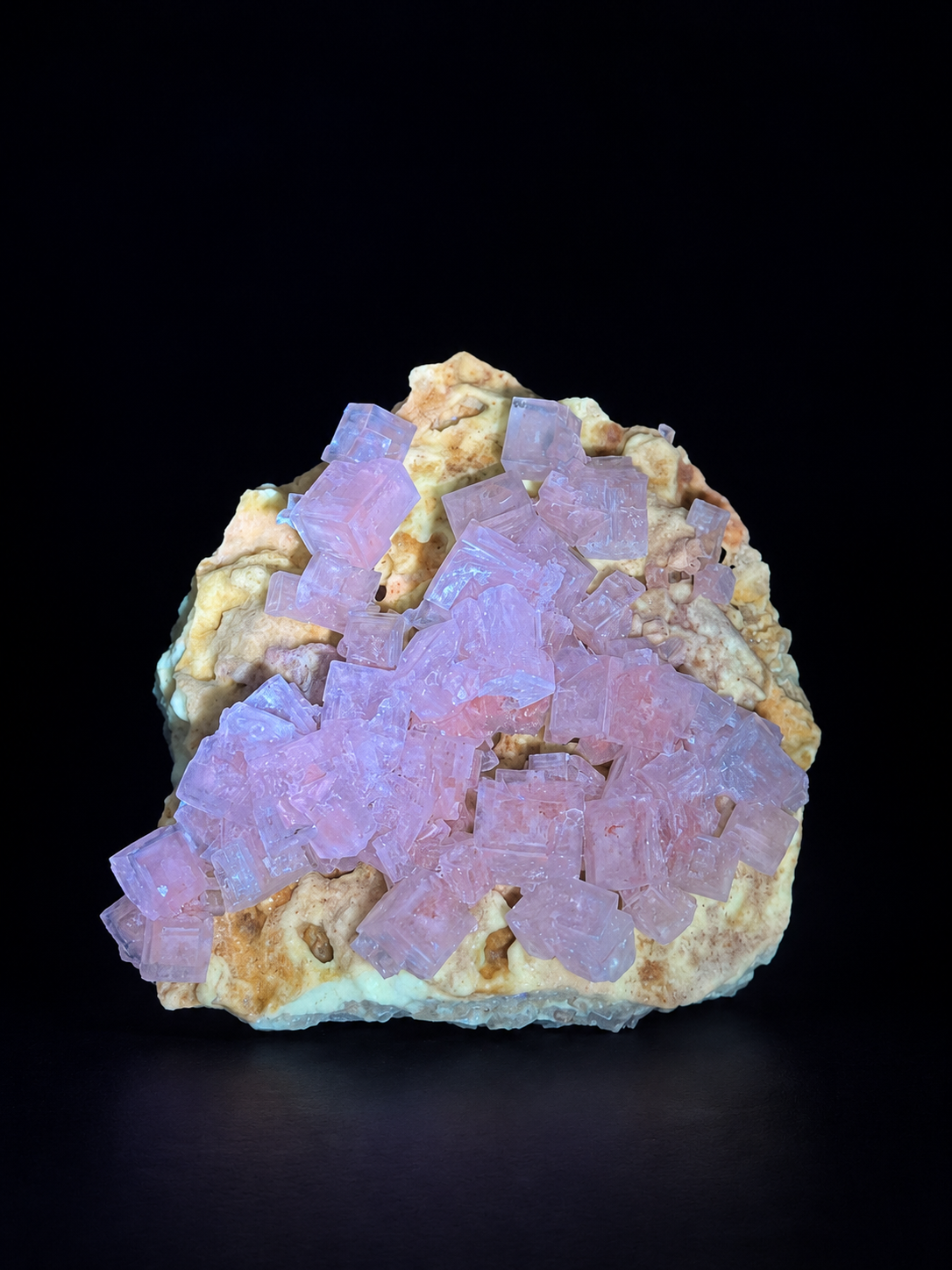 Image 2 of 6
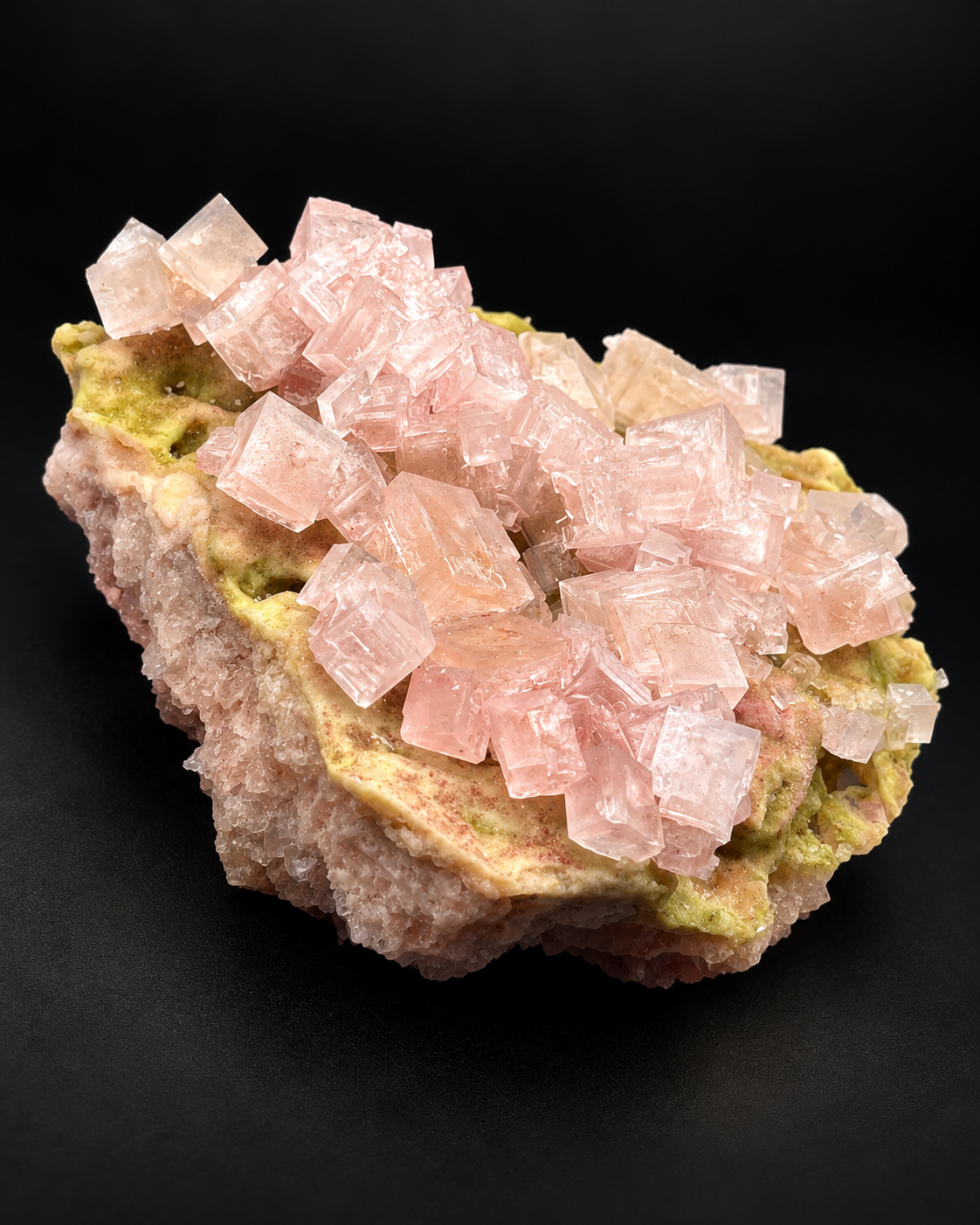 Image 3 of 6
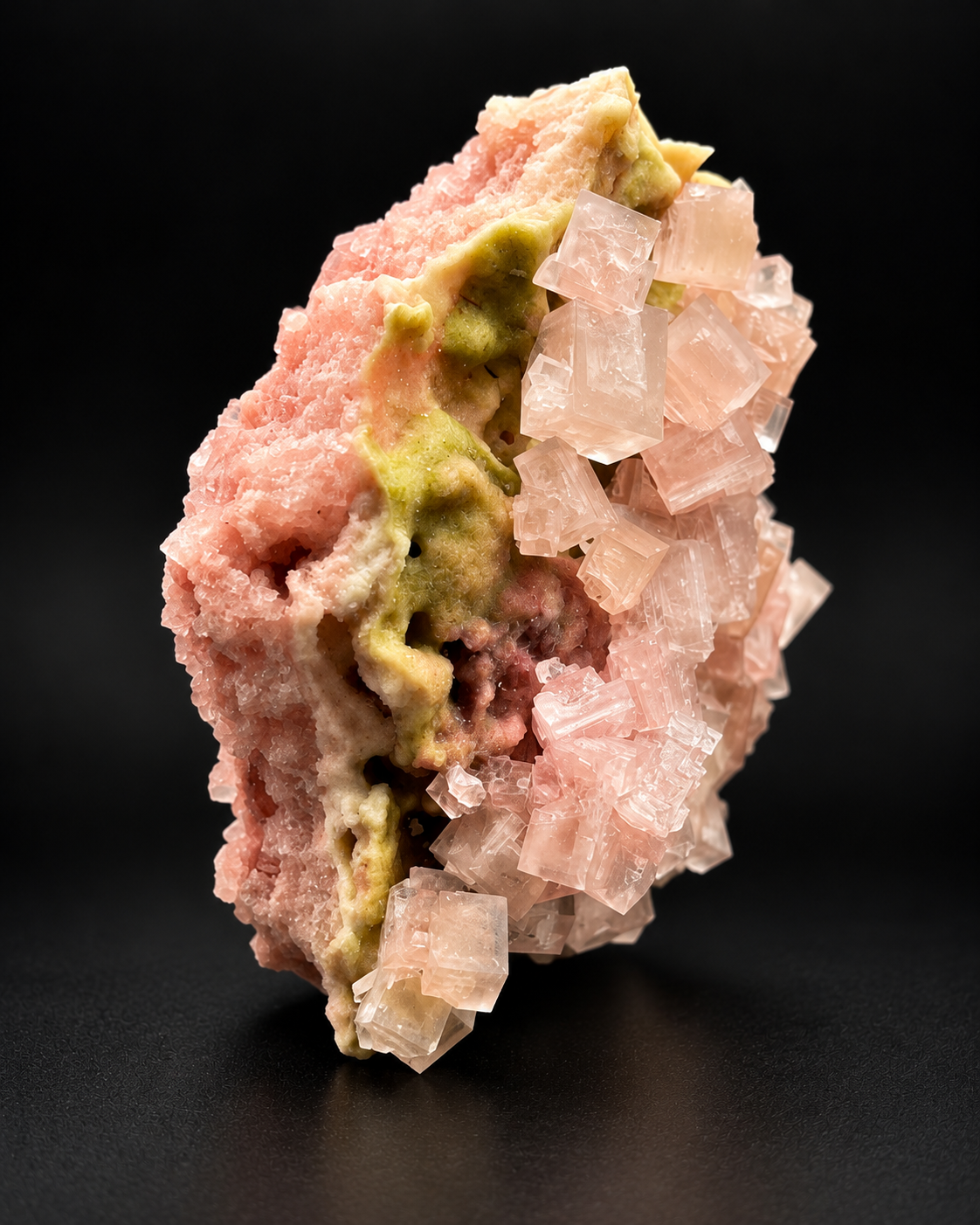 Image 4 of 6
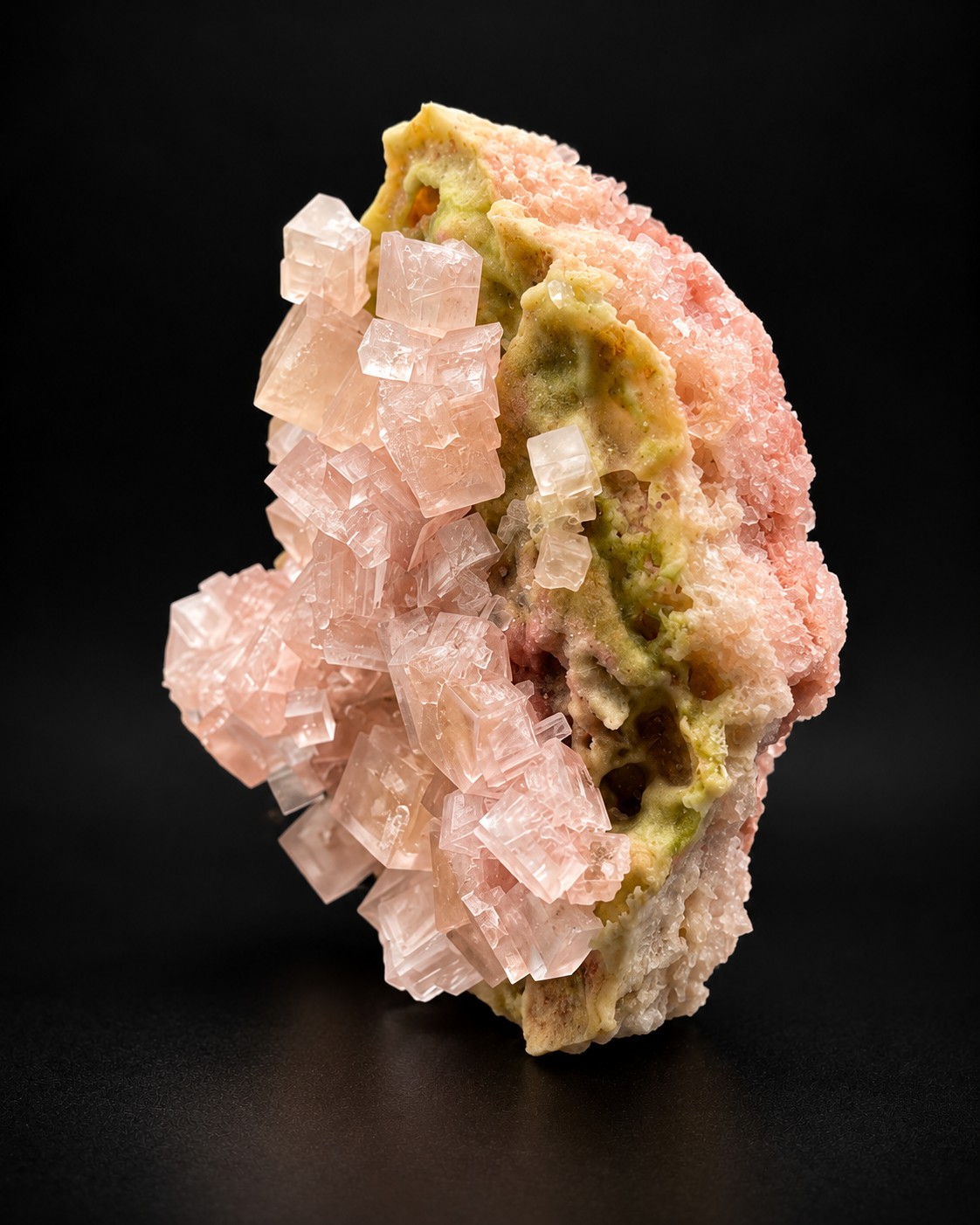 Image 5 of 6
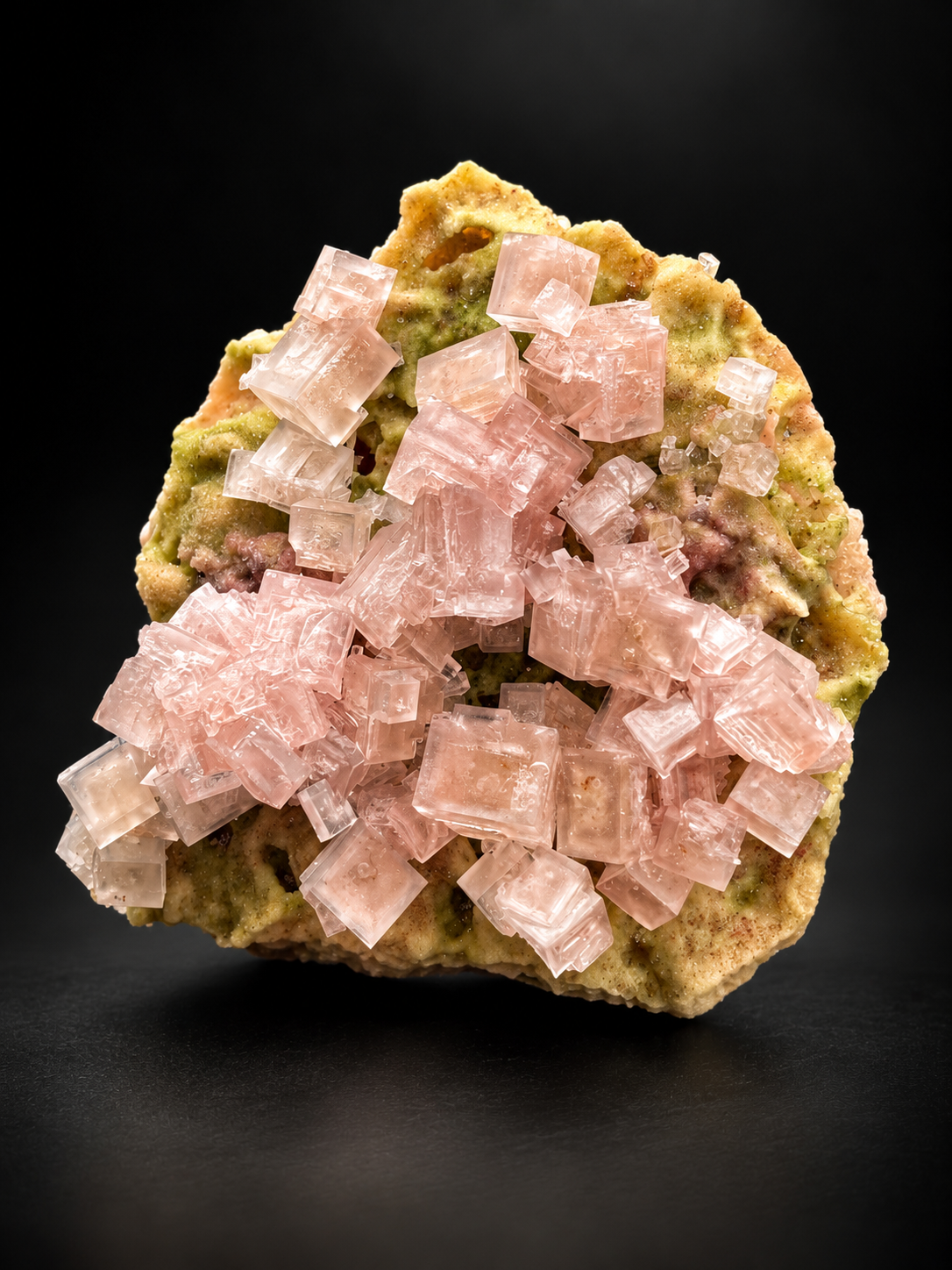 Image 6 of 6