

 Image 1 of 2
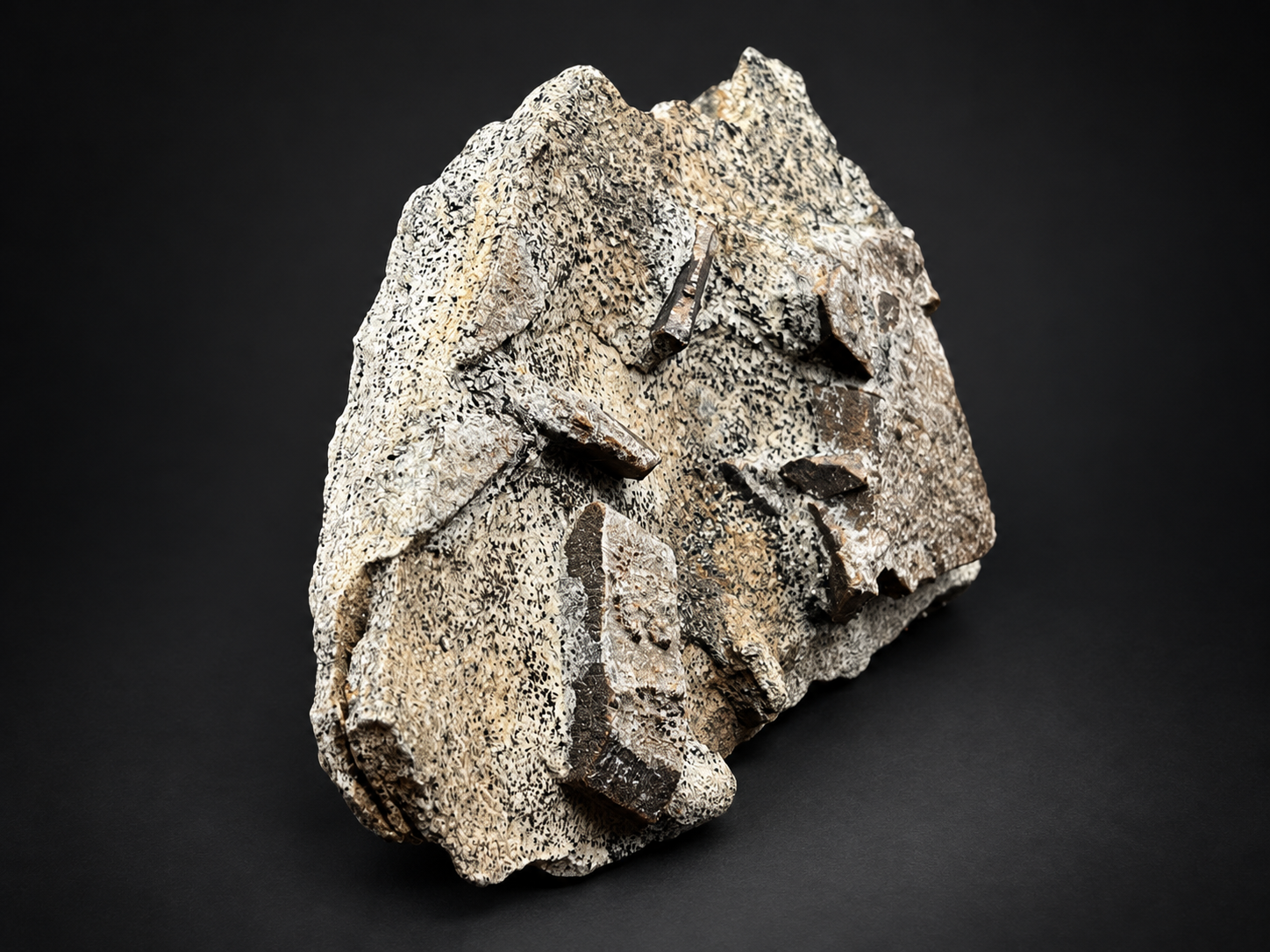 Image 2 of 2
Staurolite Crystals on Schist – Mineral Specimen
Description
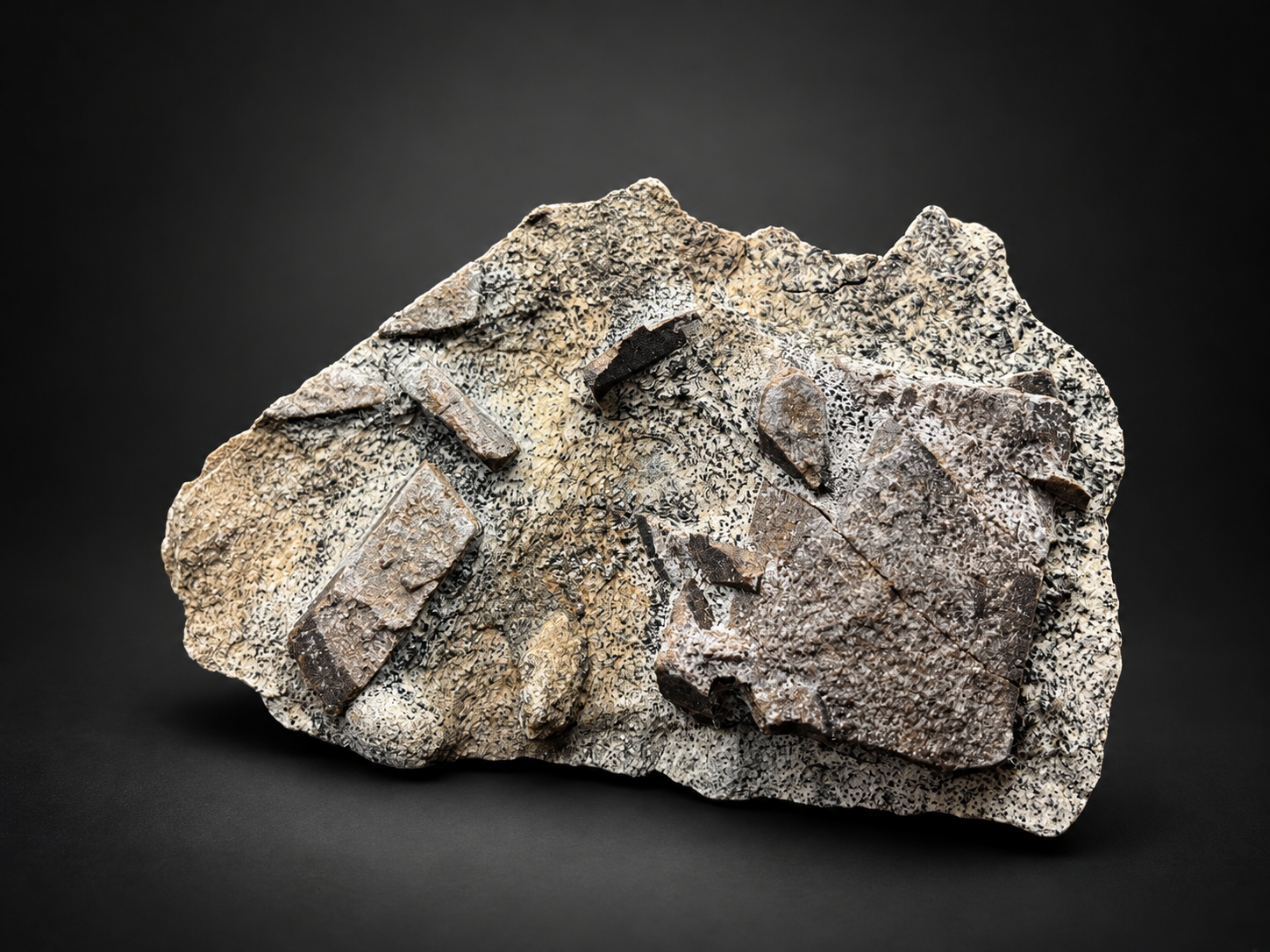
This Russian staurolite specimen features prominent reddish brown crystals embedded in a beautifully textured slab of natural schist.
Unlike minerals that crystallize inside open cavities, these staurolite crystals developed within the rock itself under tremendous heat and pressure. Their presence offers a fascinating glimpse into the powerful geological forces that transform ordinary sedimentary rocks into crystalline metamorphic formations.
Several substantial, well-defined staurolite crystals rise from the pale, intricately patterned rock, showcasing the mineral's distinctive prismatic crystal habit. Their earthy surfaces contrast beautifully with the cream, gray, and black tones of the surrounding schist, creating a specimen rich in texture, character, and geological interest.
A wonderful addition to any mineral collection, particularly for enthusiasts of unusual crystal formations and metamorphic geology.
Dimensions, Weight & Locality
Dimensions: 5.25 × 3.25 × 0.25 inches
Weight: 354 grams
Locality: Russia
Metaphysical Properties
Staurolite is traditionally associated with protection, grounding, spiritual connection, and emotional resilience.
Protection: Believed to offer energetic protection and encourage a sense of security.
Grounding: Associated with stability, balance, and maintaining a connection to the physical world.
Stress Relief: Traditionally used to encourage relaxation and emotional calm.
Spiritual Connection: Thought to support meditation, intuition, and personal growth.
Inner Strength: Associated with perseverance, courage, and overcoming challenges.
These associations are based on traditional metaphysical beliefs rather than scientifically established effects.
Collector's Notes
Why Is Staurolite Important to Geologists?
Staurolite is considered an index mineral, meaning its presence provides clues about the temperature and pressure conditions a rock experienced during metamorphism.
Geologists use minerals such as staurolite to help reconstruct the geological history of mountain-building events and ancient continental collisions.
In a sense, every staurolite-bearing schist specimen is a record of Earth's extraordinary geological past!
How Does Staurolite Form?
Staurolite is a metamorphic mineral that develops when aluminum-rich rocks are subjected to intense heat and pressure deep within Earth's crust.
As buried sedimentary rocks undergo metamorphism, their original minerals react and reorganize into new crystalline structures. Under suitable conditions, staurolite begins growing within the surrounding rock, often developing large, recognizable crystals while the host transforms into schist.
These crystals can remain embedded in the schist for millions of years until geological uplift and erosion eventually expose them.
Interesting Fact: The Famous Fairy Crosses
Staurolite crystals are affectionately known as "fairy crosses" because of their naturally crossed formations.
According to Appalachian folklore, fairies wept upon hearing of Christ's crucifixion, and their tears crystallized into tiny stone crosses.
These formations became treasured good-luck charms and symbols of protection.
The mineral's name reflects this distinctive appearance. Staurolite comes from the Greek words stauros, meaning cross, and lithos, meaning stone.
Through a process called crystal twinning, two staurolite crystals can grow together at approximately 60° or 90°, creating natural X-shaped or cross-shaped formations.
These formations are affectionately called "fairy crosses" and have inspired folklore for centuries. They were traditionally considered symbols of protection and good fortune.
Care & Display
Staurolite is a relatively hard mineral, but its schist host rock may contain delicate layers and mineral grains. Handle the specimen carefully, avoid unnecessary moisture, and use a soft, dry brush for gentle cleaning when needed.
Highlights
Natural staurolite crystals on schist from Russia
Multiple prominent prismatic crystals
Beautifully textured, naturally patterned metamorphic host rock
Attractive cream, gray, and earthy-brown color contrast
Excellent example of crystal growth within metamorphic rock
Distinctive three-dimensional crystal formations
Fascinating geological history associated with heat and pressure
354-gram specimen suitable for display or educational collections
Mineralogy
Staurolite
Chemical Formula: Fe₂Al₉Si₄O₂₃(OH) — idealized iron-aluminum silicate hydroxide
Mineral Class: Silicates (Nesosilicates)
Crystal System: Monoclinic
Mohs Hardness: 7–7.5
Color: Reddish-brown, dark brown, or brownish-black
Luster: Subvitreous to resinous; sometimes dull on weathered surfaces
Streak: White to grayish
Cleavage: Distinct along one crystallographic direction
Specific Gravity: Approximately 3.74–3.83
Transparency: Translucent in thin fragments to opaque
Crystal Habit: Typically short to elongated prismatic crystals, sometimes forming distinctive penetration twins
Distinctive Properties: Naturally occurring 60° and 90° crystal twinning, high hardness, and strong association with metamorphic rocks
Host Rock: Schist
Schist is a foliated metamorphic rock formed when existing rocks undergo substantial heat and pressure. Its characteristic layered or aligned mineral texture develops as minerals recrystallize during metamorphism.
Staurolite-bearing schists are particularly interesting because their large crystals can preserve evidence of the conditions under which the surrounding rock formed.