Description
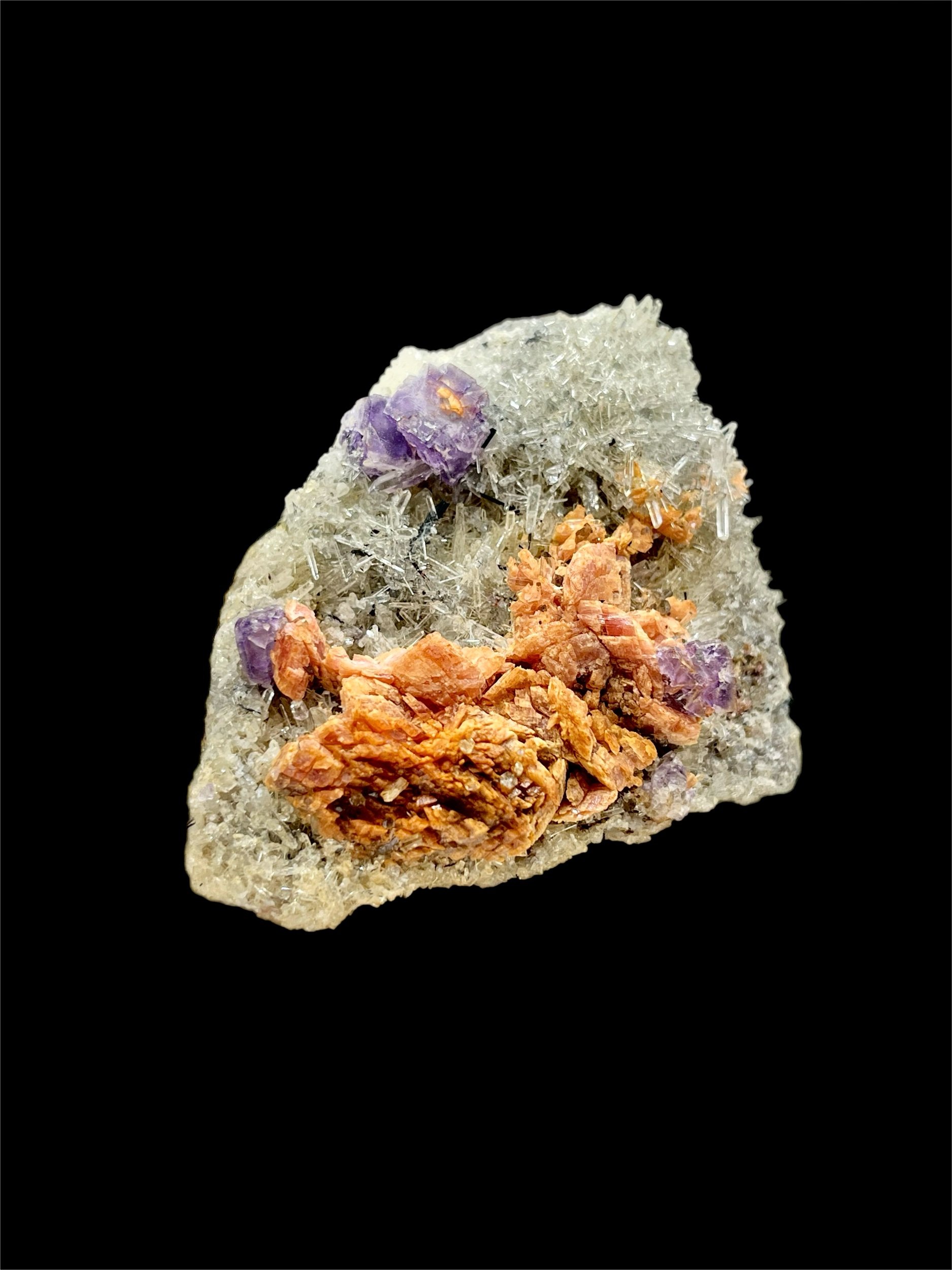
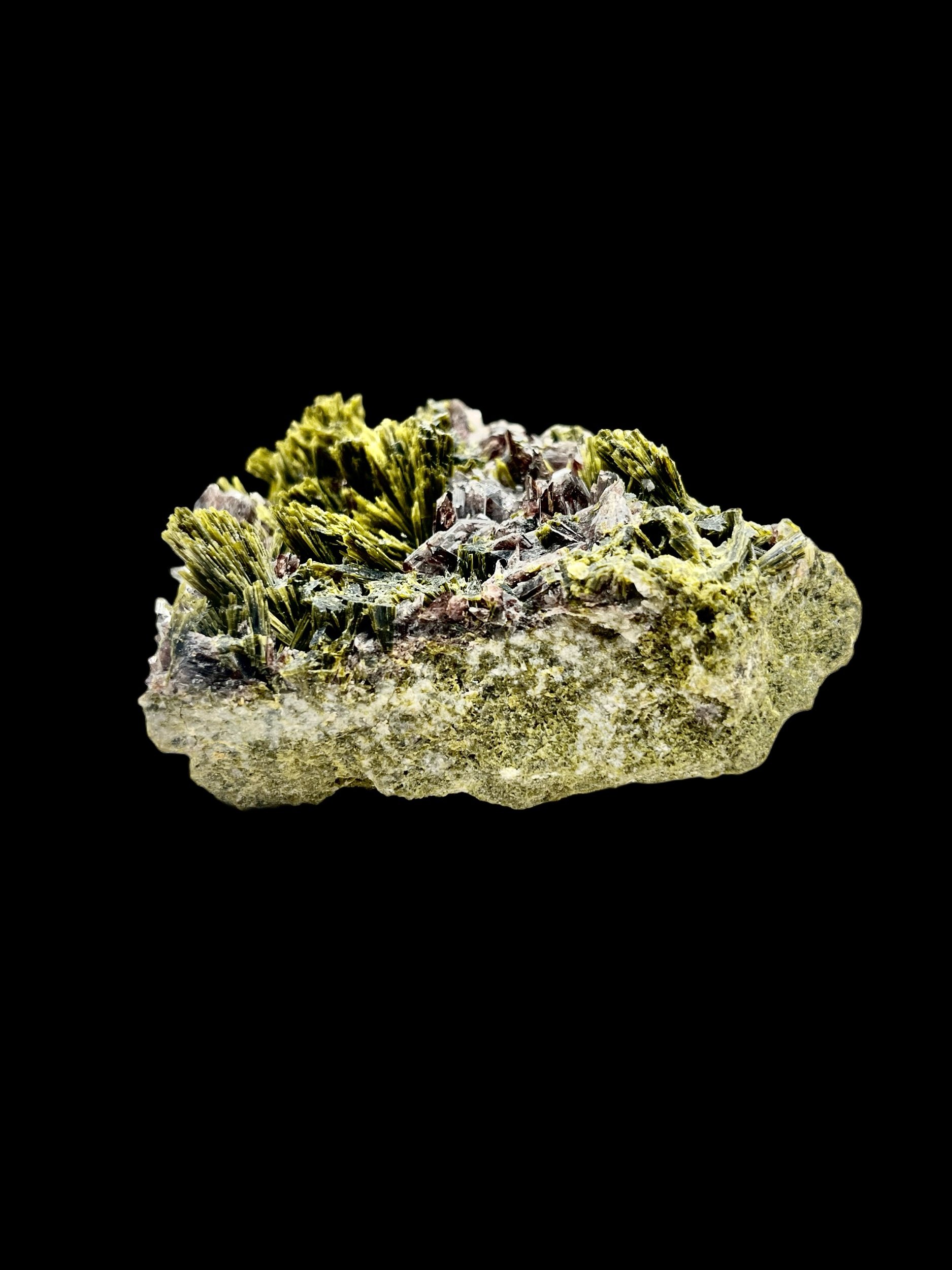
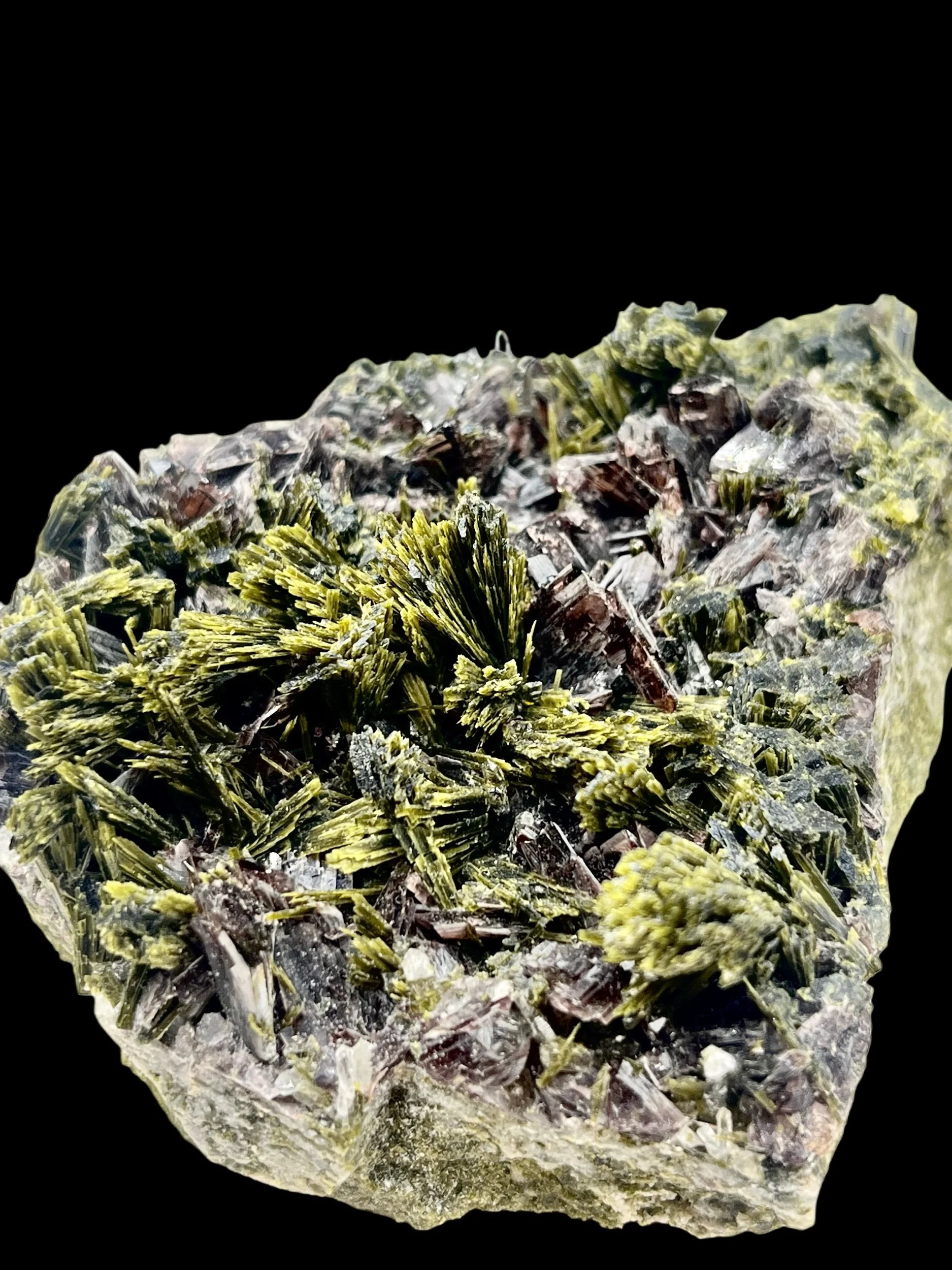
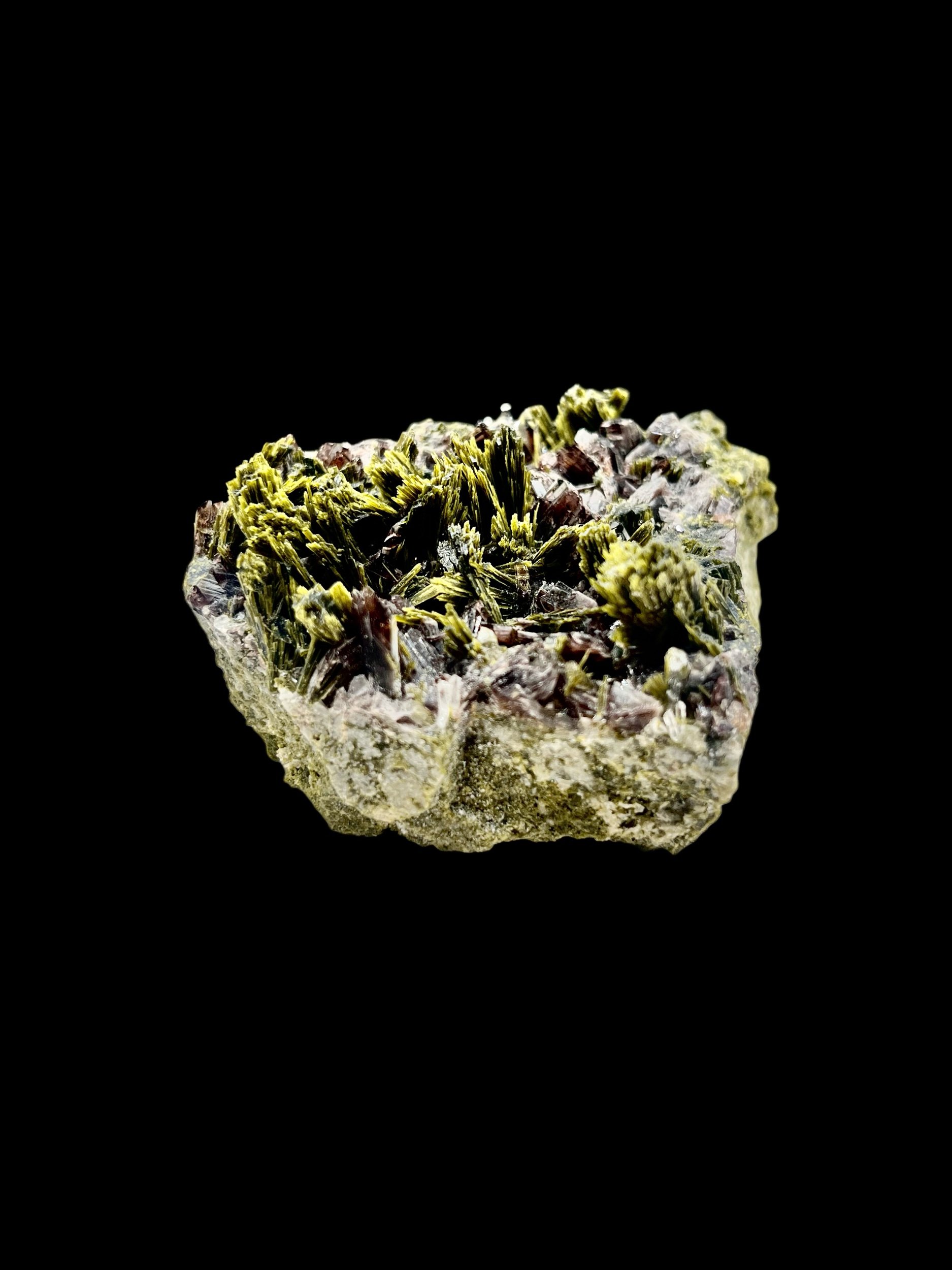
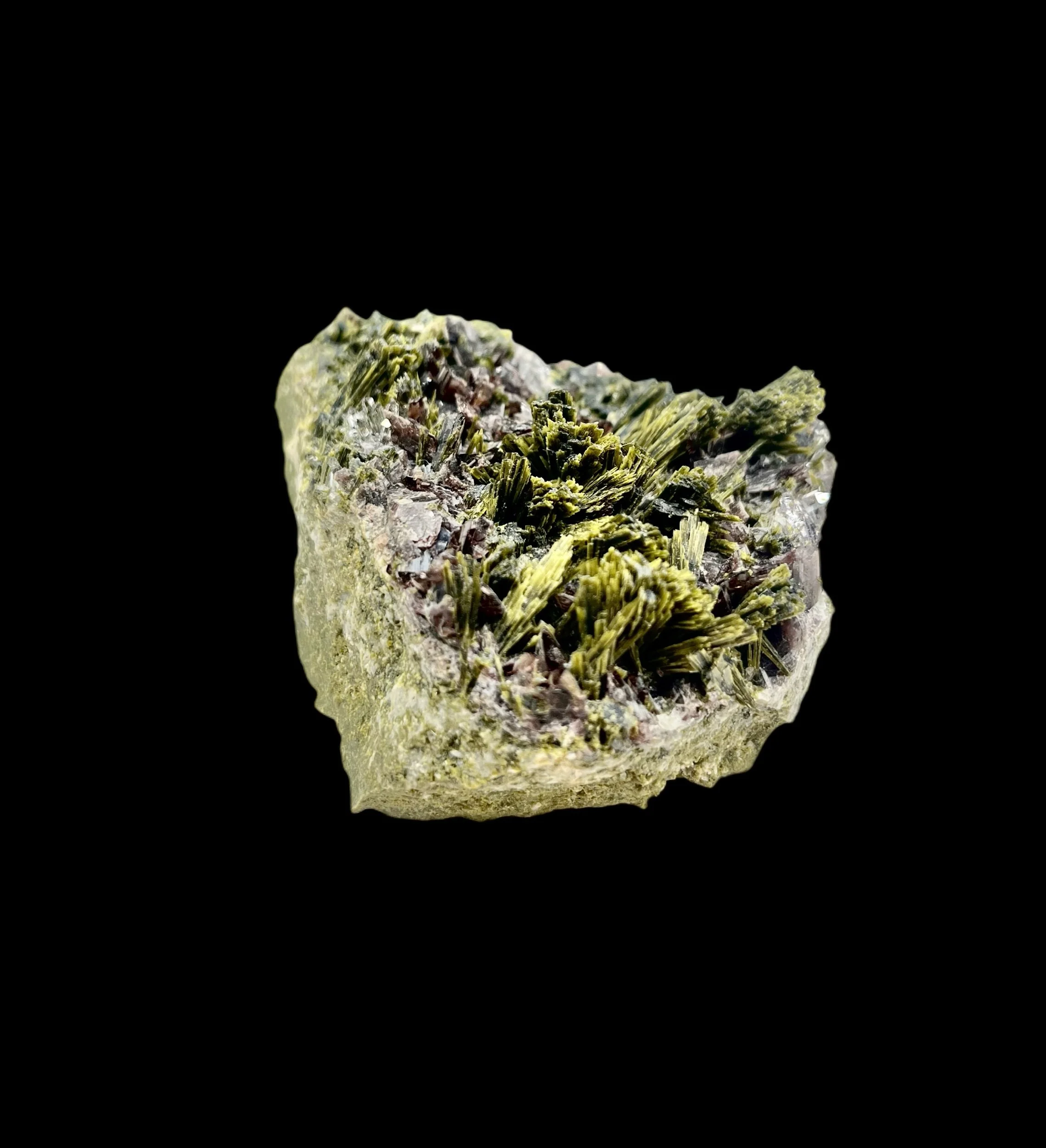
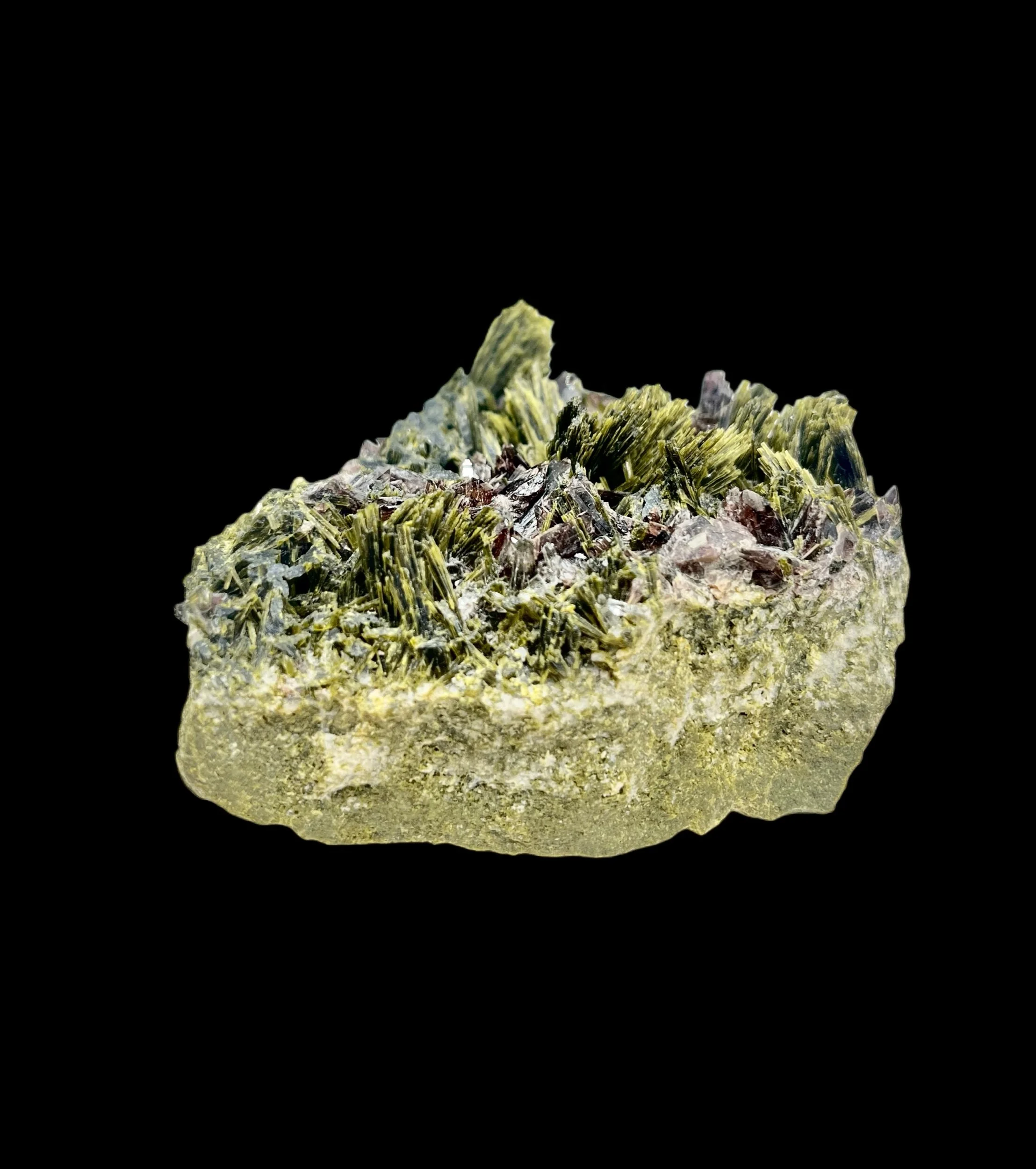
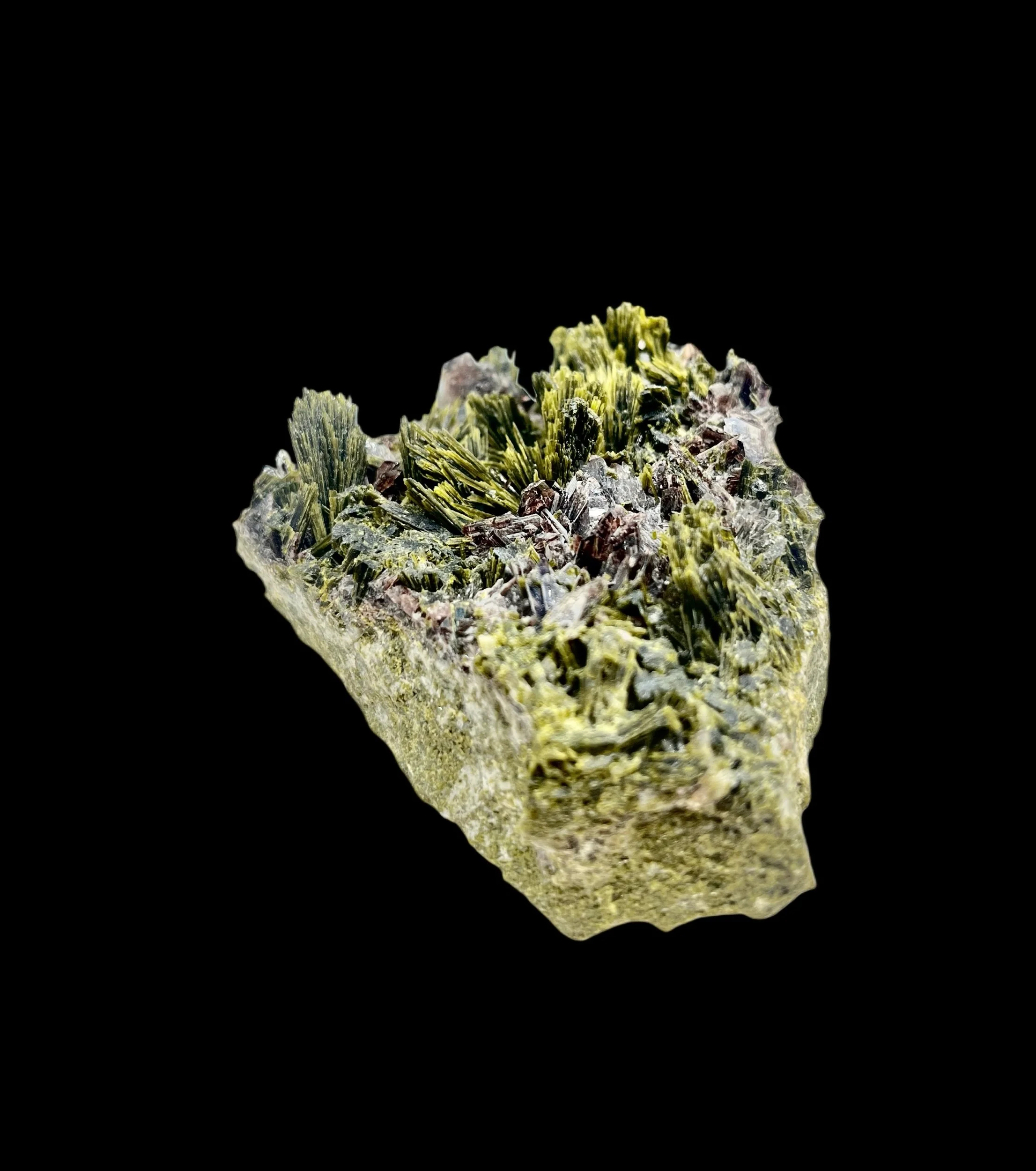
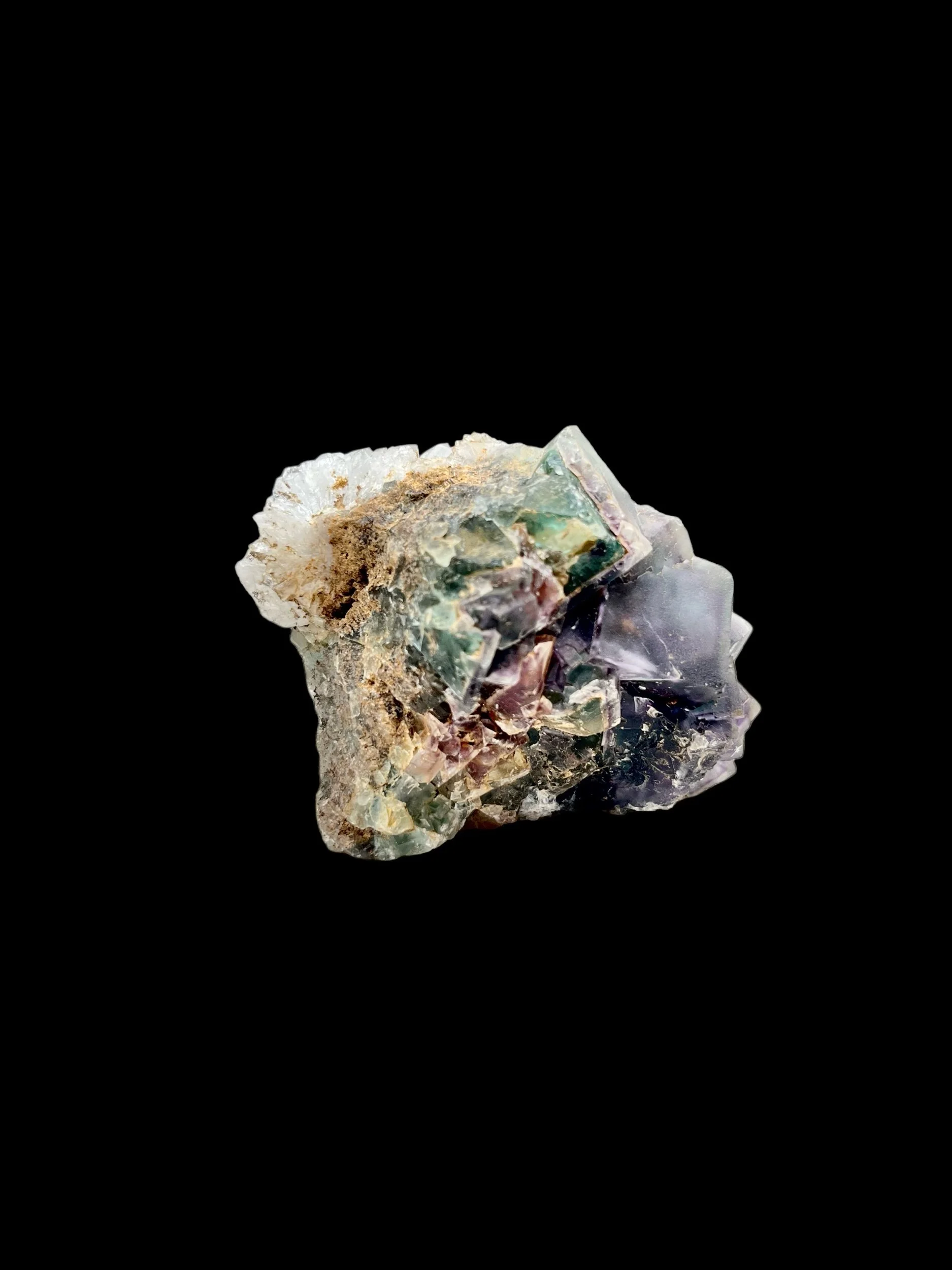
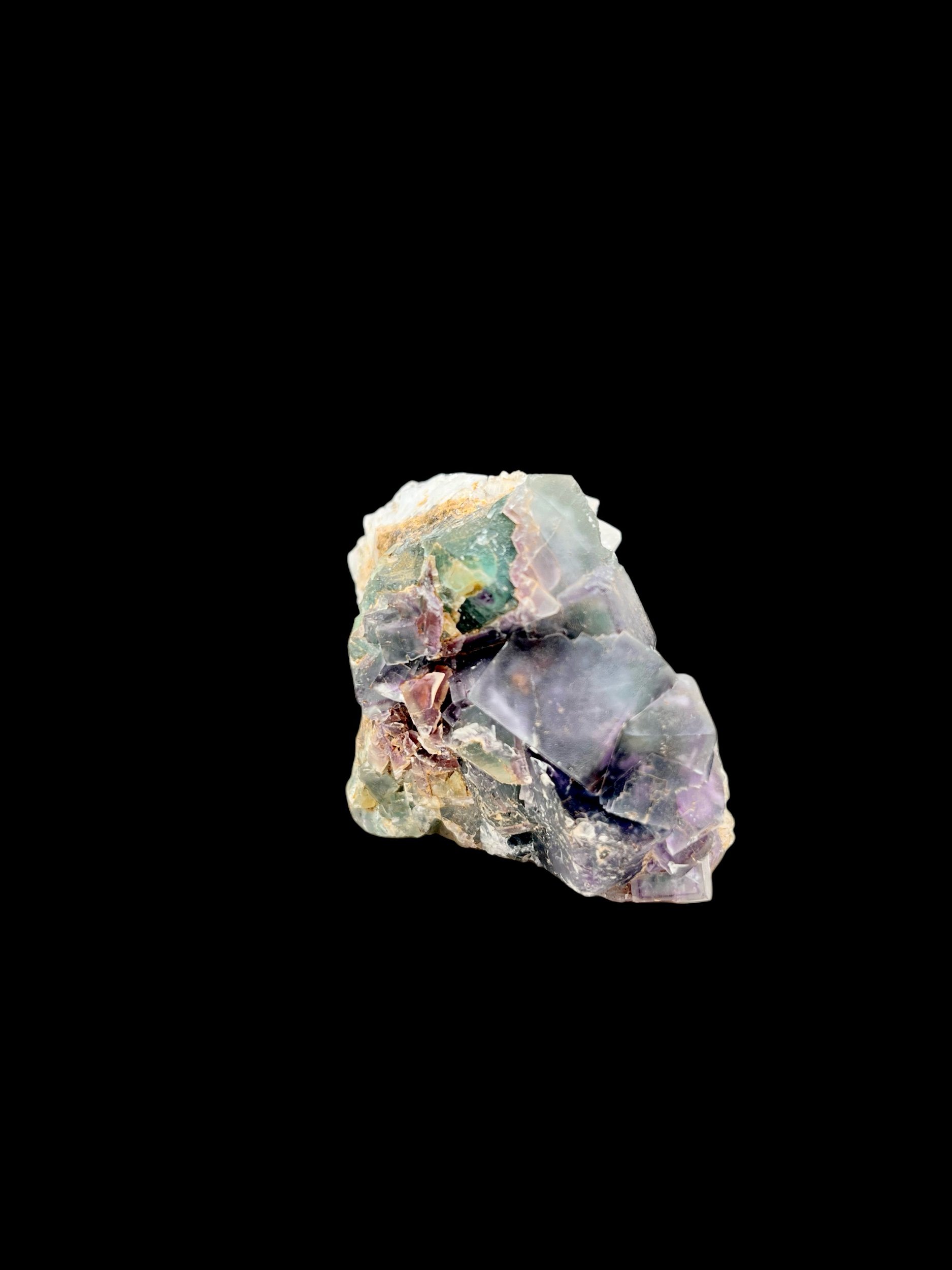
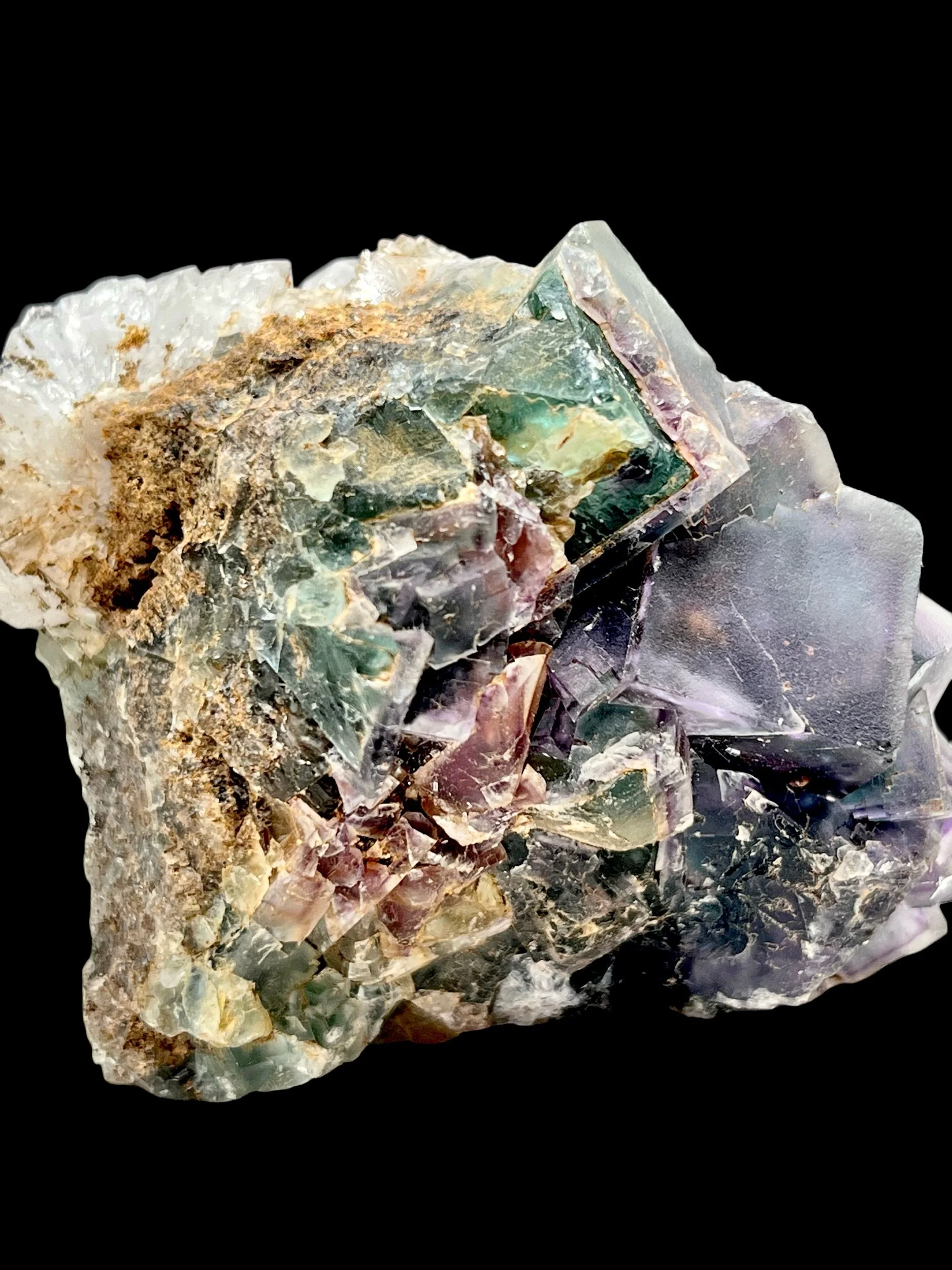
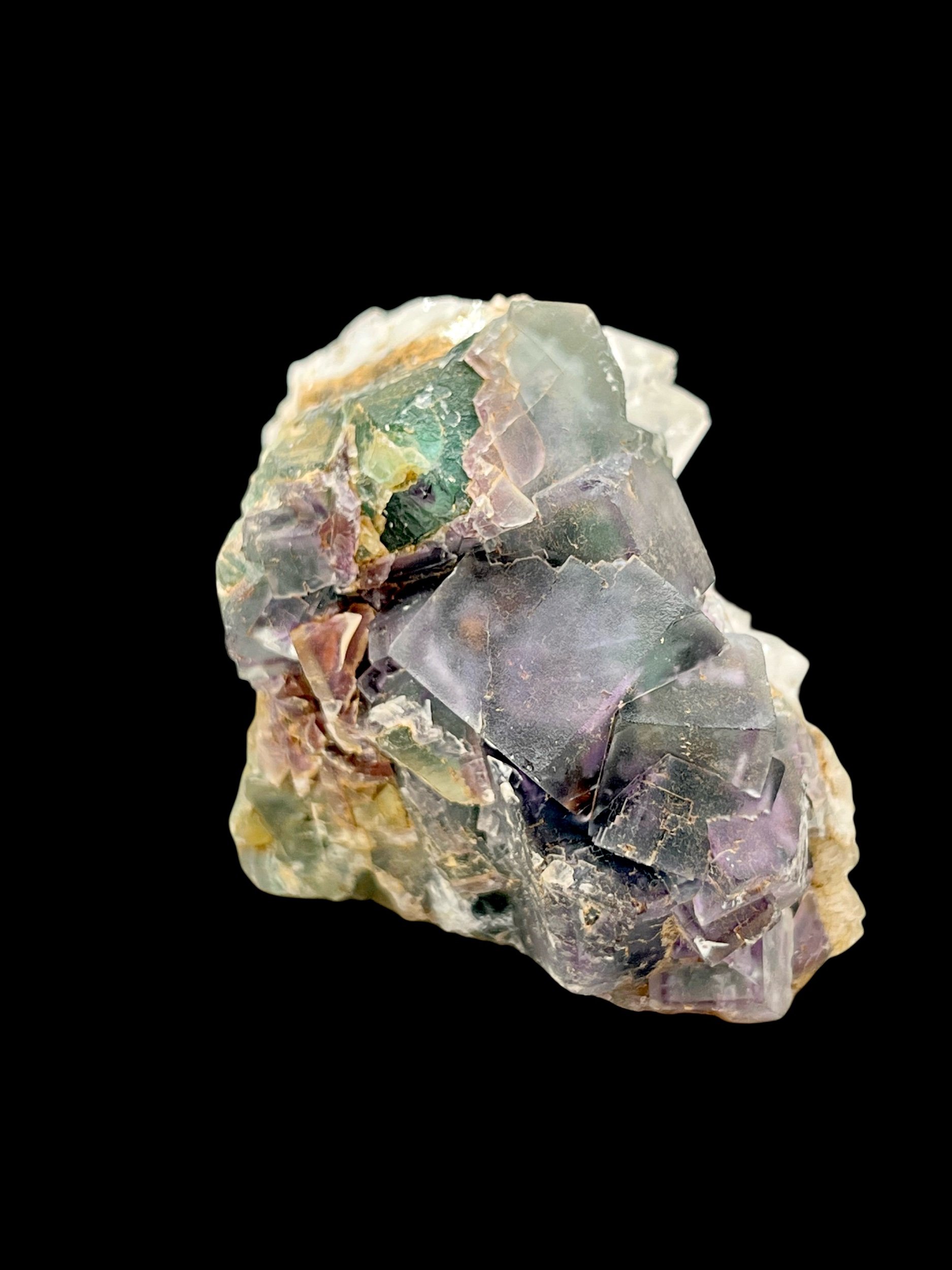
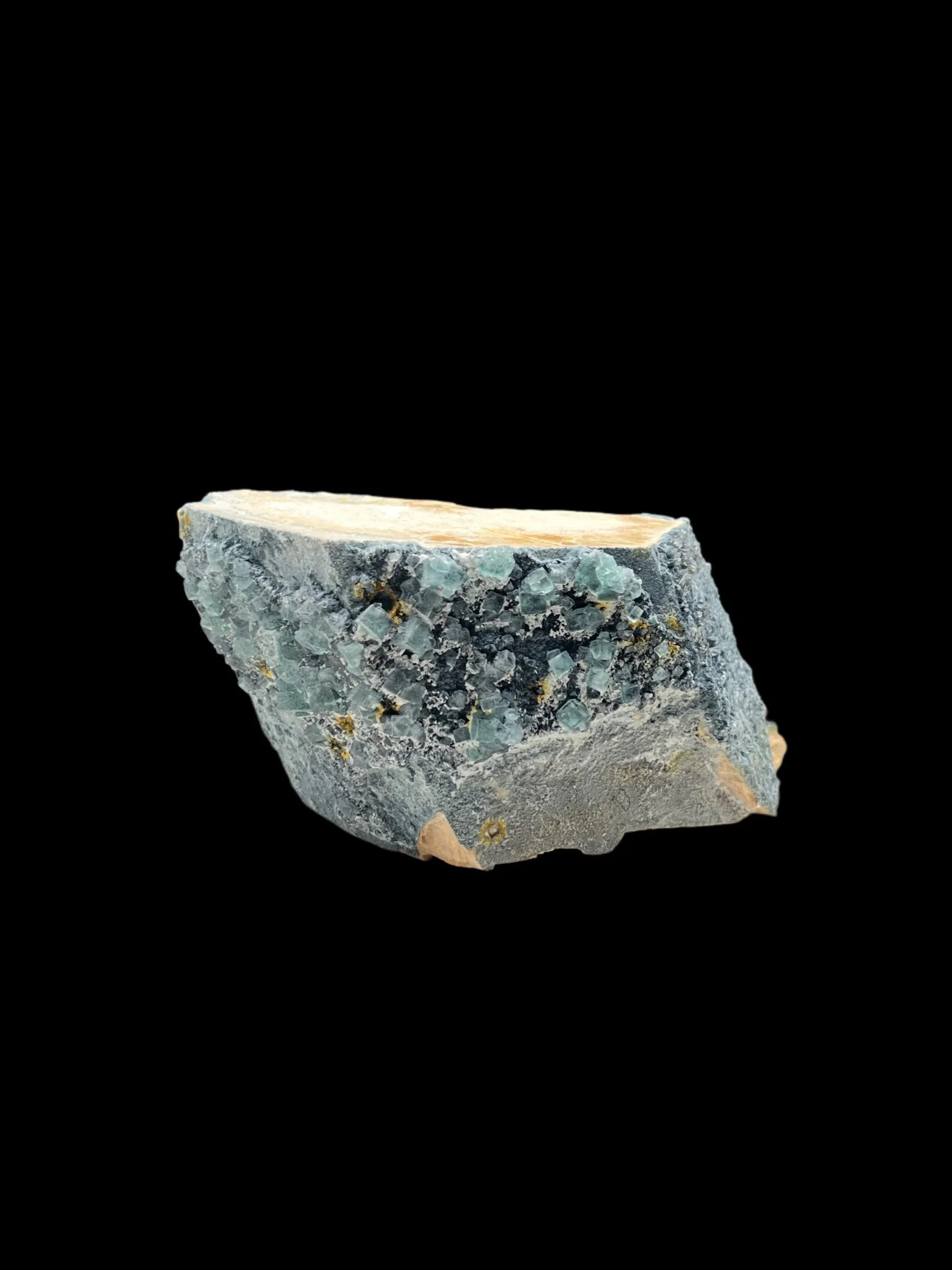
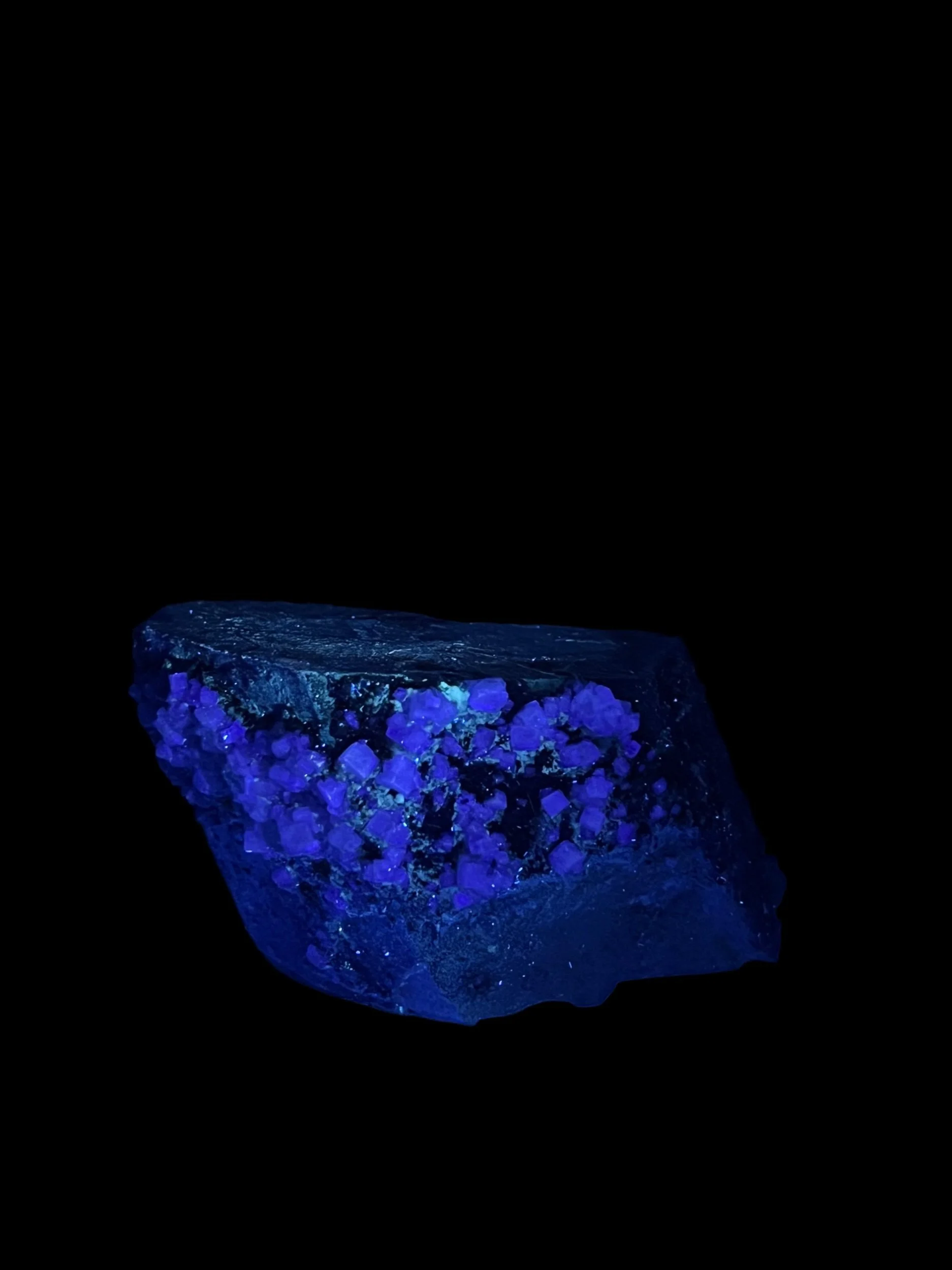
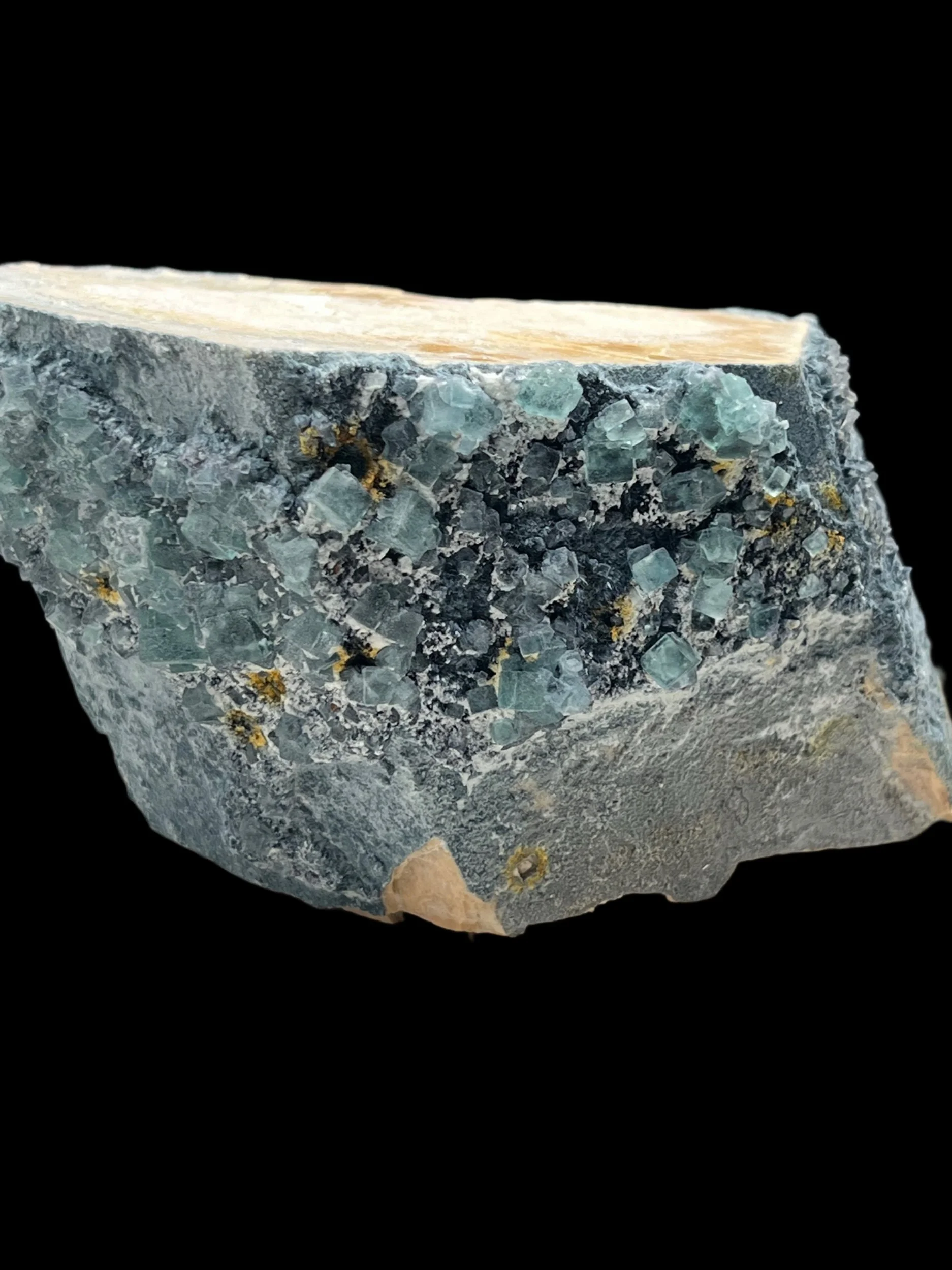
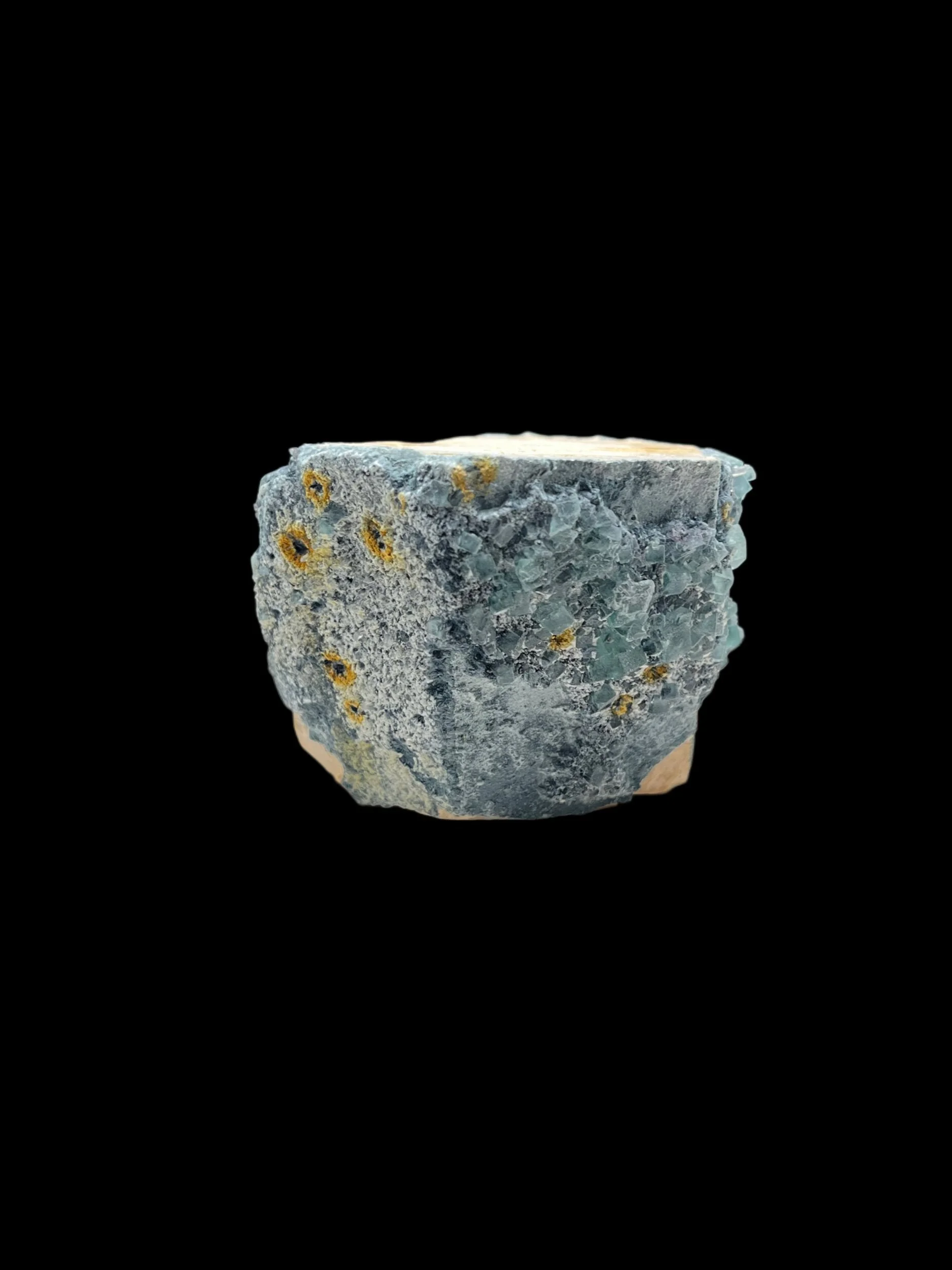
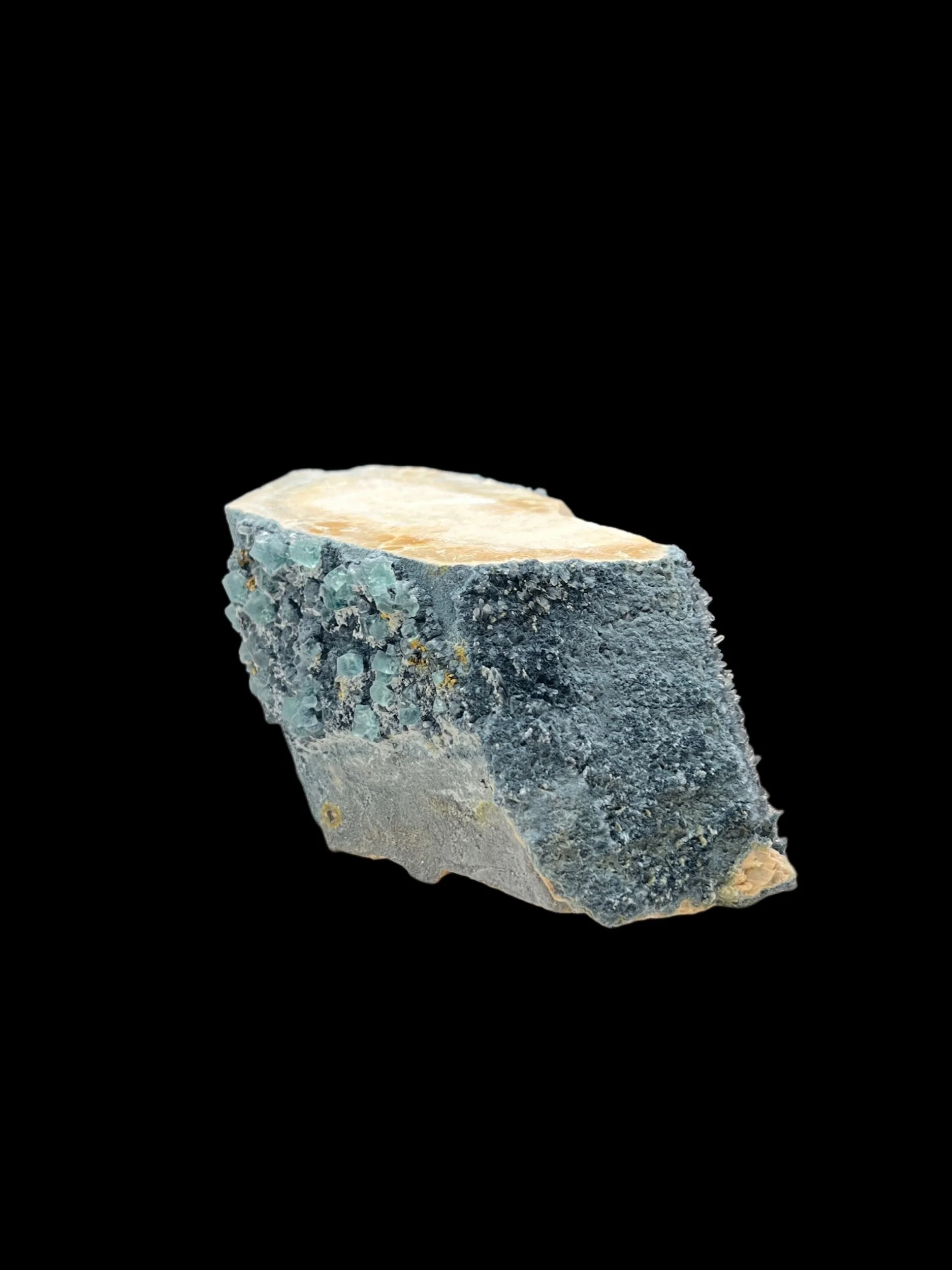
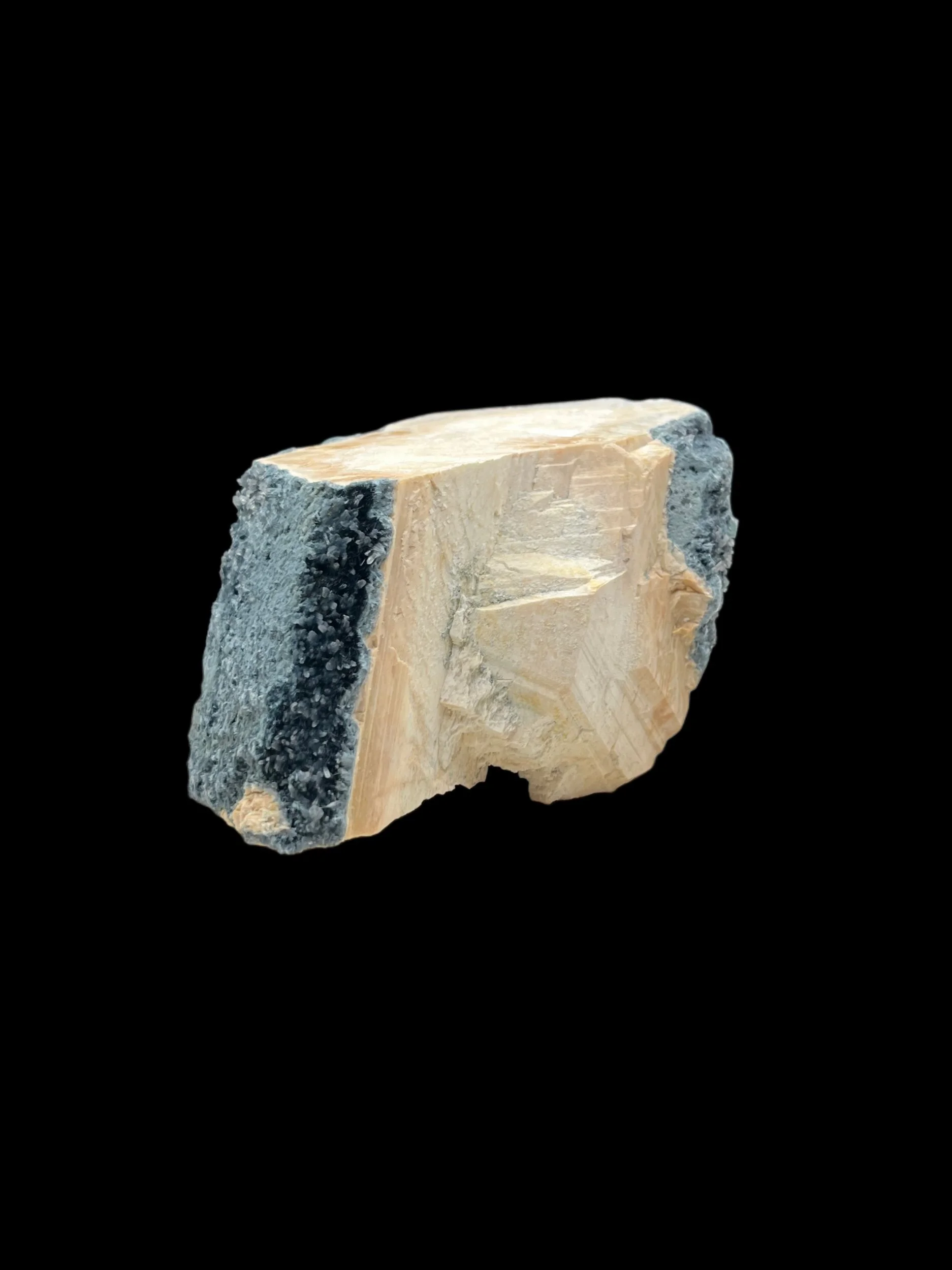
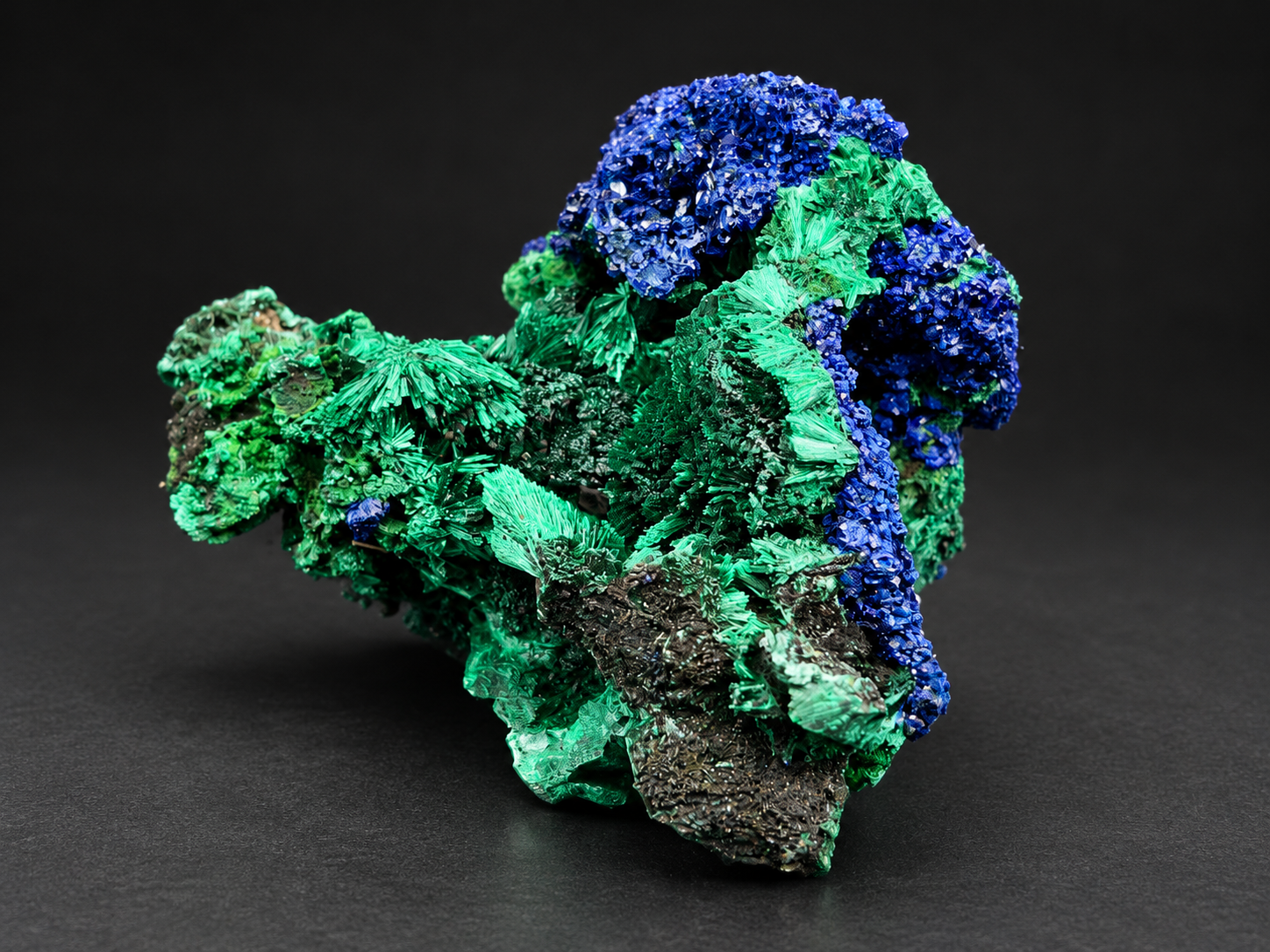
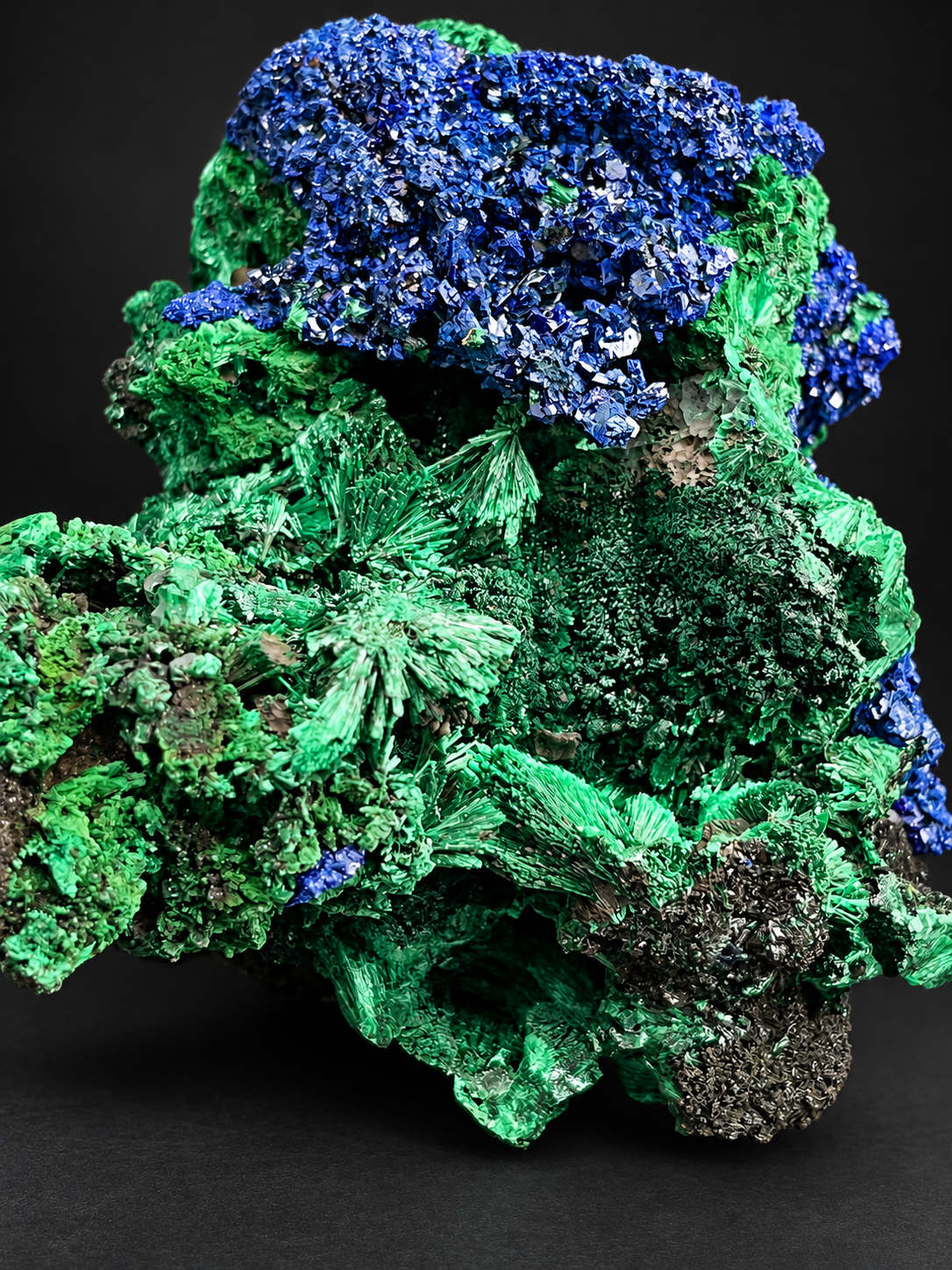
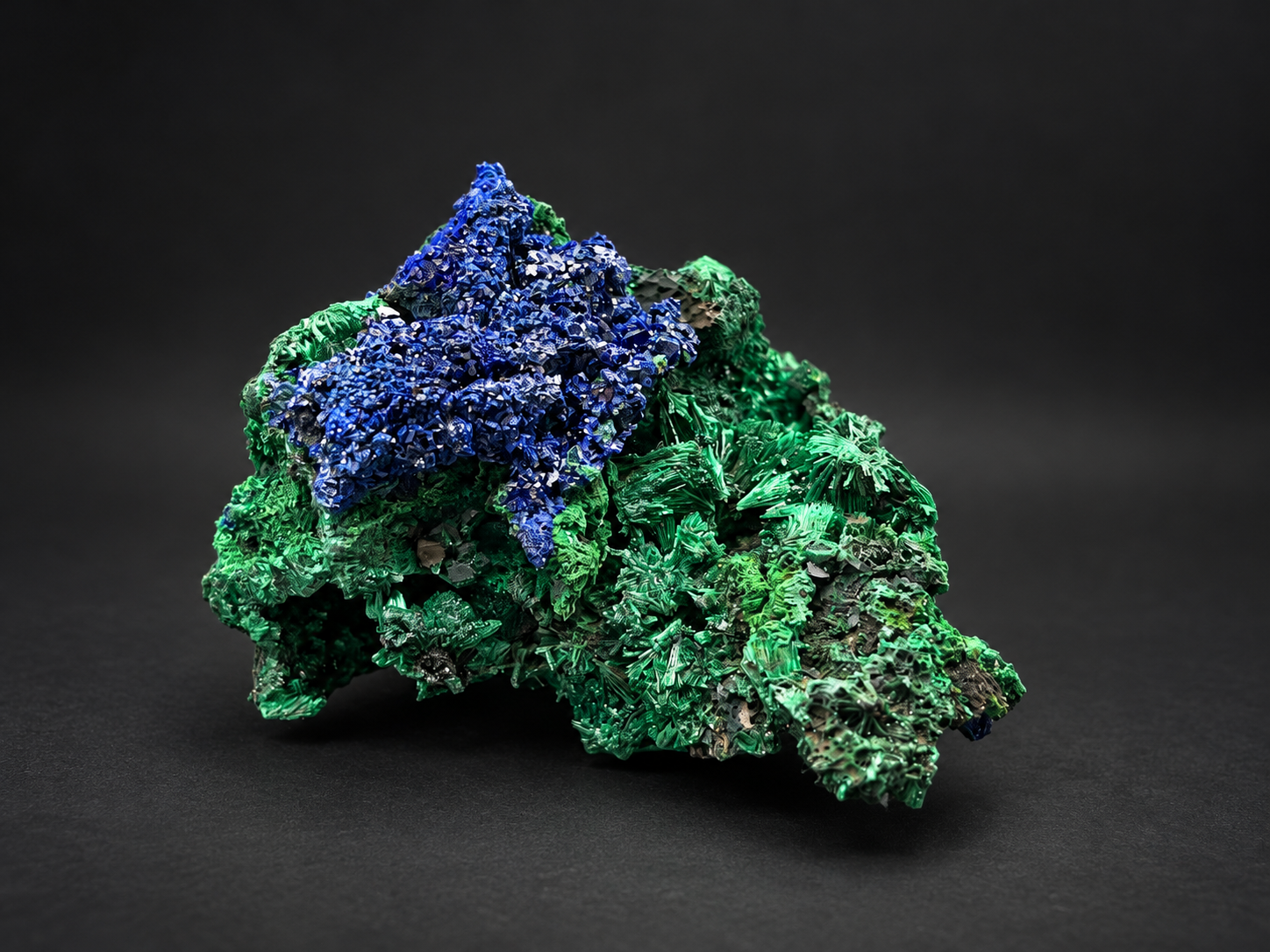
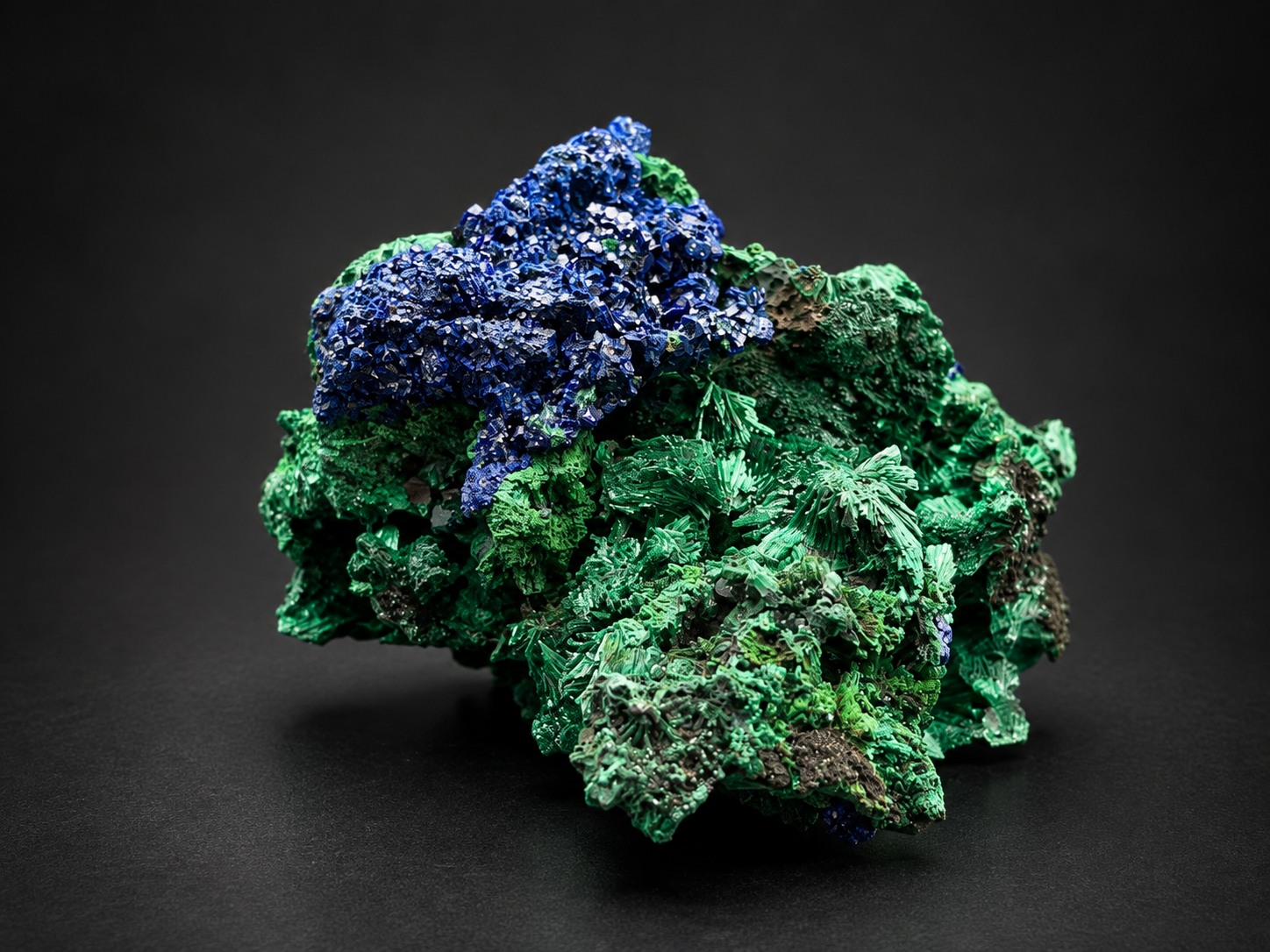
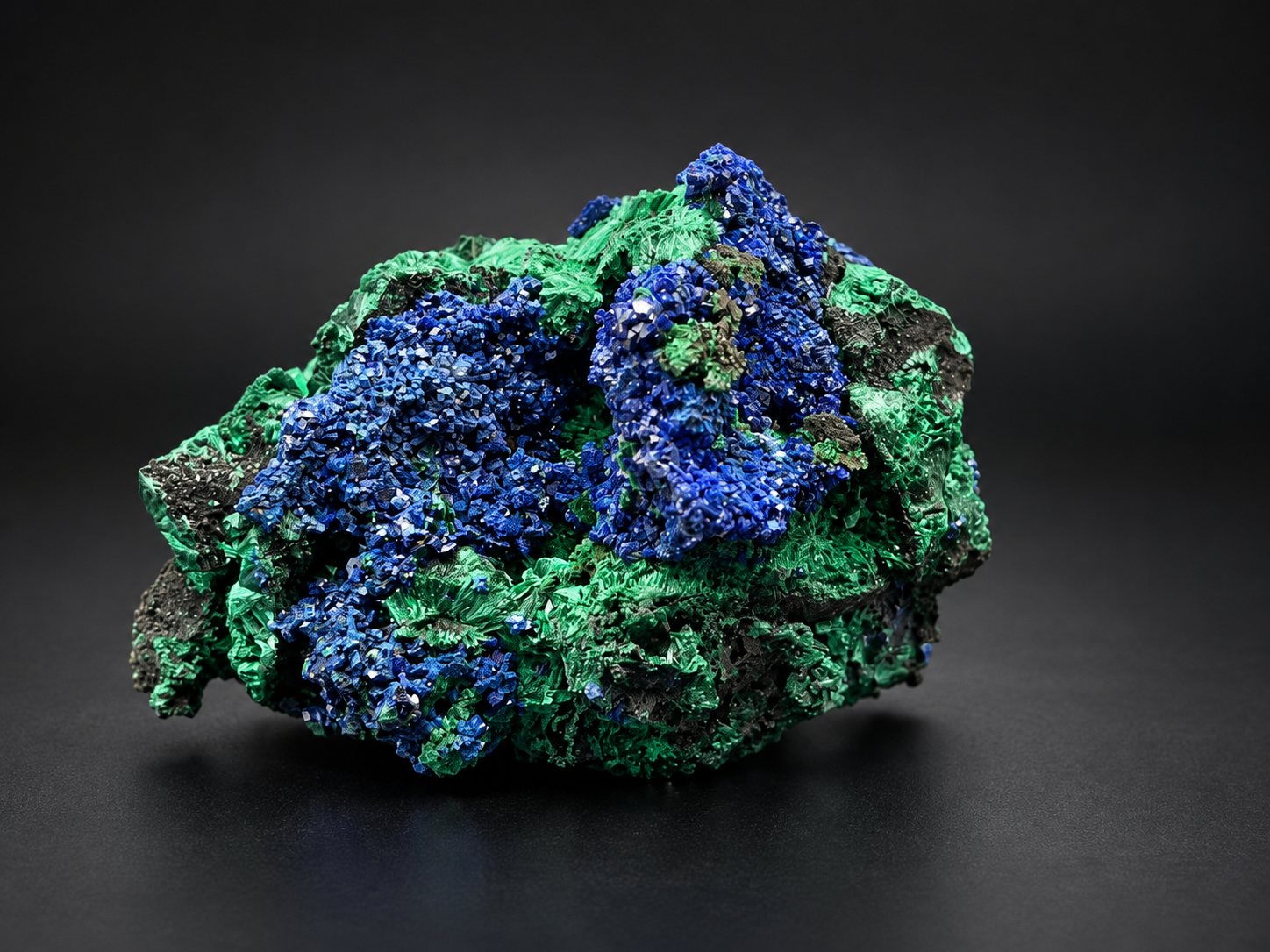
A captivating fine mineral specimen from the renowned Liufengshan Mine in Anhui Province, China, this Azurite with Malachite displays an extraordinary combination of richly saturated blue crystals, contrasting green mineral formations, and rugged natural textures.
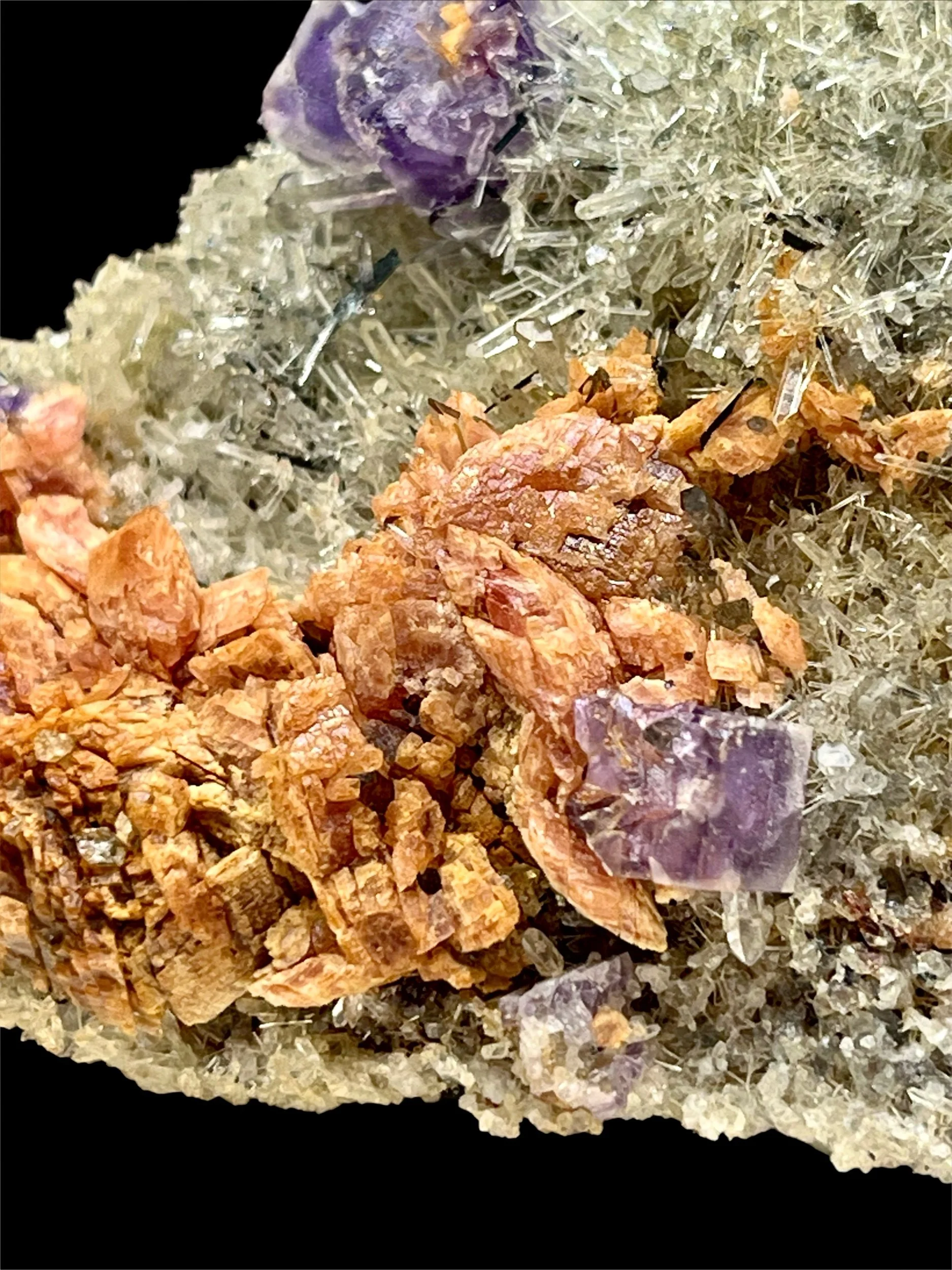
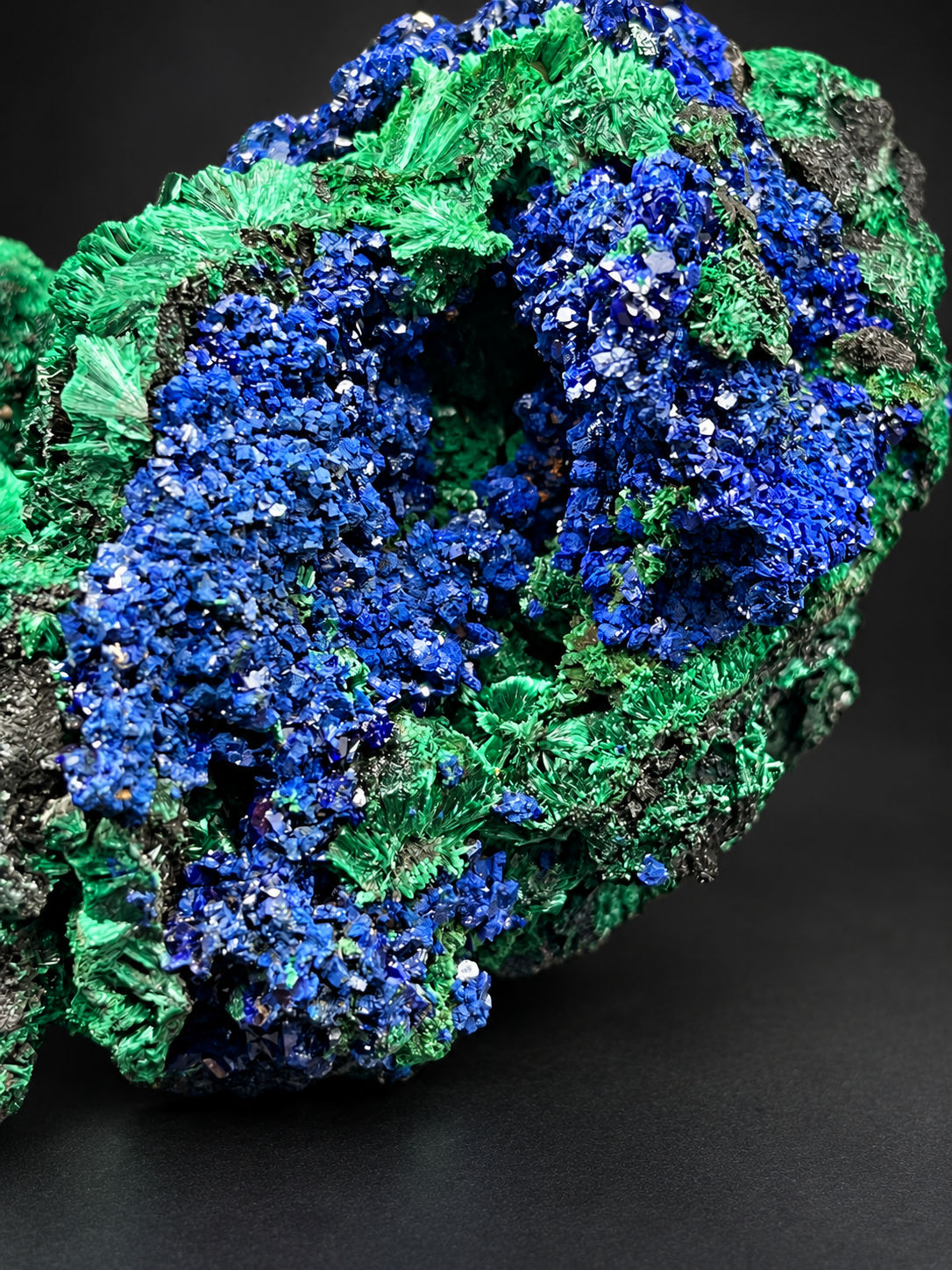
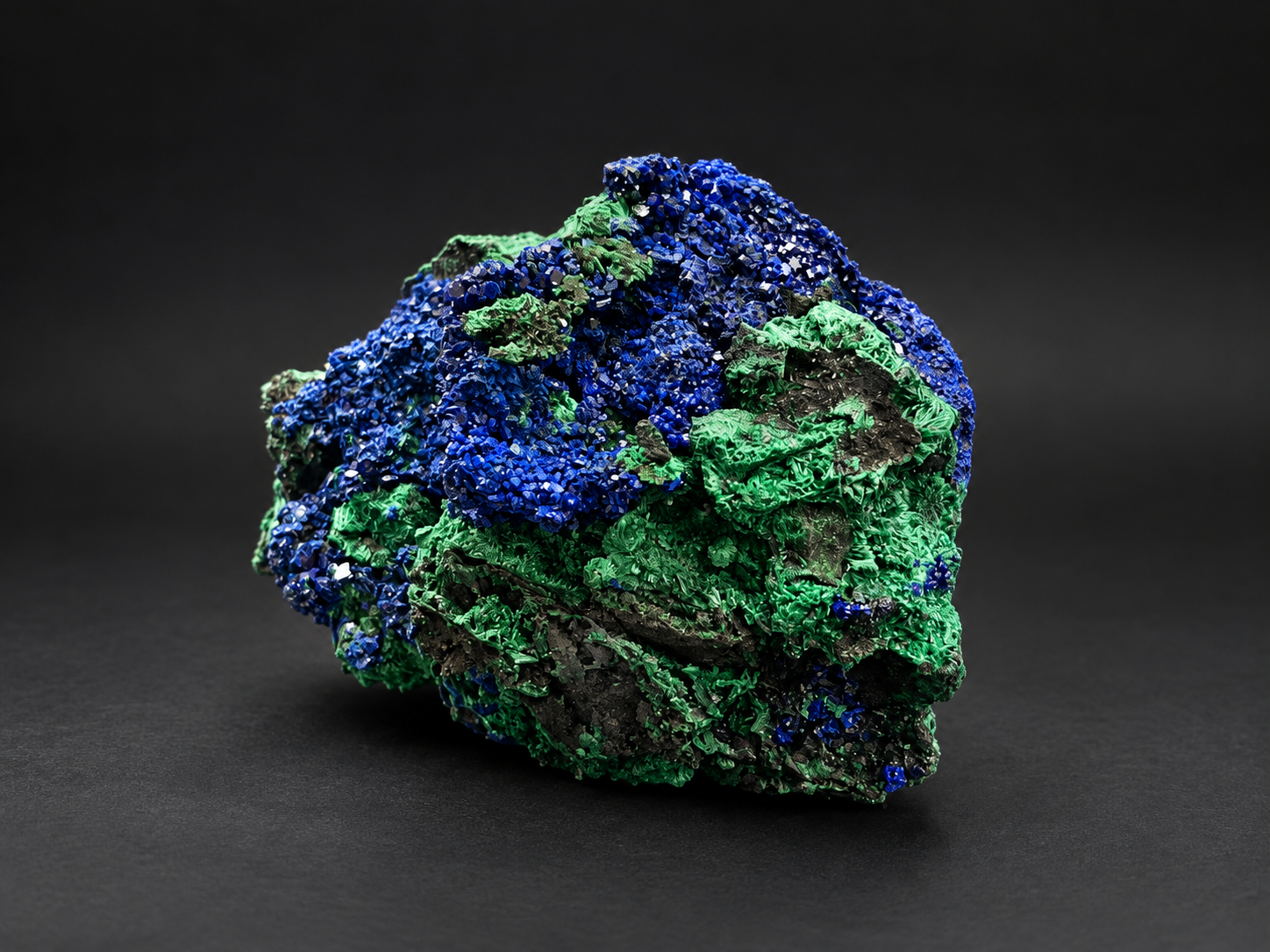
The specimen is dominated by striking clusters of deep royal-blue azurite crystals, including prominent, sharply defined bladed and tabular formations with brilliant vitreous luster. Their overlapping crystal faces create a complex, layered appearance, reflecting light beautifully and revealing subtle variations between electric blue and deep indigo.
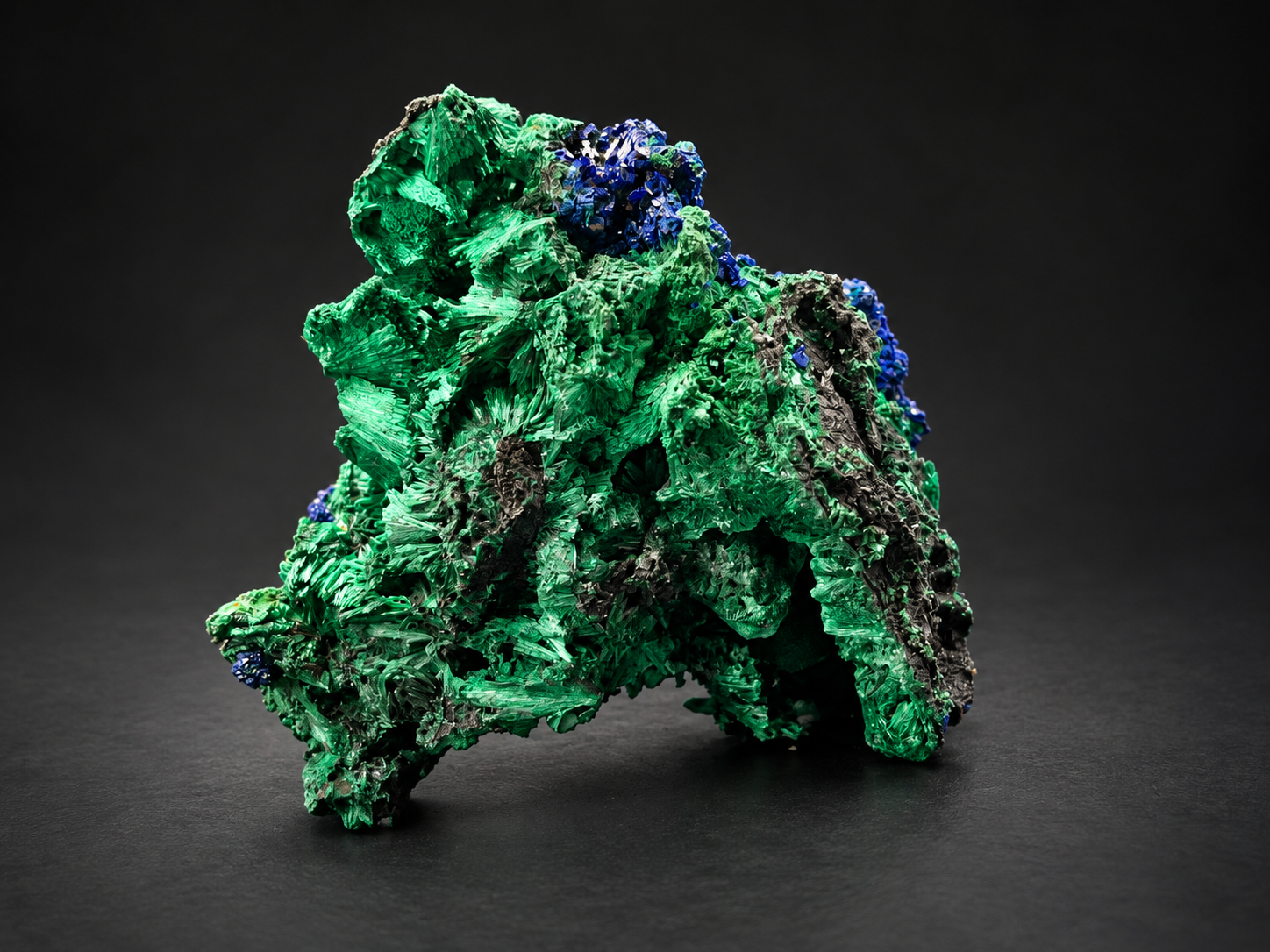
Nestled among the azurite are distinctive emerald-green malachite aggregates. These rounded, irregular formations feature intricate surface textures and earthy details, providing a beautiful contrast to the smooth, reflective surfaces of the surrounding azurite.
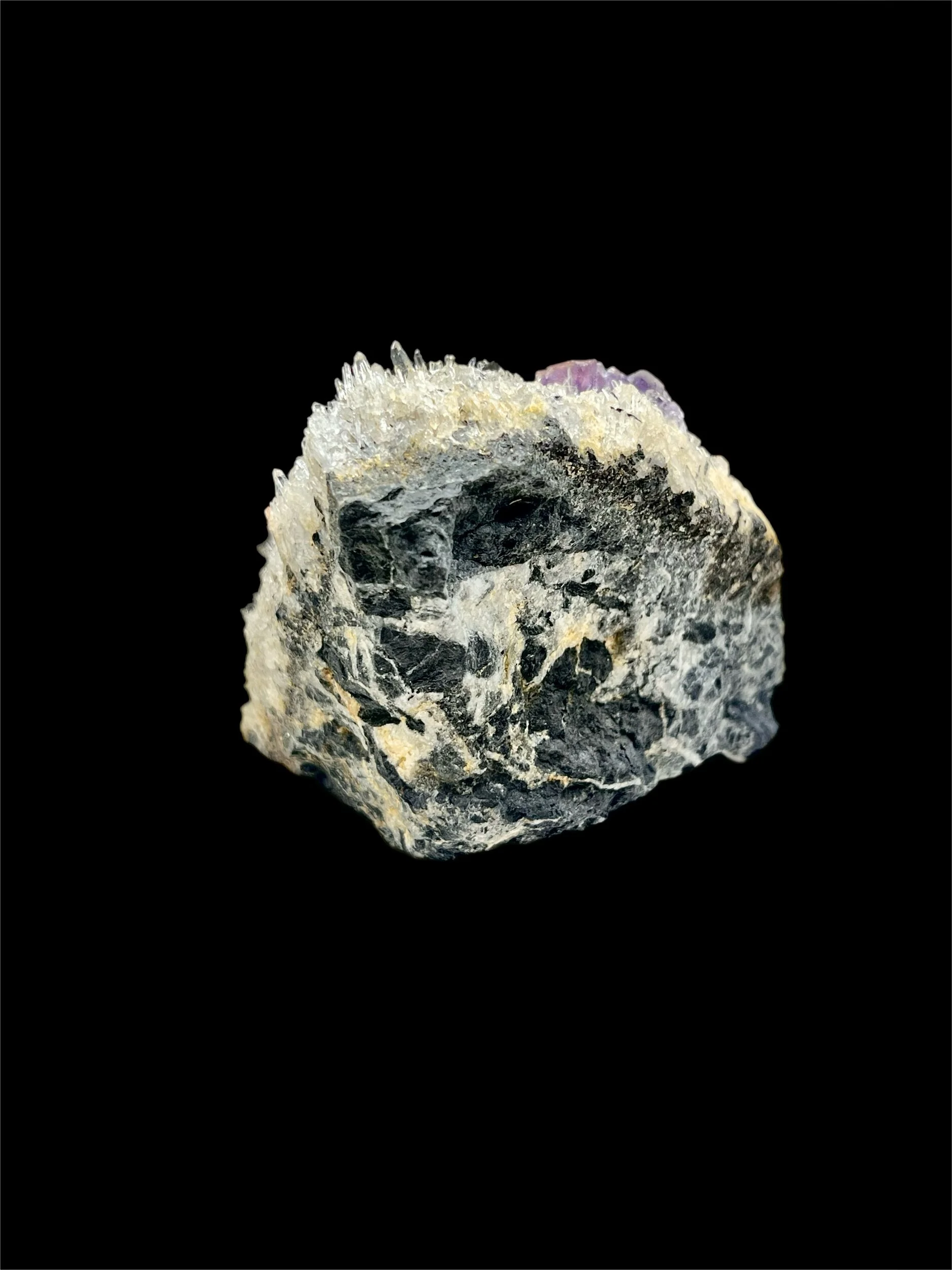
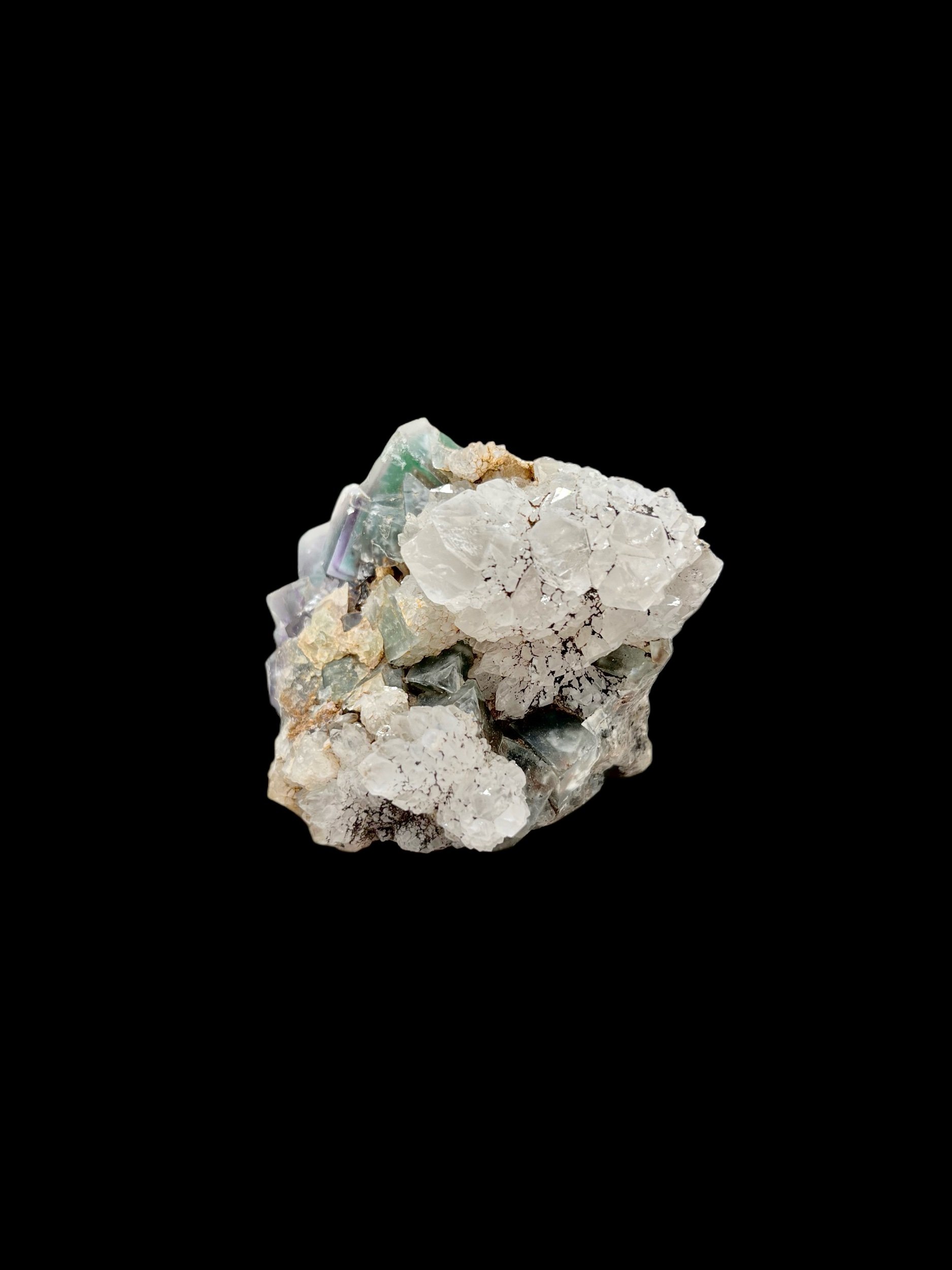
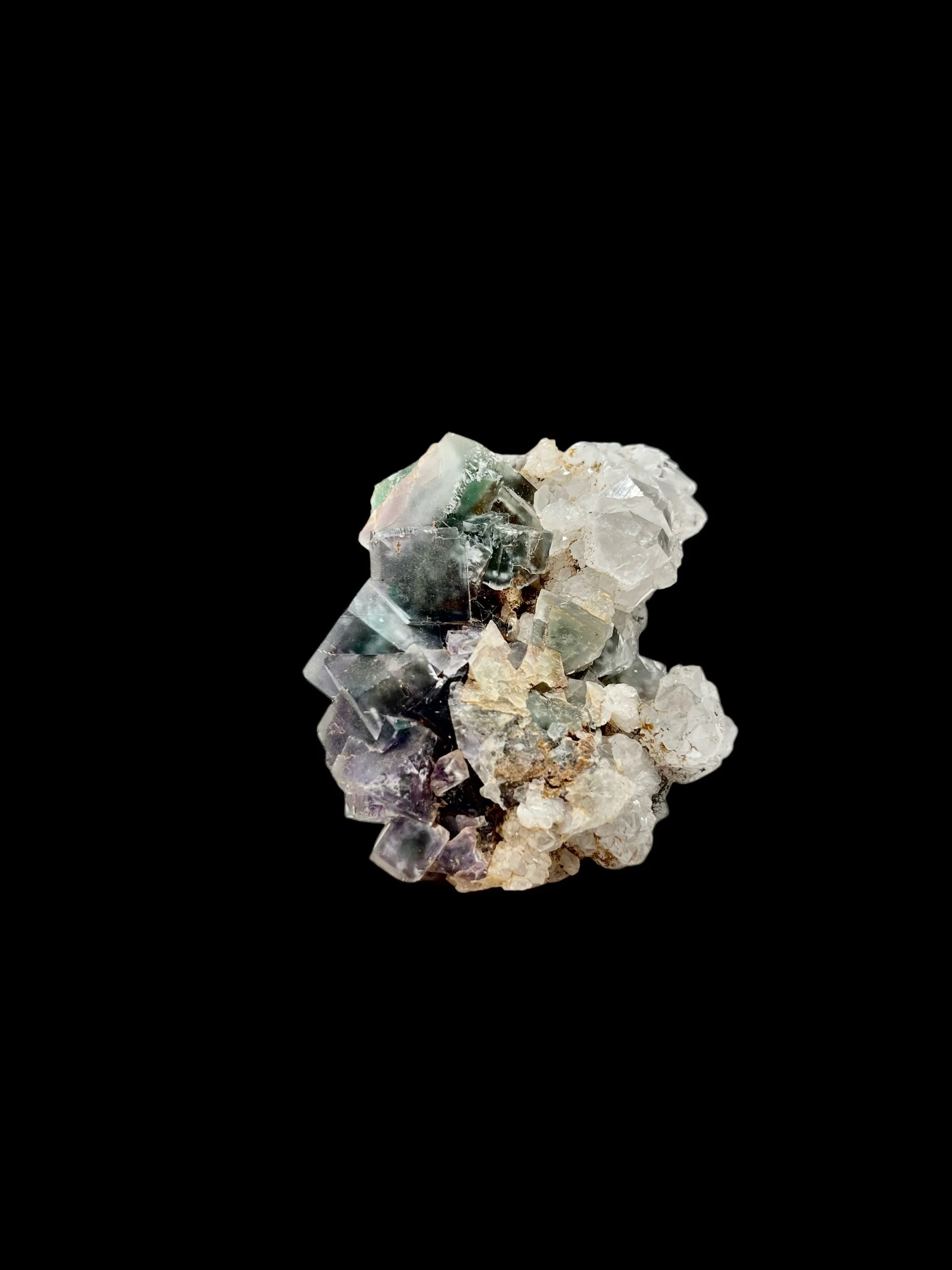
From different viewing angles, the piece reveals additional crystalline projections, recessed pockets, and contrasting mineral surfaces.
An exceptional addition to a curated fine mineral collection, particularly for collectors who appreciate well-developed azurite crystals, contrasting copper mineral associations, and specimens with distinctive three-dimensional character.
Dimensions, Weight & Locality
Weight: 272 grams
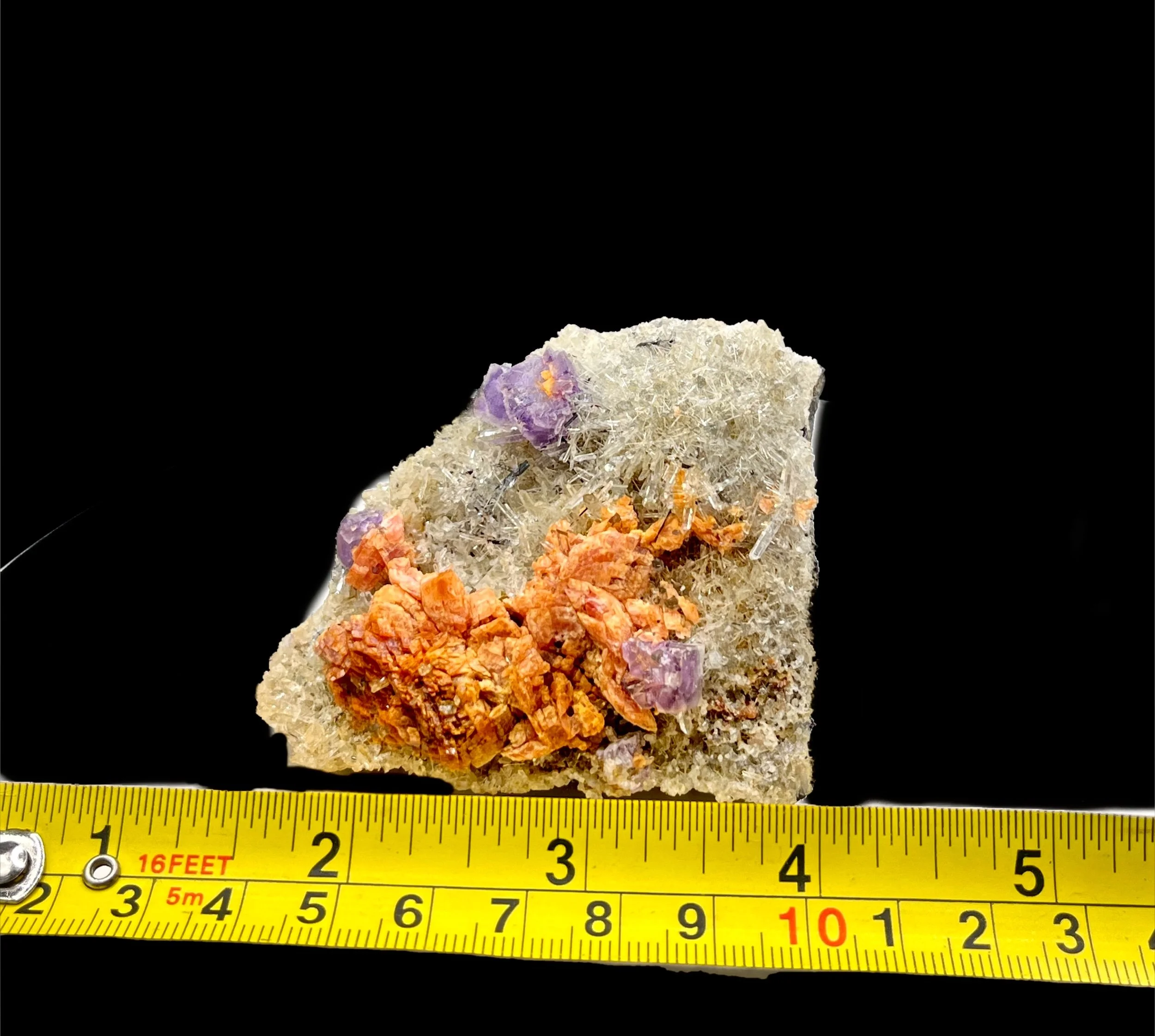
Dimensions: 2.5" × 2" × 2"
Mine: Liufengshan Mine (Liu Feng Shan Mine)
Locality: Guichi District, Chizhou, Anhui Province, China
Metaphysical Properties
Traditionally associated with wisdom, transformation, and emotional balance.
Azurite is frequently regarded as a stone of intuition, intellectual clarity, and heightened awareness. Associated with the third eye chakra, it is believed to encourage creativity, thoughtful reflection, and deeper understanding.
Malachite is traditionally considered a stone of transformation and emotional growth. Connected symbolically with the heart chakra, it is believed to support positive change, emotional resilience, and personal development.
Together, azurite and malachite are believed to encourage harmony between intellectual awareness and emotional understanding, making this combination a popular choice among metaphysical collectors.
These associations reflect traditional metaphysical beliefs and are not scientifically established.
Collector's Notes
Liufengshan Mine – A World-Renowned Azurite Locality
Located in Anhui Province, China, the Liufengshan Mine is celebrated among international mineral collectors for producing exceptionally aesthetic azurite and malachite specimens.
Although mining operations began decades earlier, the locality gained significant recognition within the international collector market in the early 2000s.
Its specimens are particularly admired for their deeply saturated blue azurite, vibrant green malachite, and diverse crystal habits. Some examples display delicate fibrous malachite, while others feature the larger, well-developed azurite crystals and contrasting rounded malachite growths seen in this piece.
How Azurite Develops Its Distinctive Crystal Shapes
Azurite belongs to the monoclinic crystal system, meaning its internal atomic structure follows a specific geometric arrangement that influences how its crystals develop.
Under favorable conditions, azurite can form sharply defined tabular, prismatic, or bladed crystals. Changes in the rate and direction of growth can result in complex clusters, overlapping faces, and distinctive angular formations. This is extremely rare.
When crystals grow close together, they may compete for available space, producing densely intergrown arrangements such as those displayed throughout this specimen.
The prominent crystal faces visible here provide an excellent opportunity to appreciate azurite's natural crystallographic structure.
Interesting Fact:
Although both azurite and malachite contain copper, they exhibit dramatically different colors because their chemical compositions and crystal structures are not identical.
In both minerals, copper ions interact with surrounding atoms in different structural environments. These differences influence which wavelengths of visible light are absorbed, resulting in azurite's characteristic blue and malachite's distinctive green.
The same element is responsible for two of the most recognizable colors in the mineral kingdom.
Highlights
Prominent Azurite Crystals: Beautifully developed bladed and tabular blue crystals with distinctive overlapping faces.
Brilliant Vitreous Luster: Highly reflective crystal surfaces displaying flashes of deep royal blue and indigo.
Contrasting Malachite Aggregates: Emerald-green formations with irregular, rounded shapes and intricate surface textures.
Rich Color Saturation: An impressive display of natural blue and green copper mineral coloration.
Complex Crystal Growth: Layered azurite formations, projecting crystals, and recessed pockets.
Renowned Locality: From China's celebrated Liufengshan Mine in Anhui Province.
Fine Mineral Collector Appeal: An excellent example of the beautiful relationship between azurite and malachite, particularly appealing for its prominent blue crystallization.
Mineralogy
Azurite
Chemical Formula: Cu₃(CO₃)₂(OH)₂
Mineral Class: Carbonates
Crystal System: Monoclinic
Mohs Hardness: 3.5–4
Color: Azure blue, royal blue, deep indigo
Luster: Vitreous (glassy)
Streak: Light blue
Cleavage: Perfect in one direction, fair in another
Specific Gravity: Approximately 3.77
Crystal Habit: Prismatic, bladed, tabular, clustered, massive, and occasionally botryoidal
Formation: Secondary copper carbonate mineral formed through oxidation of copper-bearing deposits
Malachite
Chemical Formula: Cu₂(CO₃)(OH)₂
Mineral Class: Carbonates
Crystal System: Monoclinic
Mohs Hardness: 3.5–4
Color: Pale green, bright emerald green, and deep green
Luster: Silky, vitreous, or earthy depending on growth habit
Streak: Light green
Cleavage: Perfect in one direction, fair in another
Specific Gravity: Approximately 3.6–4.05
Crystal Habit: Botryoidal, mammillary, fibrous, radiating, acicular, and massive aggregates
Formation: Secondary copper carbonate mineral commonly formed in oxidized copper deposits, frequently associated with azurite
Description
A captivating fine mineral specimen from the renowned Liufengshan Mine in Anhui Province, China, this Azurite with Malachite displays an extraordinary combination of richly saturated blue crystals, contrasting green mineral formations, and rugged natural textures.
The specimen is dominated by striking clusters of deep royal-blue azurite crystals, including prominent, sharply defined bladed and tabular formations with brilliant vitreous luster. Their overlapping crystal faces create a complex, layered appearance, reflecting light beautifully and revealing subtle variations between electric blue and deep indigo.
Nestled among the azurite are distinctive emerald-green malachite aggregates. These rounded, irregular formations feature intricate surface textures and earthy details, providing a beautiful contrast to the smooth, reflective surfaces of the surrounding azurite.
From different viewing angles, the piece reveals additional crystalline projections, recessed pockets, and contrasting mineral surfaces.
An exceptional addition to a curated fine mineral collection, particularly for collectors who appreciate well-developed azurite crystals, contrasting copper mineral associations, and specimens with distinctive three-dimensional character.
Dimensions, Weight & Locality
Weight: 272 grams
Dimensions: 2.5" × 2" × 2"
Mine: Liufengshan Mine (Liu Feng Shan Mine)
Locality: Guichi District, Chizhou, Anhui Province, China
Metaphysical Properties
Traditionally associated with wisdom, transformation, and emotional balance.
Azurite is frequently regarded as a stone of intuition, intellectual clarity, and heightened awareness. Associated with the third eye chakra, it is believed to encourage creativity, thoughtful reflection, and deeper understanding.
Malachite is traditionally considered a stone of transformation and emotional growth. Connected symbolically with the heart chakra, it is believed to support positive change, emotional resilience, and personal development.
Together, azurite and malachite are believed to encourage harmony between intellectual awareness and emotional understanding, making this combination a popular choice among metaphysical collectors.
These associations reflect traditional metaphysical beliefs and are not scientifically established.
Collector's Notes
Liufengshan Mine – A World-Renowned Azurite Locality
Located in Anhui Province, China, the Liufengshan Mine is celebrated among international mineral collectors for producing exceptionally aesthetic azurite and malachite specimens.
Although mining operations began decades earlier, the locality gained significant recognition within the international collector market in the early 2000s.
Its specimens are particularly admired for their deeply saturated blue azurite, vibrant green malachite, and diverse crystal habits. Some examples display delicate fibrous malachite, while others feature the larger, well-developed azurite crystals and contrasting rounded malachite growths seen in this piece.
How Azurite Develops Its Distinctive Crystal Shapes
Azurite belongs to the monoclinic crystal system, meaning its internal atomic structure follows a specific geometric arrangement that influences how its crystals develop.
Under favorable conditions, azurite can form sharply defined tabular, prismatic, or bladed crystals. Changes in the rate and direction of growth can result in complex clusters, overlapping faces, and distinctive angular formations. This is extremely rare.
When crystals grow close together, they may compete for available space, producing densely intergrown arrangements such as those displayed throughout this specimen.
The prominent crystal faces visible here provide an excellent opportunity to appreciate azurite's natural crystallographic structure.
Interesting Fact:
Although both azurite and malachite contain copper, they exhibit dramatically different colors because their chemical compositions and crystal structures are not identical.
In both minerals, copper ions interact with surrounding atoms in different structural environments. These differences influence which wavelengths of visible light are absorbed, resulting in azurite's characteristic blue and malachite's distinctive green.
The same element is responsible for two of the most recognizable colors in the mineral kingdom.
Highlights
Prominent Azurite Crystals: Beautifully developed bladed and tabular blue crystals with distinctive overlapping faces.
Brilliant Vitreous Luster: Highly reflective crystal surfaces displaying flashes of deep royal blue and indigo.
Contrasting Malachite Aggregates: Emerald-green formations with irregular, rounded shapes and intricate surface textures.
Rich Color Saturation: An impressive display of natural blue and green copper mineral coloration.
Complex Crystal Growth: Layered azurite formations, projecting crystals, and recessed pockets.
Renowned Locality: From China's celebrated Liufengshan Mine in Anhui Province.
Fine Mineral Collector Appeal: An excellent example of the beautiful relationship between azurite and malachite, particularly appealing for its prominent blue crystallization.
Mineralogy
Azurite
Chemical Formula: Cu₃(CO₃)₂(OH)₂
Mineral Class: Carbonates
Crystal System: Monoclinic
Mohs Hardness: 3.5–4
Color: Azure blue, royal blue, deep indigo
Luster: Vitreous (glassy)
Streak: Light blue
Cleavage: Perfect in one direction, fair in another
Specific Gravity: Approximately 3.77
Crystal Habit: Prismatic, bladed, tabular, clustered, massive, and occasionally botryoidal
Formation: Secondary copper carbonate mineral formed through oxidation of copper-bearing deposits
Malachite
Chemical Formula: Cu₂(CO₃)(OH)₂
Mineral Class: Carbonates
Crystal System: Monoclinic
Mohs Hardness: 3.5–4
Color: Pale green, bright emerald green, and deep green
Luster: Silky, vitreous, or earthy depending on growth habit
Streak: Light green
Cleavage: Perfect in one direction, fair in another
Specific Gravity: Approximately 3.6–4.05
Crystal Habit: Botryoidal, mammillary, fibrous, radiating, acicular, and massive aggregates
Formation: Secondary copper carbonate mineral commonly formed in oxidized copper deposits, frequently associated with azurite


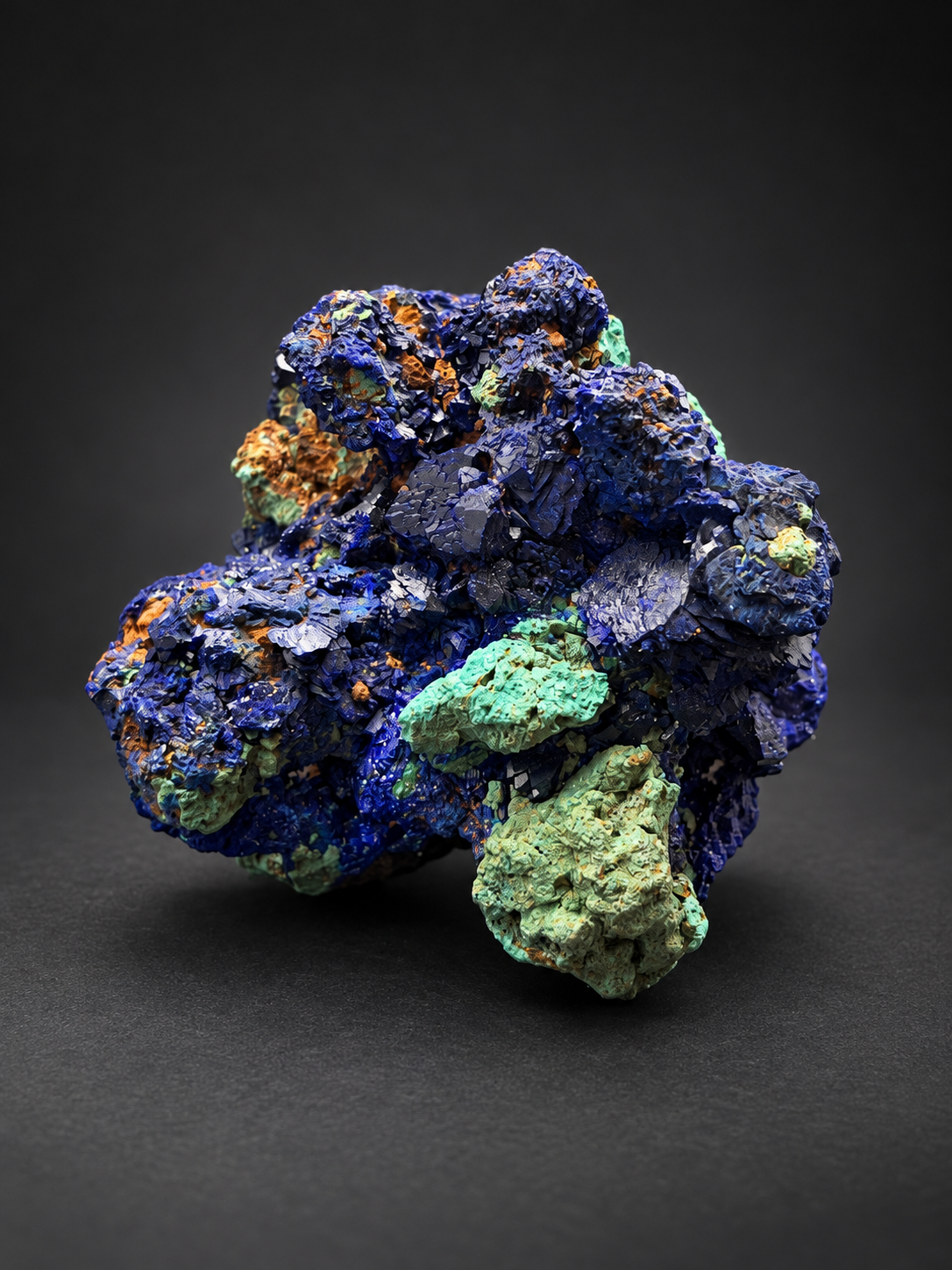 Image 1 of 7
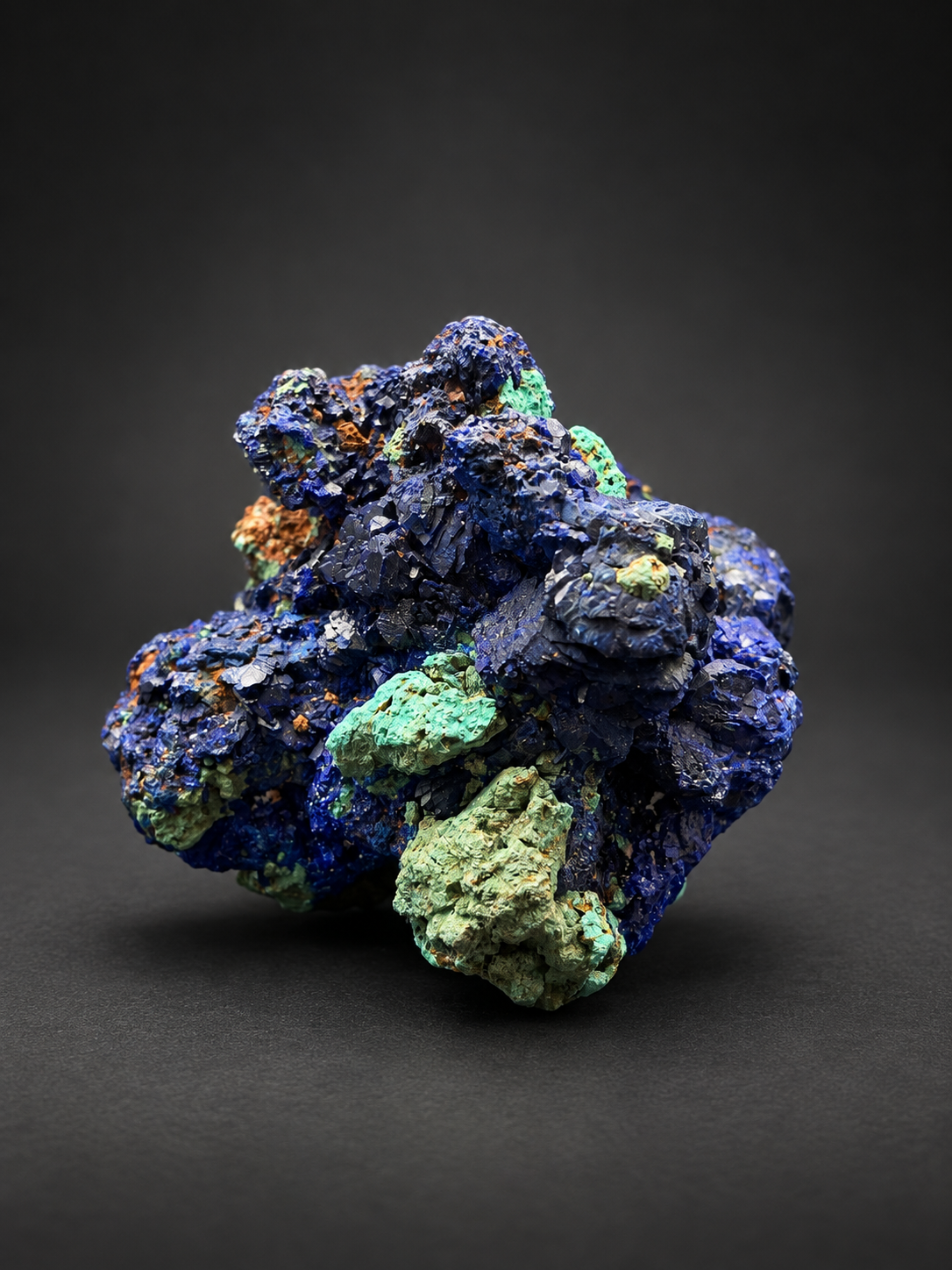 Image 2 of 7
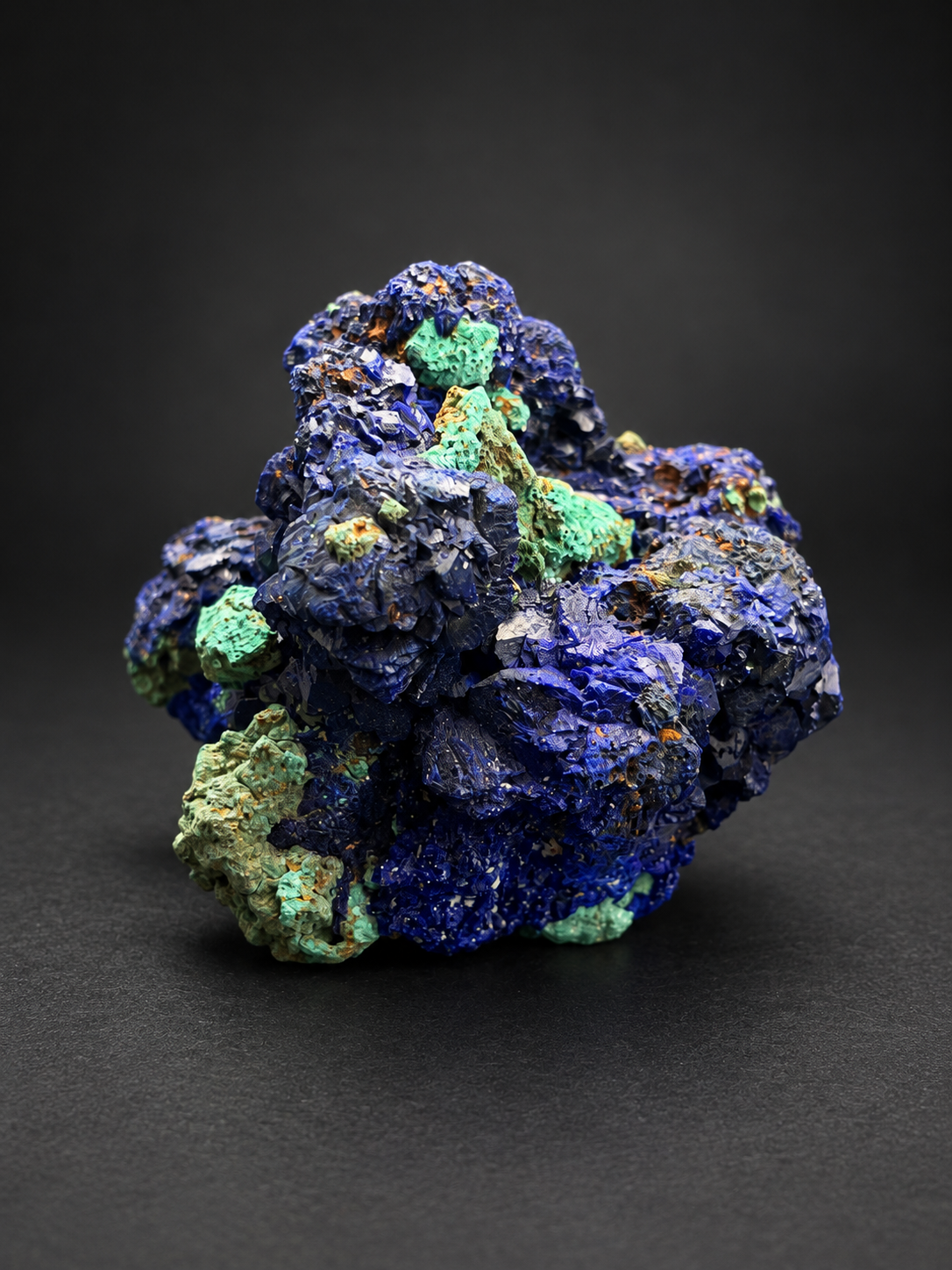 Image 3 of 7
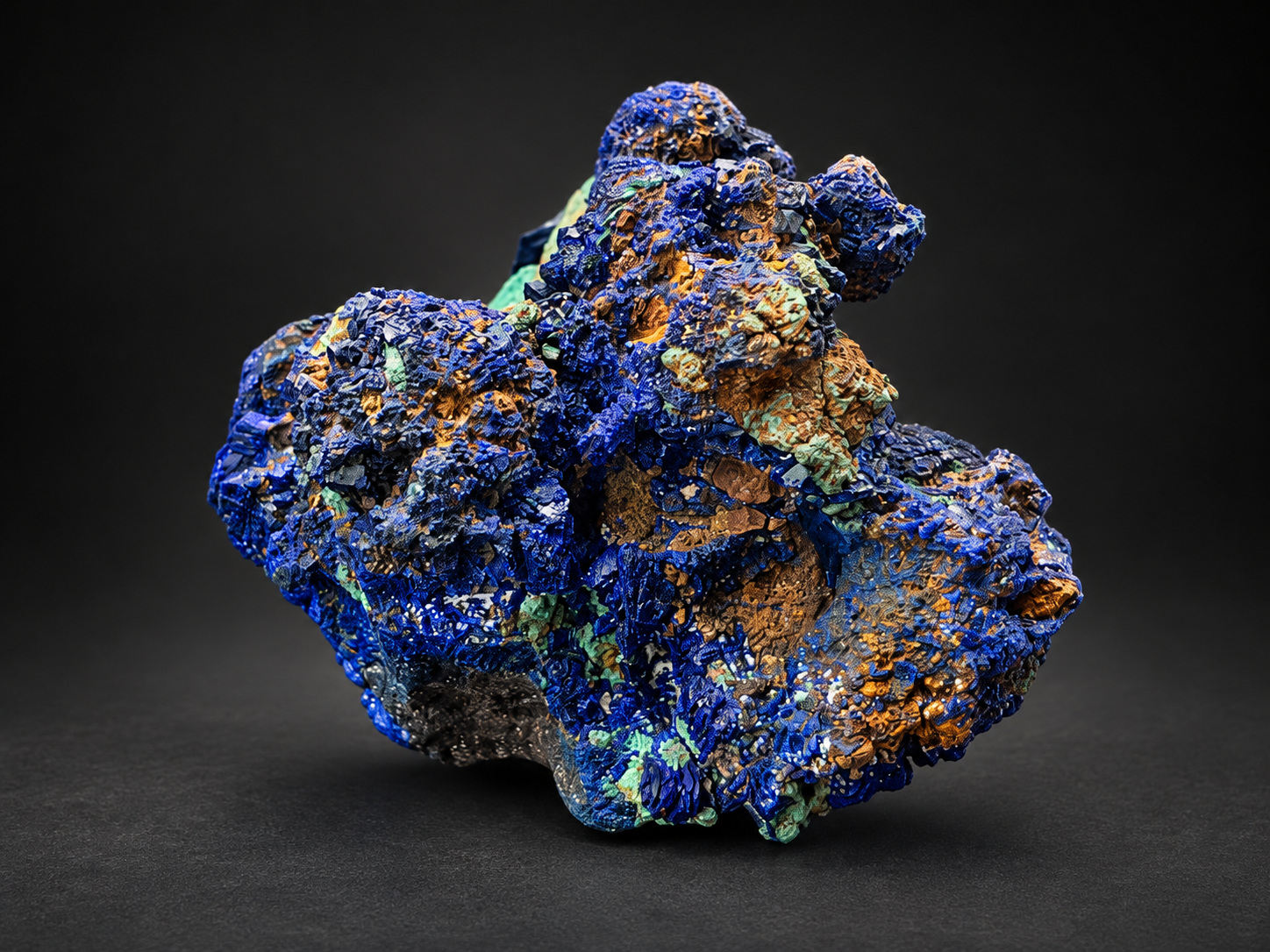 Image 4 of 7
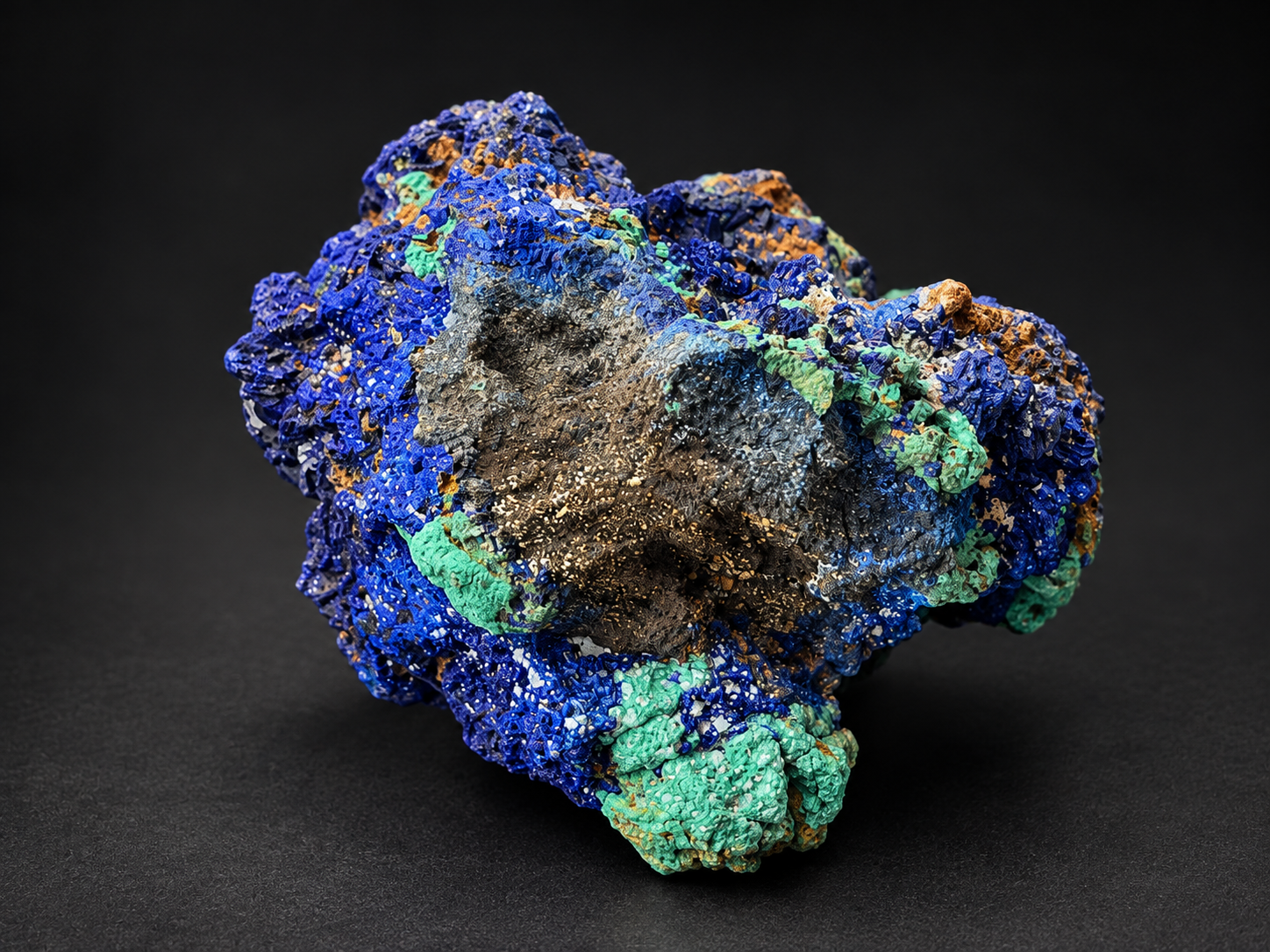 Image 5 of 7
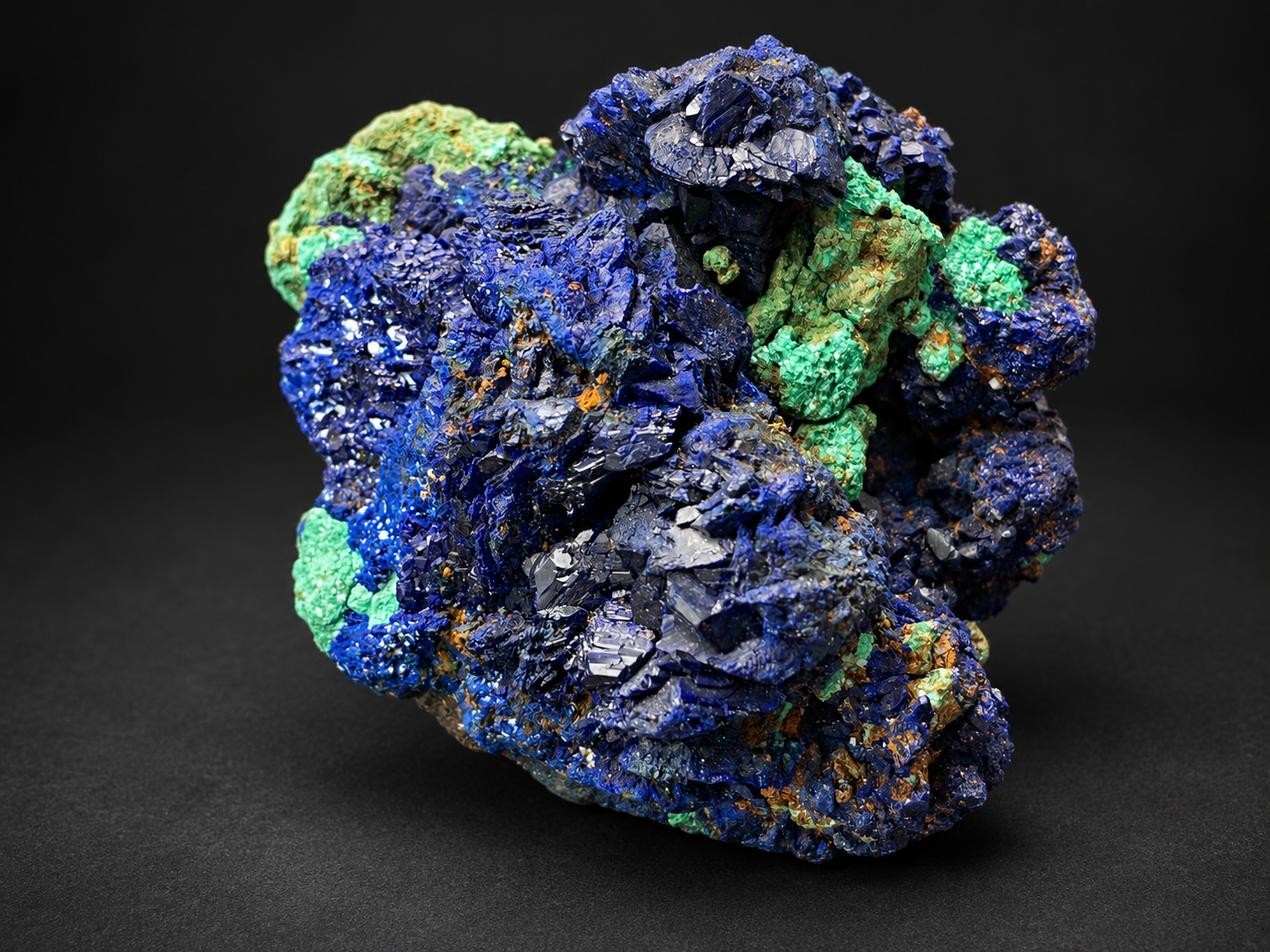 Image 6 of 7
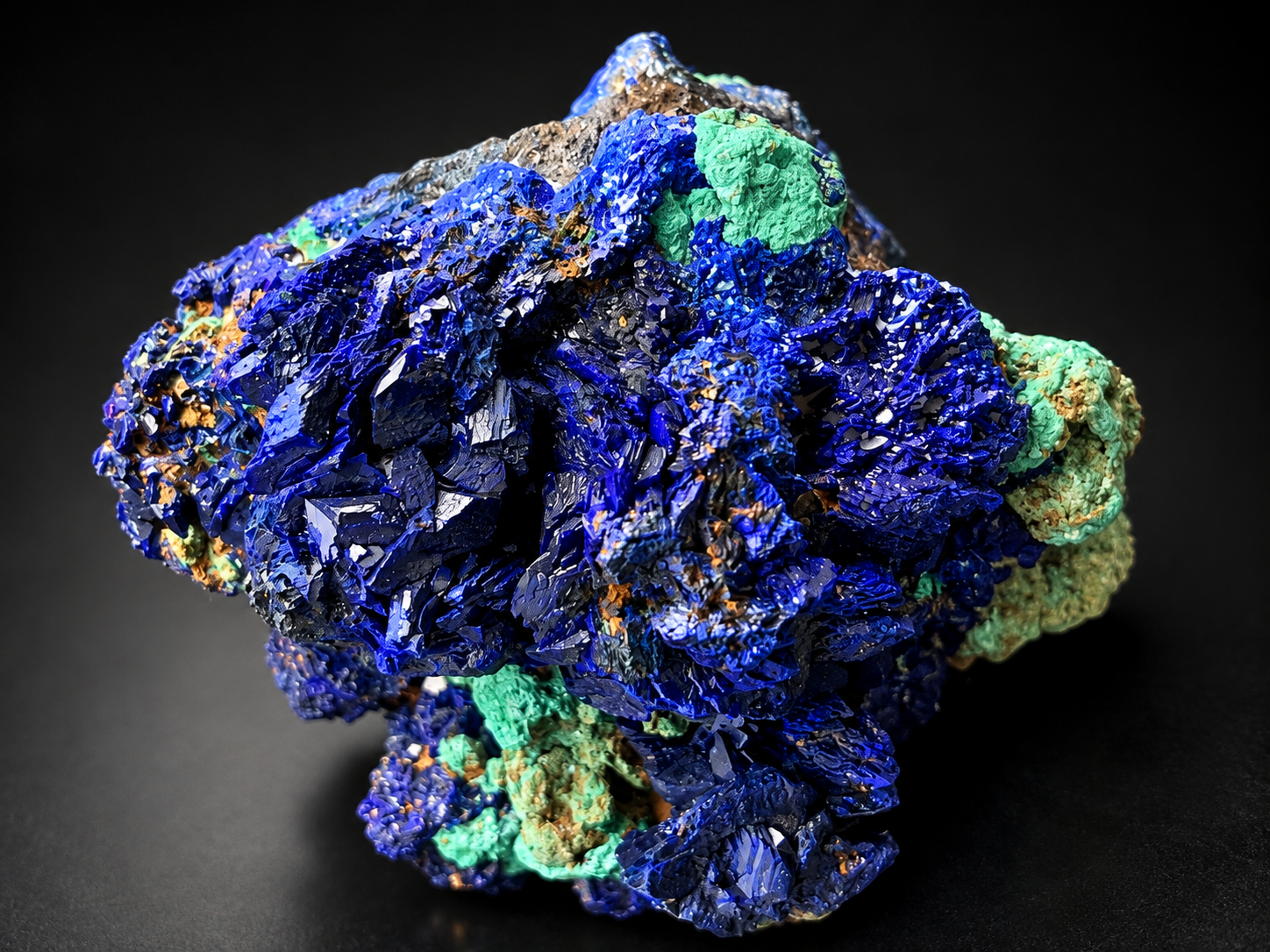 Image 7 of 7