

 Image 1 of 5
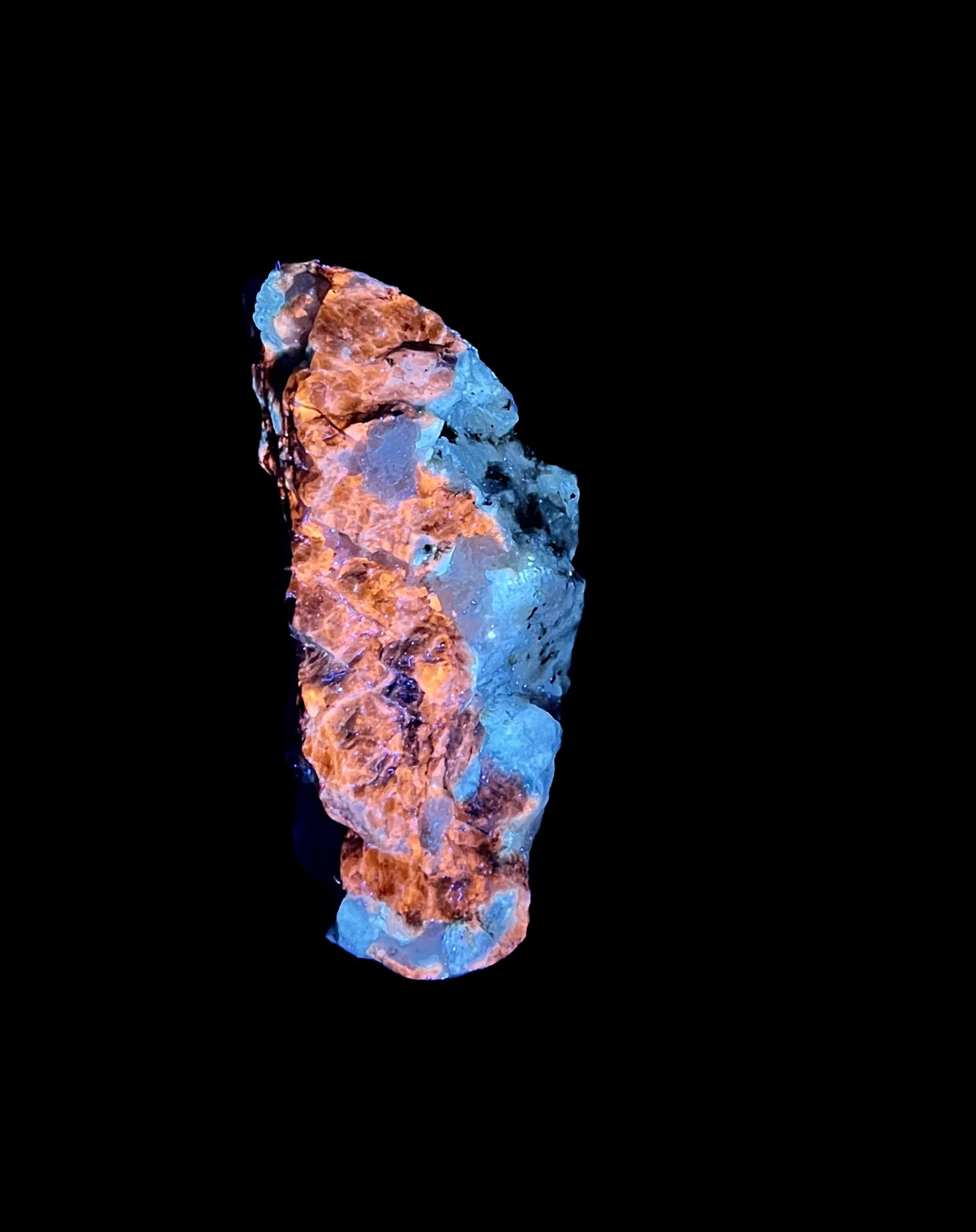 Image 2 of 5
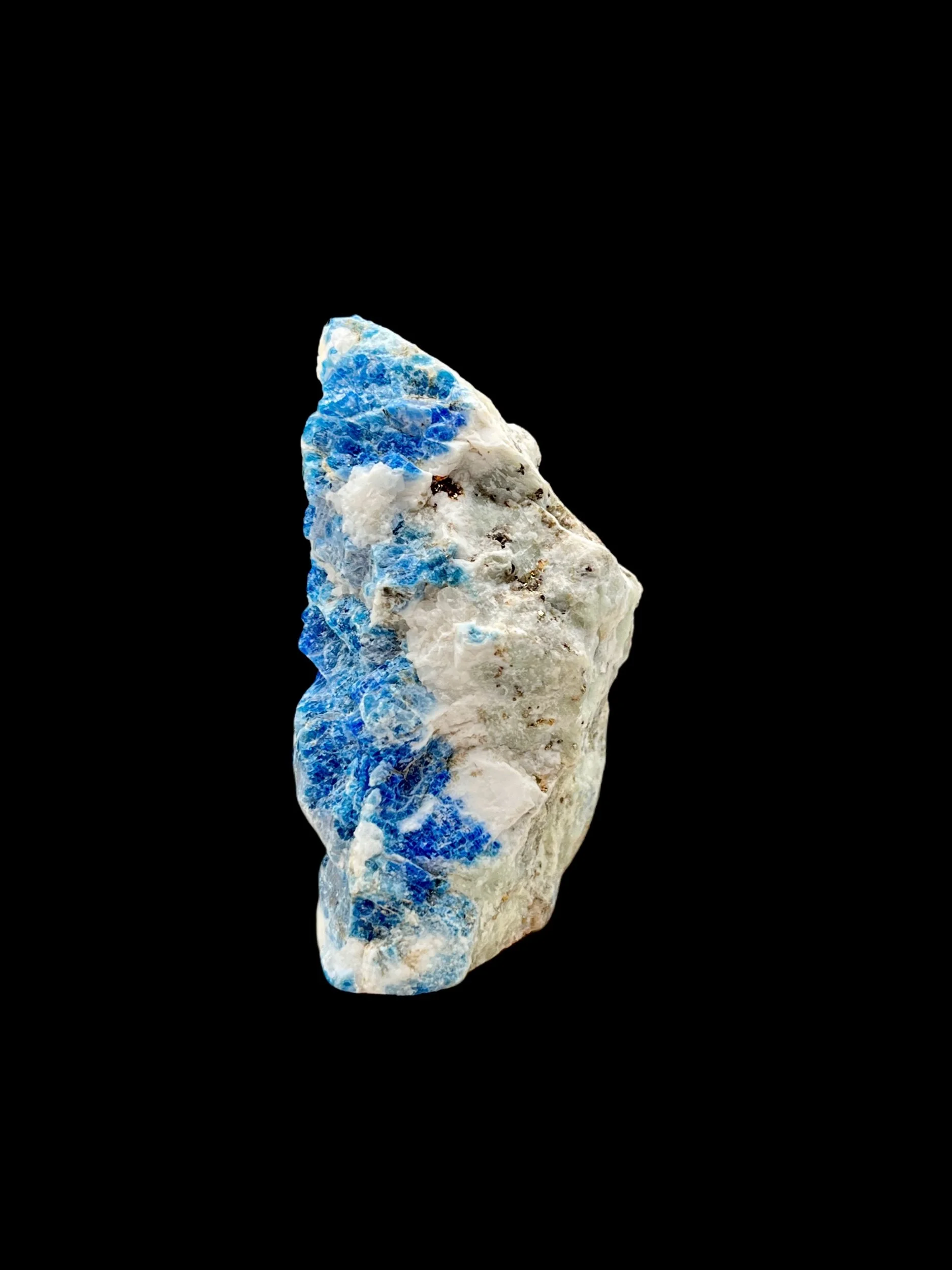 Image 3 of 5
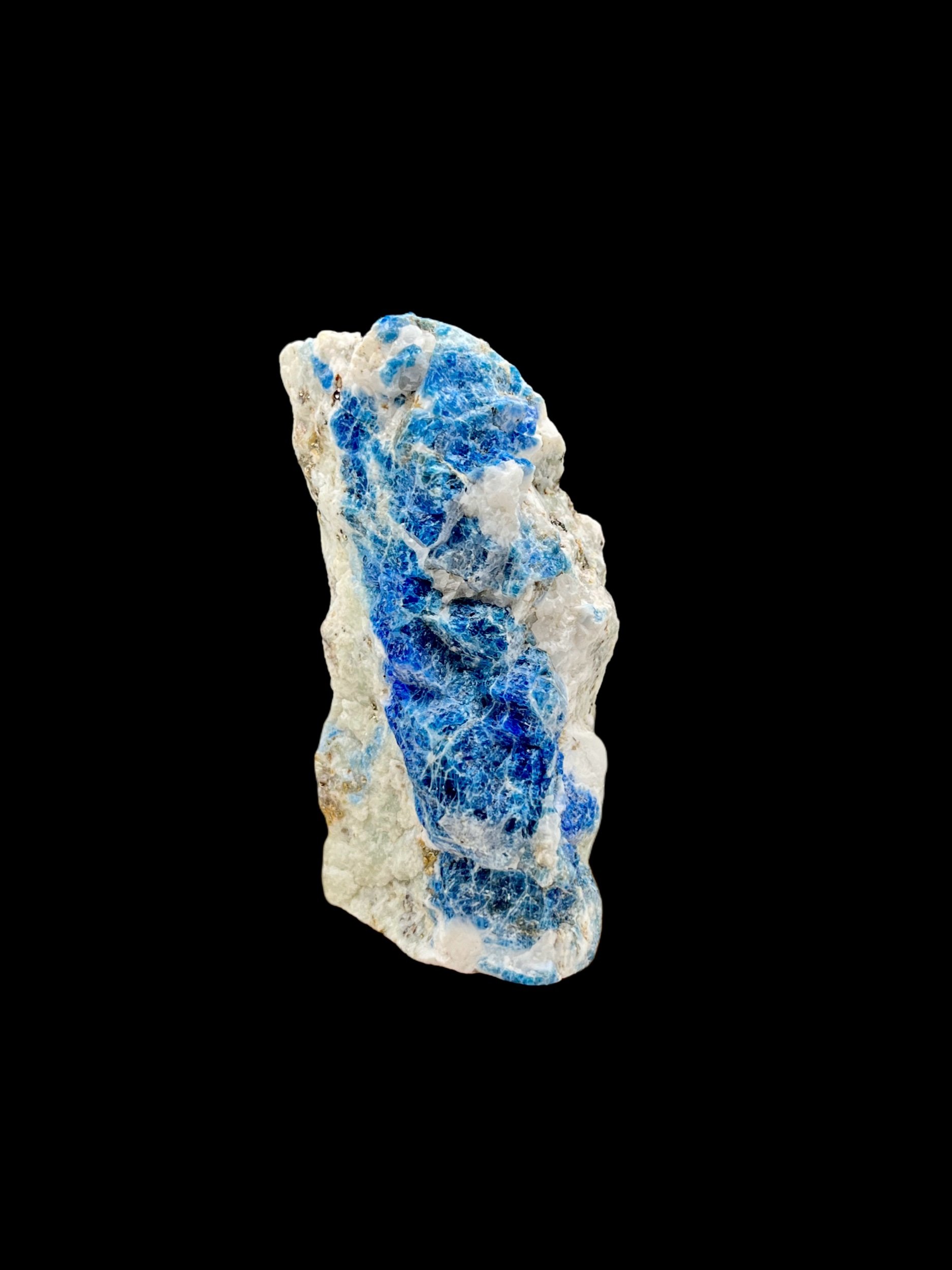 Image 4 of 5
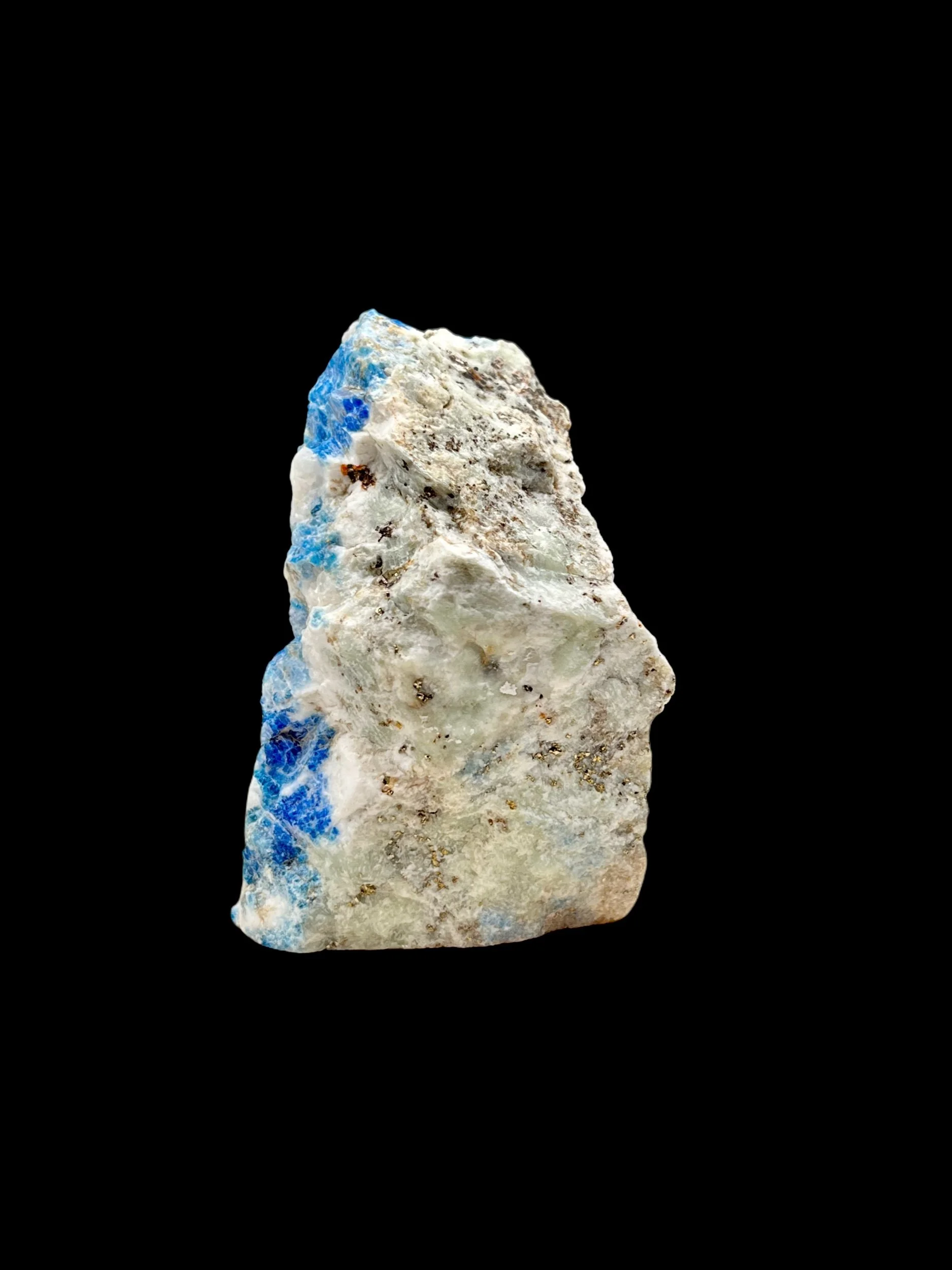 Image 5 of 5
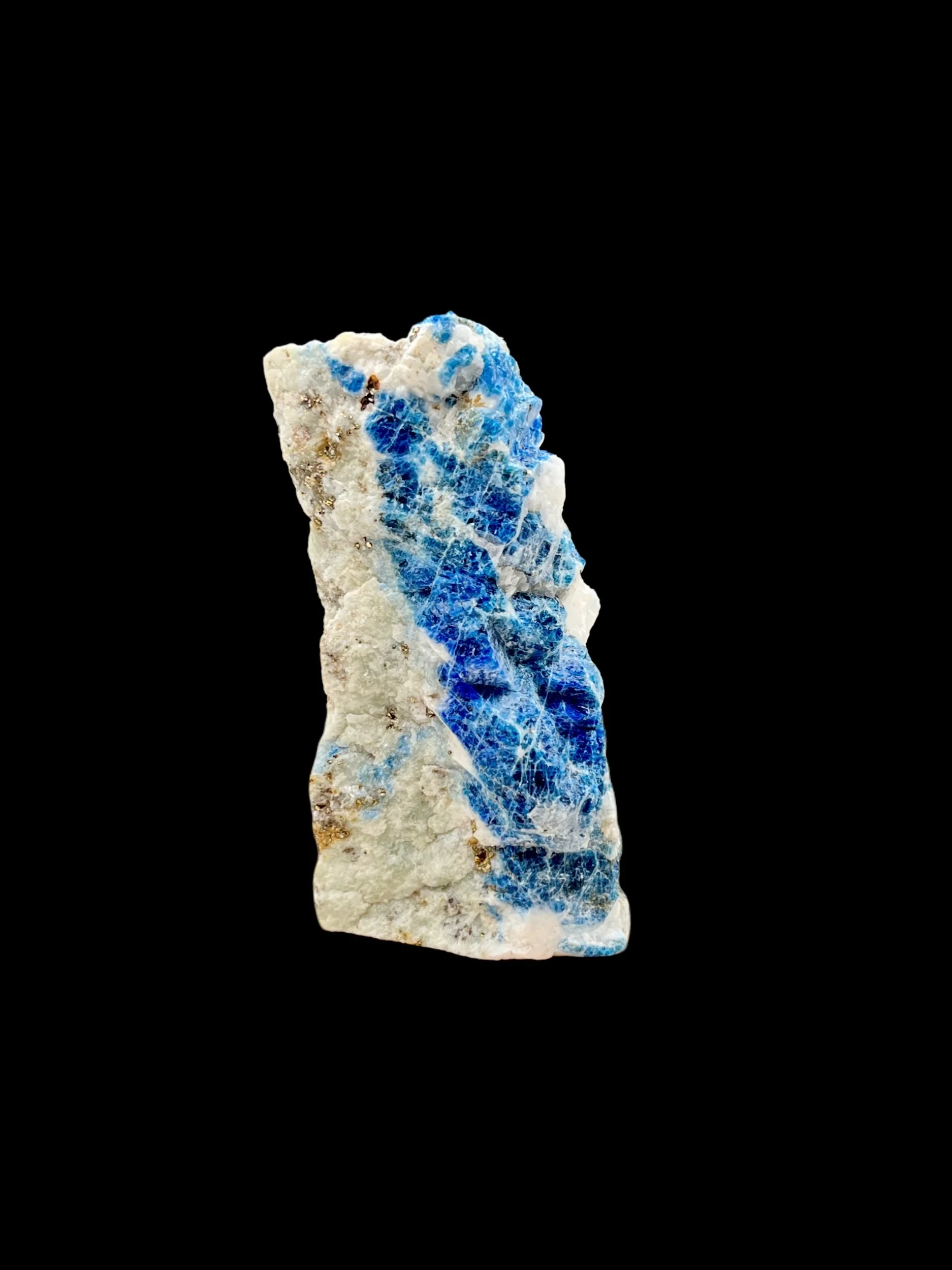
A striking and sculptural sodalite specimen from the alkaline intrusions of northern Pakistan, featuring deep cobalt-blue sodalite veining cutting through a pale nepheline-rich matrix.
The sodalite occurs in bold, saturated blues with a luminous quality, creating depth and contrast against the surrounding white host rock. Subtle metallic pyrite inclusions add texture, while the natural structure gives the piece a vertical, display-ready presence.
Under UV light, portions of the matrix exhibit a warm orange fluorescence, adding an additional layer of visual interest beyond standard display lighting.
2.75” x 1.5” x 1.25”
171 grams
Sodalite is often associated with clarity, intuition, and structured thinking. It is said to support communication and mental balance, making it a popular stone for focus and expression.
Sodalite from Pakistan is much less common than the types found in Canada or Brazil.
It is found in alkaline igneous rocks called nepheline syenite, which helps geologists identify certain types of Earth’s formations.
This specimen represents a classic example of sodalite forming in silica-undersaturated environments, where sodium-rich magmas crystallize into complex mineral assemblages.
Best suited for collectors of:
Alkaline intrusion minerals
Feldspathoid-associated species
Fluorescent mineral specimens
Less common global sodalite localities
Strong blue saturation and vein structure increase display appeal
Deep blue sodalite with strong contrast
Nepheline syenite matrix
Famous Koga Complex locality (Pakistan)
UV-reactive calcite present
Vertical form makes it ideal for cabinet display
Collector-grade locality specimen
Sodalite is a sodium aluminum silicate typically forming in silica-poor igneous environments such as nepheline syenites. It commonly appears in massive or vein-like structures and is closely associated with minerals like nepheline and calcite.
The host rock here is consistent with nepheline-rich alkaline intrusive material, a defining feature of classic sodalite localities.
A striking and sculptural sodalite specimen from the alkaline intrusions of northern Pakistan, featuring deep cobalt-blue sodalite veining cutting through a pale nepheline-rich matrix.
The sodalite occurs in bold, saturated blues with a luminous quality, creating depth and contrast against the surrounding white host rock. Subtle metallic pyrite inclusions add texture, while the natural structure gives the piece a vertical, display-ready presence.
Under UV light, portions of the matrix exhibit a warm orange fluorescence, adding an additional layer of visual interest beyond standard display lighting.
2.75” x 1.5” x 1.25”
171 grams
Sodalite is often associated with clarity, intuition, and structured thinking. It is said to support communication and mental balance, making it a popular stone for focus and expression.
Sodalite from Pakistan is much less common than the types found in Canada or Brazil.
It is found in alkaline igneous rocks called nepheline syenite, which helps geologists identify certain types of Earth’s formations.
This specimen represents a classic example of sodalite forming in silica-undersaturated environments, where sodium-rich magmas crystallize into complex mineral assemblages.
Best suited for collectors of:
Alkaline intrusion minerals
Feldspathoid-associated species
Fluorescent mineral specimens
Less common global sodalite localities
Strong blue saturation and vein structure increase display appeal
Deep blue sodalite with strong contrast
Nepheline syenite matrix
Famous Koga Complex locality (Pakistan)
UV-reactive calcite present
Vertical form makes it ideal for cabinet display
Collector-grade locality specimen
Sodalite is a sodium aluminum silicate typically forming in silica-poor igneous environments such as nepheline syenites. It commonly appears in massive or vein-like structures and is closely associated with minerals like nepheline and calcite.
The host rock here is consistent with nepheline-rich alkaline intrusive material, a defining feature of classic sodalite localities.