Description
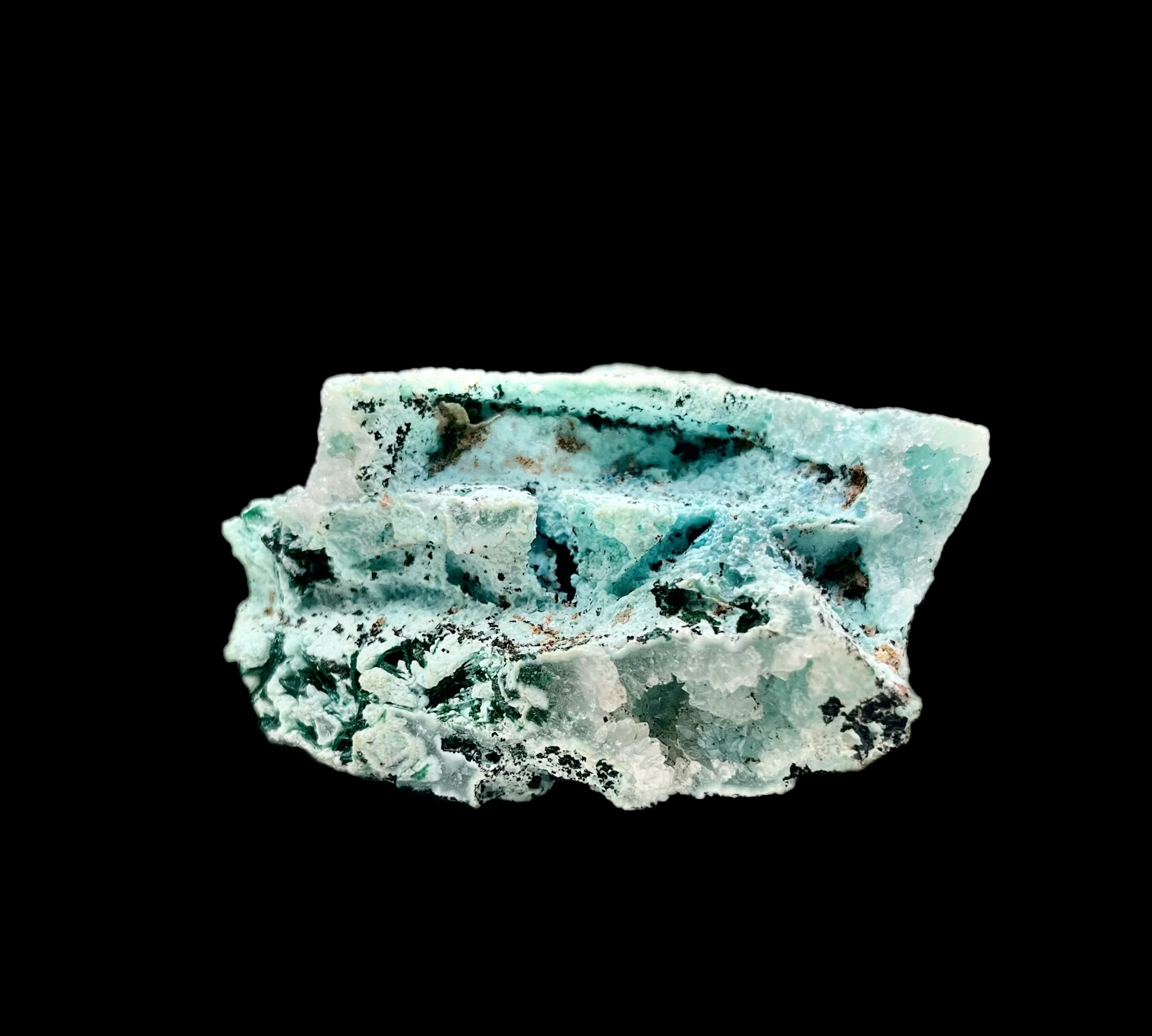
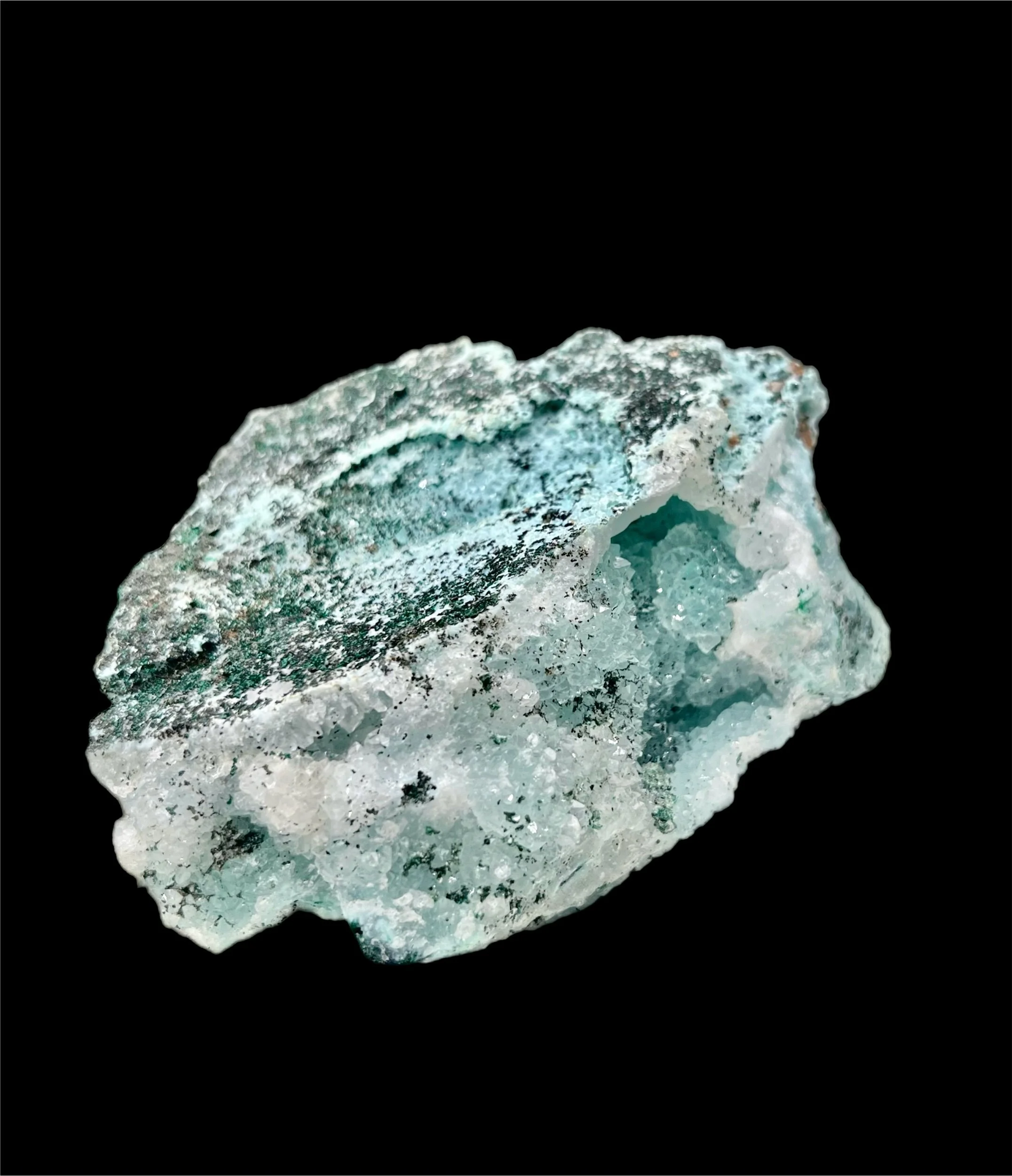
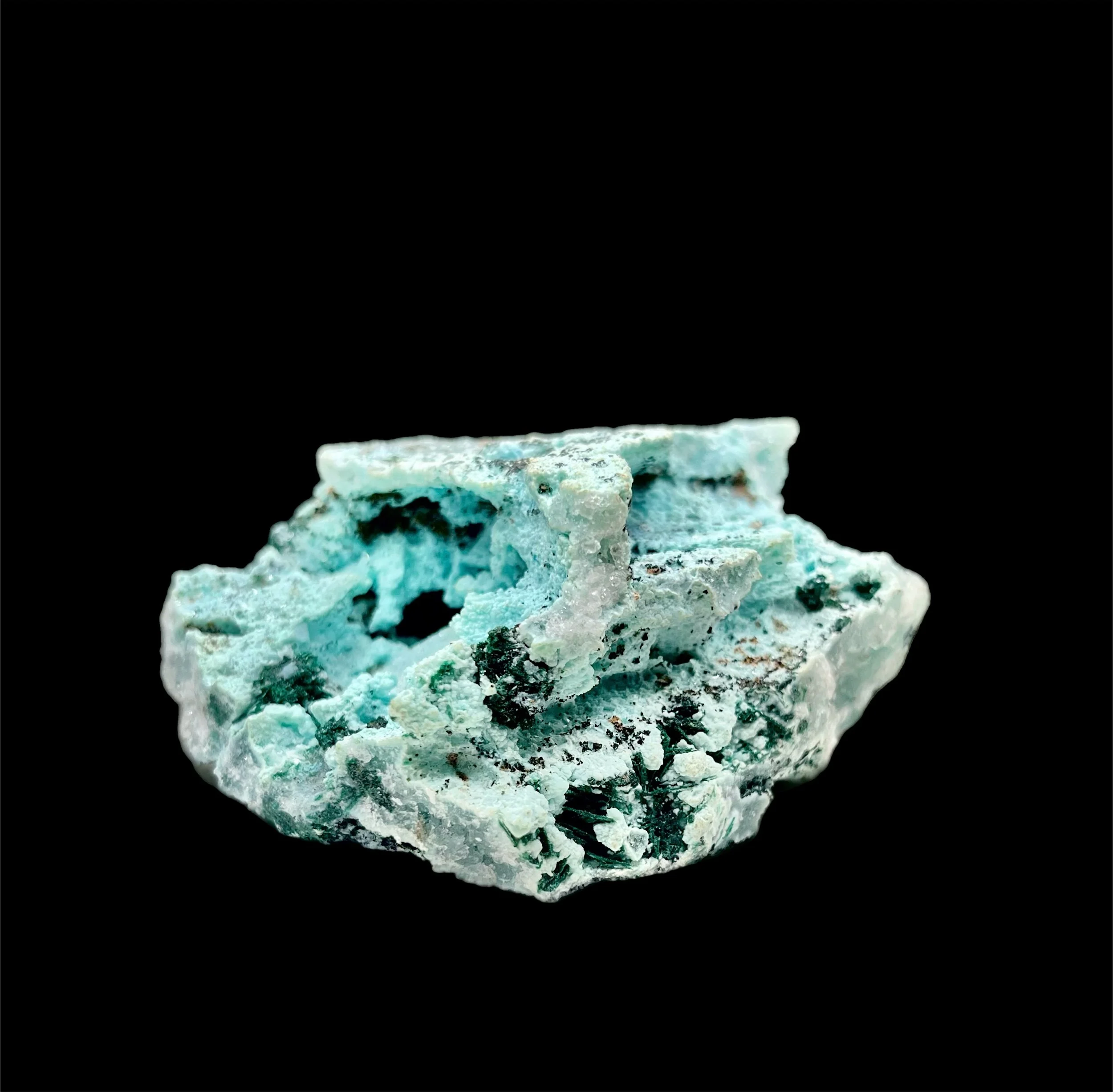
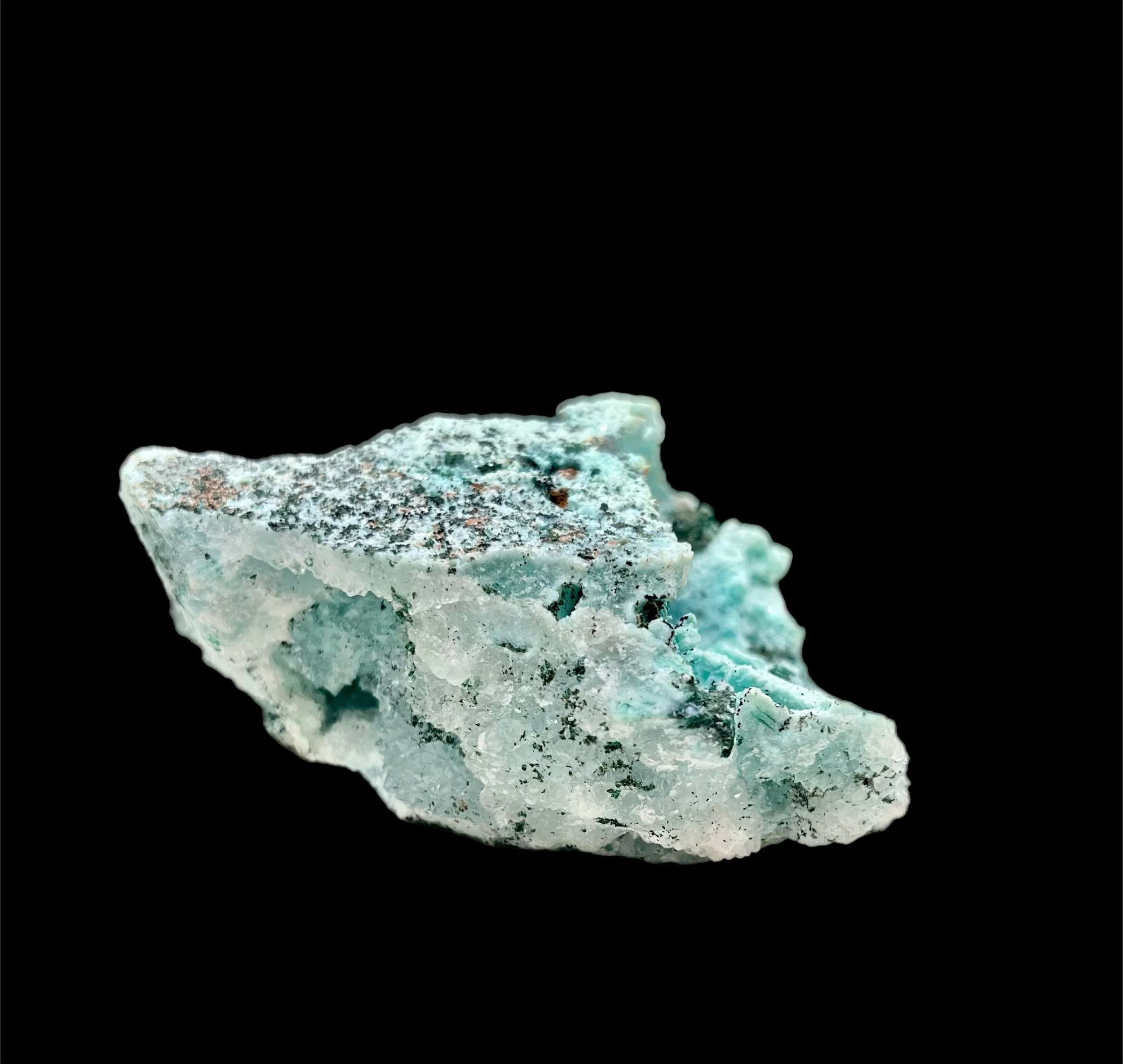
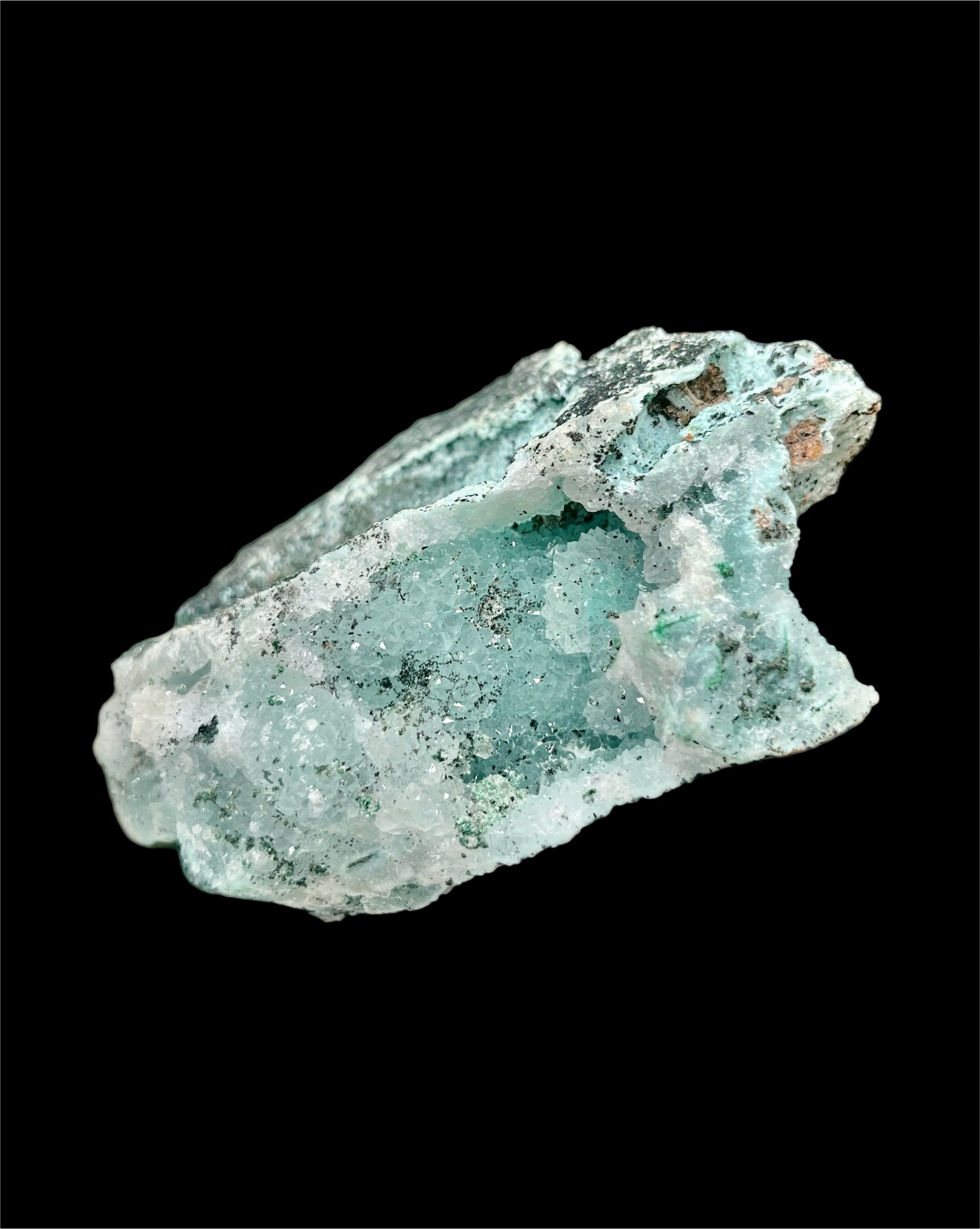
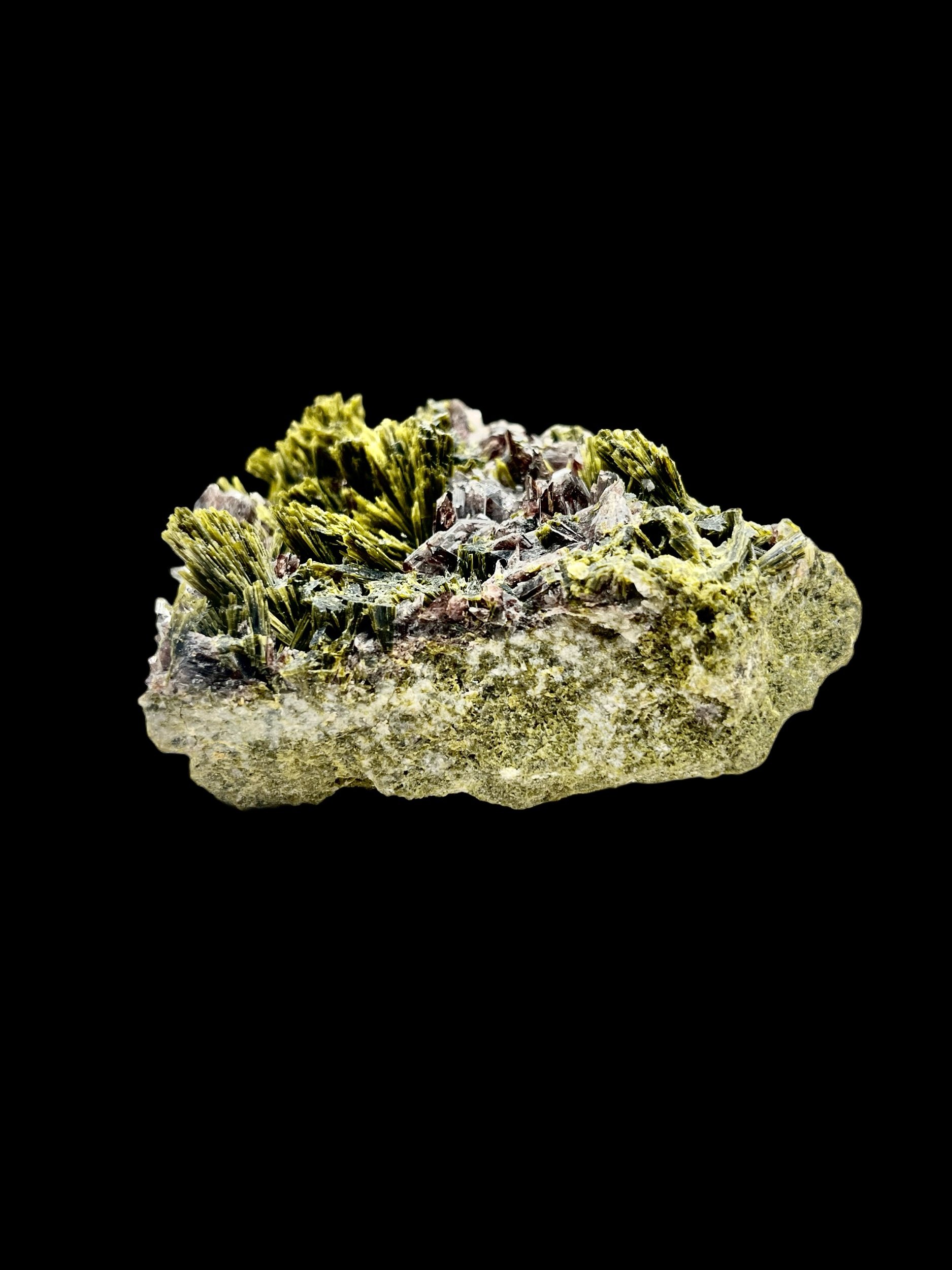
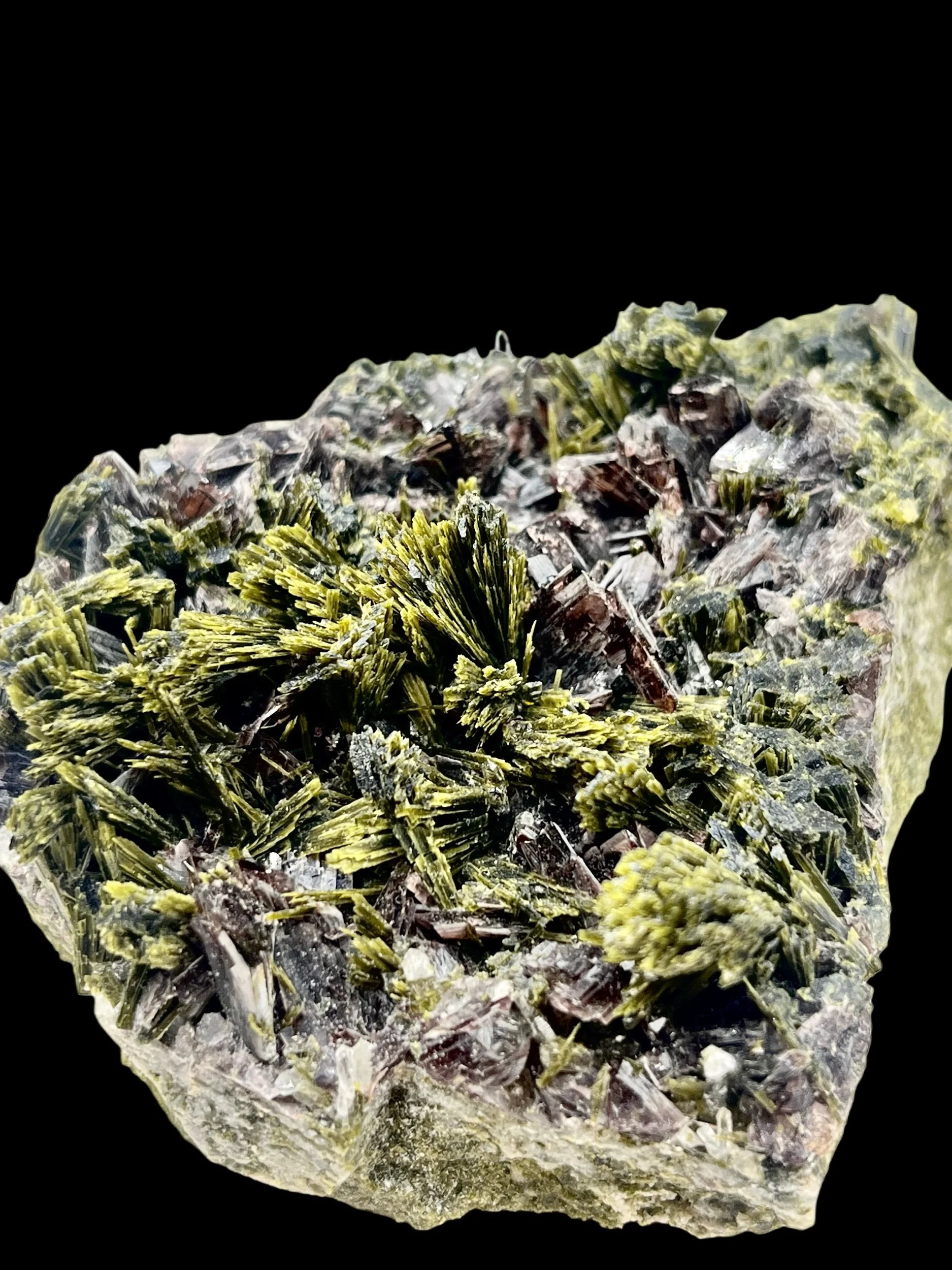
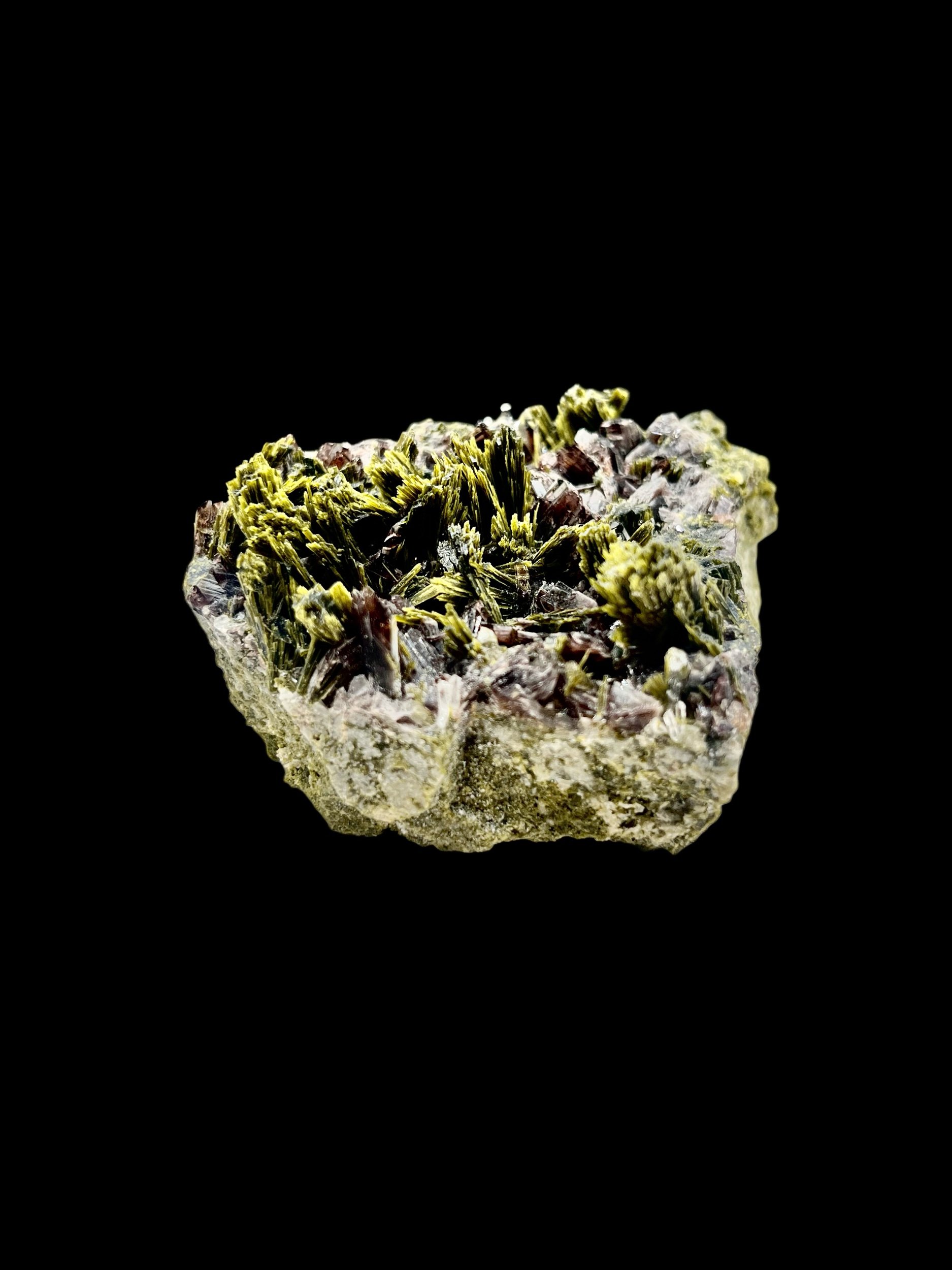
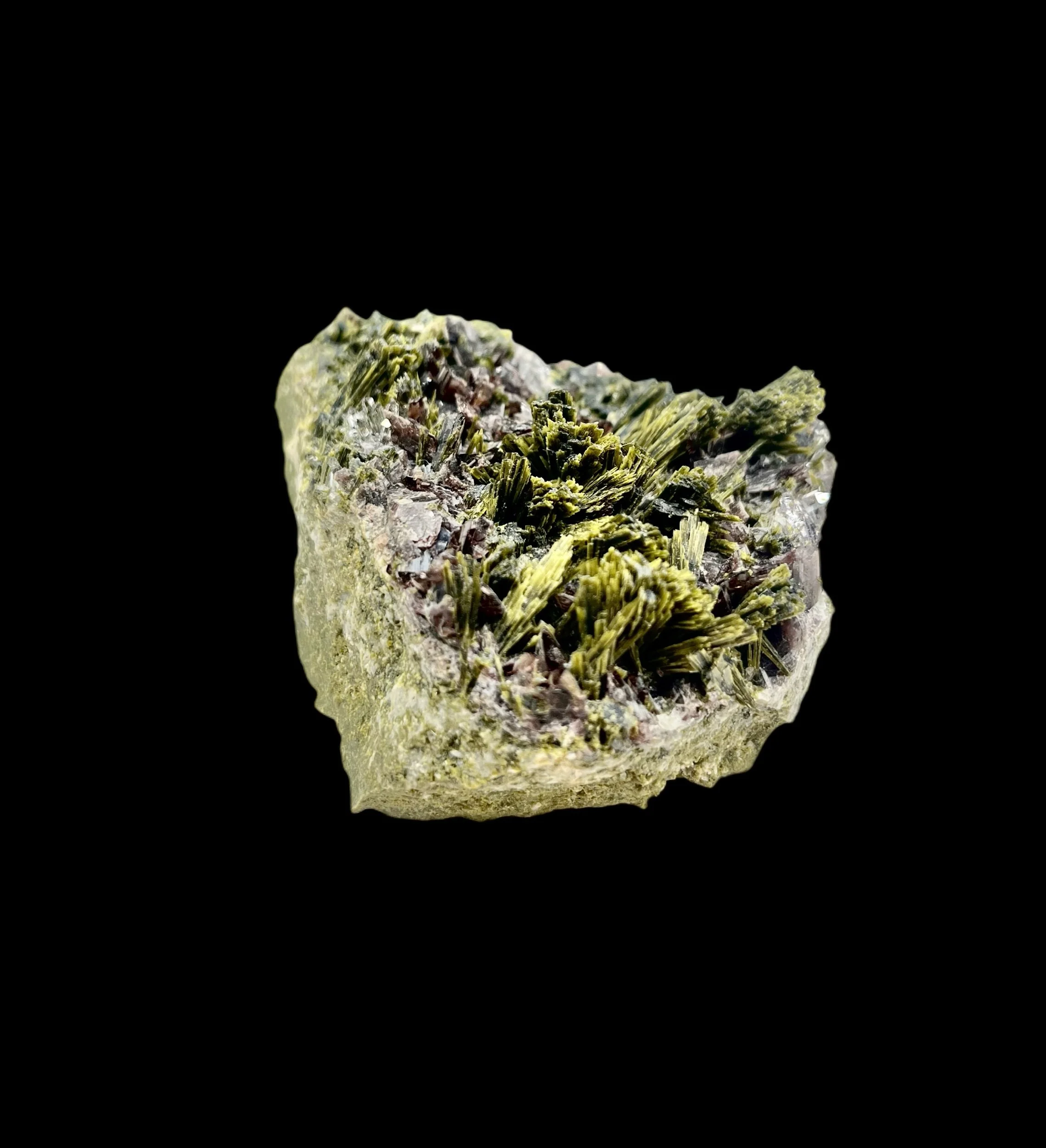
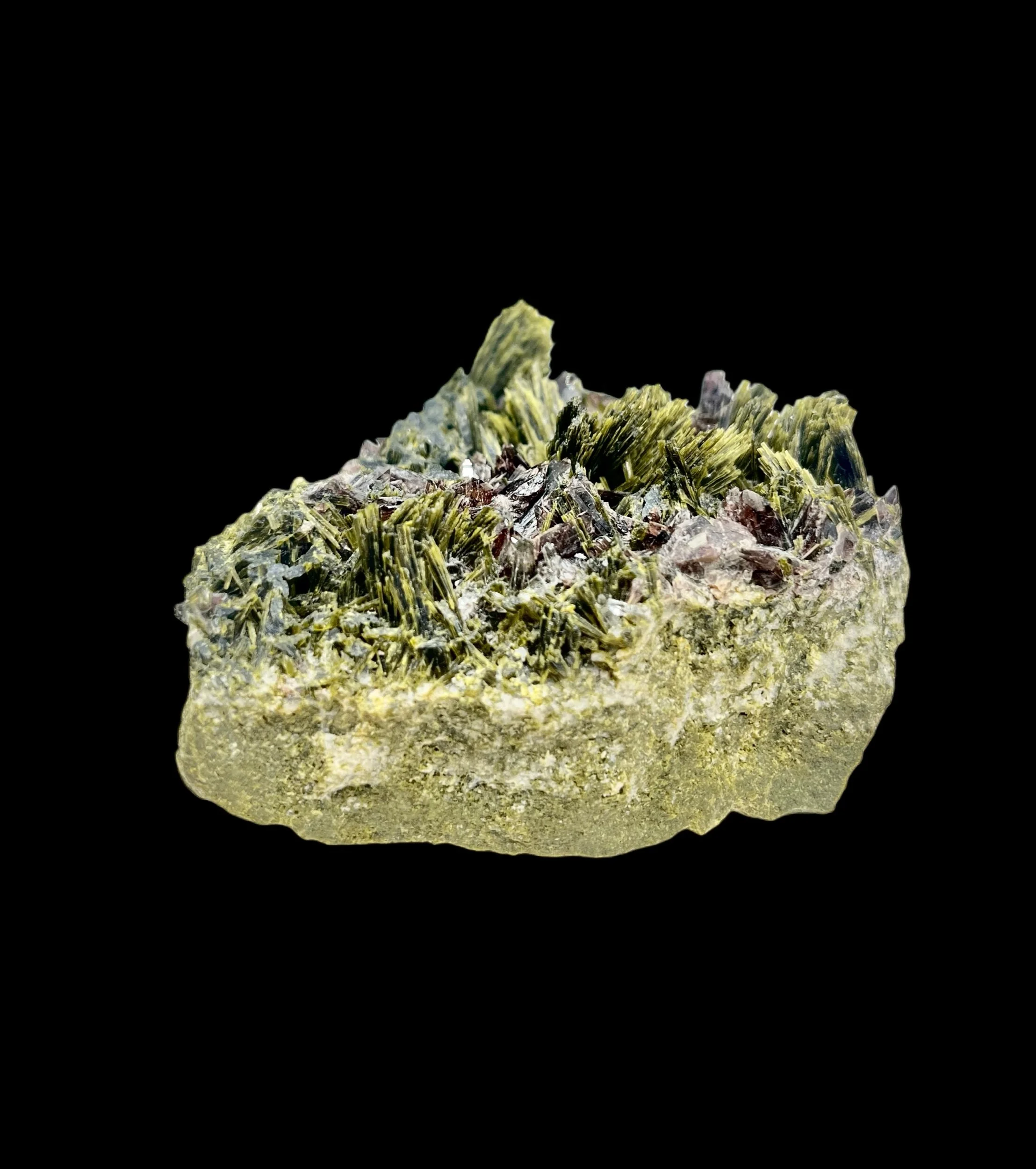
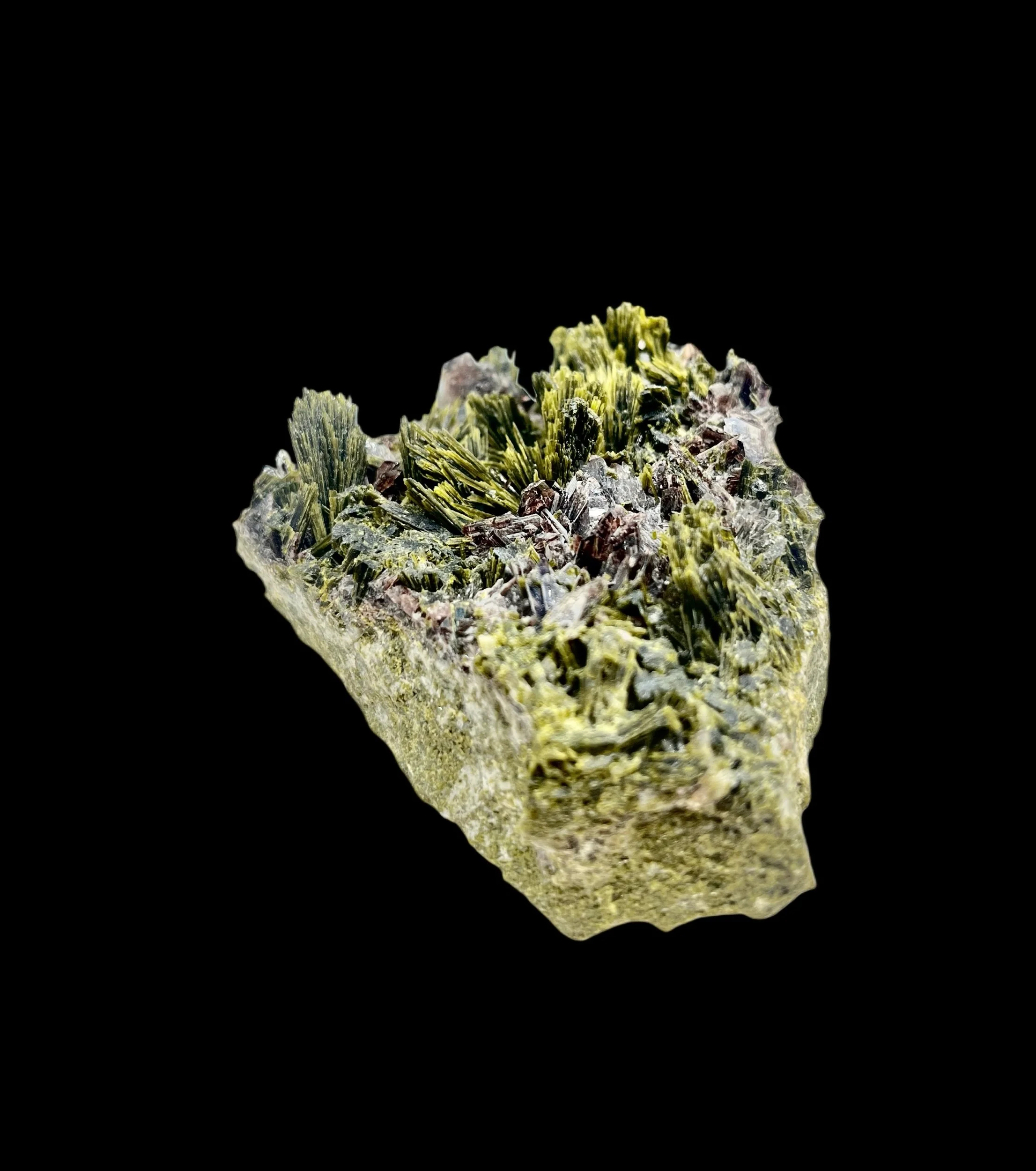
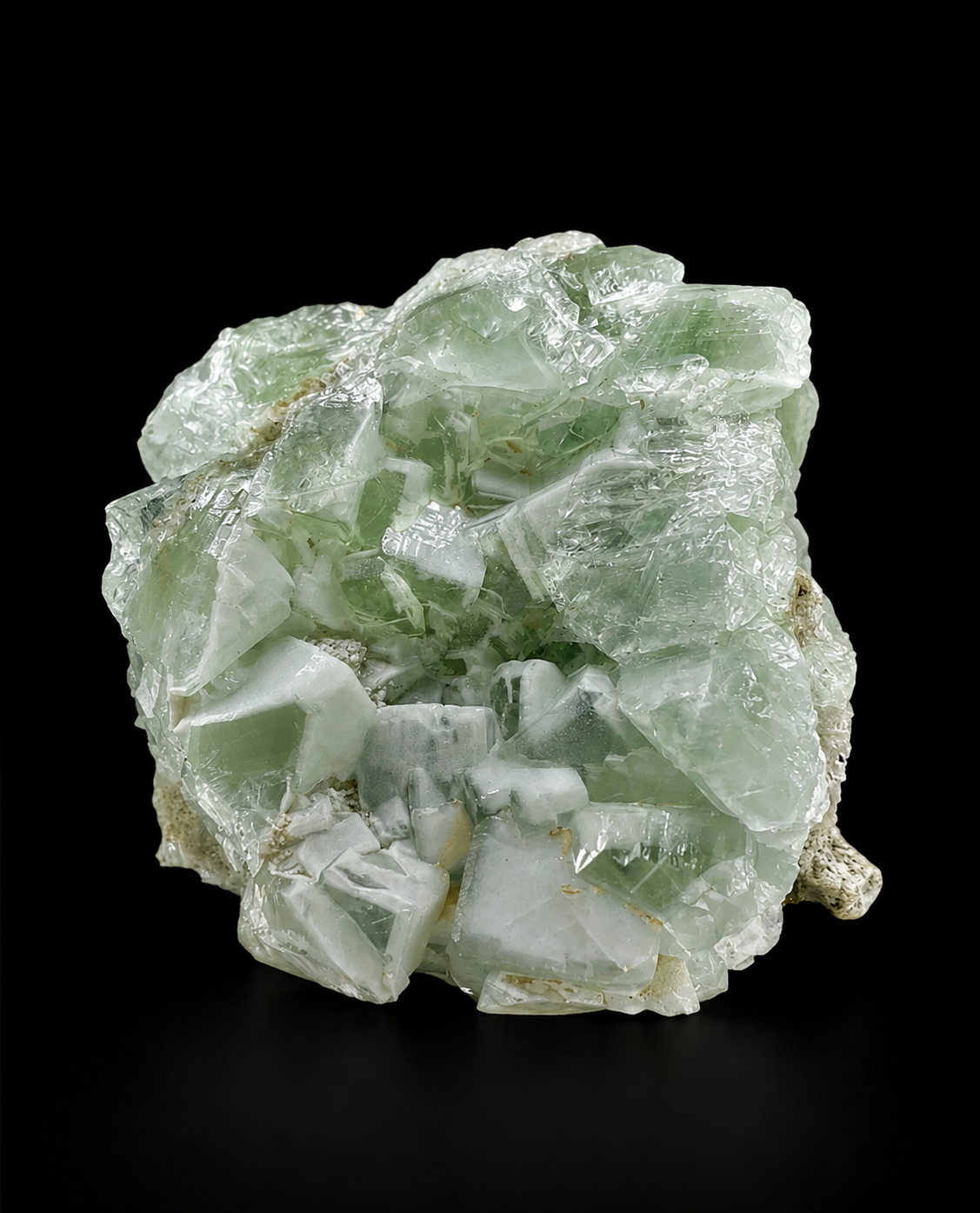
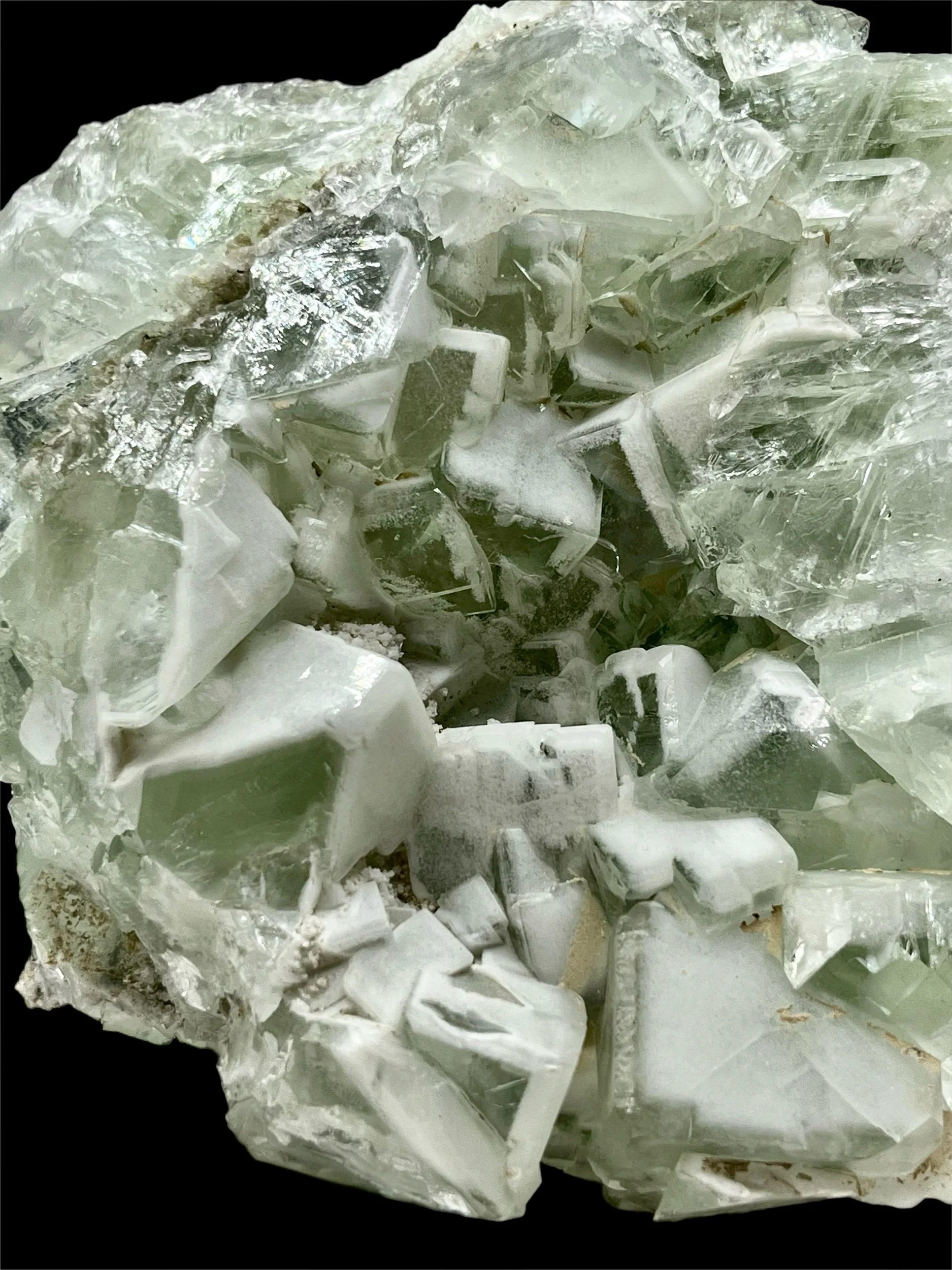
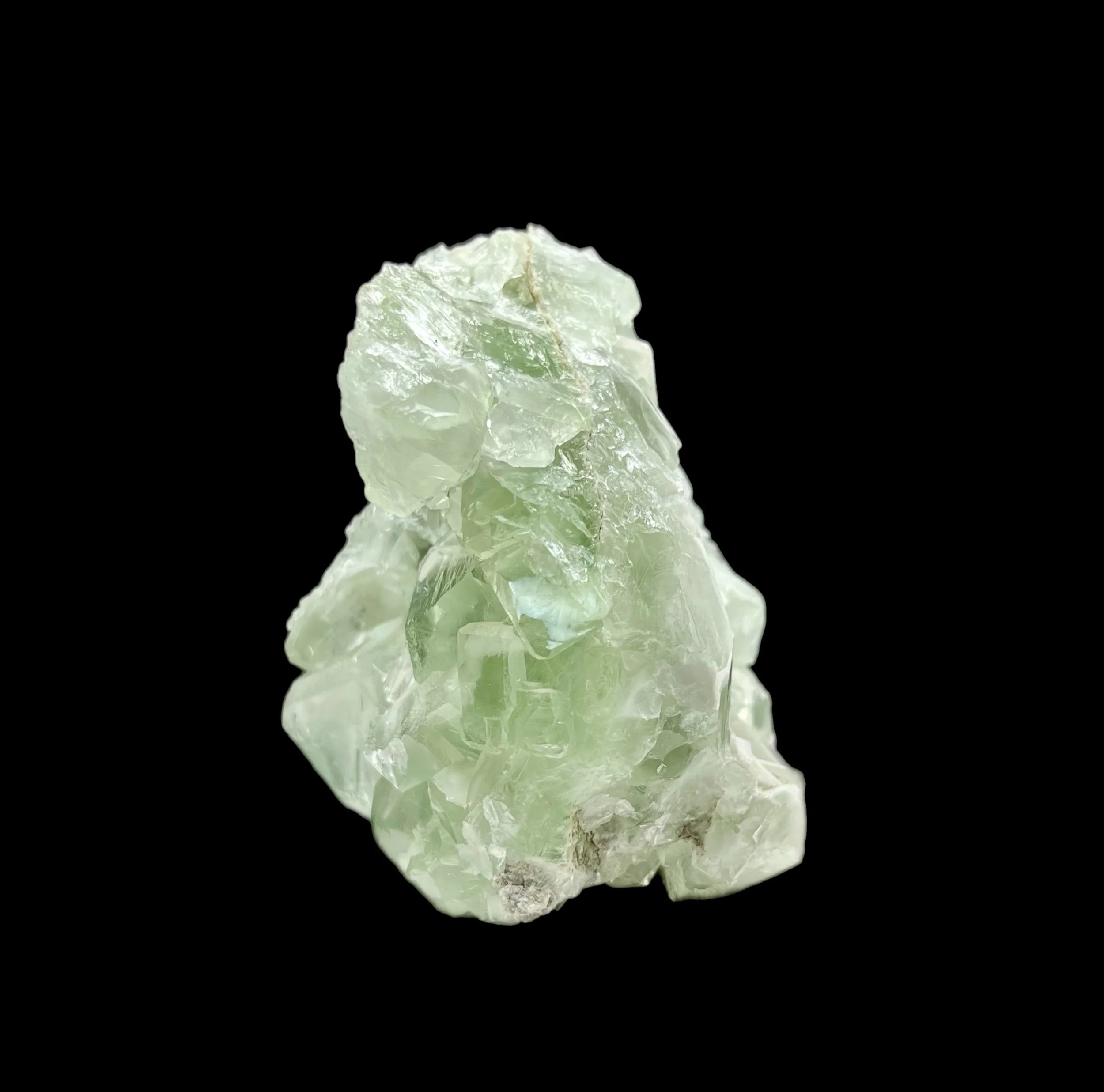
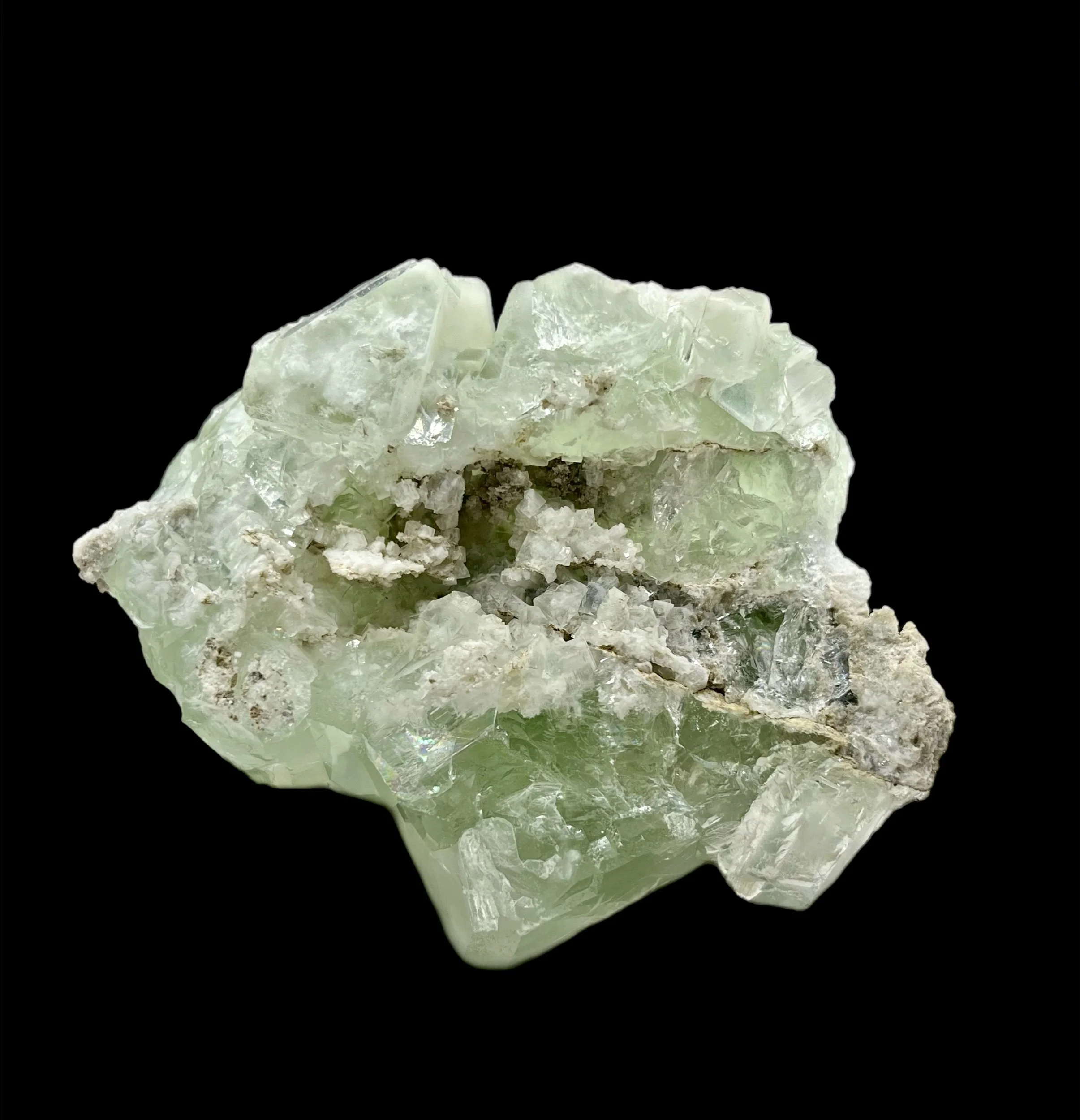
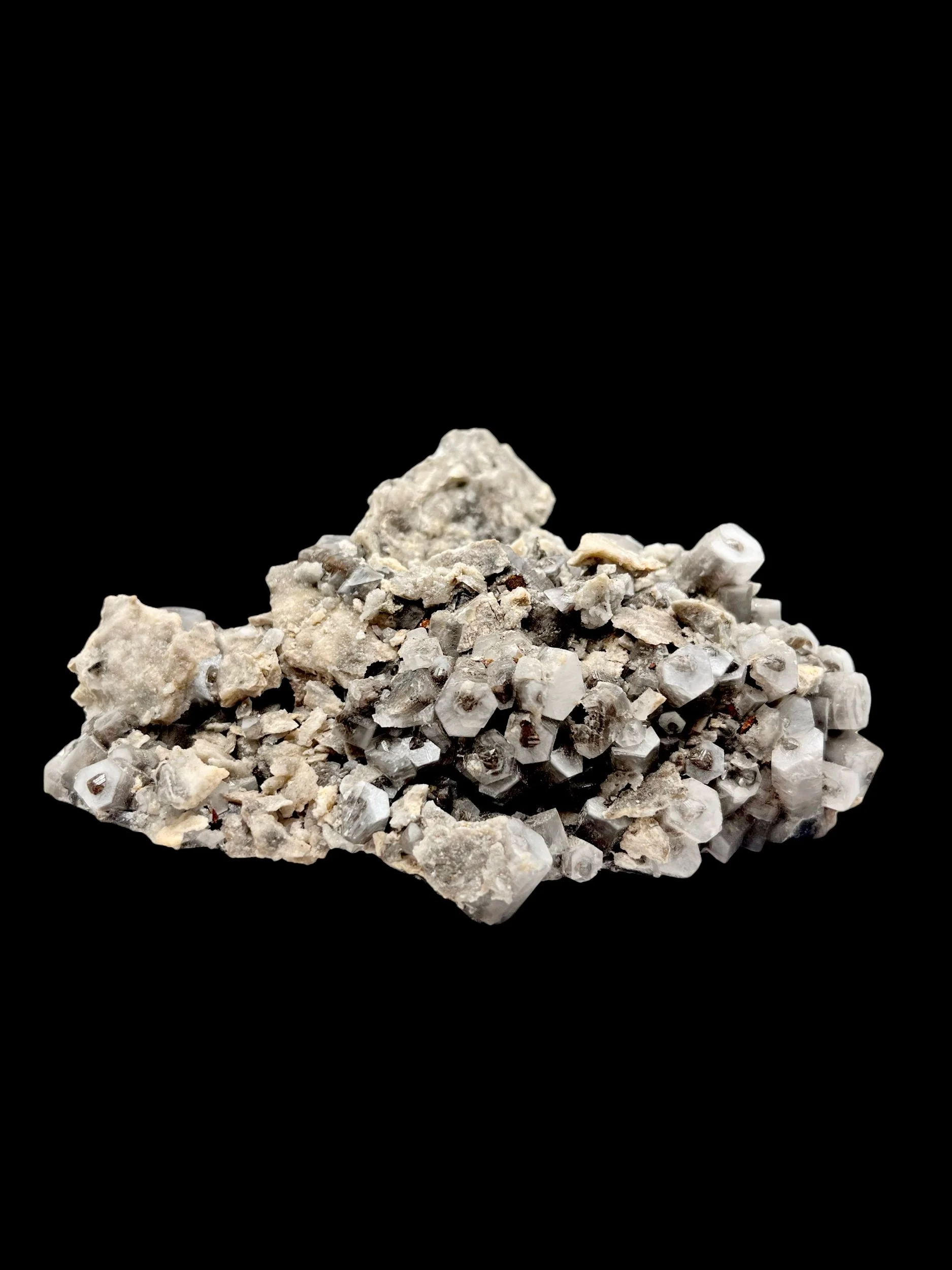
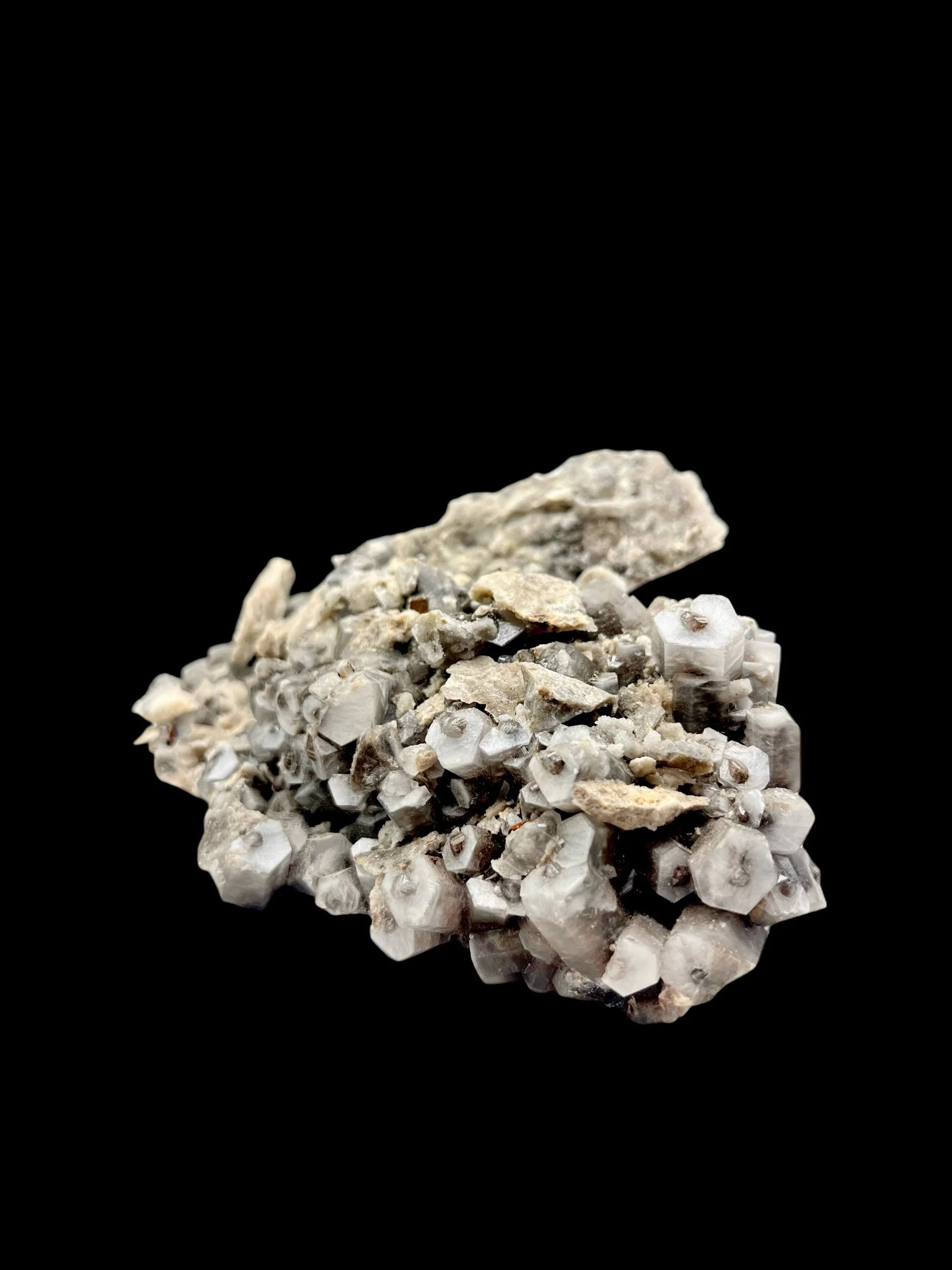
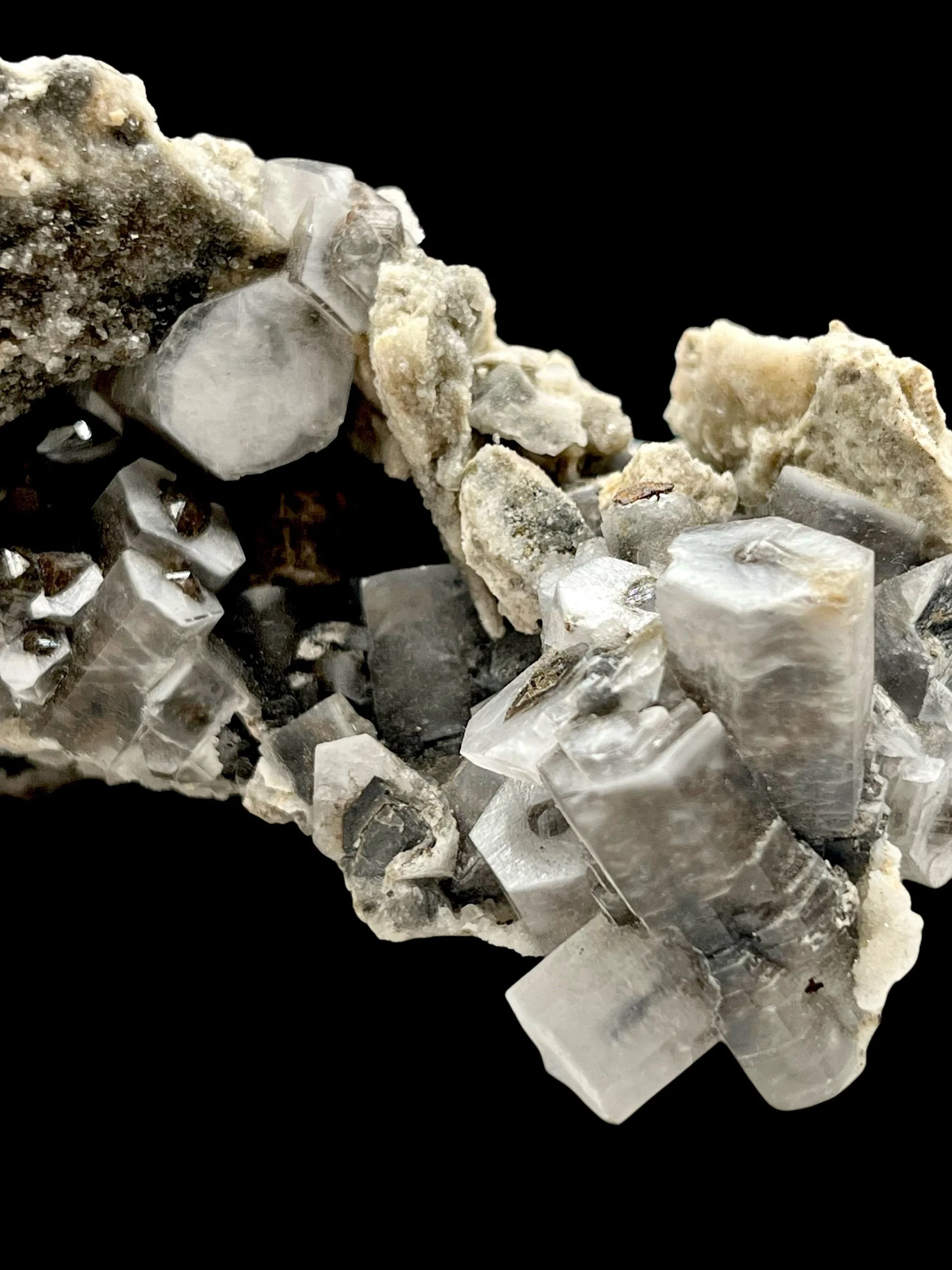
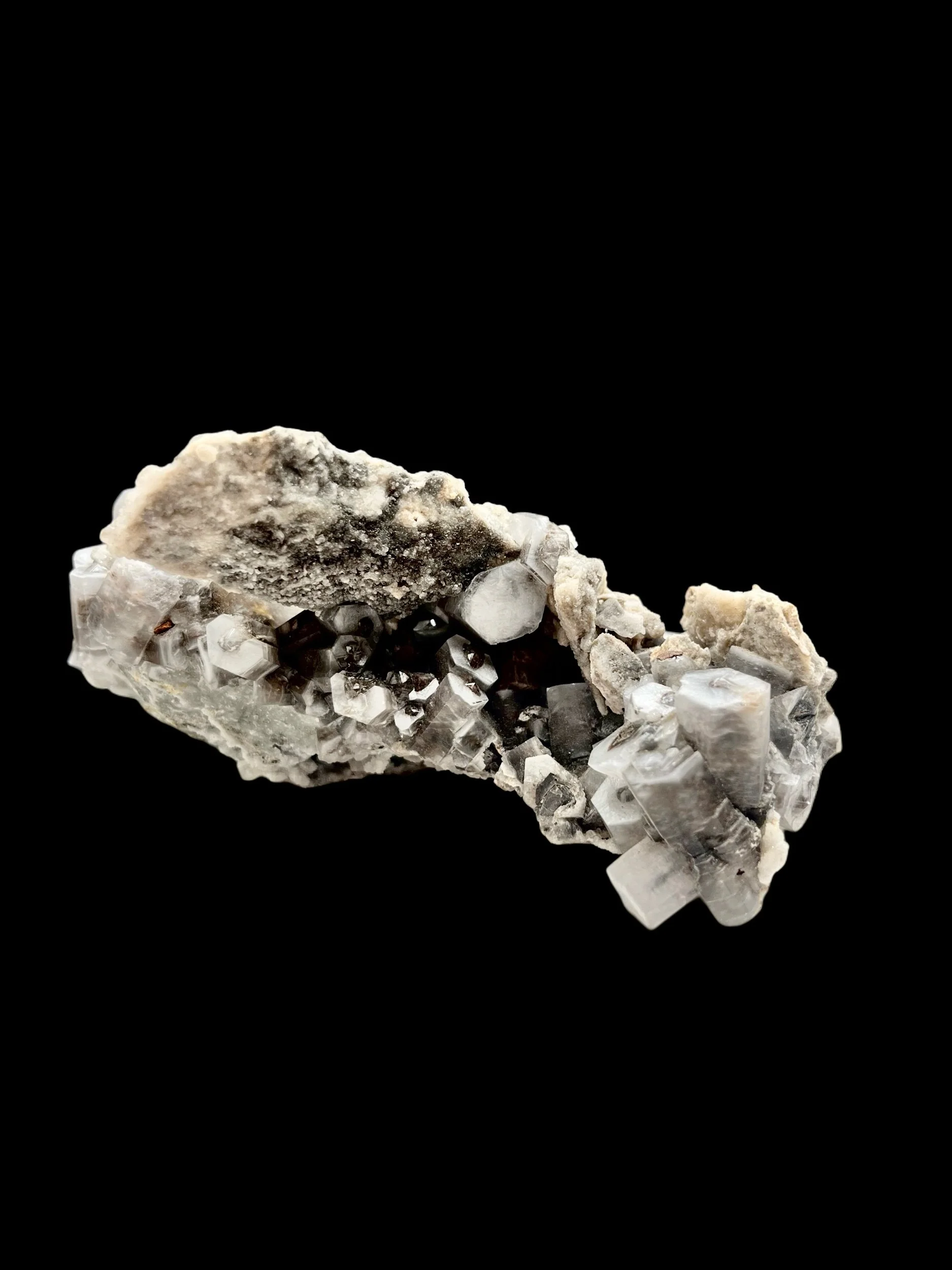
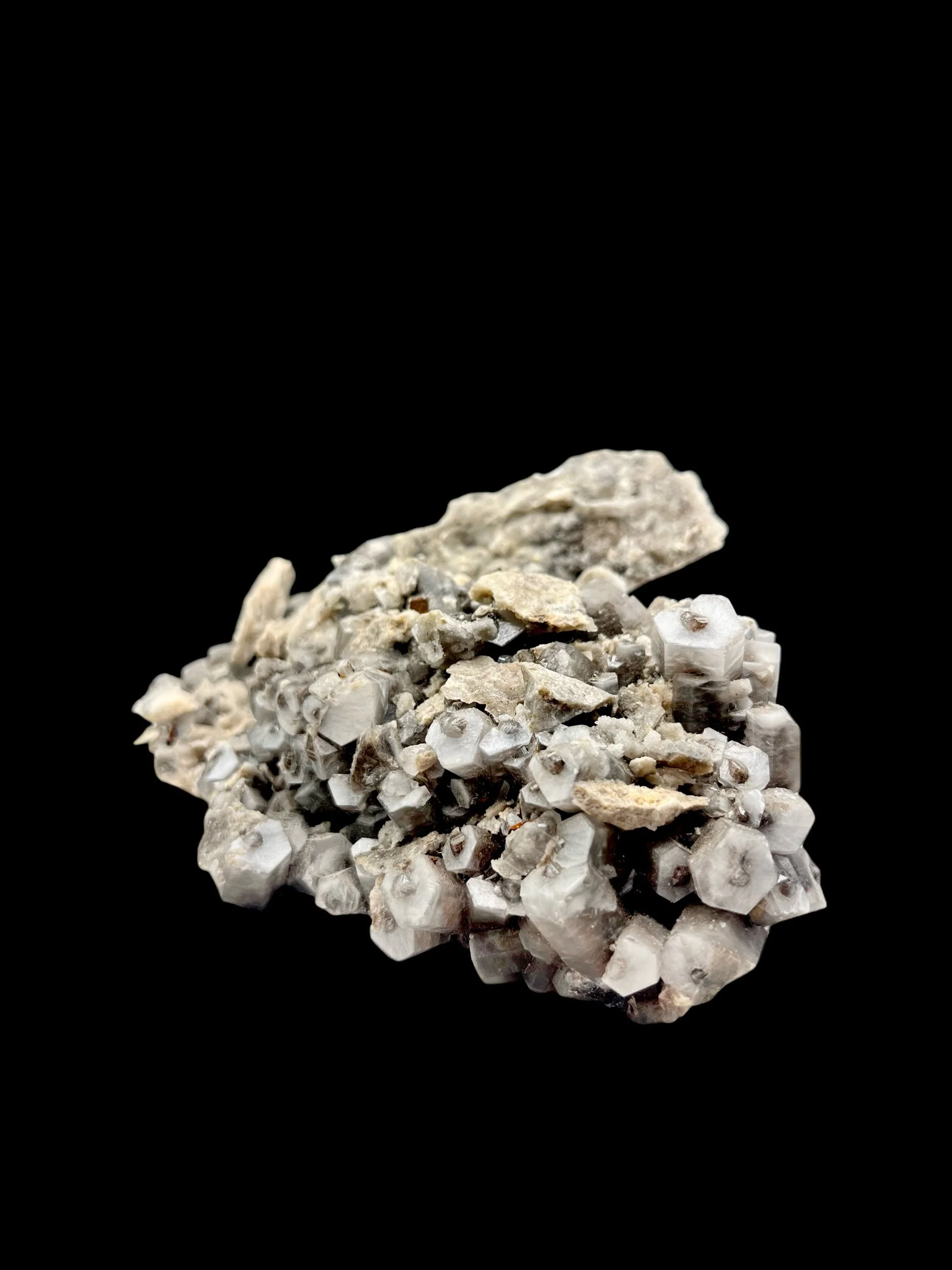
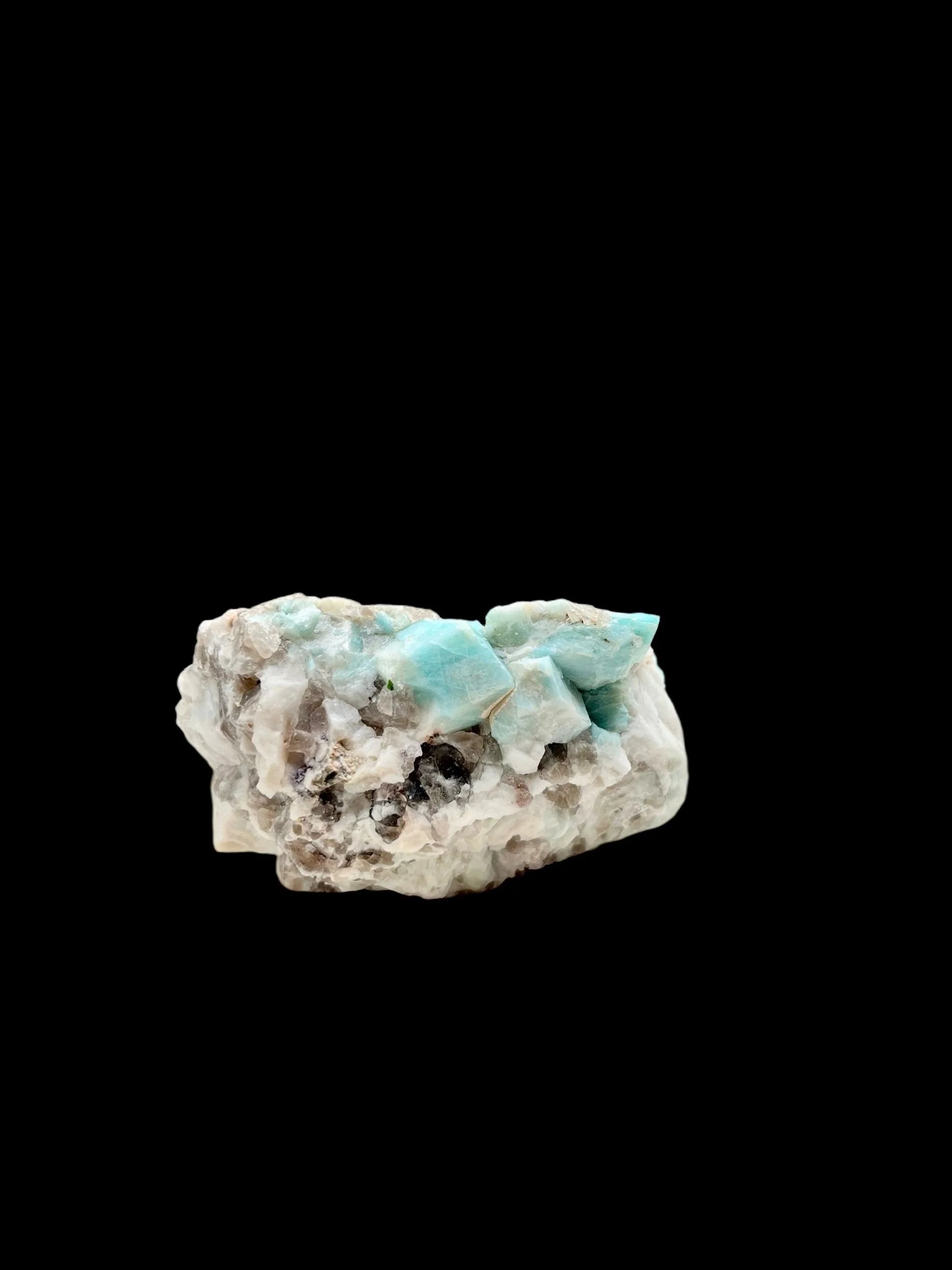
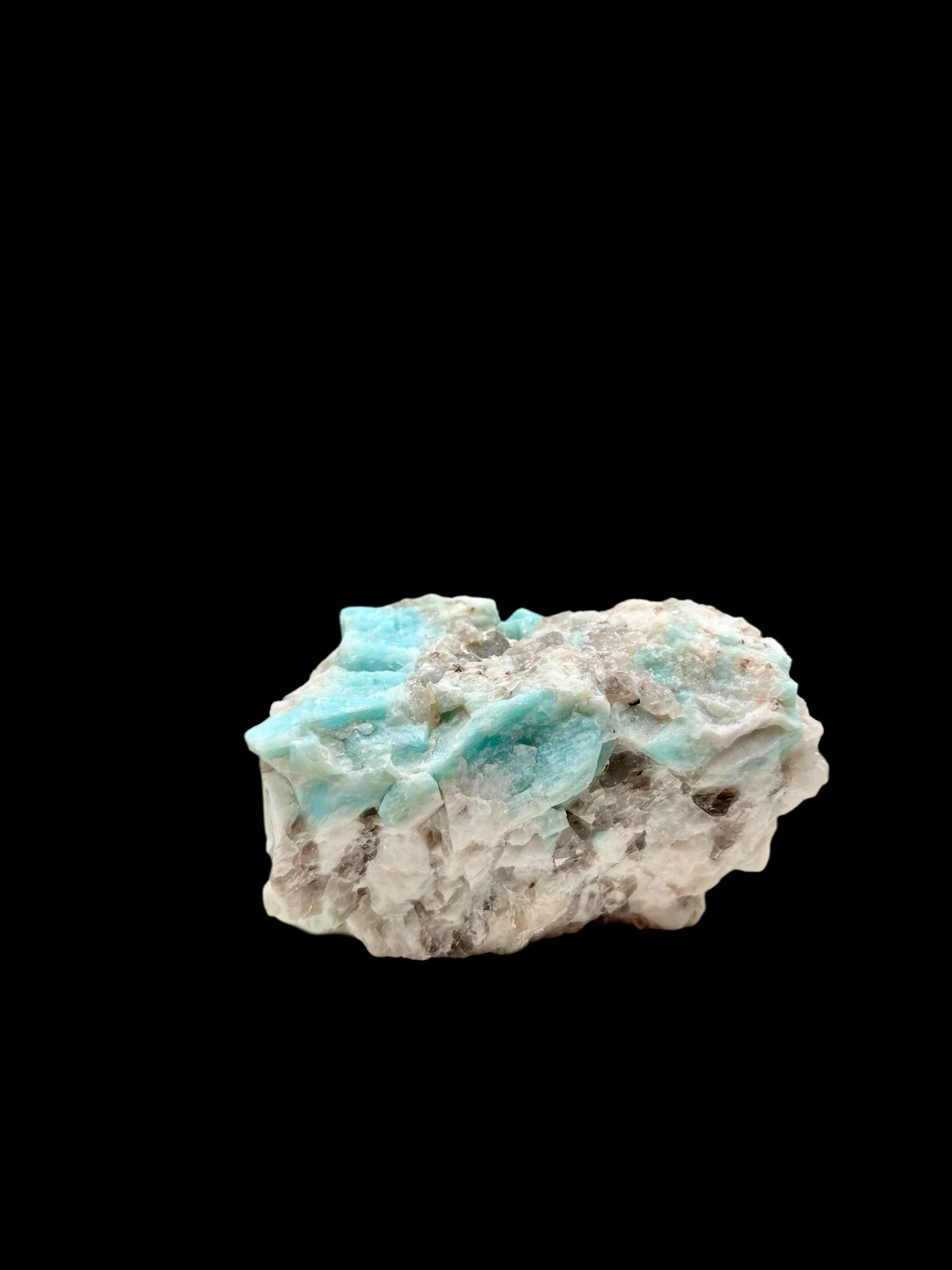
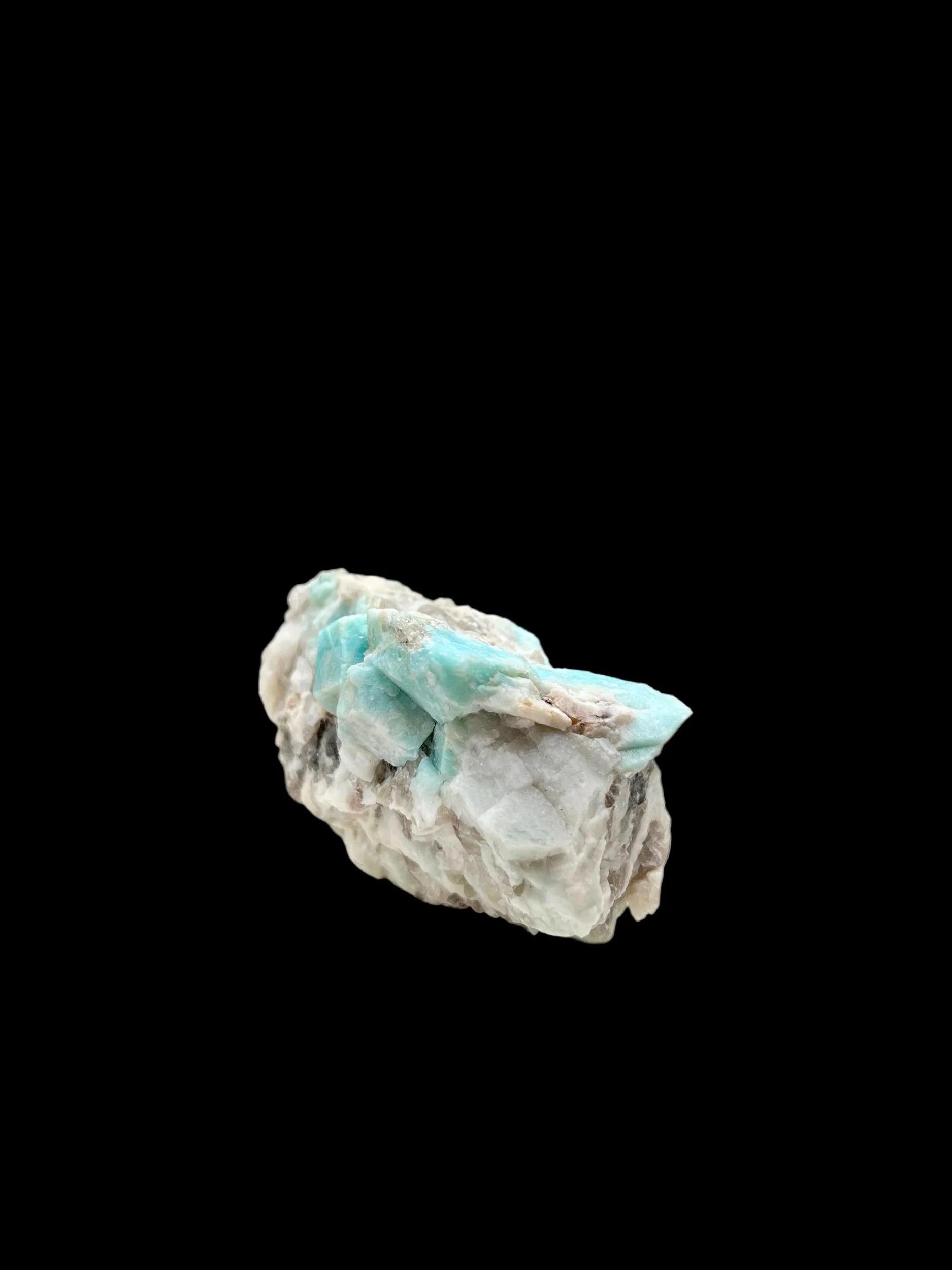
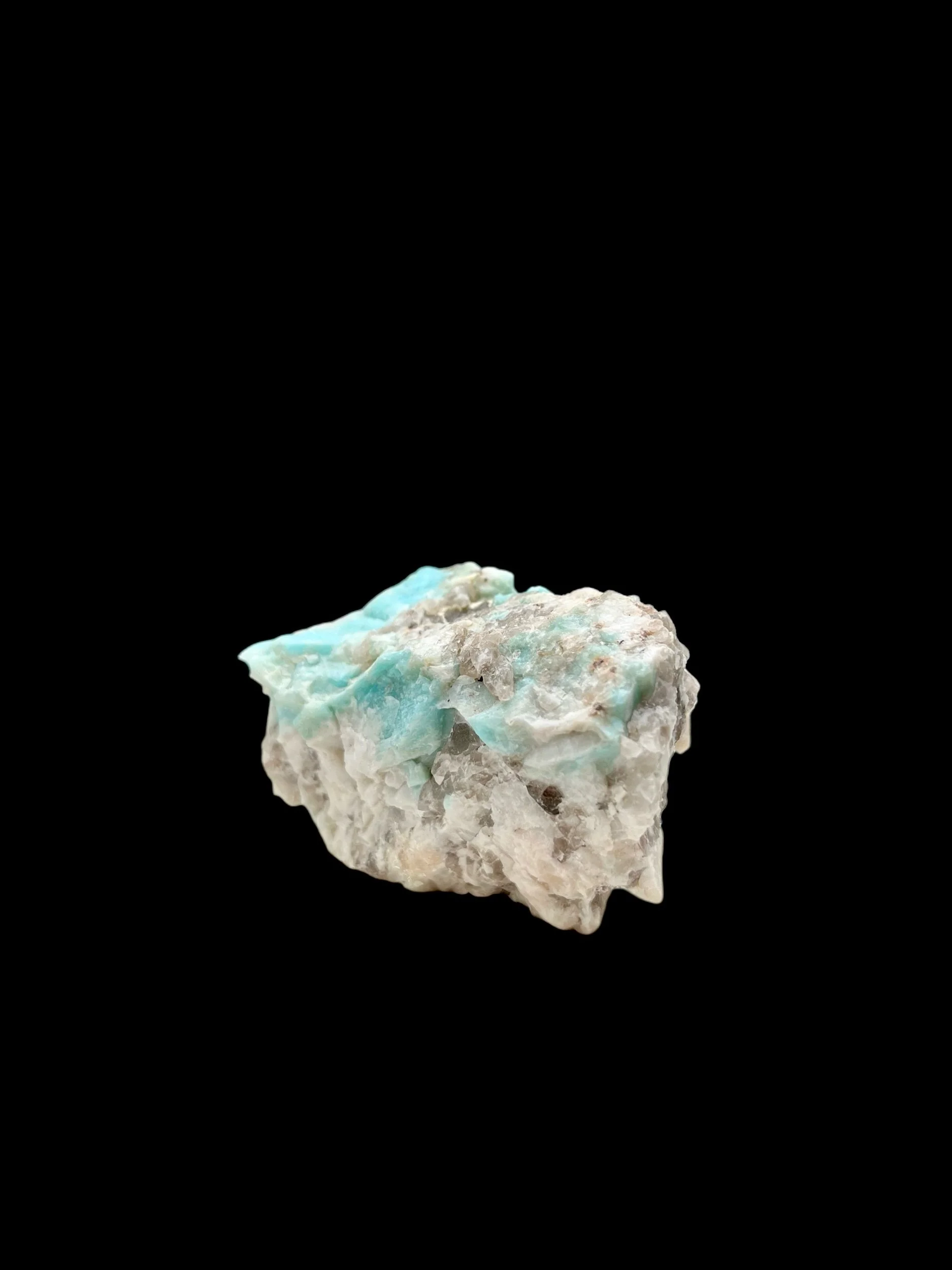
A captivating display of nature’s artistry, this fine mineral specimen features gems of richly saturated blue azurite intertwined with beautifully textured green malachite from the legendary Liufengshan Mine in Anhui Province, China.
The specimen is distinguished by its abundant emerald-green malachite, which forms an intricate arrangement of rounded, botryoidal growths and irregular, sculptural projections. These formations display an impressive variety of surface textures, ranging from finely velvety areas to radiating and crystalline aggregates.
Nestled beneath and between the malachite formations are brilliant clusters of deep royal-blue azurite crystals. Their angular faces and vitreous luster provide a striking contrast to the softer, rounded appearance of the surrounding malachite. Several larger blue crystals emerge prominently from the green mineral growths, creating beautiful focal points throughout the specimen.
This specimen offers remarkable depth and three-dimensional character. Its unique silhouette, projecting malachite formations, and recessed pockets of crystalline azurite make it especially appealing when viewed from different angles.
Dimensions, Weight & Locality
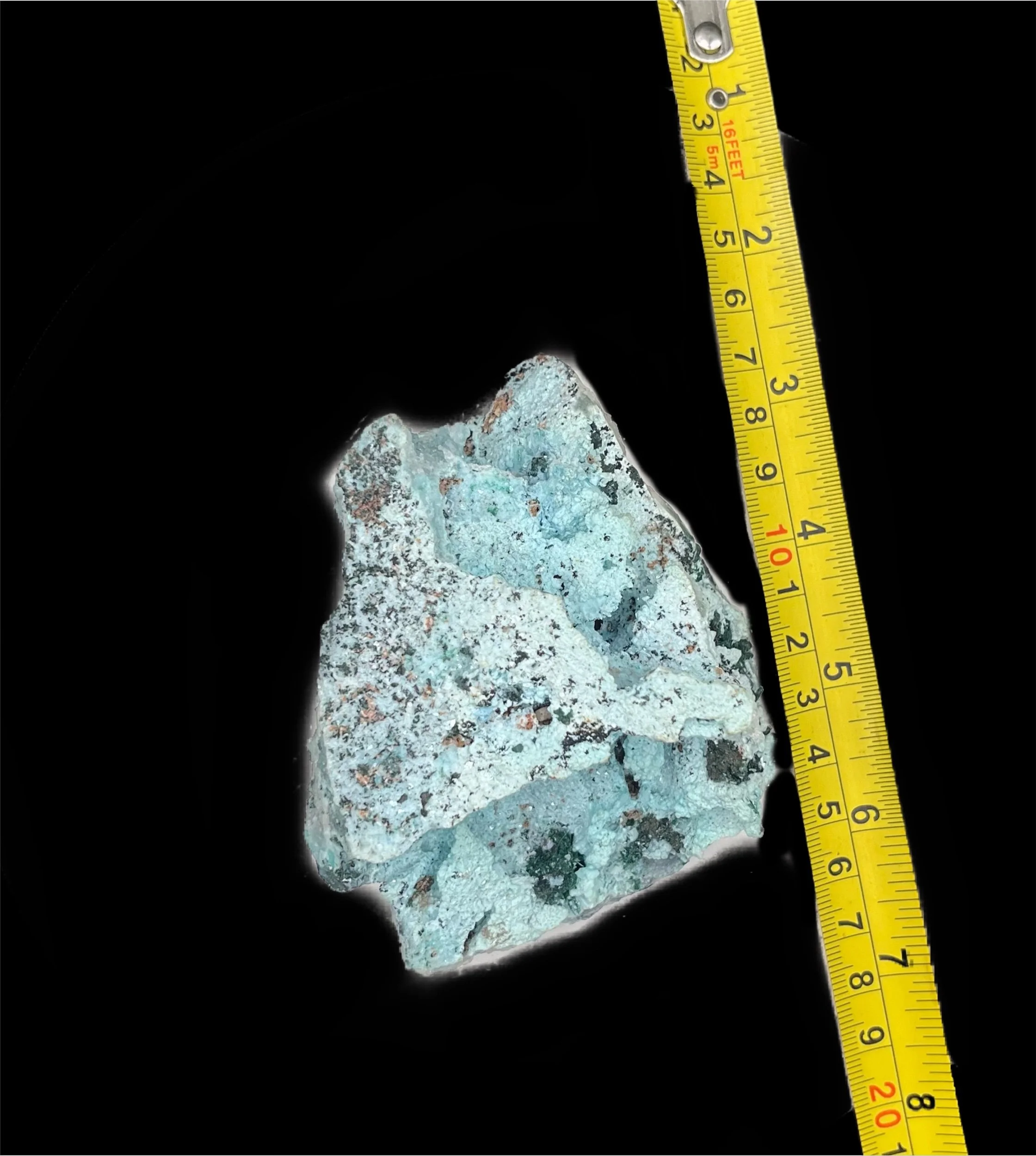
Weight: 73 grams
Dimensions: 1.75" × 1.5" × 1"
Locality: Liufengshan Mine (Liu Feng Shan Mine)Guichi District, Chizhou, Anhui Province, China
Metaphysical Properties
Traditionally associated with transformation, insight, and emotional balance.
Azurite is often regarded as a stone of wisdom, intuition, and intellectual clarity. Associated with the third eye chakra, it is believed to encourage deeper understanding, creativity, and thoughtful reflection.
Malachite is traditionally considered a stone of transformation, emotional growth, and protection. Connected symbolically with the heart chakra, it is believed to encourage positive change, emotional resilience, and personal development.
Together, azurite and malachite are believed to create a harmonious balance between intellectual awareness and emotional understanding, making this combination particularly meaningful within metaphysical traditions.
These associations reflect traditional beliefs and have not been scientifically established.
Collector's Notes
Located in Anhui Province, China, the Liufengshan Mine is internationally recognized for its remarkable azurite and malachite specimens.
Although the mine's history extends back several decades, exceptional examples from this locality began attracting significant attention within the international fine mineral collecting community in the early 2000s.
Liufengshan specimens are especially admired for their intensely saturated blue azurite crystals, a mineral rarely seen formed as distinct terminated gems, rich green malachite, and extraordinary diversity of mineral growth habits.
A beautiful example of the extraordinary mineral associations found at Liufengshan, this specimen is an excellent addition to a curated collection of copper minerals, Chinese mineral localities, or aesthetic miniature specimens.
How Botryoidal Malachite Forms
One of the most distinctive characteristics of this specimen is its abundance of rounded, botryoidal malachite formations.
The term botryoidal comes from the Greek word botrys, meaning a bunch of grapes. It describes mineral aggregates that develop rounded, bulbous surfaces resembling clustered grapes.
These formations often develop when numerous tiny crystals grow outward from localized centers, gradually producing rounded or hemispherical aggregates.
In malachite, the internal structure of these rounded growths frequently consists of extremely fine, radiating crystals. Depending on the size and arrangement of those crystals, the exterior may appear smooth, velvety, finely crystalline, or textured.
The sculptural green formations on this specimen beautifully demonstrate the variety of shapes and textures that malachite can develop.
Interesting Fact: Malachite Can Grow Over Azurite
Azurite and malachite frequently occur together because both develop in the oxidized portions of copper deposits.
As groundwater chemistry changes, malachite may form alongside existing azurite crystals, grow over portions of an earlier mineral surface, or gradually replace azurite through chemical alteration.
When malachite replaces azurite while preserving the original crystal's external shape, the resulting specimen is known as a malachite pseudomorph after azurite.
This process helps explain why some copper mineral specimens display such unusual combinations of rounded green formations and sharply angular blue crystals.
This specimen’s contrasting mineral habits provide a beautiful example of the complex environments in which these minerals develop.
Highlights
Botryoidal Malachite: Beautiful rounded green formations with intricate, naturally textured surfaces.
Lustrous Blue Azurite Gems: Rare formation of rich royal-blue crystals with sharply defined faces and attractive vitreous luster.
Exceptional Color Contrast: Vibrant emerald-green malachite against deeply saturated blue azurite.
Sculptural Growth: One of a kind projecting malachite formations create a distinctive three-dimensional appearance.
Fine Surface Detail: Subtle fibrous and radiating textures visible throughout the green mineral aggregates.
Natural Crystal Pockets: Recessed areas reveal densely clustered azurite crystals nestled among the malachite.
Multiple Display Angles: Interesting formations and mineral associations visible across several surfaces.
Renowned Locality: Originates from China's celebrated Liufengshan Mine in Anhui Province.
Miniature Collector Appeal: A compact yet visually complex specimen displaying two classic secondary copper minerals.
Mineralogy
Azurite
Chemical Formula: Cu₃(CO₃)₂(OH)₂
Mineral Class: Carbonates
Crystal System: Monoclinic
Mohs Hardness: 3.5–4
Color: Azure blue, royal blue, deep indigo
Luster: Vitreous (glassy)
Streak: Light blue
Cleavage: Perfect in one direction, fair in another
Specific Gravity: Approximately 3.77
Crystal Habit: Prismatic, tabular, bladed, clustered, massive, and occasionally botryoidal
Formation: Secondary copper carbonate mineral formed in the oxidized zones of copper deposits
Malachite
Chemical Formula: Cu₂(CO₃)(OH)₂
Mineral Class: Carbonates
Crystal System: Monoclinic
Mohs Hardness: 3.5–4
Color: Bright green to deep emerald green
Luster: Silky, vitreous, or earthy depending on crystal habit
Streak: Light green
Cleavage: Perfect in one direction, fair in another
Specific Gravity: Approximately 3.6–4.05
Crystal Habit: Botryoidal, mammillary, fibrous, radiating, acicular, and massive aggregates
Formation: Secondary copper carbonate mineral commonly formed through oxidation and alteration of copper-bearing minerals
Description
A captivating display of nature’s artistry, this fine mineral specimen features gems of richly saturated blue azurite intertwined with beautifully textured green malachite from the legendary Liufengshan Mine in Anhui Province, China.
The specimen is distinguished by its abundant emerald-green malachite, which forms an intricate arrangement of rounded, botryoidal growths and irregular, sculptural projections. These formations display an impressive variety of surface textures, ranging from finely velvety areas to radiating and crystalline aggregates.
Nestled beneath and between the malachite formations are brilliant clusters of deep royal-blue azurite crystals. Their angular faces and vitreous luster provide a striking contrast to the softer, rounded appearance of the surrounding malachite. Several larger blue crystals emerge prominently from the green mineral growths, creating beautiful focal points throughout the specimen.
This specimen offers remarkable depth and three-dimensional character. Its unique silhouette, projecting malachite formations, and recessed pockets of crystalline azurite make it especially appealing when viewed from different angles.
Dimensions, Weight & Locality
Weight: 73 grams
Dimensions: 1.75" × 1.5" × 1"
Locality: Liufengshan Mine (Liu Feng Shan Mine)Guichi District, Chizhou, Anhui Province, China
Metaphysical Properties
Traditionally associated with transformation, insight, and emotional balance.
Azurite is often regarded as a stone of wisdom, intuition, and intellectual clarity. Associated with the third eye chakra, it is believed to encourage deeper understanding, creativity, and thoughtful reflection.
Malachite is traditionally considered a stone of transformation, emotional growth, and protection. Connected symbolically with the heart chakra, it is believed to encourage positive change, emotional resilience, and personal development.
Together, azurite and malachite are believed to create a harmonious balance between intellectual awareness and emotional understanding, making this combination particularly meaningful within metaphysical traditions.
These associations reflect traditional beliefs and have not been scientifically established.
Collector's Notes
Located in Anhui Province, China, the Liufengshan Mine is internationally recognized for its remarkable azurite and malachite specimens.
Although the mine's history extends back several decades, exceptional examples from this locality began attracting significant attention within the international fine mineral collecting community in the early 2000s.
Liufengshan specimens are especially admired for their intensely saturated blue azurite crystals, a mineral rarely seen formed as distinct terminated gems, rich green malachite, and extraordinary diversity of mineral growth habits.
A beautiful example of the extraordinary mineral associations found at Liufengshan, this specimen is an excellent addition to a curated collection of copper minerals, Chinese mineral localities, or aesthetic miniature specimens.
How Botryoidal Malachite Forms
One of the most distinctive characteristics of this specimen is its abundance of rounded, botryoidal malachite formations.
The term botryoidal comes from the Greek word botrys, meaning a bunch of grapes. It describes mineral aggregates that develop rounded, bulbous surfaces resembling clustered grapes.
These formations often develop when numerous tiny crystals grow outward from localized centers, gradually producing rounded or hemispherical aggregates.
In malachite, the internal structure of these rounded growths frequently consists of extremely fine, radiating crystals. Depending on the size and arrangement of those crystals, the exterior may appear smooth, velvety, finely crystalline, or textured.
The sculptural green formations on this specimen beautifully demonstrate the variety of shapes and textures that malachite can develop.
Interesting Fact: Malachite Can Grow Over Azurite
Azurite and malachite frequently occur together because both develop in the oxidized portions of copper deposits.
As groundwater chemistry changes, malachite may form alongside existing azurite crystals, grow over portions of an earlier mineral surface, or gradually replace azurite through chemical alteration.
When malachite replaces azurite while preserving the original crystal's external shape, the resulting specimen is known as a malachite pseudomorph after azurite.
This process helps explain why some copper mineral specimens display such unusual combinations of rounded green formations and sharply angular blue crystals.
This specimen’s contrasting mineral habits provide a beautiful example of the complex environments in which these minerals develop.
Highlights
Botryoidal Malachite: Beautiful rounded green formations with intricate, naturally textured surfaces.
Lustrous Blue Azurite Gems: Rare formation of rich royal-blue crystals with sharply defined faces and attractive vitreous luster.
Exceptional Color Contrast: Vibrant emerald-green malachite against deeply saturated blue azurite.
Sculptural Growth: One of a kind projecting malachite formations create a distinctive three-dimensional appearance.
Fine Surface Detail: Subtle fibrous and radiating textures visible throughout the green mineral aggregates.
Natural Crystal Pockets: Recessed areas reveal densely clustered azurite crystals nestled among the malachite.
Multiple Display Angles: Interesting formations and mineral associations visible across several surfaces.
Renowned Locality: Originates from China's celebrated Liufengshan Mine in Anhui Province.
Miniature Collector Appeal: A compact yet visually complex specimen displaying two classic secondary copper minerals.
Mineralogy
Azurite
Chemical Formula: Cu₃(CO₃)₂(OH)₂
Mineral Class: Carbonates
Crystal System: Monoclinic
Mohs Hardness: 3.5–4
Color: Azure blue, royal blue, deep indigo
Luster: Vitreous (glassy)
Streak: Light blue
Cleavage: Perfect in one direction, fair in another
Specific Gravity: Approximately 3.77
Crystal Habit: Prismatic, tabular, bladed, clustered, massive, and occasionally botryoidal
Formation: Secondary copper carbonate mineral formed in the oxidized zones of copper deposits
Malachite
Chemical Formula: Cu₂(CO₃)(OH)₂
Mineral Class: Carbonates
Crystal System: Monoclinic
Mohs Hardness: 3.5–4
Color: Bright green to deep emerald green
Luster: Silky, vitreous, or earthy depending on crystal habit
Streak: Light green
Cleavage: Perfect in one direction, fair in another
Specific Gravity: Approximately 3.6–4.05
Crystal Habit: Botryoidal, mammillary, fibrous, radiating, acicular, and massive aggregates
Formation: Secondary copper carbonate mineral commonly formed through oxidation and alteration of copper-bearing minerals


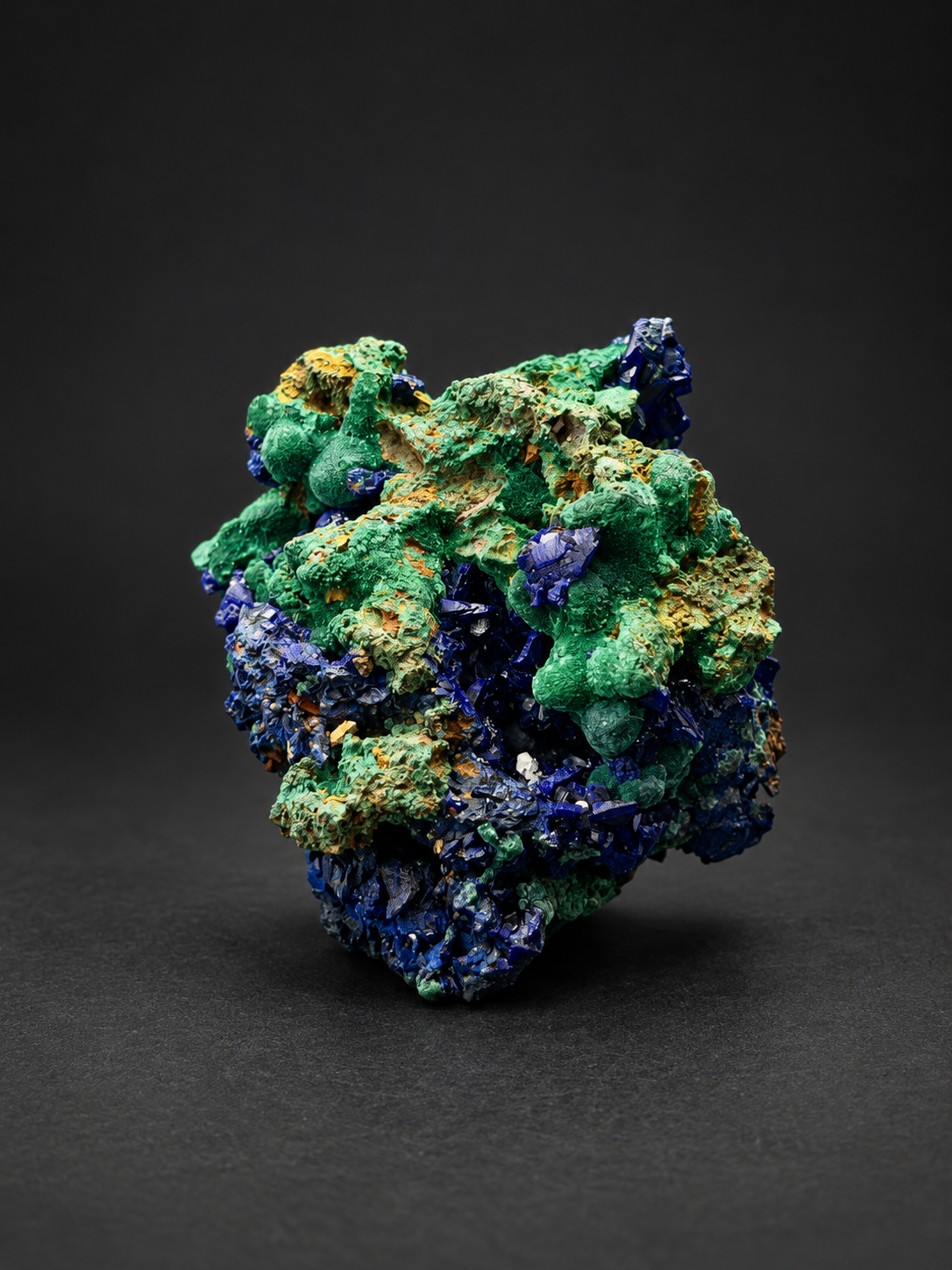 Image 1 of 6
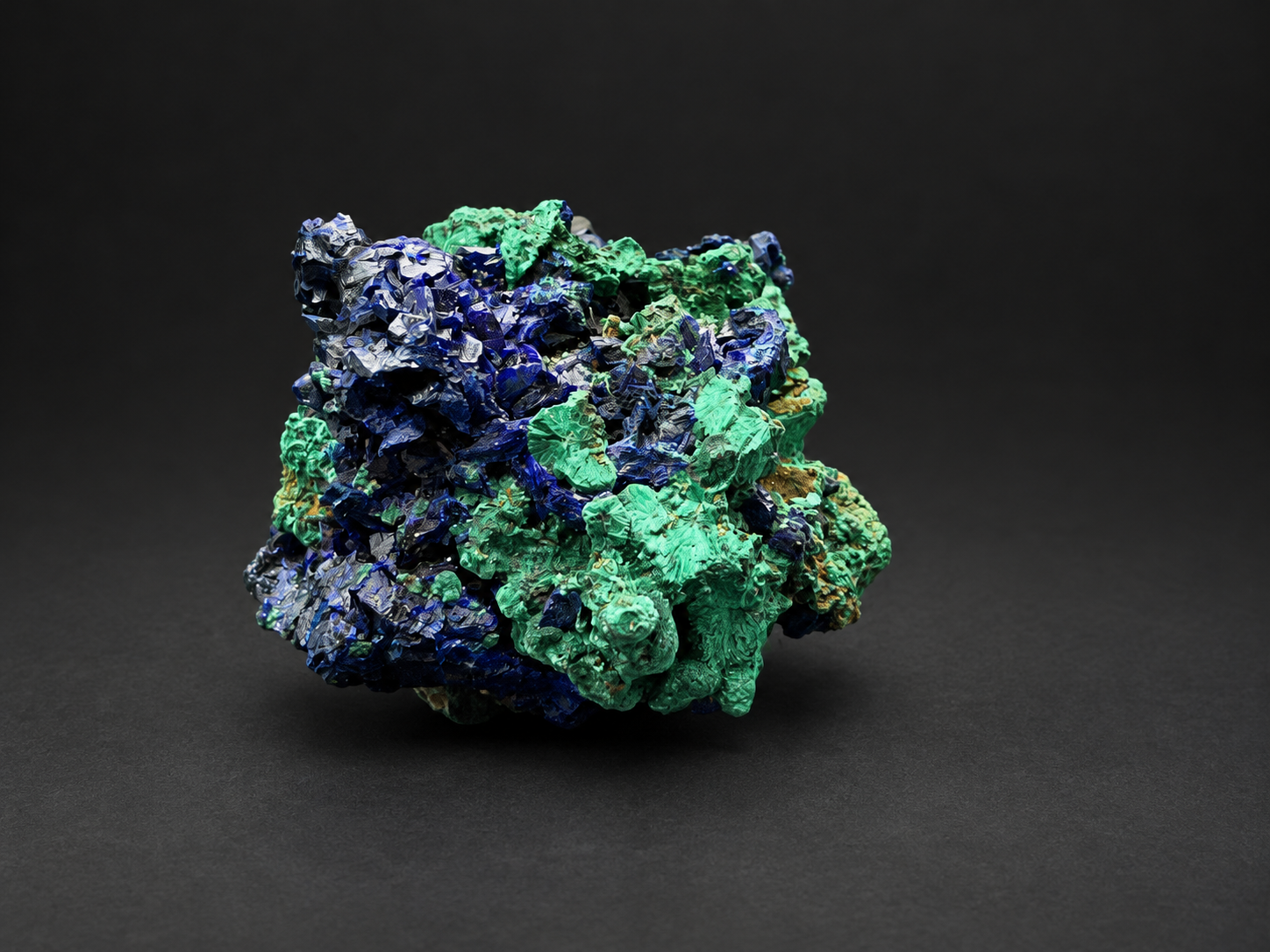 Image 2 of 6
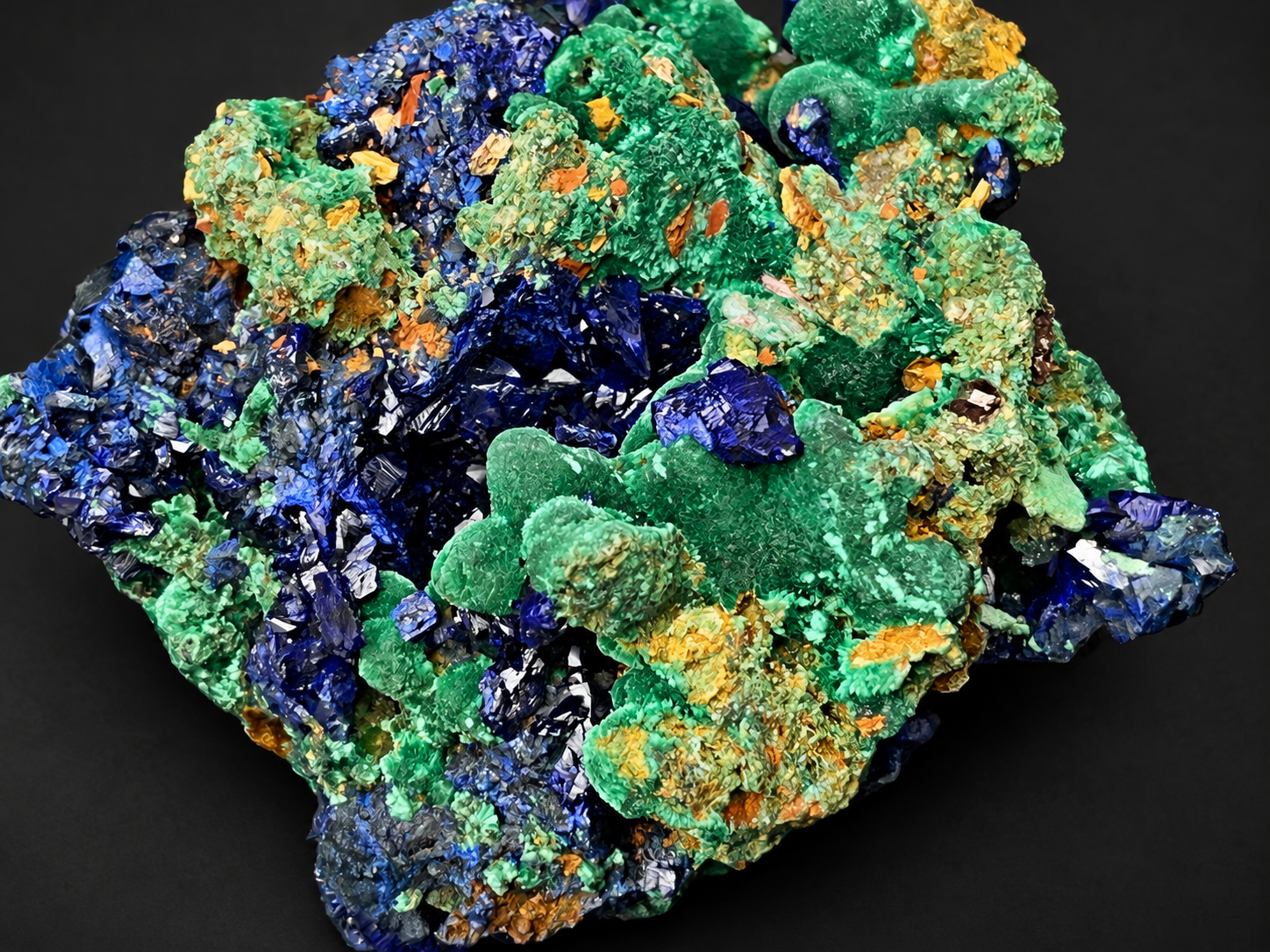 Image 3 of 6
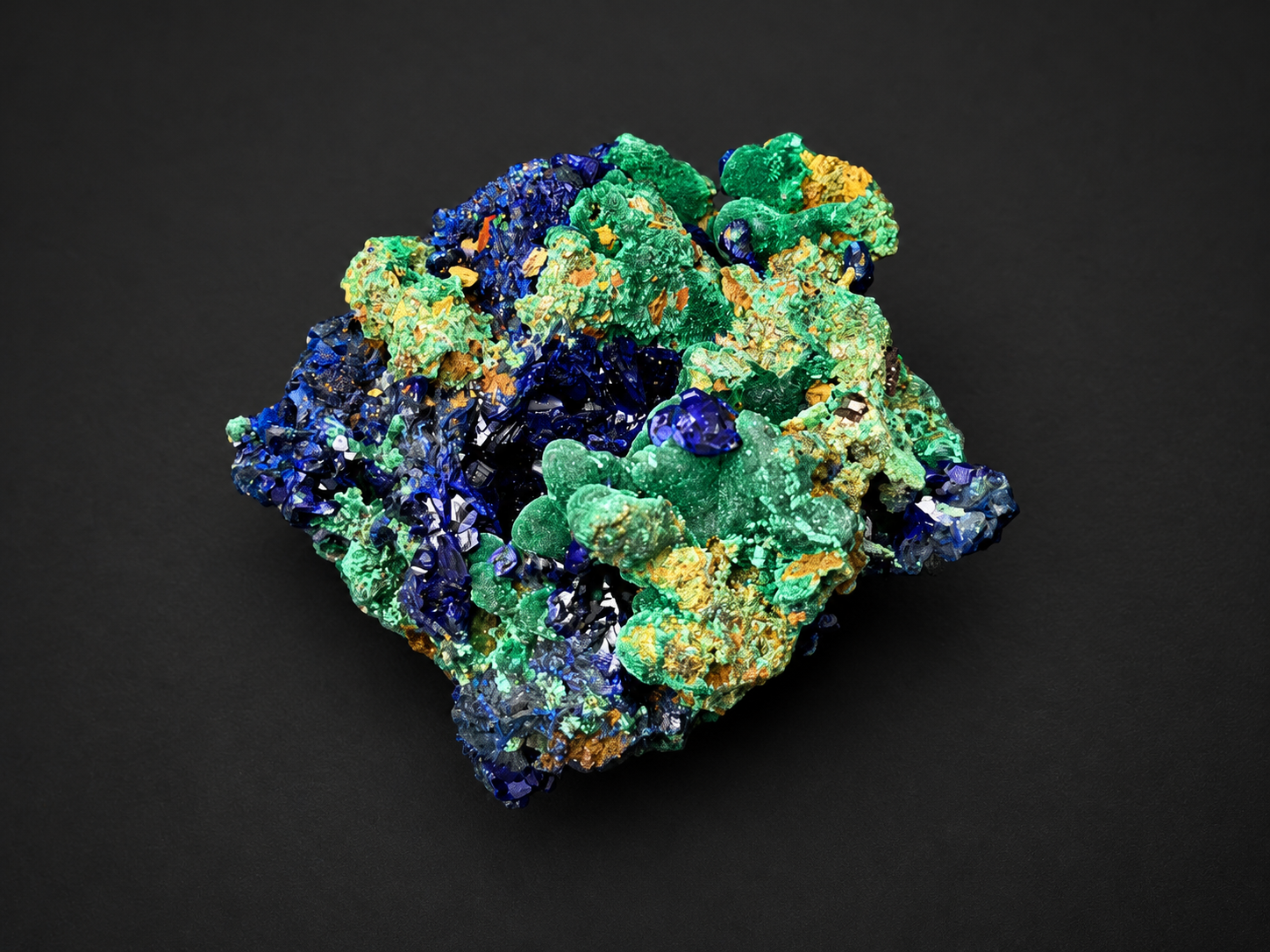 Image 4 of 6
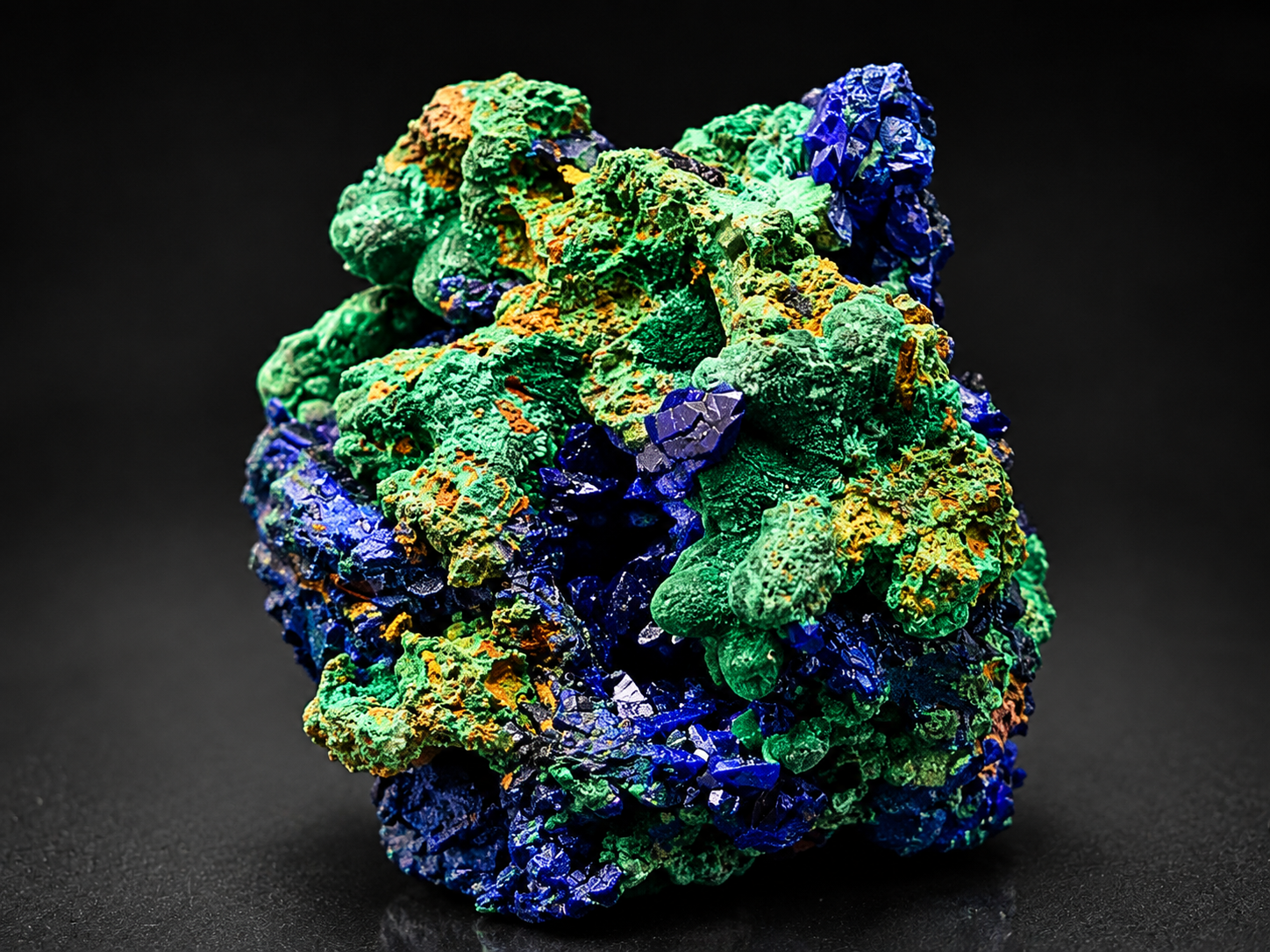 Image 5 of 6
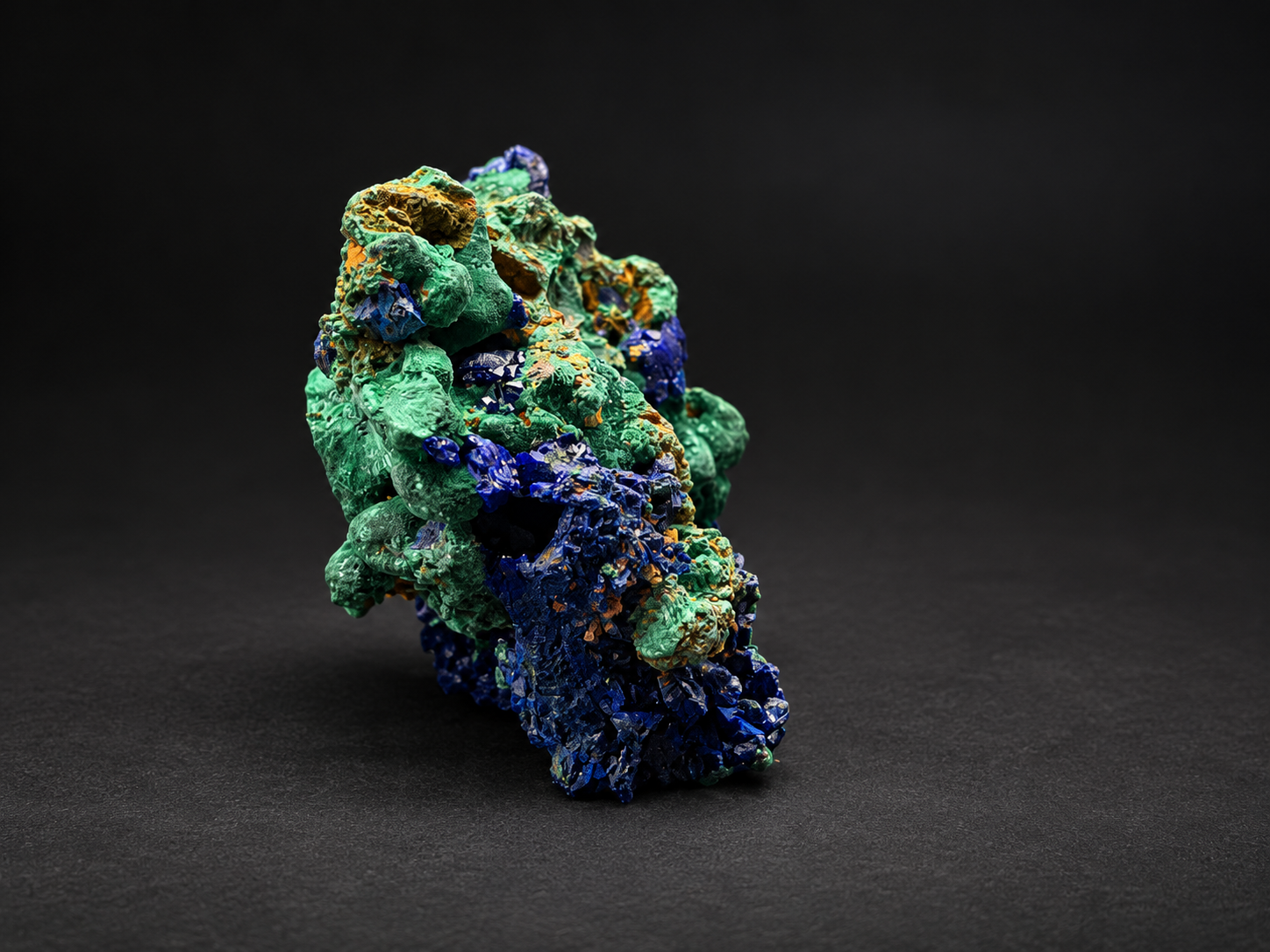 Image 6 of 6