Description
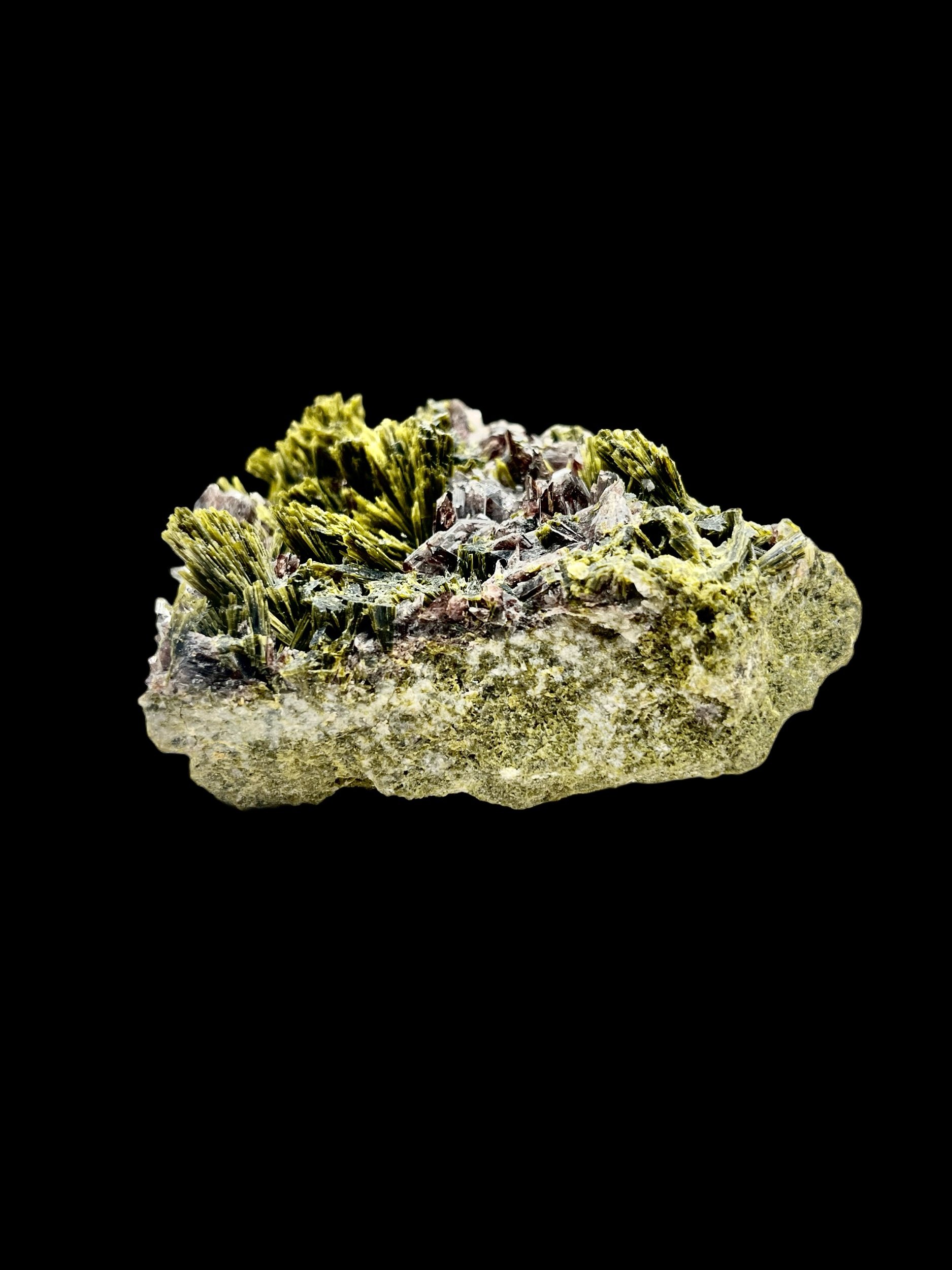
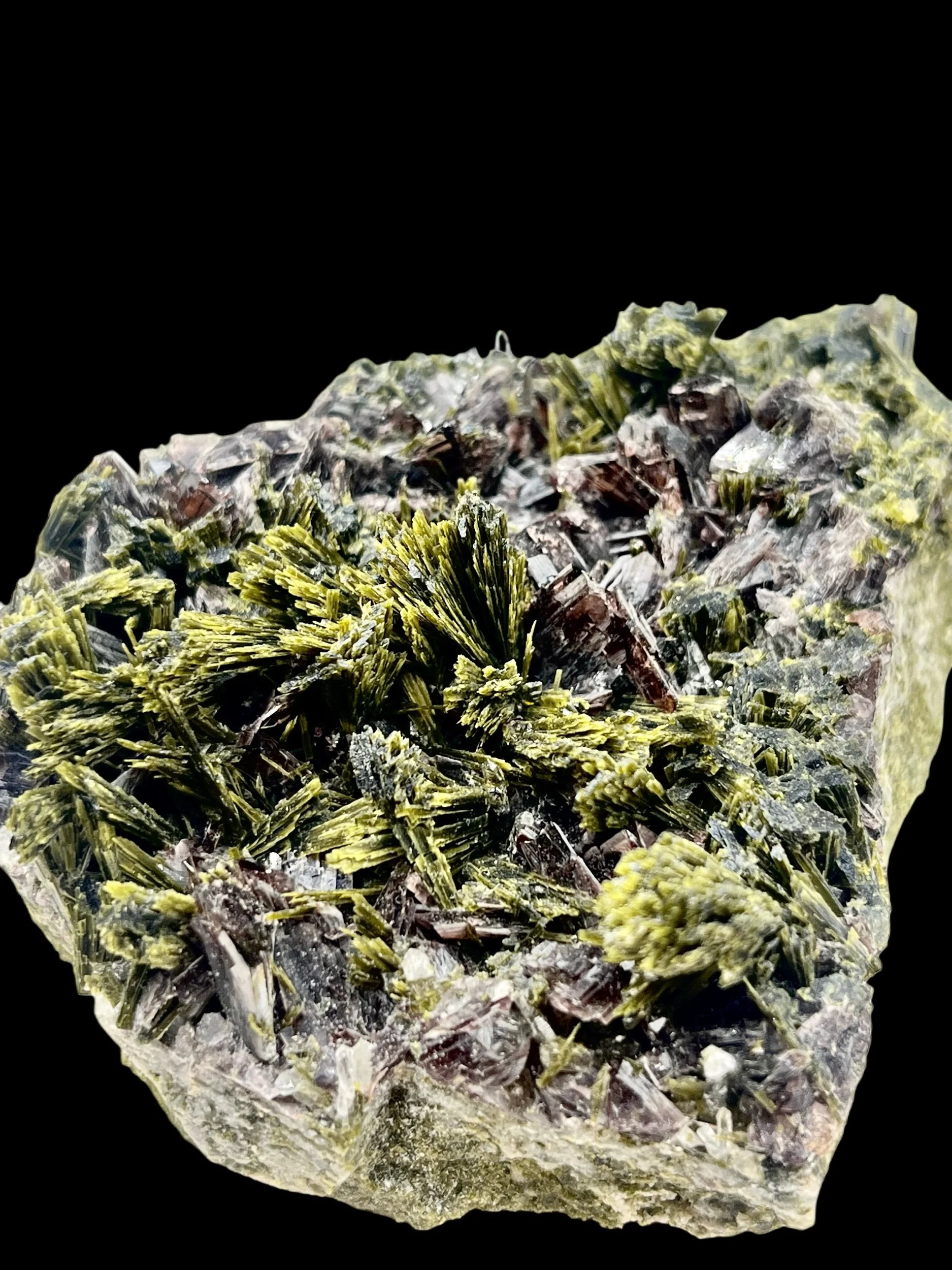
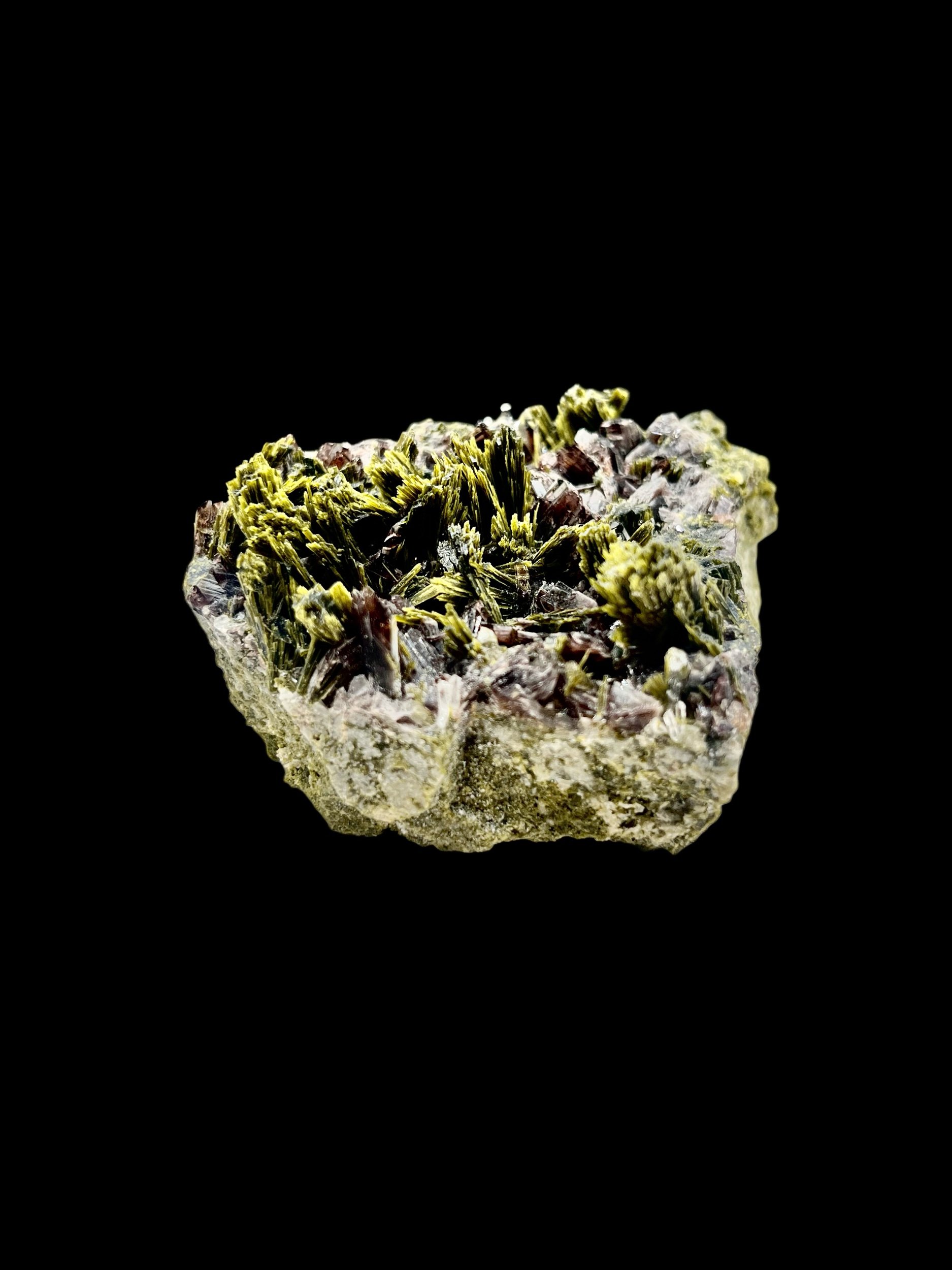
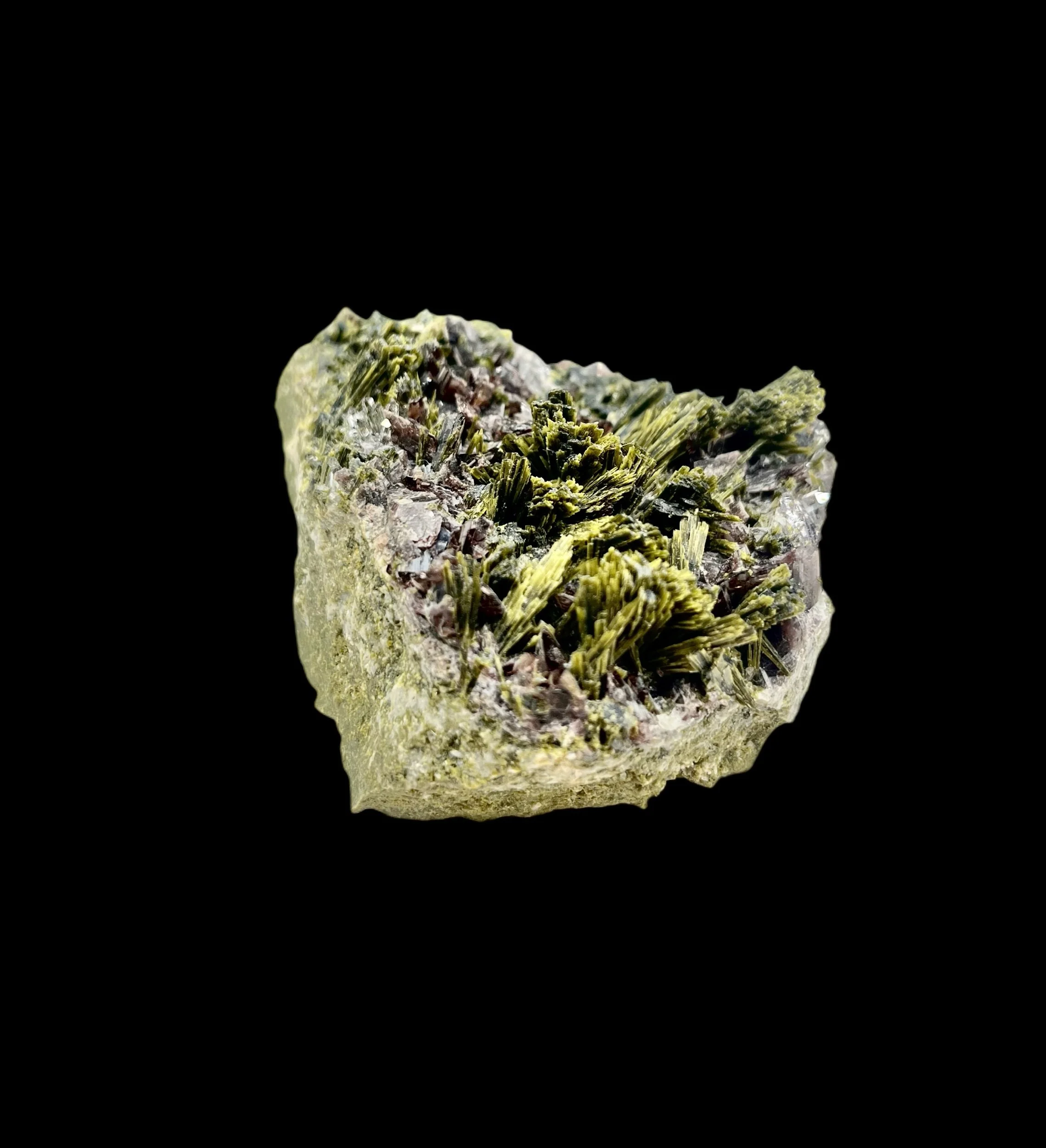
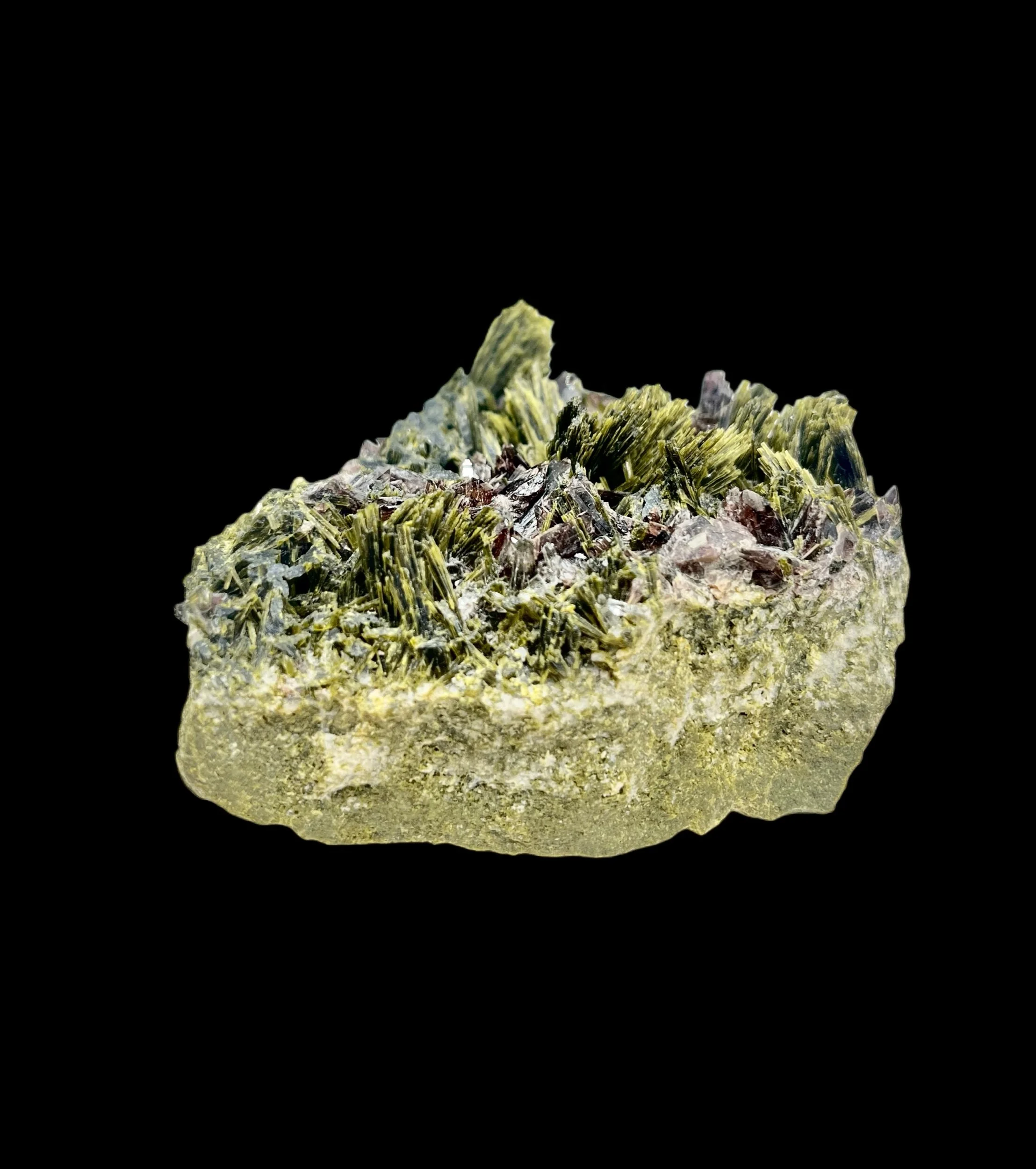
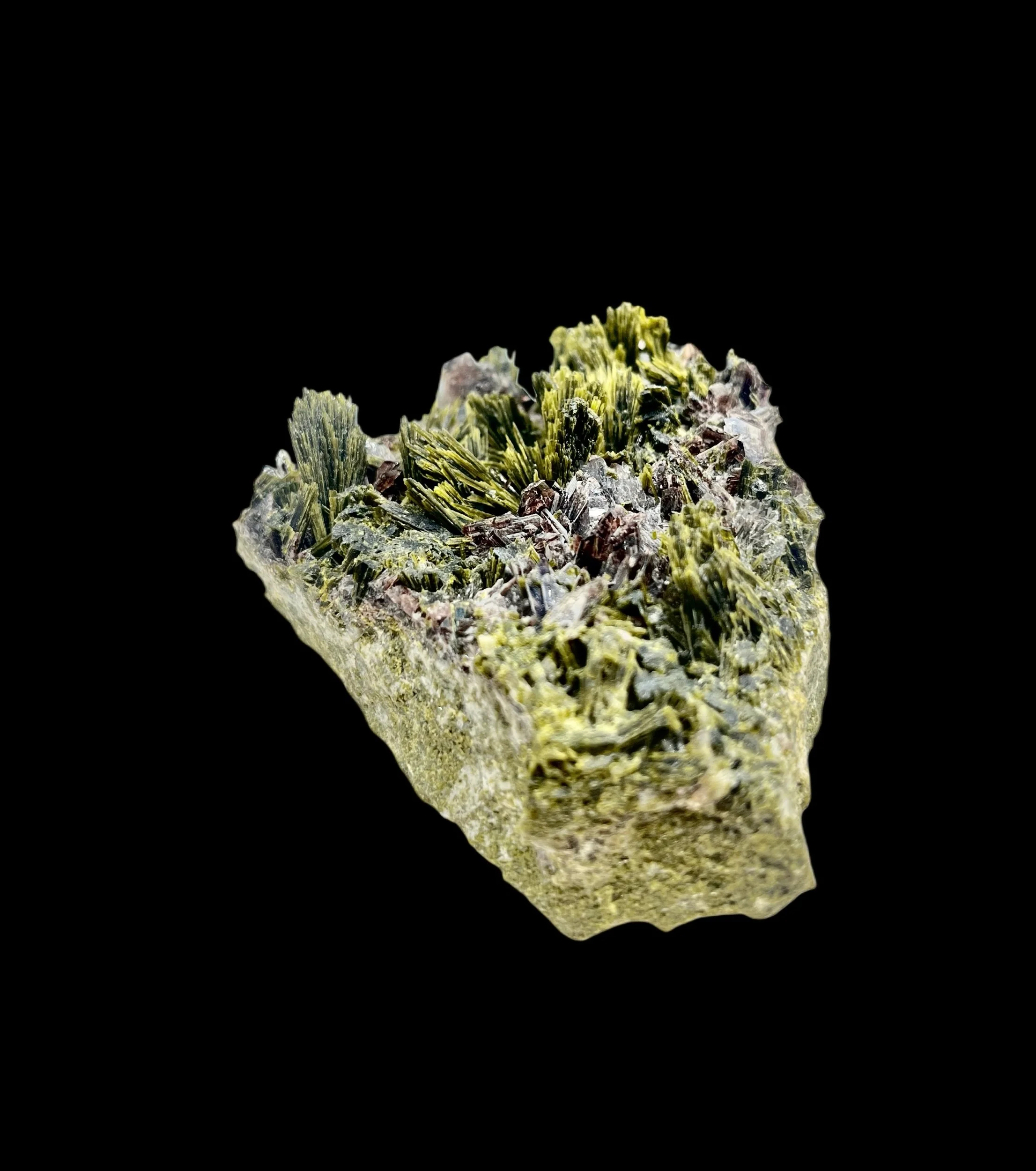
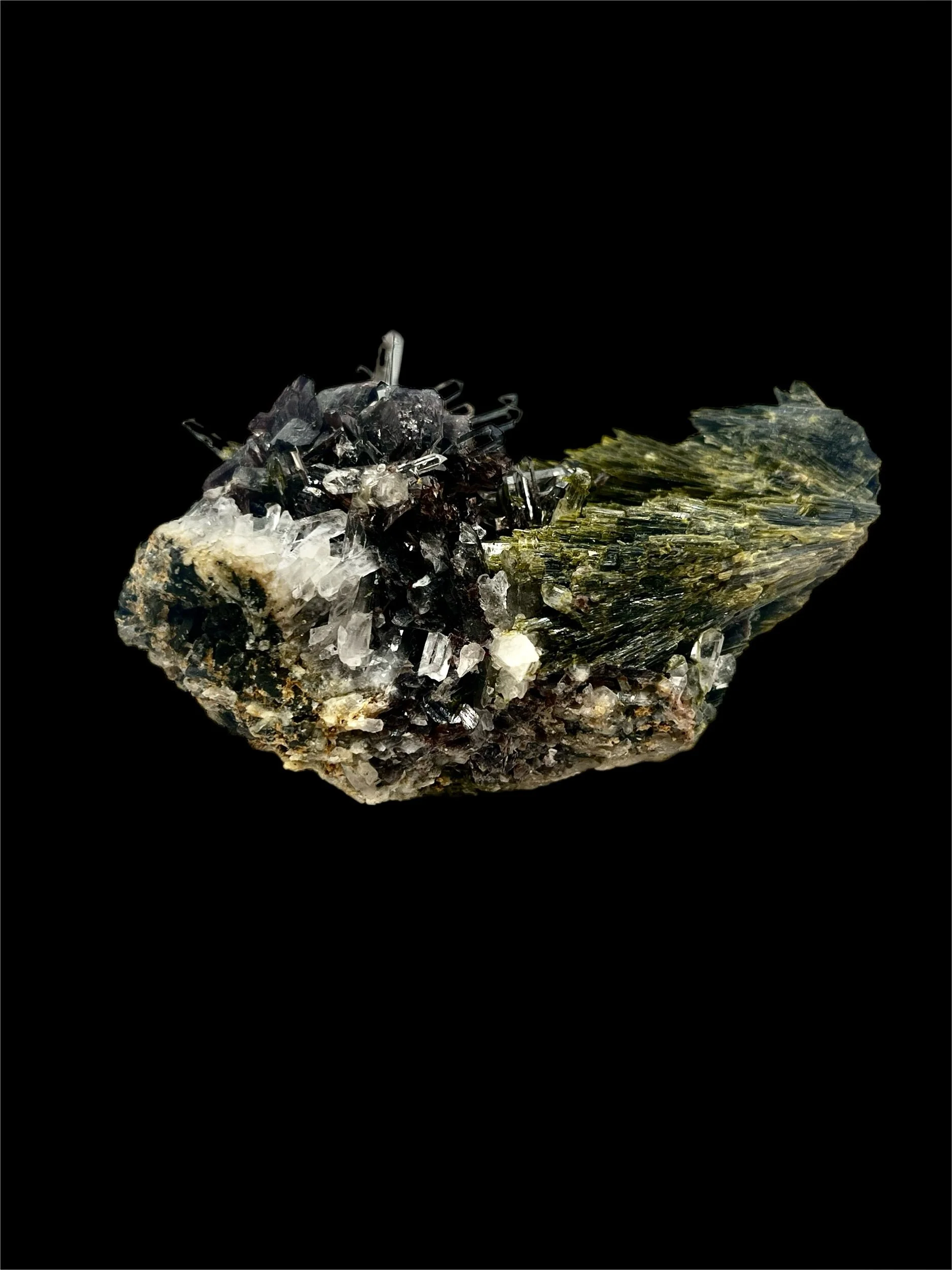
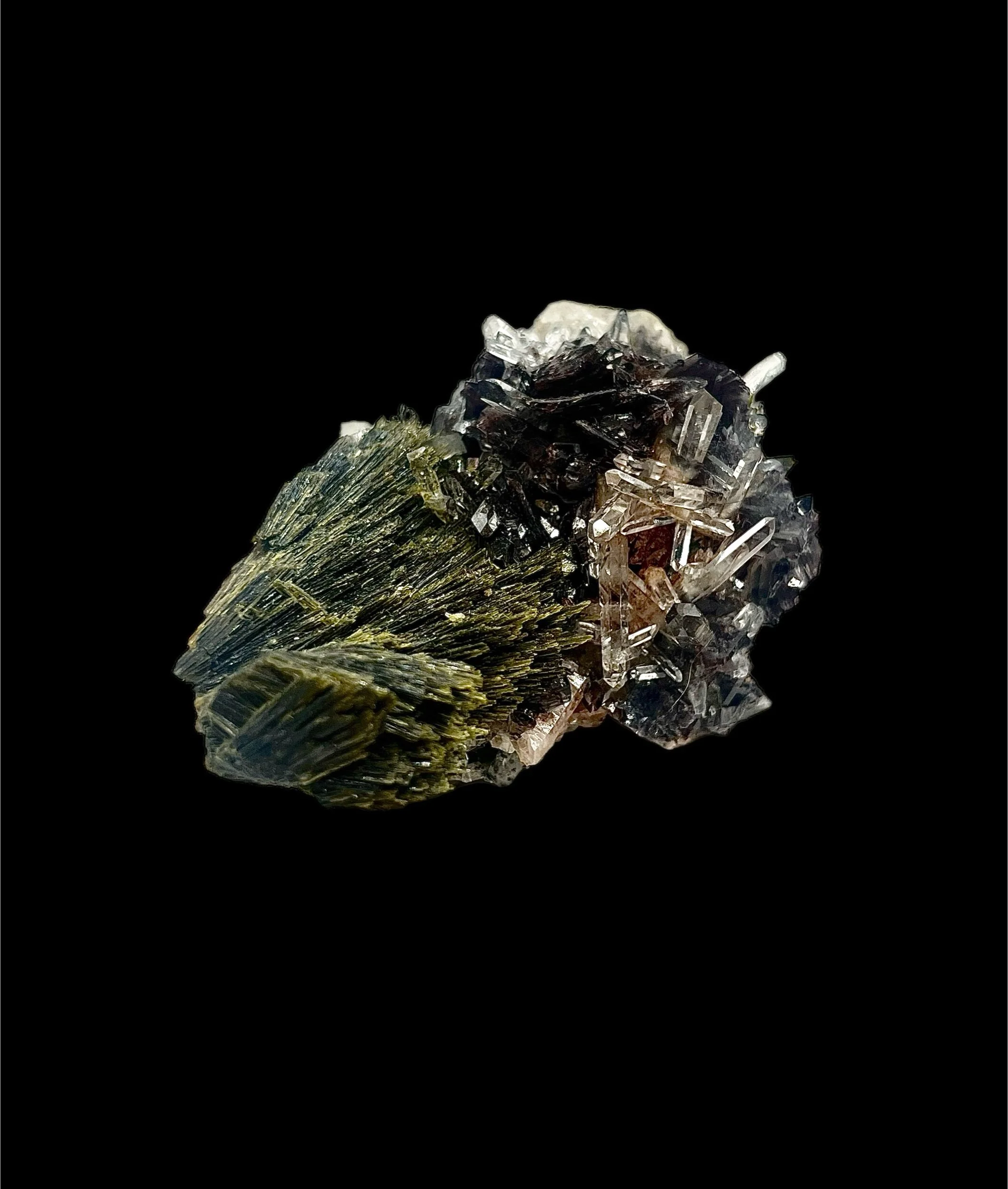
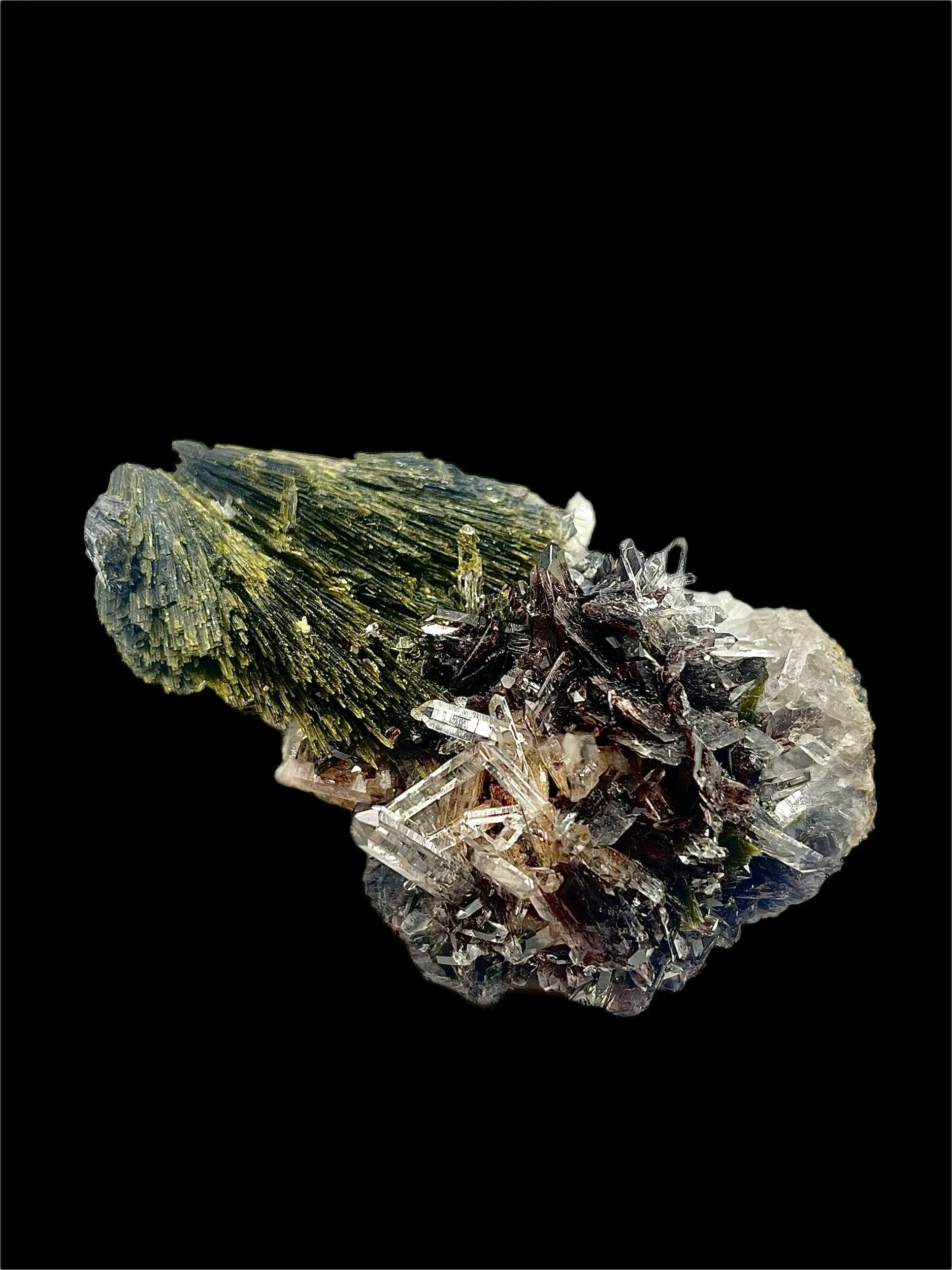
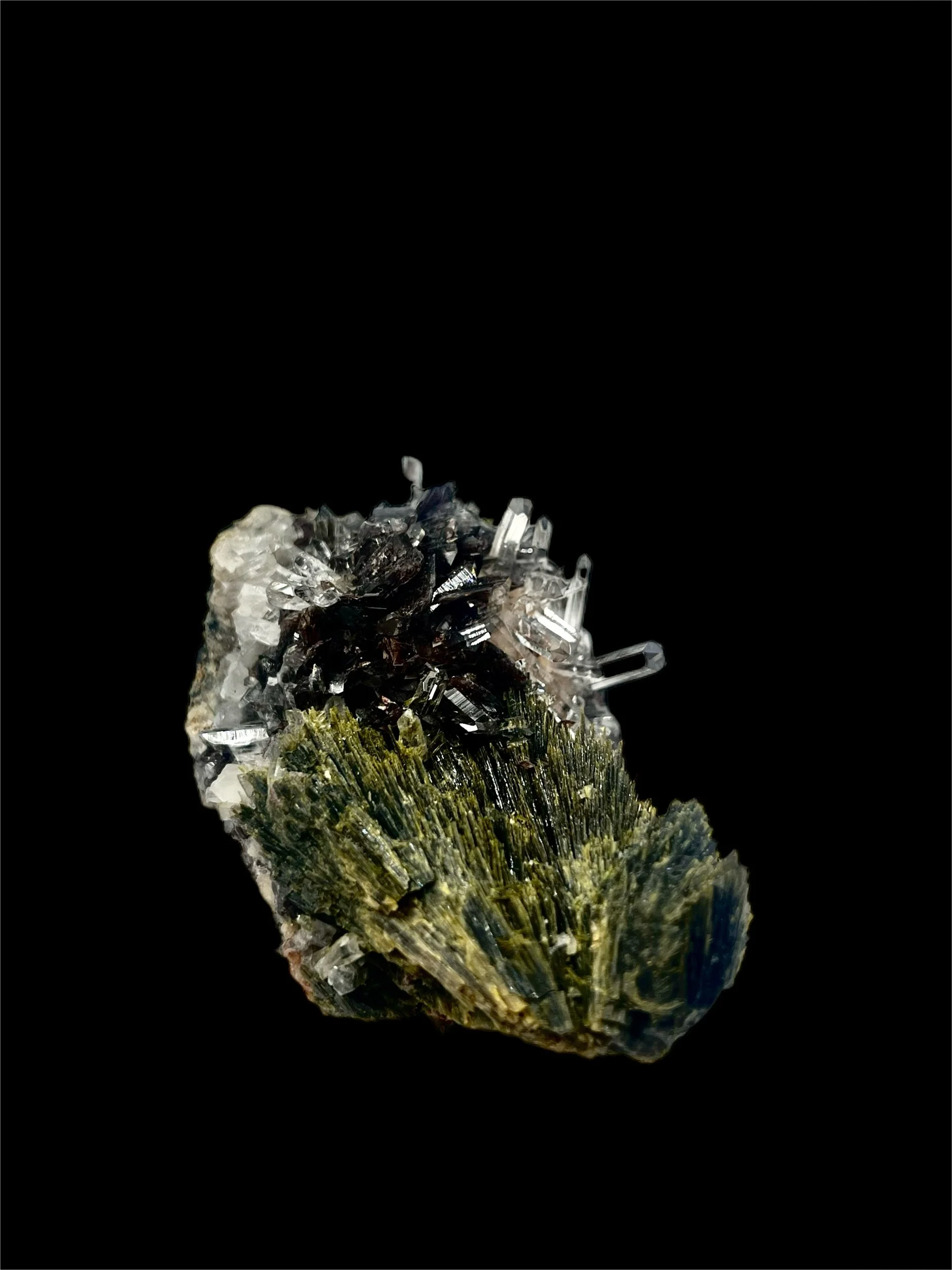
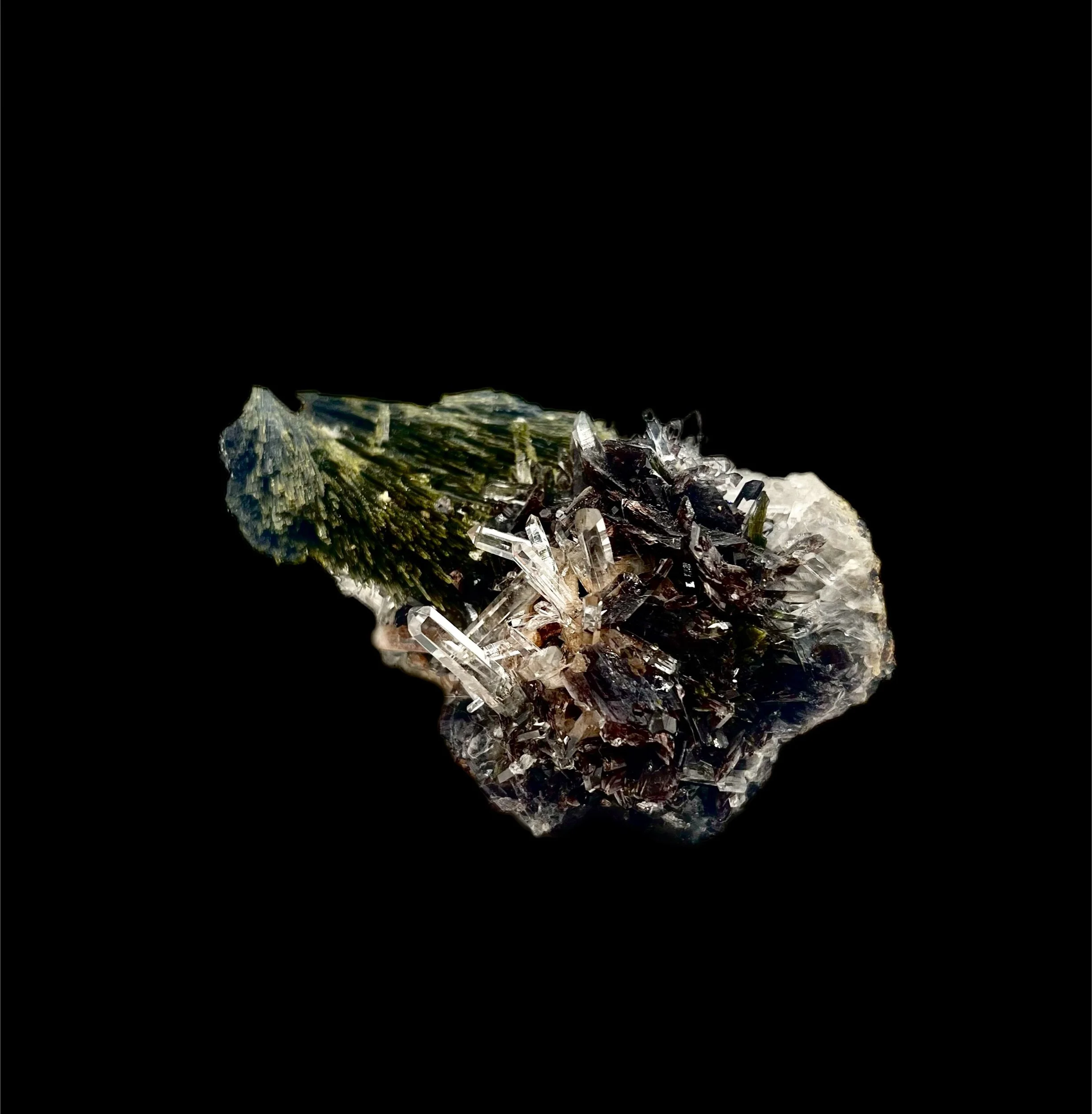
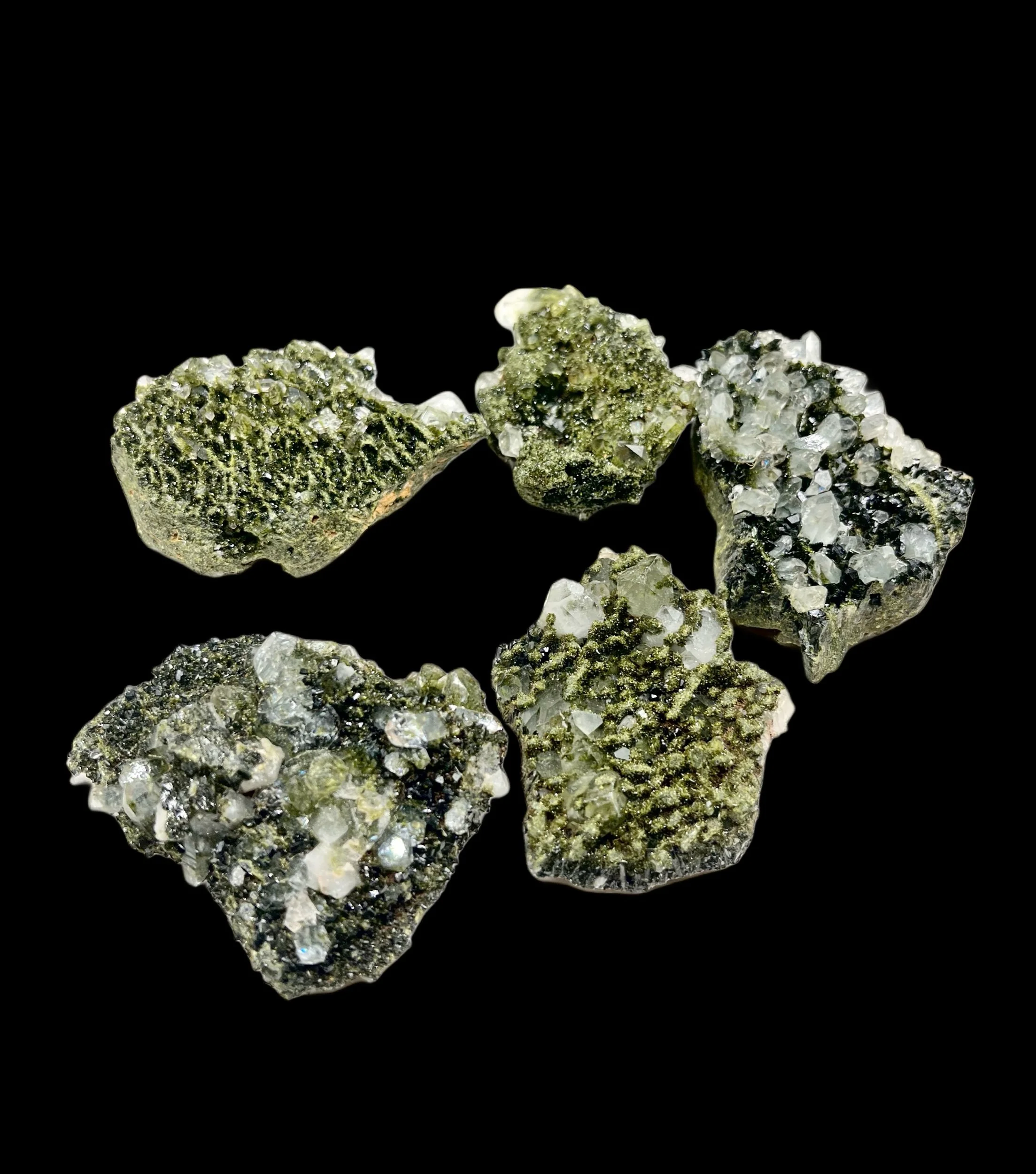
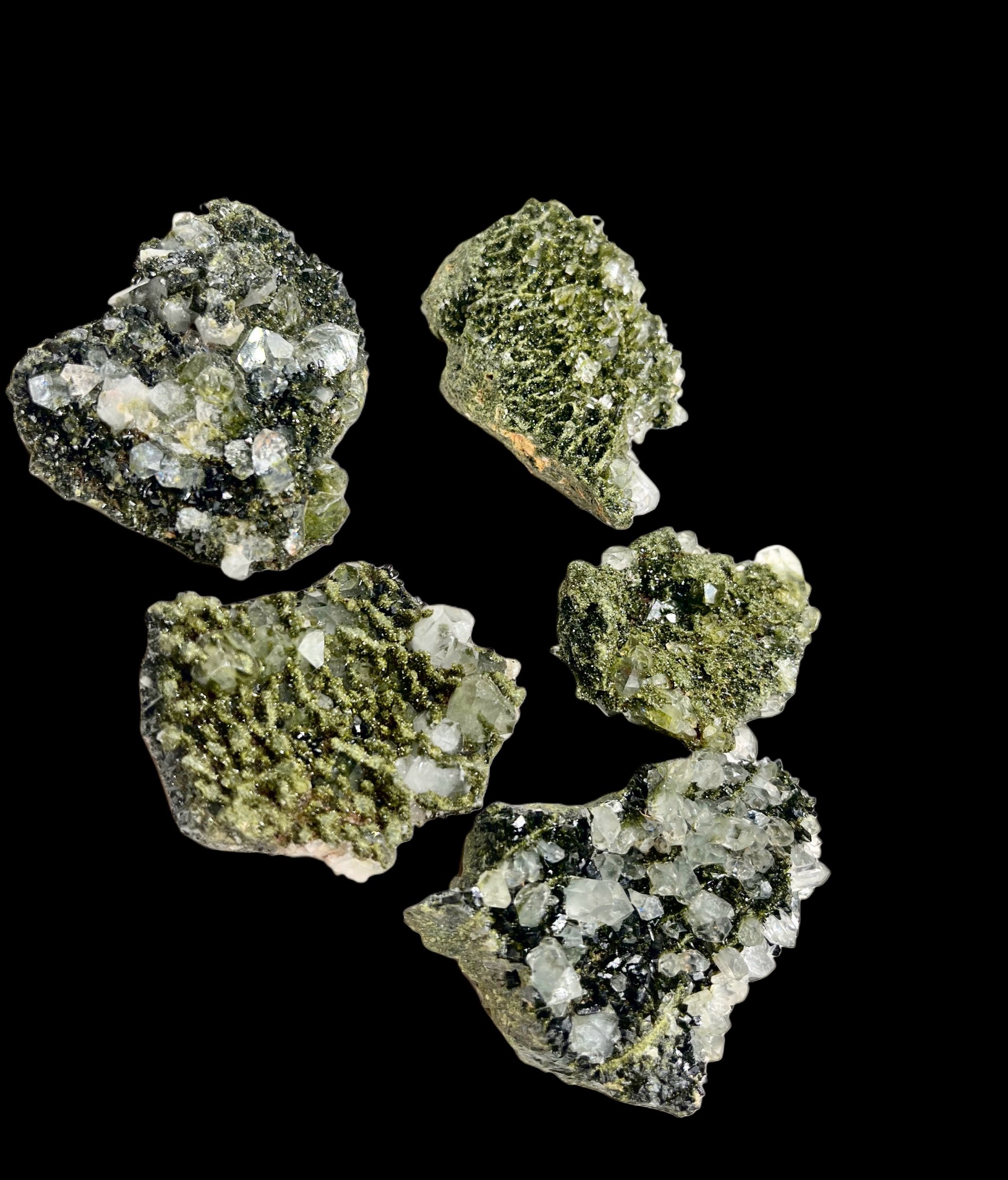
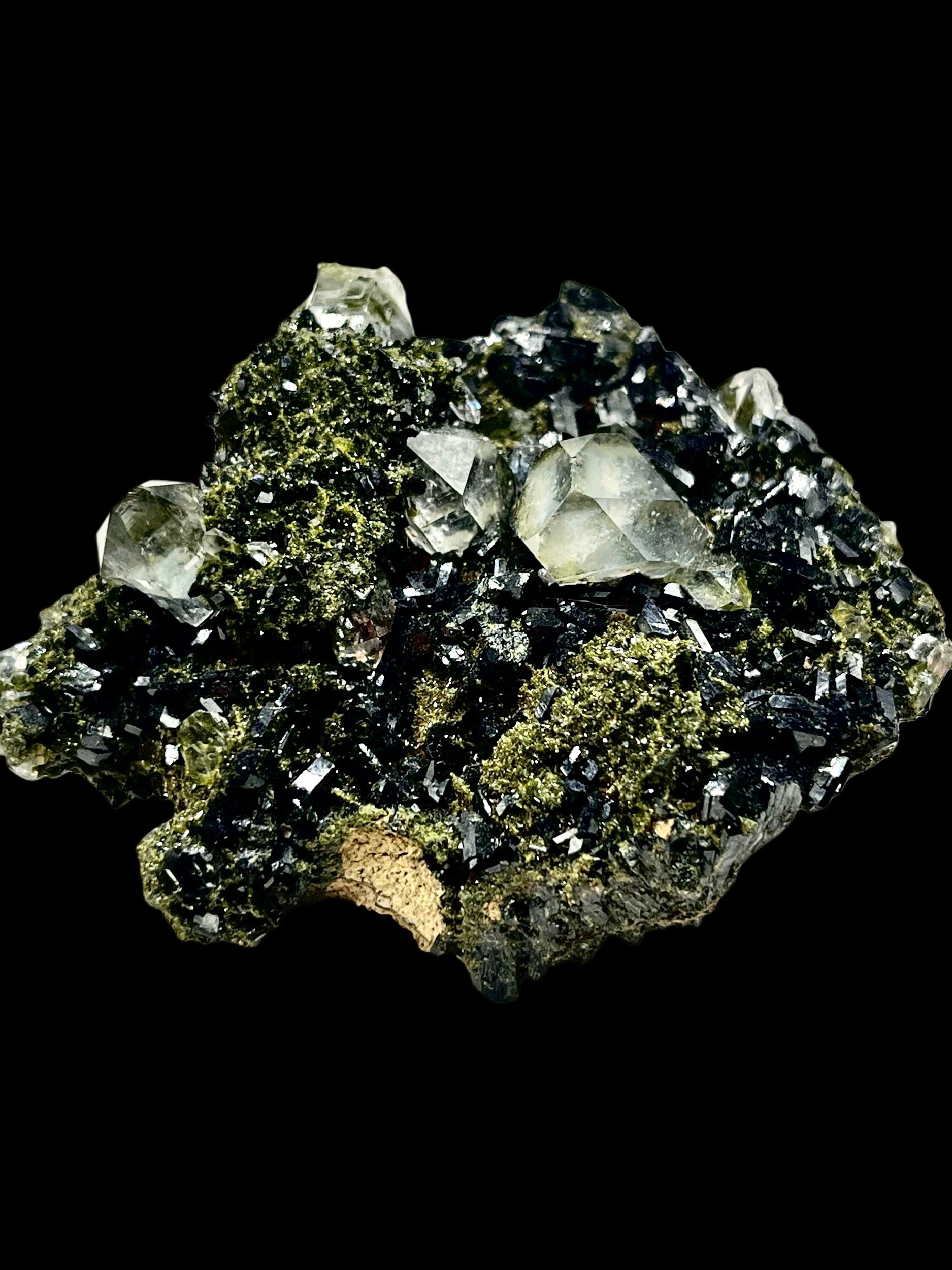
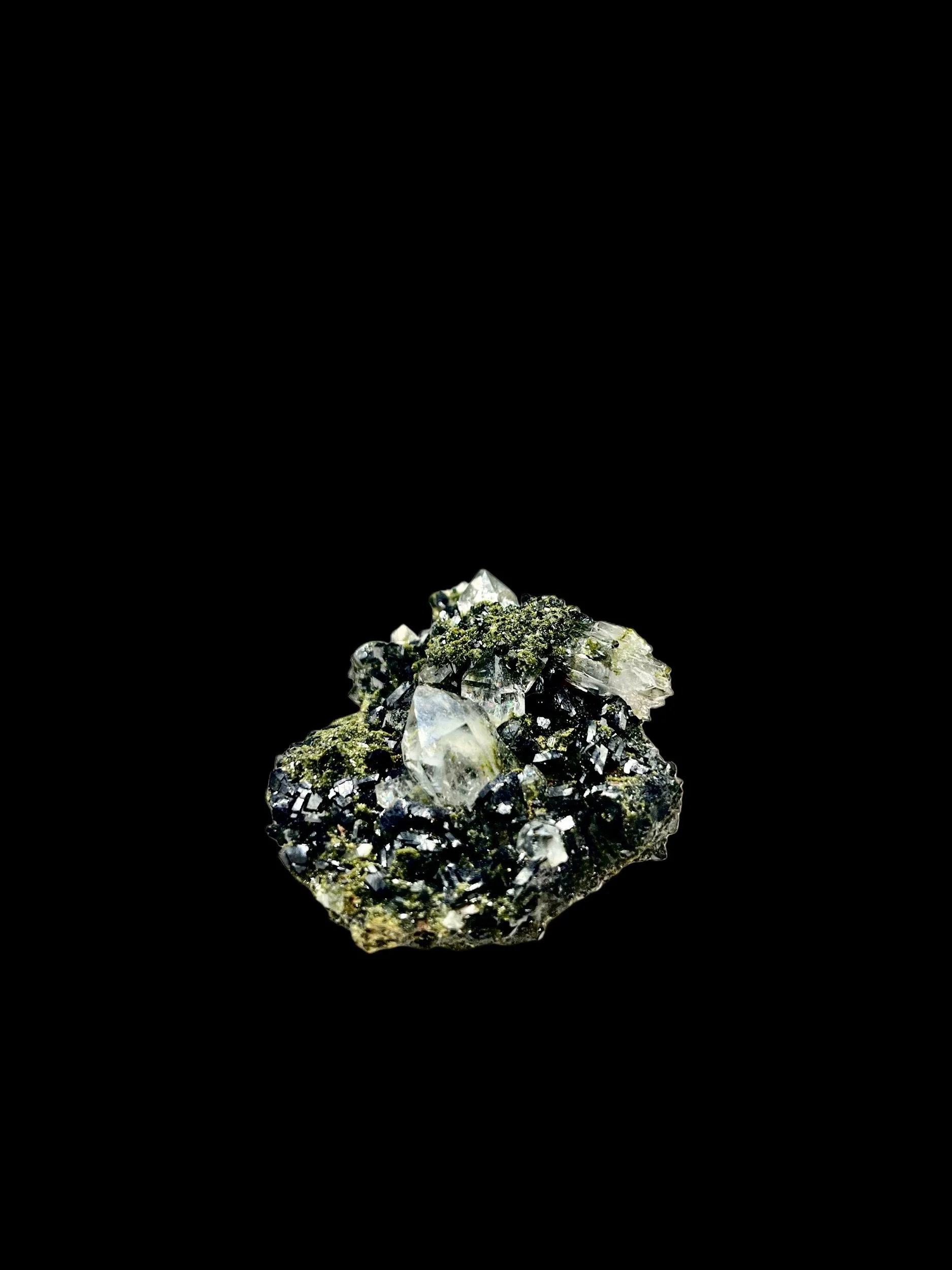
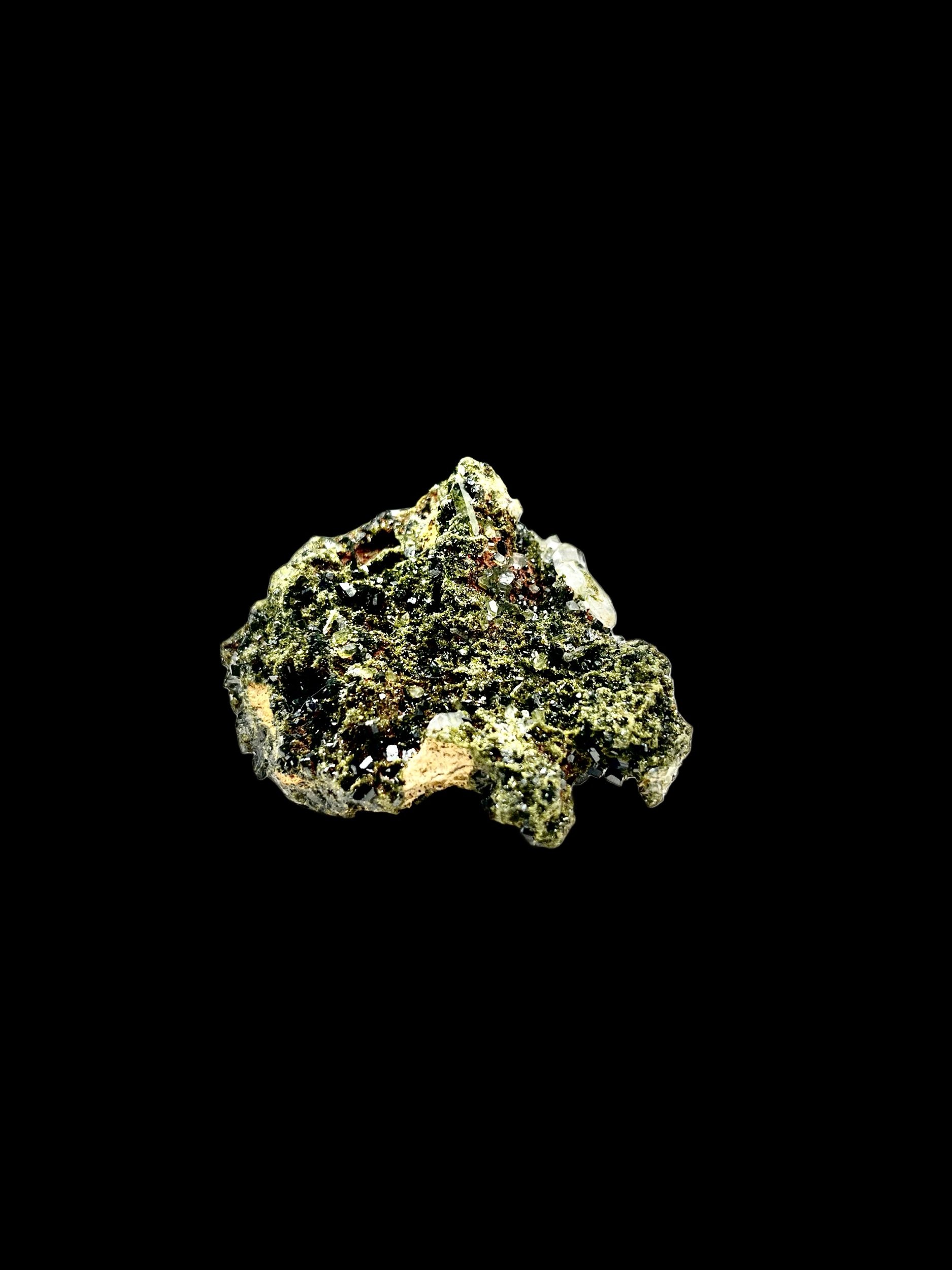
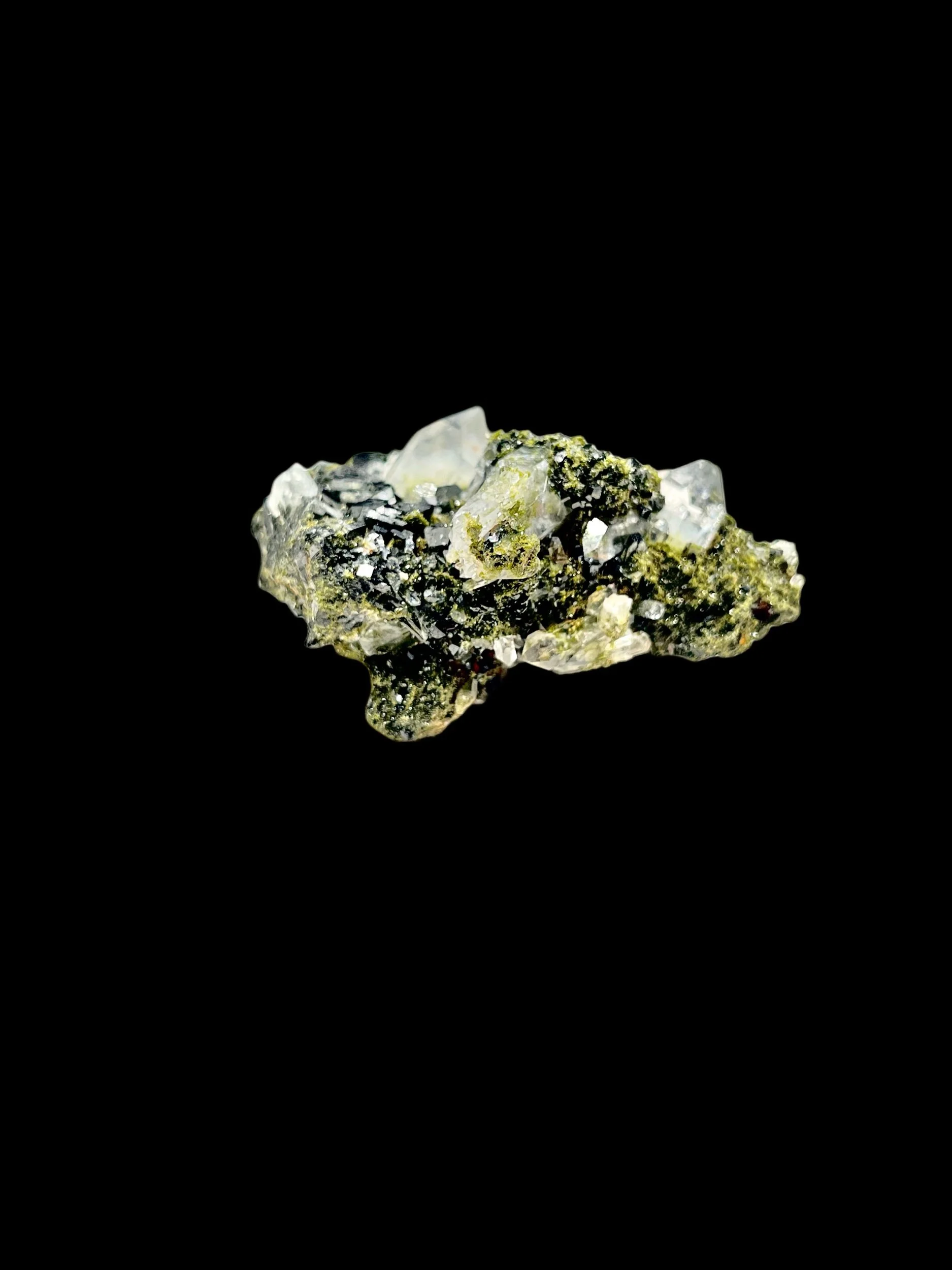
This impressive fine mineral specimen from the Huaros District of Lima, Peru displays a richly textured field of lustrous epidote crystals interwoven with clear quartz points across a broad mineralized surface.
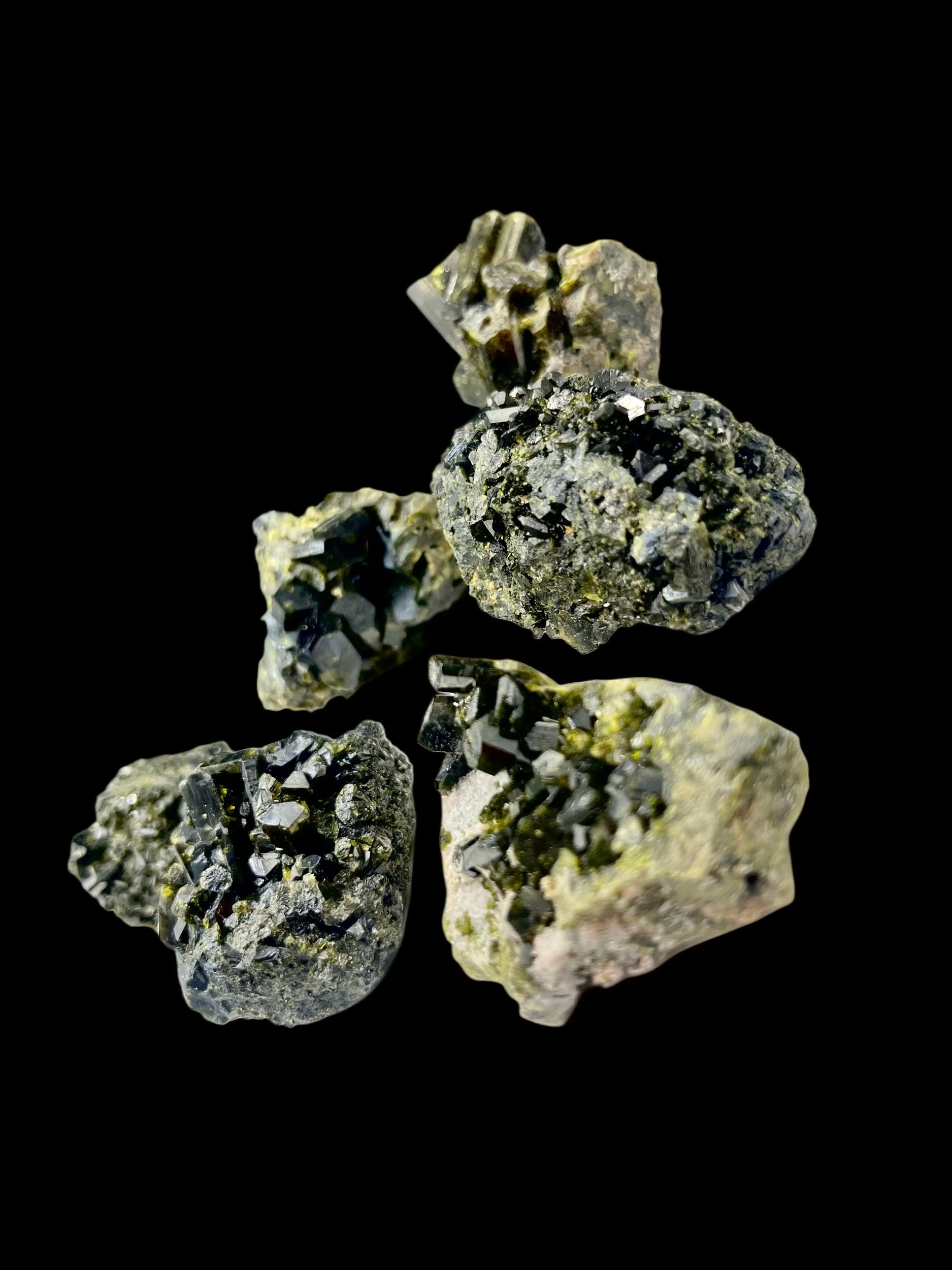
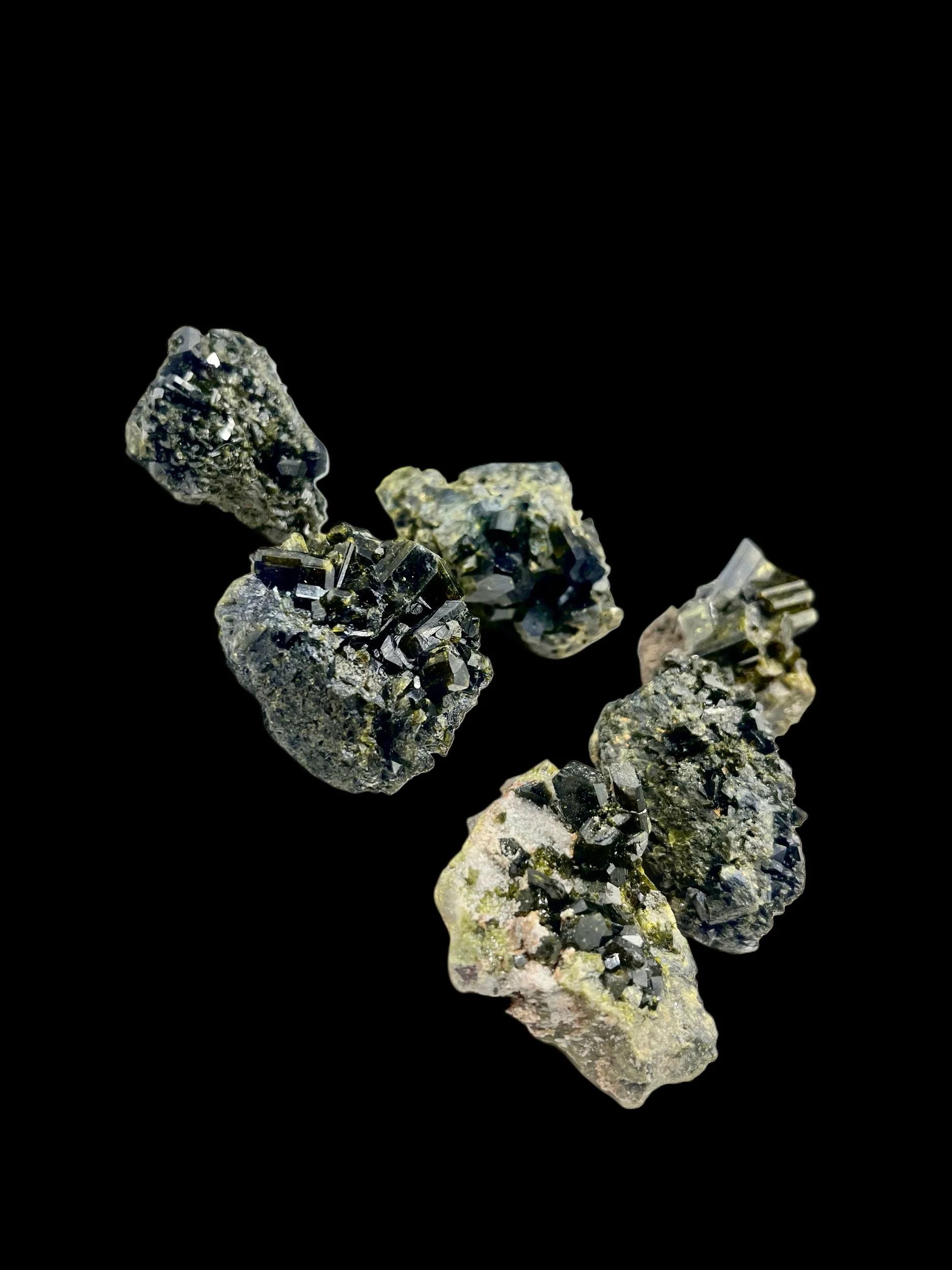
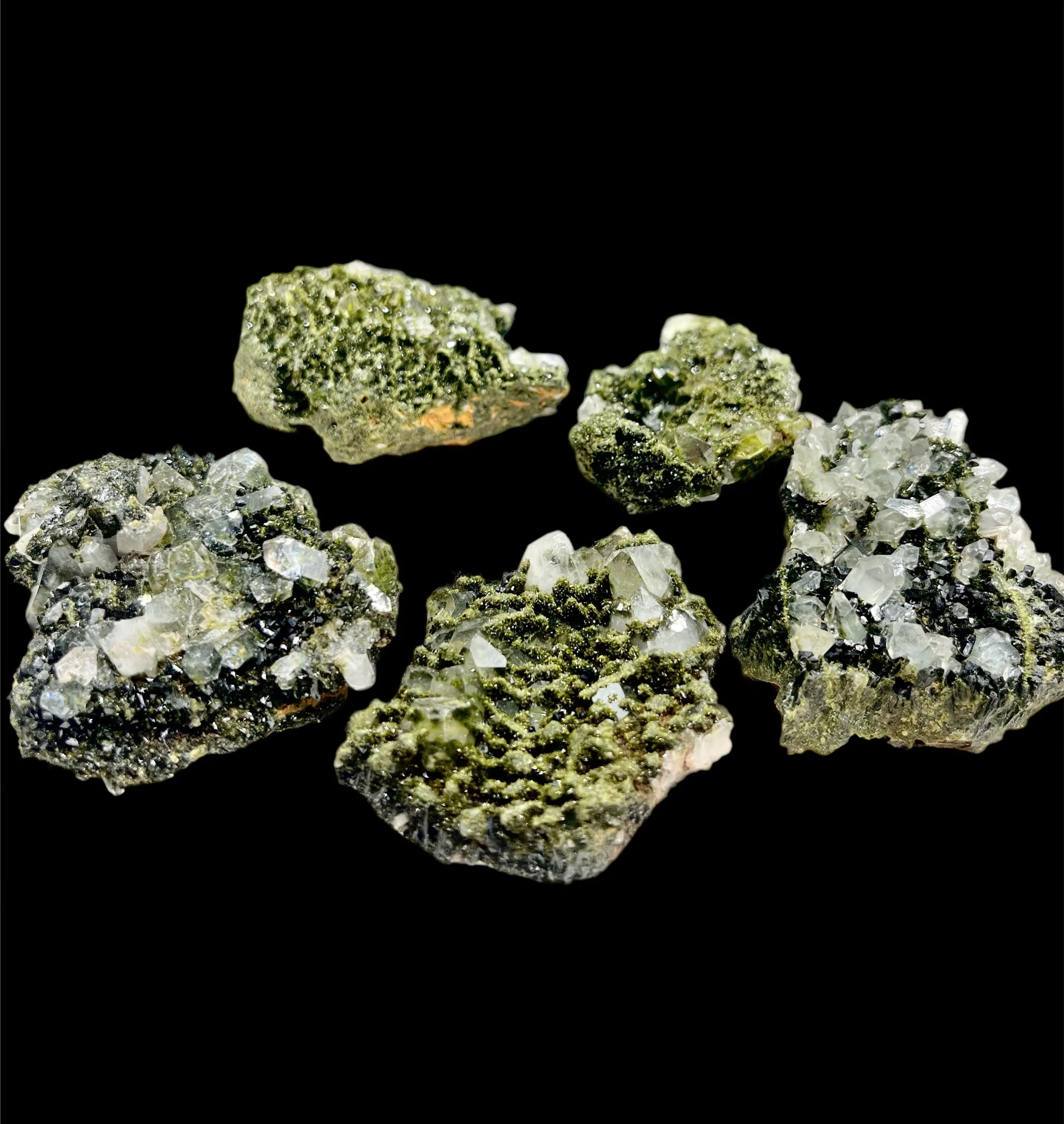
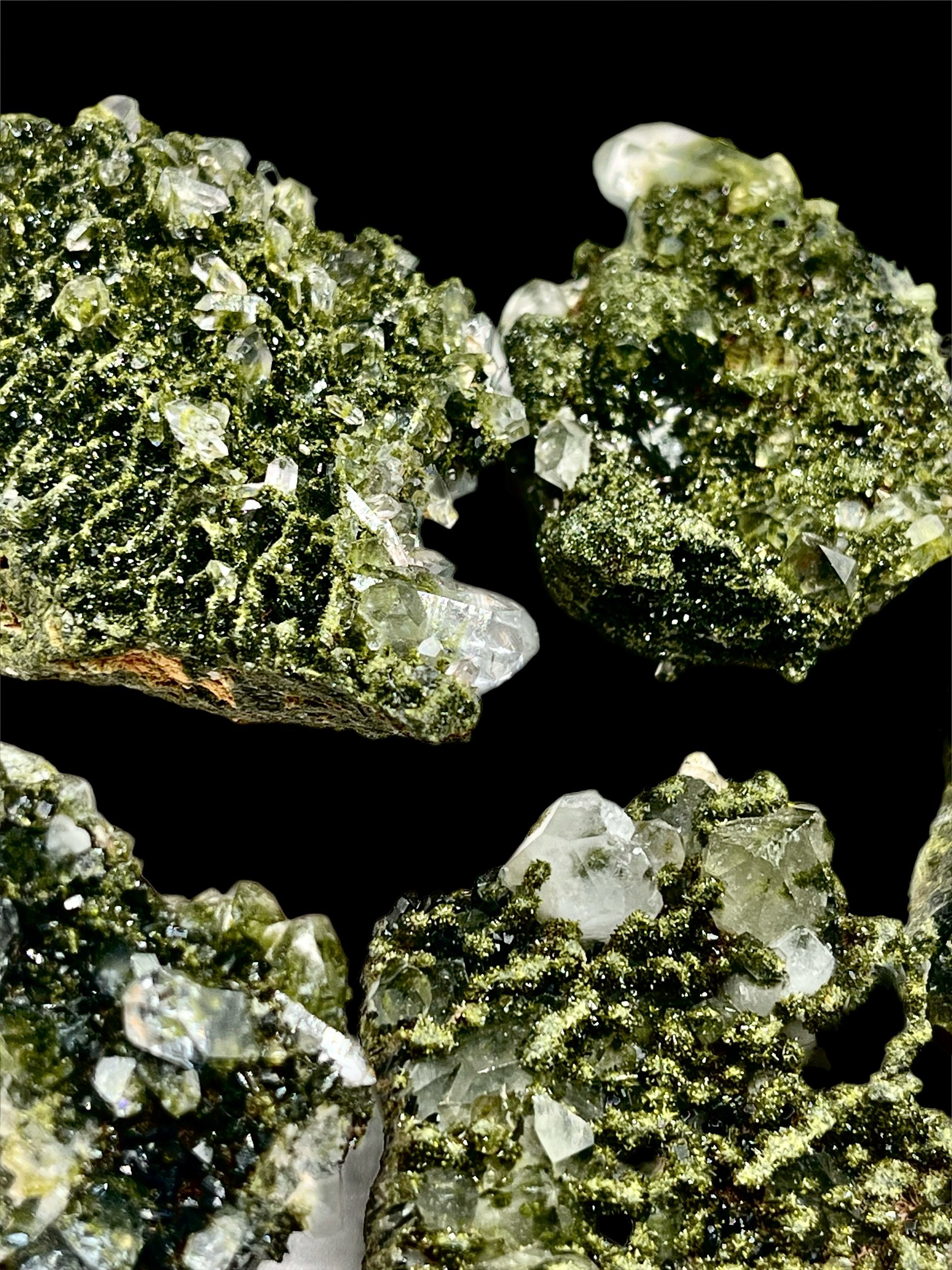
Deep green to nearly black epidote prisms form dense crystalline clusters throughout the specimen, their glossy faces reflecting light against the surrounding quartz. Between these darker crystal groups, numerous transparent quartz crystals rise in multiple generations, creating a layered landscape of sharp terminations and sparkling druzy growth.
The specimen presents a wide horizontal display face densely covered in beautiful crystallization, with contrasting areas of brilliant quartz and darker epidote clusters forming a natural mineral mosaic. Small drusy quartz formations coat portions of the matrix and crystal groups, adding fine sparkle and depth across the piece.
Mineral specimens from the Huaros District are admired for their complex skarn mineralization and beautiful epidote associations. The contrast between dark epidote crystals and bright quartz points gives this piece a strong visual balance that draws the eye across the entire specimen.
With its larger size and abundant crystal coverage, this specimen makes an especially attractive display piece for fine mineral collections, offering both mineralogical interest and striking aesthetic presence.
Dimensions & Weight
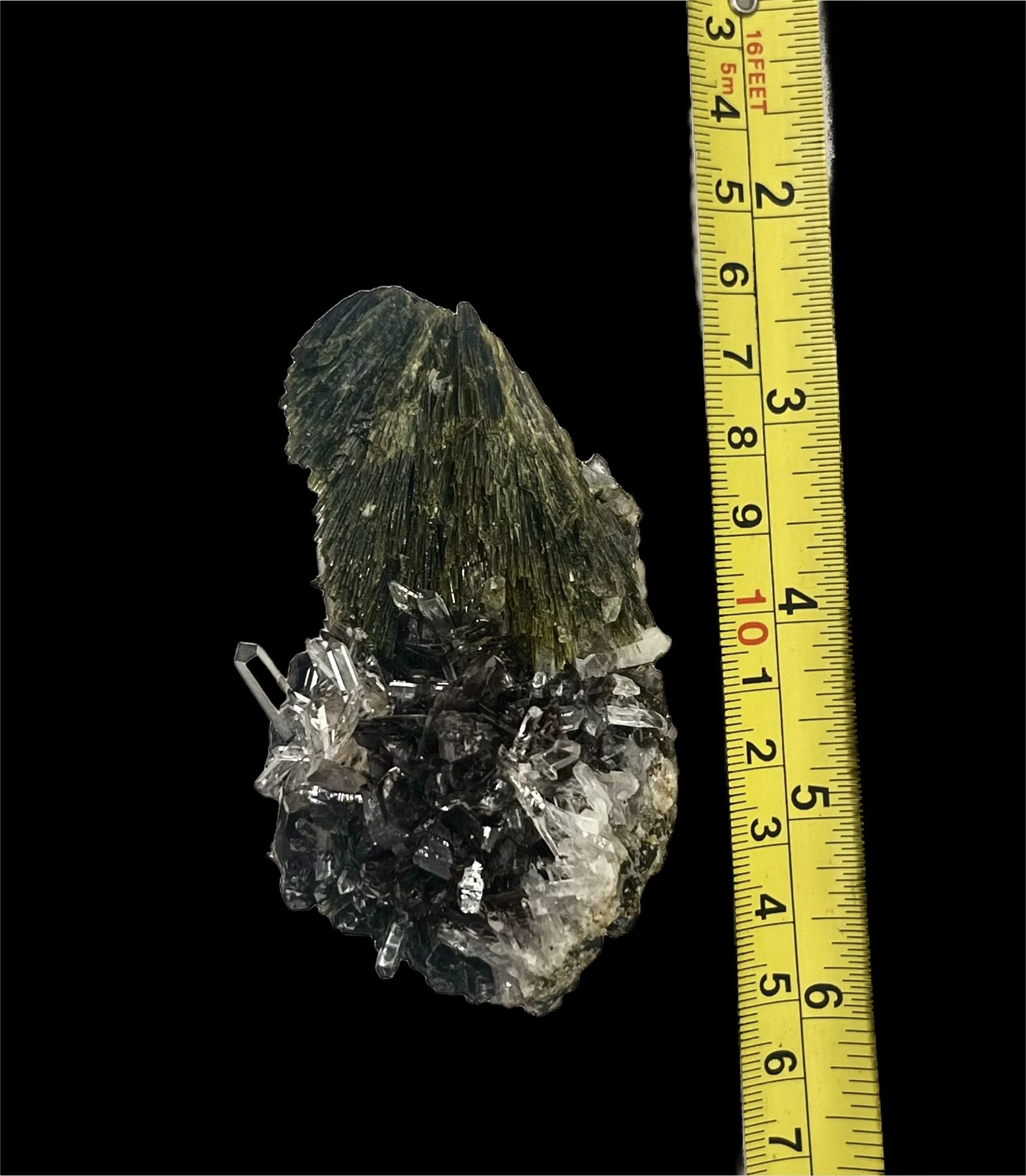
6 in × 3.5 in × 2.5 in
844 g
Metaphysical Properties
Epidote is often associated with growth, renewal, and personal development. It is believed to amplify intentions and encourage positive transformation.
Quartz is widely regarded as a stone of clarity and amplification, thought to enhance energy and focus.
Together, epidote and quartz are often seen as a combination that supports personal expansion, clarity, and forward movement.
Investment Consideration
Well-crystallized epidote specimens from legendary localities have maintained steady interest among collectors, particularly when paired with aesthetically contrasting minerals such as quartz.
Larger multi-crystal specimens from recognized localities often maintain strong collector appeal, particularly when they display dense crystallization and aesthetic mineral contrast.
Pieces combining well-developed epidote crystals with abundant quartz from Peru offer both visual impact and locality significance. Specimens with broad crystal coverage such as this one often serve as centerpiece pieces within cabinet collections focused on classic mineral associations.
Specimens of this quality, especially ones displaying strong crystal luster, sculptural composition, and multiple crystal generations often remain desirable. Pieces from the Huaros District represent a classic example of Peruvian skarn mineralization and continue to attract collectors interested in complex mineral associations.
Collector’s Notes
Peruvian epidote specimens have gained increasing recognition among collectors due to their sharp crystal development and aesthetic mineral associations.
The combination of lustrous epidote crystals with contrasting quartz points creates a visually balanced specimen that displays well from multiple angles. The vertical ridge of mineralized matrix gives the piece a distinctive natural silhouette that adds presence in a cabinet display.
Specimens from the Huaros District are especially appreciated for their complex hydrothermal mineralization and signature crystal arrangements.
Minerals from the Huaros District are well known among collectors for producing beautiful epidote associations within hydrothermal skarn environments.
Highlights
• Lustrous epidote crystals
• Prominent quartz point
• Sparkling drusy quartz coverage
• Sculptural natural formation
• Famous Peruvian epidote locality
• Museum Quality display specimen
Metaphysical Properties
Epidote is often associated with growth, renewal, and personal development. It is believed to amplify intentions and encourage positive transformation.
Quartz is widely regarded as a stone of clarity and amplification, thought to enhance energy and focus.
Together, epidote and quartz are often seen as a combination that supports personal expansion, clarity, and forward movement.
Mineralogy
Epidote is a calcium aluminum iron sorosilicate that forms in metamorphic and hydrothermal environments, particularly in skarn deposits where mineralizing fluids interact with carbonate rocks.
The mineral commonly develops elongated prismatic crystals that can range in color from yellow-green to deep forest green or nearly black, often displaying strong vitreous luster.
Quartz forms from silica-rich hydrothermal fluids and frequently occurs alongside epidote in skarn environments. Clear quartz crystals growing among epidote clusters create attractive mineral associations prized by collectors.
The Huaros District of Lima, Peru is known for producing diverse mineral assemblages related to skarn mineralization, including epidote, axinite, garnet, and quartz.
Description
This impressive fine mineral specimen from the Huaros District of Lima, Peru displays a richly textured field of lustrous epidote crystals interwoven with clear quartz points across a broad mineralized surface.
Deep green to nearly black epidote prisms form dense crystalline clusters throughout the specimen, their glossy faces reflecting light against the surrounding quartz. Between these darker crystal groups, numerous transparent quartz crystals rise in multiple generations, creating a layered landscape of sharp terminations and sparkling druzy growth.
The specimen presents a wide horizontal display face densely covered in beautiful crystallization, with contrasting areas of brilliant quartz and darker epidote clusters forming a natural mineral mosaic. Small drusy quartz formations coat portions of the matrix and crystal groups, adding fine sparkle and depth across the piece.
Mineral specimens from the Huaros District are admired for their complex skarn mineralization and beautiful epidote associations. The contrast between dark epidote crystals and bright quartz points gives this piece a strong visual balance that draws the eye across the entire specimen.
With its larger size and abundant crystal coverage, this specimen makes an especially attractive display piece for fine mineral collections, offering both mineralogical interest and striking aesthetic presence.
Dimensions & Weight
6 in × 3.5 in × 2.5 in
844 g
Metaphysical Properties
Epidote is often associated with growth, renewal, and personal development. It is believed to amplify intentions and encourage positive transformation.
Quartz is widely regarded as a stone of clarity and amplification, thought to enhance energy and focus.
Together, epidote and quartz are often seen as a combination that supports personal expansion, clarity, and forward movement.
Investment Consideration
Well-crystallized epidote specimens from legendary localities have maintained steady interest among collectors, particularly when paired with aesthetically contrasting minerals such as quartz.
Larger multi-crystal specimens from recognized localities often maintain strong collector appeal, particularly when they display dense crystallization and aesthetic mineral contrast.
Pieces combining well-developed epidote crystals with abundant quartz from Peru offer both visual impact and locality significance. Specimens with broad crystal coverage such as this one often serve as centerpiece pieces within cabinet collections focused on classic mineral associations.
Specimens of this quality, especially ones displaying strong crystal luster, sculptural composition, and multiple crystal generations often remain desirable. Pieces from the Huaros District represent a classic example of Peruvian skarn mineralization and continue to attract collectors interested in complex mineral associations.
Collector’s Notes
Peruvian epidote specimens have gained increasing recognition among collectors due to their sharp crystal development and aesthetic mineral associations.
The combination of lustrous epidote crystals with contrasting quartz points creates a visually balanced specimen that displays well from multiple angles. The vertical ridge of mineralized matrix gives the piece a distinctive natural silhouette that adds presence in a cabinet display.
Specimens from the Huaros District are especially appreciated for their complex hydrothermal mineralization and signature crystal arrangements.
Minerals from the Huaros District are well known among collectors for producing beautiful epidote associations within hydrothermal skarn environments.
Highlights
• Lustrous epidote crystals
• Prominent quartz point
• Sparkling drusy quartz coverage
• Sculptural natural formation
• Famous Peruvian epidote locality
• Museum Quality display specimen
Metaphysical Properties
Epidote is often associated with growth, renewal, and personal development. It is believed to amplify intentions and encourage positive transformation.
Quartz is widely regarded as a stone of clarity and amplification, thought to enhance energy and focus.
Together, epidote and quartz are often seen as a combination that supports personal expansion, clarity, and forward movement.
Mineralogy
Epidote is a calcium aluminum iron sorosilicate that forms in metamorphic and hydrothermal environments, particularly in skarn deposits where mineralizing fluids interact with carbonate rocks.
The mineral commonly develops elongated prismatic crystals that can range in color from yellow-green to deep forest green or nearly black, often displaying strong vitreous luster.
Quartz forms from silica-rich hydrothermal fluids and frequently occurs alongside epidote in skarn environments. Clear quartz crystals growing among epidote clusters create attractive mineral associations prized by collectors.
The Huaros District of Lima, Peru is known for producing diverse mineral assemblages related to skarn mineralization, including epidote, axinite, garnet, and quartz.


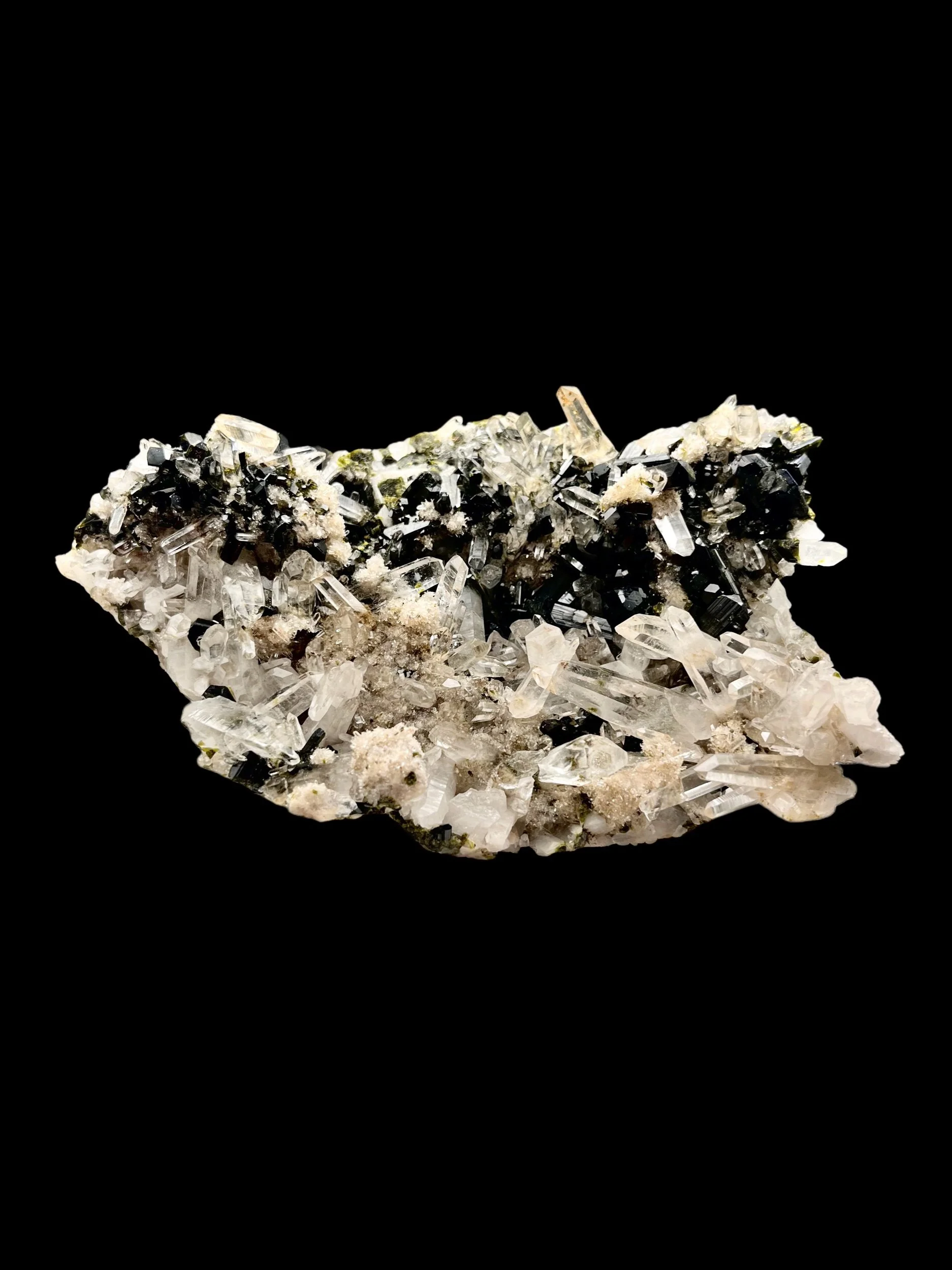 Image 1 of 6
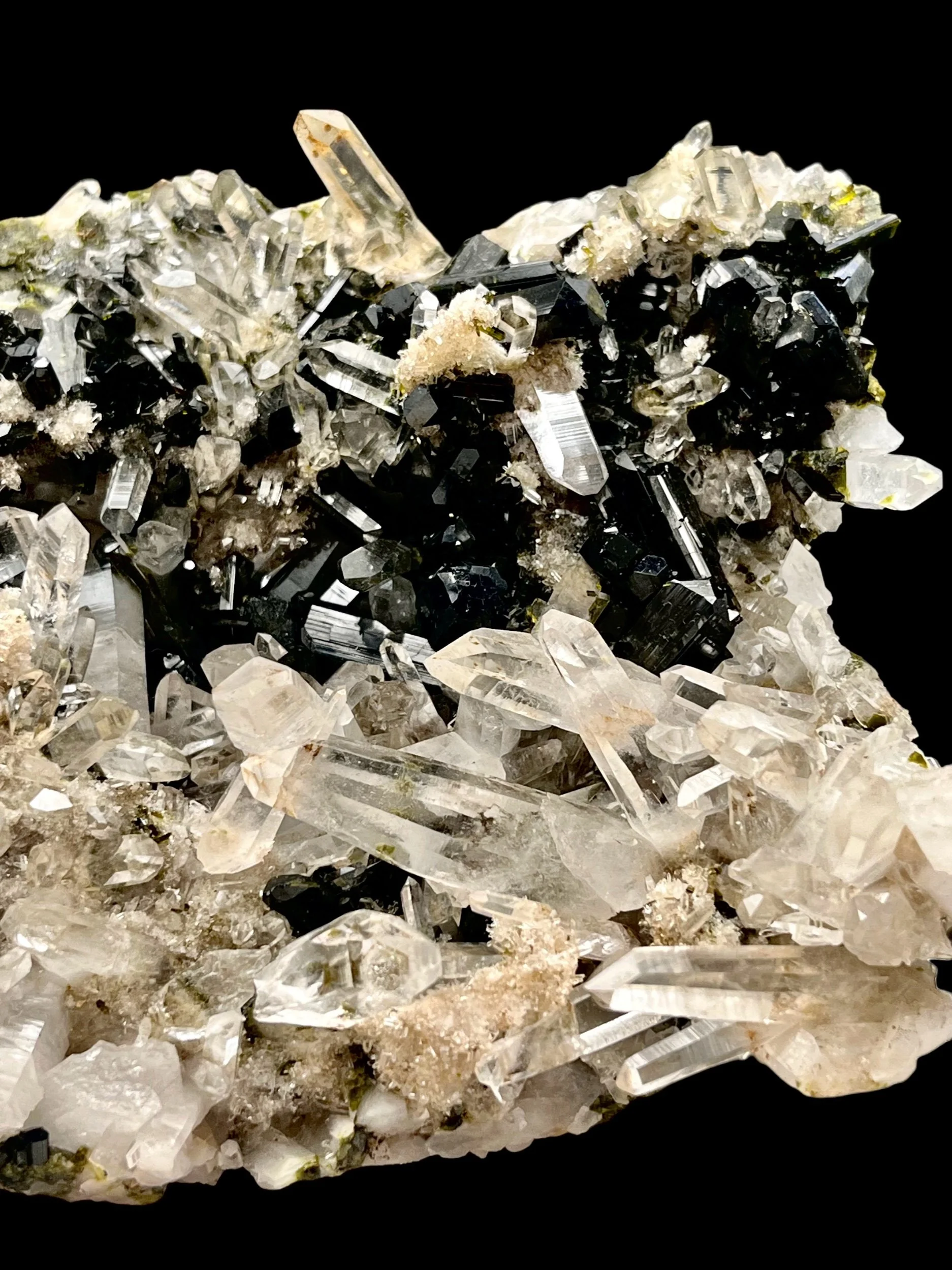 Image 2 of 6
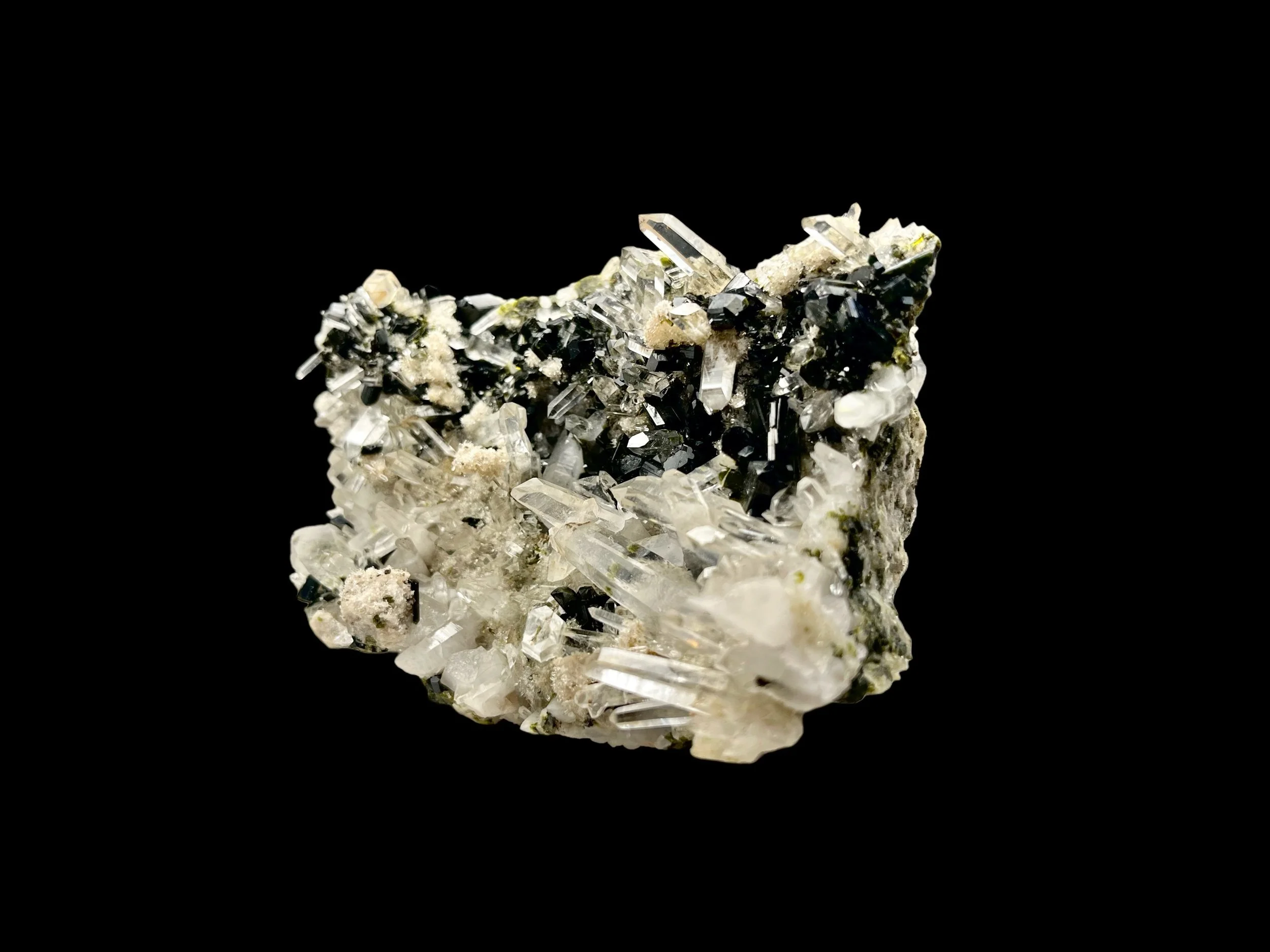 Image 3 of 6
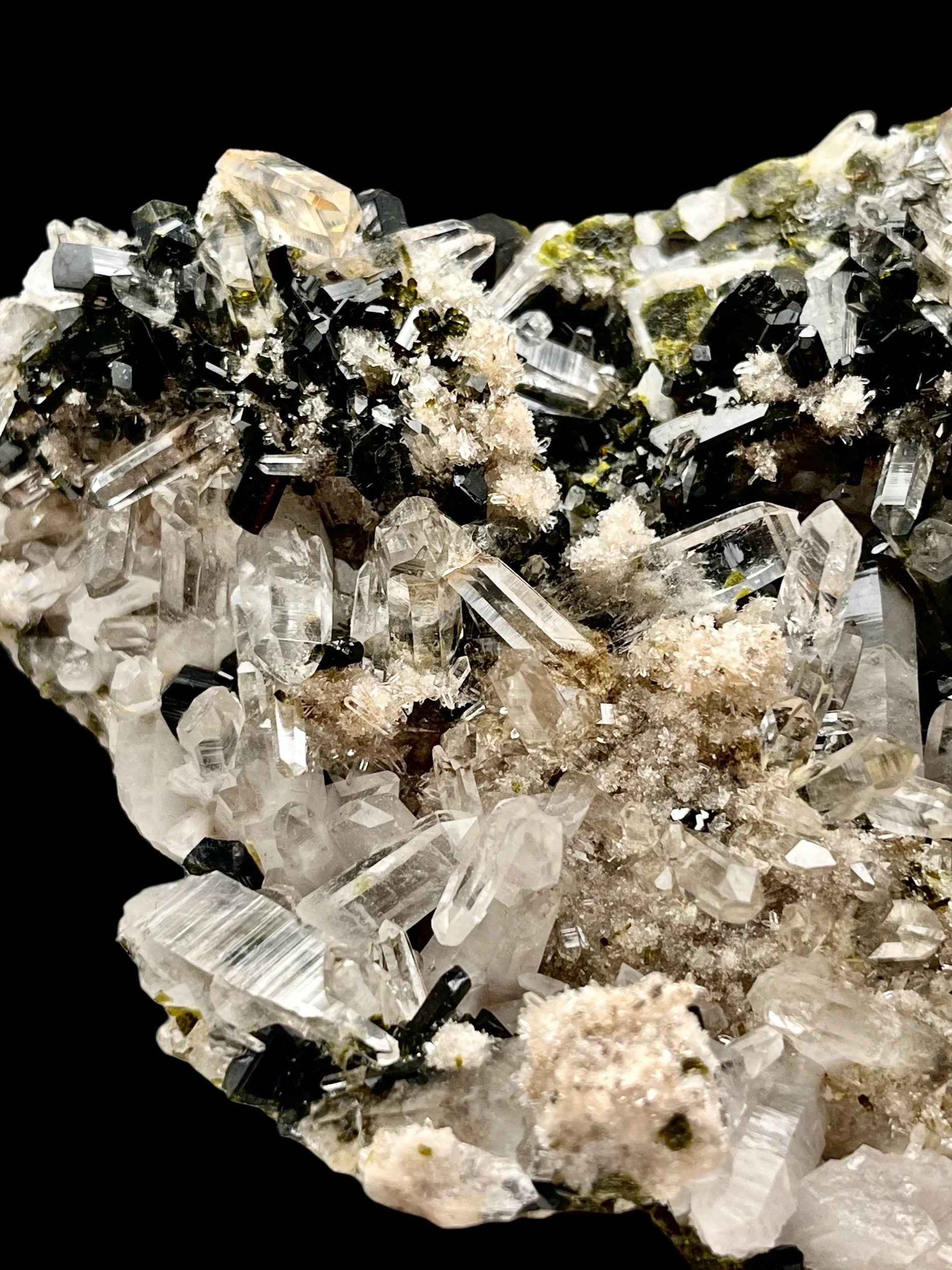 Image 4 of 6
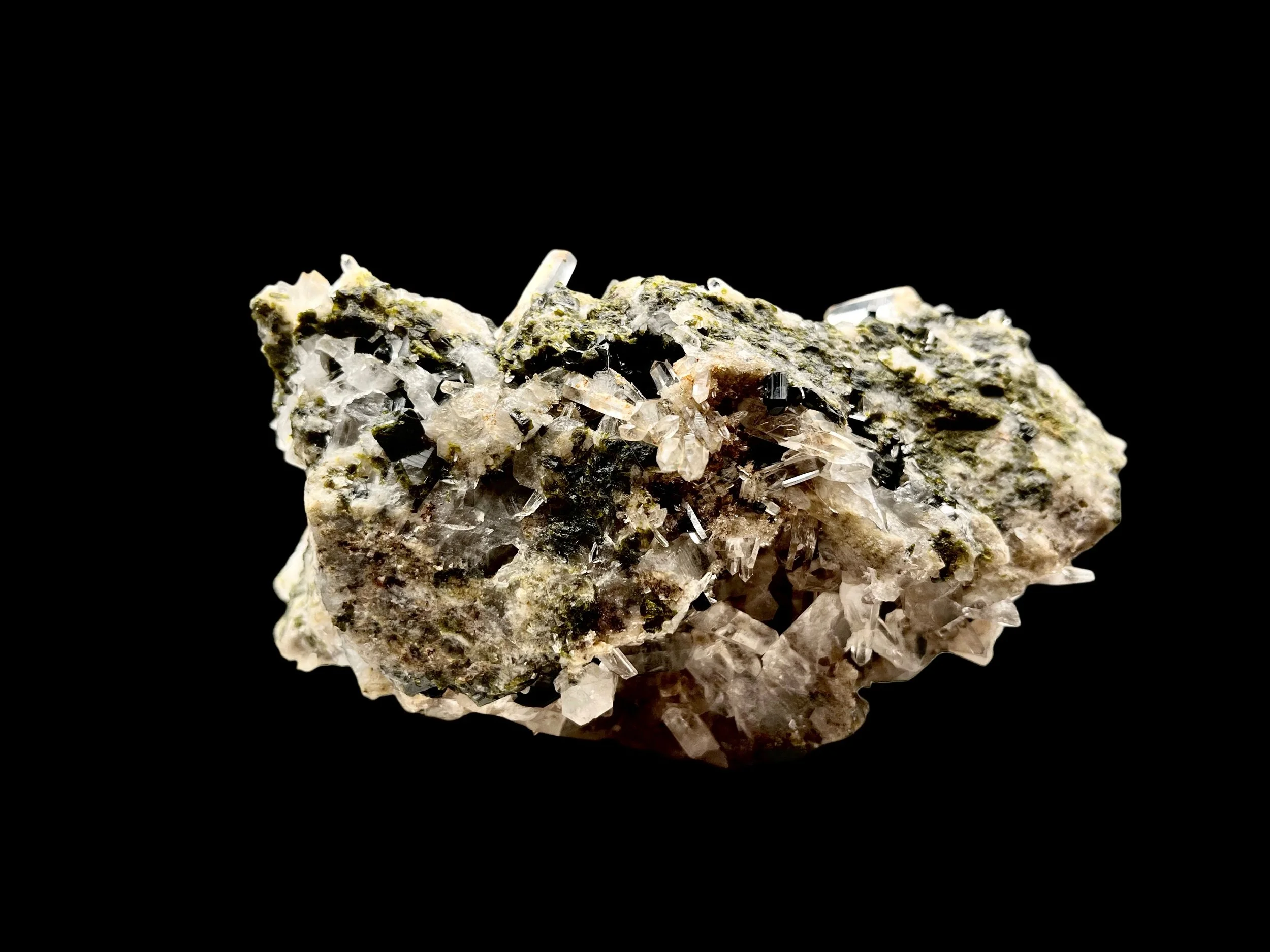 Image 5 of 6
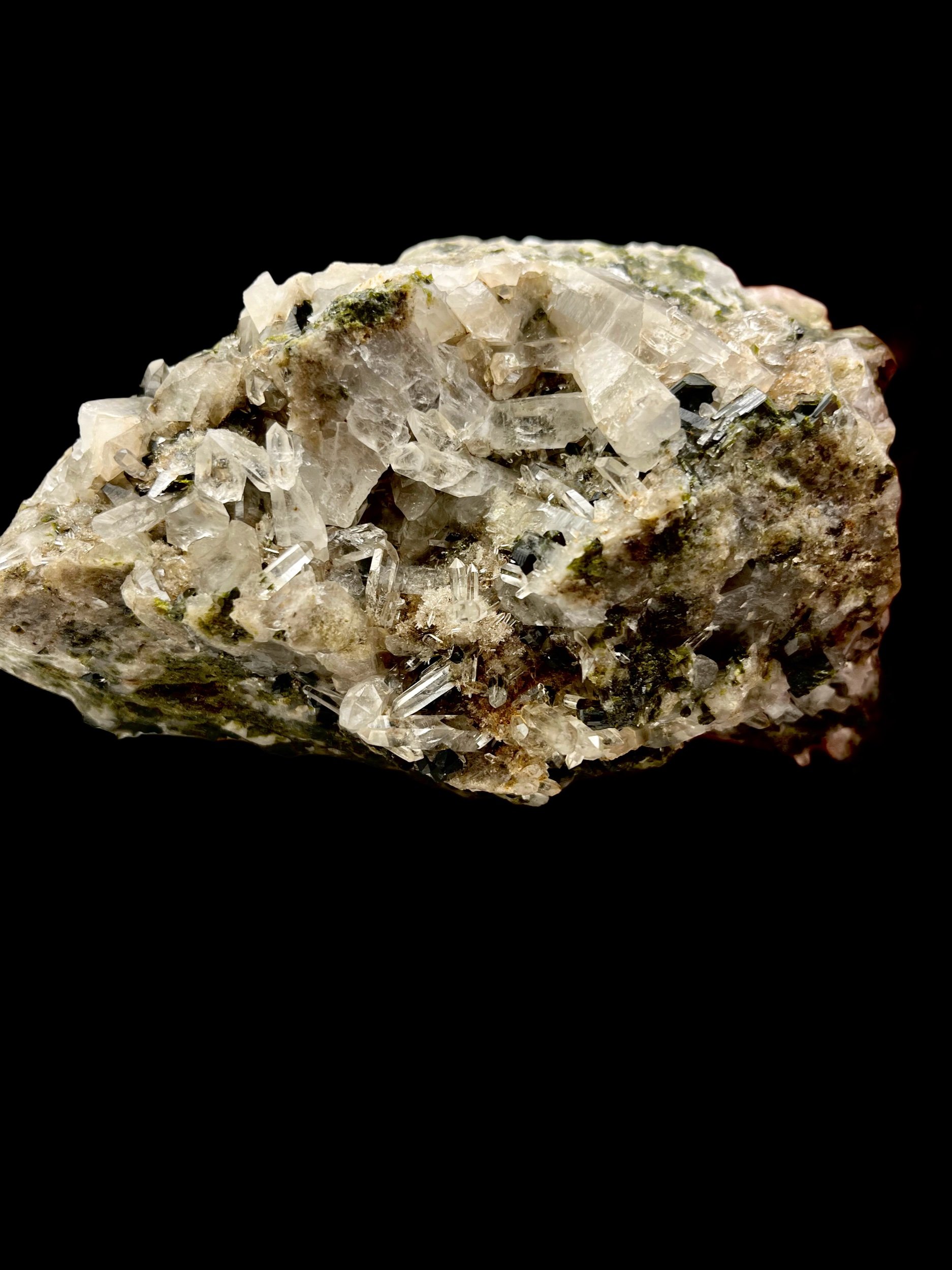 Image 6 of 6