Description
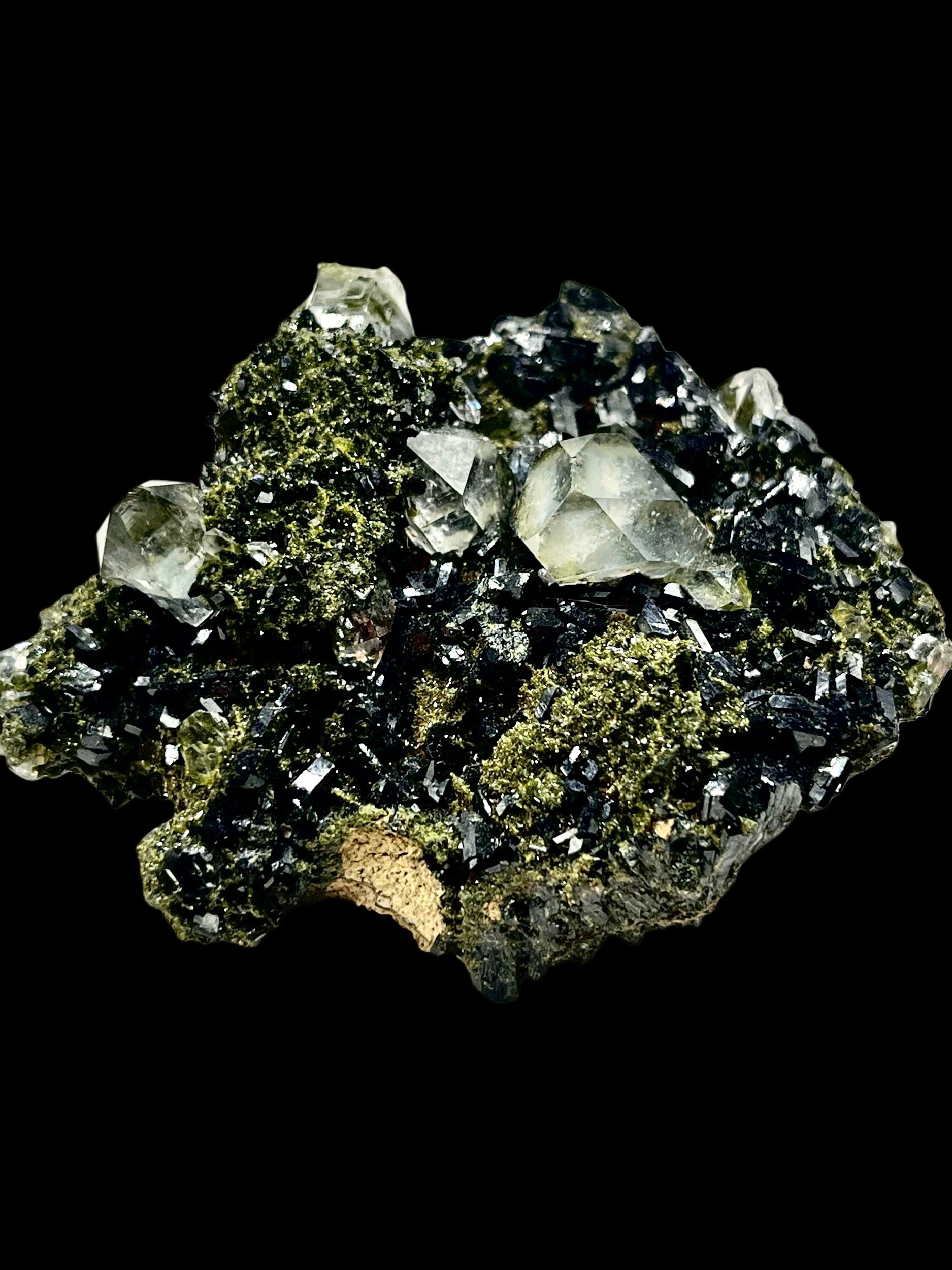
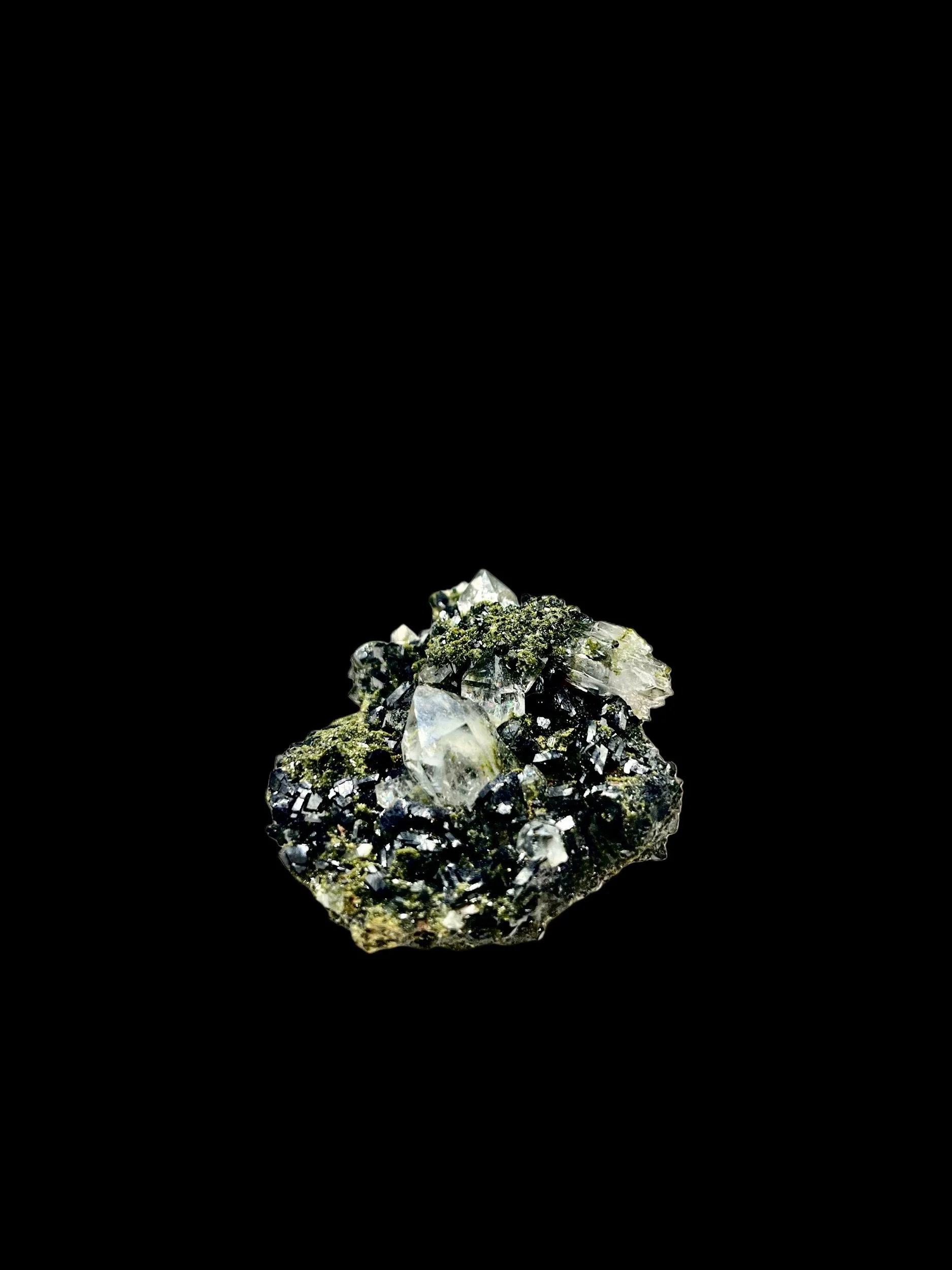
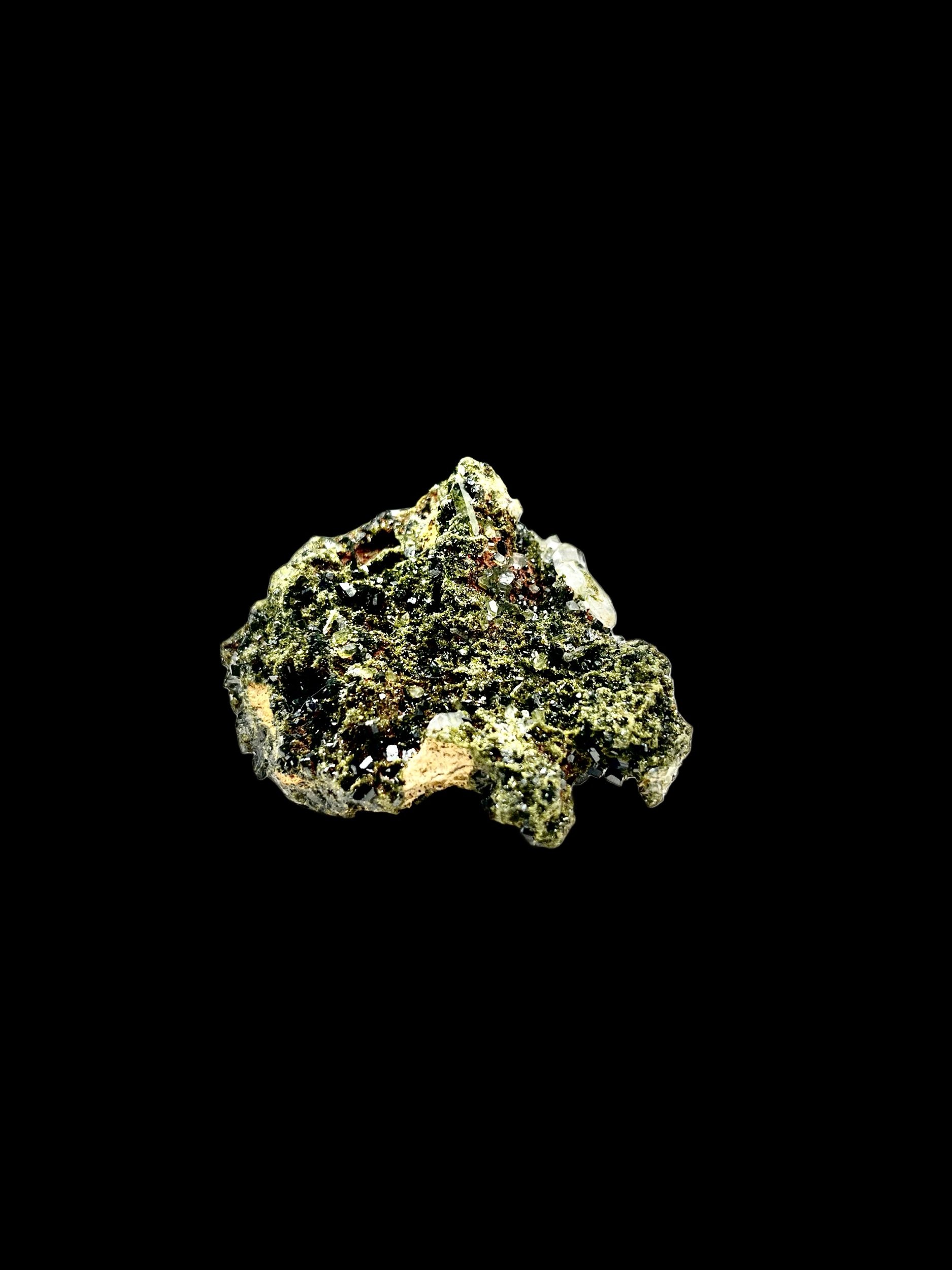
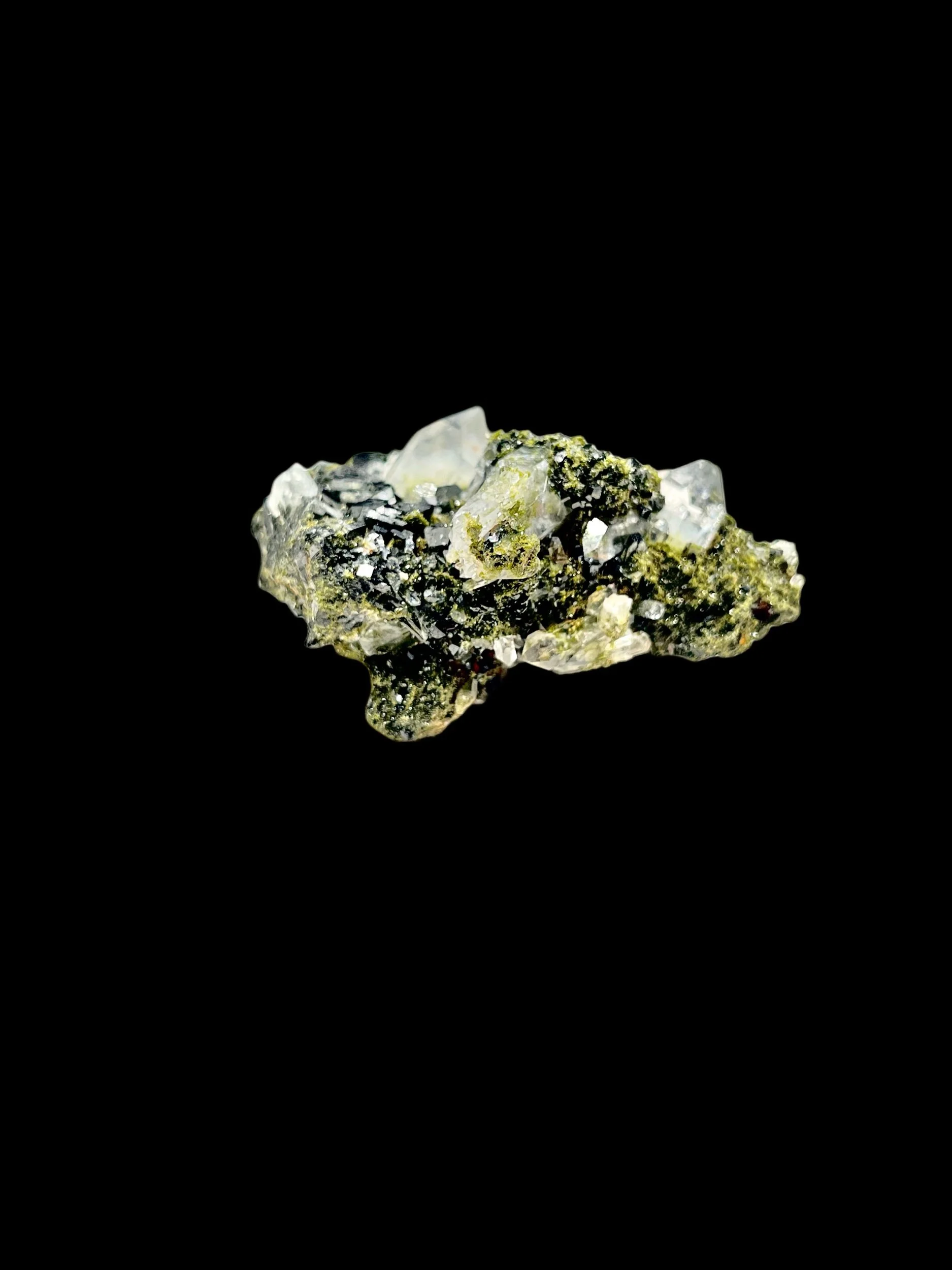
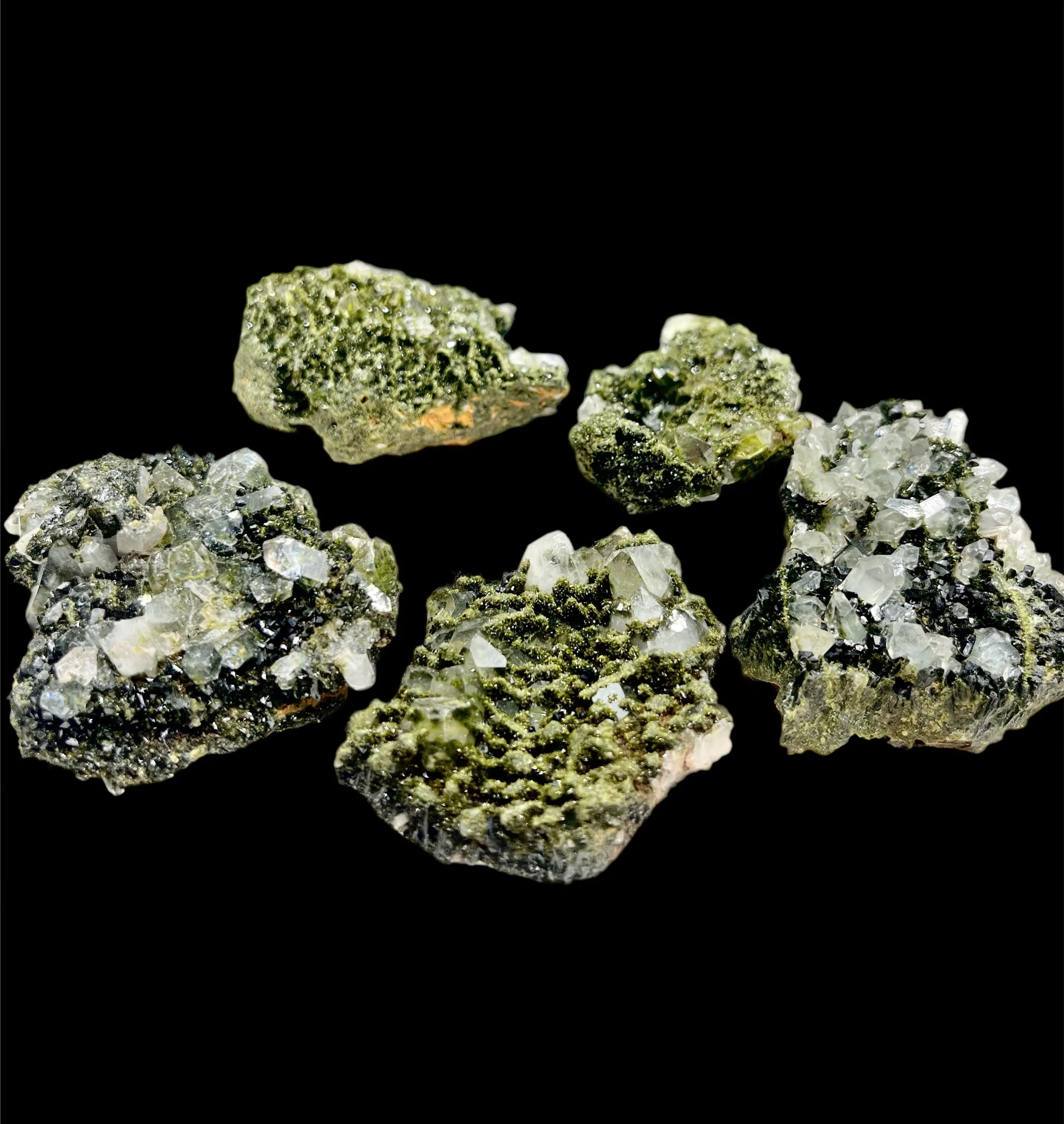
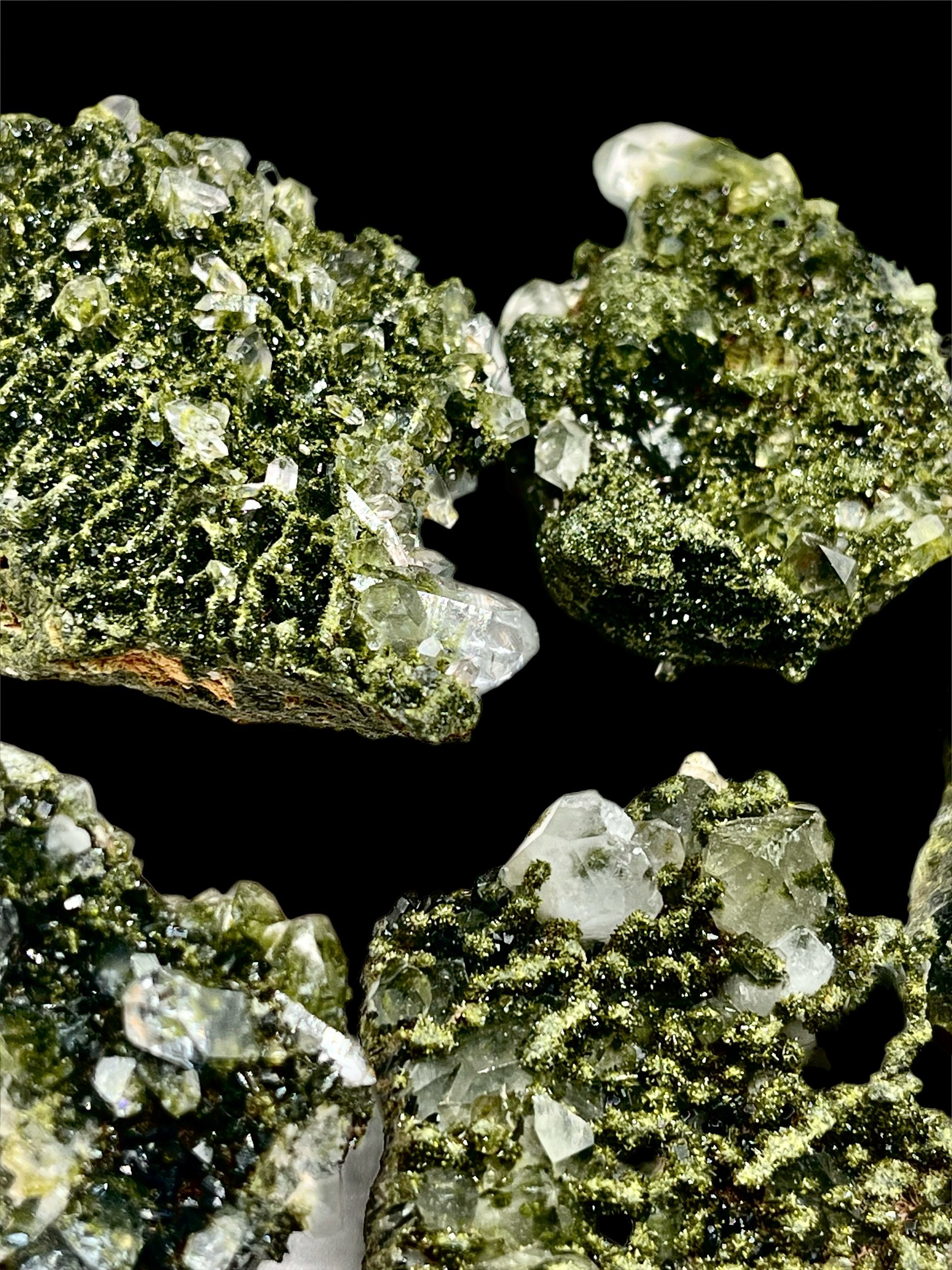
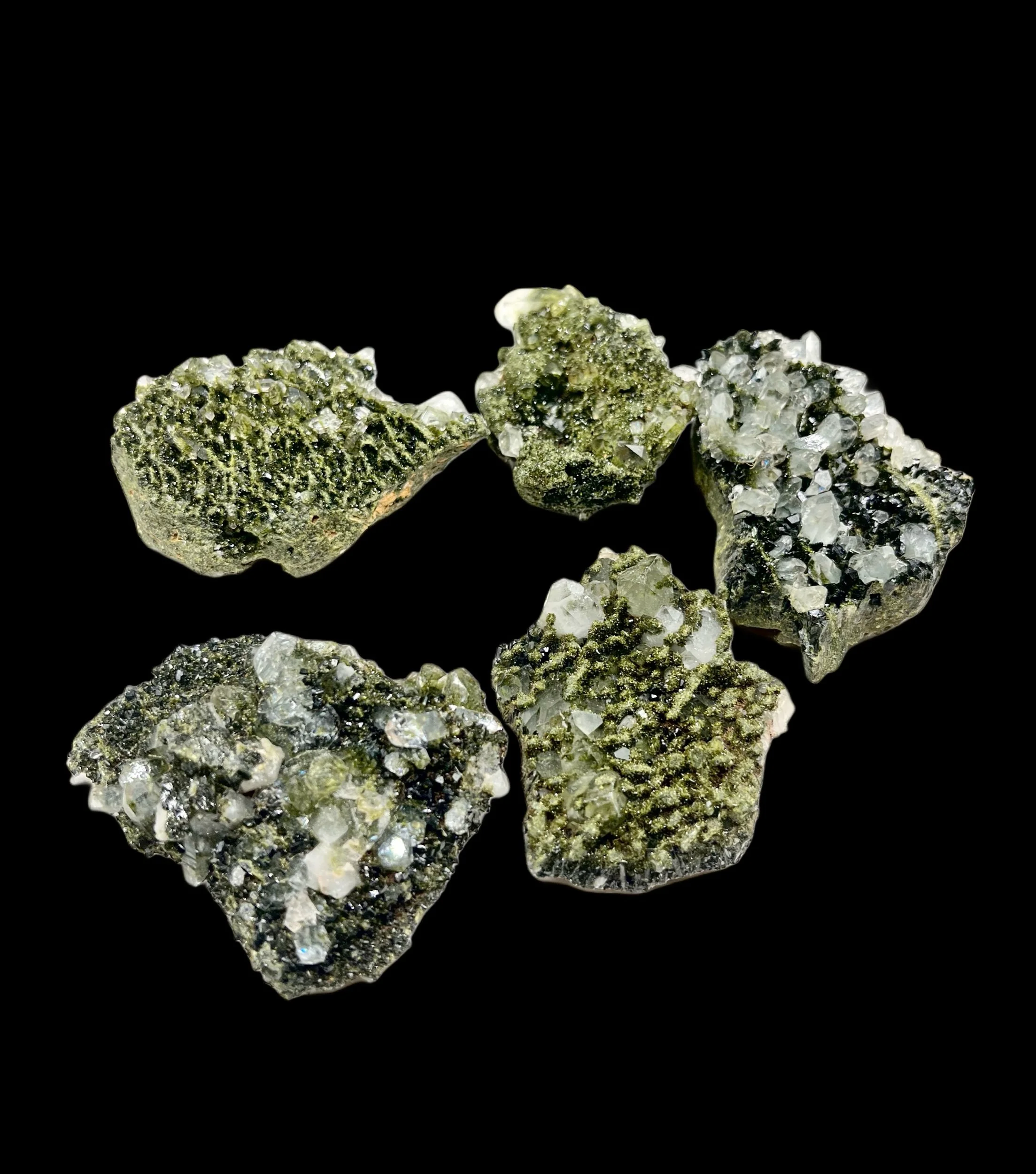
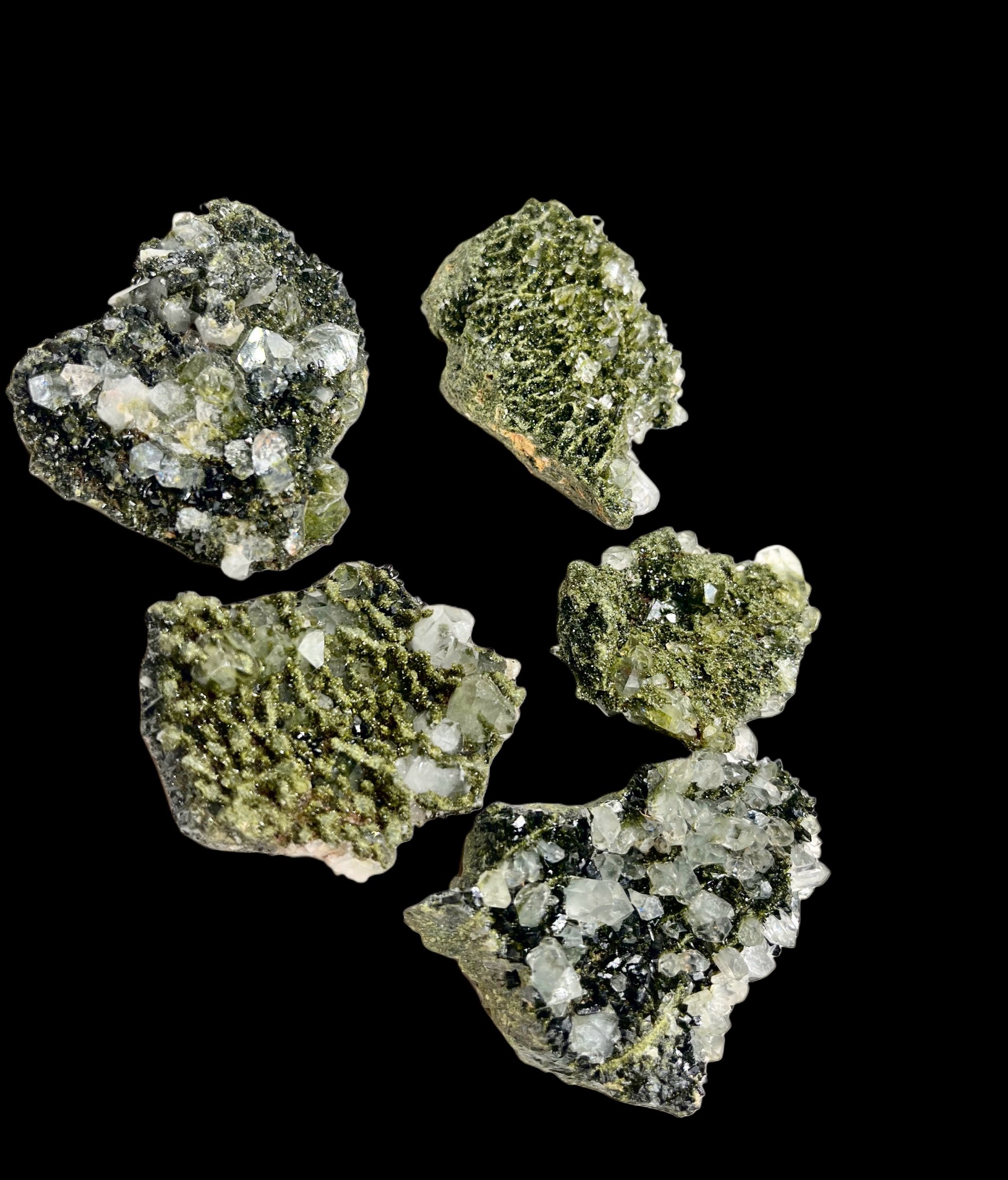
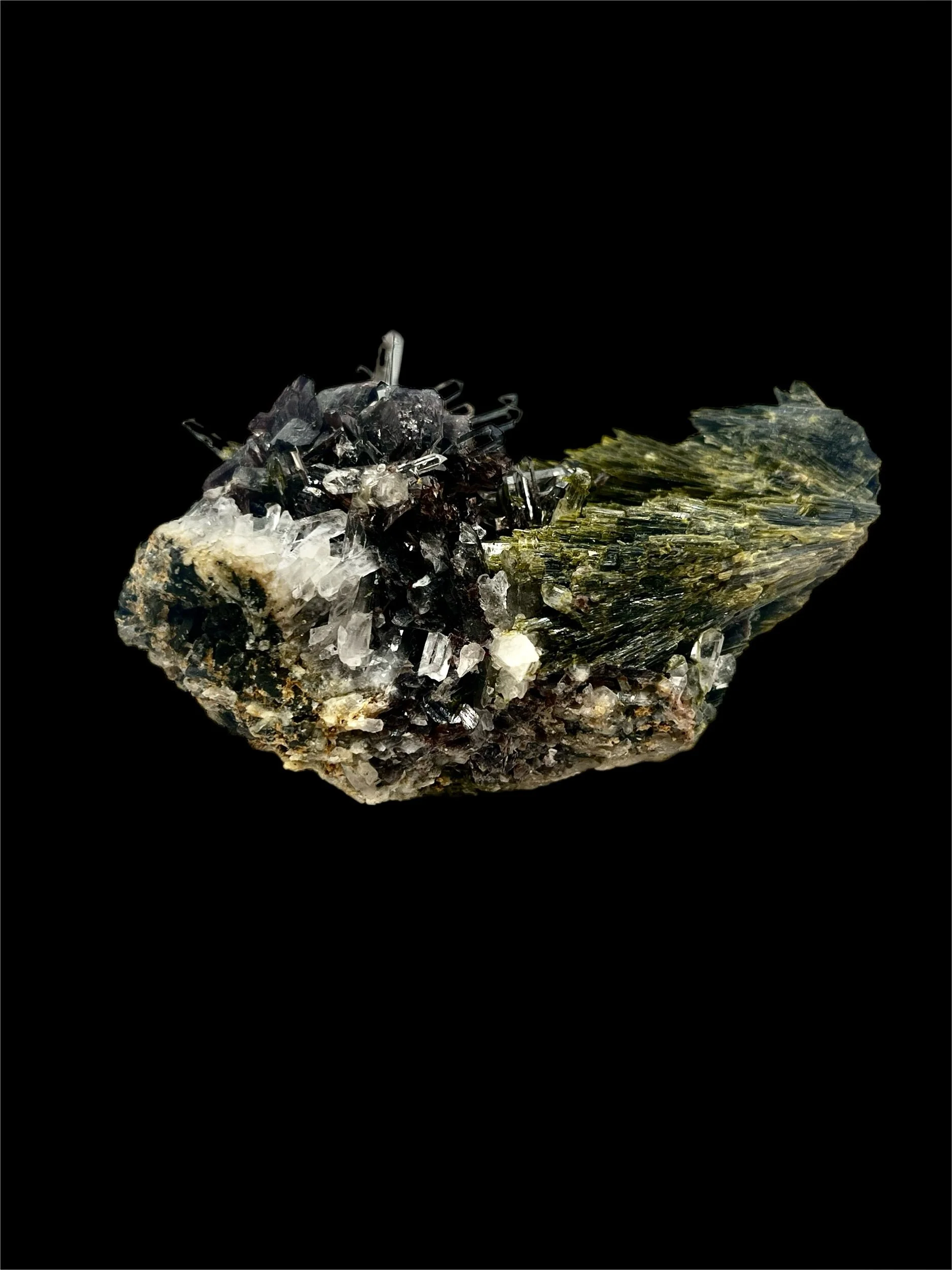
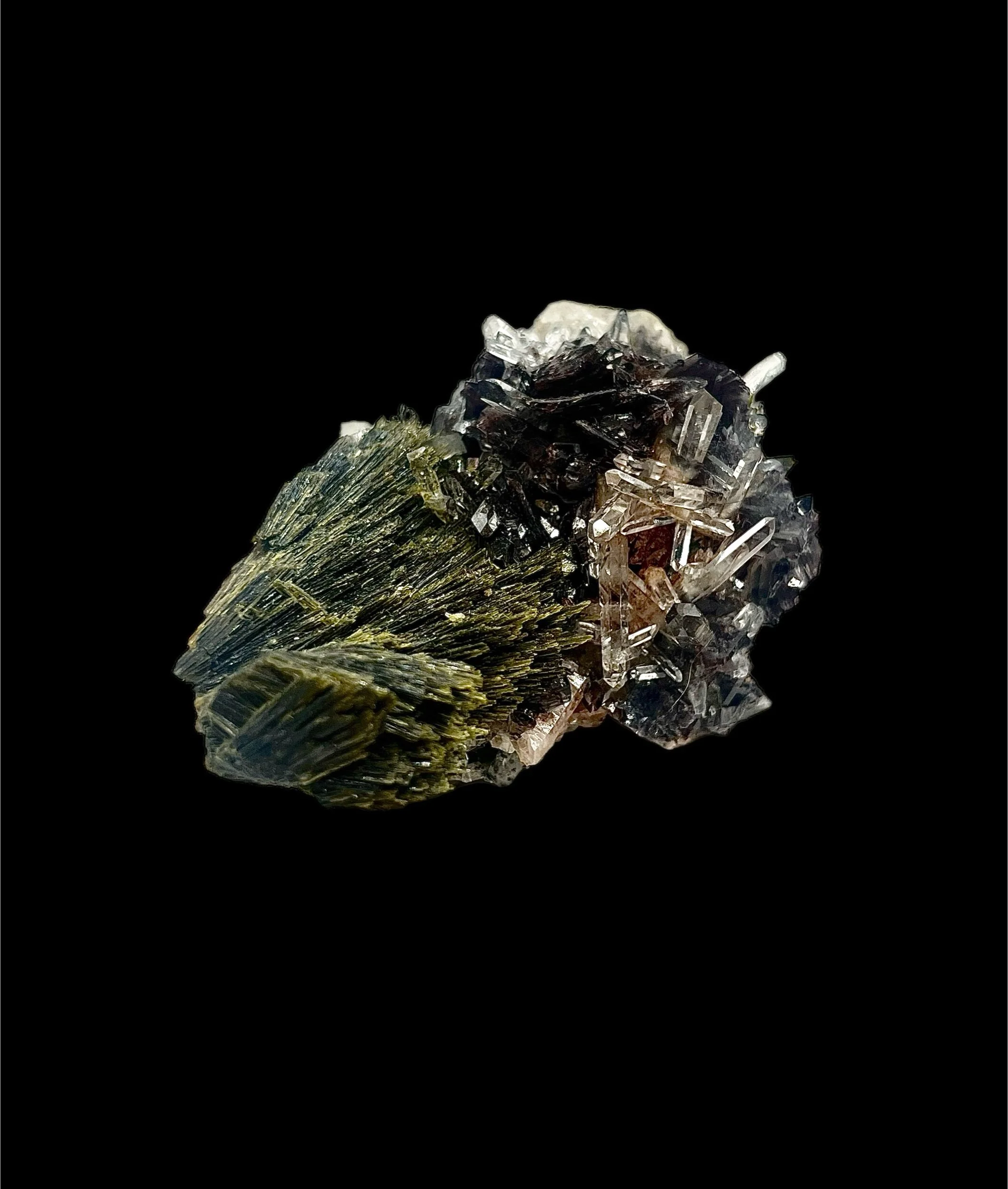
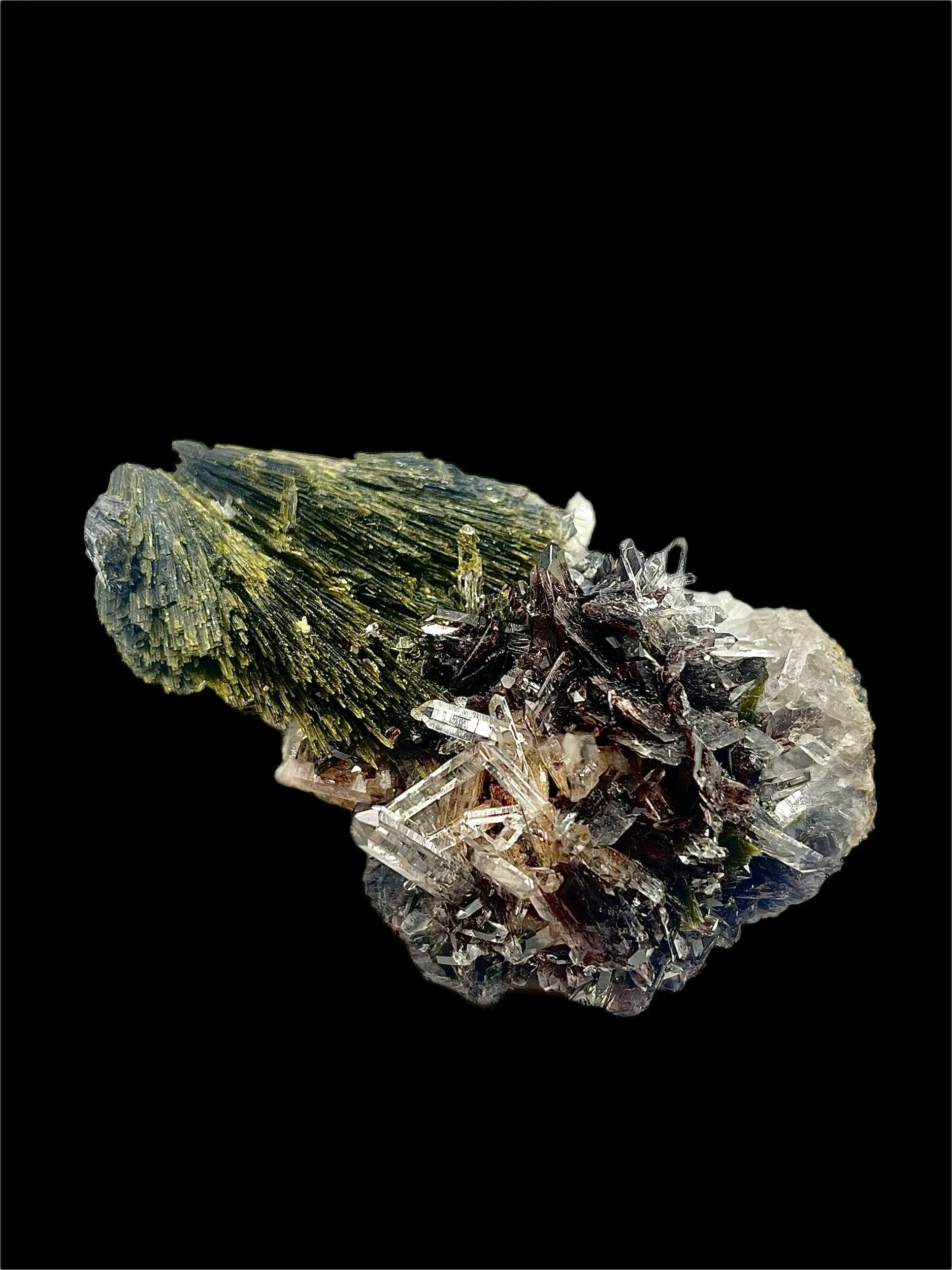
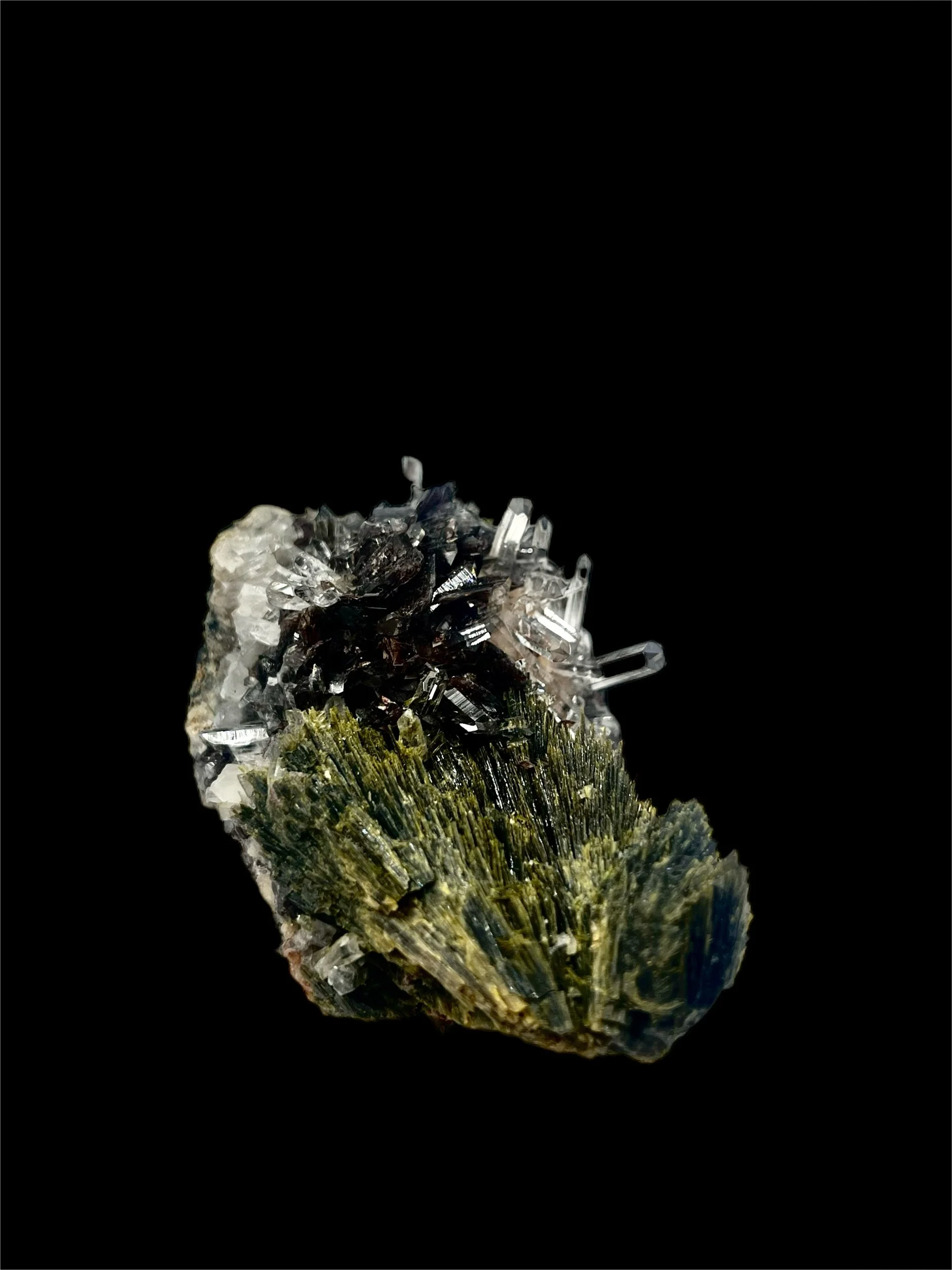
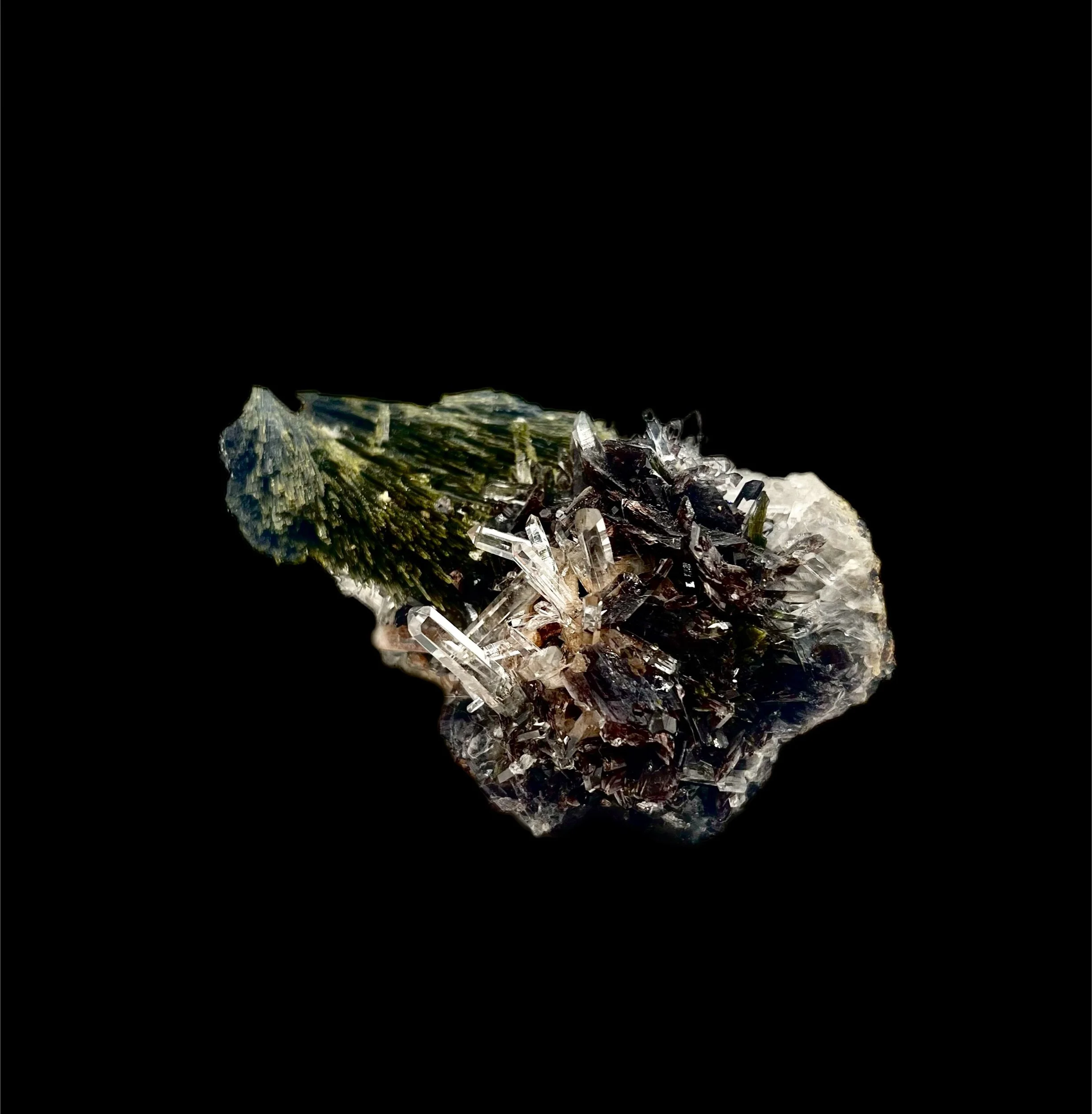
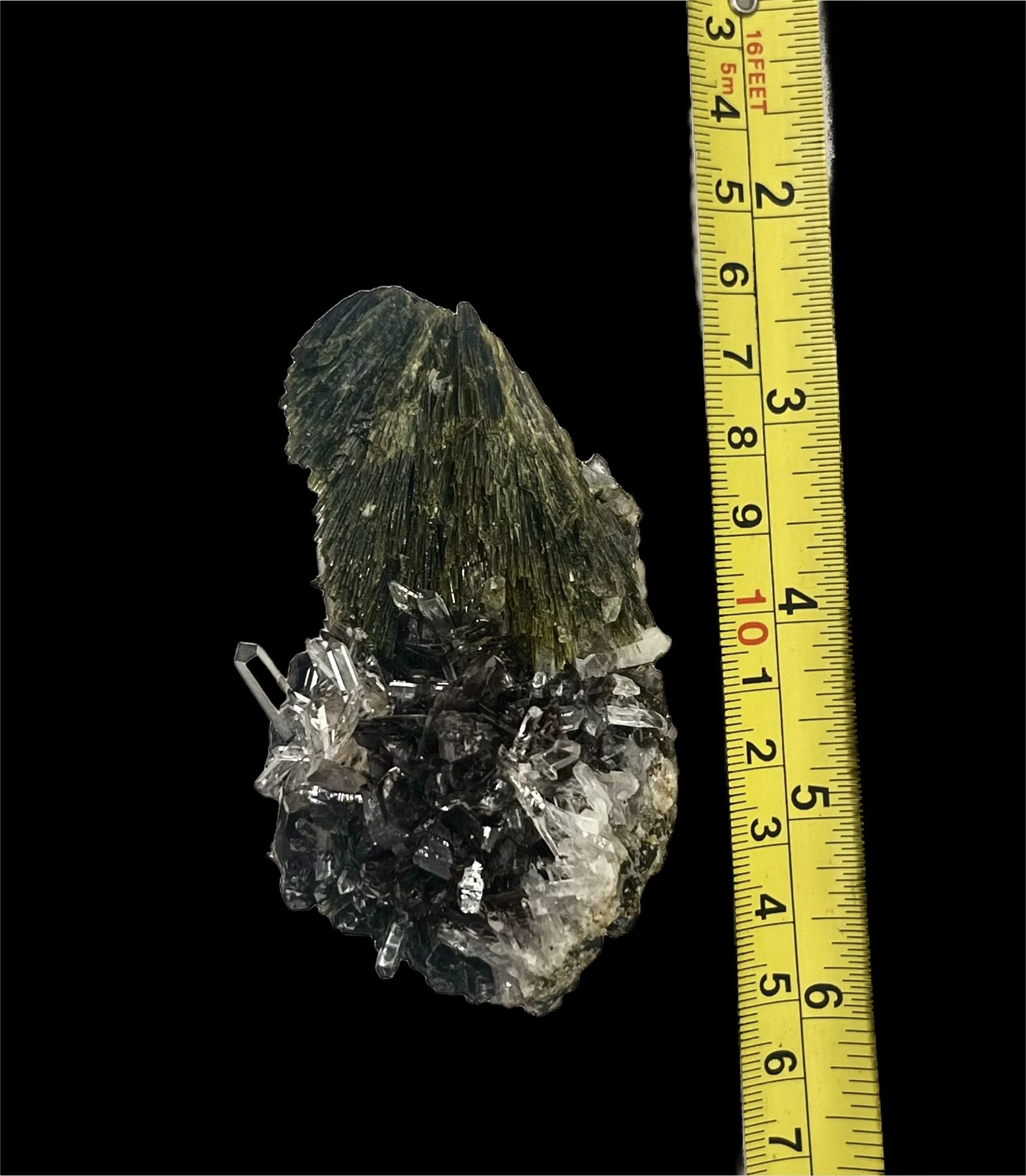
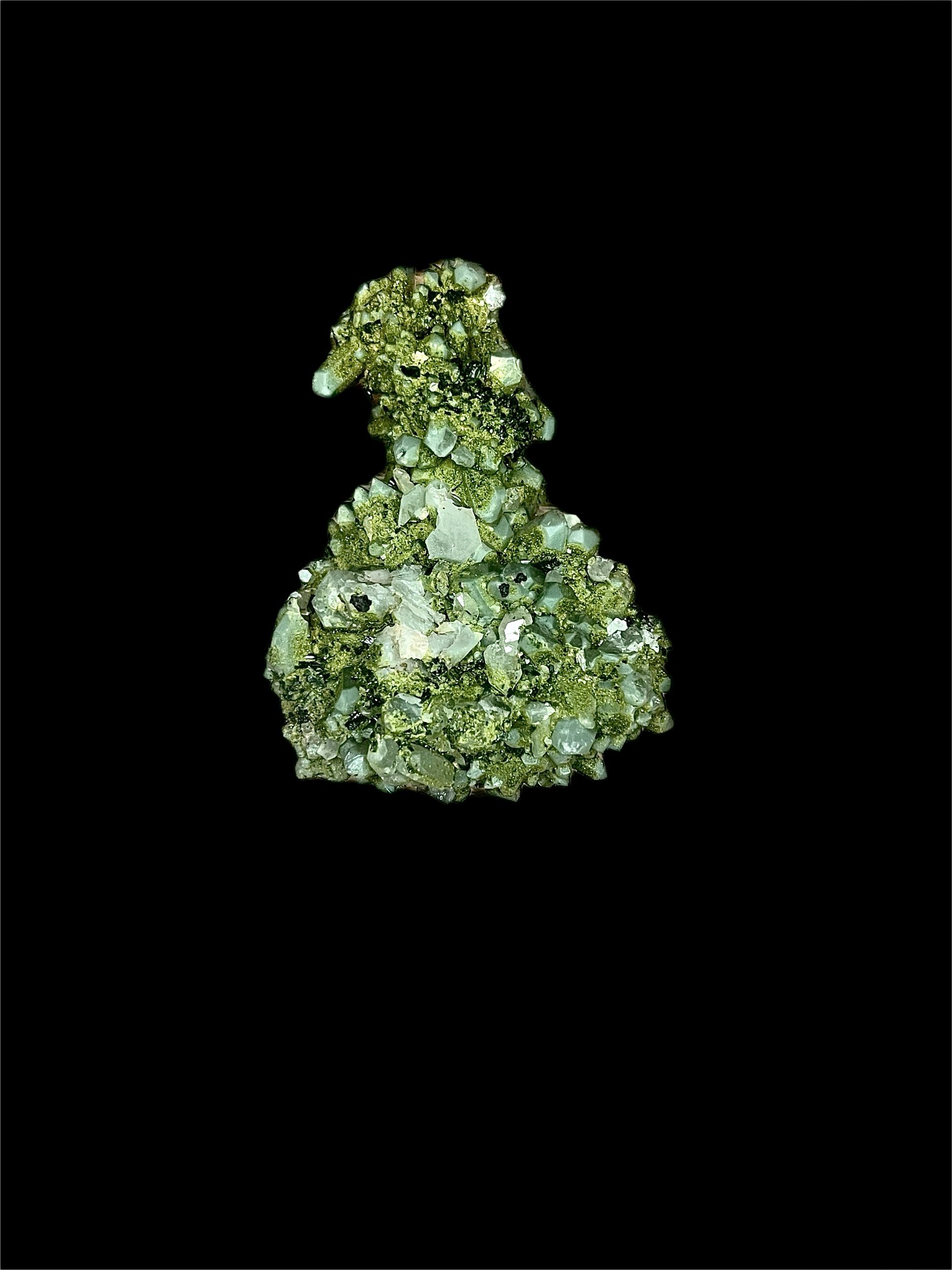
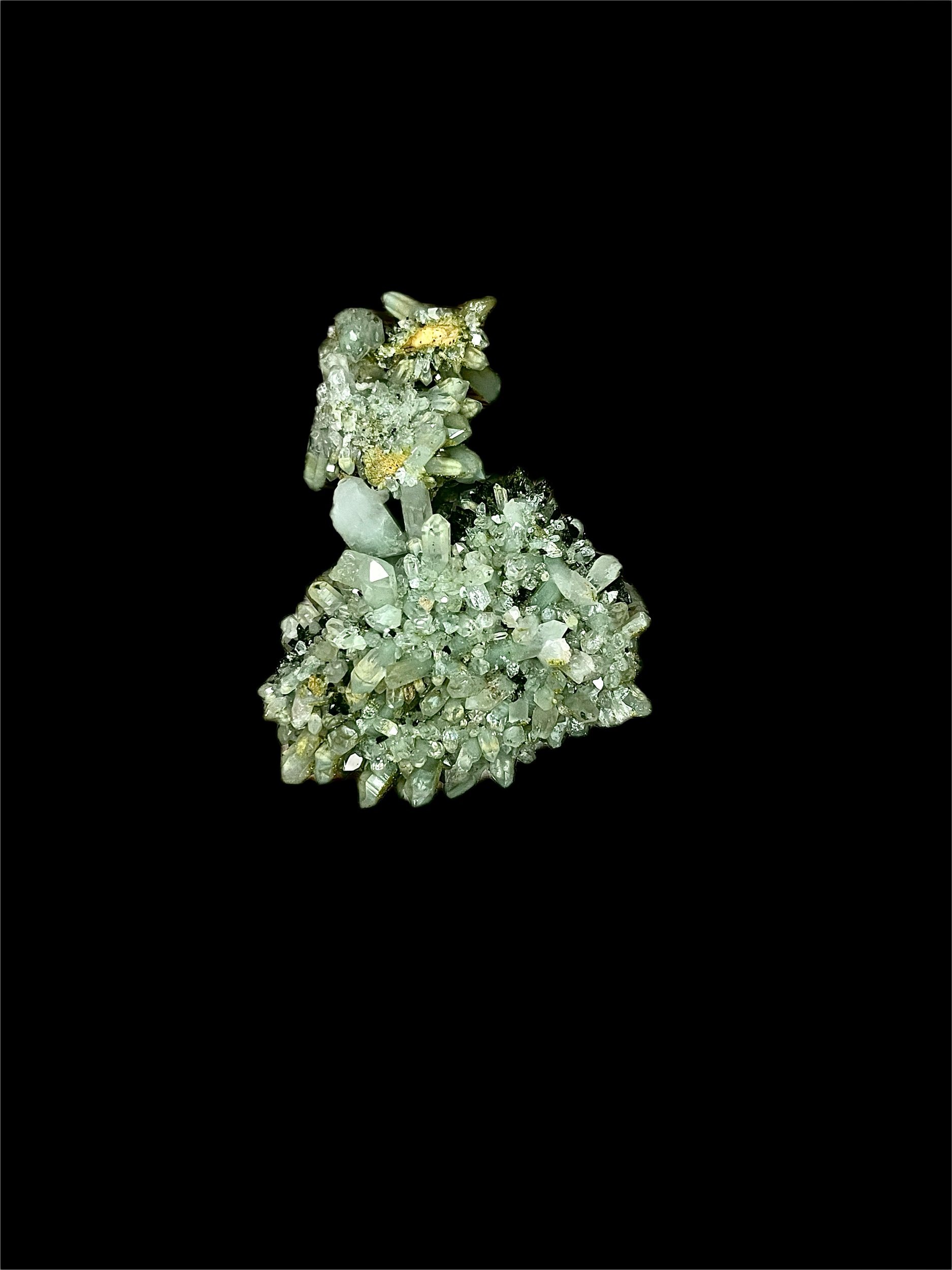
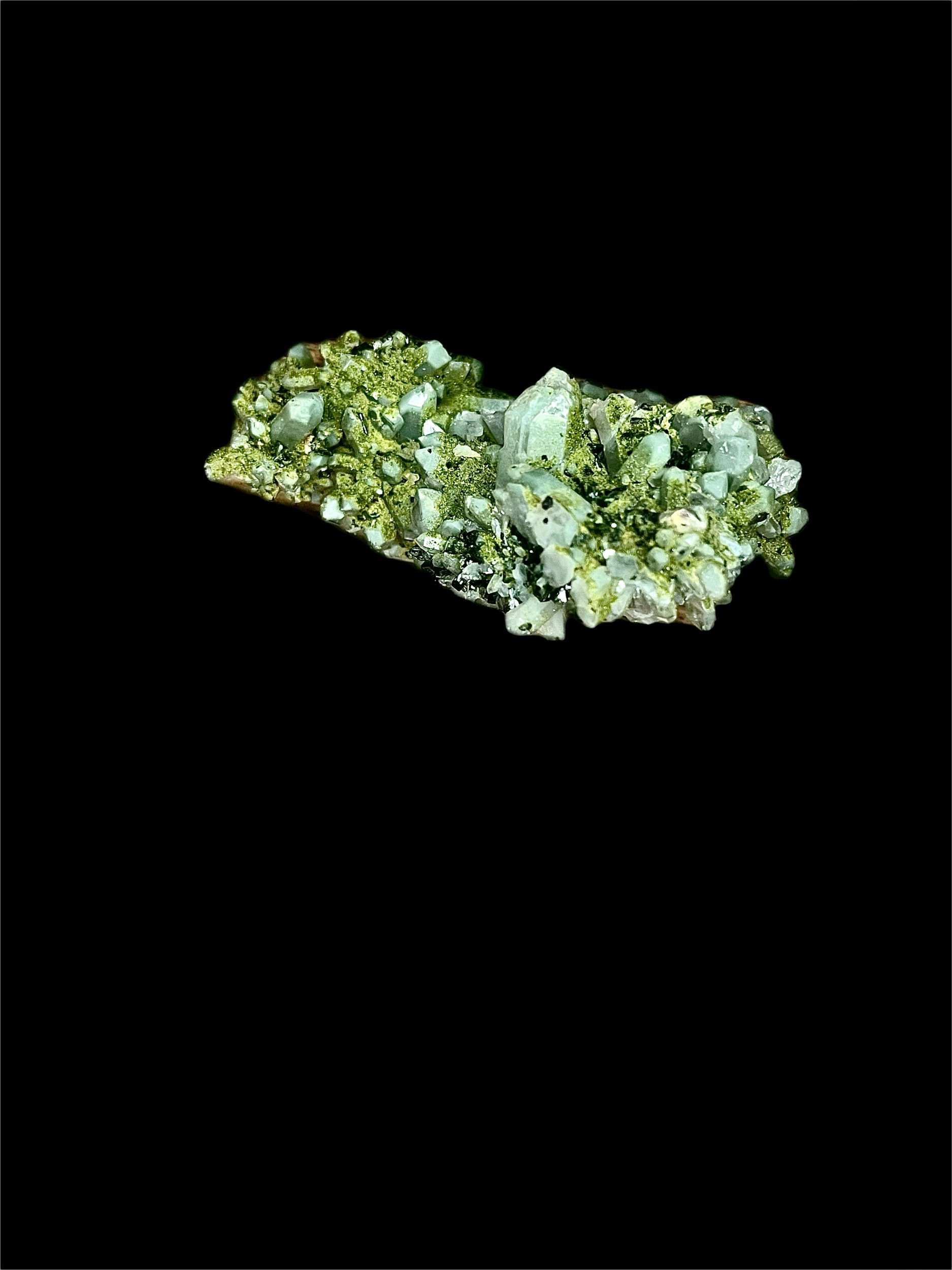
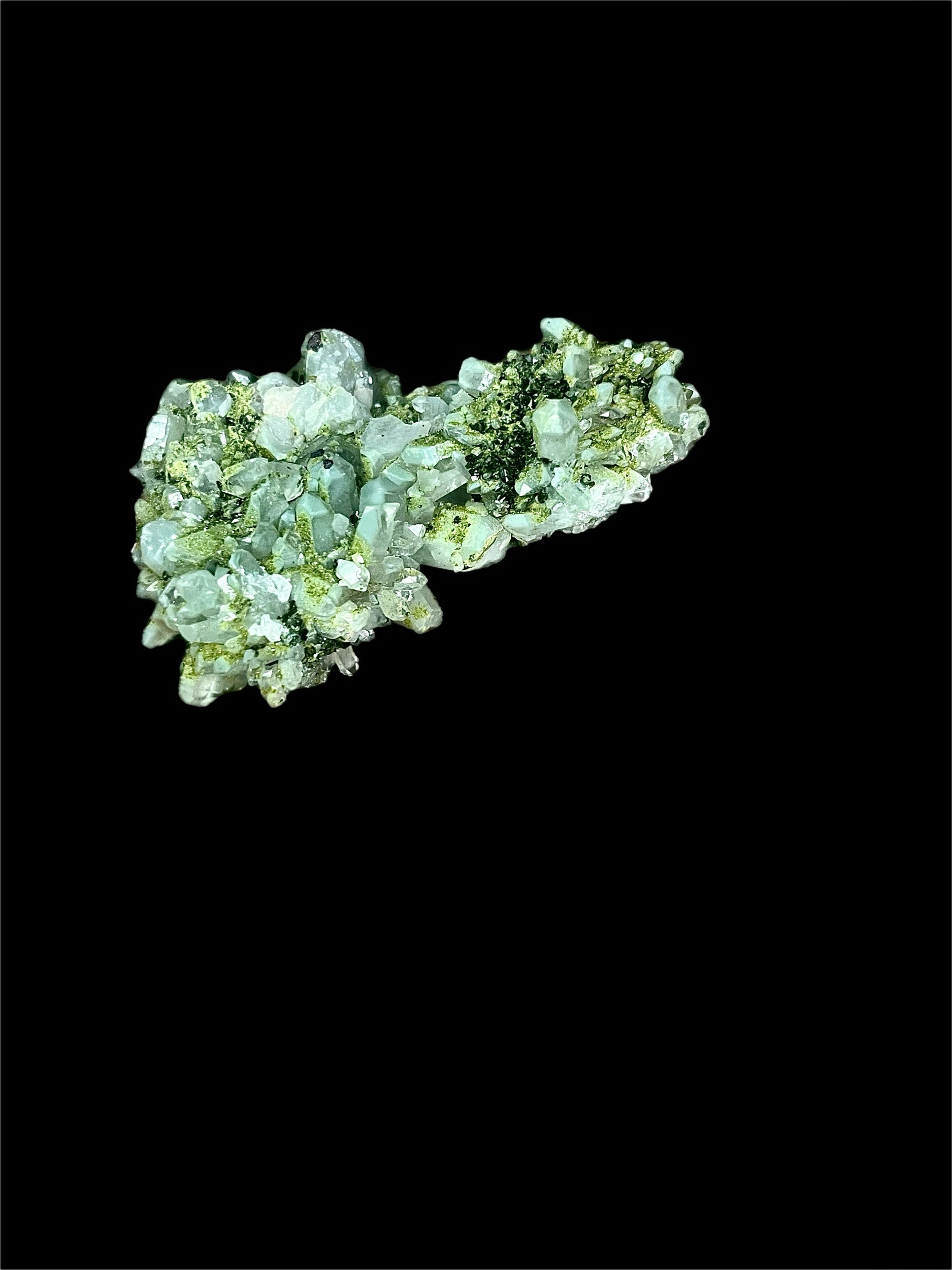
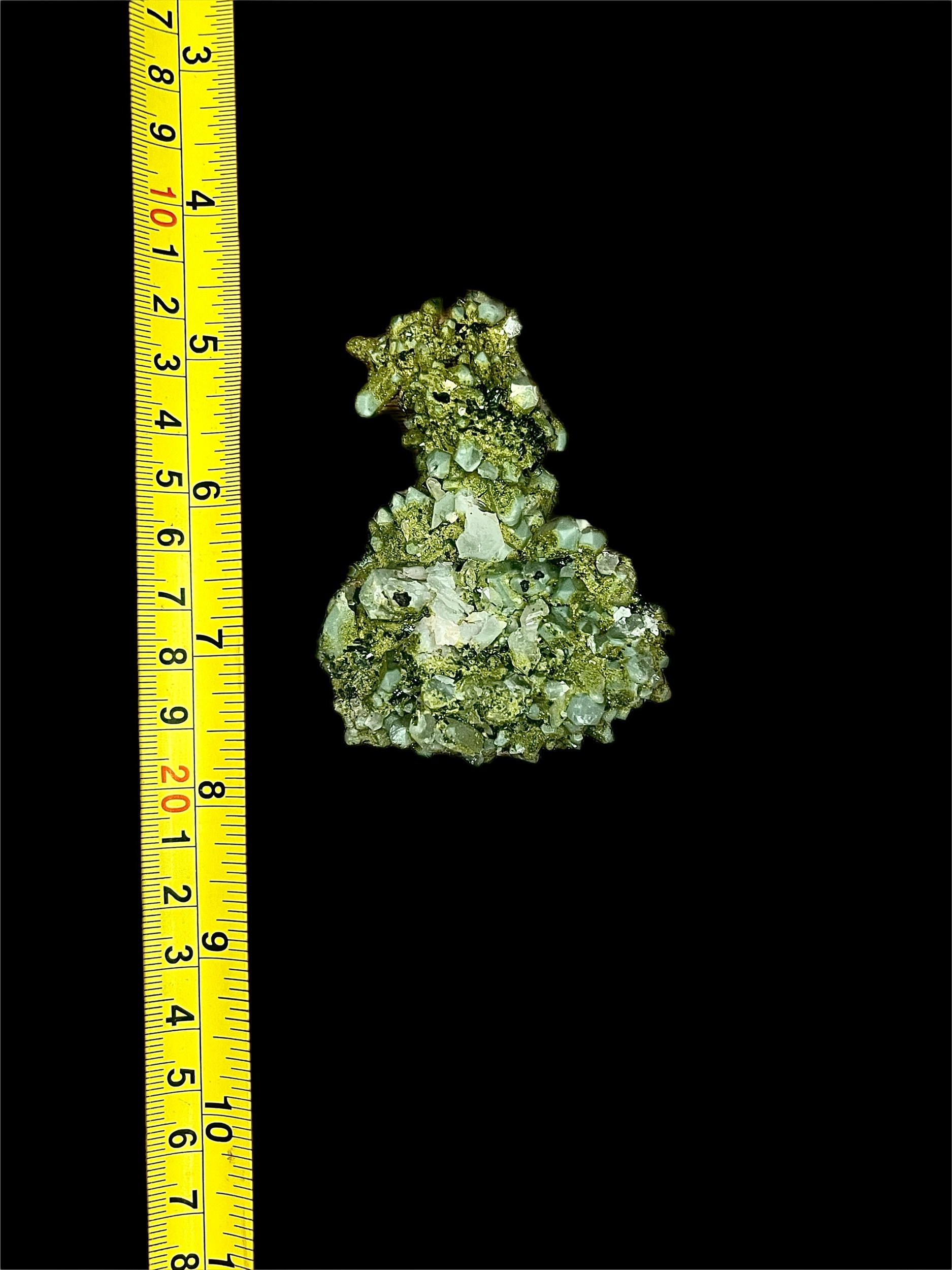
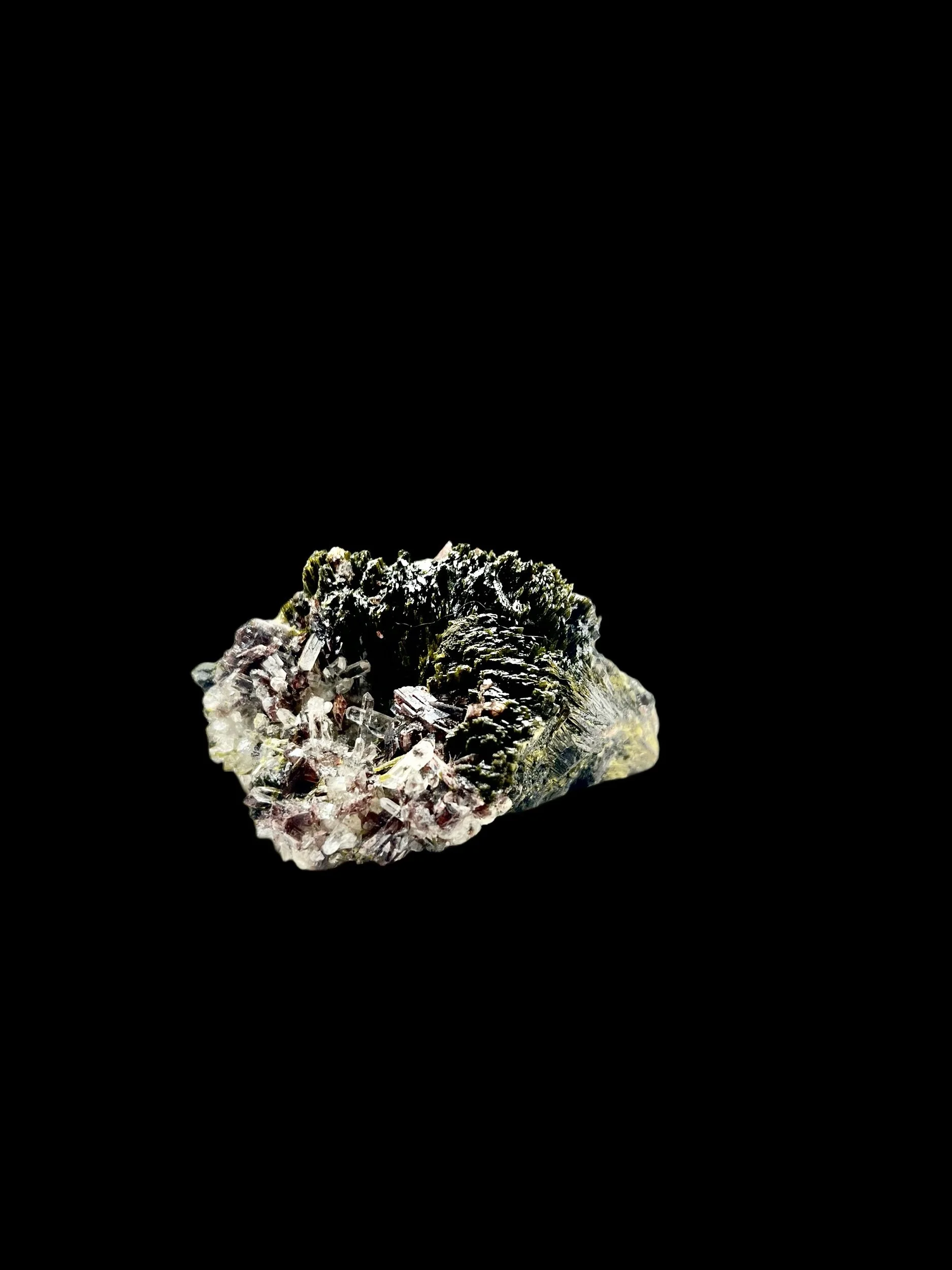
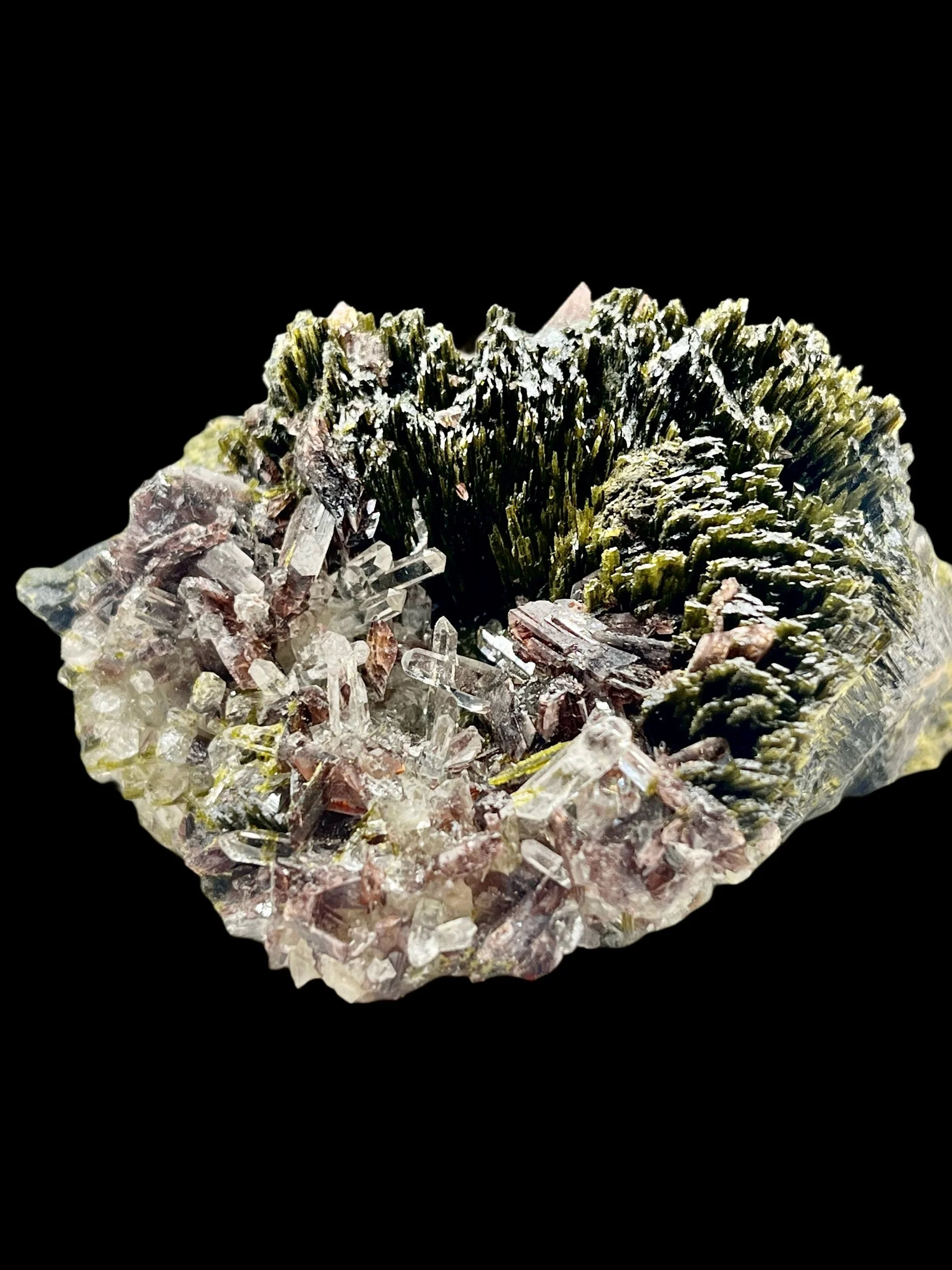
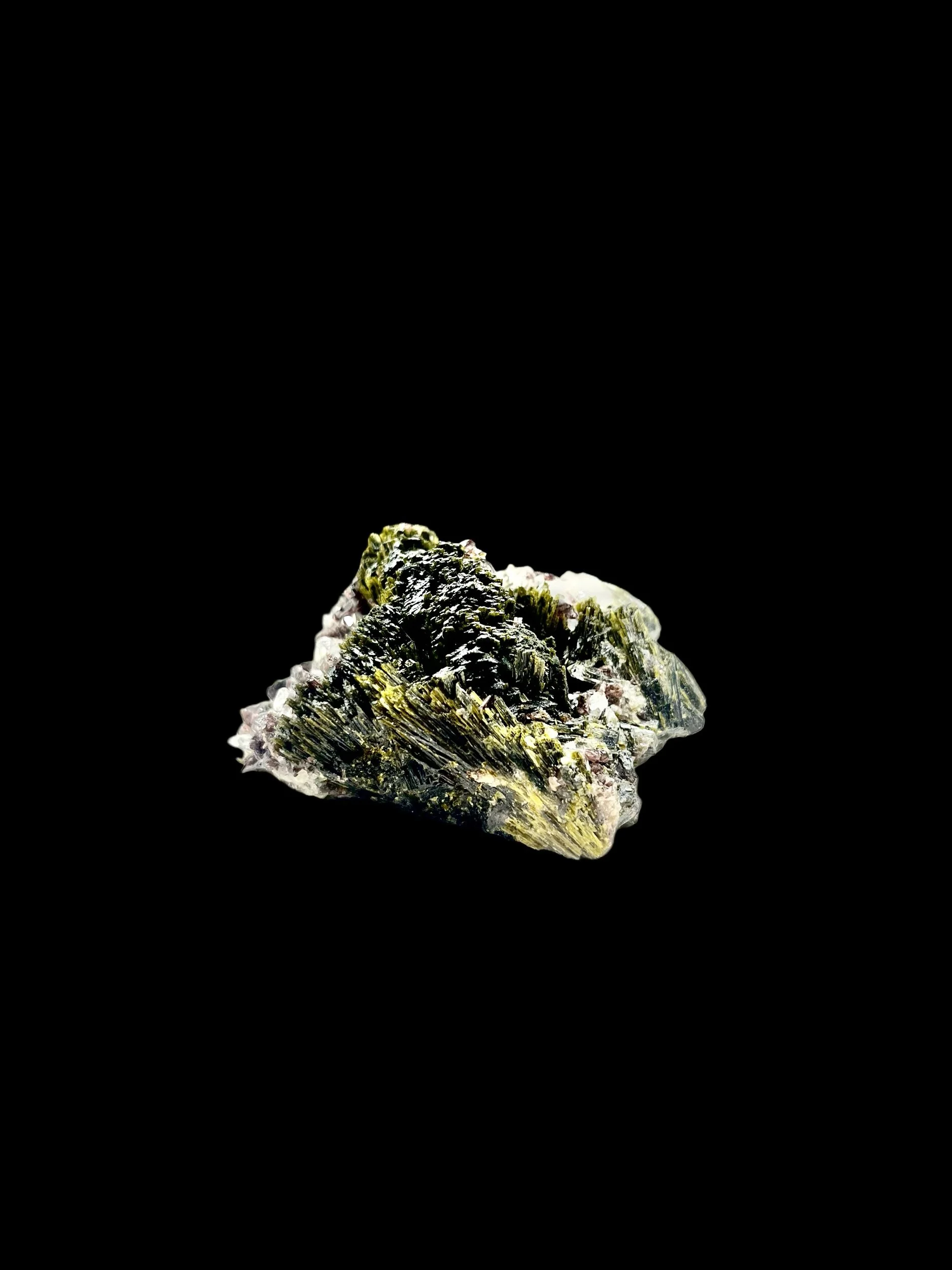
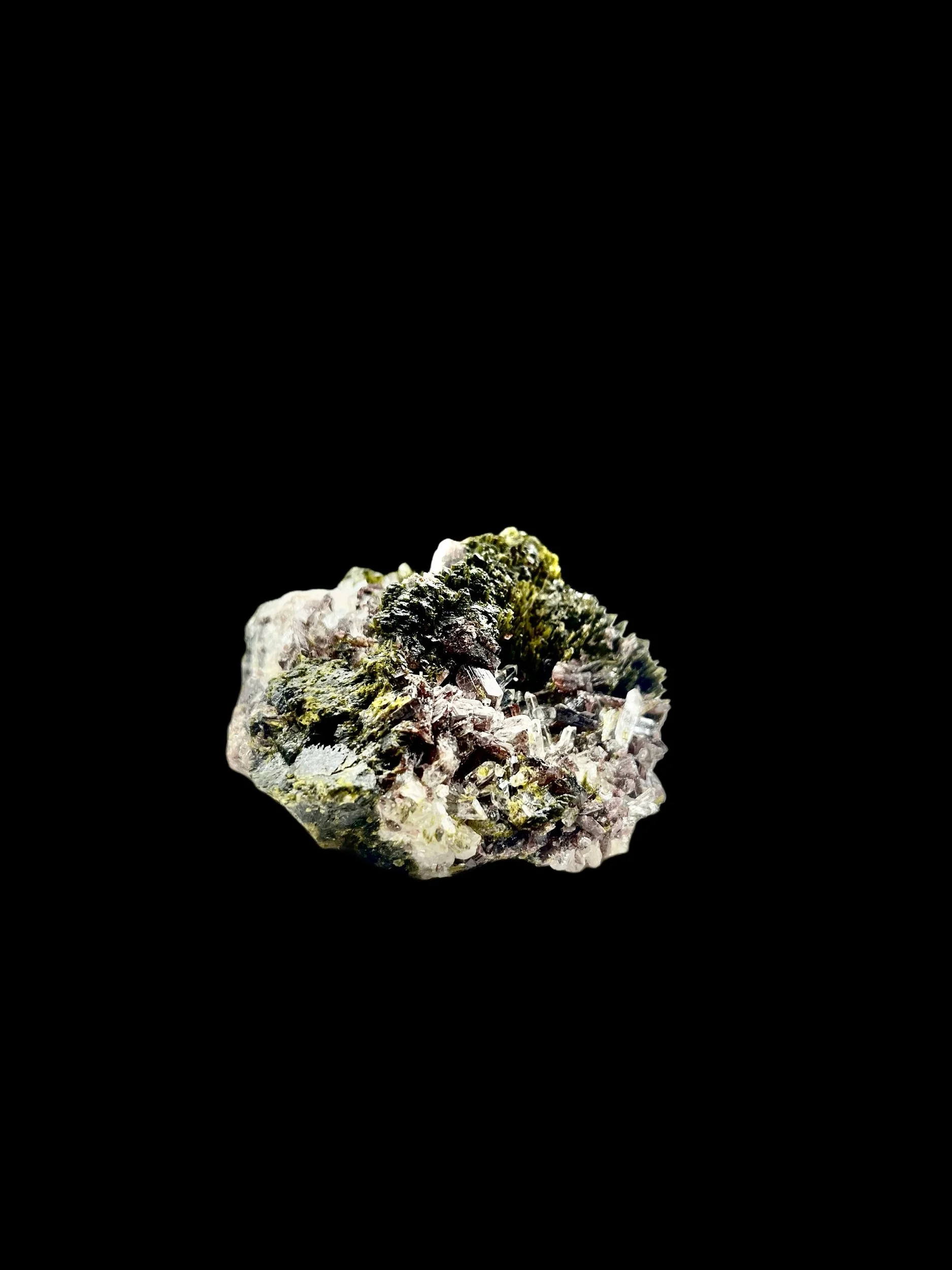
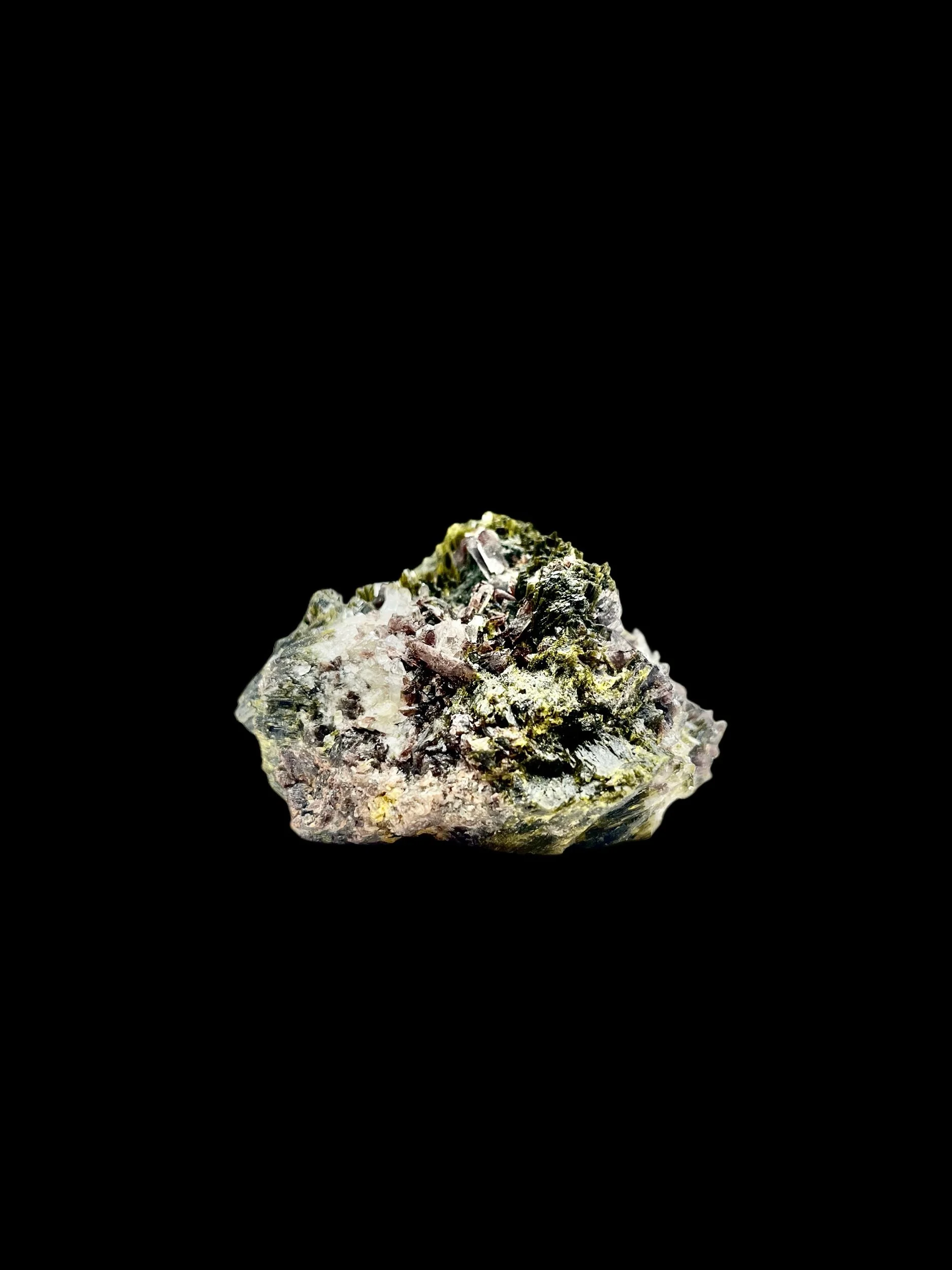
This striking Peruvian specimen showcases a dense, fibrous aggregate of olive-green epidote hosting sharp, glassy quartz crystals and intergrown axinite, creating a richly textured, multi-mineral composition. The contrast between epidote’s bladed to fibrous growth and the transparent, prismatic quartz points gives the piece strong dimensionality and visual depth, with some of the epidote clearly visible inside the quartz. Axinite appears subtly but decisively within the matrix, adding mineralogical interest and confirming a complex formation environment rather than a simple single-species growth.
Dimensions & Weight
Metaphysical Properties
Epidote is often associated with growth and amplification, while quartz is traditionally viewed as a clarifier and stabilizer. Axinite is sometimes linked with grounding and structural balance. Many collectors appreciate this combination for its perceived sense of alignment and cohesion.
Collector’s Notes
Peru is well known for producing association specimens with excellent mineral contrast, and this piece is a textbook example. Epidote–axinite associations are less commonly encountered than epidote alone, and the addition of well-formed quartz crystals elevates this specimen beyond a standard matrix piece. Ideal for collectors focused on paragenesis, alpine-style mineralization, or Andean localities.
Highlights
Natural epidote with axinite and quartz association
Strong textural contrast: fibrous/bladed epidote with prismatic quartz
Rare Peruvian mineral combination
High luster
Excellent teaching and display piece for association minerals
Mineralogy
Mineral: Epidote, Axinite, and Quartz
Chemical Formula: Ca₂(Al,Fe)₃(SiO₄)₃(OH) + (Ca,Fe,Mn)₃Al₂BO₃Si₄O₁₂(OH) + SiO₂
Crystal System: Monoclinic (Epidote); Triclinic (Axinite); Trigonal (Quartz)
Luster: Vitreous to slightly resinous (Epidote); vitreous (Axinite & Quartz)
Transparency: Transparent to opaque (Epidote); transparent to translucent (Axinite & Quartz)
Description
This striking Peruvian specimen showcases a dense, fibrous aggregate of olive-green epidote hosting sharp, glassy quartz crystals and intergrown axinite, creating a richly textured, multi-mineral composition. The contrast between epidote’s bladed to fibrous growth and the transparent, prismatic quartz points gives the piece strong dimensionality and visual depth, with some of the epidote clearly visible inside the quartz. Axinite appears subtly but decisively within the matrix, adding mineralogical interest and confirming a complex formation environment rather than a simple single-species growth.
Dimensions & Weight
Metaphysical Properties
Epidote is often associated with growth and amplification, while quartz is traditionally viewed as a clarifier and stabilizer. Axinite is sometimes linked with grounding and structural balance. Many collectors appreciate this combination for its perceived sense of alignment and cohesion.
Collector’s Notes
Peru is well known for producing association specimens with excellent mineral contrast, and this piece is a textbook example. Epidote–axinite associations are less commonly encountered than epidote alone, and the addition of well-formed quartz crystals elevates this specimen beyond a standard matrix piece. Ideal for collectors focused on paragenesis, alpine-style mineralization, or Andean localities.
Highlights
Natural epidote with axinite and quartz association
Strong textural contrast: fibrous/bladed epidote with prismatic quartz
Rare Peruvian mineral combination
High luster
Excellent teaching and display piece for association minerals
Mineralogy
Mineral: Epidote, Axinite, and Quartz
Chemical Formula: Ca₂(Al,Fe)₃(SiO₄)₃(OH) + (Ca,Fe,Mn)₃Al₂BO₃Si₄O₁₂(OH) + SiO₂
Crystal System: Monoclinic (Epidote); Triclinic (Axinite); Trigonal (Quartz)
Luster: Vitreous to slightly resinous (Epidote); vitreous (Axinite & Quartz)
Transparency: Transparent to opaque (Epidote); transparent to translucent (Axinite & Quartz)


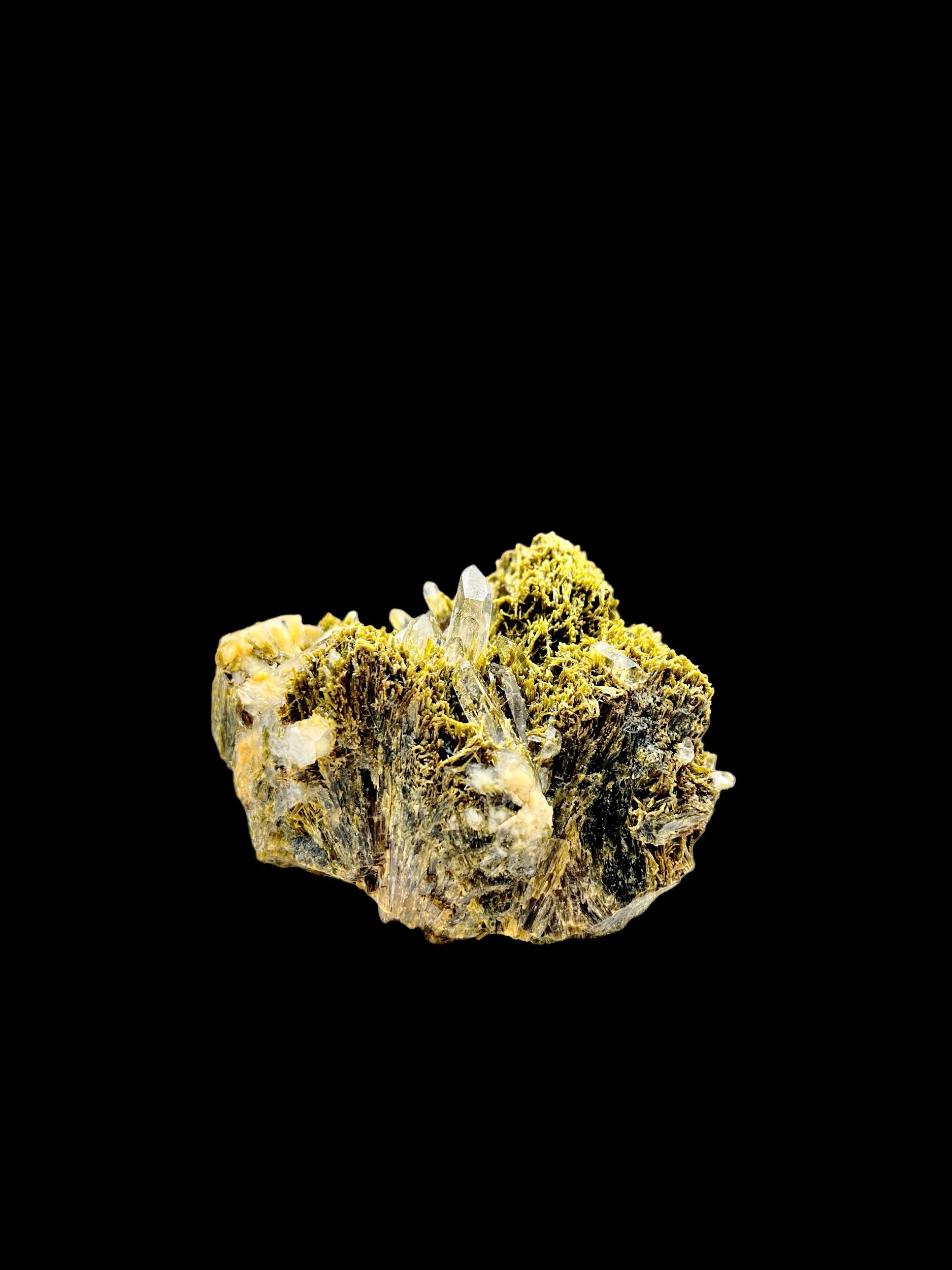 Image 1 of 6
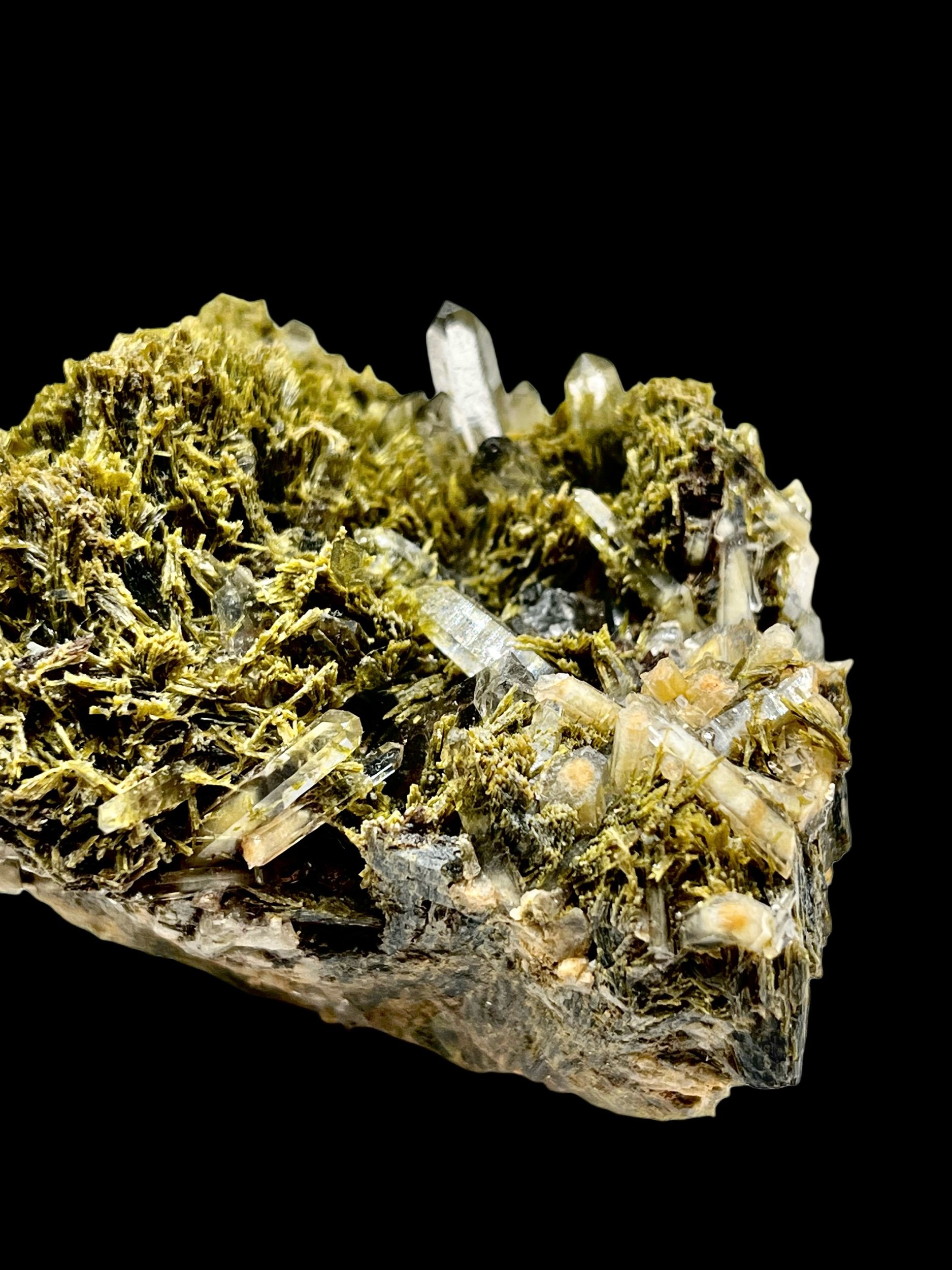 Image 2 of 6
 Image 3 of 6
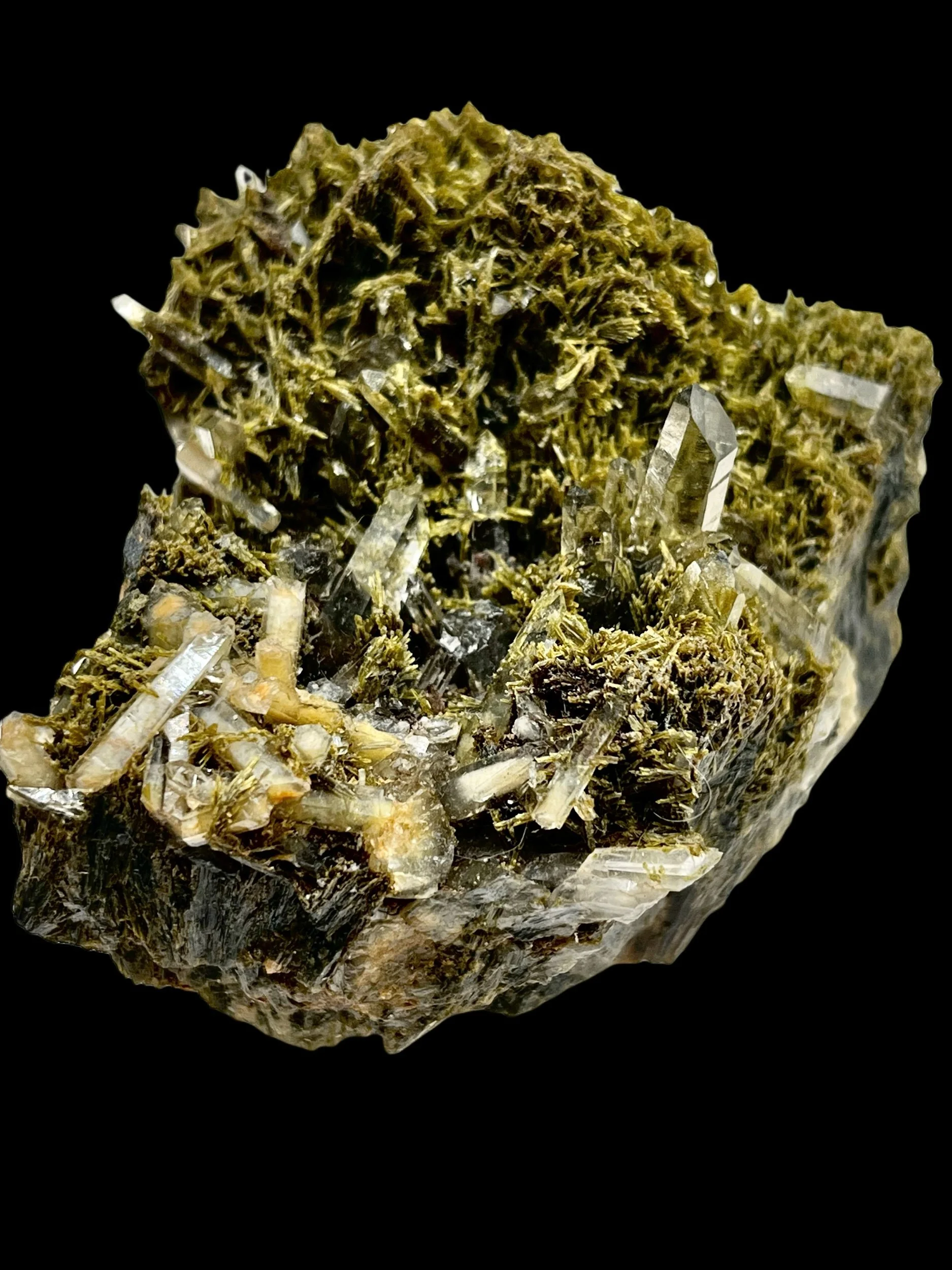 Image 4 of 6
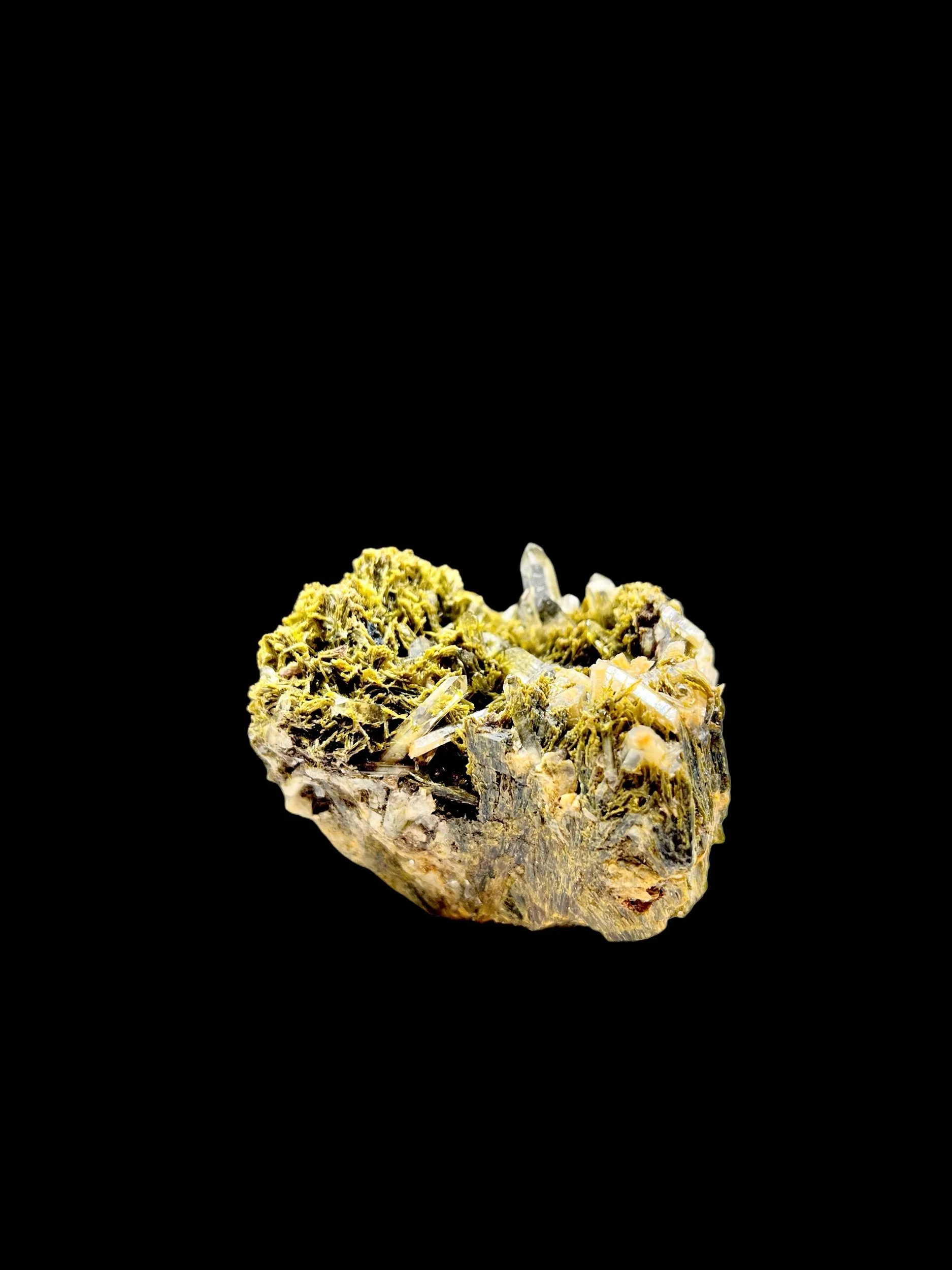 Image 5 of 6
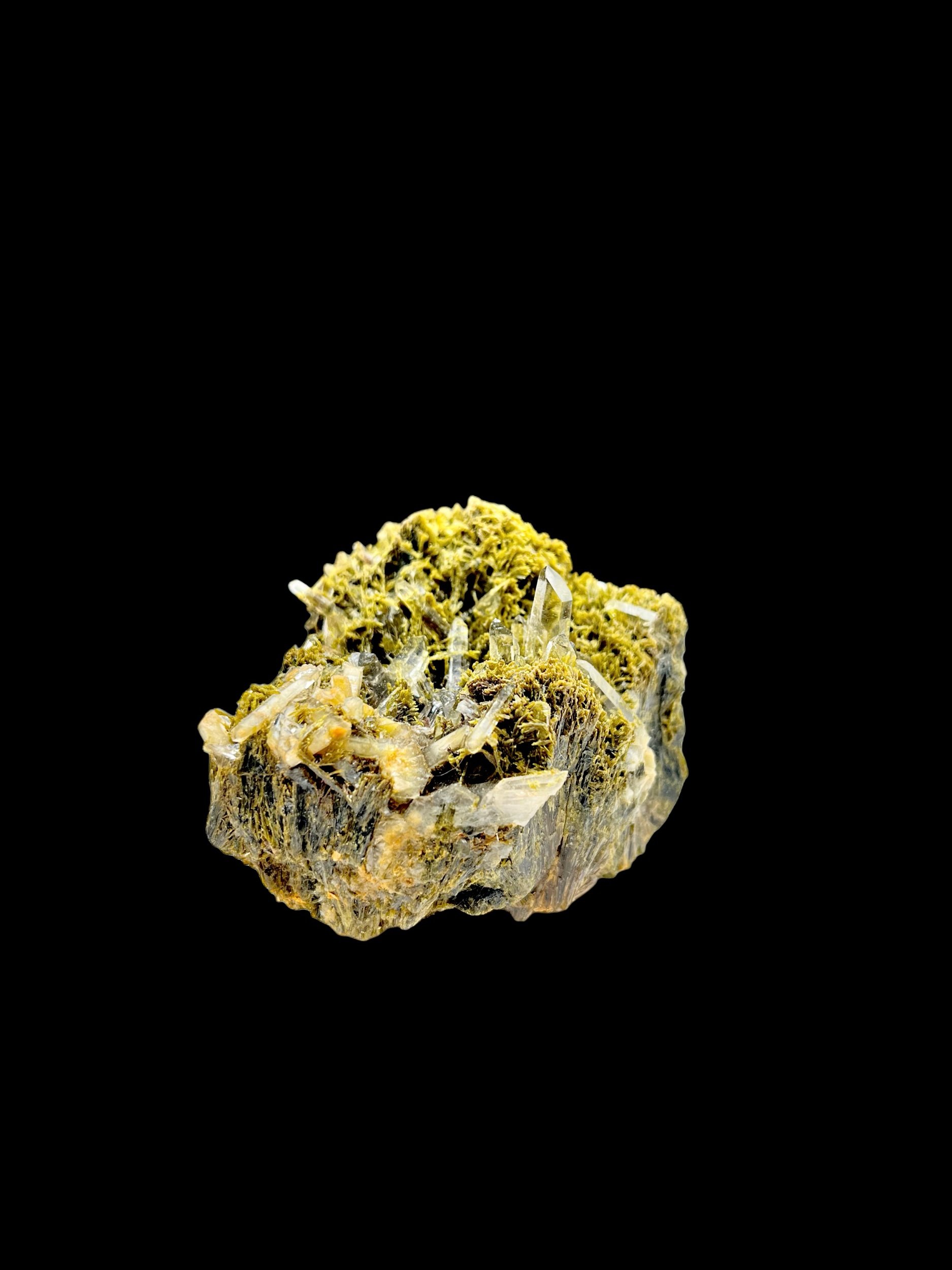 Image 6 of 6