 Image 1 of 5
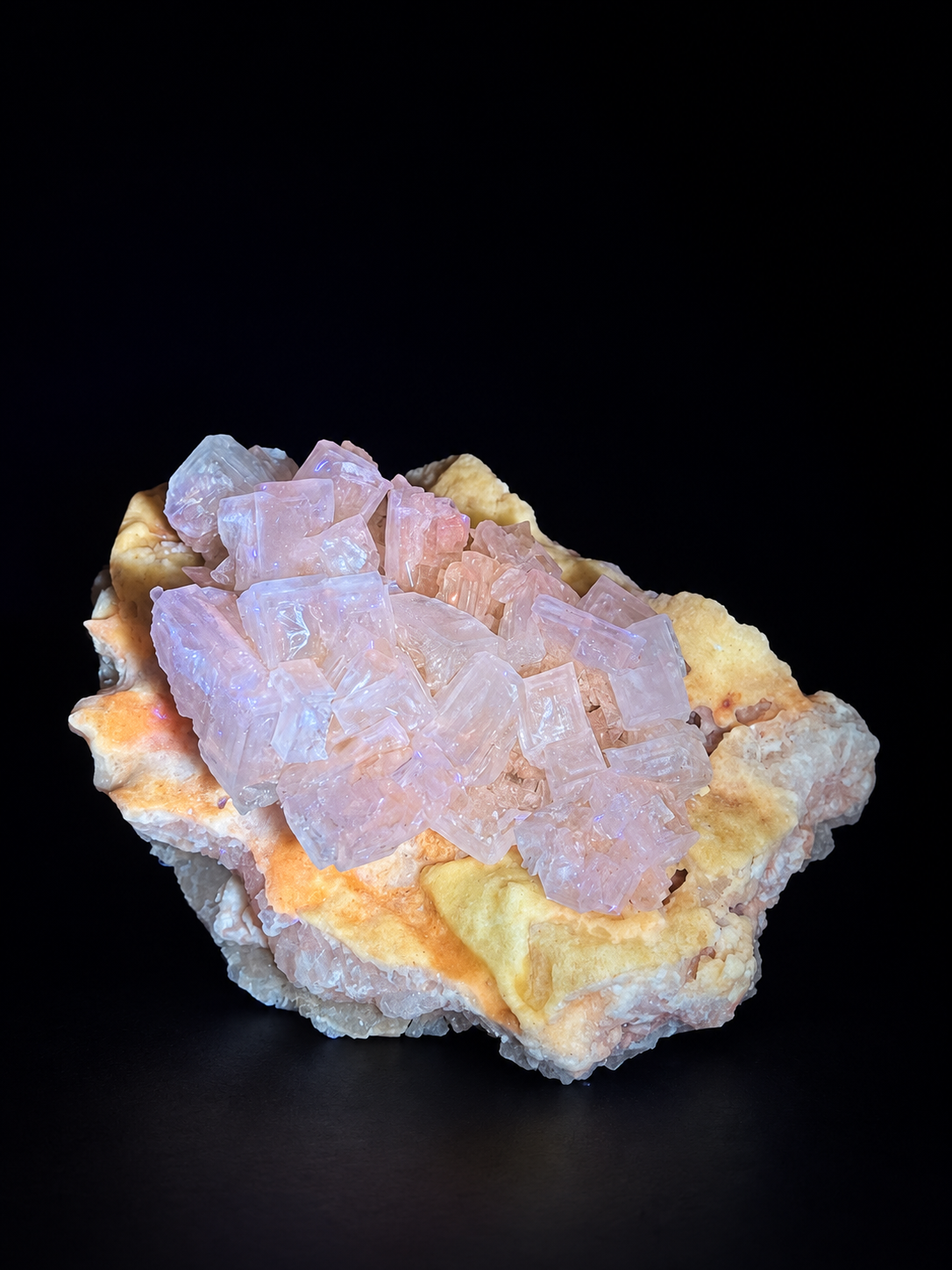 Image 2 of 5
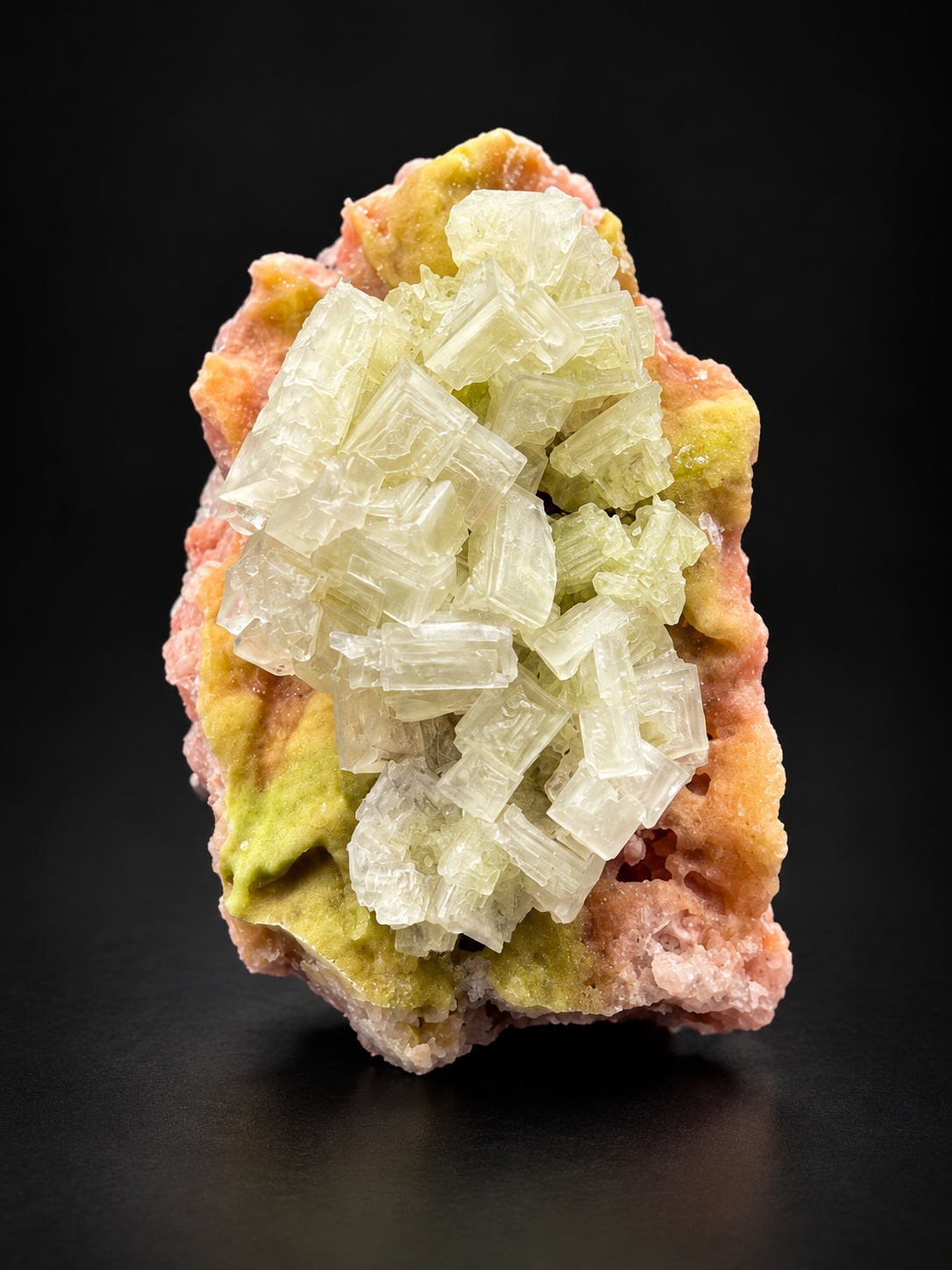 Image 3 of 5
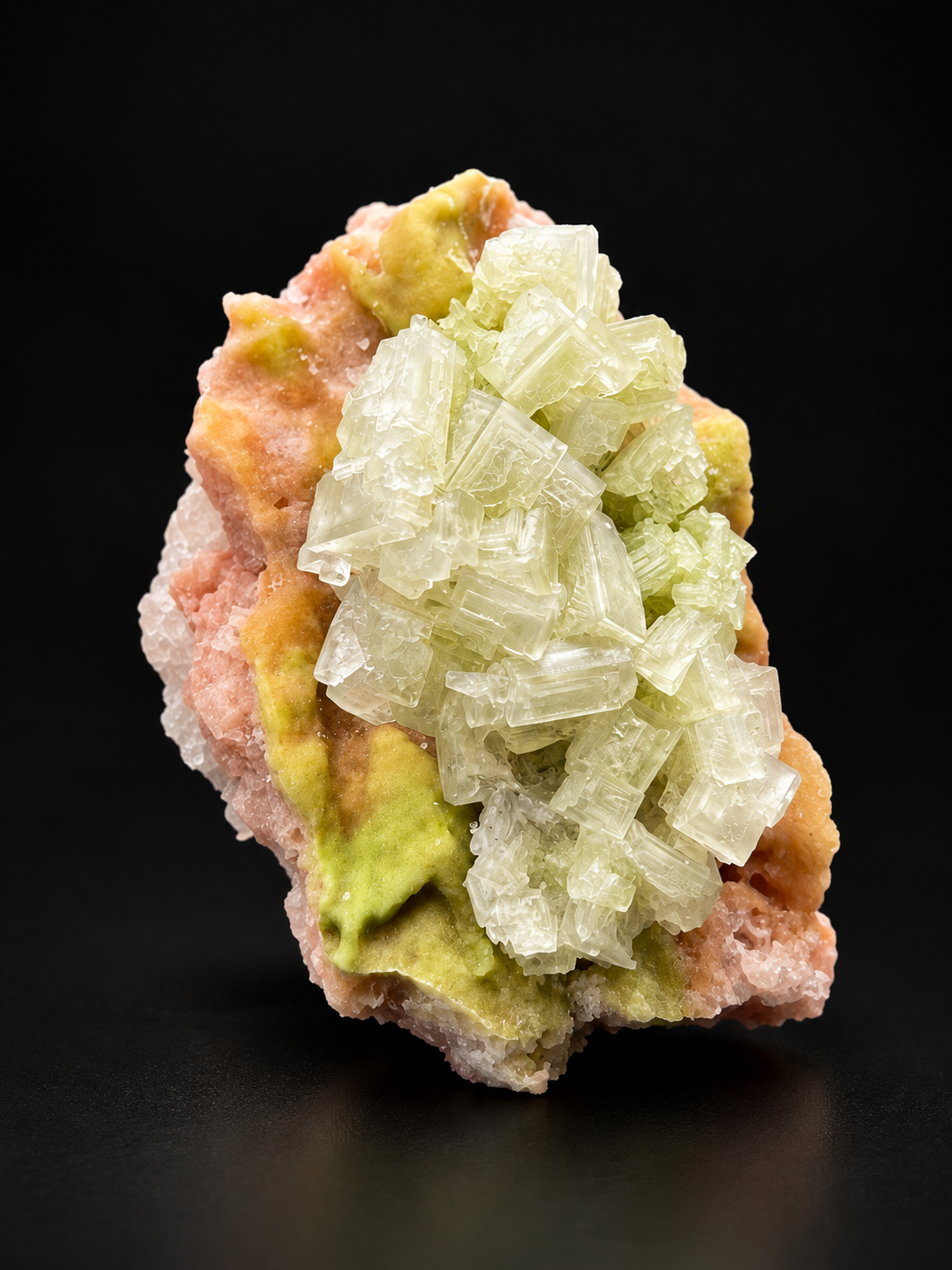 Image 4 of 5
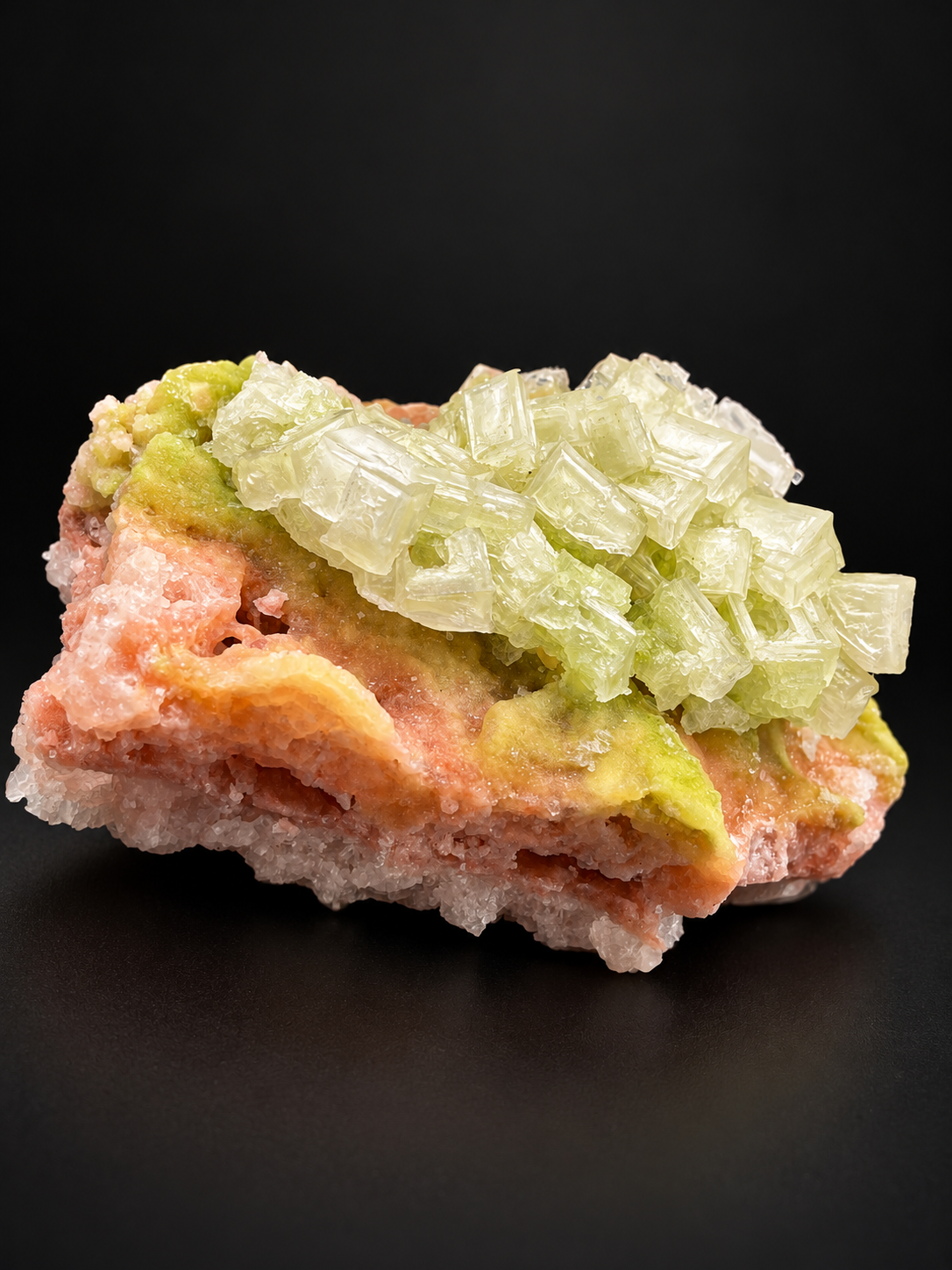 Image 5 of 5
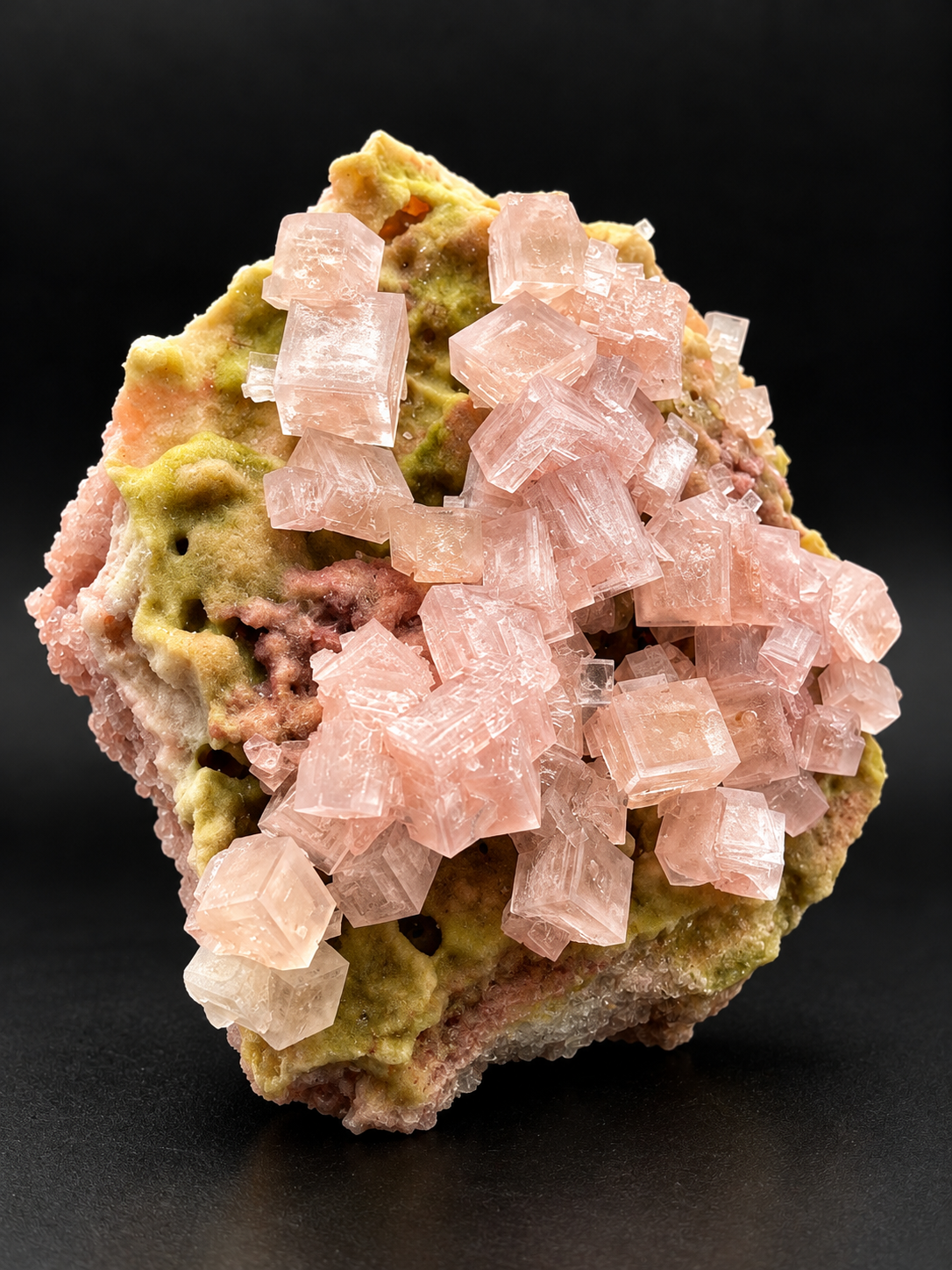
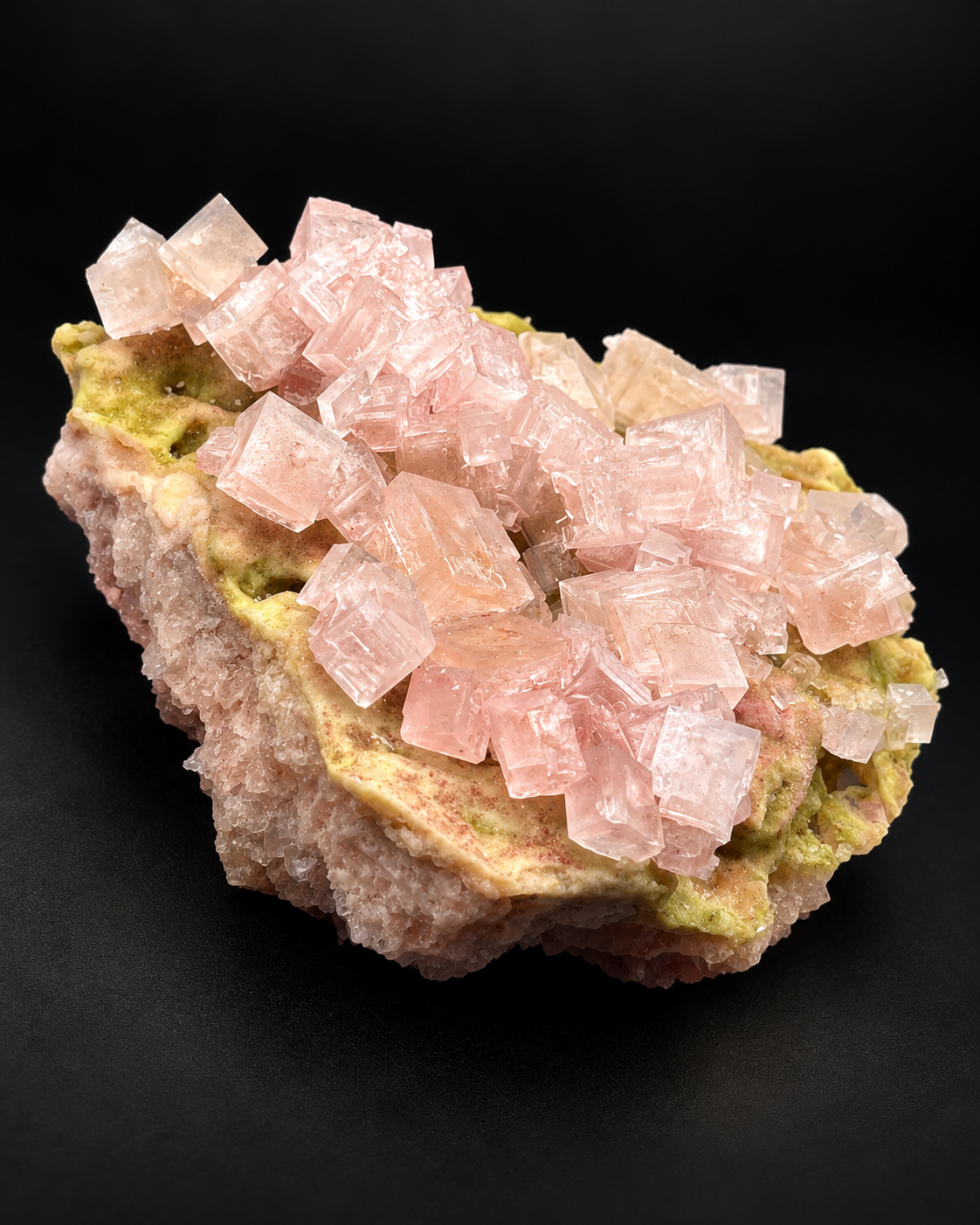
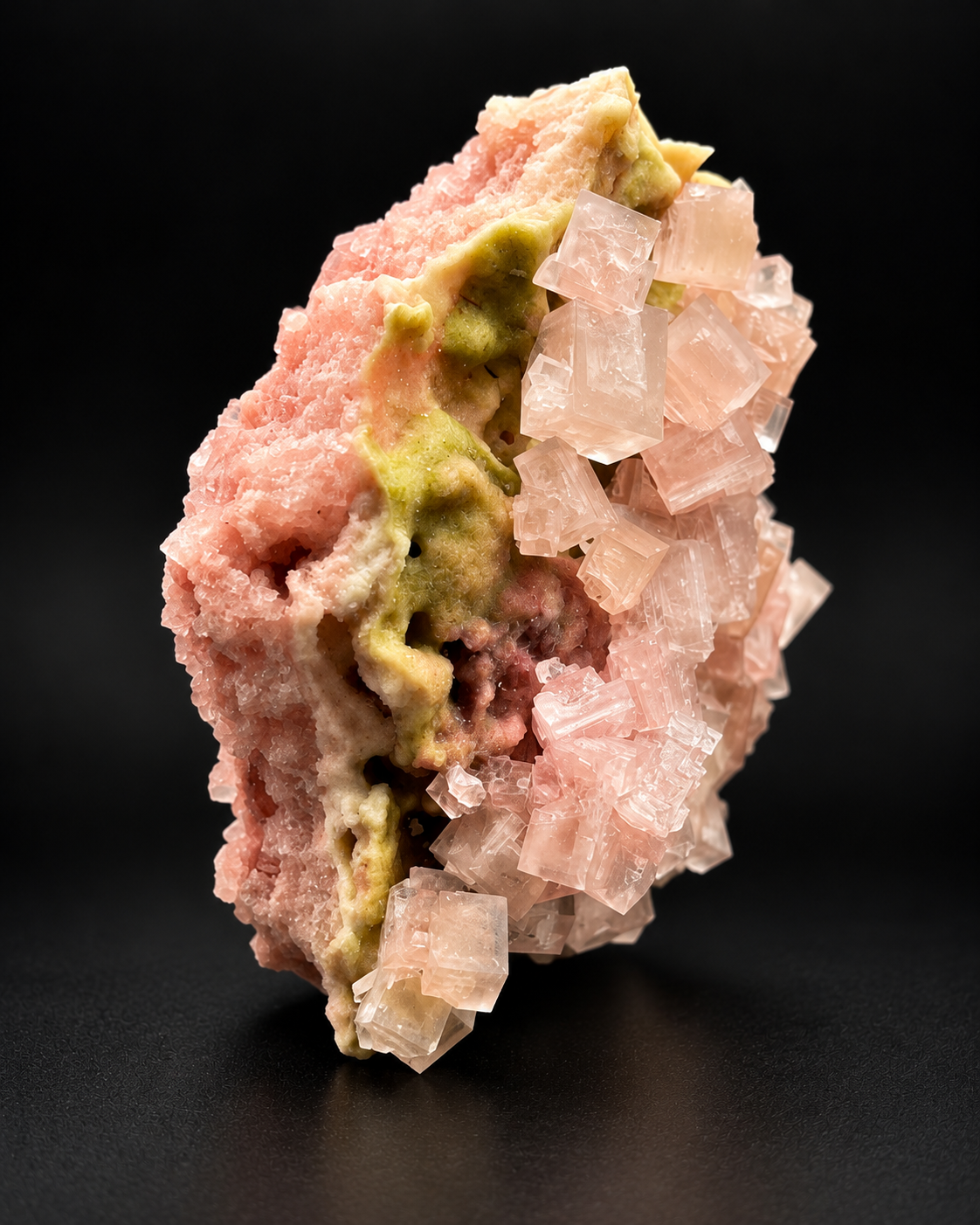
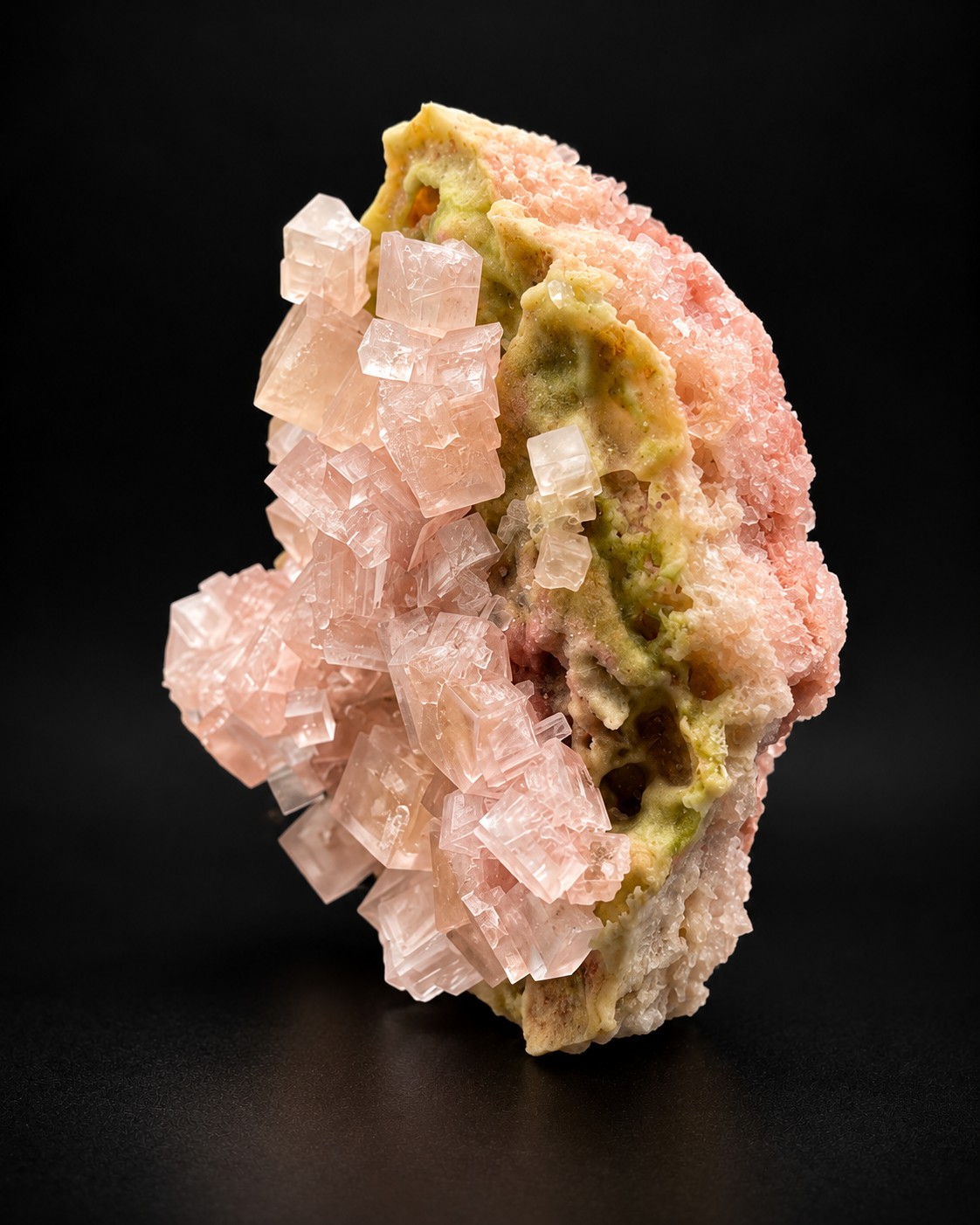
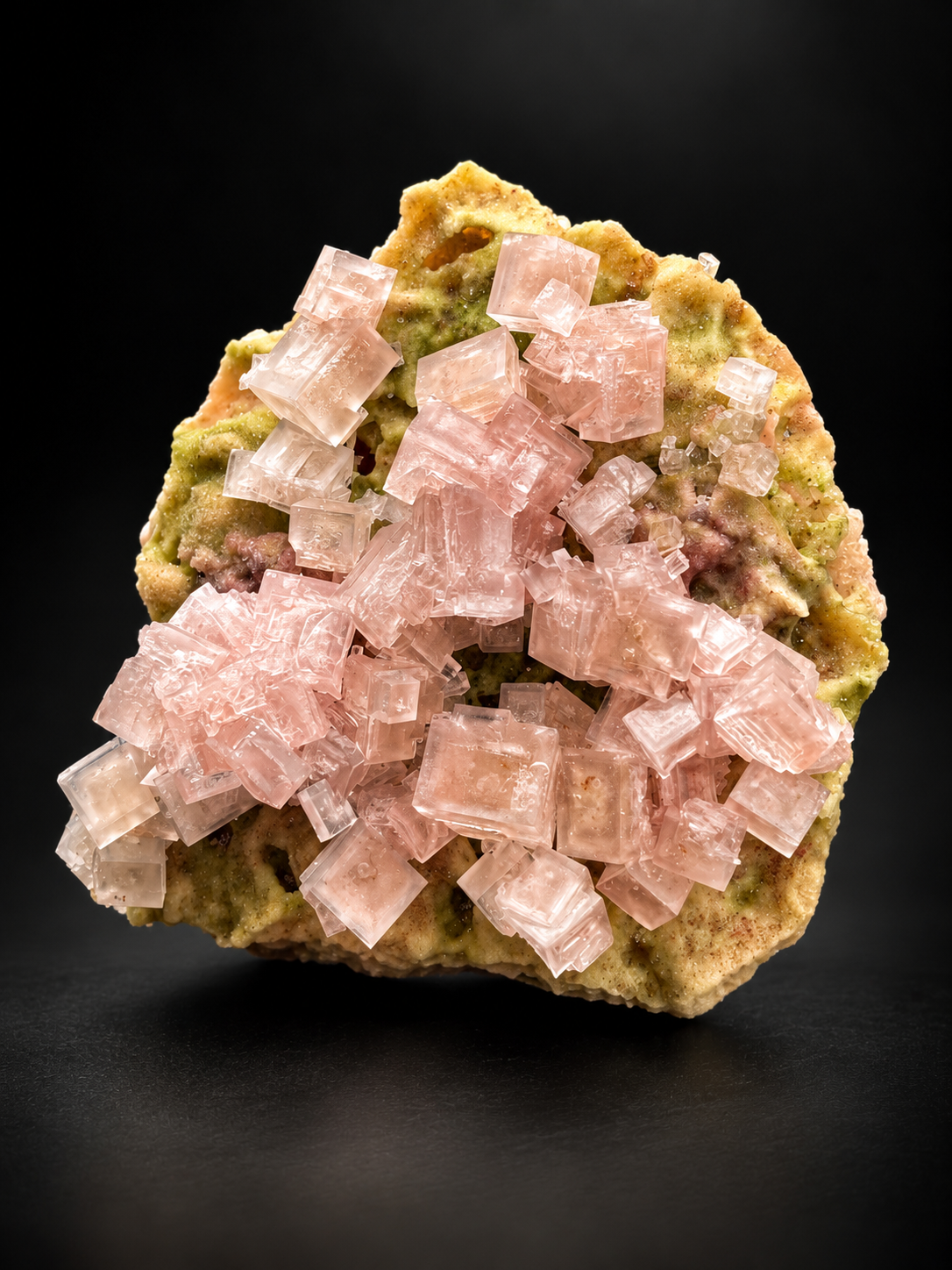
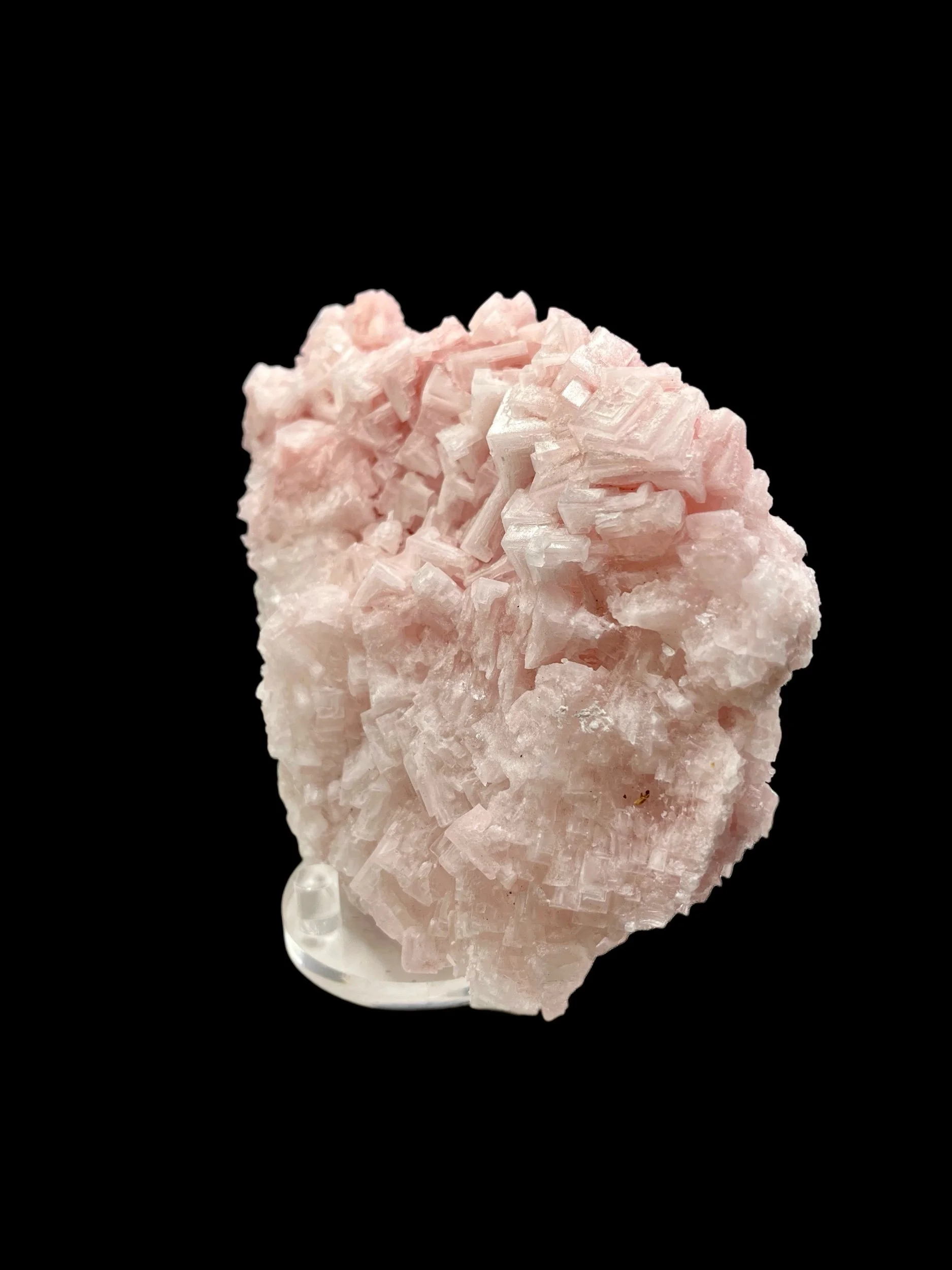
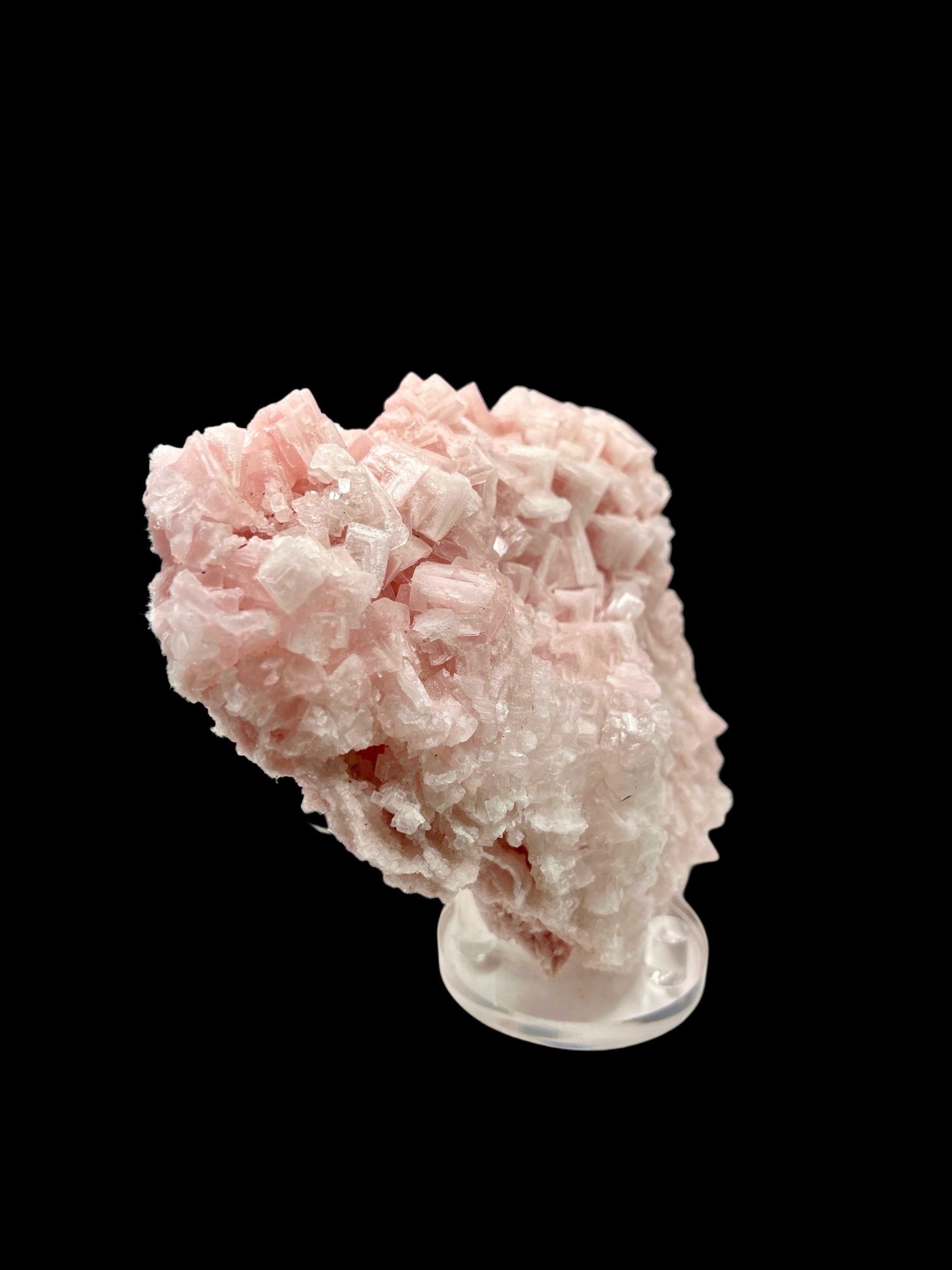
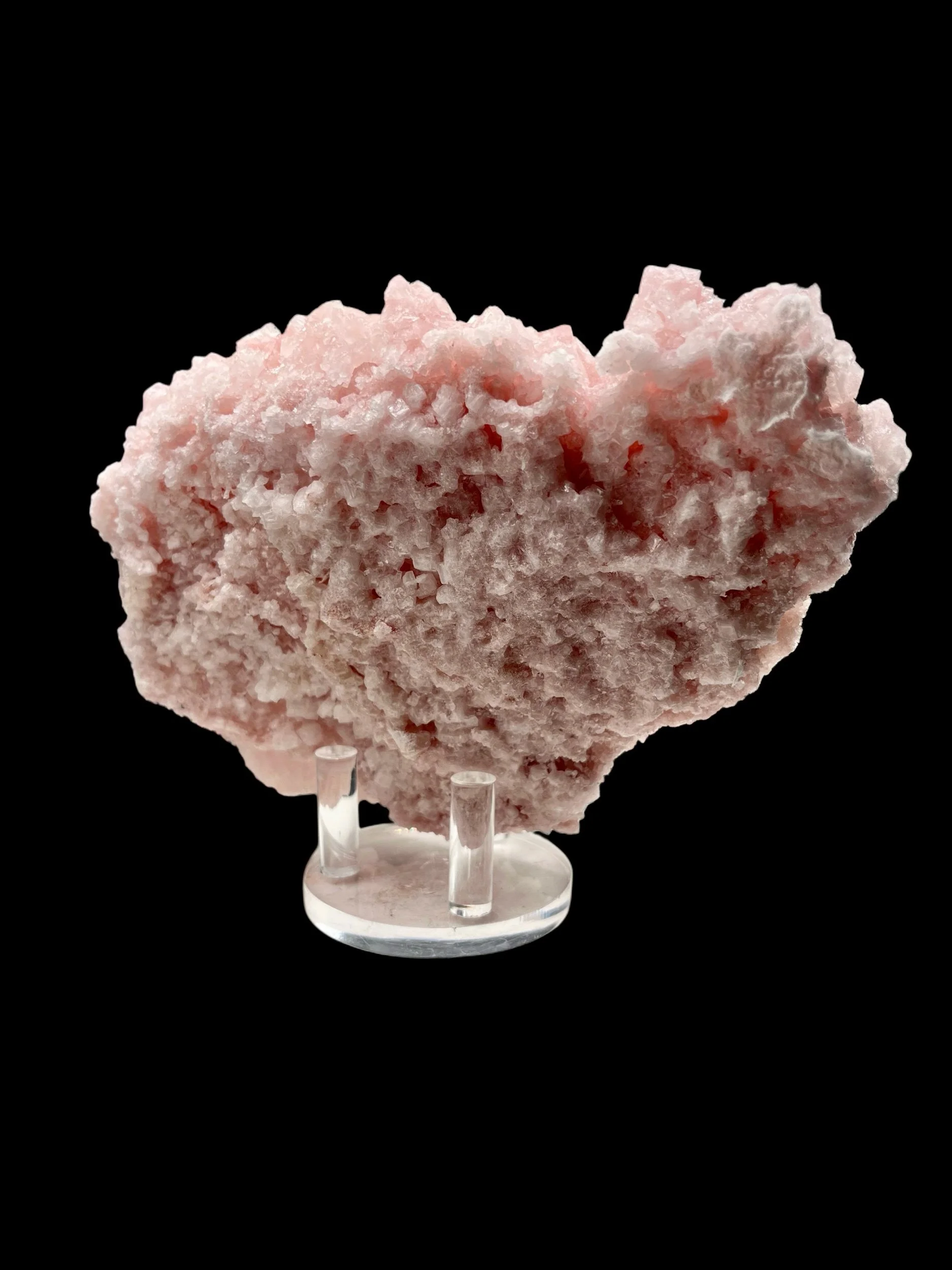
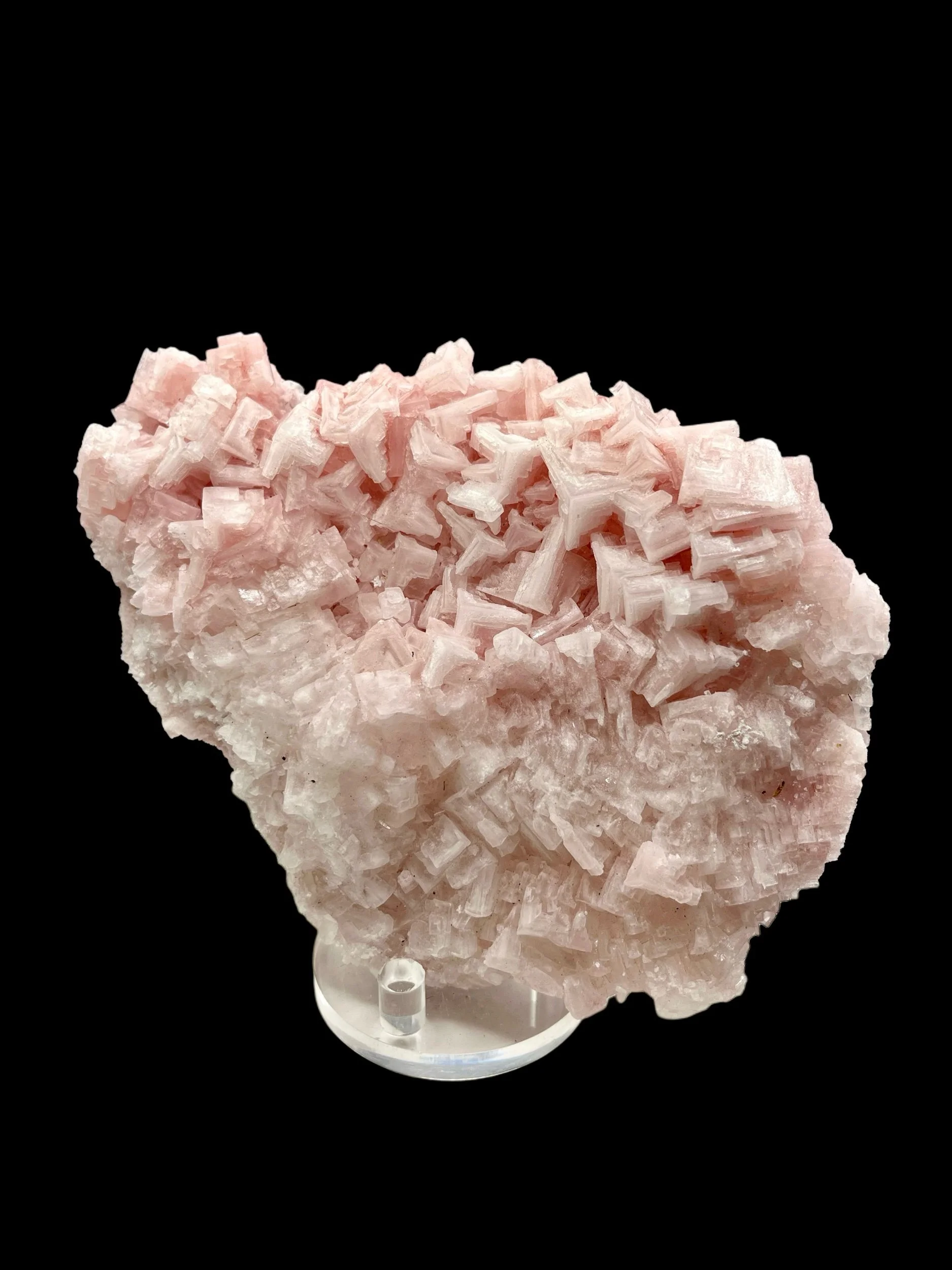
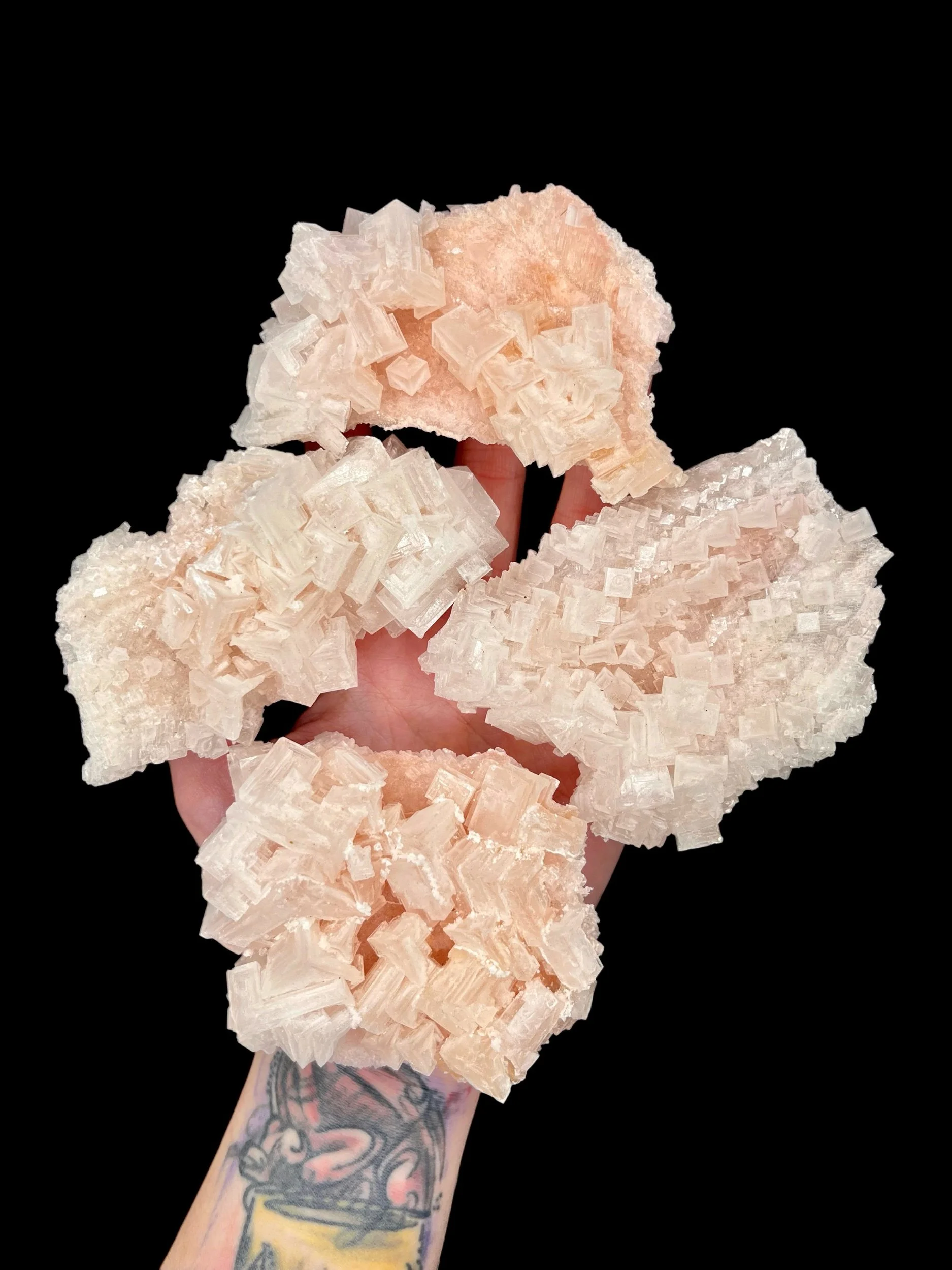
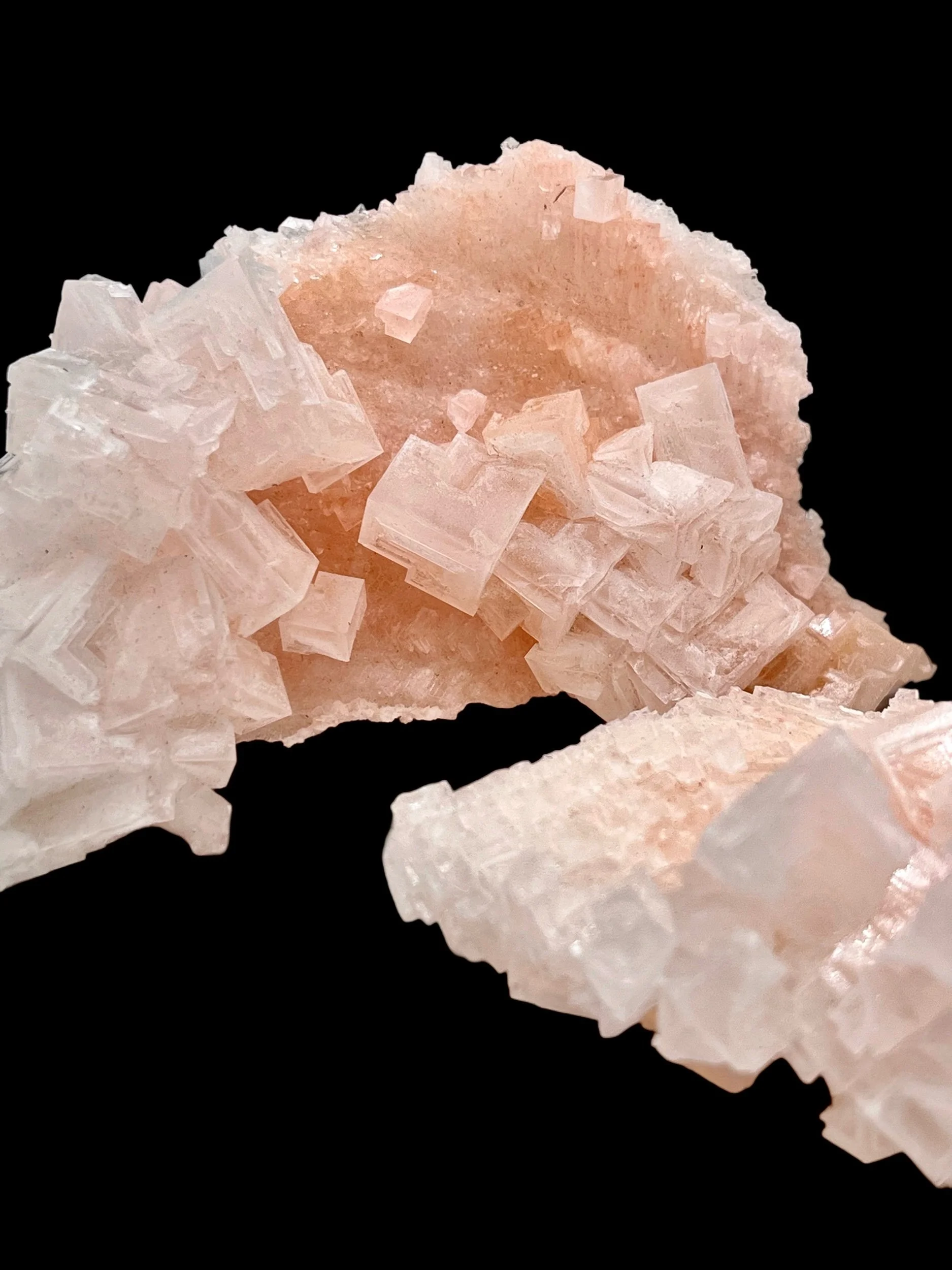
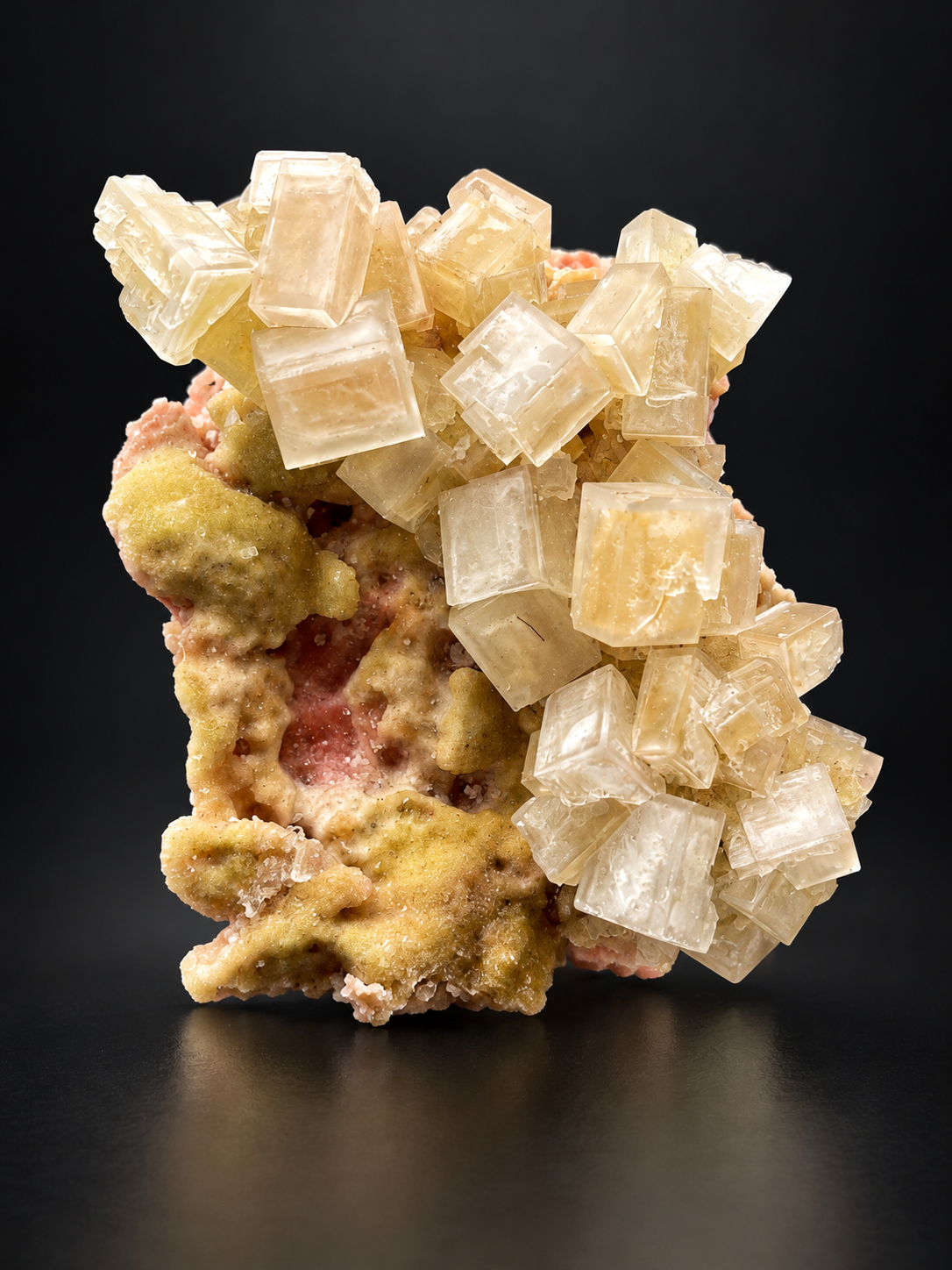
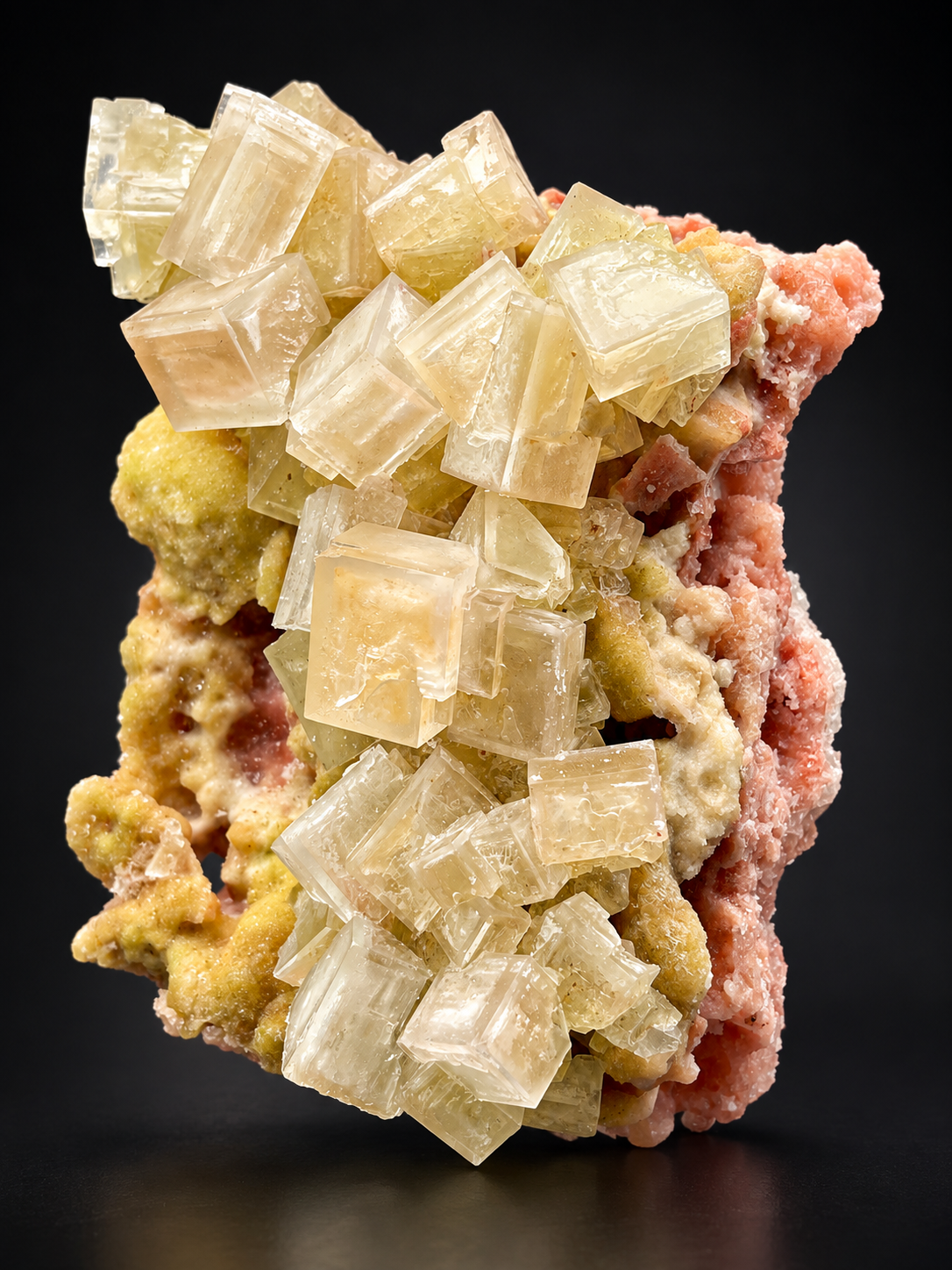
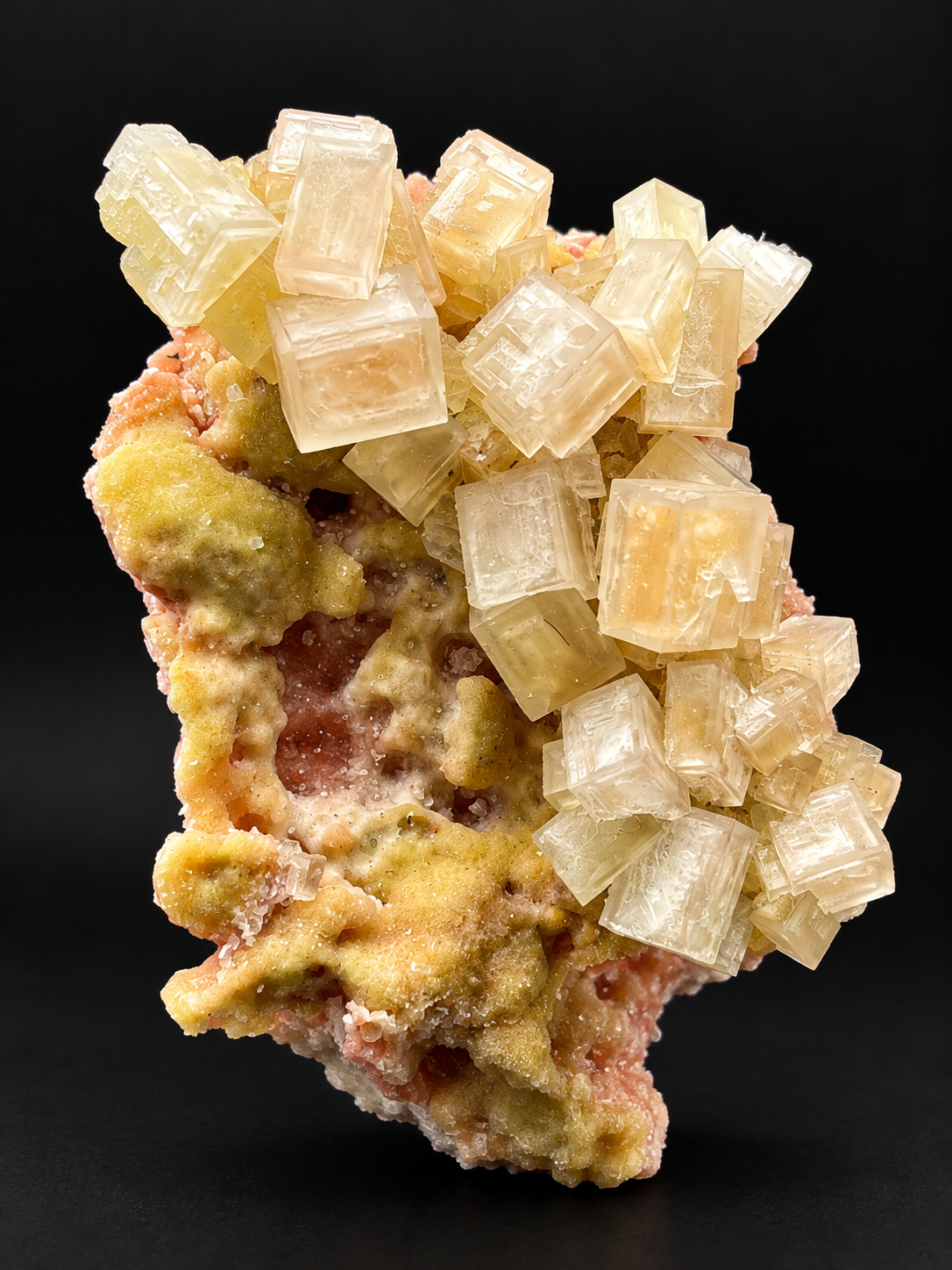
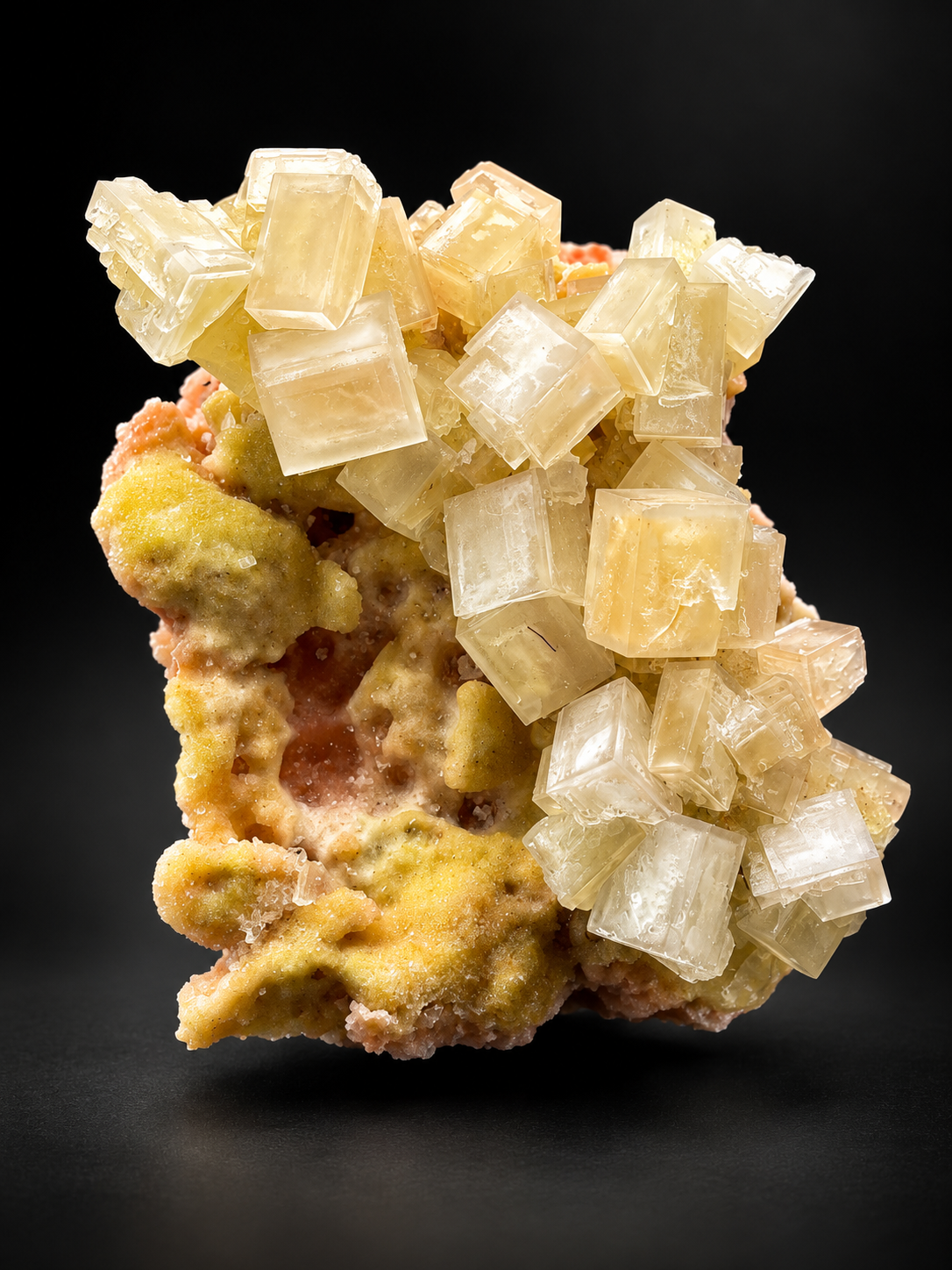
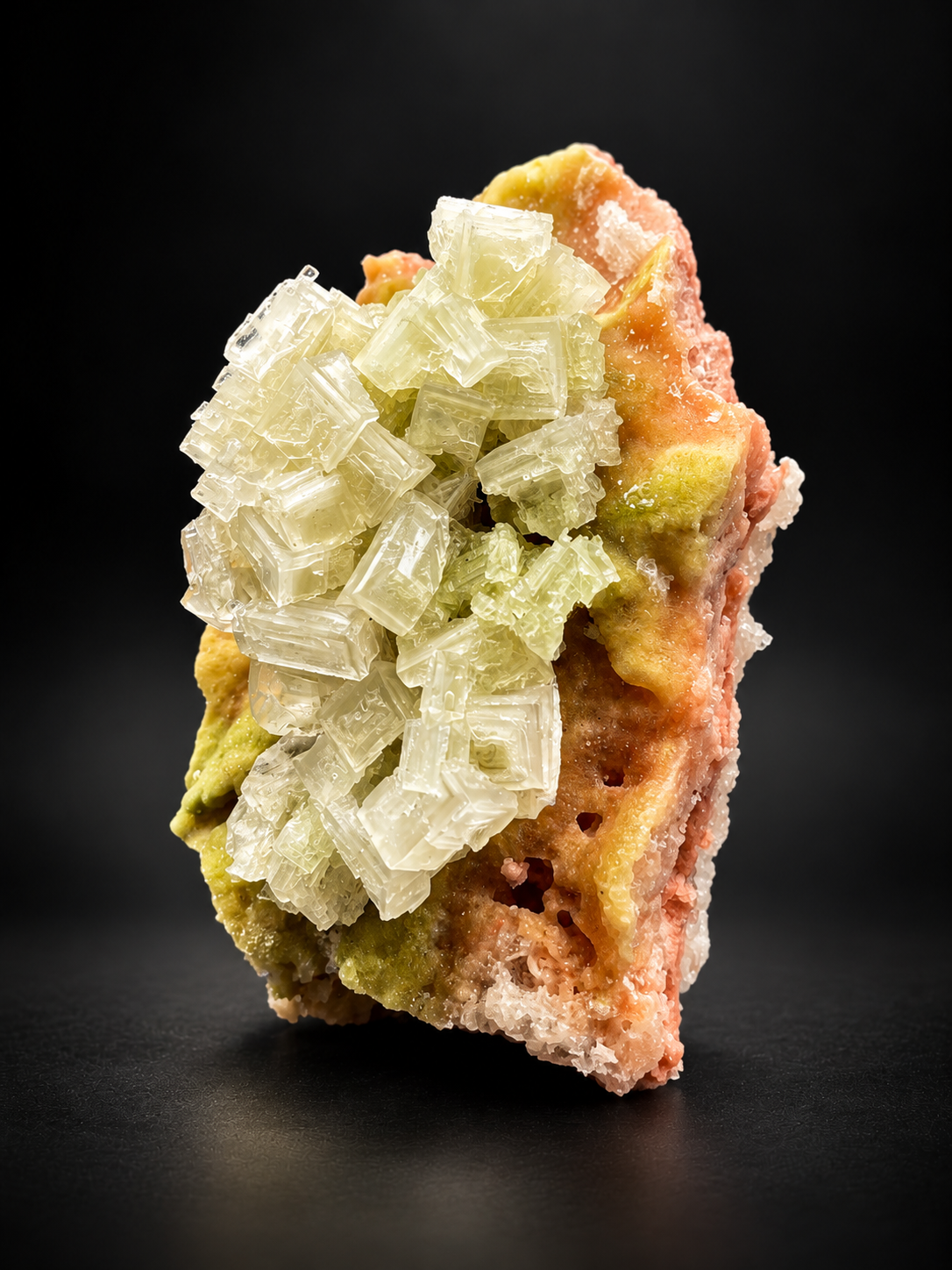
This extraordinary Rainbow Halite with Trona specimen from Owens Lake, California, showcases a stunning arrangement of translucent chartreuse green-colored halite crystals nestled against a vibrant matrix of peach, coral pink, golden yellow, and soft greenish-yellow hues.
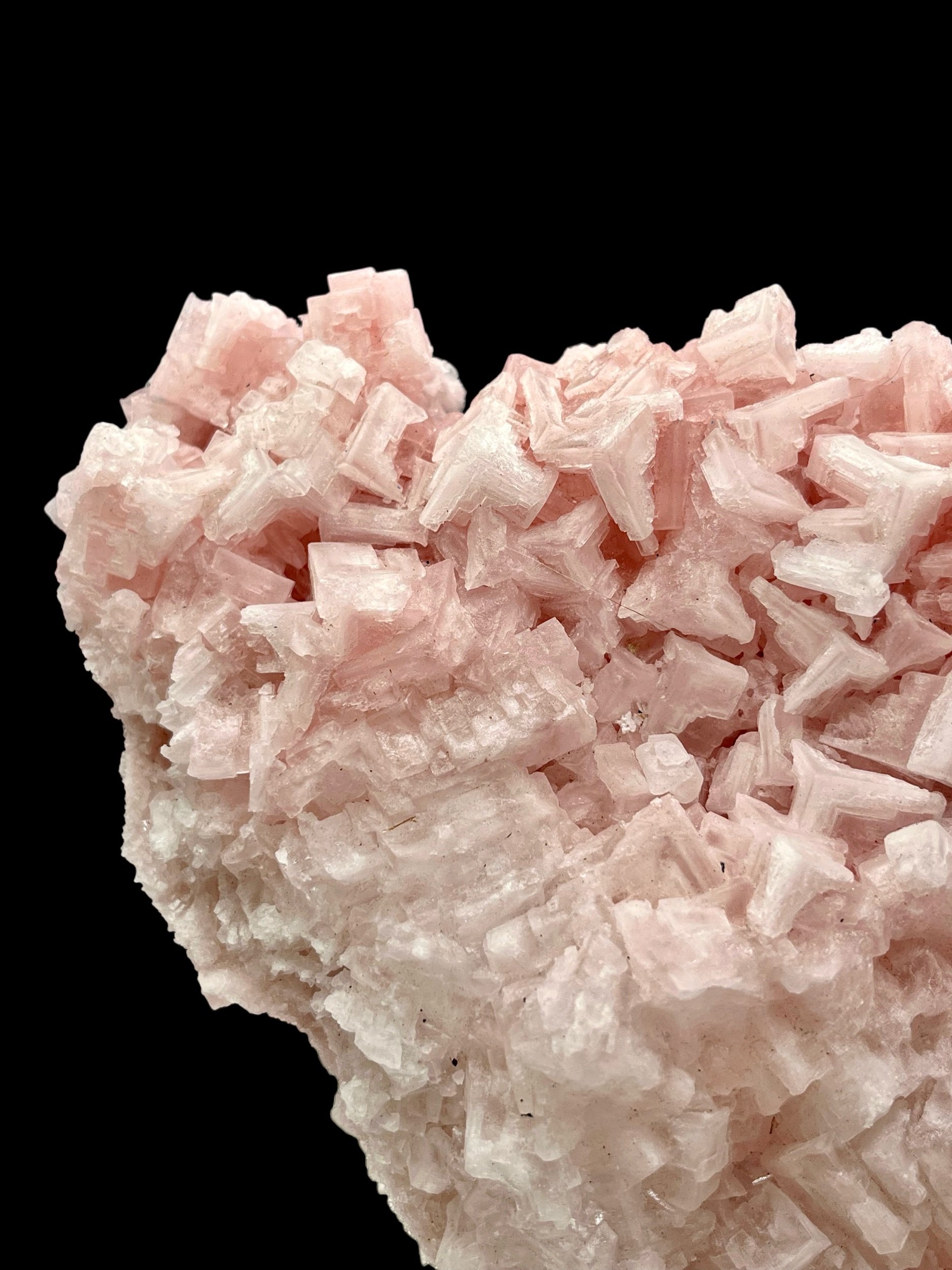
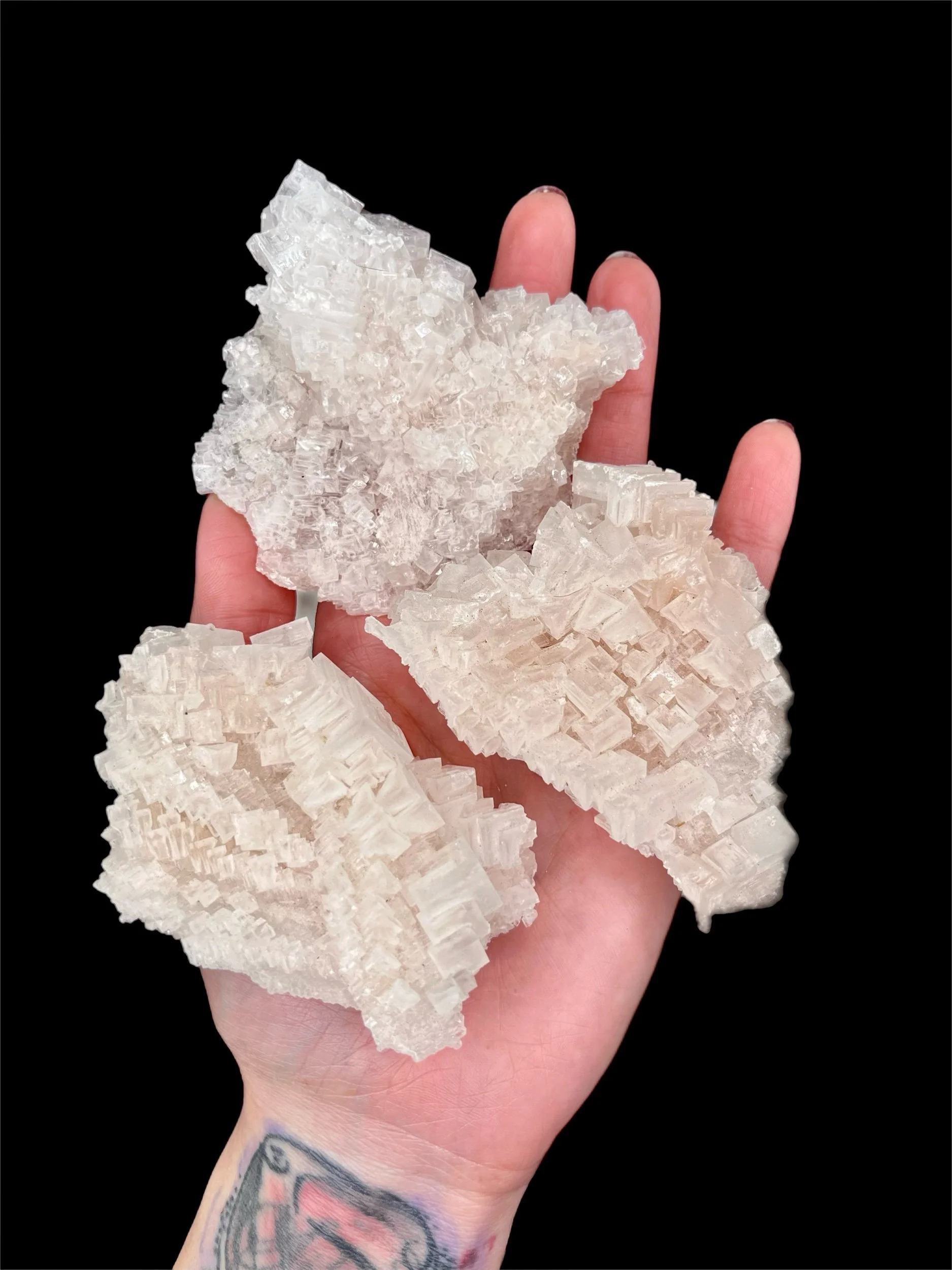
The halite crystals exhibit beautifully defined cubic formations, intricate stepped growth patterns, and delicate internal structures that create an almost architectural appearance. Their glassy, luminous surfaces contrast beautifully with the richly textured, multicolored matrix, making this specimen particularly striking from every angle.
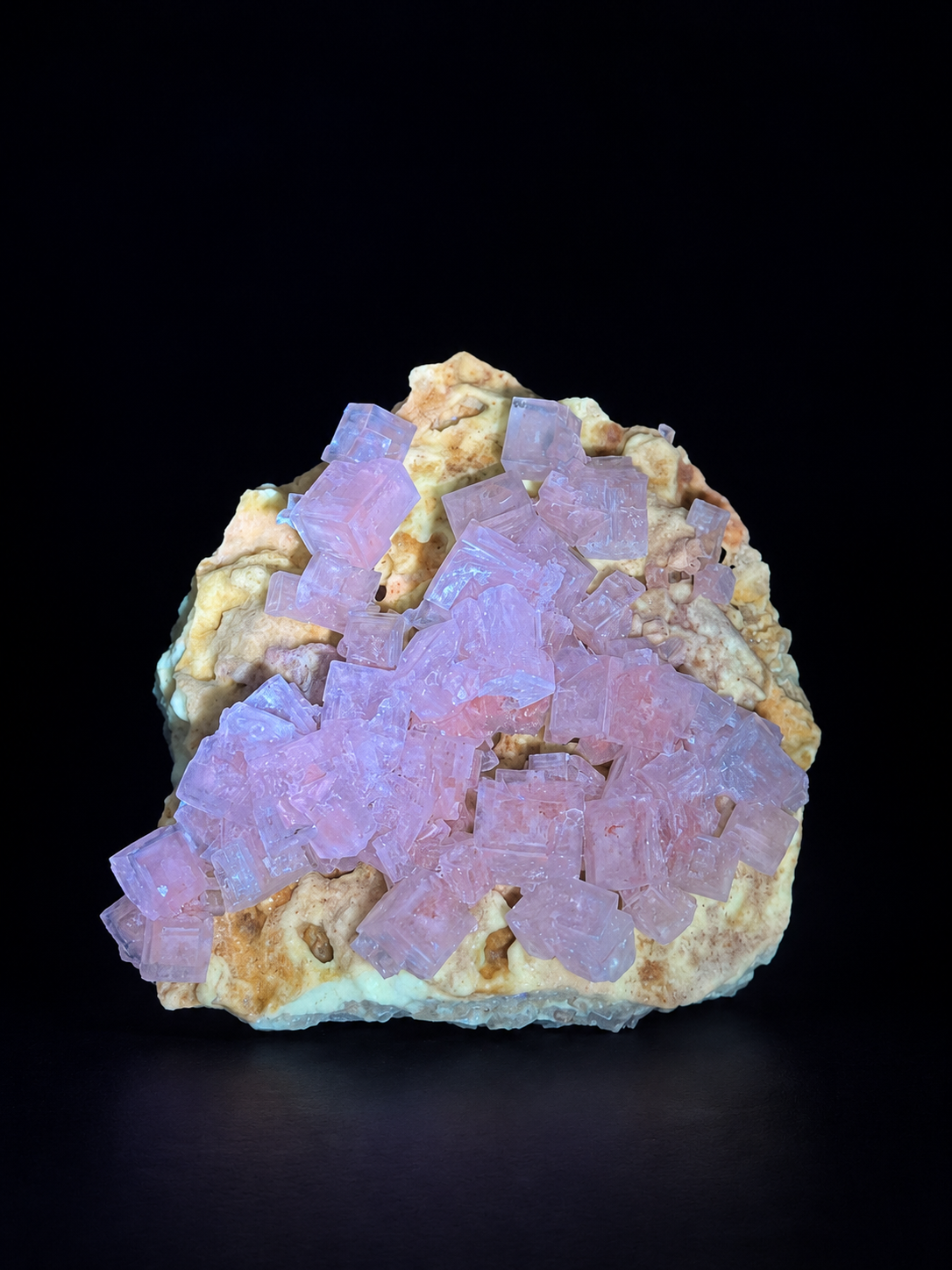
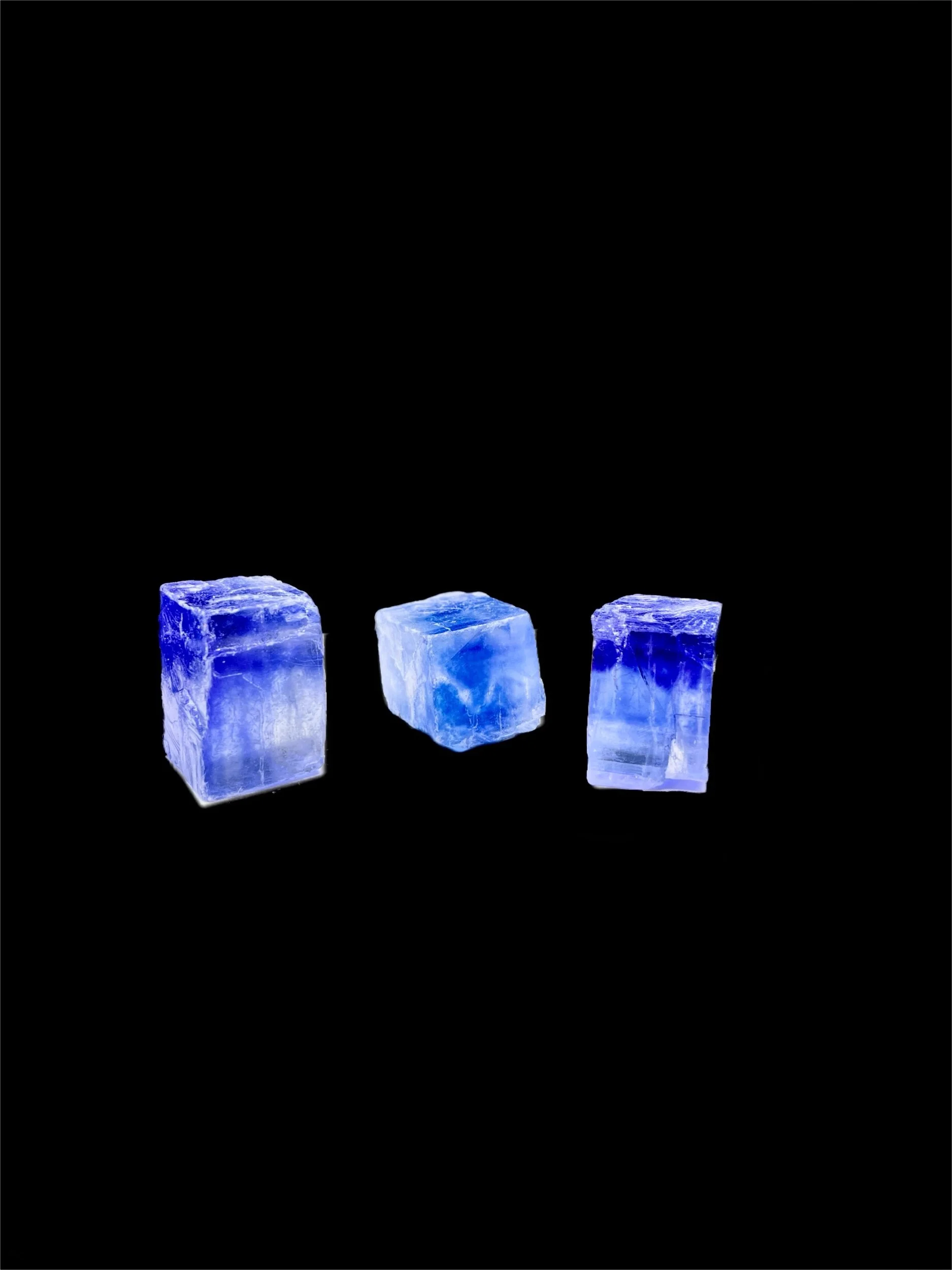
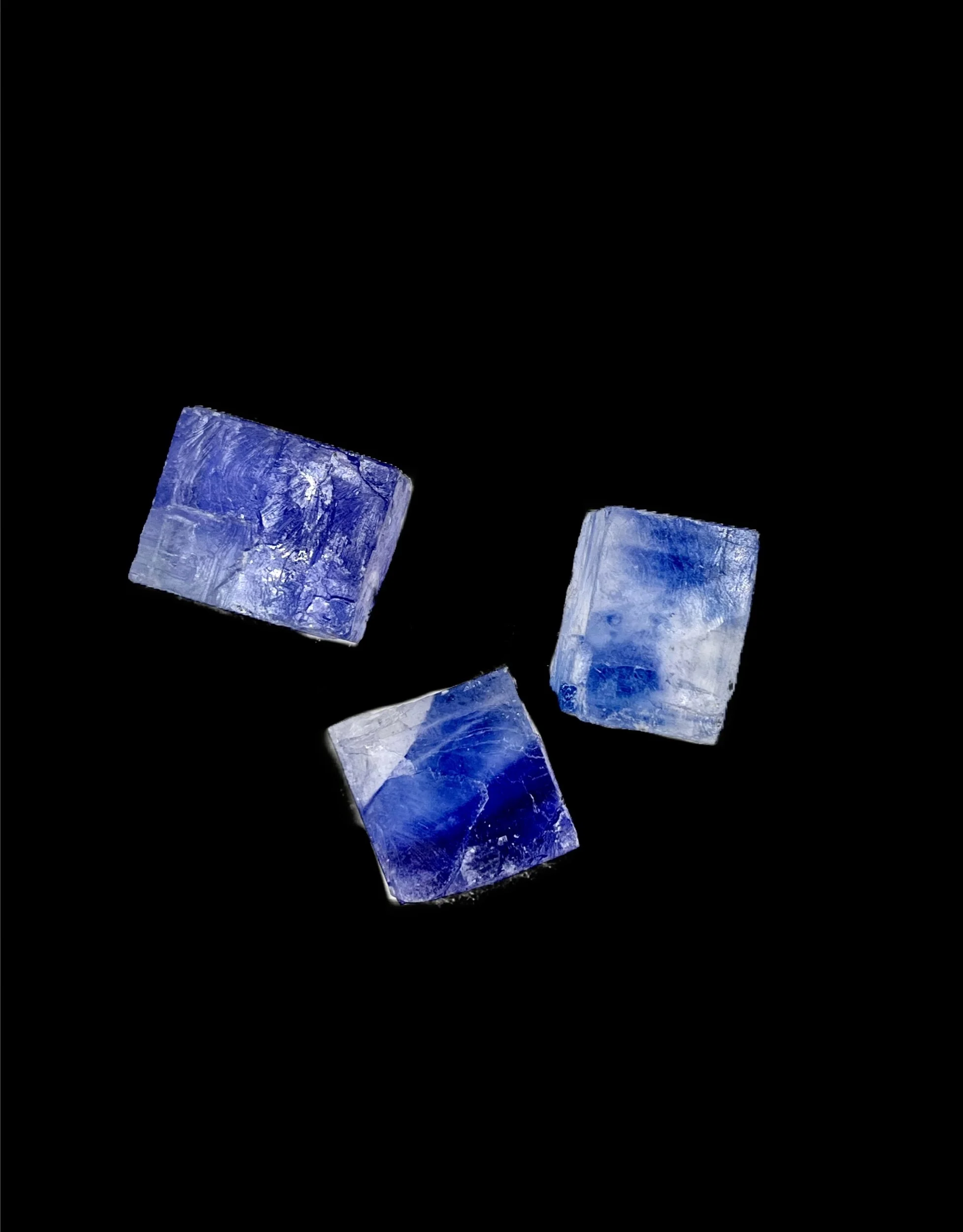
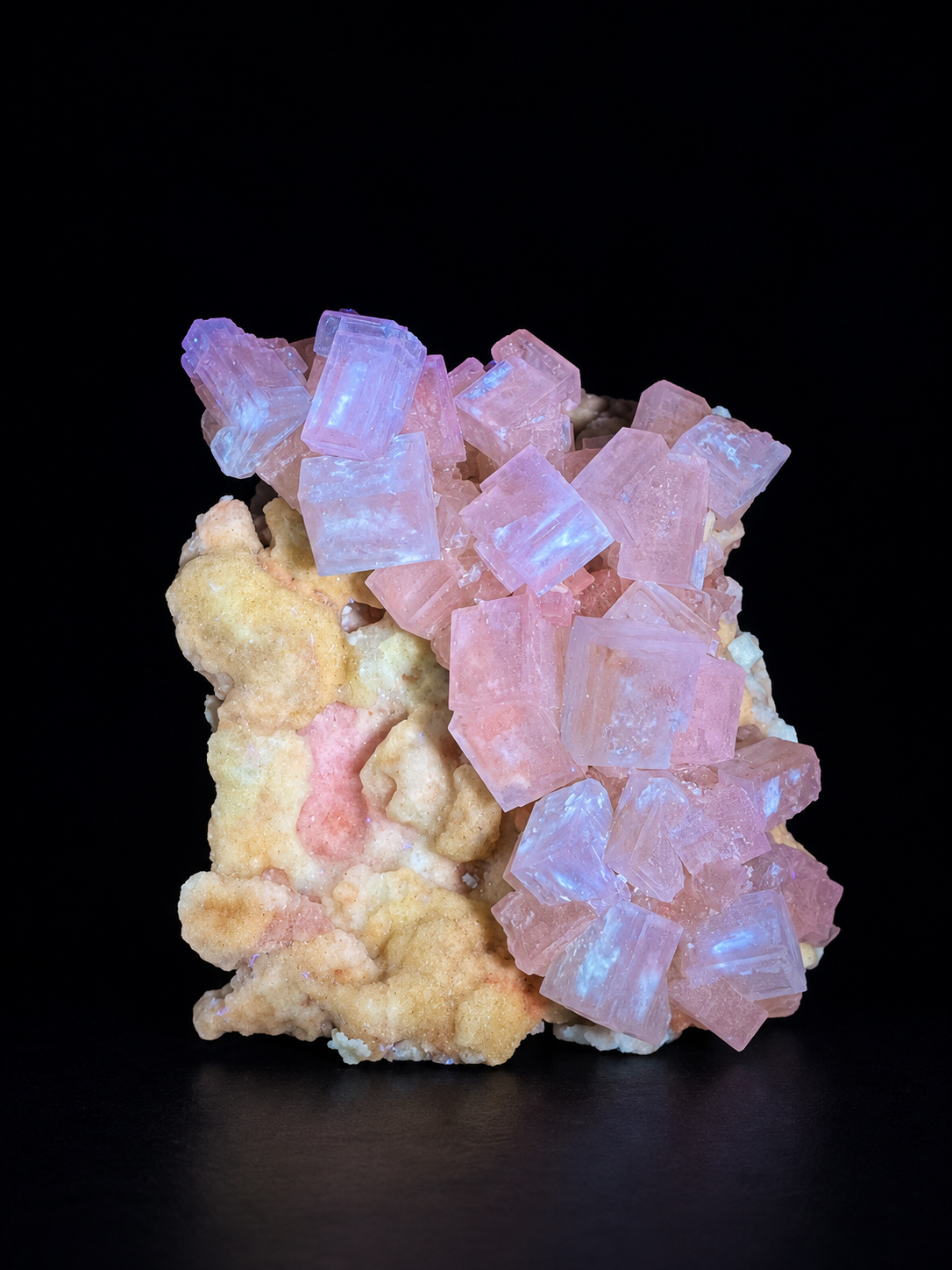
Beyond its captivating appearance, this specimen is both fluorescent and phosphorescent, offering an additional dimension of beauty under ultraviolet light. Its combination of exceptional color, crystal development, and unusual optical properties makes it a wonderful addition to any fine mineral collection.
Dimensions: 4 × 2.5 × 2 inches
Weight: 225 grams
Locality: Owens Lake, Inyo County, California, USA
Halite is traditionally associated with purification, protection, and emotional clarity. Often referred to as a cleansing mineral, it is believed to encourage the release of negative energy, promote emotional balance, and create a sense of renewal.
Trona is associated with grounding, transformation, and energetic stability. In contemporary metaphysical traditions, it is believed to support personal growth, encourage mental clarity, and help release stagnant emotional patterns.
Together, these minerals are symbolically associated with cleansing, balance, and transformation.
Metaphysical properties reflect traditional beliefs and are not scientifically established effects.
Owens Lake is one of California's most fascinating evaporite environments. Located in the Owens Valley beneath the eastern Sierra Nevada, this ancient lake basin has undergone dramatic environmental changes over thousands of years.
Following the diversion of much of the Owens River's water to Los Angeles in the early twentieth century, the lake largely dried, exposing extensive deposits of mineral-rich sediments and salts.
The remaining concentrated brines and alkaline conditions support the formation of unusual evaporite minerals, including halite and trona.
What makes Rainbow Halite so colorful?
Pure halite is typically colorless or white. However, natural variations in crystals, microscopic inclusions, associated minerals, and organic impurities can produce a remarkable assortment of colors.
In specimens from Owens Lake, the combination of translucent halite crystals and vividly colored associated deposits creates the distinctive rainbow appearance that makes these formations so desirable.
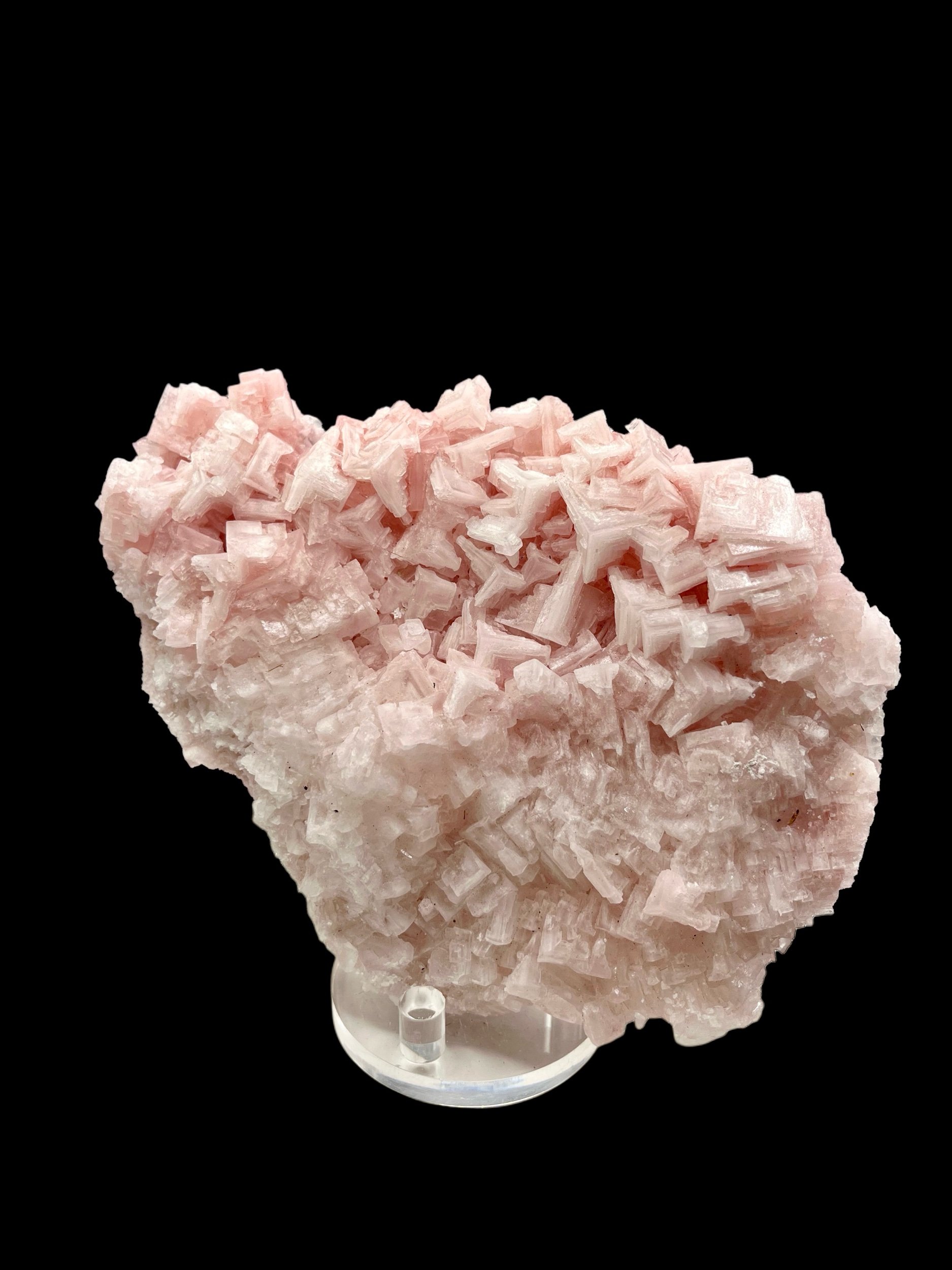
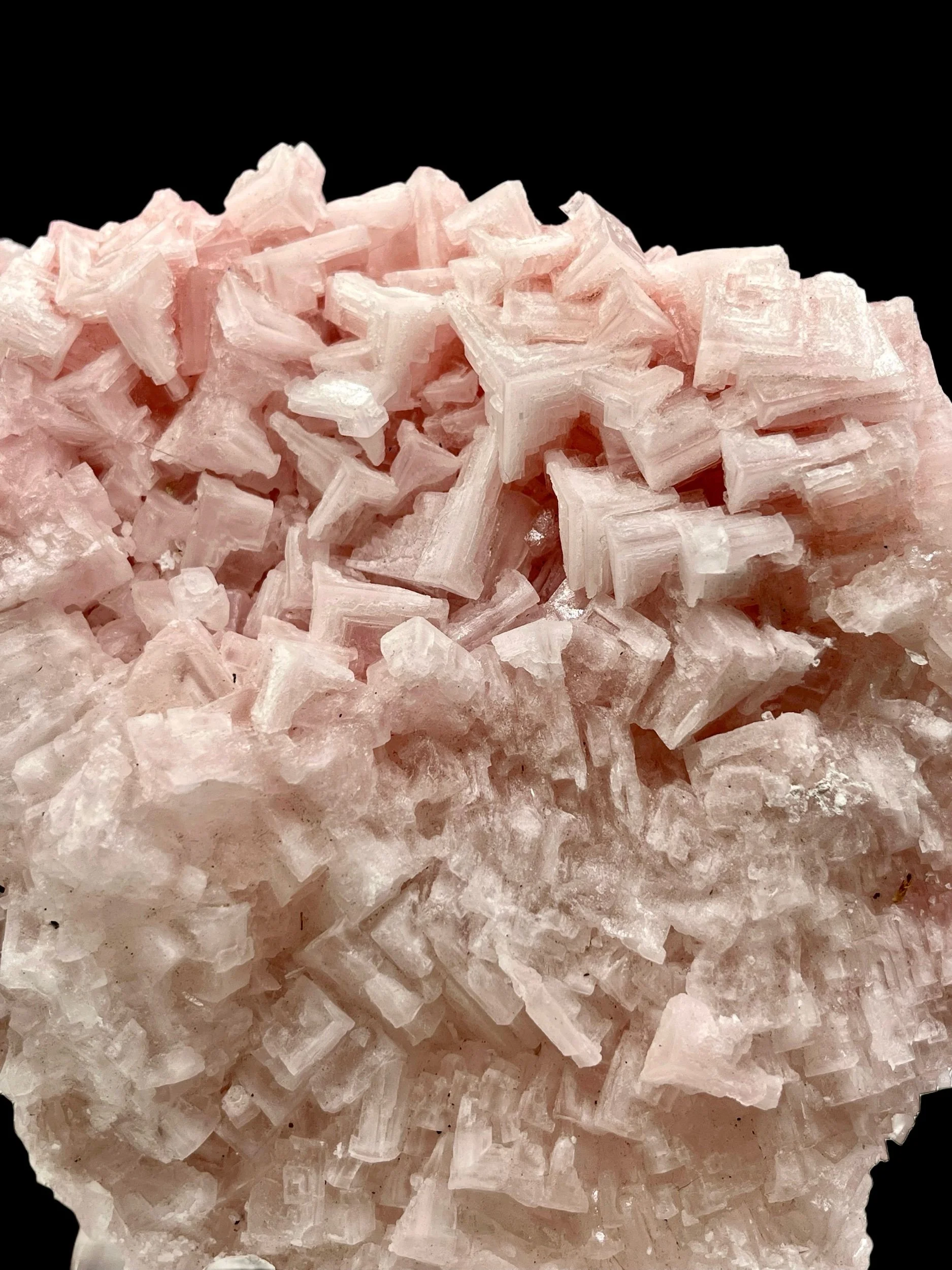
The delicate stepped formations are another fascinating characteristic. As halite crystallizes from concentrated saline solutions, differences in growth rates across its crystal faces can produce intricate, terraced structures, sometimes resembling miniature staircases or architectural formations.
Fluorescence and Phosphorescence
This specimen exhibits both fluorescence and phosphorescence, two related but distinct optical phenomena.
Fluorescence occurs when a mineral emits visible light while exposed to ultraviolet radiation. Phosphorescence occurs when some of that emitted light continues briefly after the ultraviolet source has been removed.
The presence of both properties adds another layer of scientific and aesthetic interest to an already exceptional specimen.
A Hint of the Ocean
One of the more unexpected characteristics of Owens Lake halite is its occasional ocean-like aroma. Although halite itself is odorless, because the pink color is often derived from algae, traces of naturally occurring organic matter and other materials associated with its saline environment can produce a distinctive briny scent reminiscent of the ocean.
Specimen Care
Halite is naturally water-soluble and sensitive to moisture. Store in a dry, climate-controlled environment away from water, high humidity, and condensation. Avoid washing or soaking. Handle gently to protect the delicate crystal formations.
A case is recommended.
Exceptional Crystal Development: Beautifully formed, translucent multi-colored cubic halite crystals with intricate stepped growth patterns.
Vibrant Natural Coloration: A striking combination of soft peach, coral pink, golden yellow, and pale greenish-yellow tones.
Fluorescent and Phosphorescent: Displays two distinct luminescent properties under and following ultraviolet illumination.
Distinctive Mineral Association: Halite accompanied by trona, characteristic of sodium-rich alkaline evaporite environments.
Historic California Locality: Originates from Owens Lake, a fascinating mineral-producing basin with a unique geological and environmental history.
Outstanding Display Appeal: The contrast between lustrous geometric crystals and the colorful, textured matrix creates a visually captivating composition.
Halite
Chemical Formula: NaCl (Sodium Chloride)
Crystal System: Isometric (Cubic)
Mohs Hardness: 2–2.5
Luster: Vitreous
Crystal Habit: Cubic, commonly featuring stepped or hopper growth
Formation: Precipitation from concentrated saline solutions during evaporation
Trona
Chemical Formula: Na₃(CO₃)(HCO₃)·2H₂O
Crystal System: Monoclinic
Mohs Hardness: 2.5–3
Luster: Vitreous to dull
Formation: Precipitation in highly alkaline, sodium-rich evaporite environments
This extraordinary Rainbow Halite with Trona specimen from Owens Lake, California, showcases a stunning arrangement of translucent chartreuse green-colored halite crystals nestled against a vibrant matrix of peach, coral pink, golden yellow, and soft greenish-yellow hues.
The halite crystals exhibit beautifully defined cubic formations, intricate stepped growth patterns, and delicate internal structures that create an almost architectural appearance. Their glassy, luminous surfaces contrast beautifully with the richly textured, multicolored matrix, making this specimen particularly striking from every angle.
Beyond its captivating appearance, this specimen is both fluorescent and phosphorescent, offering an additional dimension of beauty under ultraviolet light. Its combination of exceptional color, crystal development, and unusual optical properties makes it a wonderful addition to any fine mineral collection.
Dimensions: 4 × 2.5 × 2 inches
Weight: 225 grams
Locality: Owens Lake, Inyo County, California, USA
Halite is traditionally associated with purification, protection, and emotional clarity. Often referred to as a cleansing mineral, it is believed to encourage the release of negative energy, promote emotional balance, and create a sense of renewal.
Trona is associated with grounding, transformation, and energetic stability. In contemporary metaphysical traditions, it is believed to support personal growth, encourage mental clarity, and help release stagnant emotional patterns.
Together, these minerals are symbolically associated with cleansing, balance, and transformation.
Metaphysical properties reflect traditional beliefs and are not scientifically established effects.
Owens Lake is one of California's most fascinating evaporite environments. Located in the Owens Valley beneath the eastern Sierra Nevada, this ancient lake basin has undergone dramatic environmental changes over thousands of years.
Following the diversion of much of the Owens River's water to Los Angeles in the early twentieth century, the lake largely dried, exposing extensive deposits of mineral-rich sediments and salts.
The remaining concentrated brines and alkaline conditions support the formation of unusual evaporite minerals, including halite and trona.
What makes Rainbow Halite so colorful?
Pure halite is typically colorless or white. However, natural variations in crystals, microscopic inclusions, associated minerals, and organic impurities can produce a remarkable assortment of colors.
In specimens from Owens Lake, the combination of translucent halite crystals and vividly colored associated deposits creates the distinctive rainbow appearance that makes these formations so desirable.
The delicate stepped formations are another fascinating characteristic. As halite crystallizes from concentrated saline solutions, differences in growth rates across its crystal faces can produce intricate, terraced structures, sometimes resembling miniature staircases or architectural formations.
Fluorescence and Phosphorescence
This specimen exhibits both fluorescence and phosphorescence, two related but distinct optical phenomena.
Fluorescence occurs when a mineral emits visible light while exposed to ultraviolet radiation. Phosphorescence occurs when some of that emitted light continues briefly after the ultraviolet source has been removed.
The presence of both properties adds another layer of scientific and aesthetic interest to an already exceptional specimen.
A Hint of the Ocean
One of the more unexpected characteristics of Owens Lake halite is its occasional ocean-like aroma. Although halite itself is odorless, because the pink color is often derived from algae, traces of naturally occurring organic matter and other materials associated with its saline environment can produce a distinctive briny scent reminiscent of the ocean.
Specimen Care
Halite is naturally water-soluble and sensitive to moisture. Store in a dry, climate-controlled environment away from water, high humidity, and condensation. Avoid washing or soaking. Handle gently to protect the delicate crystal formations.
A case is recommended.
Exceptional Crystal Development: Beautifully formed, translucent multi-colored cubic halite crystals with intricate stepped growth patterns.
Vibrant Natural Coloration: A striking combination of soft peach, coral pink, golden yellow, and pale greenish-yellow tones.
Fluorescent and Phosphorescent: Displays two distinct luminescent properties under and following ultraviolet illumination.
Distinctive Mineral Association: Halite accompanied by trona, characteristic of sodium-rich alkaline evaporite environments.
Historic California Locality: Originates from Owens Lake, a fascinating mineral-producing basin with a unique geological and environmental history.
Outstanding Display Appeal: The contrast between lustrous geometric crystals and the colorful, textured matrix creates a visually captivating composition.
Halite
Chemical Formula: NaCl (Sodium Chloride)
Crystal System: Isometric (Cubic)
Mohs Hardness: 2–2.5
Luster: Vitreous
Crystal Habit: Cubic, commonly featuring stepped or hopper growth
Formation: Precipitation from concentrated saline solutions during evaporation
Trona
Chemical Formula: Na₃(CO₃)(HCO₃)·2H₂O
Crystal System: Monoclinic
Mohs Hardness: 2.5–3
Luster: Vitreous to dull
Formation: Precipitation in highly alkaline, sodium-rich evaporite environments