Description
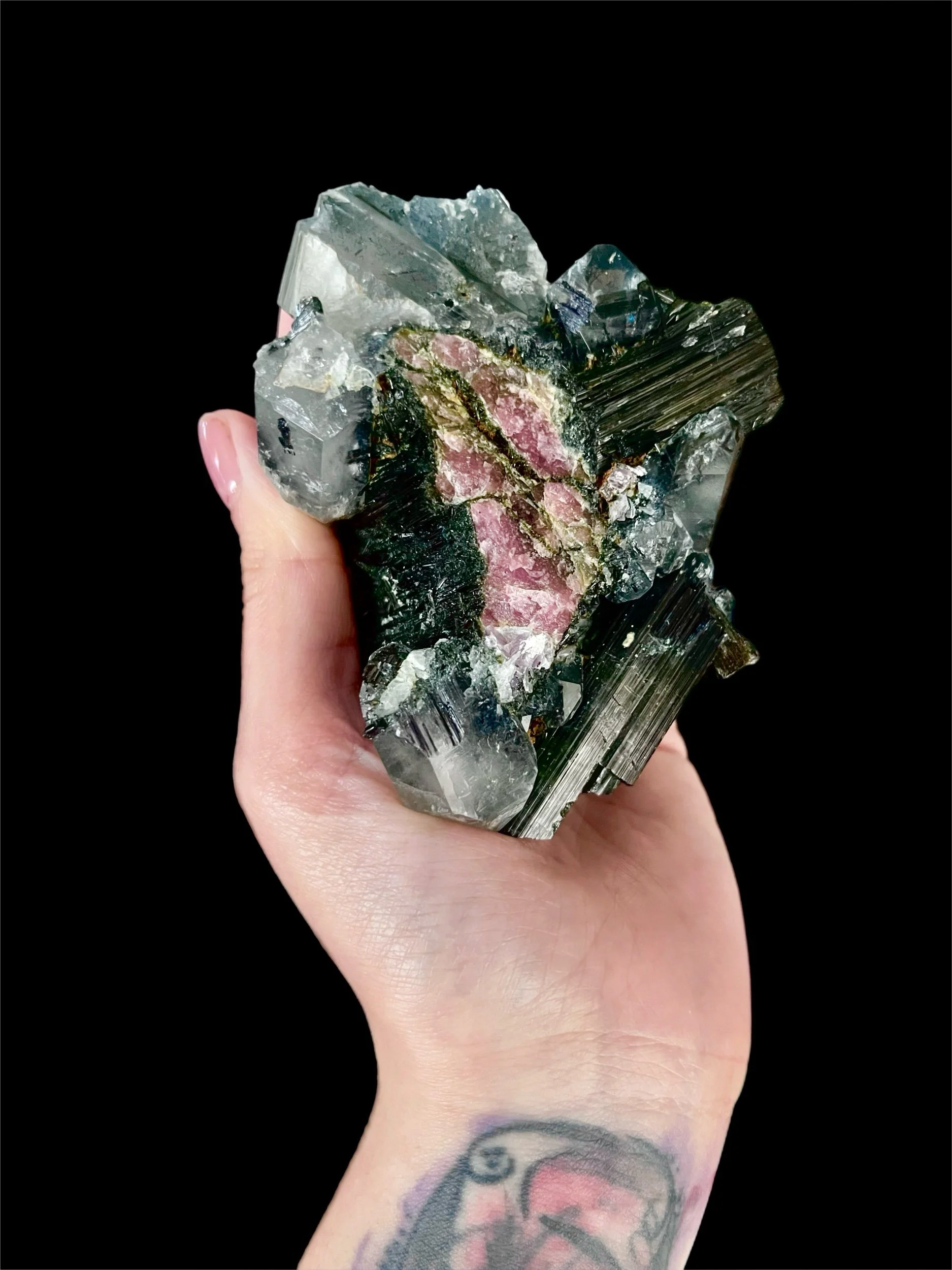
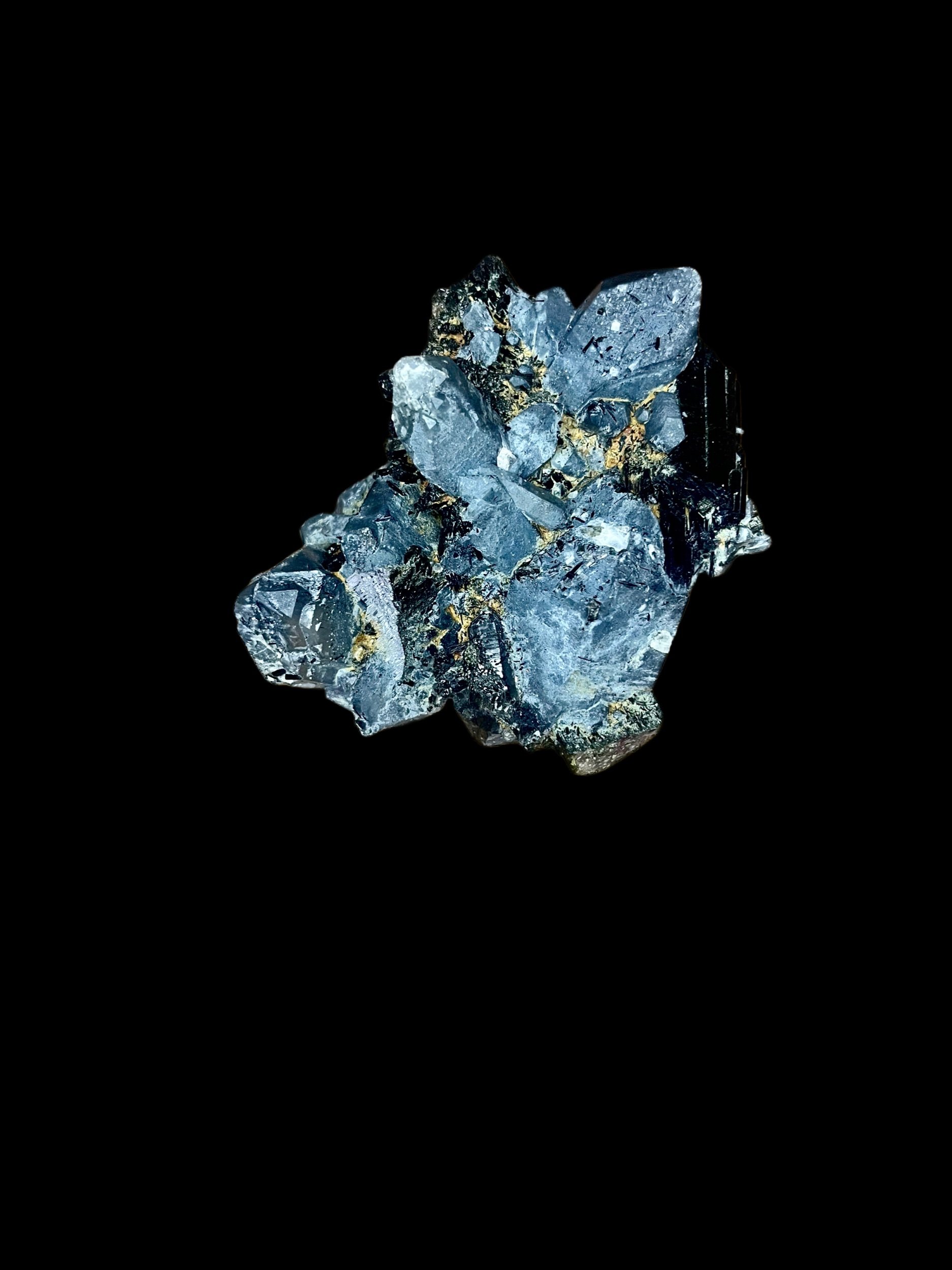
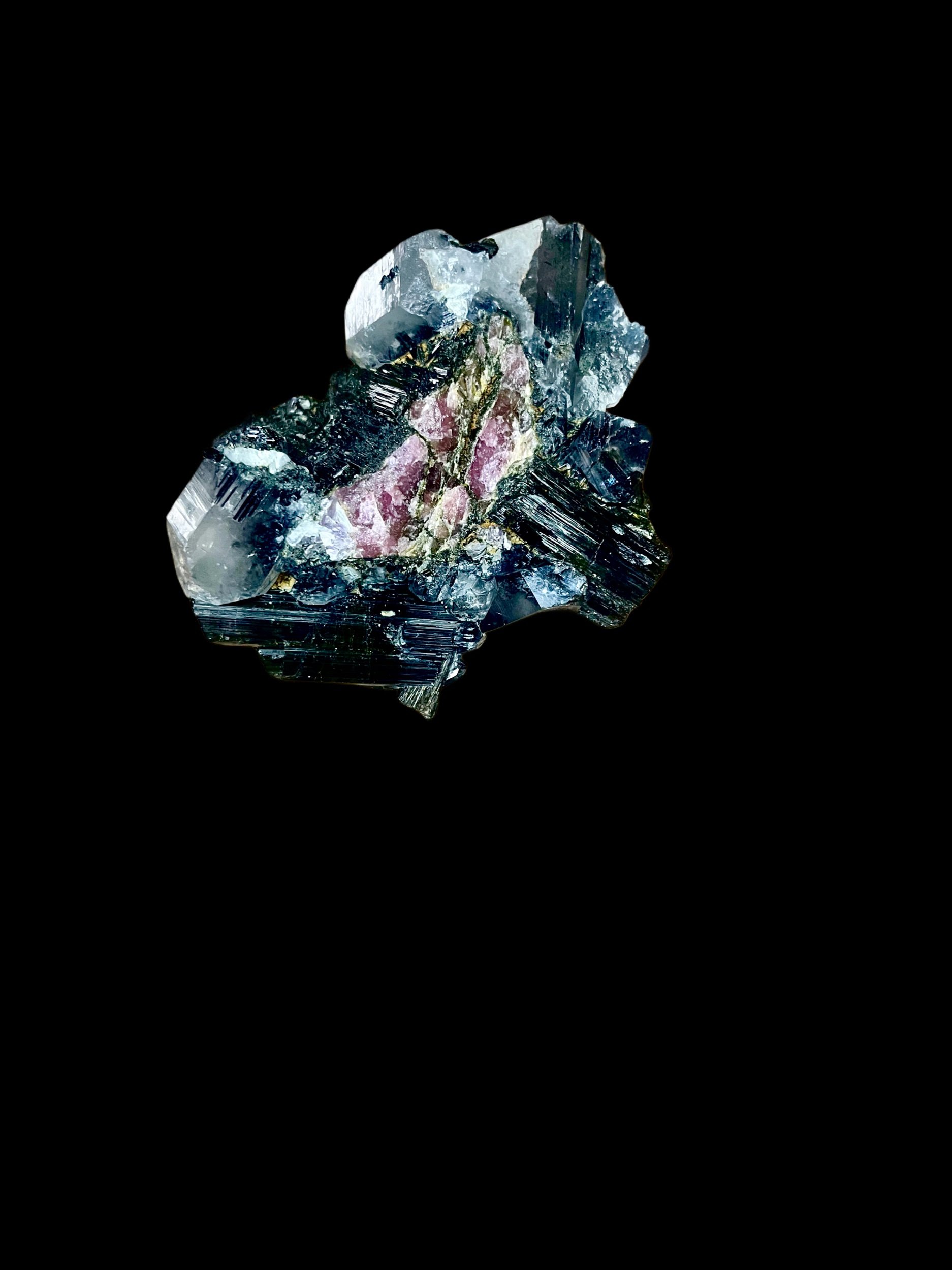
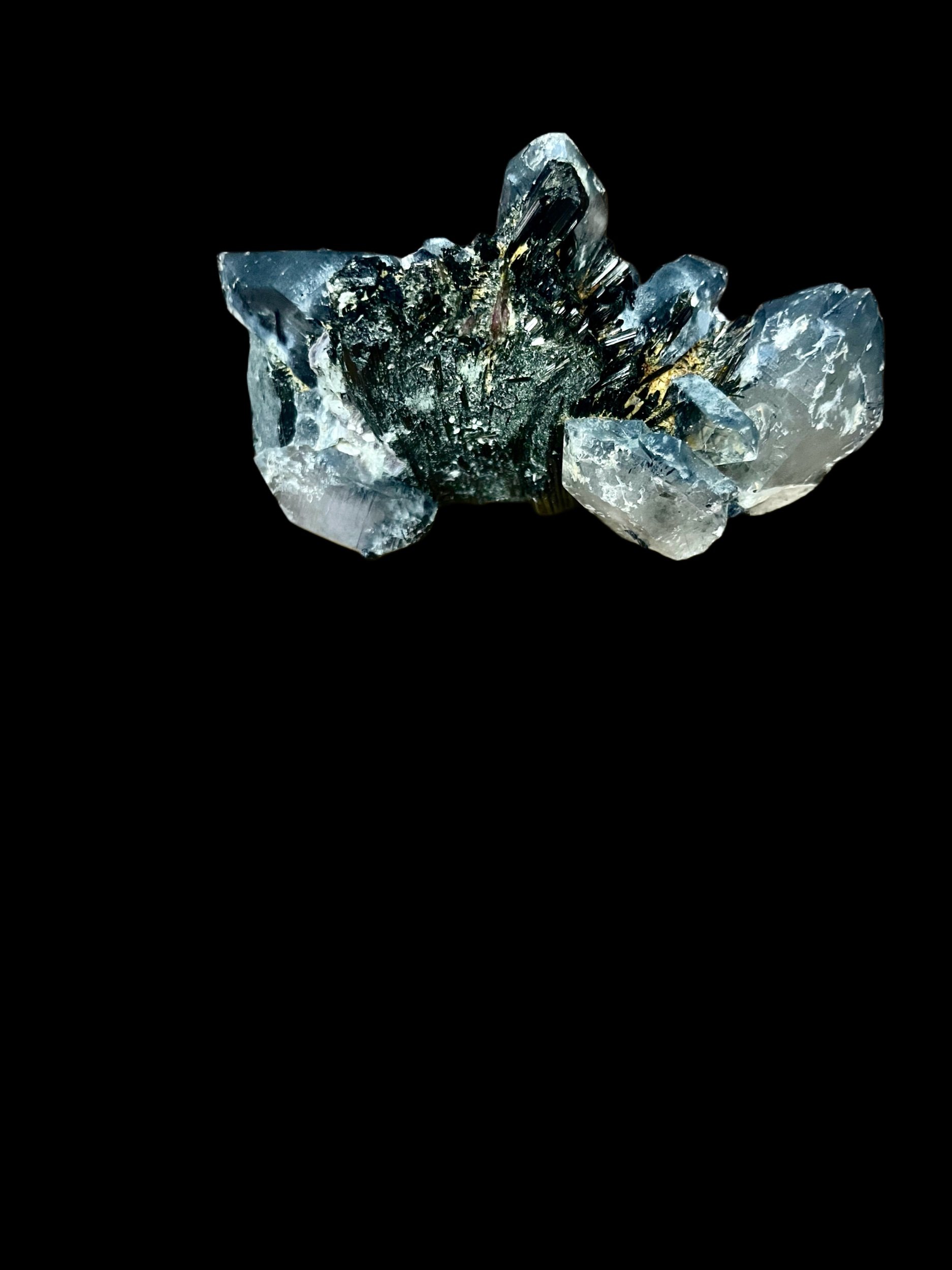
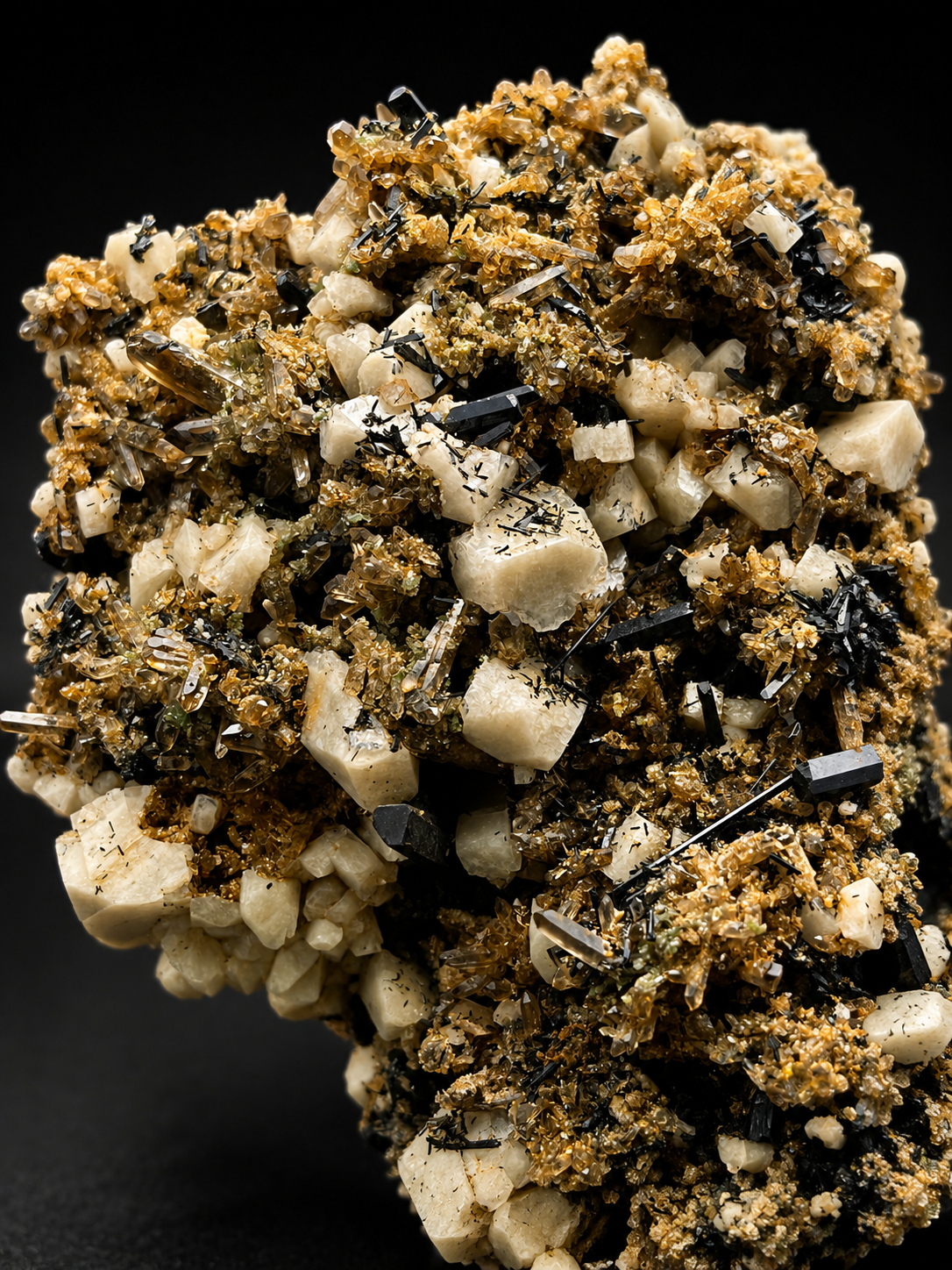
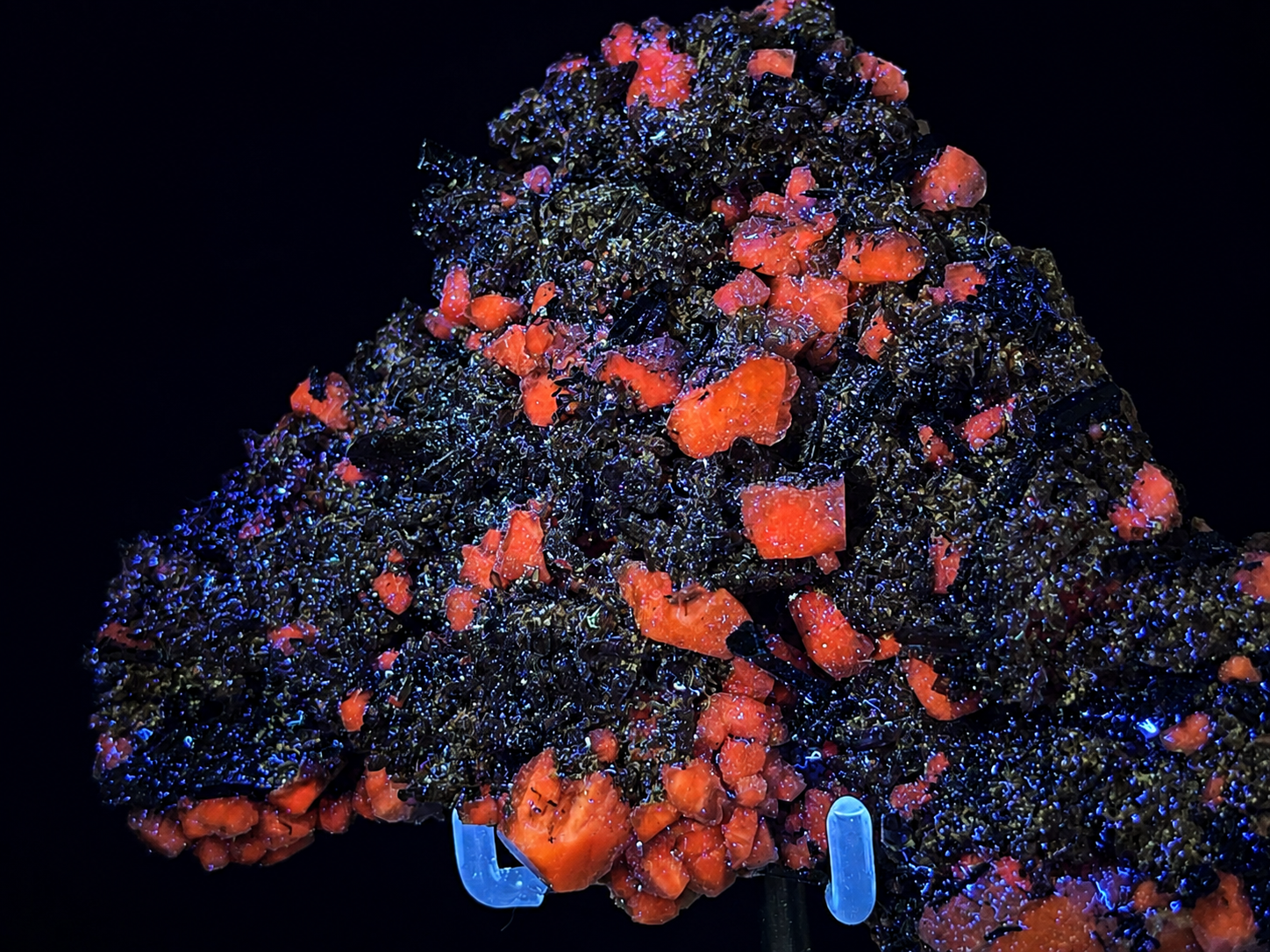
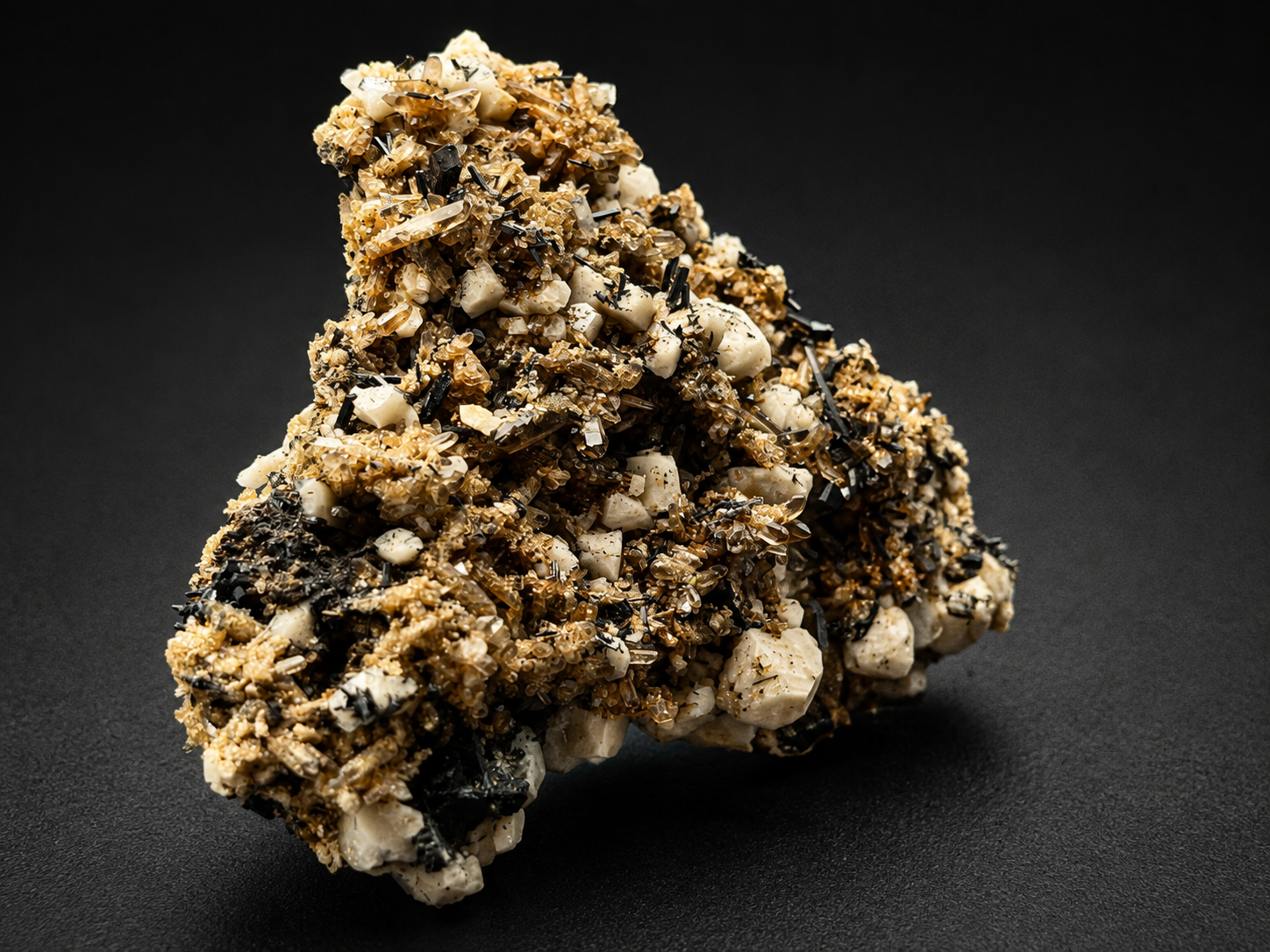
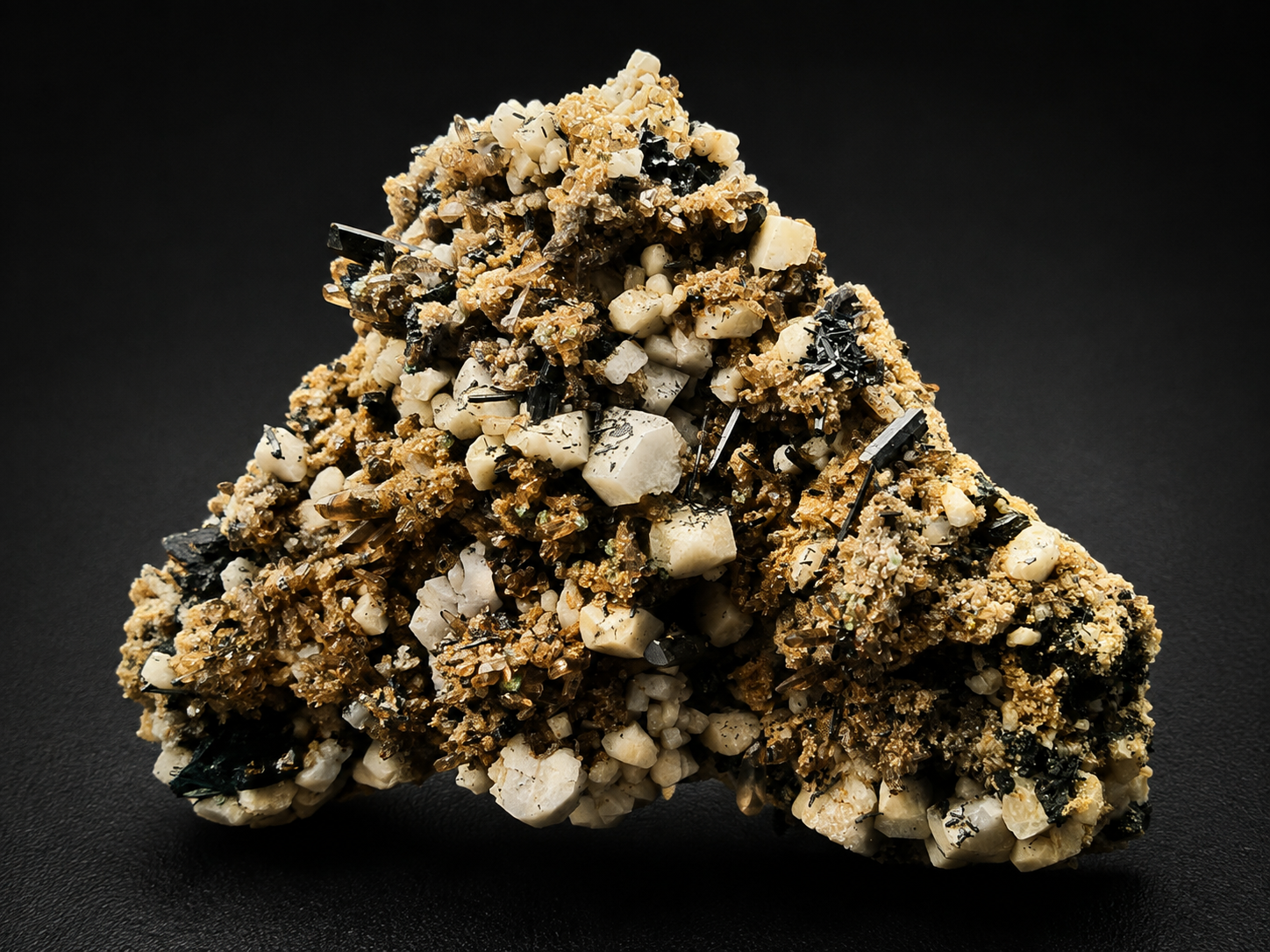
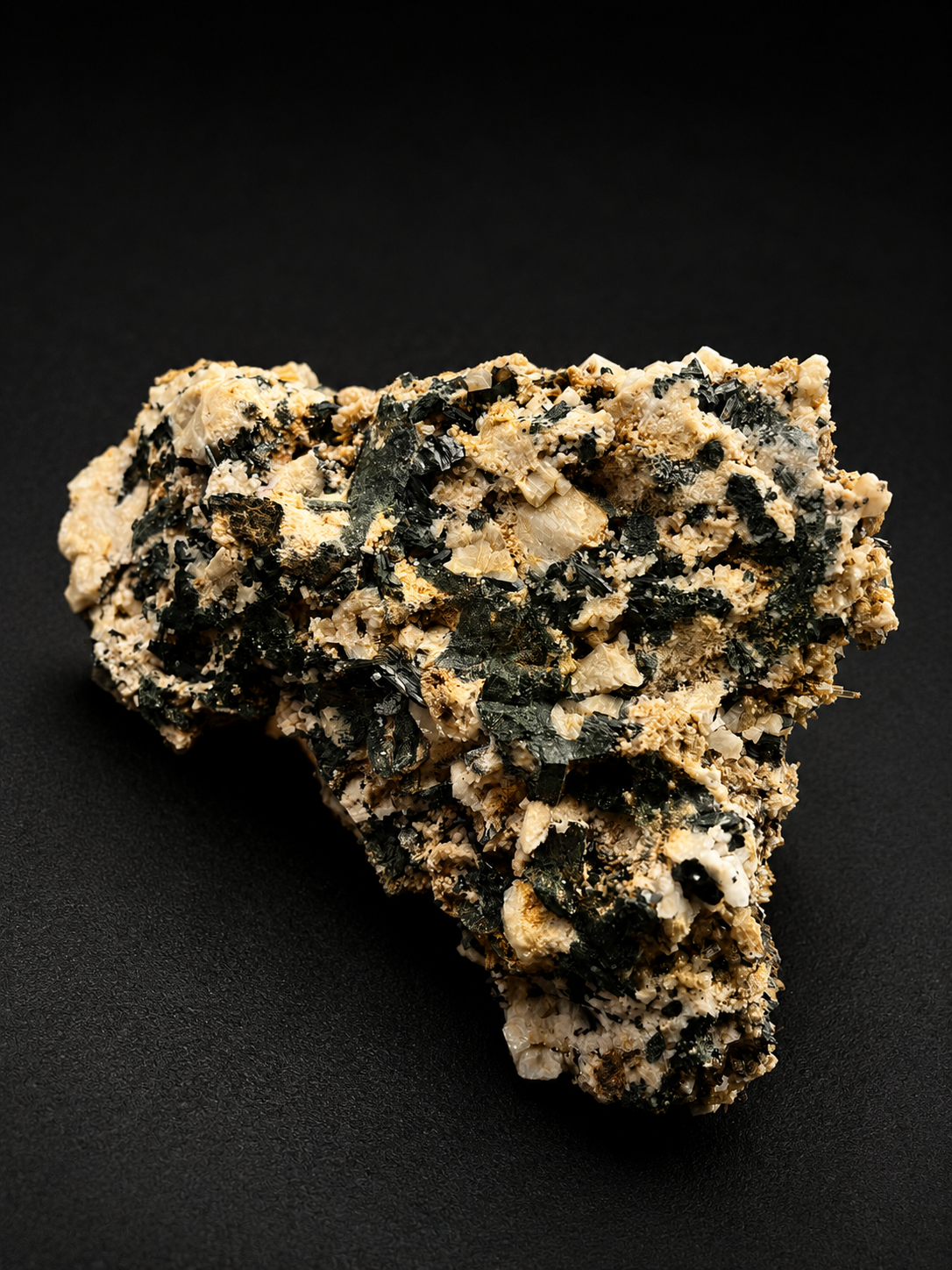
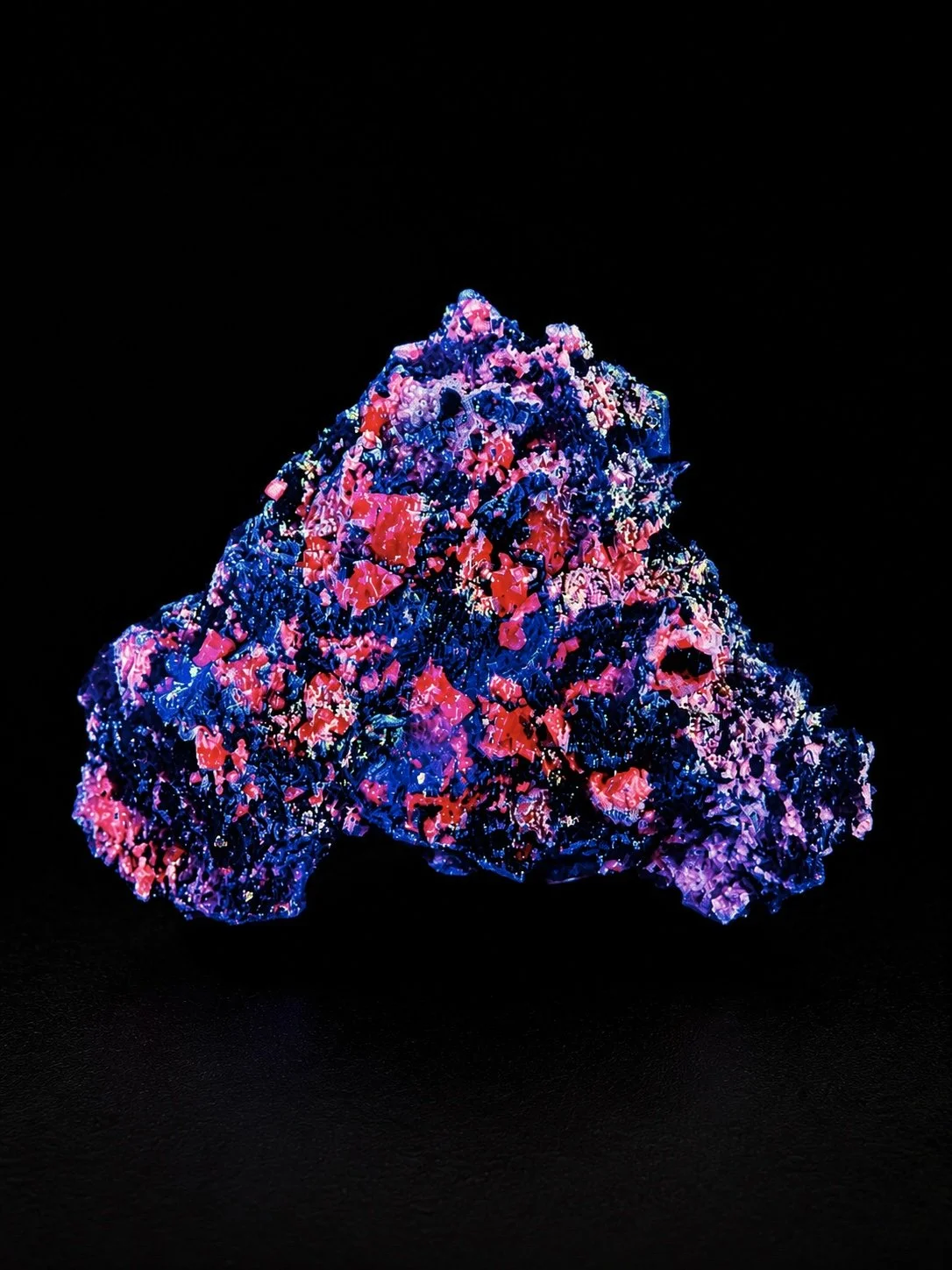
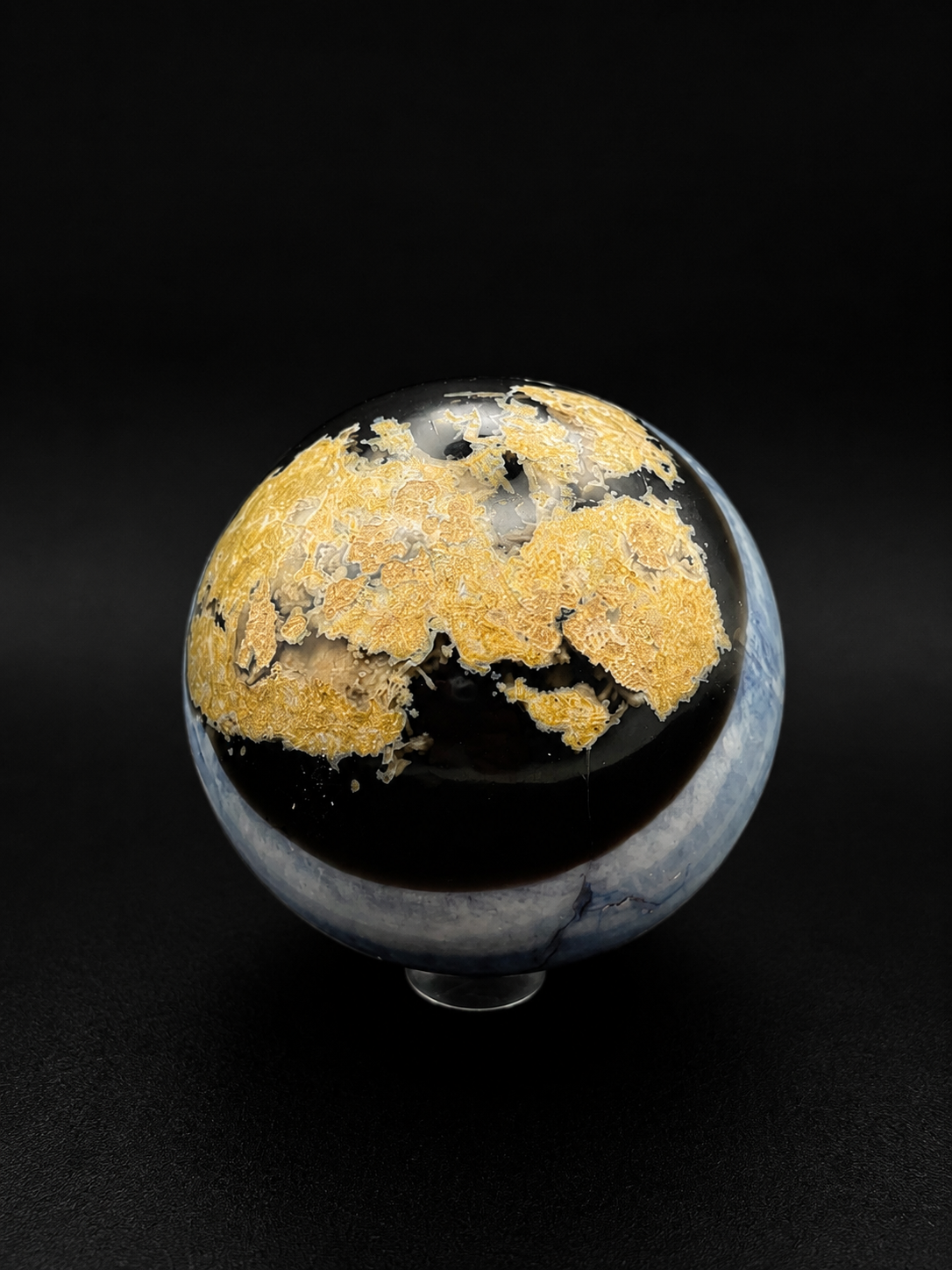
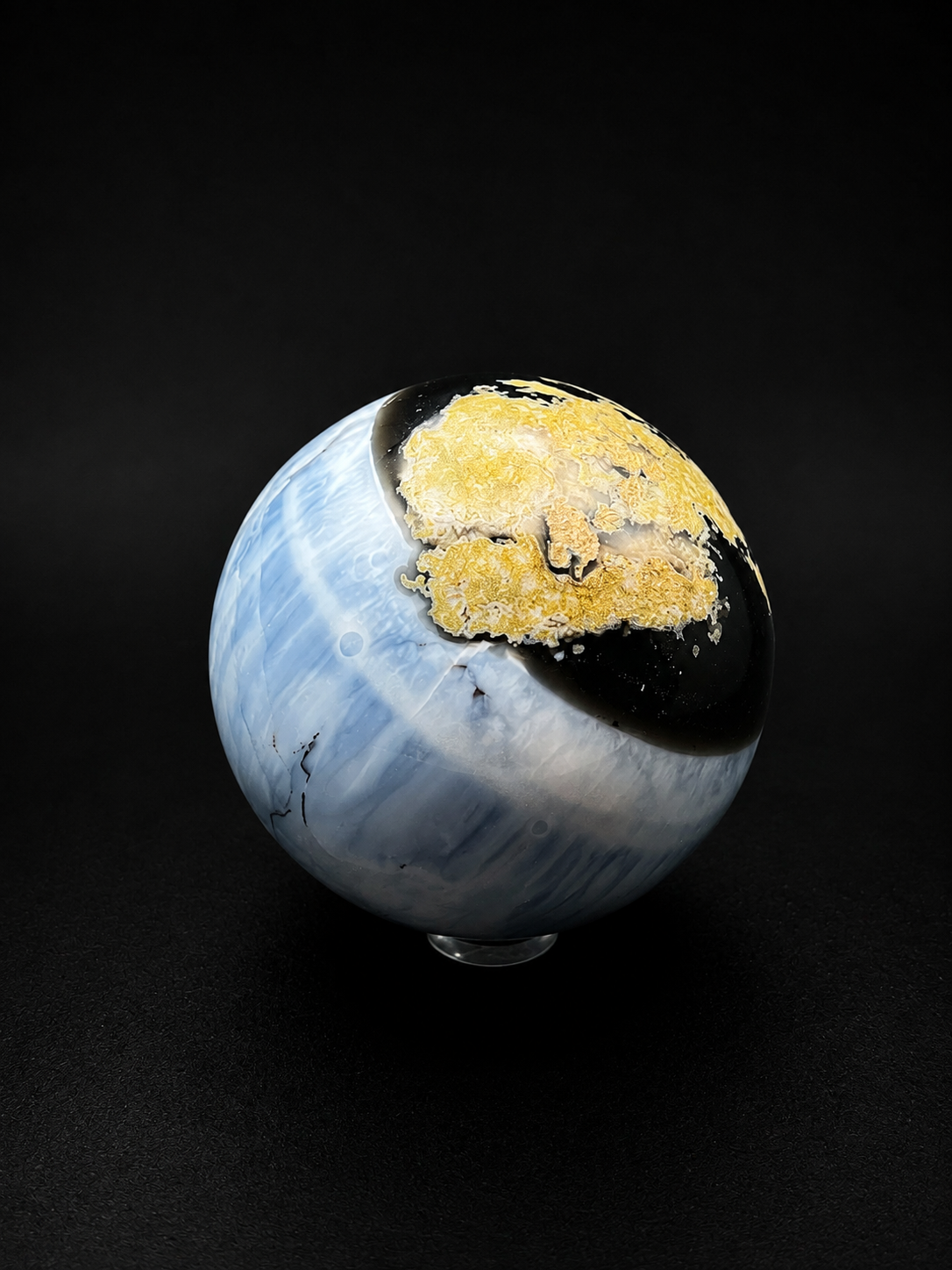
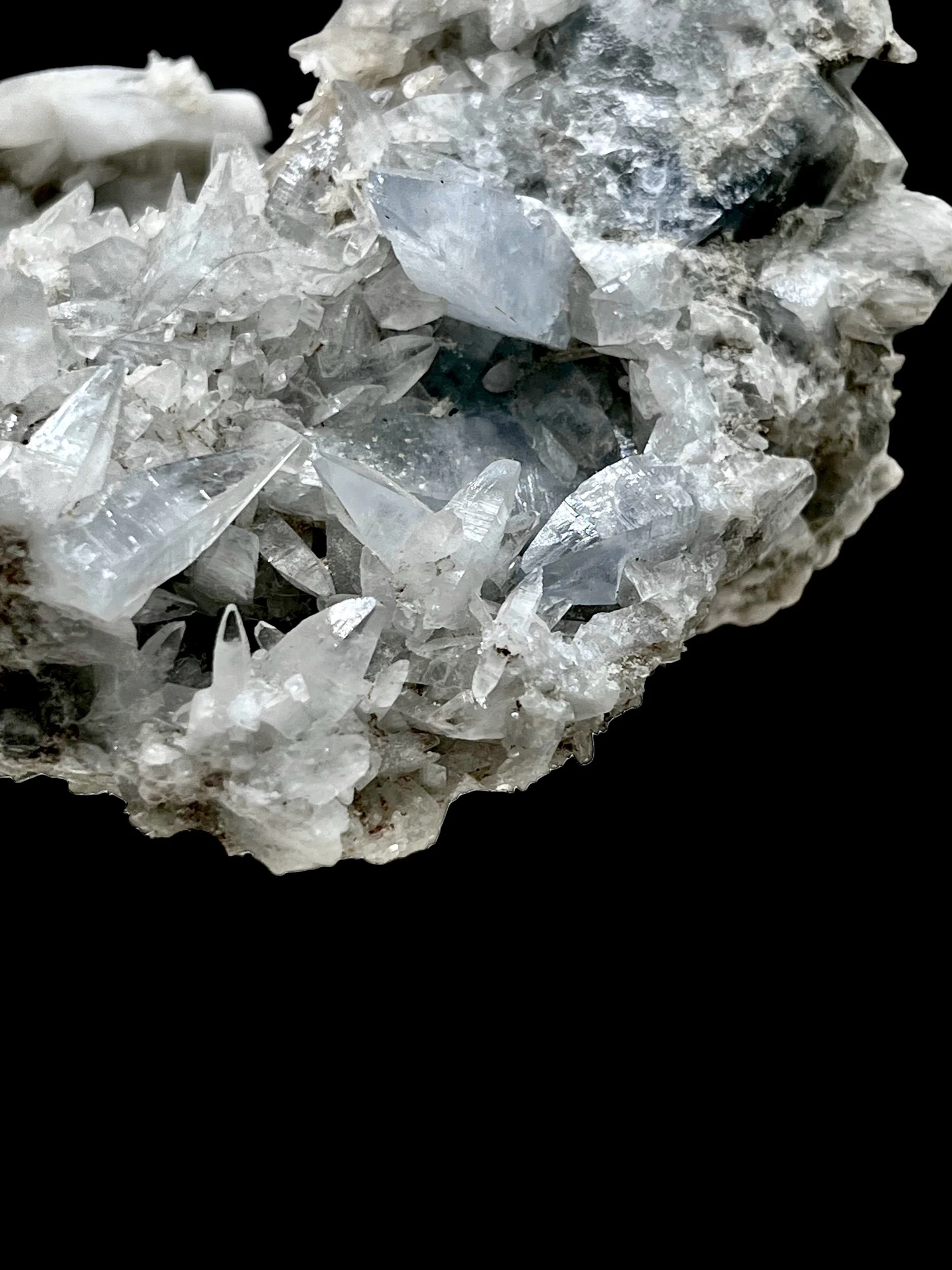
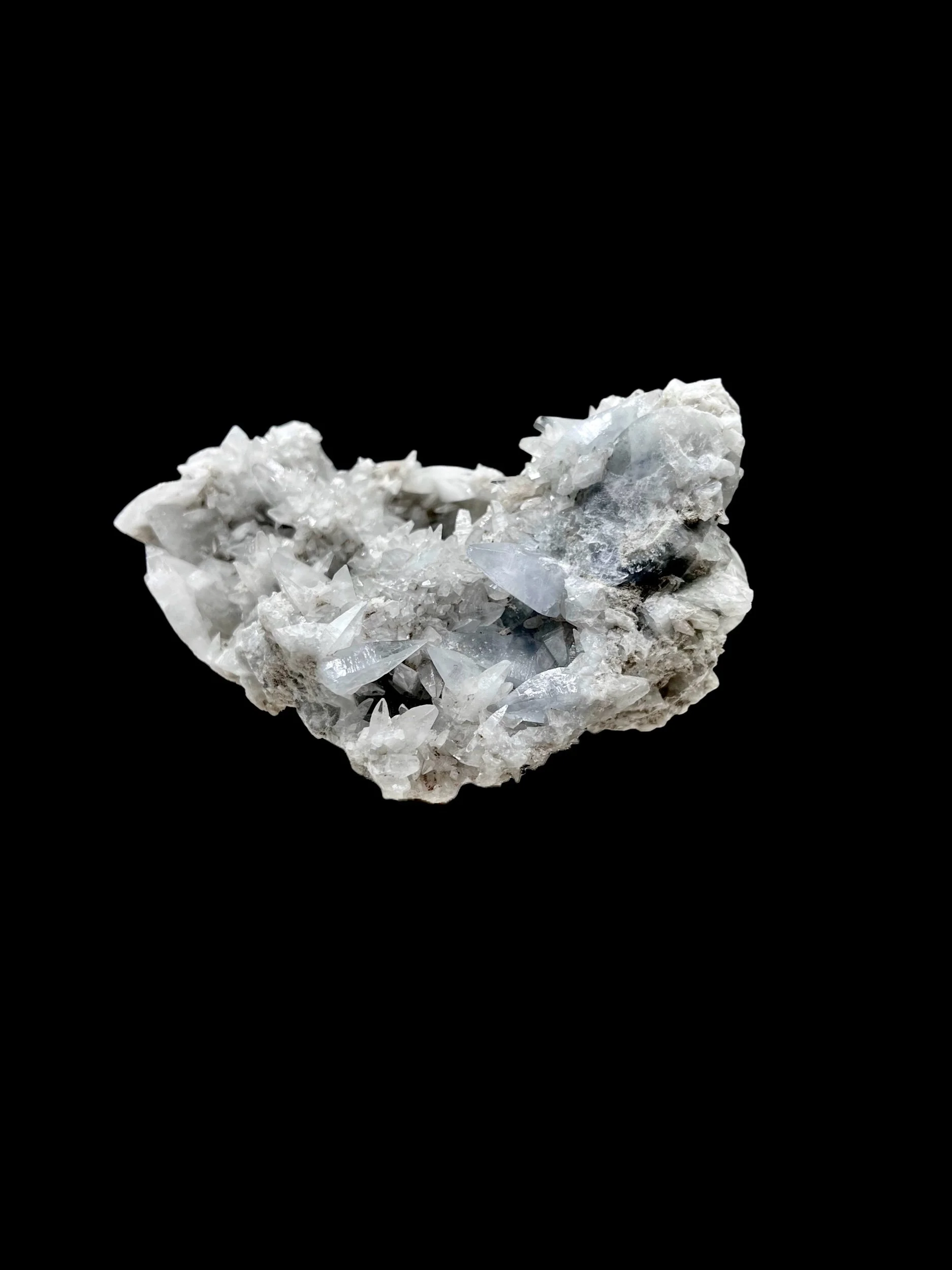
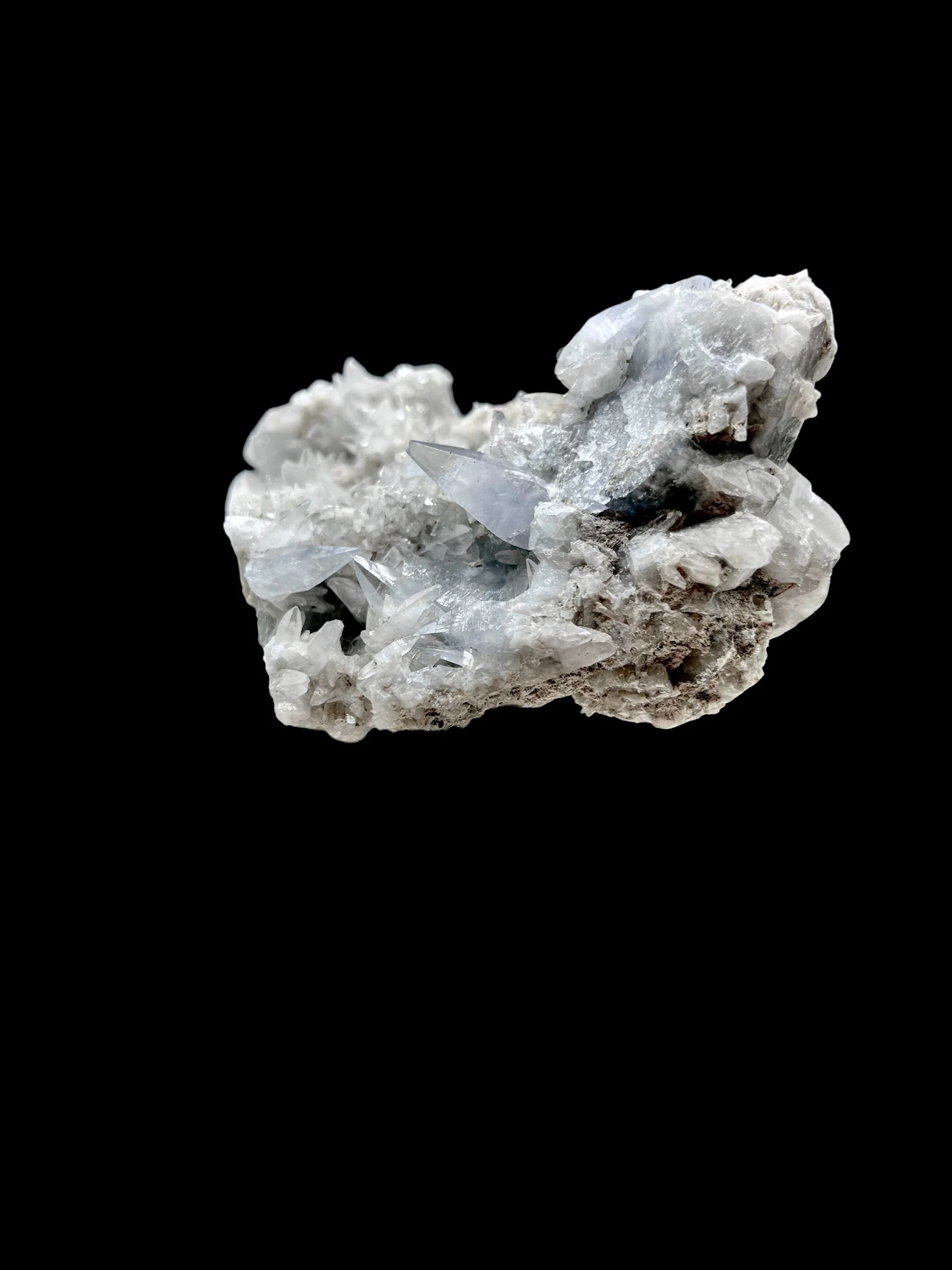
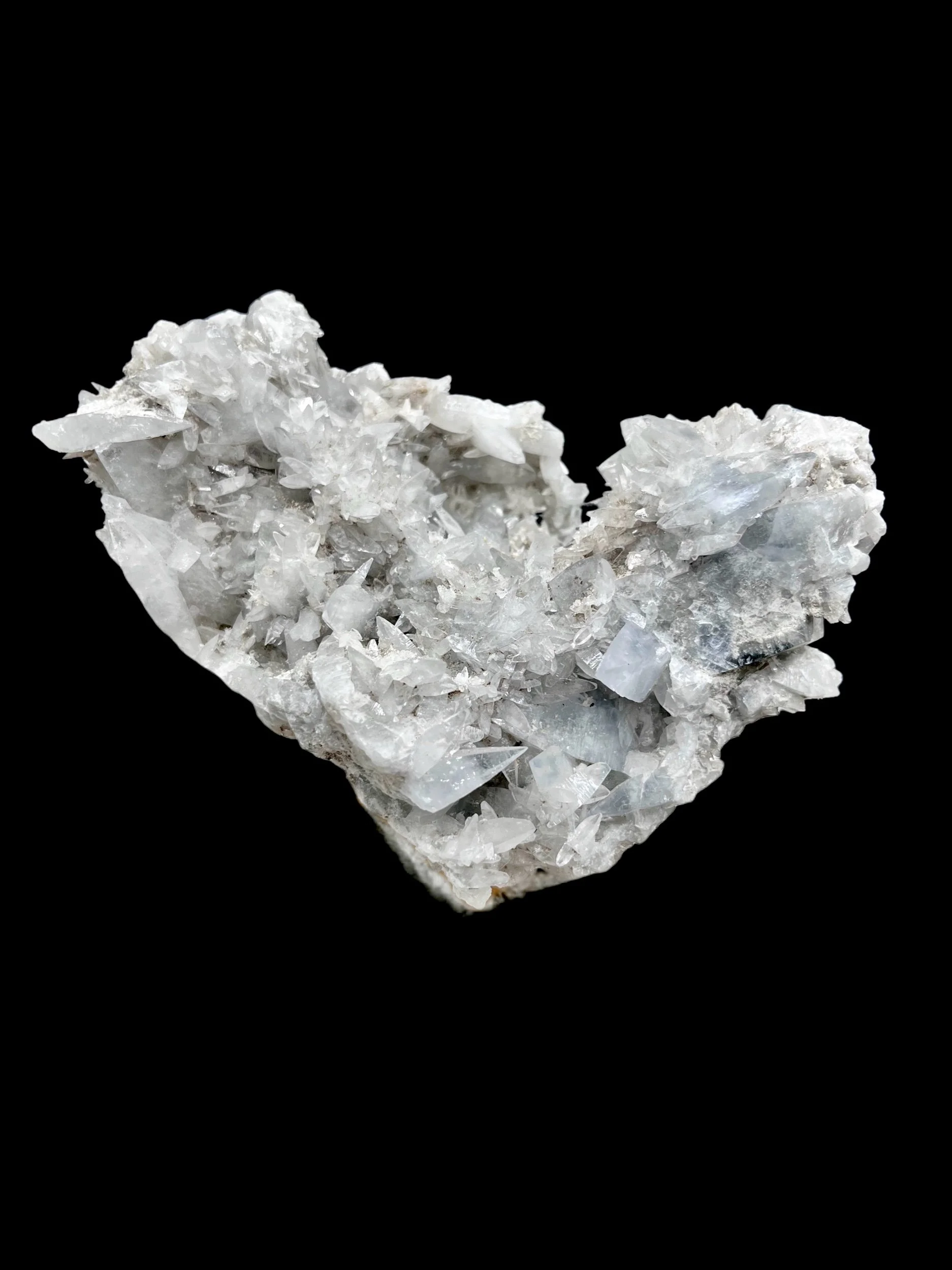
A magnificent example of nature’s artistry, this museum-grade Azurite with Malachite fine mineral specimen showcases an extraordinary combination of brilliant blue crystallization and intricately formed vibrant green malachite.
The specimen is crowned with dense clusters of intensely saturated royal-blue azurite crystals. Their sharply defined faces and brilliant vitreous luster create a striking contrast against the abundant emerald-green malachite beneath them.
What truly distinguishes this specimen is its remarkable crystal formations. The azurite forms dazzling crystalline ridges and distinct gemmy projections, a rare occurrence for this type of mineral. Striking, radiating crystal sprays extend outward in fan-like and starburst formations, creating an almost botanical appearance. These intricate green aggregates overlap and intertwine across the matrix, accompanied by areas of finely textured, reflective, velvety malachite.
With its dramatic sculptural textures, exceptional crystal formations, and remarkable diversity of growth habits, this specimen is a captivating example of the natural beauty found within copper-rich mineral deposits.
An outstanding display piece for collectors who appreciate unusual crystal formations, mineral associations, and the spectacular contrast between azurite and malachite.
Dimensions, Weight & Locality
Weight: 340 grams
Dimensions: 3.5" × 3" × 2.5"
Mine: Liufengshan Mine (Liu Feng Shan Mine)
Location: Guichi District, Chizhou, Anhui Province, China
Metaphysical Properties
Traditionally associated with insight, transformation, and emotional balance.
Azurite is often regarded as a stone of intuition, intellectual clarity, and expanded awareness. Within crystal traditions, it is associated with the third eye chakra and is believed to encourage deeper understanding, creativity, and thoughtful decision-making.
Malachite is traditionally known as a stone of transformation and personal growth. Associated with the heart chakra, it is believed to encourage emotional balance, positive change, and the release of limiting patterns.
Together, azurite and malachite are believed to support a harmonious relationship between intellectual understanding and emotional awareness, making the combination particularly meaningful to metaphysical collectors.
These properties reflect traditional metaphysical beliefs and are not scientifically established.
Collector's Notes
Located in Anhui Province, China, the Liufengshan Mine is internationally recognized for producing spectacular azurite and malachite combinations.
Specimens from this locality gained significant attention within the international fine mineral collecting community in the early 2000s, particularly for their exceptionally saturated colors, impressive crystal development, and highly aesthetic mineral associations.
The mine has produced specimens exhibiting a wide range of malachite textures, from rounded botryoidal formations to delicate fibrous aggregates, often accompanied by intensely blue, well-crystallized azurite.
Rare Gemmy Azurite Terminations
While azurite itself is not exceptionally rare, finding beautifully formed, gemmy crystals with intact natural terminations is far less common. Azurite typically develops as massive formations, crusts, or intergrown crystals rather than distinct, well-terminated crystals.
These remarkable crystals form when copper-rich, carbonate-bearing groundwater circulates through cavities within oxidized copper deposits. Under specific conditions, azurite slowly crystallizes into open spaces, allowing its natural geometric faces and terminations to develop without obstruction. When crystal growth occurs with minimal impurities and inclusions, the result can be exceptional translucency, producing the coveted gemmy appearance.
The combination of well-defined terminations, rich blue coloration, glassy luster, and gem-quality translucency makes these specimens especially desirable to find mineral collectors. Their delicate nature and tendency to alter into green malachite make beautifully preserved examples even more impressive.
How Radiating Malachite Forms
One of the most fascinating characteristics of this specimen is its abundance of radiating malachite formations.
Malachite commonly develops as fibrous aggregates composed of numerous elongated crystals. As these crystals grow outward from localized growth centers, they can create beautiful fan-shaped, rosette-like, or spherical arrangements.
Depending on the surrounding space, available mineral-rich solutions, and growth conditions, these aggregates may develop into tightly packed bundles or spread outward into elaborate sprays.
The delicate green formations visible throughout this specimen beautifully demonstrate this distinctive growth habit.
Interesting Fact: Two Minerals, One Copper Source
Azurite and malachite share a remarkably close geological relationship. Both are secondary copper carbonate minerals that commonly form through the chemical weathering and oxidation of copper-bearing deposits.
Changes in the chemistry of circulating groundwater can favor one mineral over the other, sometimes producing alternating periods of azurite and malachite growth.
Azurite may also gradually transform into malachite when environmental conditions change. This alteration can occasionally preserve the external shape of an original azurite crystal, producing a malachite pseudomorph after azurite.
Highlights
Spectacular Radiating Malachite: Numerous intricate green crystal sprays displaying fan-like and starburst growth patterns.
Brilliant Azurite Crystallization: Dense clusters of sharply defined royal-blue azurite crystals with excellent vitreous luster.
Exceptional Color Contrast: Deep, saturated blue crystals set against vibrant emerald-green malachite.
Three-Dimensional Formation: An elaborate sculptural arrangement with projecting crystal clusters, natural cavities, and intricate surface detail.
Diverse Crystal Habits: Beautifully demonstrates the differences between crystalline azurite and fibrous malachite growth.
Fine Mineral Detail: Delicate malachite needles, densely clustered azurite, and richly textured mineral surfaces.
Multiple Display Angles: Attractive formations and contrasting mineral textures visible throughout the specimen.
Museum Quality : An excellent addition to a curated collection of copper minerals and aesthetic mineral associations.
Renowned Locality: From the celebrated Liufengshan Mine in Anhui Province, China.
Collector Appeal: An impressive example of an aesthetic copper mineral association, particularly desirable for its elaborate malachite growth.
Mineralogy
Azurite
Chemical Formula: Cu₃(CO₃)₂(OH)₂
Mineral Class: Carbonates
Crystal System: Monoclinic
Mohs Hardness: 3.5–4
Color: Deep azure blue to royal blue
Luster: Vitreous (glassy)
Streak: Light blue
Cleavage: Perfect in one direction, fair in another
Specific Gravity: Approximately 3.77
Crystal Habit: Prismatic, tabular, bladed, and clustered crystals; occasionally massive or botryoidal
Formation: Secondary copper carbonate mineral formed in oxidized copper deposits
Malachite
Chemical Formula: Cu₂(CO₃)(OH)₂
Mineral Class: Carbonates
Crystal System: Monoclinic
Mohs Hardness: 3.5–4
Color: Bright green to deep emerald green
Luster: Silky, vitreous, or earthy depending on crystal habit
Streak: Light green
Cleavage: Perfect in one direction, though often difficult to observe in fibrous aggregates
Specific Gravity: Approximately 3.6–4.05
Crystal Habit: Fibrous, radiating, acicular, botryoidal, mammillary, and massive aggregates
Formation: Secondary copper carbonate mineral produced through oxidation and alteration of copper-bearing minerals
Description
A magnificent example of nature’s artistry, this museum-grade Azurite with Malachite fine mineral specimen showcases an extraordinary combination of brilliant blue crystallization and intricately formed vibrant green malachite.
The specimen is crowned with dense clusters of intensely saturated royal-blue azurite crystals. Their sharply defined faces and brilliant vitreous luster create a striking contrast against the abundant emerald-green malachite beneath them.
What truly distinguishes this specimen is its remarkable crystal formations. The azurite forms dazzling crystalline ridges and distinct gemmy projections, a rare occurrence for this type of mineral. Striking, radiating crystal sprays extend outward in fan-like and starburst formations, creating an almost botanical appearance. These intricate green aggregates overlap and intertwine across the matrix, accompanied by areas of finely textured, reflective, velvety malachite.
With its dramatic sculptural textures, exceptional crystal formations, and remarkable diversity of growth habits, this specimen is a captivating example of the natural beauty found within copper-rich mineral deposits.
An outstanding display piece for collectors who appreciate unusual crystal formations, mineral associations, and the spectacular contrast between azurite and malachite.
Dimensions, Weight & Locality
Weight: 340 grams
Dimensions: 3.5" × 3" × 2.5"
Mine: Liufengshan Mine (Liu Feng Shan Mine)
Location: Guichi District, Chizhou, Anhui Province, China
Metaphysical Properties
Traditionally associated with insight, transformation, and emotional balance.
Azurite is often regarded as a stone of intuition, intellectual clarity, and expanded awareness. Within crystal traditions, it is associated with the third eye chakra and is believed to encourage deeper understanding, creativity, and thoughtful decision-making.
Malachite is traditionally known as a stone of transformation and personal growth. Associated with the heart chakra, it is believed to encourage emotional balance, positive change, and the release of limiting patterns.
Together, azurite and malachite are believed to support a harmonious relationship between intellectual understanding and emotional awareness, making the combination particularly meaningful to metaphysical collectors.
These properties reflect traditional metaphysical beliefs and are not scientifically established.
Collector's Notes
Located in Anhui Province, China, the Liufengshan Mine is internationally recognized for producing spectacular azurite and malachite combinations.
Specimens from this locality gained significant attention within the international fine mineral collecting community in the early 2000s, particularly for their exceptionally saturated colors, impressive crystal development, and highly aesthetic mineral associations.
The mine has produced specimens exhibiting a wide range of malachite textures, from rounded botryoidal formations to delicate fibrous aggregates, often accompanied by intensely blue, well-crystallized azurite.
Rare Gemmy Azurite Terminations
While azurite itself is not exceptionally rare, finding beautifully formed, gemmy crystals with intact natural terminations is far less common. Azurite typically develops as massive formations, crusts, or intergrown crystals rather than distinct, well-terminated crystals.
These remarkable crystals form when copper-rich, carbonate-bearing groundwater circulates through cavities within oxidized copper deposits. Under specific conditions, azurite slowly crystallizes into open spaces, allowing its natural geometric faces and terminations to develop without obstruction. When crystal growth occurs with minimal impurities and inclusions, the result can be exceptional translucency, producing the coveted gemmy appearance.
The combination of well-defined terminations, rich blue coloration, glassy luster, and gem-quality translucency makes these specimens especially desirable to find mineral collectors. Their delicate nature and tendency to alter into green malachite make beautifully preserved examples even more impressive.
How Radiating Malachite Forms
One of the most fascinating characteristics of this specimen is its abundance of radiating malachite formations.
Malachite commonly develops as fibrous aggregates composed of numerous elongated crystals. As these crystals grow outward from localized growth centers, they can create beautiful fan-shaped, rosette-like, or spherical arrangements.
Depending on the surrounding space, available mineral-rich solutions, and growth conditions, these aggregates may develop into tightly packed bundles or spread outward into elaborate sprays.
The delicate green formations visible throughout this specimen beautifully demonstrate this distinctive growth habit.
Interesting Fact: Two Minerals, One Copper Source
Azurite and malachite share a remarkably close geological relationship. Both are secondary copper carbonate minerals that commonly form through the chemical weathering and oxidation of copper-bearing deposits.
Changes in the chemistry of circulating groundwater can favor one mineral over the other, sometimes producing alternating periods of azurite and malachite growth.
Azurite may also gradually transform into malachite when environmental conditions change. This alteration can occasionally preserve the external shape of an original azurite crystal, producing a malachite pseudomorph after azurite.
Highlights
Spectacular Radiating Malachite: Numerous intricate green crystal sprays displaying fan-like and starburst growth patterns.
Brilliant Azurite Crystallization: Dense clusters of sharply defined royal-blue azurite crystals with excellent vitreous luster.
Exceptional Color Contrast: Deep, saturated blue crystals set against vibrant emerald-green malachite.
Three-Dimensional Formation: An elaborate sculptural arrangement with projecting crystal clusters, natural cavities, and intricate surface detail.
Diverse Crystal Habits: Beautifully demonstrates the differences between crystalline azurite and fibrous malachite growth.
Fine Mineral Detail: Delicate malachite needles, densely clustered azurite, and richly textured mineral surfaces.
Multiple Display Angles: Attractive formations and contrasting mineral textures visible throughout the specimen.
Museum Quality : An excellent addition to a curated collection of copper minerals and aesthetic mineral associations.
Renowned Locality: From the celebrated Liufengshan Mine in Anhui Province, China.
Collector Appeal: An impressive example of an aesthetic copper mineral association, particularly desirable for its elaborate malachite growth.
Mineralogy
Azurite
Chemical Formula: Cu₃(CO₃)₂(OH)₂
Mineral Class: Carbonates
Crystal System: Monoclinic
Mohs Hardness: 3.5–4
Color: Deep azure blue to royal blue
Luster: Vitreous (glassy)
Streak: Light blue
Cleavage: Perfect in one direction, fair in another
Specific Gravity: Approximately 3.77
Crystal Habit: Prismatic, tabular, bladed, and clustered crystals; occasionally massive or botryoidal
Formation: Secondary copper carbonate mineral formed in oxidized copper deposits
Malachite
Chemical Formula: Cu₂(CO₃)(OH)₂
Mineral Class: Carbonates
Crystal System: Monoclinic
Mohs Hardness: 3.5–4
Color: Bright green to deep emerald green
Luster: Silky, vitreous, or earthy depending on crystal habit
Streak: Light green
Cleavage: Perfect in one direction, though often difficult to observe in fibrous aggregates
Specific Gravity: Approximately 3.6–4.05
Crystal Habit: Fibrous, radiating, acicular, botryoidal, mammillary, and massive aggregates
Formation: Secondary copper carbonate mineral produced through oxidation and alteration of copper-bearing minerals


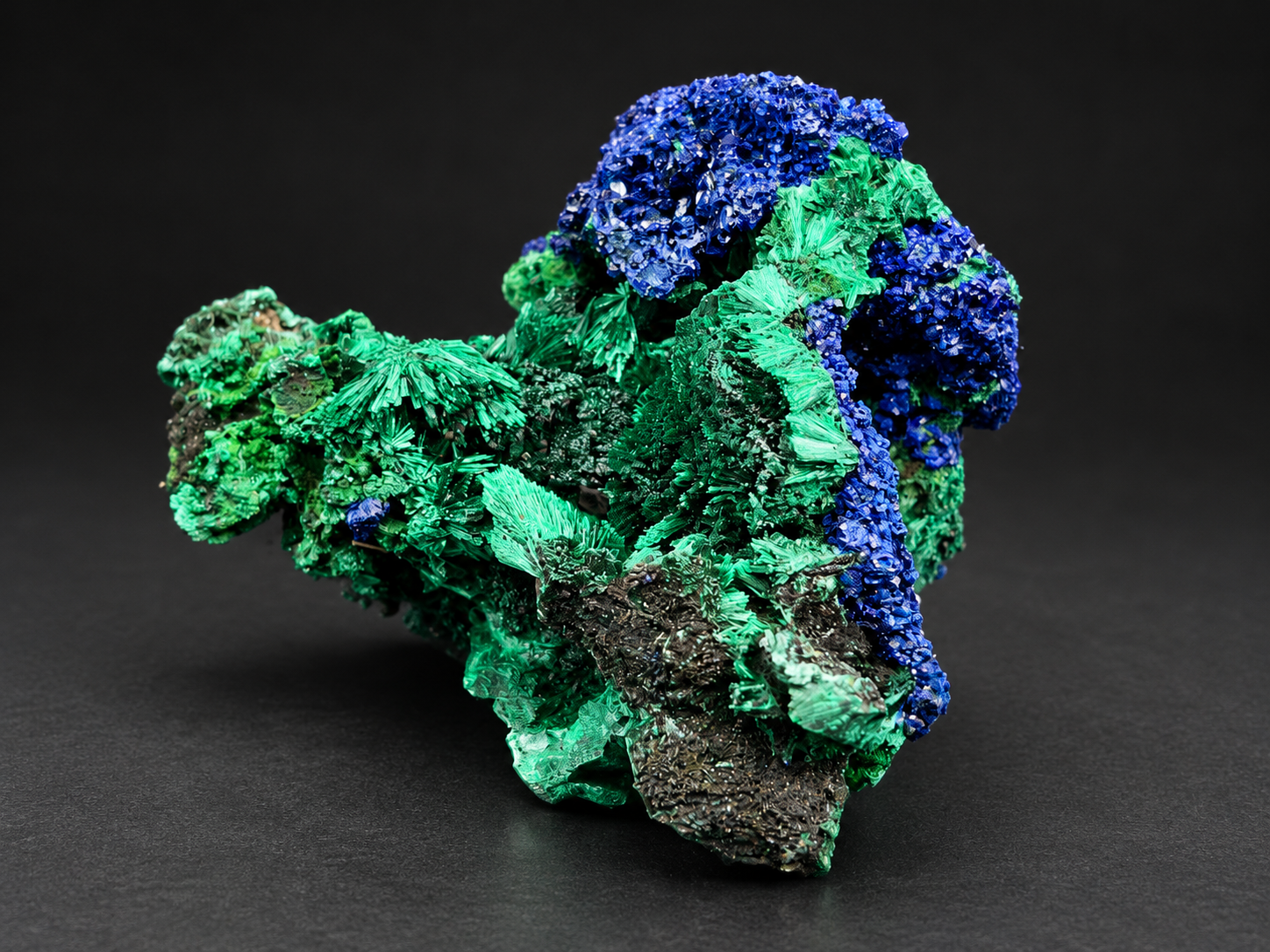 Image 1 of 8
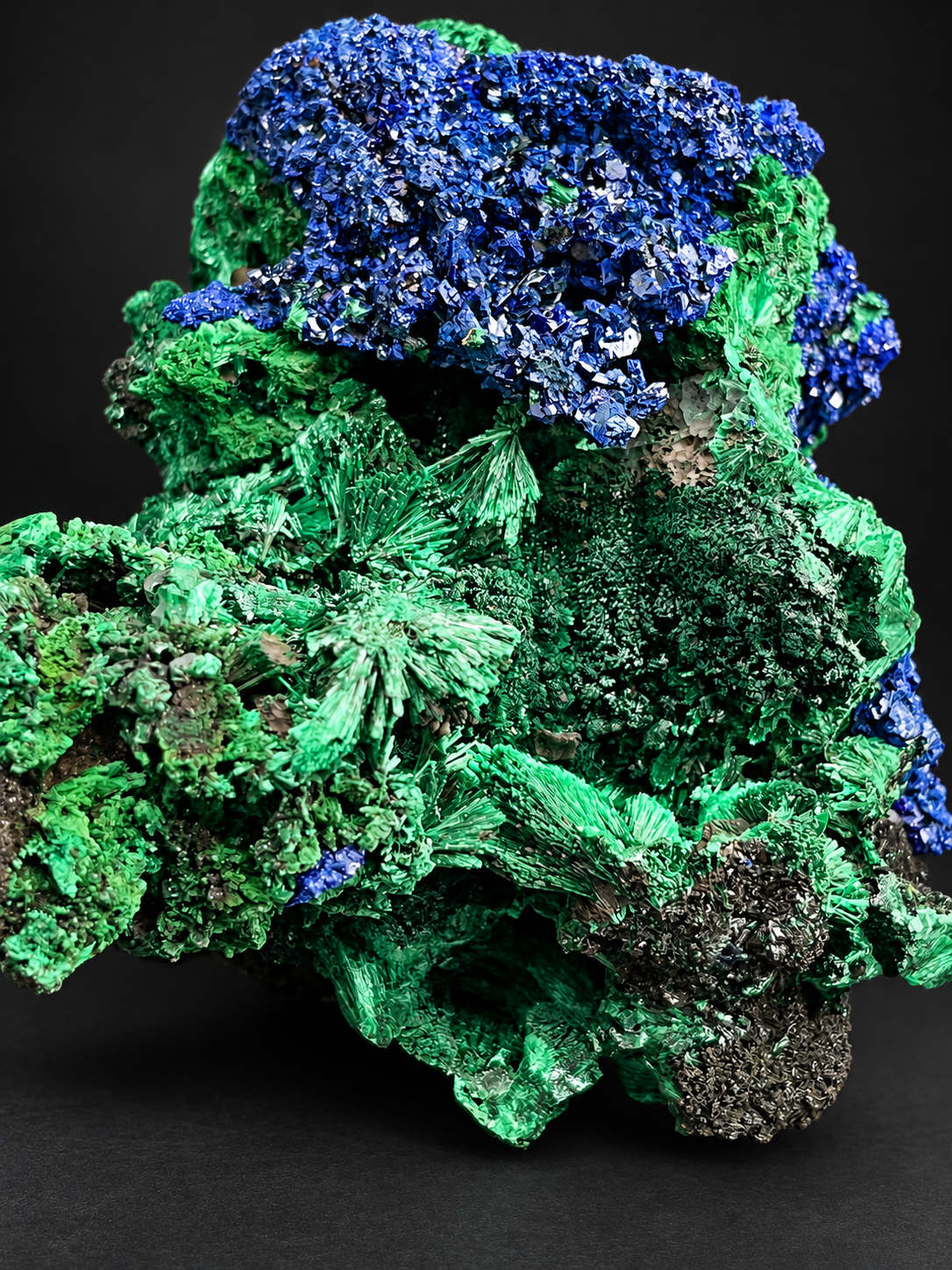 Image 2 of 8
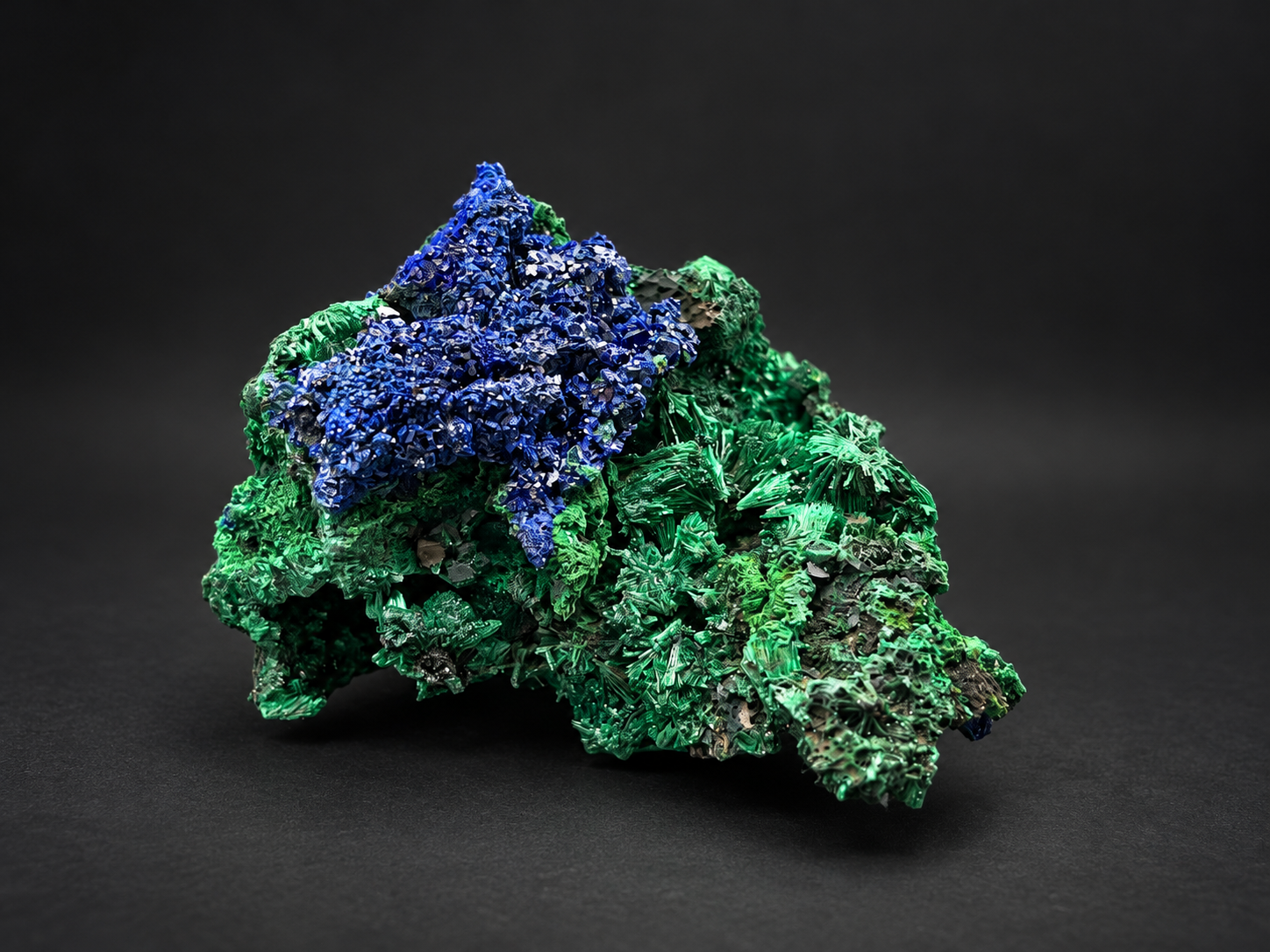 Image 3 of 8
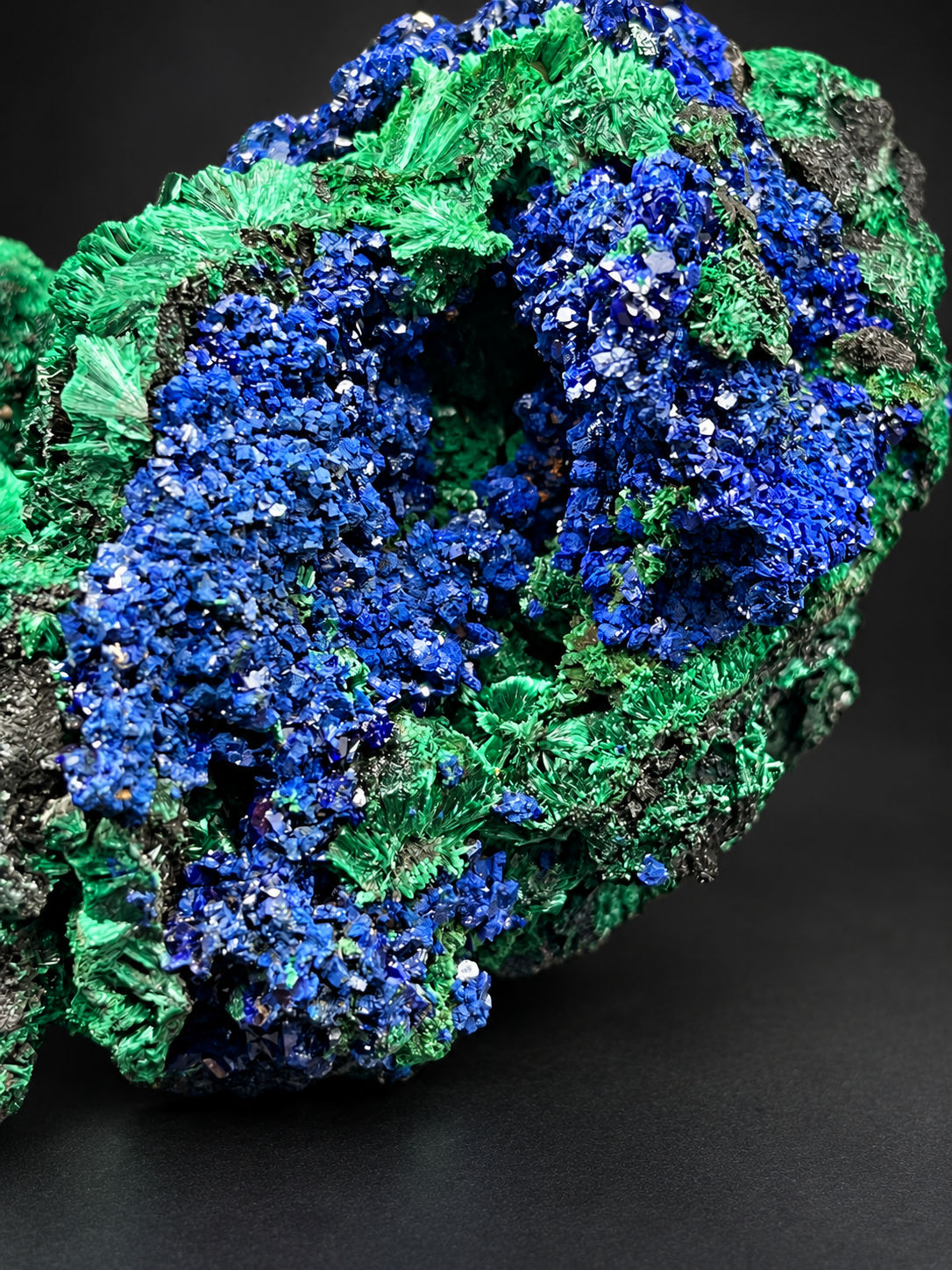 Image 4 of 8
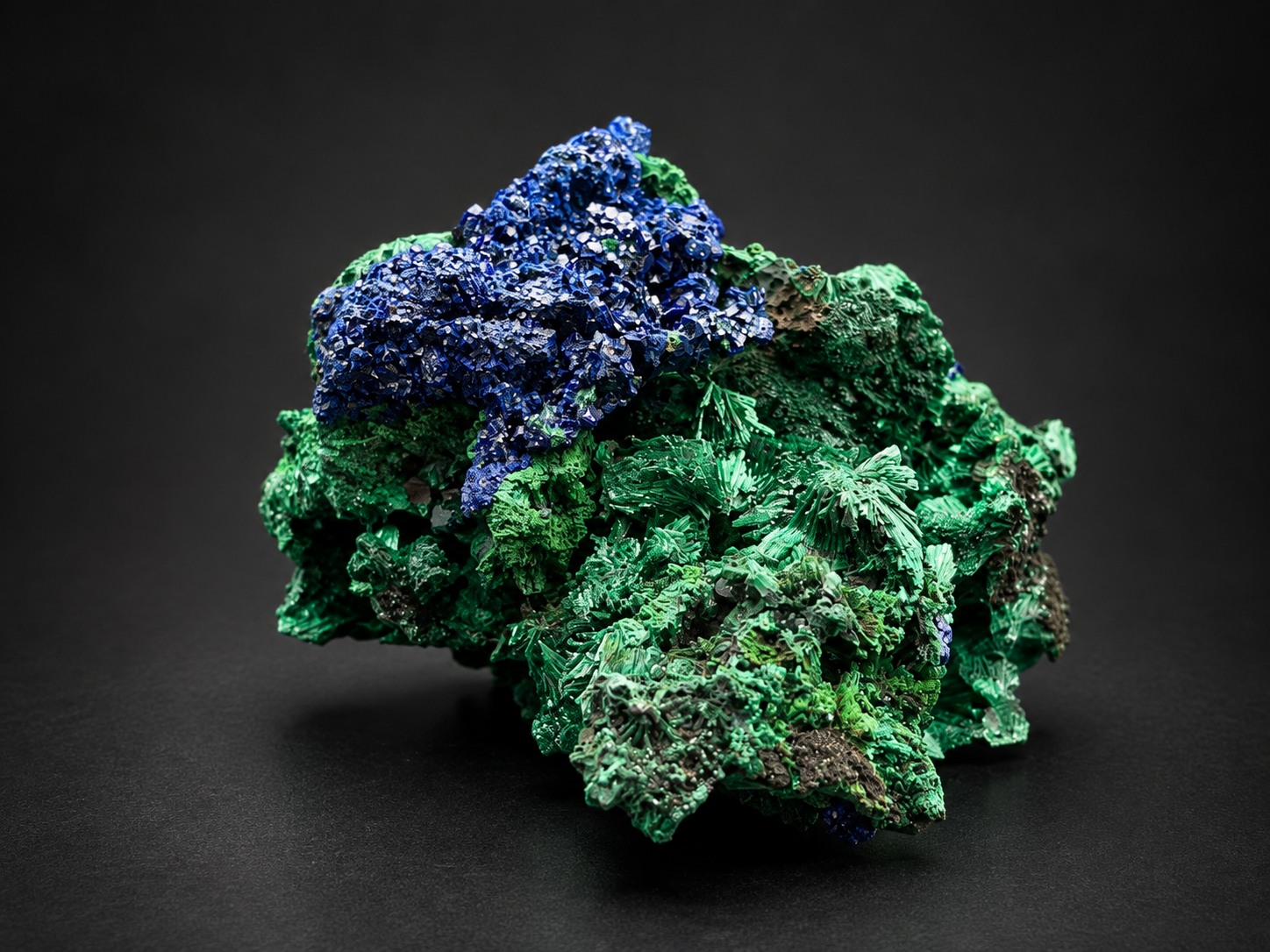 Image 5 of 8
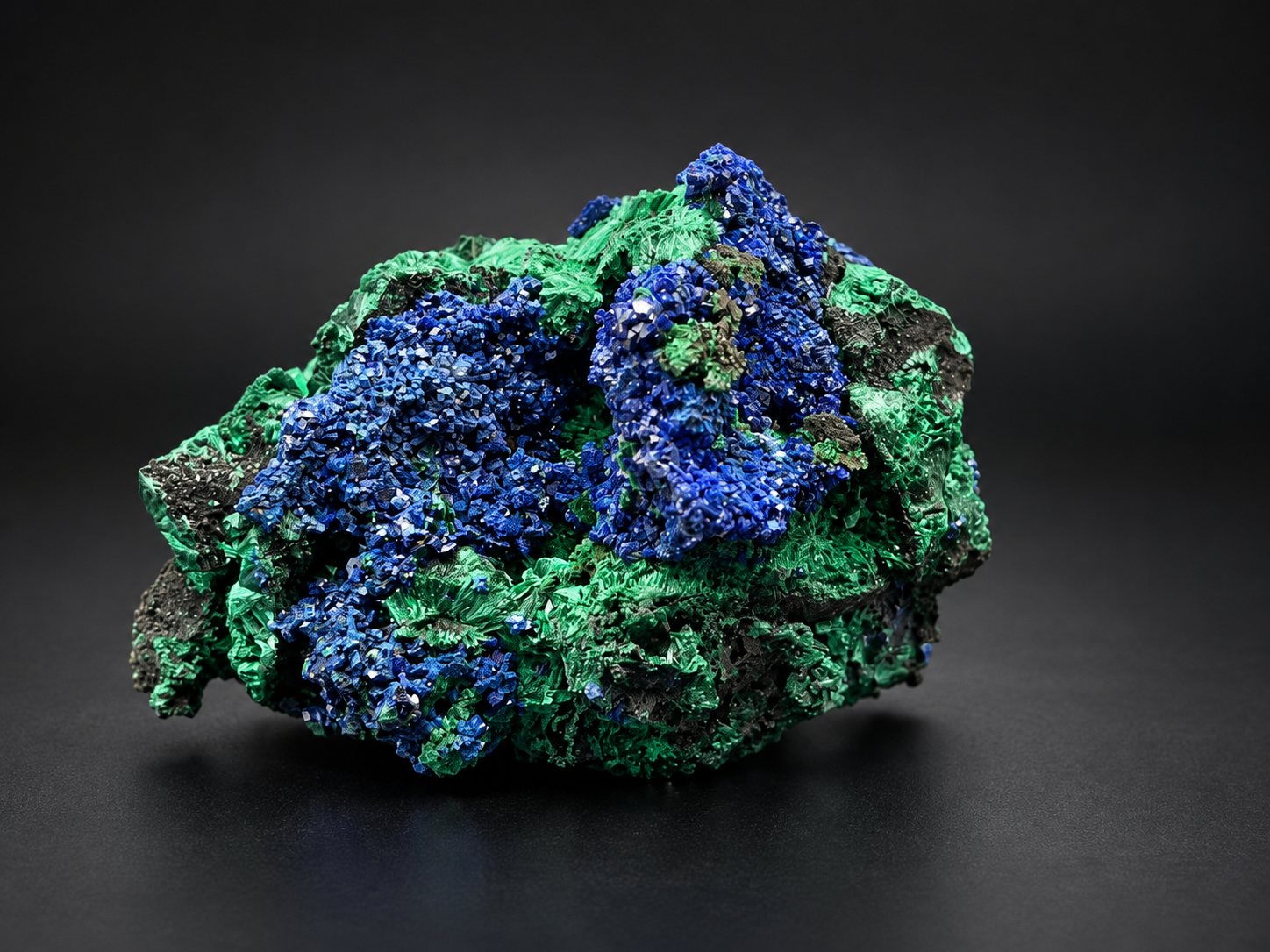 Image 6 of 8
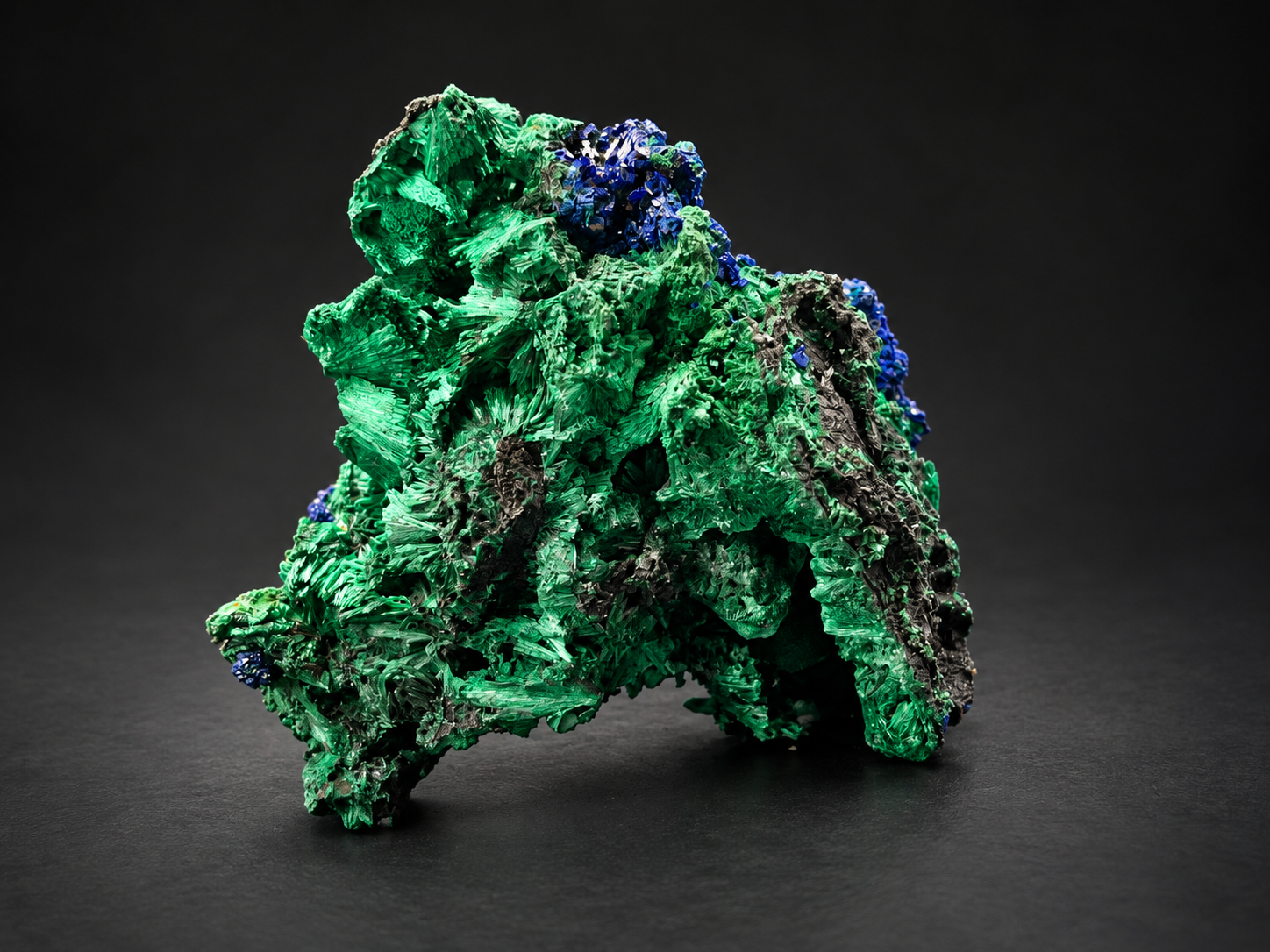 Image 7 of 8
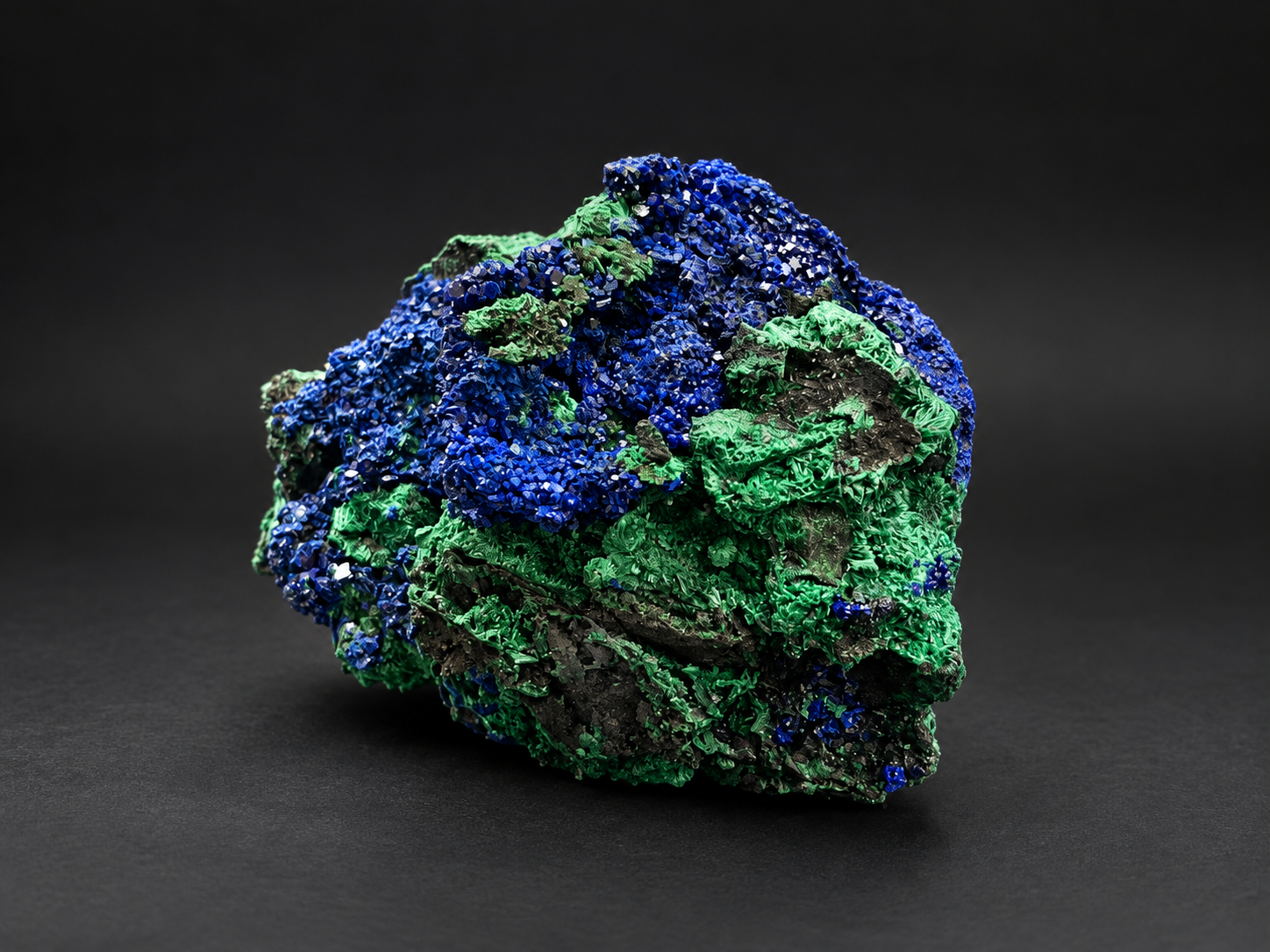 Image 8 of 8