Image 1 of 5
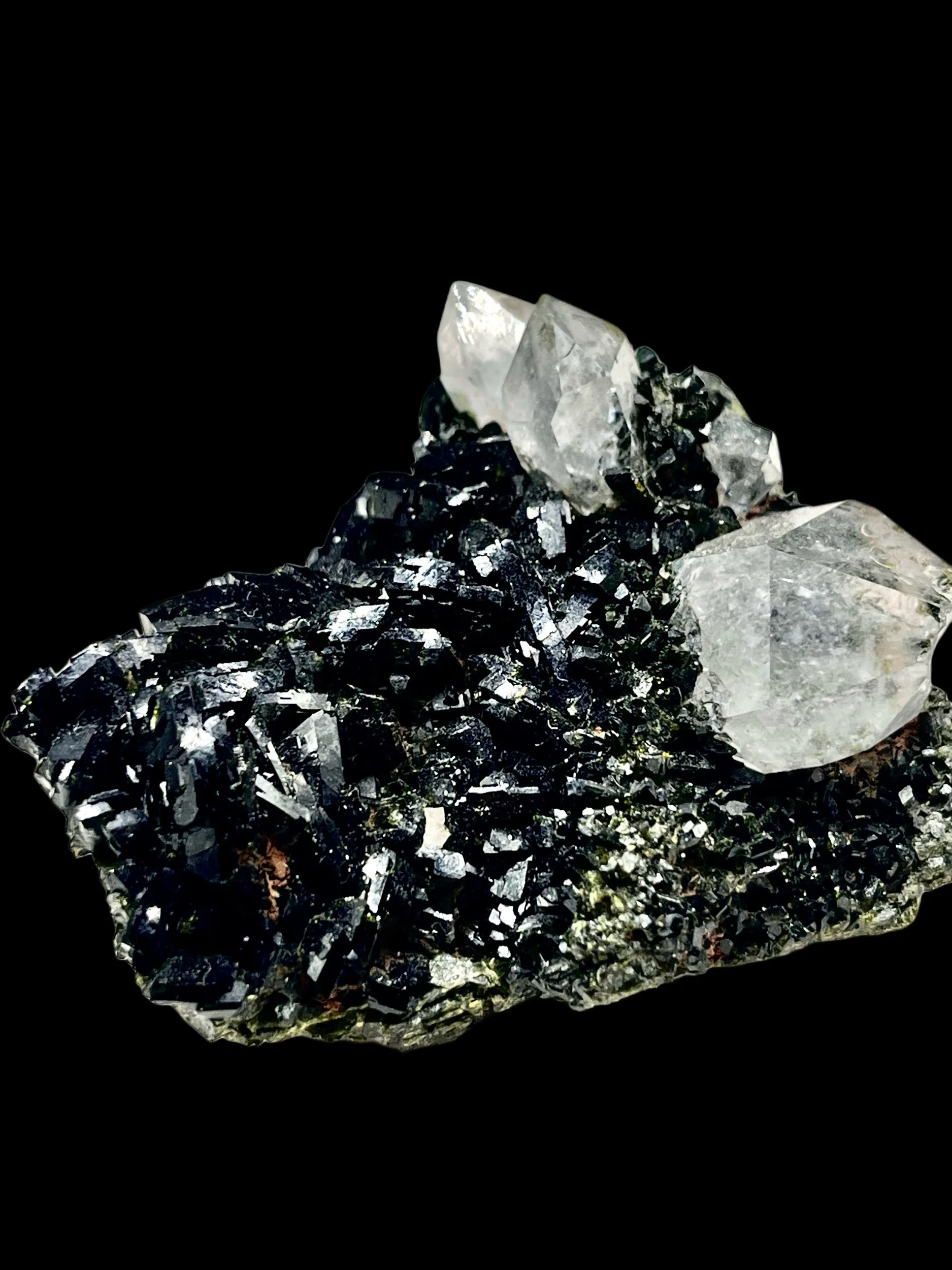 Image 2 of 5
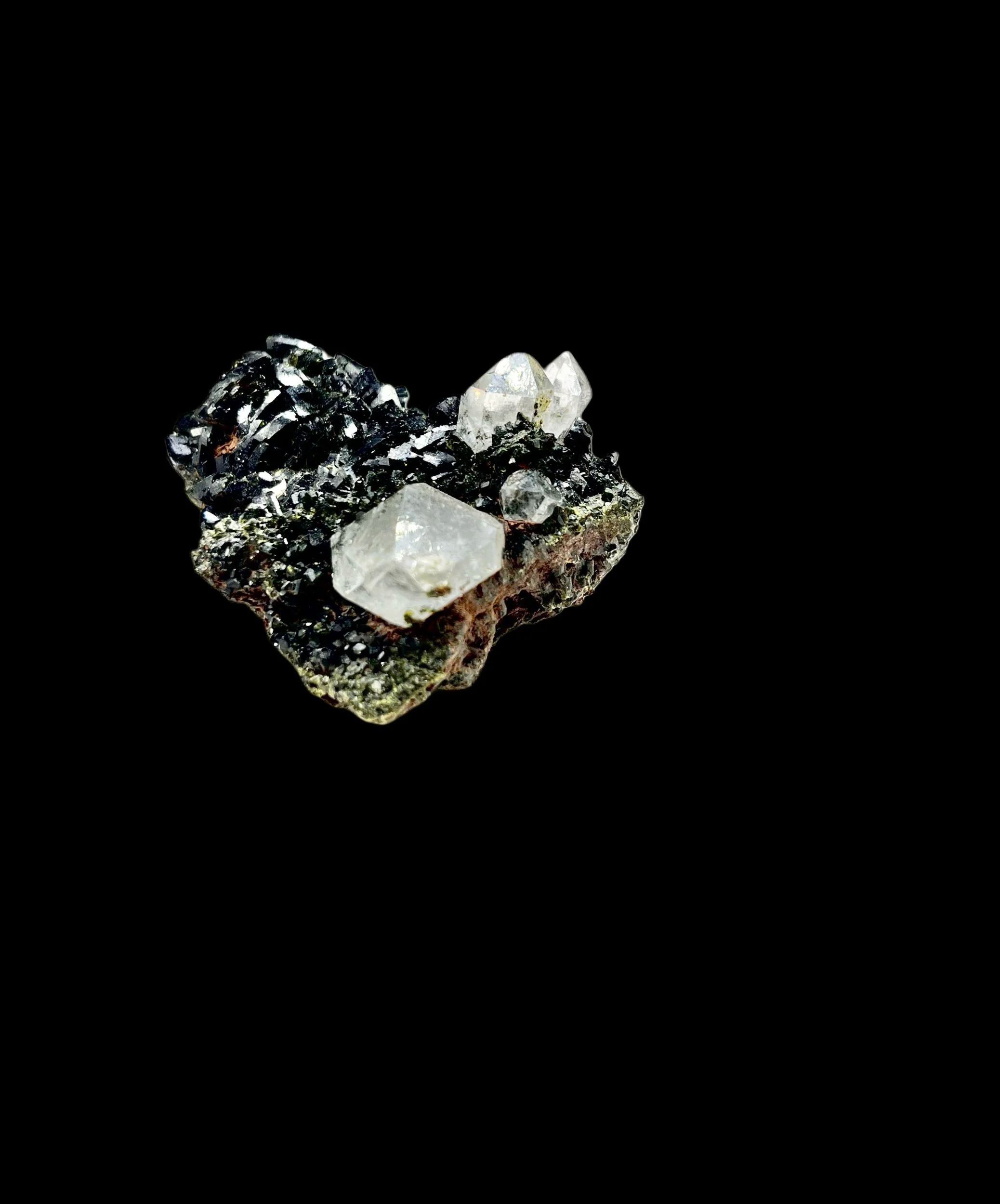 Image 3 of 5
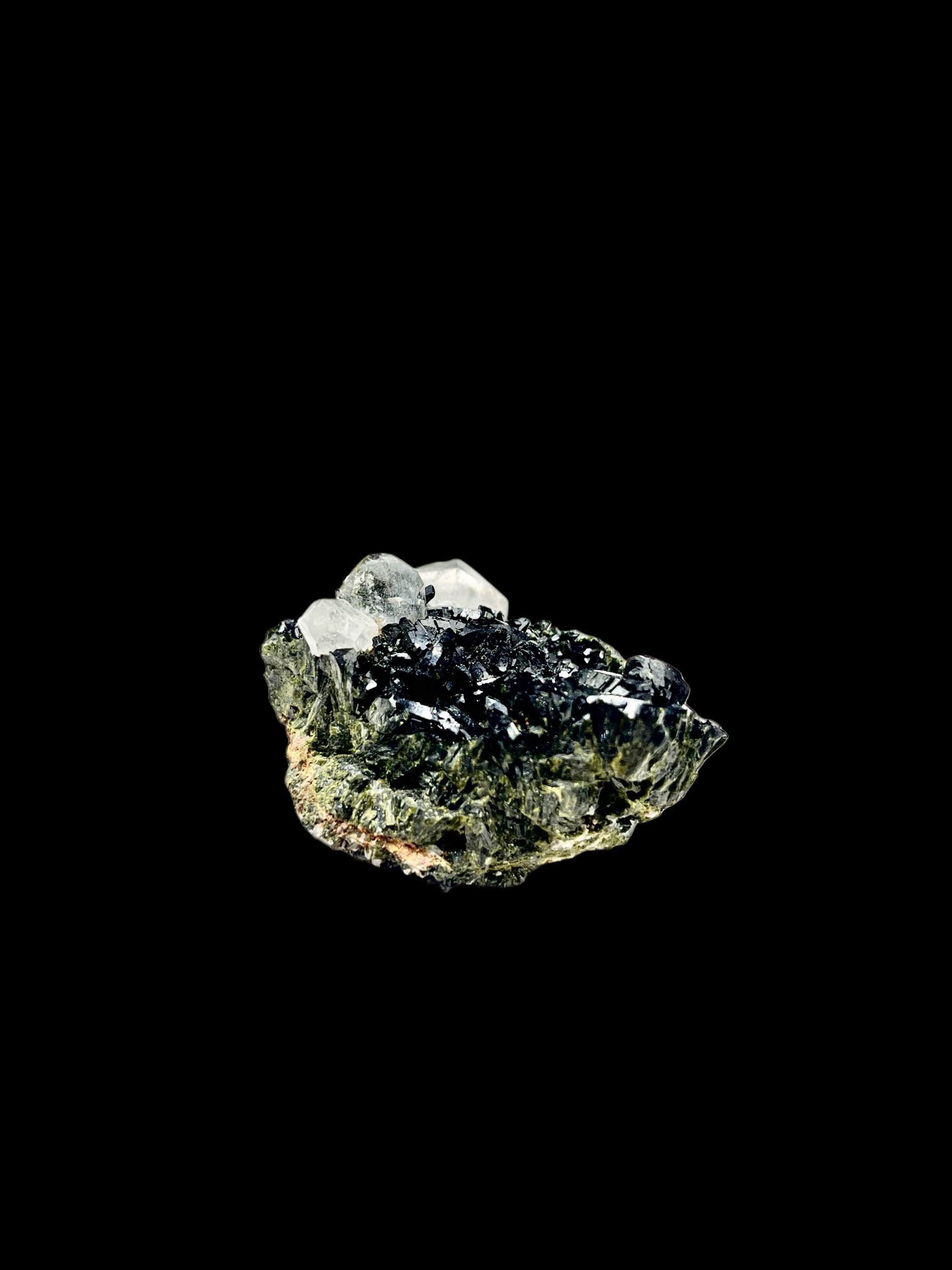 Image 4 of 5
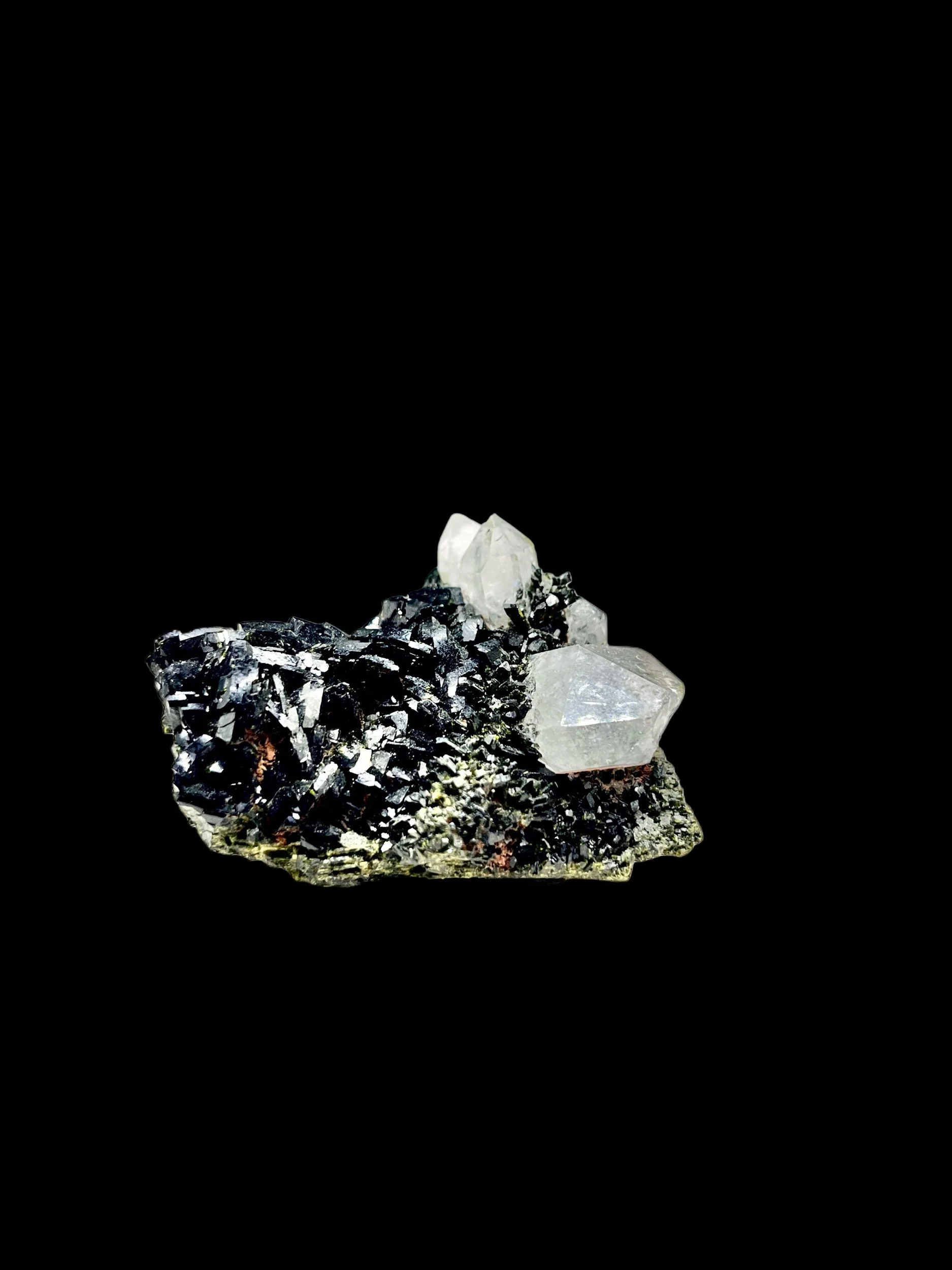 Image 5 of 5
Description
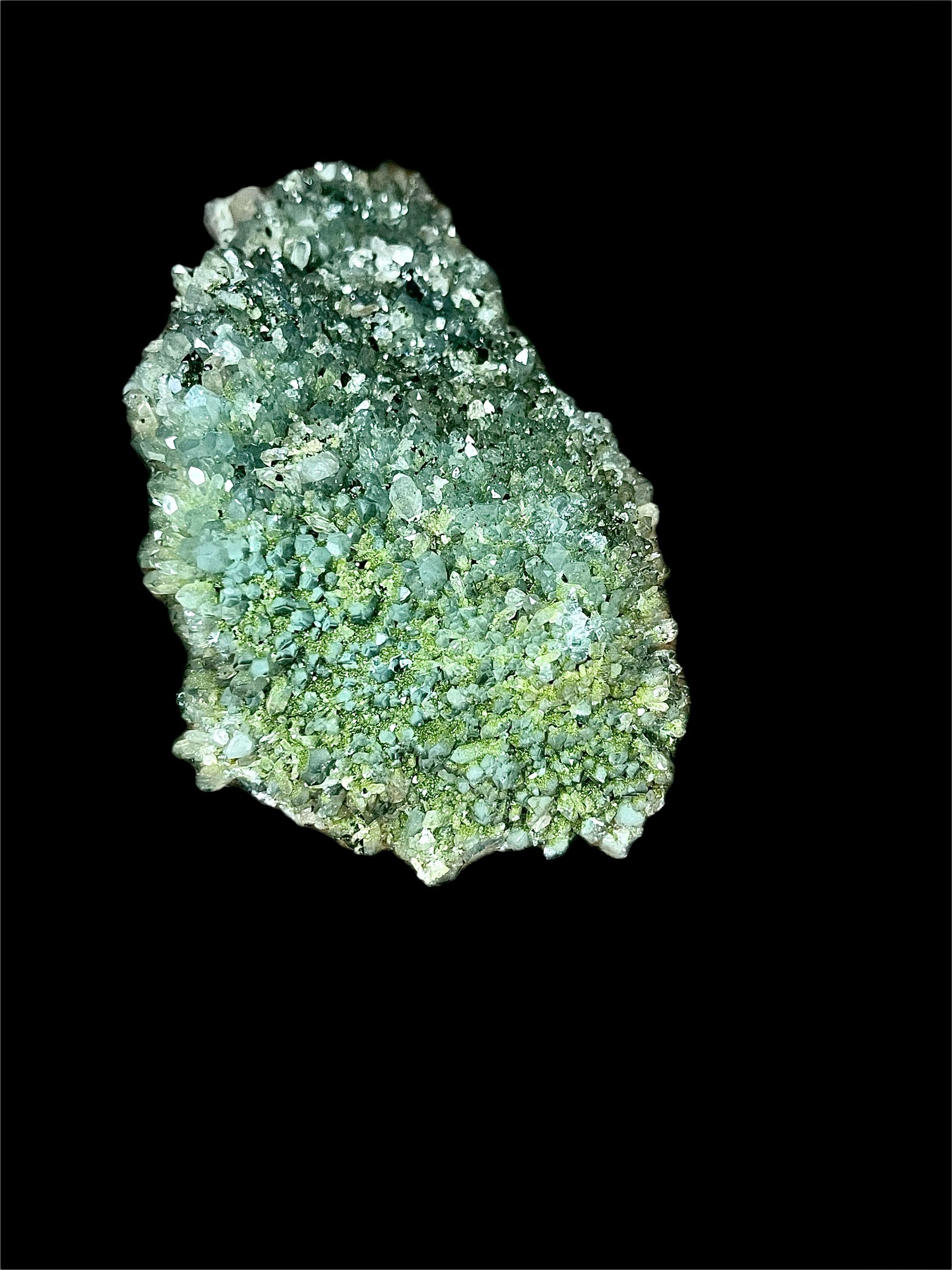
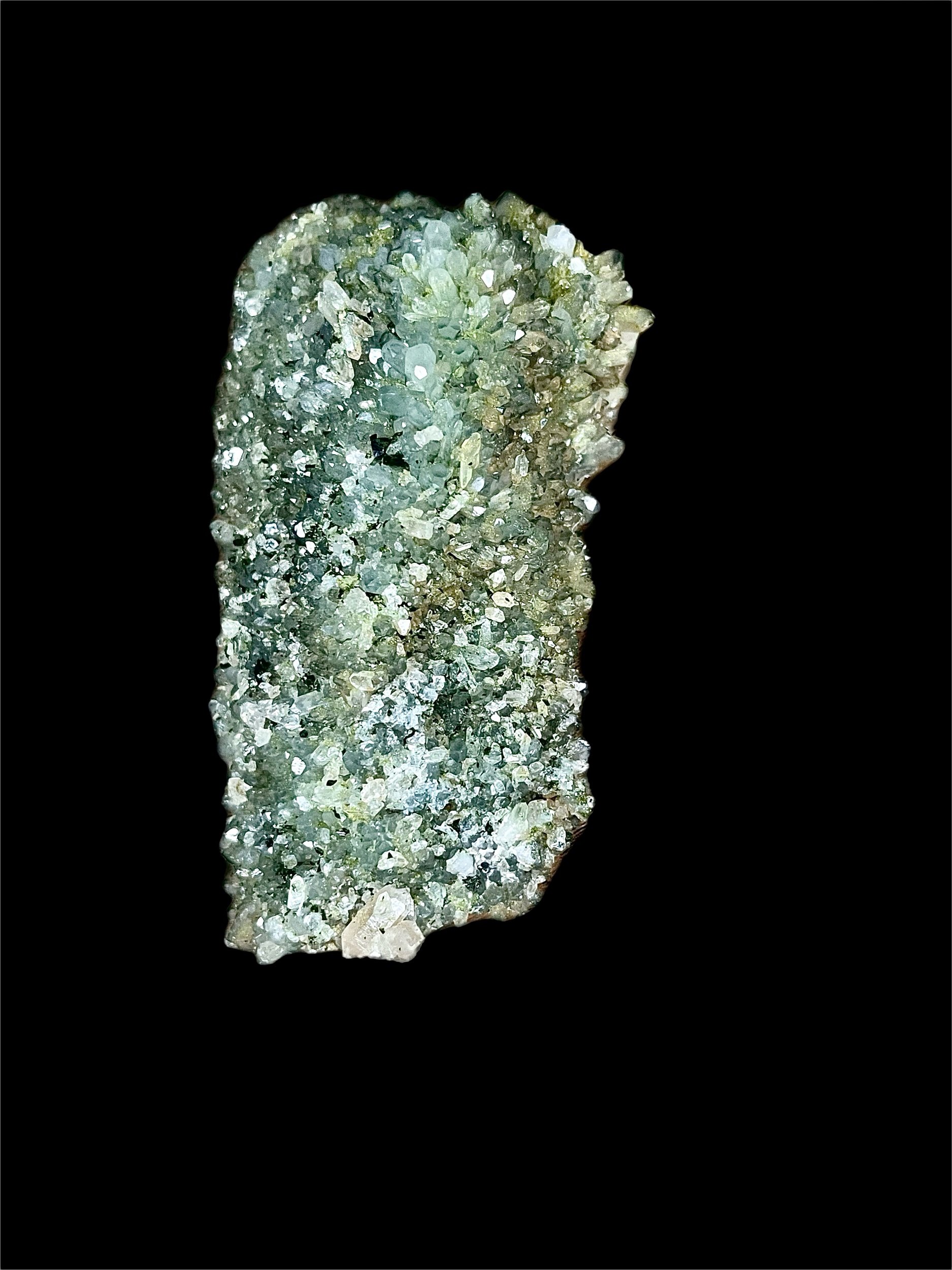
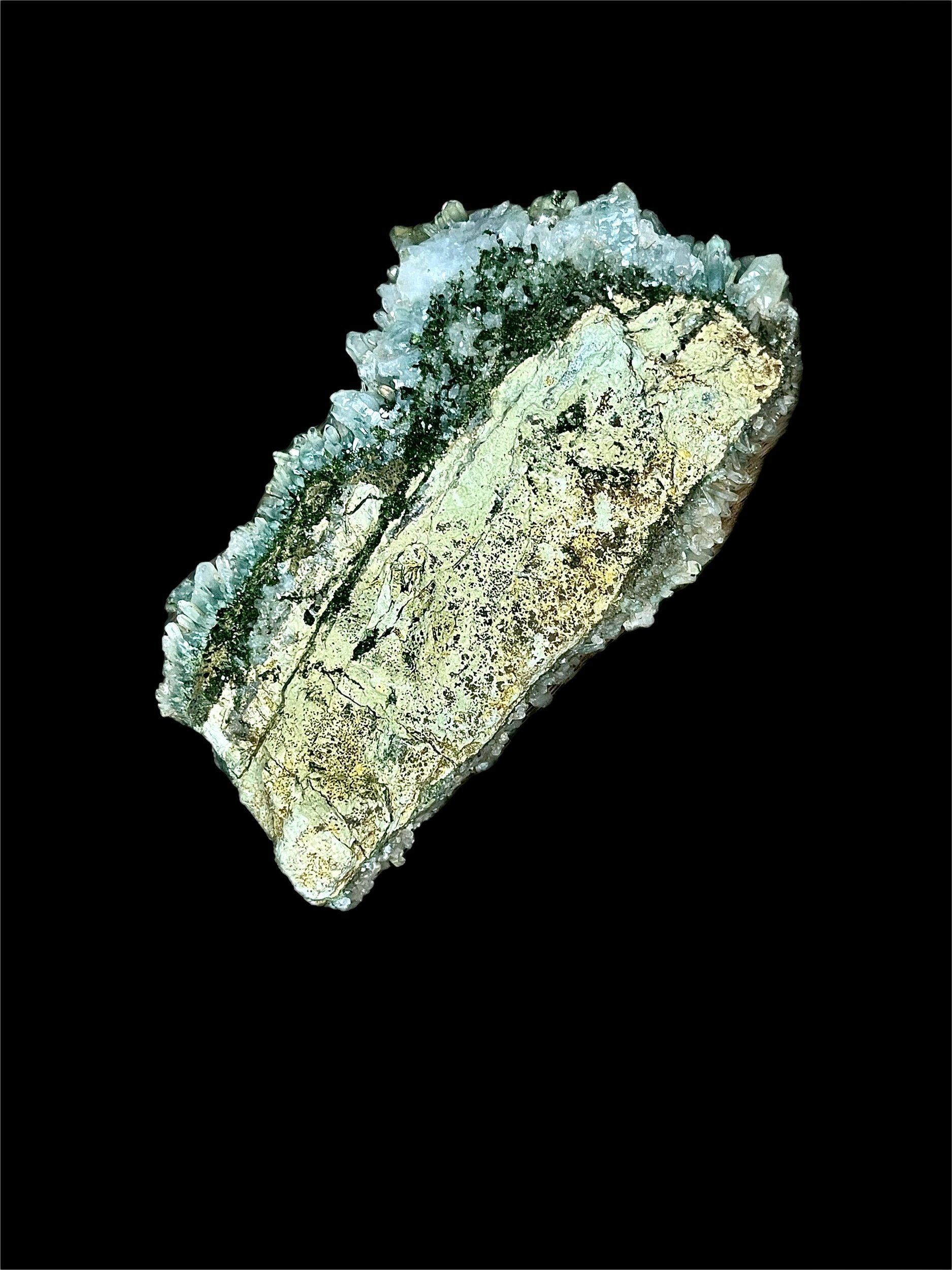
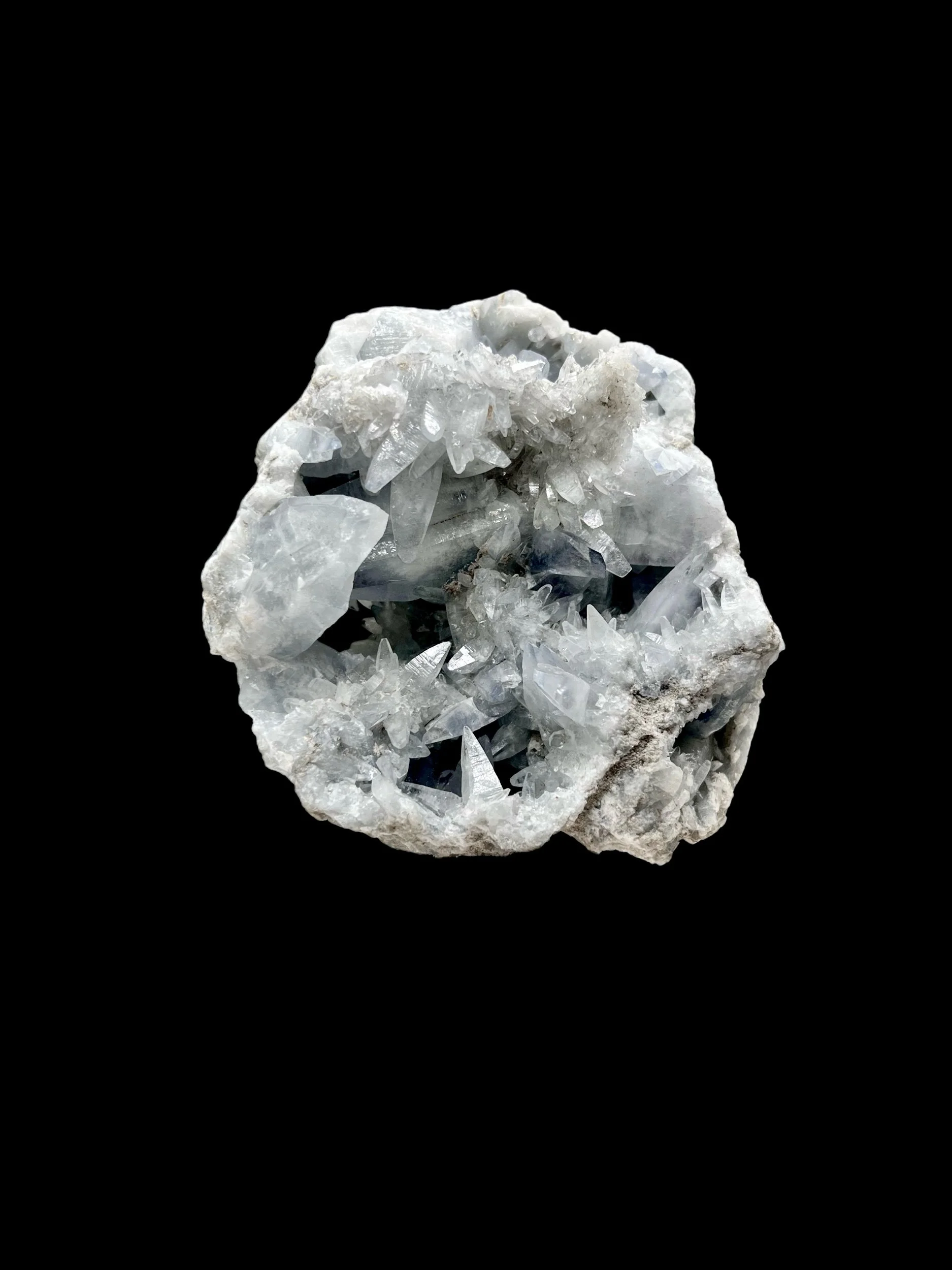
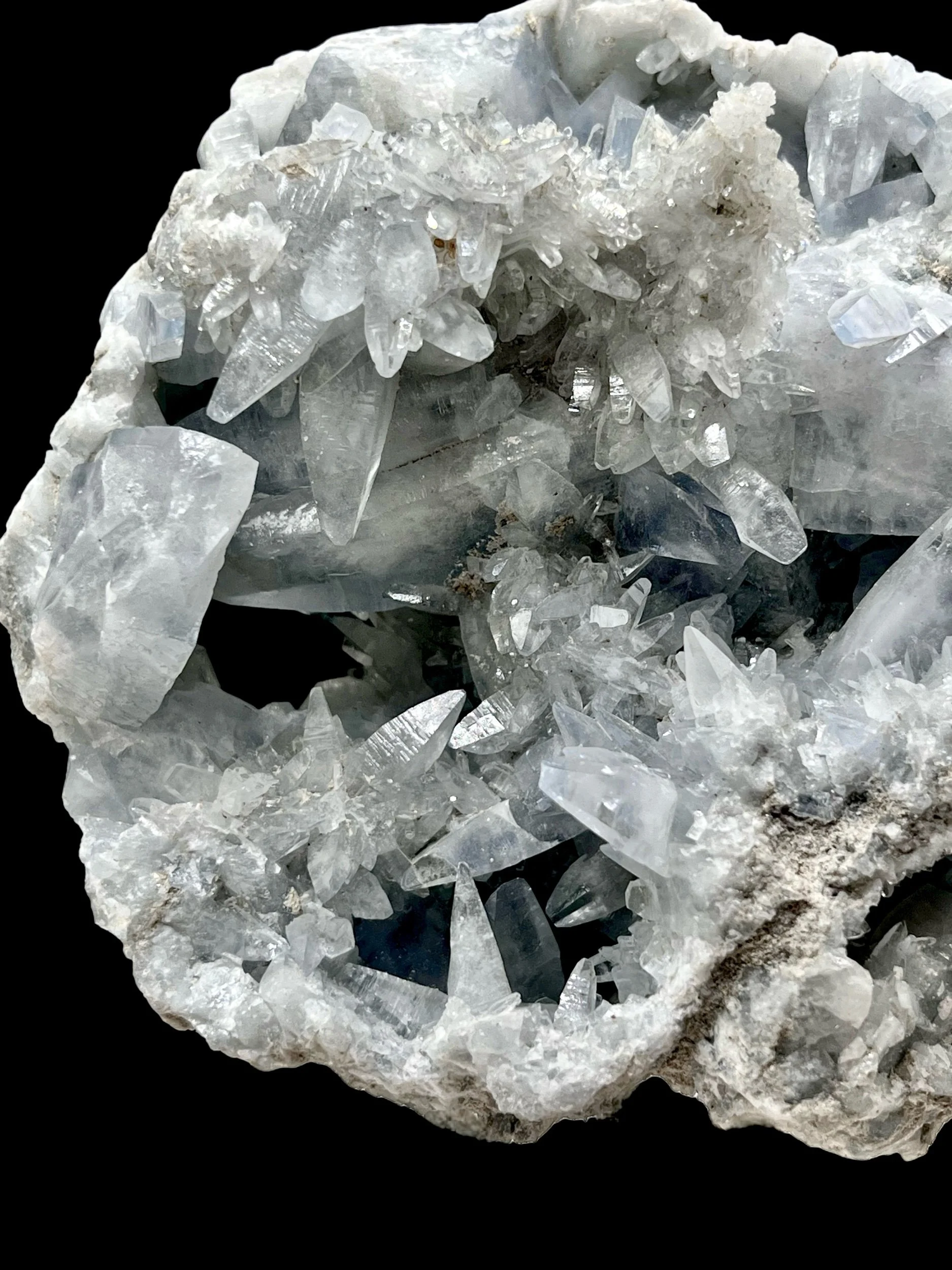
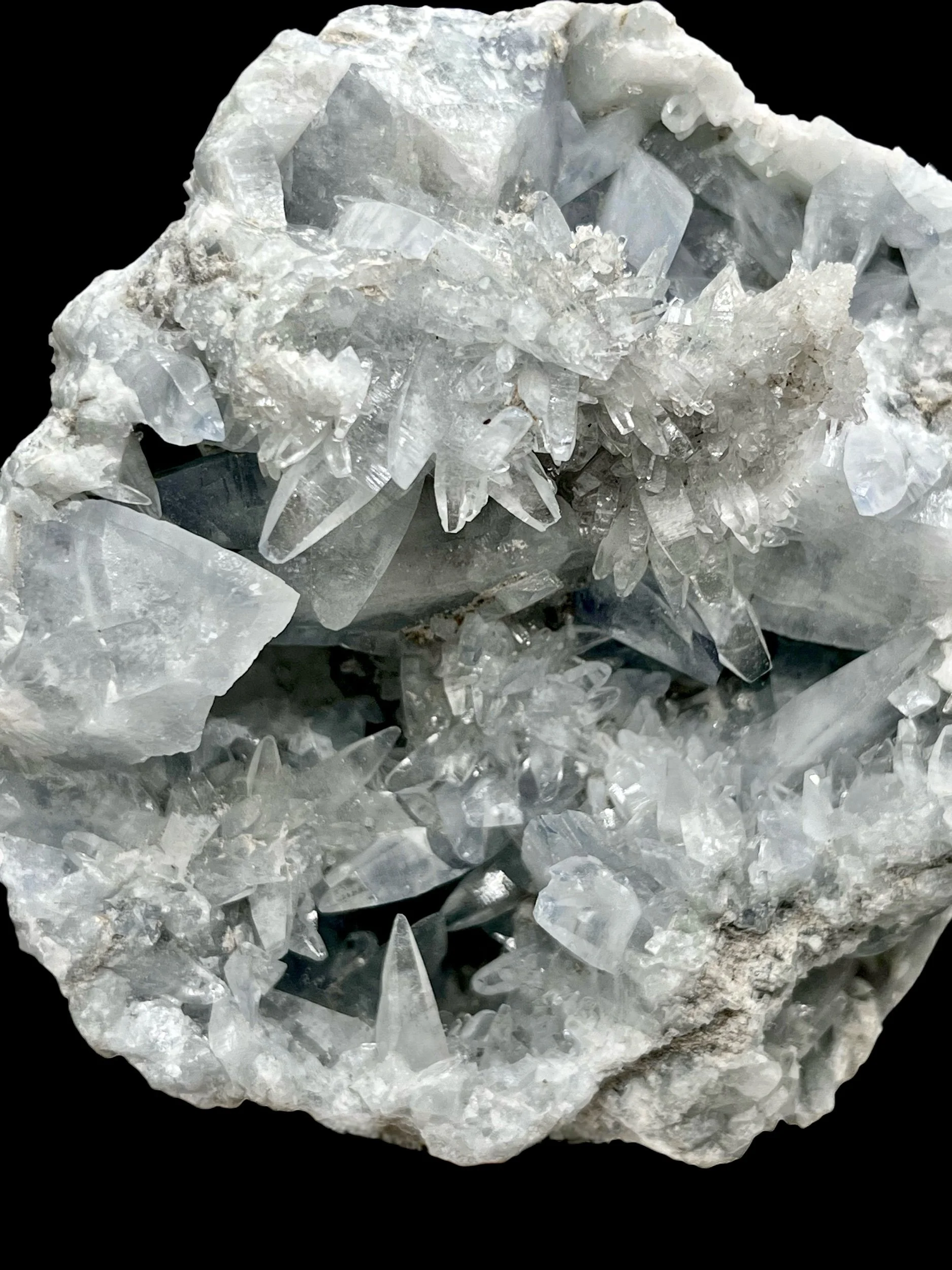
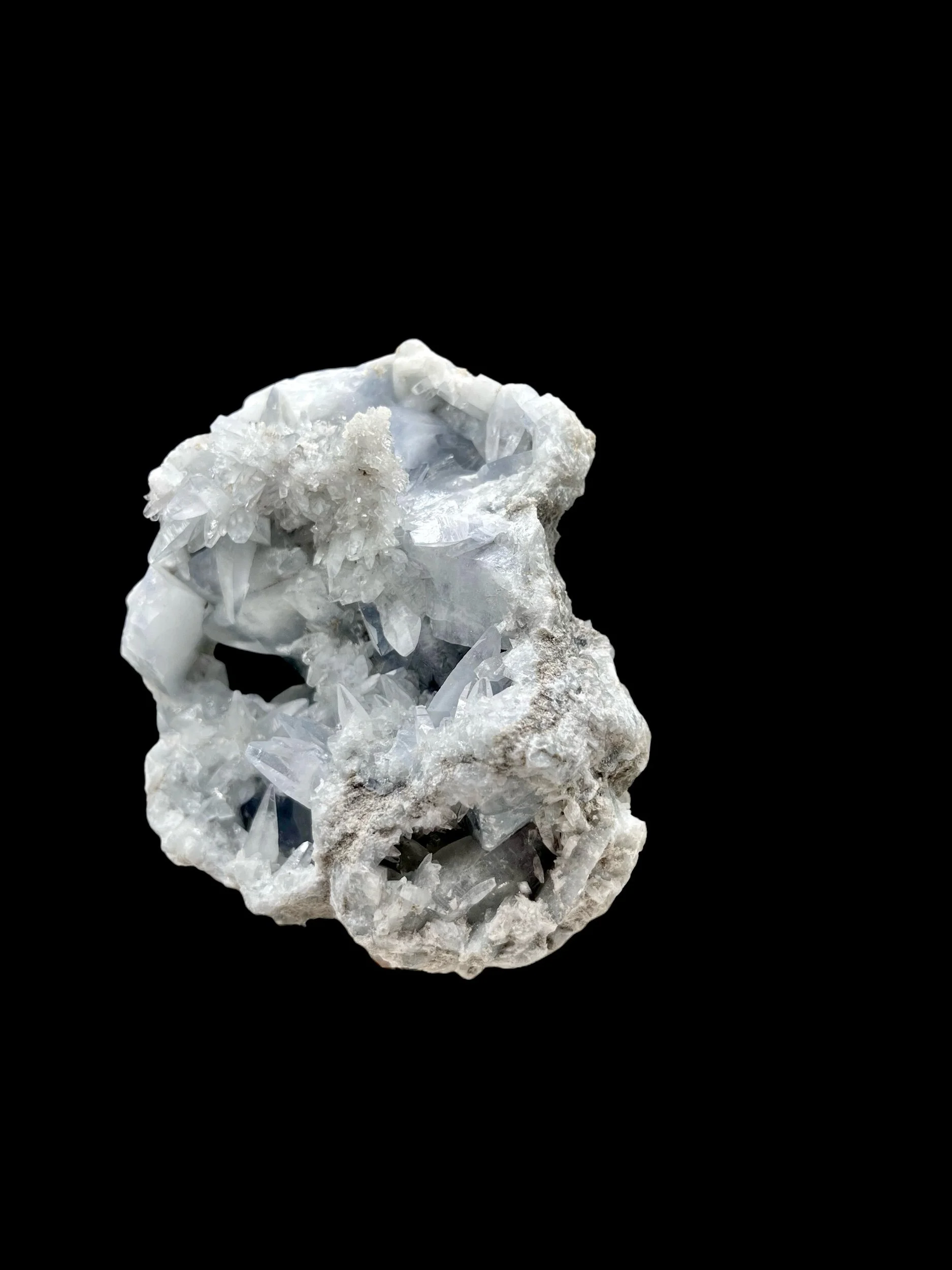
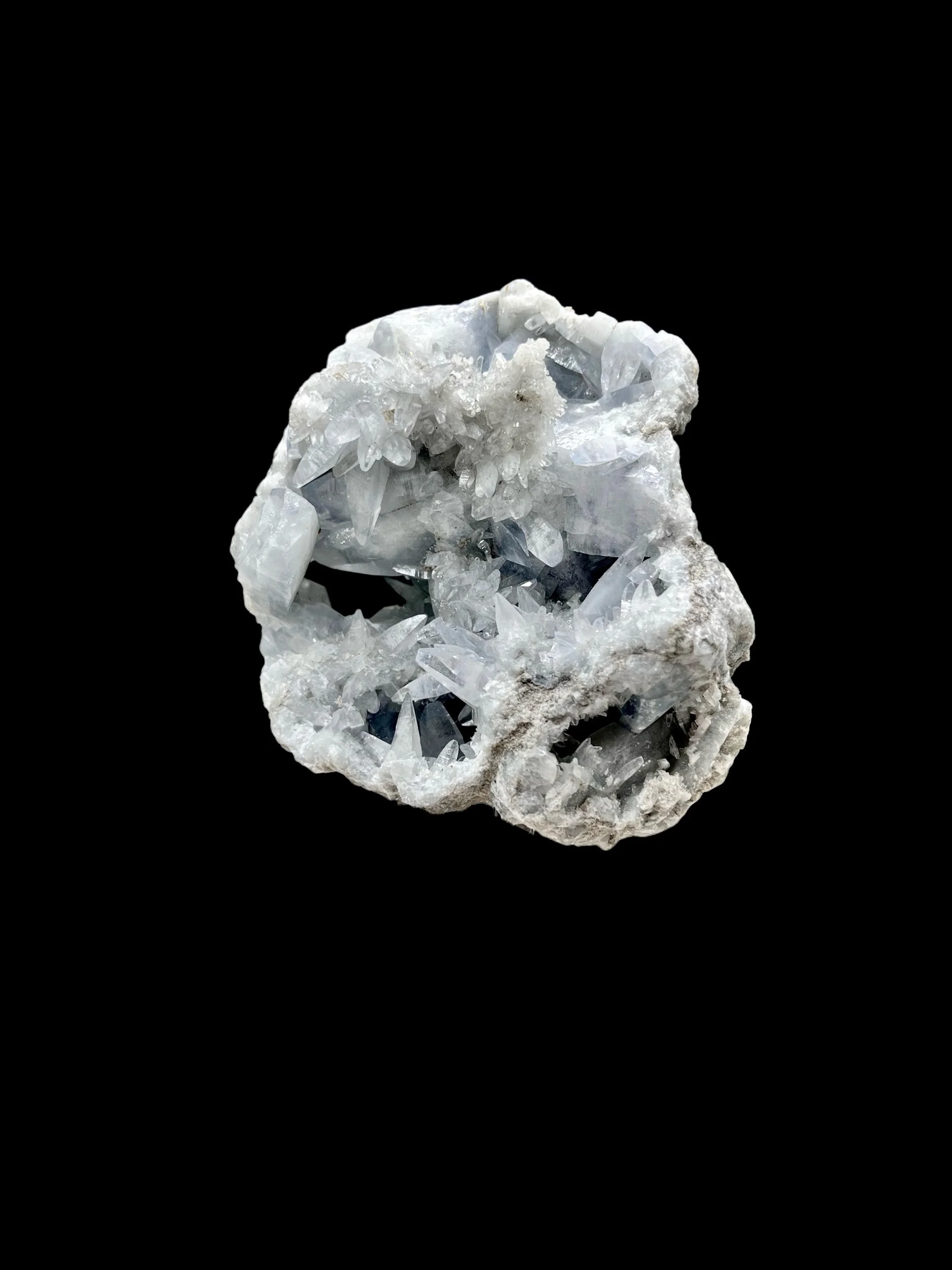
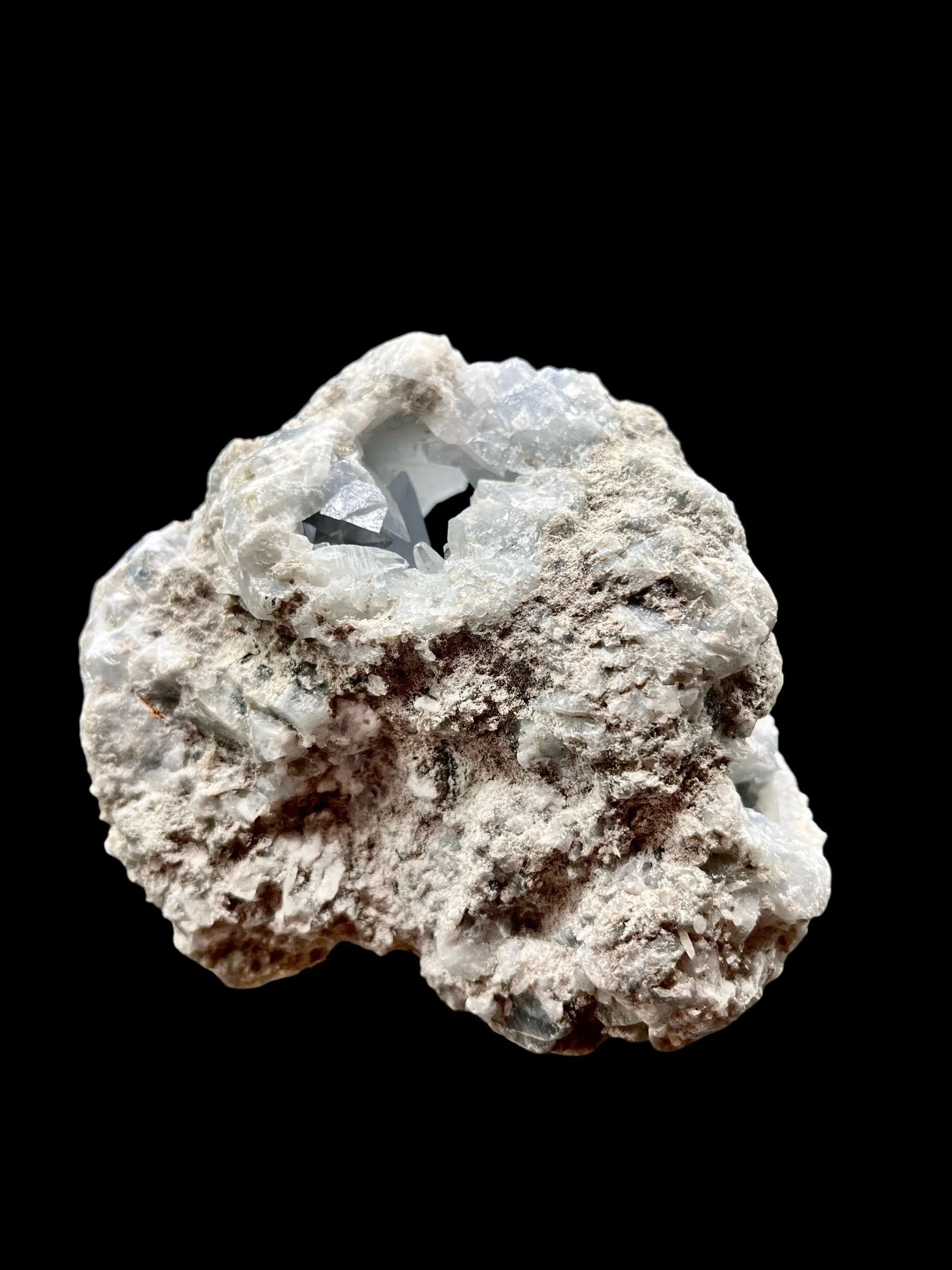
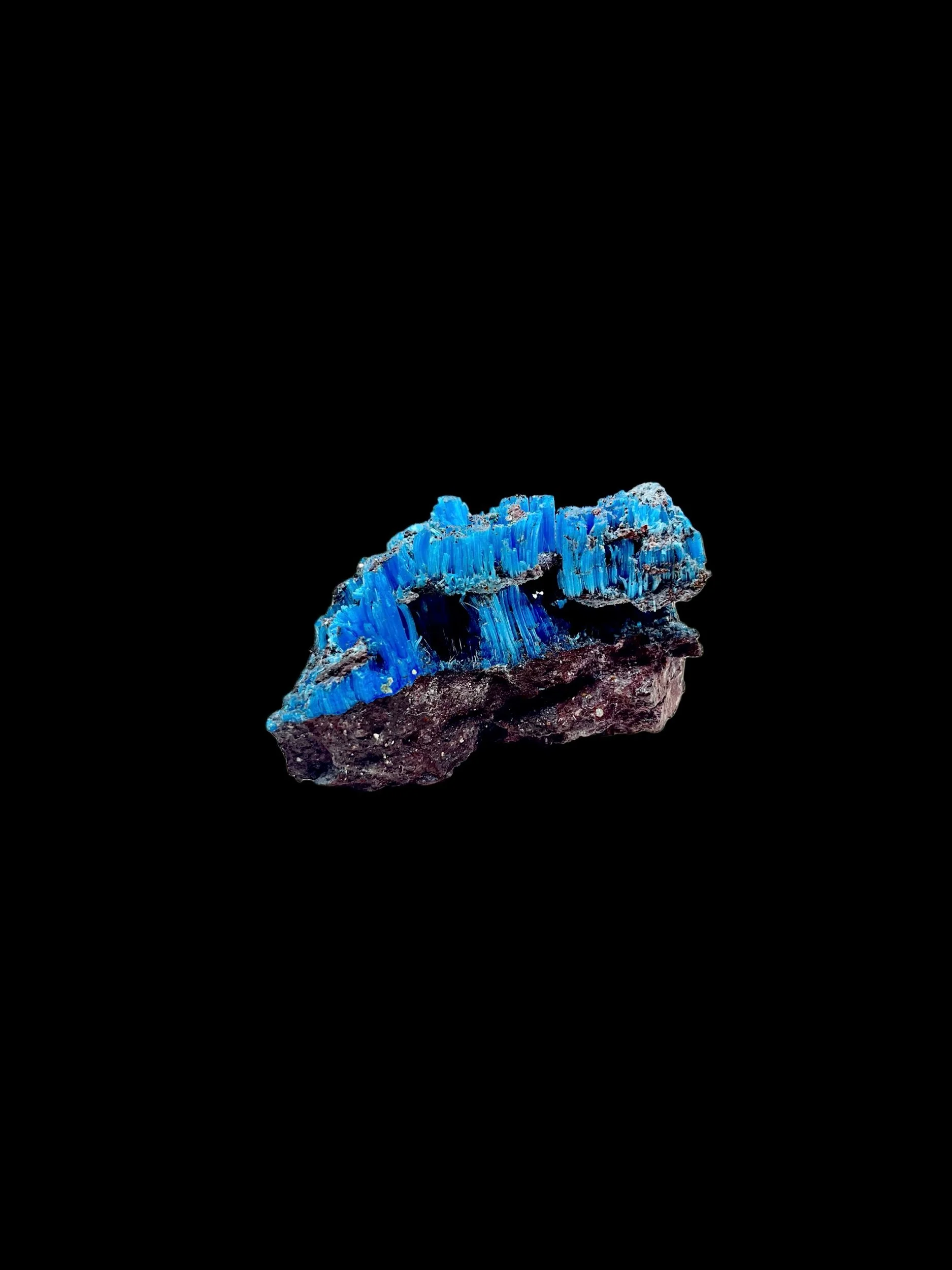
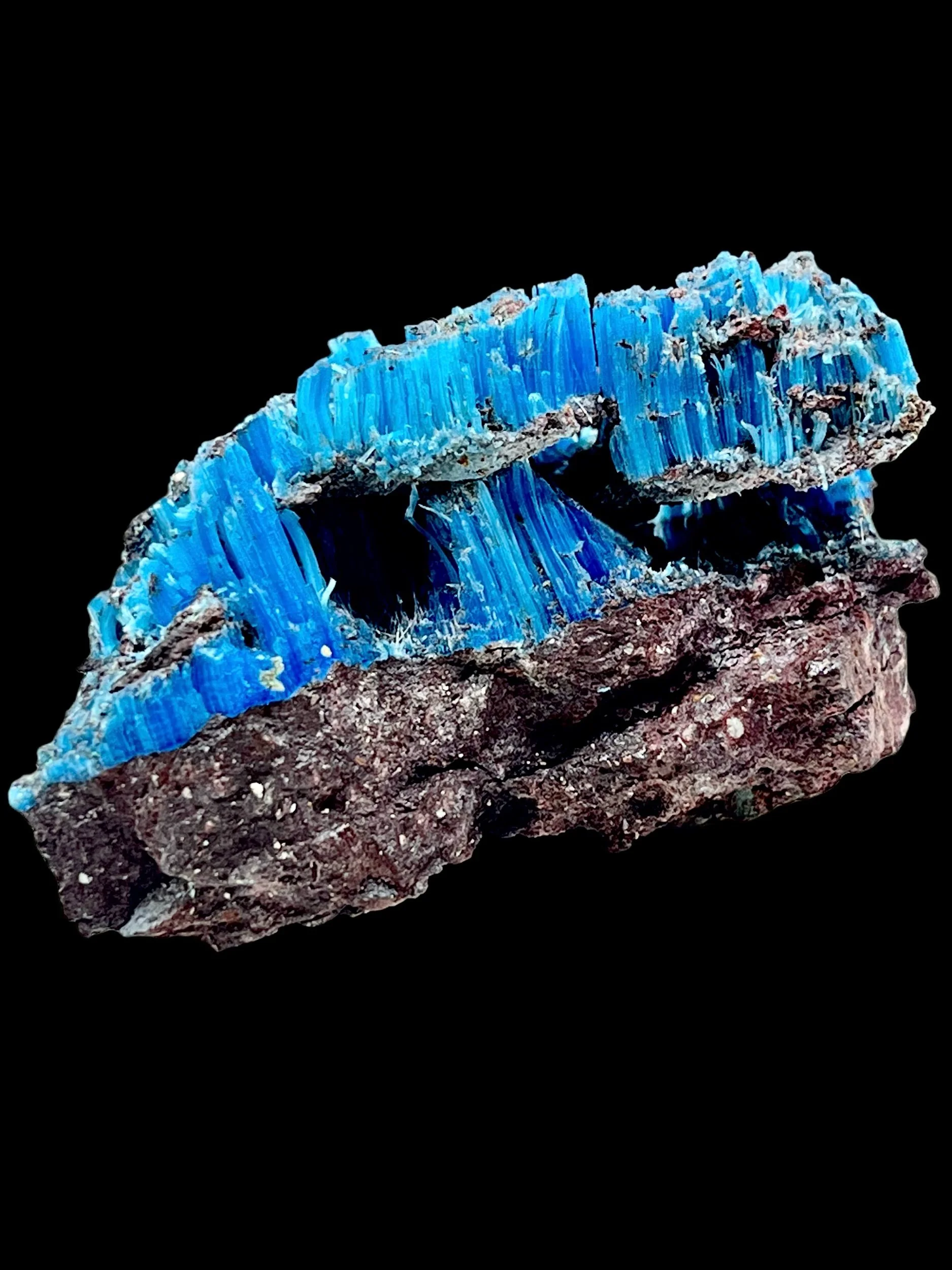
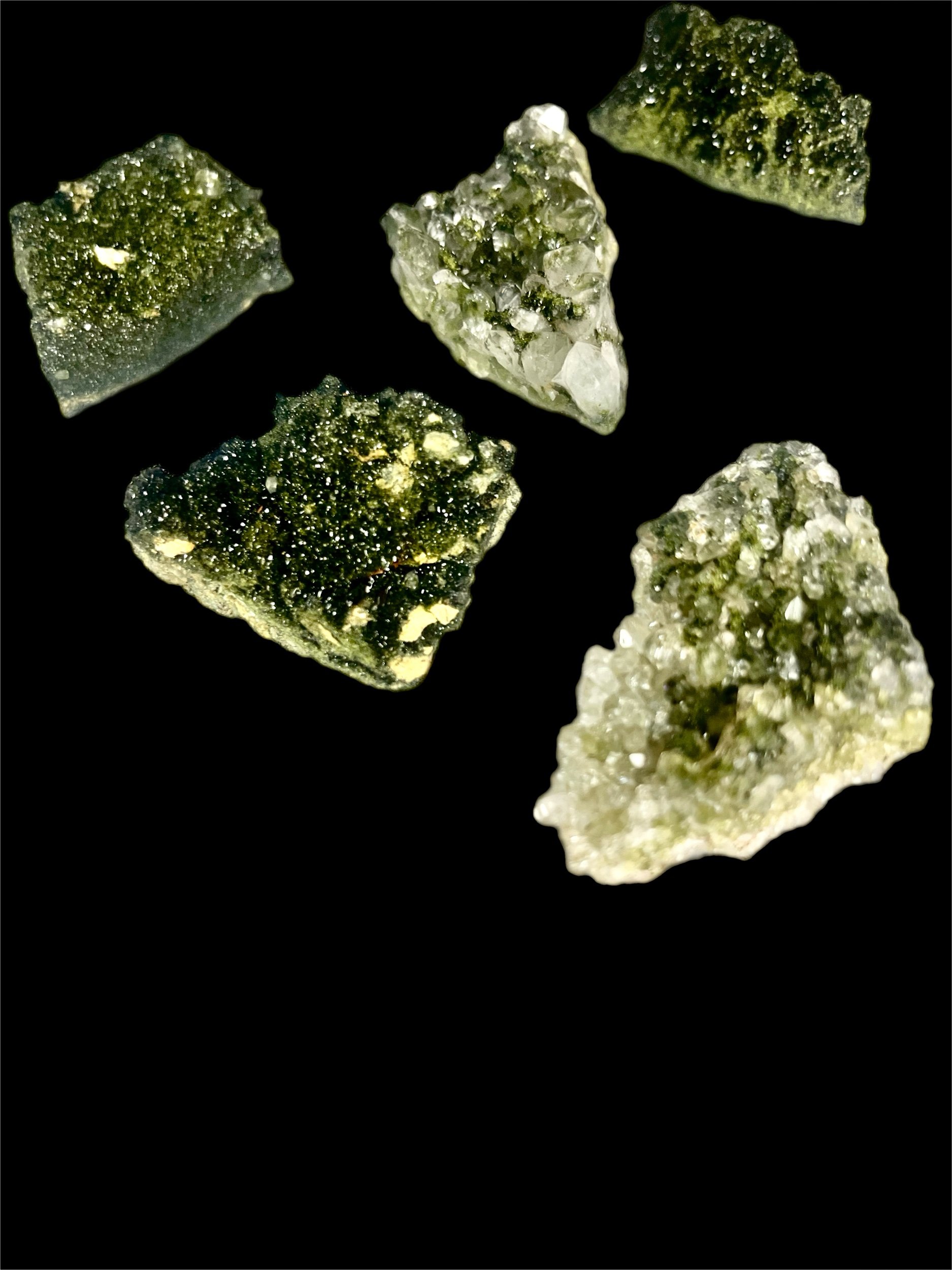
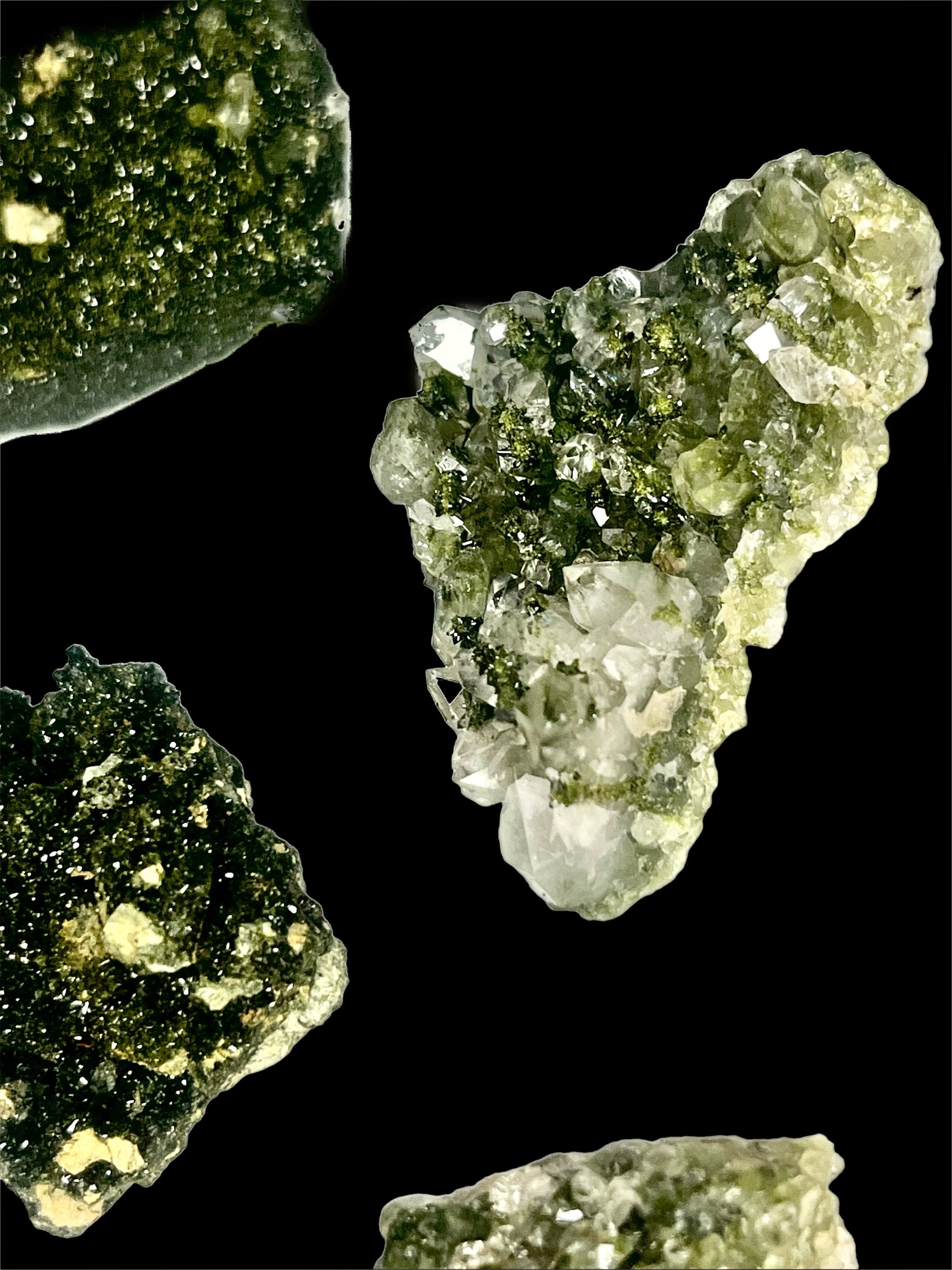
This Black Epidote with Quartz specimen presents a striking contrast between dense, dark epidote crystals and clear, light-catching quartz. Deep green to near-black epidote crystals form a tightly intergrown, prismatic foundation, their reflective faces creating flashes of luster as the angle of light changes. Rising from this darker base, well-formed quartz crystals add clarity and brightness, giving the piece a sense of vertical movement and balance.
The composition feels deliberate and architectural, yet remains entirely organic. The quartz crystals feel anchored rather than perched, integrating seamlessly with the epidote and enhancing the specimen’s dimensionality without overpowering it.
Dimensions & Weight
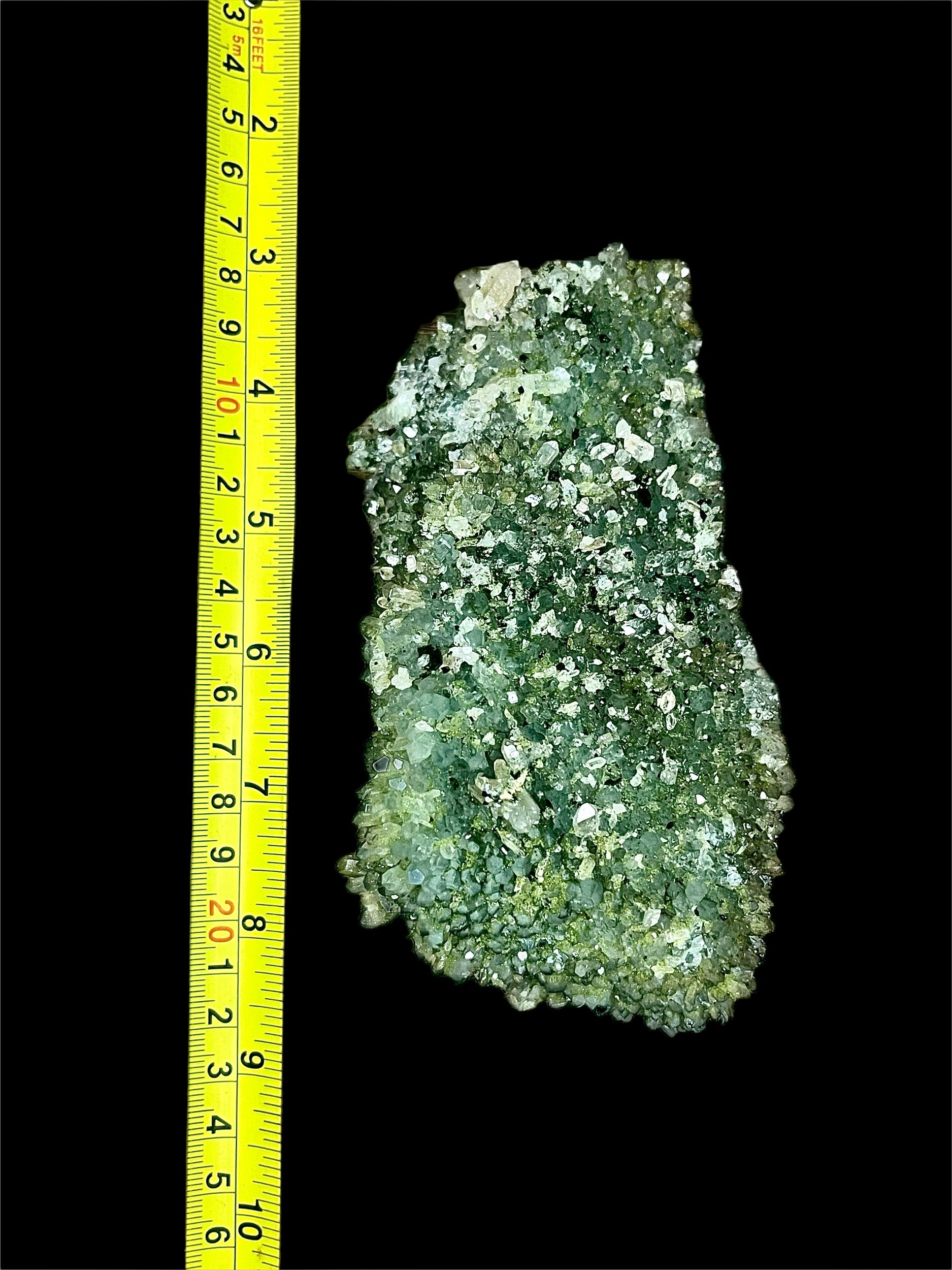
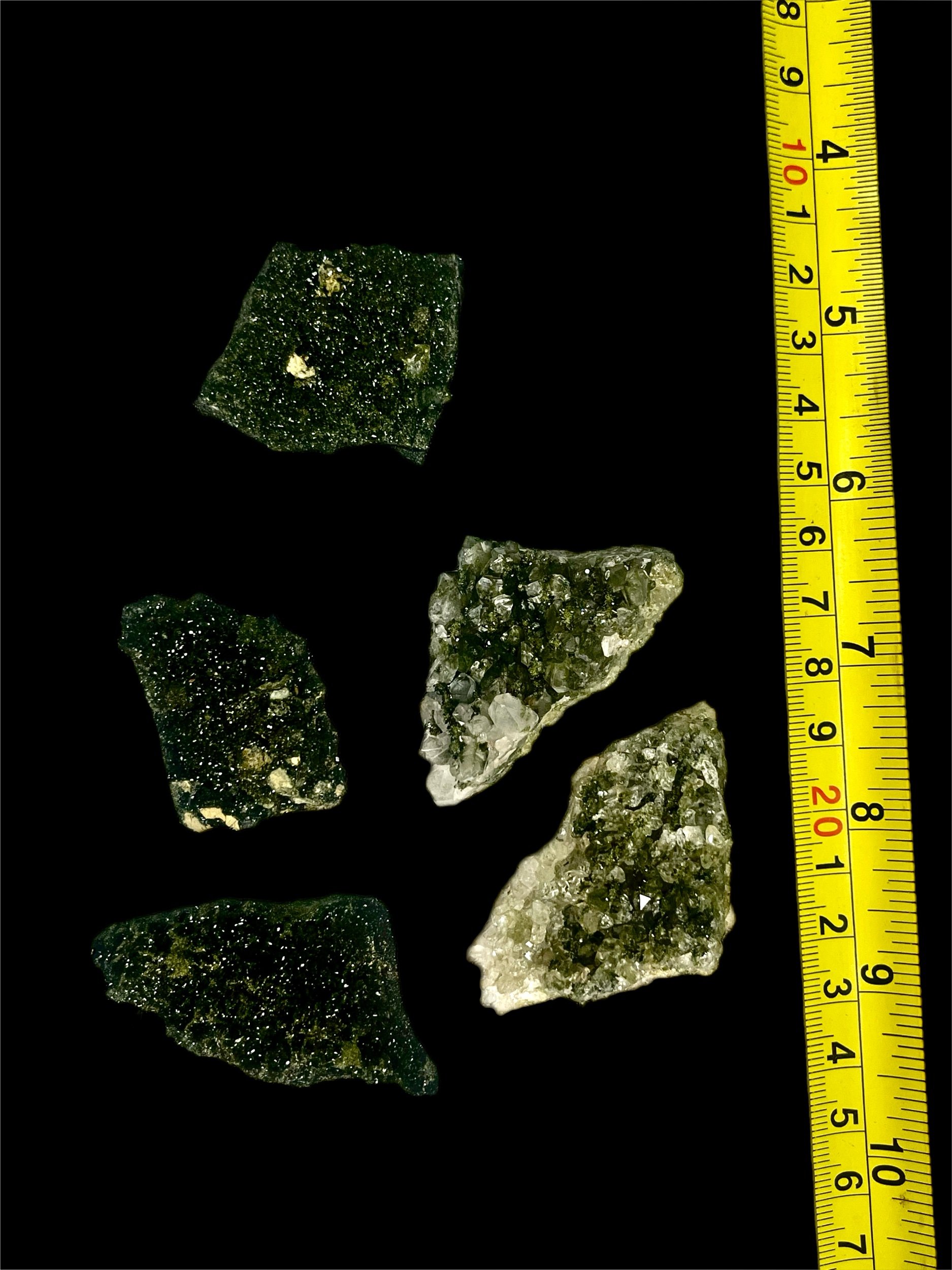
2.25” x 1.75” x 1.5” and 90g
Collector’s Notes
Specimens pairing black epidote with quartz are especially appealing for their visual contrast and high gemmy luster . This example stands out for its dense epidote coverage, strong crystal definition, and clean quartz points that provide both scale and balance.
It is a confident, collector-grade piece—substantial without being overwhelming, and visually engaging from multiple viewing angles.
Highlights
Naturally formed black to very dark green epidote crystals
Well-defined prismatic crystal habit with reflective luster
Clear quartz crystals providing contrast
High luster with depth and balance
Rare find
Metaphysical Properties
Black Epidote is often associated with grounding, personal clarity, and energetic protection, while quartz is regarded as an amplifier and harmonizer. Together, they are thought to support focused growth and balanced energy, making this specimen feel steady, purposeful, and quietly powerful.
Mineralogy
Epidote is a calcium aluminum iron silicate mineral crystallizing in the monoclinic system, with darker coloration resulting from higher iron content. Quartz (SiO₂) crystallizes in the trigonal system and commonly forms alongside epidote in metamorphic and hydrothermal environments, contributing structural contrast and optical clarity.
Description
This Black Epidote with Quartz specimen presents a striking contrast between dense, dark epidote crystals and clear, light-catching quartz. Deep green to near-black epidote crystals form a tightly intergrown, prismatic foundation, their reflective faces creating flashes of luster as the angle of light changes. Rising from this darker base, well-formed quartz crystals add clarity and brightness, giving the piece a sense of vertical movement and balance.
The composition feels deliberate and architectural, yet remains entirely organic. The quartz crystals feel anchored rather than perched, integrating seamlessly with the epidote and enhancing the specimen’s dimensionality without overpowering it.
Dimensions & Weight
2.25” x 1.75” x 1.5” and 90g
Collector’s Notes
Specimens pairing black epidote with quartz are especially appealing for their visual contrast and high gemmy luster . This example stands out for its dense epidote coverage, strong crystal definition, and clean quartz points that provide both scale and balance.
It is a confident, collector-grade piece—substantial without being overwhelming, and visually engaging from multiple viewing angles.
Highlights
Naturally formed black to very dark green epidote crystals
Well-defined prismatic crystal habit with reflective luster
Clear quartz crystals providing contrast
High luster with depth and balance
Rare find
Metaphysical Properties
Black Epidote is often associated with grounding, personal clarity, and energetic protection, while quartz is regarded as an amplifier and harmonizer. Together, they are thought to support focused growth and balanced energy, making this specimen feel steady, purposeful, and quietly powerful.
Mineralogy
Epidote is a calcium aluminum iron silicate mineral crystallizing in the monoclinic system, with darker coloration resulting from higher iron content. Quartz (SiO₂) crystallizes in the trigonal system and commonly forms alongside epidote in metamorphic and hydrothermal environments, contributing structural contrast and optical clarity.