Image 1 of 5
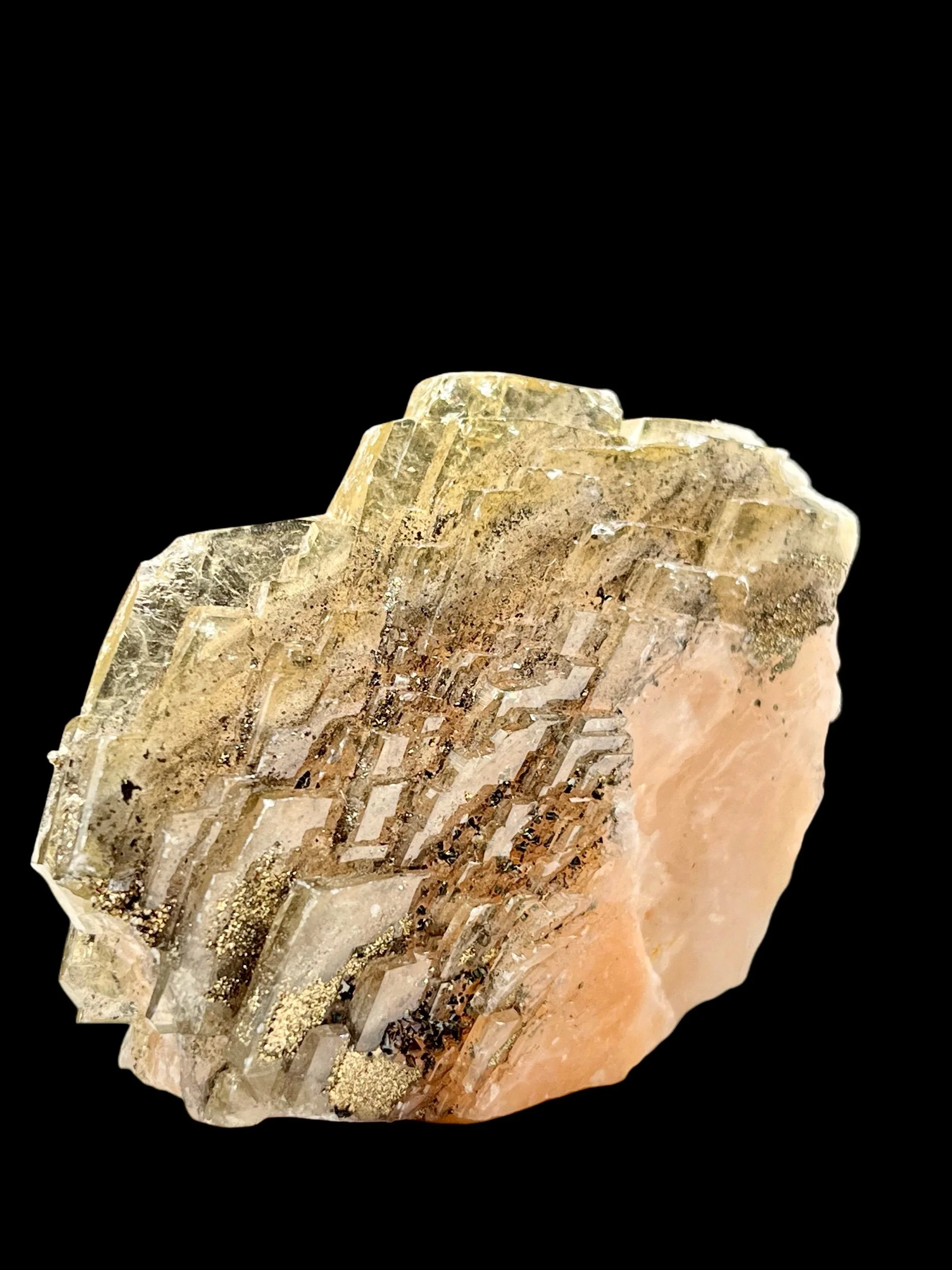 Image 2 of 5
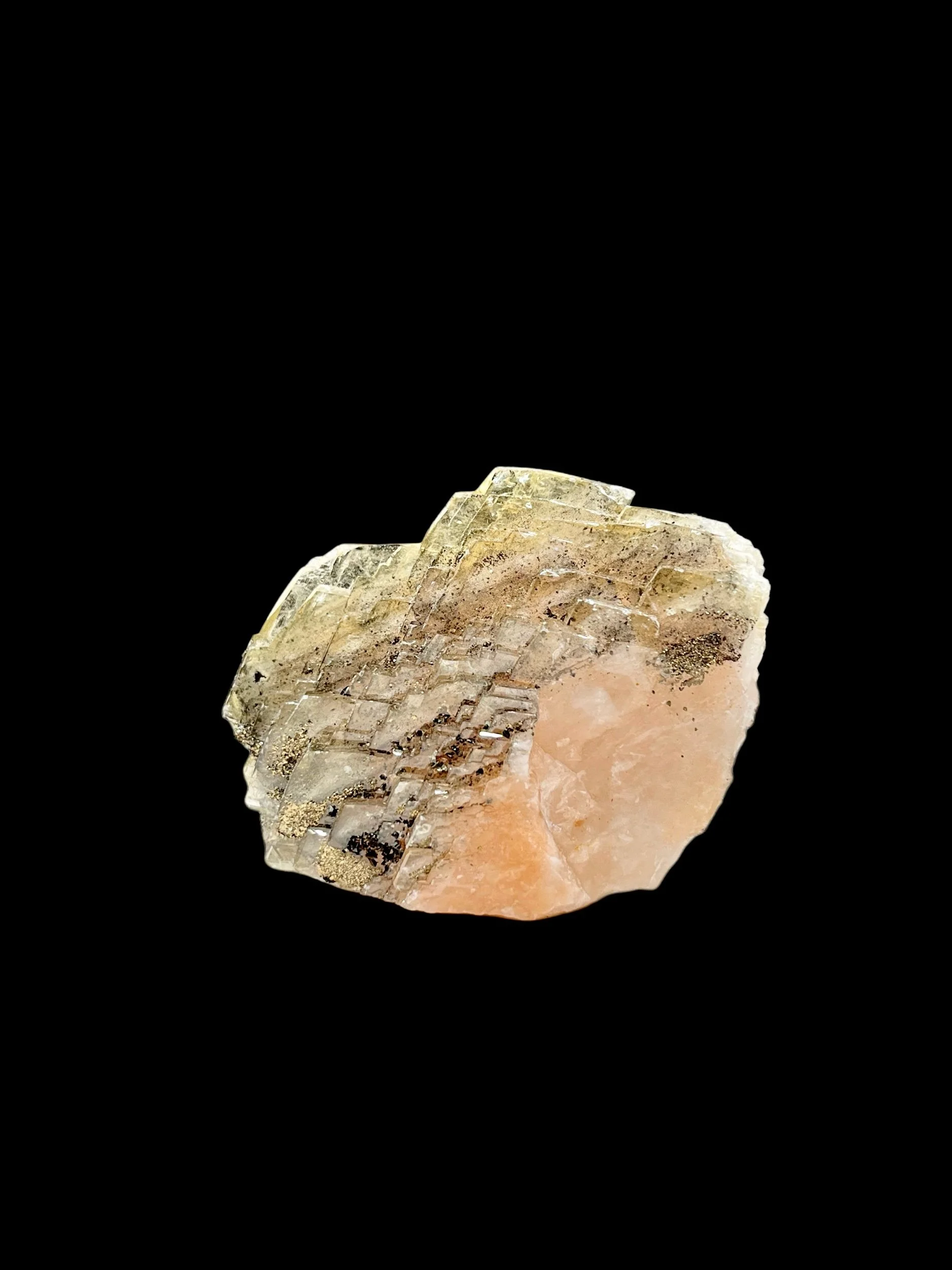 Image 3 of 5
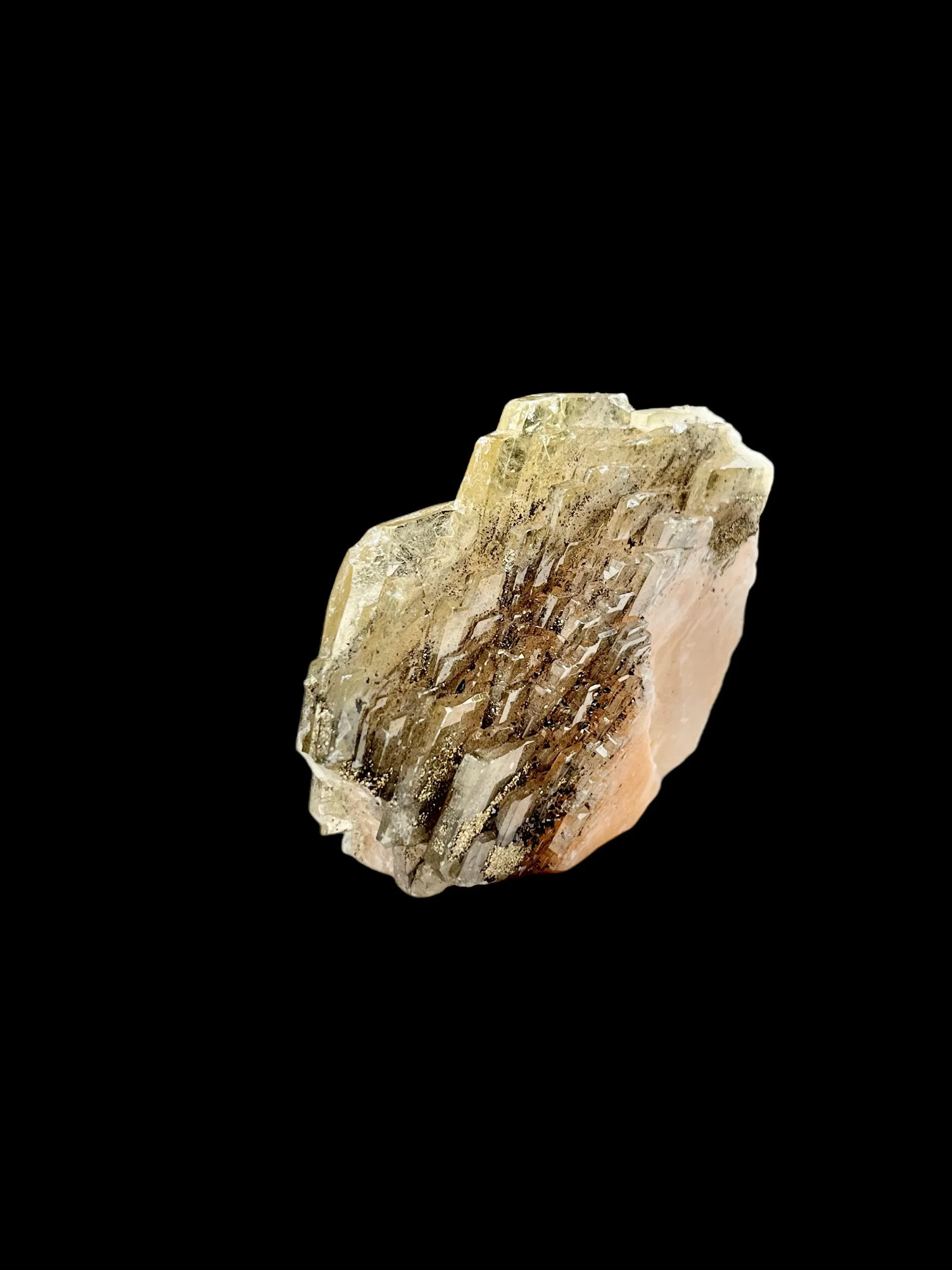 Image 4 of 5
 Image 5 of 5
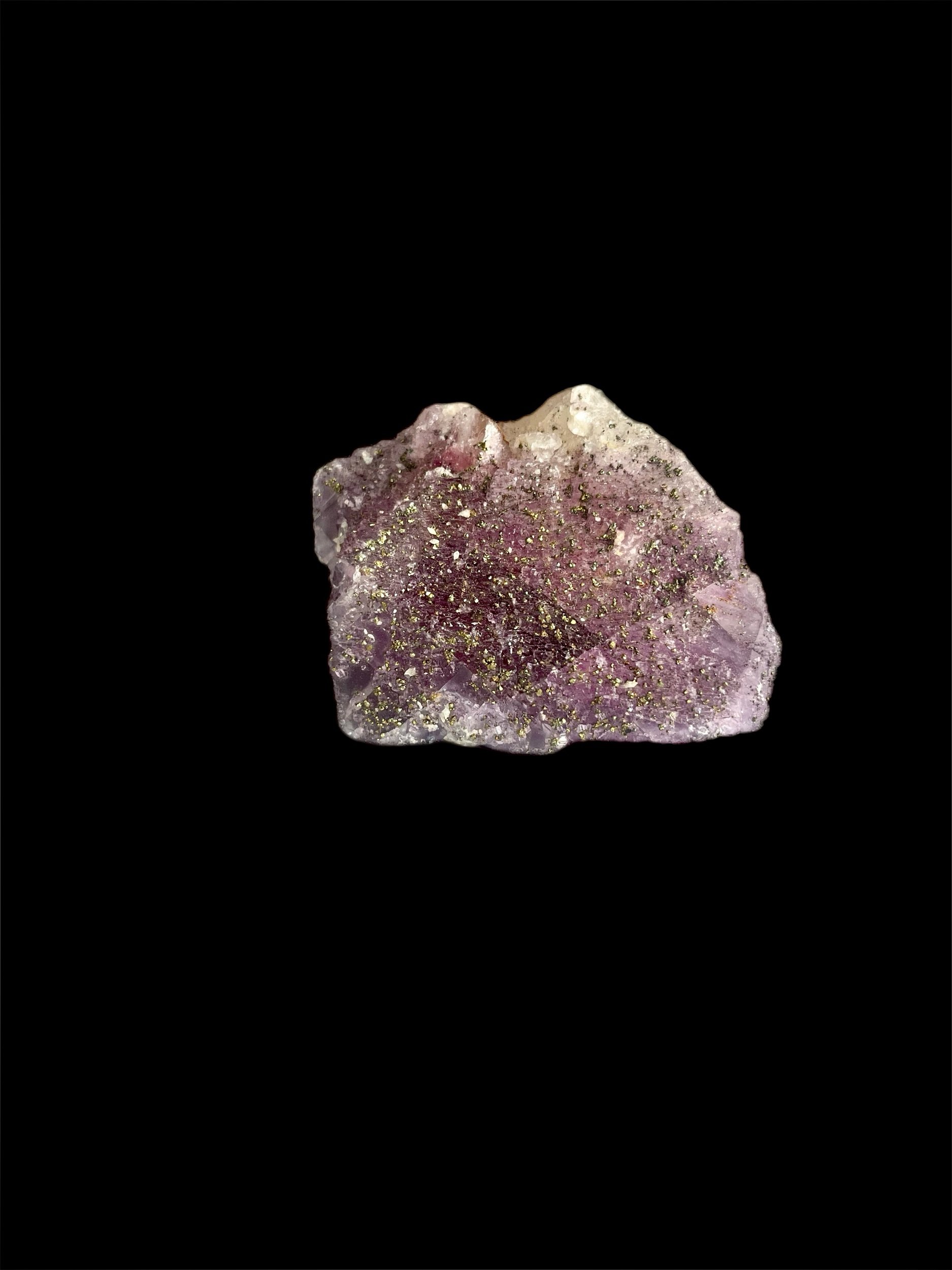
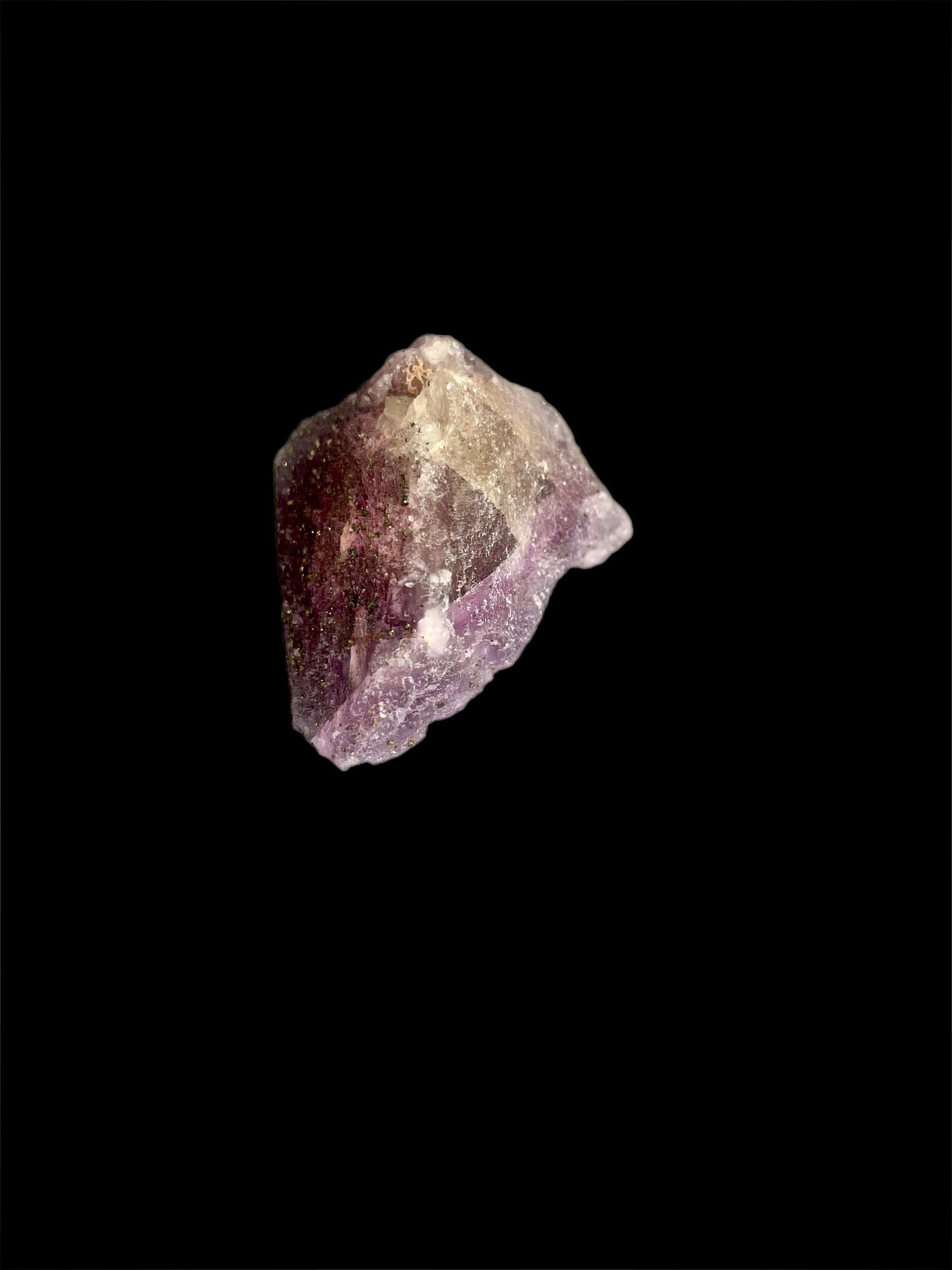
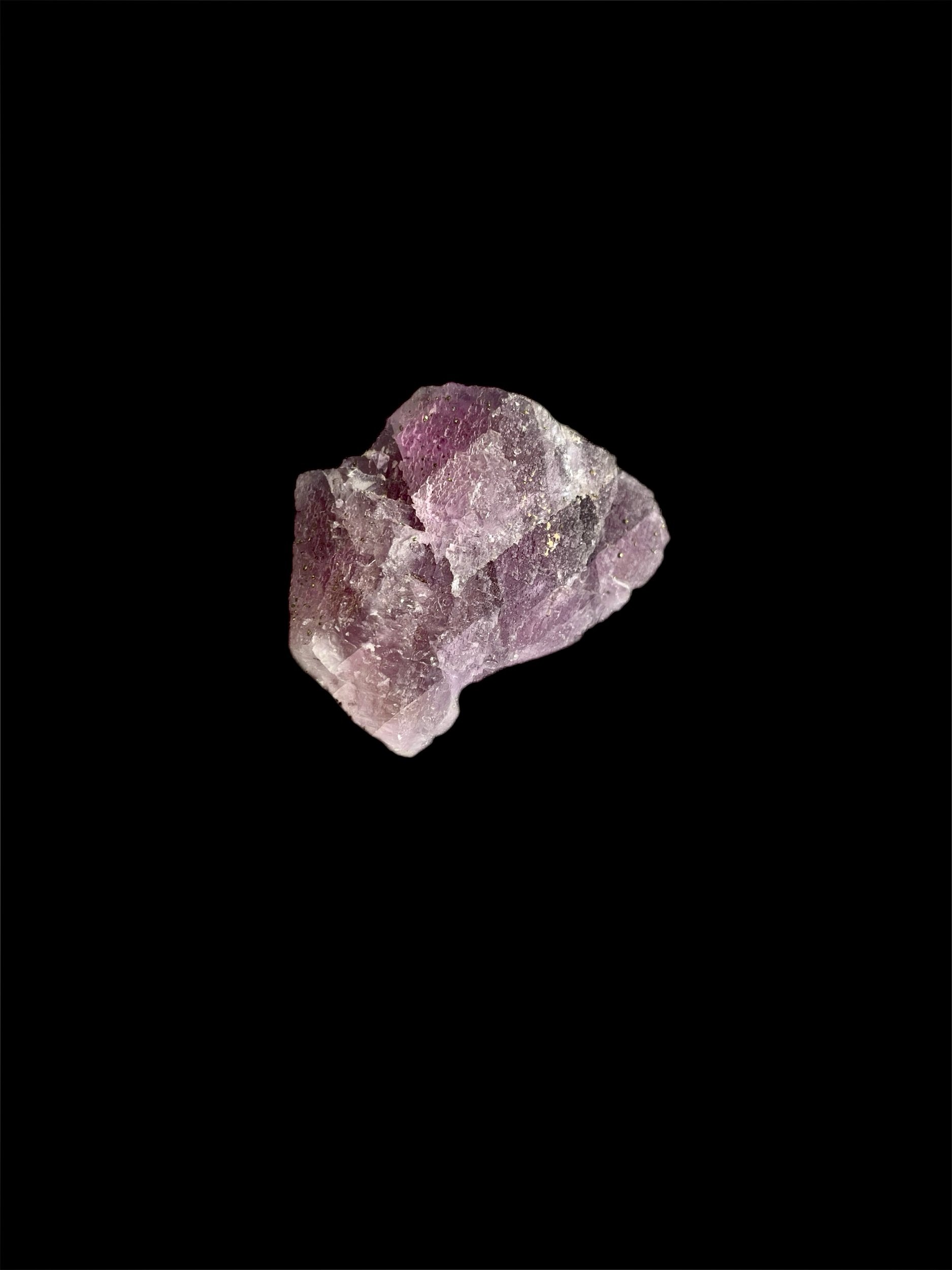
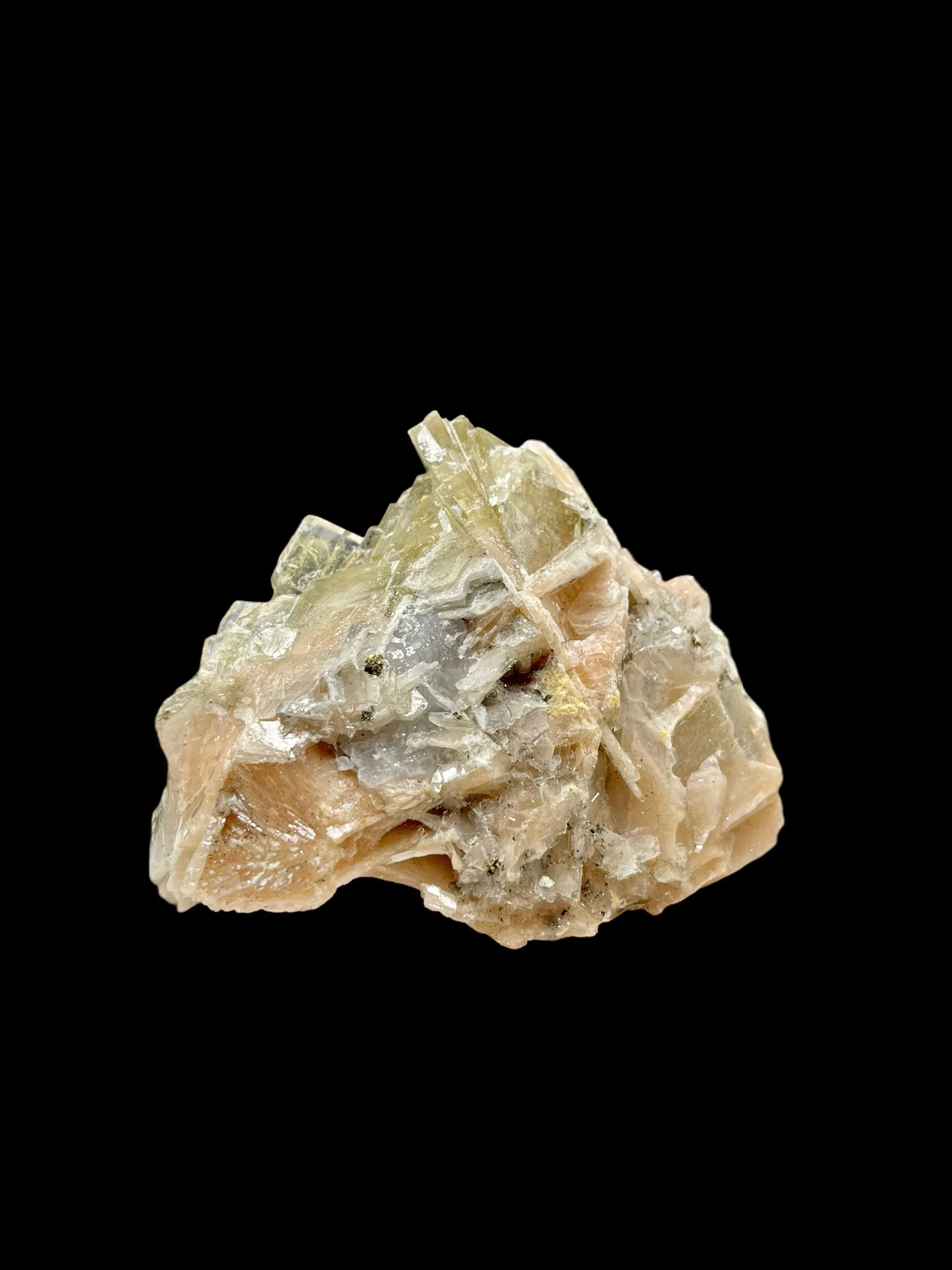
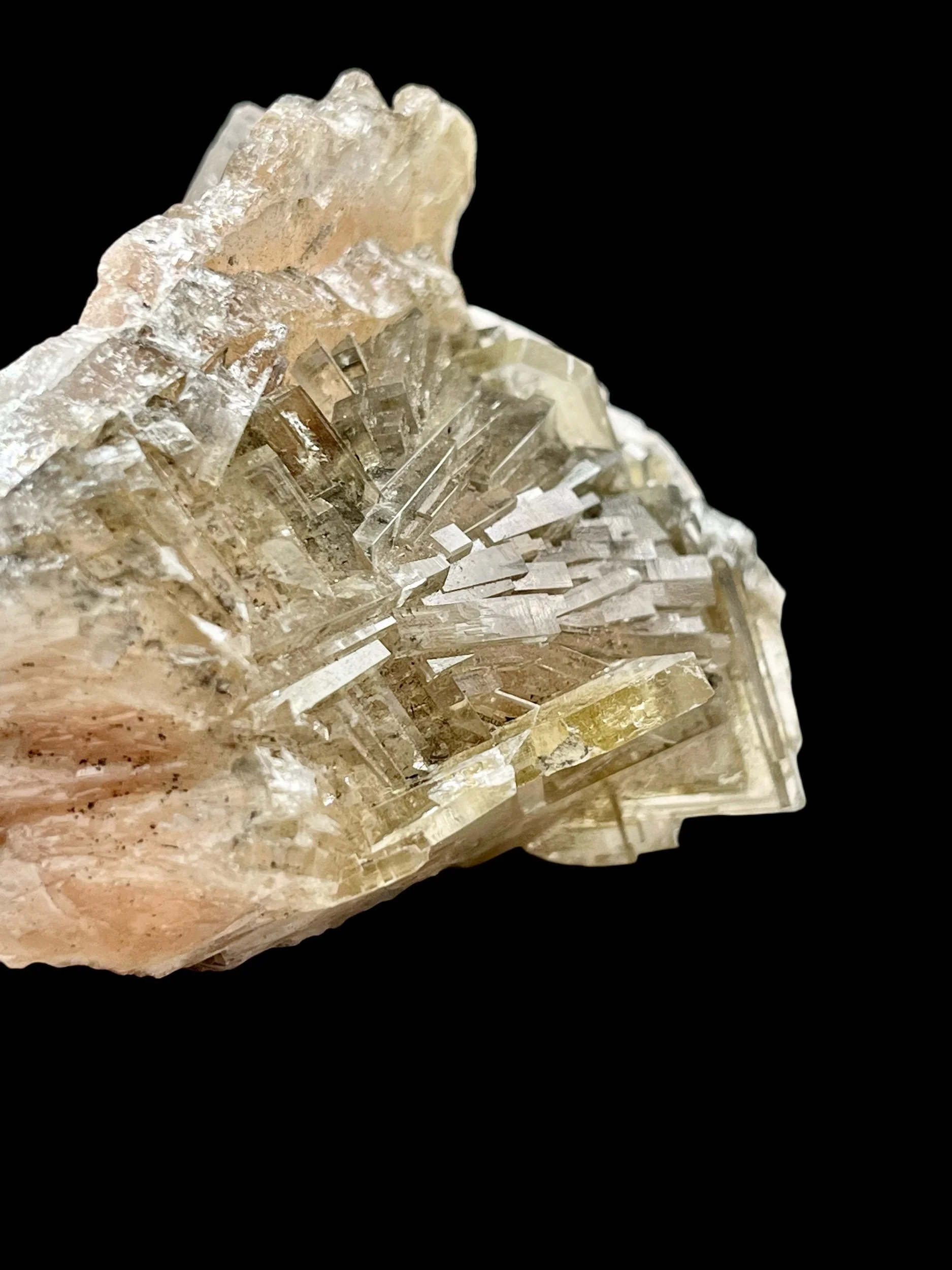
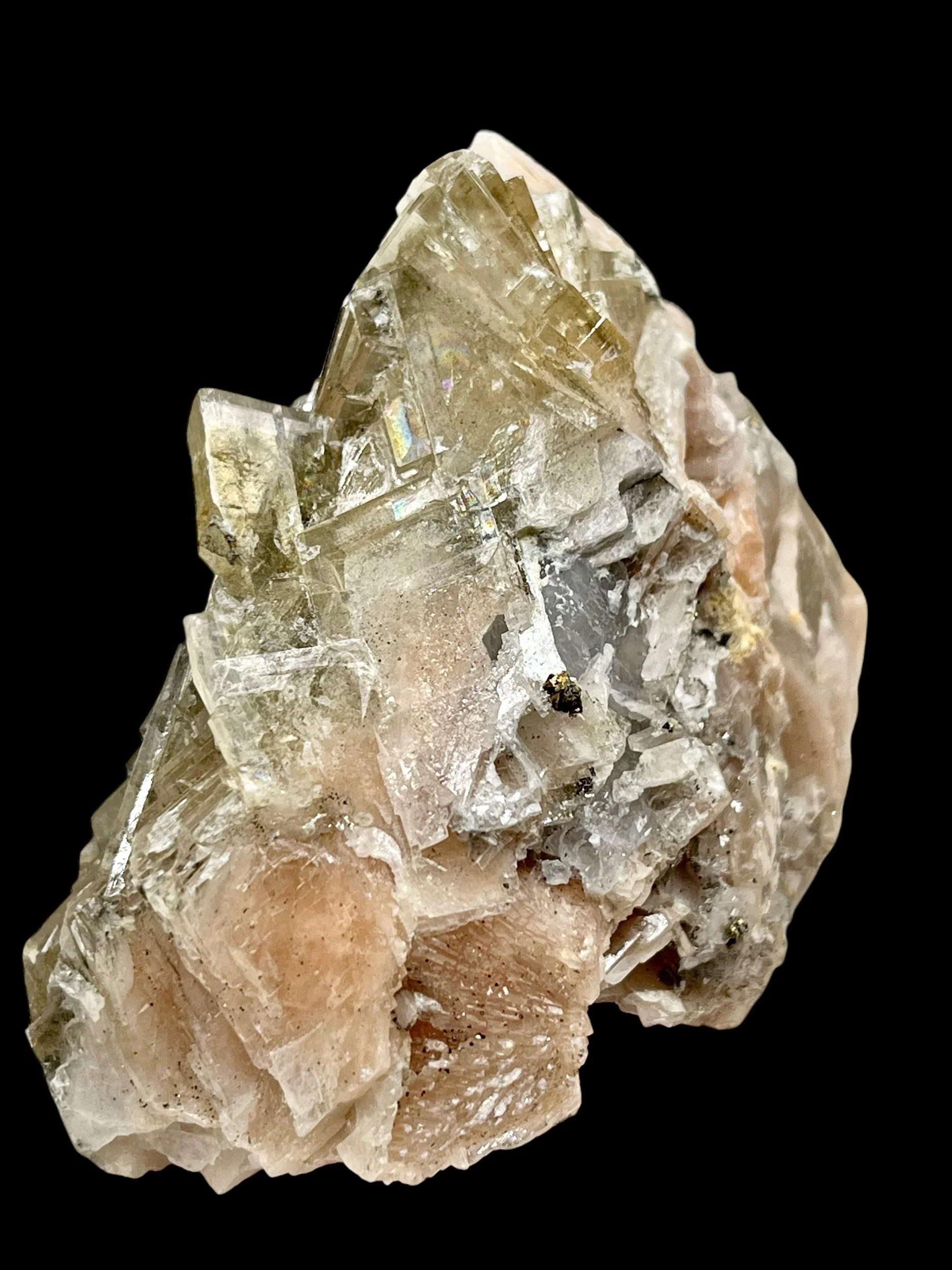
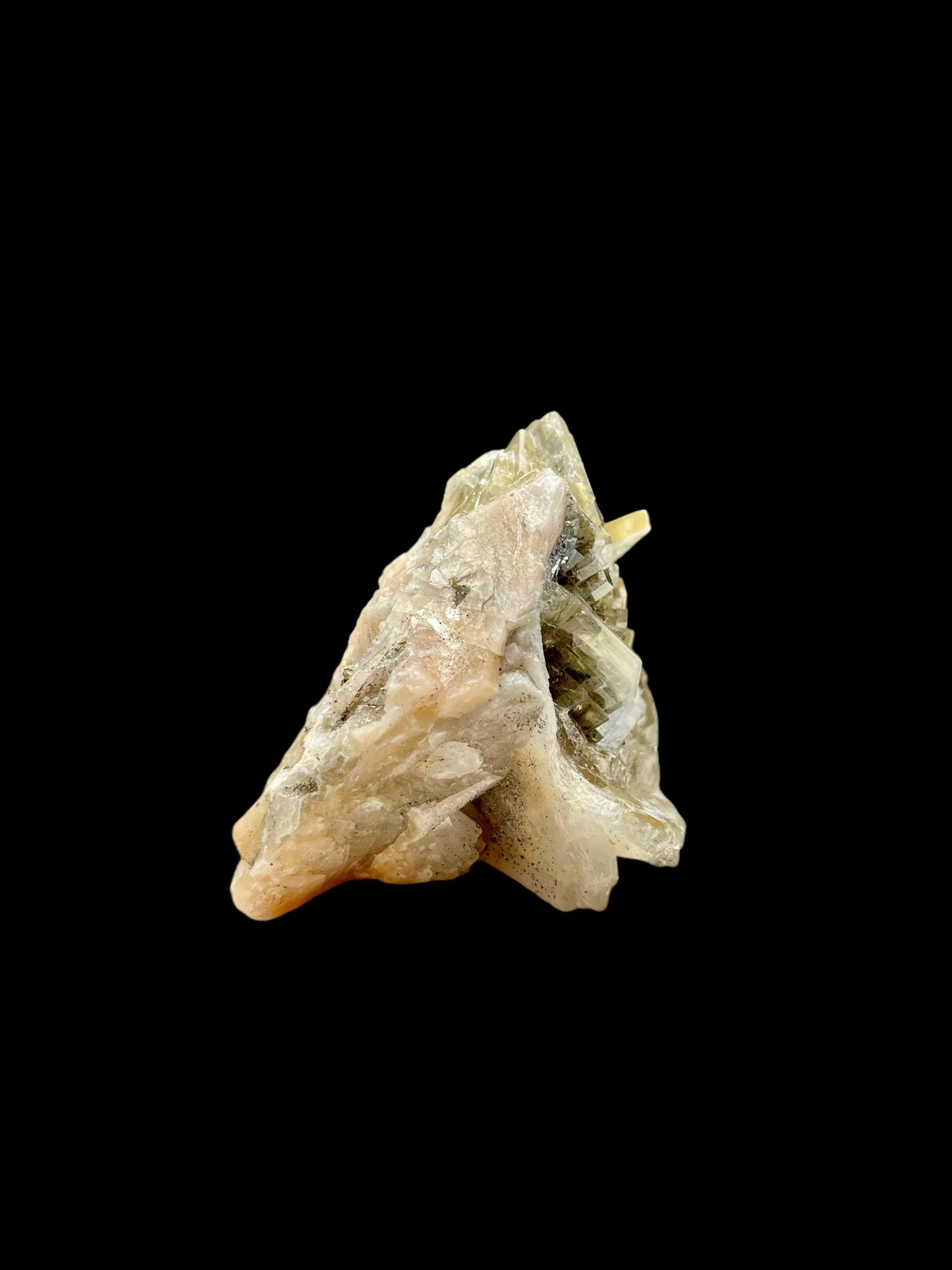
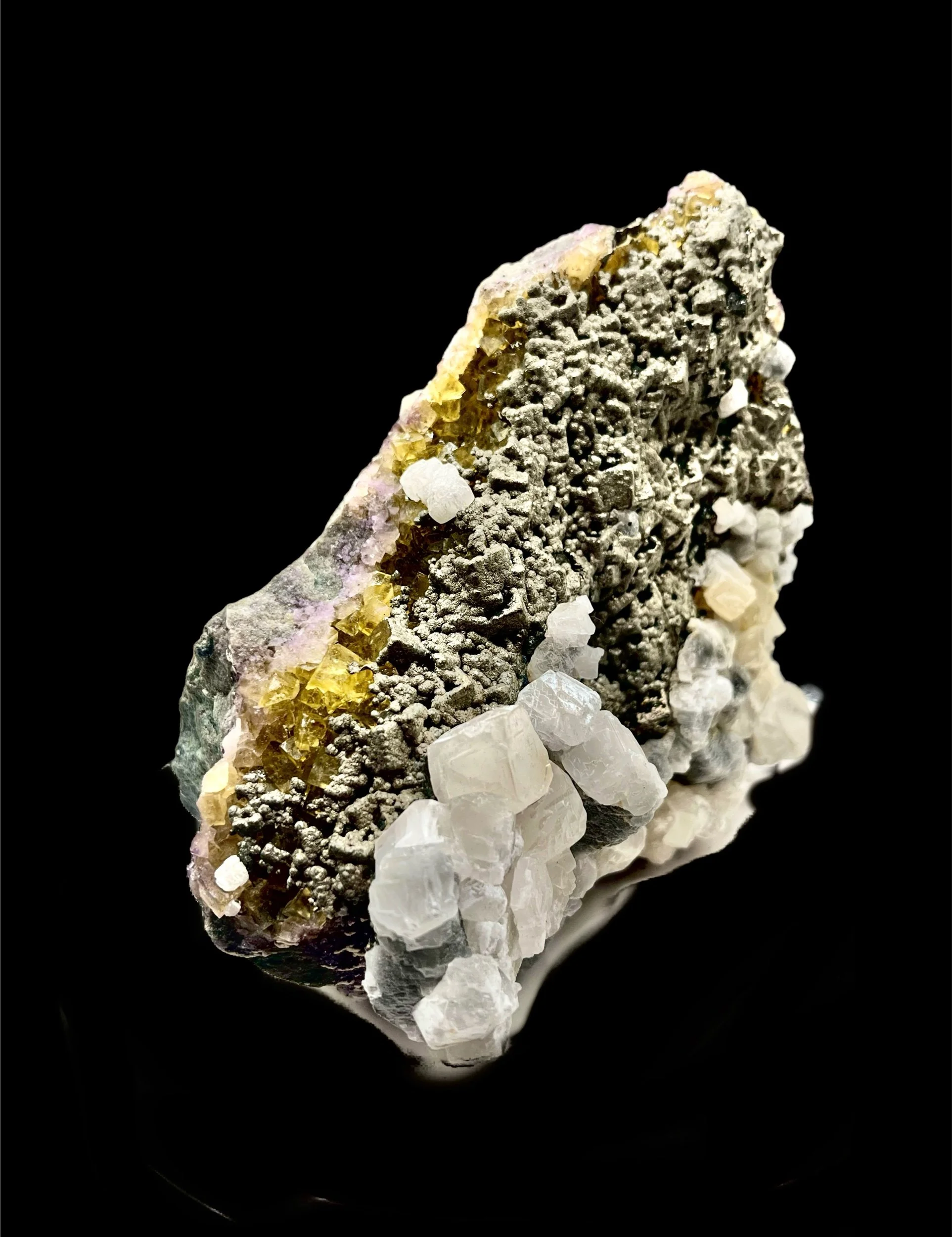
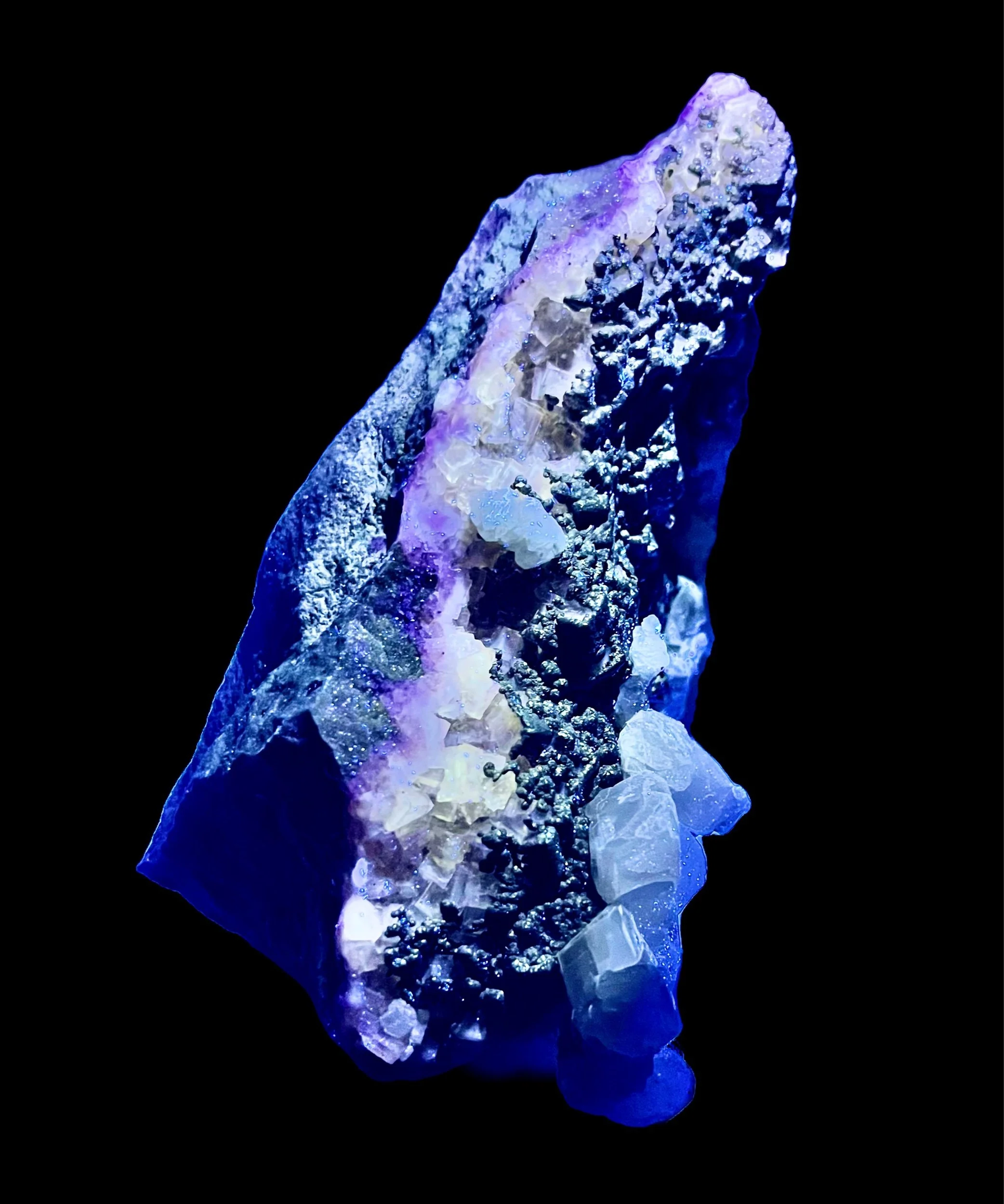
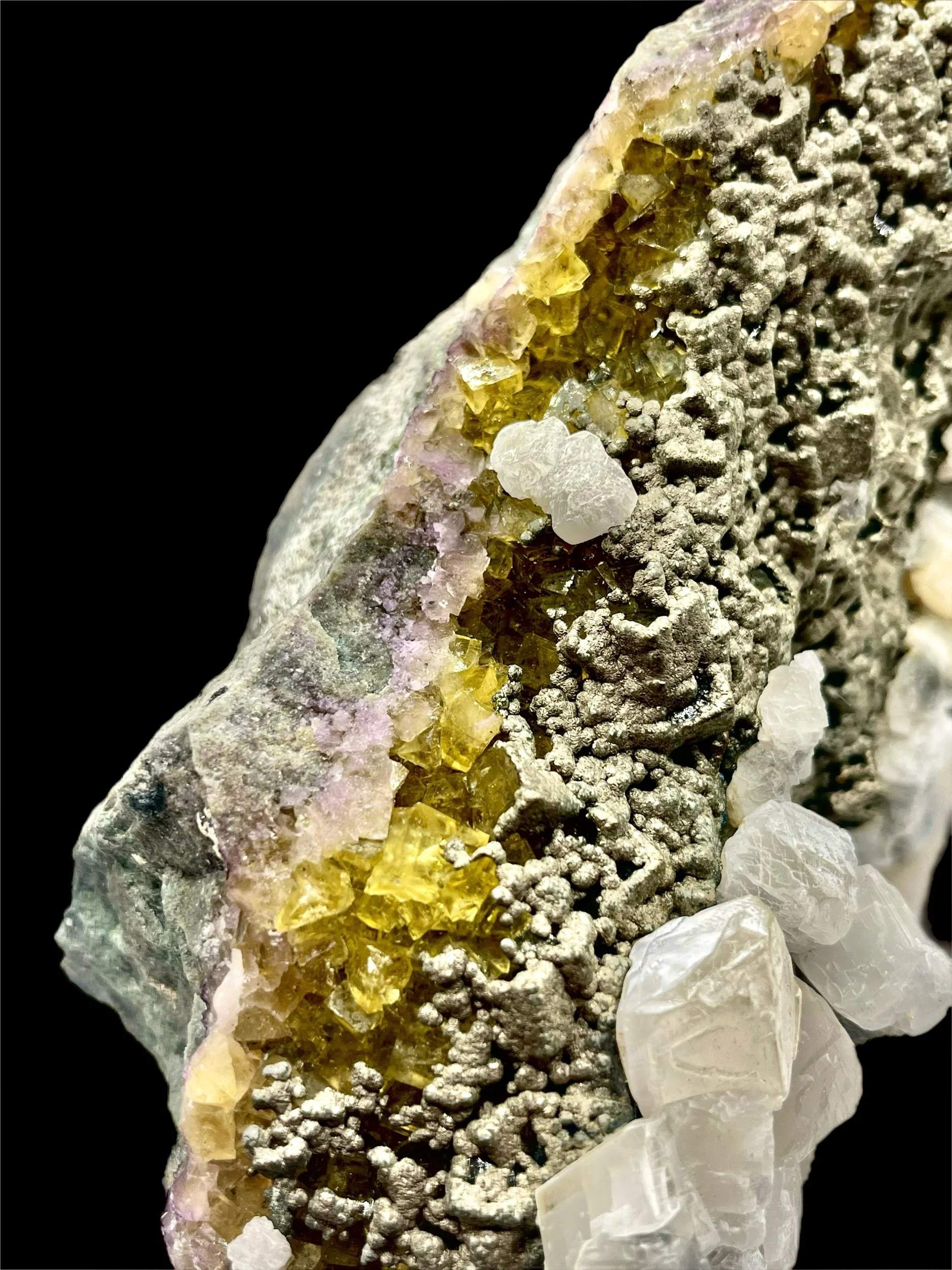
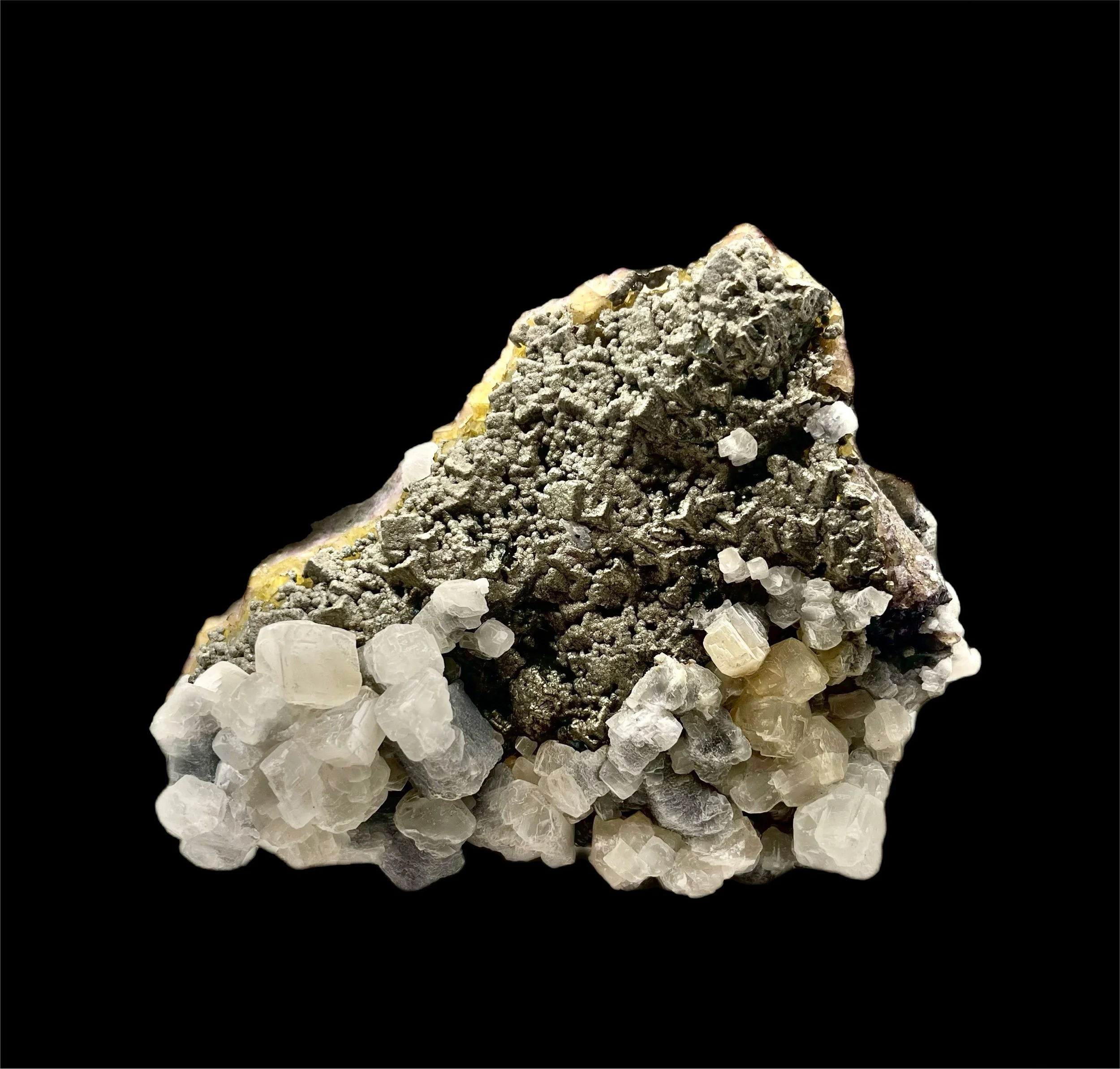
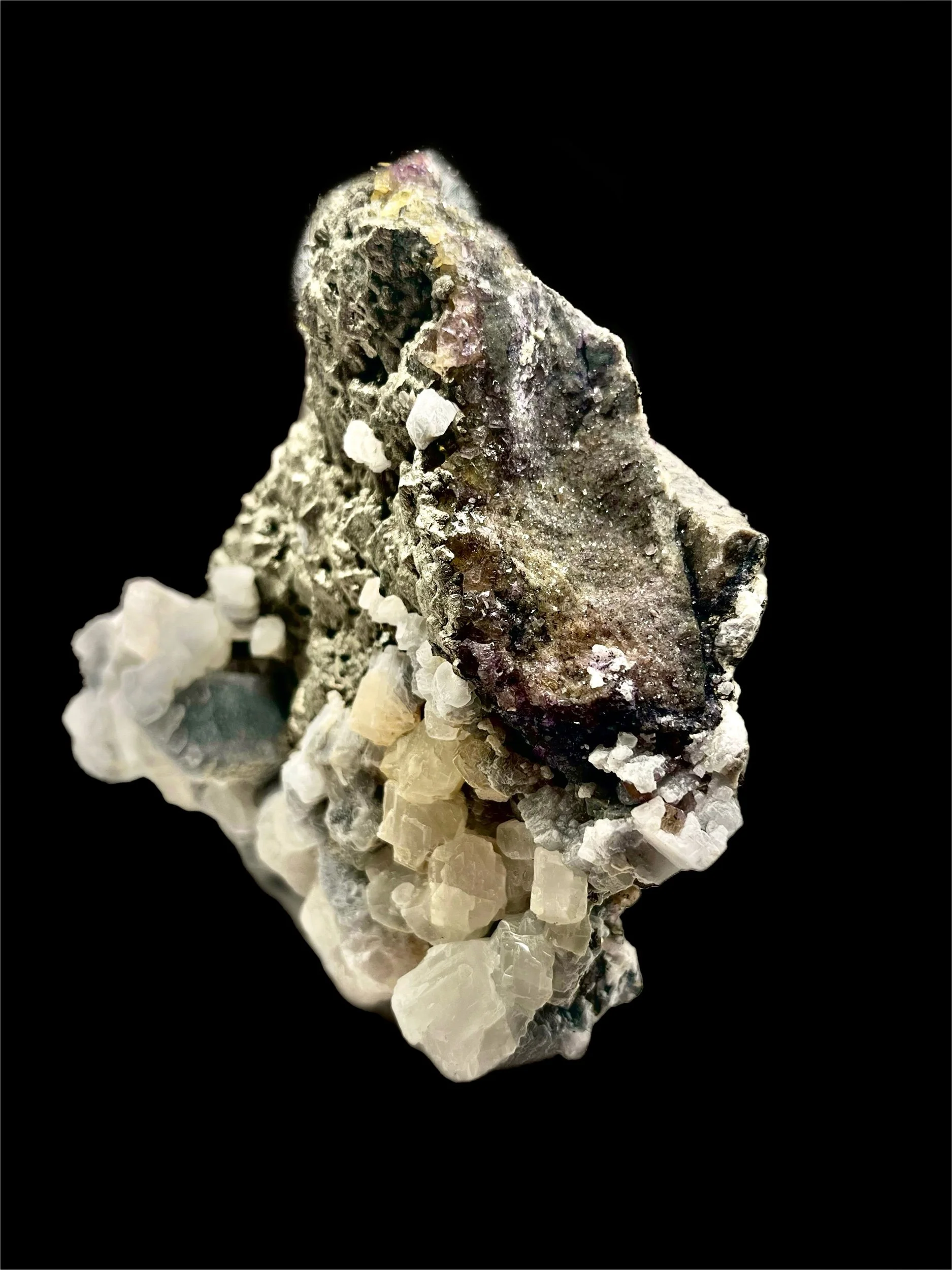
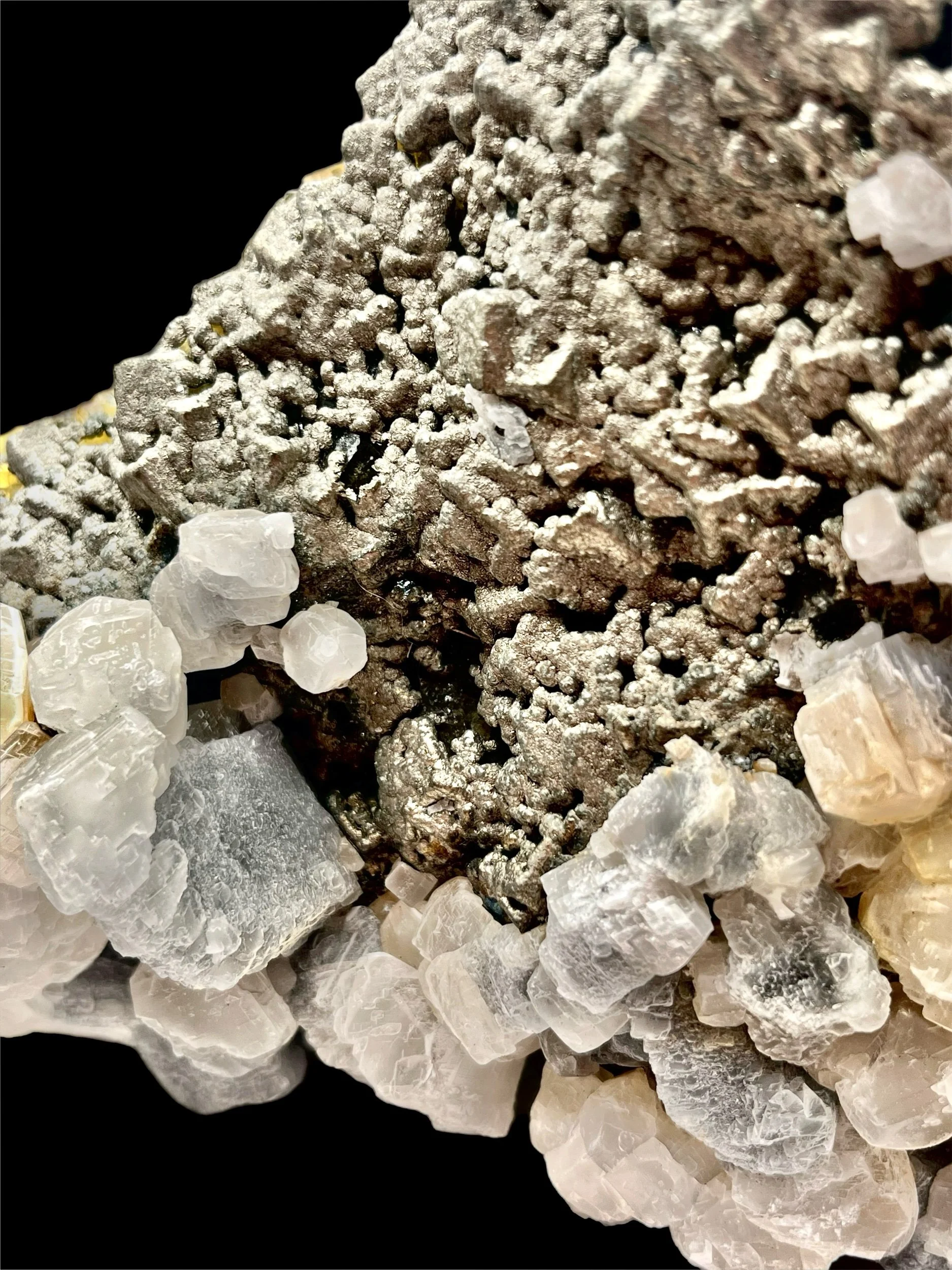
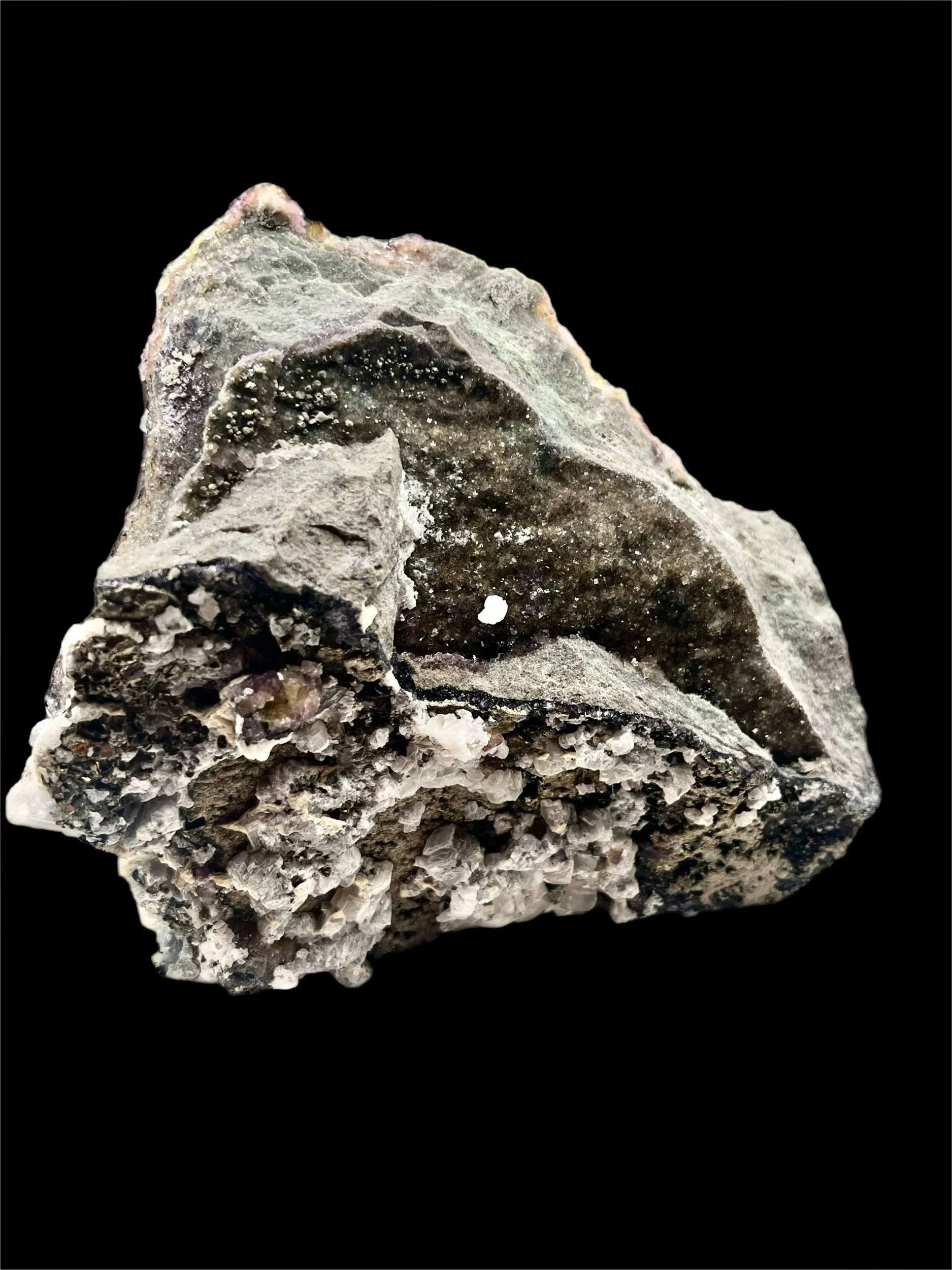
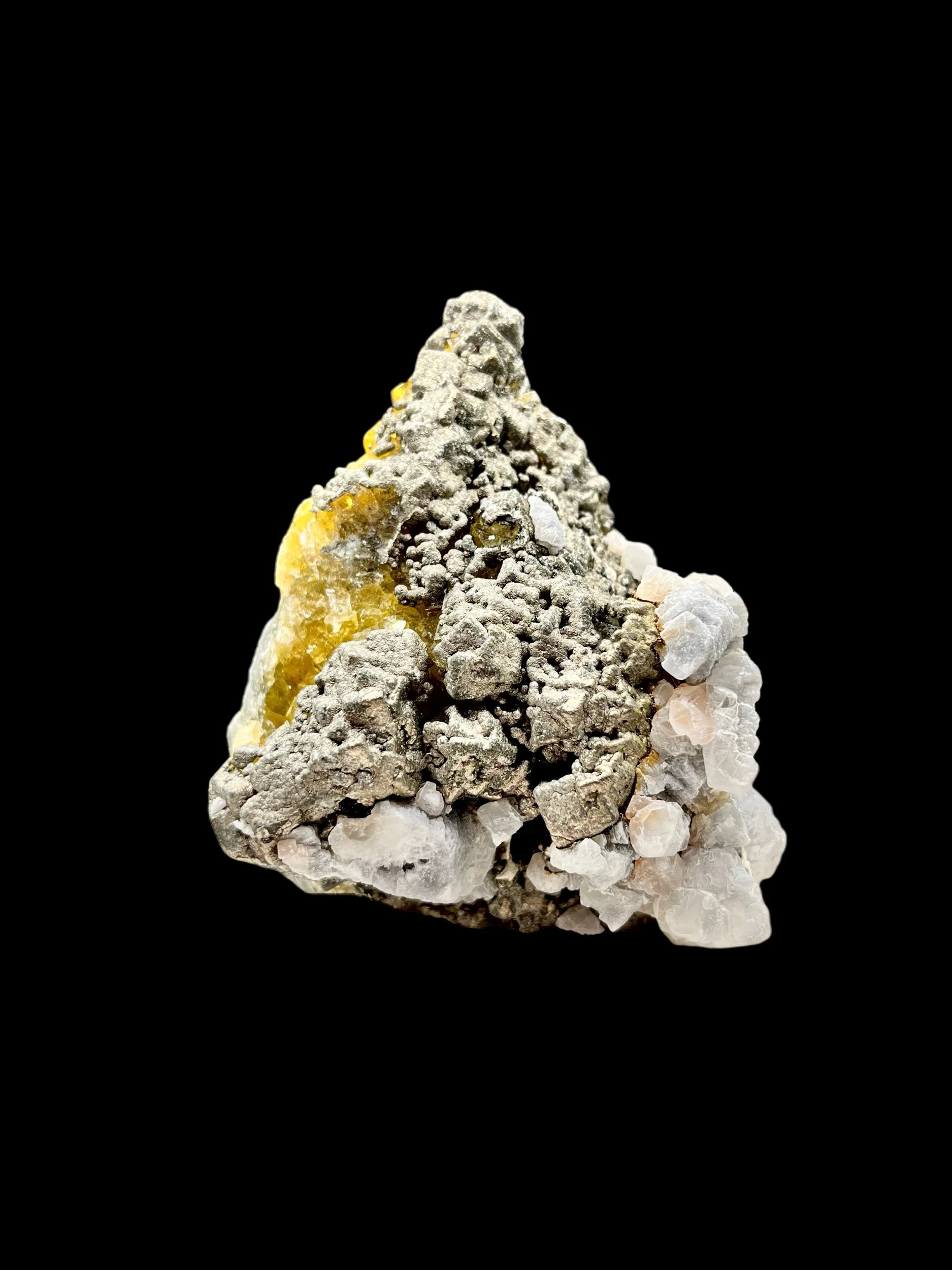
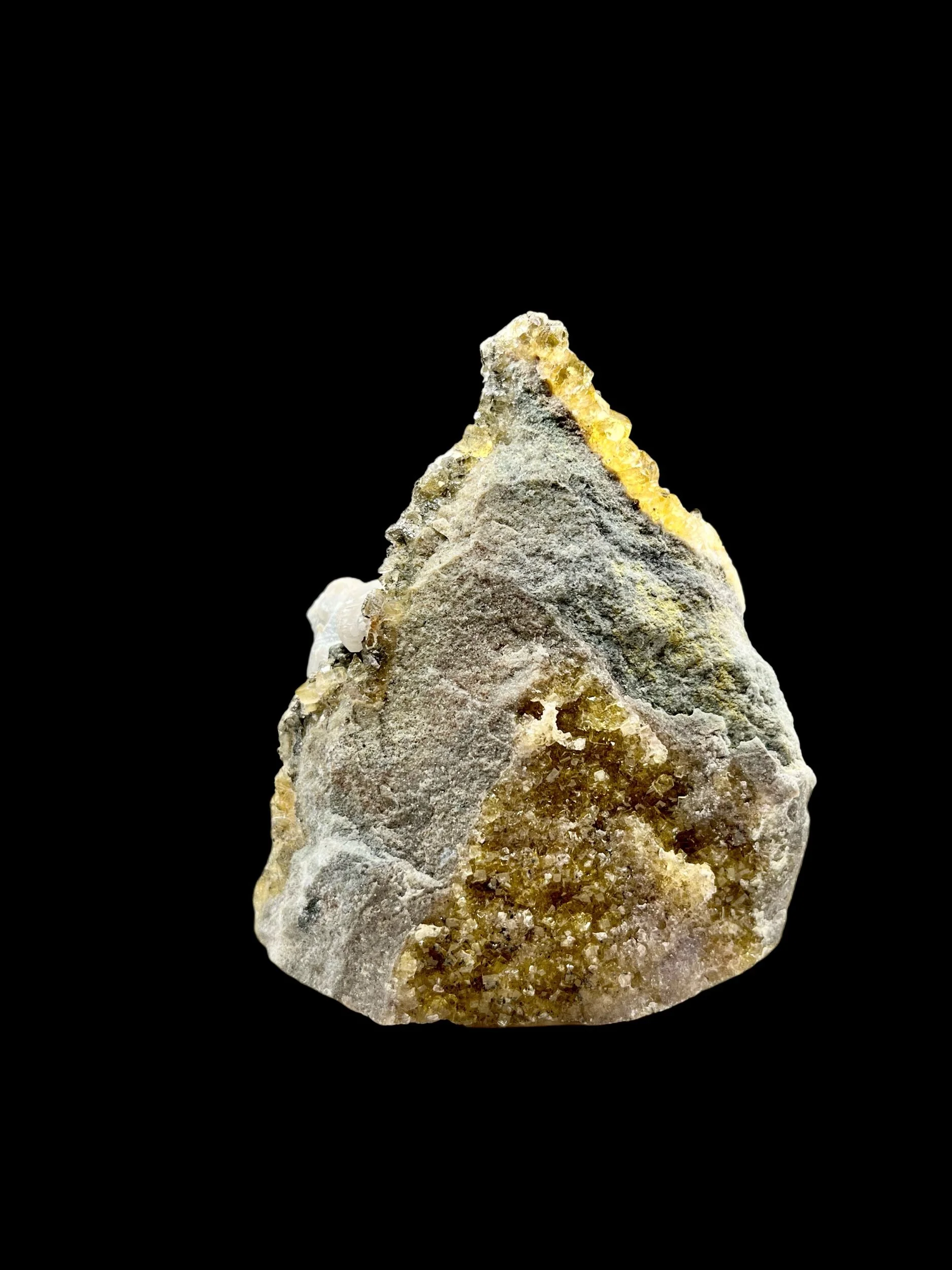
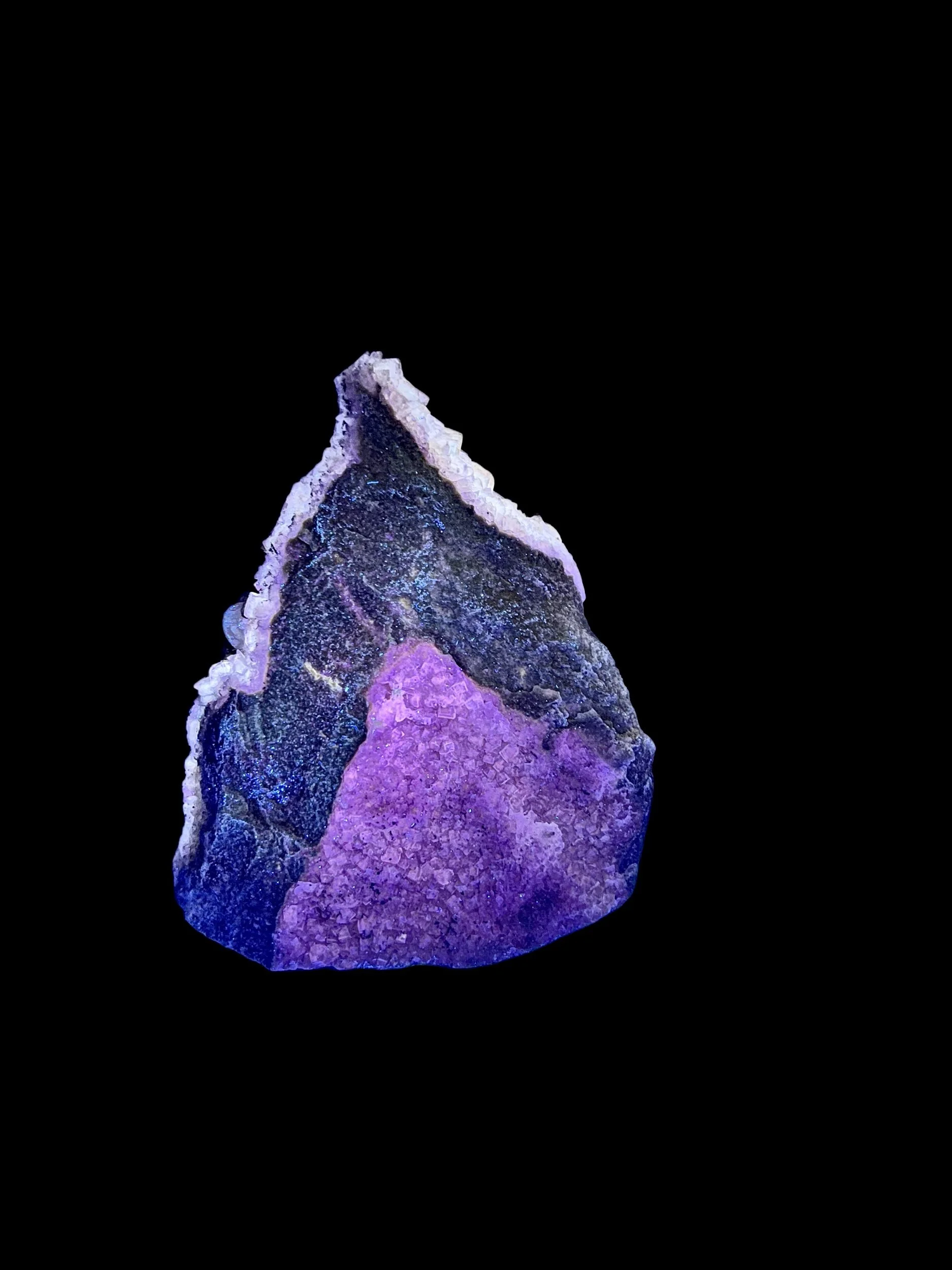
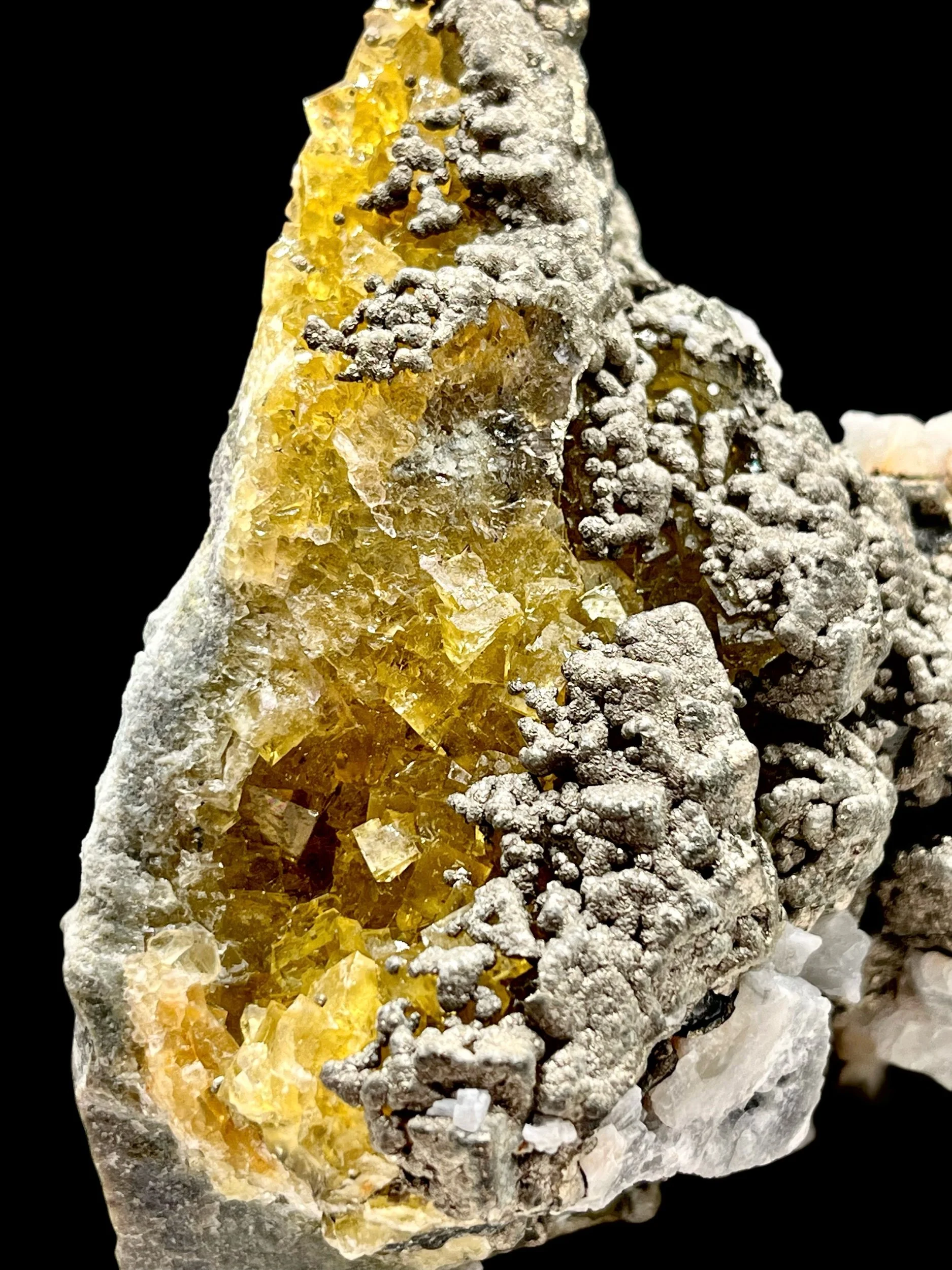
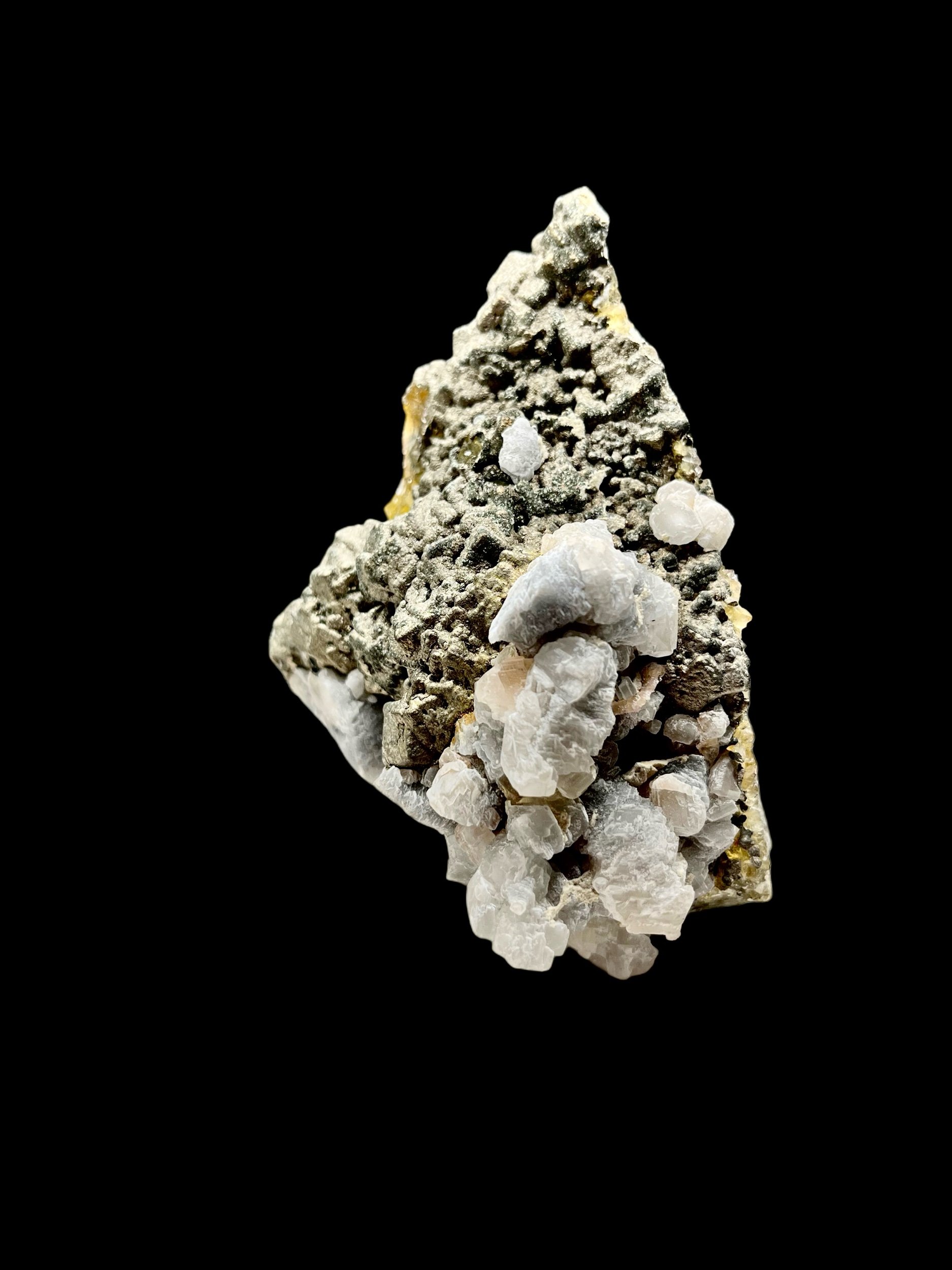
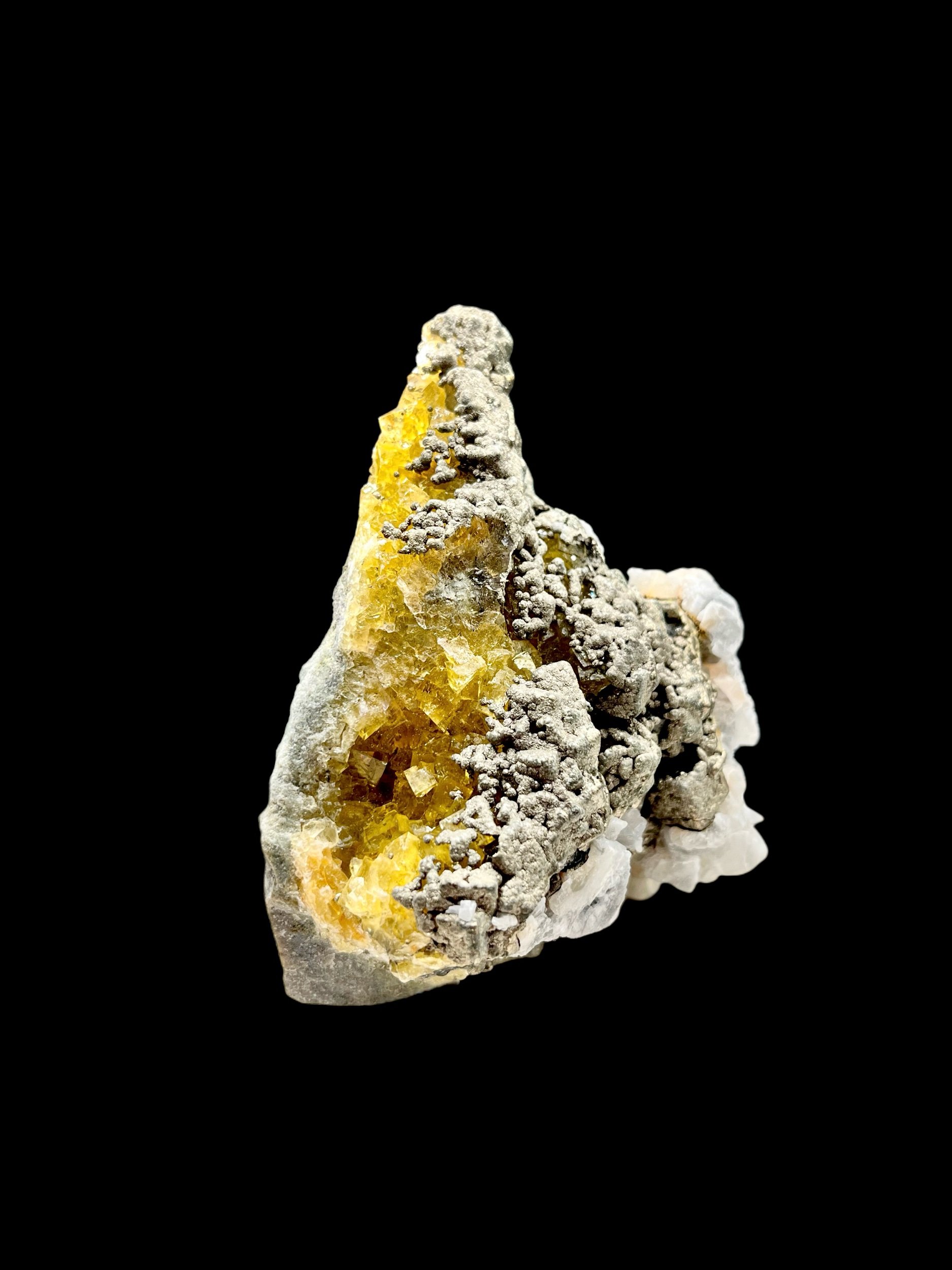
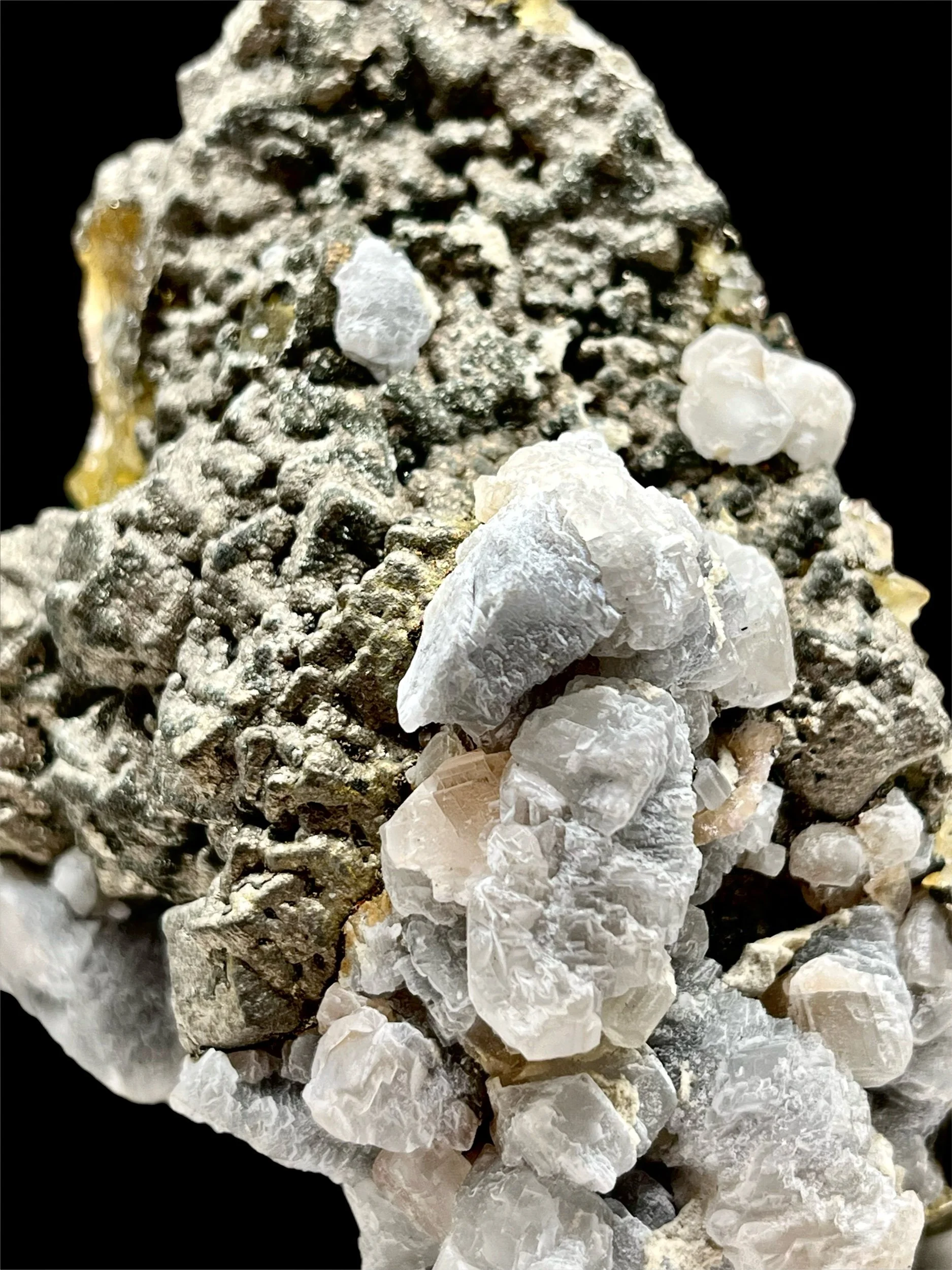
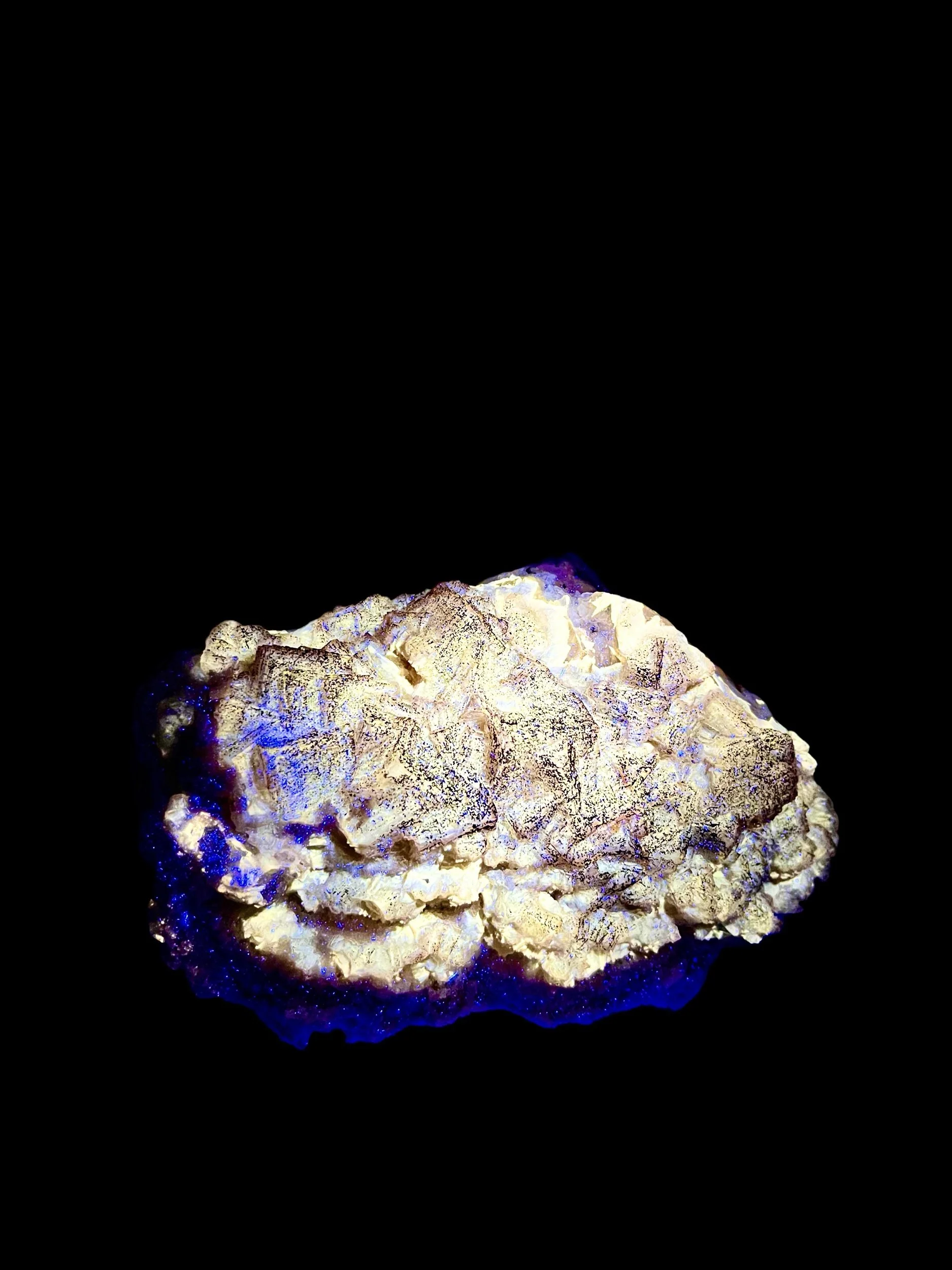
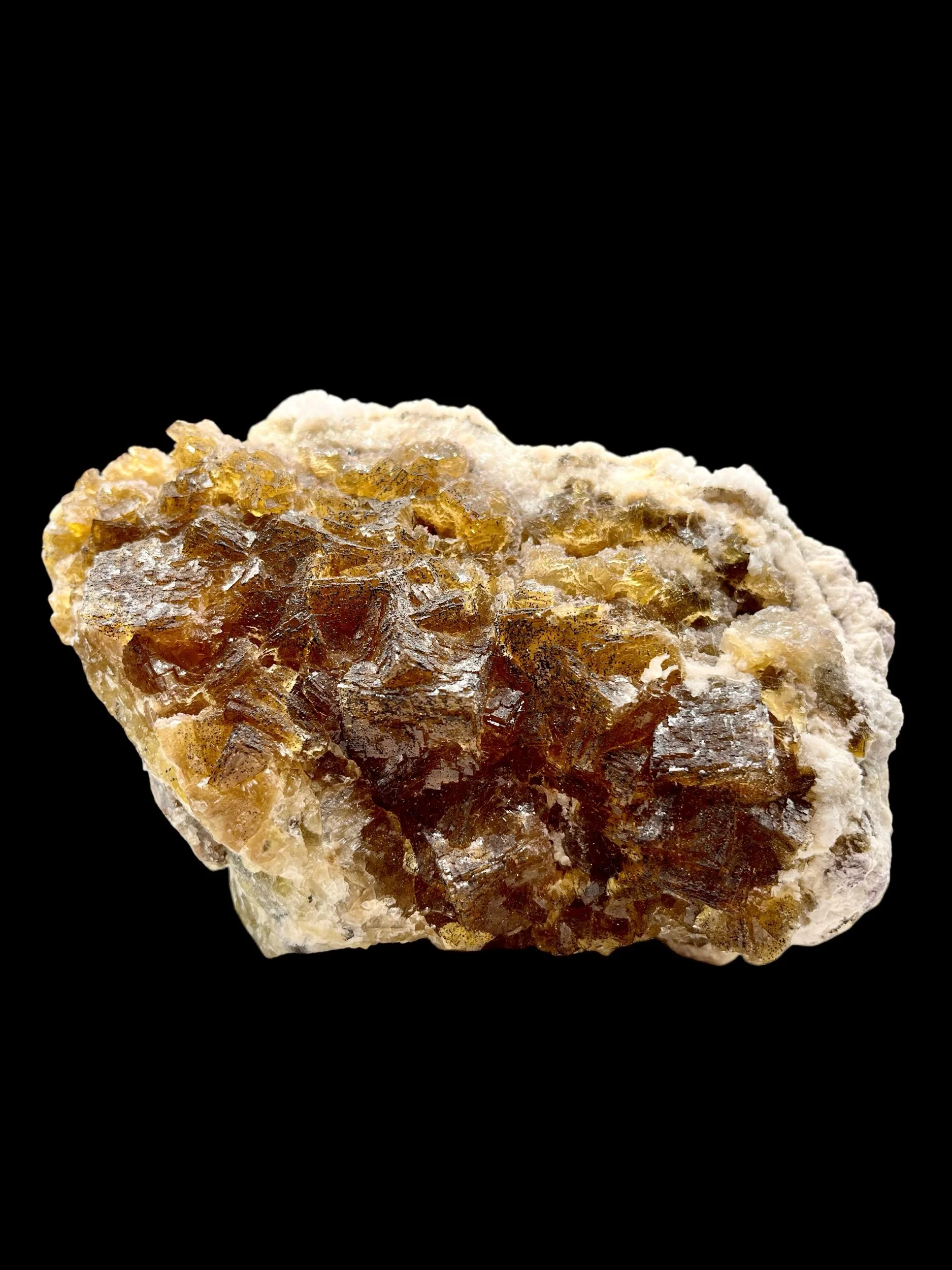
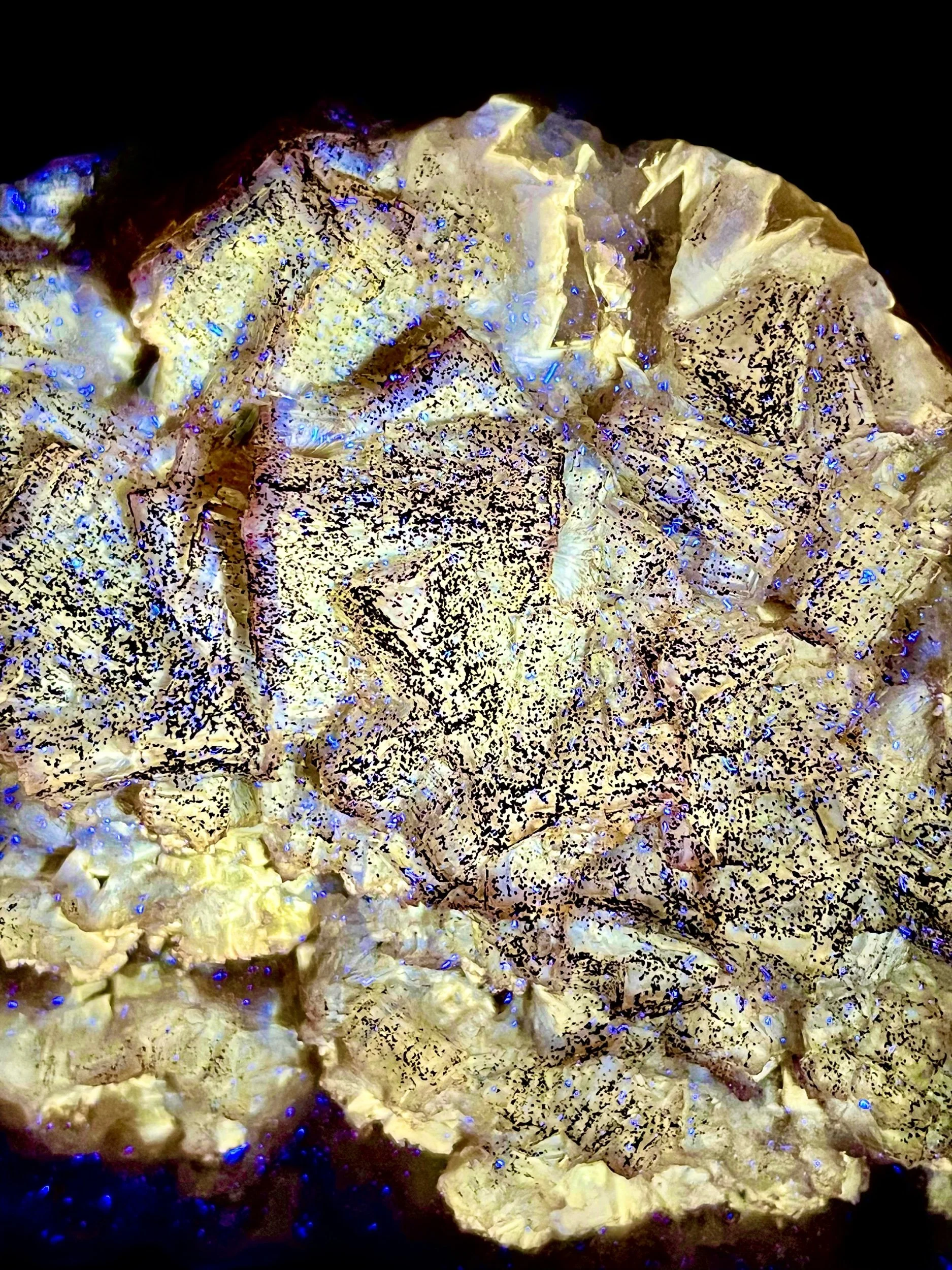
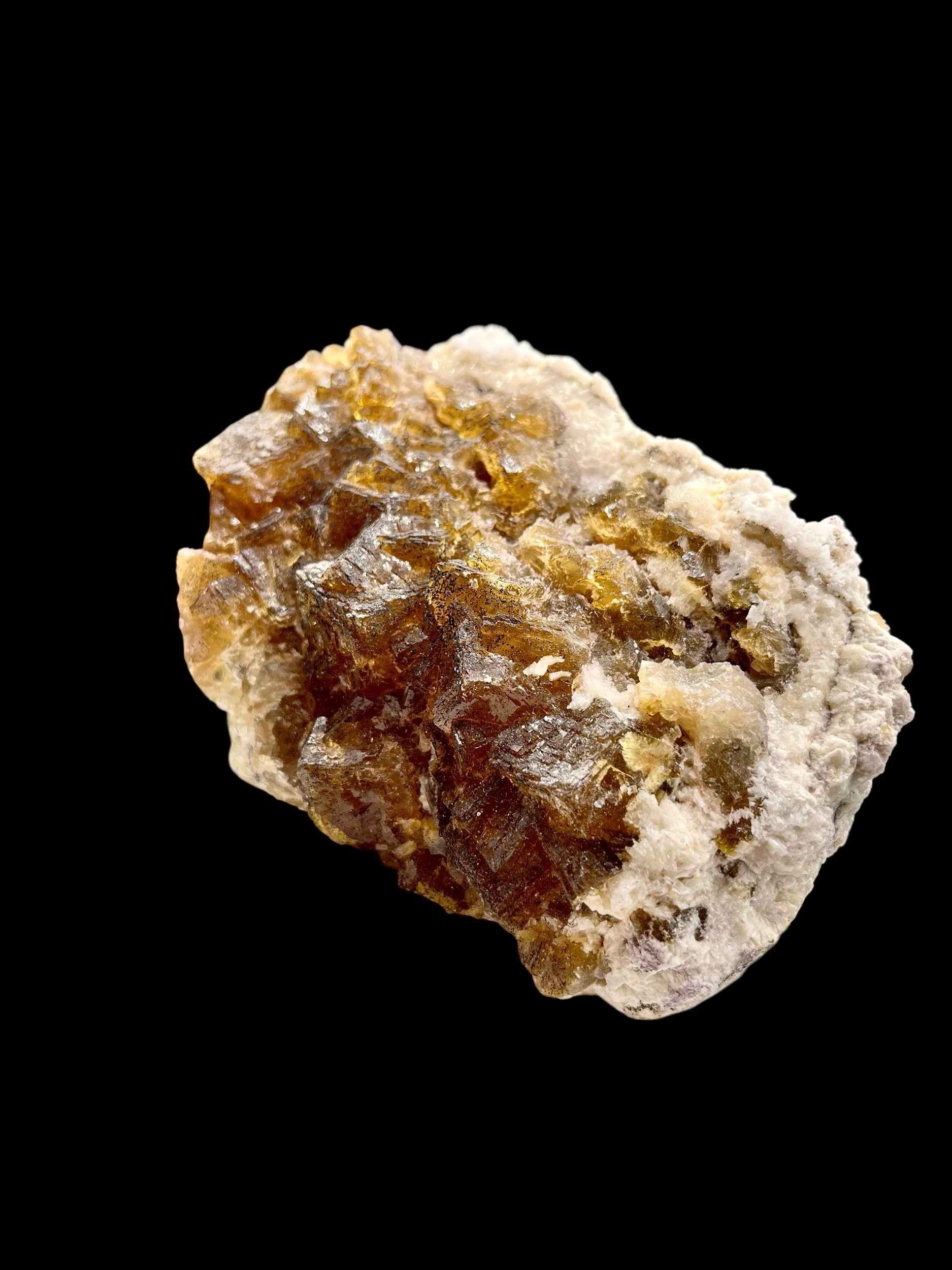
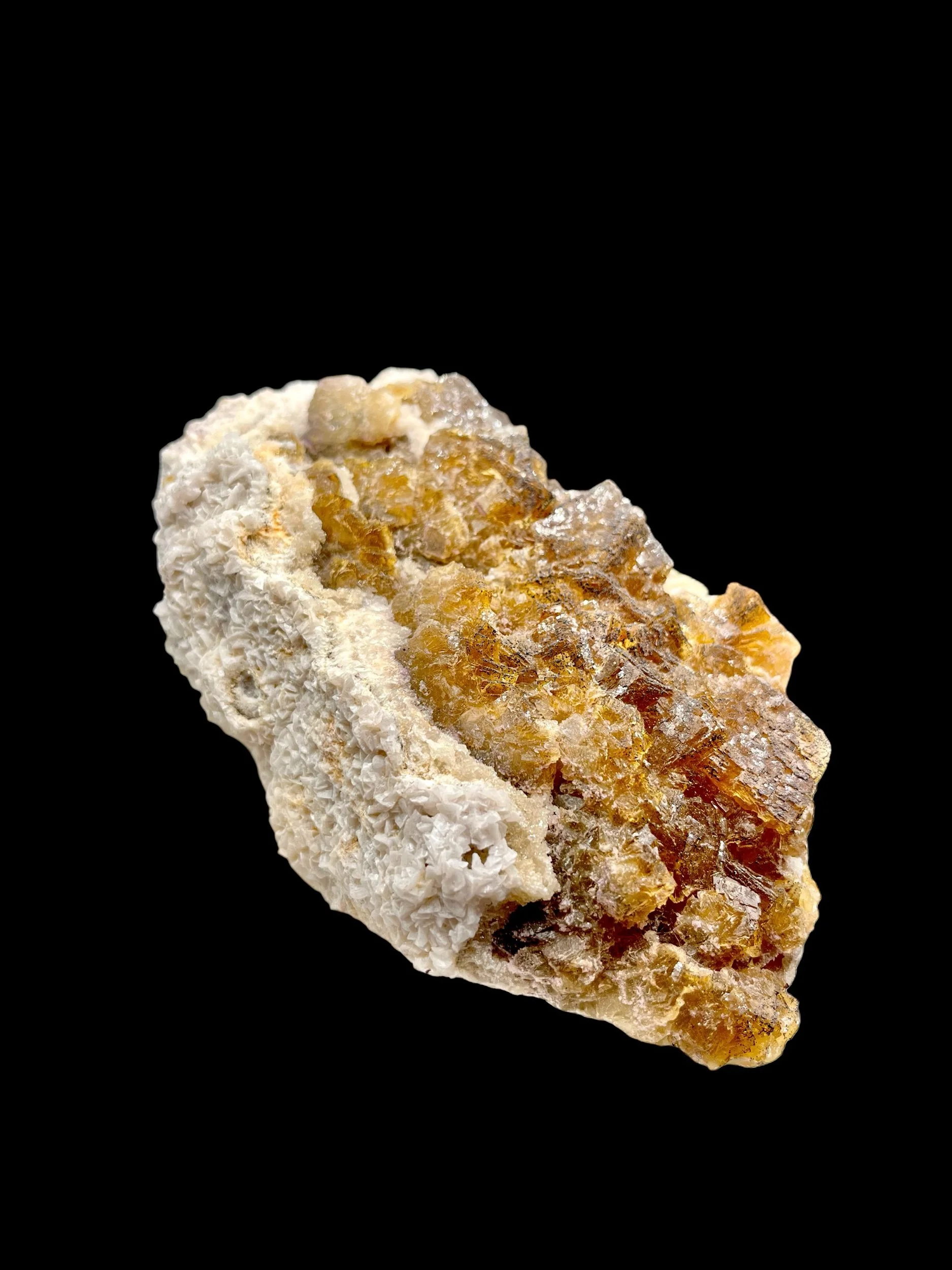
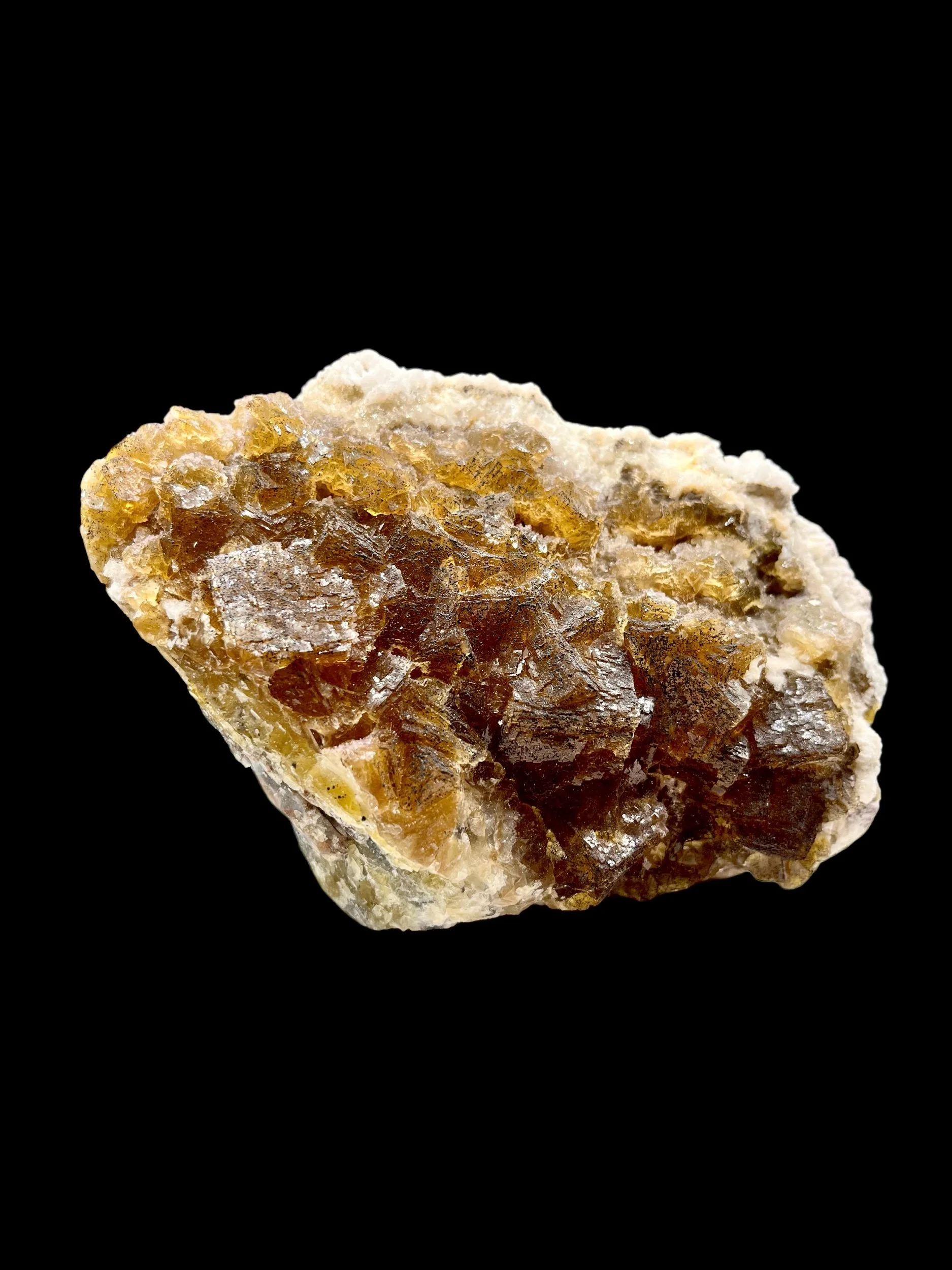
This barite with pyrite specimen showcases dense, overlapping tabular barite crystals forming a tightly packed, terraced structure. The barite ranges from pale honey to warm beige tones, with translucent edges and visible internal growth zoning. Fine pyrite grains and small clusters are dispersed throughout the crystal faces, settling naturally along growth steps and fractures.
Unlike more open, architectural barite formations, this piece feels compact and mineral-rich, with a strong sense of mass and geological compression. The stepped crystal habit creates repeating geometric patterns across the surface, giving the specimen visual depth from every angle.
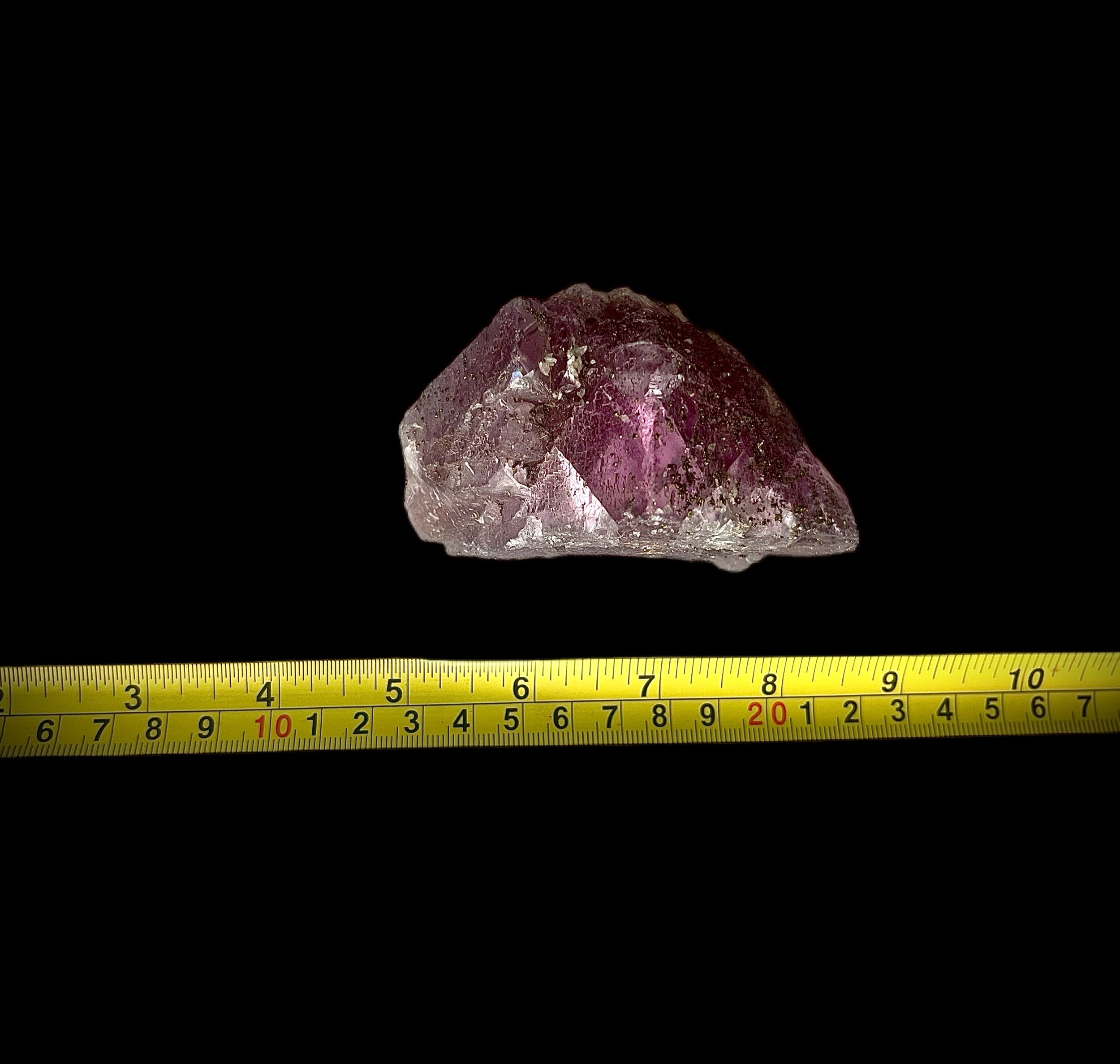
Dimensions: 2.5” x 2” x 0.5”
Weight: 115g
Barite is often associated with grounding, organization, and bringing clarity to complex situations. Its structured crystal habit is thought to support focus and methodical thinking. Pyrite is traditionally linked to confidence, protection, and motivation, symbolically reinforcing determination and personal strength.
This specimen stands out for its dense, layered crystal growth and consistent tabular habit across the entire piece. The pyrite is naturally integrated, indicating genuine co-formation within a sulfur-rich hydrothermal environment. A strong example for collectors who appreciate barite with substance, texture, and visual rhythm rather than open, airy crystal spacing.
Dense, overlapping tabular barite crystal growth
Naturally occurring pyrite inclusions
Repeating stepped crystal geometry
Warm honey and beige coloration with excellent color and translucence
Gemmy luster
Barite (BaSO₄) commonly forms in hydrothermal veins and sedimentary environments, often crystallizing in tabular or bladed habits under stable growth conditions. Pyrite (FeS₂) frequently forms in the same sulfur-rich systems and may crystallize alongside or shortly after barite, becoming incorporated along crystal seams and internal boundaries.
This barite with pyrite specimen showcases dense, overlapping tabular barite crystals forming a tightly packed, terraced structure. The barite ranges from pale honey to warm beige tones, with translucent edges and visible internal growth zoning. Fine pyrite grains and small clusters are dispersed throughout the crystal faces, settling naturally along growth steps and fractures.
Unlike more open, architectural barite formations, this piece feels compact and mineral-rich, with a strong sense of mass and geological compression. The stepped crystal habit creates repeating geometric patterns across the surface, giving the specimen visual depth from every angle.
Dimensions: 2.5” x 2” x 0.5”
Weight: 115g
Barite is often associated with grounding, organization, and bringing clarity to complex situations. Its structured crystal habit is thought to support focus and methodical thinking. Pyrite is traditionally linked to confidence, protection, and motivation, symbolically reinforcing determination and personal strength.
This specimen stands out for its dense, layered crystal growth and consistent tabular habit across the entire piece. The pyrite is naturally integrated, indicating genuine co-formation within a sulfur-rich hydrothermal environment. A strong example for collectors who appreciate barite with substance, texture, and visual rhythm rather than open, airy crystal spacing.
Dense, overlapping tabular barite crystal growth
Naturally occurring pyrite inclusions
Repeating stepped crystal geometry
Warm honey and beige coloration with excellent color and translucence
Gemmy luster
Barite (BaSO₄) commonly forms in hydrothermal veins and sedimentary environments, often crystallizing in tabular or bladed habits under stable growth conditions. Pyrite (FeS₂) frequently forms in the same sulfur-rich systems and may crystallize alongside or shortly after barite, becoming incorporated along crystal seams and internal boundaries.