 Image 1 of 5
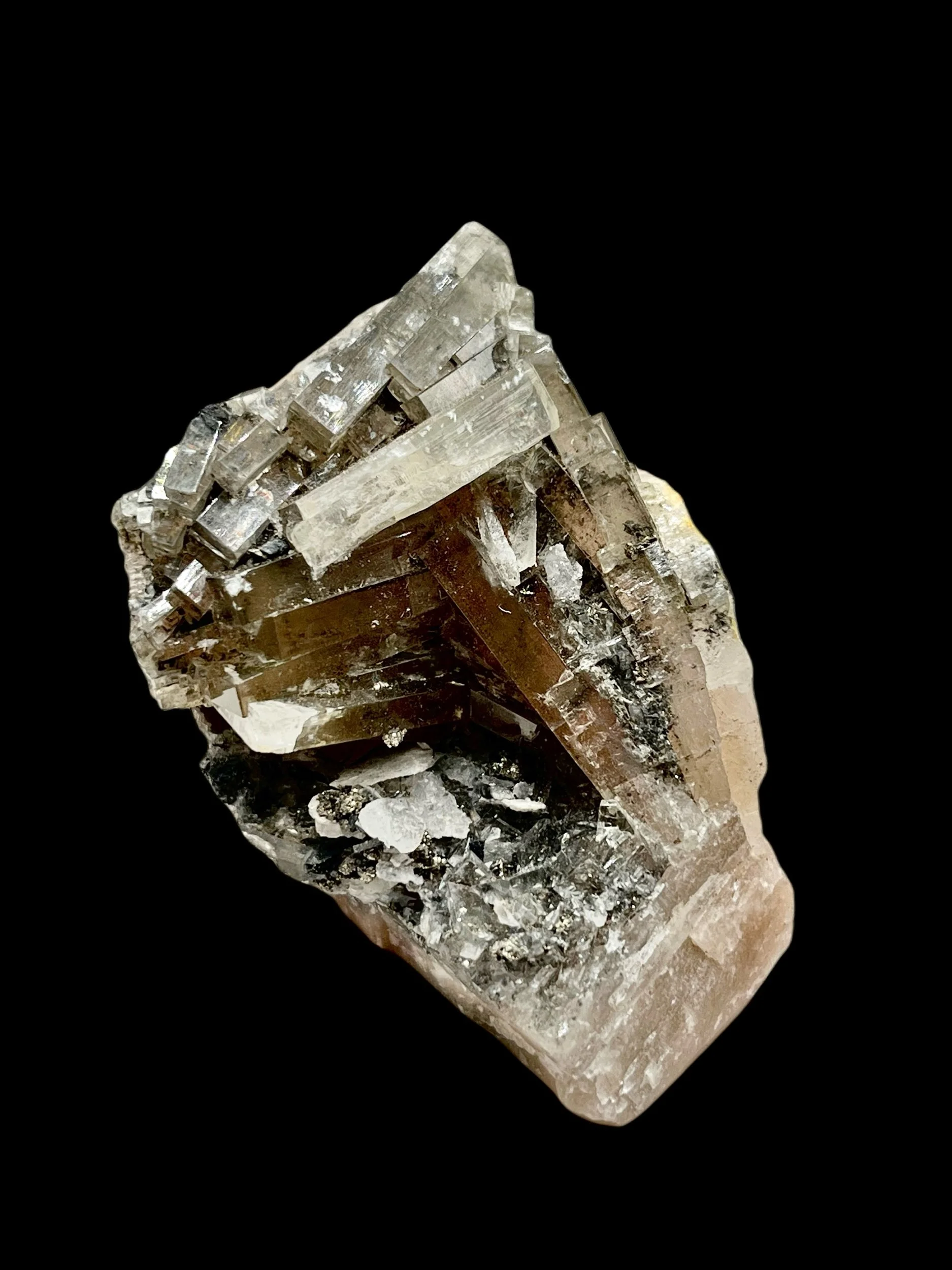 Image 2 of 5
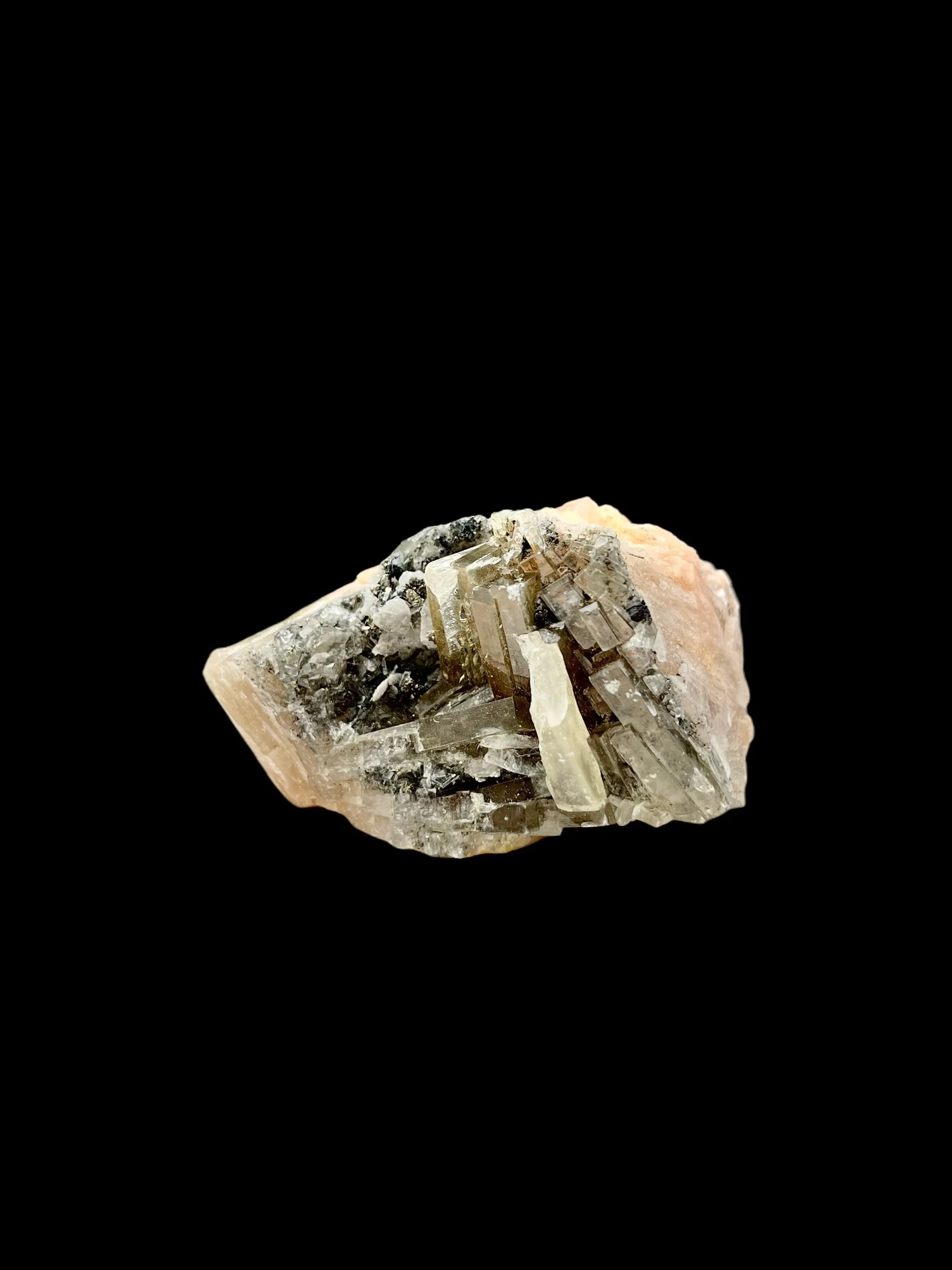 Image 3 of 5
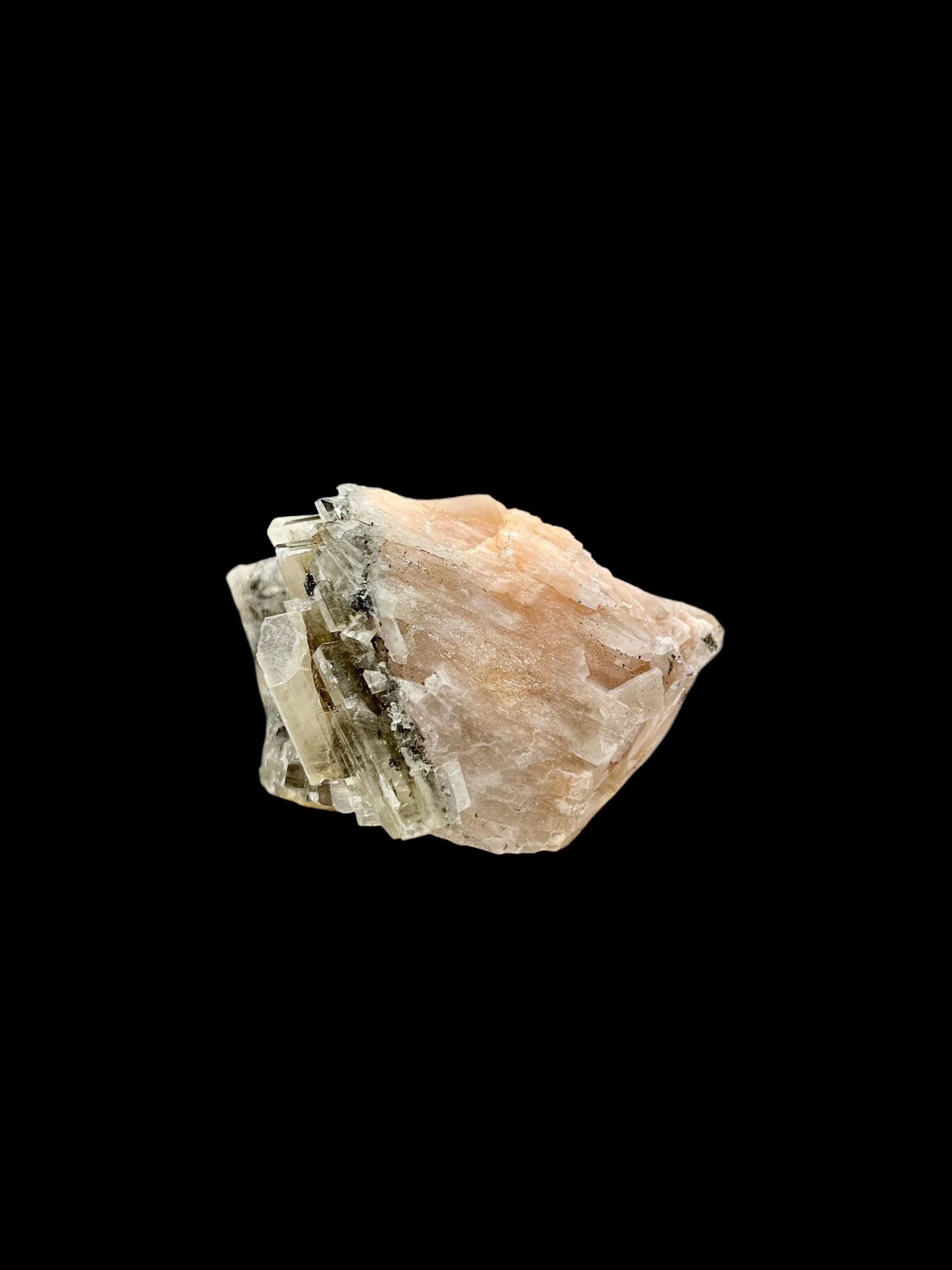 Image 4 of 5
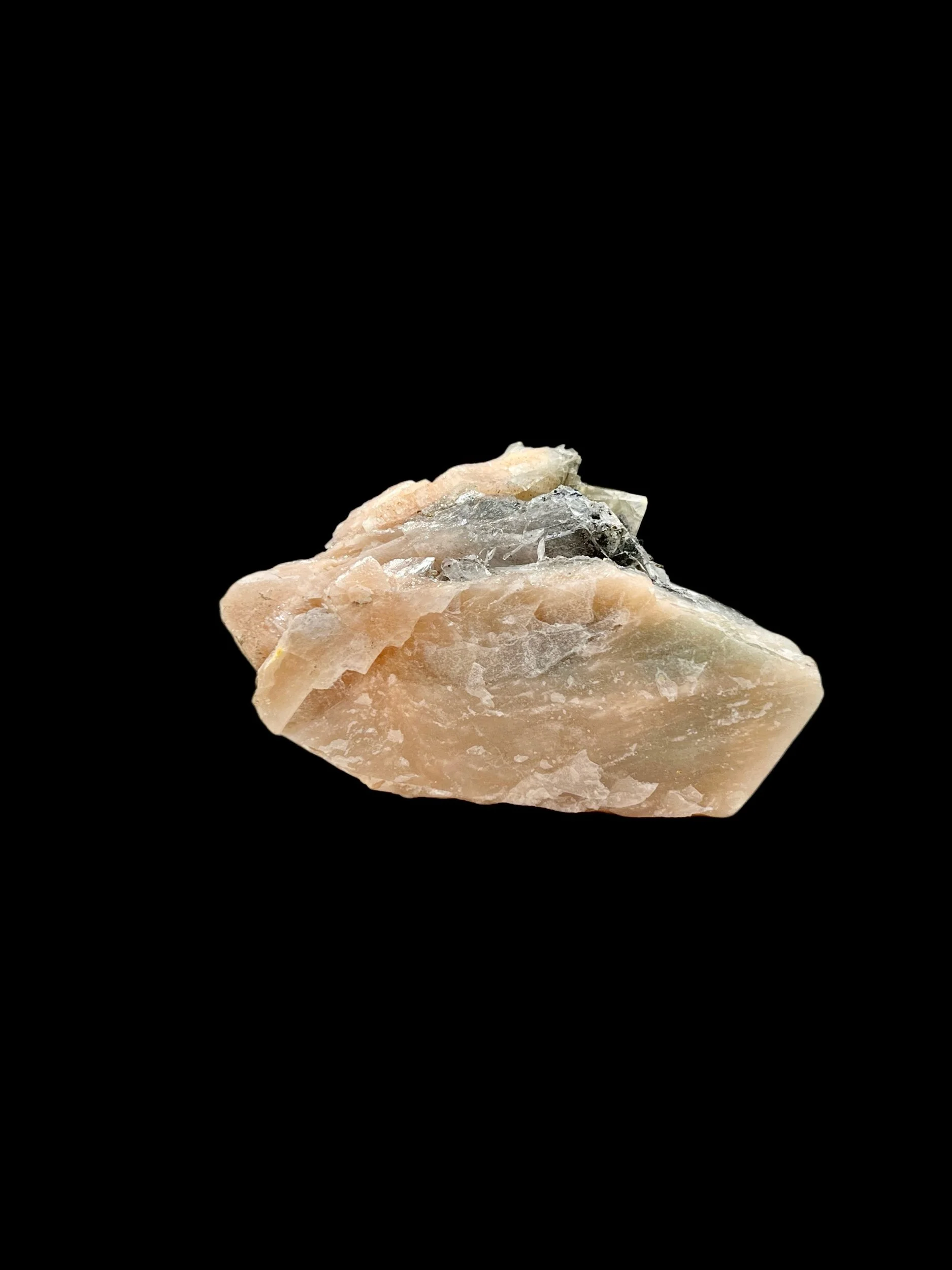 Image 5 of 5
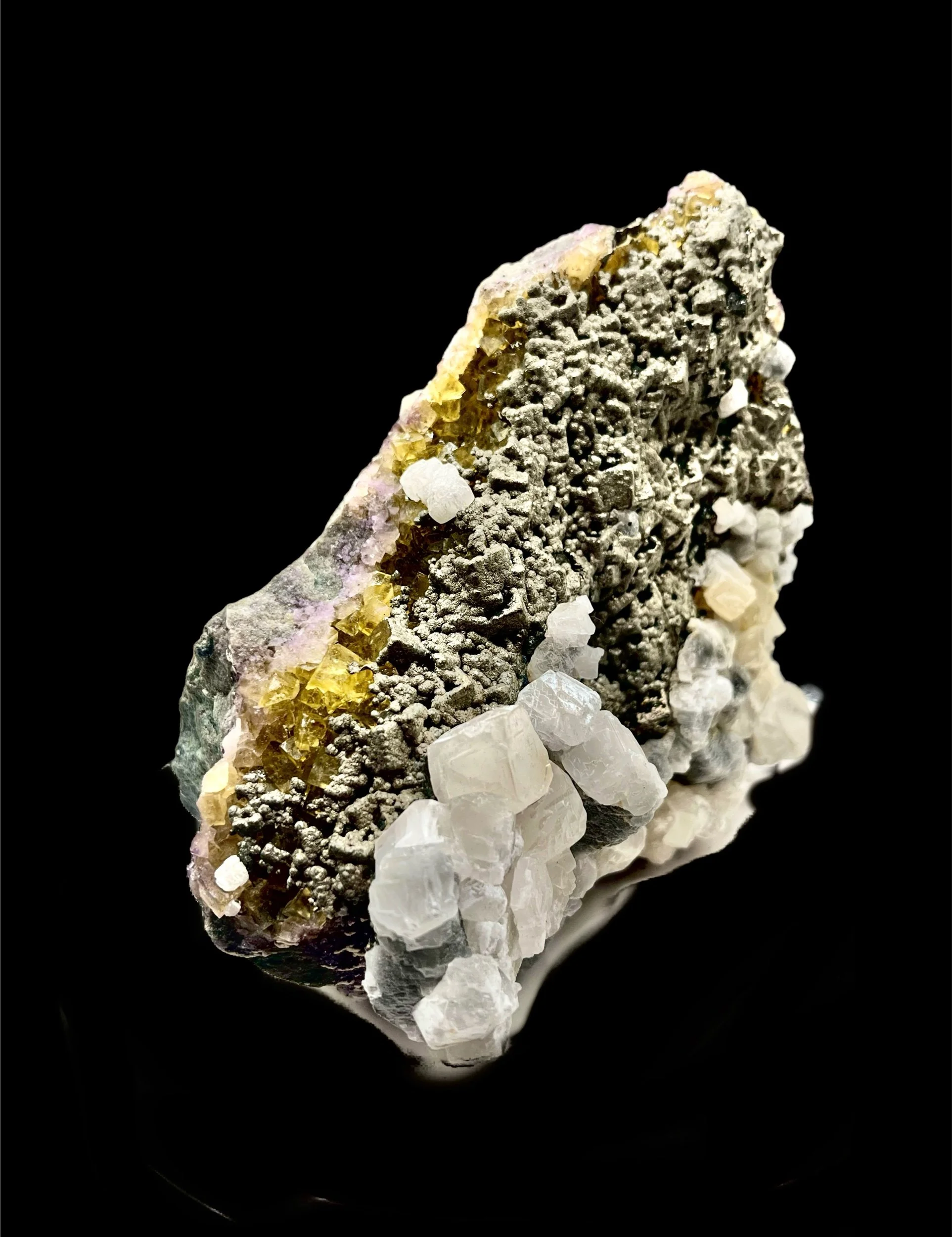
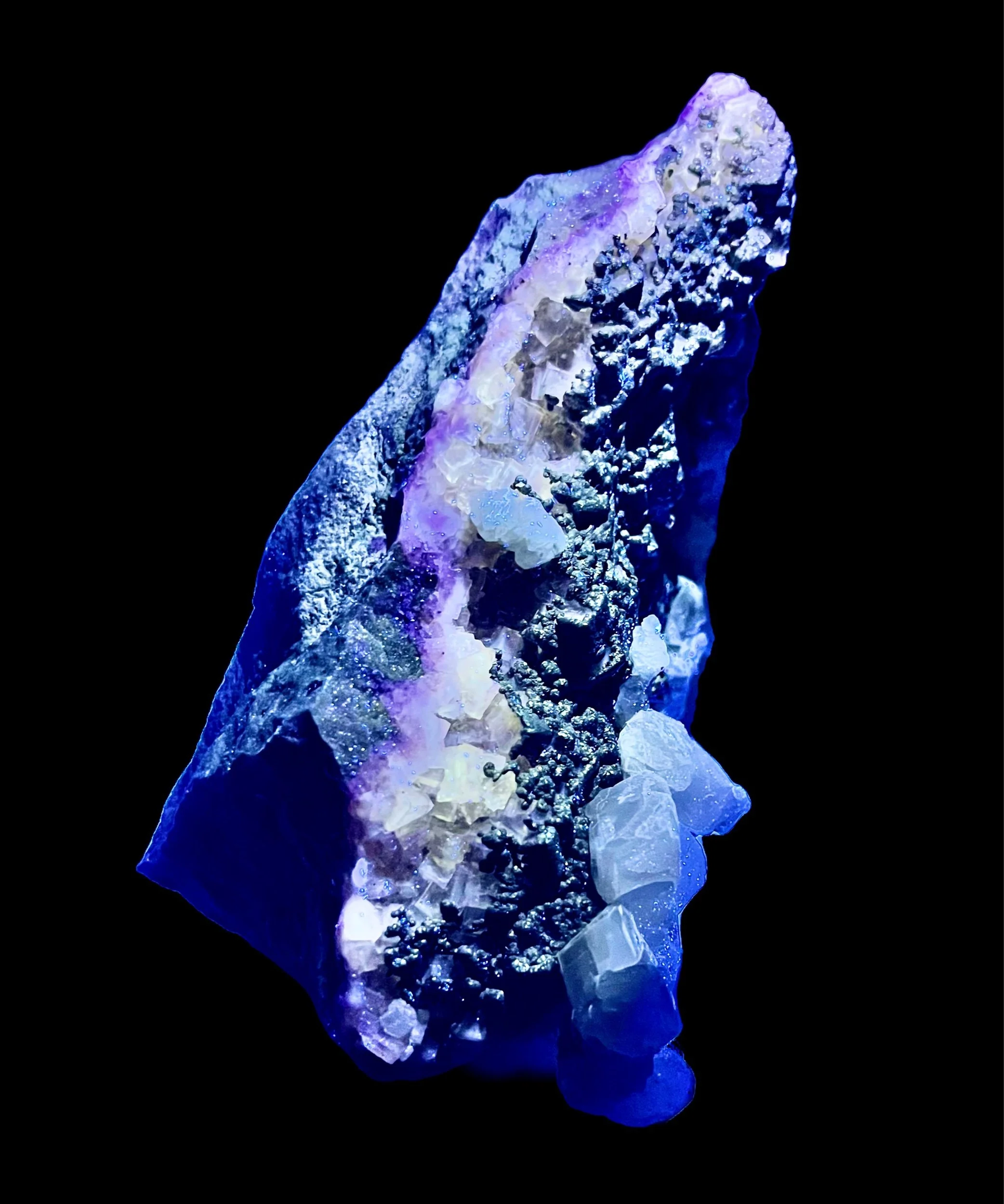
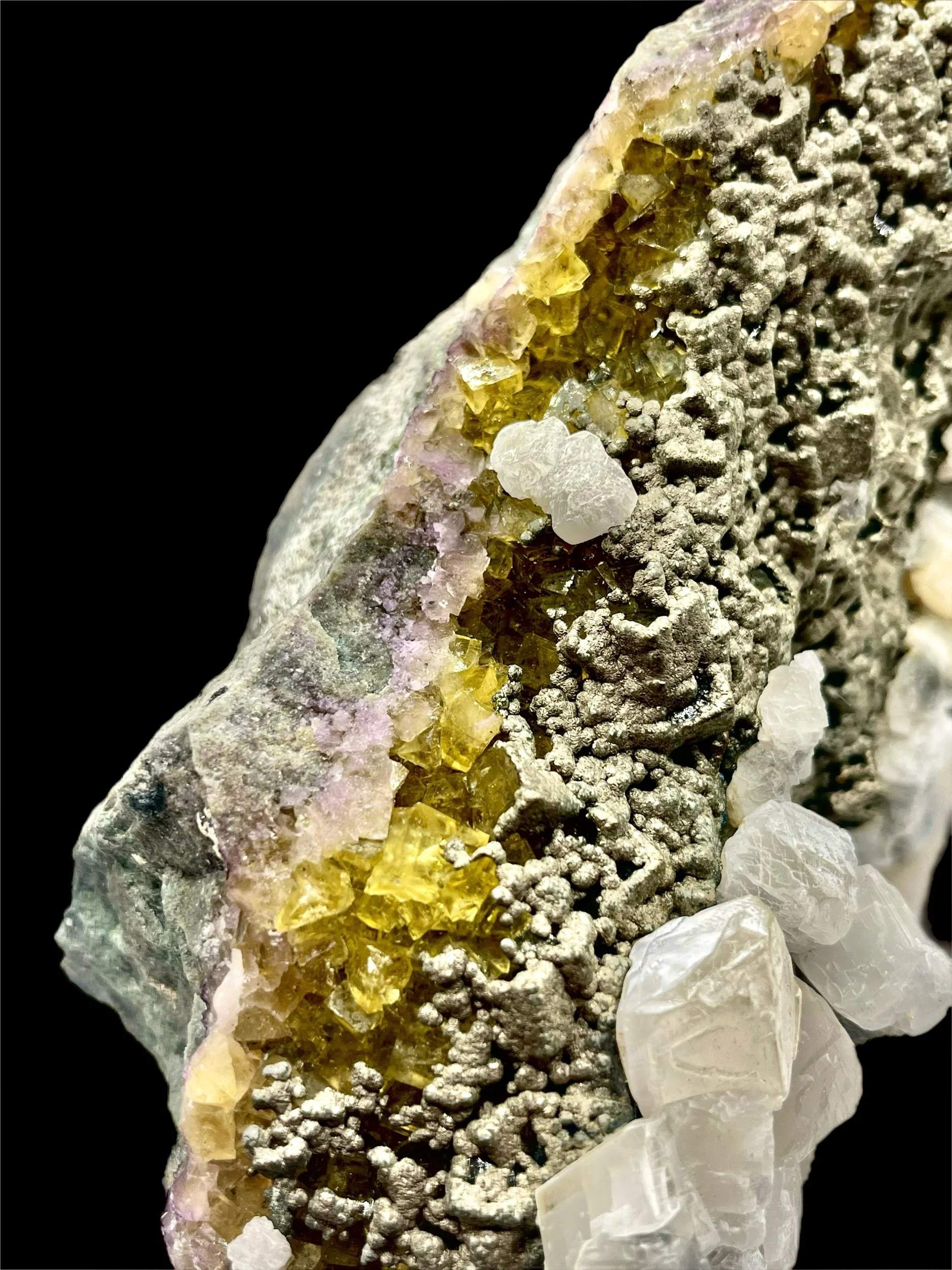
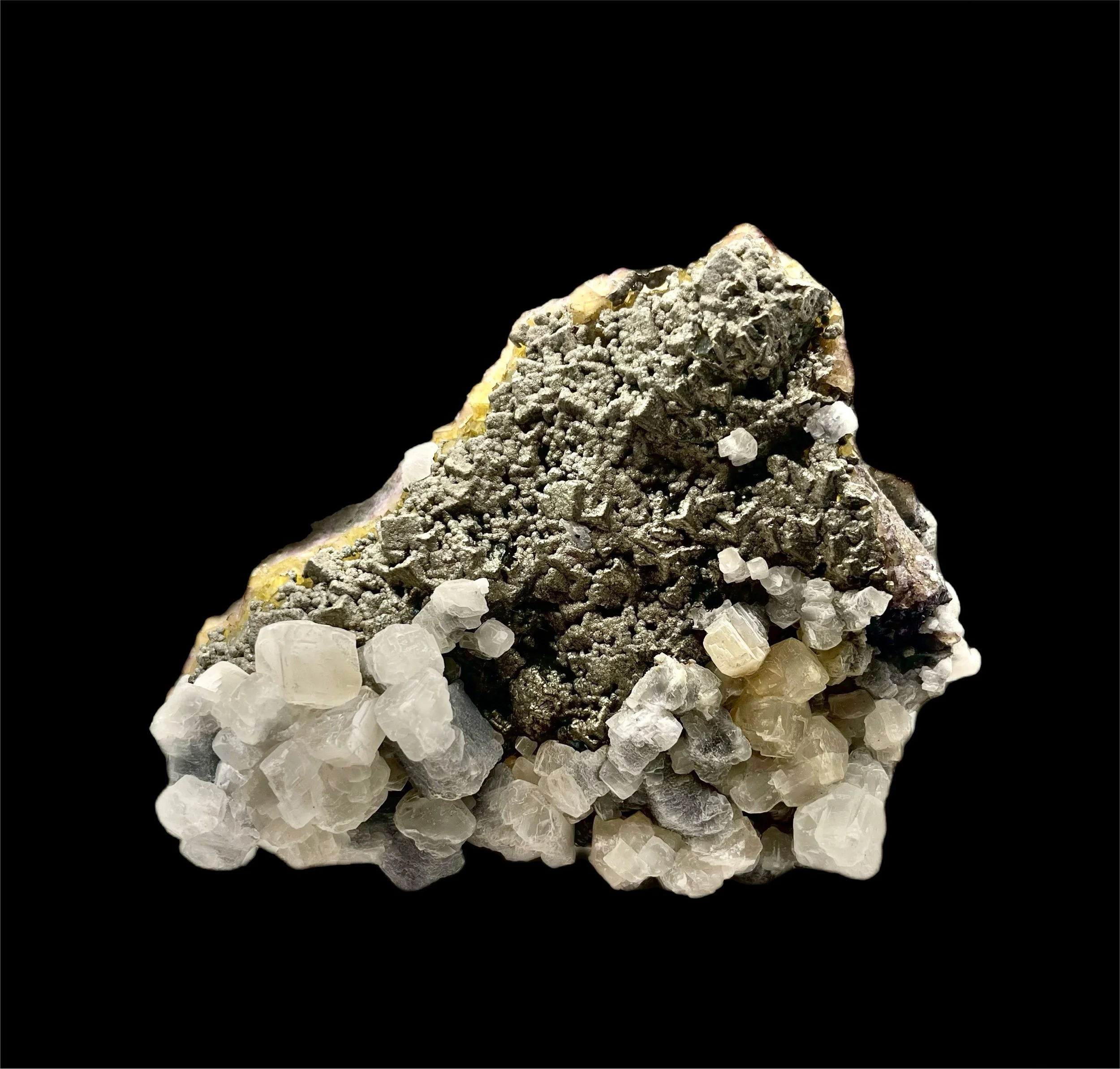
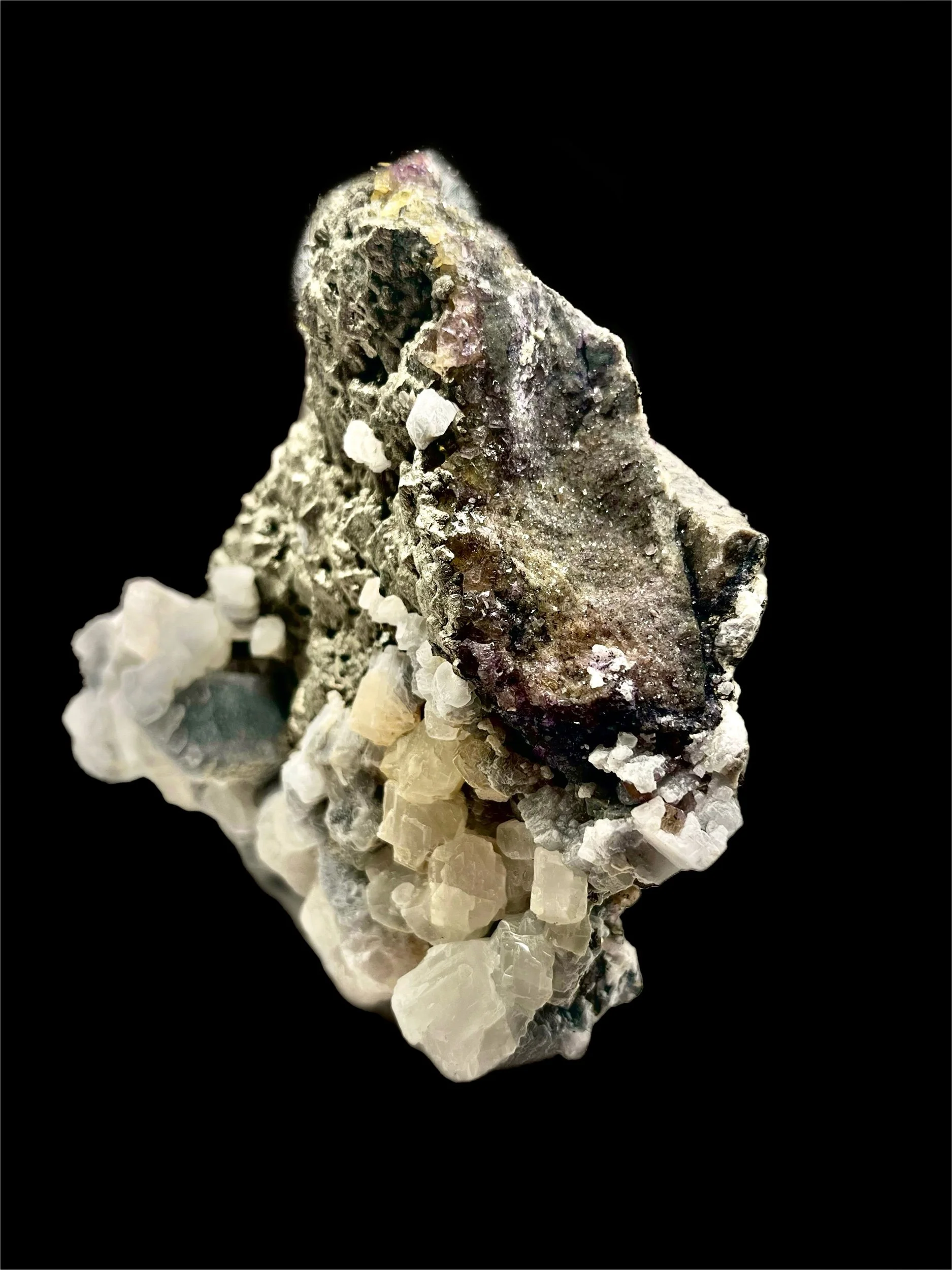
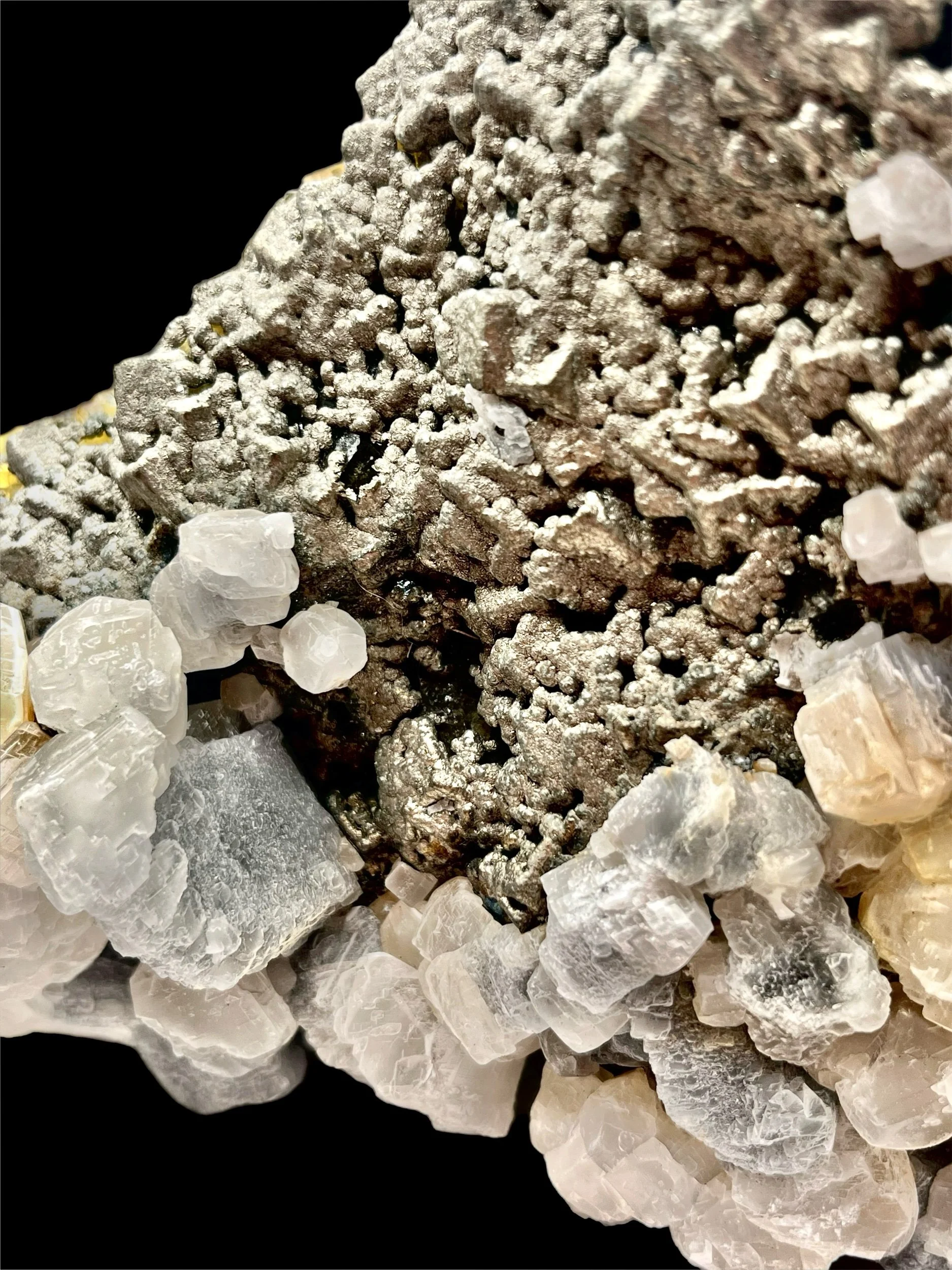
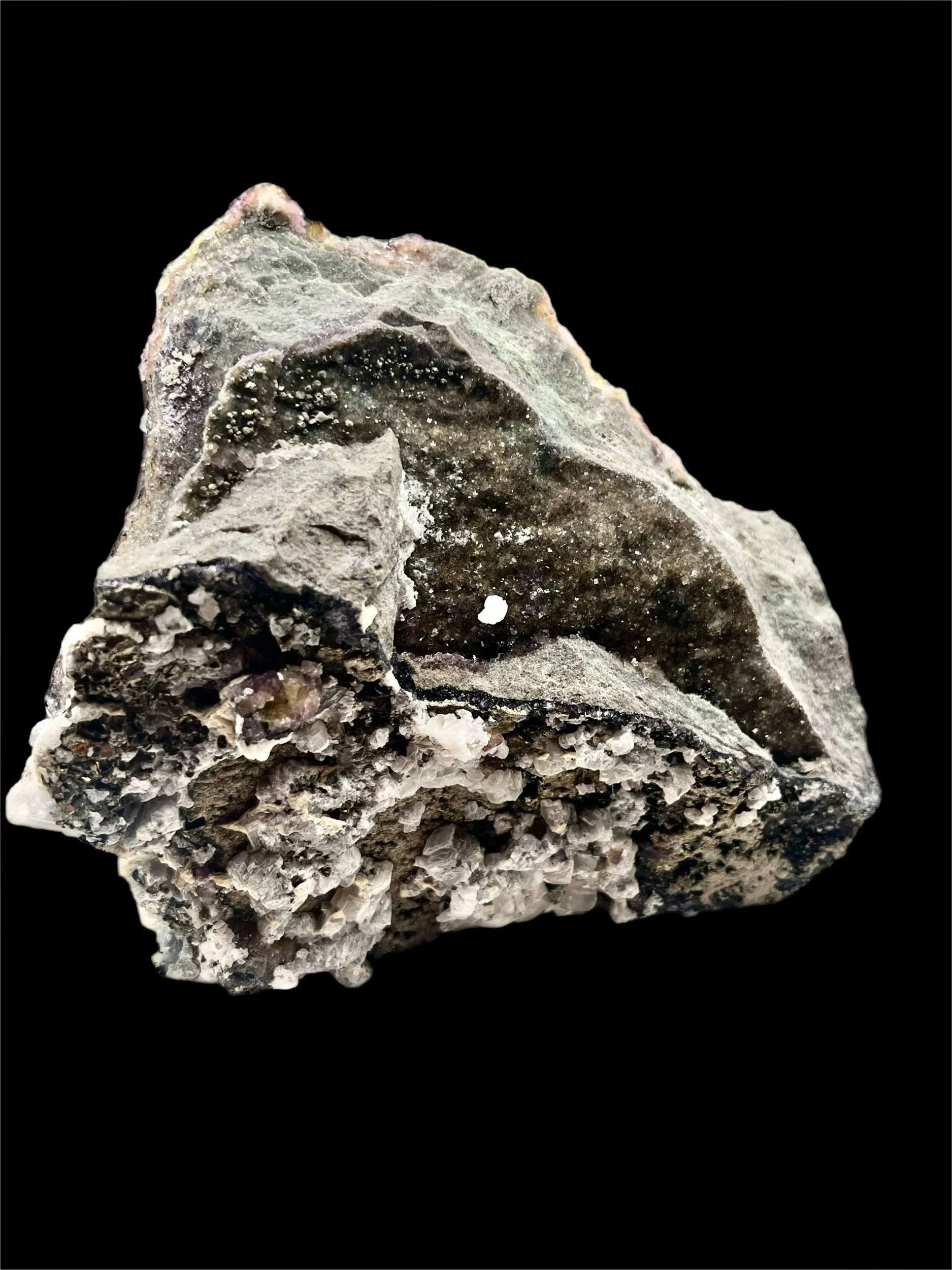
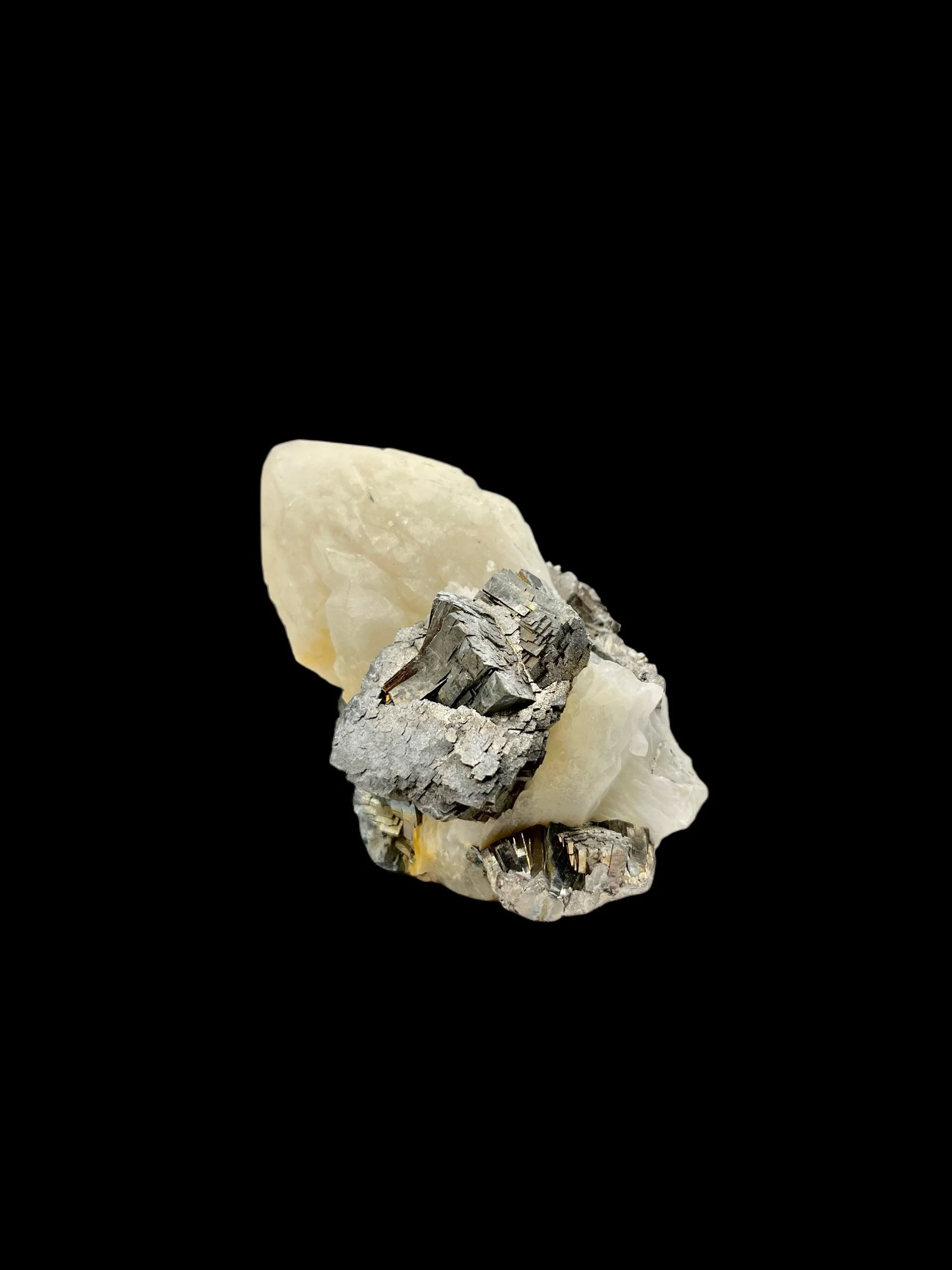
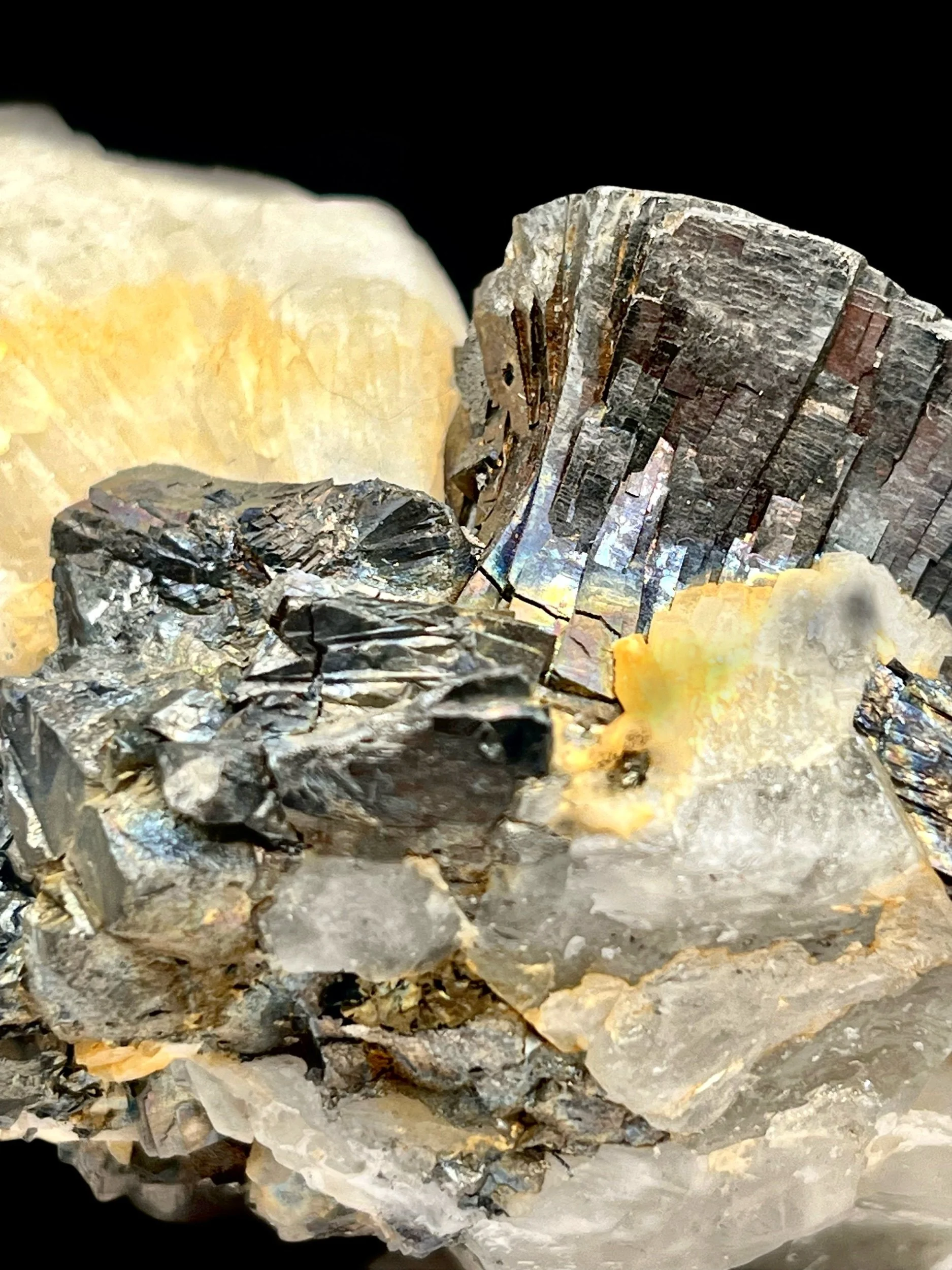
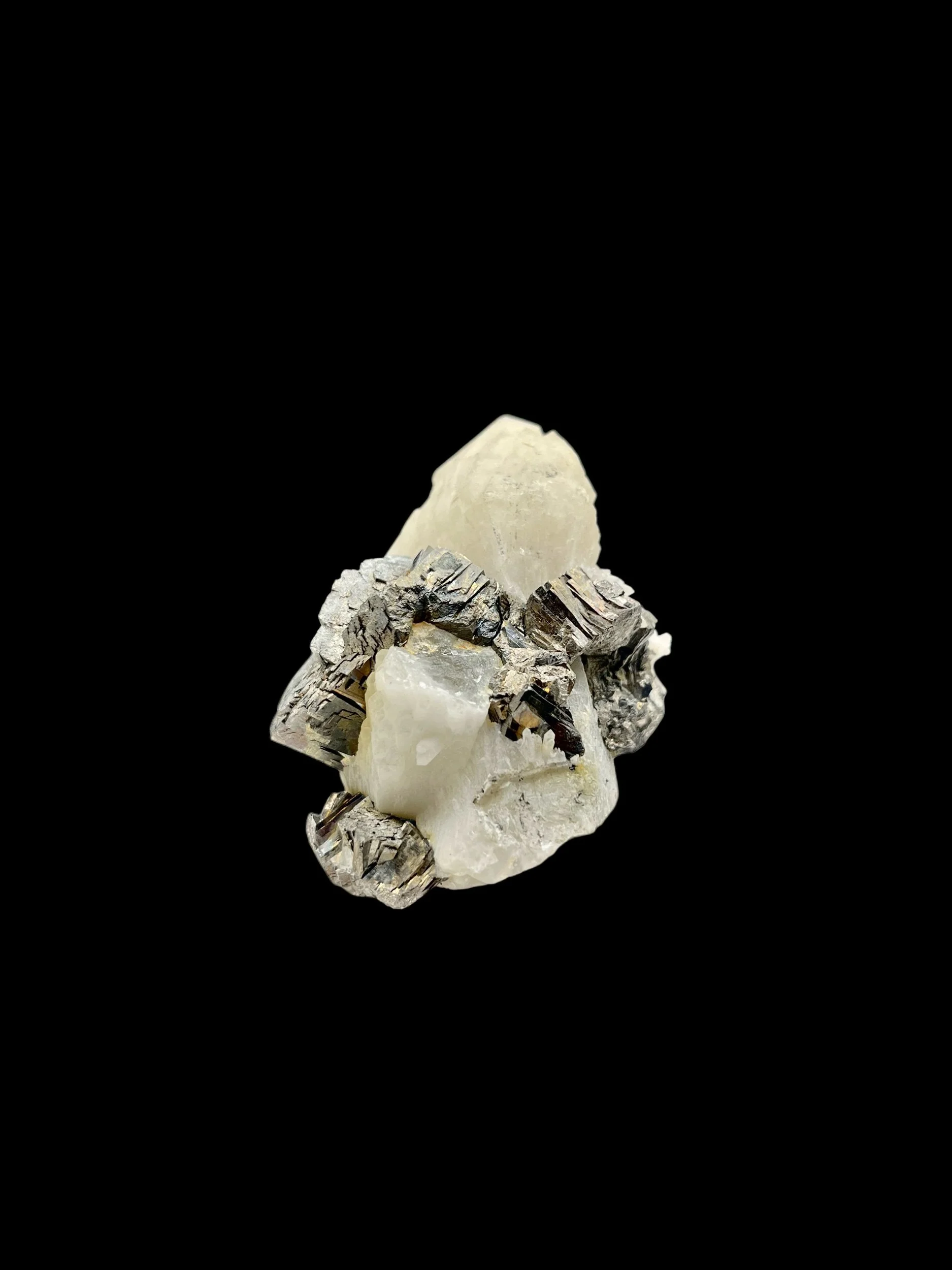
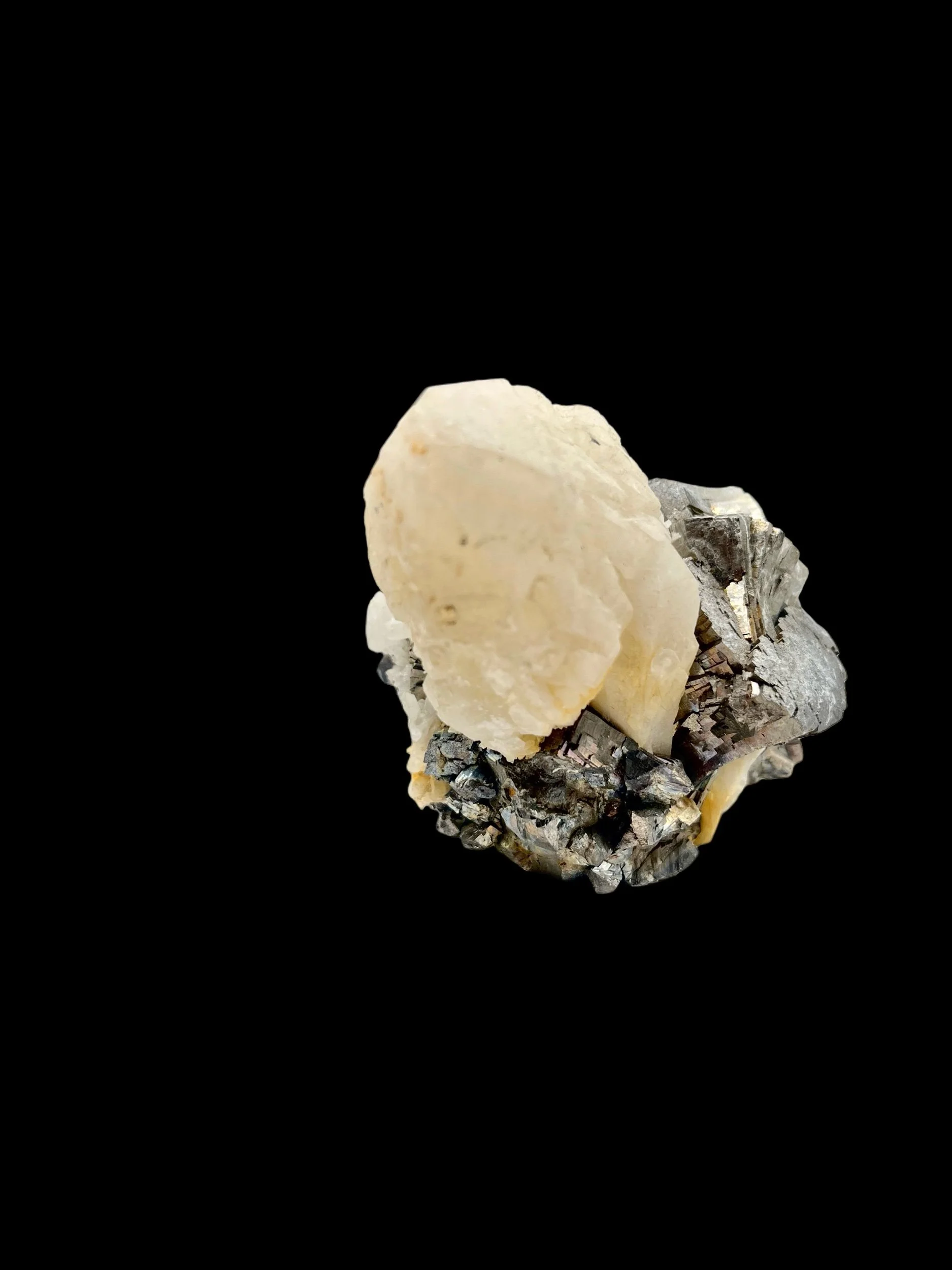
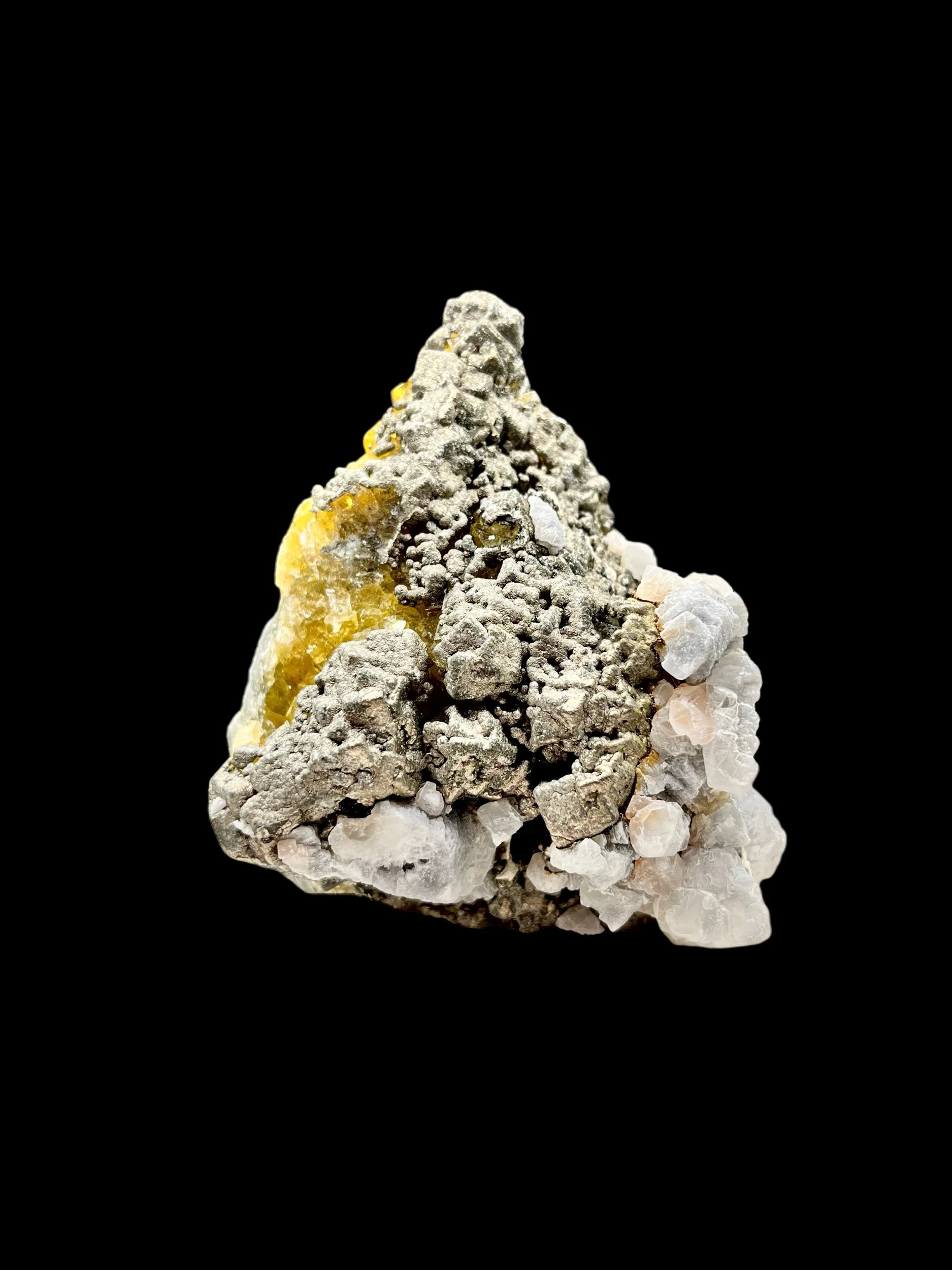
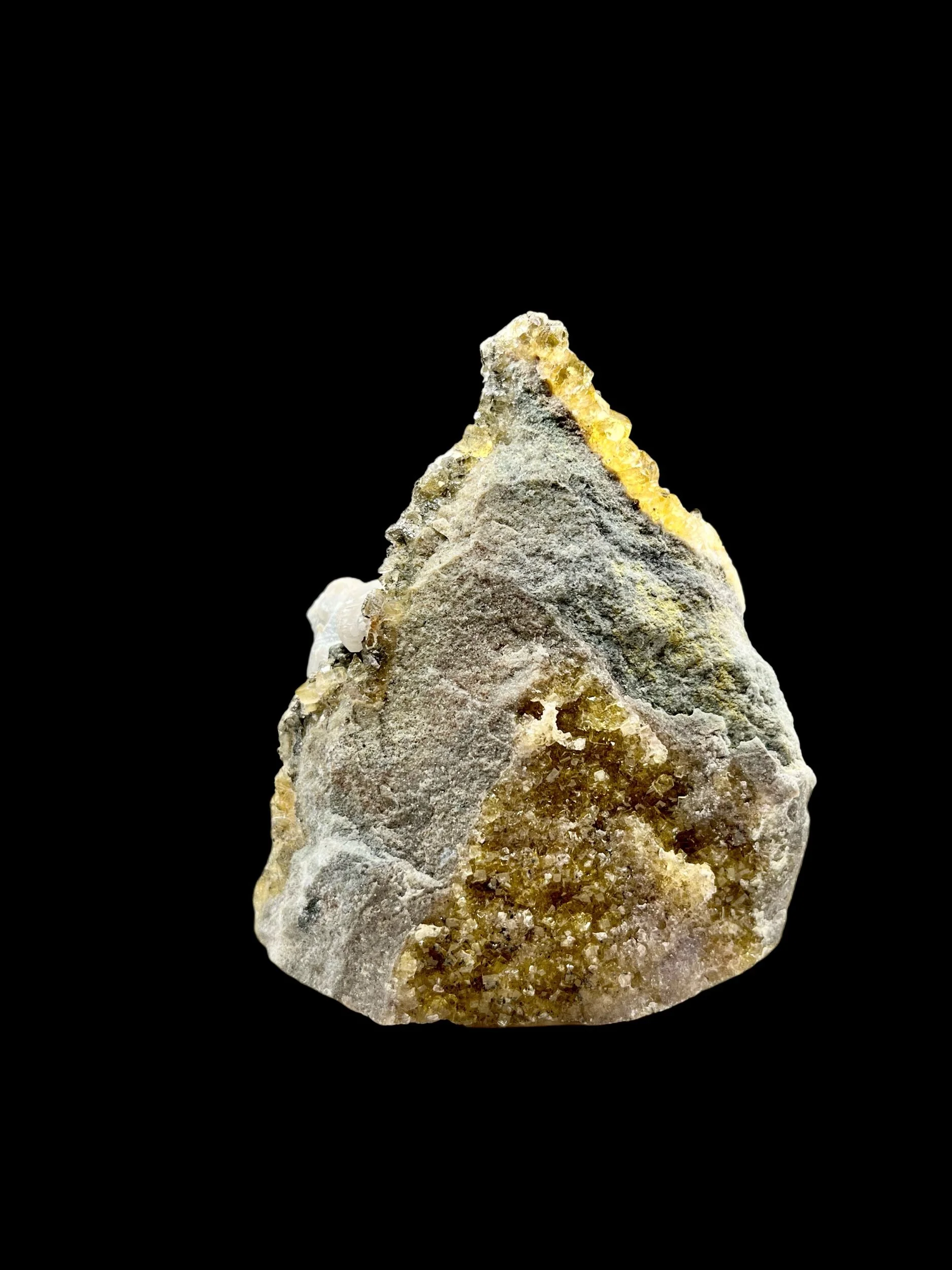
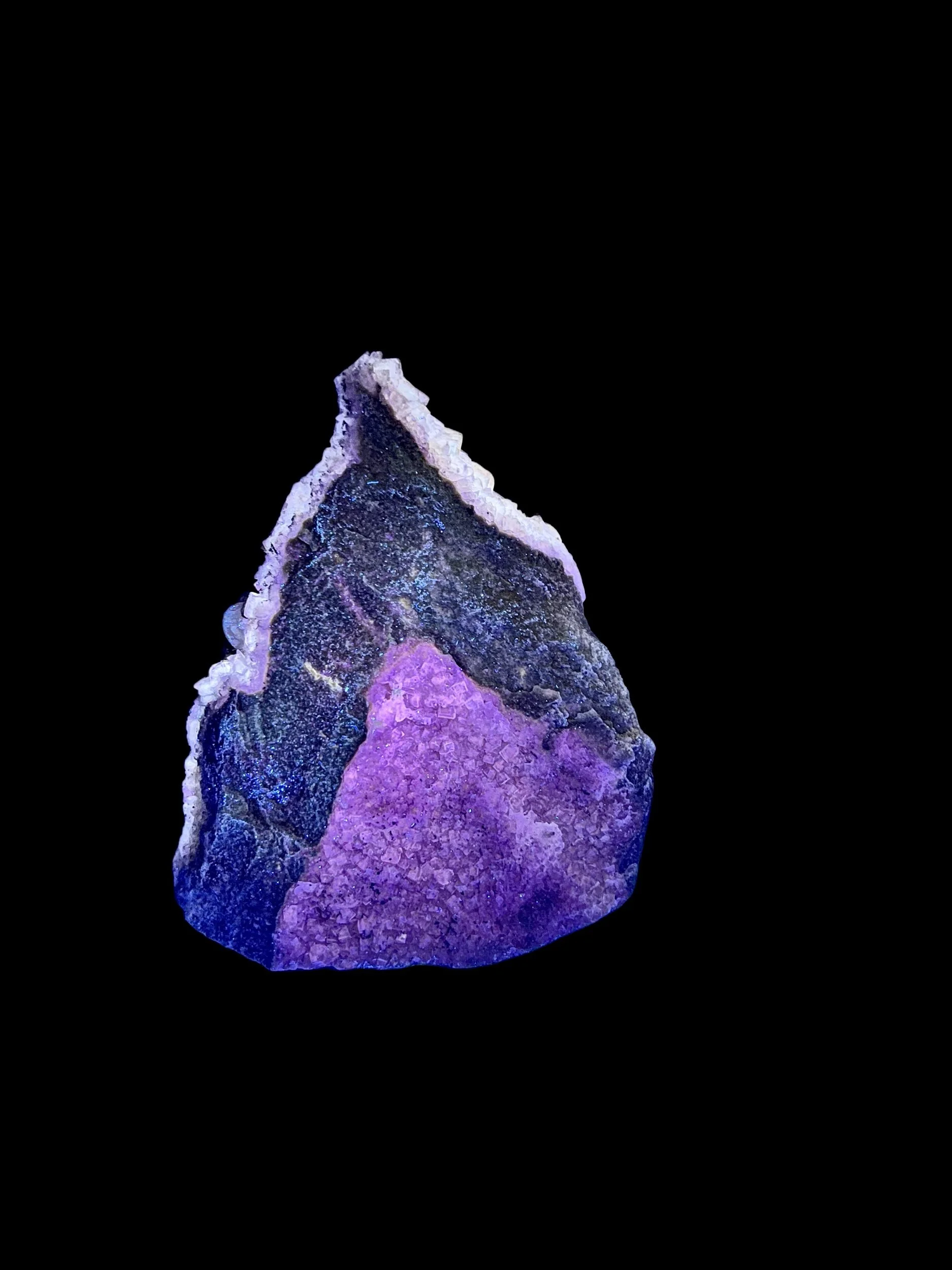
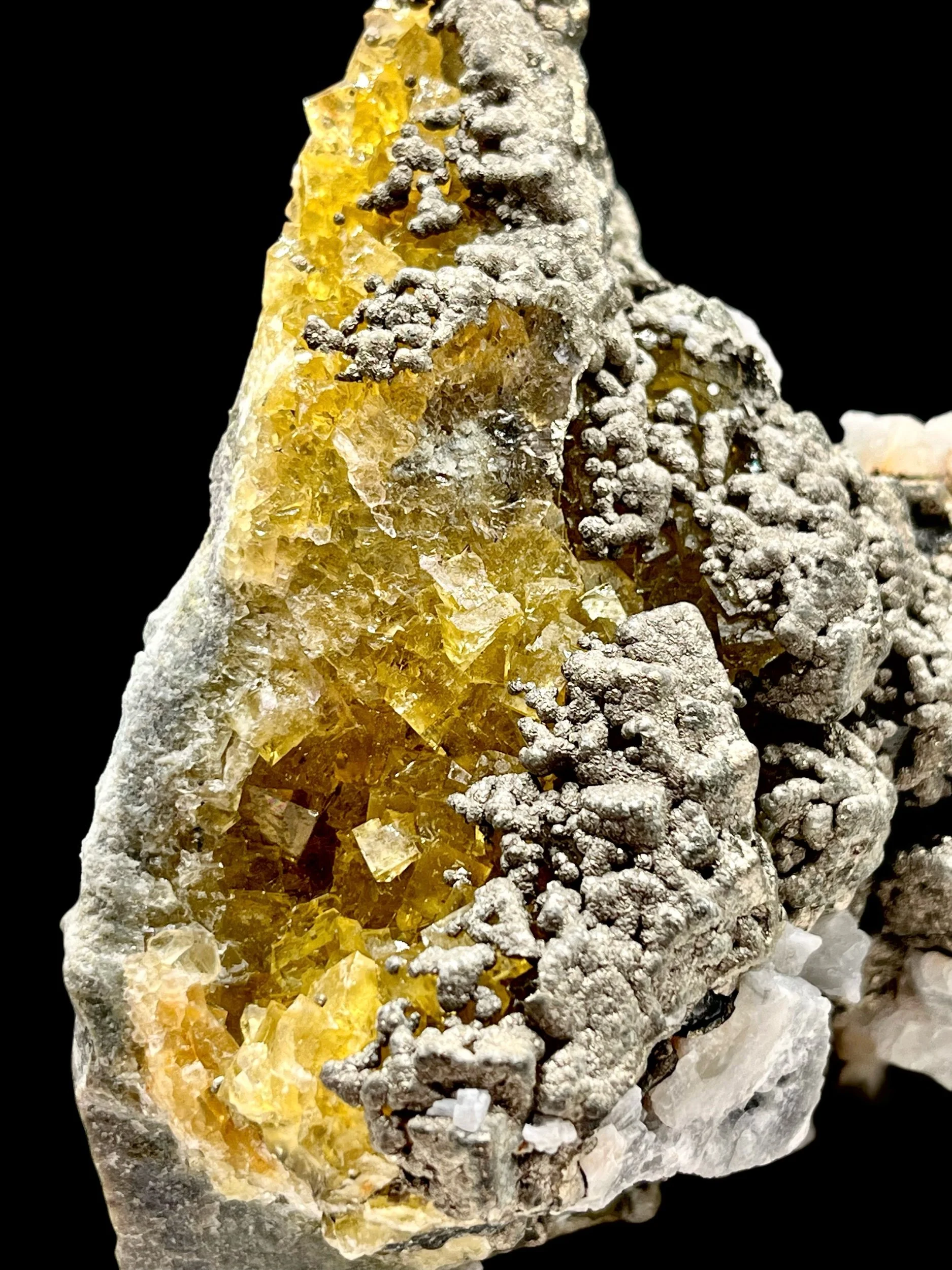
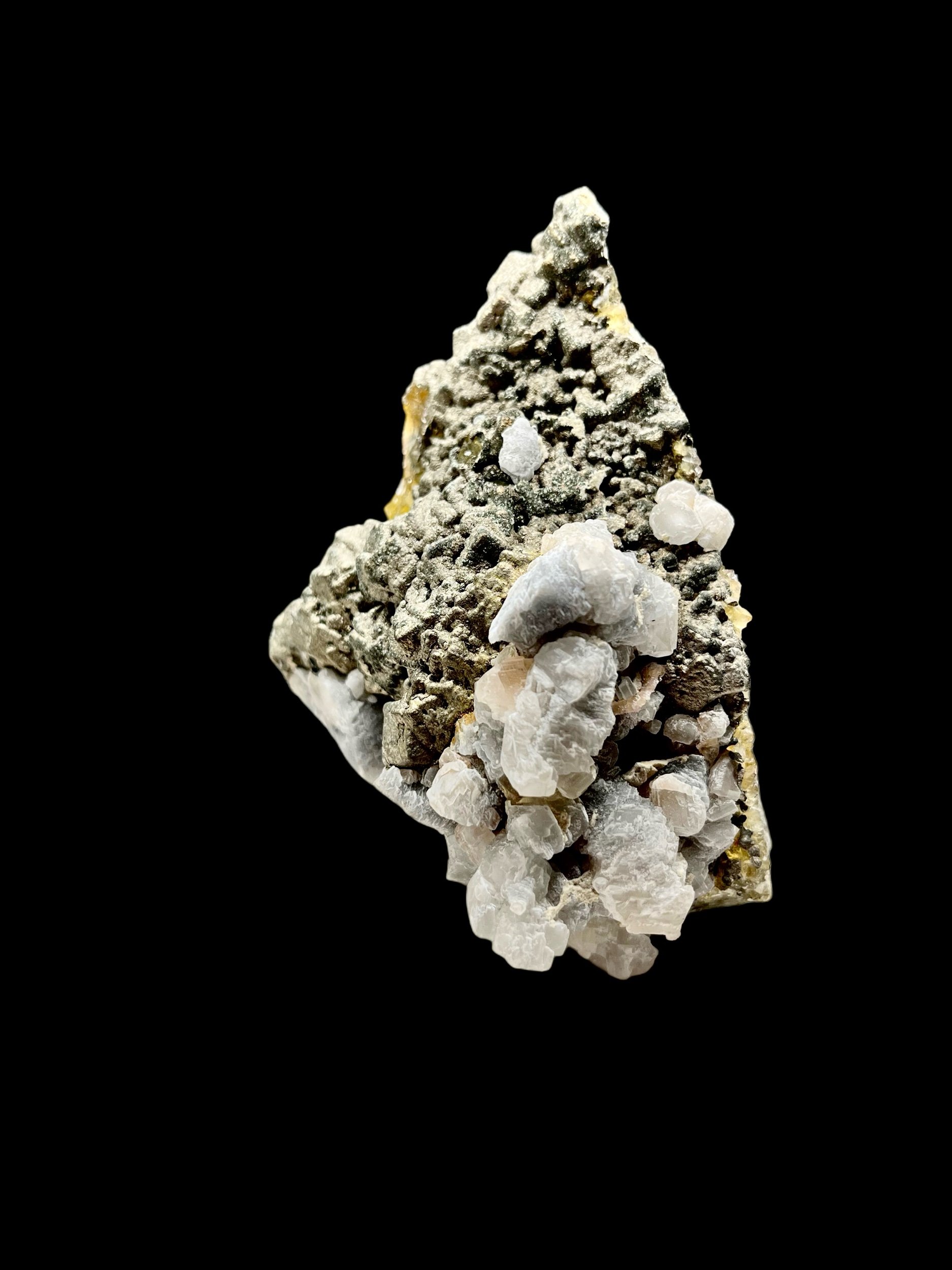
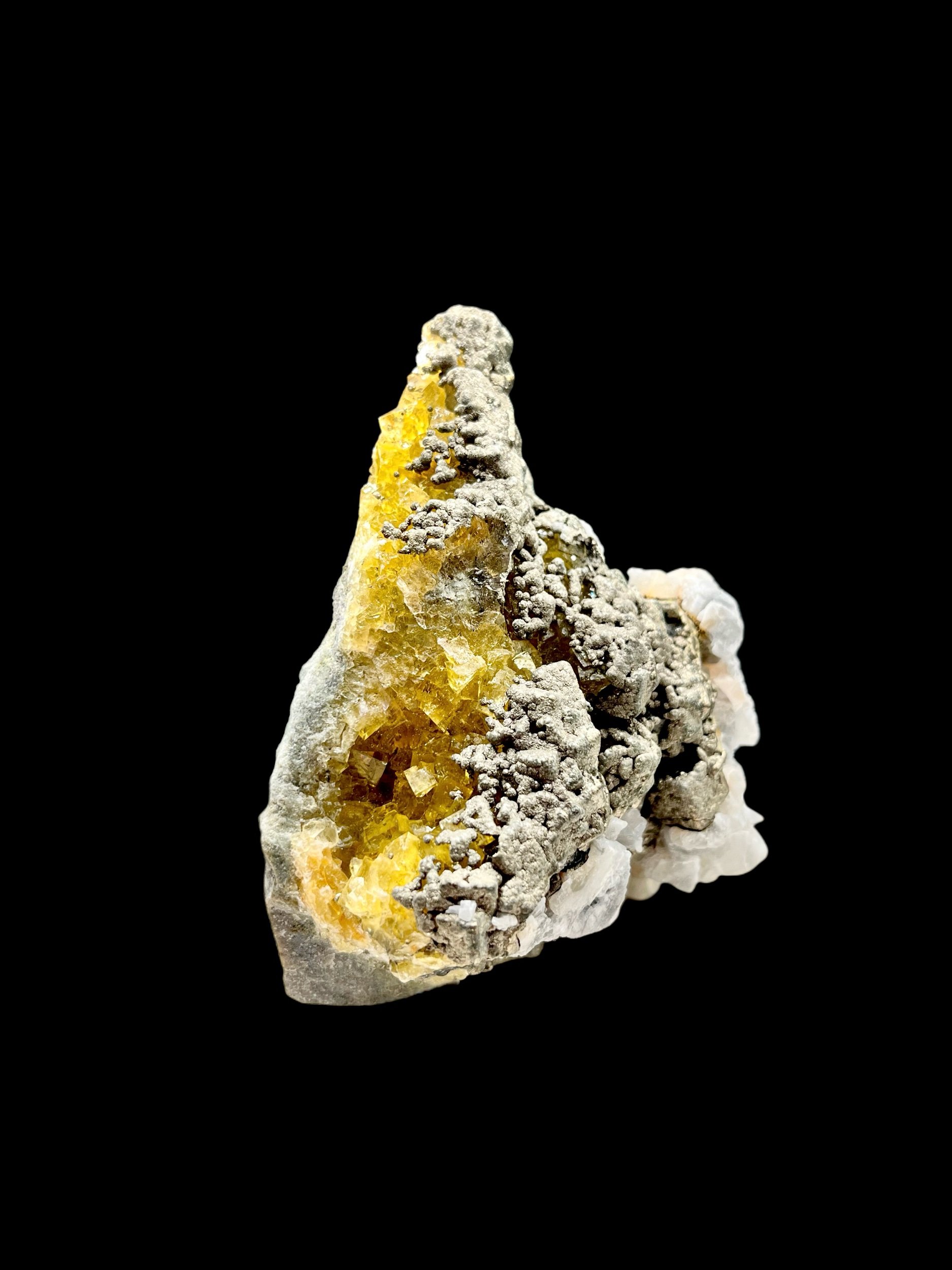
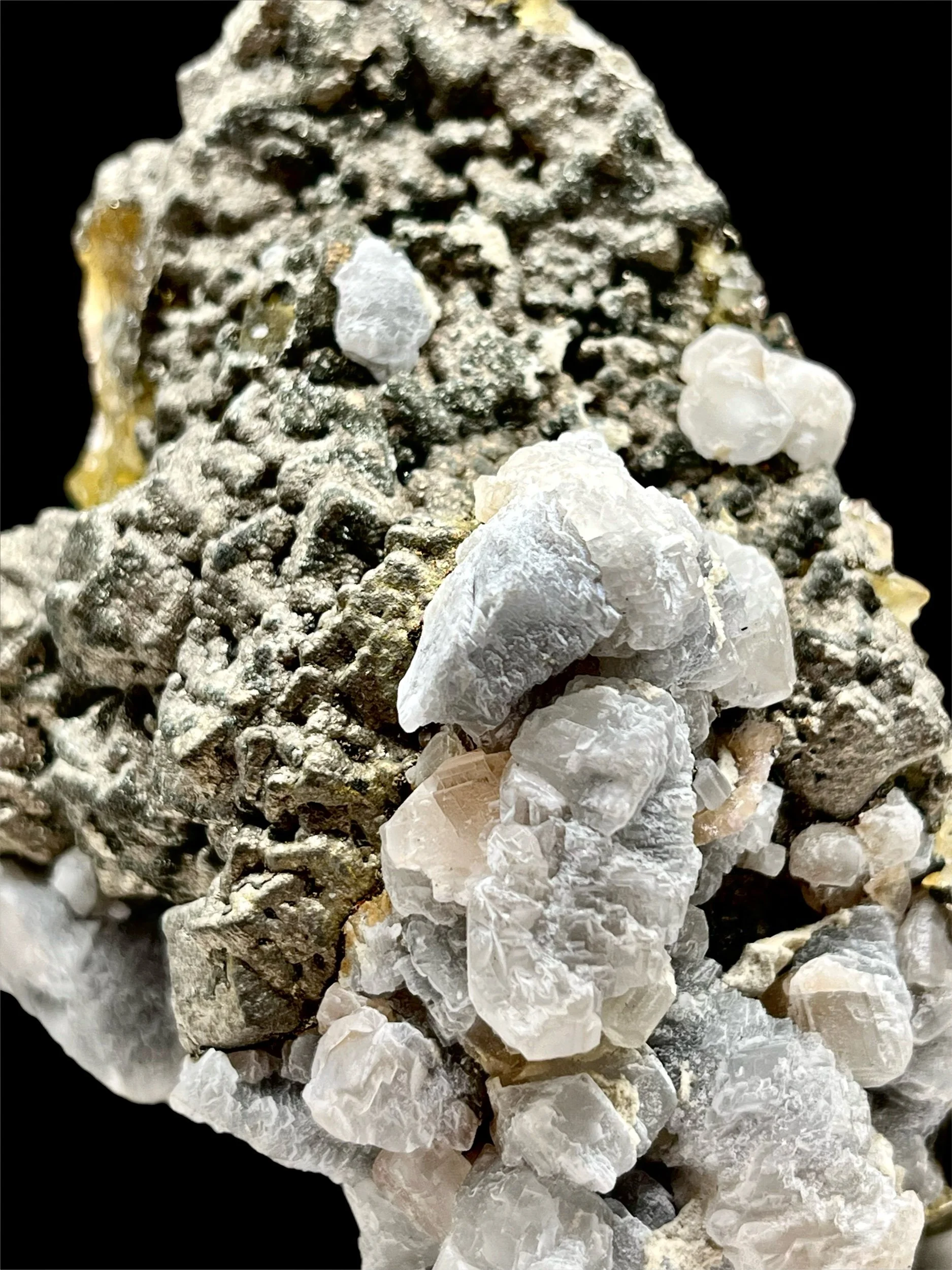
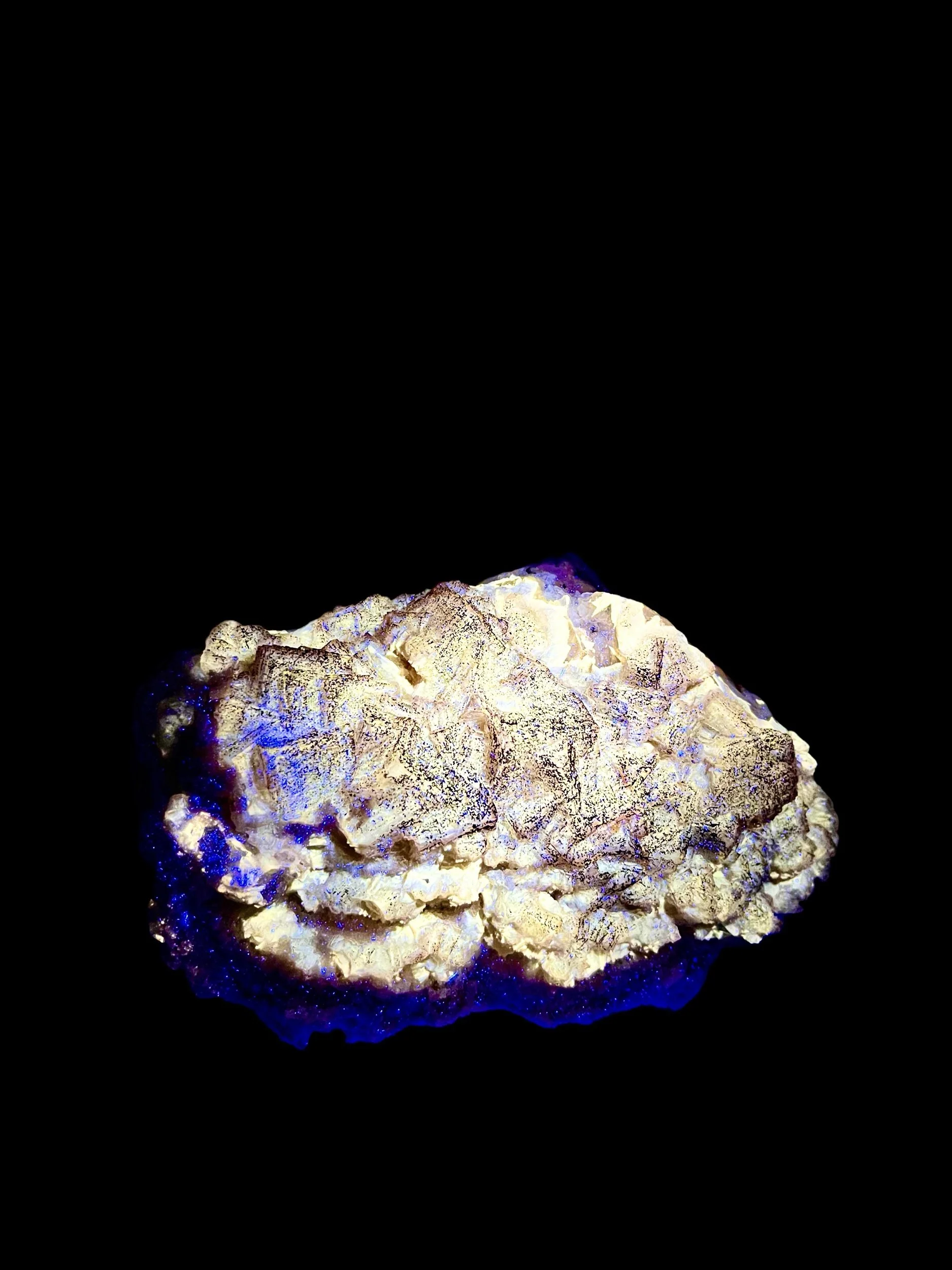
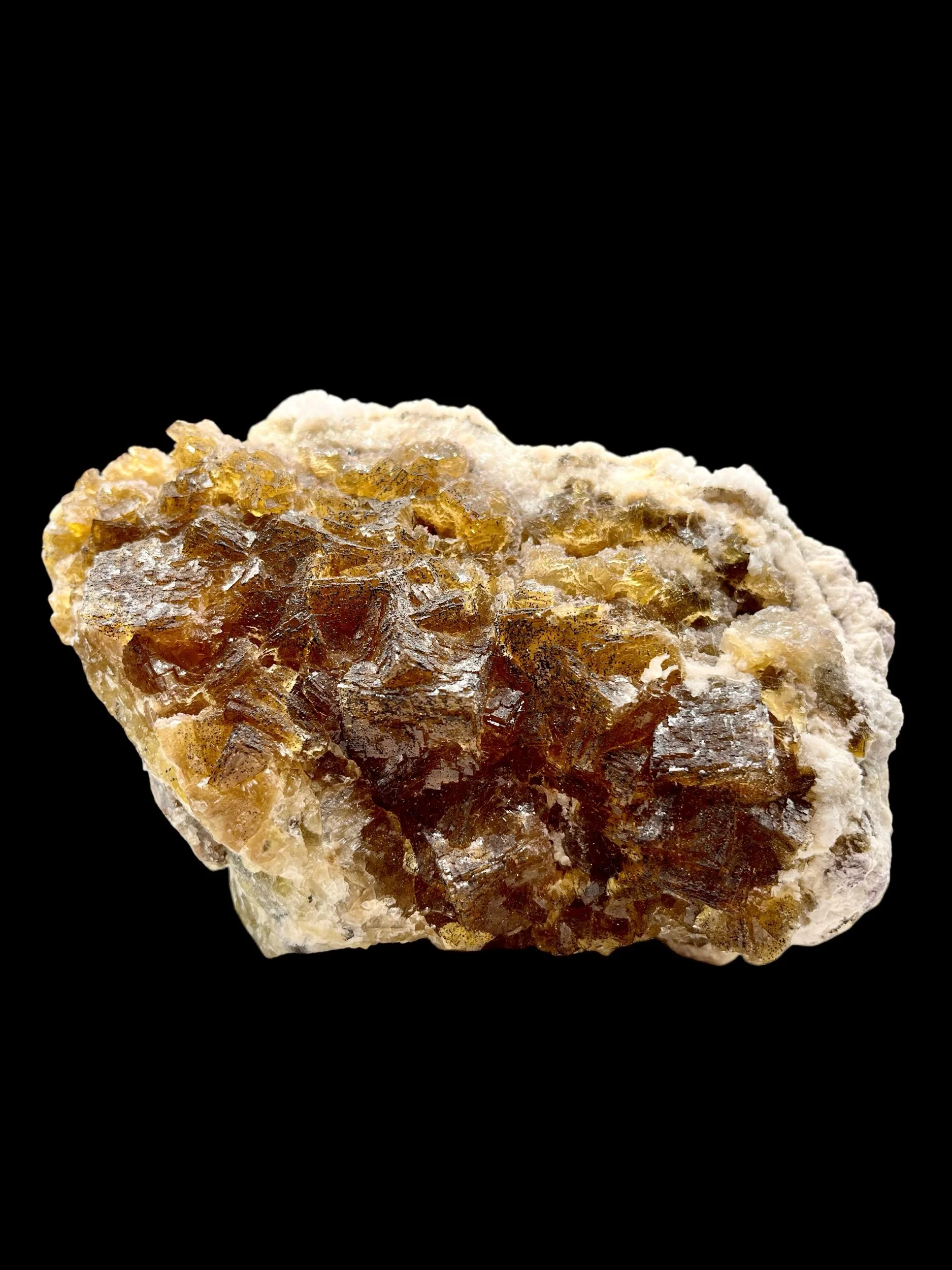
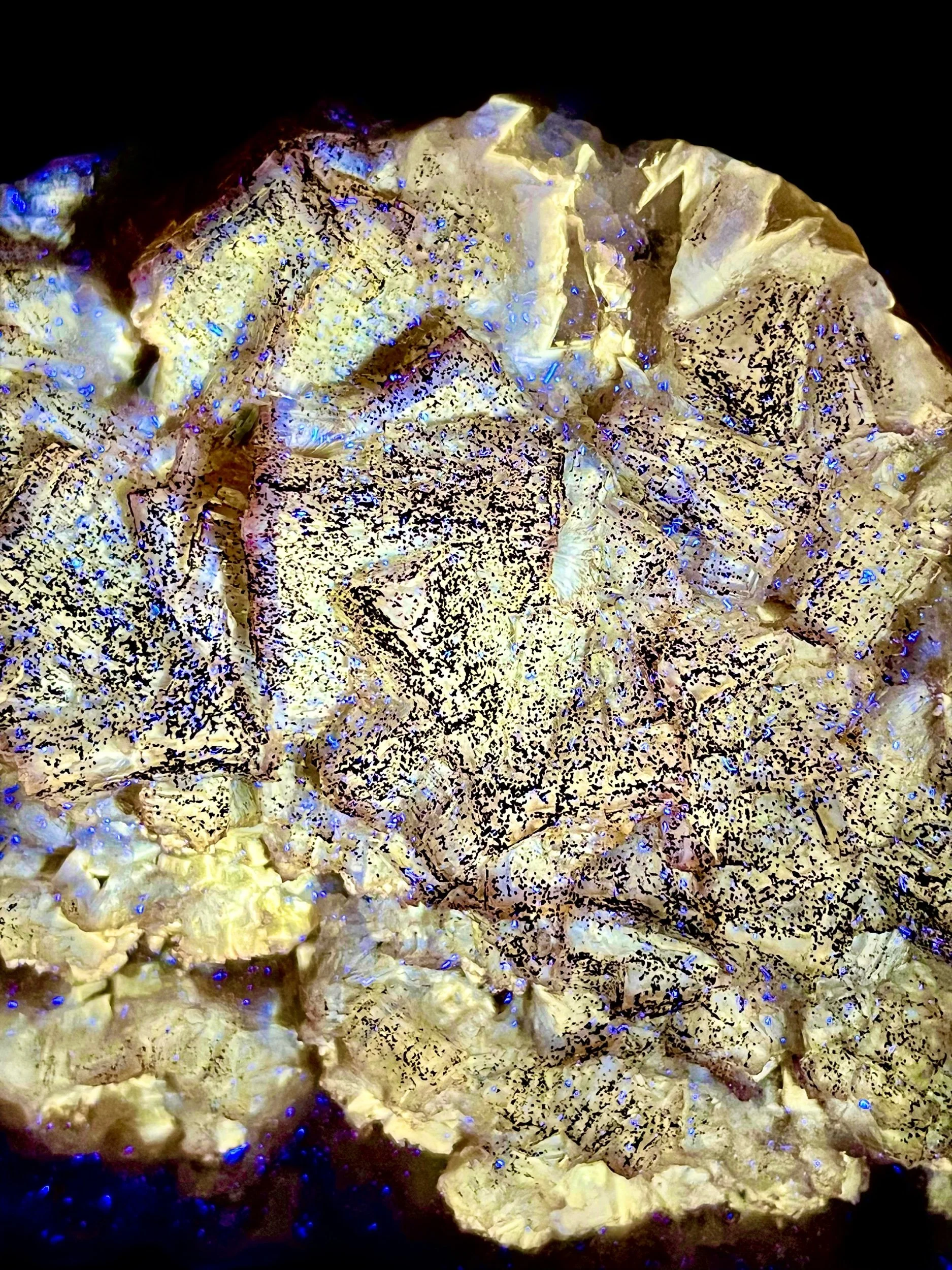
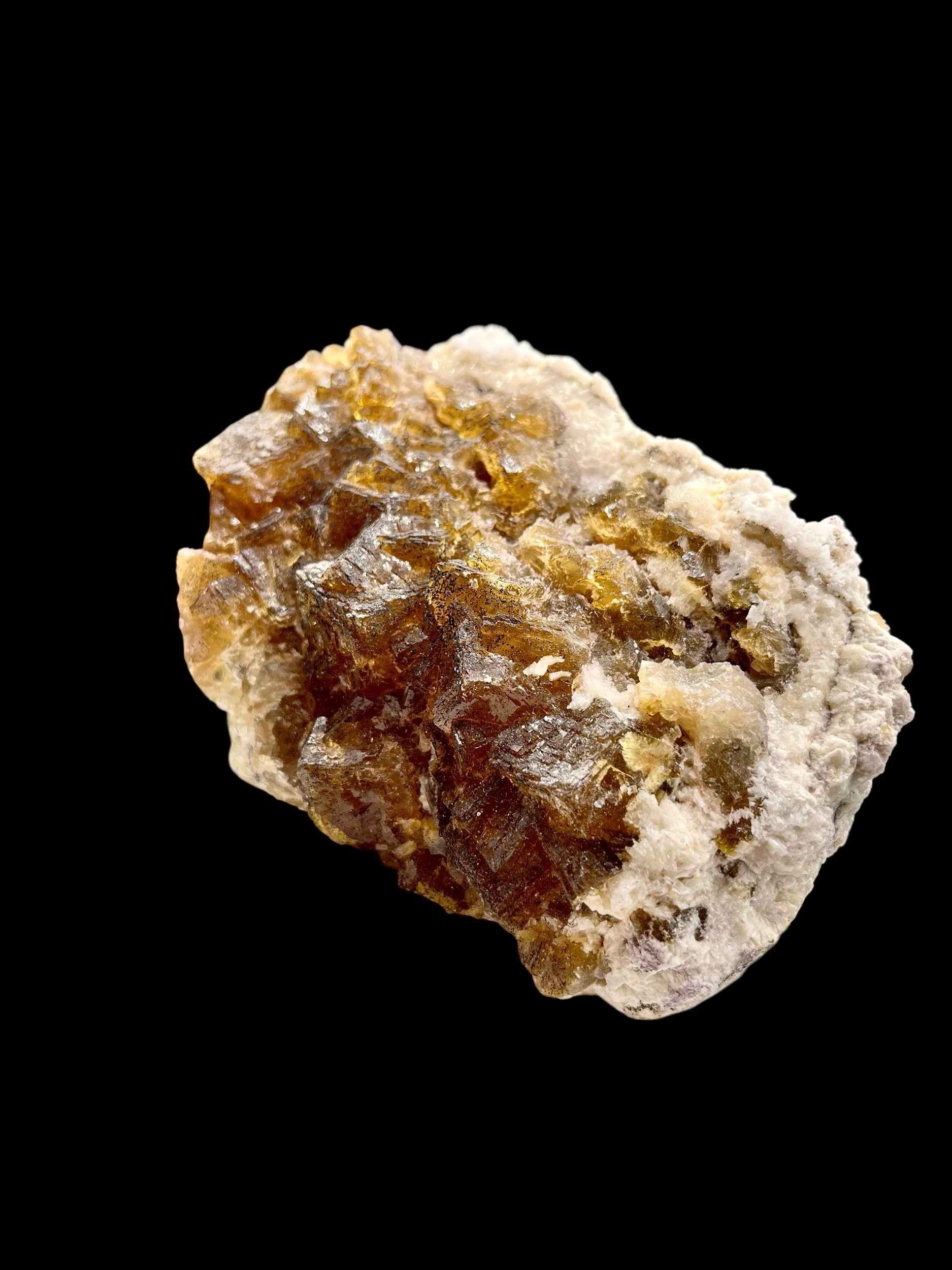
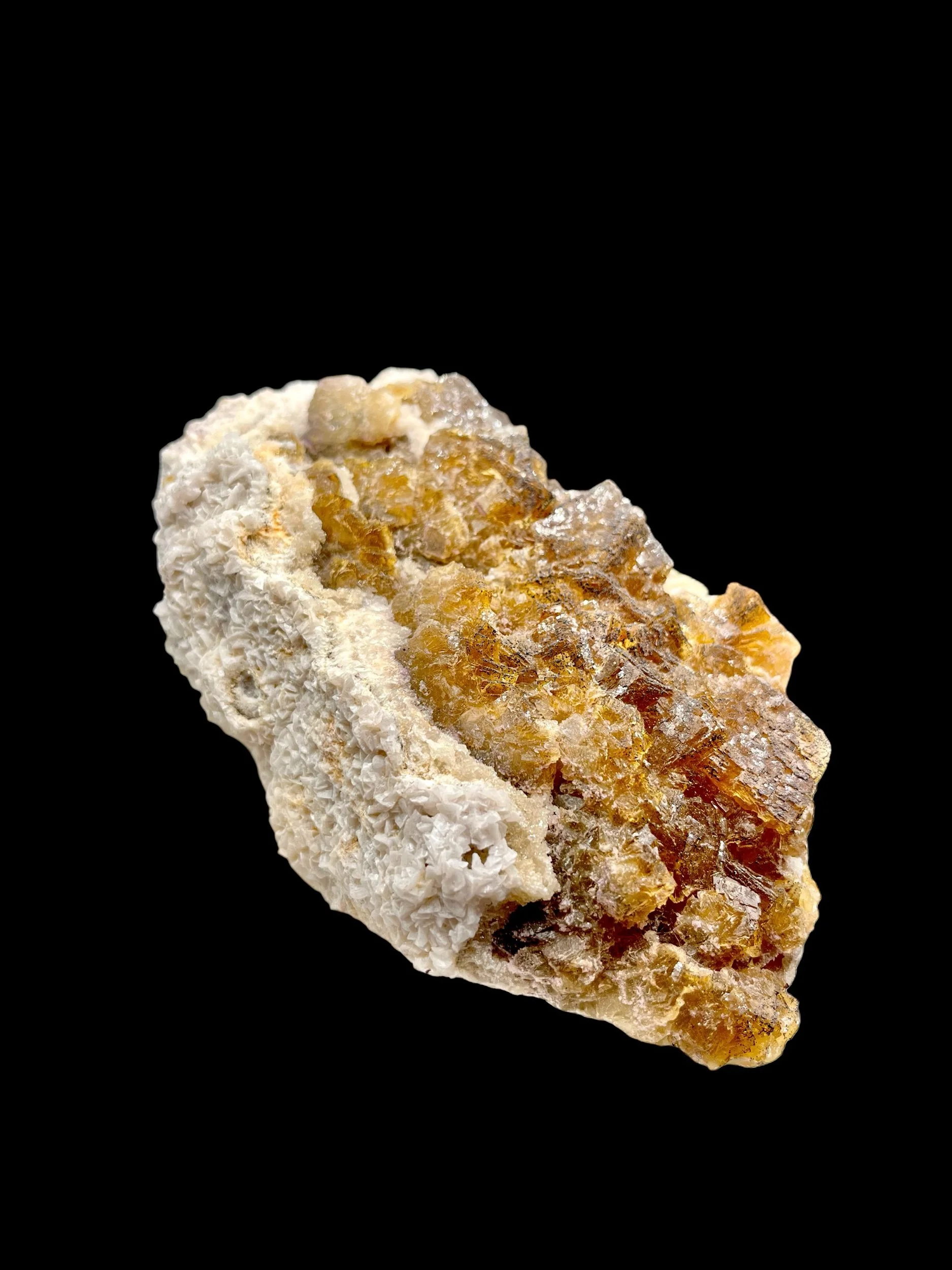
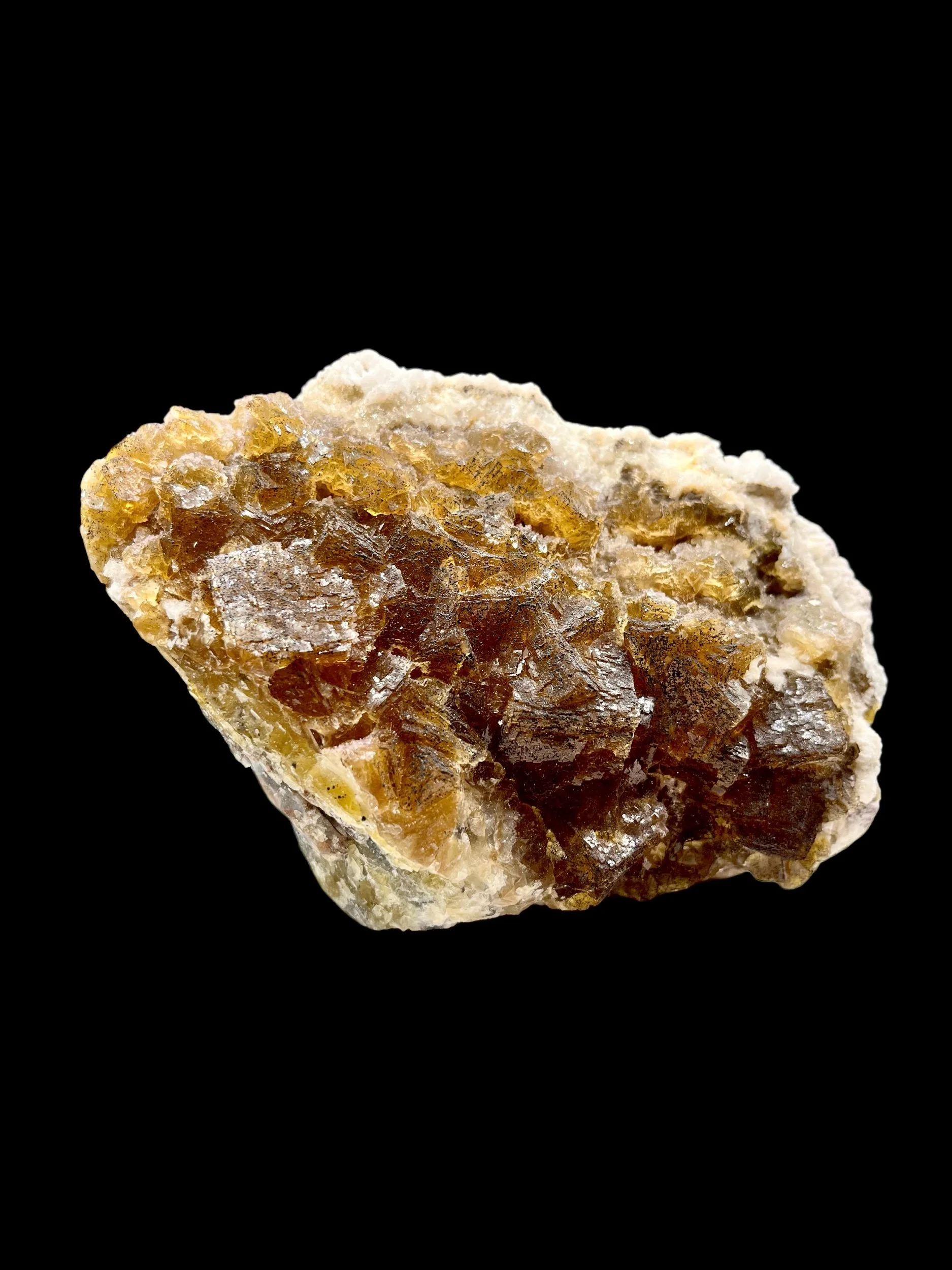
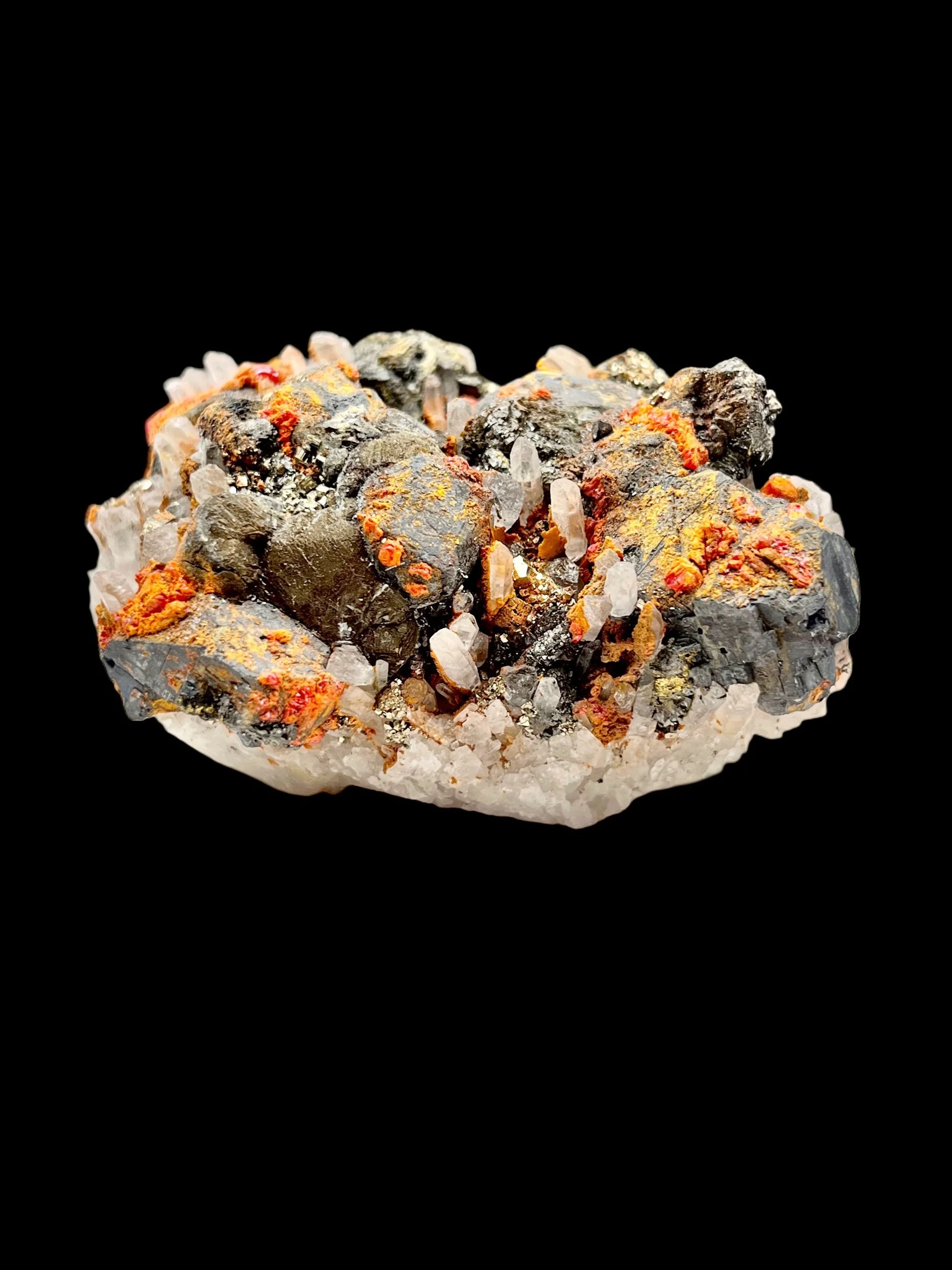
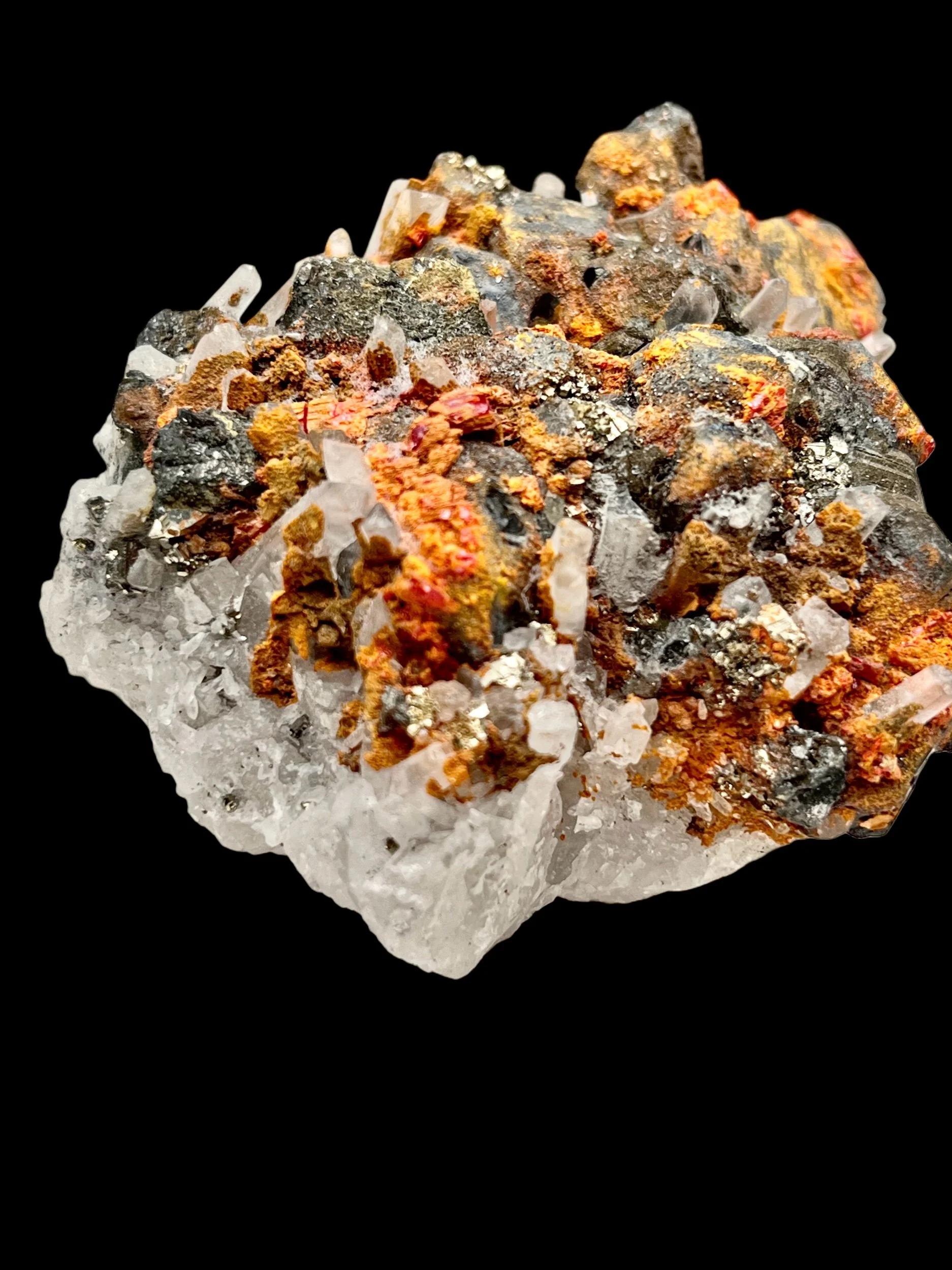
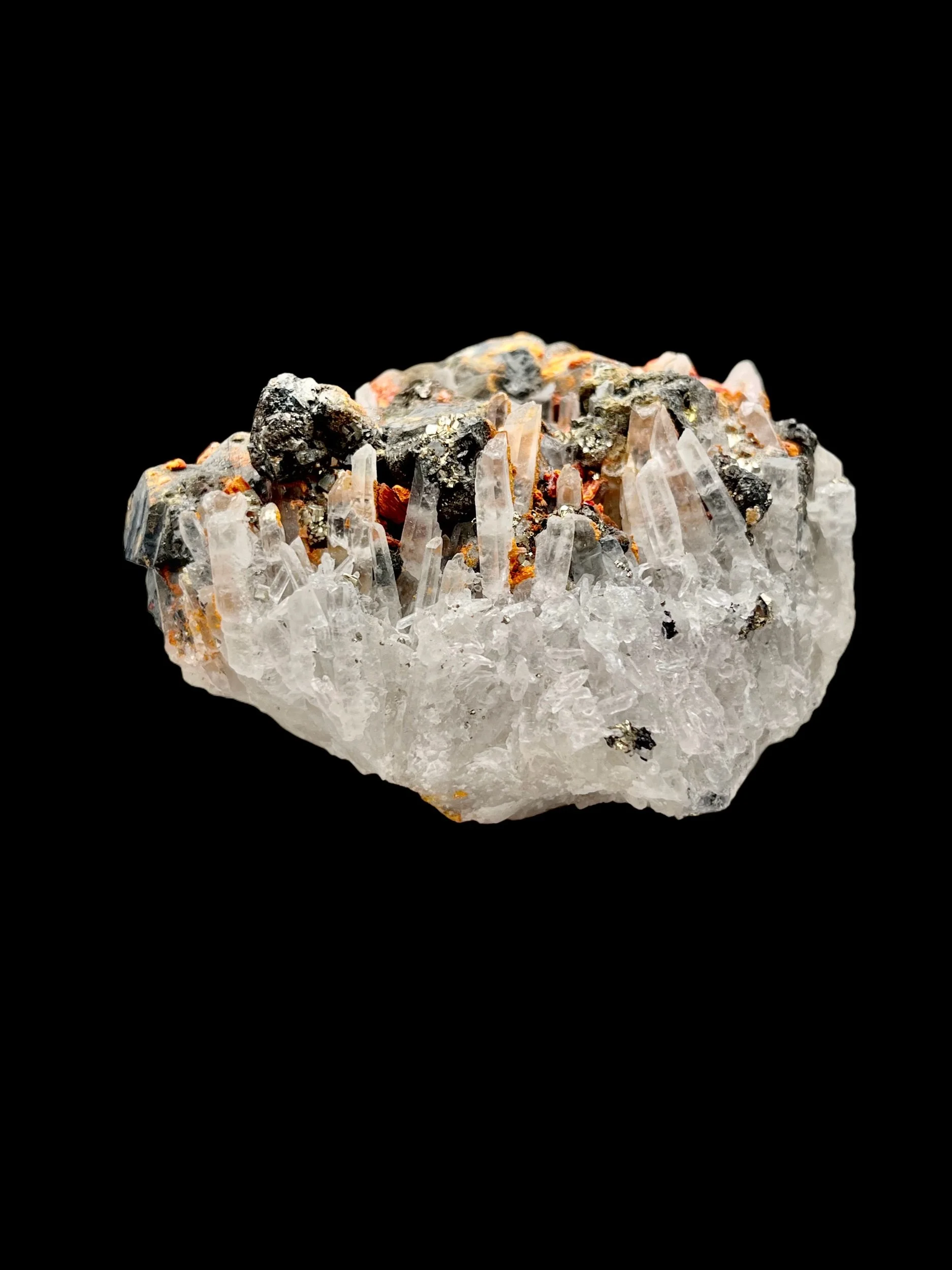
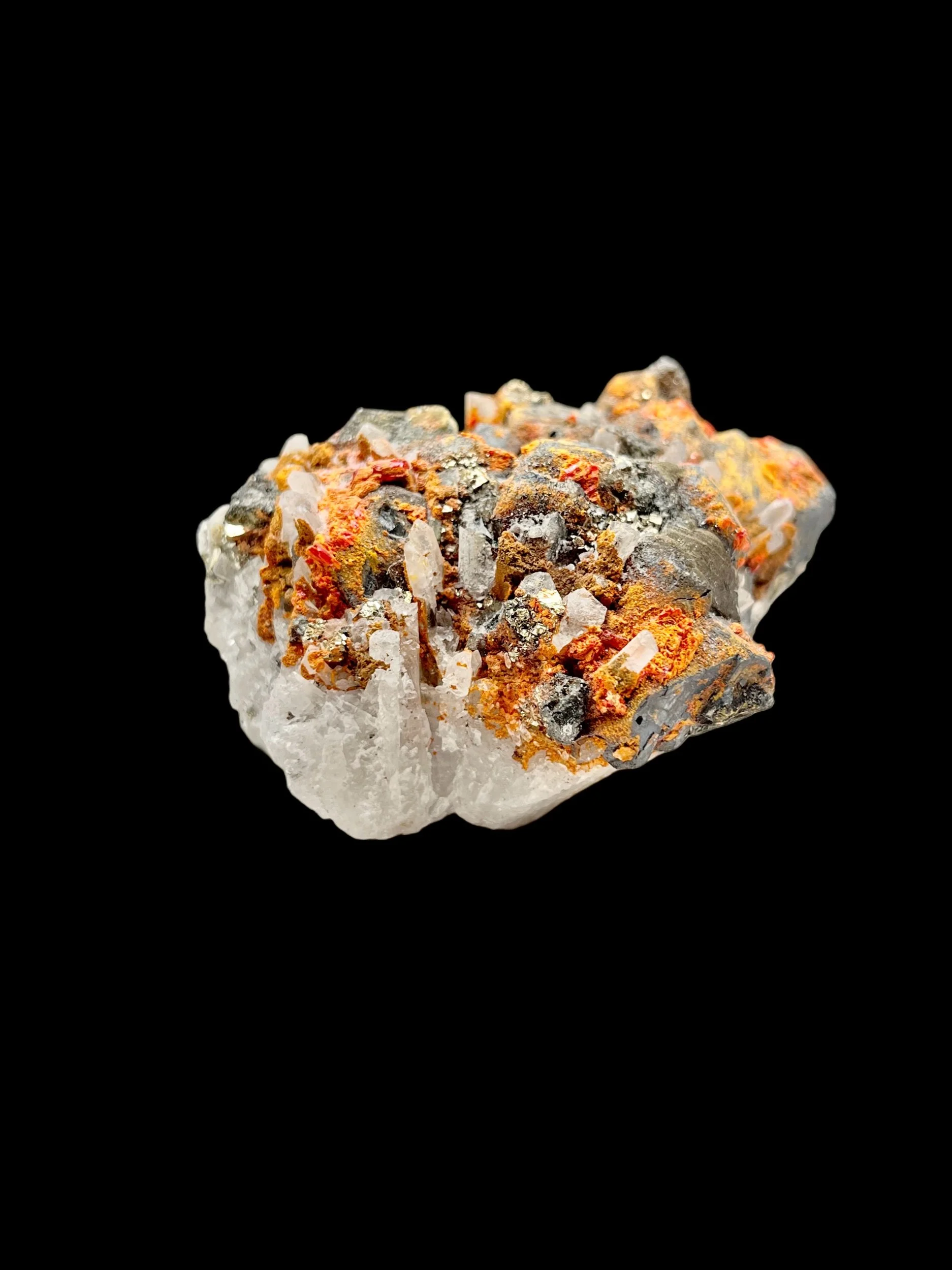
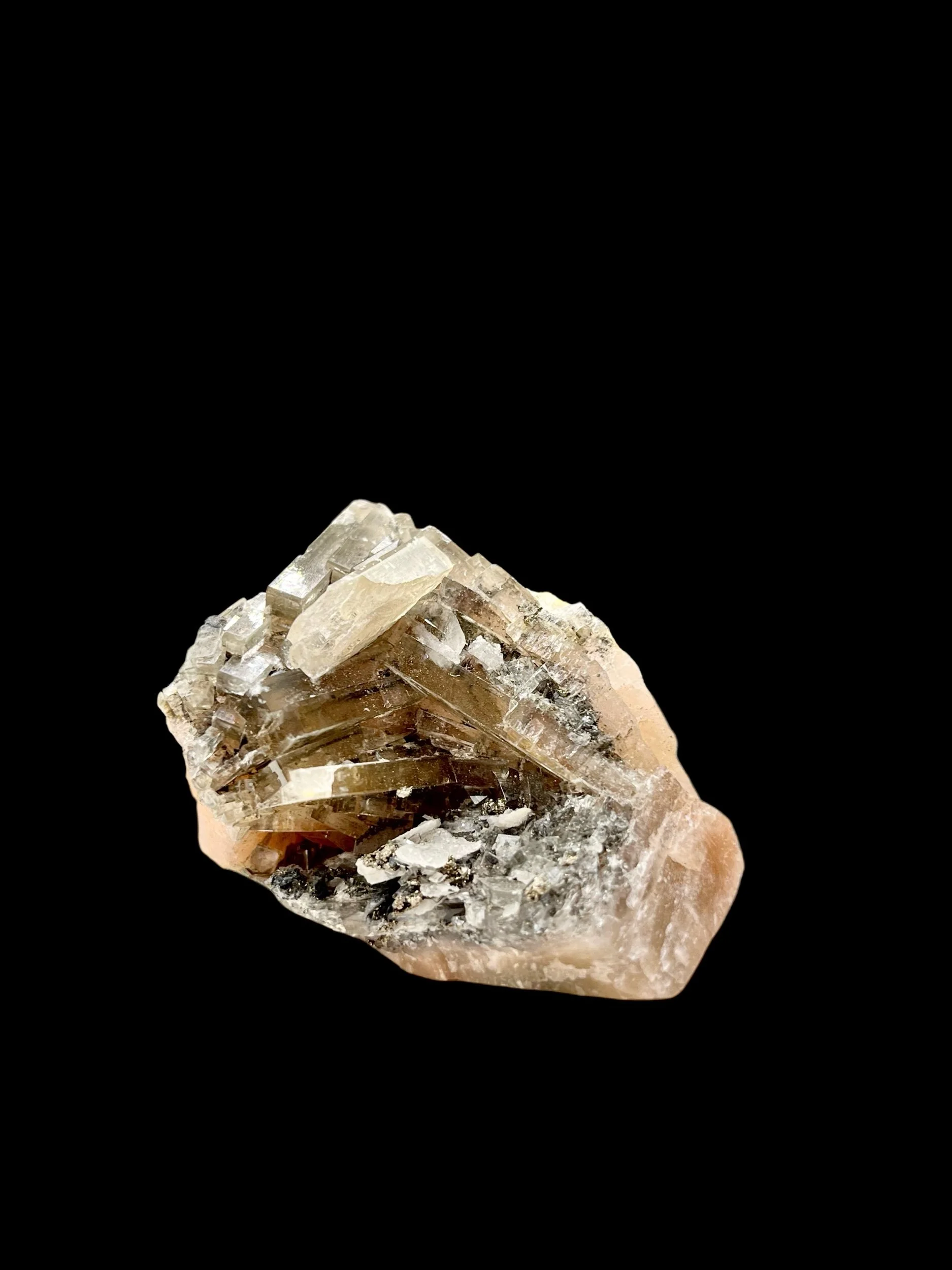
This barite with pyrite specimen features sharply angled, overlapping bladed barite crystals arranged in a compact, angular formation. The barite ranges from smoky champagne to deeper honey-brown tones, with semi-translucent faces and internal zoning visible along the crystal blades. Darker recesses and shadowed pockets give the piece a dramatic sense of depth and contrast.
Pyrite is present as fine metallic grains and small clusters concentrated within internal cavities and along crystal seams, emphasizing the specimen’s layered growth history.
Dimensions: 2.75” x 1.5” x 1.5”
Weight: 192g
Barite is often associated with grounding energy, structure, and mental clarity, particularly when working through complex or heavy situations. In more compact, angular formations, it is sometimes thought to promote stability and focus. Pyrite is traditionally linked with protection, confidence, and strength, symbolically reinforcing resilience and determination.
This specimen stands out for its pronounced angular geometry and darker overall tone compared to lighter, more open barite clusters. The interlocking blades and shadowed internal cavities suggest fluctuating growth conditions during formation. Pyrite appears naturally embedded within the specimen, confirming authentic co-formation in a sulfur-rich environment. A strong choice for collectors drawn to dramatic structure and geological intensity.
Angular, interlocking bladed barite crystals
Darker champagne to honey-brown coloration
Naturally occurring pyrite within internal cavities
Strong depth, contrast, and architectural form
Gemmy Luster
Barite (BaSO₄) commonly forms in hydrothermal veins and sedimentary settings, crystallizing in tabular or bladed habits. Angular, intergrown formations develop when crystals grow in constrained spaces or under changing conditions. Pyrite (FeS₂) often forms alongside barite in sulfur-rich systems and becomes incorporated into fractures, seams, and cavities during overlapping stages of mineralization.
This barite with pyrite specimen features sharply angled, overlapping bladed barite crystals arranged in a compact, angular formation. The barite ranges from smoky champagne to deeper honey-brown tones, with semi-translucent faces and internal zoning visible along the crystal blades. Darker recesses and shadowed pockets give the piece a dramatic sense of depth and contrast.
Pyrite is present as fine metallic grains and small clusters concentrated within internal cavities and along crystal seams, emphasizing the specimen’s layered growth history.
Dimensions: 2.75” x 1.5” x 1.5”
Weight: 192g
Barite is often associated with grounding energy, structure, and mental clarity, particularly when working through complex or heavy situations. In more compact, angular formations, it is sometimes thought to promote stability and focus. Pyrite is traditionally linked with protection, confidence, and strength, symbolically reinforcing resilience and determination.
This specimen stands out for its pronounced angular geometry and darker overall tone compared to lighter, more open barite clusters. The interlocking blades and shadowed internal cavities suggest fluctuating growth conditions during formation. Pyrite appears naturally embedded within the specimen, confirming authentic co-formation in a sulfur-rich environment. A strong choice for collectors drawn to dramatic structure and geological intensity.
Angular, interlocking bladed barite crystals
Darker champagne to honey-brown coloration
Naturally occurring pyrite within internal cavities
Strong depth, contrast, and architectural form
Gemmy Luster
Barite (BaSO₄) commonly forms in hydrothermal veins and sedimentary settings, crystallizing in tabular or bladed habits. Angular, intergrown formations develop when crystals grow in constrained spaces or under changing conditions. Pyrite (FeS₂) often forms alongside barite in sulfur-rich systems and becomes incorporated into fractures, seams, and cavities during overlapping stages of mineralization.