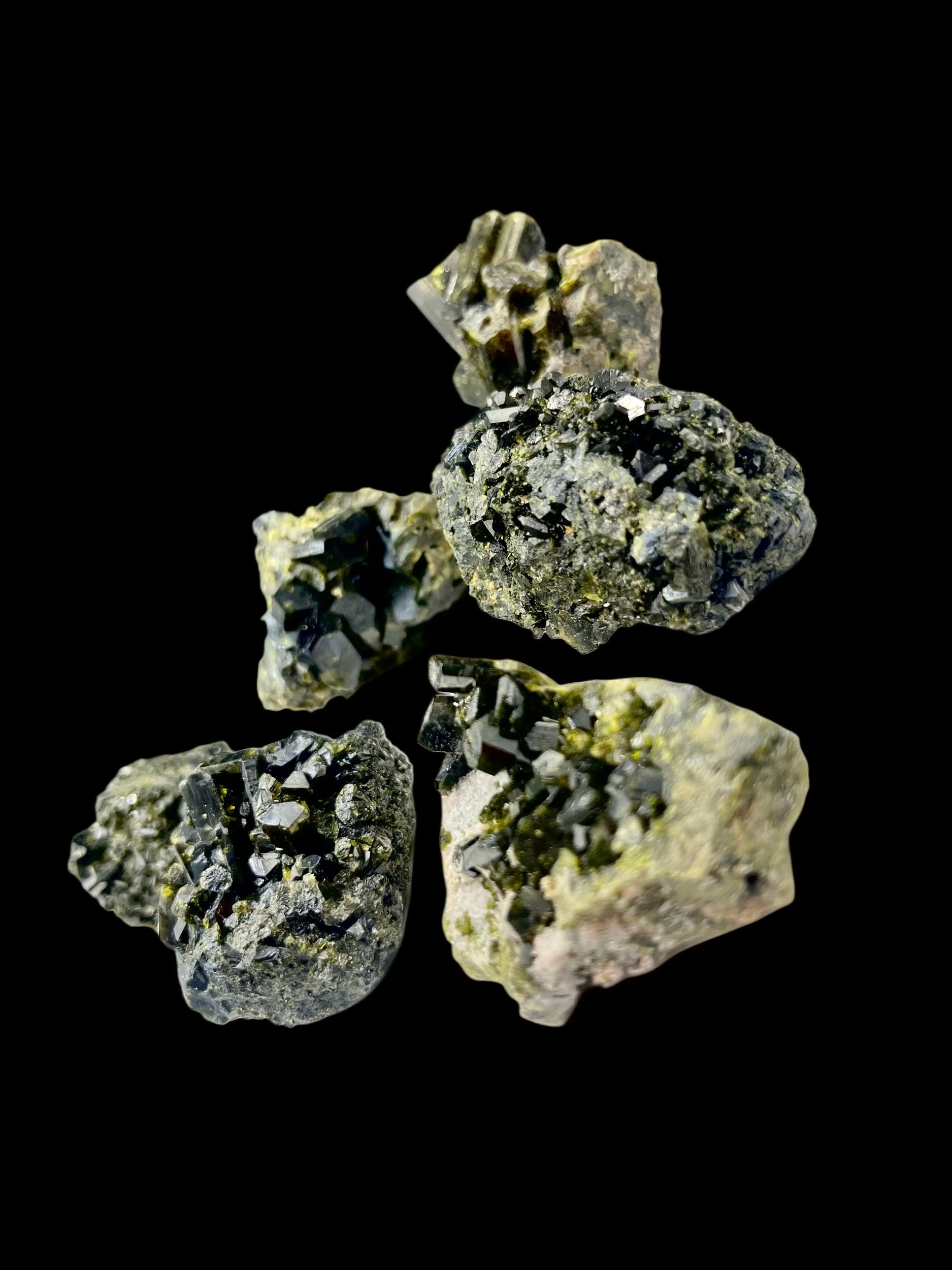
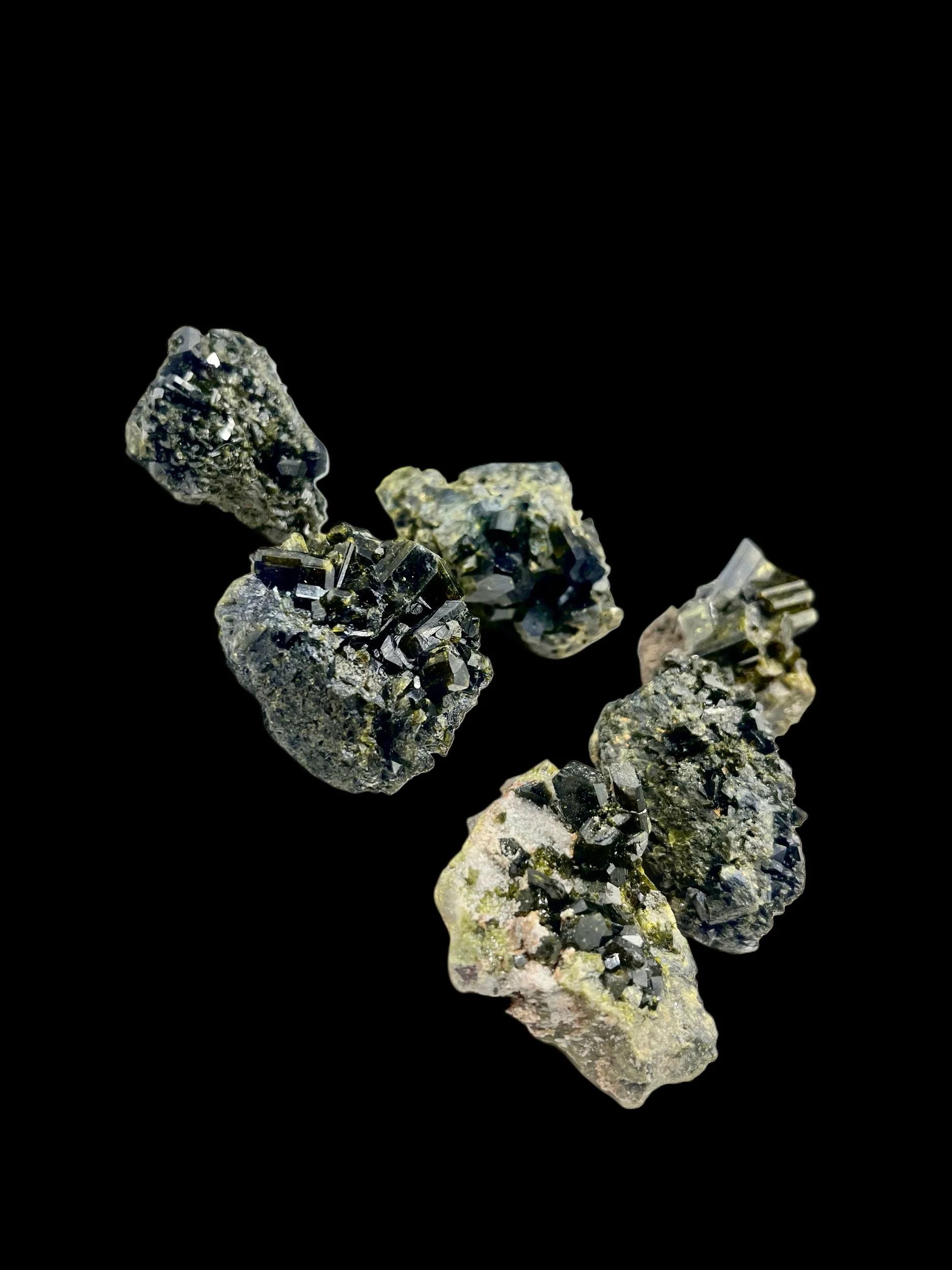
 Image 1 of 5
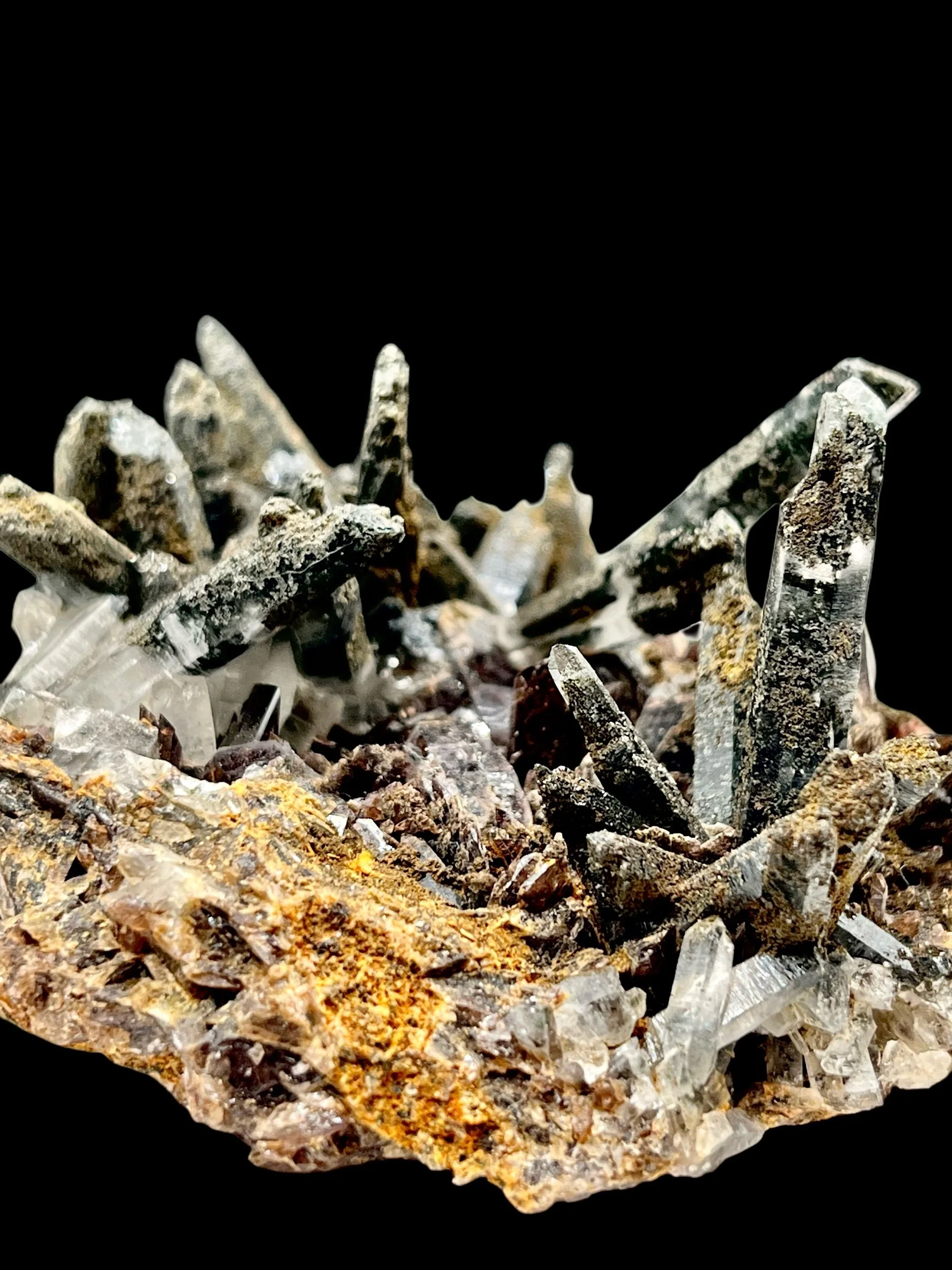 Image 2 of 5
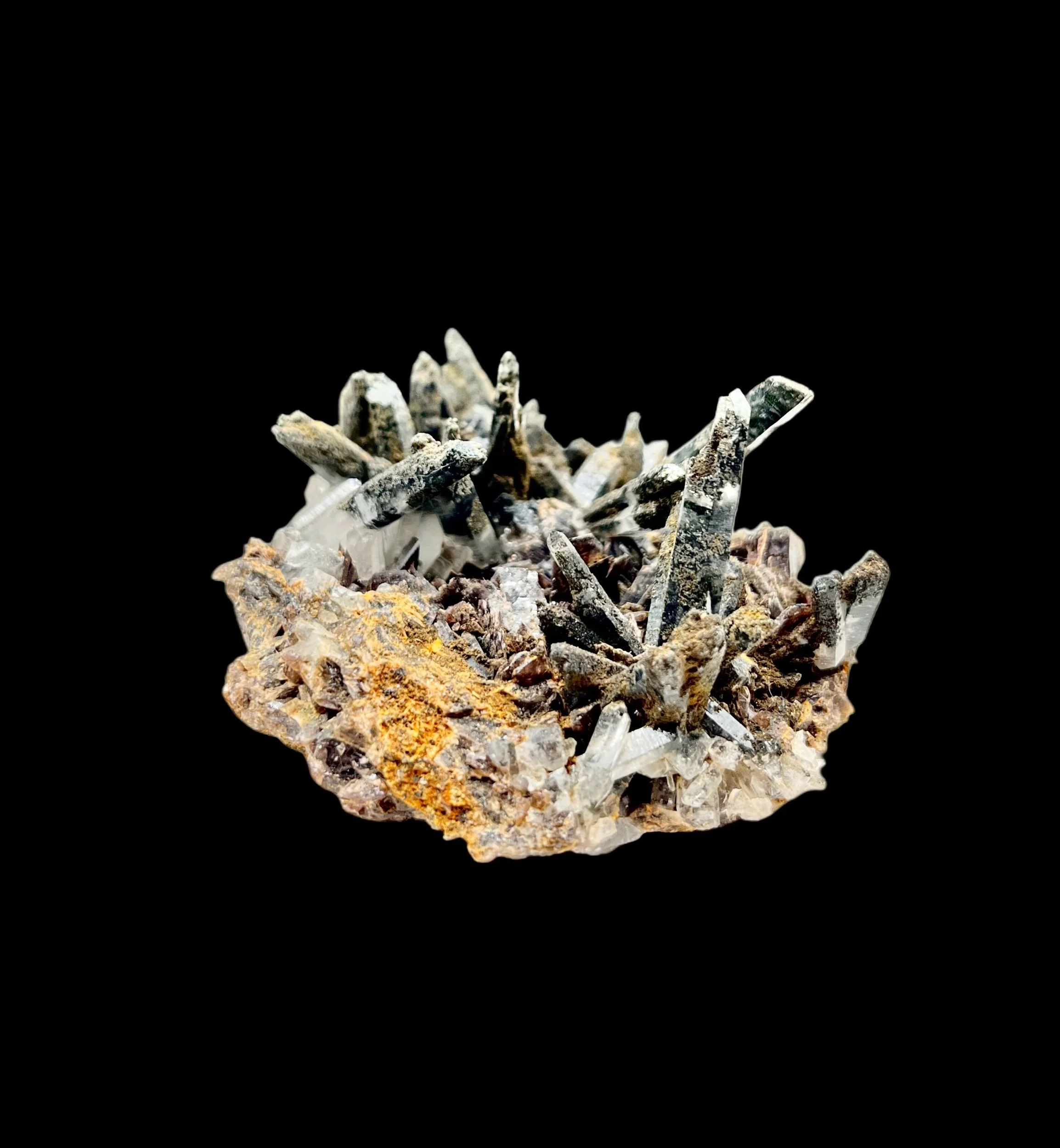 Image 3 of 5
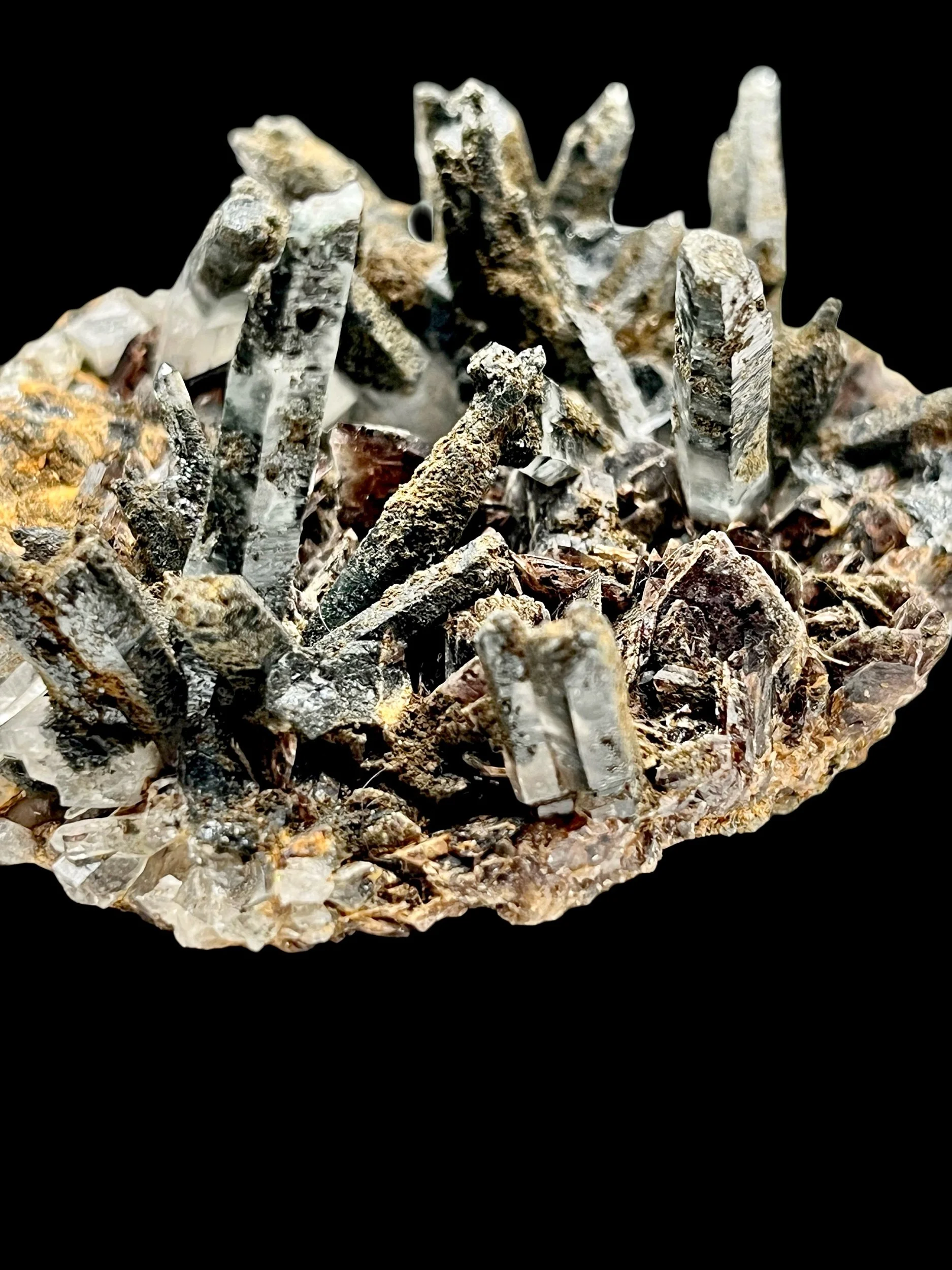 Image 4 of 5
 Image 5 of 5
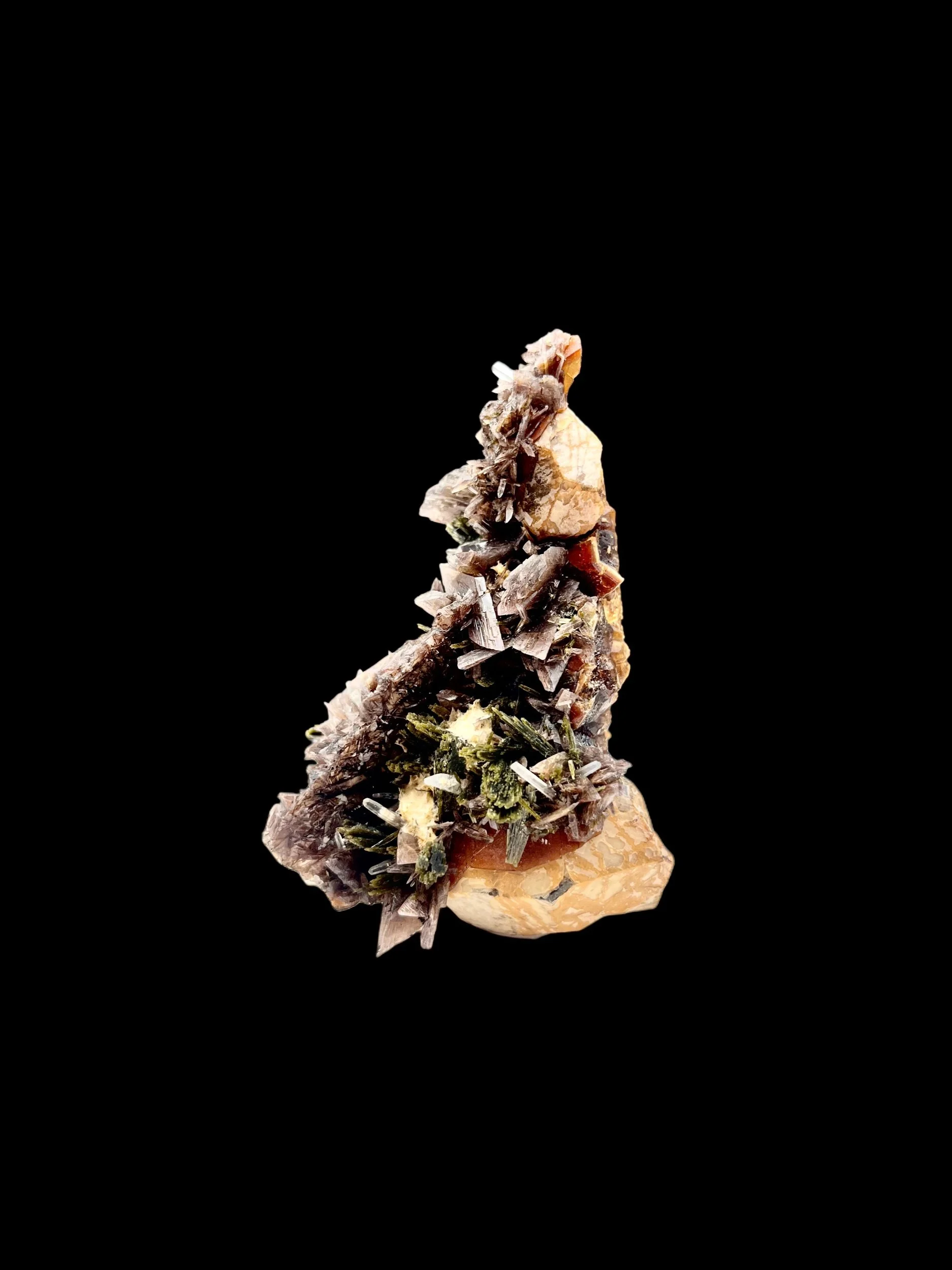
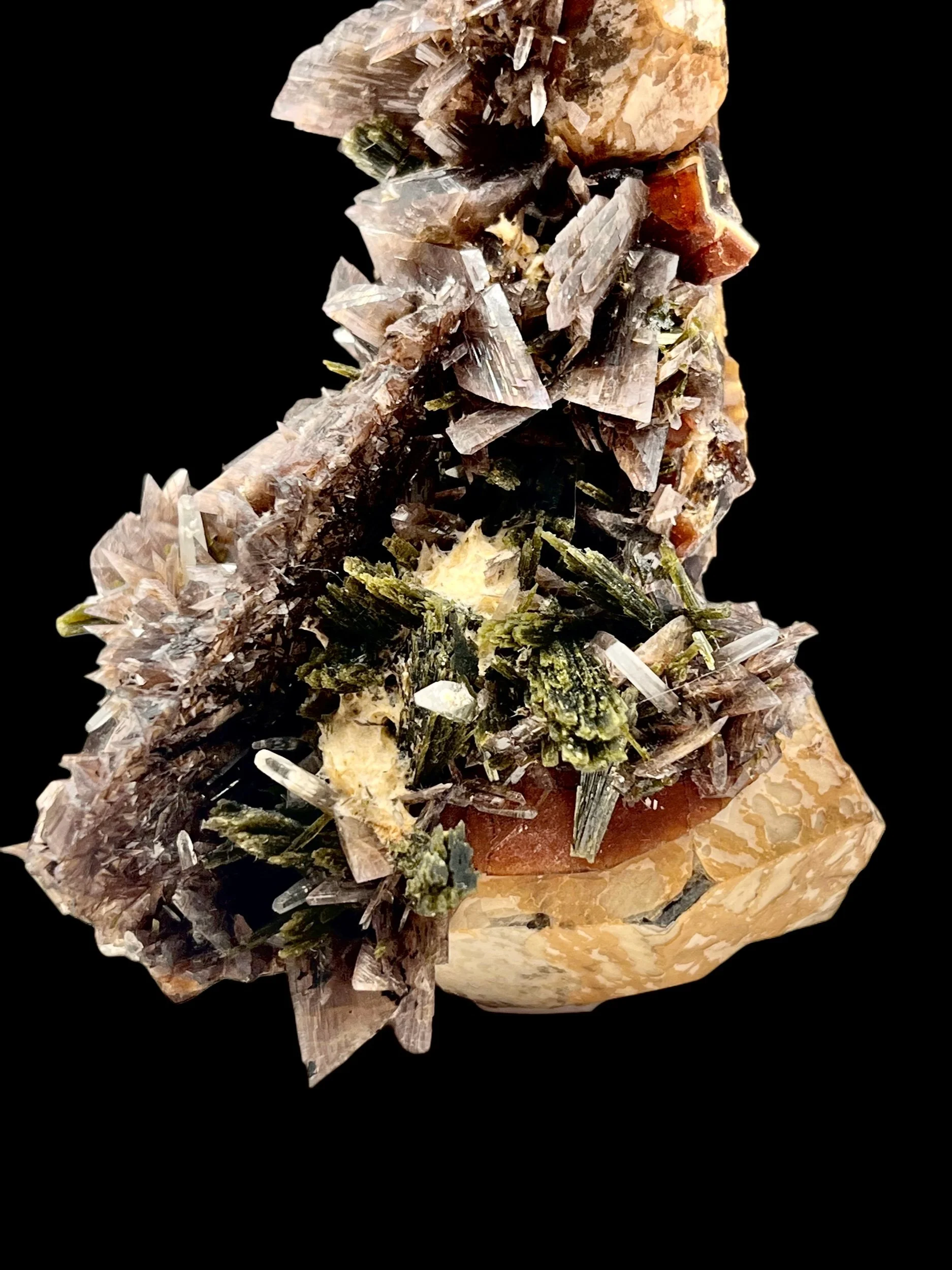
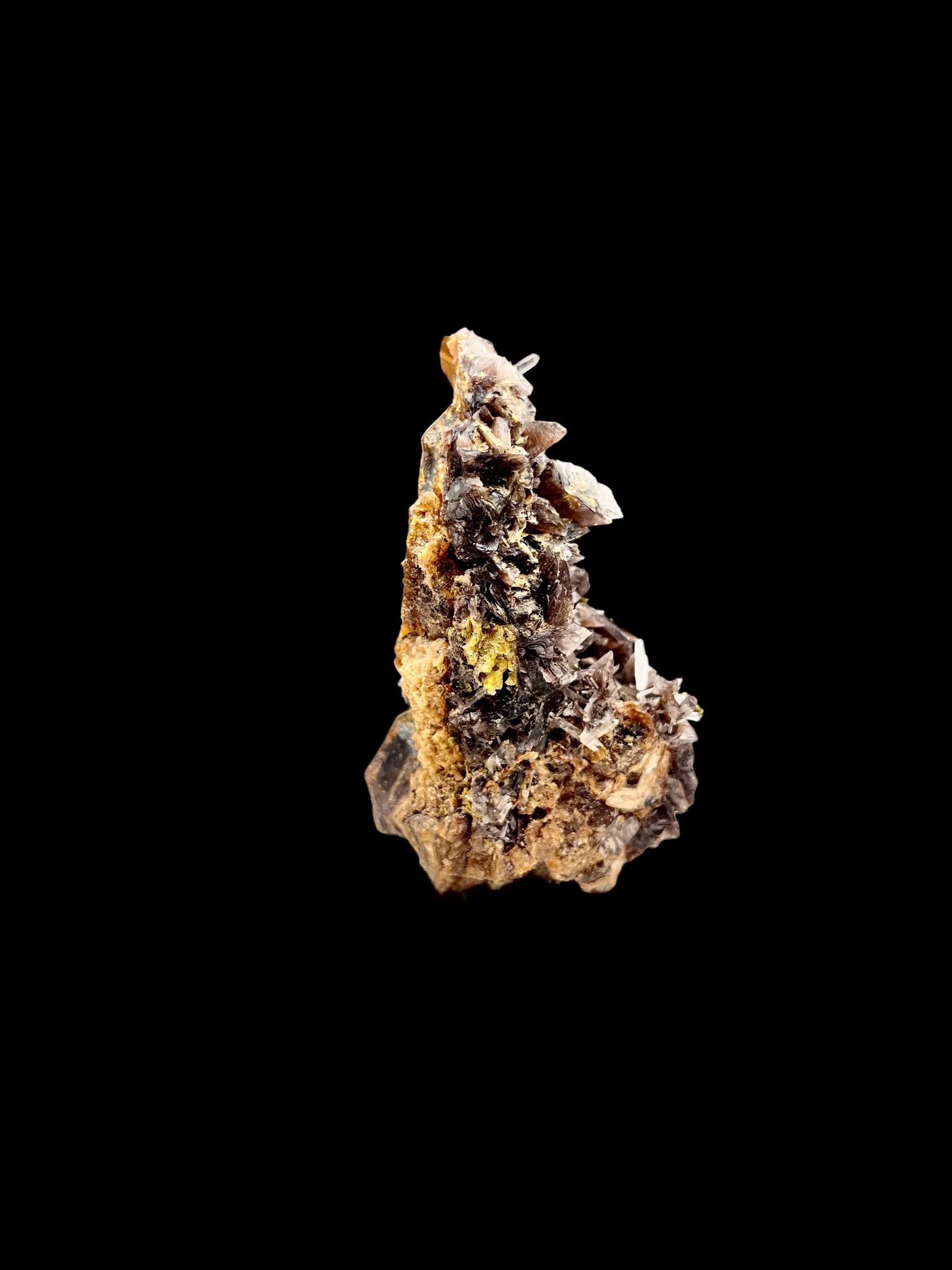
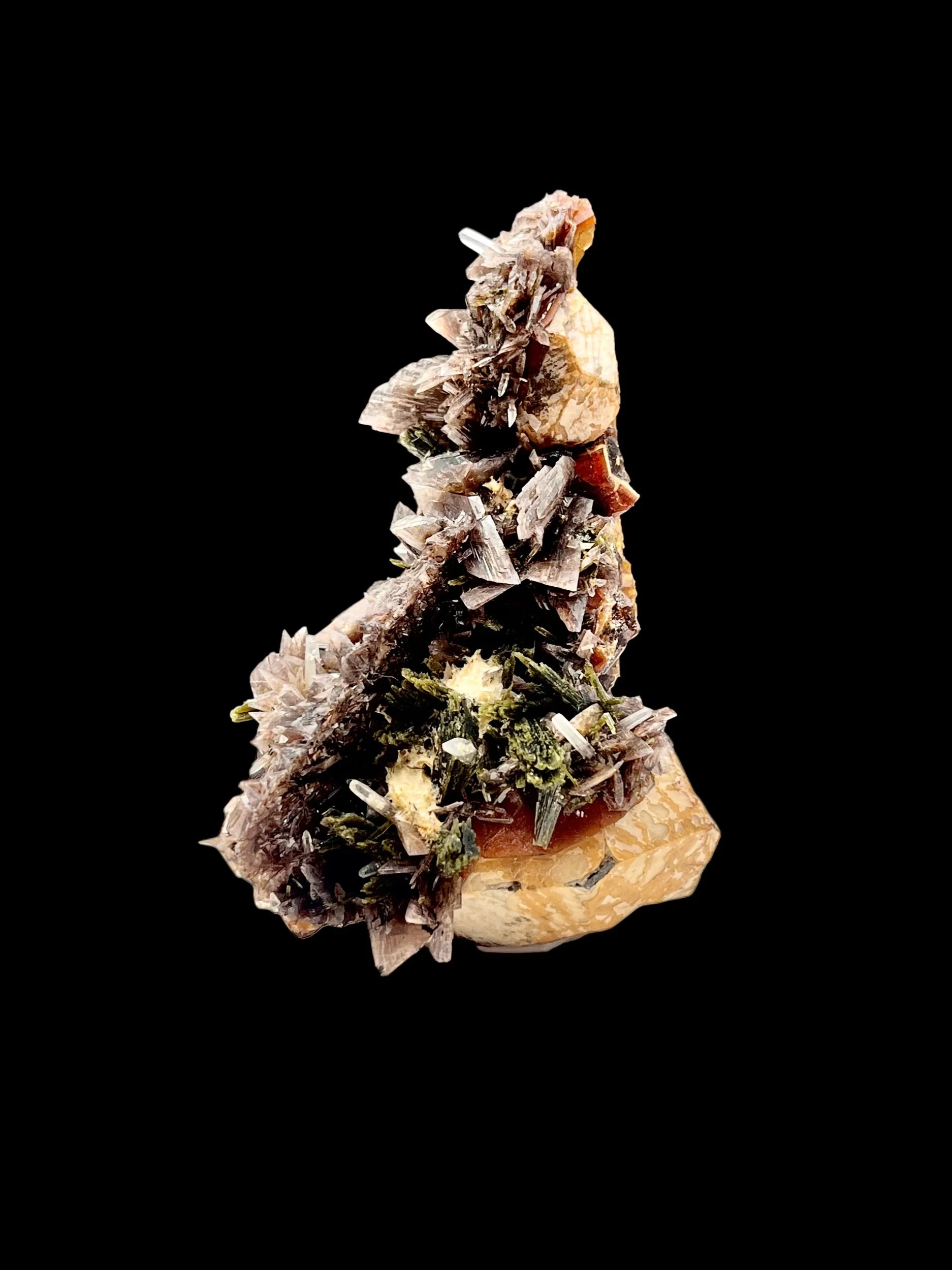
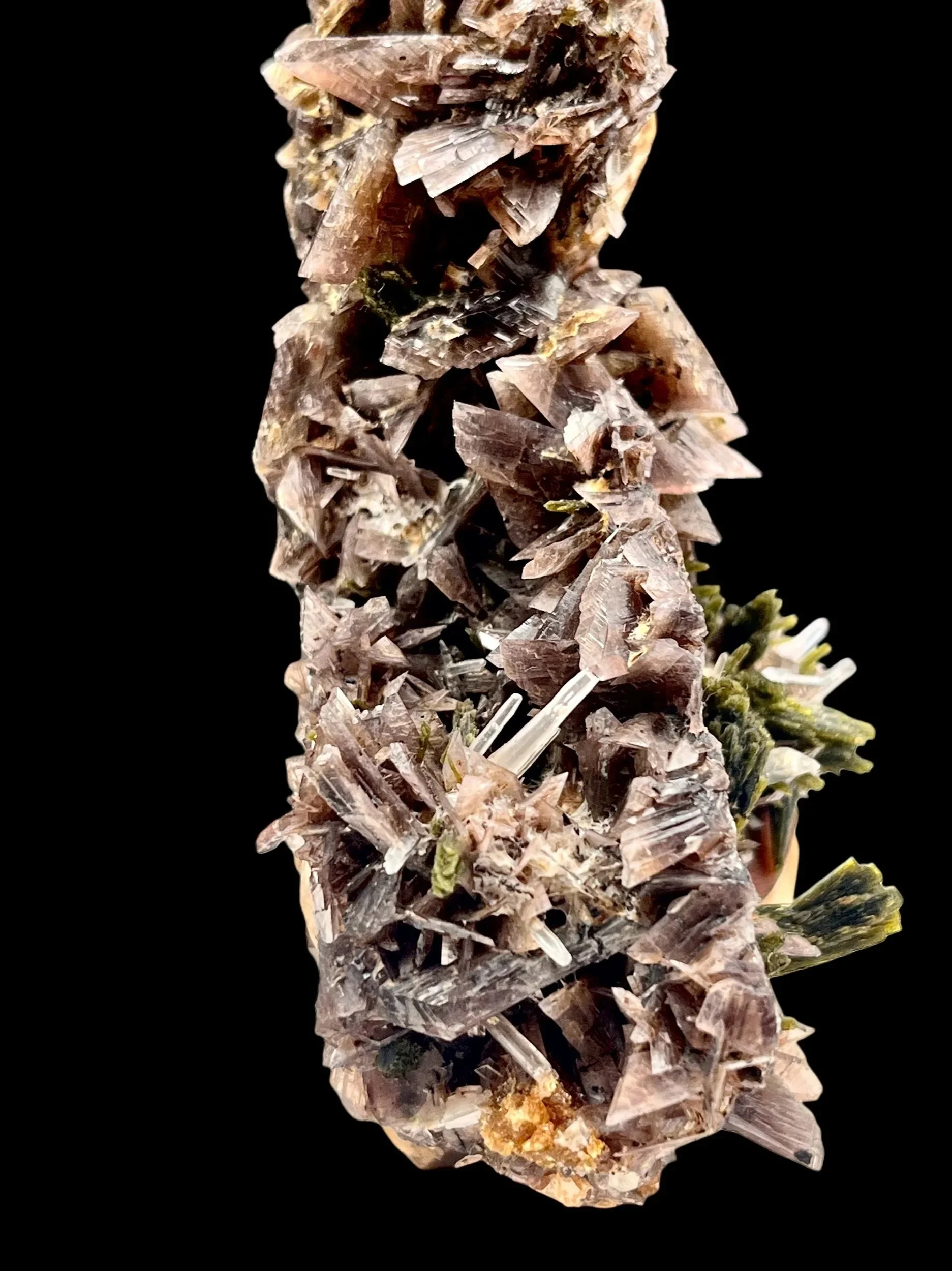
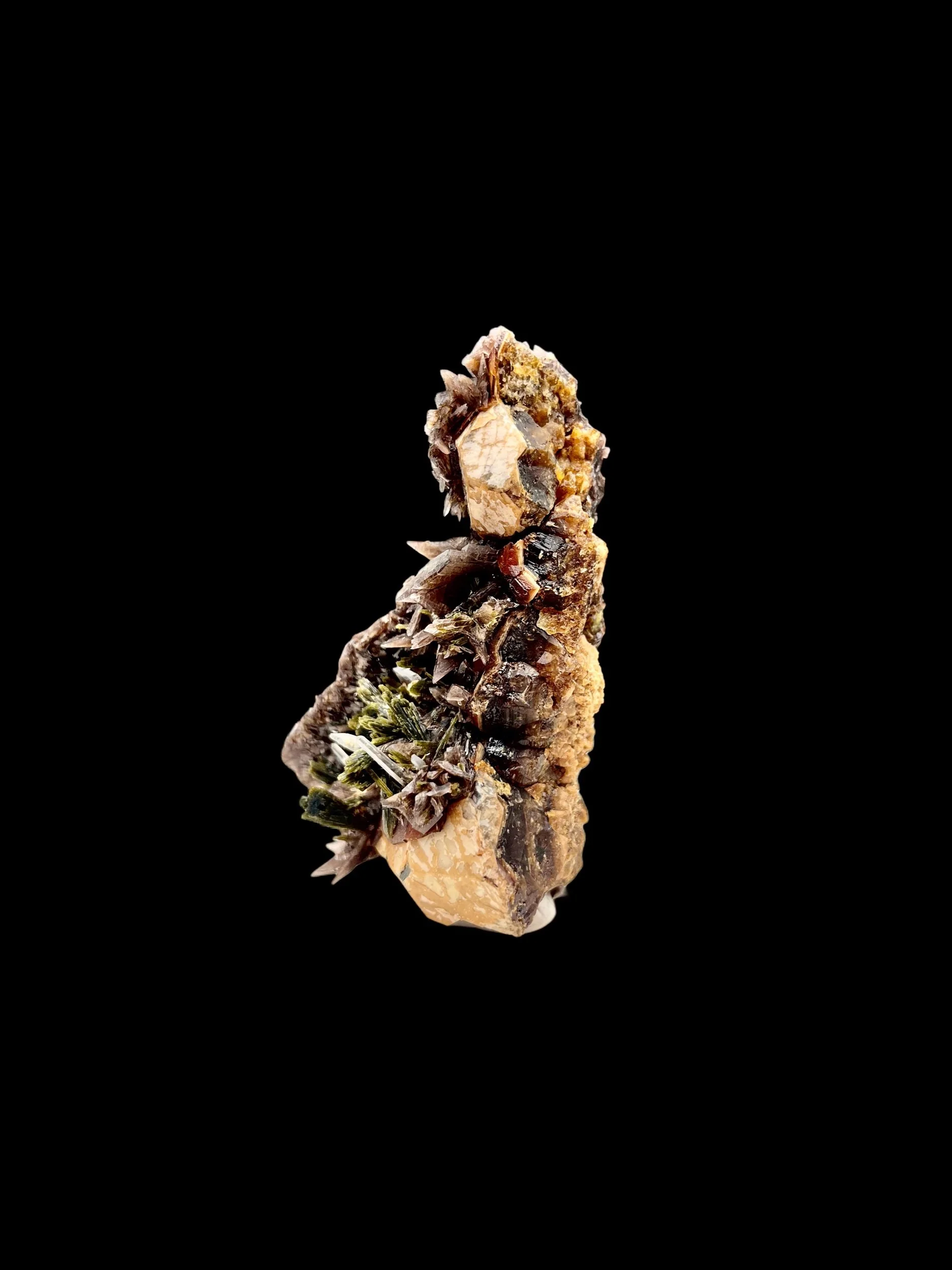
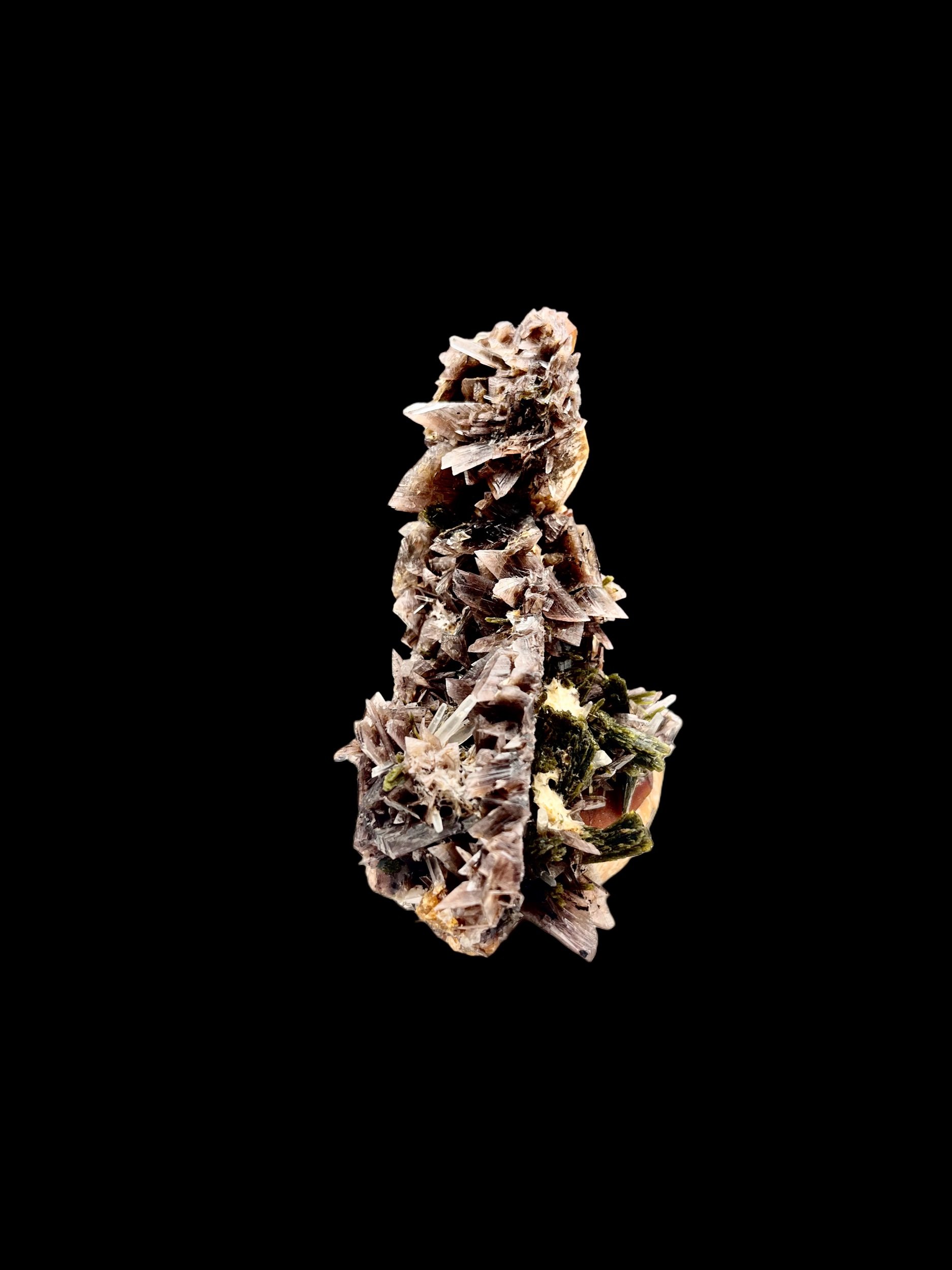
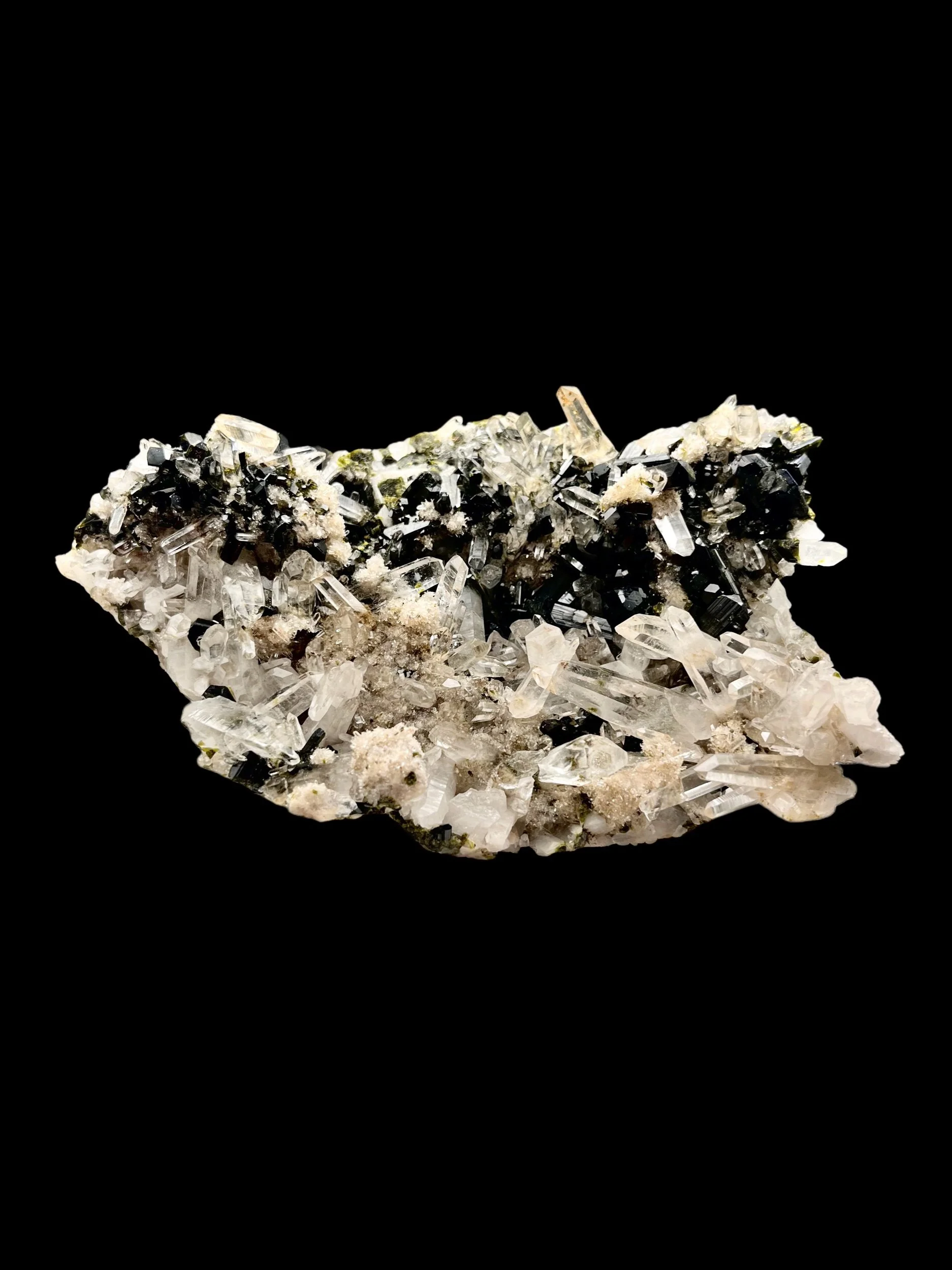
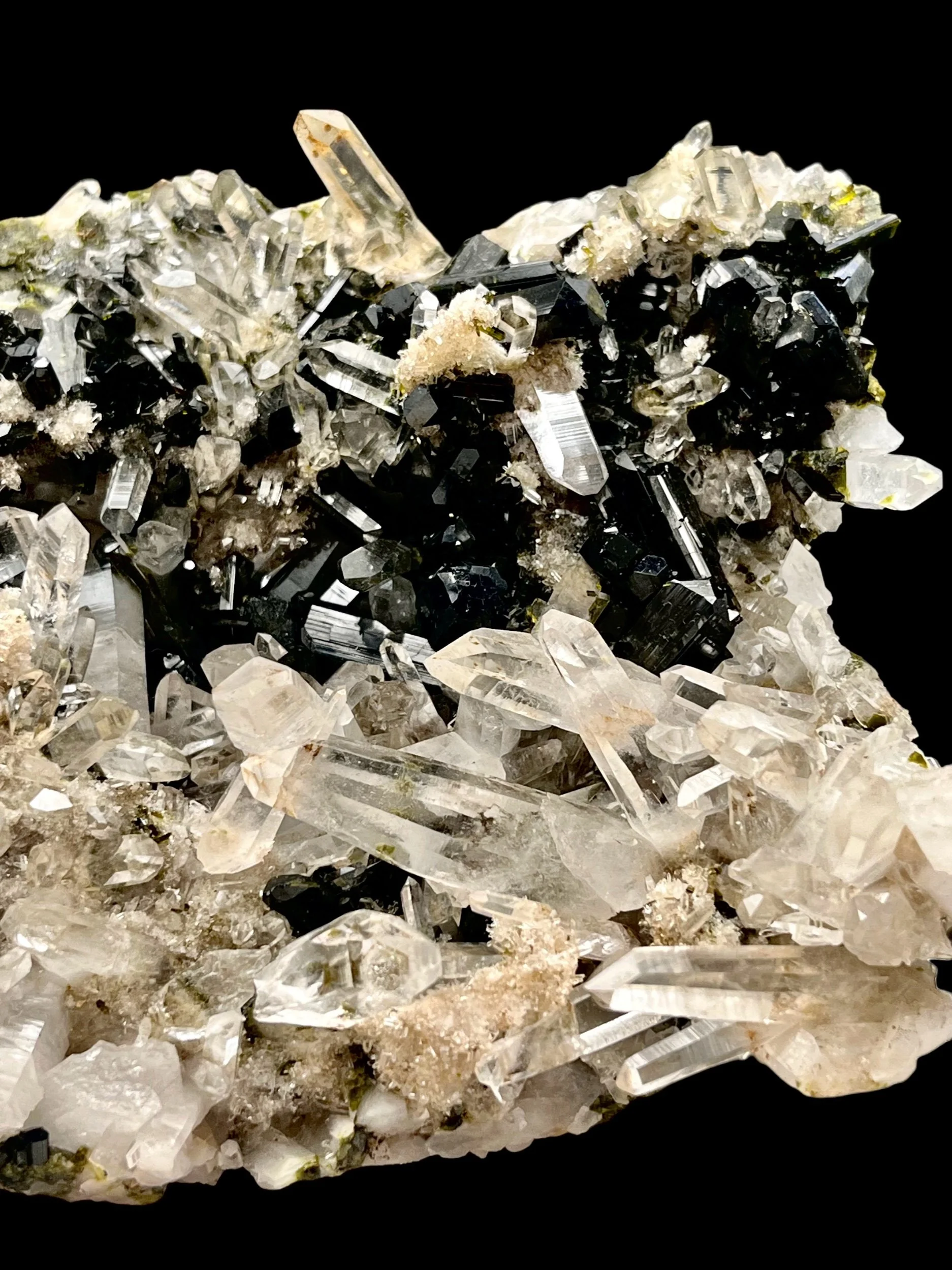
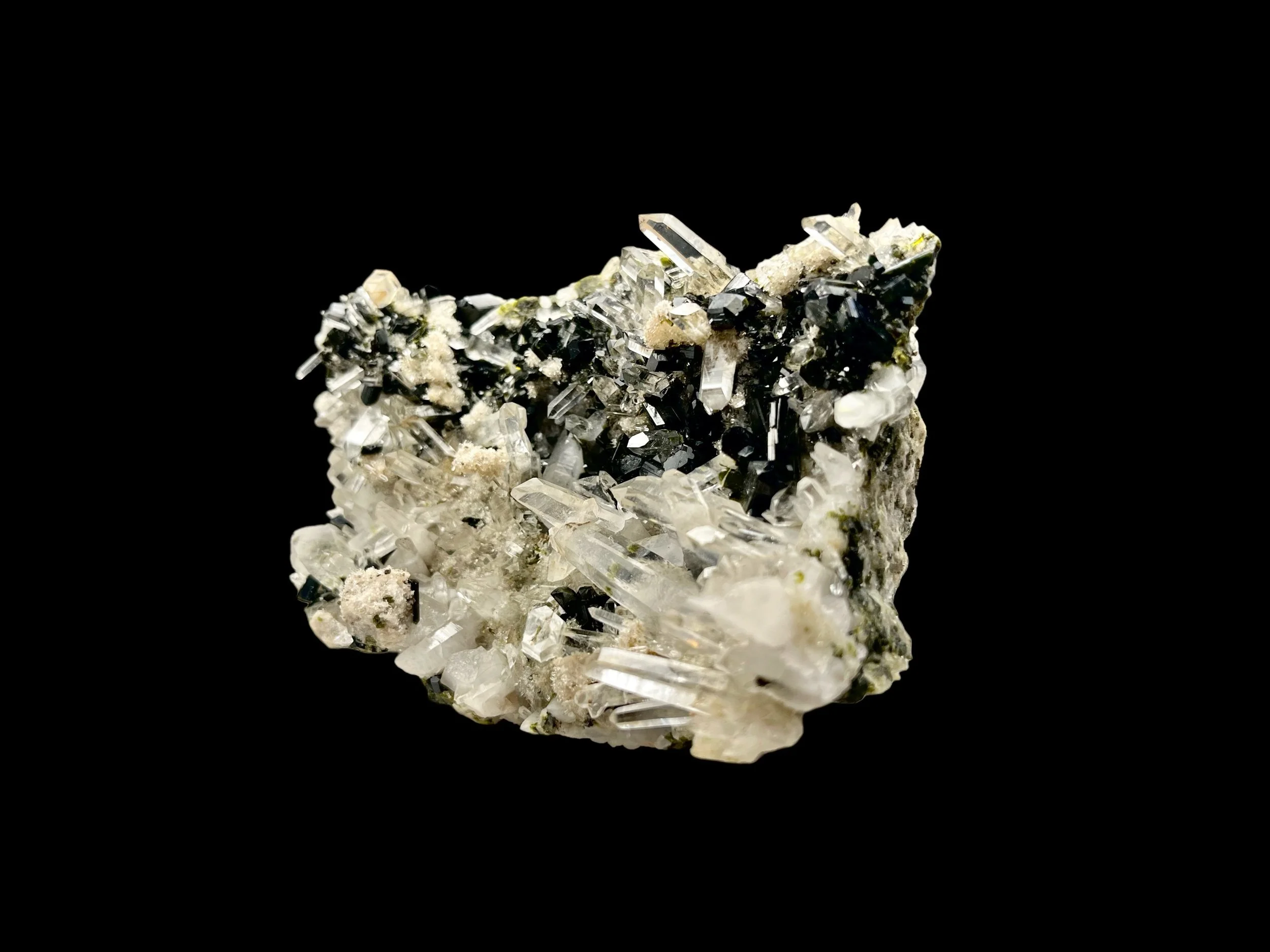
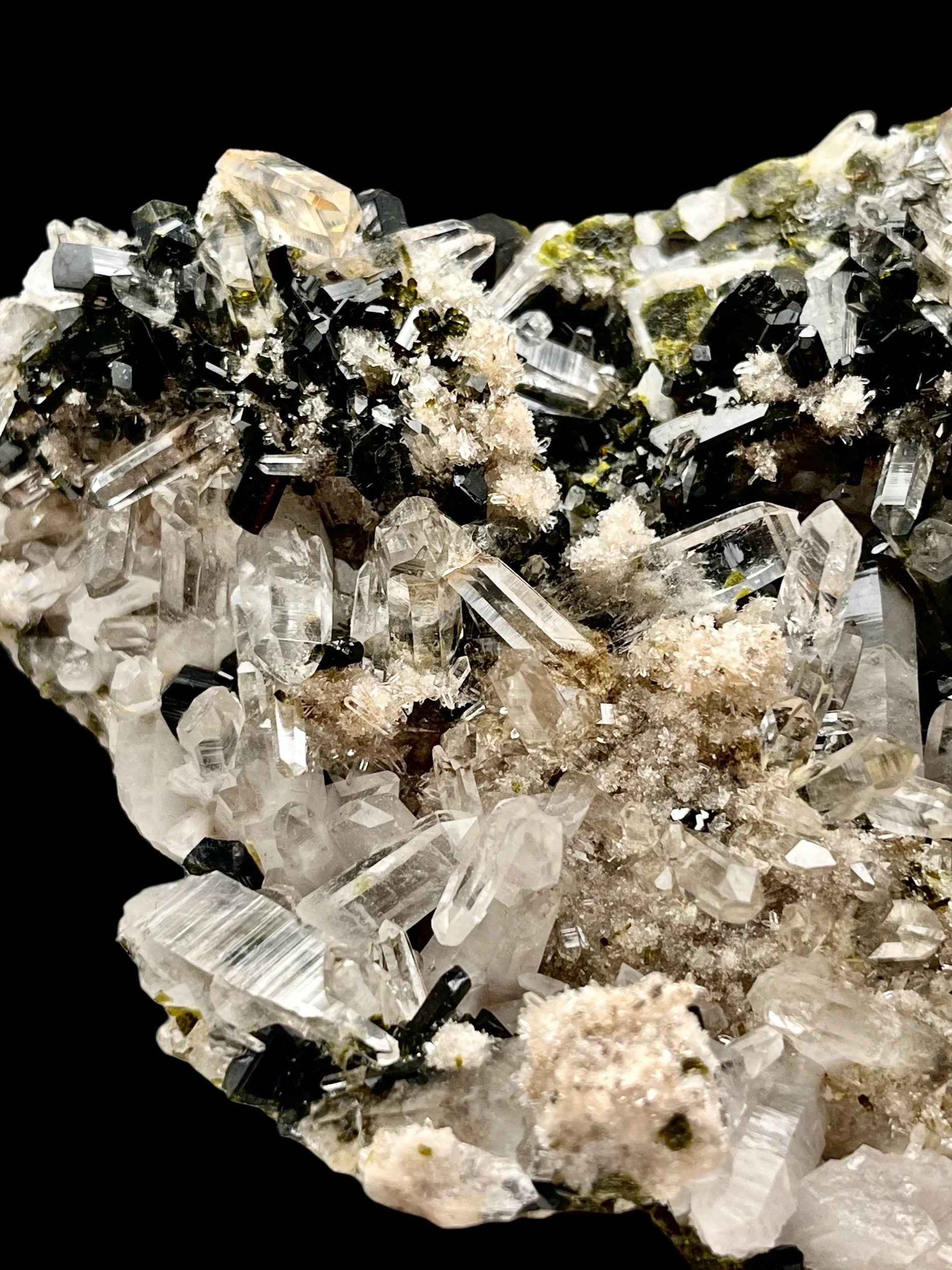
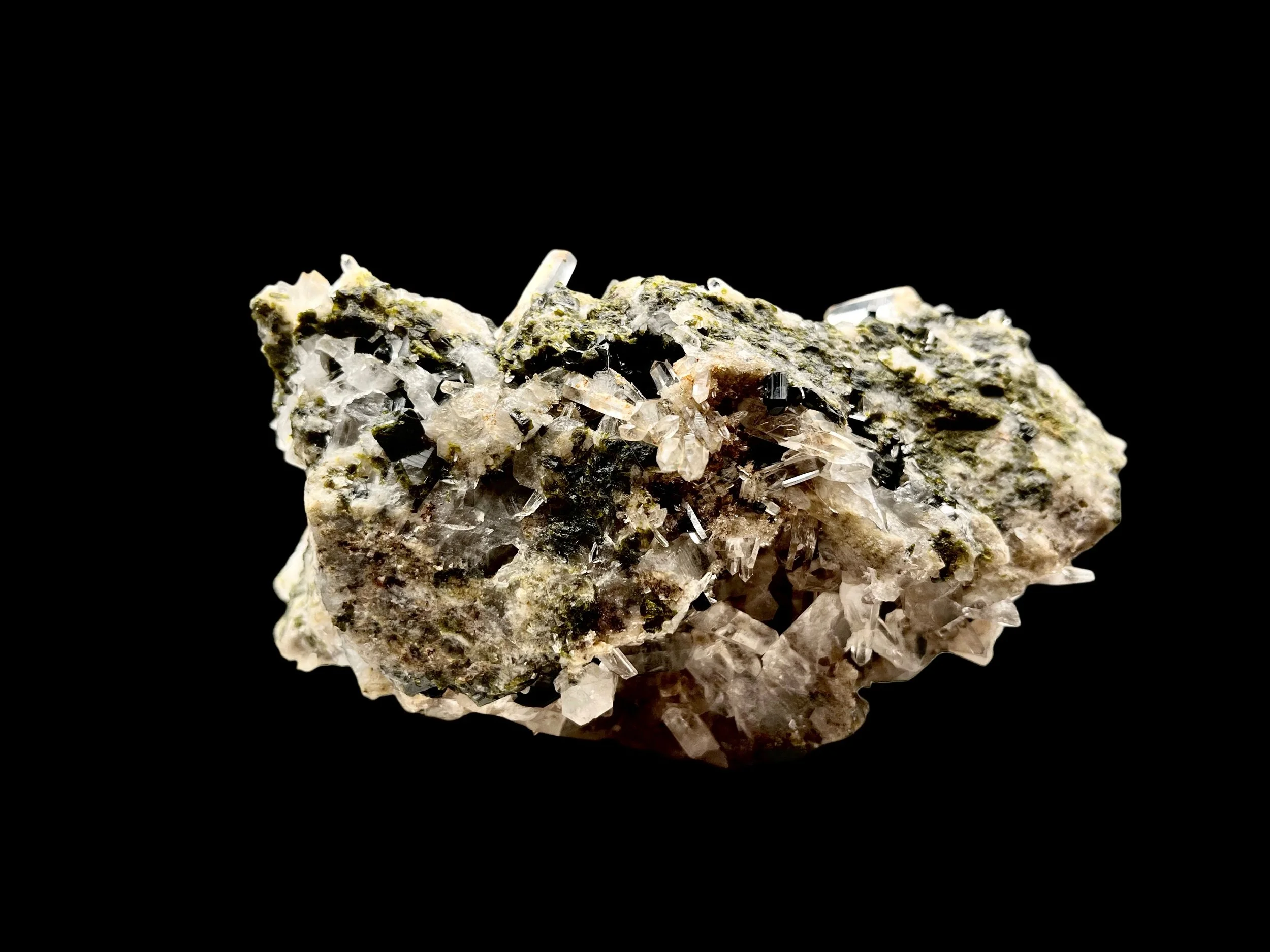
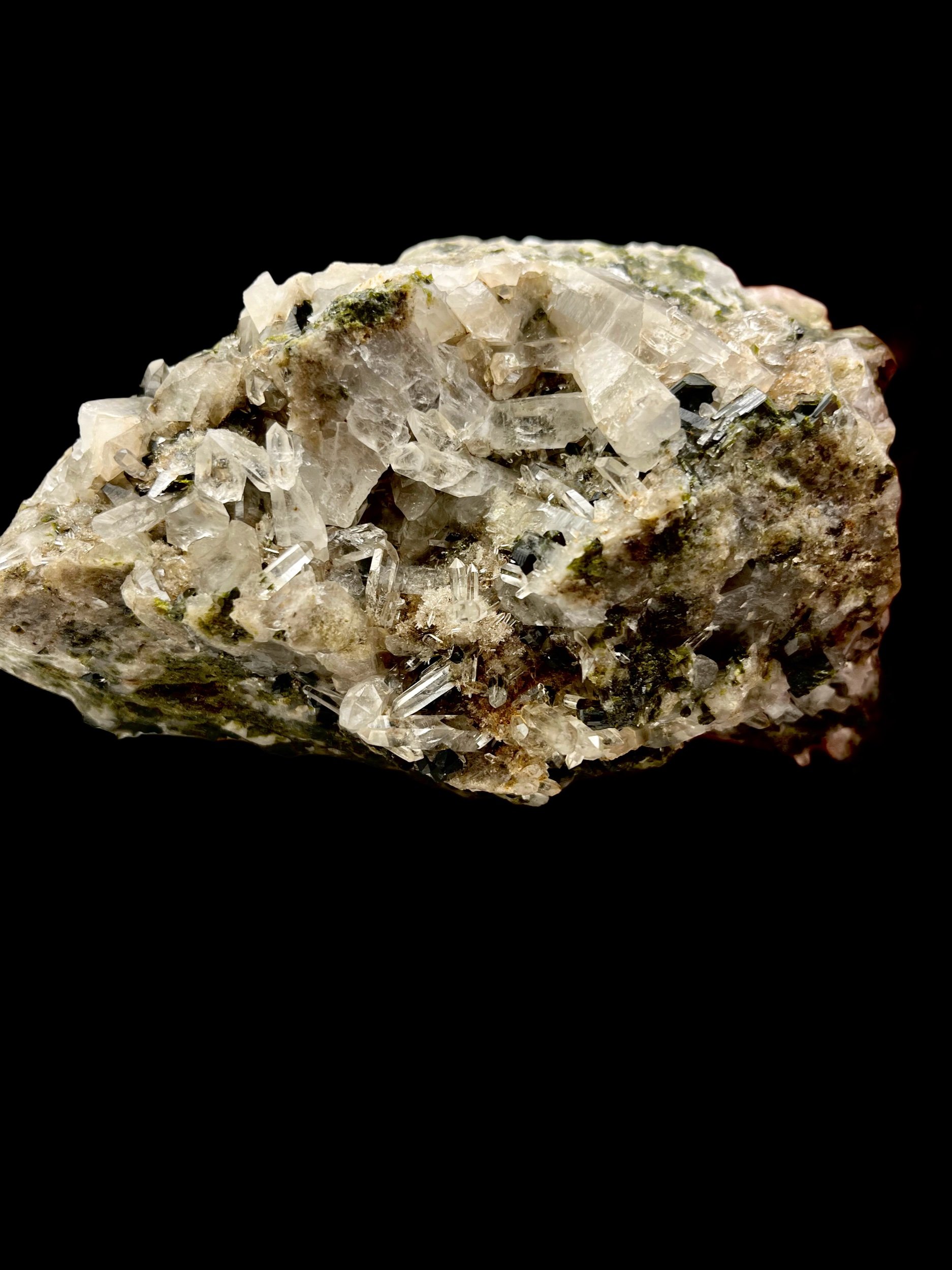
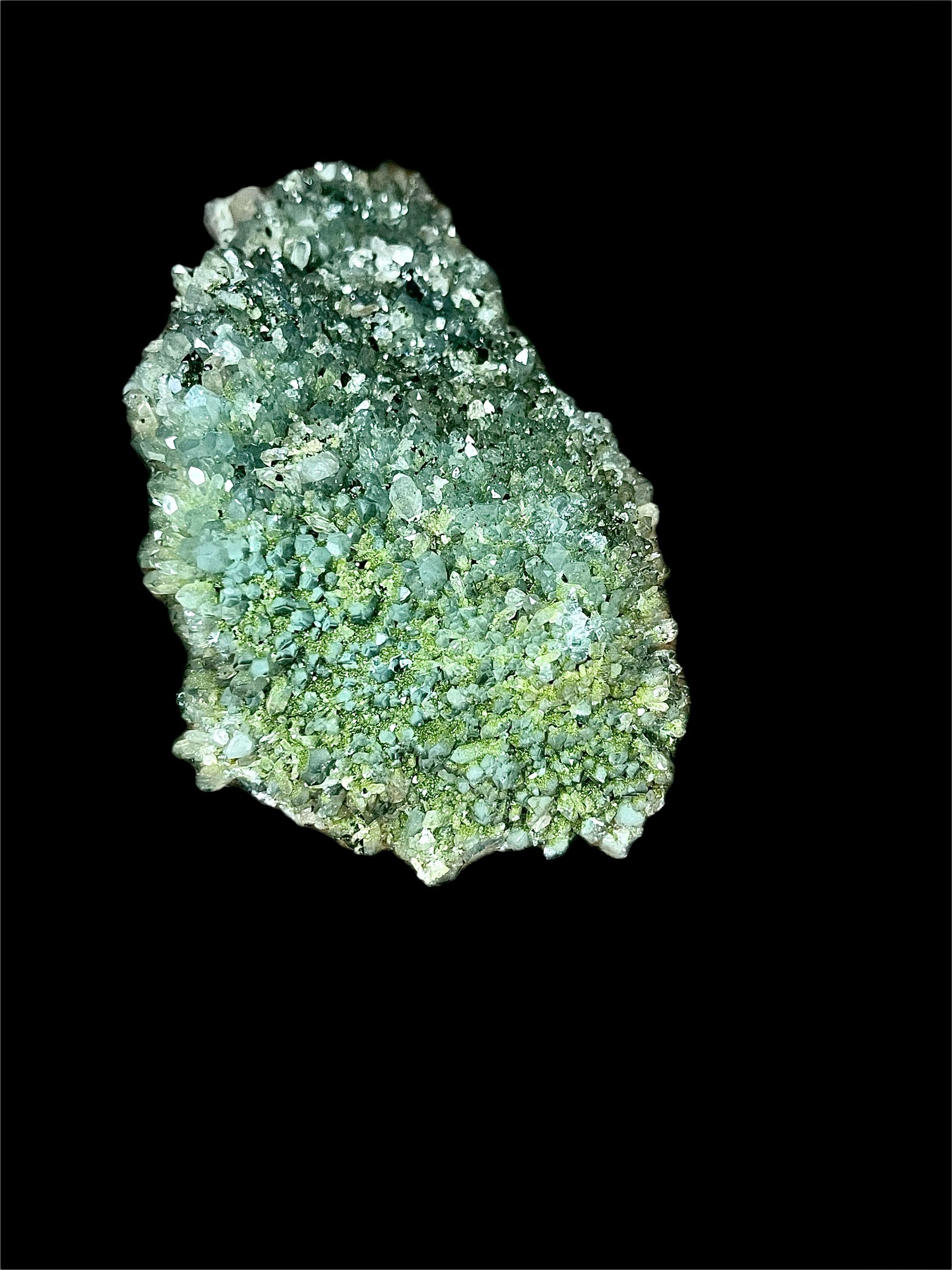
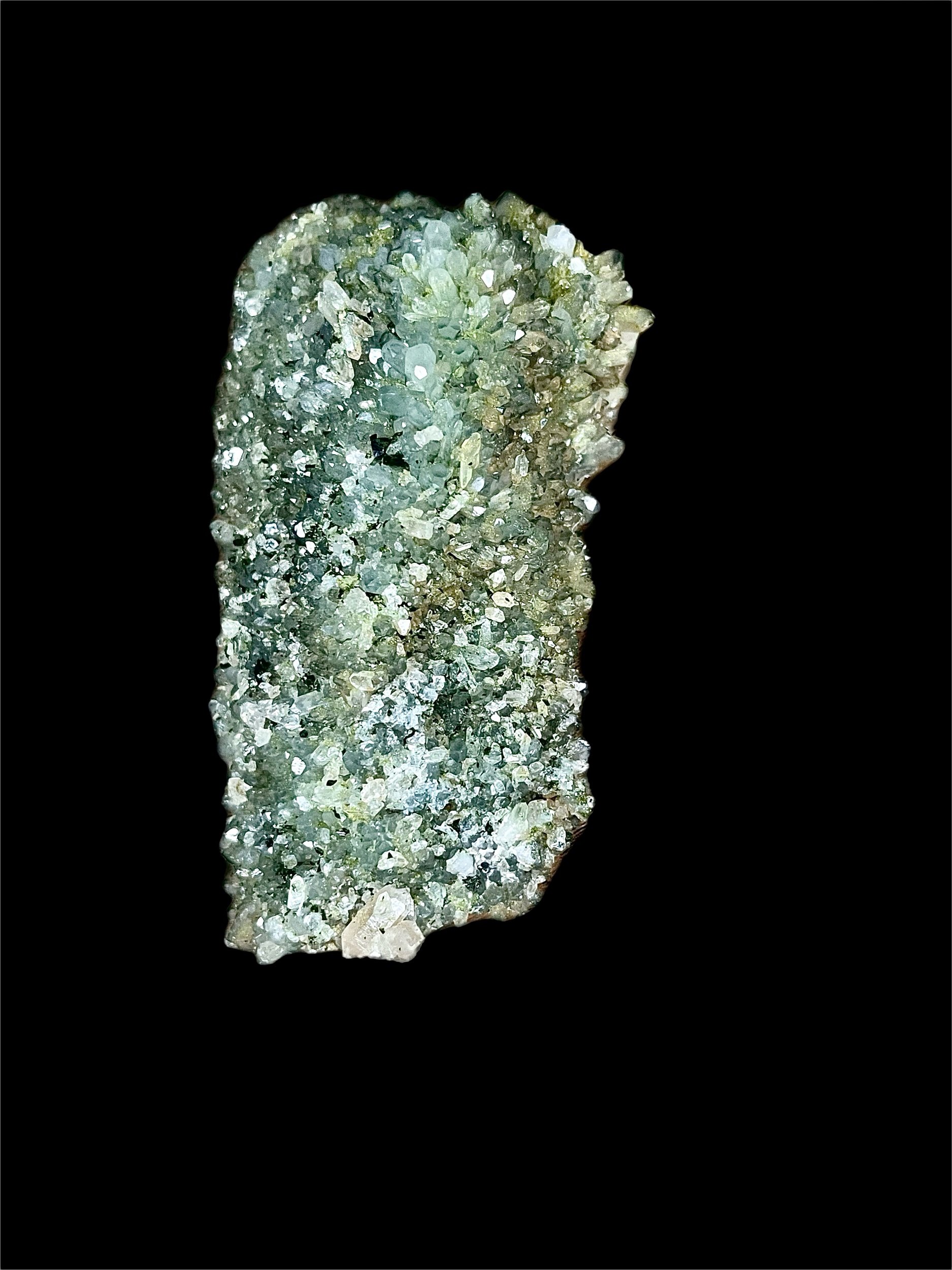
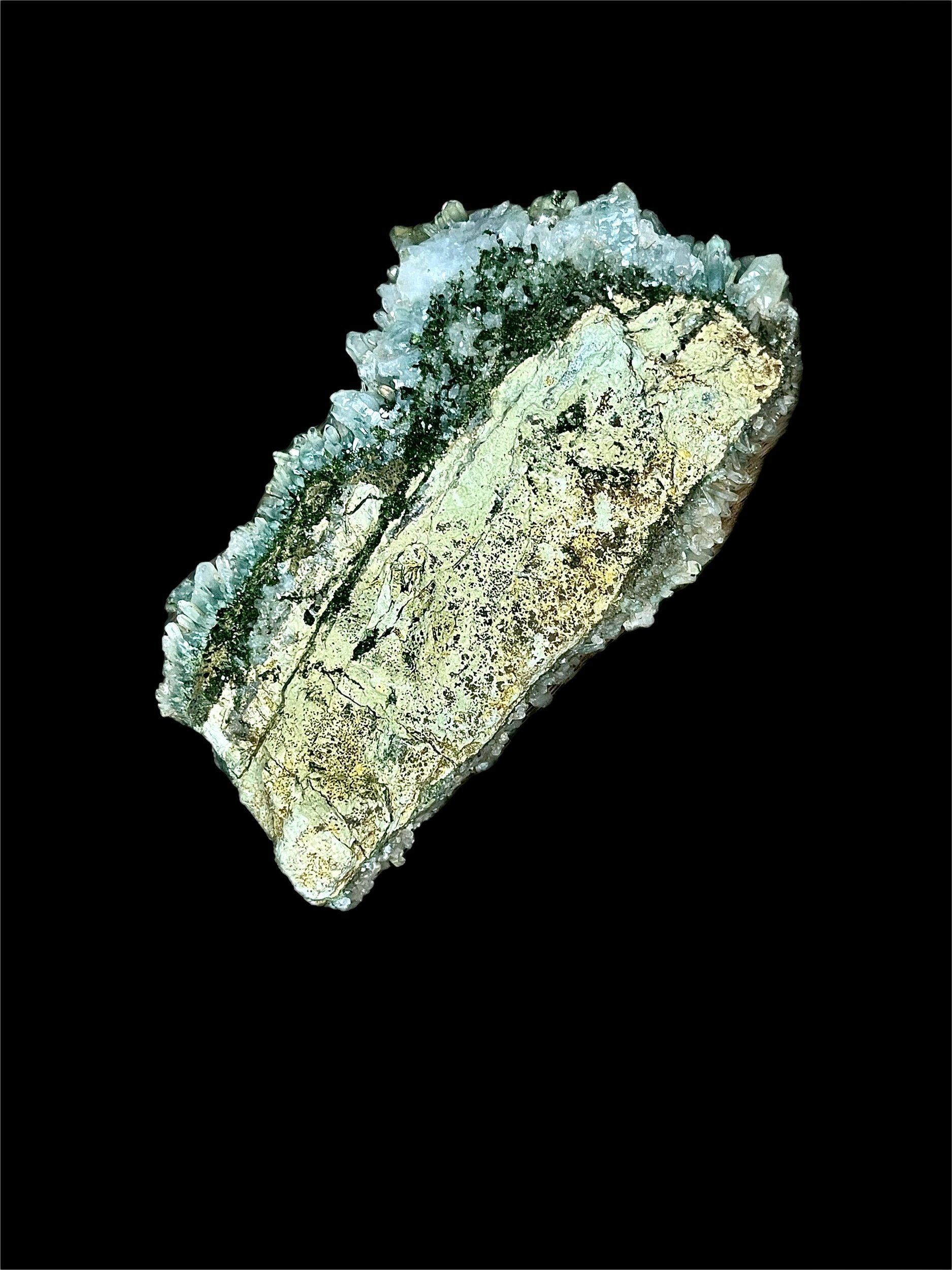
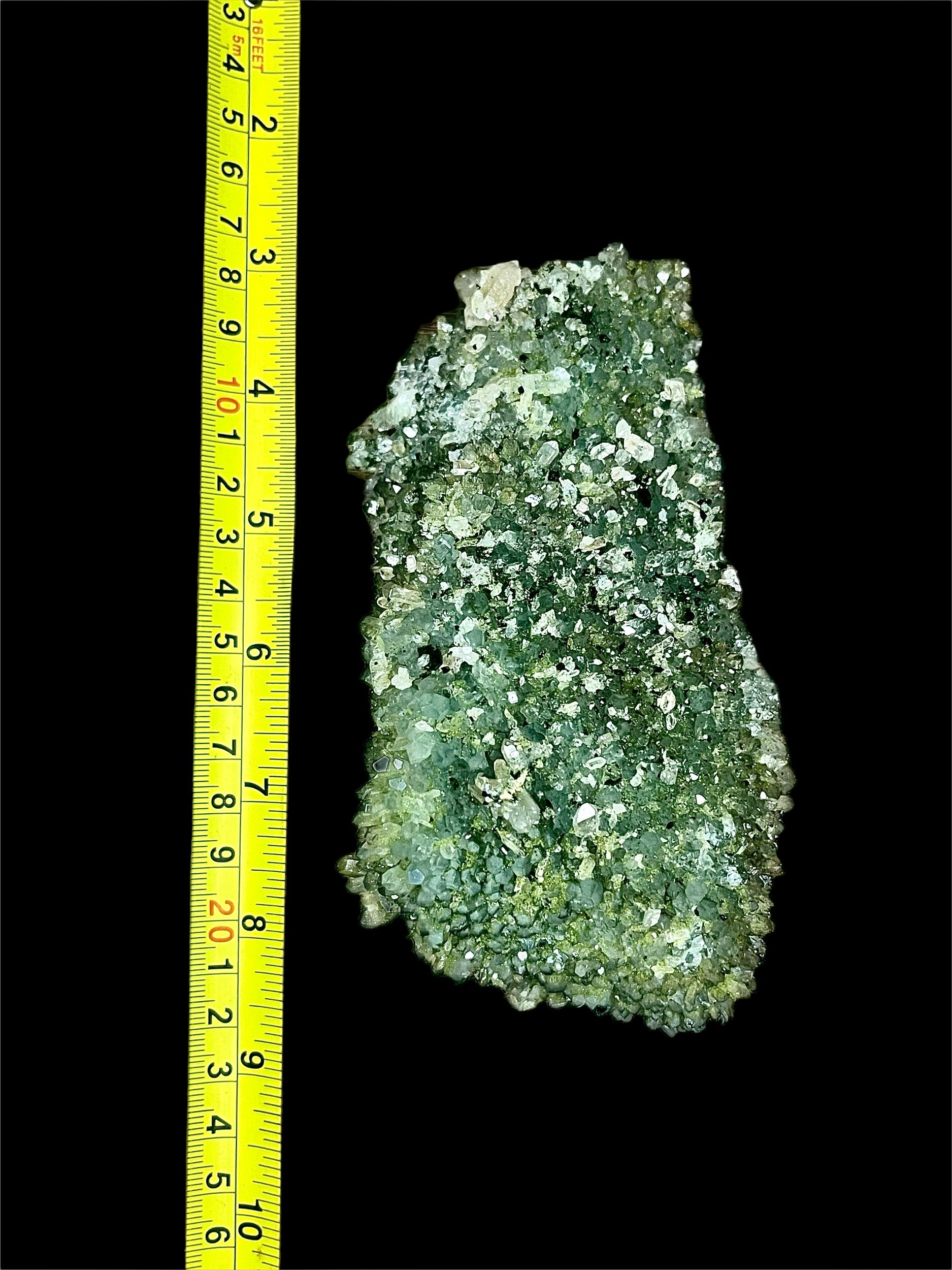
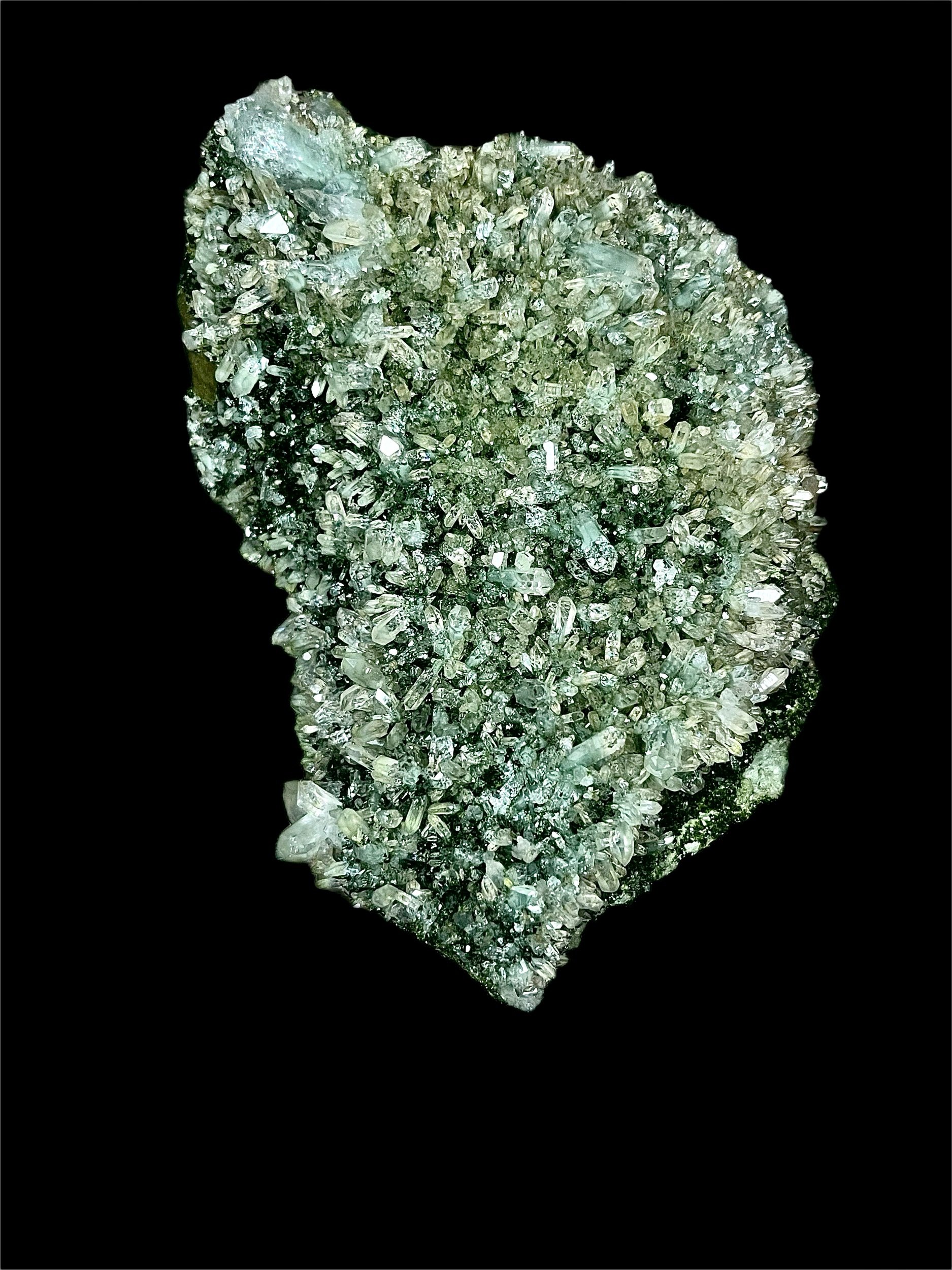
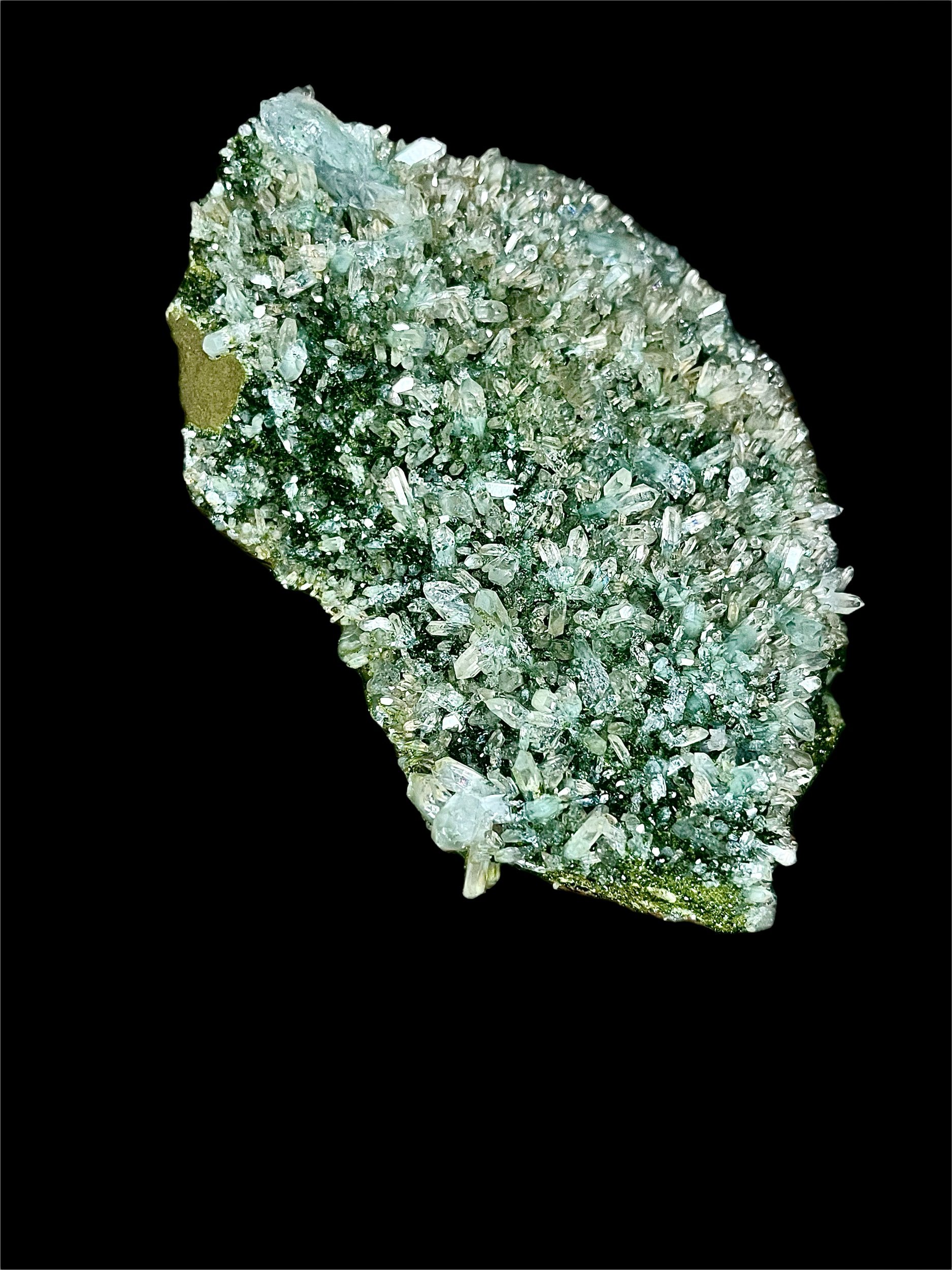
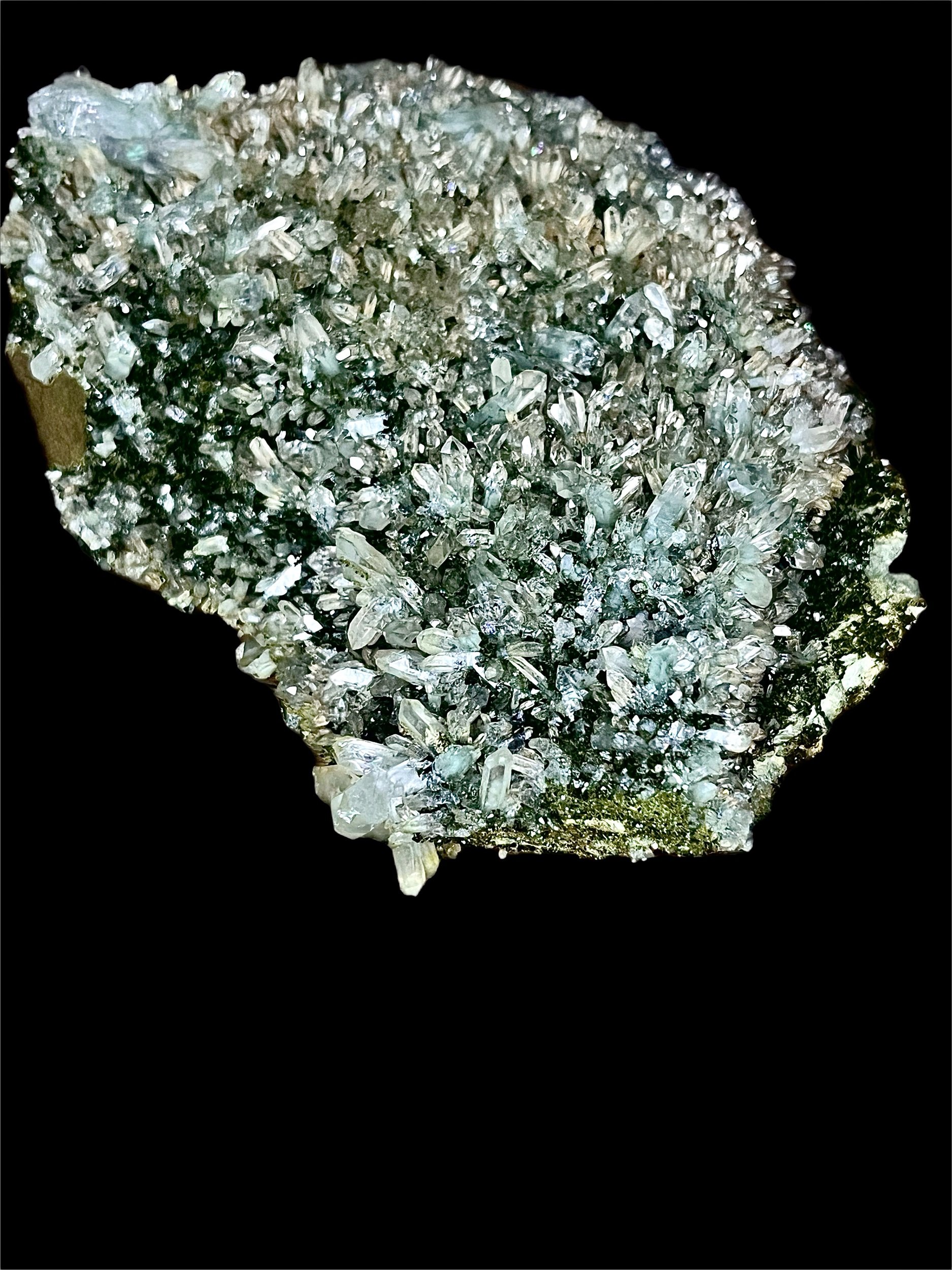
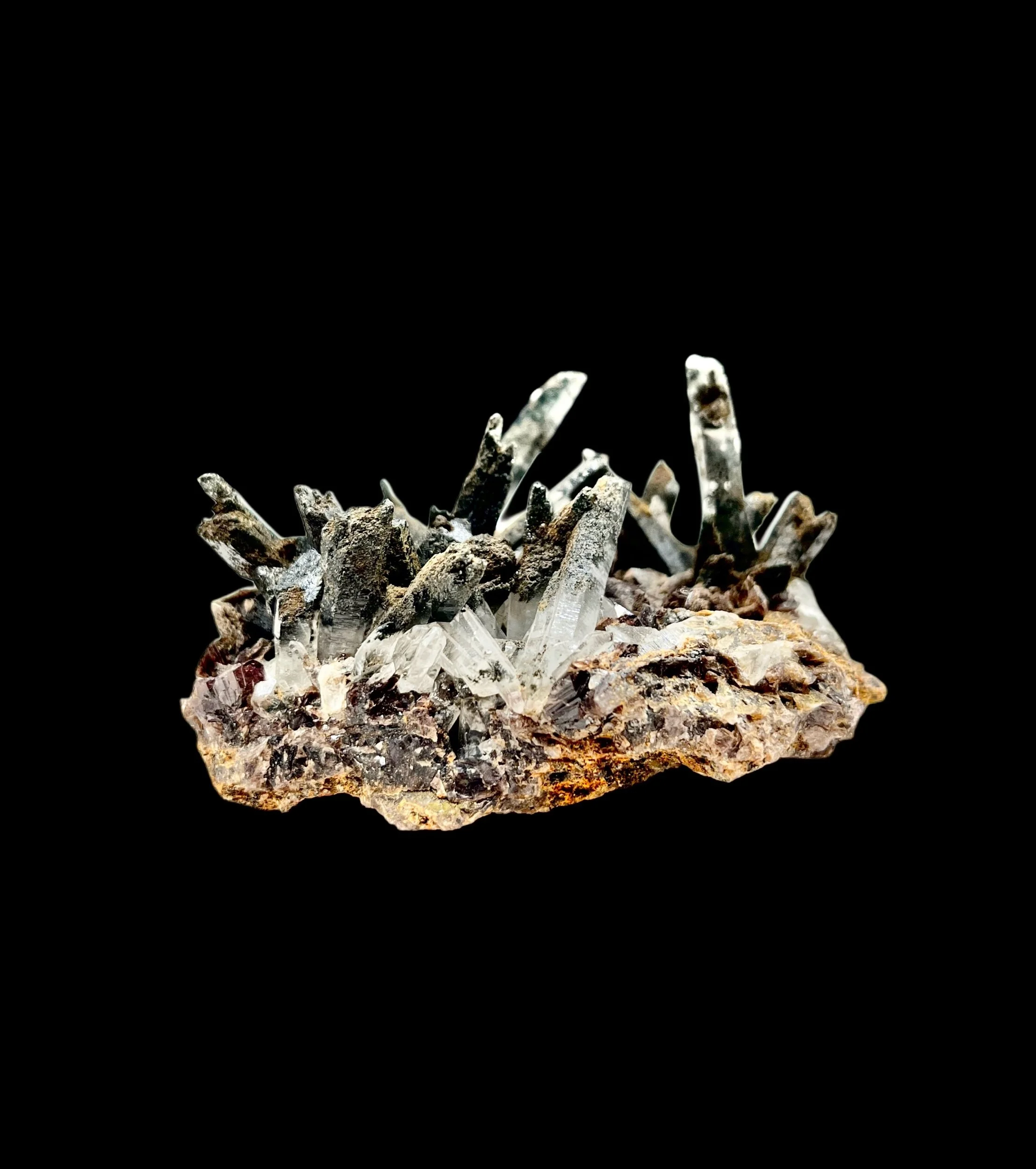
This Peruvian association specimen features sharp, prismatic quartz crystals partially overgrown by axinite and epidote, creating a dramatic, layered growth sequence that clearly records multiple stages of mineral formation. The quartz forms the structural backbone of the piece, while later axinite and epidote crystallized directly over the quartz terminations and faces, producing a rugged, alpine-style aesthetic with strong vertical movement.
Dark, translucent to opaque axinite blades contrast beautifully against the glassy quartz, while olive-green epidote adds texture and mineralogical complexity across the crystal surfaces. The result is a specimen that feels dynamic and geologically expressive rather than decorative—an honest, natural association piece with excellent visual tension.
Dimensions: 3” x 2.5” x 1.75”
Weight: 157g
Quartz is often associated with clarity and amplification, while axinite and epidote are traditionally linked with grounding, transformation, and growth. Together, many collectors view this combination as symbolizing layered change and structural balance.
Axinite occurring directly on quartz is always of interest, but specimens where both axinite and epidote overgrow quartz are notably more compelling. This piece illustrates a clear paragenetic sequence and is especially appealing to collectors focused on association minerals, metamorphic–hydrothermal environments, and Peruvian localities. Its strong crystal form makes it an excellent shelf or case display specimen.
Axinite and epidote crystallized directly over quartz
Clear multi-stage mineral growth
Sharp quartz points with contrasting darker overgrowths
High Luster
Strong educational and collector appeal
Mineral: Epidote, Axinite, and Quartz
Chemical Formula: Ca₂(Al,Fe)₃(SiO₄)₃(OH) + (Ca,Fe,Mn)₃Al₂BO₃Si₄O₁₂(OH) + SiO₂
Crystal System: Monoclinic (Epidote); Triclinic (Axinite); Trigonal (Quartz)
Luster: Vitreous to slightly resinous (Epidote); vitreous (Axinite & Quartz)
Transparency: Transparent to opaque (Epidote); transparent to translucent (Axinite & Quartz)
This Peruvian association specimen features sharp, prismatic quartz crystals partially overgrown by axinite and epidote, creating a dramatic, layered growth sequence that clearly records multiple stages of mineral formation. The quartz forms the structural backbone of the piece, while later axinite and epidote crystallized directly over the quartz terminations and faces, producing a rugged, alpine-style aesthetic with strong vertical movement.
Dark, translucent to opaque axinite blades contrast beautifully against the glassy quartz, while olive-green epidote adds texture and mineralogical complexity across the crystal surfaces. The result is a specimen that feels dynamic and geologically expressive rather than decorative—an honest, natural association piece with excellent visual tension.
Dimensions: 3” x 2.5” x 1.75”
Weight: 157g
Quartz is often associated with clarity and amplification, while axinite and epidote are traditionally linked with grounding, transformation, and growth. Together, many collectors view this combination as symbolizing layered change and structural balance.
Axinite occurring directly on quartz is always of interest, but specimens where both axinite and epidote overgrow quartz are notably more compelling. This piece illustrates a clear paragenetic sequence and is especially appealing to collectors focused on association minerals, metamorphic–hydrothermal environments, and Peruvian localities. Its strong crystal form makes it an excellent shelf or case display specimen.
Axinite and epidote crystallized directly over quartz
Clear multi-stage mineral growth
Sharp quartz points with contrasting darker overgrowths
High Luster
Strong educational and collector appeal
Mineral: Epidote, Axinite, and Quartz
Chemical Formula: Ca₂(Al,Fe)₃(SiO₄)₃(OH) + (Ca,Fe,Mn)₃Al₂BO₃Si₄O₁₂(OH) + SiO₂
Crystal System: Monoclinic (Epidote); Triclinic (Axinite); Trigonal (Quartz)
Luster: Vitreous to slightly resinous (Epidote); vitreous (Axinite & Quartz)
Transparency: Transparent to opaque (Epidote); transparent to translucent (Axinite & Quartz)