 Image 1 of 5
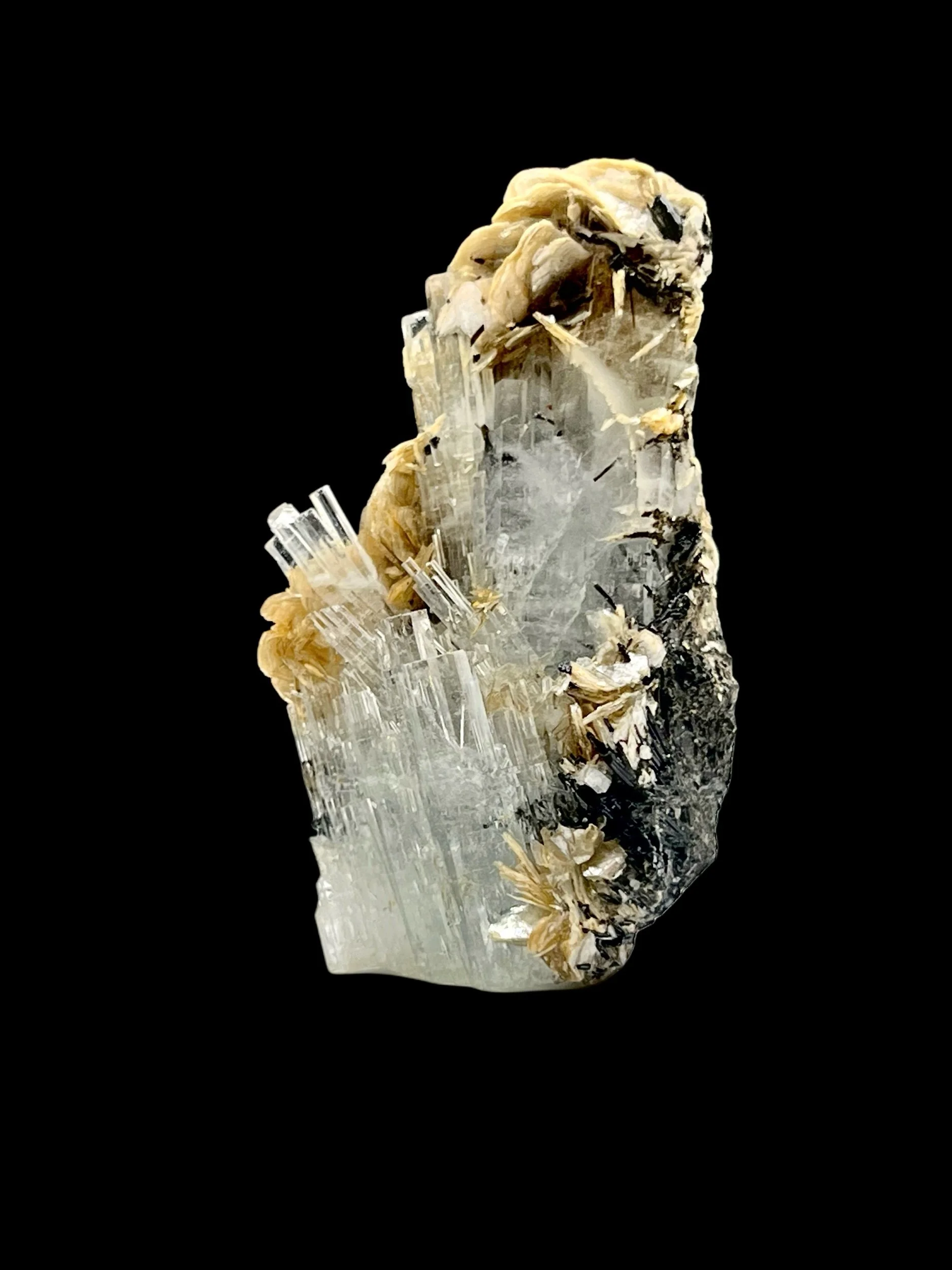 Image 2 of 5
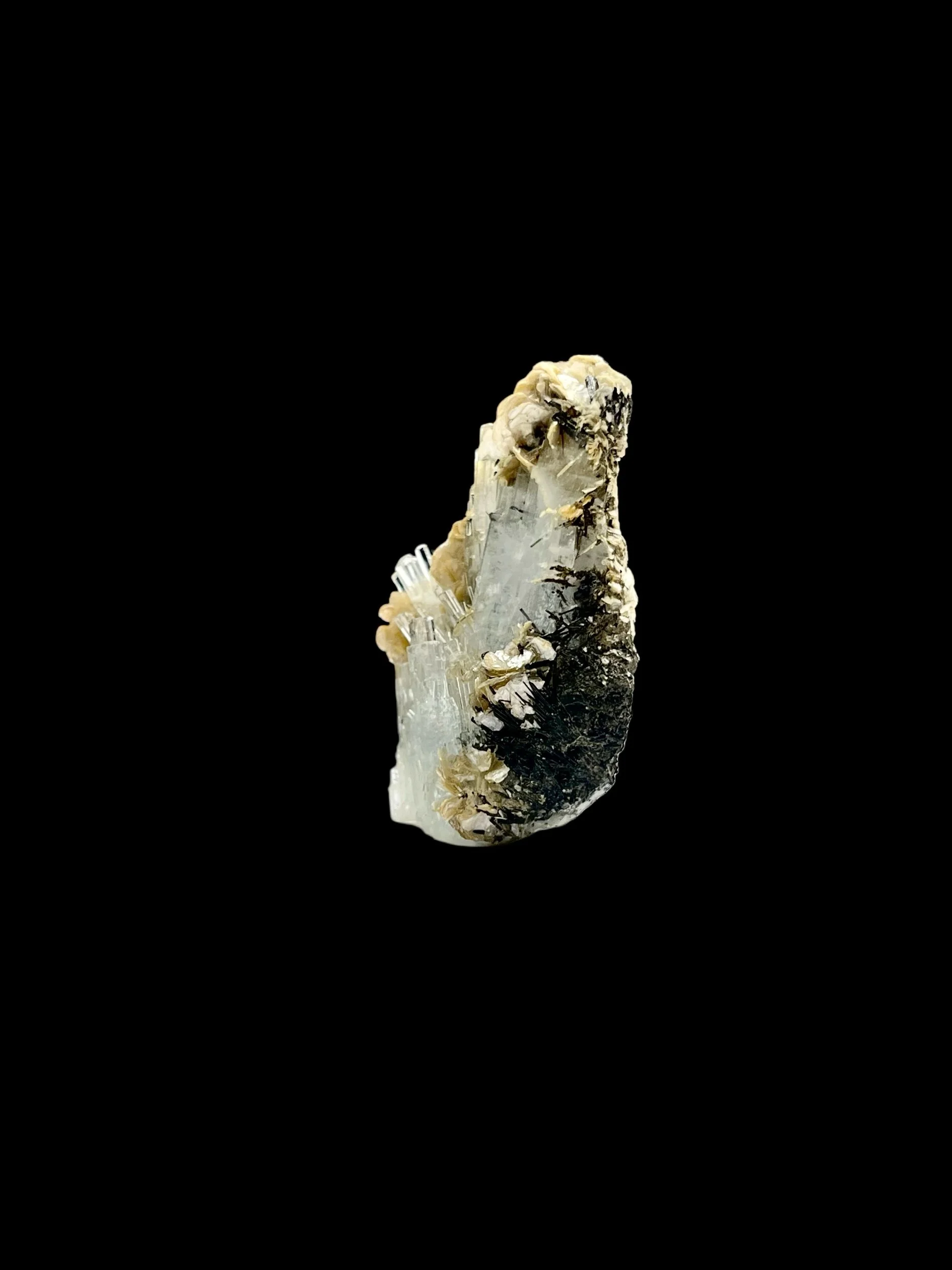 Image 3 of 5
 Image 4 of 5
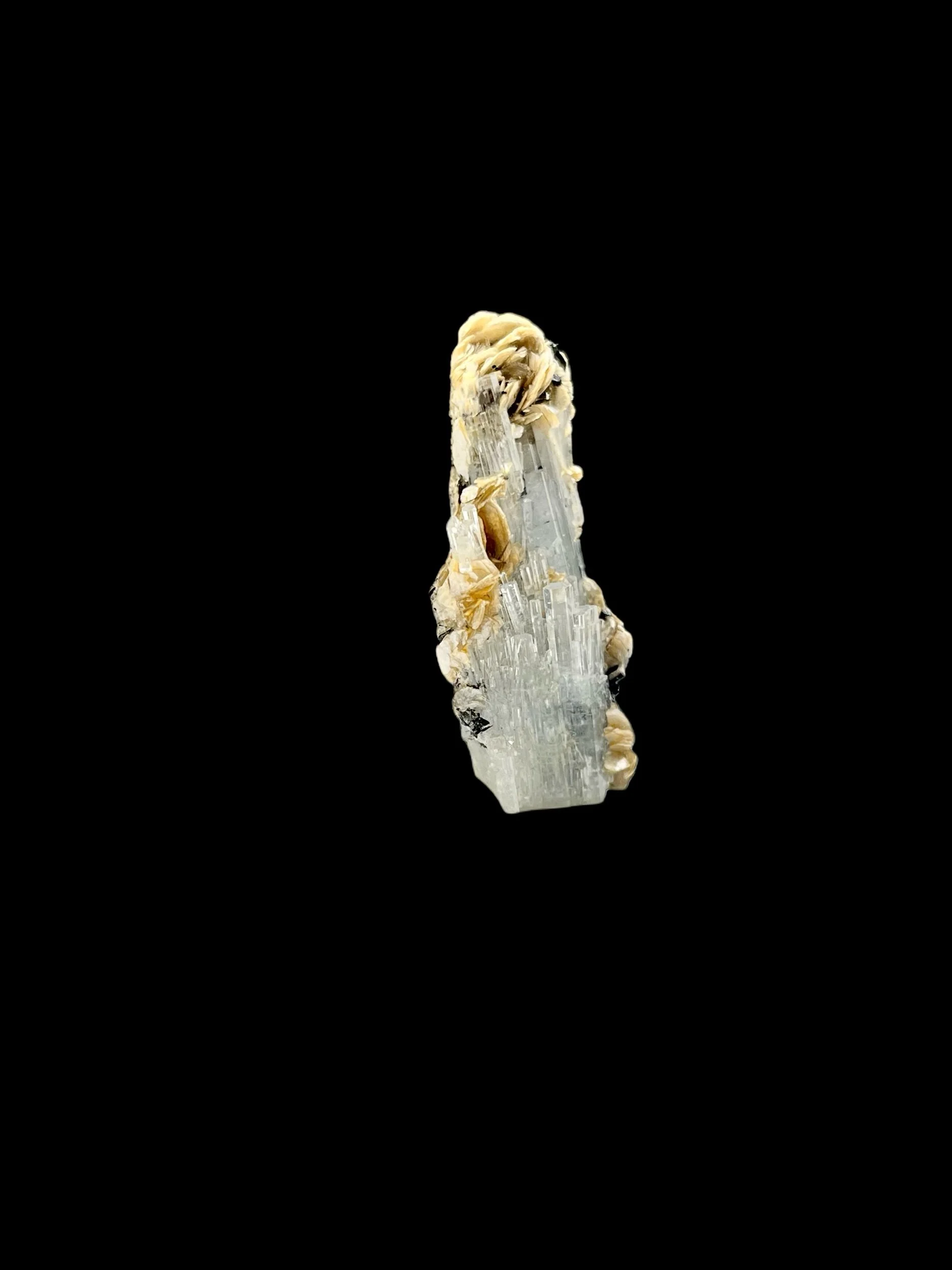 Image 5 of 5
Description
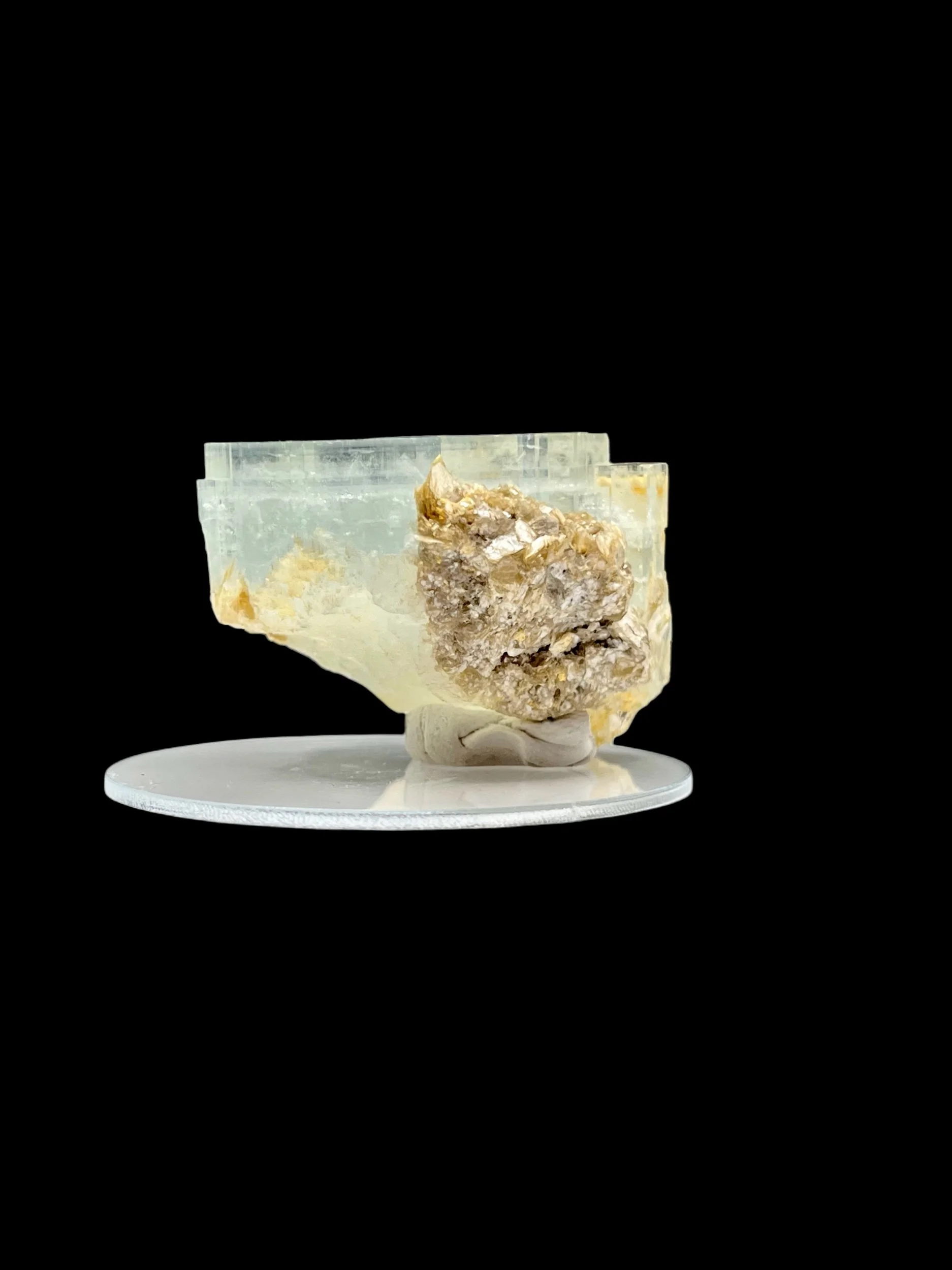
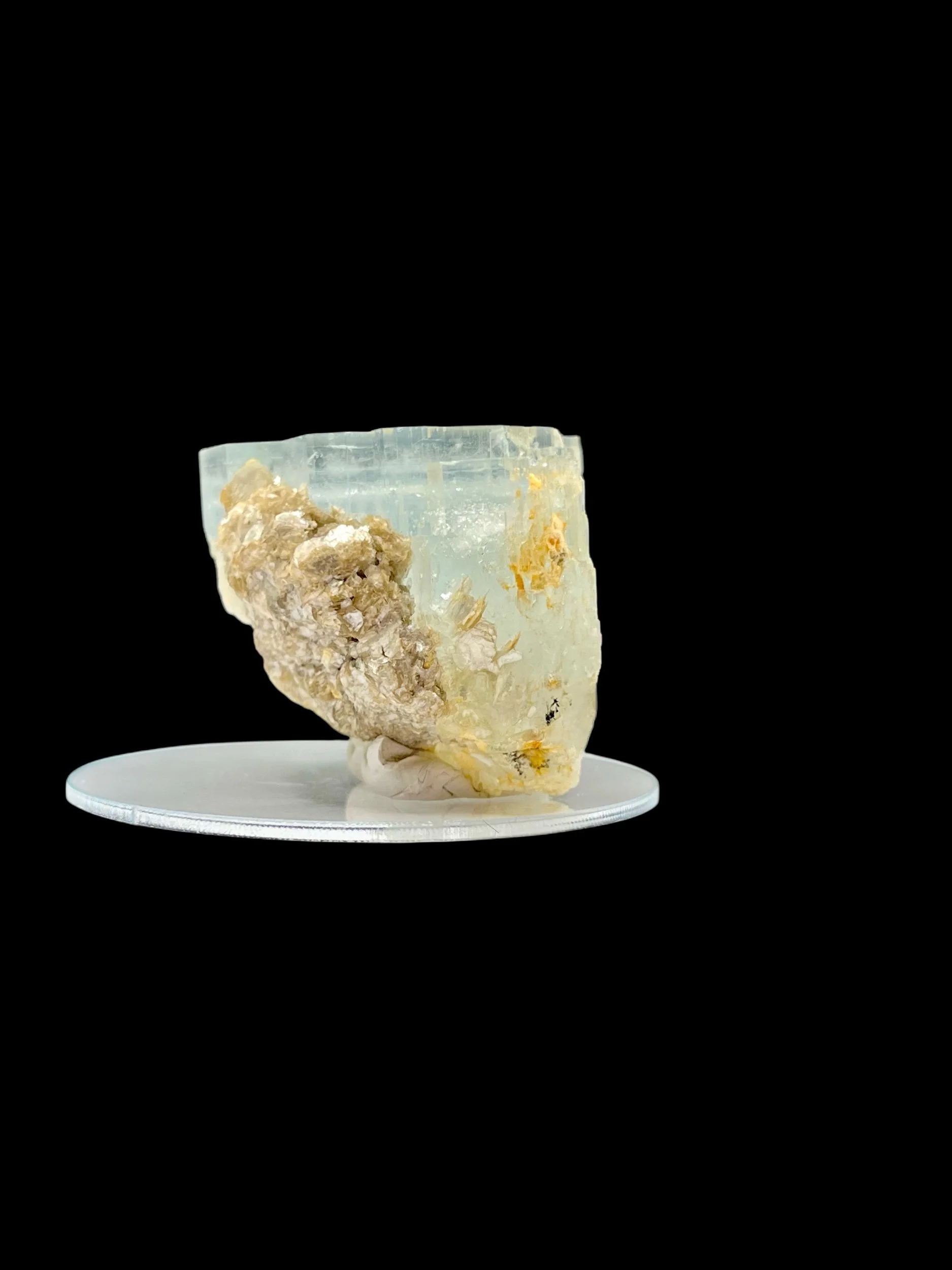
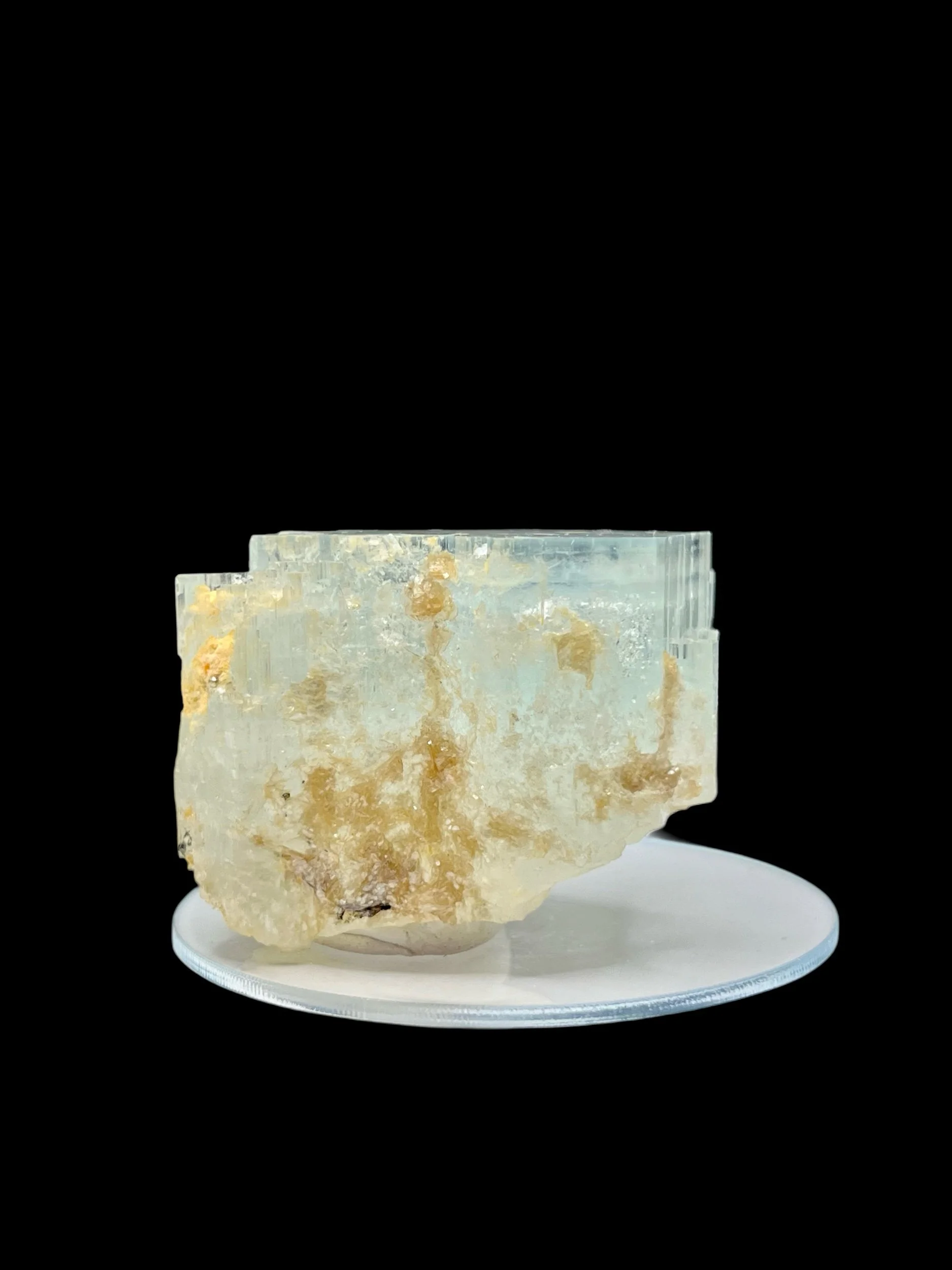
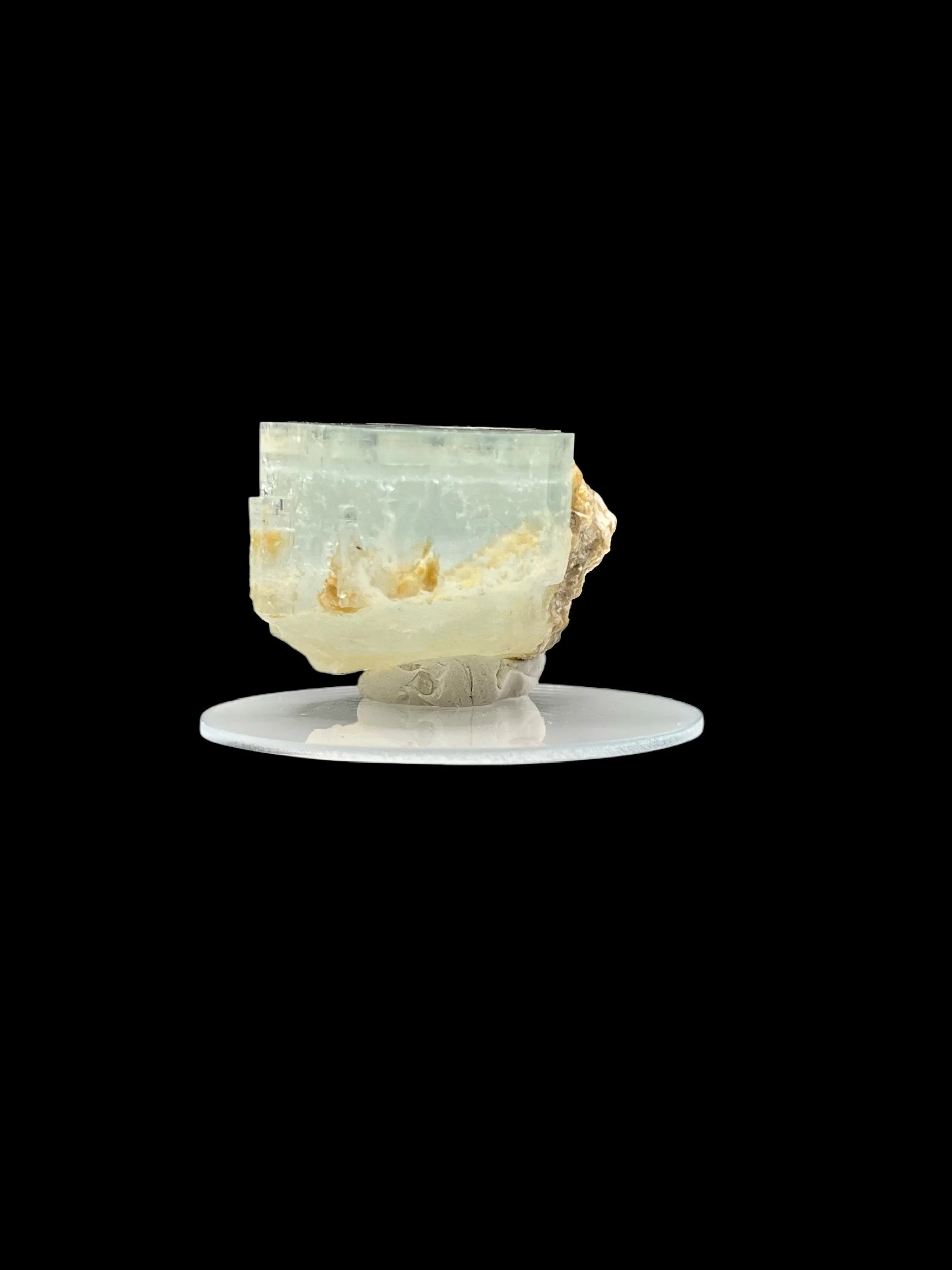
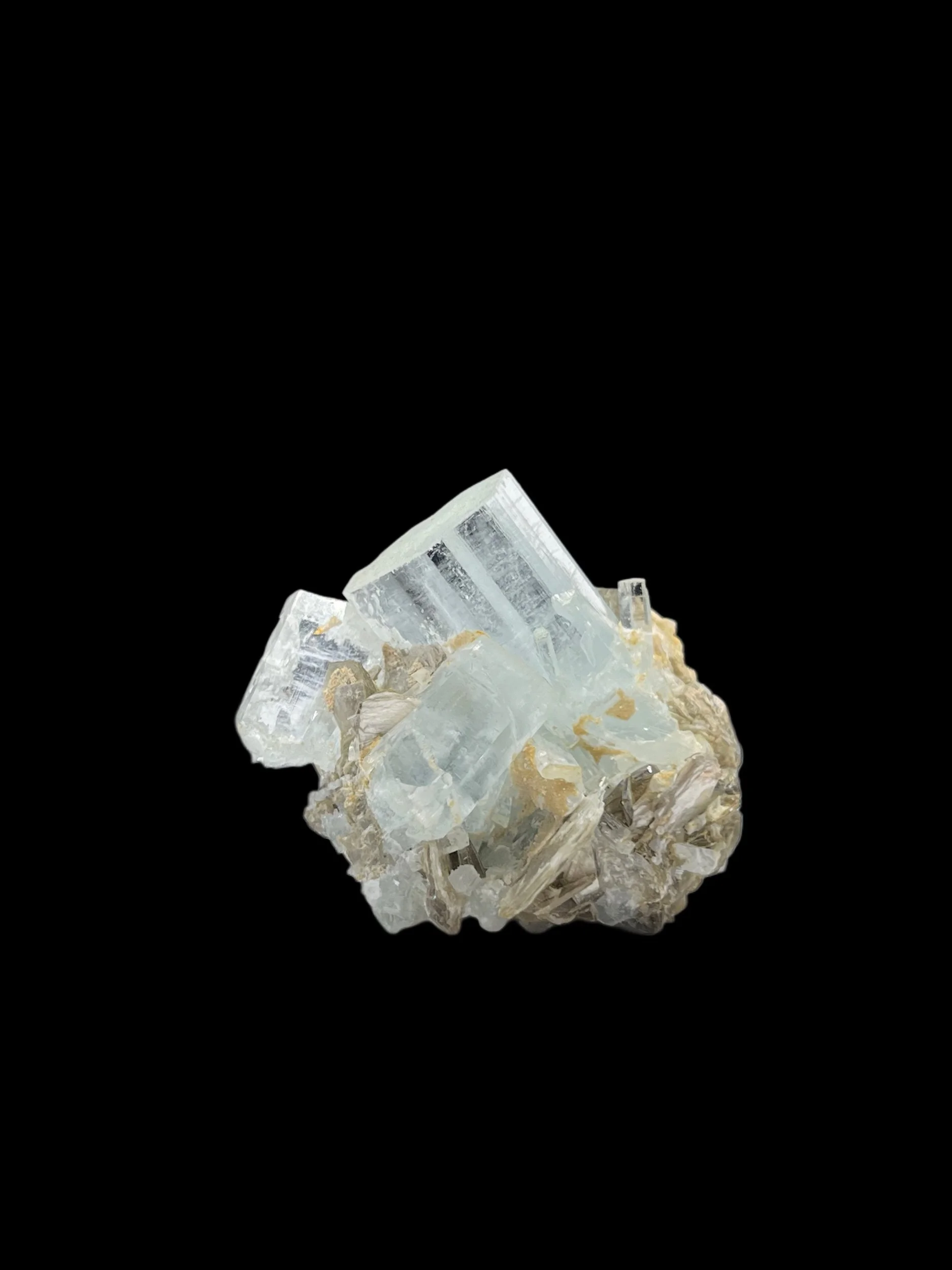
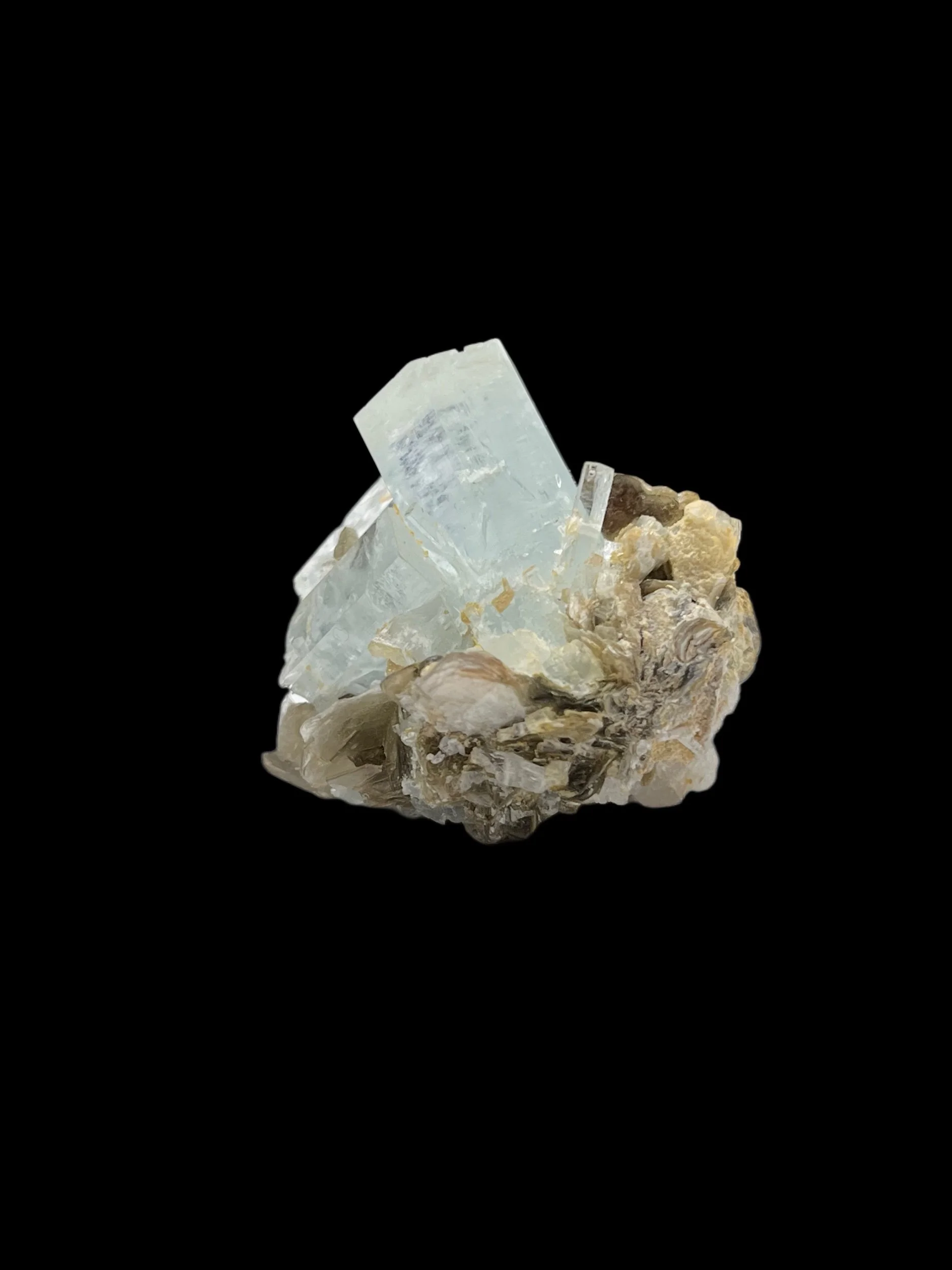
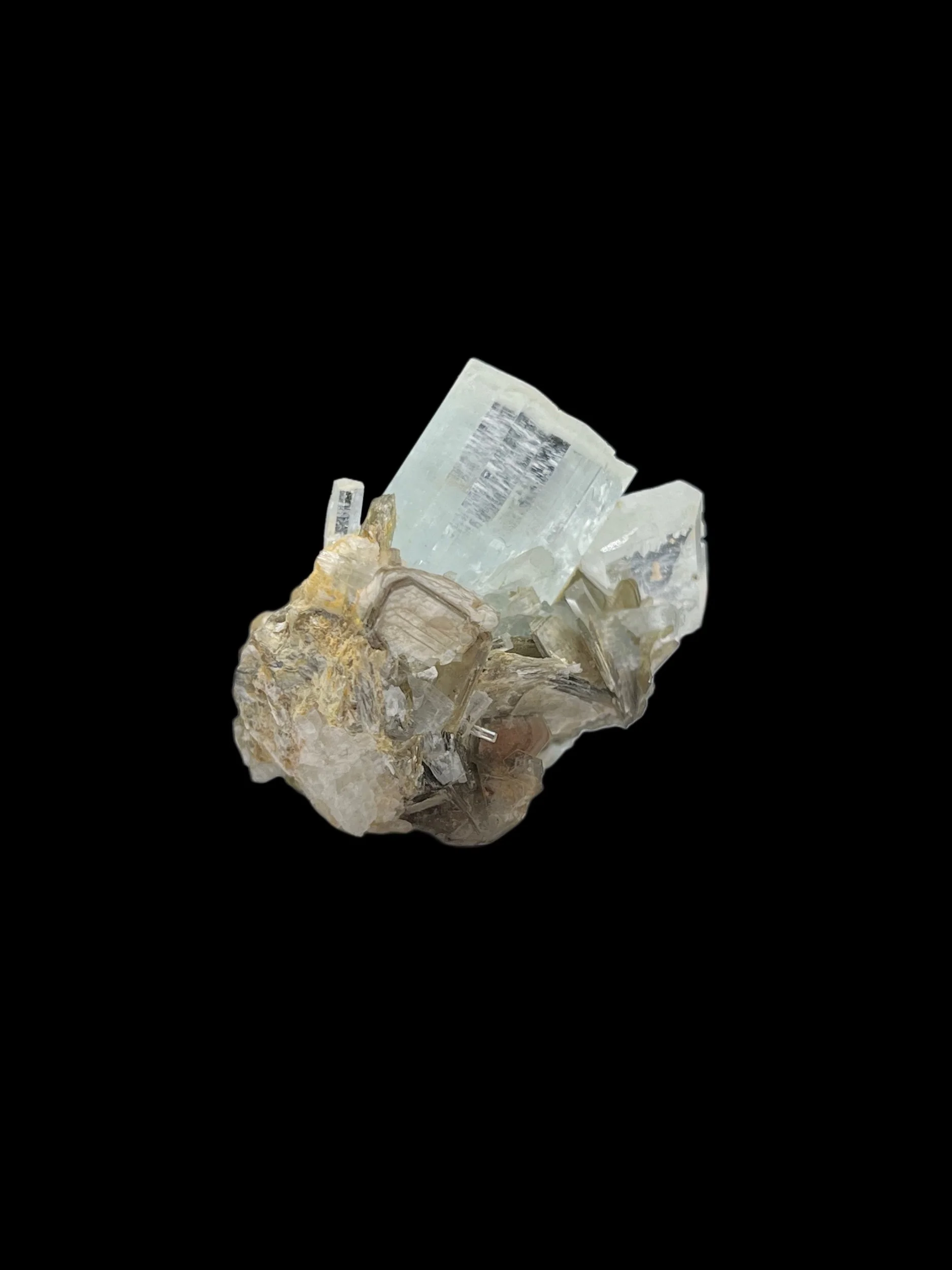
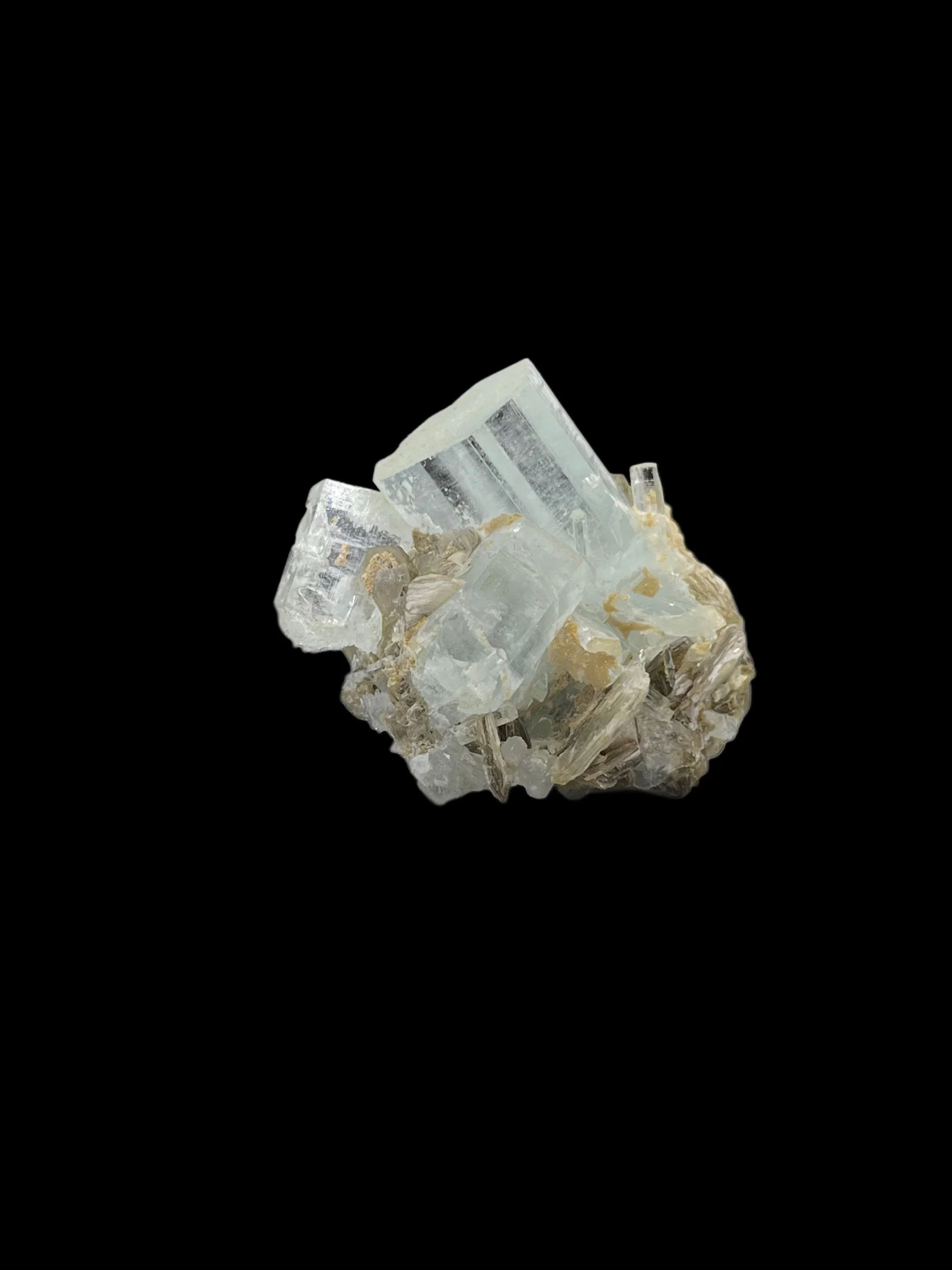
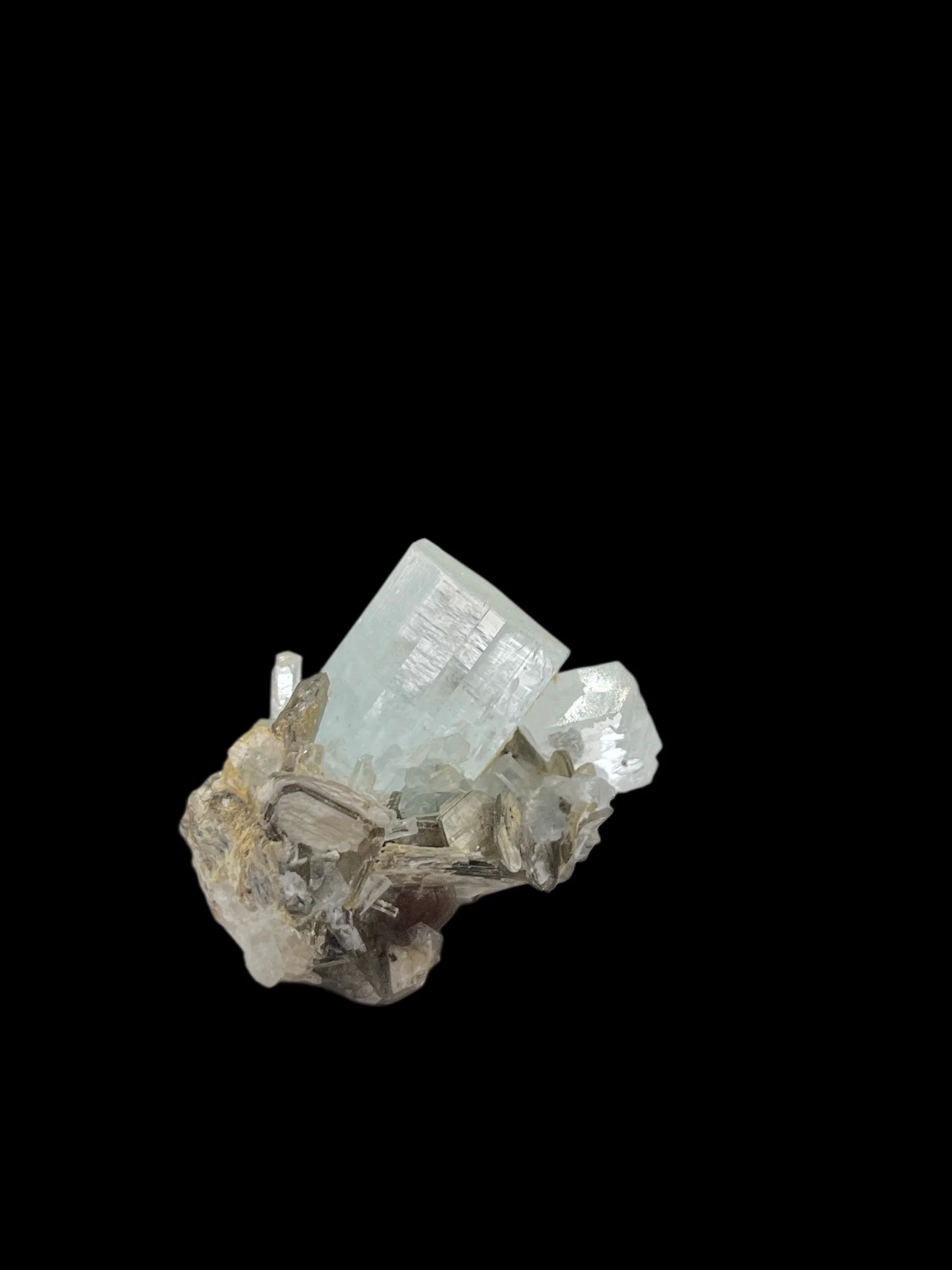
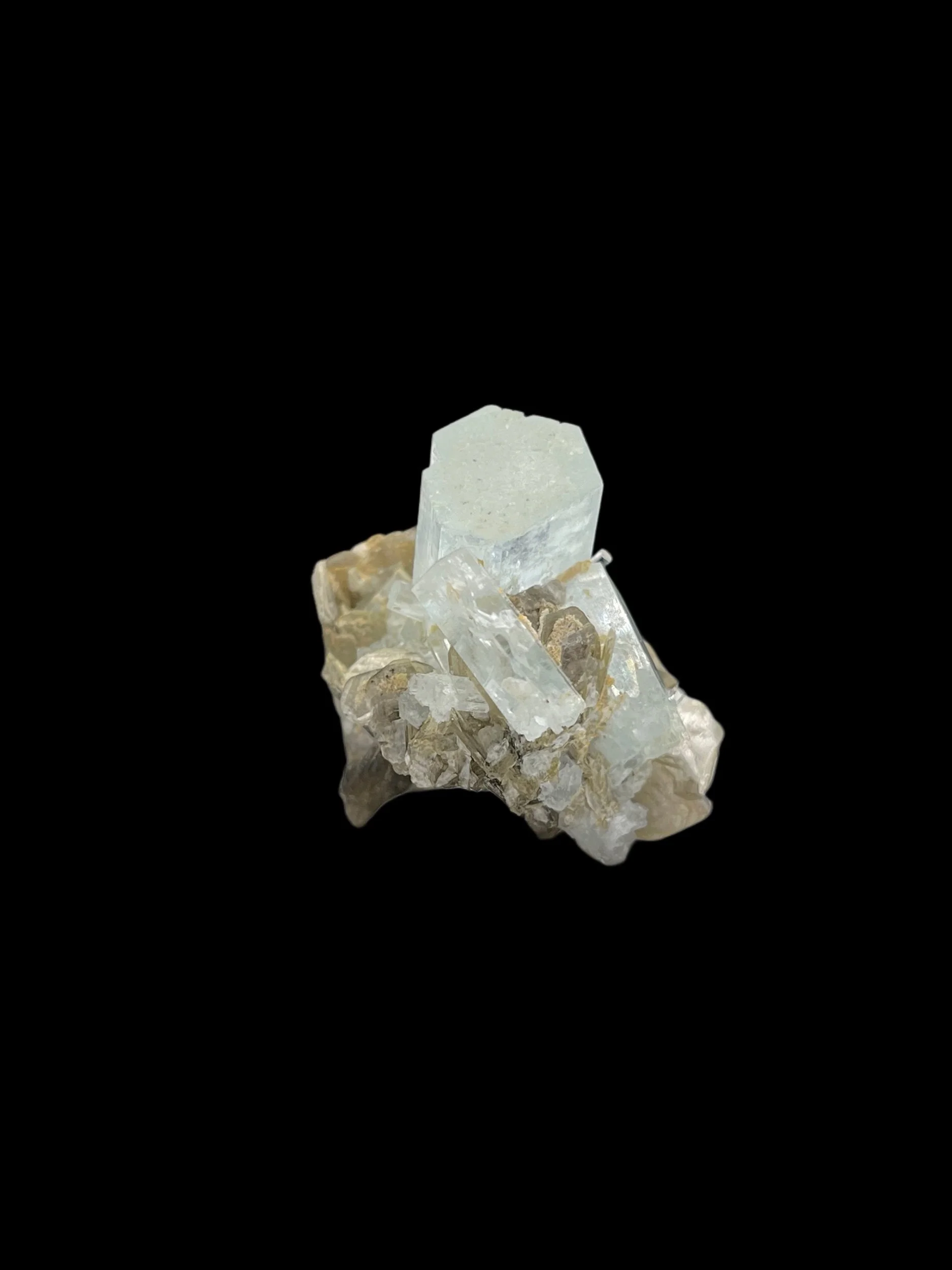
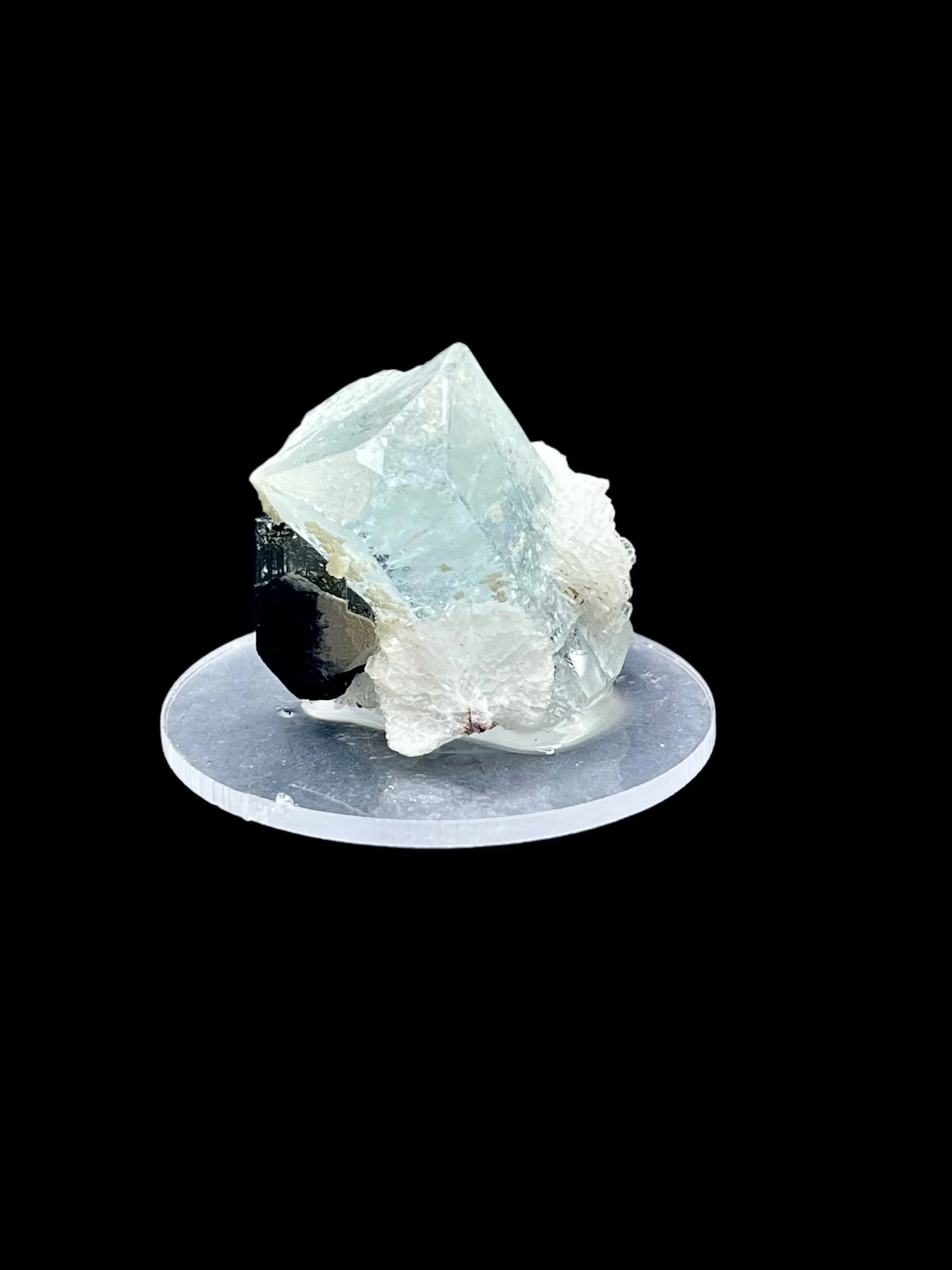
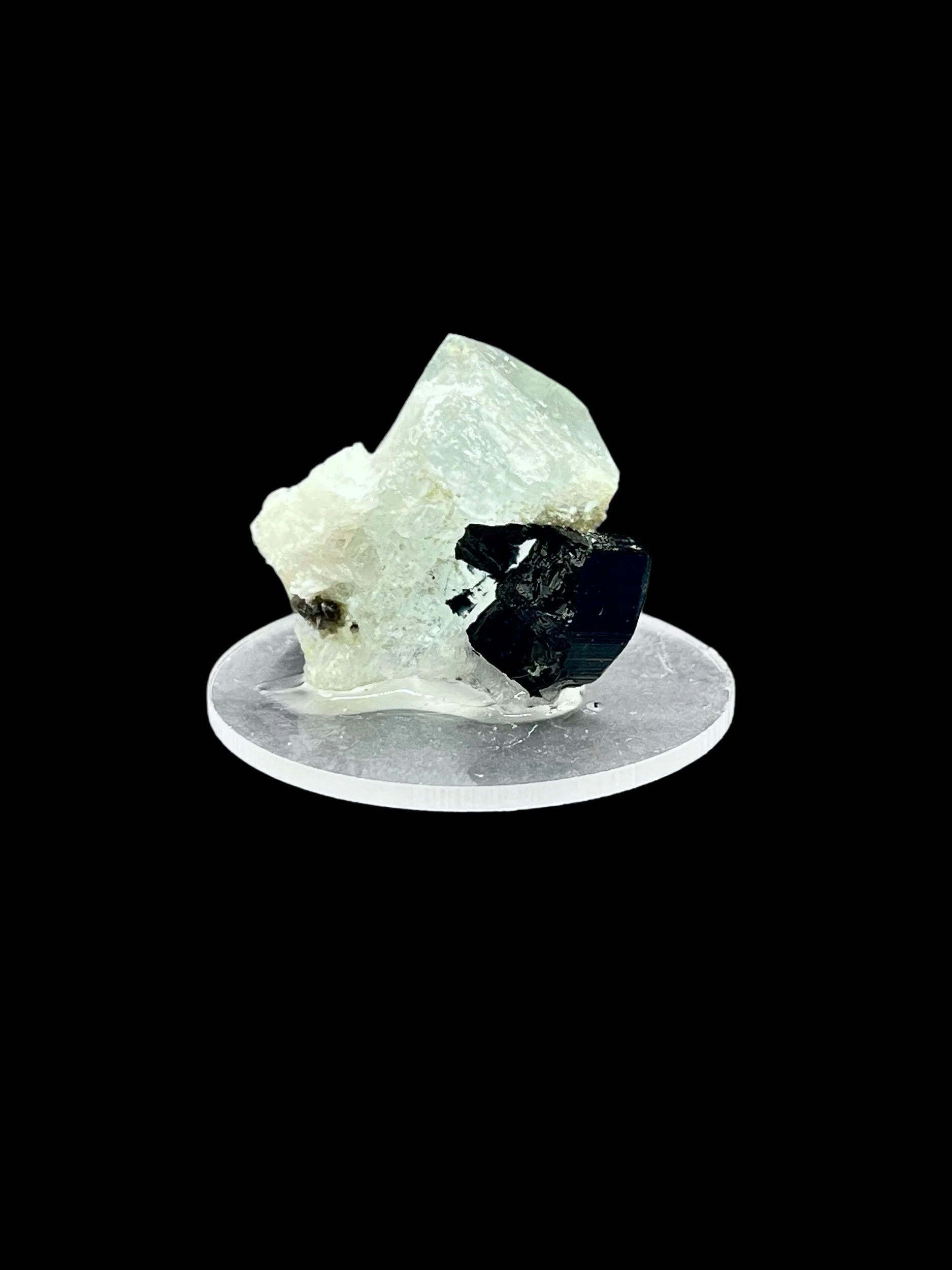
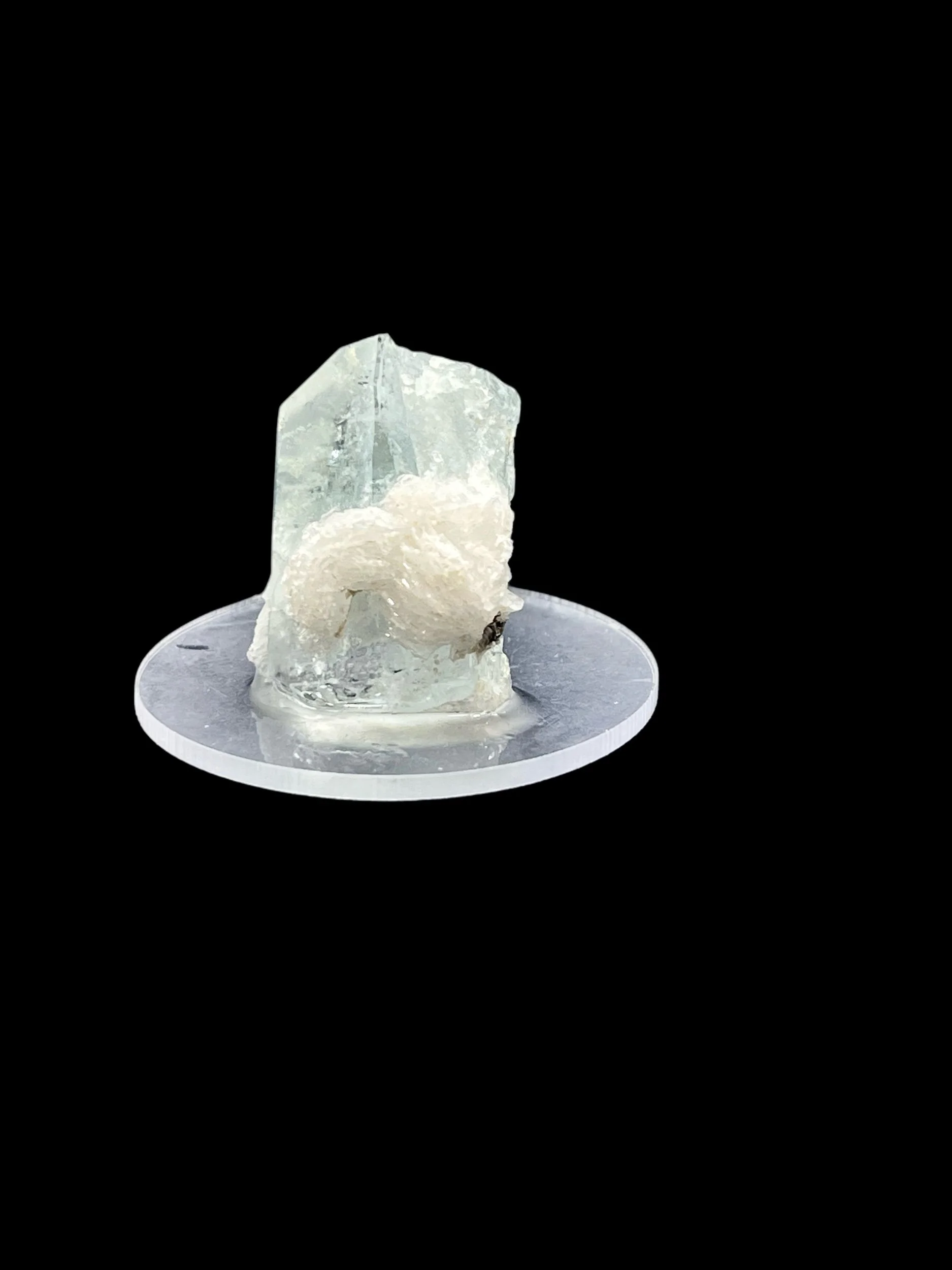
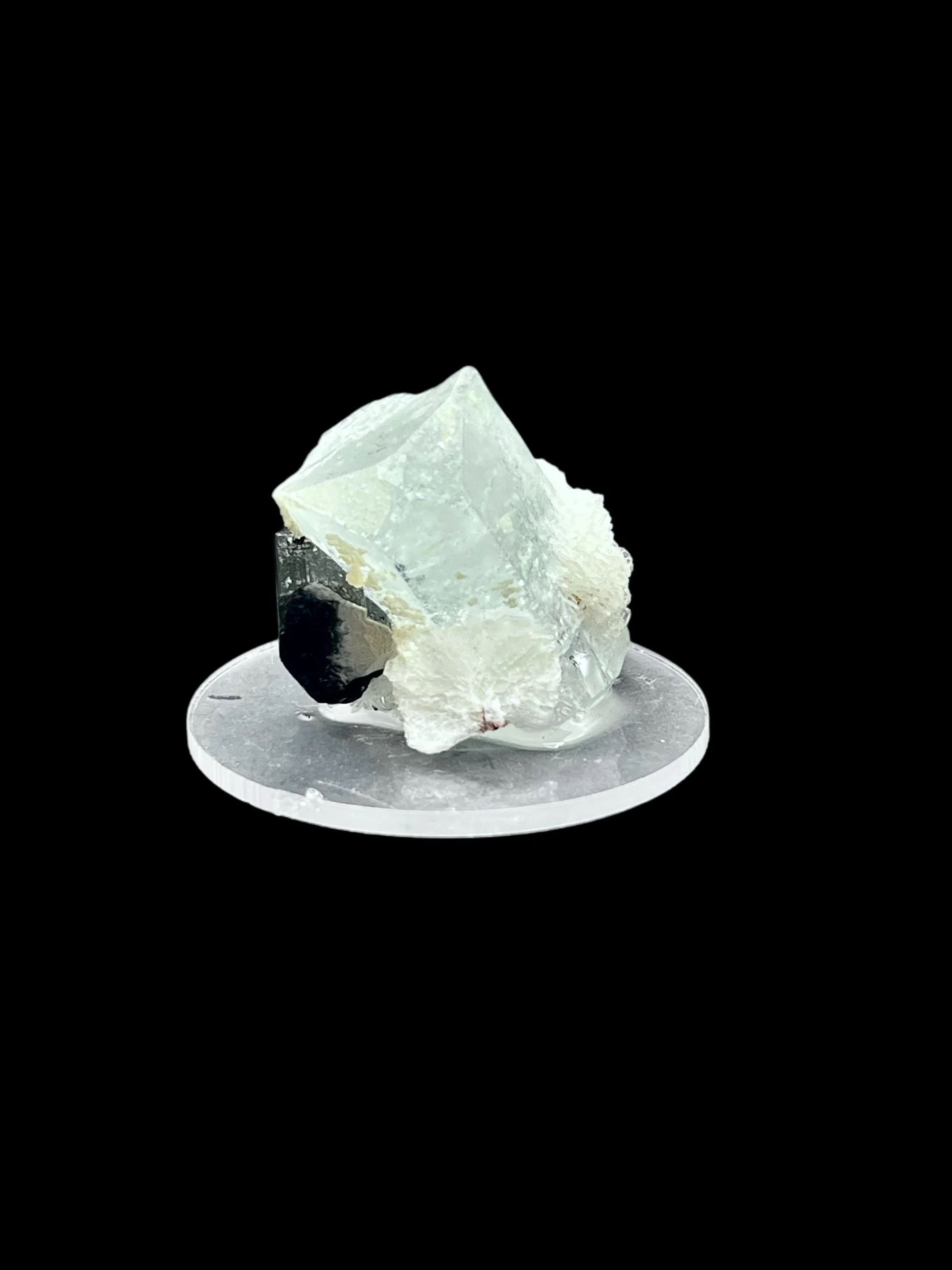
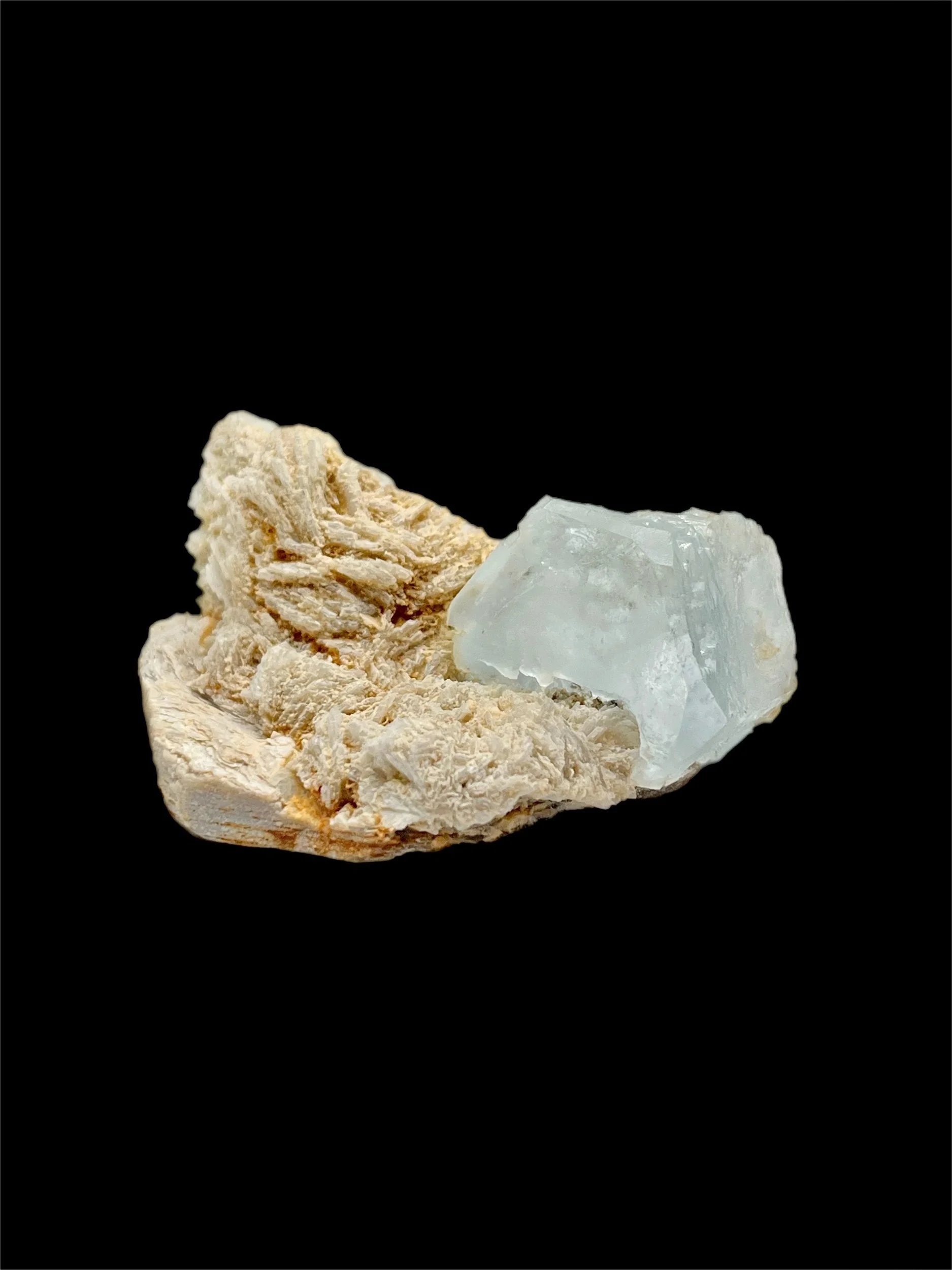
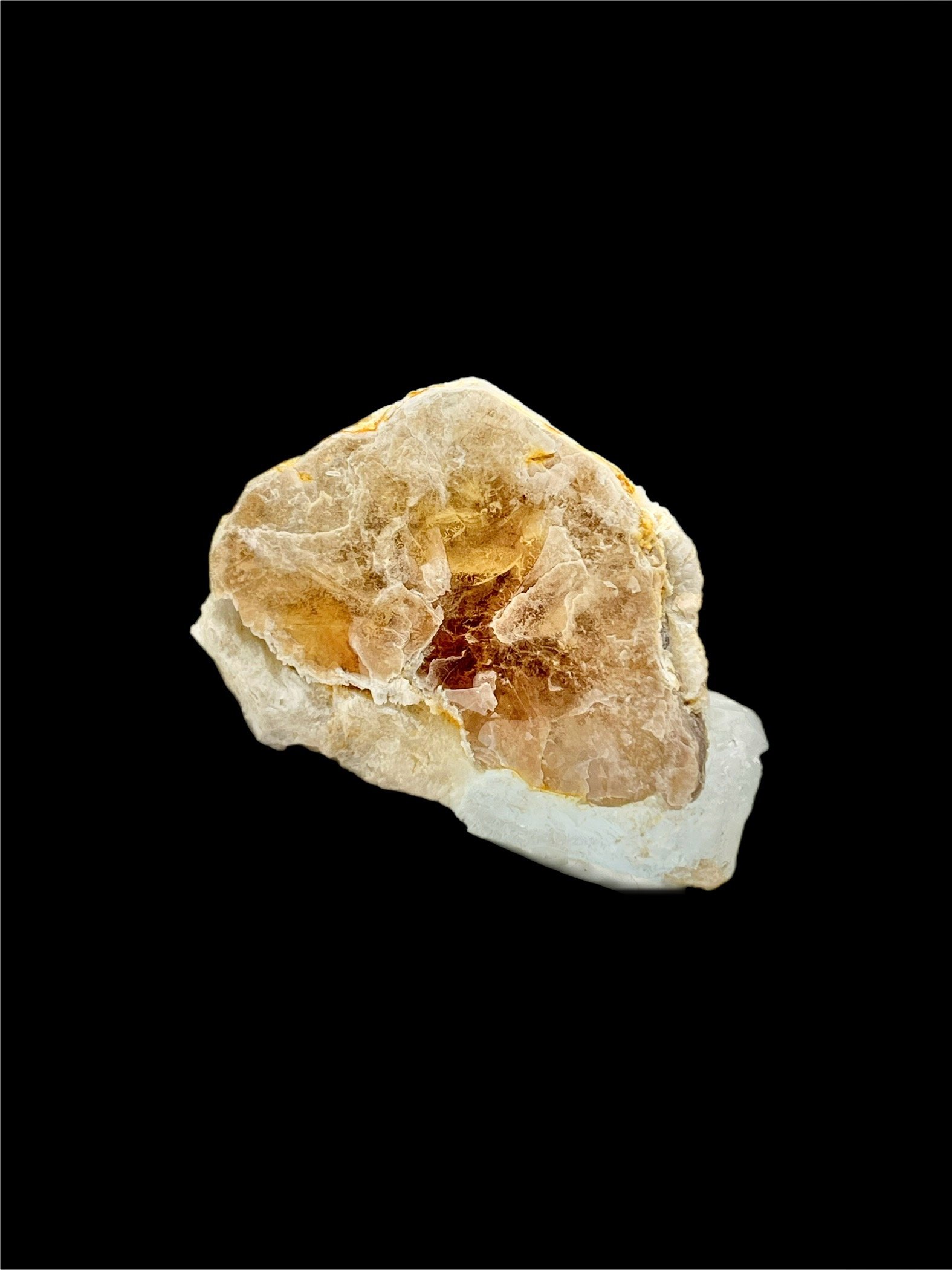
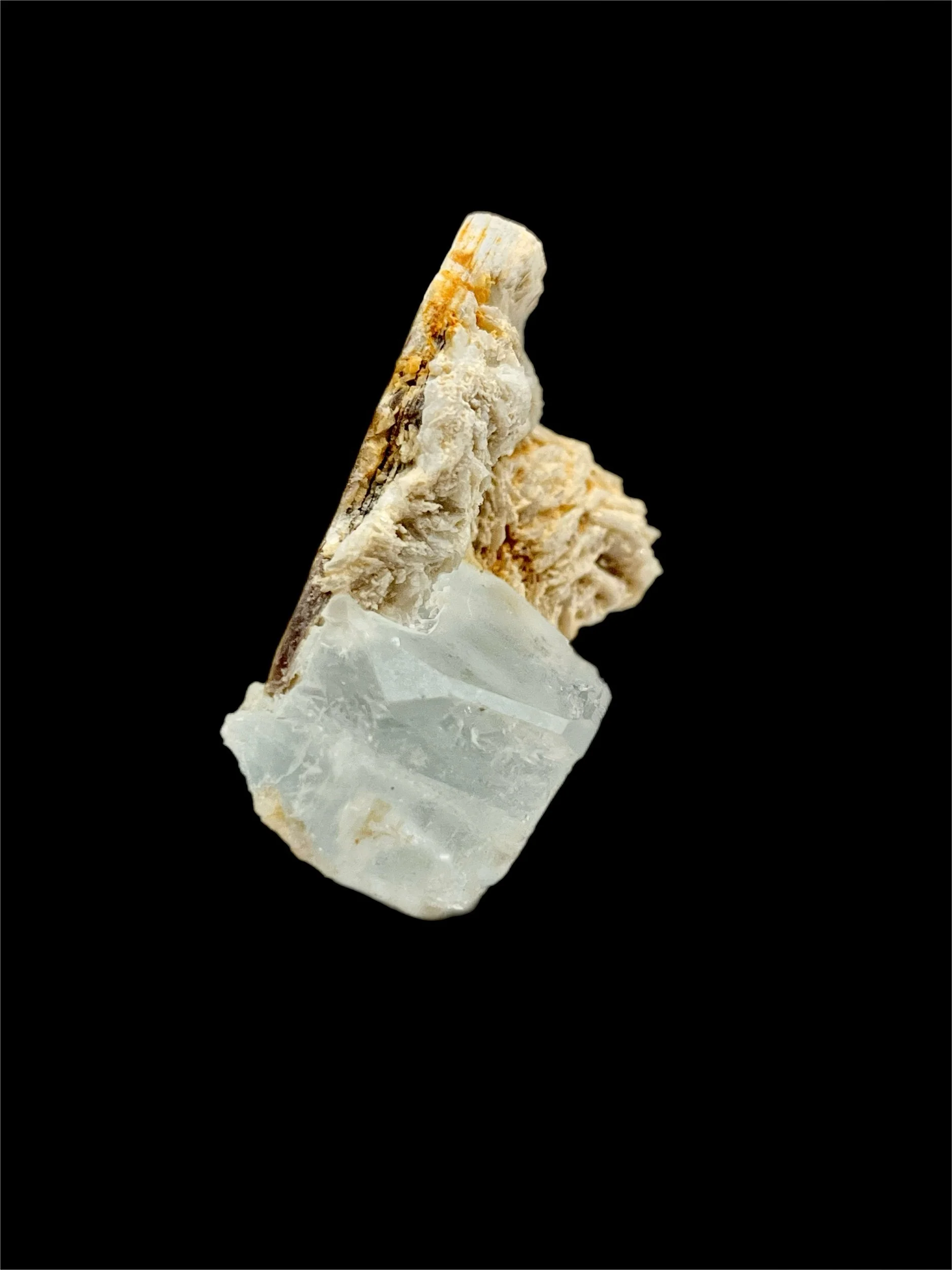
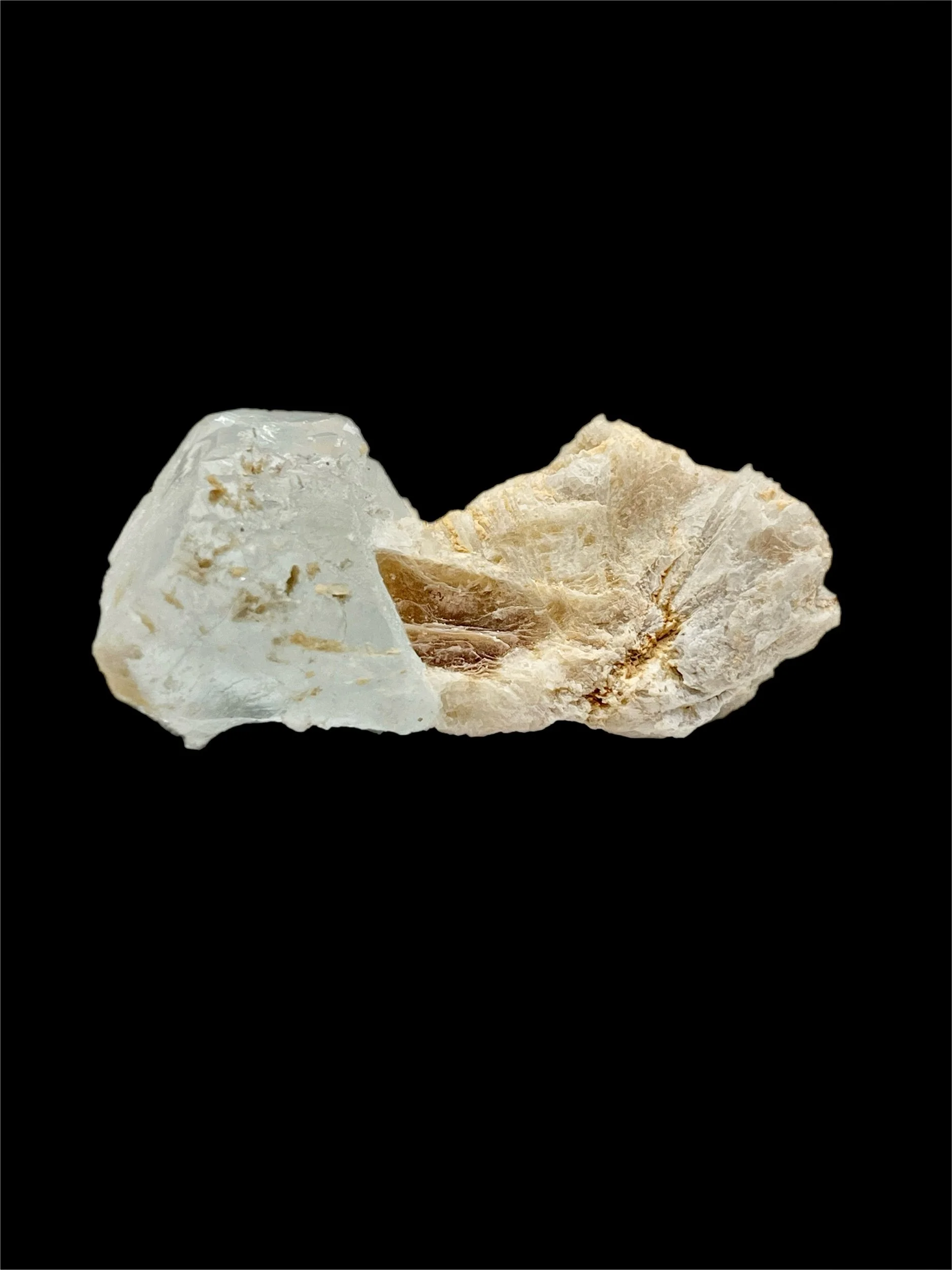
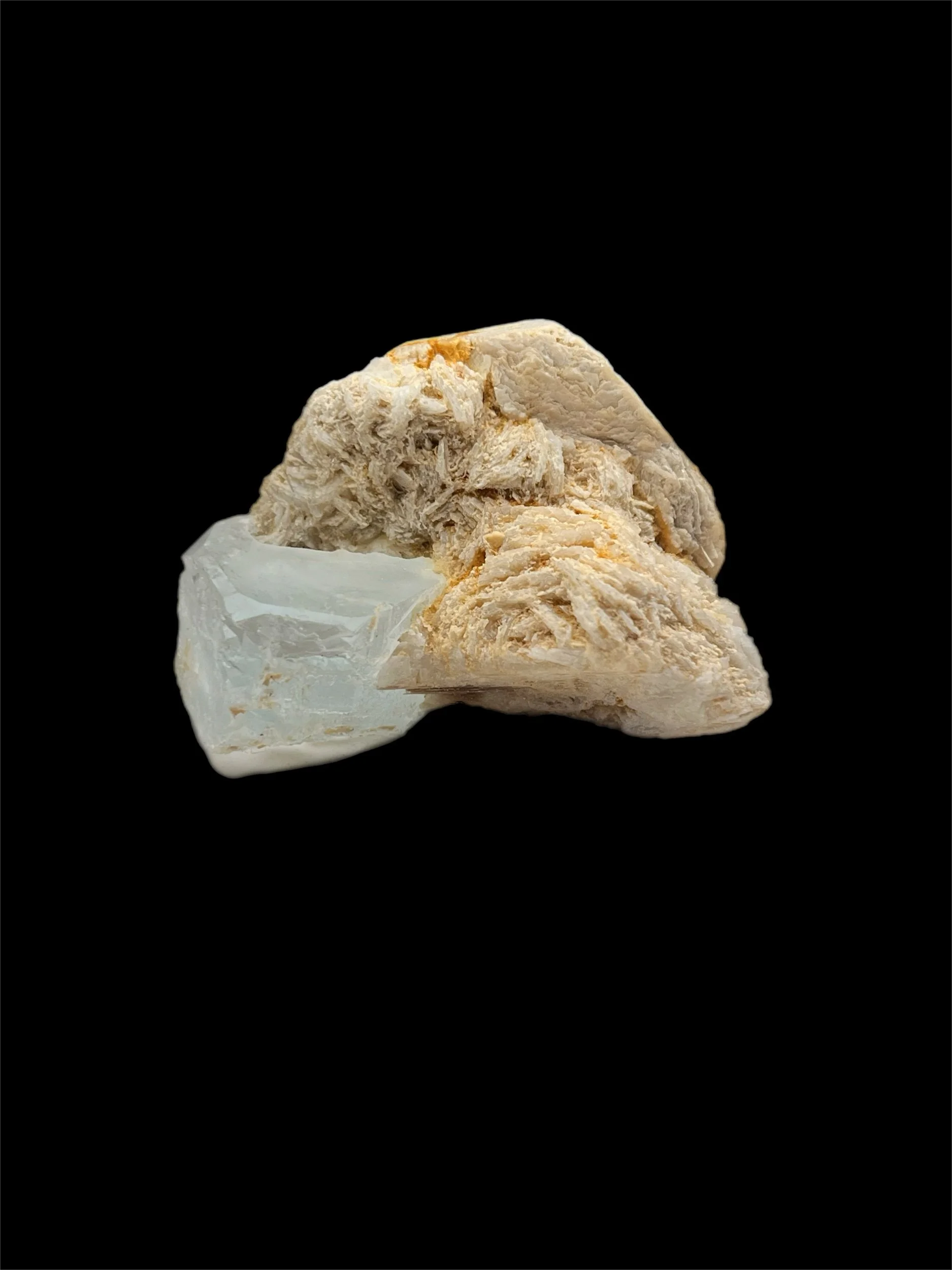
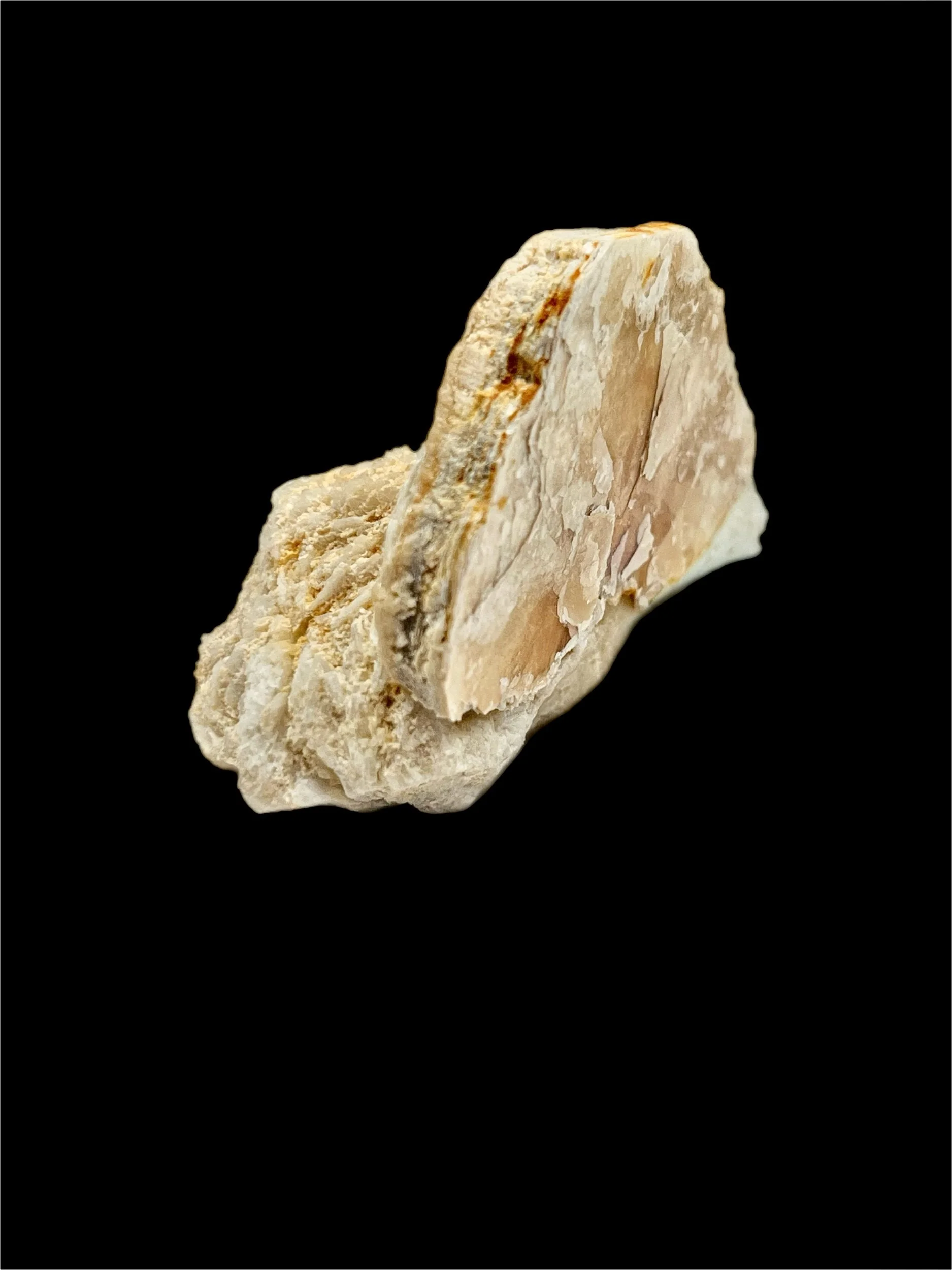
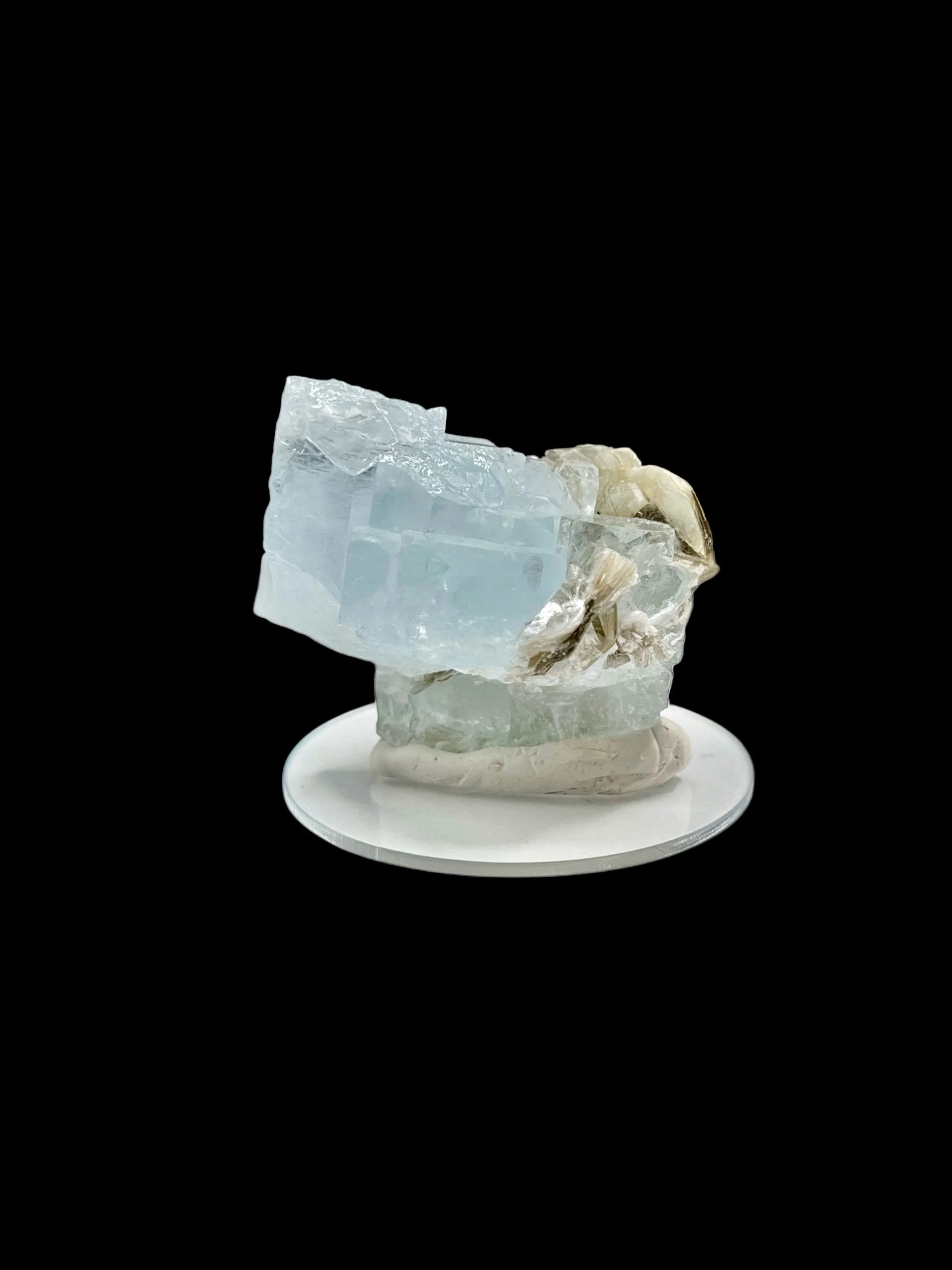
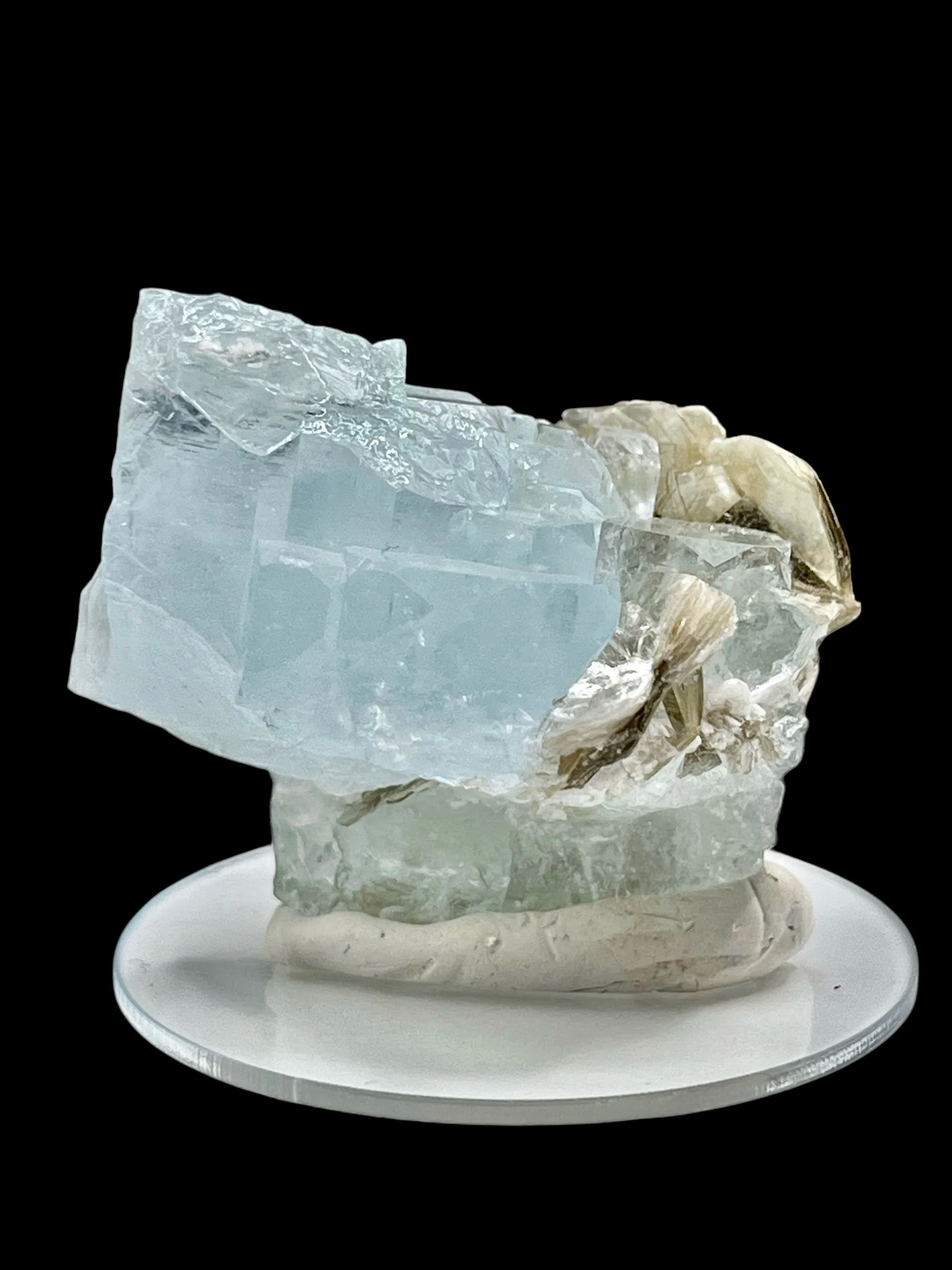
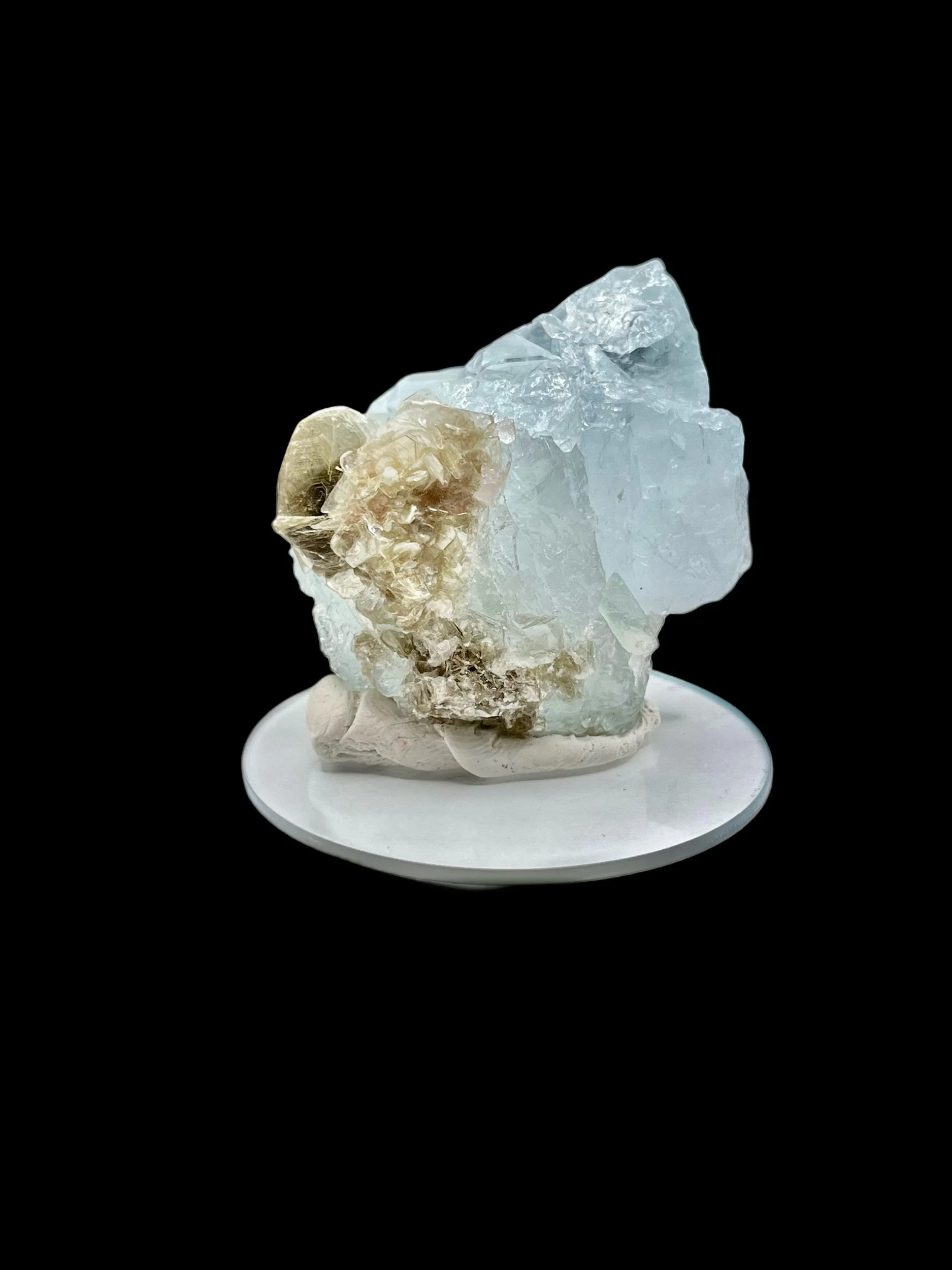
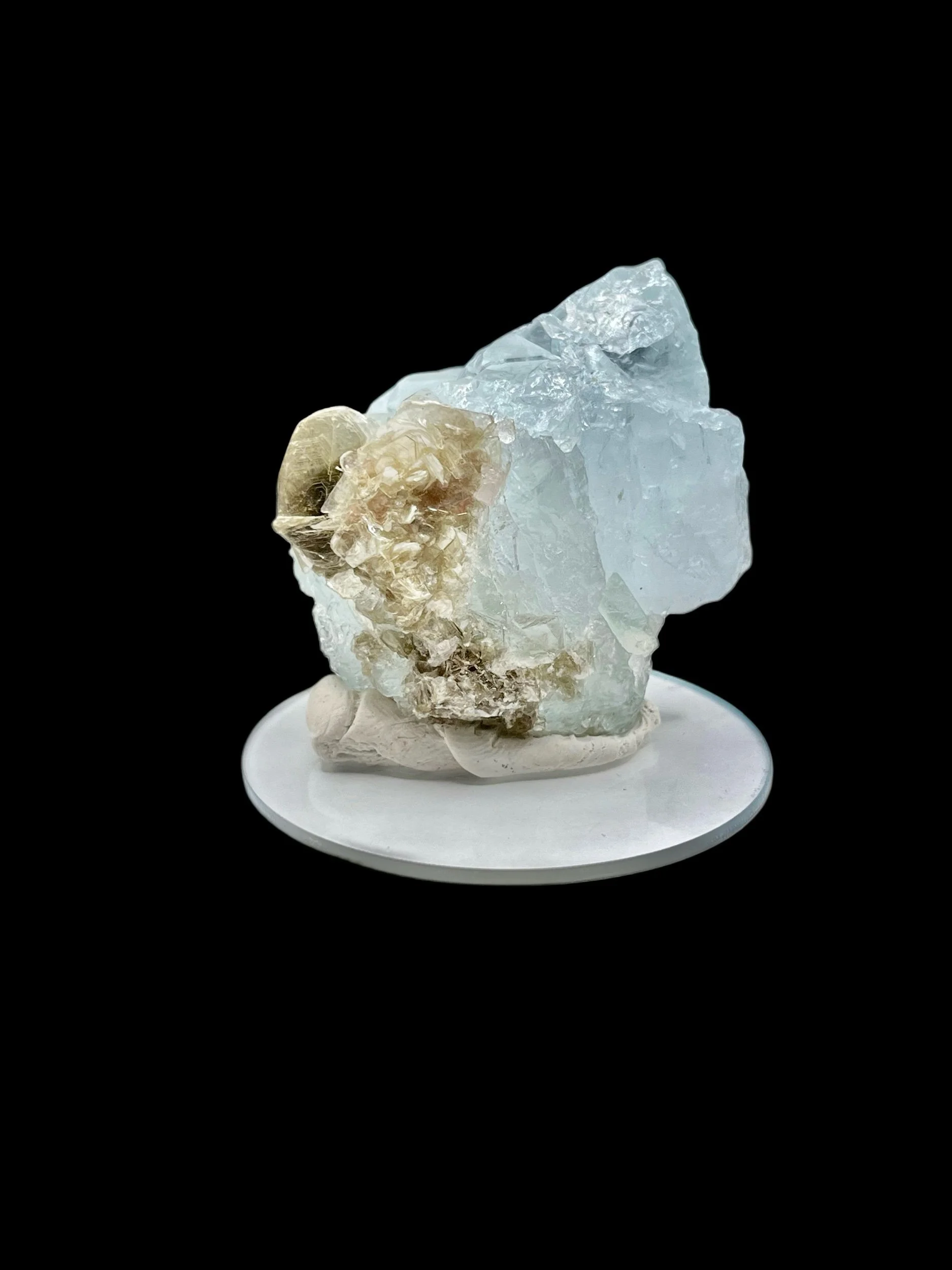
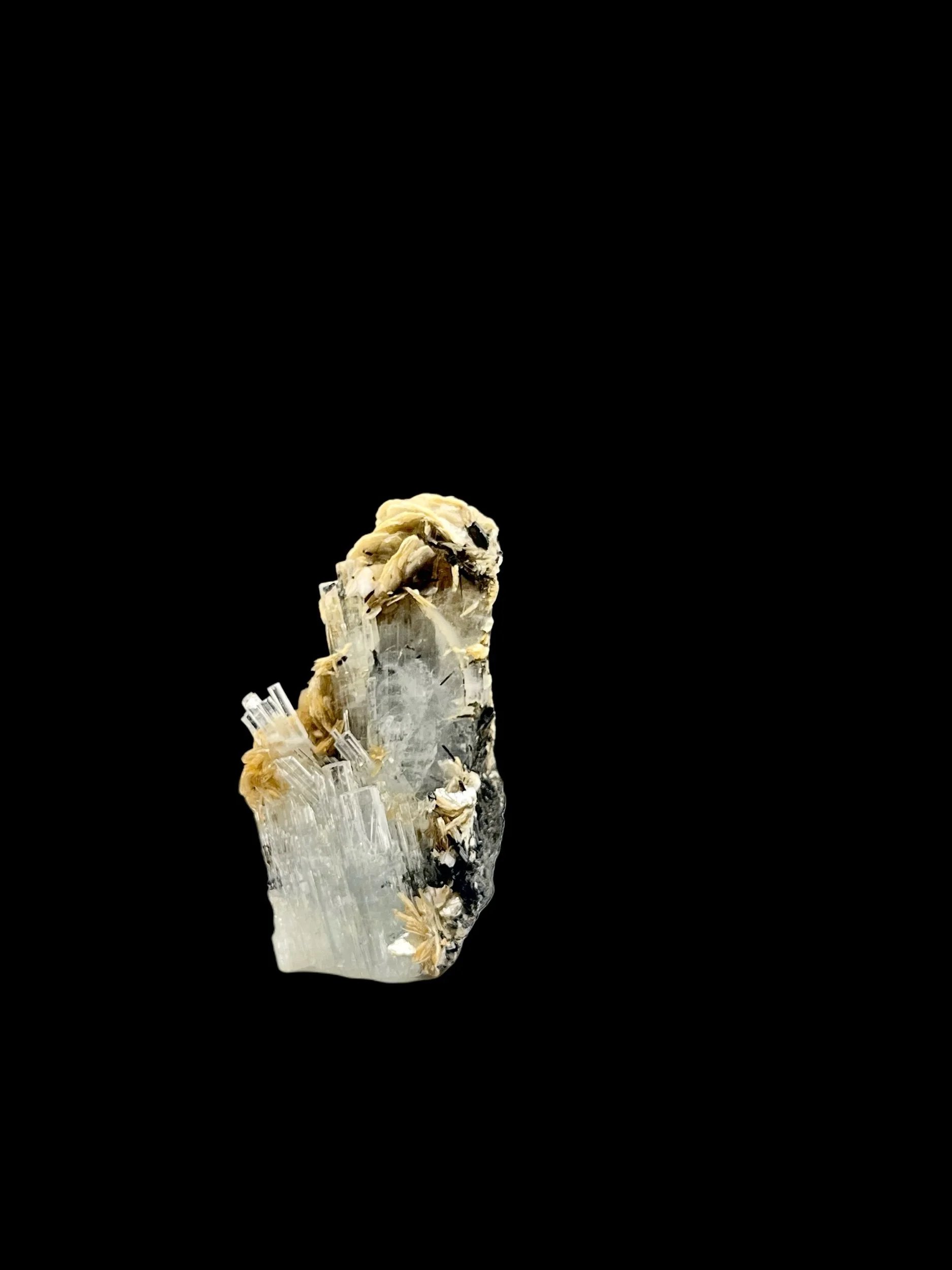
This delicate yet visually complex specimen features pale blue-green aquamarine crystals accented by fine black exposed rutile nestled amongst shimmering muscovite. The aquamarine displays soft translucency and defined crystal zoning, while slender rutile needles add contrast and sparkle. Shiny champagne, layered muscovite enhances the composition, framing the aquamarine with texture and natural elegance. Despite its small size, this specimen offers excellent detail and mineralogical interest.
Dimensions & Weight
• 1.5" × 0.5" × 0.5"
• 11 g
Metaphysical Properties
Aquamarine is often associated with calm, clarity, and emotional balance, while rutile inclusions are thought to symbolize amplified intention and energetic flow. Muscovite is commonly linked to insight and self-reflection, making this trio appealing to those drawn to stones that combine serenity with subtle complexity.
Collector’s Notes
Aquamarine specimens featuring exposed rutile are quite rare compared to aquamarine and black tourmaline combinations. Together, their presence adds both rarity and visual appeal. The association with muscovite further enhances the specimen’s geological context, making it a strong thumbnail collector piece for those who appreciate refined mineral relationships.
Black Rutile vs. Black Tourmaline — What’s the difference?
Black rutile and black tourmaline are often confused due to their dark, needle-like appearance, but they are distinct minerals. Black rutile (titanium dioxide) forms extremely thin, straight, metallic-looking needles that commonly occur as inclusions within host crystals like quartz or aquamarine. Black tourmaline (schorl), on the other hand, is a boron silicate that typically forms thicker, prismatic crystals with longitudinal striations and usually grows as standalone crystals rather than fine internal threads. Knowing the difference helps collectors accurately assess rarity and mineral associations.
Highlights
• Pale blue-green aquamarine crystal
• Fine black rutile needles exposed on the matrix
• Muscovite matrix association
• Uncommon aquamarine–rutile combination
• Gemmy luster
Mineralogy
• Aquamarine (Beryl) – Beryllium aluminum silicate
• Rutile – Titanium dioxide (TiO₂)
• Muscovite – Potassium aluminum mica
Description
This delicate yet visually complex specimen features pale blue-green aquamarine crystals accented by fine black exposed rutile nestled amongst shimmering muscovite. The aquamarine displays soft translucency and defined crystal zoning, while slender rutile needles add contrast and sparkle. Shiny champagne, layered muscovite enhances the composition, framing the aquamarine with texture and natural elegance. Despite its small size, this specimen offers excellent detail and mineralogical interest.
Dimensions & Weight
• 1.5" × 0.5" × 0.5"
• 11 g
Metaphysical Properties
Aquamarine is often associated with calm, clarity, and emotional balance, while rutile inclusions are thought to symbolize amplified intention and energetic flow. Muscovite is commonly linked to insight and self-reflection, making this trio appealing to those drawn to stones that combine serenity with subtle complexity.
Collector’s Notes
Aquamarine specimens featuring exposed rutile are quite rare compared to aquamarine and black tourmaline combinations. Together, their presence adds both rarity and visual appeal. The association with muscovite further enhances the specimen’s geological context, making it a strong thumbnail collector piece for those who appreciate refined mineral relationships.
Black Rutile vs. Black Tourmaline — What’s the difference?
Black rutile and black tourmaline are often confused due to their dark, needle-like appearance, but they are distinct minerals. Black rutile (titanium dioxide) forms extremely thin, straight, metallic-looking needles that commonly occur as inclusions within host crystals like quartz or aquamarine. Black tourmaline (schorl), on the other hand, is a boron silicate that typically forms thicker, prismatic crystals with longitudinal striations and usually grows as standalone crystals rather than fine internal threads. Knowing the difference helps collectors accurately assess rarity and mineral associations.
Highlights
• Pale blue-green aquamarine crystal
• Fine black rutile needles exposed on the matrix
• Muscovite matrix association
• Uncommon aquamarine–rutile combination
• Gemmy luster
Mineralogy
• Aquamarine (Beryl) – Beryllium aluminum silicate
• Rutile – Titanium dioxide (TiO₂)
• Muscovite – Potassium aluminum mica