 Image 1 of 5
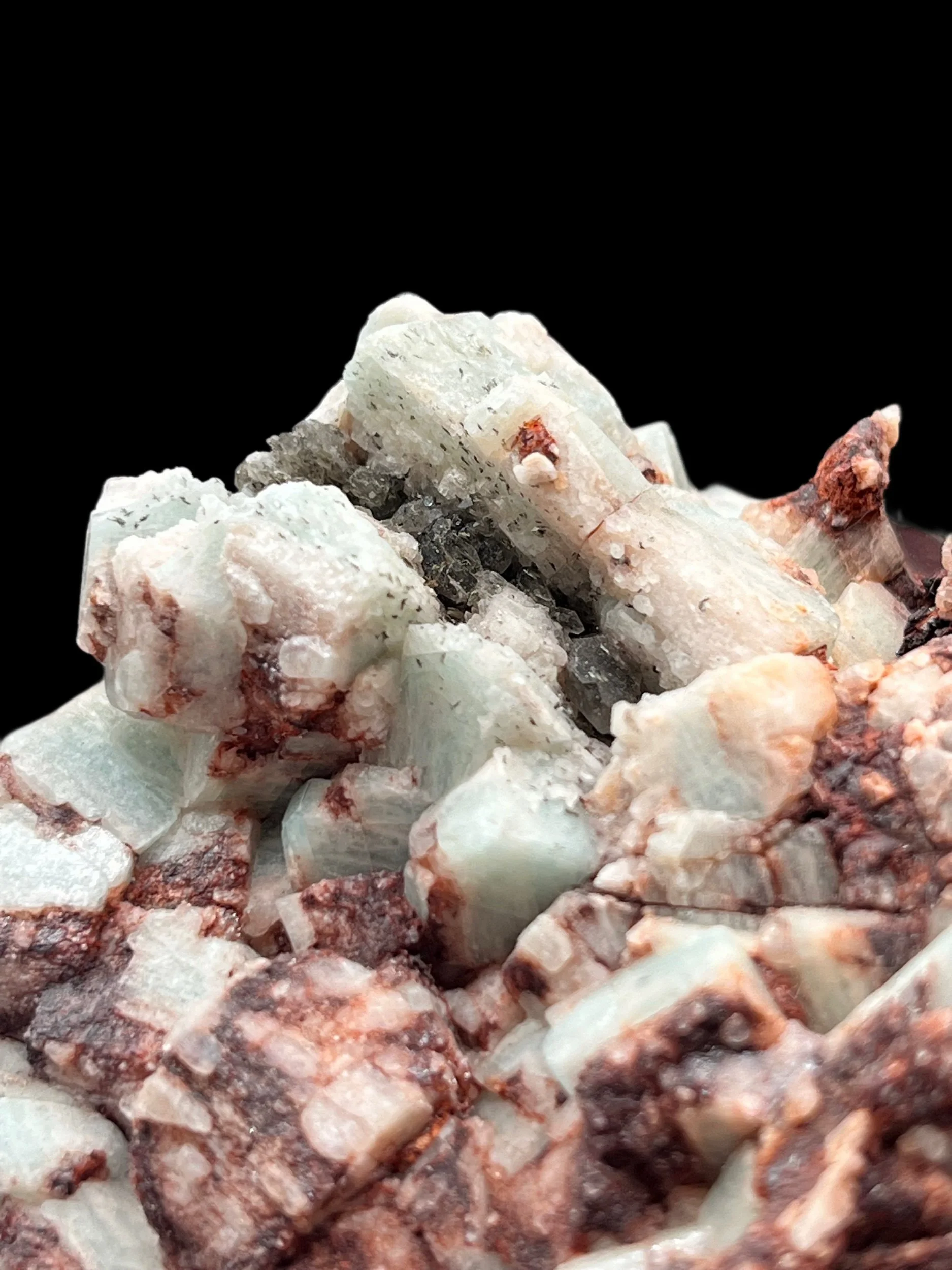 Image 2 of 5
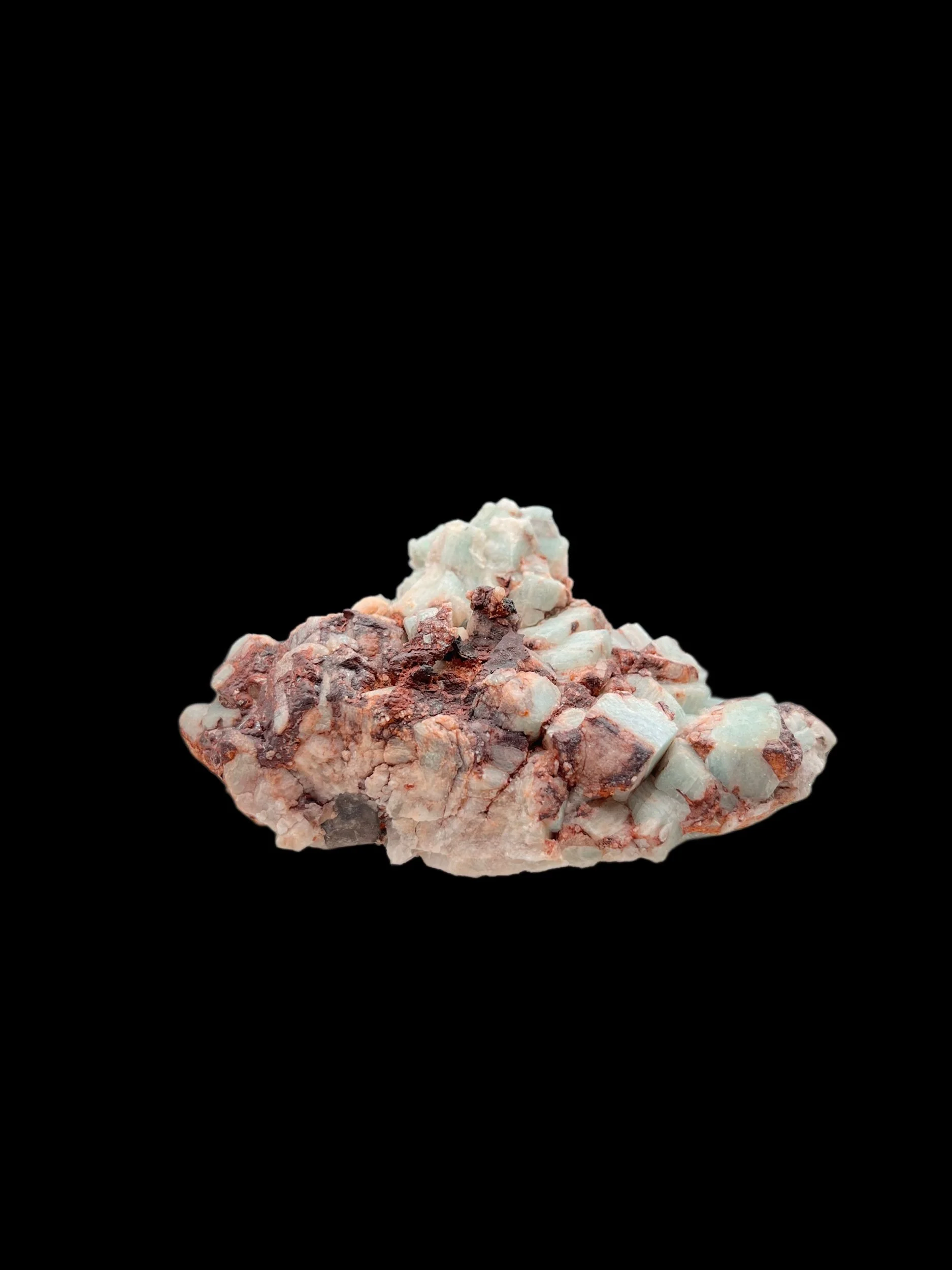 Image 3 of 5
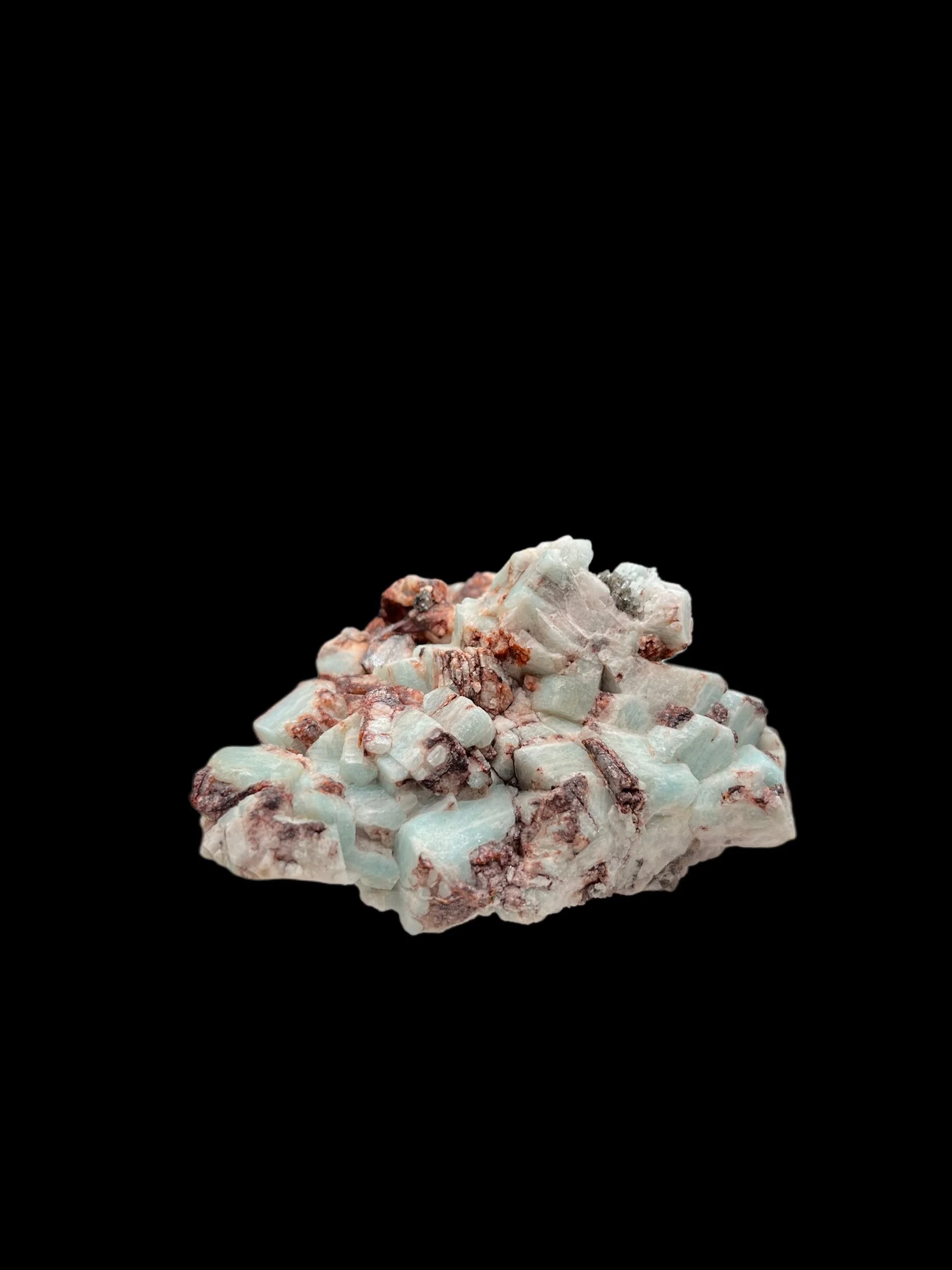 Image 4 of 5
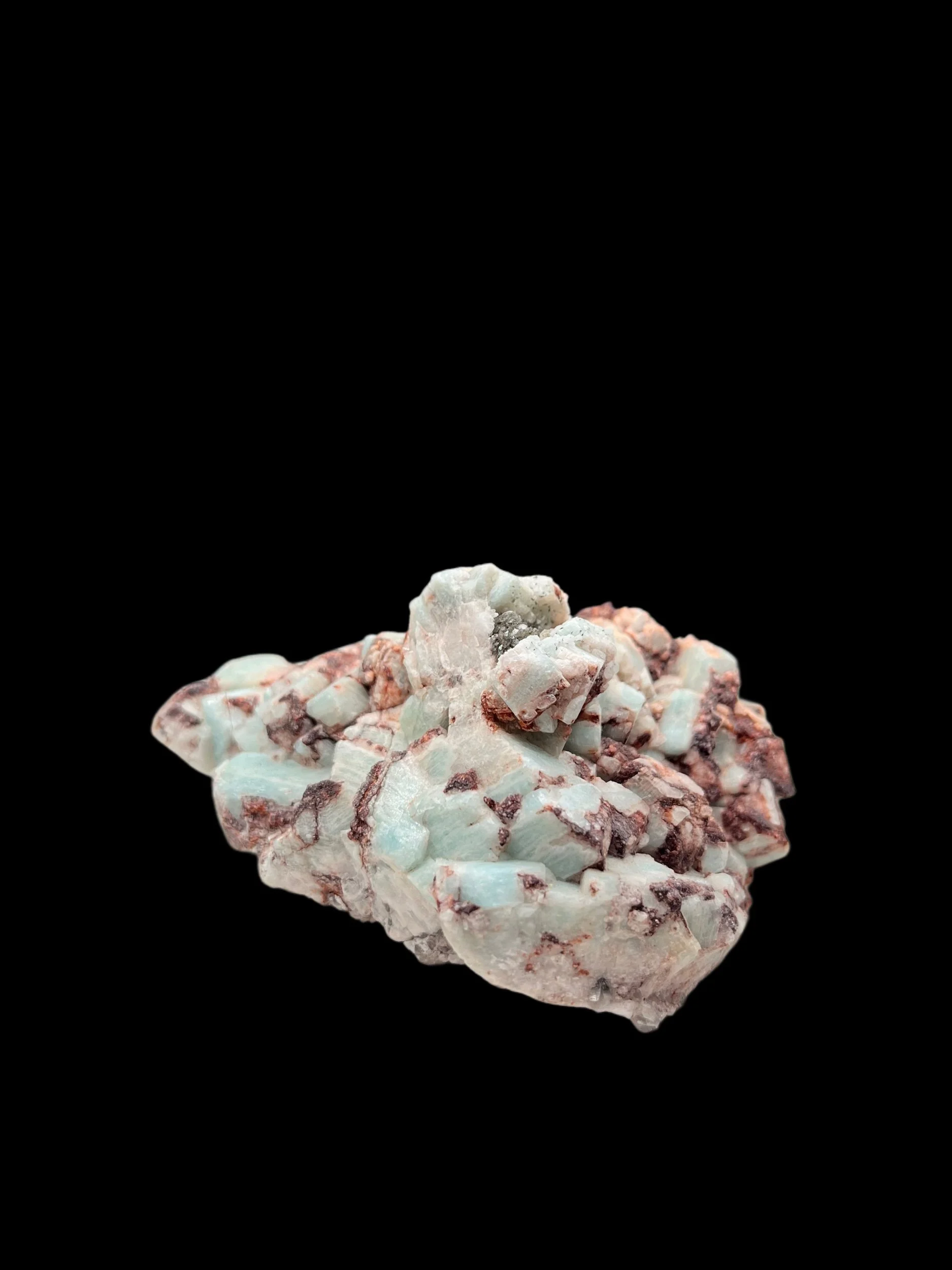 Image 5 of 5
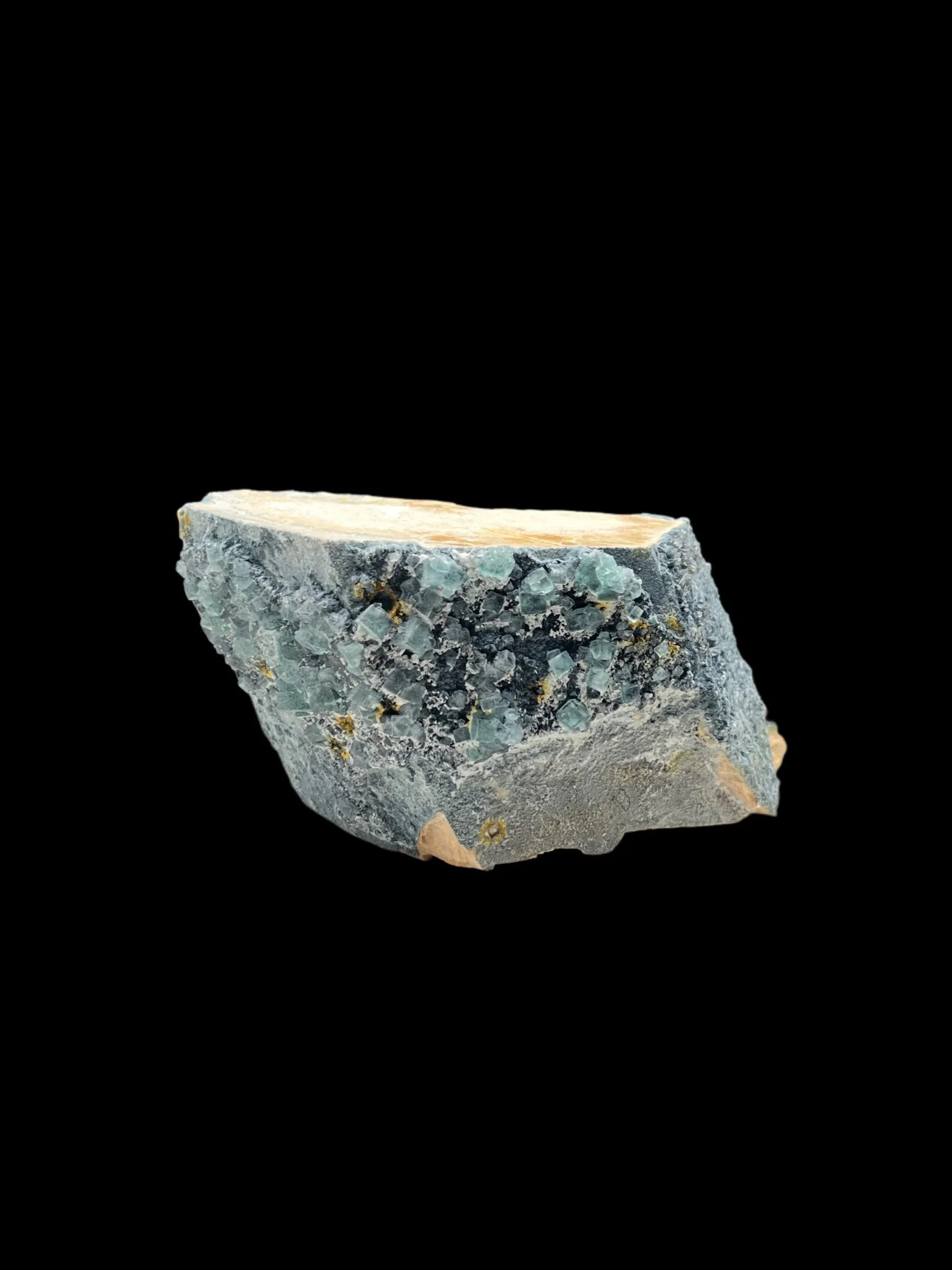
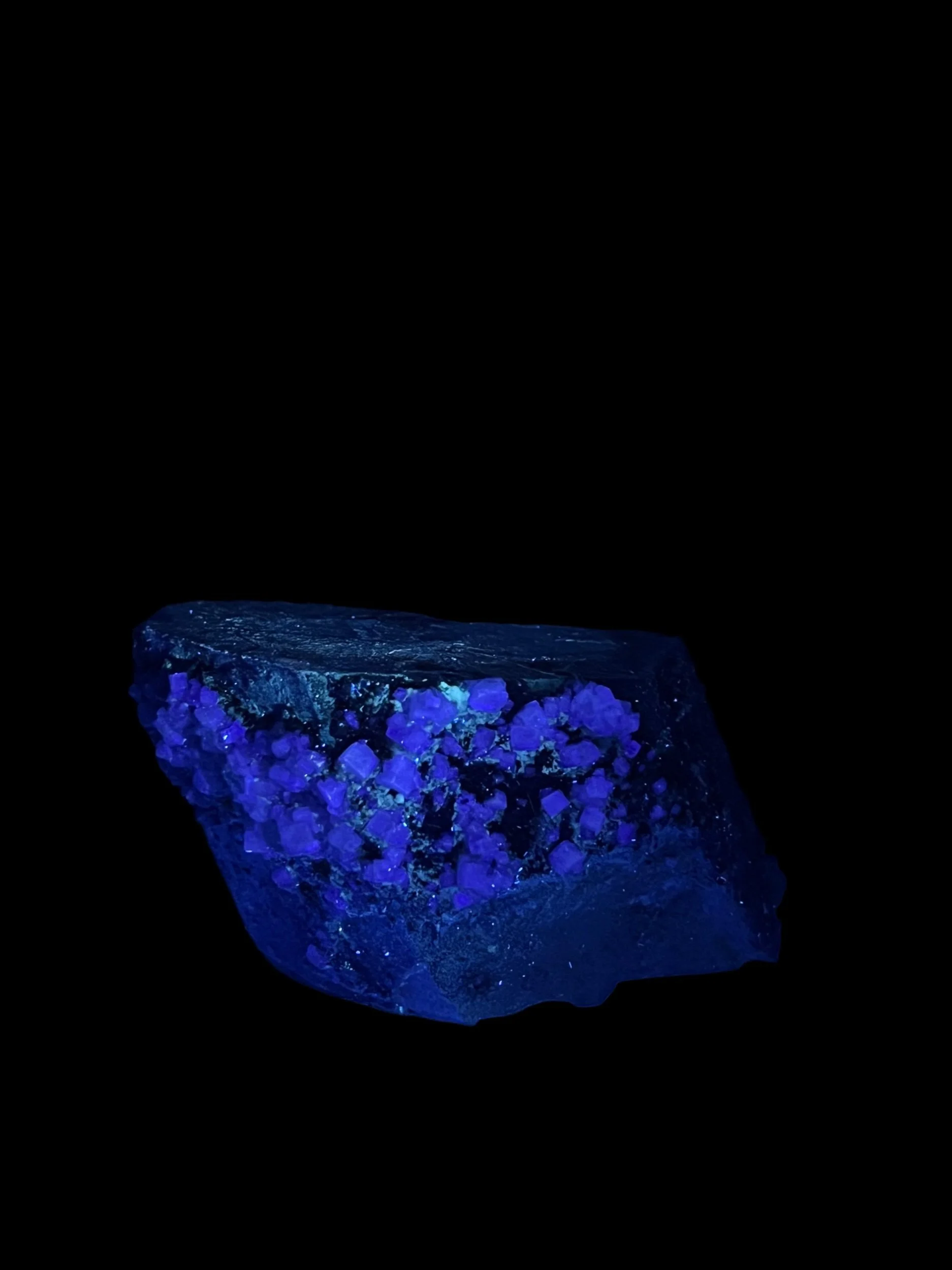
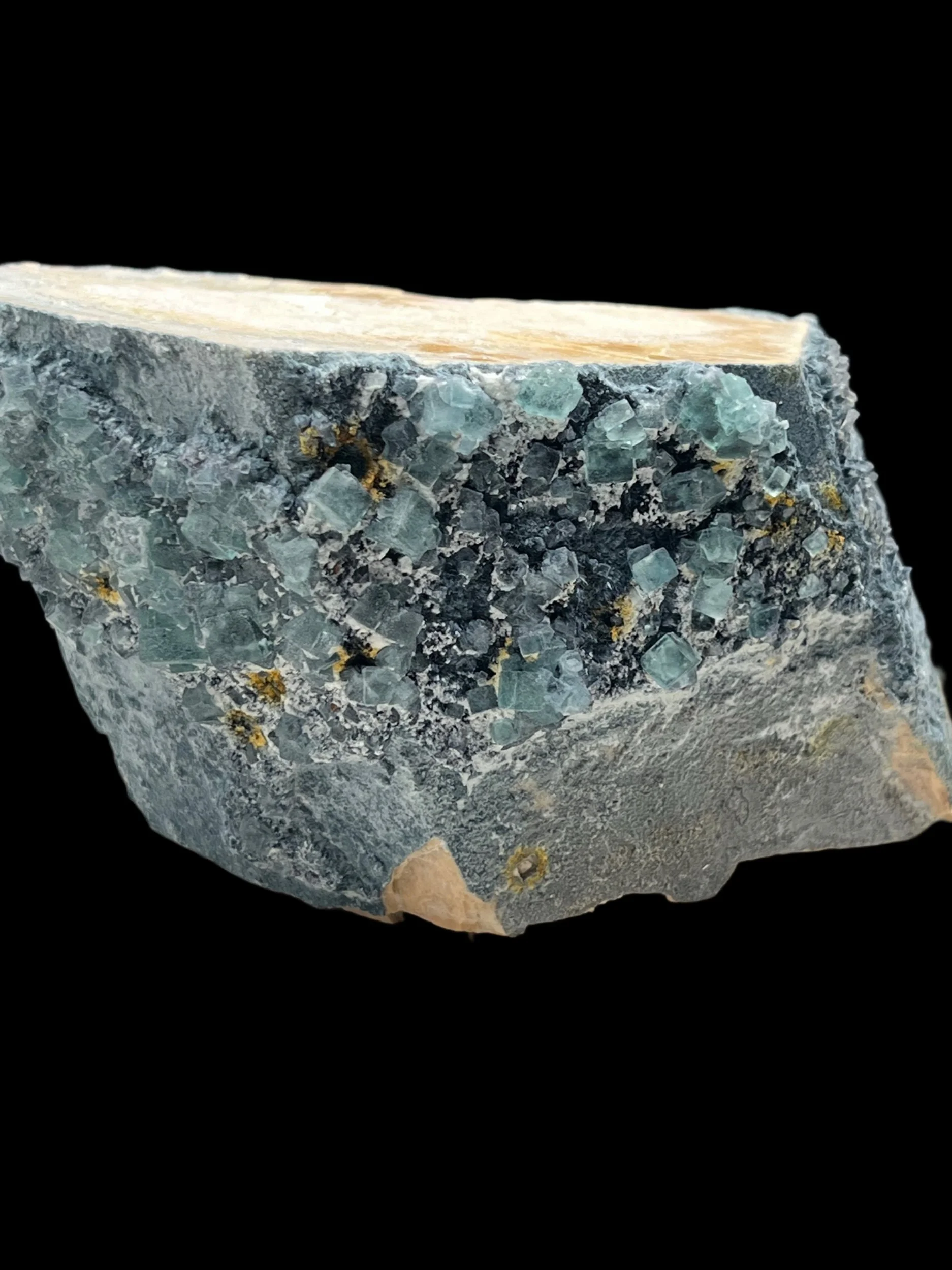
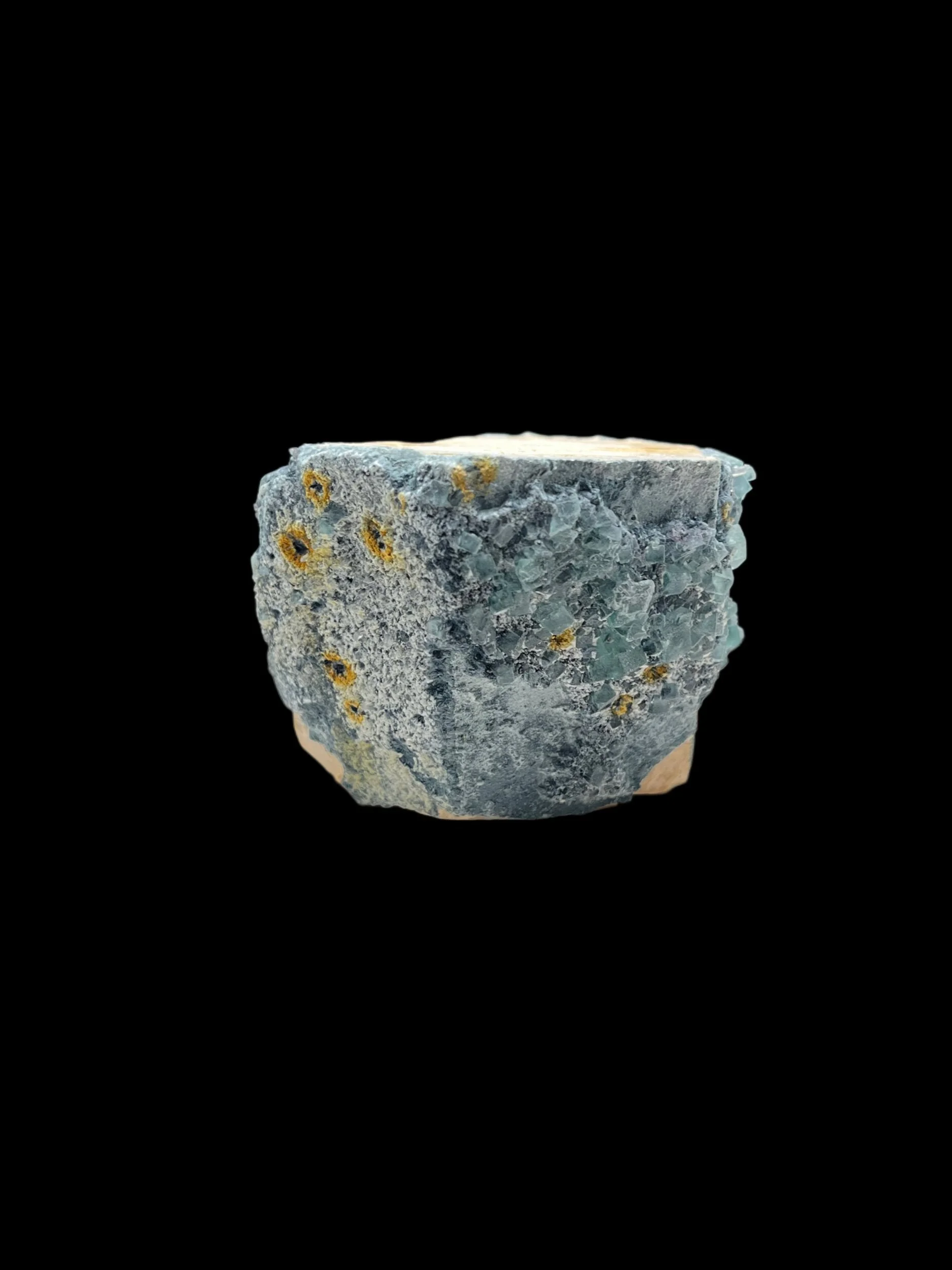
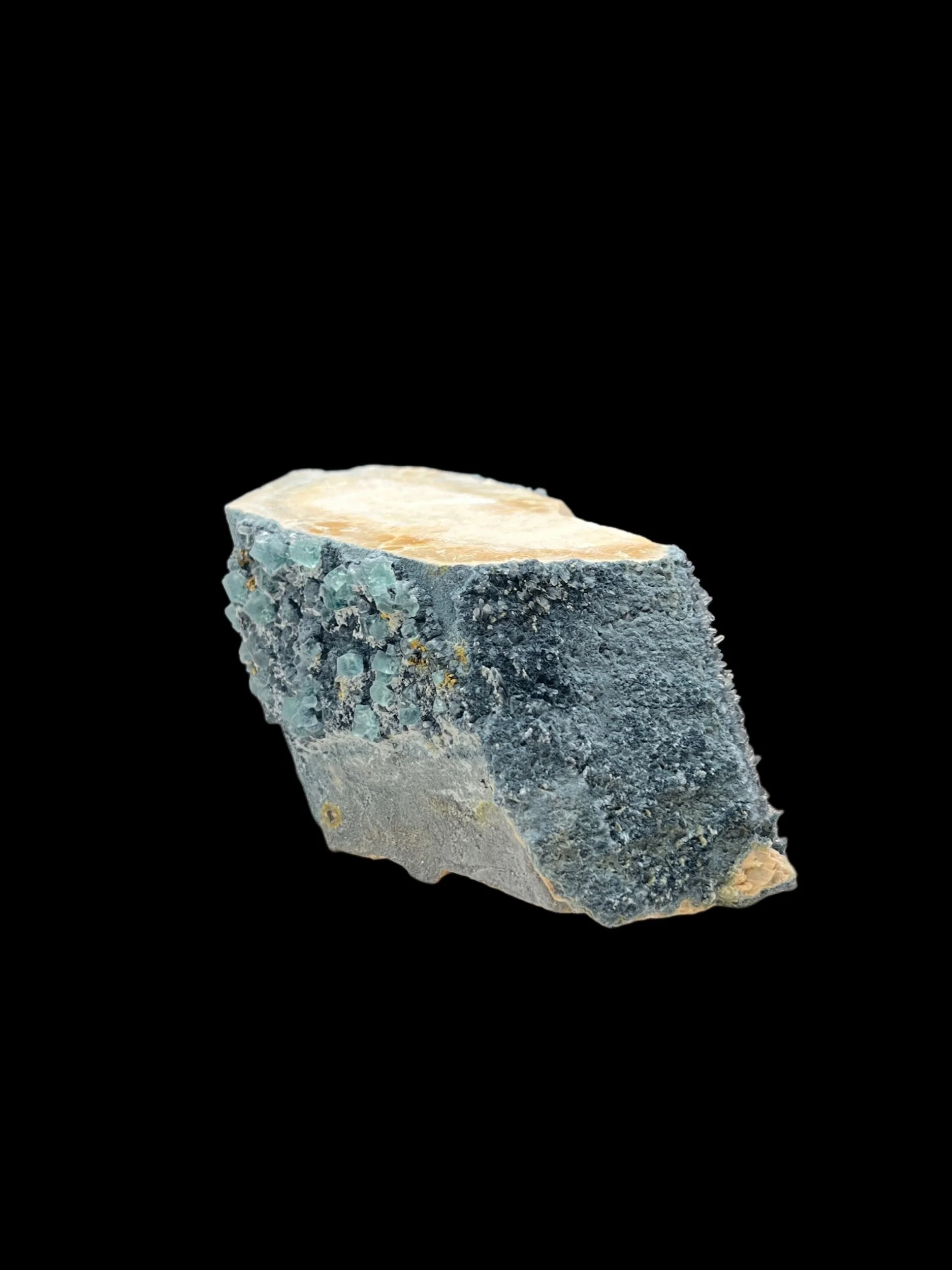
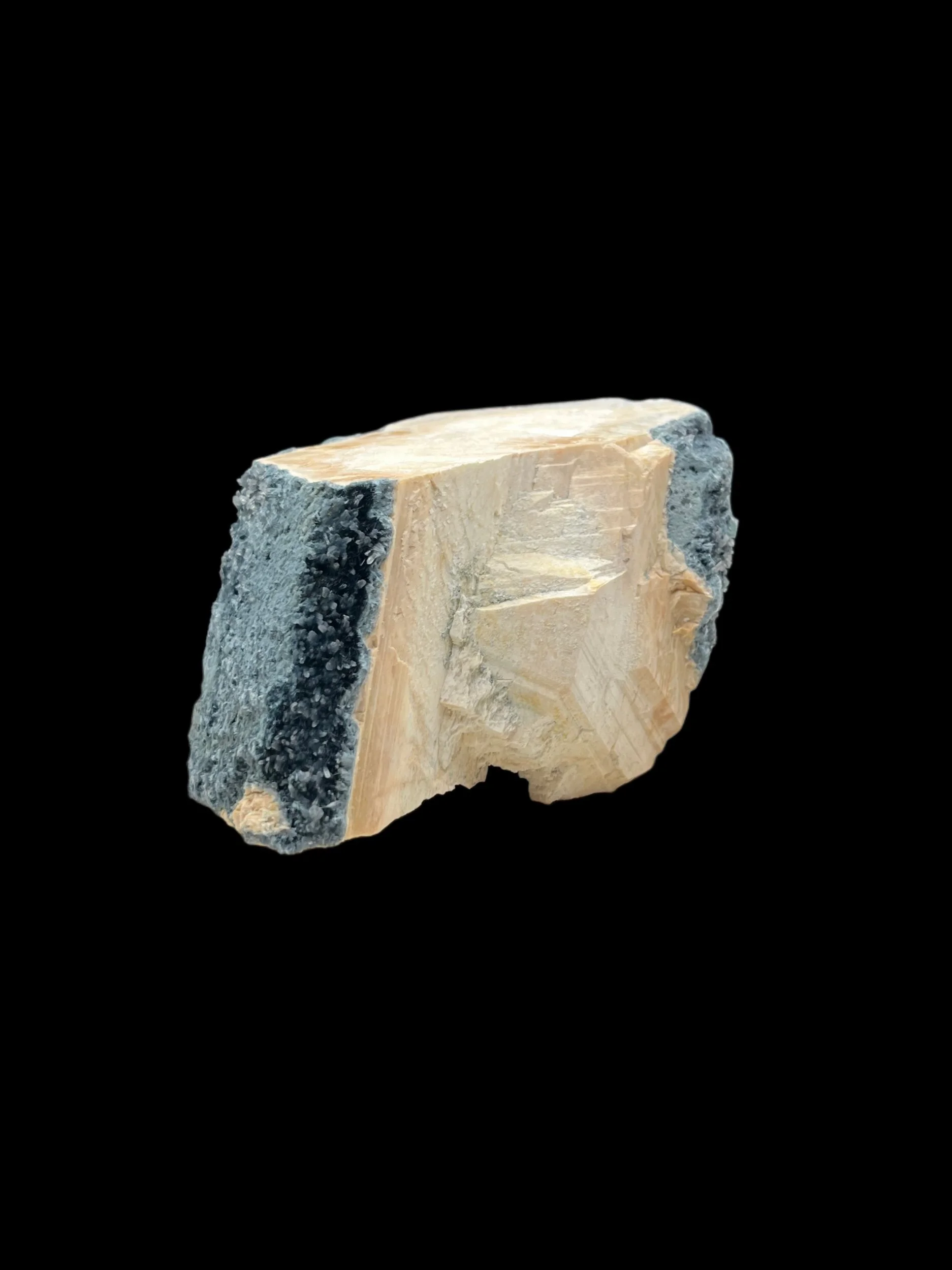
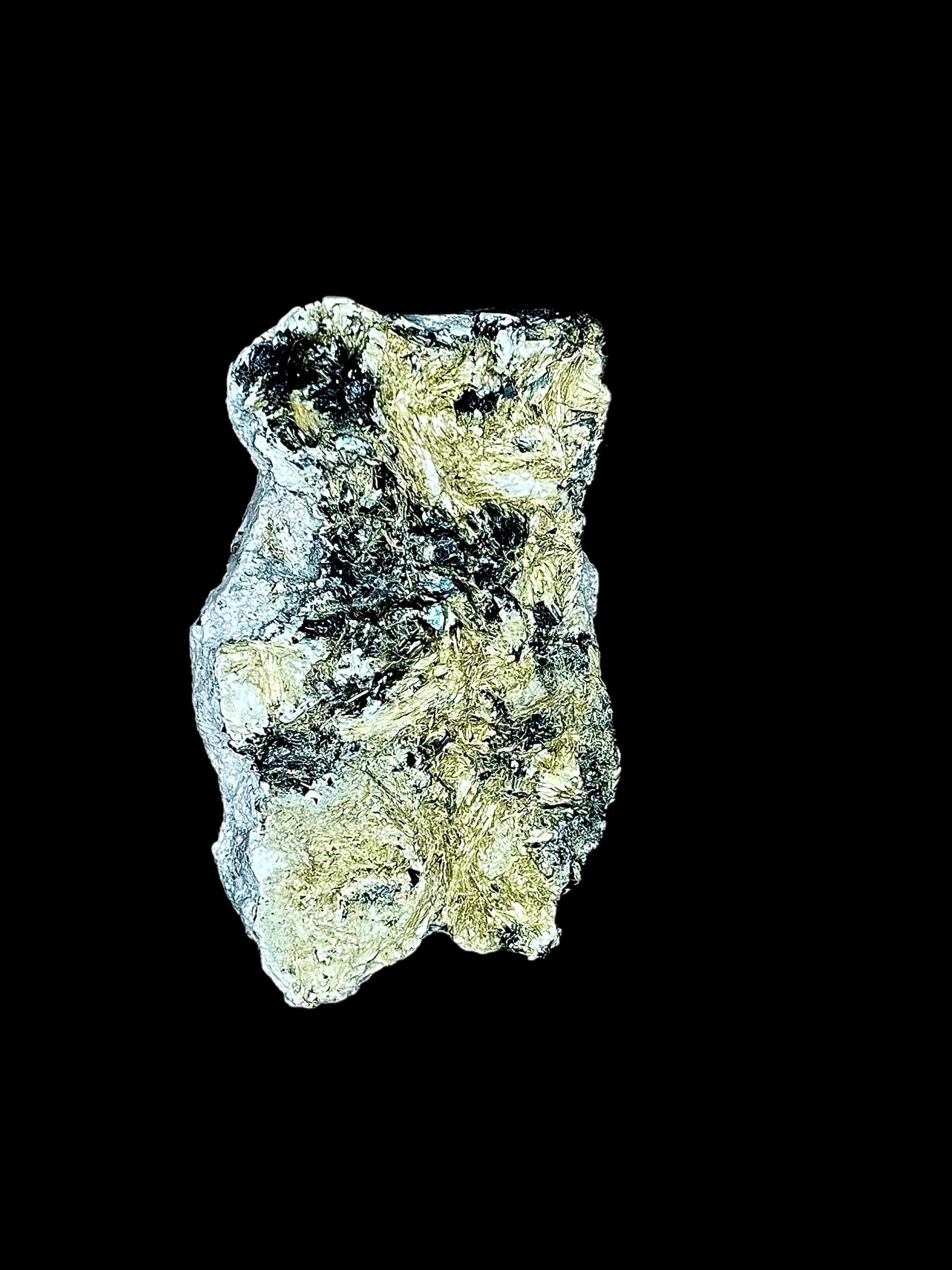
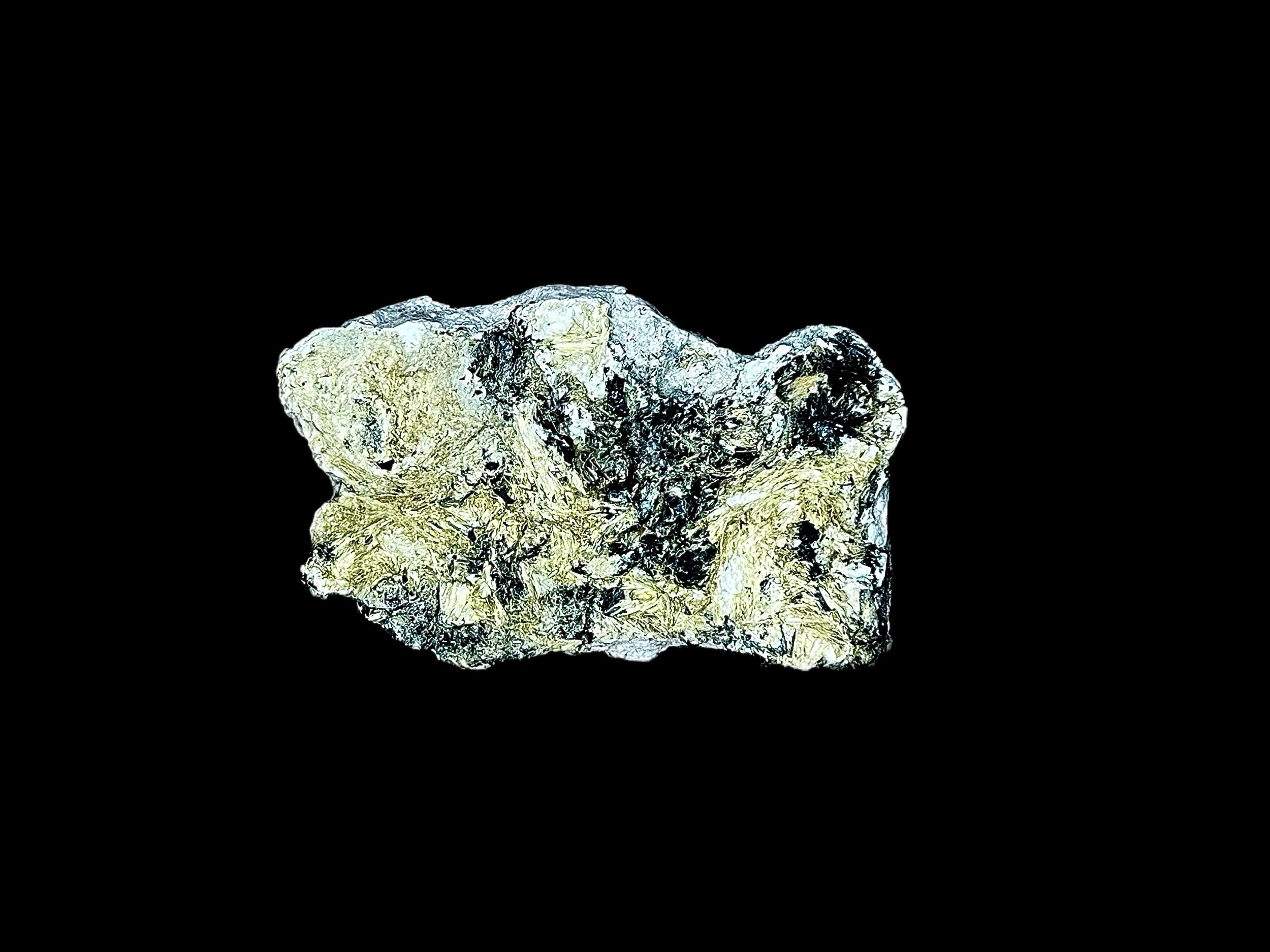
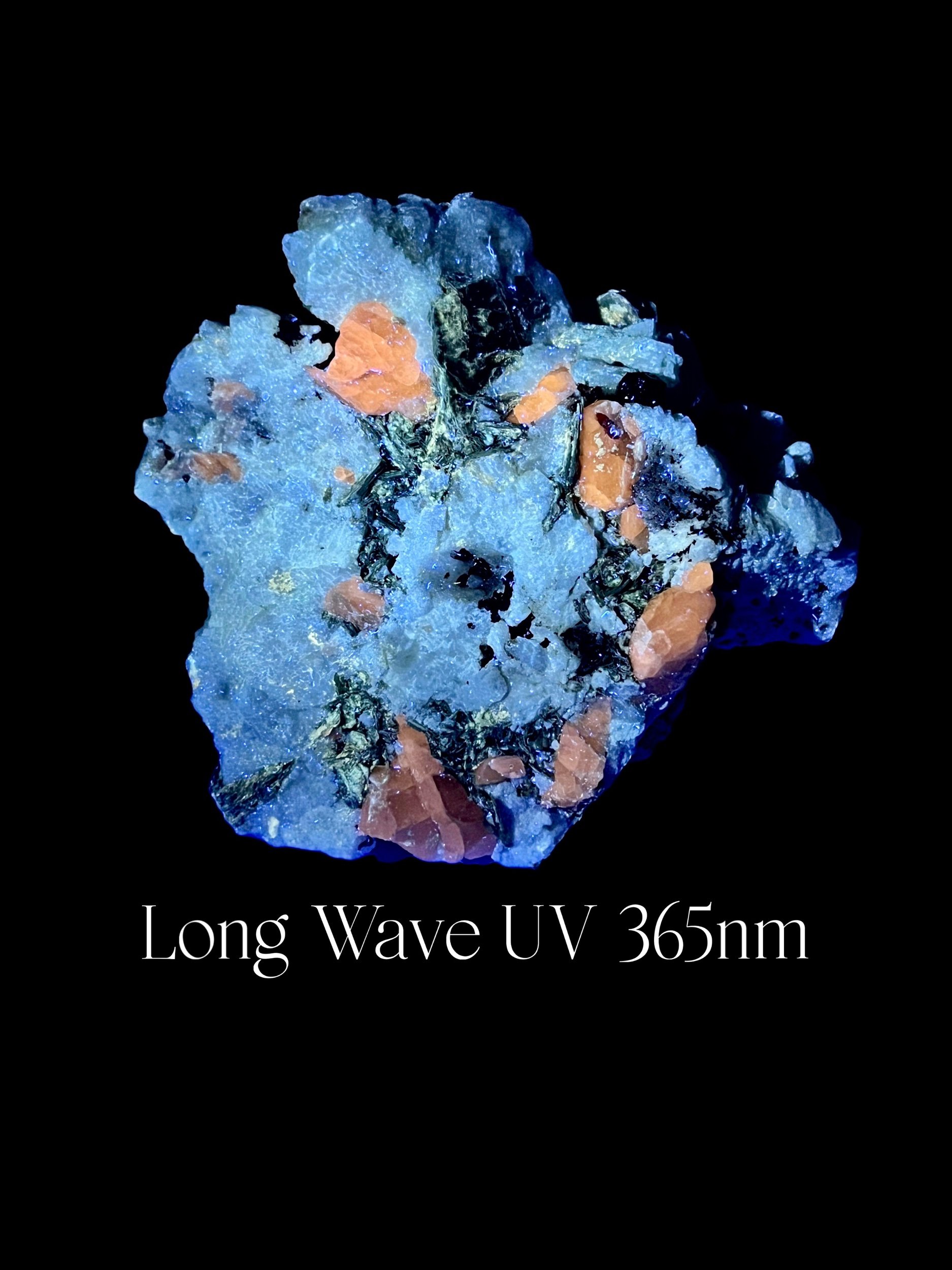
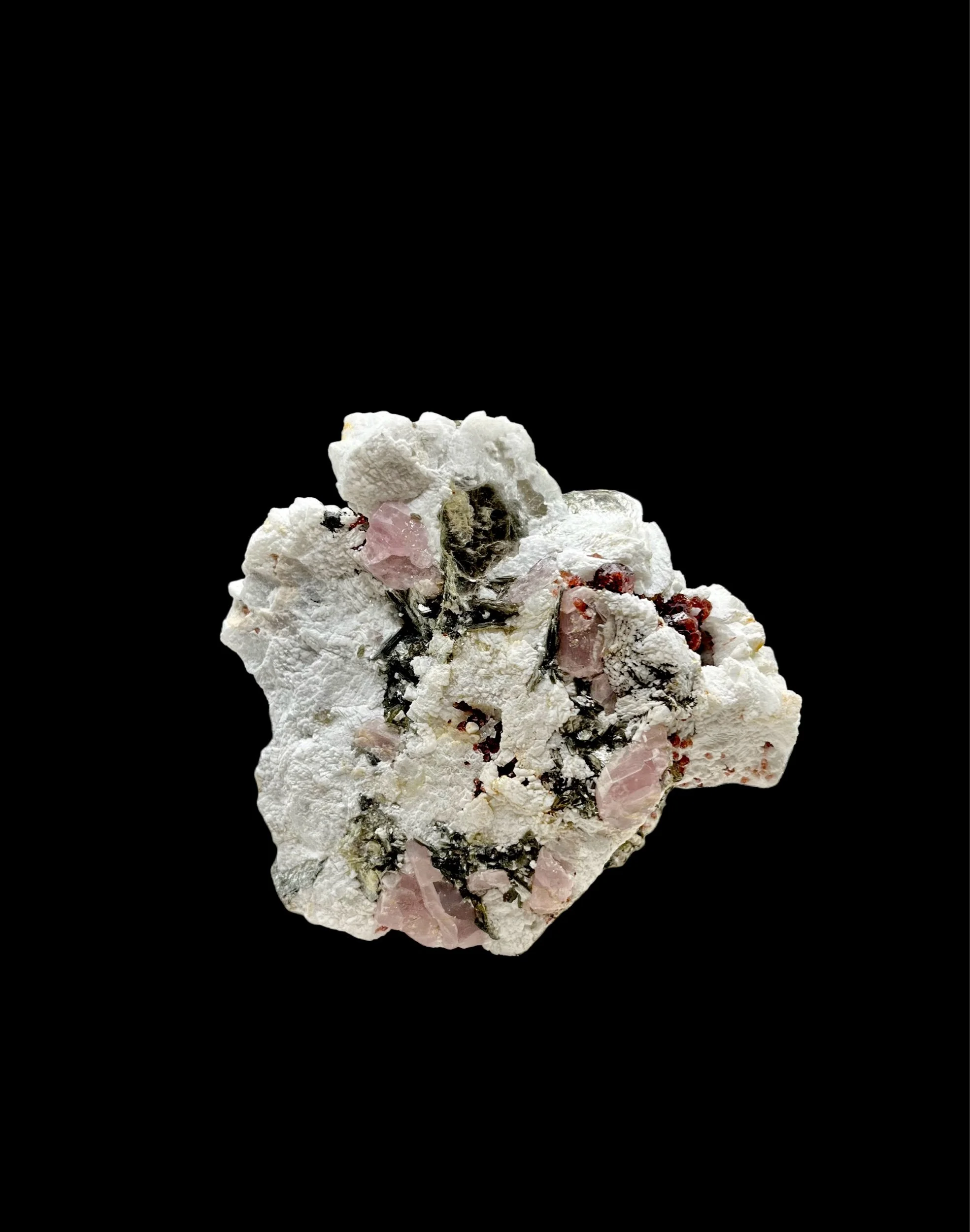
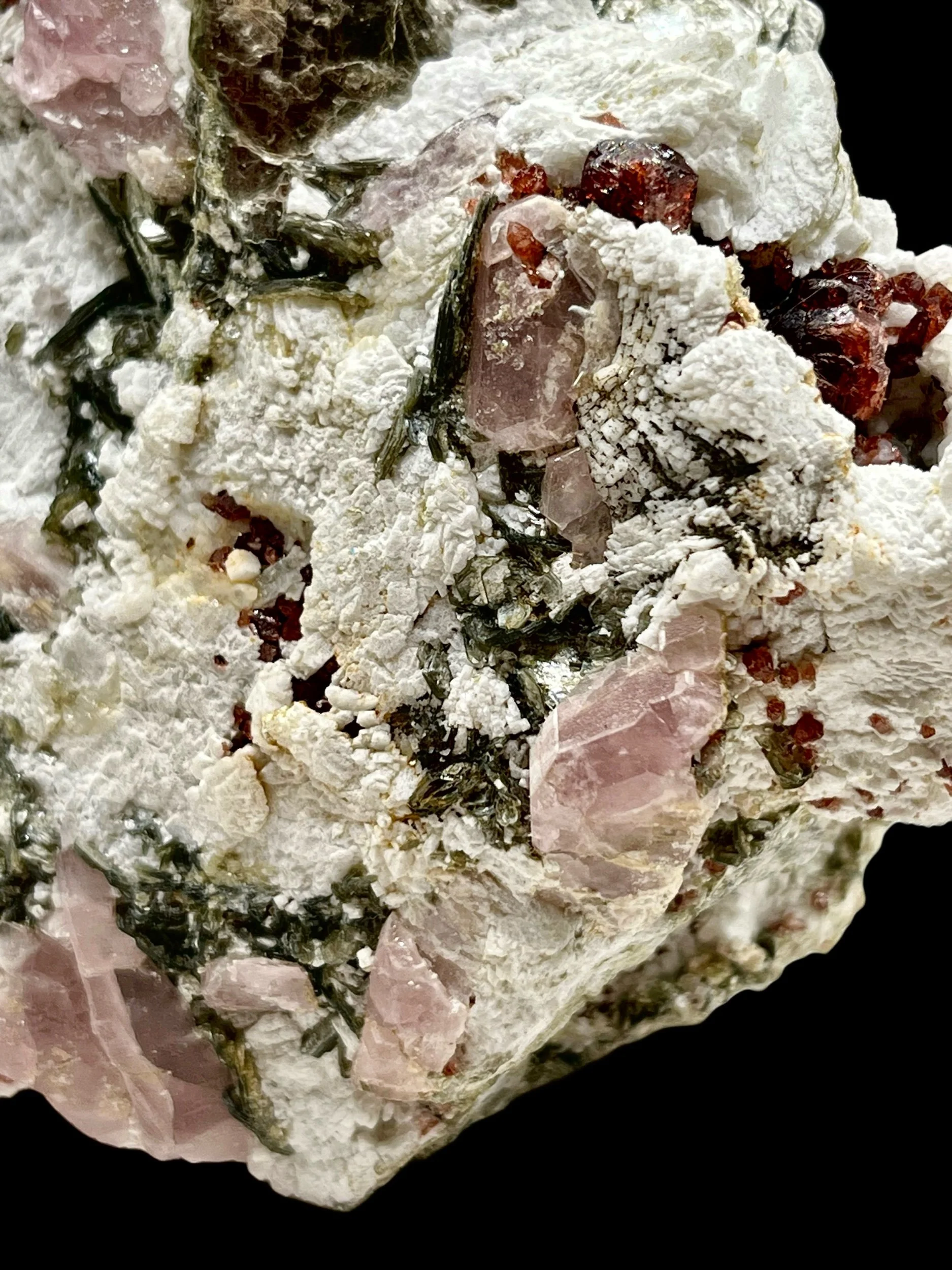
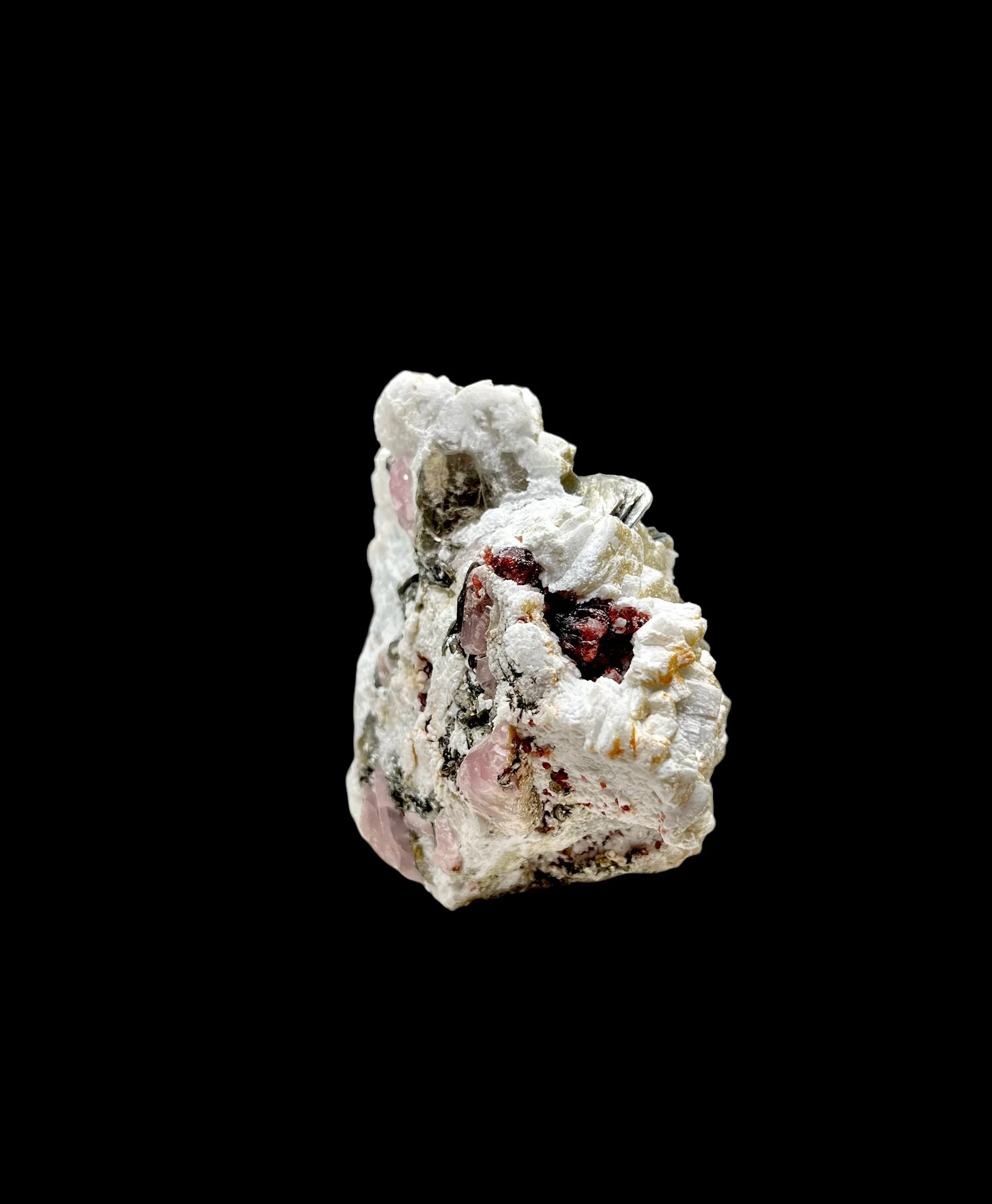
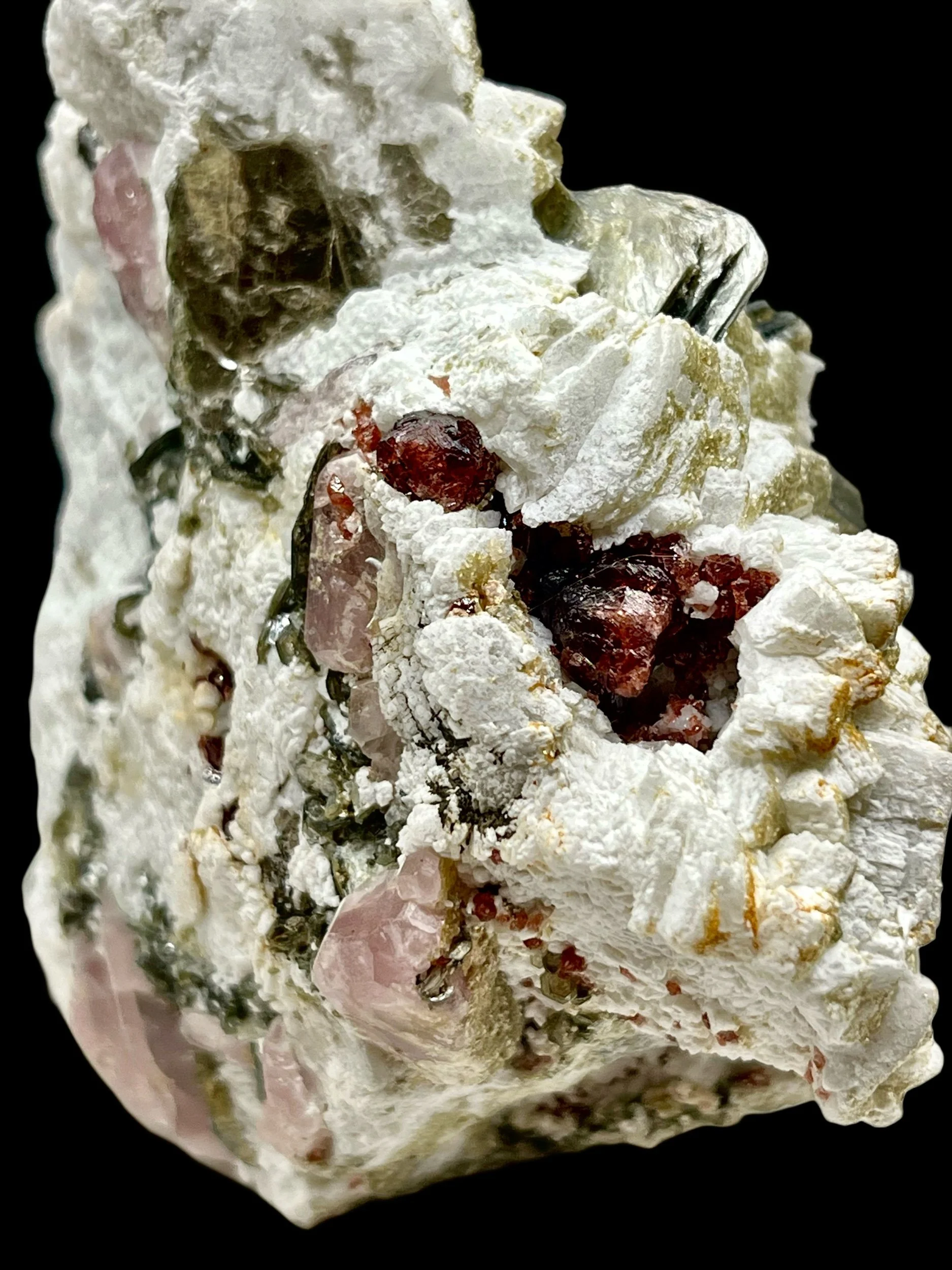
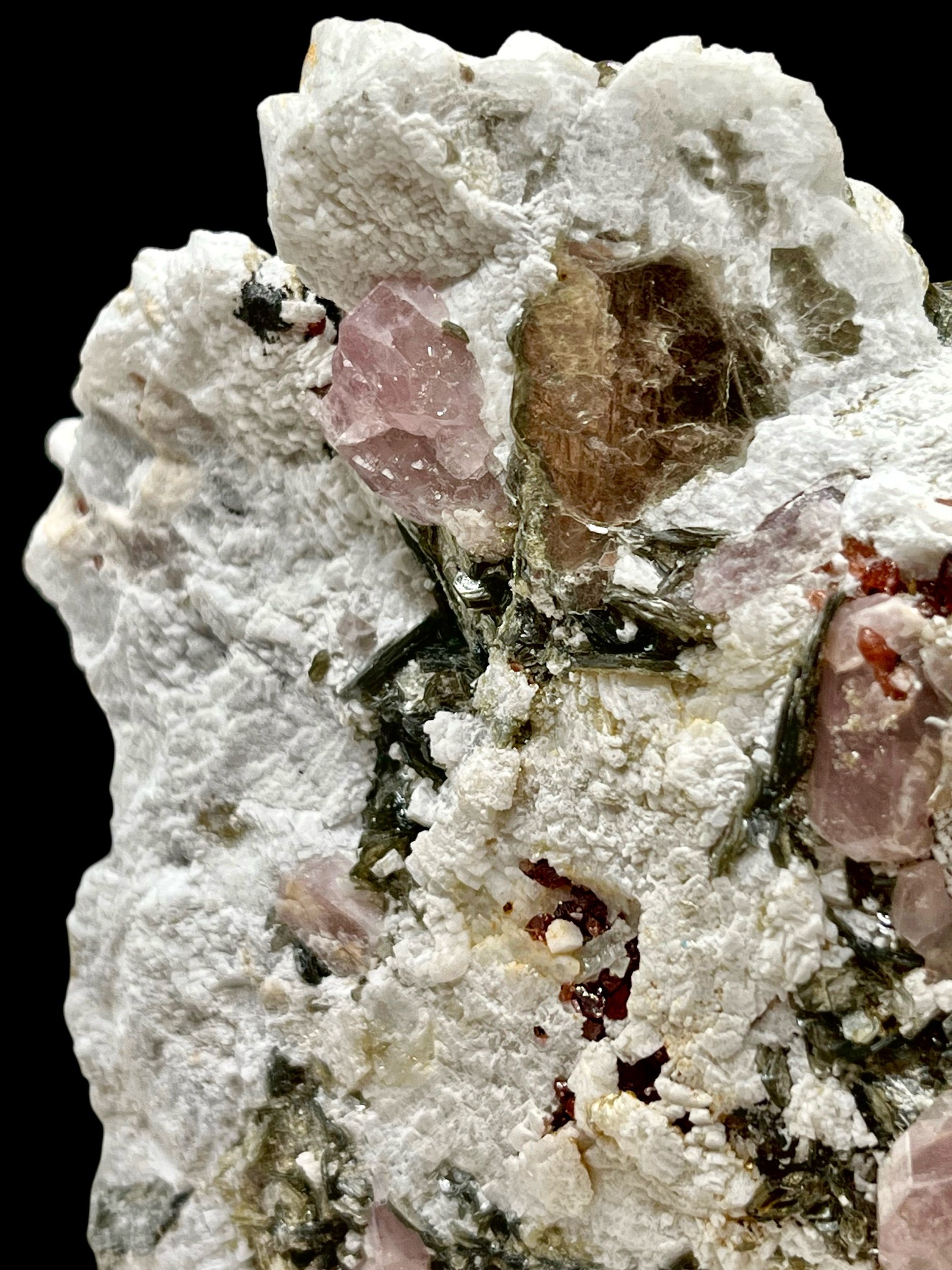
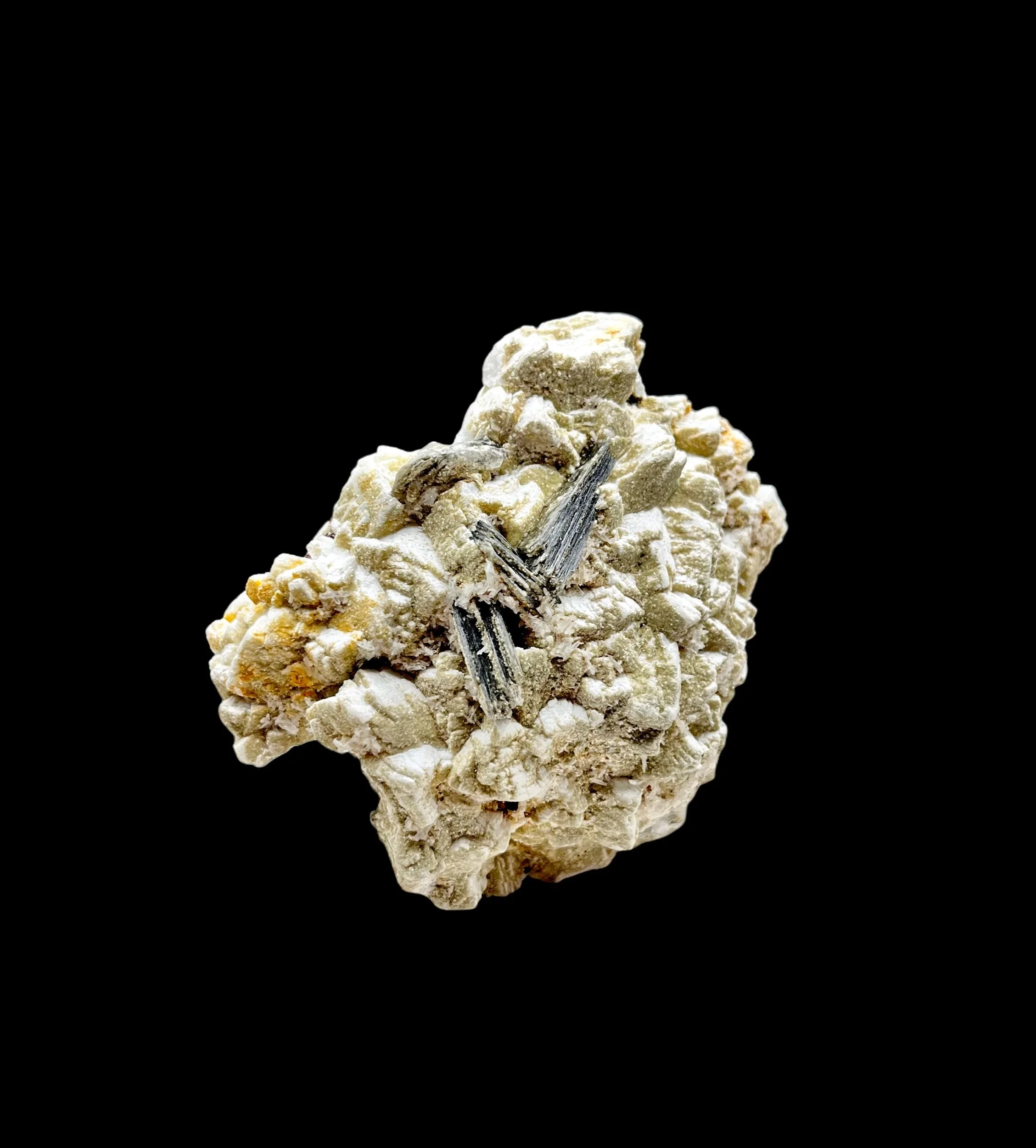
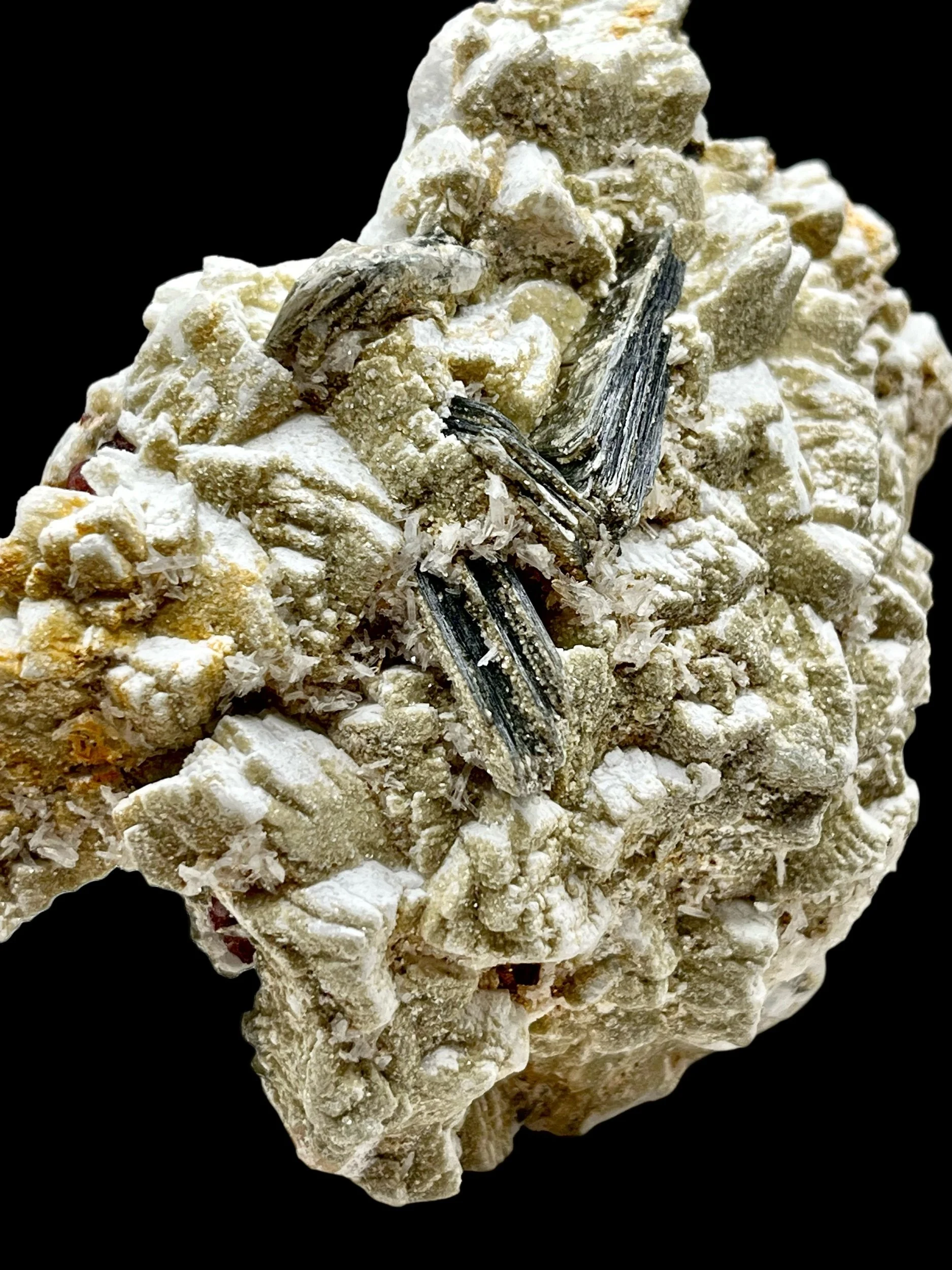
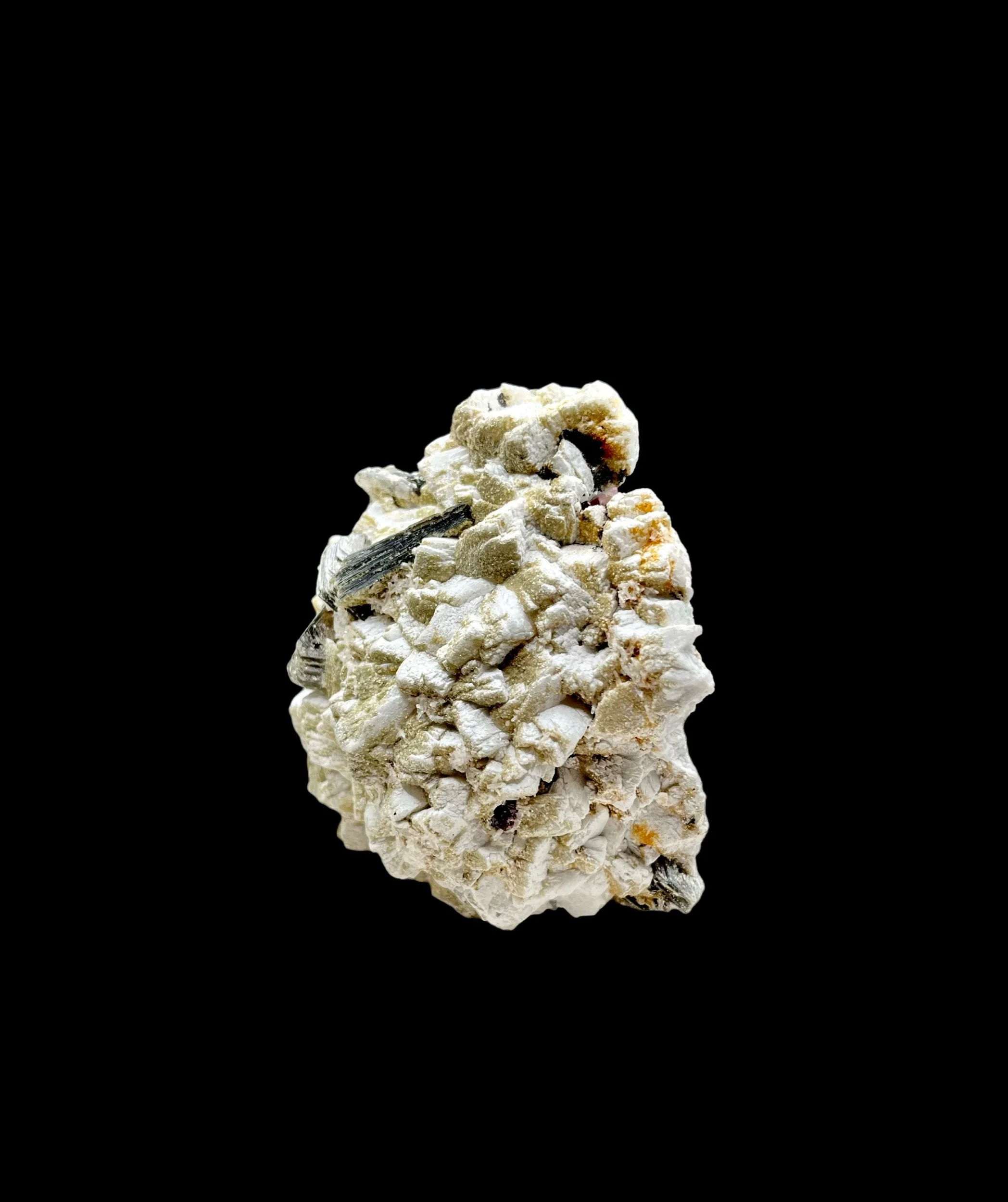
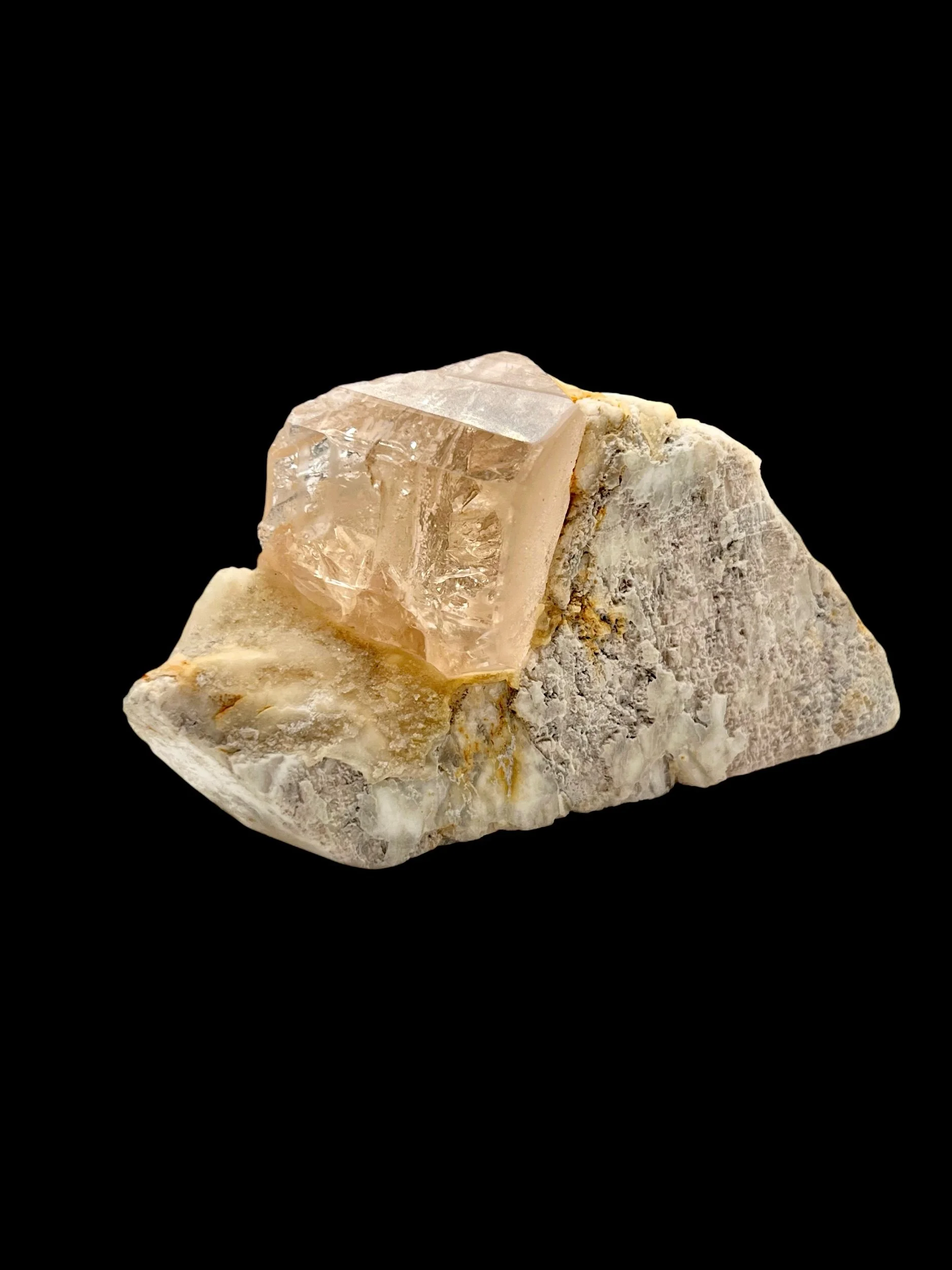
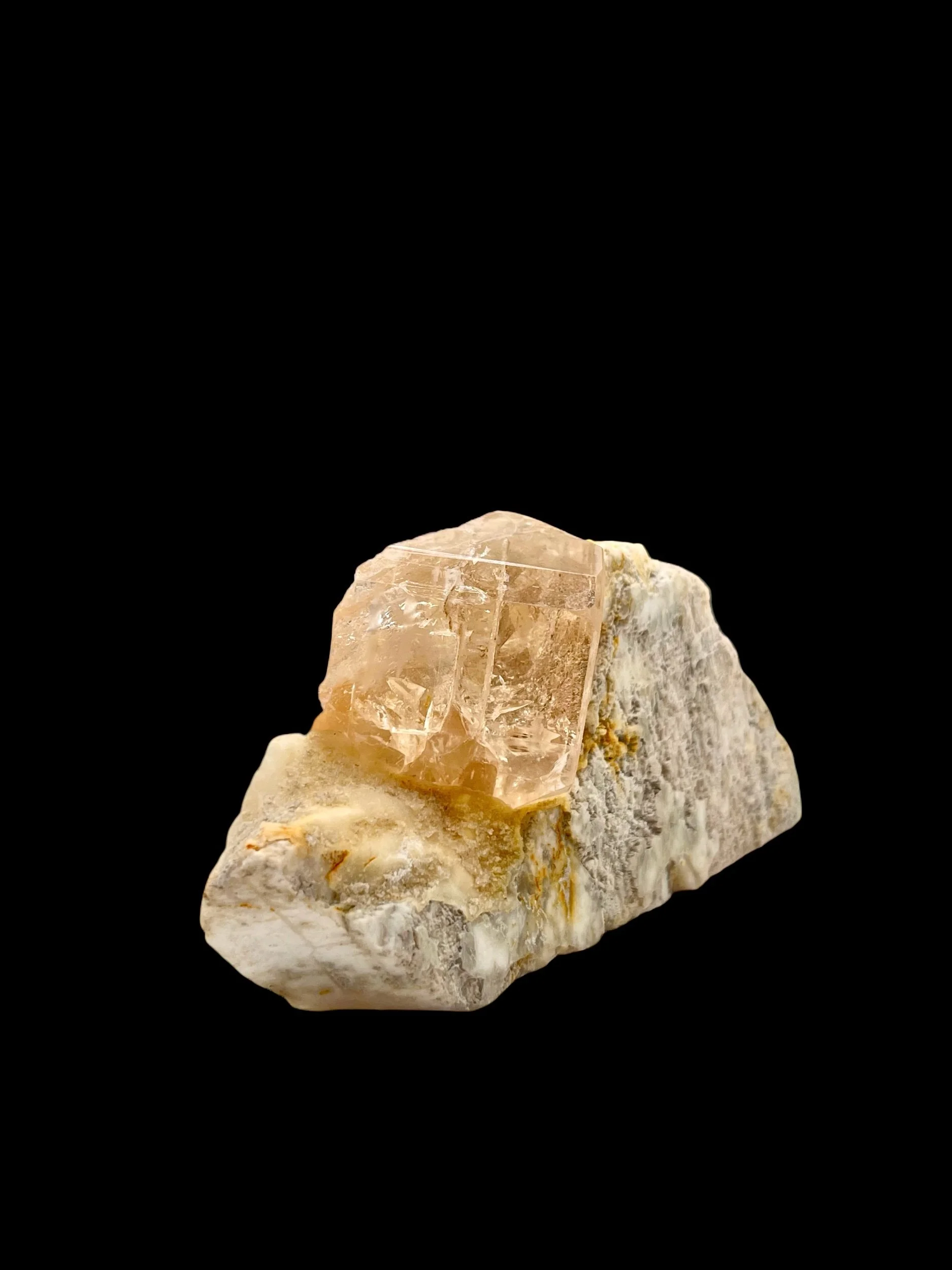
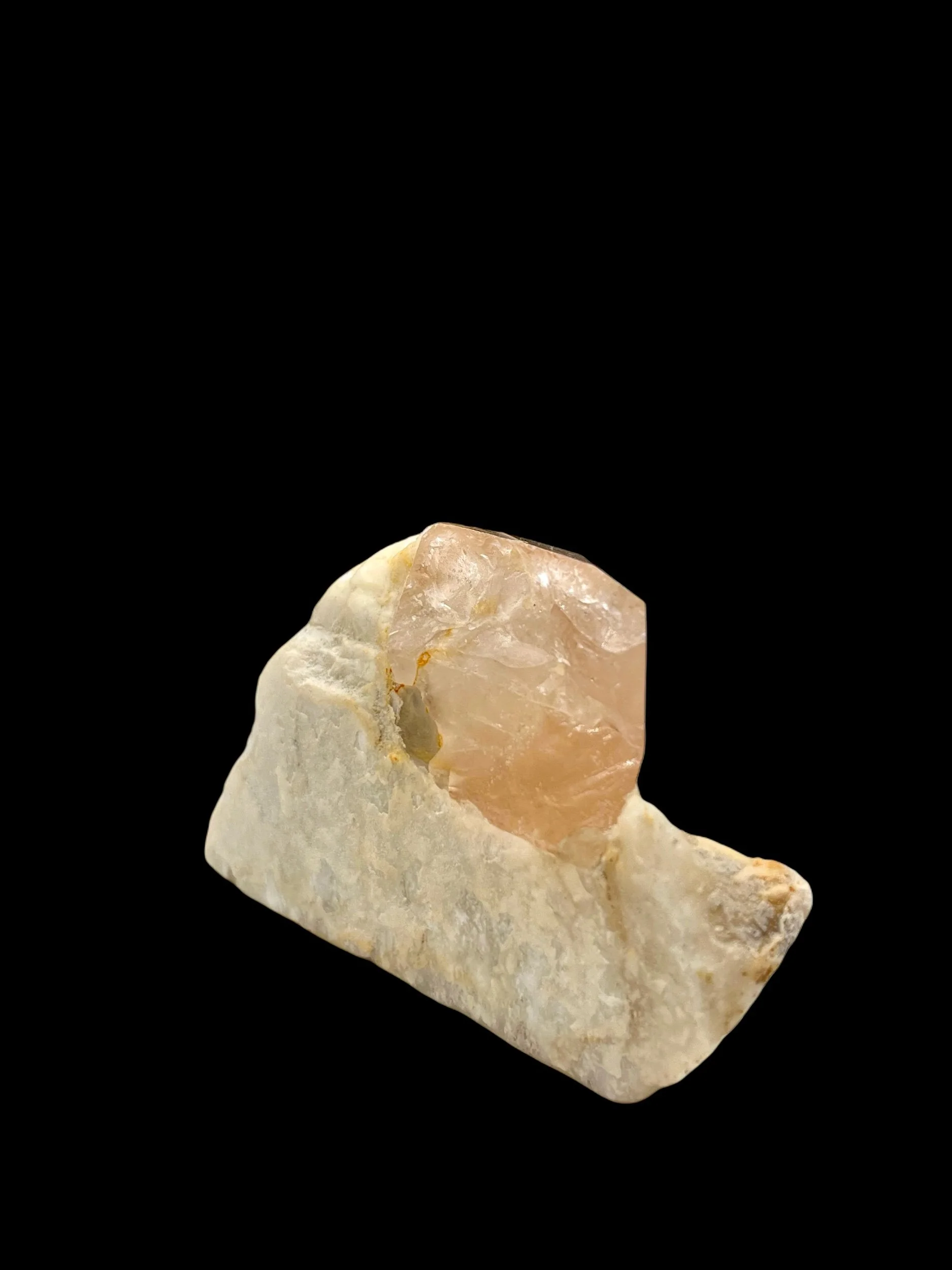
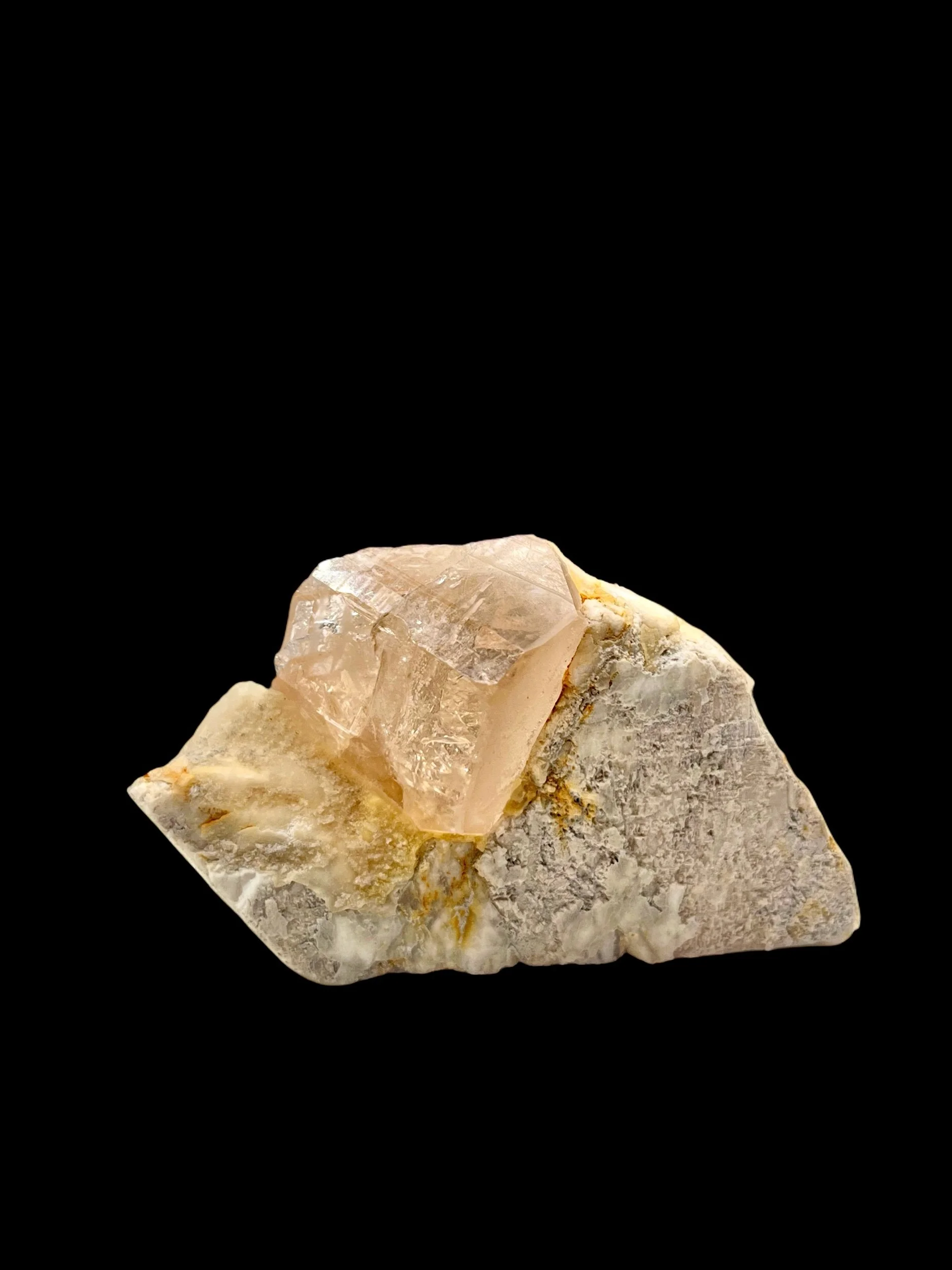
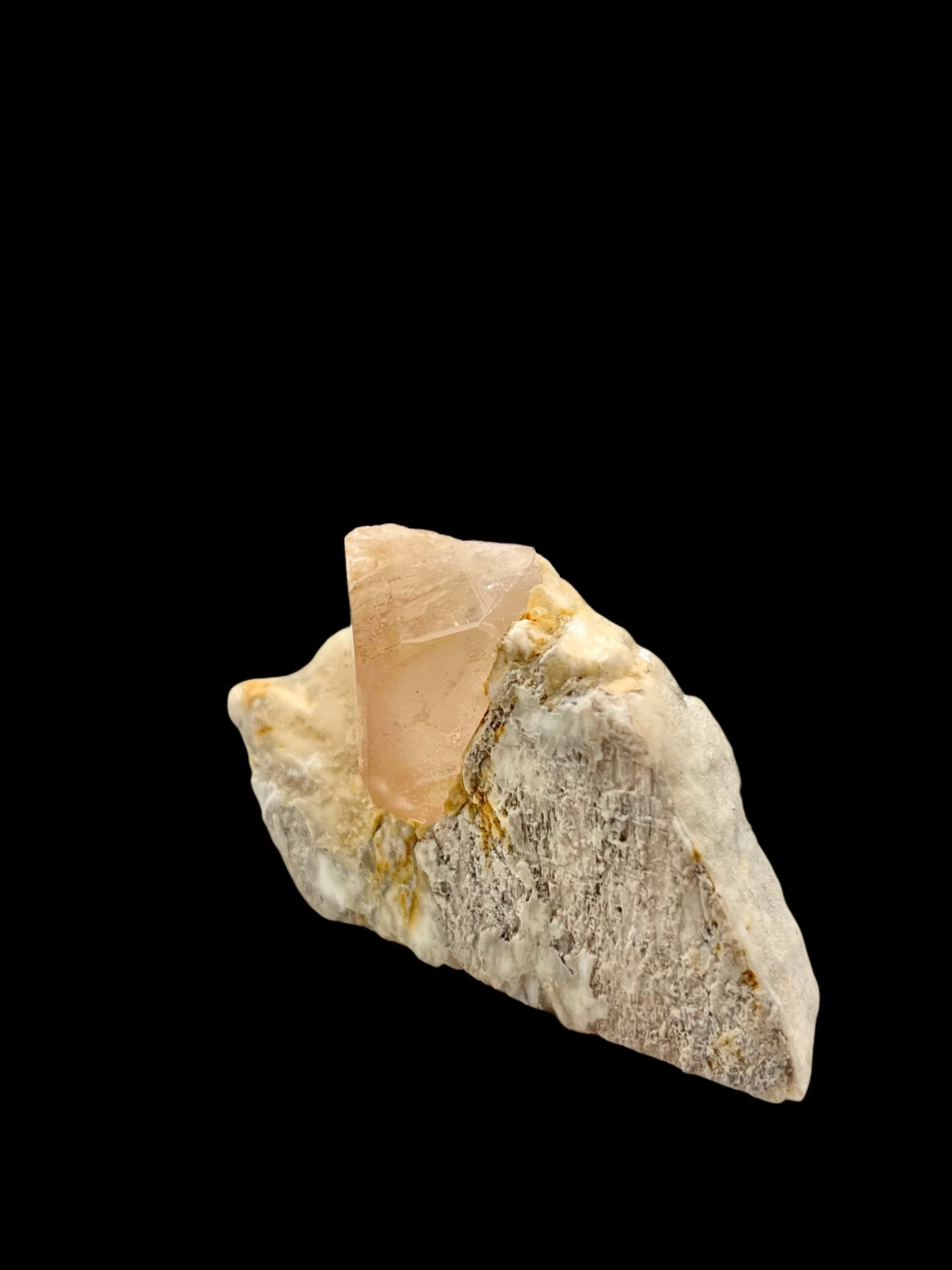
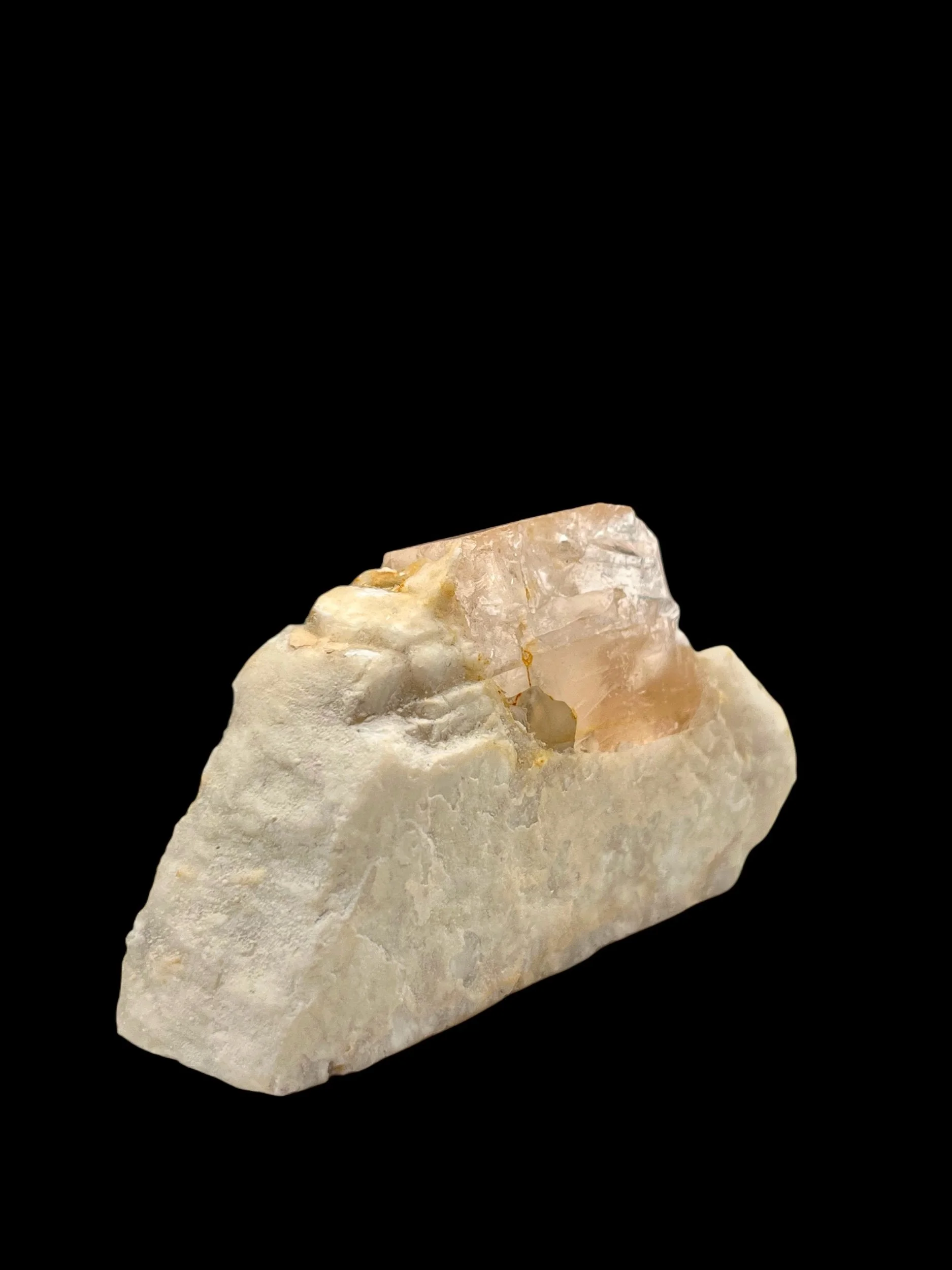
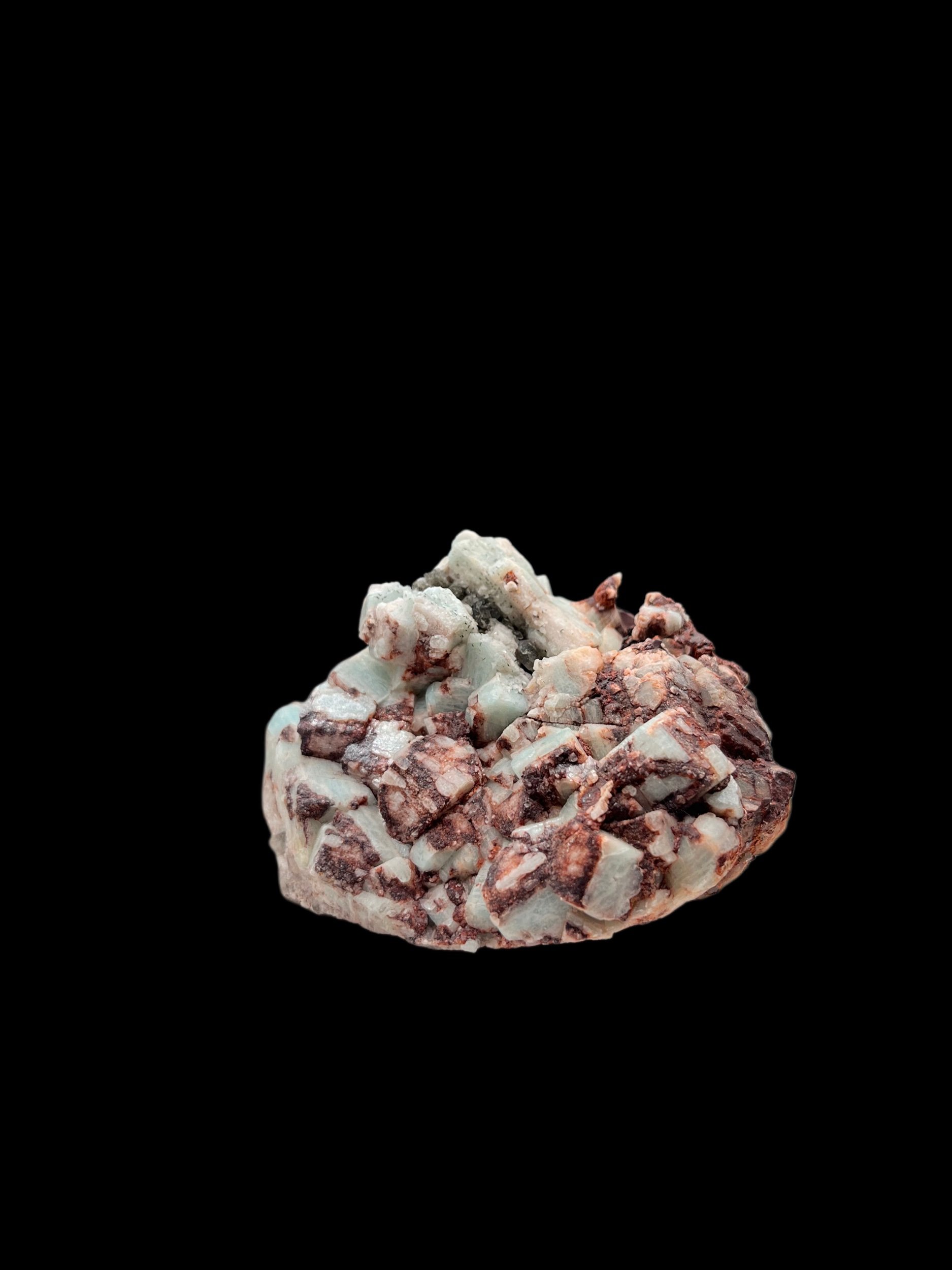
This specimen features pale blue amazonite crystals intergrown with feldspar and accented by both hematite and smoky quartz. The amazonite appears in blocky, sharply defined, crystal forms, while warm reddish-brown hematite moves through the matrix, creating strong color contrast. A pocket of smoky quartz is partially concealed within the crystal structure, adding depth and a sense of discovery without dominating the surface presentation.
Dimensions: 4” x 3.25” x 2.25”
Weight: 313g
Crystals that form as pegmatites are especially desirable because pegmatite environments allow minerals to grow exceptionally large, well-formed, and aesthetically striking crystals.. These environments cool very slowly and are rich in mineral-forming fluids, giving crystals the time and space needed to develop sharp faces, clean terminations, and impressive size. Pegmatites also commonly form open crystal pockets, which preserve crystal structure and result in specimens that are visually balanced, undamaged, and highly display-worthy.
Beyond beauty, pegmatites are prized for their complex mineral associations and rarity. A single specimen may feature multiple minerals growing together in intricate relationships, creating natural contrast and scientific interest. Many rare and exotic minerals form primarily in pegmatites, and each pegmatite pocket is geologically unique and non-repeatable. For collectors, this combination of scale, rarity, locality significance, and one-of-a-kind formation makes pegmatite crystals some of the most compelling and enduring pieces in any serious mineral collection.
This is one of the last pieces from my 2022 stock before 90% of the land became privately owned, drastically reducing availability and driving up costs.
This specimen originates from the Pikes Peak region of Colorado, one of the most iconic localities in the world for amazonite and smoky quartz formed within granitic pegmatites.
Pegmatites are coarse-grained igneous formations that crystallize slowly from mineral-rich fluids, allowing for the growth of large, well-formed crystals such as those seen here. These geological conditions are responsible for the exceptional structure of the quartz, as well as the bold coloration of the amazonite.
In recent years, much of the Pikes Peak collecting area has become privately owned, significantly limiting access to new material. As a result, specimens—particularly those collected from historically accessible or public areas—are becoming increasingly scarce and highly desirable among collectors.
Specimens combining amazonite, smoky quartz, and well-defined goethite are notably less common, making this a more distinctive and conversation-worthy piece.
On a personal note, I made the choice to leave the hematite on this specimen because I felt the addition added to the piece instead of covering up the beauty like similarly stained specimens.
Specimens from the Pikes Peak region continue to appreciate in value due to increasing scarcity and limited access to productive collecting sites. With much of the area now privately owned, opportunities to obtain this already rare material are becoming more restricted.
As a result, well-composed pieces—especially those featuring strong amazonite color and defined smoky quartz crystals—are increasingly sought after by collectors. This specimen represents not only a visually compelling display piece, but also a meaningful addition to a collection focused on classic American mineral localities.
These types of specimens have already tripled in value since 2023.
Natural amazonite (microcline feldspar) on pegmatite
Associated hematite and smoky quartz present
Smoky quartz partially hidden within a crystal pocket
Classic Pikes Peak, Colorado locality
Strong geological character with layered mineral associations
Amazonite is a blue-green variety of microcline feldspar, while smoky quartz is a naturally irradiated form of quartz and hematite is an iron oxide mineral. In the granitic pegmatites of the Pikes Peak region, these minerals commonly occur together as conditions shift during crystallization. Specimens showing all three minerals provide a clear snapshot of the evolving geochemical environment during formation.
This specimen features pale blue amazonite crystals intergrown with feldspar and accented by both hematite and smoky quartz. The amazonite appears in blocky, sharply defined, crystal forms, while warm reddish-brown hematite moves through the matrix, creating strong color contrast. A pocket of smoky quartz is partially concealed within the crystal structure, adding depth and a sense of discovery without dominating the surface presentation.
Dimensions: 4” x 3.25” x 2.25”
Weight: 313g
Crystals that form as pegmatites are especially desirable because pegmatite environments allow minerals to grow exceptionally large, well-formed, and aesthetically striking crystals.. These environments cool very slowly and are rich in mineral-forming fluids, giving crystals the time and space needed to develop sharp faces, clean terminations, and impressive size. Pegmatites also commonly form open crystal pockets, which preserve crystal structure and result in specimens that are visually balanced, undamaged, and highly display-worthy.
Beyond beauty, pegmatites are prized for their complex mineral associations and rarity. A single specimen may feature multiple minerals growing together in intricate relationships, creating natural contrast and scientific interest. Many rare and exotic minerals form primarily in pegmatites, and each pegmatite pocket is geologically unique and non-repeatable. For collectors, this combination of scale, rarity, locality significance, and one-of-a-kind formation makes pegmatite crystals some of the most compelling and enduring pieces in any serious mineral collection.
This is one of the last pieces from my 2022 stock before 90% of the land became privately owned, drastically reducing availability and driving up costs.
This specimen originates from the Pikes Peak region of Colorado, one of the most iconic localities in the world for amazonite and smoky quartz formed within granitic pegmatites.
Pegmatites are coarse-grained igneous formations that crystallize slowly from mineral-rich fluids, allowing for the growth of large, well-formed crystals such as those seen here. These geological conditions are responsible for the exceptional structure of the quartz, as well as the bold coloration of the amazonite.
In recent years, much of the Pikes Peak collecting area has become privately owned, significantly limiting access to new material. As a result, specimens—particularly those collected from historically accessible or public areas—are becoming increasingly scarce and highly desirable among collectors.
Specimens combining amazonite, smoky quartz, and well-defined goethite are notably less common, making this a more distinctive and conversation-worthy piece.
On a personal note, I made the choice to leave the hematite on this specimen because I felt the addition added to the piece instead of covering up the beauty like similarly stained specimens.
Specimens from the Pikes Peak region continue to appreciate in value due to increasing scarcity and limited access to productive collecting sites. With much of the area now privately owned, opportunities to obtain this already rare material are becoming more restricted.
As a result, well-composed pieces—especially those featuring strong amazonite color and defined smoky quartz crystals—are increasingly sought after by collectors. This specimen represents not only a visually compelling display piece, but also a meaningful addition to a collection focused on classic American mineral localities.
These types of specimens have already tripled in value since 2023.
Natural amazonite (microcline feldspar) on pegmatite
Associated hematite and smoky quartz present
Smoky quartz partially hidden within a crystal pocket
Classic Pikes Peak, Colorado locality
Strong geological character with layered mineral associations
Amazonite is a blue-green variety of microcline feldspar, while smoky quartz is a naturally irradiated form of quartz and hematite is an iron oxide mineral. In the granitic pegmatites of the Pikes Peak region, these minerals commonly occur together as conditions shift during crystallization. Specimens showing all three minerals provide a clear snapshot of the evolving geochemical environment during formation.