

 Image 1 of 3
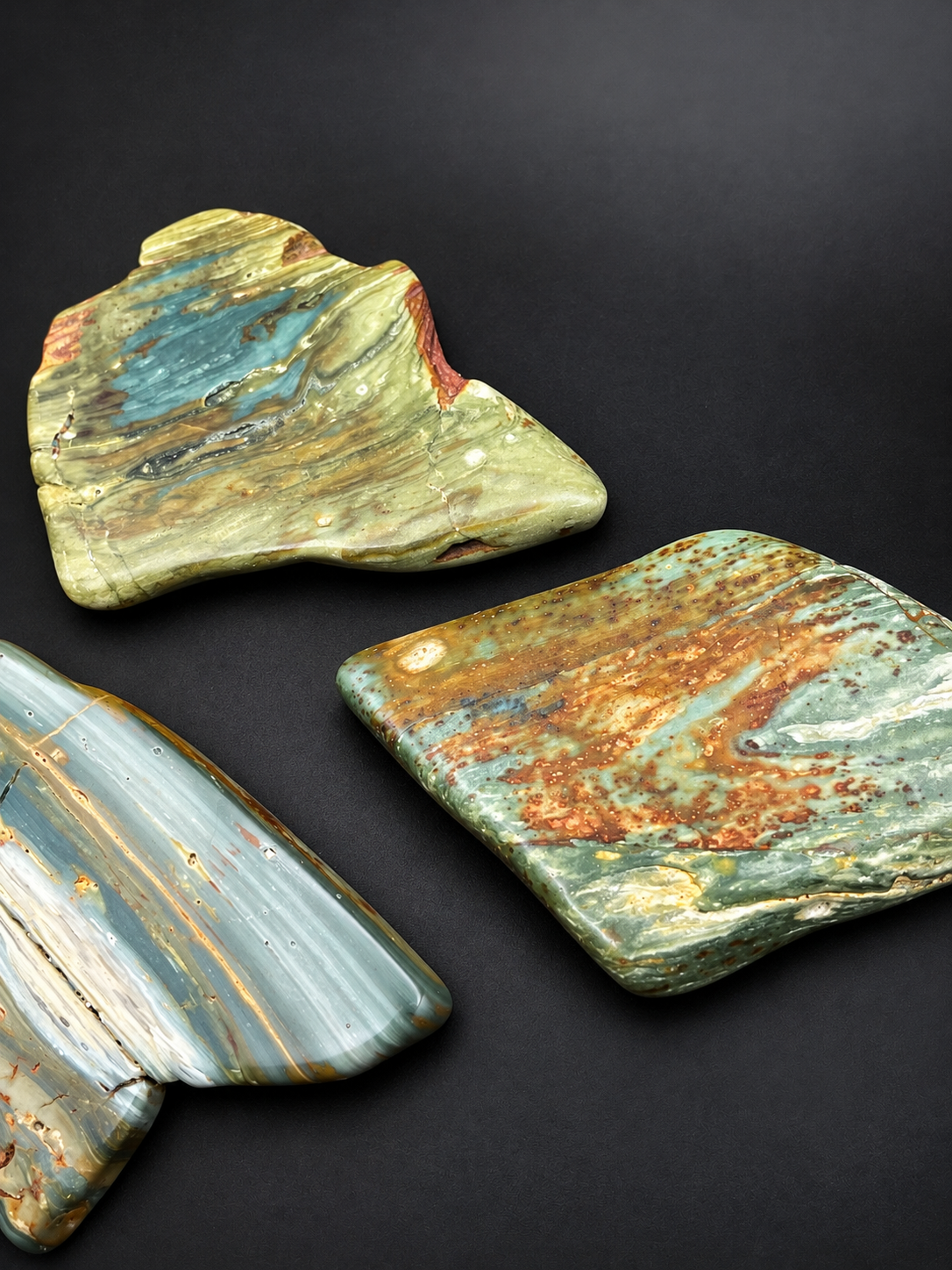 Image 2 of 3
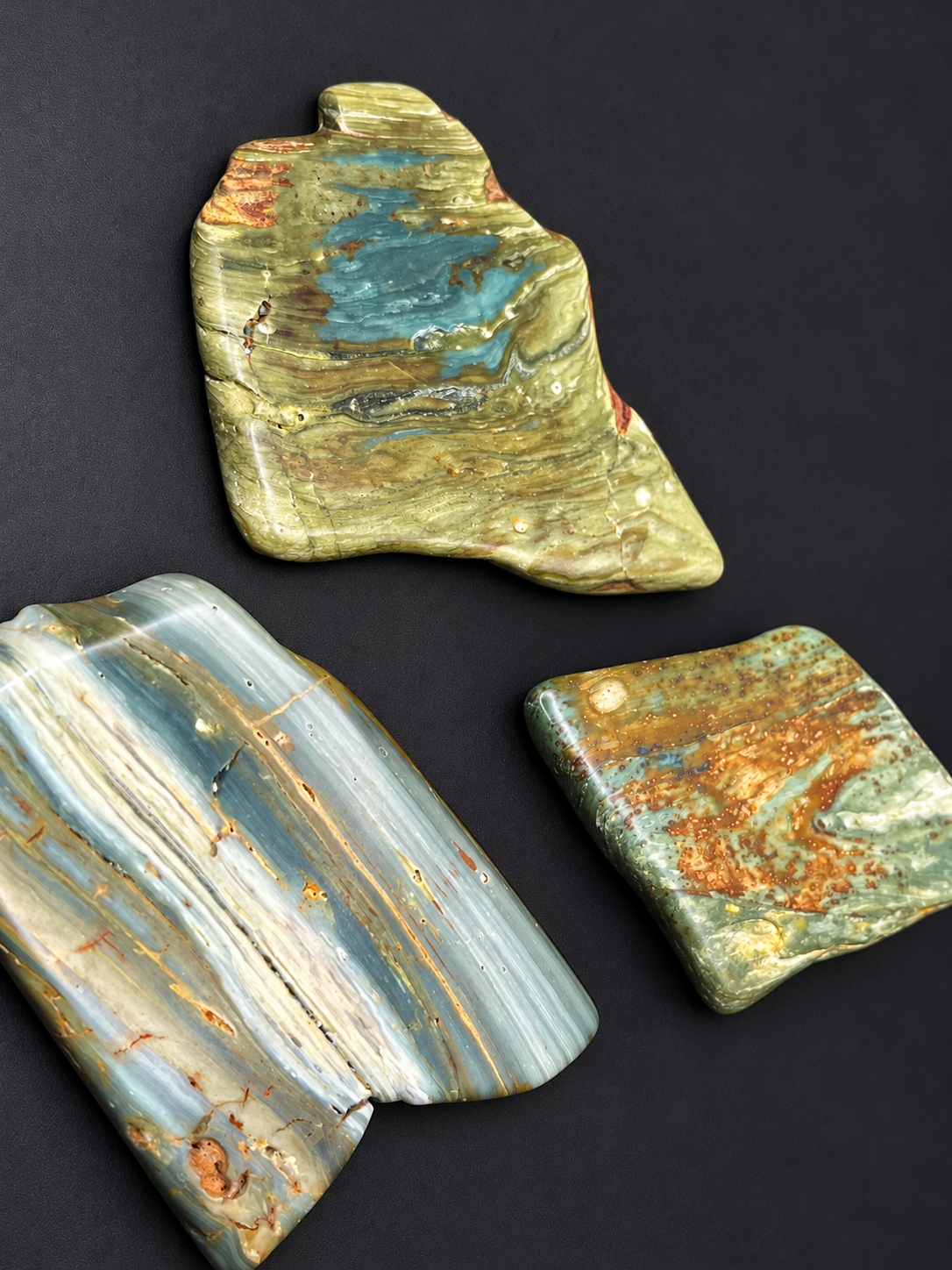 Image 3 of 3
A beautiful pairing of ancient history and natural artistry, Oregon Bogwood showcases the remarkable transformation of prehistoric wood into colorful brilliant stone.
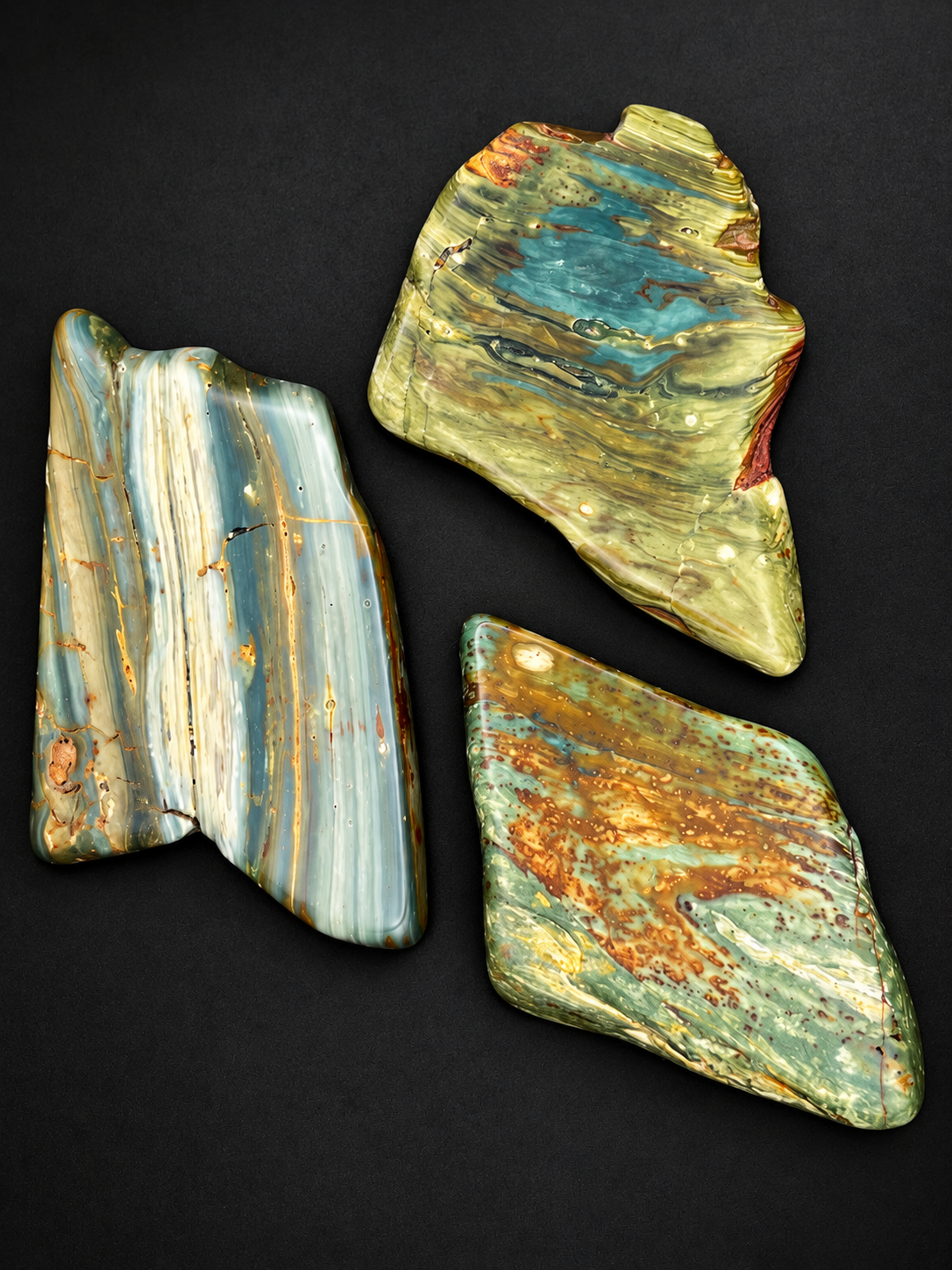
Each piece features its own captivating combination of ocean blues, sage greens, creamy yellows, golden browns, and warm rust-colored accents. Flowing bands, intricate patterns, and contrasting colors create miniature landscapes within the stone, making every polished slab a completely unique work of nature and art.
Oregon Bogwood is a form of silicified petrified wood. It formed over immense periods of geological time, when silica-rich water infiltrated the buried wood, preserving or replacing its original structure with stone.
These polished pieces reveal the extraordinary beauty hidden within ancient fossilized wood, making them wonderful additions to mineral collections, fossil displays, or natural history collections.
Please Note: This listing is for ONE (1) piece of Oregon Bogwood. The photographs show examples of some of the available material. Each piece is naturally unique, and colors, shapes, and patterns will vary.
Dimensions: Approximately 2.5 × 3 inches
Weight: Approximately 50–80 grams per piece
Locality: Oregon, USA
Finish: Polished
Grounding & Stability: Believed to encourage a stronger connection to the Earth and promote emotional balance.
Patience & Perseverance: Associated with steady progress, resilience, and personal growth.
Ancient Wisdom: Thought to symbolize the knowledge and experience accumulated over time.
Transformation: Represents change, adaptability, and the beauty that can emerge through life's transitions.
Calming Energy: Often used in meditation practices centered on tranquility and mindfulness.
An Ancient Forest Preserved in Stone
Oregon is renowned for its deposits of petrified wood, many of which formed in landscapes shaped by volcanic activity. Ancient trees and other vegetation were buried beneath sediment or volcanic material, creating conditions that allowed silica-rich groundwater to preserve their structures over time.
Oregon Bogwood is particularly known for its unusual colors and flowing patterns. Unlike conventional brown petrified wood, these specimens can display striking combinations of blue, green, yellow, and rusty red.
Interesting Fact: Despite its name, petrified bogwood is no longer wood in the ordinary sense. Its original organic material has been substantially replaced or preserved by minerals, producing a fossil that can be cut and polished like a gemstone.
The term bogwood is a commercial name rather than a distinct mineral species. It should not be confused with ordinary waterlogged bogwood, which may remain largely organic.
Naturally Colorful: Beautiful combinations of blue, green, gold, cream, and rusty orange.
Ancient Fossil Material: Preserved woody material transformed through geological mineralization.
One-of-a-Kind Patterns: Each piece exhibits its own distinctive bands, swirls, and color distribution.
Beautifully Hand Polished: Smooth, glossy surfaces reveal intricate internal details.
Oregon Locality: From a state celebrated for its remarkable fossil wood deposits.
Highly Sought After: An attractive addition to fossil, jasper, and polished mineral collections.
Material: Silicified Petrified Wood (Bogwood)
Primary Mineral Composition: Silica, commonly in the form of microcrystalline quartz (chalcedony/jasper); exact composition may vary.
Chemical Formula: SiO₂ (silica component)
Mineral Class: Silicates — tectosilicates (quartz component)
Crystal System: Trigonal (quartz)
Mohs Hardness: Approximately 6.5–7 for chalcedony-rich material
Luster: Waxy to vitreous; glossy when polished
Streak: White (quartz component)
Cleavage: None (quartz component)
Fracture: Typically conchoidal to uneven
Specific Gravity: Approximately 2.6 for chalcedony-rich material
Crystal Habit: Microcrystalline silica replacing or filling ancient woody structures
Coloration: Variable blue, green, yellow, cream, and reddish-brown patterns resulting from the material's mineral composition and geological history
Classification Note: Petrified wood is a fossil material rather than an individual mineral species. Its properties depend on the minerals responsible for its preservation.
A beautiful pairing of ancient history and natural artistry, Oregon Bogwood showcases the remarkable transformation of prehistoric wood into colorful brilliant stone.
Each piece features its own captivating combination of ocean blues, sage greens, creamy yellows, golden browns, and warm rust-colored accents. Flowing bands, intricate patterns, and contrasting colors create miniature landscapes within the stone, making every polished slab a completely unique work of nature and art.
Oregon Bogwood is a form of silicified petrified wood. It formed over immense periods of geological time, when silica-rich water infiltrated the buried wood, preserving or replacing its original structure with stone.
These polished pieces reveal the extraordinary beauty hidden within ancient fossilized wood, making them wonderful additions to mineral collections, fossil displays, or natural history collections.
Please Note: This listing is for ONE (1) piece of Oregon Bogwood. The photographs show examples of some of the available material. Each piece is naturally unique, and colors, shapes, and patterns will vary.
Dimensions: Approximately 2.5 × 3 inches
Weight: Approximately 50–80 grams per piece
Locality: Oregon, USA
Finish: Polished
Grounding & Stability: Believed to encourage a stronger connection to the Earth and promote emotional balance.
Patience & Perseverance: Associated with steady progress, resilience, and personal growth.
Ancient Wisdom: Thought to symbolize the knowledge and experience accumulated over time.
Transformation: Represents change, adaptability, and the beauty that can emerge through life's transitions.
Calming Energy: Often used in meditation practices centered on tranquility and mindfulness.
An Ancient Forest Preserved in Stone
Oregon is renowned for its deposits of petrified wood, many of which formed in landscapes shaped by volcanic activity. Ancient trees and other vegetation were buried beneath sediment or volcanic material, creating conditions that allowed silica-rich groundwater to preserve their structures over time.
Oregon Bogwood is particularly known for its unusual colors and flowing patterns. Unlike conventional brown petrified wood, these specimens can display striking combinations of blue, green, yellow, and rusty red.
Interesting Fact: Despite its name, petrified bogwood is no longer wood in the ordinary sense. Its original organic material has been substantially replaced or preserved by minerals, producing a fossil that can be cut and polished like a gemstone.
The term bogwood is a commercial name rather than a distinct mineral species. It should not be confused with ordinary waterlogged bogwood, which may remain largely organic.
Naturally Colorful: Beautiful combinations of blue, green, gold, cream, and rusty orange.
Ancient Fossil Material: Preserved woody material transformed through geological mineralization.
One-of-a-Kind Patterns: Each piece exhibits its own distinctive bands, swirls, and color distribution.
Beautifully Hand Polished: Smooth, glossy surfaces reveal intricate internal details.
Oregon Locality: From a state celebrated for its remarkable fossil wood deposits.
Highly Sought After: An attractive addition to fossil, jasper, and polished mineral collections.
Material: Silicified Petrified Wood (Bogwood)
Primary Mineral Composition: Silica, commonly in the form of microcrystalline quartz (chalcedony/jasper); exact composition may vary.
Chemical Formula: SiO₂ (silica component)
Mineral Class: Silicates — tectosilicates (quartz component)
Crystal System: Trigonal (quartz)
Mohs Hardness: Approximately 6.5–7 for chalcedony-rich material
Luster: Waxy to vitreous; glossy when polished
Streak: White (quartz component)
Cleavage: None (quartz component)
Fracture: Typically conchoidal to uneven
Specific Gravity: Approximately 2.6 for chalcedony-rich material
Crystal Habit: Microcrystalline silica replacing or filling ancient woody structures
Coloration: Variable blue, green, yellow, cream, and reddish-brown patterns resulting from the material's mineral composition and geological history
Classification Note: Petrified wood is a fossil material rather than an individual mineral species. Its properties depend on the minerals responsible for its preservation.


