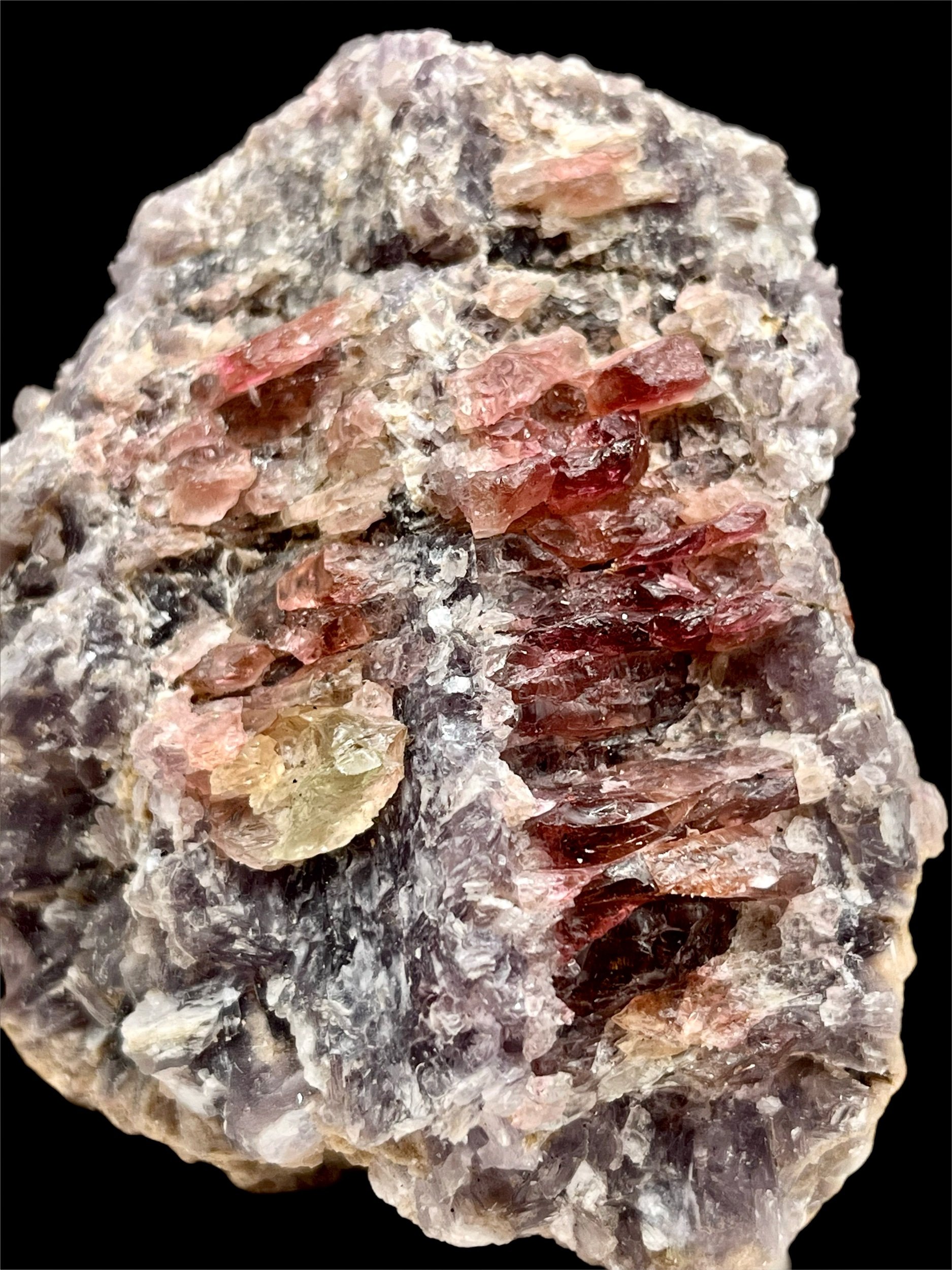
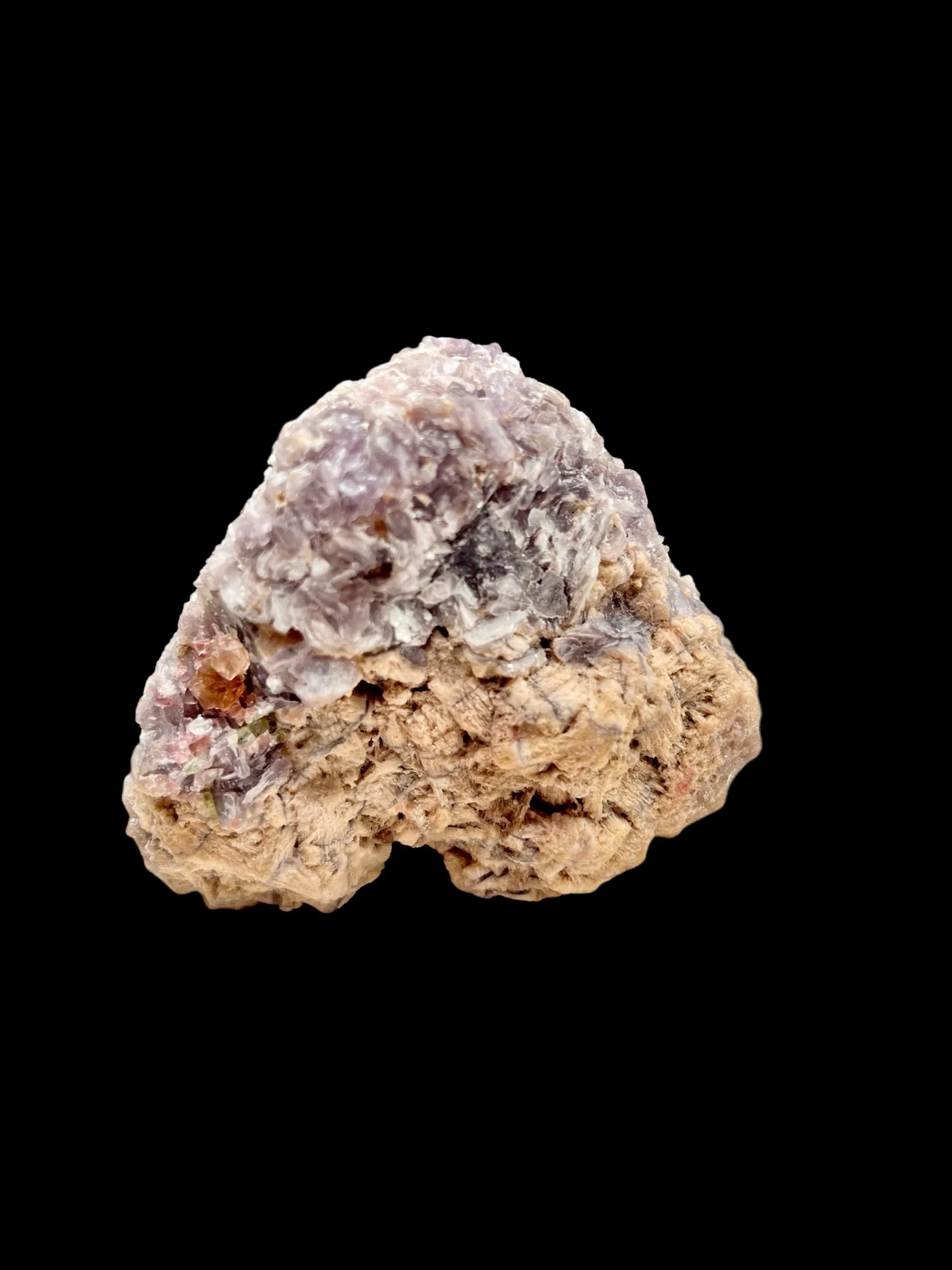
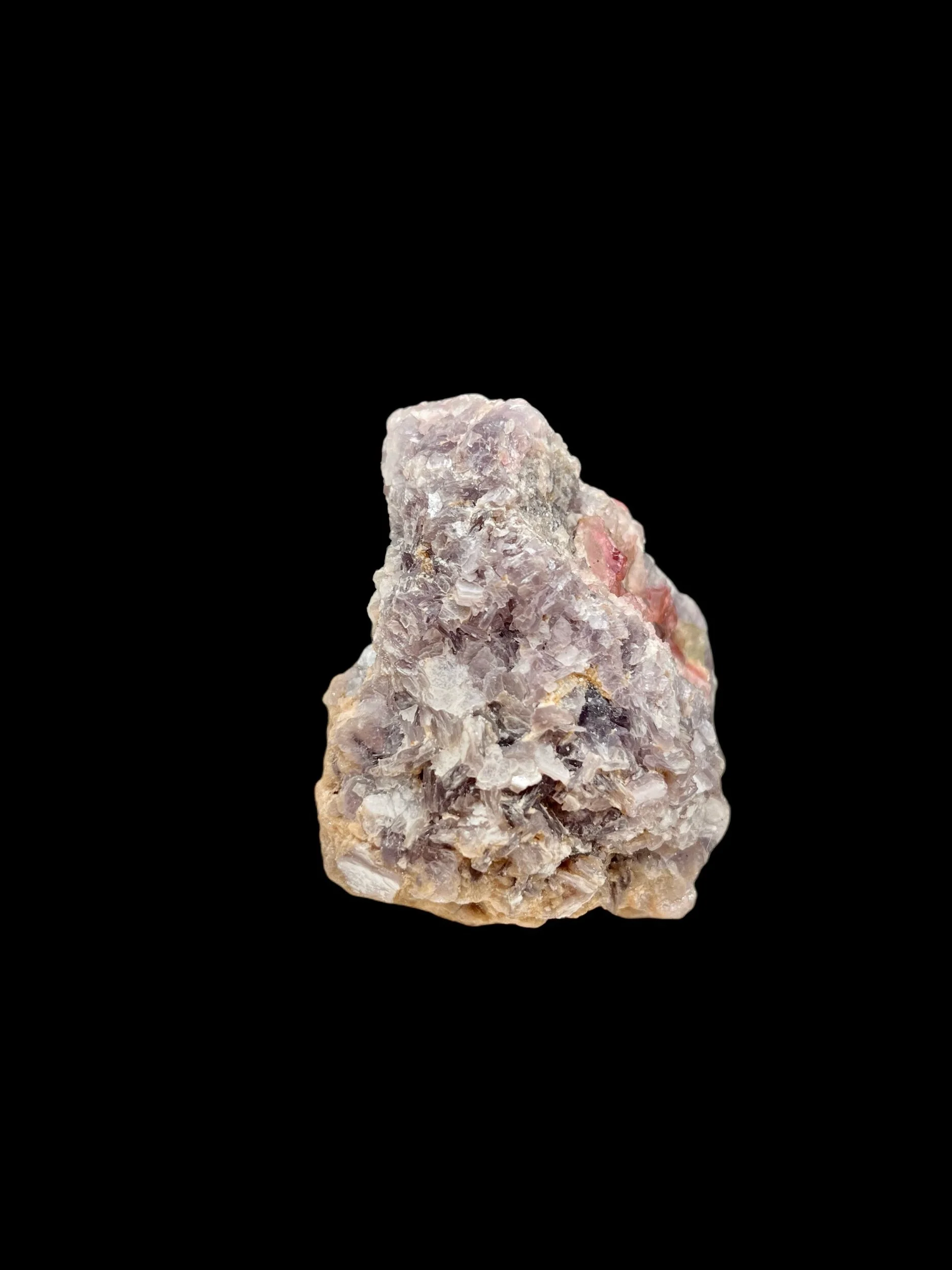
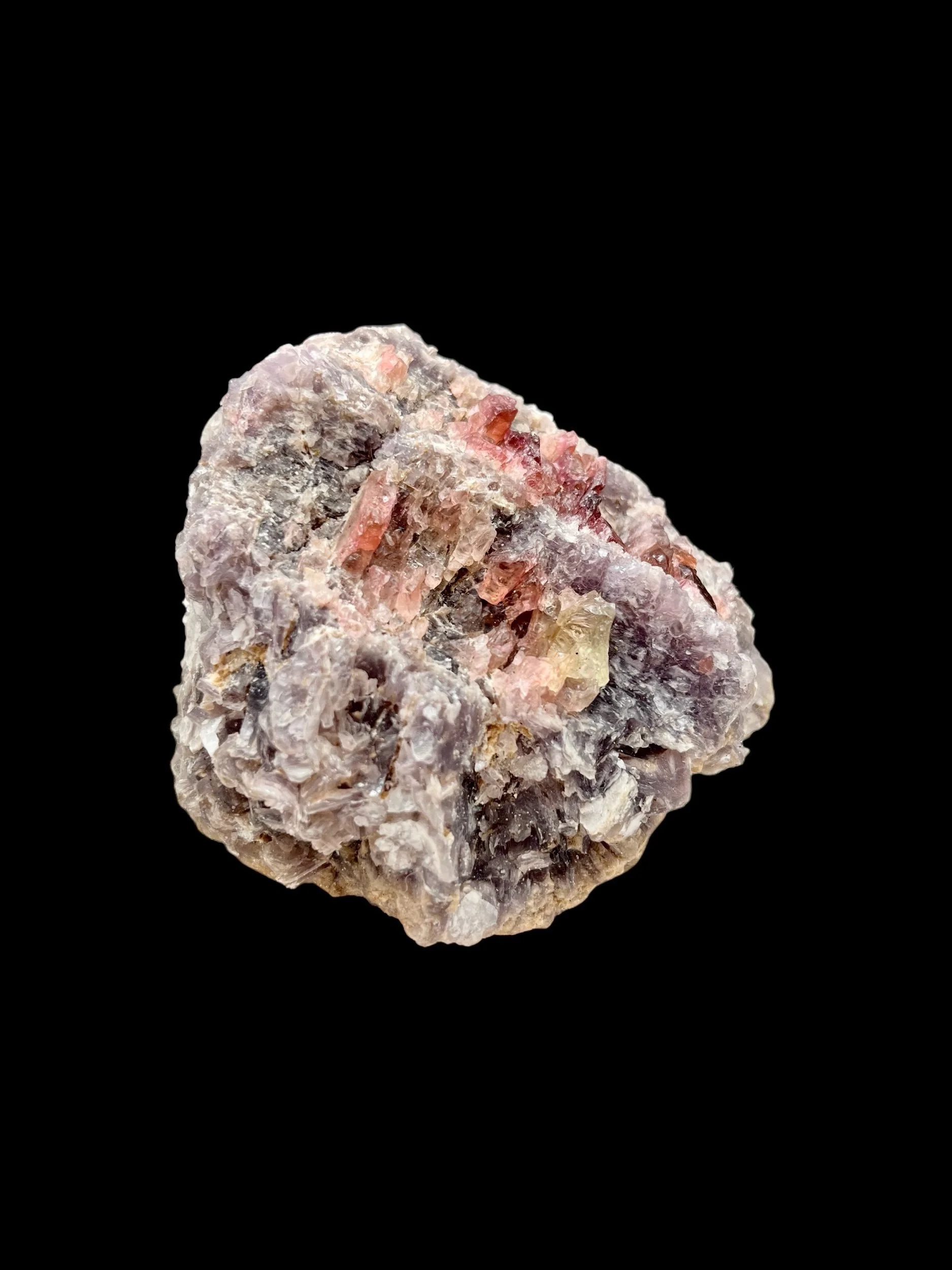
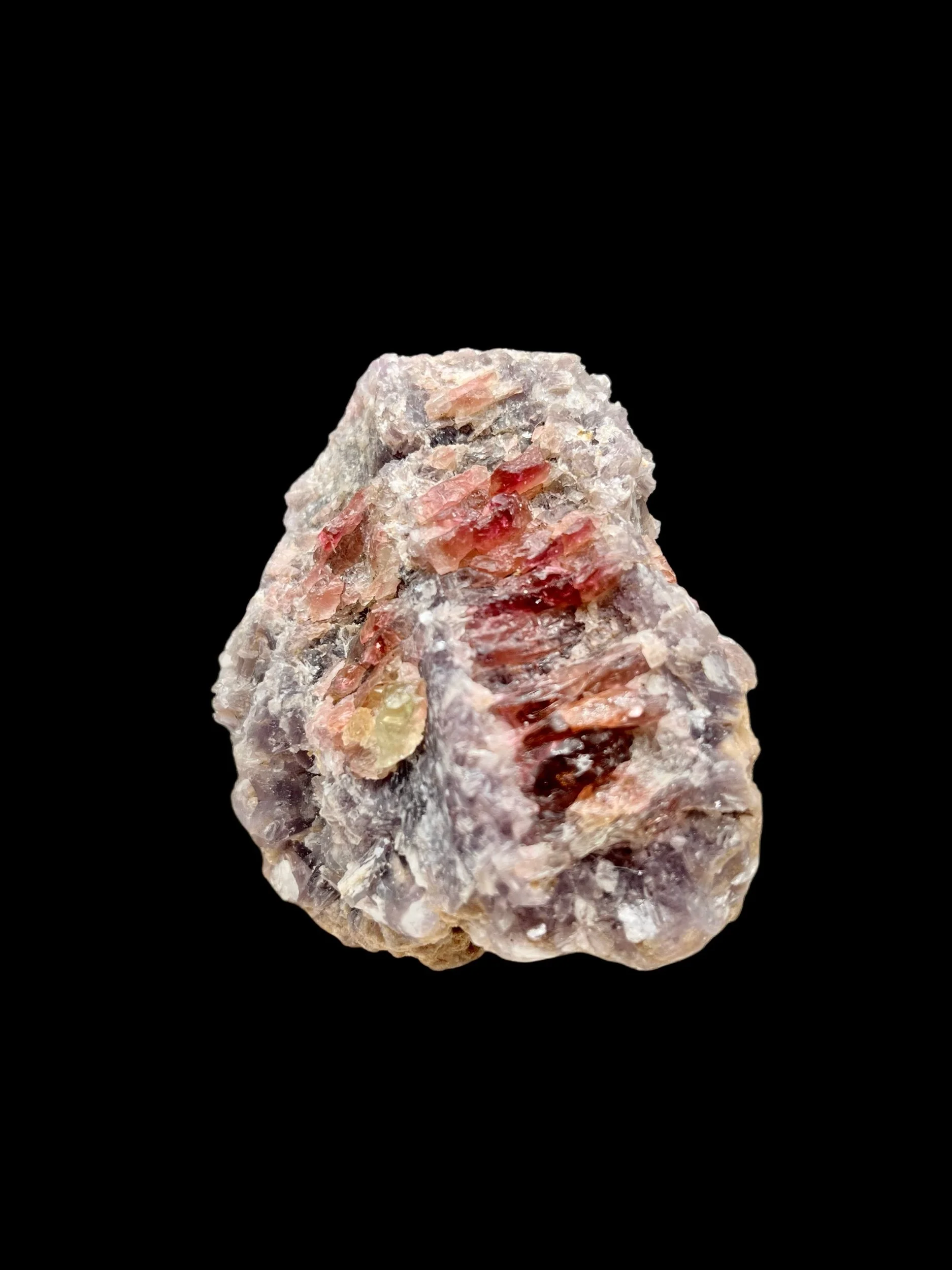
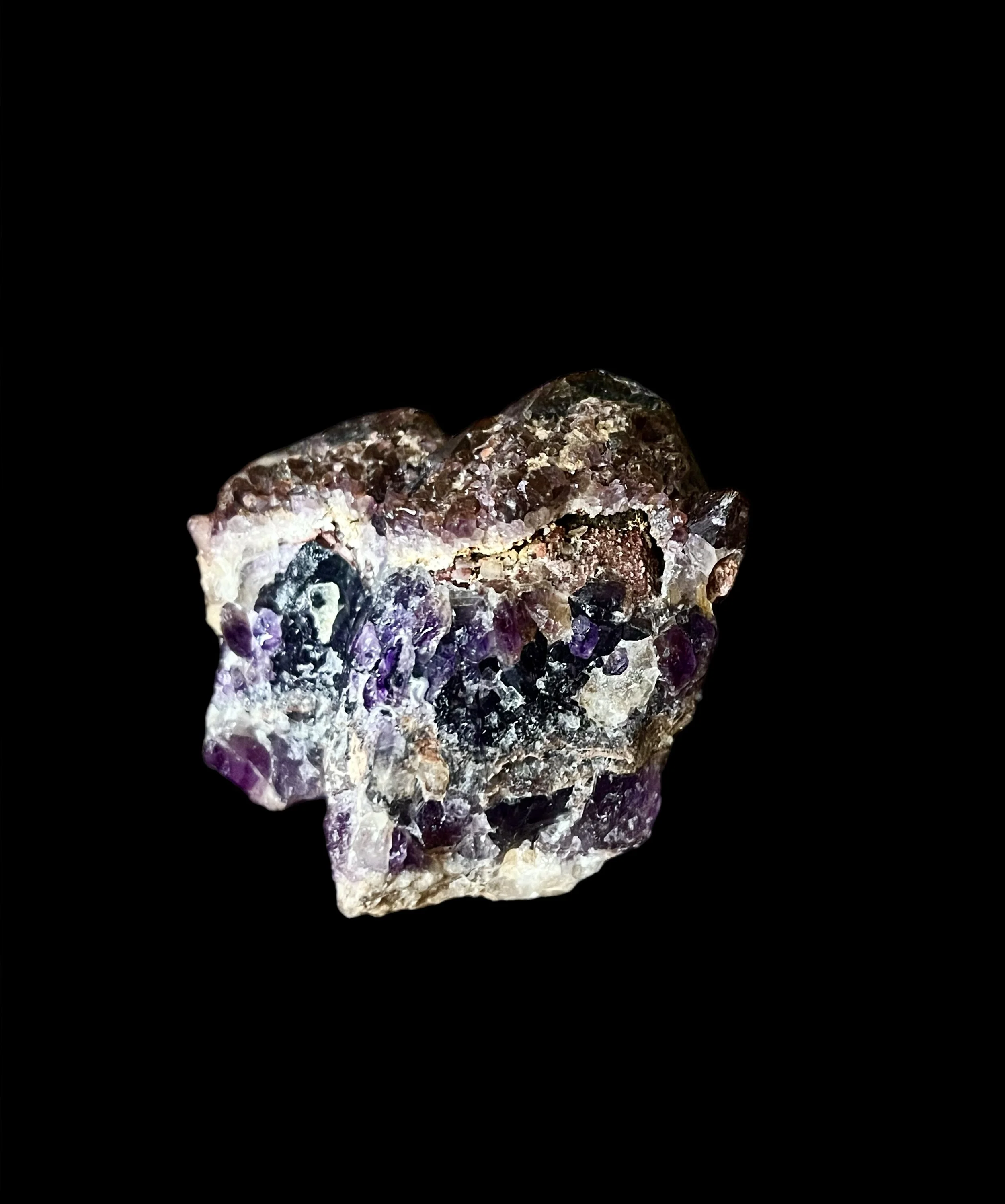
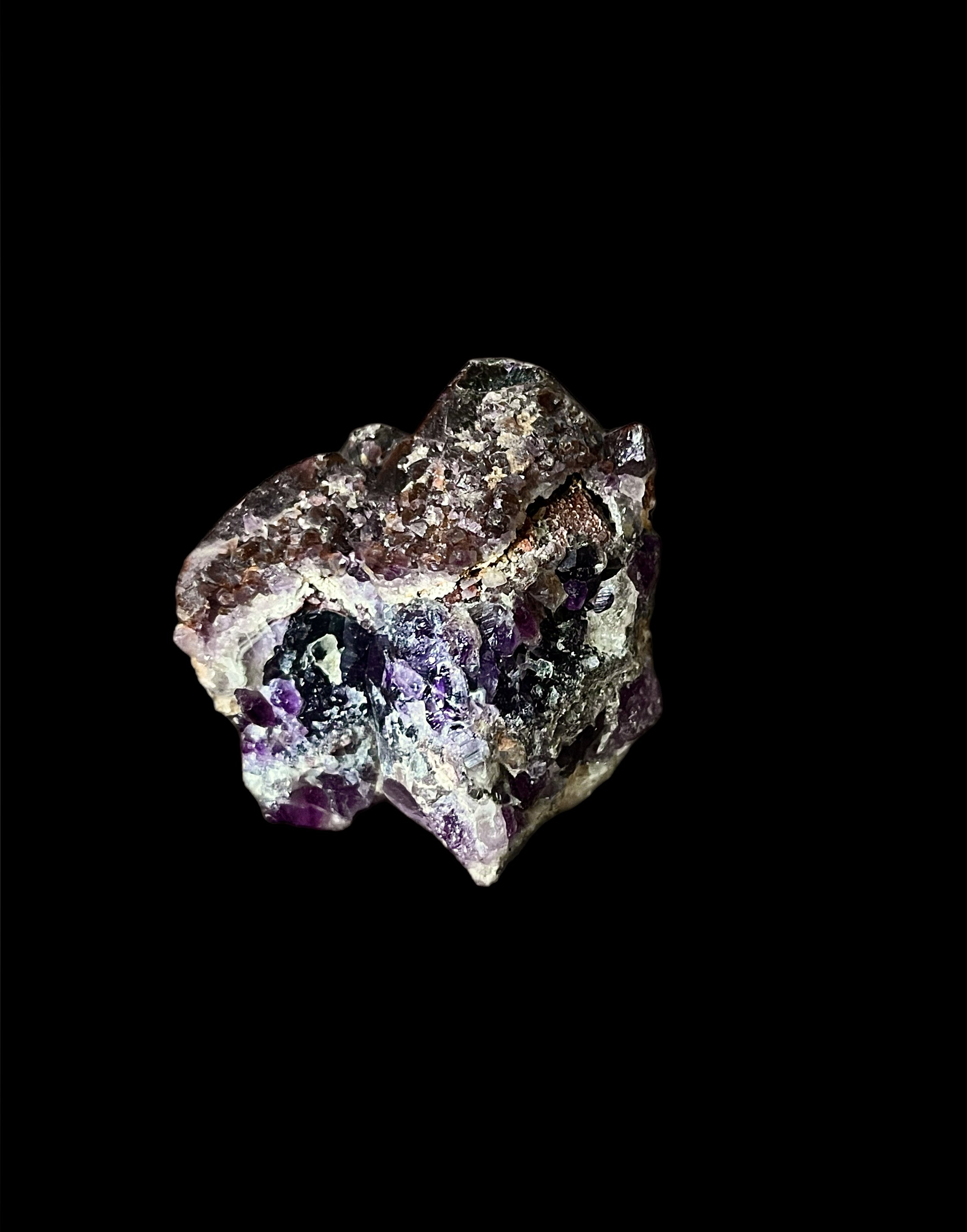
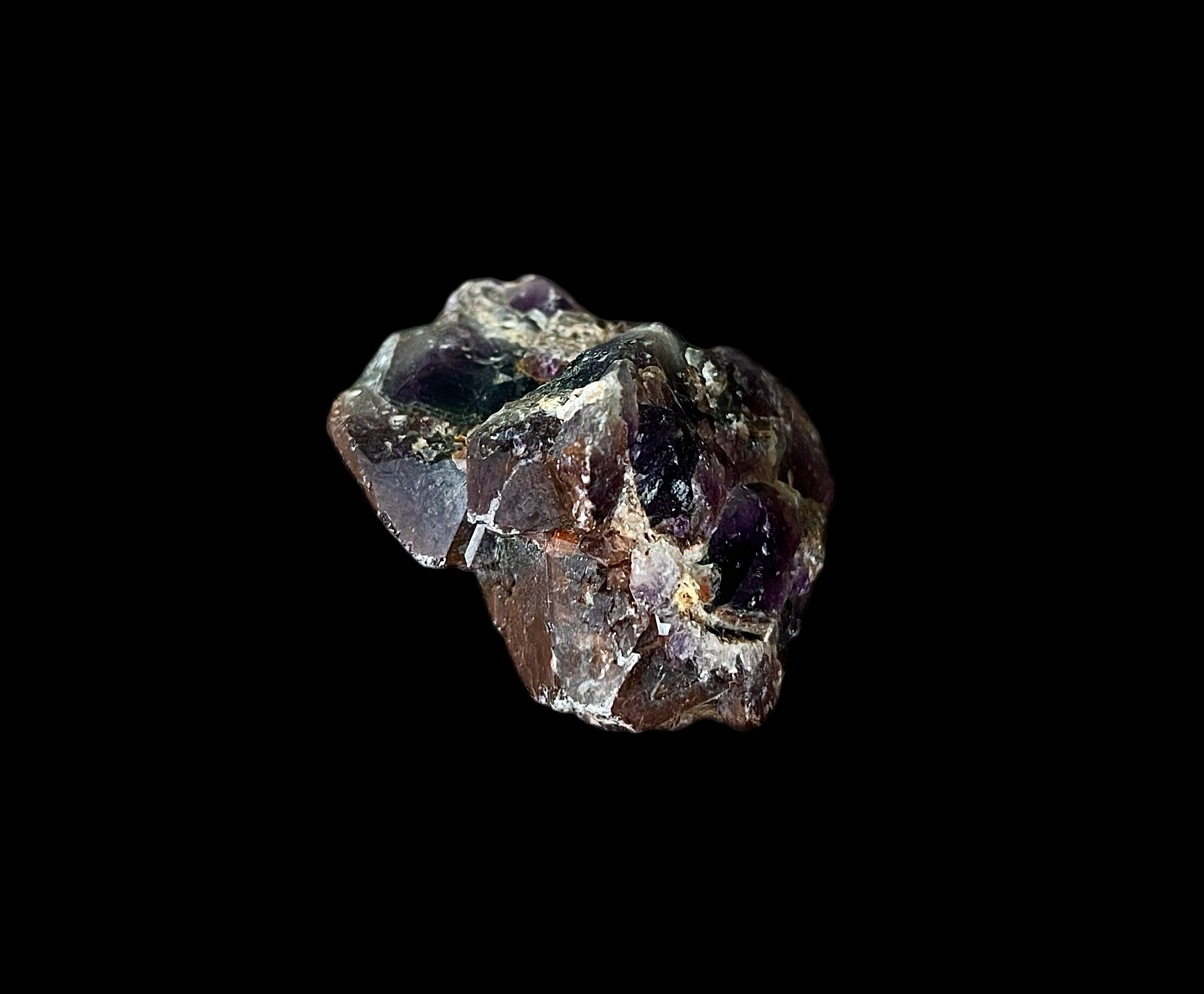
This is no mere cabinet piece; it’s a commanding specimen that demands attention, elevating any collection and demonstrating true connoisseurship. Every crystal’s meticulous placement highlights nature’s artistry of balance and proportion, igniting the spirit.
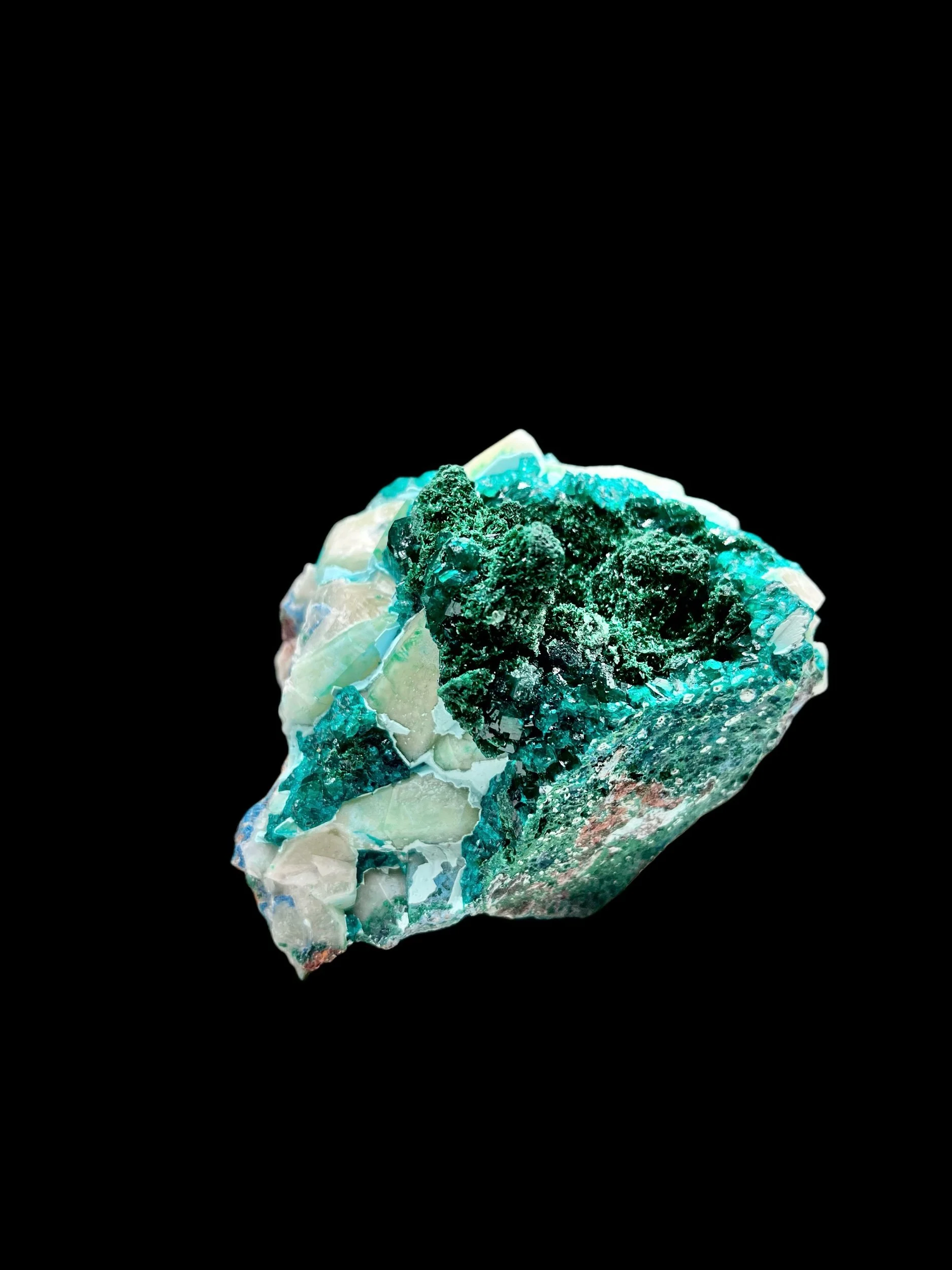
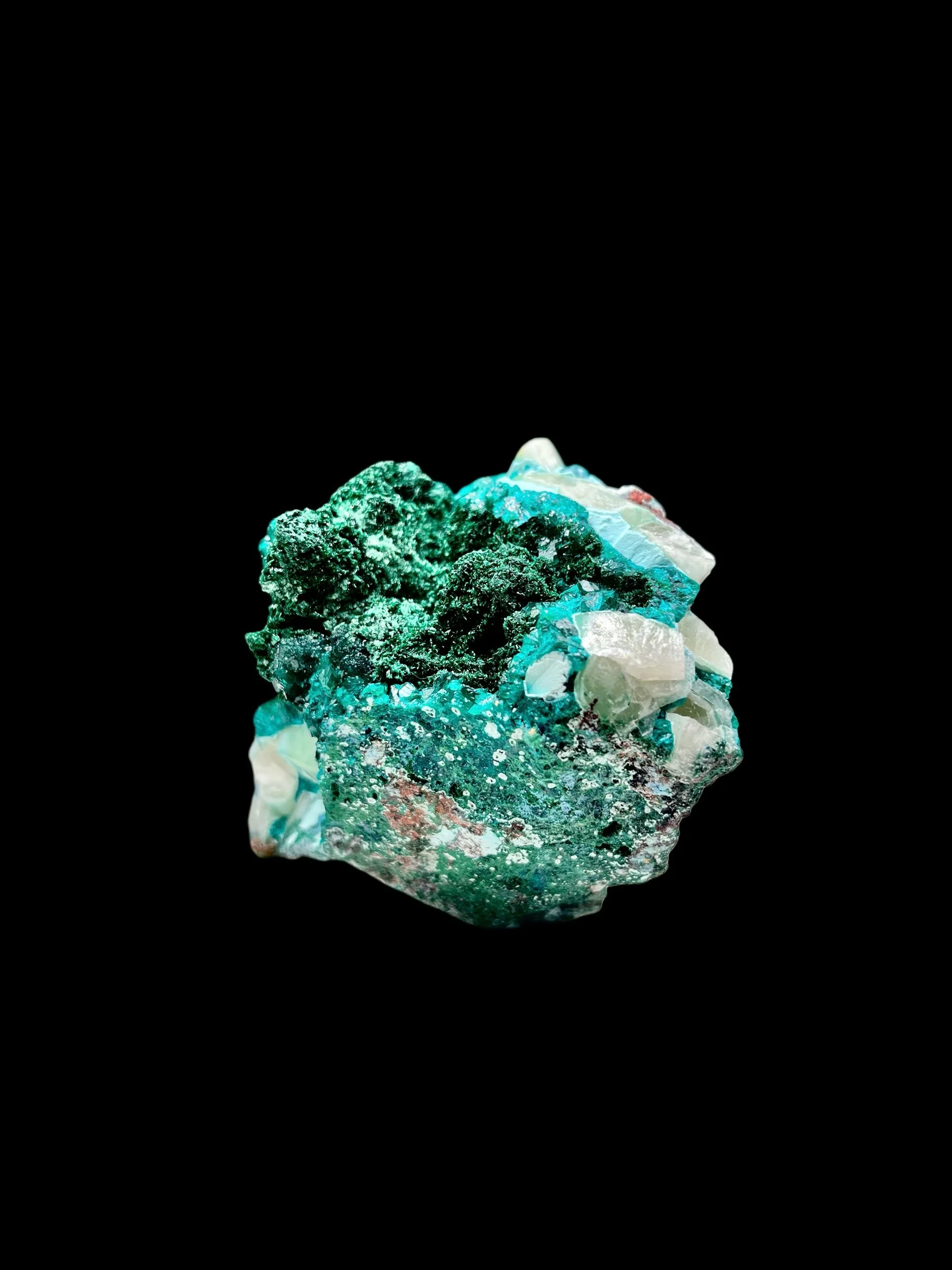
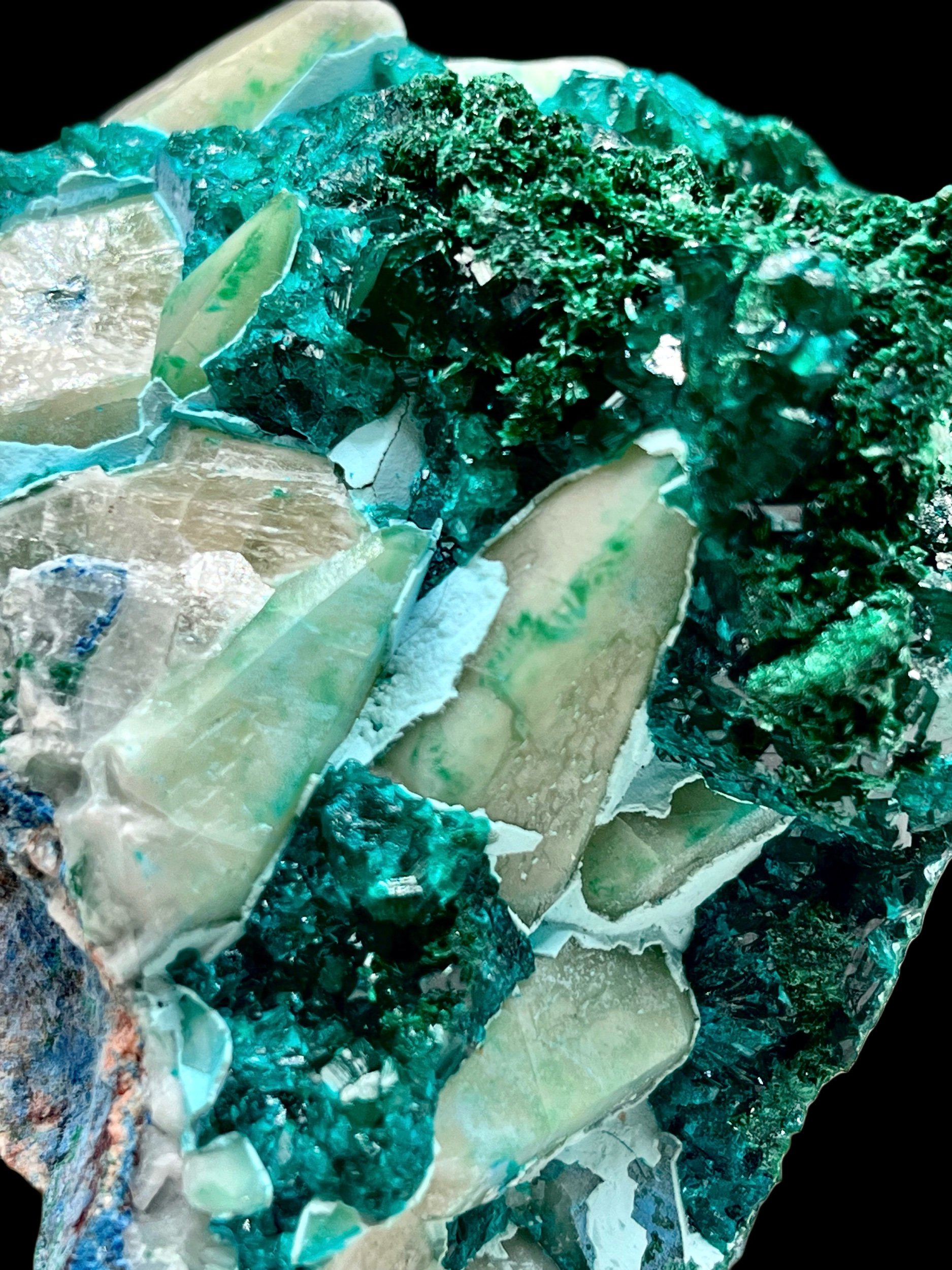
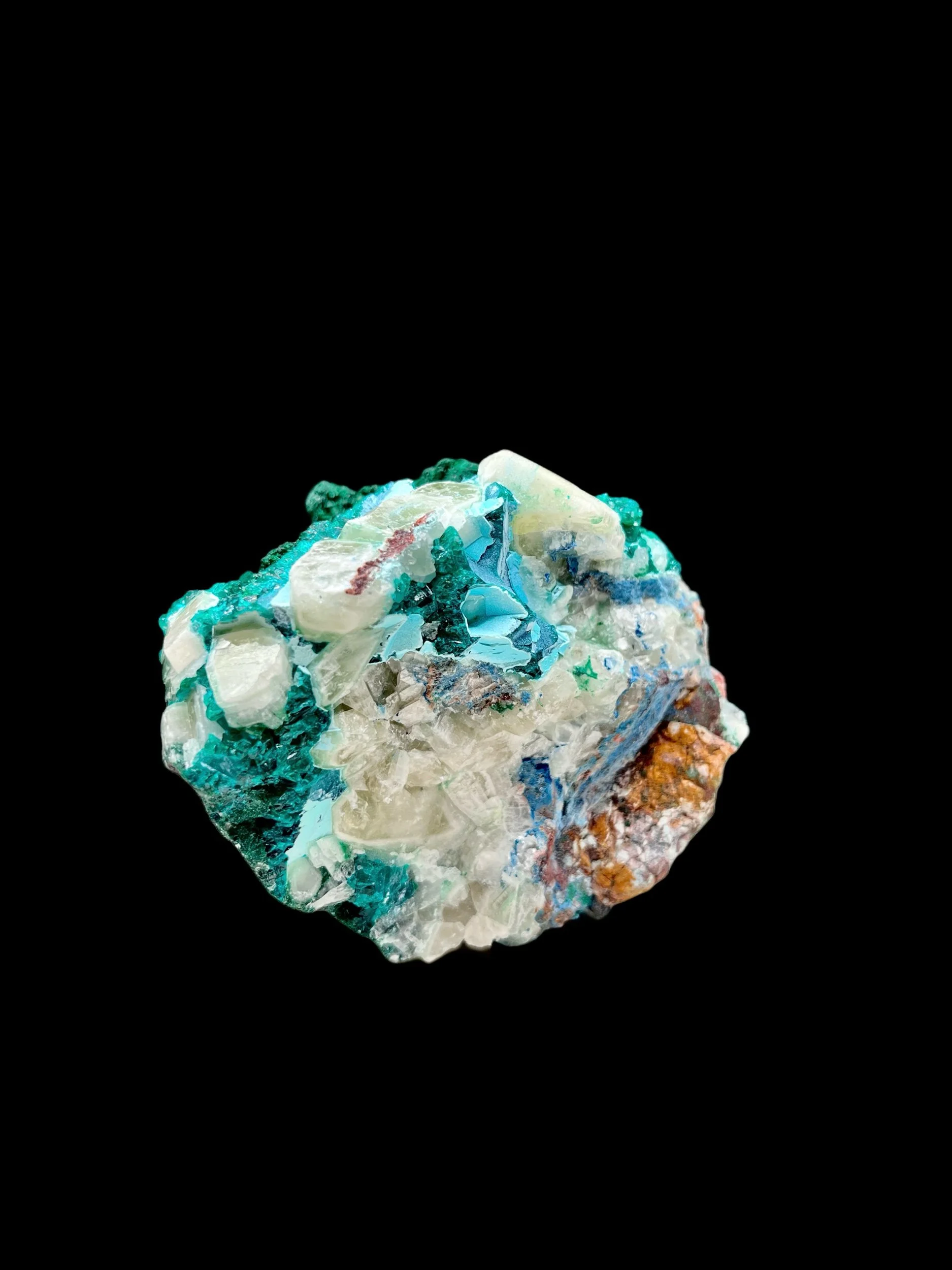
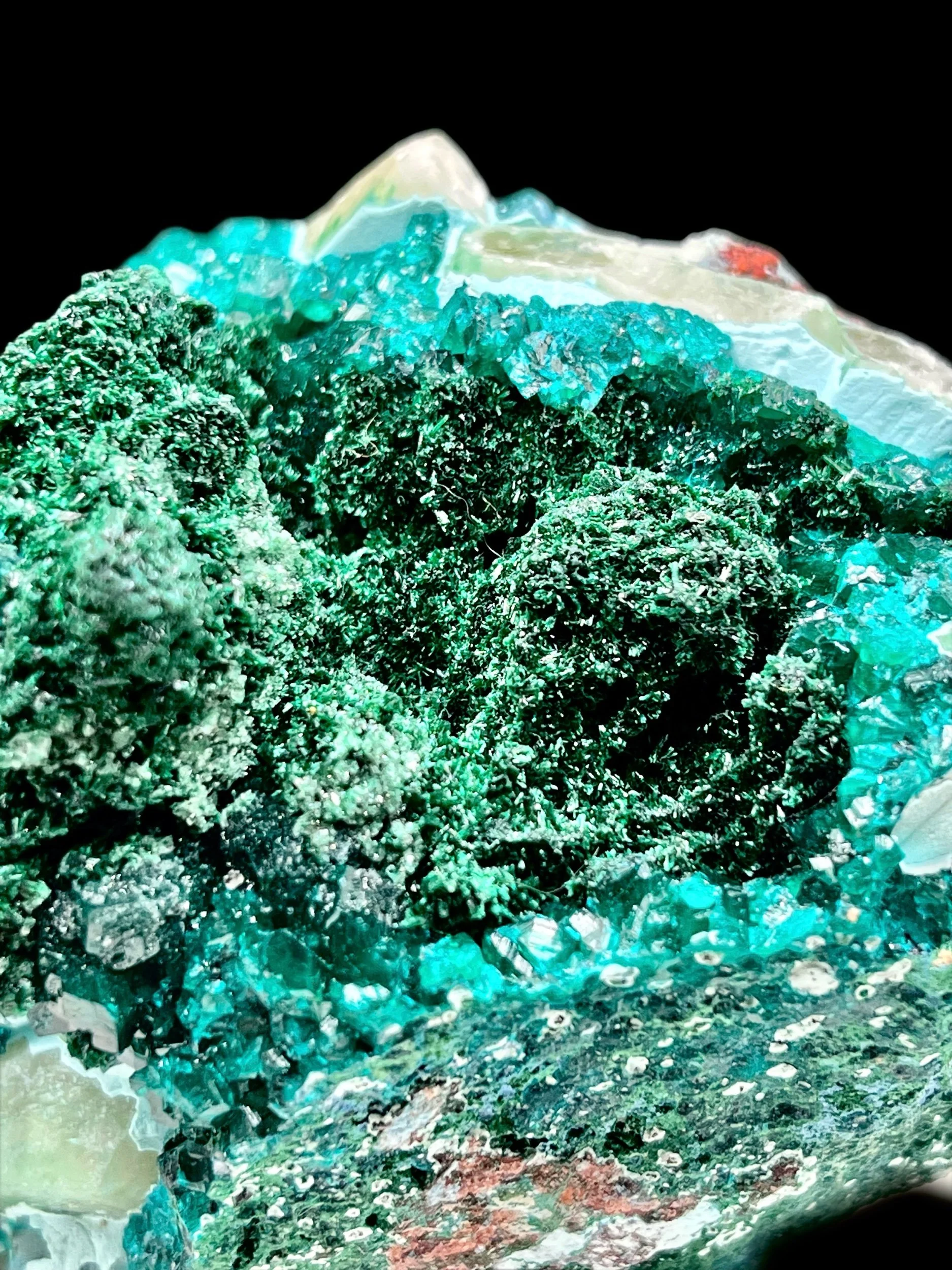
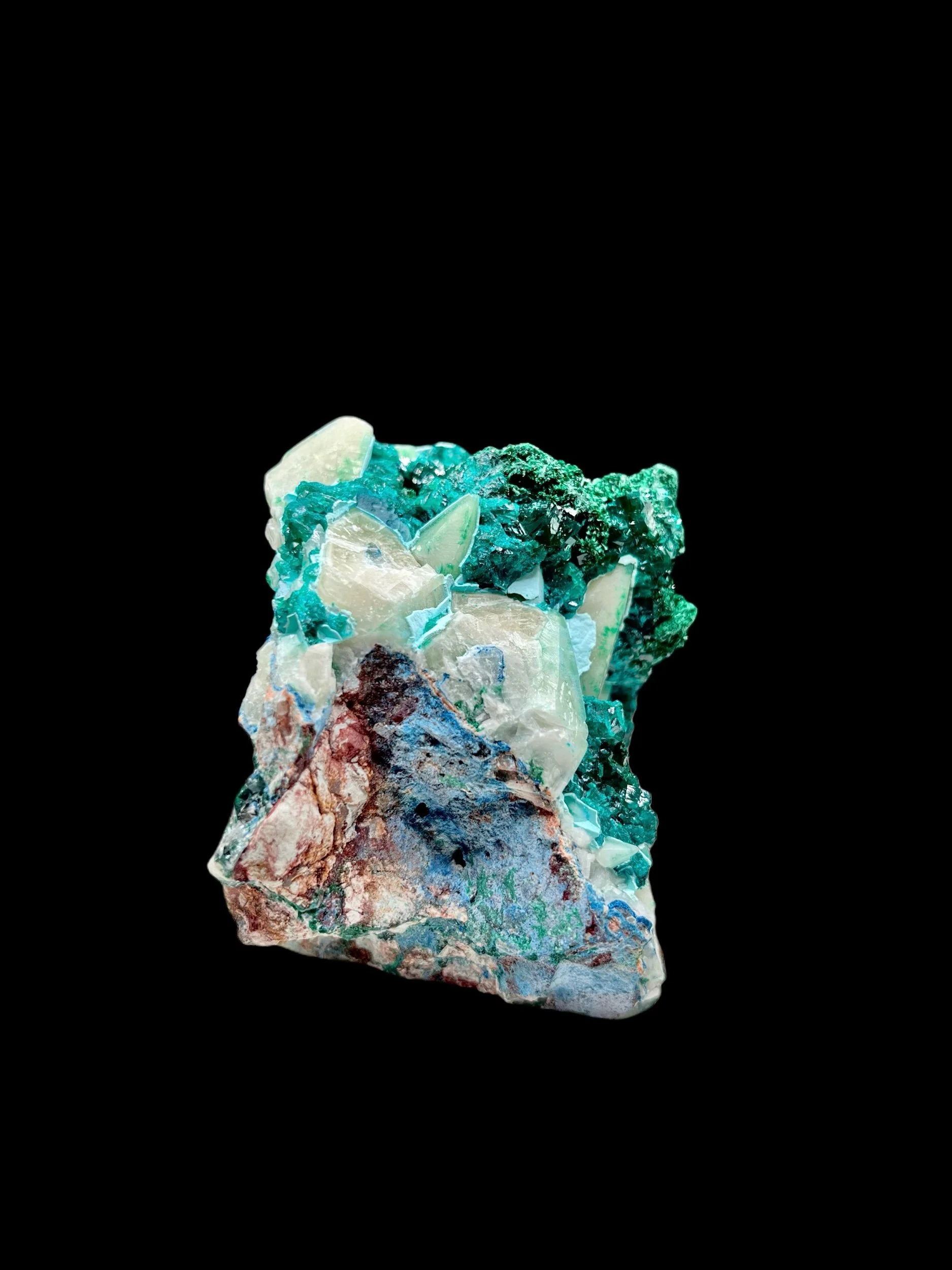
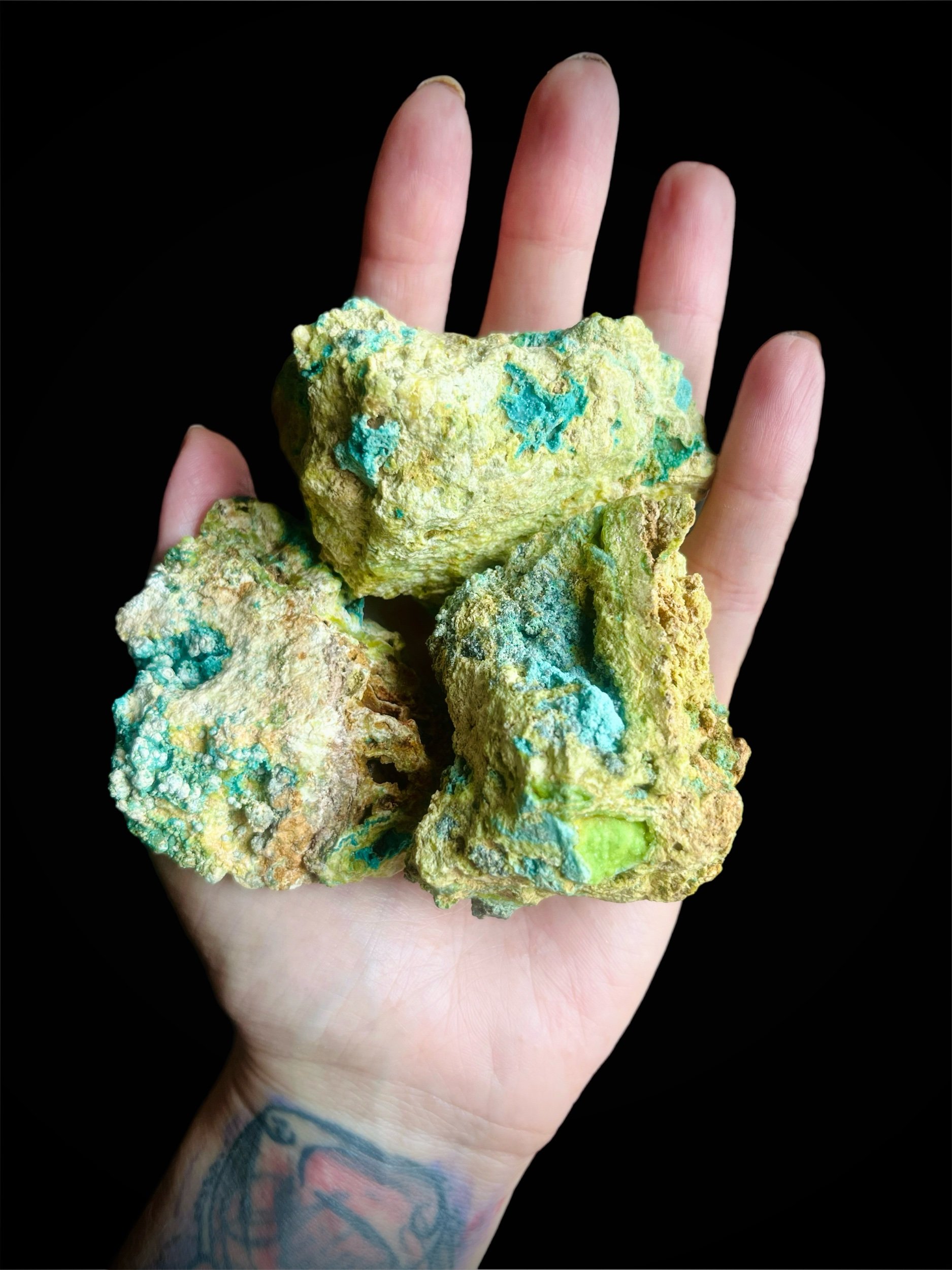
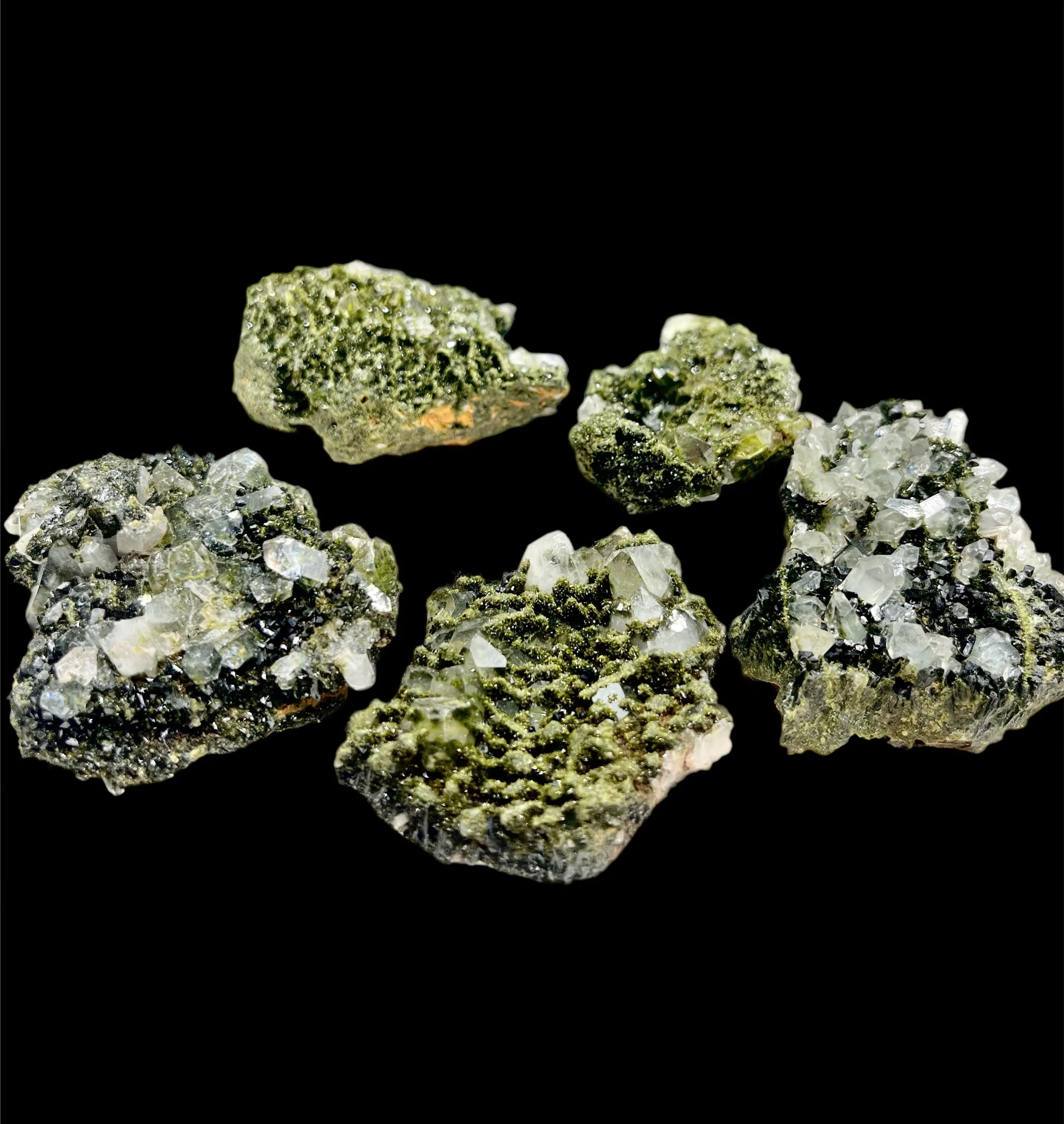
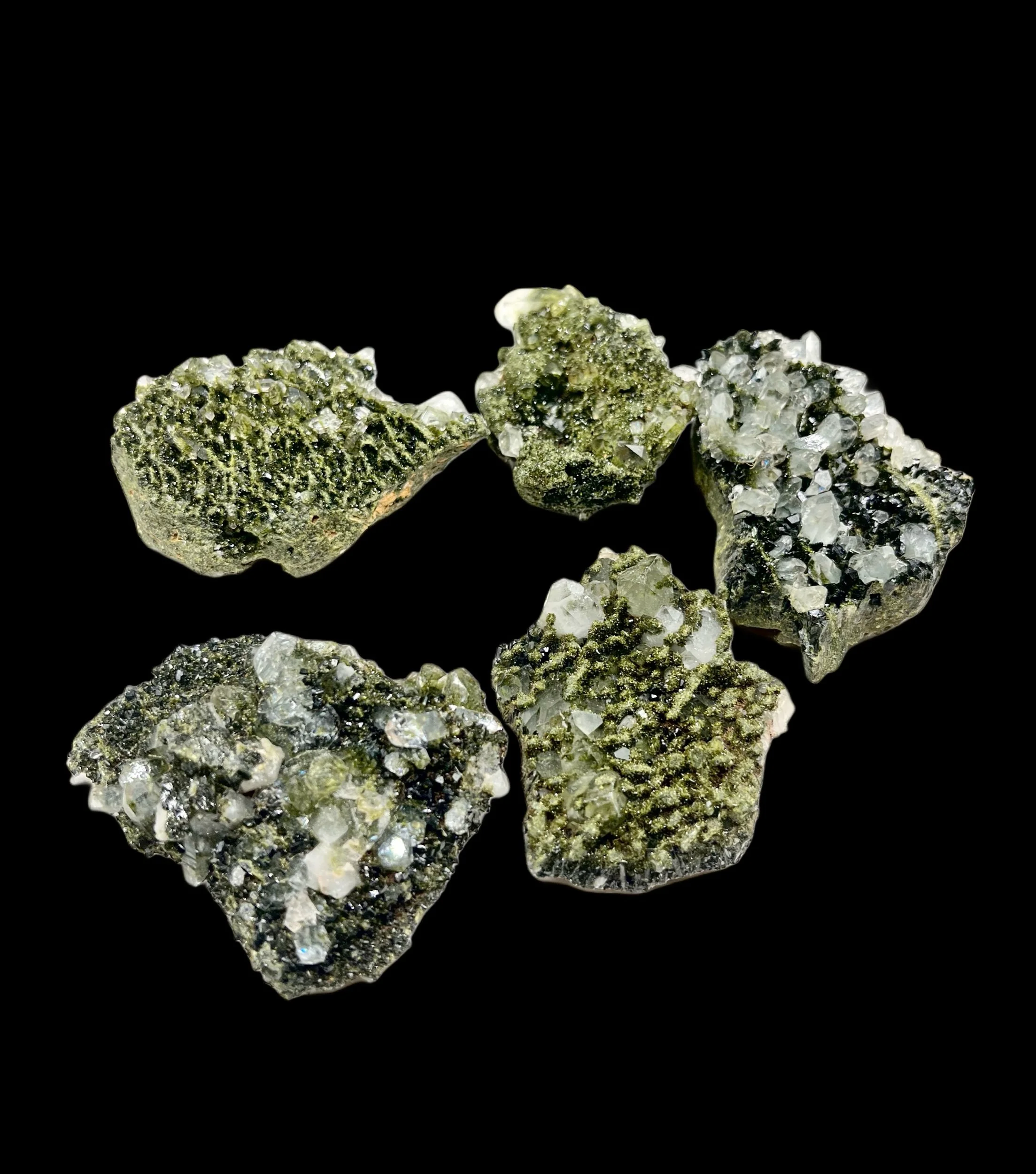
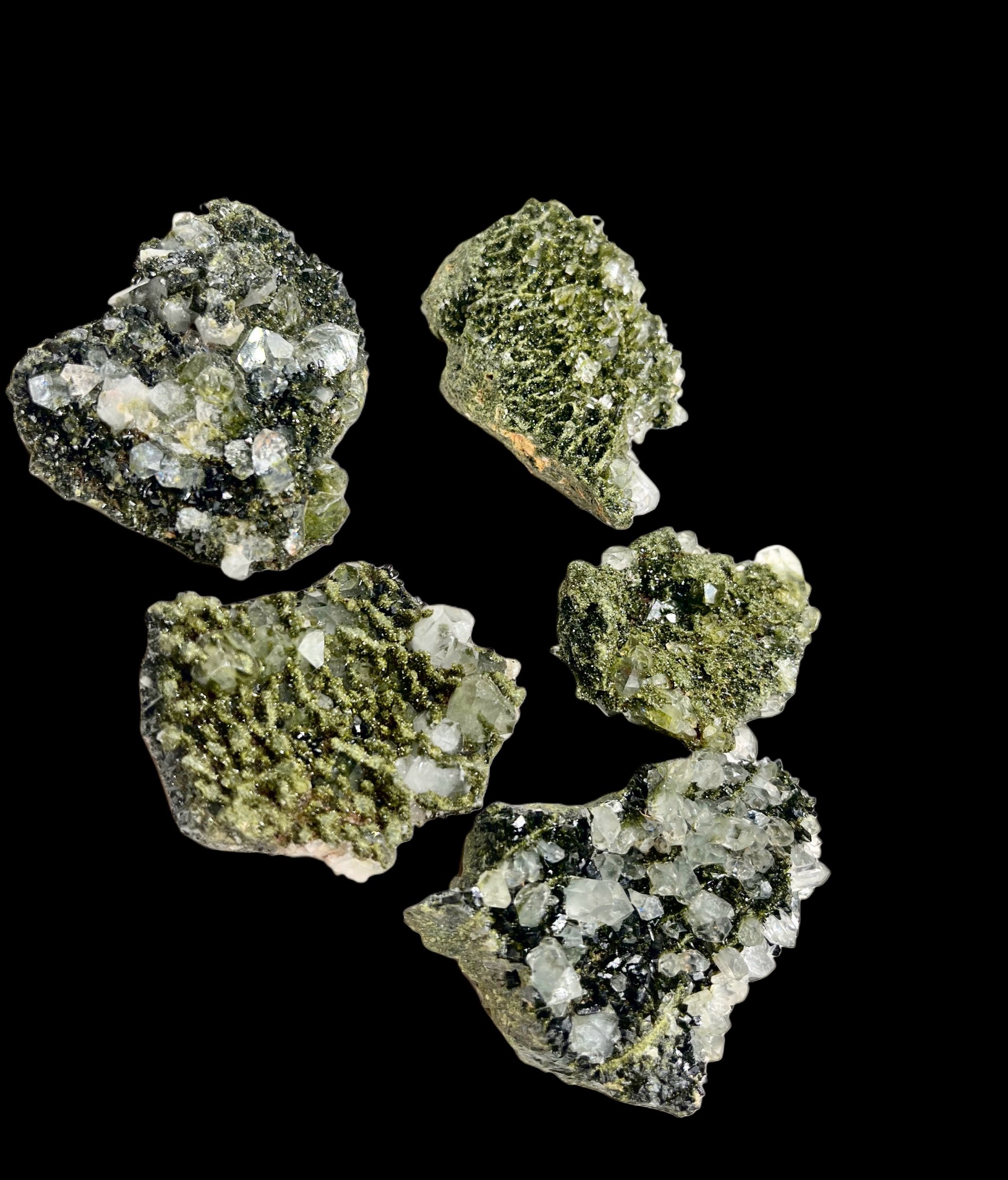
This exceptional and complex specimen presents a vivid assemblage of dioptase and malachite dramatically displayed on sharply formed dog tooth calcite, with additional presence of chrysocolla and shattuckite. The combination of saturated emerald greens, deep teals, and pale crystalline calcite creates an unmistakably high-impact visual experience.
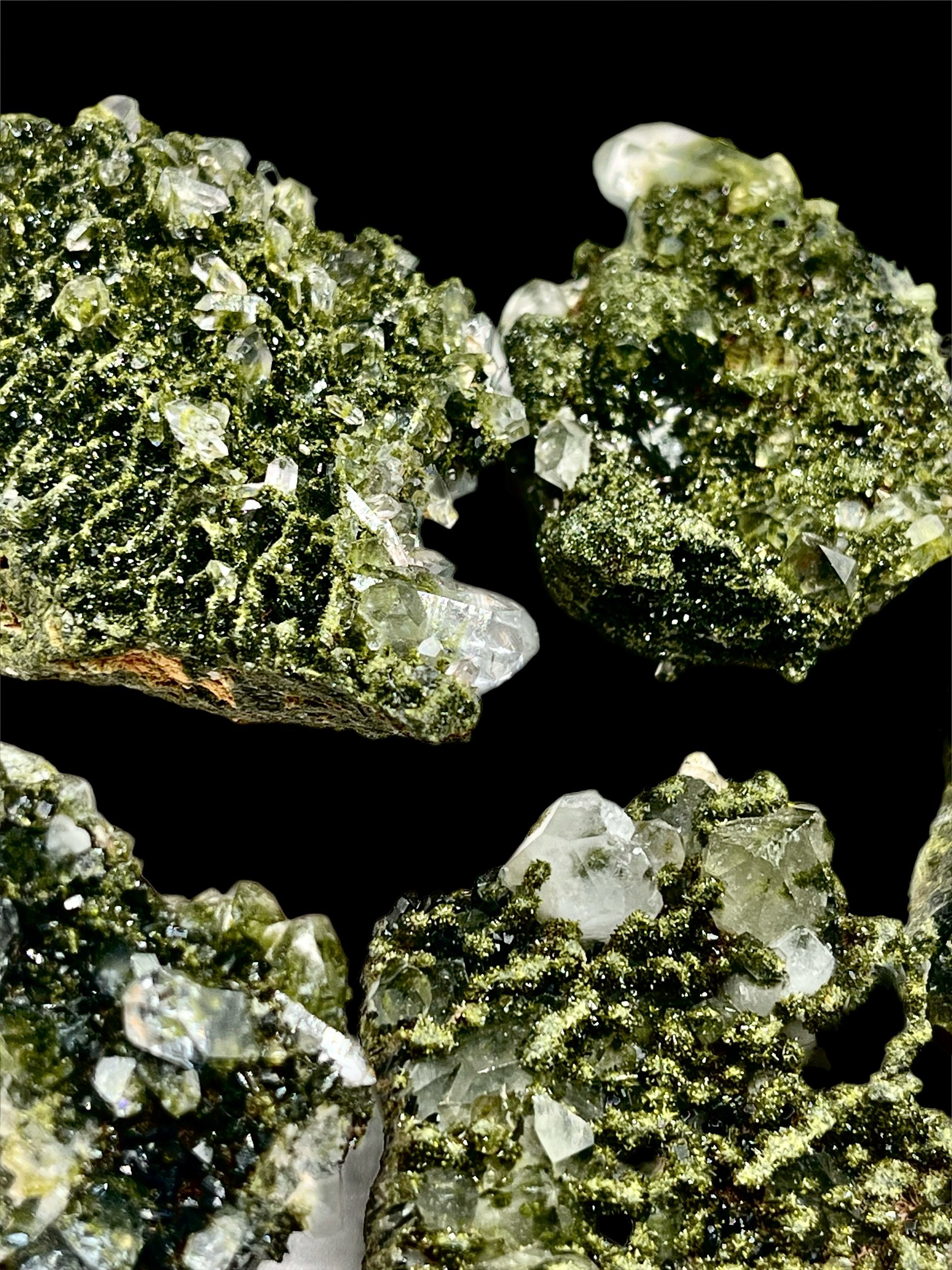
Vivid emerald-green dioptase crystals, shimmering with brilliant luster and depth, rest on textured malachite, lustrous calcite, and vibrant chrysocolla and shattuckite. The interplay between bright, crystalline green and dark, velvety hues creates mesmerizing contrast against the calcite, heightened by striking blues, and inspiring deep wonder.
The calcite crystals provide strong vertical structure, acting as a dramatic stage for the copper minerals that coat and accent the surfaces. This is a specimen that rewards close inspection, revealing layers of color and texture throughout.
Dimensions
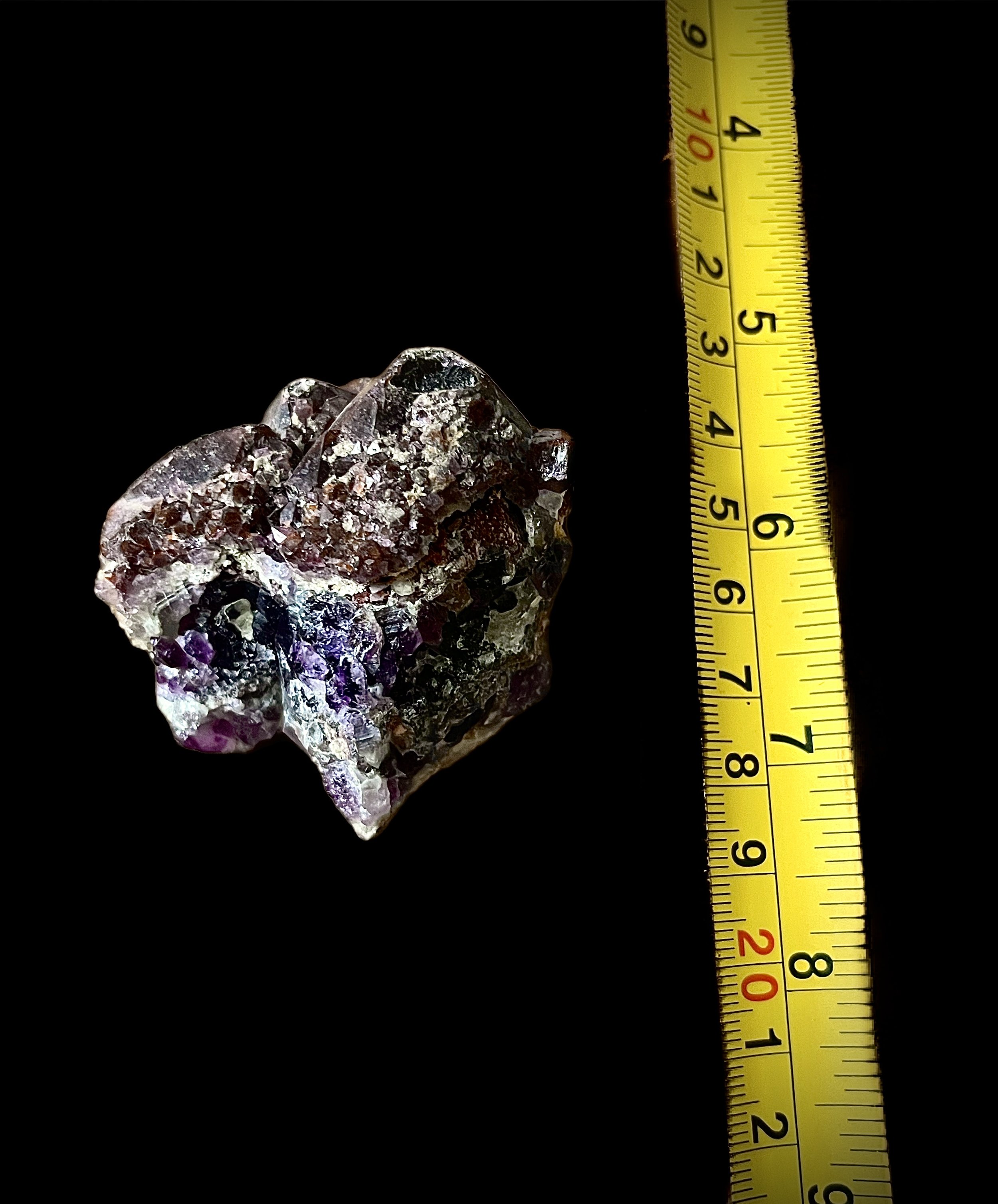
• Dimensions: 3.5”x3”x2.5”
• Weight: 420g
Dioptase is an extremely rare copper cyclosilicate known for its intense emerald-green color and high luster. Malachite, a copper carbonate, commonly forms alongside dioptase in oxidized copper deposits. Chrysocolla and shattuckite add further copper silicate complexity, while dog tooth calcite (CaCO₃) forms scalenohedral crystals that provide contrast and architectural interest.
• Exceptional multi-mineral copper combination
• Strong investment value
• Highly desirable combination for elite collectors
• Brilliant dioptase crystal coverage
• Rich malachite accenting the composition
• Sharp dog tooth calcite crystals
• Presence of chrysocolla and shattuckite
• Museum-quality visual complexity
This is no mere cabinet piece; it’s a commanding specimen that demands attention, elevating any collection and demonstrating true connoisseurship. Every crystal’s meticulous placement highlights nature’s artistry of balance and proportion, igniting the spirit.
This exceptional and complex specimen presents a vivid assemblage of dioptase and malachite dramatically displayed on sharply formed dog tooth calcite, with additional presence of chrysocolla and shattuckite. The combination of saturated emerald greens, deep teals, and pale crystalline calcite creates an unmistakably high-impact visual experience.
Vivid emerald-green dioptase crystals, shimmering with brilliant luster and depth, rest on textured malachite, lustrous calcite, and vibrant chrysocolla and shattuckite. The interplay between bright, crystalline green and dark, velvety hues creates mesmerizing contrast against the calcite, heightened by striking blues, and inspiring deep wonder.
The calcite crystals provide strong vertical structure, acting as a dramatic stage for the copper minerals that coat and accent the surfaces. This is a specimen that rewards close inspection, revealing layers of color and texture throughout.
Dimensions
• Dimensions: 3.5”x3”x2.5”
• Weight: 420g
Dioptase is an extremely rare copper cyclosilicate known for its intense emerald-green color and high luster. Malachite, a copper carbonate, commonly forms alongside dioptase in oxidized copper deposits. Chrysocolla and shattuckite add further copper silicate complexity, while dog tooth calcite (CaCO₃) forms scalenohedral crystals that provide contrast and architectural interest.
• Exceptional multi-mineral copper combination
• Strong investment value
• Highly desirable combination for elite collectors
• Brilliant dioptase crystal coverage
• Rich malachite accenting the composition
• Sharp dog tooth calcite crystals
• Presence of chrysocolla and shattuckite
• Museum-quality visual complexity