 Image 1 of 4
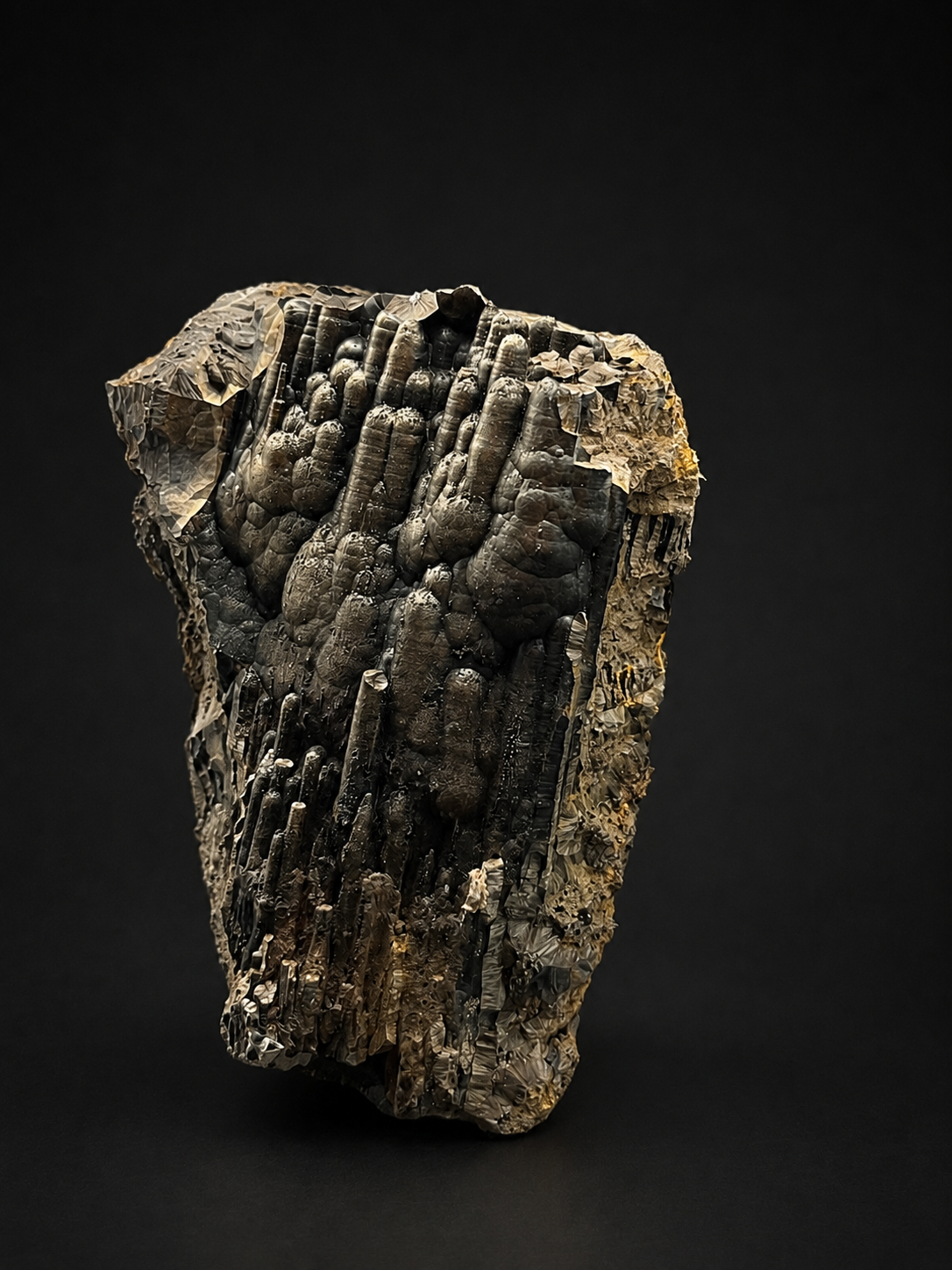 Image 2 of 4
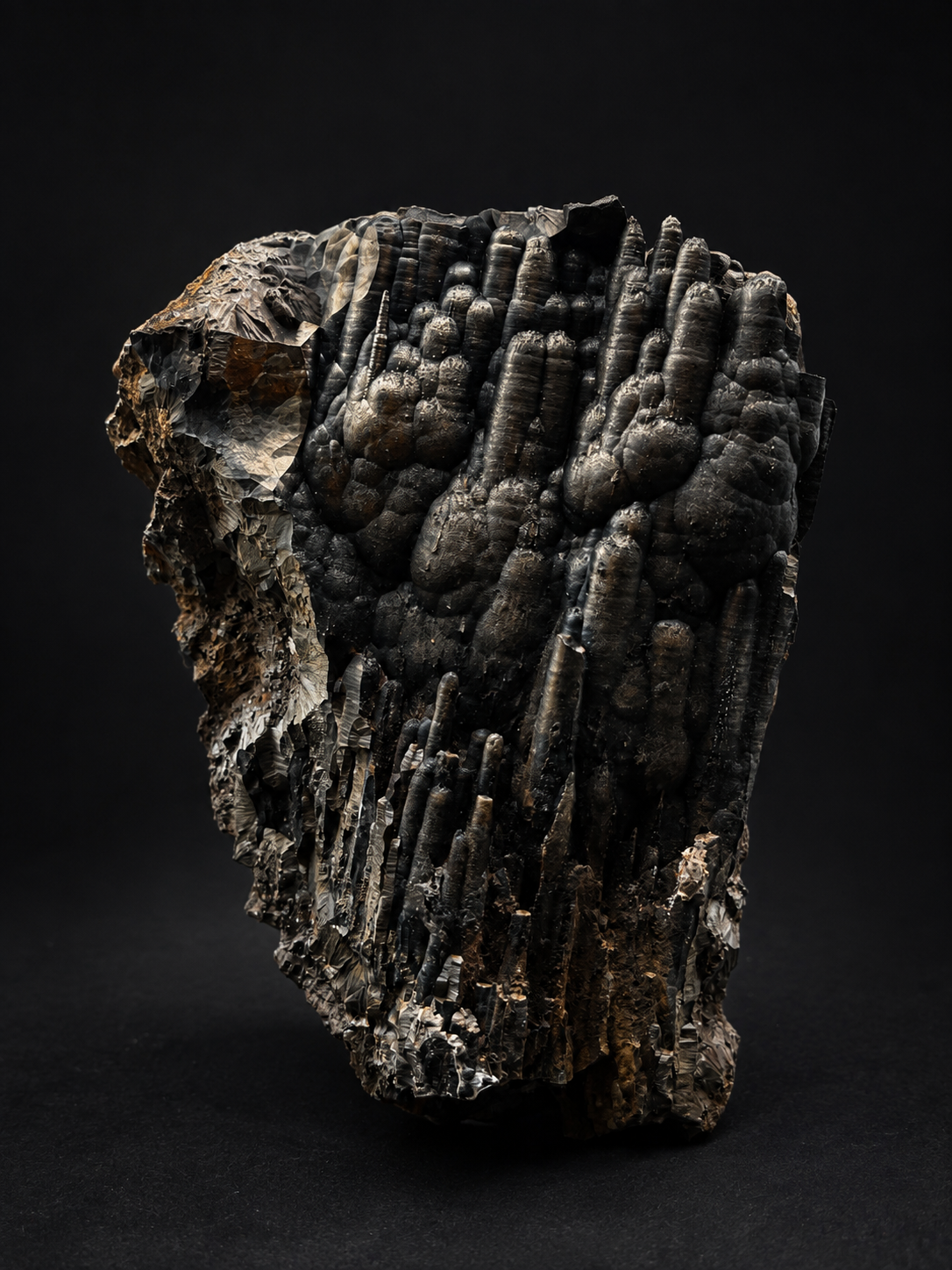 Image 3 of 4
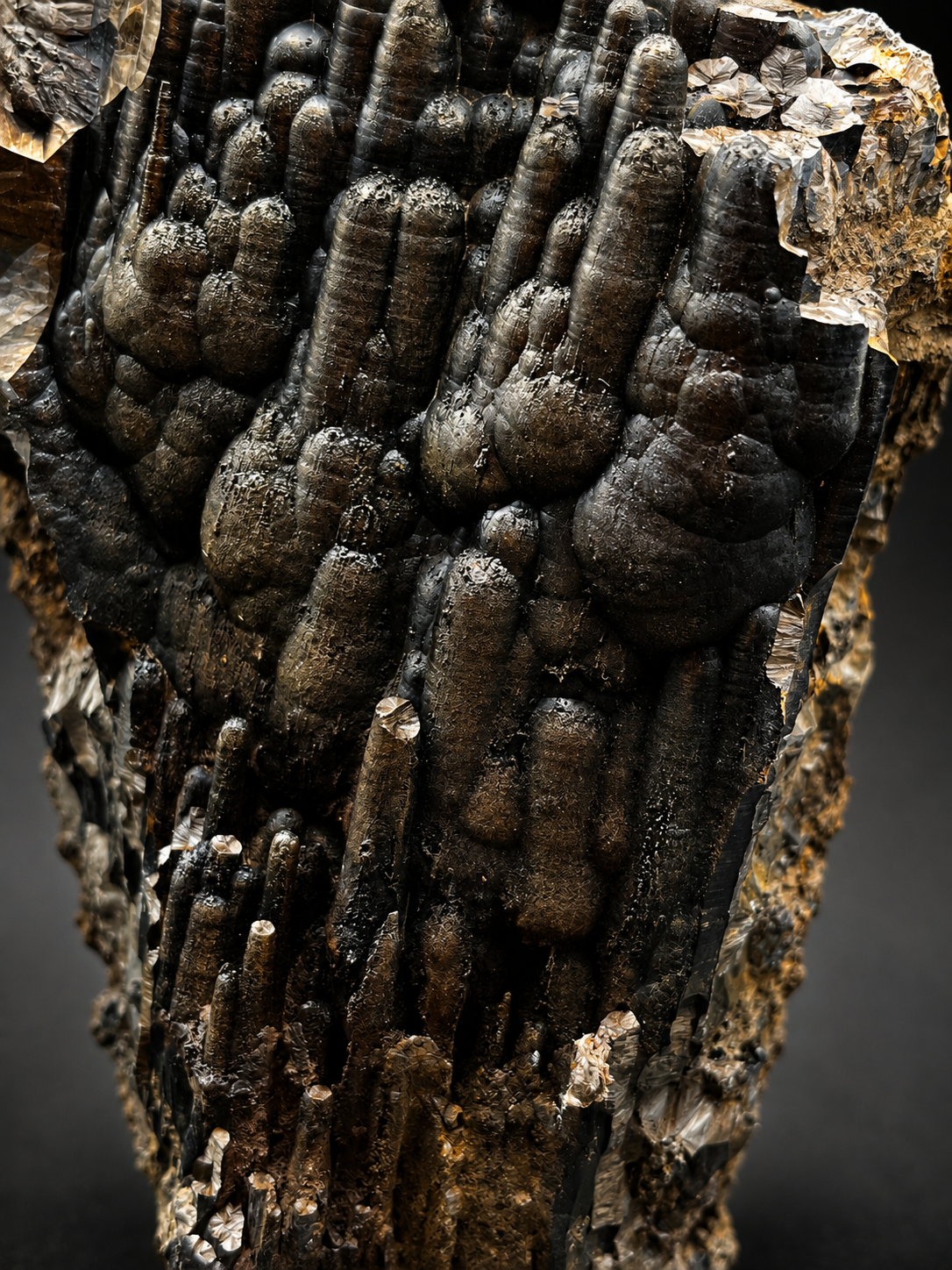 Image 4 of 4
Kayseri Province, Turkey
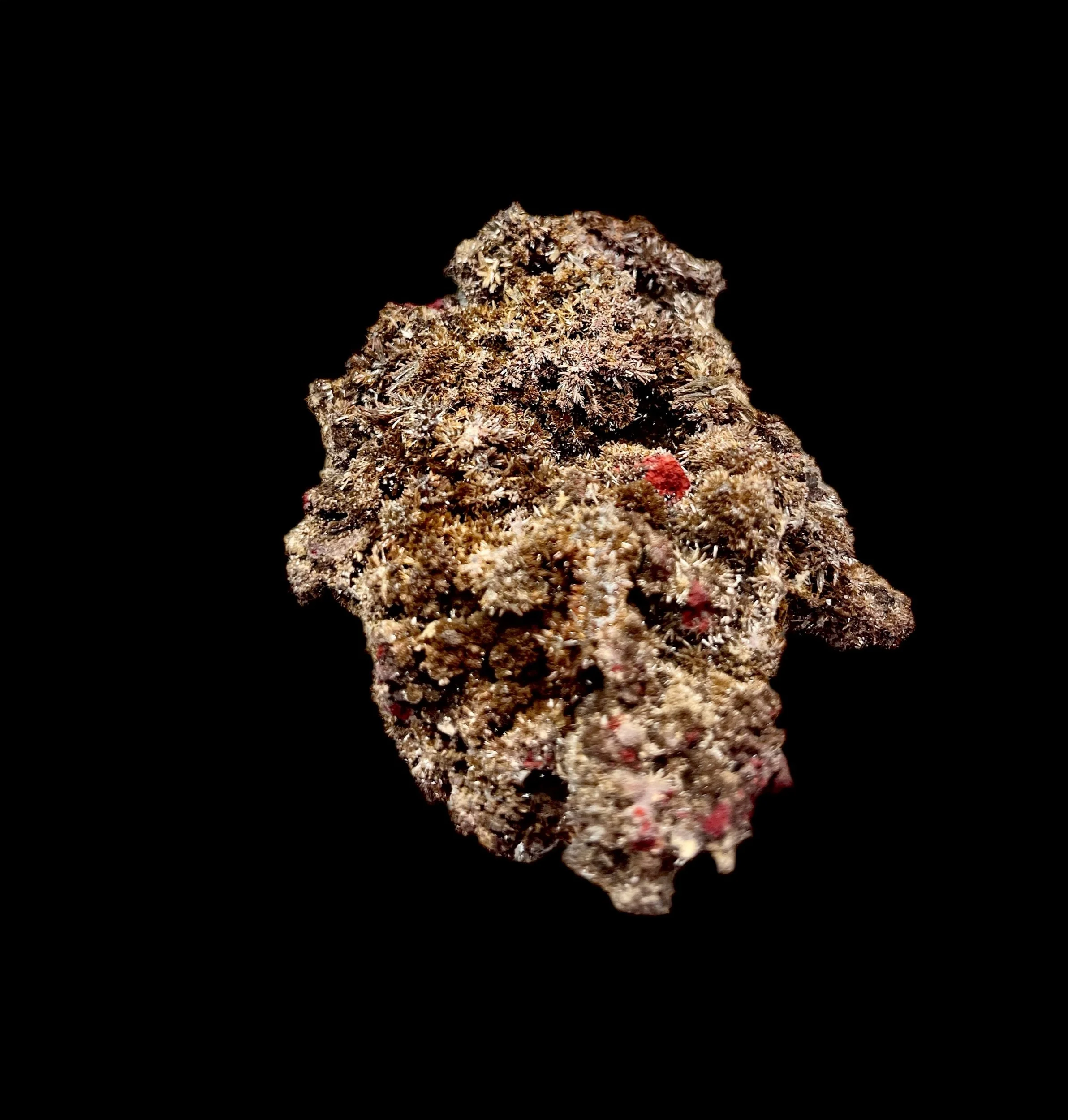
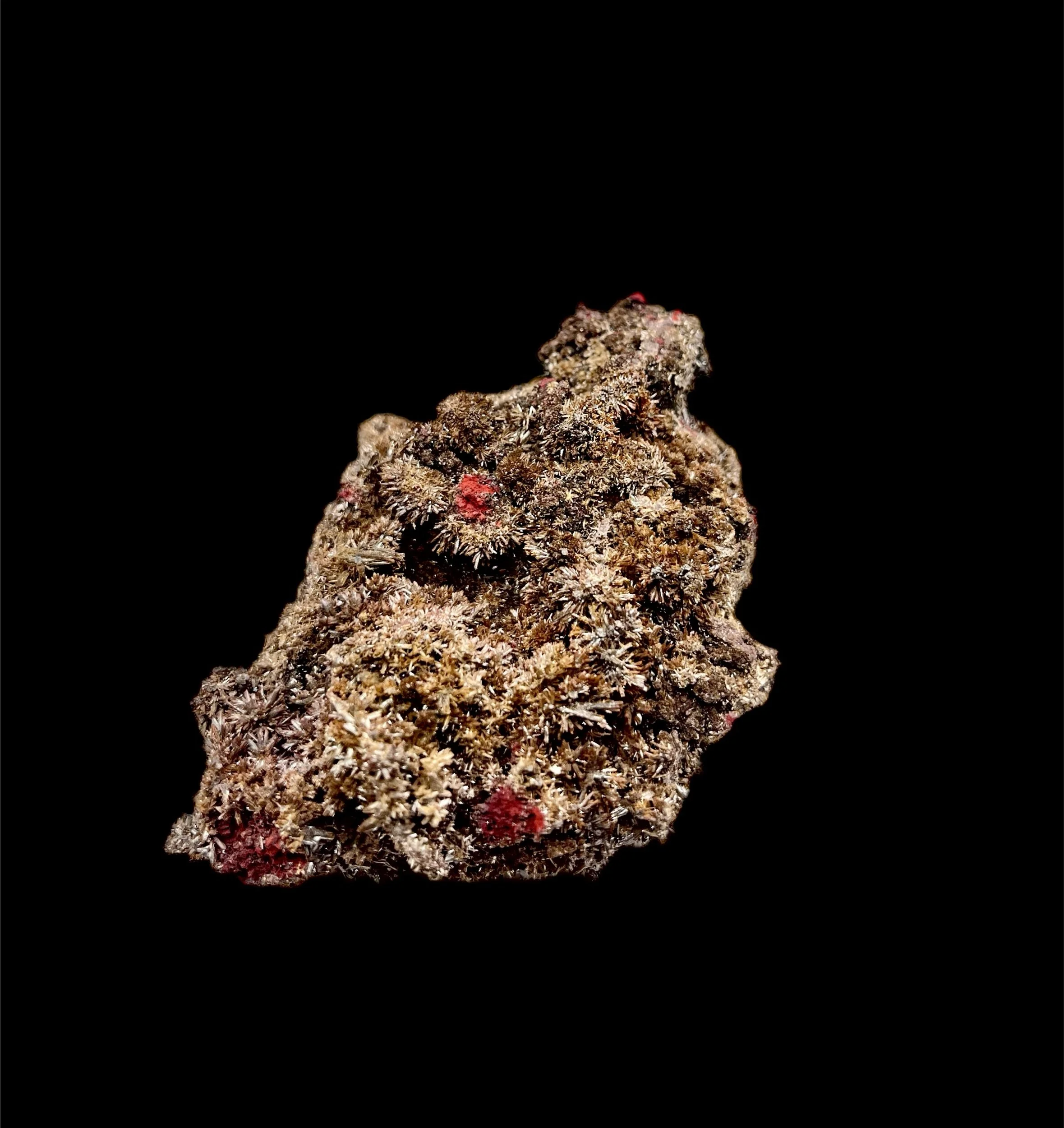
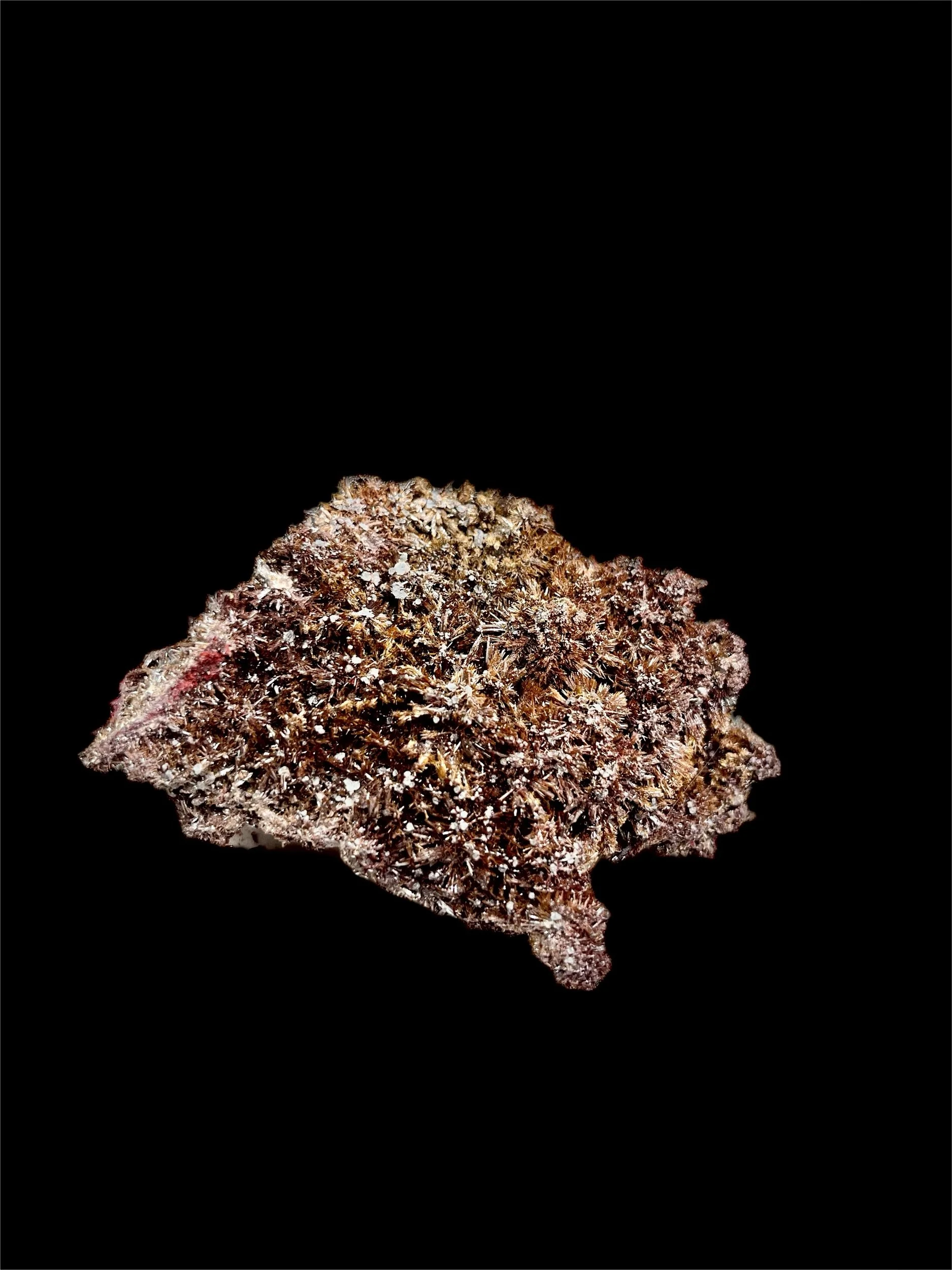
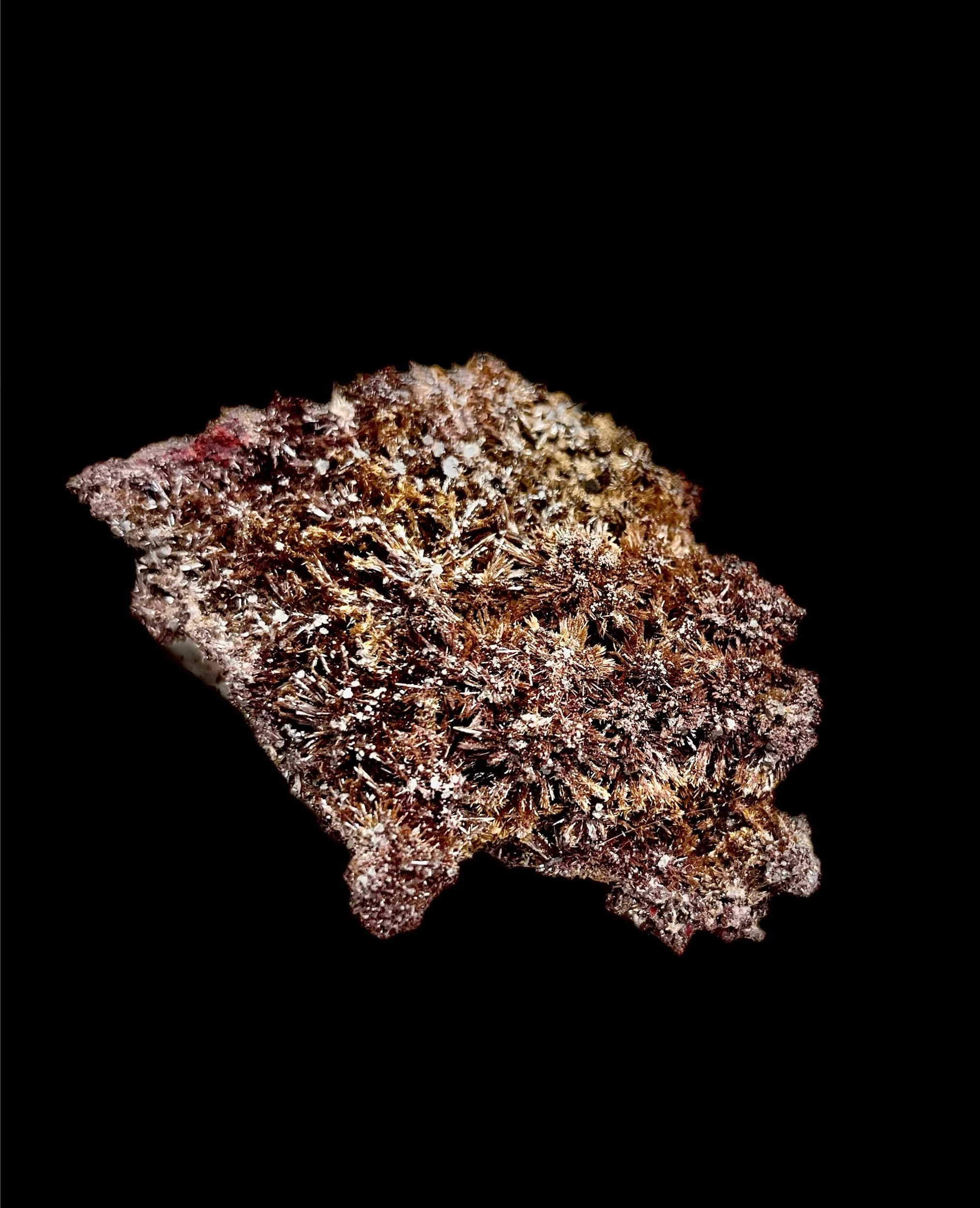
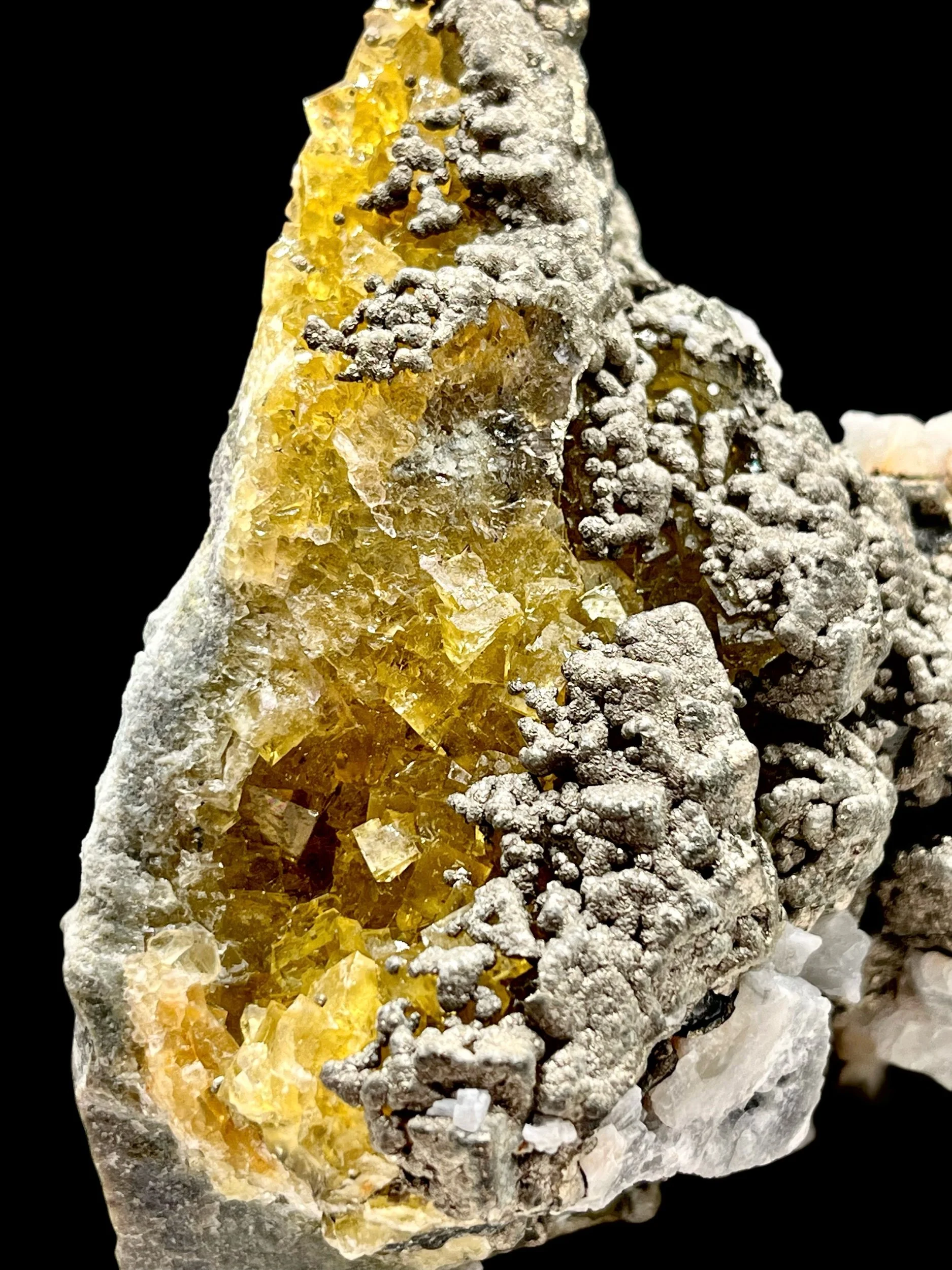
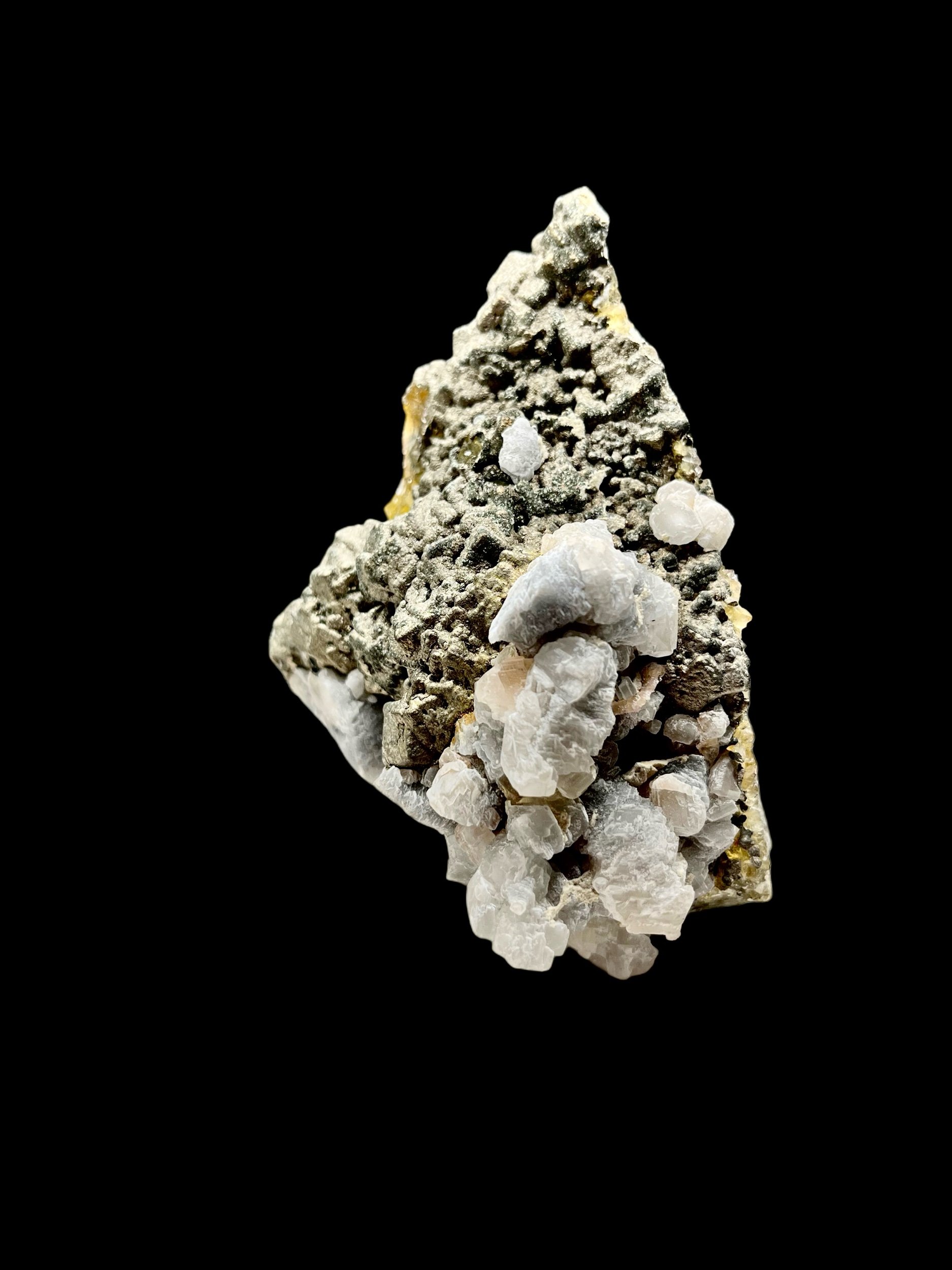
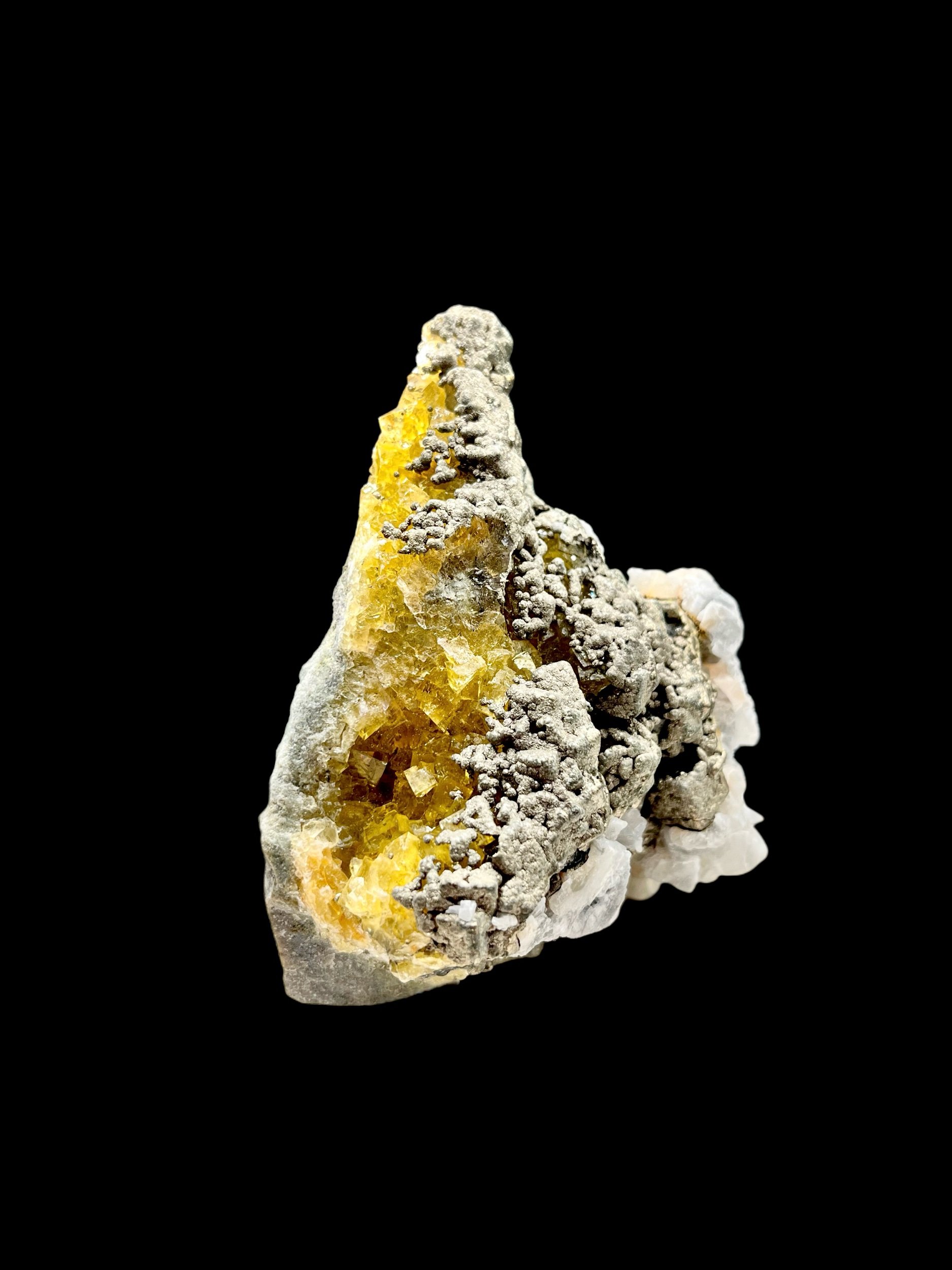
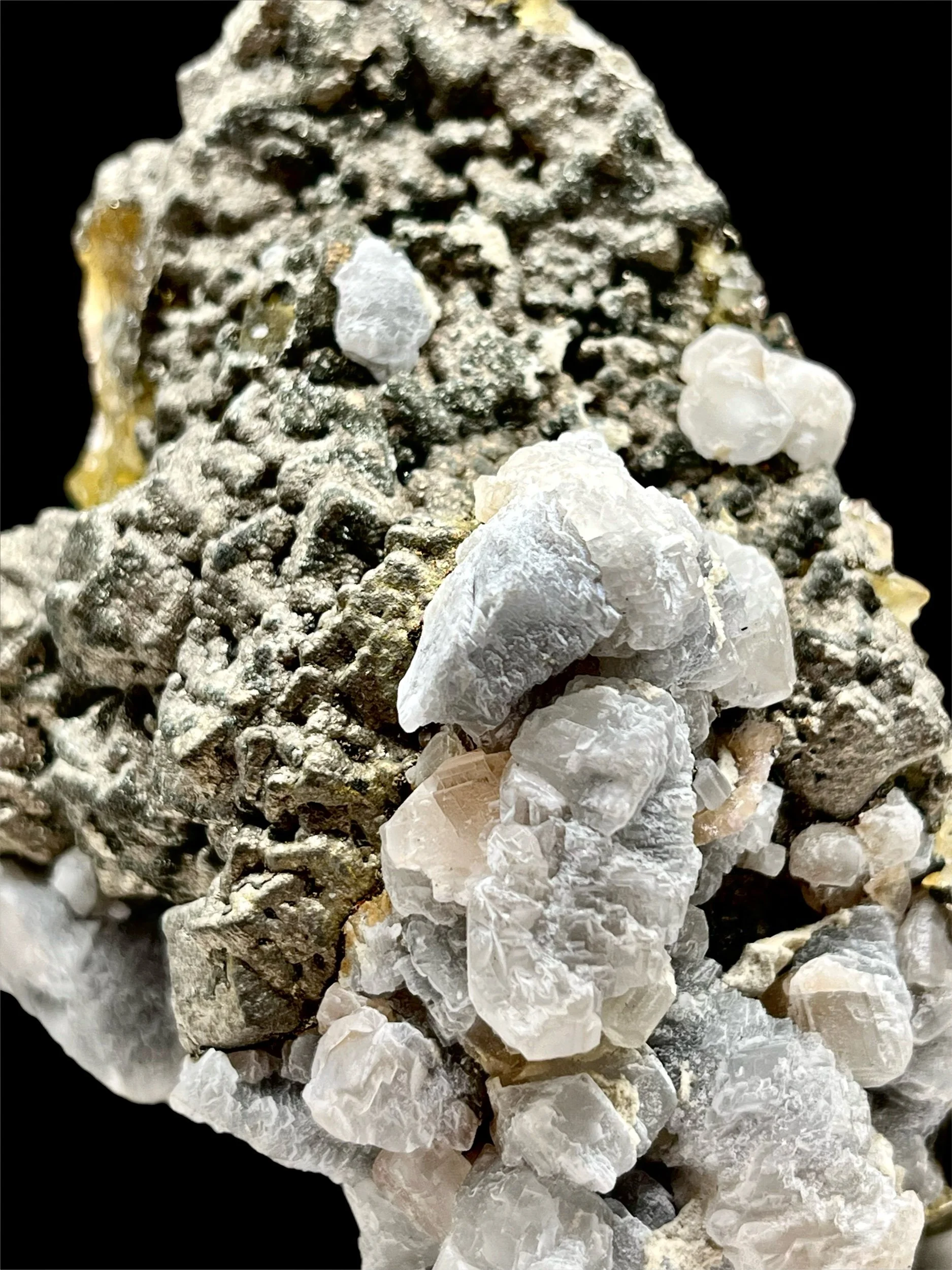
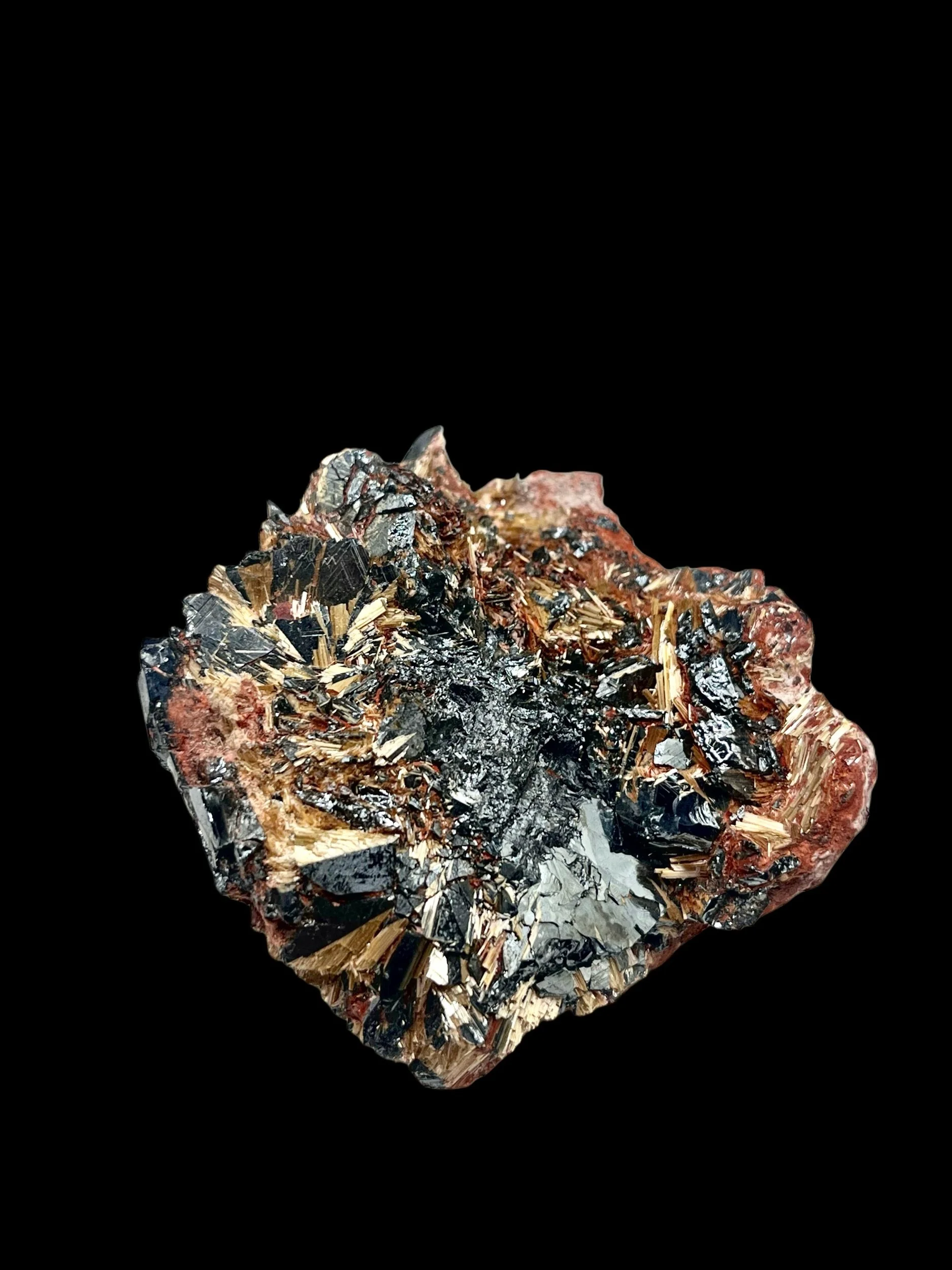
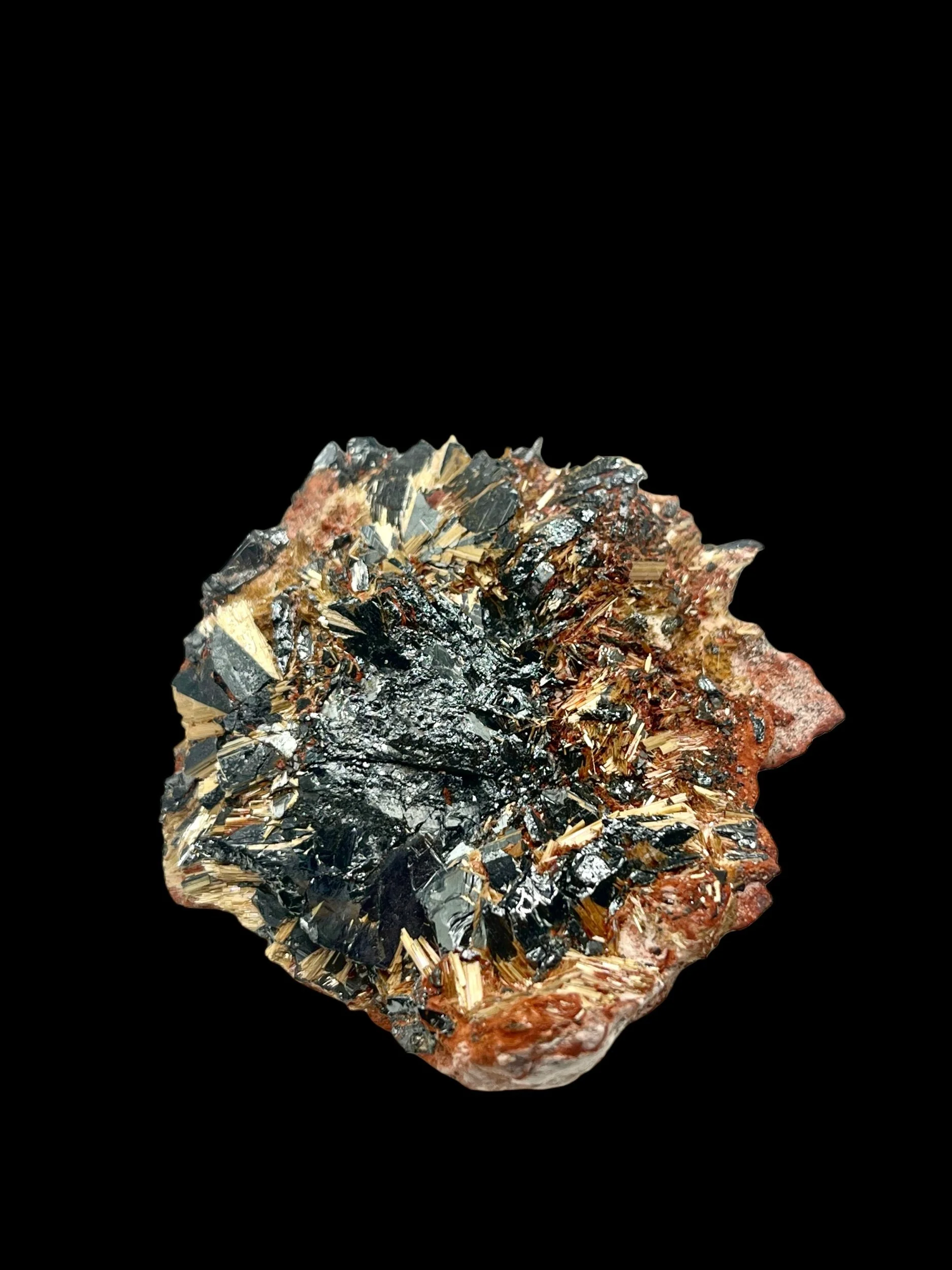
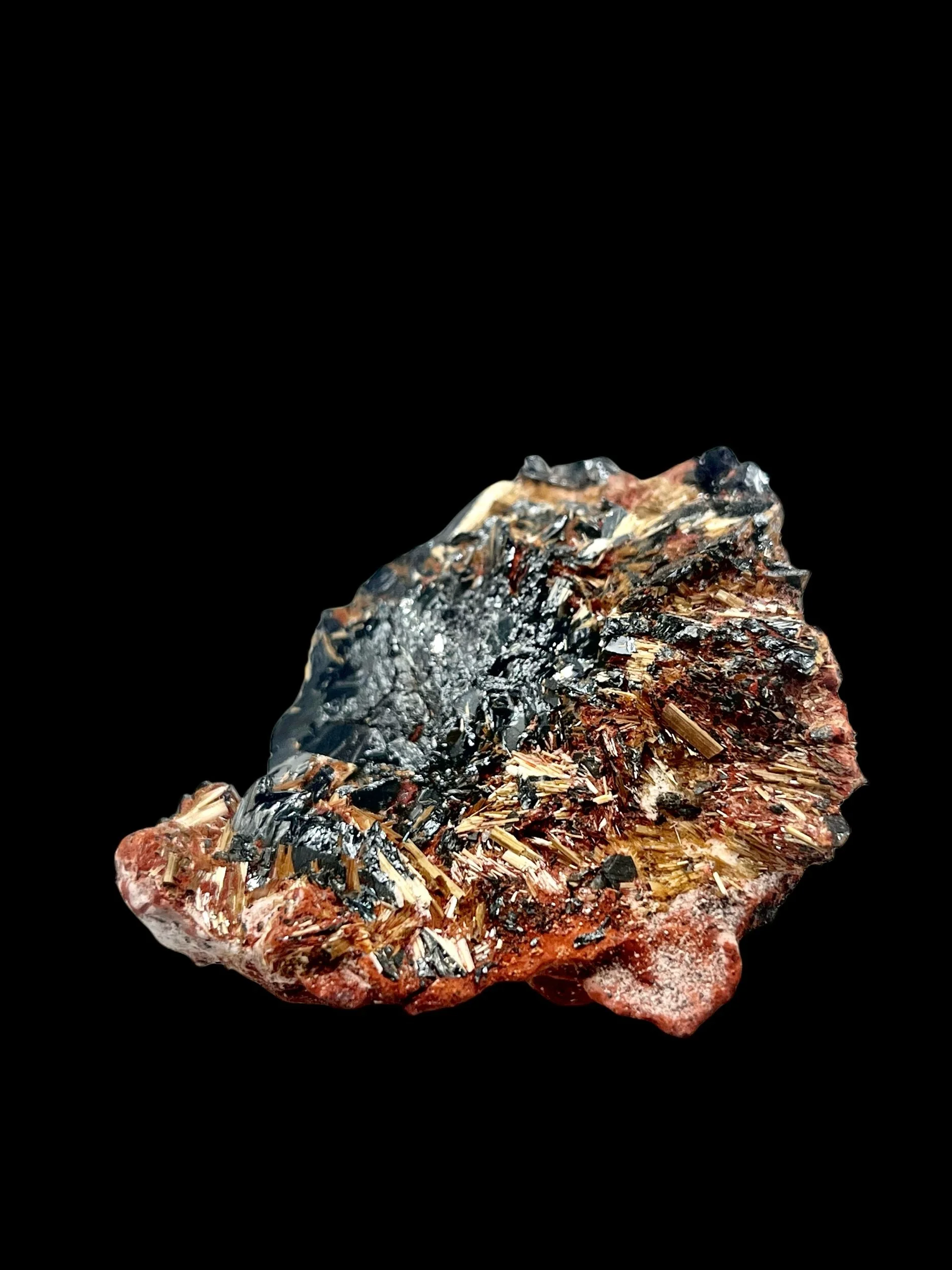
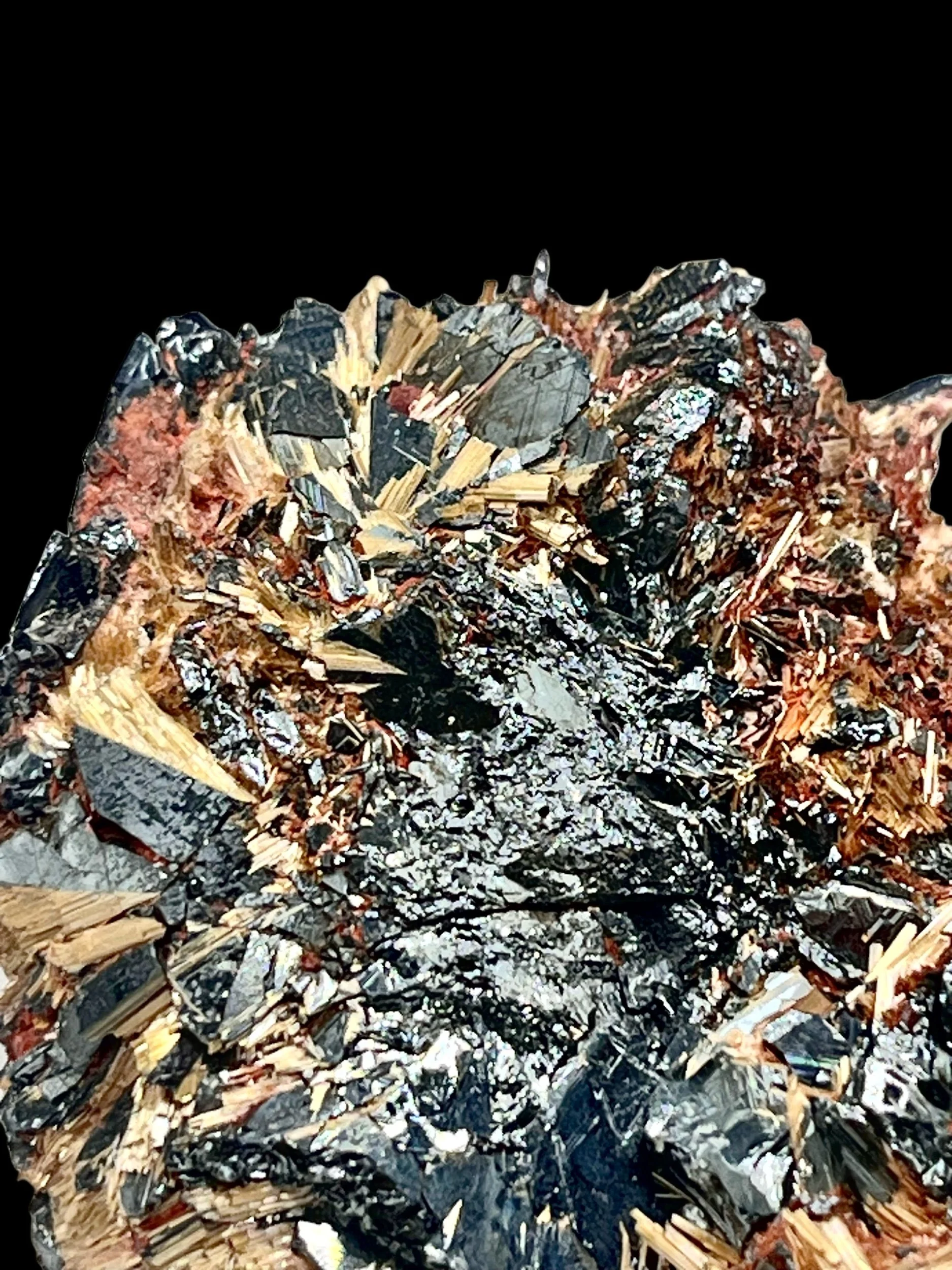
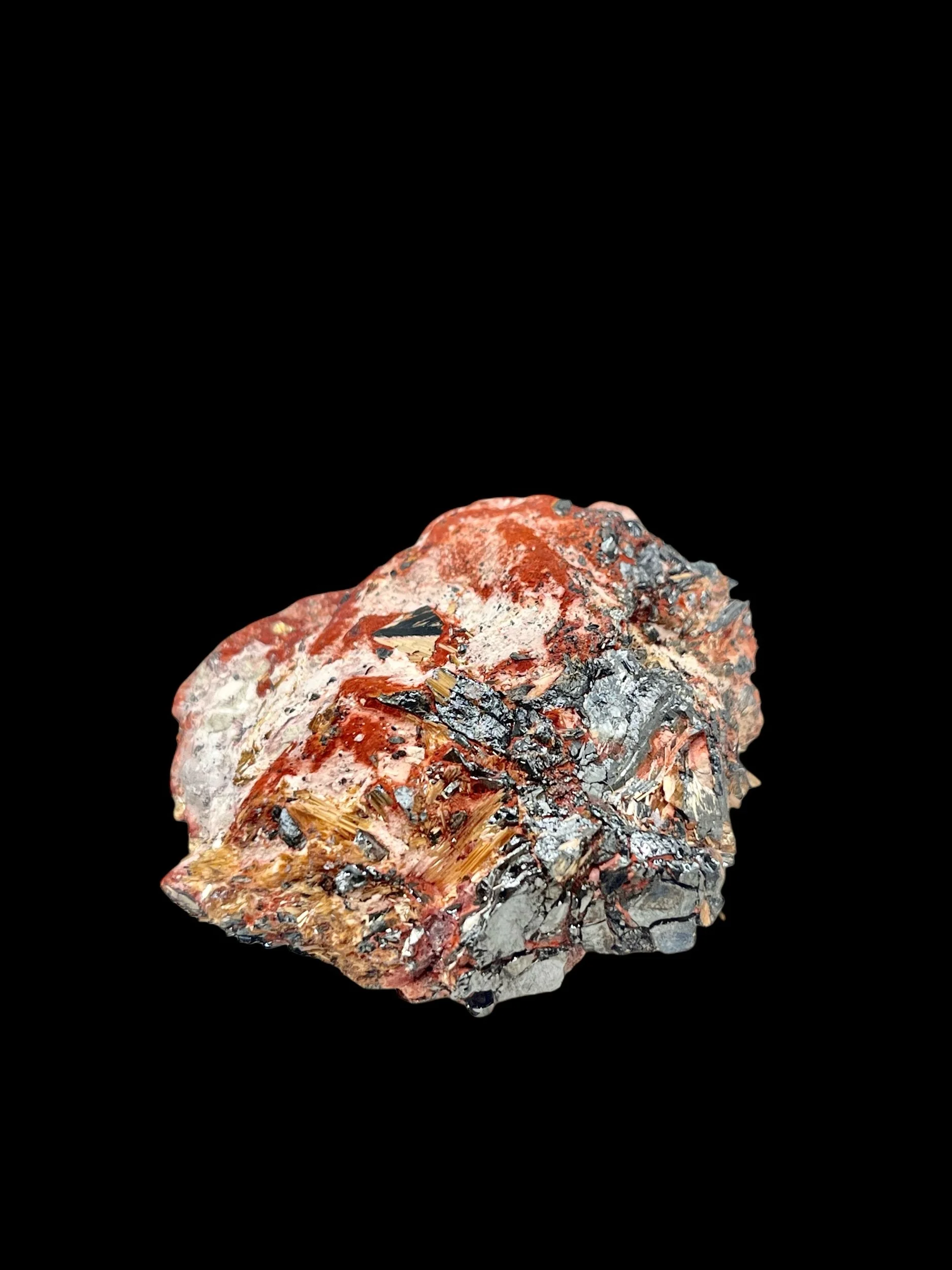
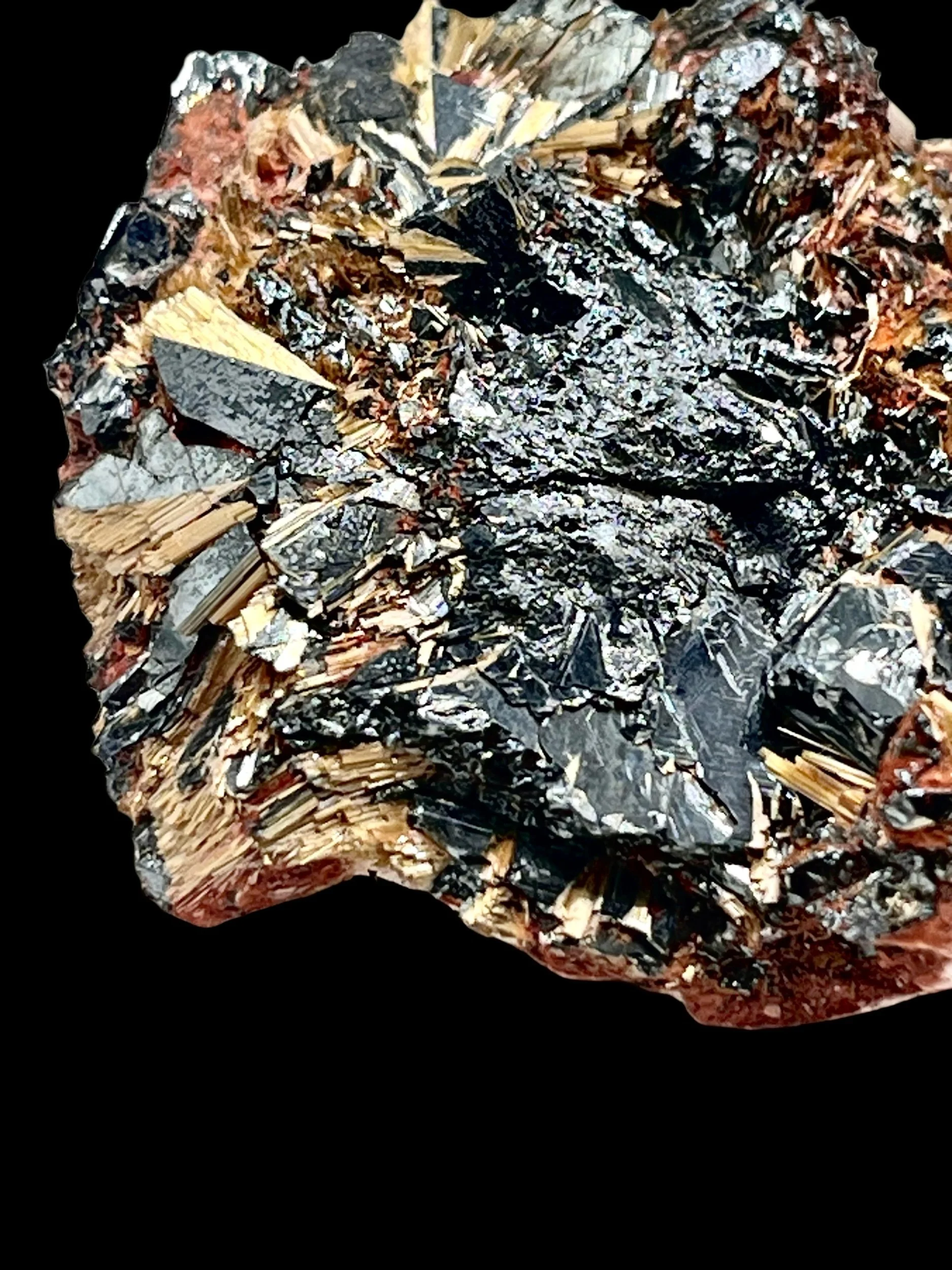
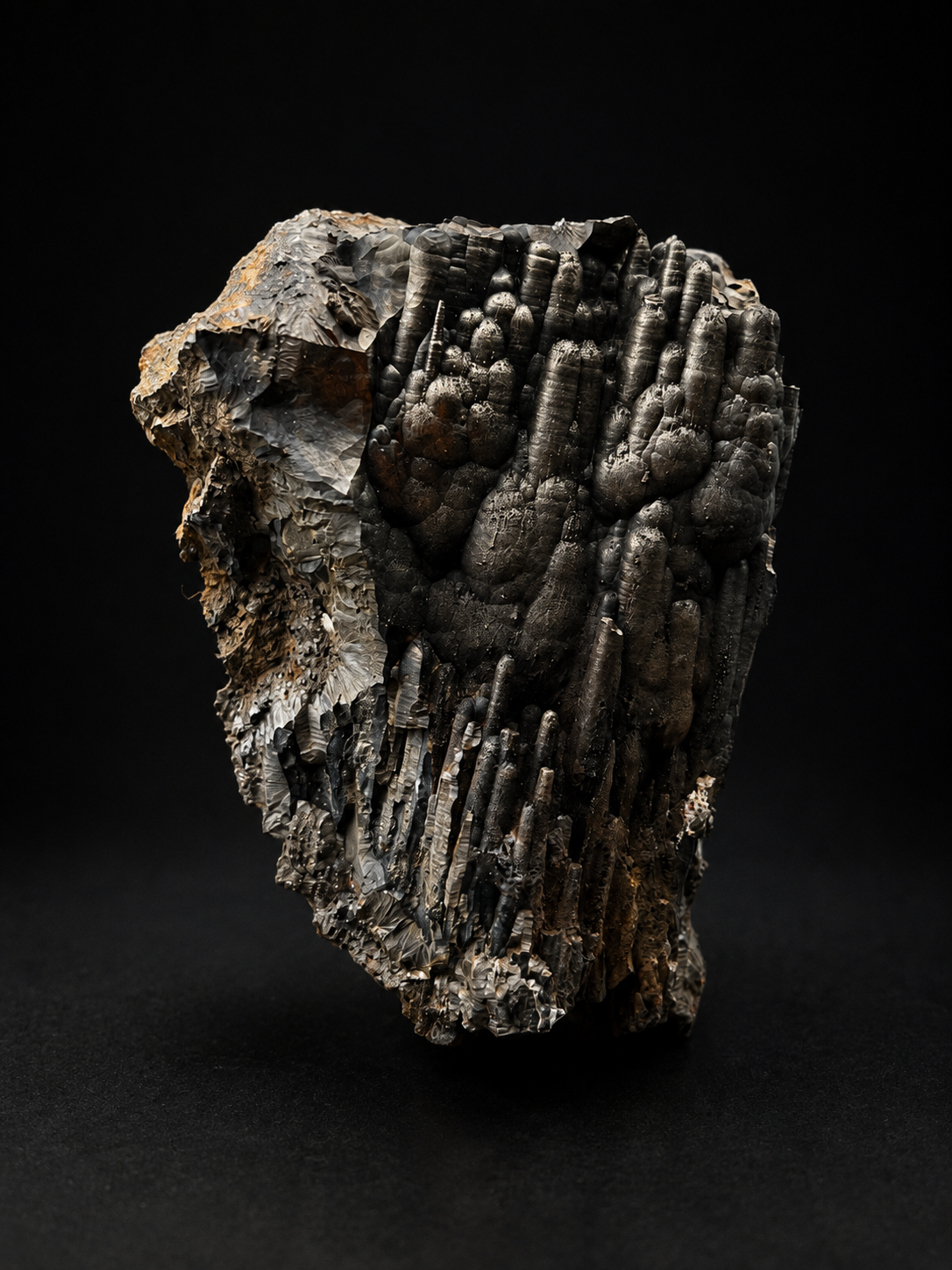
This substantial Golden Hematite specimen from Kayseri Province, Turkey is dominated by extraordinary three-dimensional botryoidal and stalactitic growth. Rounded masses rise into elongated, finger-like columns across the display face, giving the specimen an almost otherworldly appearance.
Its coloration ranges from deep charcoal-black and gunmetal gray to warm bronze and golden metallic highlights that become especially apparent as the piece is moved through the light. The combination of rounded botryoidal surfaces and taller columnar formations creates exceptional depth, while naturally fractured areas expose the layered internal structure of the hematite.
At more than three pounds, this is an imposing display specimen with the size, sculptural form, and unusual surface texture to command attention in a collection.
Dimensions: 4.5" × 4" × 2"
Weight: 1,427 g / approximately 3.15 lbs
Locality: Kayseri Province, Turkey
Hematite is traditionally associated with grounding, protection, stability, courage, confidence, and mental focus. It is often used by collectors who enjoy grounding stones or minerals associated with feeling centered and connected to the physical world.
Metaphysical properties are based on spiritual traditions and are not scientifically proven.
Kayseri Province is in central Anatolia, in the larger historical area known as Cappadocia. People have lived in this region for thousands of years and it was an important center for ancient trade.
One of the most well-known archaeological sites in the province is Kültepe, also called ancient Kanesh. During the Bronze Age, it was a major trading hub for the Assyrians. Many clay tablets have been found there, showing details of business deals, contracts, letters, and other everyday records. These discoveries give historians a rare and detailed look into how people managed business and trade nearly 4,000 years ago.
Kayseri also has a long history of rich iron mineral deposits, including hematite and other iron-rich minerals. The area's interesting geology has created some beautiful ironstone formations, like the stalactite and botryoidal shapes seen in this piece.
The "golden" appearance of specimens like this is a surface characteristic rather than a separate variety of hematite, with the metallic surfaces reflecting warm bronze-to-gold tones under light.
One of hematite's most entertaining geological tricks is that its appearance can be deceptive: even specimens that look black, silver, bronze, or metallic gold typically produce hematite's characteristic reddish-brown streak. That red coloration is also the origin of the mineral's name, derived from a Greek word associated with blood.
The elongated structures on this specimen are an especially striking expression of stalactitic hematite growth, while the swollen, rounded areas display classic botryoidal morphology.
Exceptional stalactitic growth with numerous elongated, finger-like hematite formations
Dramatic botryoidal development, with rounded masses merging into taller columns
Naturally occurring golden-bronze metallic highlights over deep charcoal and gunmetal surfaces
Metallic luster
Highly sculptural, three-dimensional display face with considerable depth and texture
Broken edges reveal fascinating layered internal growth structures
Impressive 1,427-gram size,
Excellent contrast between smooth rounded formations, ribbed columns, metallic surfaces, and rugged matrix
Mineral: Hematite
Formula: Fe₂O₃
Mineral Class: Oxide
Crystal System: Trigonal
Hardness: approximately 5.5–6.5 Mohs
Luster: Metallic to submetallic or earthy
Streak: Reddish brown
Typical Habits: Botryoidal, stalactitic, massive, tabular, and crystalline
Primary Element: Iron
Kayseri Province, Turkey
This substantial Golden Hematite specimen from Kayseri Province, Turkey is dominated by extraordinary three-dimensional botryoidal and stalactitic growth. Rounded masses rise into elongated, finger-like columns across the display face, giving the specimen an almost otherworldly appearance.
Its coloration ranges from deep charcoal-black and gunmetal gray to warm bronze and golden metallic highlights that become especially apparent as the piece is moved through the light. The combination of rounded botryoidal surfaces and taller columnar formations creates exceptional depth, while naturally fractured areas expose the layered internal structure of the hematite.
At more than three pounds, this is an imposing display specimen with the size, sculptural form, and unusual surface texture to command attention in a collection.
Dimensions: 4.5" × 4" × 2"
Weight: 1,427 g / approximately 3.15 lbs
Locality: Kayseri Province, Turkey
Hematite is traditionally associated with grounding, protection, stability, courage, confidence, and mental focus. It is often used by collectors who enjoy grounding stones or minerals associated with feeling centered and connected to the physical world.
Metaphysical properties are based on spiritual traditions and are not scientifically proven.
Kayseri Province is in central Anatolia, in the larger historical area known as Cappadocia. People have lived in this region for thousands of years and it was an important center for ancient trade.
One of the most well-known archaeological sites in the province is Kültepe, also called ancient Kanesh. During the Bronze Age, it was a major trading hub for the Assyrians. Many clay tablets have been found there, showing details of business deals, contracts, letters, and other everyday records. These discoveries give historians a rare and detailed look into how people managed business and trade nearly 4,000 years ago.
Kayseri also has a long history of rich iron mineral deposits, including hematite and other iron-rich minerals. The area's interesting geology has created some beautiful ironstone formations, like the stalactite and botryoidal shapes seen in this piece.
The "golden" appearance of specimens like this is a surface characteristic rather than a separate variety of hematite, with the metallic surfaces reflecting warm bronze-to-gold tones under light.
One of hematite's most entertaining geological tricks is that its appearance can be deceptive: even specimens that look black, silver, bronze, or metallic gold typically produce hematite's characteristic reddish-brown streak. That red coloration is also the origin of the mineral's name, derived from a Greek word associated with blood.
The elongated structures on this specimen are an especially striking expression of stalactitic hematite growth, while the swollen, rounded areas display classic botryoidal morphology.
Exceptional stalactitic growth with numerous elongated, finger-like hematite formations
Dramatic botryoidal development, with rounded masses merging into taller columns
Naturally occurring golden-bronze metallic highlights over deep charcoal and gunmetal surfaces
Metallic luster
Highly sculptural, three-dimensional display face with considerable depth and texture
Broken edges reveal fascinating layered internal growth structures
Impressive 1,427-gram size,
Excellent contrast between smooth rounded formations, ribbed columns, metallic surfaces, and rugged matrix
Mineral: Hematite
Formula: Fe₂O₃
Mineral Class: Oxide
Crystal System: Trigonal
Hardness: approximately 5.5–6.5 Mohs
Luster: Metallic to submetallic or earthy
Streak: Reddish brown
Typical Habits: Botryoidal, stalactitic, massive, tabular, and crystalline
Primary Element: Iron