Description
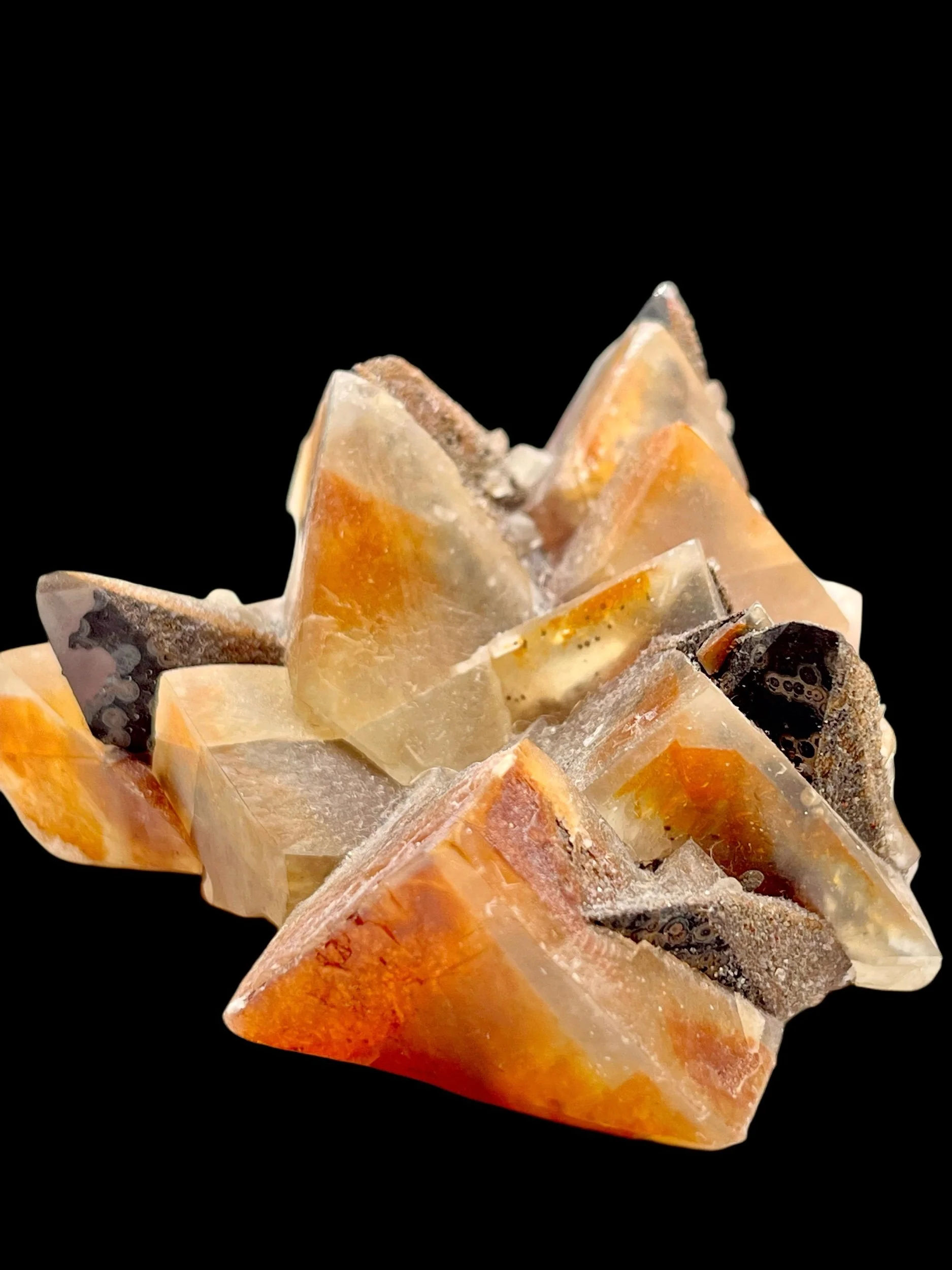
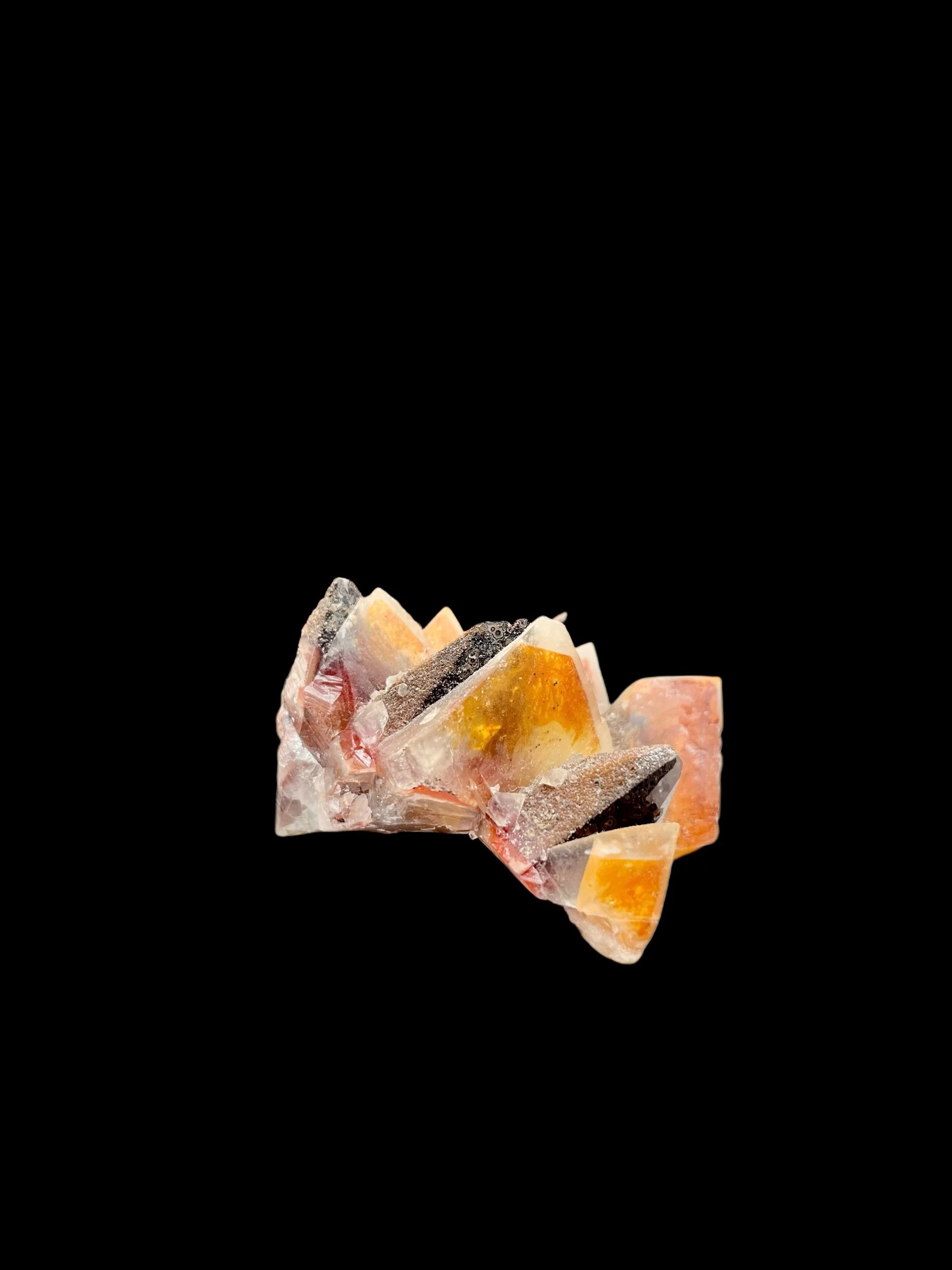
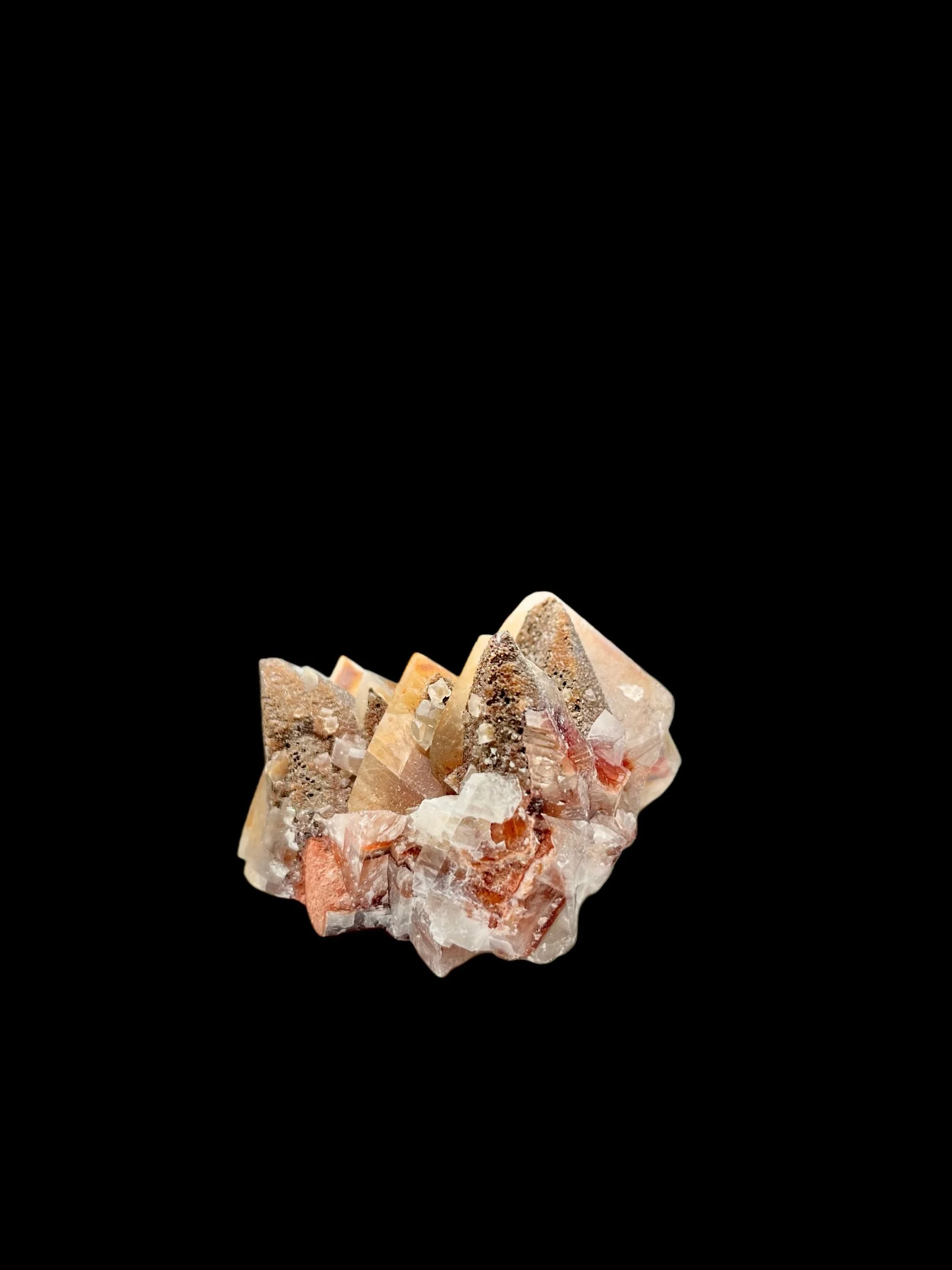
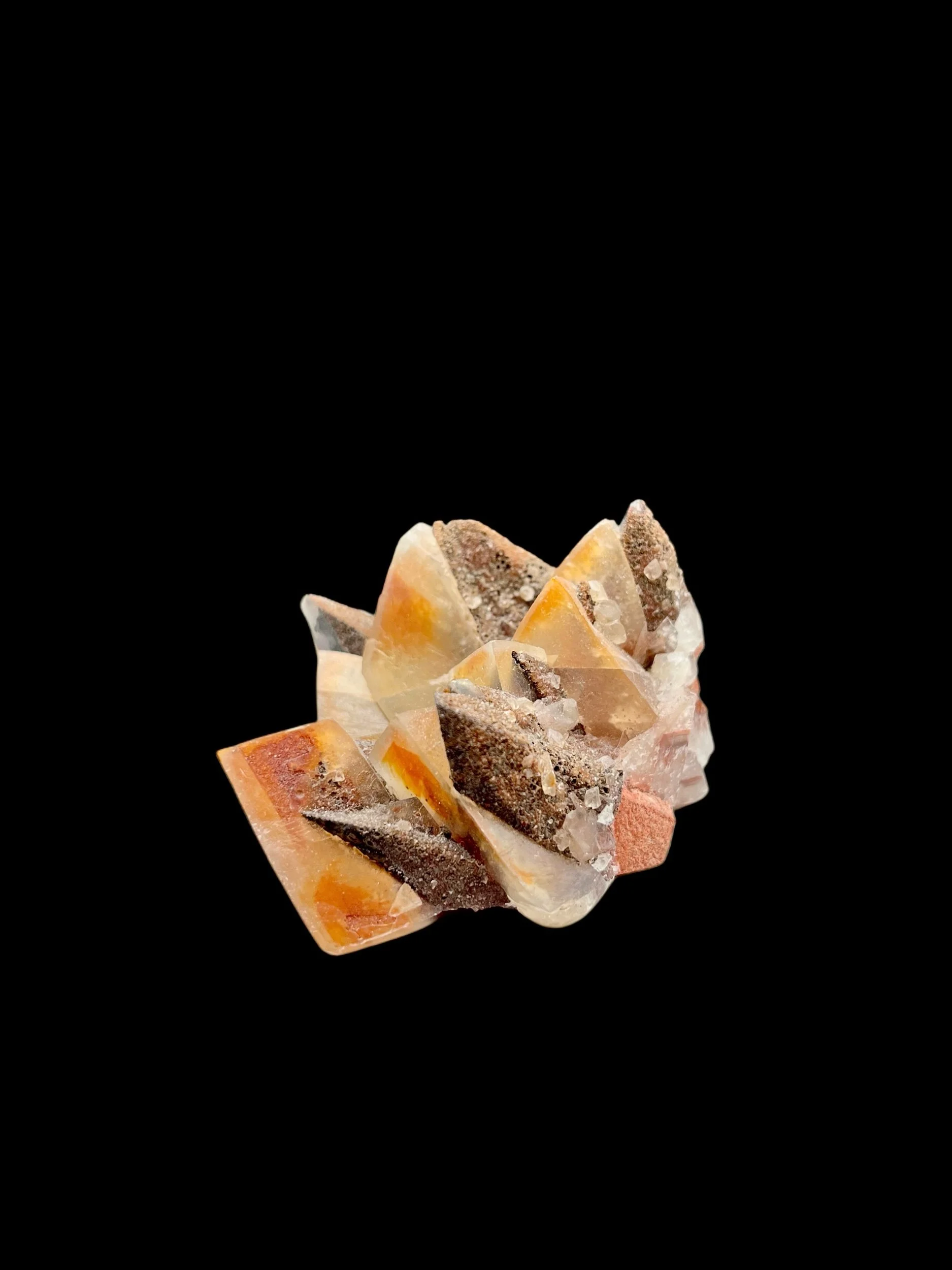
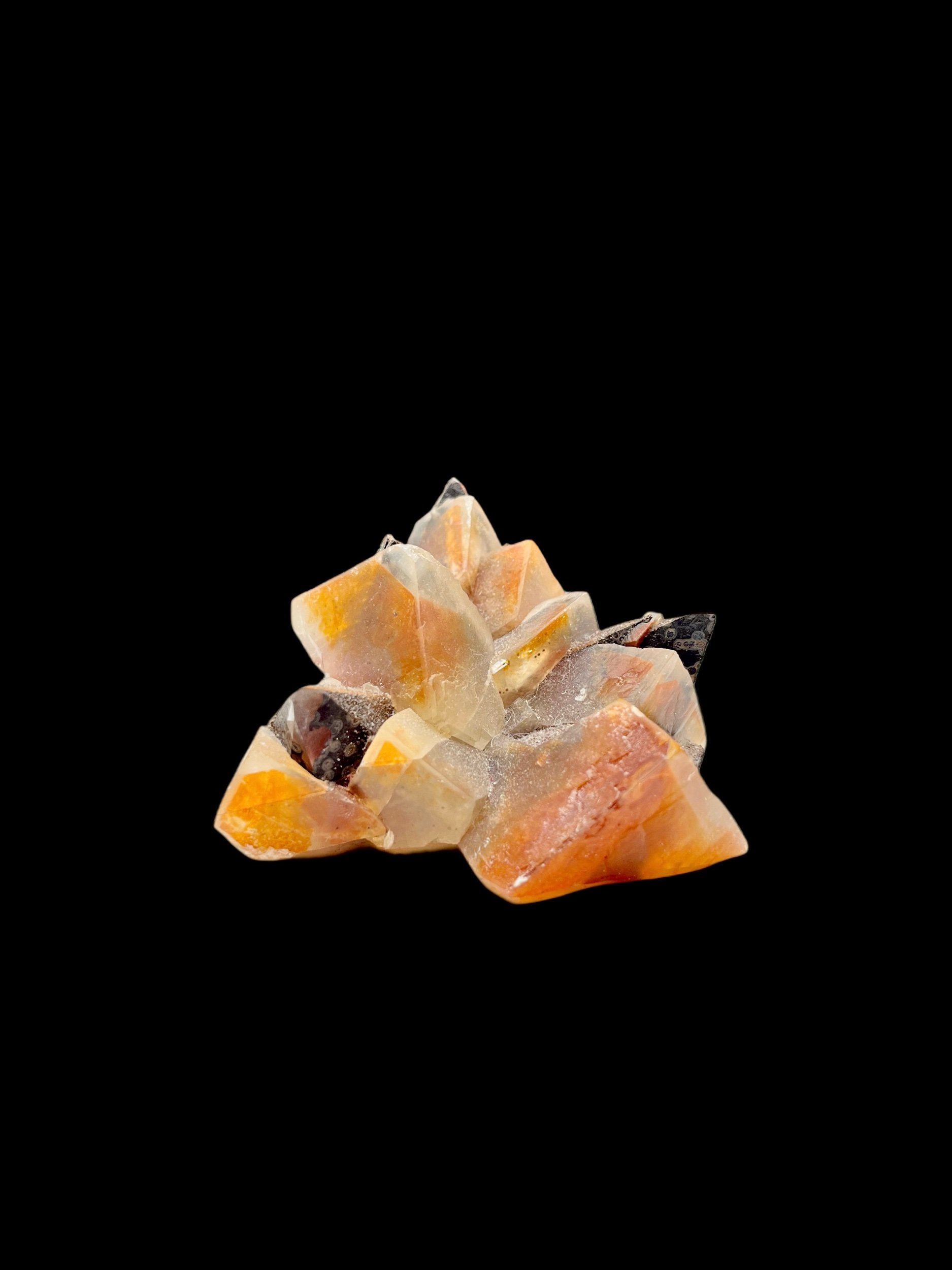
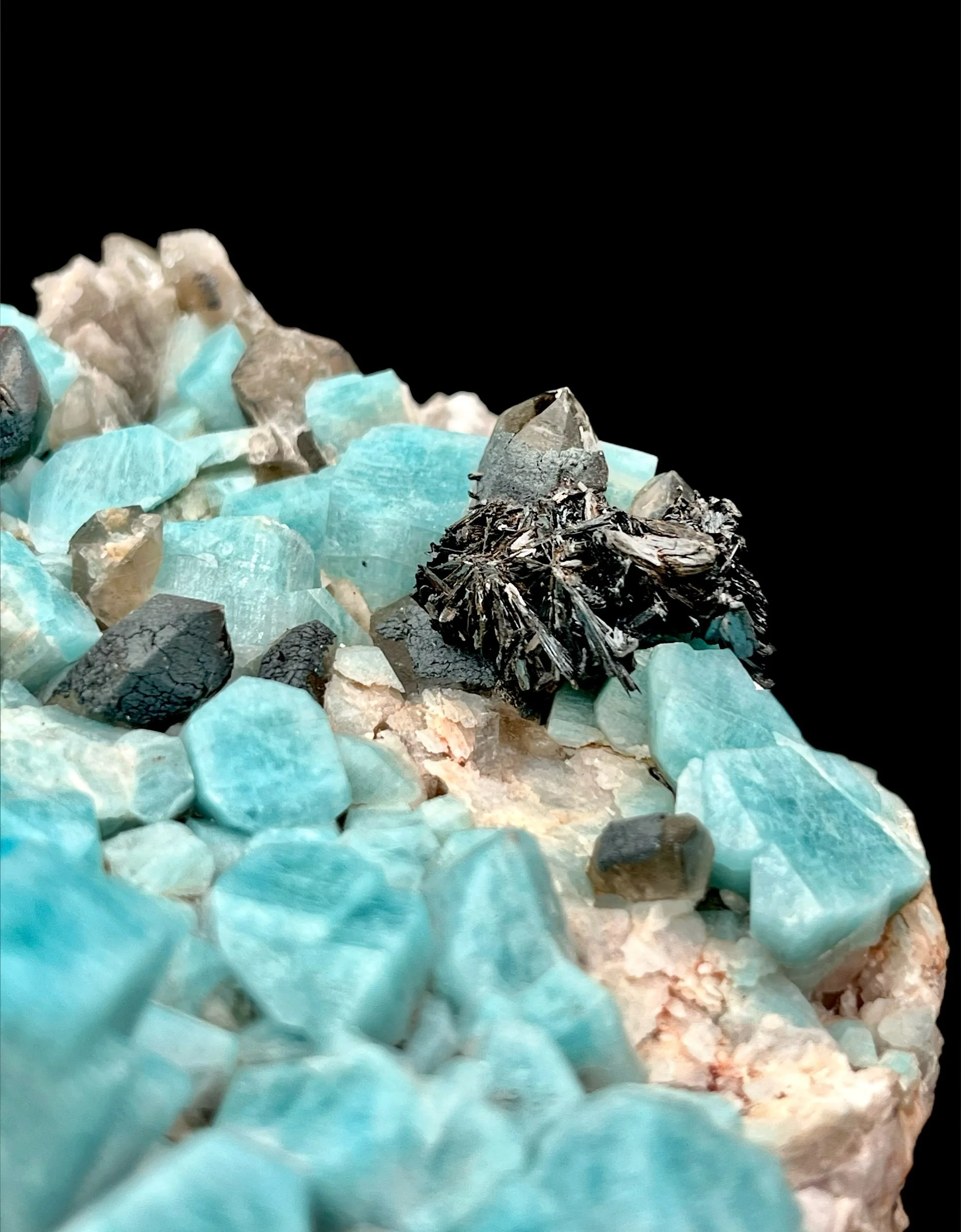
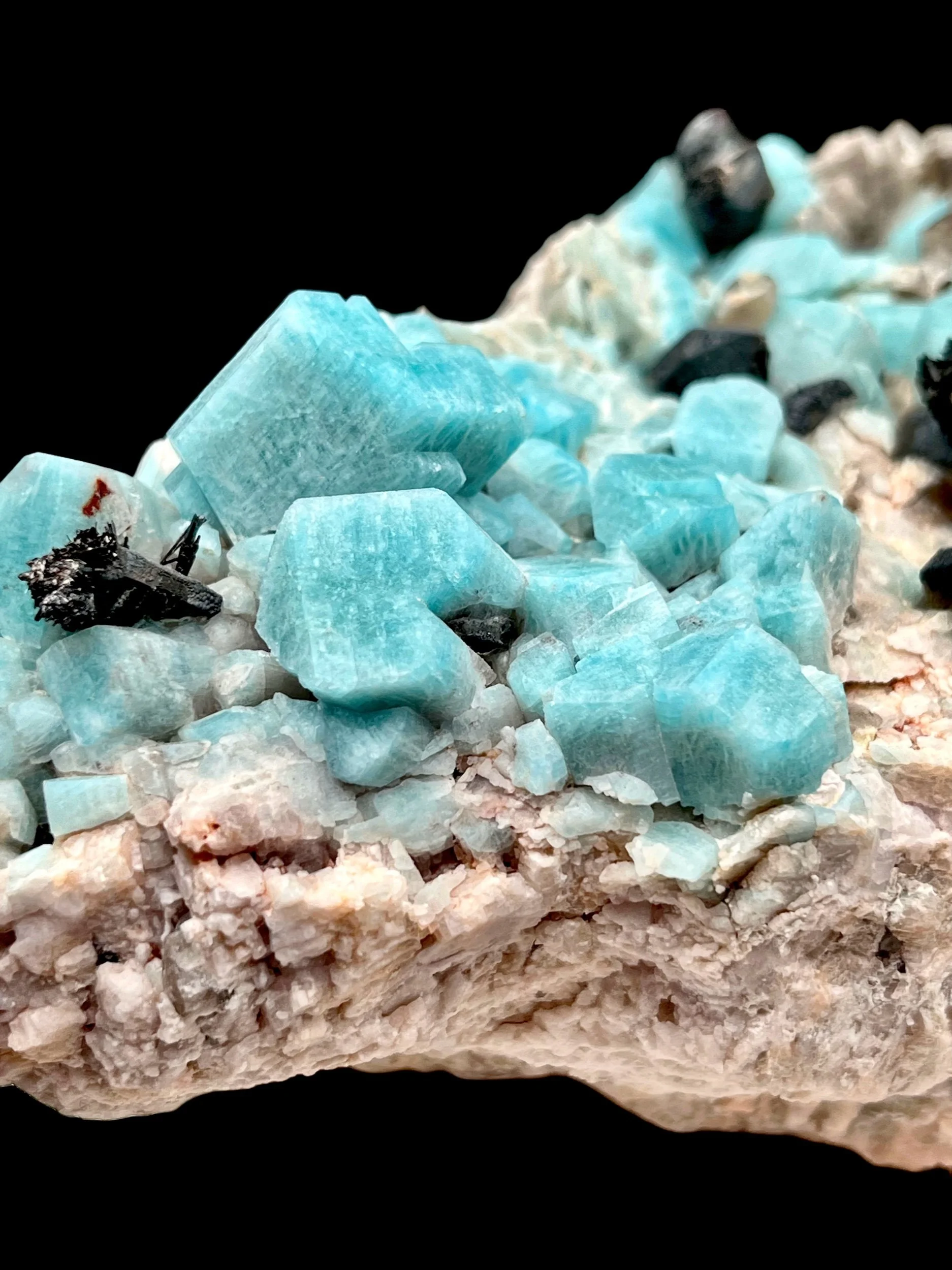
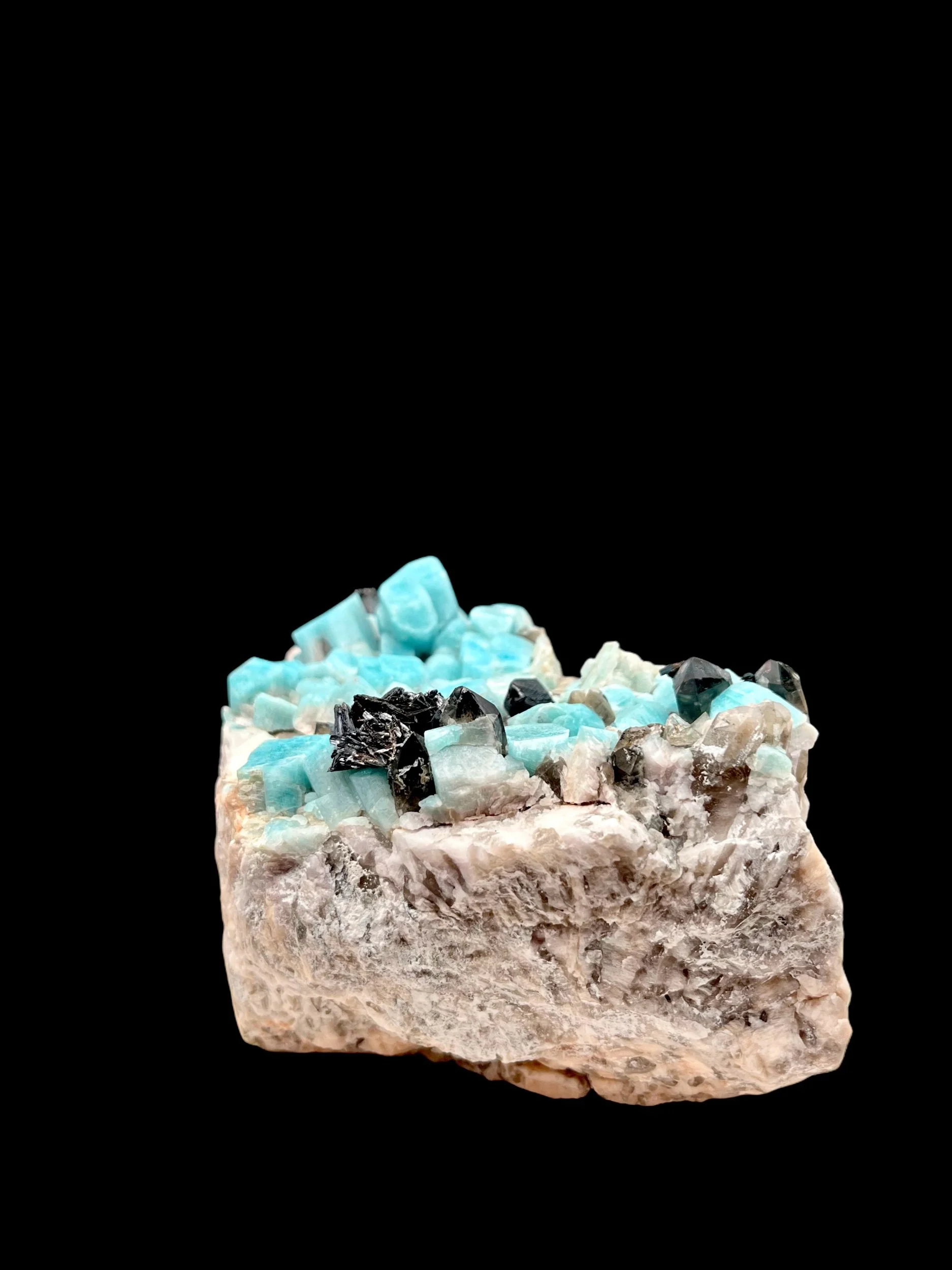
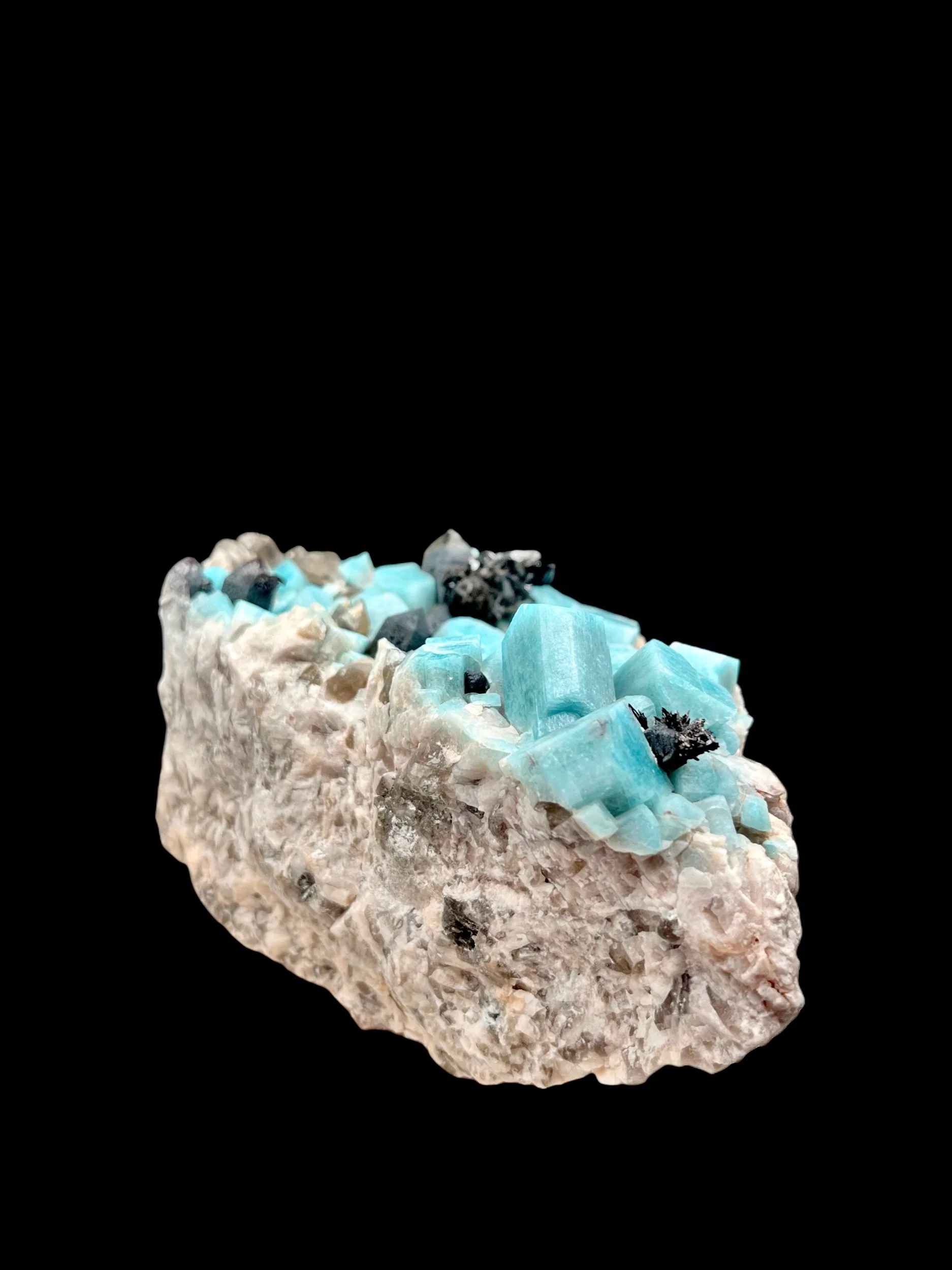
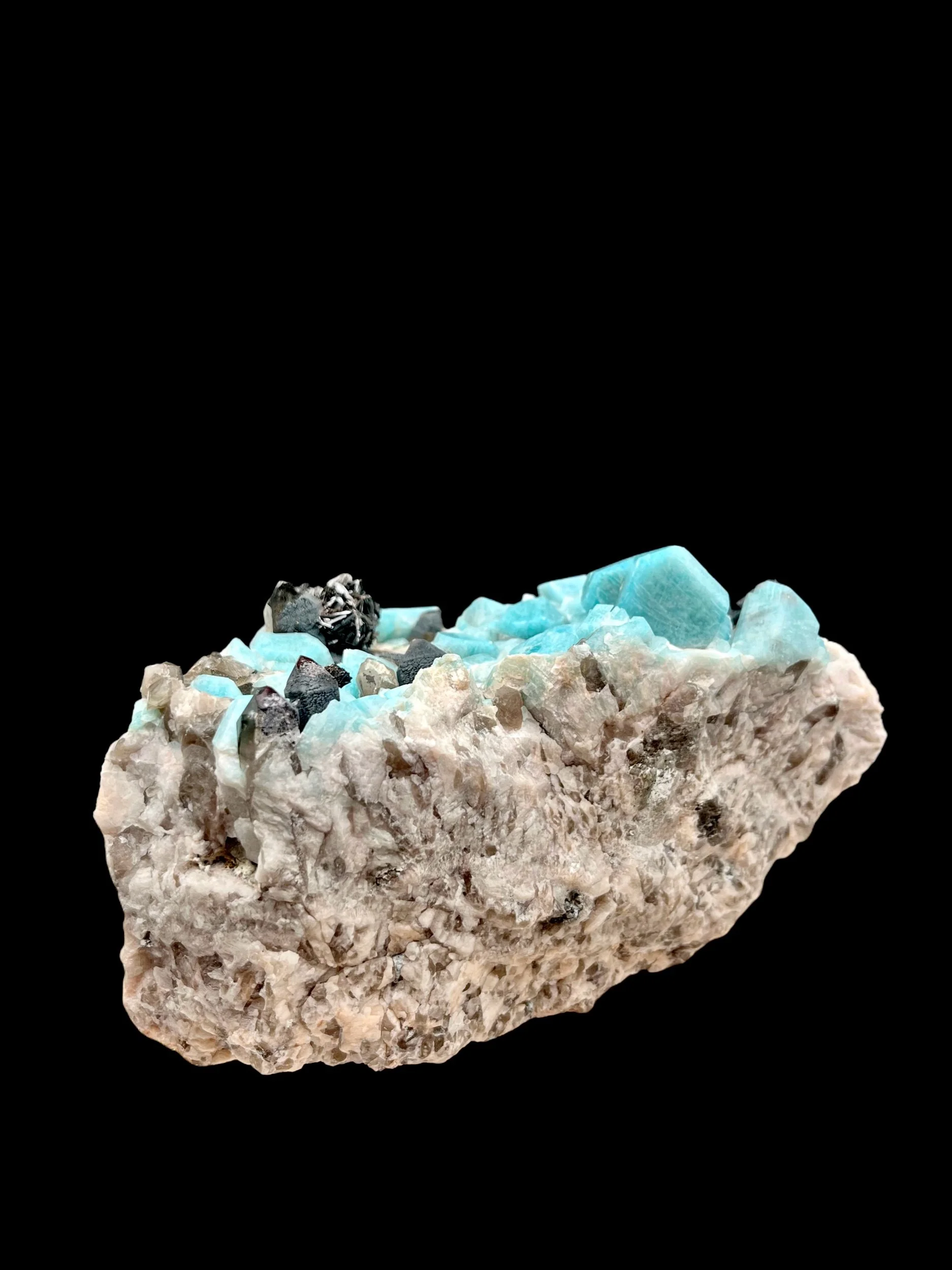
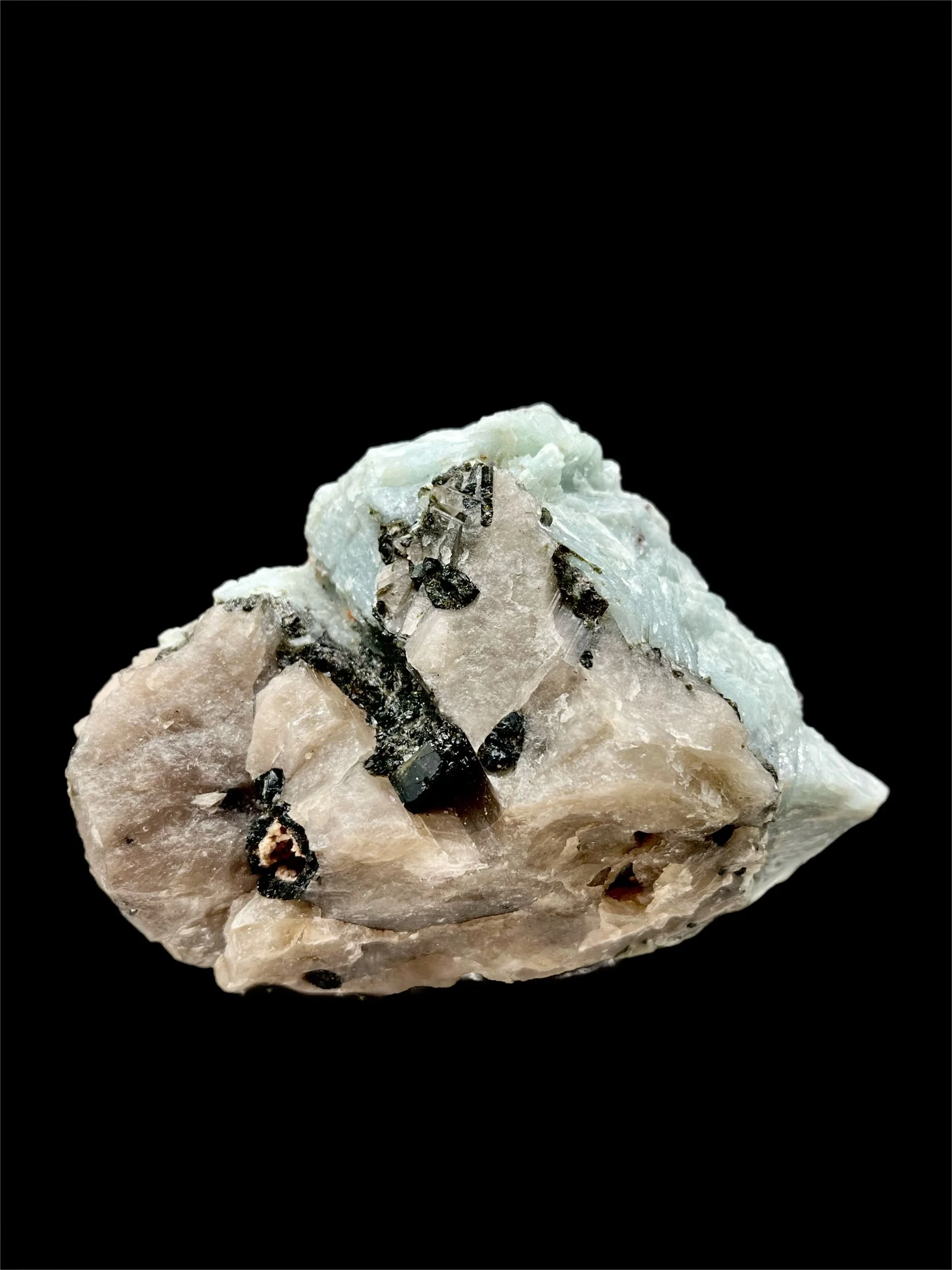
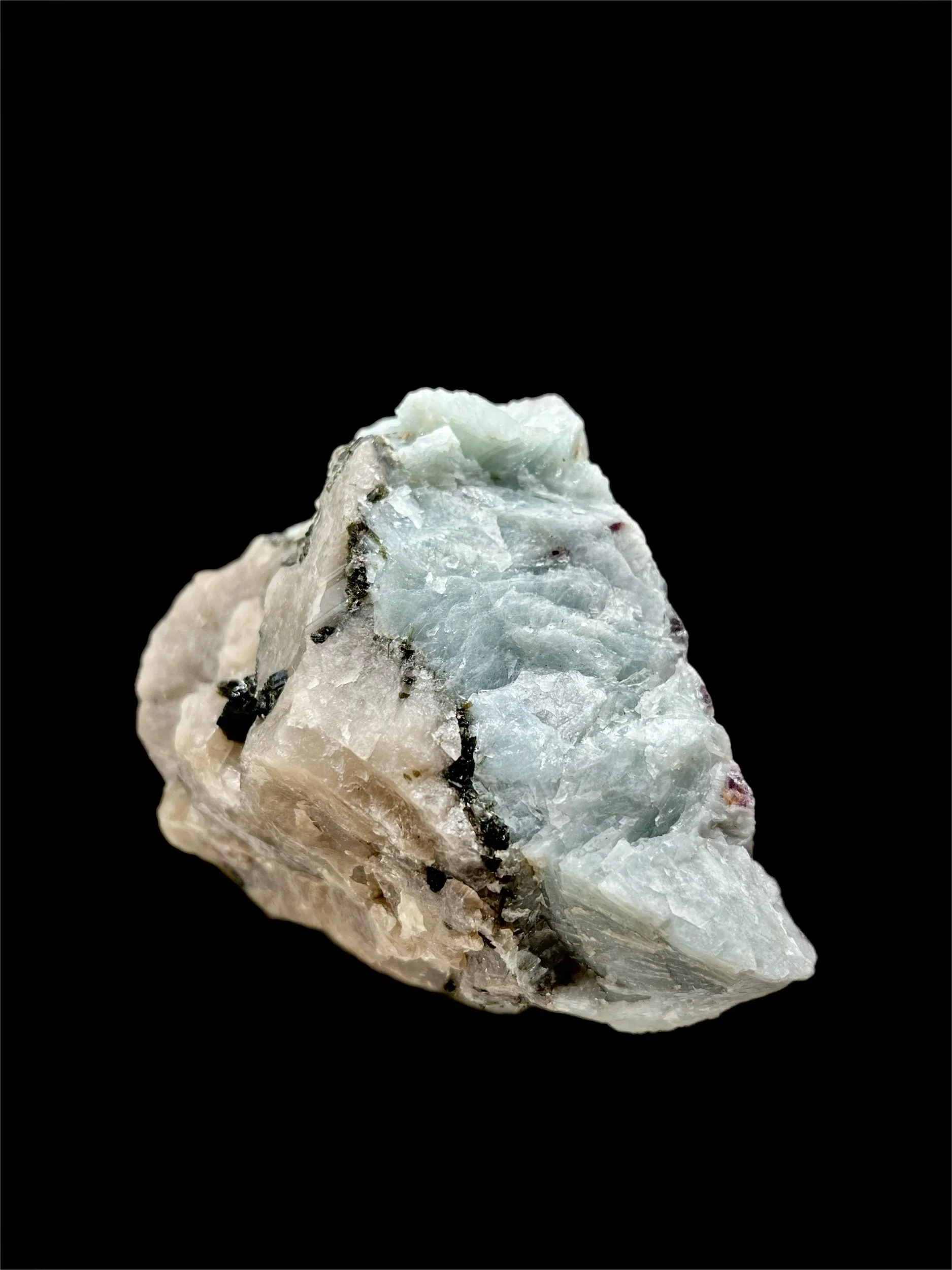
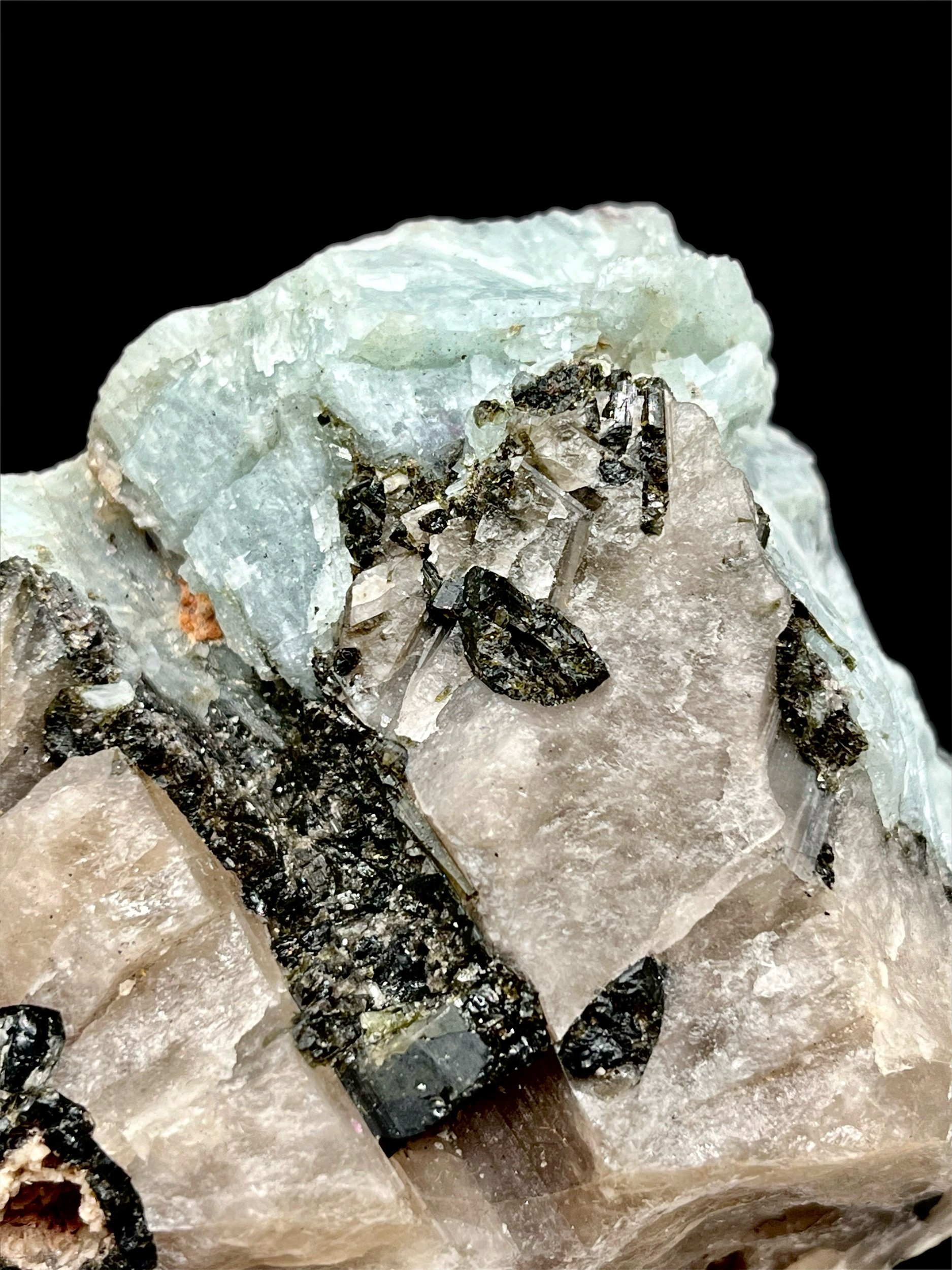
A breathtaking Rainbow Halite with Trona specimen from the mineral-rich evaporite deposits of Owens Lake, California. This remarkable formation showcases a beautiful combination of coral pink, soft peach, golden yellow and green crystals, creating a vibrant landscape of color and texture.
Numerous sharply defined cubic halite crystals blanket the specimen, contrasting beautifully with the delicate, intricate formations of trona. Its complex structure offers exceptional visual depth, with sparkling crystal faces and fascinating mineral growth visible from multiple angles.
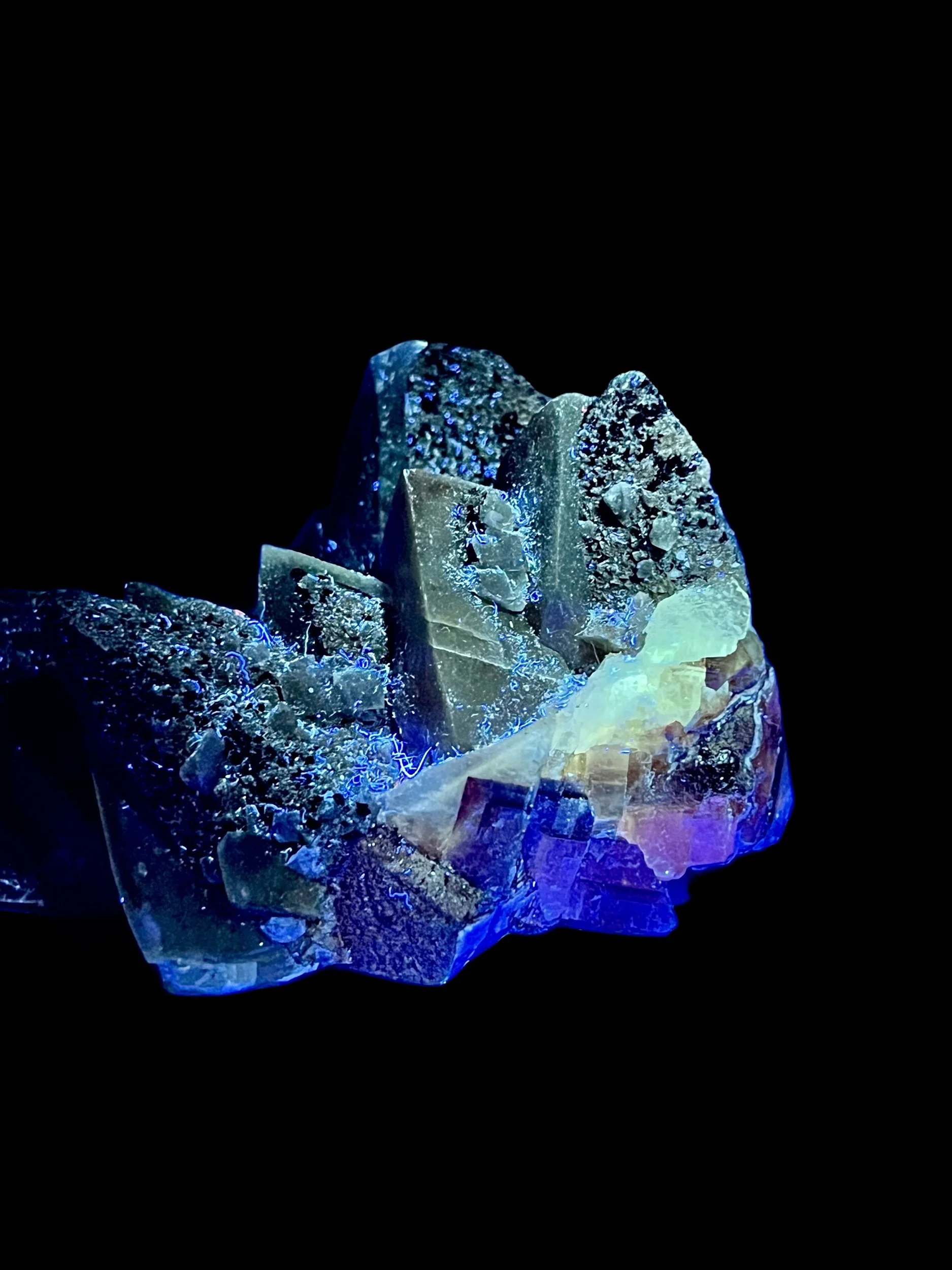
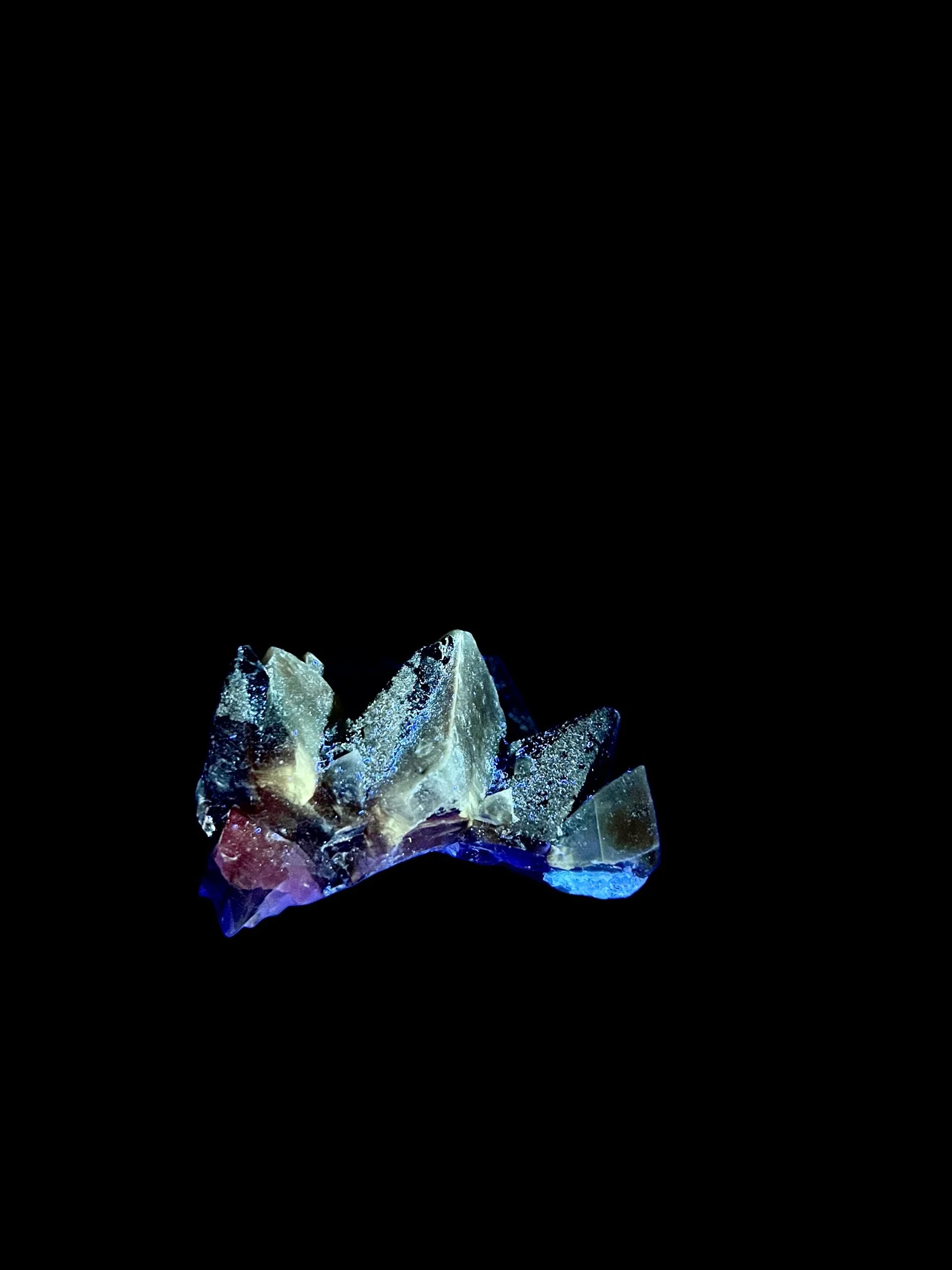
What makes this specimen particularly captivating is its fluorescence and phosphorescence. Under ultraviolet illumination, the specimen reveals striking luminescent colors, while its phosphorescent properties allow portions to continue glowing briefly after the UV source is removed.
An exceptional example of California evaporite mineralogy, combining beautiful natural coloration, intricate crystallization, and fascinating optical properties.
Dimensions, Weight & Locality
Dimensions: 4" × 3.25" × 1.5"
Weight: 285 grams
Locality: Owens Lake, Inyo County, California, USA
Metaphysical Properties
In metaphysical traditions, halite is associated with energetic purification, emotional clarity, and the release of stagnant or unwanted energy. Its natural connection to salt has made it a symbol of cleansing, protection, and renewal.
Trona is symbolically associated with transformation, adaptability, and inner balance. Its formation through evaporation and changing environmental conditions makes it a meaningful representation of resilience and personal growth.
Together, these minerals are believed to encourage:
Energetic Cleansing: Clearing unwanted or stagnant energy and promoting a refreshed environment.
Emotional Balance: Encouraging tranquility, clarity, and a sense of inner peace.
Transformation & Renewal: Supporting personal growth and positive change.
Grounding & Stability: Promoting a balanced, centered mindset during times of transition.
Clarity & Reflection: Encouraging mindfulness, self-awareness, and thoughtful decision-making.
These associations are based on metaphysical traditions and personal beliefs rather than scientifically established effects.
Collector's Notes
The Geological History of Owens Lake
Situated in California's Owens Valley, between the Sierra Nevada and Inyo Mountains, Owens Lake has a fascinating geological and environmental history.
Once a substantial inland lake, much of its water was diverted to Los Angeles beginning in 1913, eventually leaving behind an extensive dry lakebed rich in evaporite minerals.
As mineral-laden waters evaporated, concentrated brines created favorable conditions for the crystallization of halite, trona, and other sodium-rich minerals.
These unusual geological conditions make Owens Lake an important locality for collectors interested in evaporite mineralogy and the fascinating processes behind crystal formation.
Fluorescence & Phosphorescence
One of this specimen's most interesting characteristics is its ability to display two distinct forms of luminescence.
Fluorescence occurs when a mineral absorbs ultraviolet energy and immediately releases part of that energy as visible light.
Phosphorescence occurs when absorbed energy is released more gradually, allowing a mineral to continue glowing for a period after the ultraviolet light has been removed.
The combination of these properties adds another dimension to an already visually stunning specimen, making it especially appealing to collectors of UV-reactive minerals.
Storage & Care
Halite is a delicate, water-soluble mineral that requires special attention to humidity and environmental conditions.
Because halite can absorb atmospheric moisture under sufficiently humid conditions, improper storage may cause its crystal surfaces to become damp, lose definition, or gradually dissolve.
To preserve this specimen's delicate formations:
Humidity Control: Store in a dry, climate-controlled environment. Maintaining relative humidity below 40% provides a conservative margin of protection.
Protective Display: An acrylic display case or sealed container is recommended for long-term preservation.
Avoid Water: Never rinse, soak, or use liquid cleaning solutions on the specimen.
Gentle Handling: Halite has a Mohs hardness of approximately 2–2.5, making its crystals relatively soft and susceptible to scratching or breakage.
With proper care, the intricate crystallization and distinctive appearance of this specimen can be enjoyed for years to come.
Highlights
Fluorescent & Phosphorescent: Exhibits beautiful UV-reactive luminescence and a lingering afterglow after ultraviolet illumination.
Exceptional Coloration: Displays a striking combination of coral pink, peach, golden yellow, and translucent white.
Intricate Crystal Growth: Features numerous sharply defined cubic halite crystals alongside delicate trona formations.
Distinctive Mineral Association: Combines two fascinating evaporite minerals formed through specialized geological processes.
Historic California Locality: Originates from the mineral-rich deposits of Owens Lake in California's Owens Valley.
Collector Appeal: Particularly desirable for collections focused on UV-reactive specimens, evaporite minerals, unusual crystal formations, and California mineral localities.
Mineralogy
Halite
Chemical Formula: NaCl
Mineral Class: Halides
Crystal System: Isometric (Cubic)
Mohs Hardness: 2–2.5
Luster: Vitreous
Transparency: Transparent to translucent
Typical Colors: Colorless, white, pink, orange, yellow, blue, and various other colors depending on impurities and structural defects
Formation: Precipitation from concentrated saline solutions during evaporation
Notable Properties: Water-soluble, perfect cubic cleavage, and potential fluorescence or phosphorescence depending on defects and impurities
Trona
Chemical Formula: Na₃(HCO₃)(CO₃)·2H₂O
Mineral Class: Carbonates
Crystal System: Monoclinic
Mohs Hardness: Approximately 2.5–3
Luster: Vitreous to silky
Transparency: Transparent to translucent
Typical Colors: Colorless, white, grayish, or pale yellow
Formation: Precipitation from highly alkaline, sodium-rich brines in evaporative lake environments
Notable Properties: Water-soluble, commonly develops fibrous, bladed, or prismatic crystal formations, and serves as an important natural source of soda ash
Description
A breathtaking Rainbow Halite with Trona specimen from the mineral-rich evaporite deposits of Owens Lake, California. This remarkable formation showcases a beautiful combination of coral pink, soft peach, golden yellow and green crystals, creating a vibrant landscape of color and texture.
Numerous sharply defined cubic halite crystals blanket the specimen, contrasting beautifully with the delicate, intricate formations of trona. Its complex structure offers exceptional visual depth, with sparkling crystal faces and fascinating mineral growth visible from multiple angles.
What makes this specimen particularly captivating is its fluorescence and phosphorescence. Under ultraviolet illumination, the specimen reveals striking luminescent colors, while its phosphorescent properties allow portions to continue glowing briefly after the UV source is removed.
An exceptional example of California evaporite mineralogy, combining beautiful natural coloration, intricate crystallization, and fascinating optical properties.
Dimensions, Weight & Locality
Dimensions: 4" × 3.25" × 1.5"
Weight: 285 grams
Locality: Owens Lake, Inyo County, California, USA
Metaphysical Properties
In metaphysical traditions, halite is associated with energetic purification, emotional clarity, and the release of stagnant or unwanted energy. Its natural connection to salt has made it a symbol of cleansing, protection, and renewal.
Trona is symbolically associated with transformation, adaptability, and inner balance. Its formation through evaporation and changing environmental conditions makes it a meaningful representation of resilience and personal growth.
Together, these minerals are believed to encourage:
Energetic Cleansing: Clearing unwanted or stagnant energy and promoting a refreshed environment.
Emotional Balance: Encouraging tranquility, clarity, and a sense of inner peace.
Transformation & Renewal: Supporting personal growth and positive change.
Grounding & Stability: Promoting a balanced, centered mindset during times of transition.
Clarity & Reflection: Encouraging mindfulness, self-awareness, and thoughtful decision-making.
These associations are based on metaphysical traditions and personal beliefs rather than scientifically established effects.
Collector's Notes
The Geological History of Owens Lake
Situated in California's Owens Valley, between the Sierra Nevada and Inyo Mountains, Owens Lake has a fascinating geological and environmental history.
Once a substantial inland lake, much of its water was diverted to Los Angeles beginning in 1913, eventually leaving behind an extensive dry lakebed rich in evaporite minerals.
As mineral-laden waters evaporated, concentrated brines created favorable conditions for the crystallization of halite, trona, and other sodium-rich minerals.
These unusual geological conditions make Owens Lake an important locality for collectors interested in evaporite mineralogy and the fascinating processes behind crystal formation.
Fluorescence & Phosphorescence
One of this specimen's most interesting characteristics is its ability to display two distinct forms of luminescence.
Fluorescence occurs when a mineral absorbs ultraviolet energy and immediately releases part of that energy as visible light.
Phosphorescence occurs when absorbed energy is released more gradually, allowing a mineral to continue glowing for a period after the ultraviolet light has been removed.
The combination of these properties adds another dimension to an already visually stunning specimen, making it especially appealing to collectors of UV-reactive minerals.
Storage & Care
Halite is a delicate, water-soluble mineral that requires special attention to humidity and environmental conditions.
Because halite can absorb atmospheric moisture under sufficiently humid conditions, improper storage may cause its crystal surfaces to become damp, lose definition, or gradually dissolve.
To preserve this specimen's delicate formations:
Humidity Control: Store in a dry, climate-controlled environment. Maintaining relative humidity below 40% provides a conservative margin of protection.
Protective Display: An acrylic display case or sealed container is recommended for long-term preservation.
Avoid Water: Never rinse, soak, or use liquid cleaning solutions on the specimen.
Gentle Handling: Halite has a Mohs hardness of approximately 2–2.5, making its crystals relatively soft and susceptible to scratching or breakage.
With proper care, the intricate crystallization and distinctive appearance of this specimen can be enjoyed for years to come.
Highlights
Fluorescent & Phosphorescent: Exhibits beautiful UV-reactive luminescence and a lingering afterglow after ultraviolet illumination.
Exceptional Coloration: Displays a striking combination of coral pink, peach, golden yellow, and translucent white.
Intricate Crystal Growth: Features numerous sharply defined cubic halite crystals alongside delicate trona formations.
Distinctive Mineral Association: Combines two fascinating evaporite minerals formed through specialized geological processes.
Historic California Locality: Originates from the mineral-rich deposits of Owens Lake in California's Owens Valley.
Collector Appeal: Particularly desirable for collections focused on UV-reactive specimens, evaporite minerals, unusual crystal formations, and California mineral localities.
Mineralogy
Halite
Chemical Formula: NaCl
Mineral Class: Halides
Crystal System: Isometric (Cubic)
Mohs Hardness: 2–2.5
Luster: Vitreous
Transparency: Transparent to translucent
Typical Colors: Colorless, white, pink, orange, yellow, blue, and various other colors depending on impurities and structural defects
Formation: Precipitation from concentrated saline solutions during evaporation
Notable Properties: Water-soluble, perfect cubic cleavage, and potential fluorescence or phosphorescence depending on defects and impurities
Trona
Chemical Formula: Na₃(HCO₃)(CO₃)·2H₂O
Mineral Class: Carbonates
Crystal System: Monoclinic
Mohs Hardness: Approximately 2.5–3
Luster: Vitreous to silky
Transparency: Transparent to translucent
Typical Colors: Colorless, white, grayish, or pale yellow
Formation: Precipitation from highly alkaline, sodium-rich brines in evaporative lake environments
Notable Properties: Water-soluble, commonly develops fibrous, bladed, or prismatic crystal formations, and serves as an important natural source of soda ash


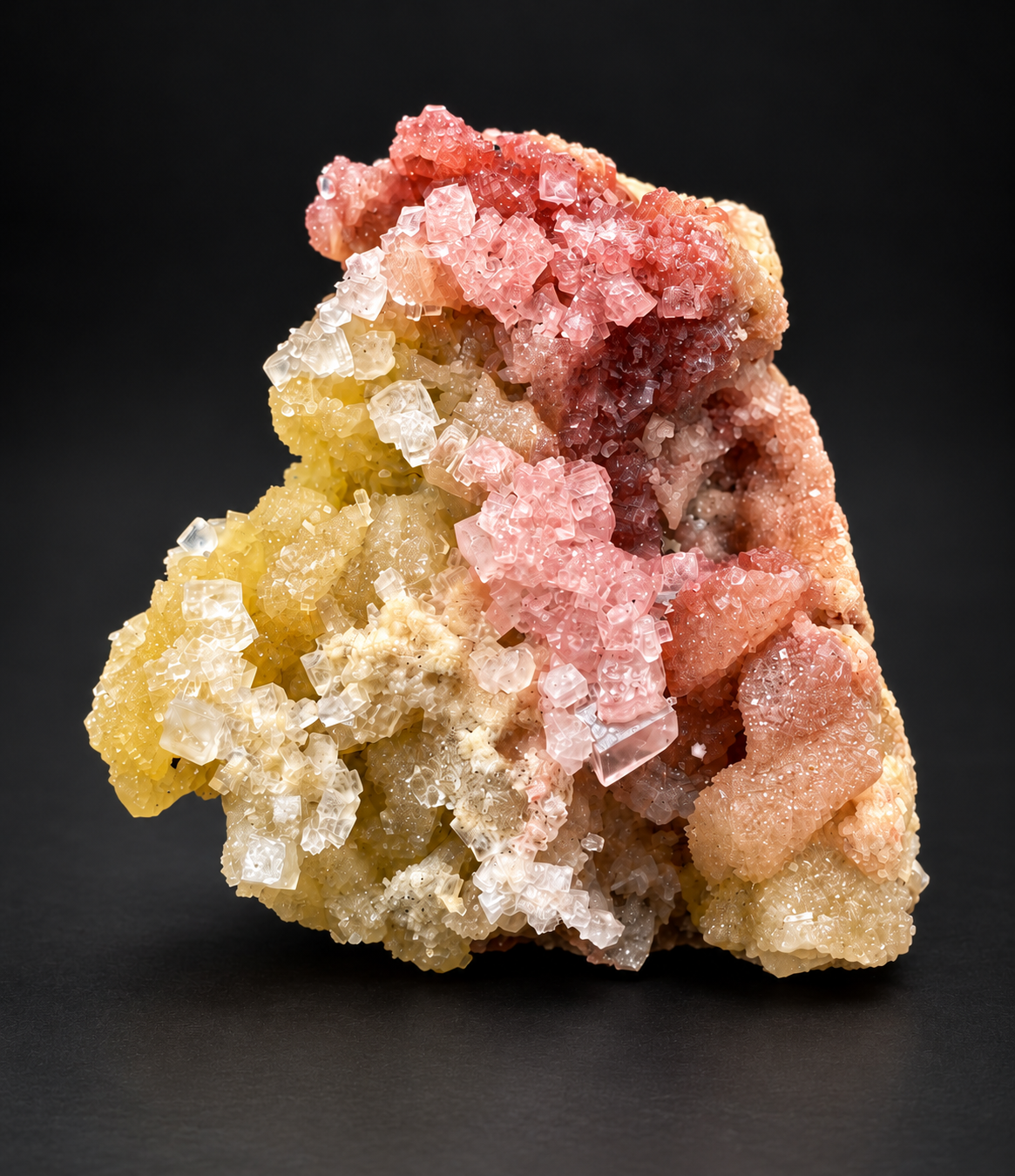 Image 1 of 6
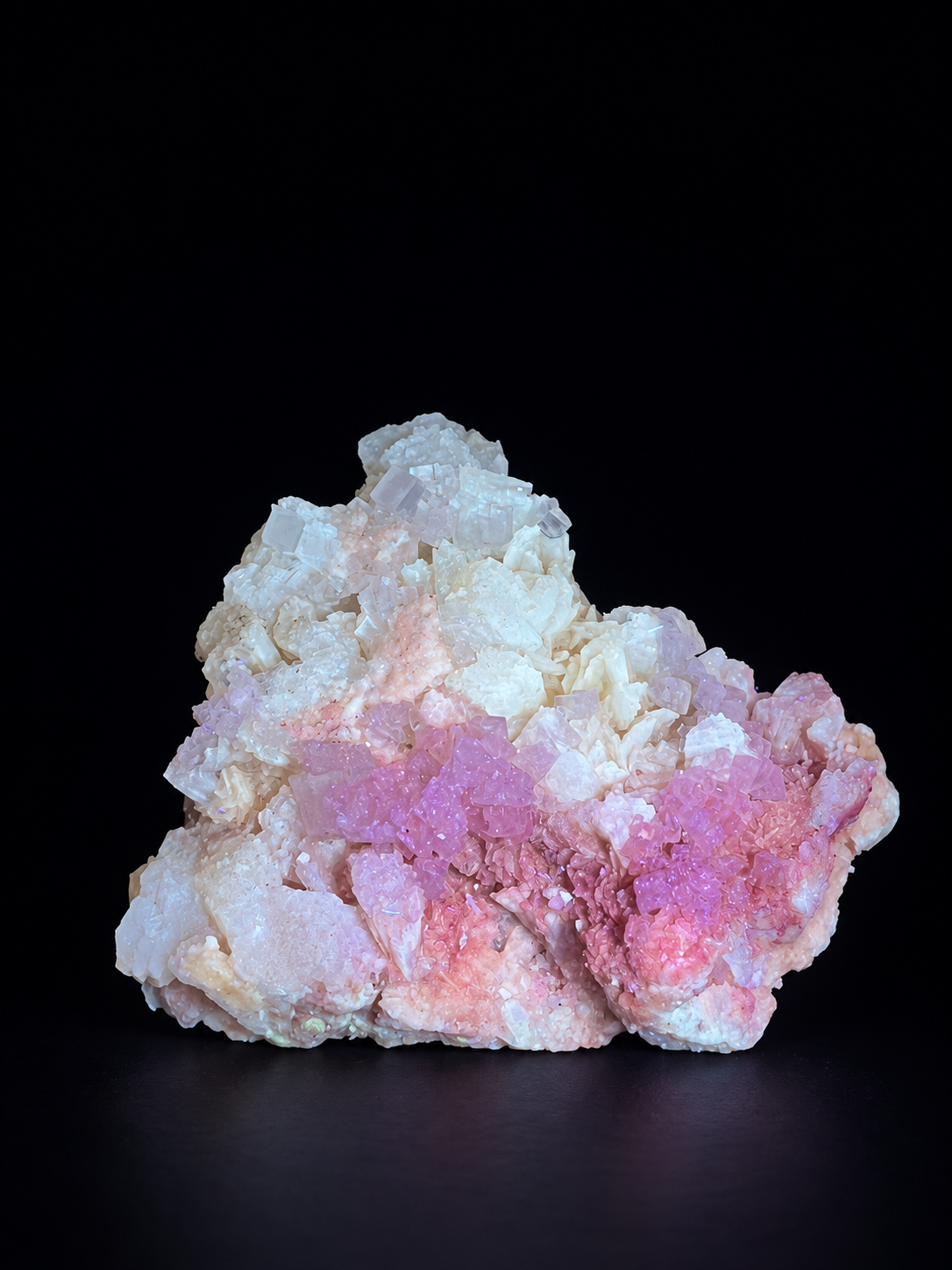 Image 2 of 6
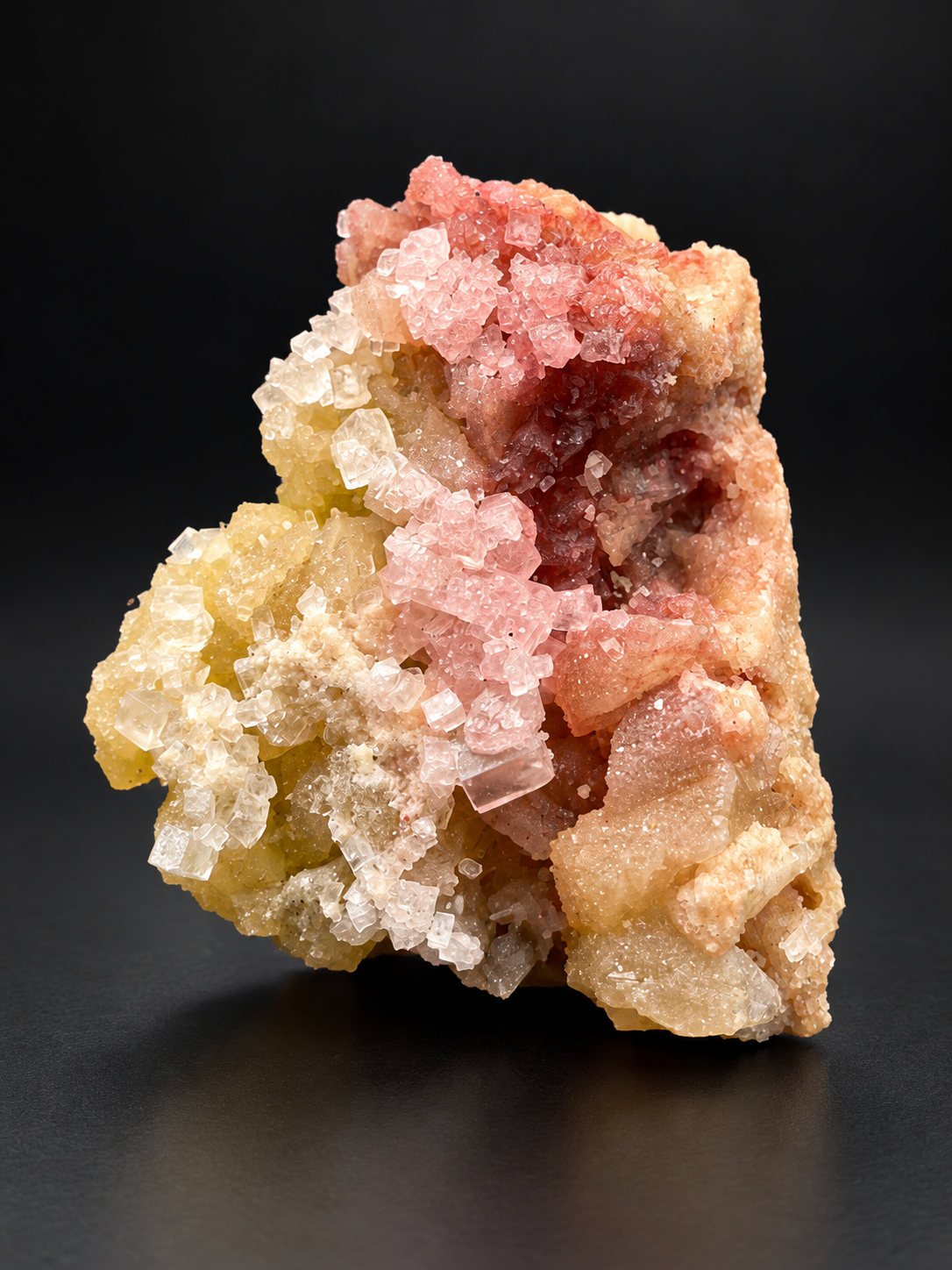 Image 3 of 6
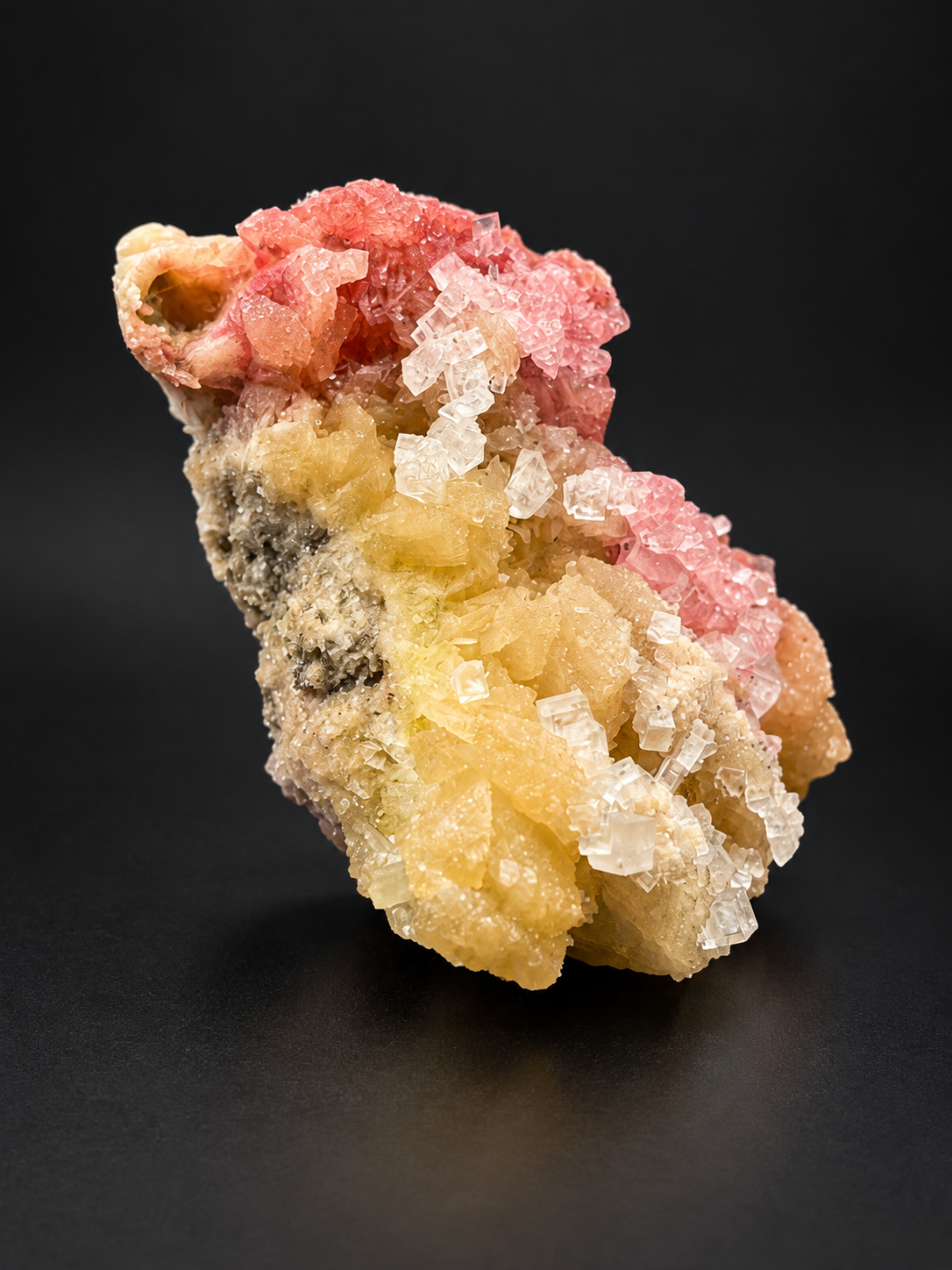 Image 4 of 6
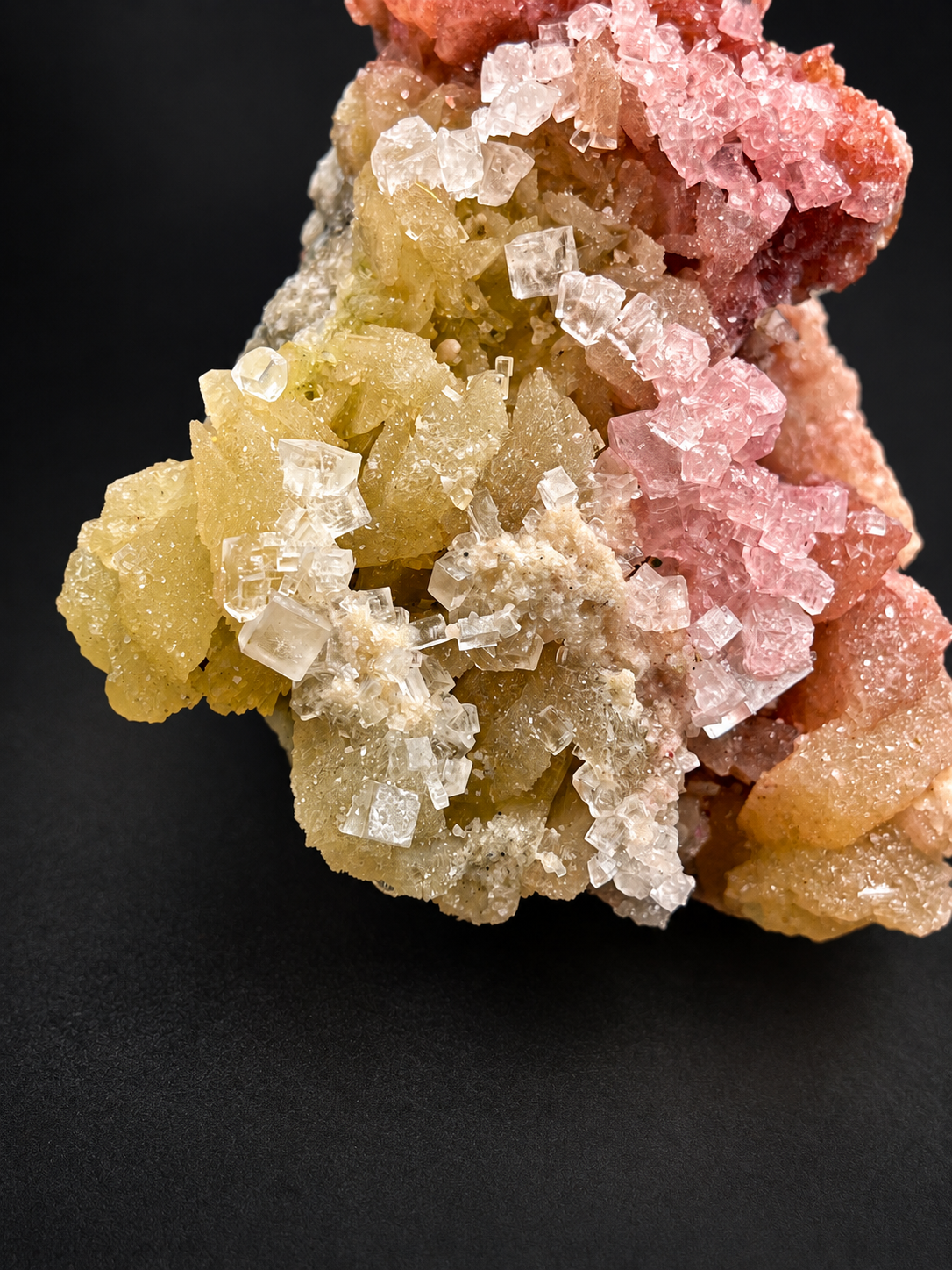 Image 5 of 6
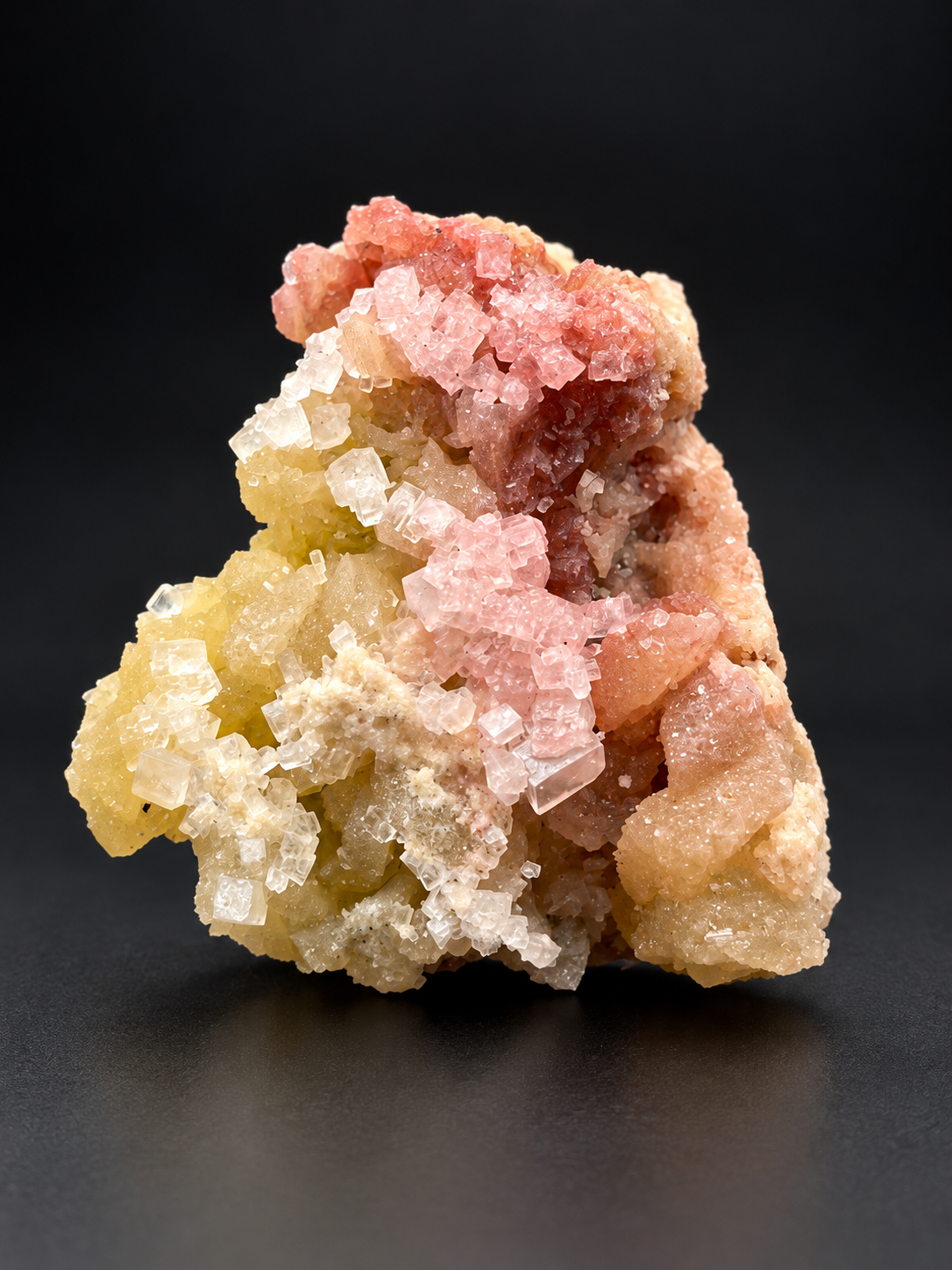 Image 6 of 6