 Image 1 of 5
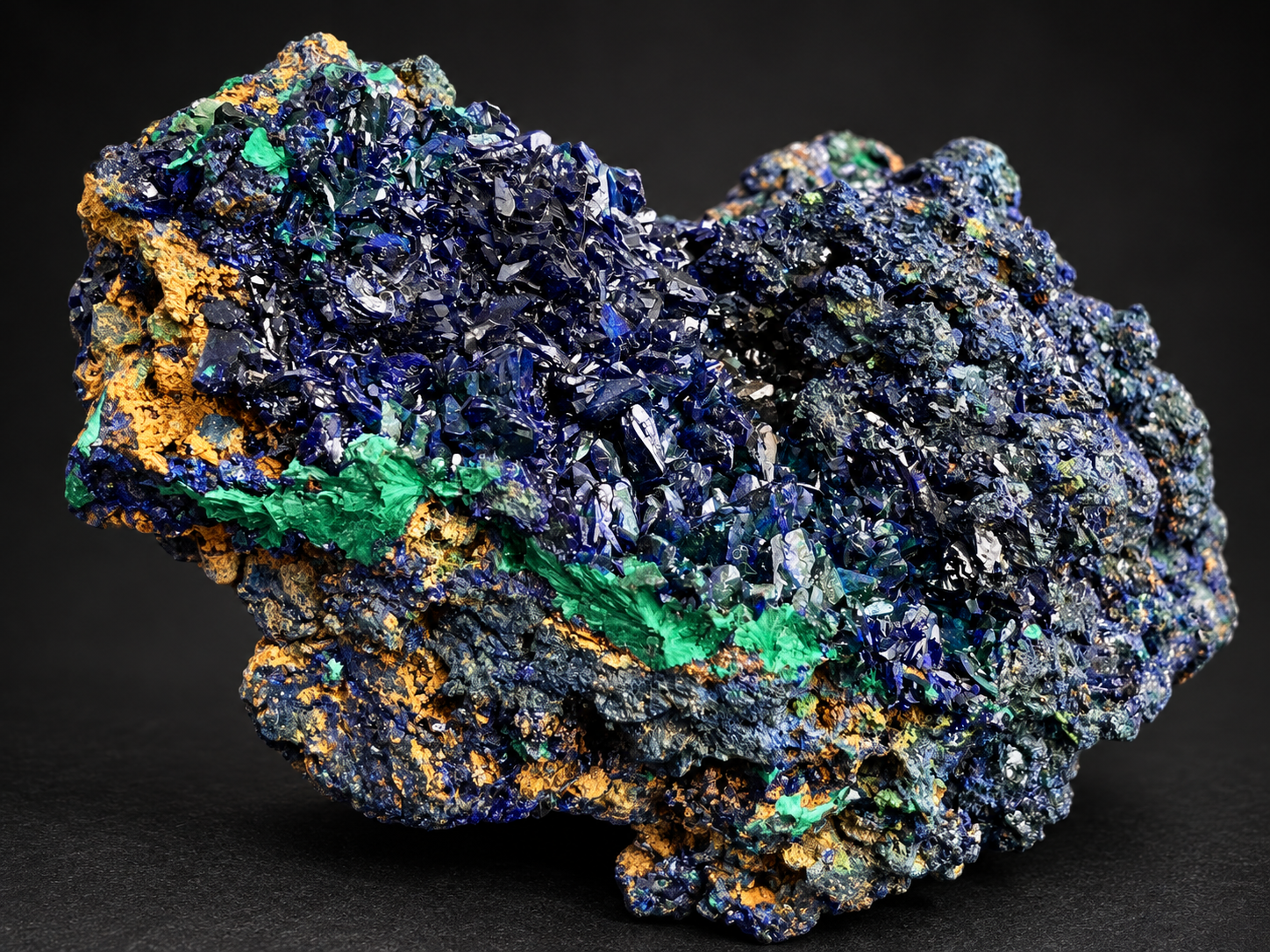 Image 2 of 5
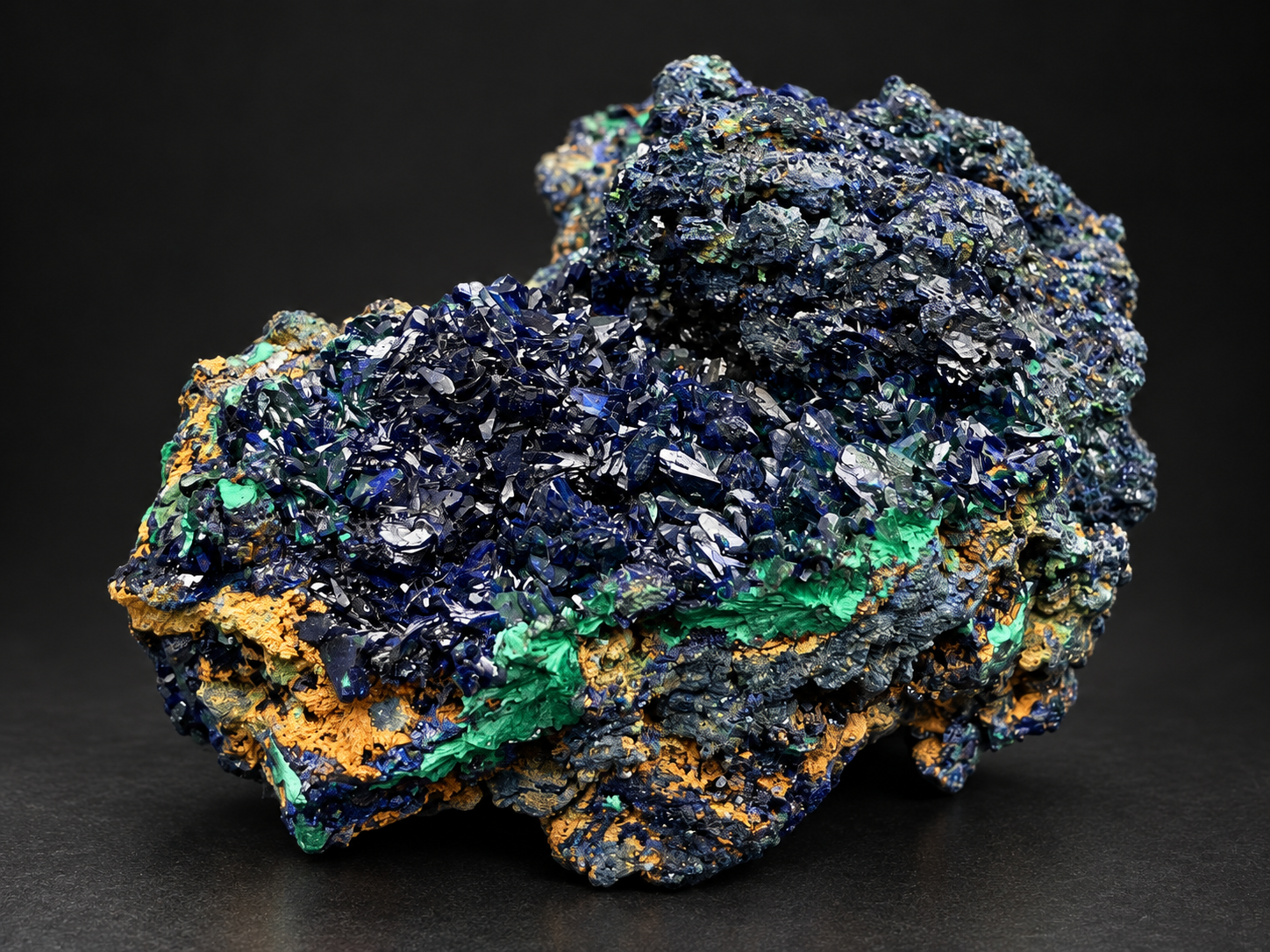 Image 3 of 5
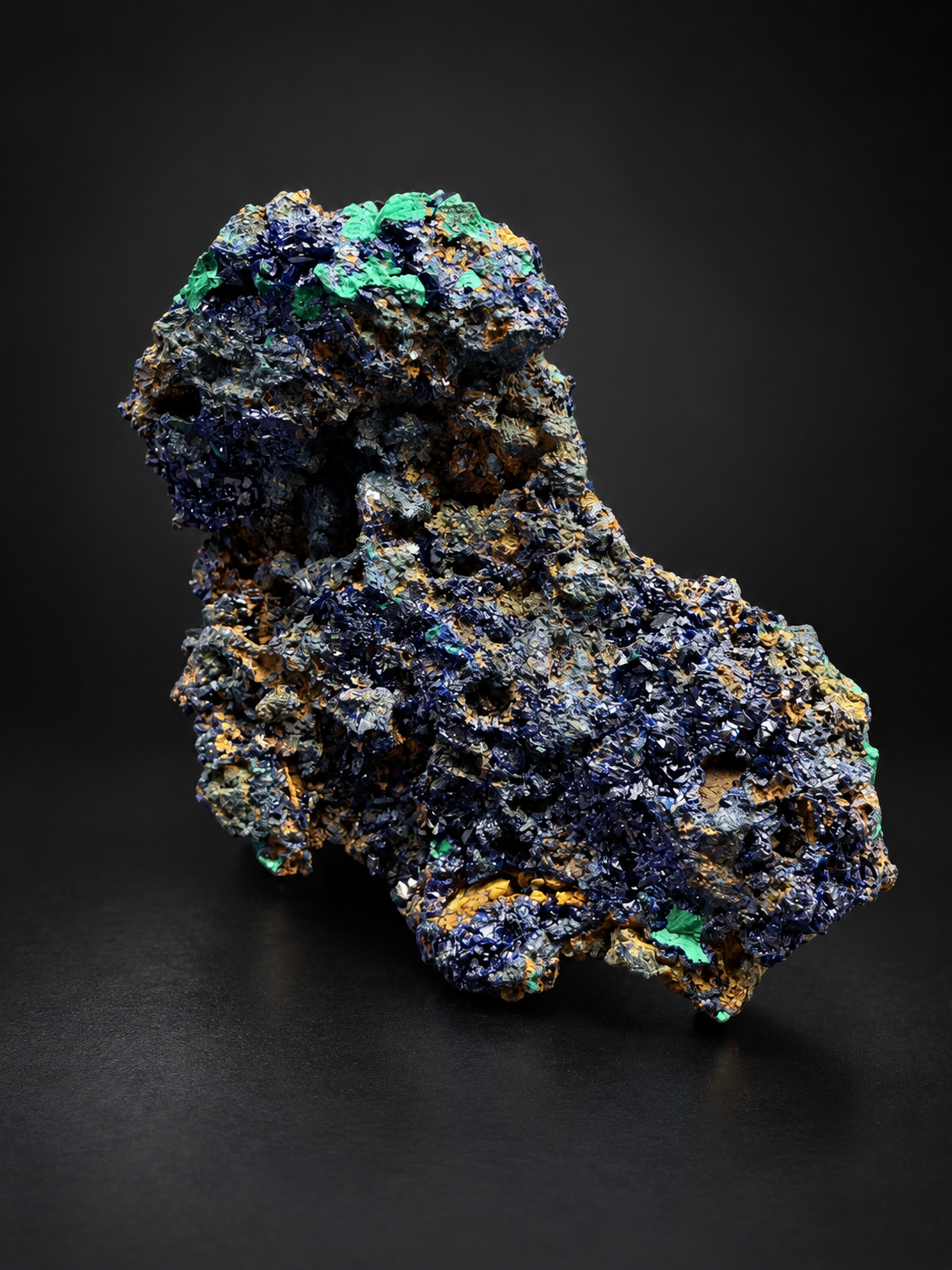 Image 4 of 5
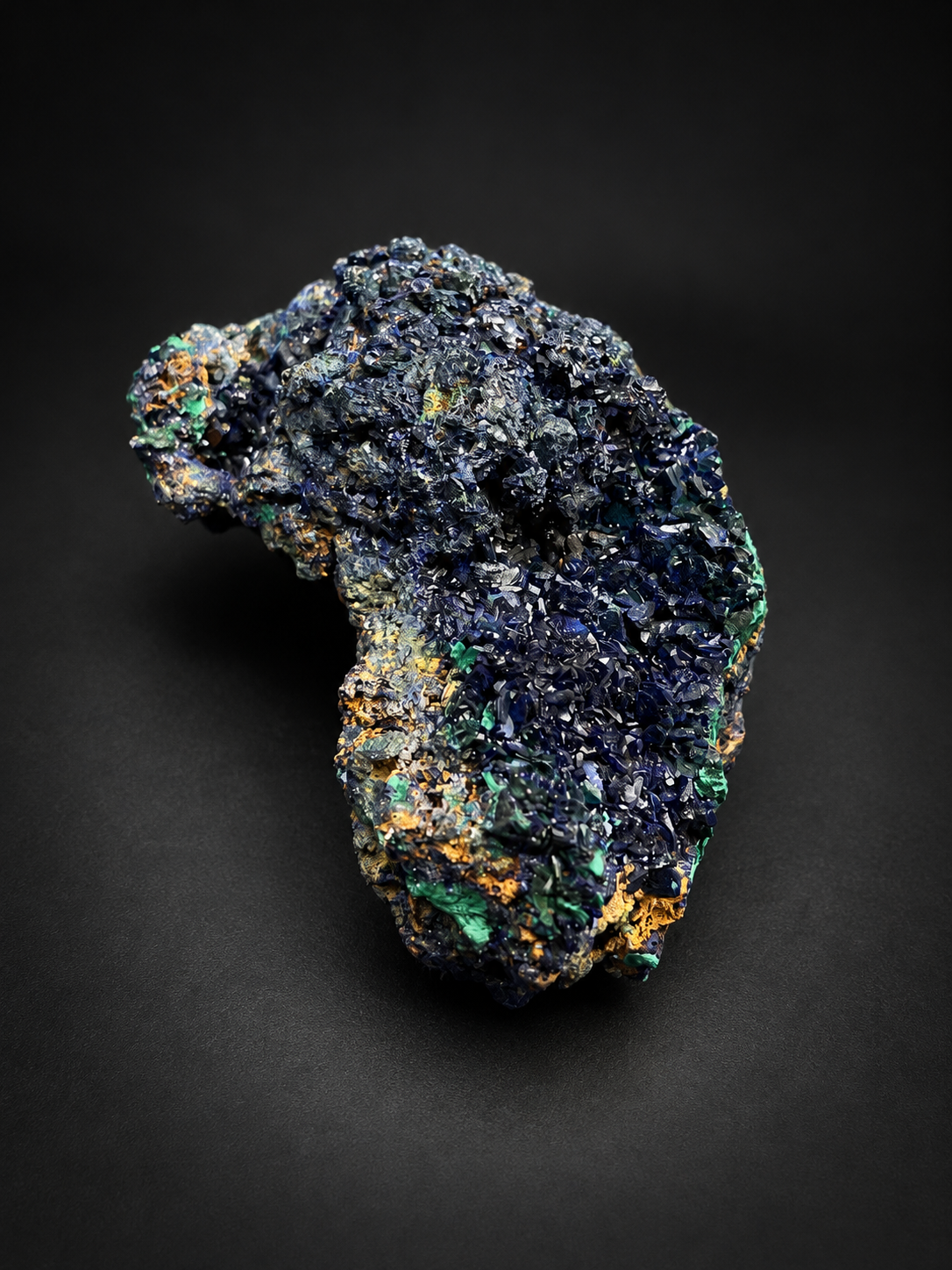 Image 5 of 5
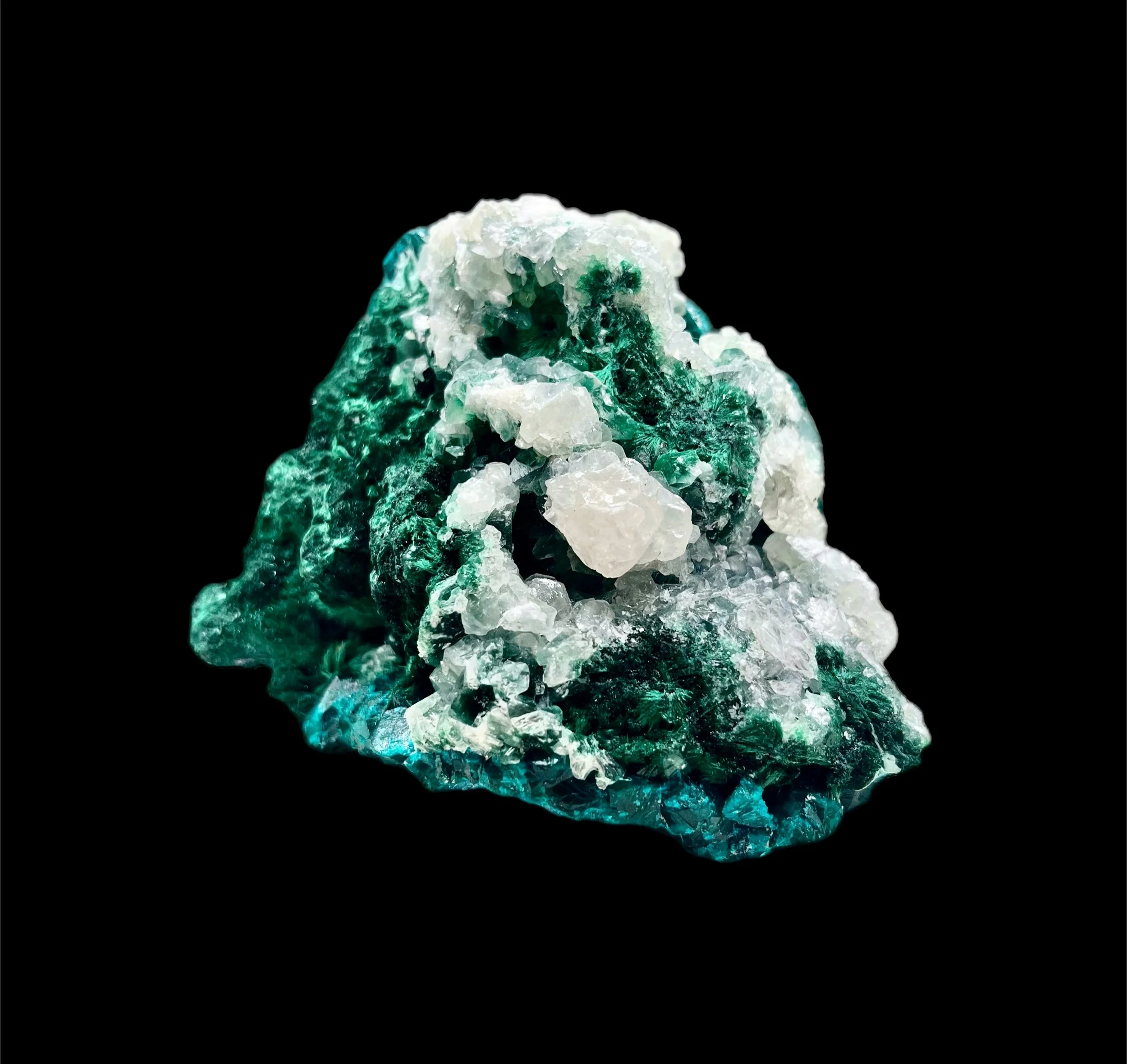
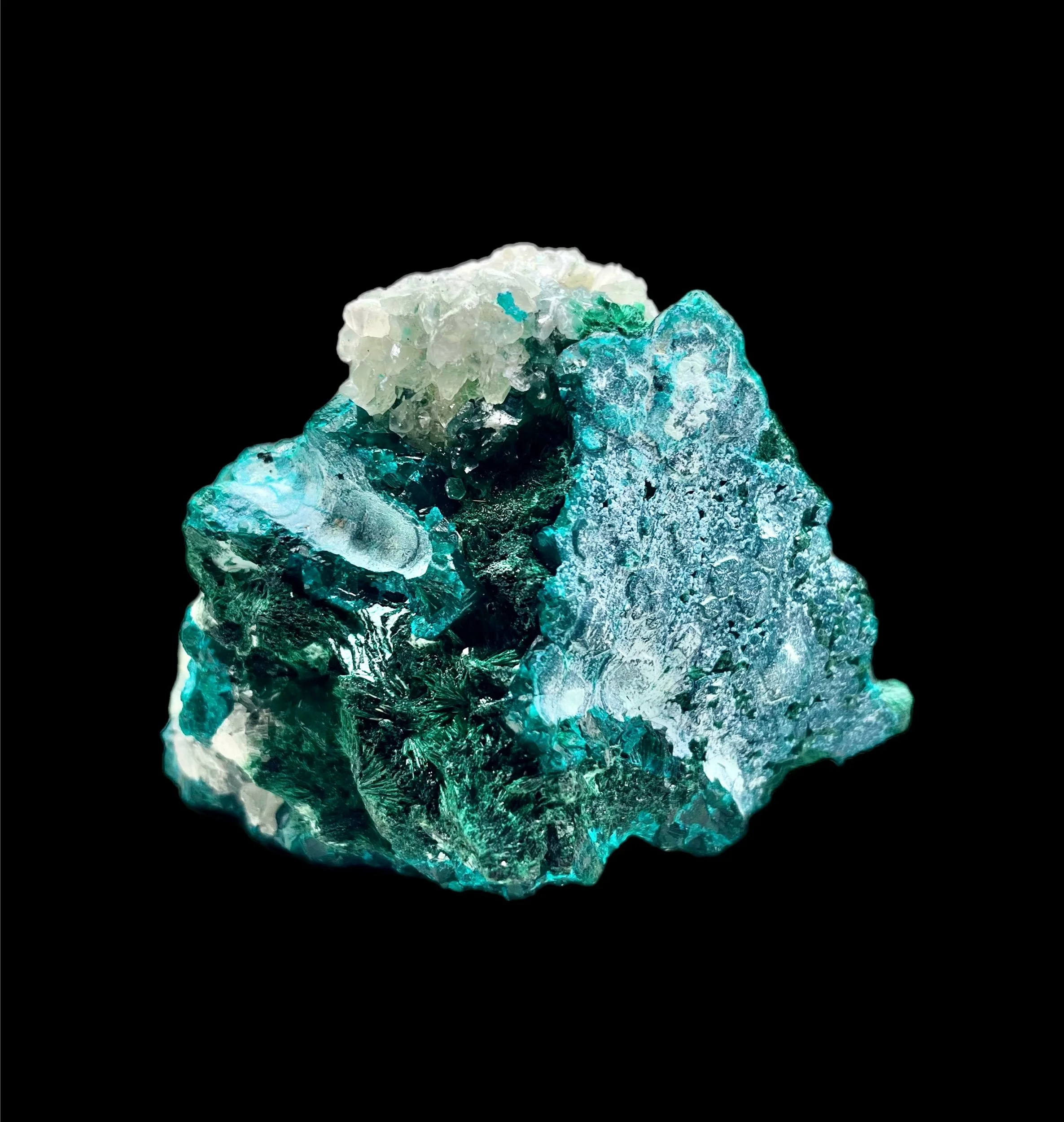
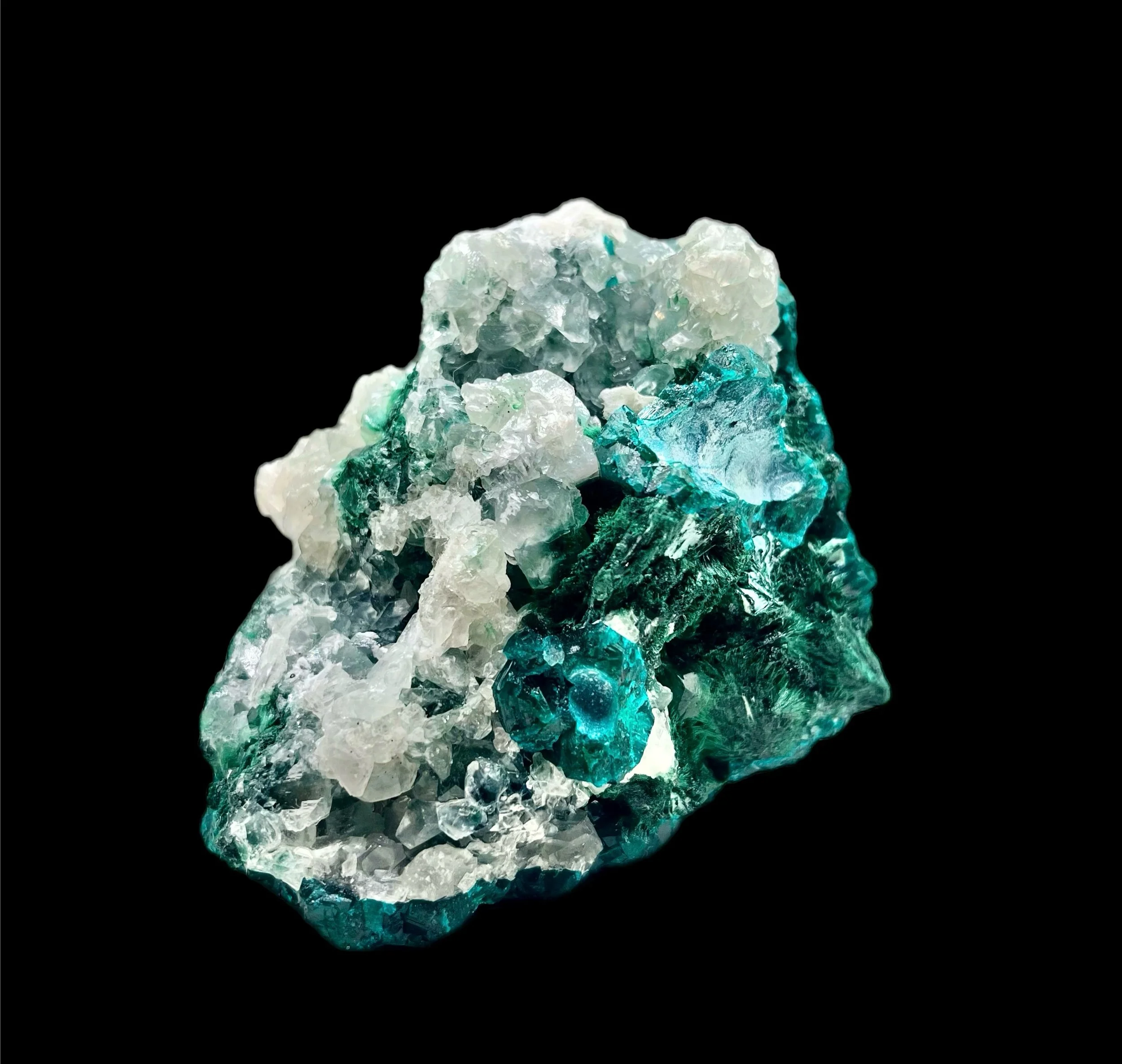
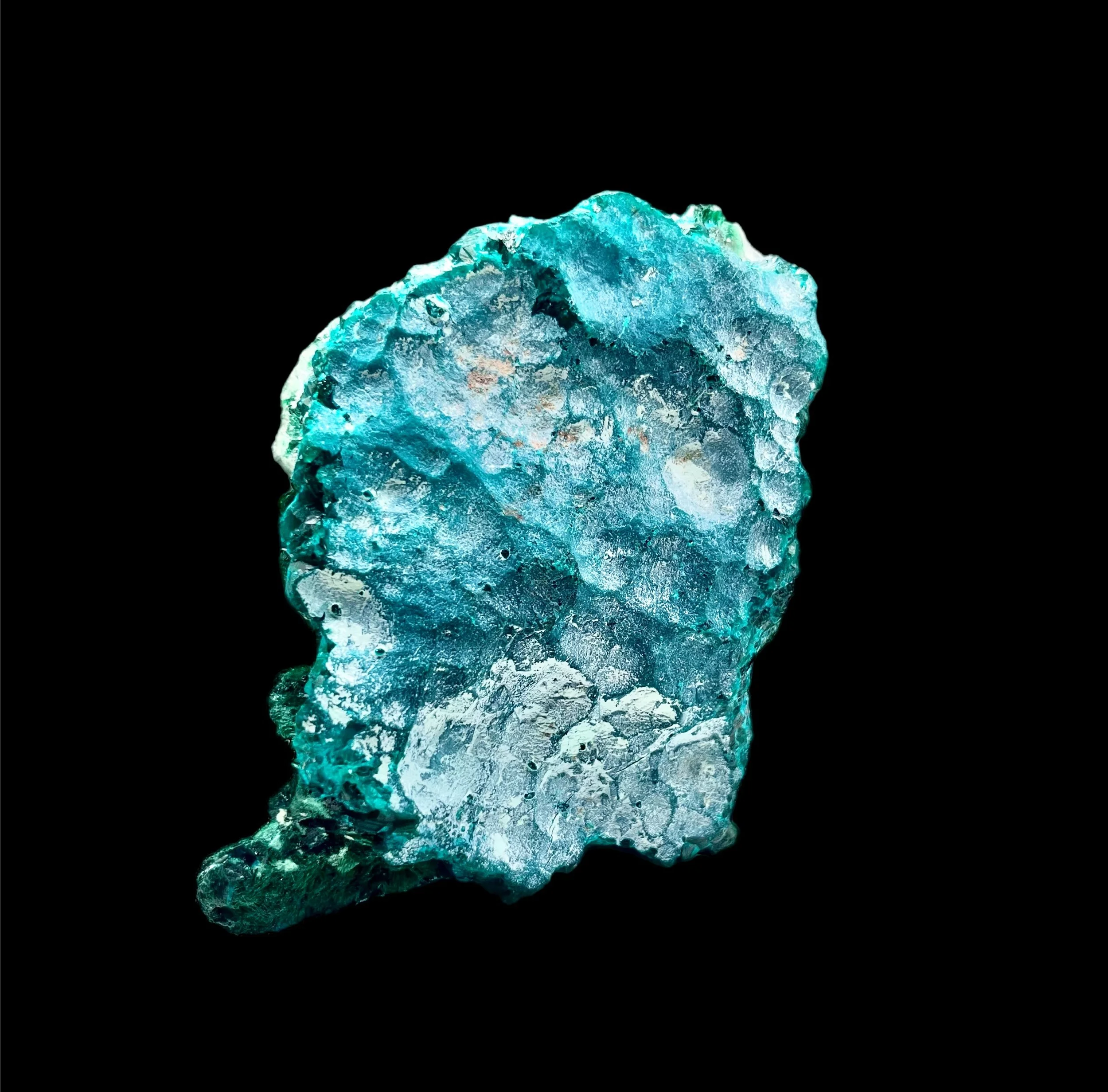
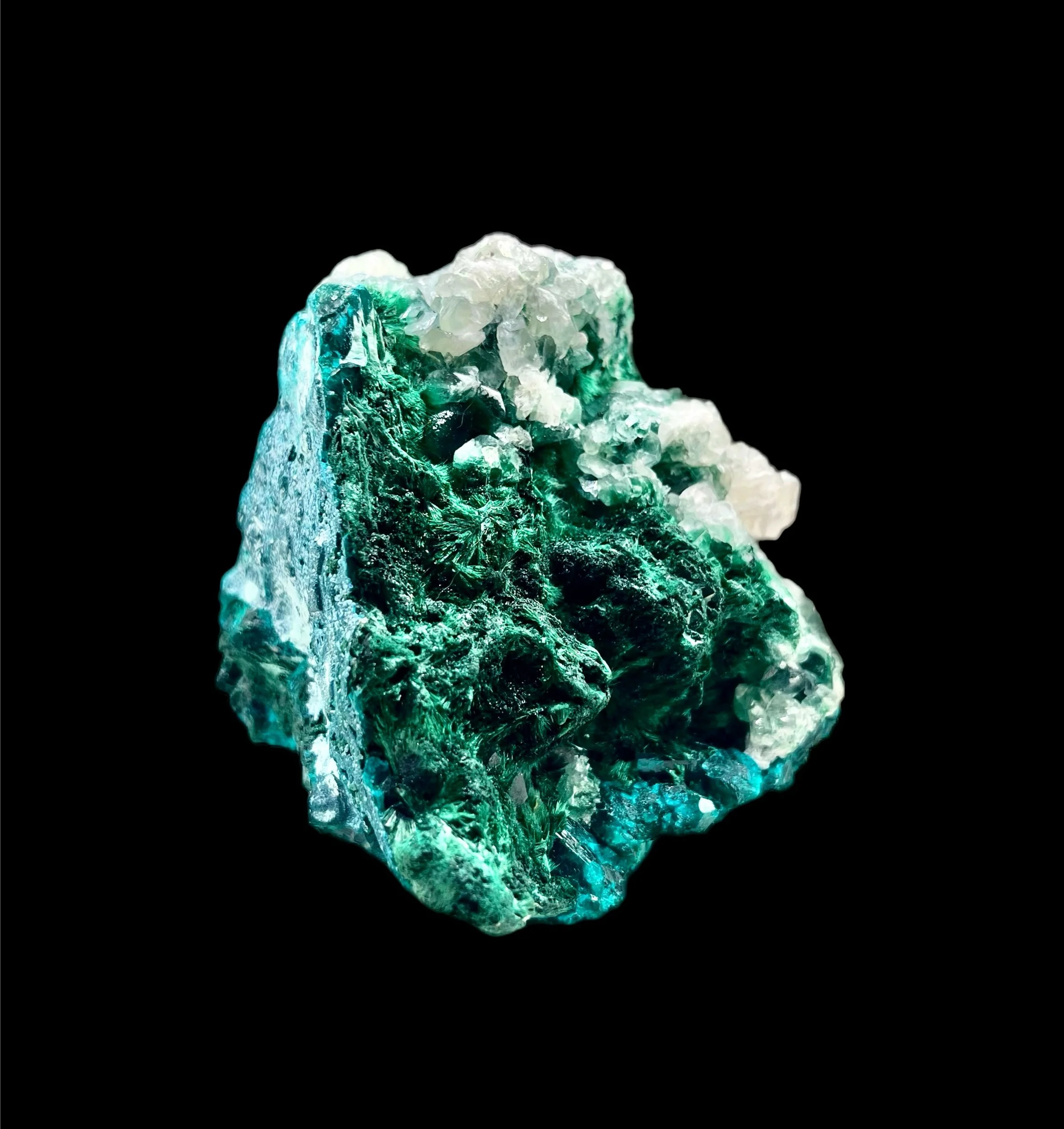
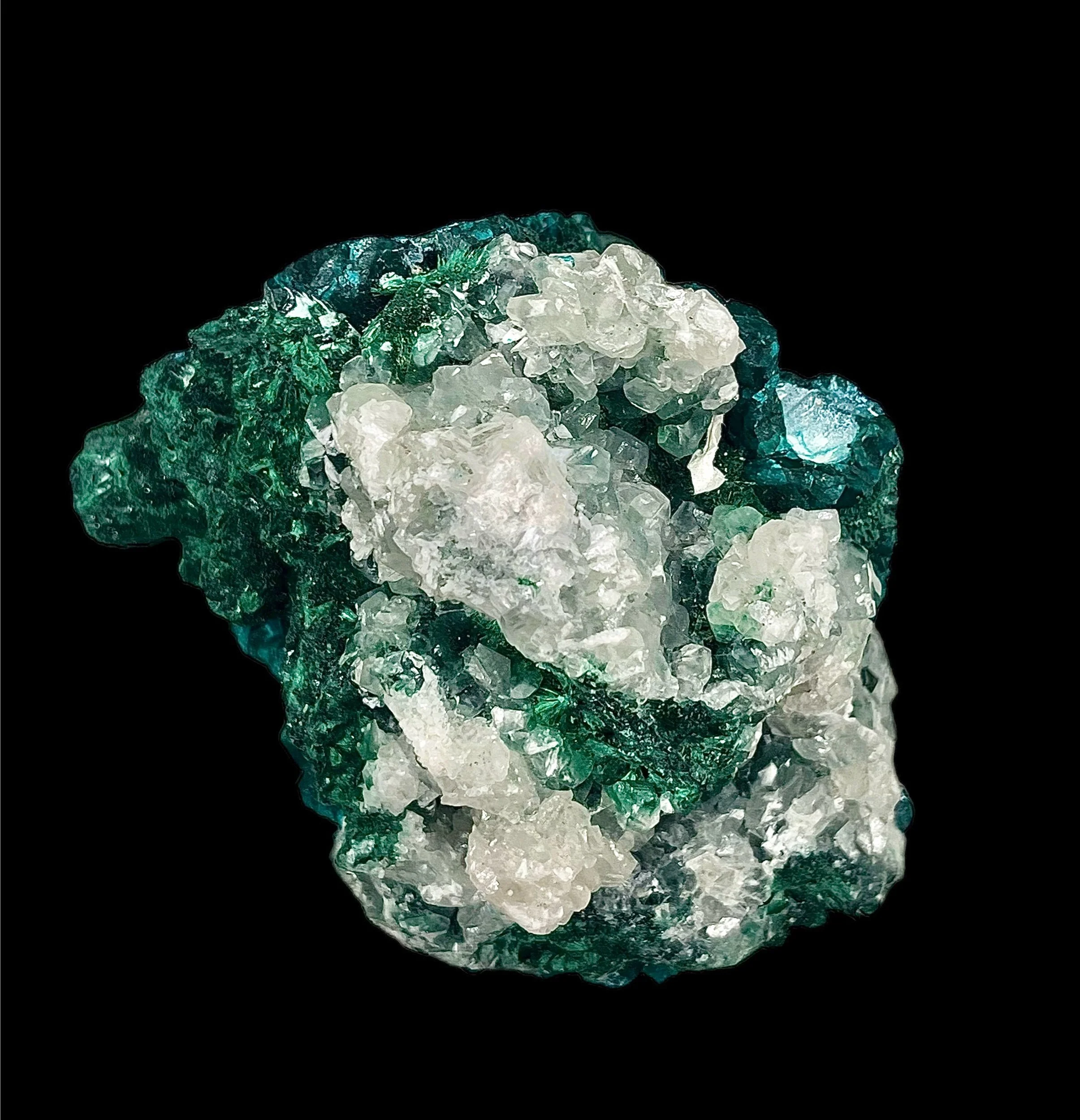
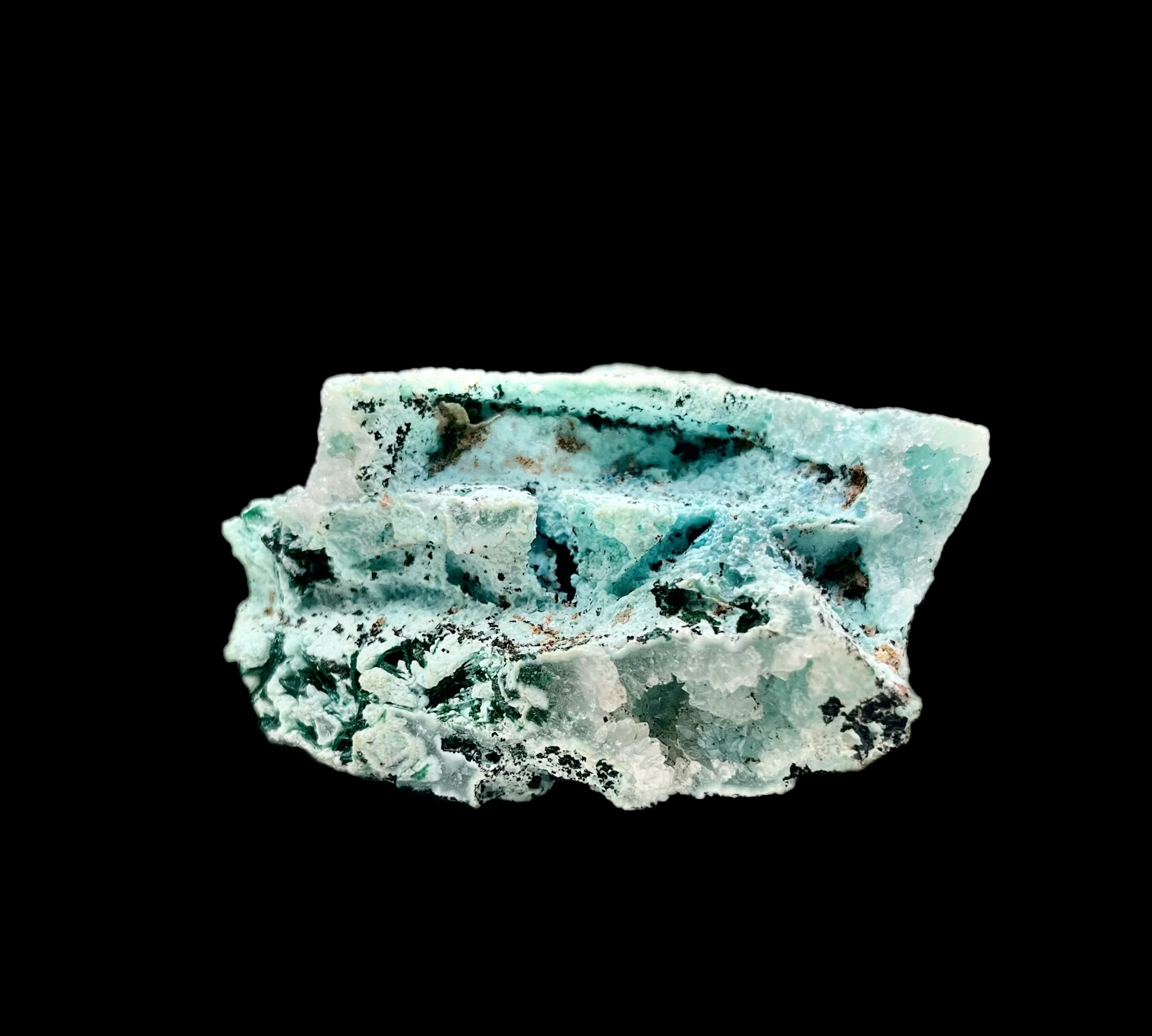
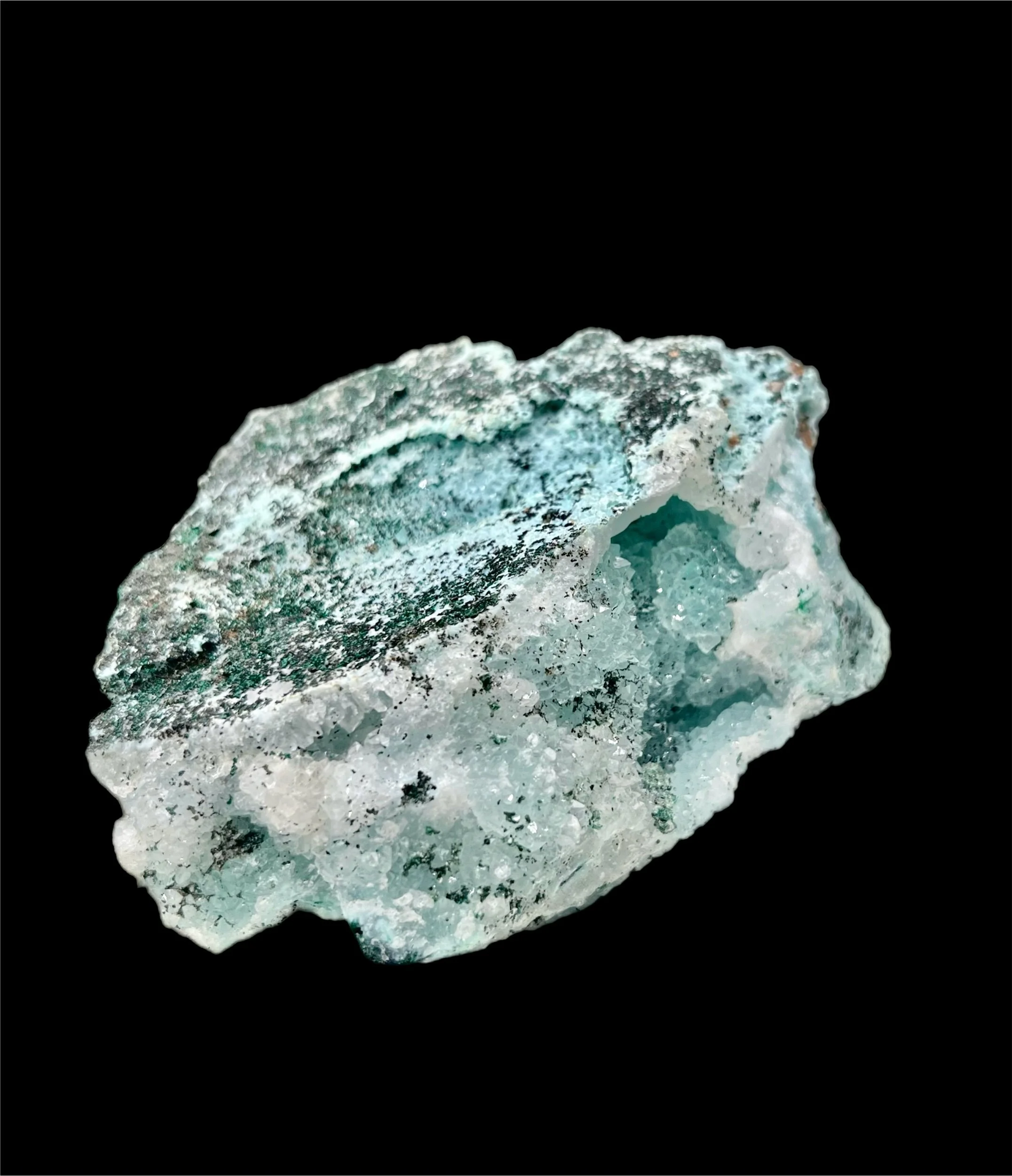
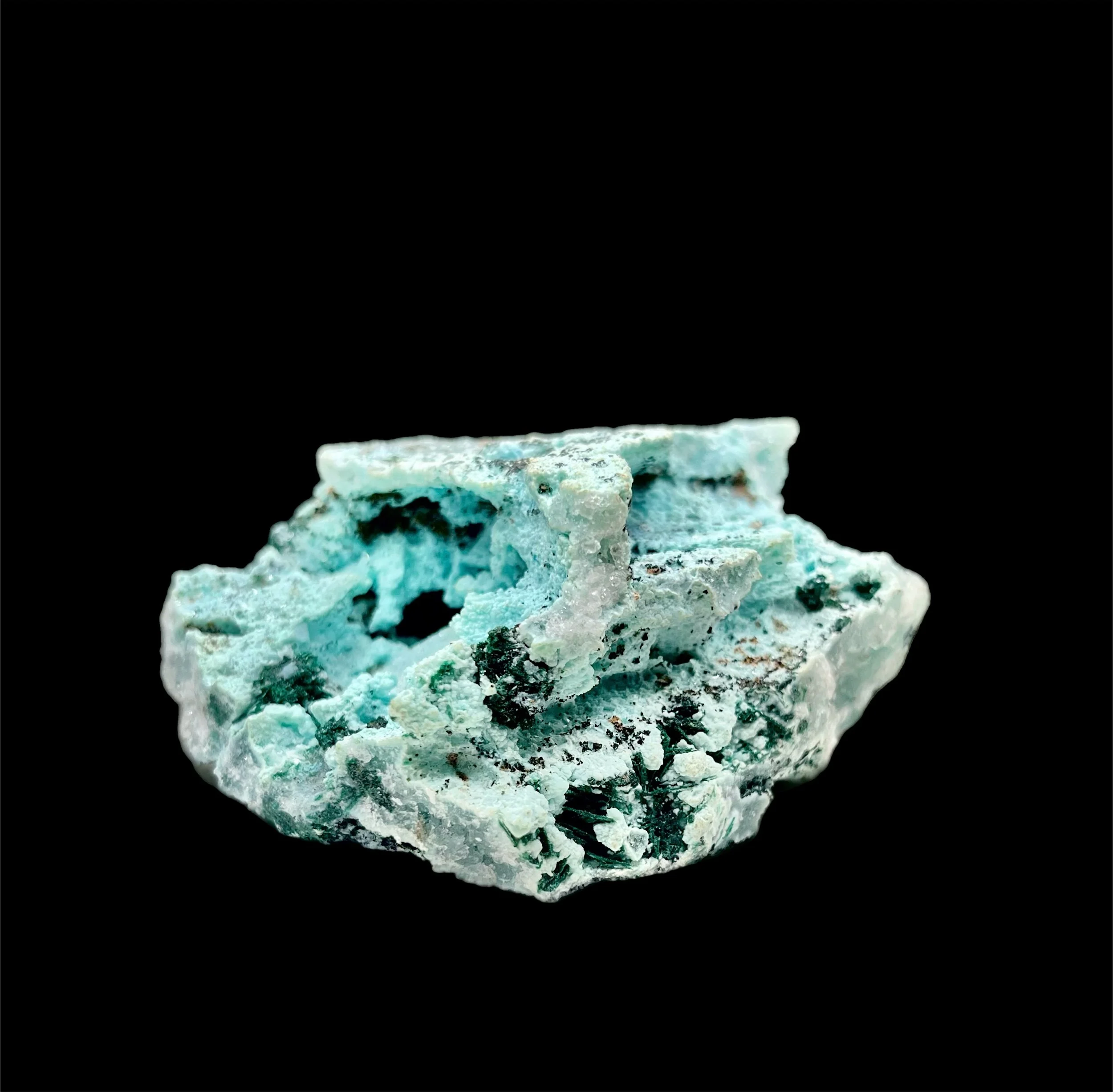
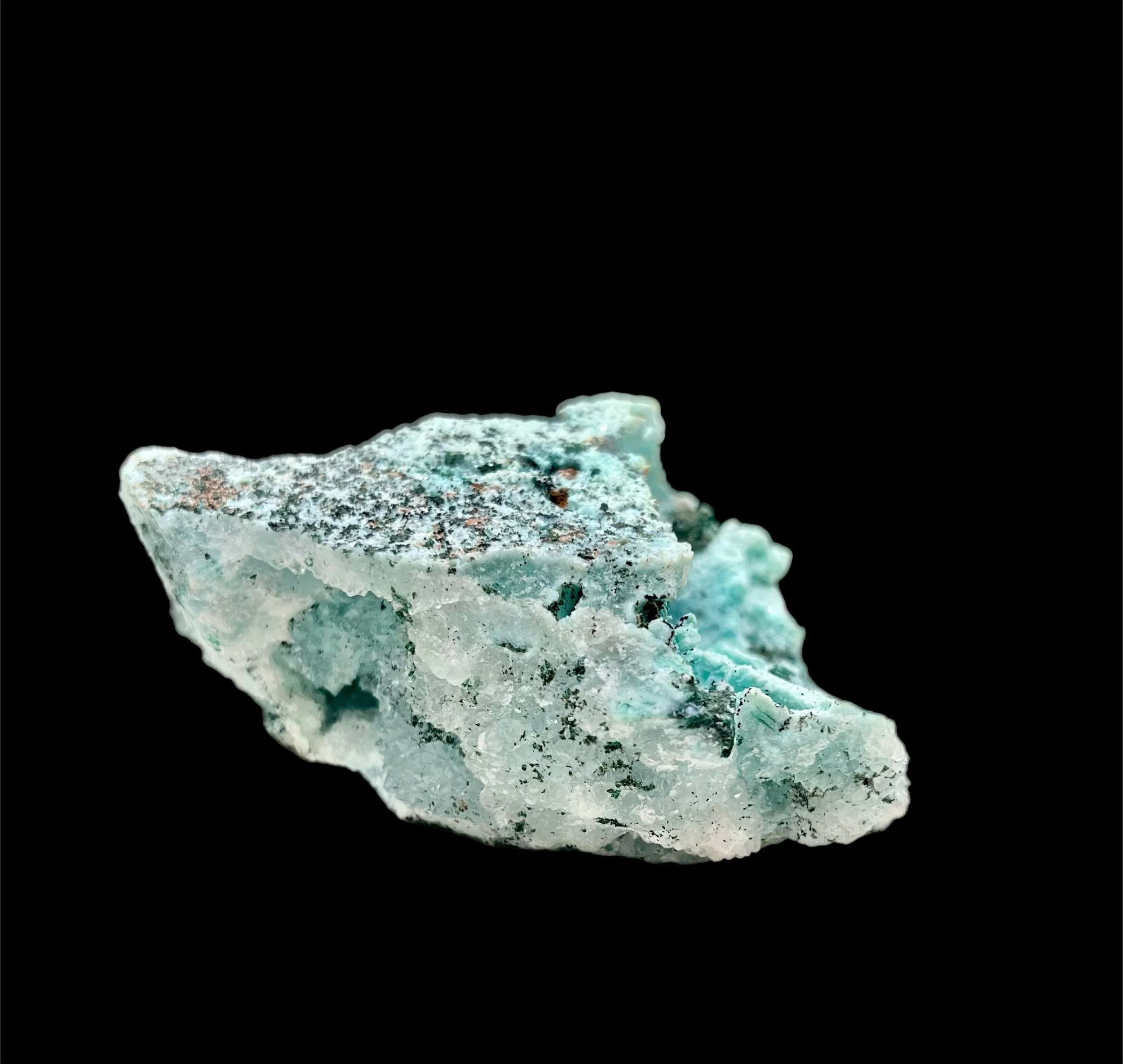
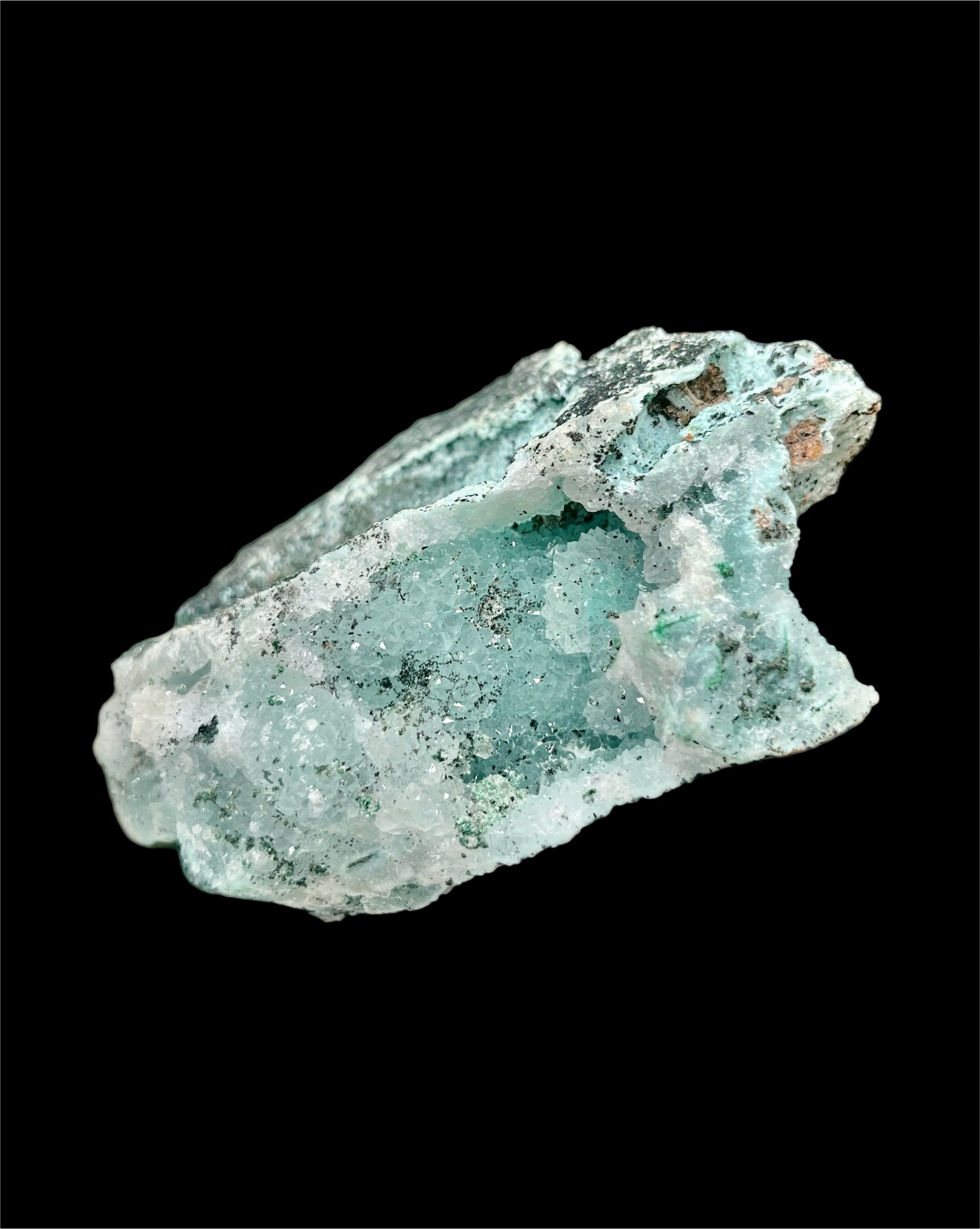
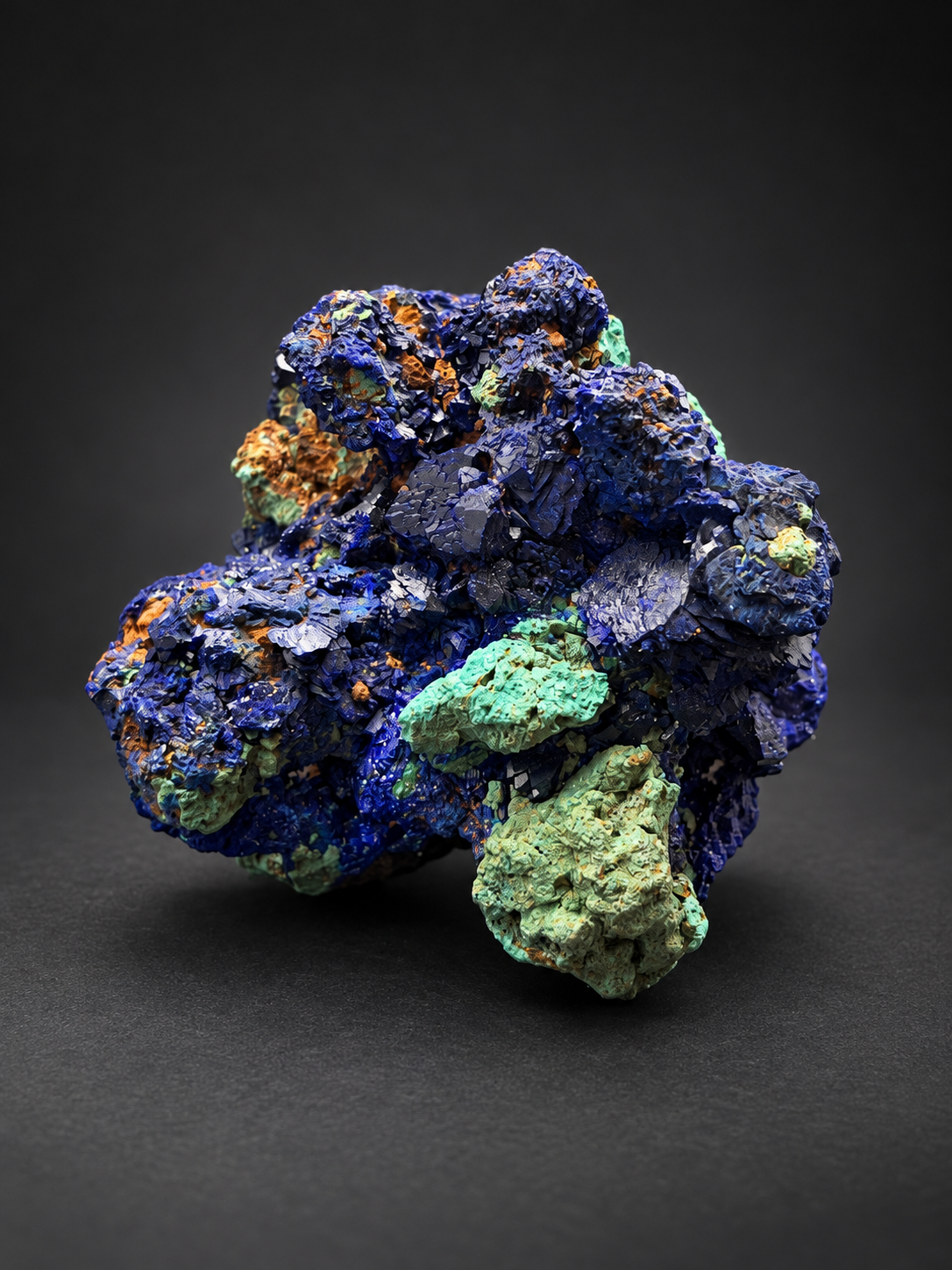
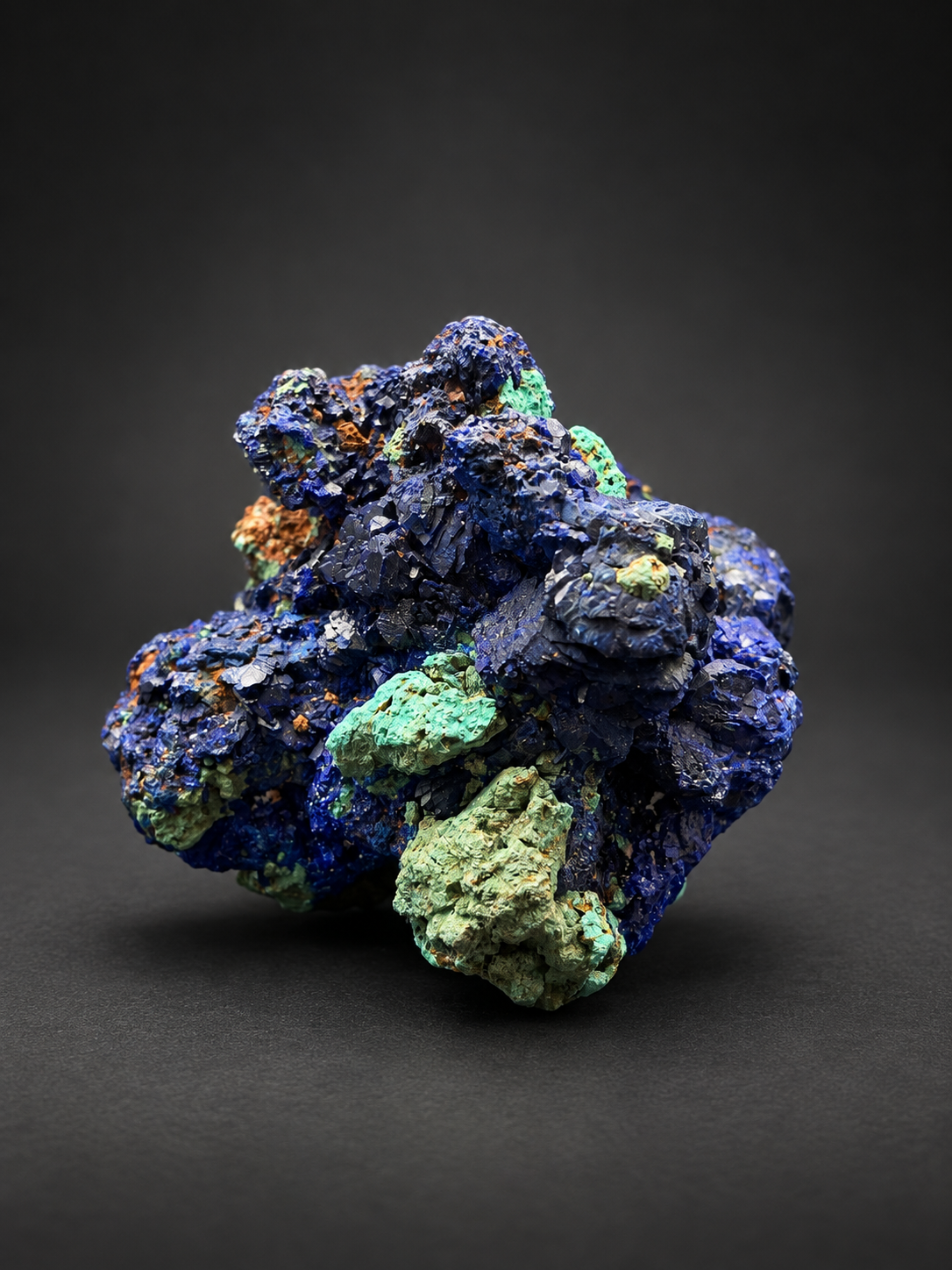
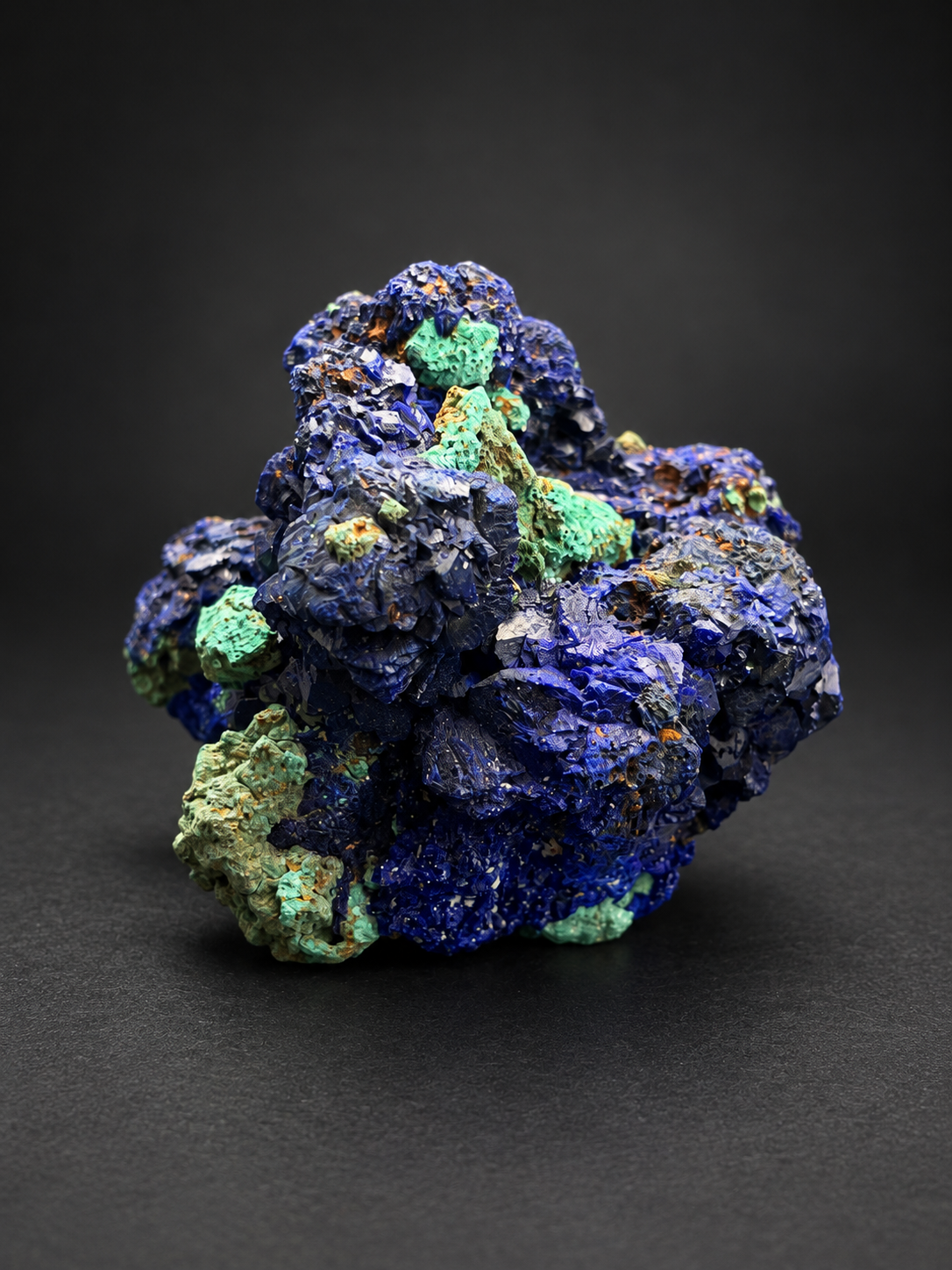
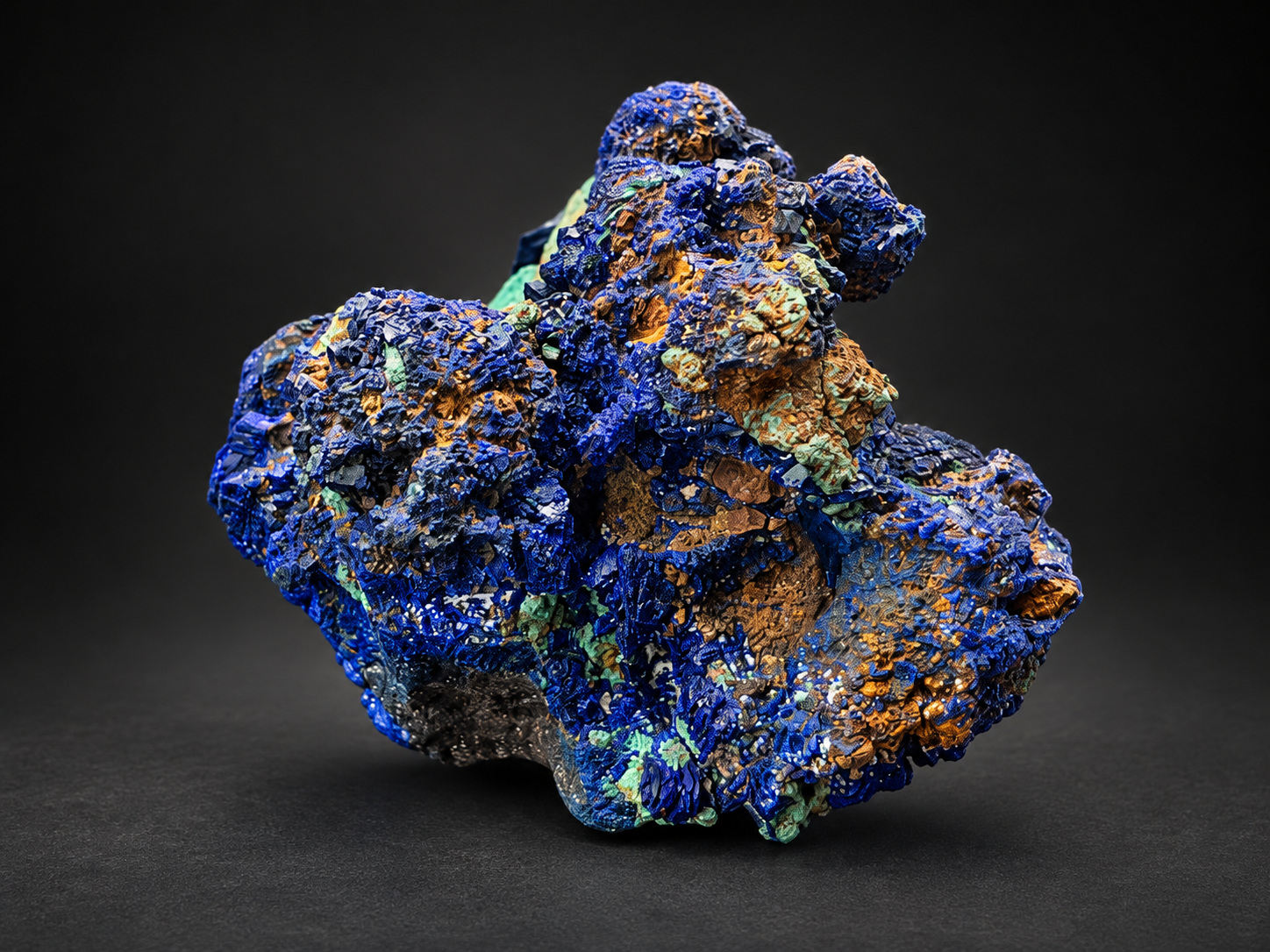
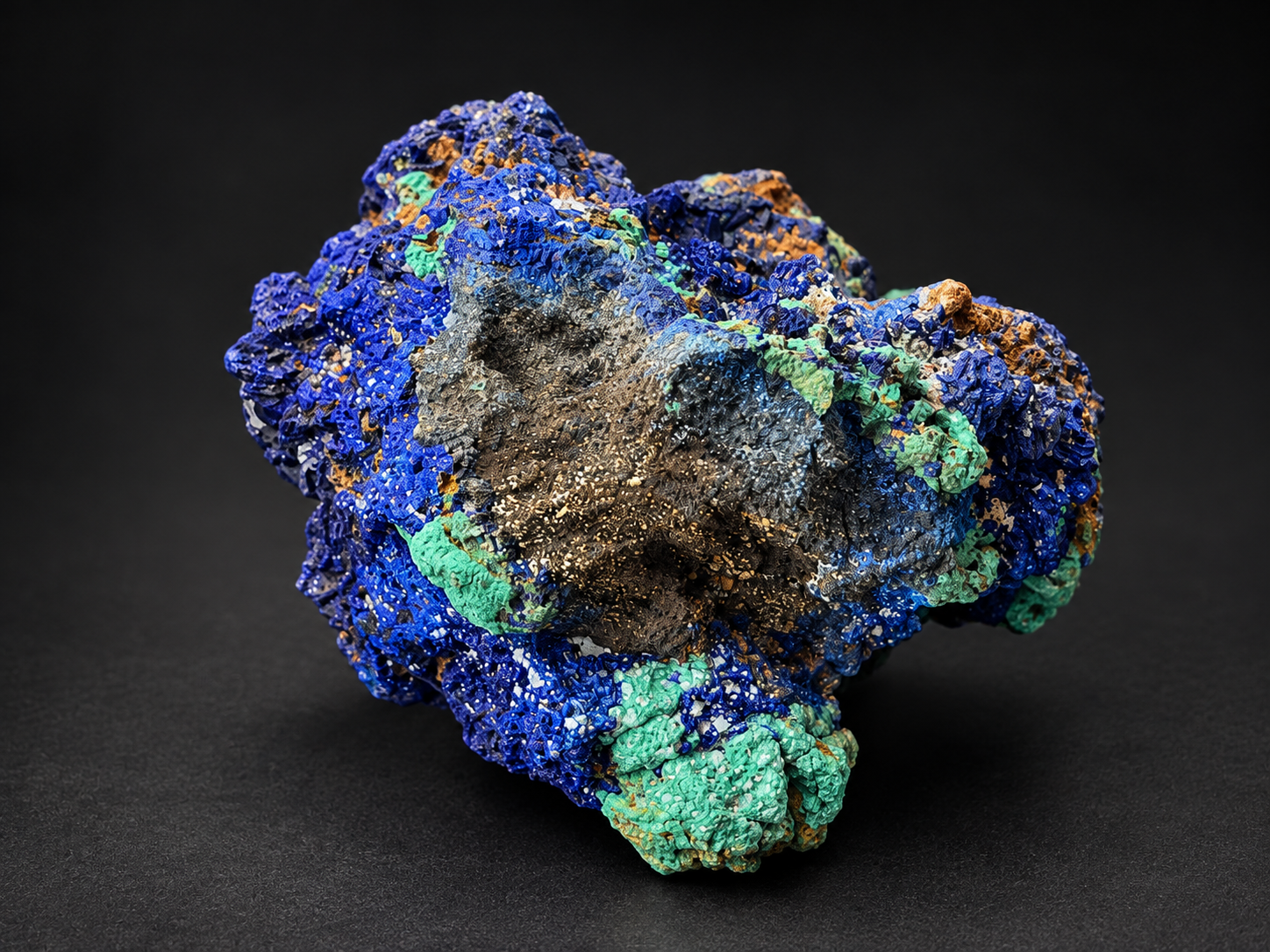
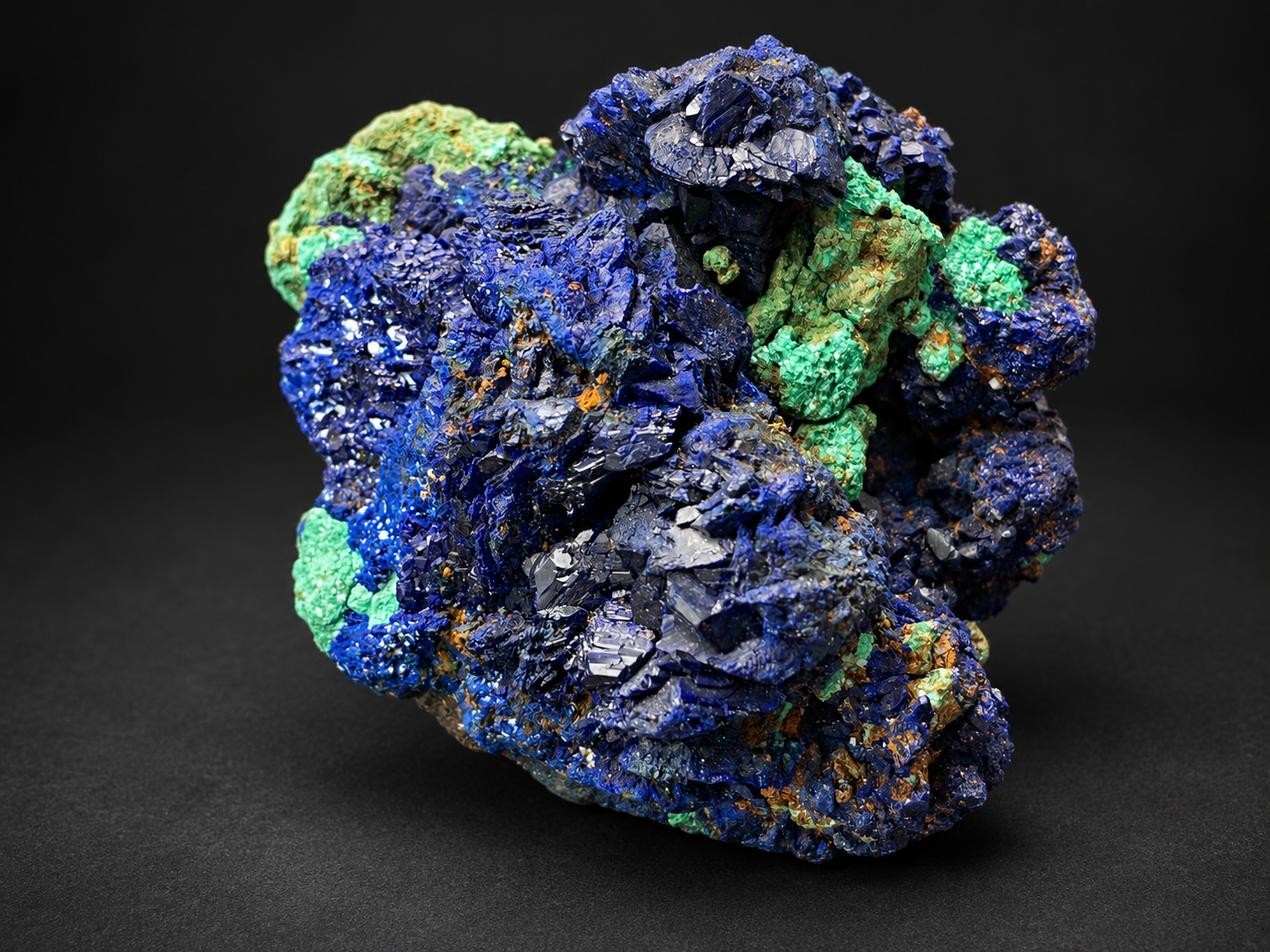
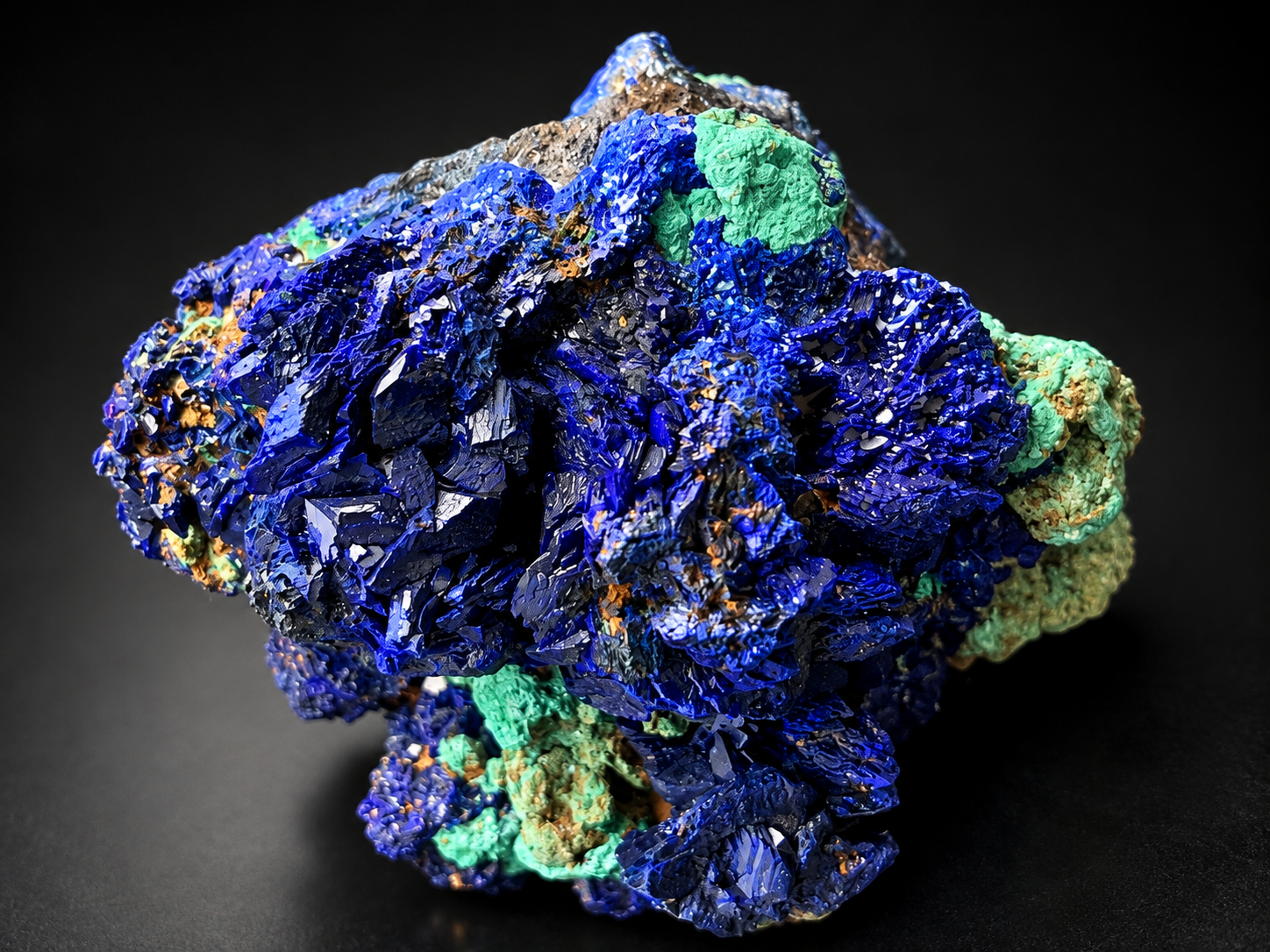
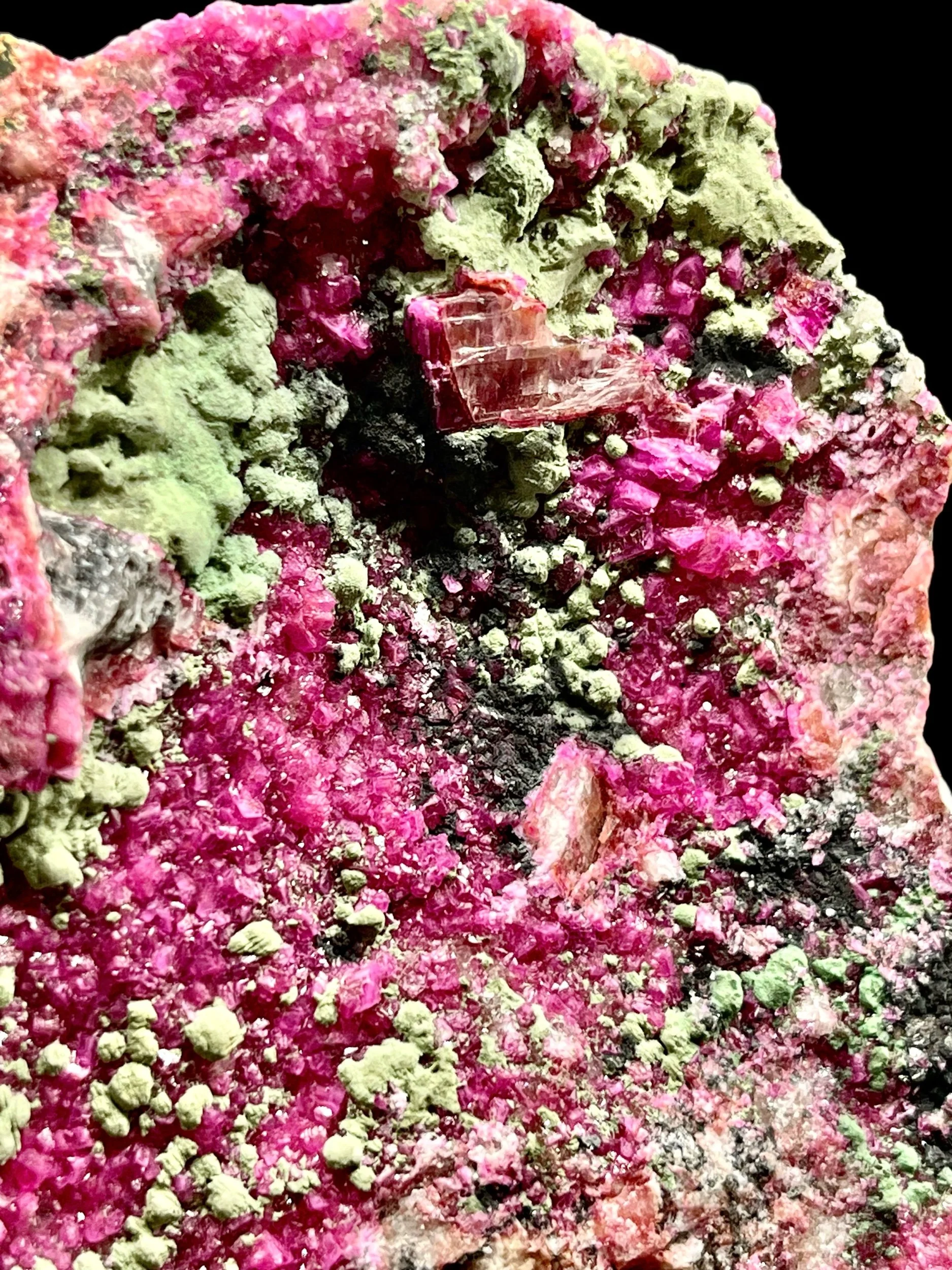
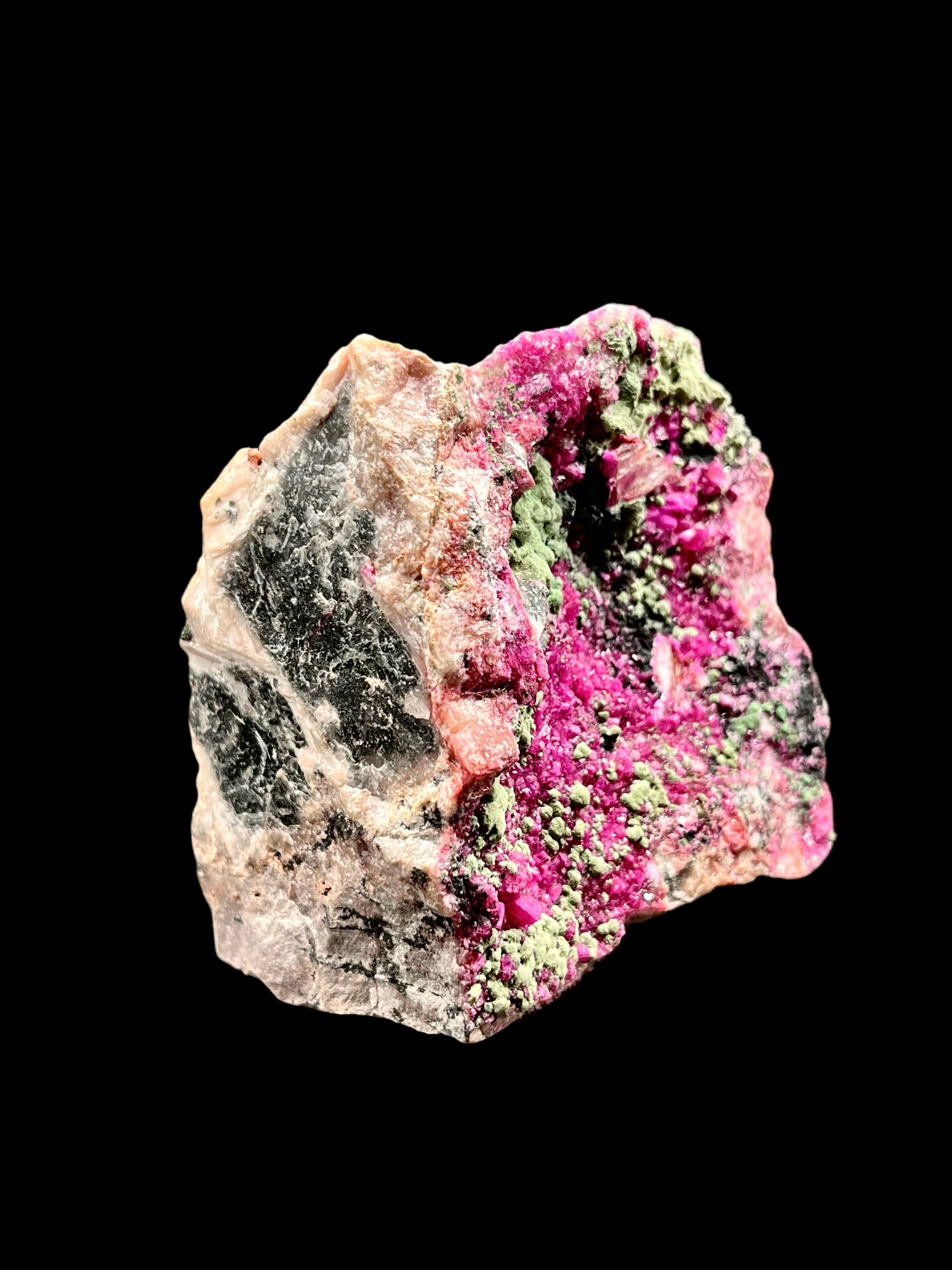
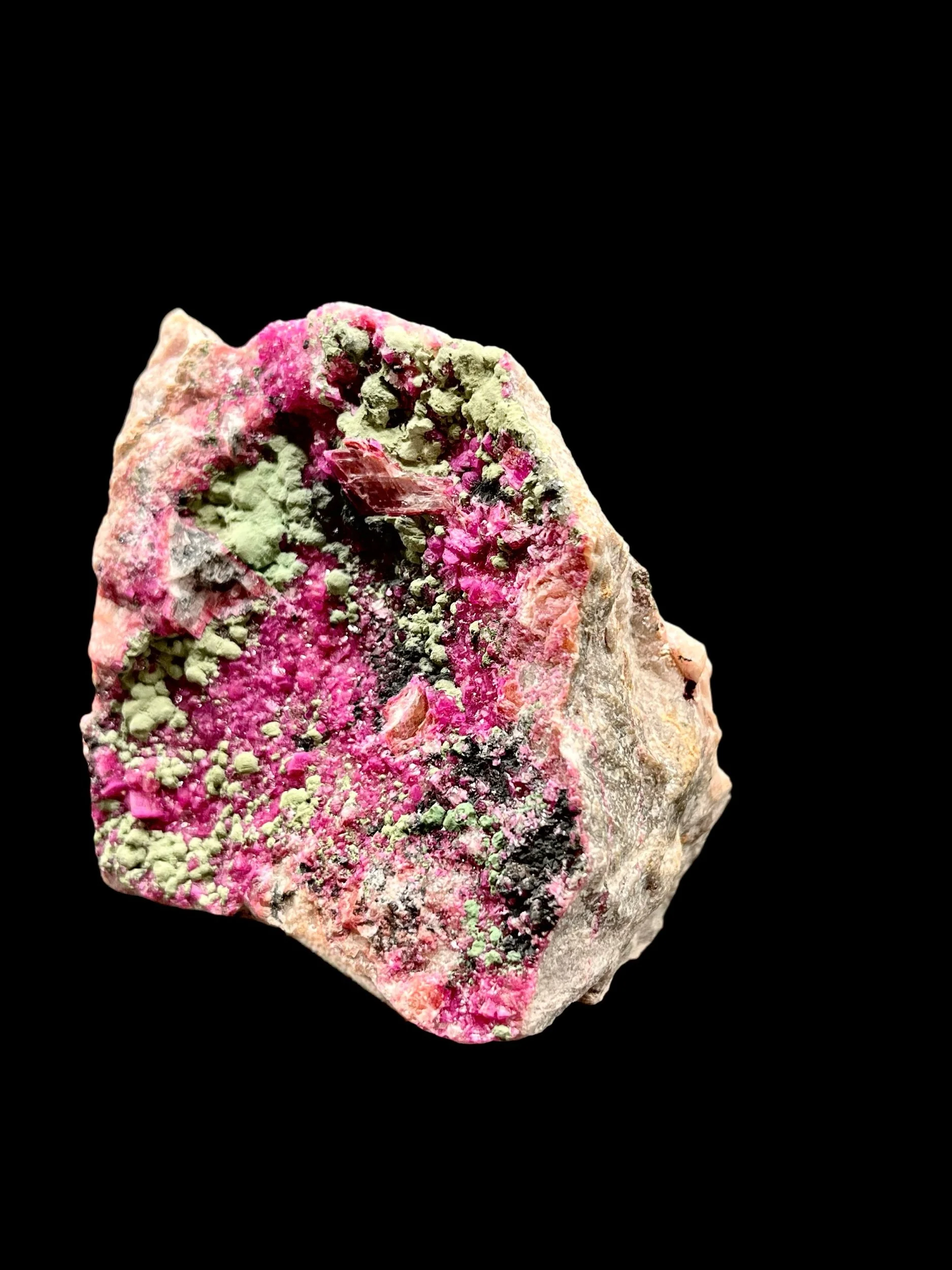
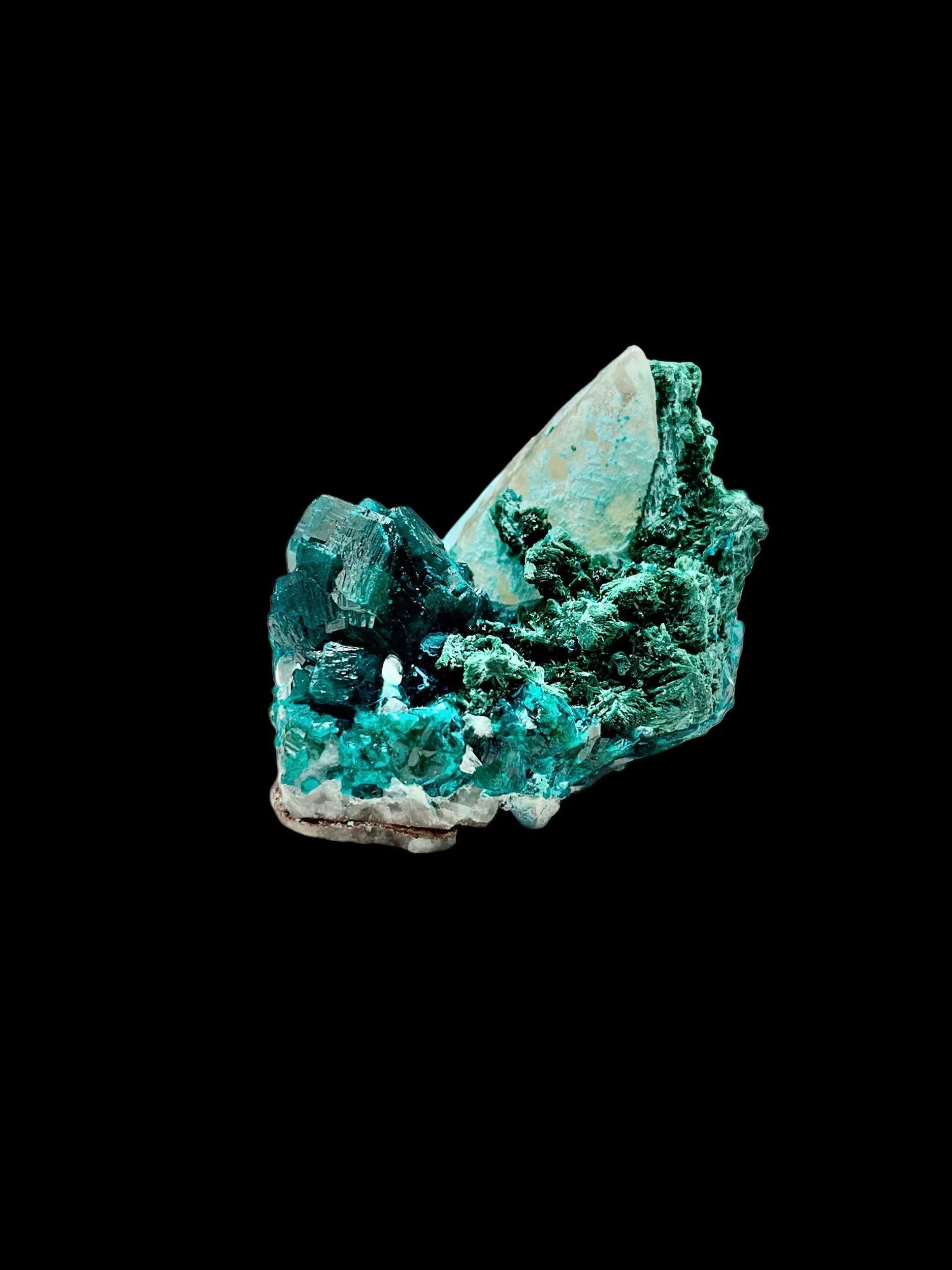
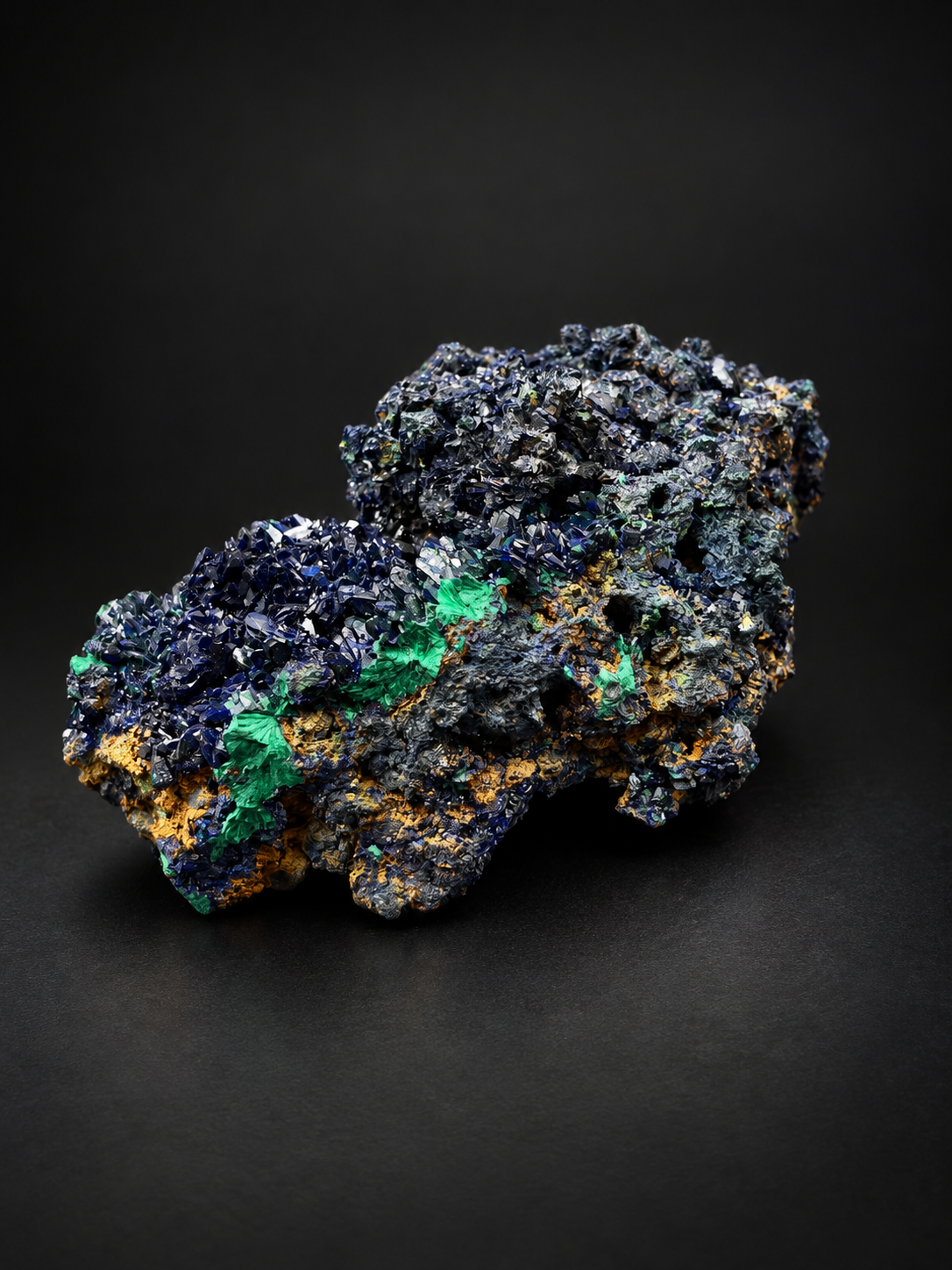
A striking combination of brilliant crystallization and rugged geological character, this fine mineral specimen features richly saturated azurite with vibrant green malachite from the renowned Liufengshan Mine in Anhui Province, China.
Dense clusters of deep indigo-blue azurite crystals blanket the specimen's irregular surface, creating a dazzling display of reflective crystal faces. The crystals range from tightly packed, finely developed aggregates to larger, sharply defined formations with beautiful vitreous luster.
Scattered throughout the specimen are vivid emerald-green malachite formations, including small fibrous growths and textured aggregates that provide a striking contrast to the intensely blue azurite.
The combination of deep blue crystallization, bright green malachite, and warm earthy matrix tones provides a beautiful demonstration of the complex mineralization found within copper deposits.
With attractive azurite crystallization extending across multiple surfaces and an abundance of geological detail, this specimen offers exceptional visual interest for collectors who appreciate both aesthetic mineral associations and the natural environments in which crystals form.
Weight: 192 grams
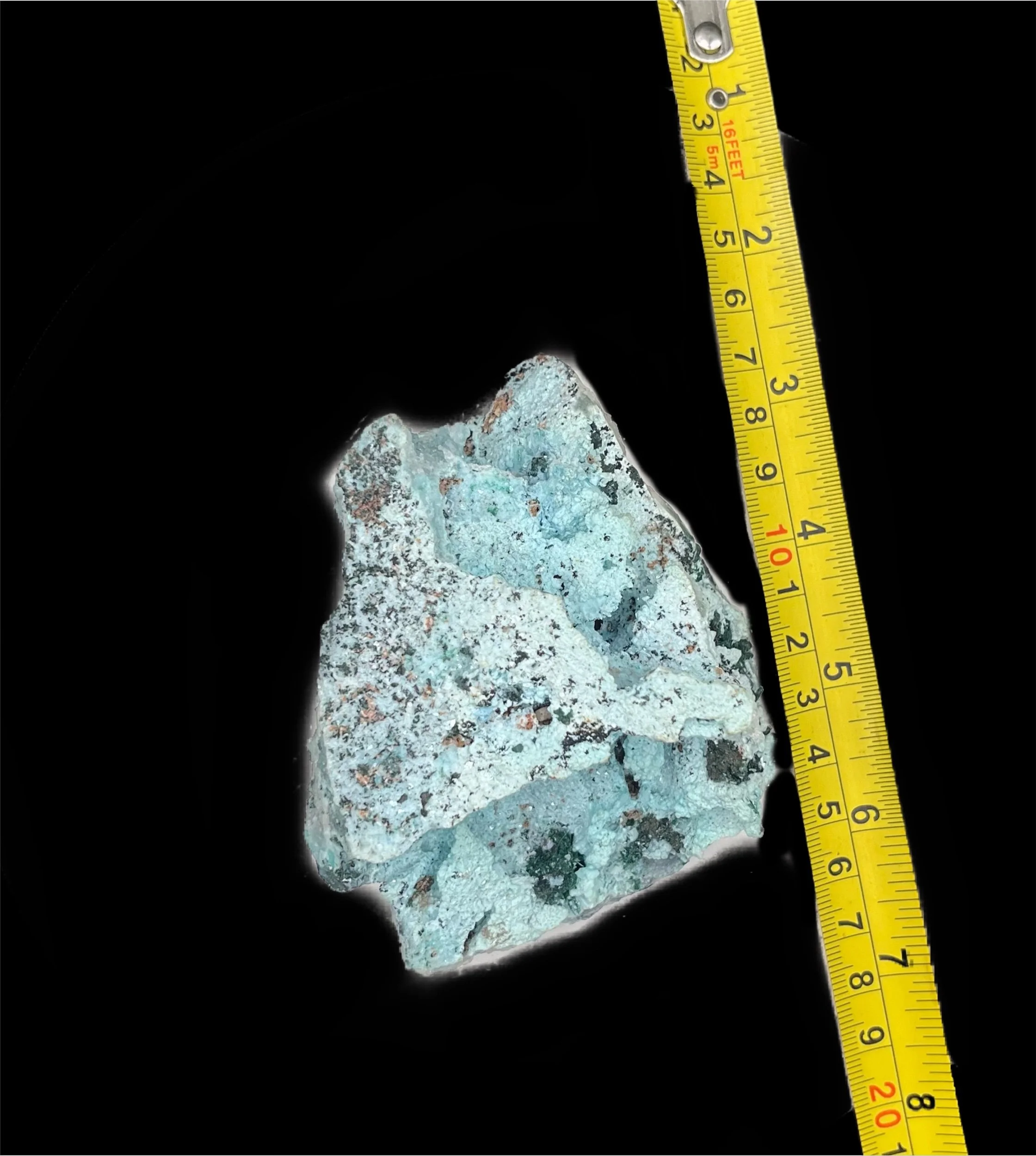
Dimensions: 3.25" × 2.5" × 1"
Mine: Liufengshan Mine (Liu Feng Shan Mine)
Locality: Guichi District, Chizhou, Anhui Province, China
Traditionally associated with insight, transformation, and emotional balance.
Azurite is often considered a stone of intuition, wisdom, and mental clarity. Associated with the third eye chakra, it is believed to encourage creativity, thoughtful reflection, and a deeper understanding of oneself and the surrounding world.
Malachite is traditionally associated with transformation, emotional growth, and protection. Connected symbolically with the heart chakra, it is believed to encourage positive change, emotional balance, and personal development.
Together, azurite and malachite are believed to combine intellectual awareness with emotional understanding, making this mineral association particularly meaningful in metaphysical traditions.
These associations are traditional beliefs and have not been scientifically established.
Liufengshan Mine – A Renowned Copper Mineral Locality
The Liufengshan Mine in Anhui Province, China, is internationally celebrated for its remarkable azurite and malachite specimens.
Although mining operations began decades earlier, exceptional specimens from this locality gained widespread attention within the international fine mineral collecting community in the early 2000s.
The mine became particularly well known for producing intensely saturated blue azurite crystals associated with vibrant green malachite, often displaying unusual textures, complex crystal habits, and highly aesthetic arrangements.
The Importance of the Host Matrix
While the brilliant blue azurite is immediately eye-catching, the exposed matrix provides valuable insight into the geological environment in which these minerals developed.
Azurite and malachite are secondary copper minerals, meaning they typically form through chemical reactions involving minerals already present within a copper deposit.
As oxygen-rich groundwater moves through fractures, cavities, and porous rock, it can dissolve copper from primary minerals and transport it into new environments. When chemical conditions are favorable, the dissolved copper reacts with carbonate and hydroxide ions to form minerals such as azurite and malachite.
In many oxidized copper deposits, iron-bearing minerals also undergo weathering, producing iron oxides and hydroxides that can give surrounding rock yellow, orange, reddish-brown, and ochre coloration.
Interesting Fact: Why Are Some Azurite Crystals Almost Black?
Azurite is famous for its brilliant blue color, but exceptionally dark crystals can appear nearly black under certain lighting conditions.
This occurs because deeply saturated azurite absorbs substantial portions of visible light. Larger or more intensely colored crystals may appear almost black in shadow, while their reflective surfaces reveal flashes of brilliant royal blue when illuminated.
Rich Indigo-Blue Azurite: Abundant deep-blue crystals displaying beautiful saturation and reflective vitreous luster.
Dense Crystal Coverage: Numerous azurite clusters distributed across the specimen's rugged surface.
Vibrant Malachite Accents: Bright green malachite formations nestled between and beneath the blue crystals.
Natural Cavities: Recessed pockets and openings add depth and reveal intricate mineral growth.
Sculptural Formation: Rugged projections, uneven surfaces, and clustered crystallization create a distinctive three-dimensional appearance.
Multiple Display Angles: Attractive azurite crystal coverage and geological features visible from several orientations.
Renowned Chinese Locality: Originates from the celebrated Liufengshan Mine in Anhui Province, China.
Collector Appeal: An attractive example of azurite and malachite mineralization with excellent color contrast and exposed geological character.
Chemical Formula: Cu₃(CO₃)₂(OH)₂
Mineral Class: Carbonates
Crystal System: Monoclinic
Mohs Hardness: 3.5–4
Color: Azure blue, royal blue, deep indigo
Luster: Vitreous (glassy)
Streak: Light blue
Cleavage: Perfect in one direction, fair in another
Specific Gravity: Approximately 3.77
Crystal Habit: Prismatic, tabular, bladed, and clustered crystals; occasionally massive or botryoidal
Formation: Secondary copper carbonate mineral formed in oxidized copper deposits
Chemical Formula: Cu₂(CO₃)(OH)₂
Mineral Class: Carbonates
Crystal System: Monoclinic
Mohs Hardness: 3.5–4
Color: Bright green to deep emerald green
Luster: Silky, vitreous, or earthy depending on crystal habit
Streak: Light green
Cleavage: Perfect in one direction, fair in another
Specific Gravity: Approximately 3.6–4.05
Crystal Habit: Fibrous, radiating, botryoidal, mammillary, and massive aggregates
Formation: Secondary copper carbonate mineral commonly associated with azurite in oxidized copper deposits
A striking combination of brilliant crystallization and rugged geological character, this fine mineral specimen features richly saturated azurite with vibrant green malachite from the renowned Liufengshan Mine in Anhui Province, China.
Dense clusters of deep indigo-blue azurite crystals blanket the specimen's irregular surface, creating a dazzling display of reflective crystal faces. The crystals range from tightly packed, finely developed aggregates to larger, sharply defined formations with beautiful vitreous luster.
Scattered throughout the specimen are vivid emerald-green malachite formations, including small fibrous growths and textured aggregates that provide a striking contrast to the intensely blue azurite.
The combination of deep blue crystallization, bright green malachite, and warm earthy matrix tones provides a beautiful demonstration of the complex mineralization found within copper deposits.
With attractive azurite crystallization extending across multiple surfaces and an abundance of geological detail, this specimen offers exceptional visual interest for collectors who appreciate both aesthetic mineral associations and the natural environments in which crystals form.
Weight: 192 grams
Dimensions: 3.25" × 2.5" × 1"
Mine: Liufengshan Mine (Liu Feng Shan Mine)
Locality: Guichi District, Chizhou, Anhui Province, China
Traditionally associated with insight, transformation, and emotional balance.
Azurite is often considered a stone of intuition, wisdom, and mental clarity. Associated with the third eye chakra, it is believed to encourage creativity, thoughtful reflection, and a deeper understanding of oneself and the surrounding world.
Malachite is traditionally associated with transformation, emotional growth, and protection. Connected symbolically with the heart chakra, it is believed to encourage positive change, emotional balance, and personal development.
Together, azurite and malachite are believed to combine intellectual awareness with emotional understanding, making this mineral association particularly meaningful in metaphysical traditions.
These associations are traditional beliefs and have not been scientifically established.
Liufengshan Mine – A Renowned Copper Mineral Locality
The Liufengshan Mine in Anhui Province, China, is internationally celebrated for its remarkable azurite and malachite specimens.
Although mining operations began decades earlier, exceptional specimens from this locality gained widespread attention within the international fine mineral collecting community in the early 2000s.
The mine became particularly well known for producing intensely saturated blue azurite crystals associated with vibrant green malachite, often displaying unusual textures, complex crystal habits, and highly aesthetic arrangements.
The Importance of the Host Matrix
While the brilliant blue azurite is immediately eye-catching, the exposed matrix provides valuable insight into the geological environment in which these minerals developed.
Azurite and malachite are secondary copper minerals, meaning they typically form through chemical reactions involving minerals already present within a copper deposit.
As oxygen-rich groundwater moves through fractures, cavities, and porous rock, it can dissolve copper from primary minerals and transport it into new environments. When chemical conditions are favorable, the dissolved copper reacts with carbonate and hydroxide ions to form minerals such as azurite and malachite.
In many oxidized copper deposits, iron-bearing minerals also undergo weathering, producing iron oxides and hydroxides that can give surrounding rock yellow, orange, reddish-brown, and ochre coloration.
Interesting Fact: Why Are Some Azurite Crystals Almost Black?
Azurite is famous for its brilliant blue color, but exceptionally dark crystals can appear nearly black under certain lighting conditions.
This occurs because deeply saturated azurite absorbs substantial portions of visible light. Larger or more intensely colored crystals may appear almost black in shadow, while their reflective surfaces reveal flashes of brilliant royal blue when illuminated.
Rich Indigo-Blue Azurite: Abundant deep-blue crystals displaying beautiful saturation and reflective vitreous luster.
Dense Crystal Coverage: Numerous azurite clusters distributed across the specimen's rugged surface.
Vibrant Malachite Accents: Bright green malachite formations nestled between and beneath the blue crystals.
Natural Cavities: Recessed pockets and openings add depth and reveal intricate mineral growth.
Sculptural Formation: Rugged projections, uneven surfaces, and clustered crystallization create a distinctive three-dimensional appearance.
Multiple Display Angles: Attractive azurite crystal coverage and geological features visible from several orientations.
Renowned Chinese Locality: Originates from the celebrated Liufengshan Mine in Anhui Province, China.
Collector Appeal: An attractive example of azurite and malachite mineralization with excellent color contrast and exposed geological character.
Chemical Formula: Cu₃(CO₃)₂(OH)₂
Mineral Class: Carbonates
Crystal System: Monoclinic
Mohs Hardness: 3.5–4
Color: Azure blue, royal blue, deep indigo
Luster: Vitreous (glassy)
Streak: Light blue
Cleavage: Perfect in one direction, fair in another
Specific Gravity: Approximately 3.77
Crystal Habit: Prismatic, tabular, bladed, and clustered crystals; occasionally massive or botryoidal
Formation: Secondary copper carbonate mineral formed in oxidized copper deposits
Chemical Formula: Cu₂(CO₃)(OH)₂
Mineral Class: Carbonates
Crystal System: Monoclinic
Mohs Hardness: 3.5–4
Color: Bright green to deep emerald green
Luster: Silky, vitreous, or earthy depending on crystal habit
Streak: Light green
Cleavage: Perfect in one direction, fair in another
Specific Gravity: Approximately 3.6–4.05
Crystal Habit: Fibrous, radiating, botryoidal, mammillary, and massive aggregates
Formation: Secondary copper carbonate mineral commonly associated with azurite in oxidized copper deposits